Kangaroo Jack

What can I say about Kangaroo Jack. It’s… a movie. Someone was on something at the board meeting where this thing was greenlit, and it somehow got made. It’s one of the most oddly conceived, shit-tastic, bizarre comedies to have ever been produced, and it’s a wonder some of the actors held it together with a modicum of a straight face. I expect this kind of thing from silly people like Anthony Anderson and Jerry O’Connell, but…. Michael Shannon? Christopher Walken? Really?! Weirder still is that this wanton pile of dung topped the box office charts for a few weeks. I guess moviegoers were on the same stuff as the guy in that board meeting. O’Connell and Anderson play two childish idiots who travel to Australia to deliver some mob cash after a run in with freaky gangster Walken and his freakier henchman Shannon, both looking like they’d rather eat tide pods than have their names in the credits. En route, the film takes a nosedive into Wtf-ville as a terribly CGI’d kangaroo steals their money (coz that’s what kangaroos do) and starts fucking with them and holds up their task at every turn. What a random idea for a movie. The script has the attention span of a Looney Toons yarn, the special effects are so bad they’d make 90’s era Crash Bandicoot cringe, and the humour is… well, you get the idea. There’s usually some morbid merit to films as bad as this, like watching someone get hit by a car and being unable to look away through sheer fascination, but this one can’t even muster up a self aware thrill or two of that ilk. Oh, and it suffers from Snow Dogs syndrome too: trailers showed a sentient kangaroo talking, but that only happens in one brief, super lame dream sequence. If Steve Irwin’s ghost had a kid with Mel Brooks and that kid had a nightmare, it might look something like this, but a lot less awesome than that would have you think. This kangaroo should be put down.

-Nate Hill
Indie Gems: Humboldt County

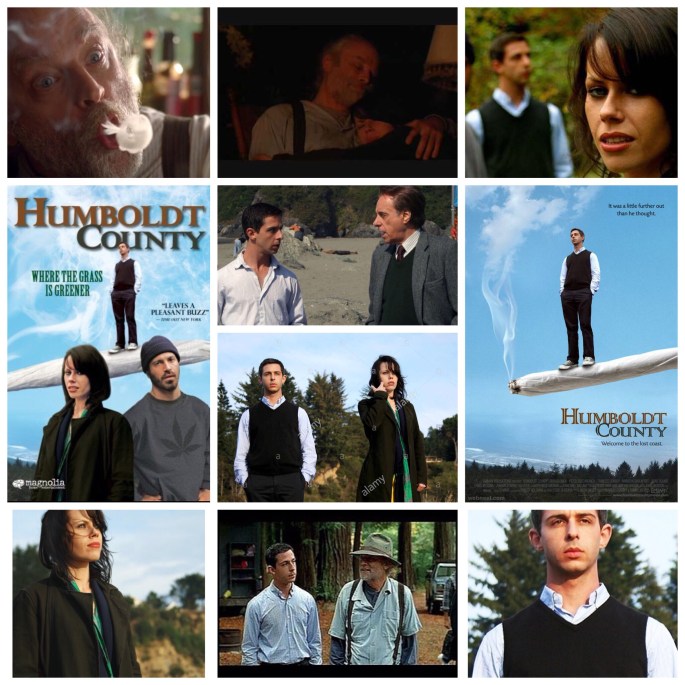
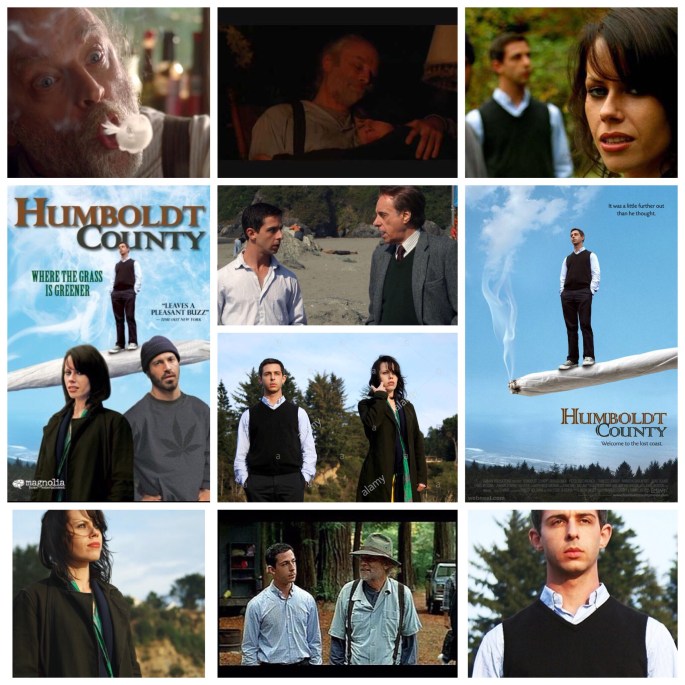
There’s a ton weed comedies out there, stoner slapstick silliness at every turn, but it’s not often that someone takes a serious stab at cannabis culture and uses the phenomenon to tell a moving, character driven story. Humboldt County is a painfully unknown gem about a community of rural pot growers in a tucked away nook somewhere in California, and the fish out of water med student (Jeremy Strong) who stumbles into their midst. After meeting restless free spirit Bogart (the great Fairuza Balk), they meander back into her isolated hometown where the locals grow marijuana solely for their consumption, a place where it’s a way of life. He comes from an academic background, has a Doctor father (Peter Bogdanovich) who’s trying project his legacy onto him by supervising his path through school. This rigid curriculum is upended by the people he meets and the customs he adopts here, and is the very definitional finding oneself. Legendary Brad Dourif shows up in one of his best non horror roles as Bogart’s father Jack, a scatterbrained pothead whose airy nature is contrasted by a deep compassion and fierce love for his family, especially when tragedy strikes. It’s not all idyllic either, especially when coldhearted Feds target their land and threaten what they’ve built. It’s a wonderful little film that not only sheds light on a now thriving industry and lifestyle that was just beginning to bloom back in the mid 2000’s, but a cathartic character study, a life lesson in loosening up, master class in acting from Strong, Balk and particularly Dourif, and a story worth telling. Smoke up.

-Nate Hill

Ready Player One

ready-player-one

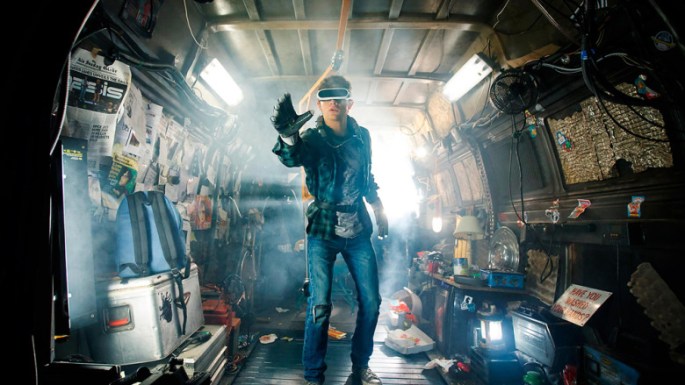
Ernest Cline’s 2012 novel Ready Player One has been dividing geek fandom since it hit the stands; for some it’s a delightful menagerie of 80s pop culture, and for others it’s warmed over name dropping with little originality.  The book is actually somewhere in the middle, a decent concept in these increasingly virtualized times that often lacked compelling characters and followed the pat three act arc so closely it’s got a magical cyber key to demarcate each one.  Cline received a rare blessing indeed when Steven Speilberg’s schedule actually lined up to allow his directorial involvement with the project to go forward, and we the audience are now treated to more than a few dollops of nostalgia mixed in with whip-crack visuals and a streamlined adventure fable that will inspire more than a few ear to ear grins.

Credit is due to Cline and co-screenwriter Zak Penn as well; digging through the variety of movies, characters and music the considerable Time Warner archive has to offer, they’ve swapped out a majority of the book’s references for new ones, completely trashed entire quests in favor of newer and better ones, and even managed to make the central love story pop—certainly moreso than it did on the page.  A game cast spends the majority of its facetime behind motion captured avatars, but in the real world (a surprisingly small-feeling backlot set of dirty streets and the offices of Corporate Evil Personified) we enjoy our time with the likes of Olivia Cook as the plucky Samantha and Ben Mendhelsohn, well on his way to being cast as the villain in every film from here on out.  New additions include TJ Miller’s alternately ominous and hilarious virtual henchman and Hannah John-Kamen as the IRL enforcer.  Our main hero, Parzival/Wade, isn’t much more than a video game hero writ large himself, but there’s more than enough going on at all times that we never feel too cheated by a fairly two dimensional lead. Readers of the source material who feel out of sorts after the significant changes to the early missions will be comforted by the spectacular finale, which keeps the important bits from the book and adds a few delights on top.

Spielberg injects just enough heart and soul into Ready Player One to make it the rarest of birds, a film adaptation that improves upon the book in any number of ways.  As an architect of much of the cultural magic that the book celebrated, he seems a natural choice, but in fact it’s his longstanding mastery of the mass entertainment that makes him the perfect fit.  He knows where to drop a joke, how to make use of a Hollywood classic or two, and when to keep things moving forward almost despite the digital barrage of characters and action swirling around every inch of the frame.  Cline’s been writing a sequel that no doubt will give another filmmaker the opportunity to step into this playland in a few years, but I’ll be surprised if it lives up to the gleeful ride Spielberg and his cohorts have cooked up here.

Ready-Player-One-Battletoads-El-Dragon-Eldar-Elite

B Movie Glory: Rough Draft

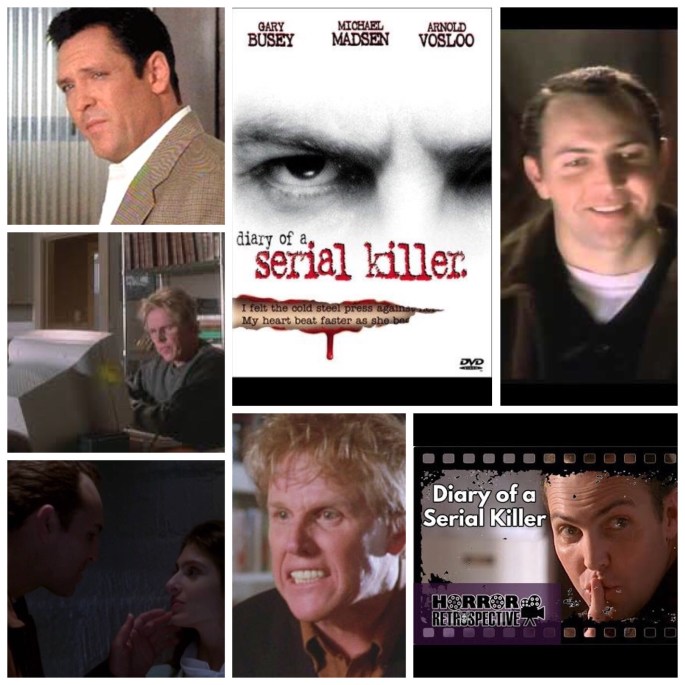
A serial killer whose nasty crimes attract the attention of a journalist, who reaches out and wants to document, understand and write about the sicko. Sounds like prime material for a streamlined big budget exercise, right? Not so much. Rough Draft is a slack jawed, barebones B Flick blessed with the undeserved talents of Arnold ‘Imhotep’ Vosloo, who plays a freaky knife murderer with a self proclaimed love for his victims. He’s terrific, but the film, and his two usually excellent character actor costars Gary Busey and Michael Madsen, just straight up flatline. Busey is a washed up journalist who accidentally witnesses switchblade wielding psycho Vosloo murder a girl, one in a series of targeted brunettes who have been turning up dead across the city. Instead of putting old Gary under the knife, he reaches out to him and wants his story told via the written word, a nervous proposition at best. Madsen is the cool cucumber detective who’s on the case, and so it goes. It’s strictly by the numbers DTV sludge though. Busey spends one scene in drag, which is not an image anyone could forget too soon. Madsen wears a ludicrous English golf hat thing and mumbles listlessly. Only Vosloo rises above the swamp, and it’s a shame the character didn’t get a better script/film to play in, because the guy plays him with expert menace as a lucid, intelligent, grinning monster who wields his switchblade as elegantly as his charisma. This one is buried somewhere deep in the jungles of 1997 straight to VHS purgatory, and may as well stay there to be honest. Also titled Diary Of A Serial Killer on some DVDs, but Rough Draft has more zest and ambiguity.

-Nate Hill

Jonathan Glazer’s Under The Skin

People often say that Jonathan Glazer‘s Under The Skin is one of those films you’ll either love or hate, and while I understand the stark precautionary sentiment, I think there’s more shades of grey than a knee-jerk reaction towards either side of the fence. I loved what the film did with sound, atmosphere, imagery and expectations. I hated how it made me feel overall. Detached. Alienated. Confused. Uneasy. Cornered by otherworldly stimuli. For what it’s worth, that’s most likely the intention behind the whole thing, and I applaud the genius in achieving a goal of exquisite discomfort, but I doubt anyone could blame me when I say that it’s a film I’ll watch once, and only once. Glazer goes for less of a conventional narrative and more of a dread inducing screensaver aesthetic, moving glacially through a series of events that seem to be both cohesive and just out of reach, toying with audience perception for a mood piece that is the cinematic equivalent to a particularly intense bout of disassociation. Scarlett Johannesson is as scary and sexy as one could get, playing some type of alien creature on a quiet, merciless rampage in various areas of Scotland. Seducing, destroying and stockpiling the pilfered essences of several unfortunate dudes who wander into her proverbial spiderweb, she, or rather ‘it’, eventually experiences some kind of inner awakening and undergoes a paradigm shift clearly brought on by her ongoing affiliation with those strange and sneaky creatures called human beings. If I’m being vague, it’s on purpose; there’s no gift wrapped cliff-notes for this baby, it’s something that makes its imprint on you in a language too illusory to impart in words. I’m reminded of other science fiction films like Darren Aronofsky’s Pi or E. Elias Merhige’s Begotten in the sense that most of what we see, hear and feel is not pleasing to the senses at all. Many heady sci-fi films are engineered to elicit positive emotional response from an audience, via a cathartic score, engaging production design and very human stories. Films like this, and the aforementioned, go out of their way to come across as cold, uncomfortable and stranded in a mist of off-putting hysteria. It’s a bold move whenever it happens. In the case of this film, it’s to give us a sense of what it must be like for an alien being to be thrown in with our lot here on earth. From the shrill, rhythmically jagged score by Mica Levi, to Scarlett’s alluring menace, to the murky nocturnal photography to the half mumbled daze of near incoherent dialogue, it’s all there to move us several planes away from ‘normal’, and get under our skin (hey that’s the title). Does it work? One hundred percent, and kudos, as it’s as scarily disorienting as they come. Is it pleasant moviegoing? Miles from it, it’s a beast built to provoke a reaction, and if you don’t like what it bristles up in you, you won’t hastily rewatch it anytime soon. I know I won’t.

-Nate Hill

Cult Rewind: Remo Williams the Adventure Begins

Image result for remo williams poster

Frank and Kyle are back with their Cult Rewind series, this time joined by Ben Cahlemer to discuss Guy Hamilton’s REMO WILLIAMS THE ADVENTURE BEGINS. The conversation does take a veer where the three of them discuss the 4K and Ultra High Definition formats, as well as Arrow Video.

Highlander 2: The Quickening

I have no words for Highlander 2 other than ‘what in the actual fucking fuck.’ I can’t call it Russell Mulcahy’s Highlander 2 because the poor guy tried to have his name removed from the credits, and who could blame him, really. In fact, it’s so thoroughly godawful it shouldn’t even be called Highlander, either. It’s ‘Movie X’, fit only for quarantine and to be blasted off into space so the folks on fictional planet Zeist can keep it. I love the first Highlander, it’s a camp cult rock n’ roll sci-fi sleeper classic, and any sequel would have large shoes to fill. What can be found here? Time travel. Outer space. An artificial ozone layer. Autistic porcupine alien assassins. Michael Ironside ripping off Clancy Brown’s beloved Kurgan villain so blatantly it hurts. Christopher Lambert in old age makeup that looks like it inspired Jackass’s Bad Grandpa. A Sean Connery montage visiting a tailor set to the William Tell Overture. I know all these ingredients could potentially brew up an even zanier cult classic than the original, but nope, no sir. This movie is a badly told story with scant context and zero continuity in both connective tissue to the first film and finding any organic roots of it’s own. Lambert’s Connor McLeod appears to be both old, young and somehow from a different planet, oh and he helped build a synthetic ozone layer to protect earth, a subplot both arbitrarily drawn up and coincidentally concocted around the same time as Total Recall came out, which I’m sure is just one big coincidence, ho ho. Ironside plays some radical called Katana who travels to earth and through time (wat) to kill Connor because there can be only one, a mantra that the film also happily dismantles in its earnest quest to bury the legacy of the first film in confusion and custerfuckery. I won’t even begin to describe Virginia Madsen’s haphazard love interest, a ‘scientist’ who winds up in bed with McLeod like minutes after she’s met him and seen him reverse age randomly and get young again. I’ve heard that Lambert would only do the film if Connery did too, and that the pair formed a bond working on the first film. The studio would have been better off just pitching their bucks in for the two of them to take a fishing trip together, no cameras involved, and save us all the headache.

-Nate Hill

Neil Jordan’s MONA LISA

With its dark and seedy narrative, mixed with off beat humor and performances that are as touching as they are ferocious, Neil Jordan’s Mona Lisa is a wonderful deep cut from cinema’s most often overlooked decade, the 1980s.

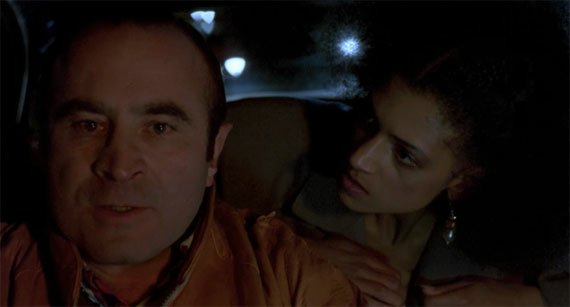
Bob Hoskins gives a raw and emotionally charged performance as George, a man that time as well as life forgot while he served time in prison for his mob boss Mortwell, played by a sleazy and smarmy Michael Caine. George’s payoff is driving for a high class escort, the exotic Simoe played by Cathy Tyson.

As George’s infatuation for Simone turns into an a love struck obsession, Simoe starts to groom and manipulate George into a graphic and dangerous odyssy to find her friend lost in the rainy streets and swearty backrooms of London.

Neil Jordan pulls a coup de grâce with this film. Hoskins brings his brutish affability to a dangerous and fearsome world that he’s a stranger to; bringing a physicality and soft sensibility to a role that remains his finest on screen performance that boasts his tough guy persona yet yields the floor to his humor and warmth.

Perhaps one of the more underrated aspects of the film is Michael Caine’s turn as the vile and disgusting antagonist who plays in a shade of grey that remains one of Caine’s more unique turns in a career populated with fabulous performances.

The film excels at its bizarre nature, not only using Nat King Cole’s seminal tune of Mona Lisa, but also Genisis’ In Too Deep in an almost jarring montage that works perfectly and quickly becomes one of the most fascinating aspects of the picture.

Mona Lisa is an unsung classic that finds the sweet spot in the canon that is transgressive cinema. It does not compromise a facet of screen time, spending each frame building a brooding and haunting story of how sometimes love can be a wicked game.

Gary Fleder’s Things To Do In Denver When You’re Dead

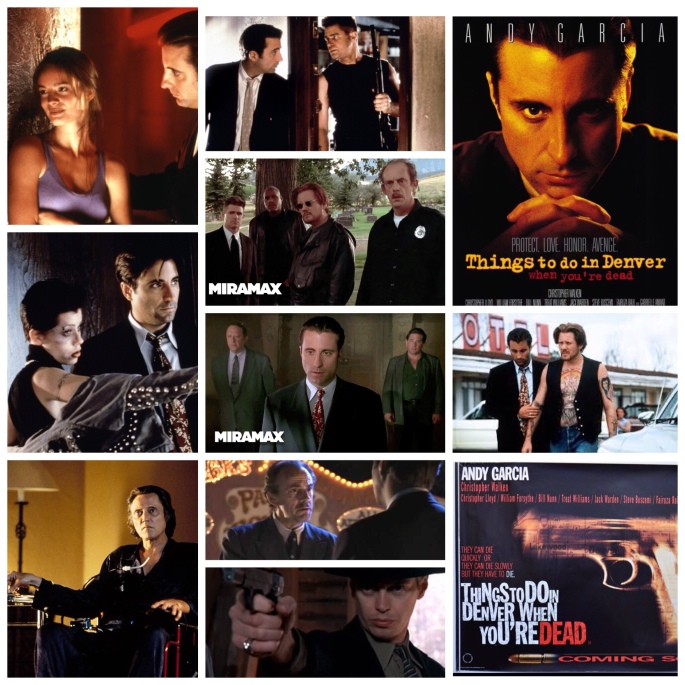
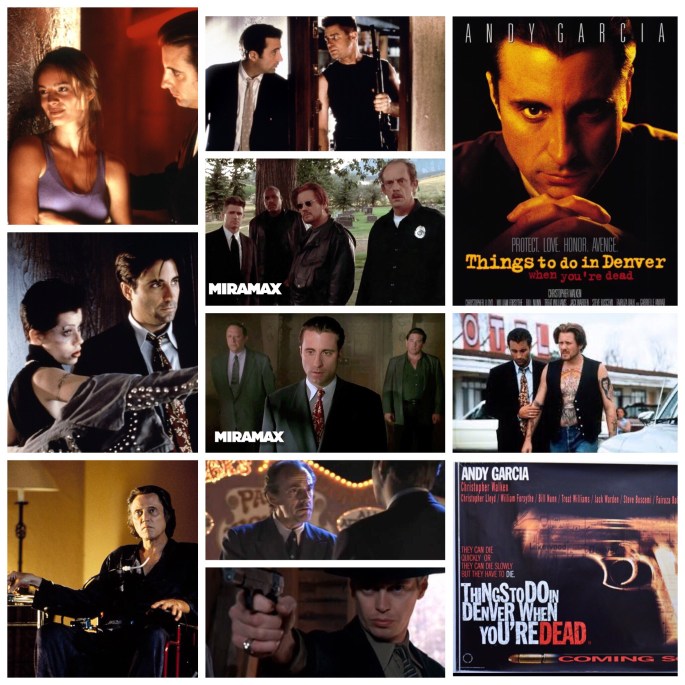
The 90’s was a heyday of hard boiled, ultraviolent film noir, a ripple effect that can undeniably be traced back to Quentin Tarantino’s Pulp Fiction, however it’s silly to say that they all are derived from that film, because plenty of them have their own distinct groove and flavour. One such flick is Gary Fleder’s Things To Do In Denver When You’re Dead, a mouthful of a title that serves as harbinger to one of the most idiosyncratic, verbally flamboyant scripts Hollywood ever produced, penned by Scott Rosenberg. They scored the cast to back it up too, for a beautifully melodramatic neo-noir pulp opus that should be as legendary as any of the household name films to come out of that era. Andy Garcia is the definition of slick as Jimmy The Saint, an ex mobster on the straight and narrow who’s pulled back into the game by The Man With The Plan (Christopher Walken) his former employer and the most dangerous crime boss in all the land. Hired to scare the piss-ant boyfriend who stole Walken’s son’s girl, Jimmy rounds up a crew that shouldn’t be trusted to watch a junkyard. Pieces (Christopher Lloyd, brilliant) is a diseased old porn shop owner, Easy Wind (Bill Nunn), tough guy with a heart of gold Big Bear Franchise (William Forsythe) and Critical Bill (Treat Williams) the psychopathic wild card who uses his day job at a mortuary as an anger outlet by pummelling the corpses like punching bags. Of course they royally fuck up the job, and Walken places scary, symbolic ‘hits’ on each of them. The clock ticks as they all try to either leave town or face the music, but Jimmy is the one with something to lose as he’s fallen in love with elegant, posh rich girl Dagney (Gabrielle Anwar). The script could have easily gone for just colourful carnage and glib posturing, but there’s real, palpable gravitas to the character relations, especially between Jimmy and Walken, who’s history is hinted at and brought to complex life by the two pros. This is Walken at his weirdest and wildest, confined to a spooky wheelchair and locked up in a guarded, dimly lit estate like Count Dracula. There’s a touching subplot involving wayward hooker Lucinda (Fairuza Balk, always terrific) that brings out the dormant humanity in hardened Jimmy. The cast here really is a marvel, and includes Don Cheadle and Glenn Plummer as a couple of loudmouth criminals, Jack Warden, Jenny McCarthy, Tiny Lister, Marshall Bell, Bill Cobbs, Michael Nicolosi, and Steve Buscemi as a freaky hitman named Mr. Shhhh, because he shoots first and doesn’t ask any questions at all. The dialogue is unique and flows from the actors like urban Shakespeare, it’s one of the coolest scripts ever written, and serves not just to be slick for the sake of it, but use jive and jargon to bring forth character naturally, and effortlessly provide buoyancy to the story. One of the great hidden gems out there. Boat Drinks.

The Assassination of Jesse James by the Coward Robert Ford

The Assassination of Jesse James by the Coward Robert Ford

2007.  Directed by Andrew Dominik.

Hypnotic, quiet, and dangerous, Andrew Dominik’s masterpiece, The Assassination of Jesse James by the Coward Robert Ford is an epic deconstruction of the Western and a bold commentary on America’s celebrity obsession.

Robert Ford is a 19 year old hanger-on to the legendary James Gang.  In the wake of their last heist, he slowly inserts himself into James’s family, beginning an intricate relationship in which both James and Ford recognize the threat in the other man.   As the decidedly non-glamorous violence begins to fray James’s already unhinged mind, Ford seizes the opportunity for glory, not fully understanding the ramifications of his deed until staring into his own, personal oblivion.

Casey Affleck delivers the performance of a lifetime as Ford.  His grasp of the homoerotic undertones and soul crushing evolution of Ford is so exposed that he almost evokes pity for his treachery.  The scene in which James takes his guns off is riveting.  Affleck’s expression is pained orgasmic relief, while Brad Pitt’s Jesse James’s nihilistic embrace is flawless.  Pitt portrays James as a near psychopath, barely held together by his wife and children.  These two actors are muted lightning anytime they are together, playing a dangerous game in which every expression, every gesture has malicious designs.

The supporting cast is a knockout.   Sam Shephard, Jeremy Renner, Mary-Louise Parker, Paul Schneider, Garrett Dillahunt, James Carville, Zooey Deschanel, Ted Levine, and Michael Parks are all solid, each of them outlaws in their own right.  Sam Rockwell as Ford’s brother is gripping in his display of all consuming guilt.

The always mysterious Nick Cave partnered with fellow Bad Seeds member Warren Ellis to create an engrossing, and haunting score that compliments the existential symmetry to near perfection.  Patricia Norris’s costume design is yet another pristine component of Dominick’s charade.   This is a film that is lived in and used up.   The legends of the dying west are real and flawed, hiding their weaknesses behind fancy cravats and sterling watch chains.  Janice Blackie-Goodine’s set decoration is meticulous, faithfully cataloging the world that was for the lost souls that wander throughout.

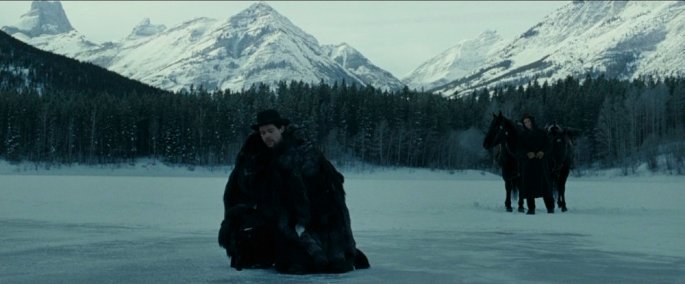
All of these elements are a distant second to Richard Deakins’s transcendent cinematography.  Using a variety of lighting to create authentic, blurred edges, while simultaneously capturing the natural beauty of the Western Canadian landscape that was used for the film.  The train sequence is a miracle to behold.   Deakins’s esoteric approach to the use of light has to be witnessed in order to fully understand how special his work on this film is.

Dominik’s command of these powerful tools is almost to good to be true.  His script takes its time, examining each theme with endless scrutiny.  The cost of fame is the center of the wheel, while celebrity idolatry, forbidden love, and mental illness are the spokes that move Dominik’s dark epiphany to it’s quiet conclusion.  The narration of Hugh Ross is another elegant nail in the romanticized American West’s coffin.  What begins as a thorough examination of the end of Jesse James unrepentant existence ends as a footnote in an era where popular opinion made devils into legends and cowardice into a matter of intent and opportunity.

Available now for digital streaming, and running at a colossal 160 minutes, The Assassination of Jesse James by the Coward Robert Ford is an entrancing addition to the Western genre.  A revisionist epic on the surface, this more of an experience than a film.   It demands patience and thoughtful examination of it’s subject matter, which provides a visually poetic meditation on so-called heroes and those who blindly worship them.

Highly.  Highly Recommend.

-Kyle Jonathan