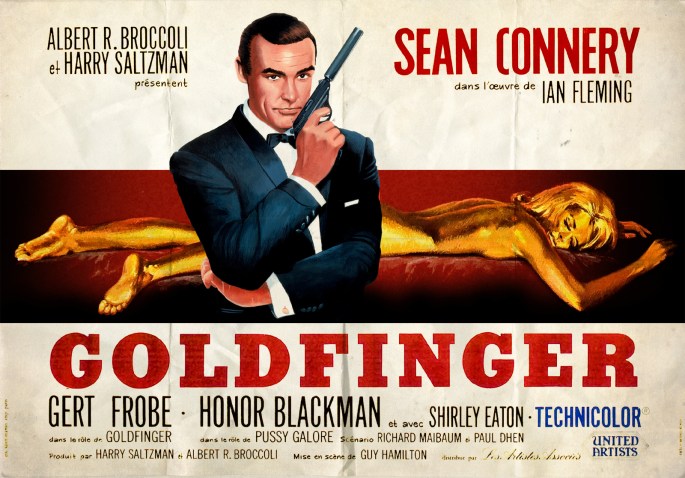
Frank and Tom are back with Podcasting Them Softly’s James Bond series, For Your Ears Only discussing Guy Hamilton’s GOLDFINGER and its impact on the franchise moving forward.
Frank and Tom are back with Podcasting Them Softly’s James Bond series, For Your Ears Only discussing Guy Hamilton’s GOLDFINGER and its impact on the franchise moving forward.

Thirty-seven years ago, The Empire Strikes Back subverted audience expectations by taking the story and characters in new directions that, for lack of better word, no one saw coming. Han Solo was frozen in carbonite late in the movie, and Luke Skywalker lost his right hand in the lightsaber duel with Darth Vader that revealed his biological connection to the man beneath the mask. Empire itself had a divided reaction, with some viewers angry that Darth Vader was Luke’s father, or that Han had been frozen, but thanks to the lack of internet in 1980, this division was nowhere near as caustic as it is now. Today, The Empire Strikes Back is lauded for the geoundbreaking risks it took in evolving the characters and story, and one would assume the risks involved in the storytelling of The Last Jedi would be received similarly. Oddly enough, it’s even more divisive than any if us could have expected, and thanks to the social media’s manner of letting every voice be heard no matter how asinine it may be, this division is infinitely more caustic.
I know a lot of my fellow Star Wars fans went into The Last Jedi with their own fan theories and fictions bouncing around in their minds, and their expectations understandably high. This is Star Wars after all. It’s okay if you didn’t like the movie for a variety of reasons, from the performances to the CGI to the score. It’s also perfectly okay if you loved this movie for the same reasons other seem to hate it. However, calling a movie “bad”, or claiming it has ruined your childhood because your fan theories didn’t pan out, isn’t well thought out, rationally minded criticism, and it doesn’t make a movie bad. That’s not how cinema works. This hyperbole laced tantruming makes me appreciate the rational conversations I’ve had with others who don’t like the movie, or don’t like it as much as I do, all the more. Remember folks, it’s just a movie.
I have seen The Last Jedi twice. Once for the experience of seeing the movie for the first time loud and writ large, the second to see if my reaction was strengthened or weakened by an additional viewing. After the second viewing, I came to the conclusion that most of the problems I had with the movie had dissappeared, and I was left with just one gaping problem that I simply can’t overlook. Thankfully, the rest of the movie built around that singular problem more than make up for the damages. I am happy to report that while it may not be my favourite entry in the series (I don’t know which one is, to be truthful), it is certainly beloved by me. Warts and all, I adore this motion picture.
By now you should may know the basic plot of the eighth film in the Skywalker saga. Poe Dameron (Oscar Isaac), and General Leia Organa (the late Carrie Fisher) are battling the First Order in wide open space. Finn (John Boyega) and newcomer Rose Tico (Kelly Marie Tran) head to a gorgeous new locale known as Canto Bight to acquire assistance in fighting the First Order. And Rey (Daisy Ridley) is confined to Ahch-To, trying desperately to persuade a reluctant Luke Skywalker (Mark Hamill) to join the battle against The First Order and put an end to Supreme Leader Snoke (Andy Serkis) and Kylo Ren’s (Adam Driver) reign. That’s not saying too much, is it?
The gaping problem I was referring to in an earlier paragraph comes in the form of the plot thread involving Finn and Rose and their adventure of sorts to Canto Bight. The events that unfold here are do not affect the main narrative of the movie, and only seem to affect the characters involved in this plot in the moment, or soonly. I appreciate being shown how rich war profiteers live, how their intense gambling and partying also seem second nature to them by the time we meet them. It’s a shame then that their modes of gambling are too Earth-like, lacking any real imagination or creativity.
I also took issue with the character of Rose, who I didn’t find to be a compelling character, and whose portrayal by Kelly Marie Tran lacked chemistry between herself and John Boyega (Finn). Had Rose’s arc ended shortly after she stuns Finn into a brief slumber, I would have been okay with it, but because Rian Johnson instead pairs her up with Finn, I felt like I was forced to suffer through watching a vaguely interesting character without a worthwhile character arc, who is as out of place in this movie as a Deadpool cameo would have in this year’s Logan. The forced and otherwise jarring and completely unnecessary romantic desire Rose holds for Finn (but he doesnt seem to reciprocate in the slightest), conjured up on the salty grounds of Crait that causes her to crash her speeder into his while he’s attempting a suicide run against a powerful First Order weapon, is as asinine as saying this movie ruined your childhood. It’s all fine entertainment, but this sole portion of the movie is its greatest weakness.
There’s plenty of greatness to be found elsewhere, but for my money’s worth, I found true greatness in three places. Firstly, the elongated opening scene, once the action kicks in after a couple of humourous gags, is a frontrunner for the best space battle in Star Wars film history, especially becausit contains a brilliant white knuckling sequence where Rose’s soon to be deceased sister Paige (Veronica Ngo) has to recover a device that will allow her to drop the enormous payload of bombs aboard the ship she’s on. Secondly, there is the popular throne room fight scene around three quarters of the way through the movie, wherein Rey and Kylo face off against Snoke’s well trained private guards. It’s a dazzling, inventive, and thrilling action scene, bound for iconic status in no time at all. And lastly, there’s the scene near the very end of the film in which Luke Force projects himself onto the battlefield of Crait to distract Kylo while the remaining Resistance fighters escape the clutches of the hell bent Sith, before Luke is revealed to still be on Ahch-To. He seemingly becomes one with the Force and peacefully vanishes into the air. That he does so to the tune of John Williams’ beautifully composed and iconic Binary Sunset track from Star Wars (Episode IV: A New Hope), made the moment all the more moving and powerful for this fan, whose favourite scene in Star Wars is in fact the original Binary Sunset, though this scene sure gives it a run for its money.
In the opening line of his review for Star Wars Episode I: The Phantom Menace, the late movie critic Roger Ebert offered up the following sentiment: “If it were the first “Star Wars” movie, “The Phantom Menace” would be hailed as a visionary breakthrough. But this is the fourth movie of the famous series, and we think we know the territory; many of the early reviews have been blase, paying lip service to the visuals and wondering why the characters aren’t better developed. How quickly do we grow accustomed to wonders,”. That quote has stuck with me like dirt under my fingernails, and I can’t help but apply its unwavering logic to Star Wars: The Last Jedi. My mind wanders to the finale of my favourite movie of last year, La La Land, which posed a delightful what-could-have-been sequence, an alternate timeline if you will. Perhaps in another timeline of our human history, The Last Jedi was the first of the Star Wars movies, lauded by many for generations to come, and praised for the risks it took in creating something new and unique. Perhaps not. Who knows what could have been.
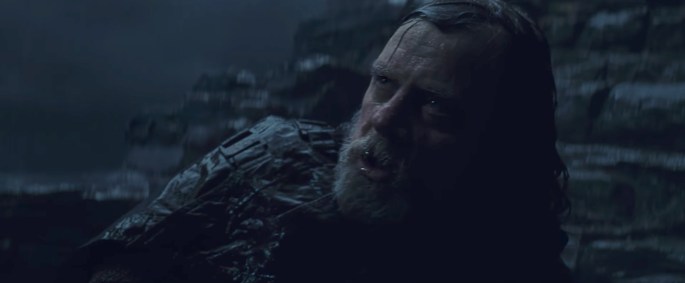
Thirty-seven years ago, The Empire Strikes Back subverted audience expectations by taking the story and characters in new directions that, for lack of better word, no one saw coming. Han Solo was frozen in carbonite late in the movie, and Luke Skywalker lost his right hand in the lightsaber duel with Darth Vader that revealed his biological connection to the man beneath the mask. Empire itself had a divided reaction, with some viewers angry that Darth Vader was Luke’s father, or that Han had been frozen, but thanks to the lack of internet in 1980, this division was nowhere near as caustic as it is now. Today, The Empire Strikes Back is lauded for the geoundbreaking risks it took in evolving the characters and story, and one would assume the risks involved in the storytelling of The Last Jedi would be received similarly. Oddly enough, it’s even more divisive than any if us could have expected, and thanks to the social media’s manner of letting every voice be heard no matter how asinine it may be, this division is infinitely more caustic.
I know a lot of my fellow Star Wars fans went into The Last Jedi with their own fan theories and fictions bouncing around in their minds, and their expectations understandably high. This is Star Wars after all. It’s okay if you didn’t like the movie for a variety of reasons, from the performances to the CGI to the score. It’s also perfectly okay if you loved this movie for the same reasons other seem to hate it. However, calling a movie “bad”, or claiming it has ruined your childhood because your fan theories didn’t pan out, isn’t well thought out, rationally minded criticism, and it doesn’t make a movie bad. That’s not how cinema works. This hyperbole laced tantruming makes me appreciate the rational conversations I’ve had with others who don’t like the movie, or don’t like it as much as I do, all the more. Remember folks, it’s just a movie.
I have seen The Last Jedi twice. Once for the experience of seeing the movie for the first time loud and writ large, the second to see if my reaction was strengthened or weakened by an additional viewing. After the second viewing, I came to the conclusion that most of the problems I had with the movie had dissappeared, and I was left with just one gaping problem that I simply can’t overlook. Thankfully, the rest of the movie built around that singular problem more than make up for the damages. I am happy to report that while it may not be my favourite entry in the series (I don’t know which one is, to be truthful), it is certainly beloved by me. Warts and all, I adore this motion picture
By now you should may know the basic plot of the eighth film in the Skywalker saga. Poe Dameron (Oscar Isaac), and General Leia Organa (the late Carrie Fisher) are battling the First Order in wide open space. Finn and newcomer Rose Tico (Kelly Marie Tran) head to a gorgeous new locale known as Canto Bight to acquire assistance in fighting the First Order. And Rey (Daisy Ridley) is confined to Ahch-To, trying desperately to persuade a reluctant Luke Skywalker (Mark Hamill) to join the battle against The First Order and put an end to Supreme Leader Snoke (Andy Serkis) and Kylo Ren’s (Adam Driver) reign. That’s not saying too much, is it?
The gaping problem I was referring to in an earlier paragraph comes in the form of the plot thread involving Finn and Rose and their adventure of sorts to Canto Bight. The events that unfold here are do not affect the main narrative of the movie, and only seem to affect the characters involved in this plot in the moment, or soonly. I appreciate being shown how rich war profiteers live, how their intense gambling and partying also seem second nature to them by the time we meet them. It’s a shame then that their modes of gambling are too Earth-like, lacking any real imagination or creativity. I also took issue with the character of Rose, who I didn’t find to be a compelling character, and whose portrayal by Kelly Marie Tran lacked chemistry between herself and John Boyega (Finn). Had Rose’s arc ended shortly after she stuns Finn into a brief slumber, I would have been okay with it, but because Rian Johnson instead pairs her up with Finn, I felt like I was forced to suffer through watching a vaguely interesting character without a worthwhile character arc, who is as out of place in this movie as a Deadpool cameo would have in this year’s Logan. It’s all fine entertainment, but this sole portion of the movie is its greatest weakness.
In the opening line of his review for Star Wars Episode I: The Phantom Menace, the late movie critic Roger Ebert offered up the following sentiment: “If it were the first “Star Wars” movie, “The Phantom Menace” would be hailed as a visionary breakthrough. But this is the fourth movie of the famous series, and we think we know the territory; many of the early reviews have been blase, paying lip service to the visuals and wondering why the characters aren’t better developed. How quickly do we grow accustomed to wonders,”. That quote has stuck with me like dirt under my fingernails, and I can’t help but apply its unwavering logic to Star Wars: The Last Jedi. My mind wanders to the finale of my favourite movie of last year, La La Land, which posed a delightful what-could-have-been sequence, an alternate timeline if you will. Perhaps in another timeline of our human history, The Last Jedi was the first of the Star Wars movies, lauded by many for generations to come, and praised for the risks it took in creating something new and unique. Perhaps not. Who knows what could have been.
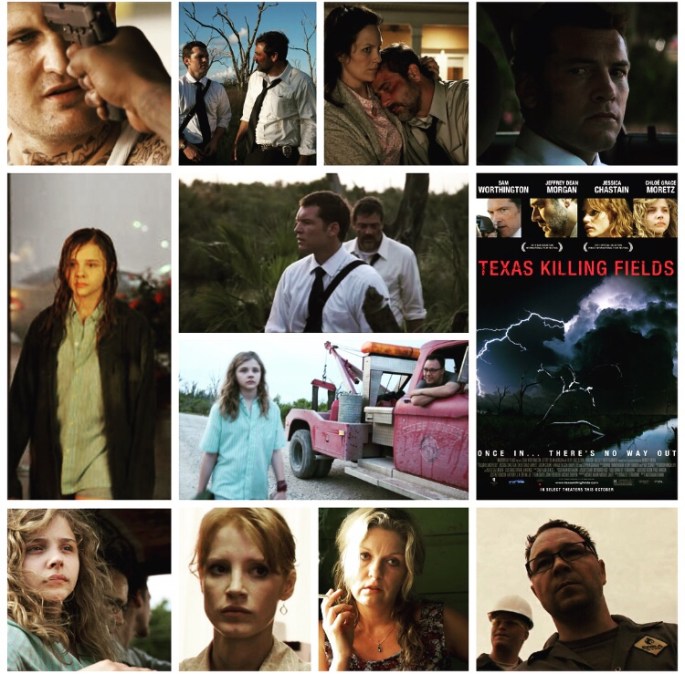

Whenever people say there isn’t enough gritty, messed up modern neo-noir (which there’s some truth to, but that’s another article) I like to dig up ones like Texas Killing Fields, an unforgivably overlooked crime drama from some years back that went by mostly unnoticed. Directed by Amy Canaan Mann, who is none other than Michael Mann’s daughter, and starring a talent trio of Jeffrey Dean Morgan, Sam Worthington and Chloe Grace Moretz, it’s a dark-boned, nihilistic murder mystery set in the deepest south and populated by the kind of folks you’d actively avoid entire sections of the barroom to get away from. There’s a killer loose in the low income doldrums of Texas, as if they didn’t have it bad enough in life, and two scarily mismatched cops are on the case. Intrepid idealist Morgan sees the light in darkest corners, while faithless misanthrope Worthington adopts a hopeless, devil may cry attitude. Caught between them is a wayward teen girl (Moretz), a homeless sitting duck who wanders the byways, a prime target and unfortunate default bait for this monster to come skulking out of the shadows. This is a downbeat, chilling flick with scant rays of humanity here and there, but bleakness takes over the screen like the portentous clouds in the storm-swept skies of the rural Americas, bringing danger and decay in their wake. The suspect list is a mile long because of how many wicked character actors there are in the supporting cast, but the culprit is oddly obvious from the get go. This isn’t to say the narrative is weak or they failed at a whodunit, as one can scarcely say that was there intention at all. It’s less of a whodunit and more of a ‘dunit’, as every character has some evil to hide or stain on their soul, and when the killer is revealed, they’re just another in a long line of wayward beings out there. Sheryl ‘Laura Palmer’ Lee is great as Moretz’s destitute, promiscuous mother, Jason Clarke roars in for a terrifying cameo as a violent pimp with an otherworldly blond dye job, Stephen Graham is dangerously quiet as a psychopathic local yokel, Annabeth Gosh has a brief role and Jessica Chastain gives an early star-making turn as an out of state cop who reluctantly aids Jeffrey and Sam. Dread is the word that seems to be on both Mann and her cinematographer Stuart Dryburgh’s mind, as every shot is composed primarily of darkness, shadows and claustrophobic grain, giving the fields and flatlands of Texas a hellish, oppressive lacquer. Darkness is explored both literally and thematically, and more fervently than most mainstream films care to get, which may be one reason the film wasn’t well received at all, or at least by most. It knowingly plunges headlong into the eye of the hurricane surrounding the hopeless heart of humanity, without much light on the other side or any to guide it, but there’s a bravery in that that I respect. One of the best crime dramas in recent history, a film that should be brought up more in discussion and a treatise on how to make a lasting impression in a genre that sees entries fall through the cracks on the daily. Brilliant, searing stuff.
-Nate Hill


The Collector is a booby trap rigged horror flick that not only gives Saw a run for it’s money, but outdoes it in the atmosphere department. This is one seriously spooky film, made so by it’s eerie, claustrophobia ridden single-location setting, elaborate and maximum pain inflicting terror traps and burnished, browned out cinematography that gives it it’s own aesthetic. In a creaky old heritage mansion, a cat burglar leads his team from room to room, robbing the place to pay back a hefty debt owing to his ex-wife. Only problem is, they’re not alone in there. Stalking through the shadows is a silent, mask wearing phantom with a fucked up bag of tricks and a disconcerting leather face mask. Each new hallway or edifice finds them falling into one of his gory, well staged snares, from razor wire to full on bear traps and every gnarly device in between. It’s never really clear who he is or why he’s there save for a minuscule expository scene that you’ll miss if you blink, but it’s scarier that way in most cases, he could be robbing the place too for all they know and he’s just getting territorial. The film is a shadow laced game of spider and fly, as each individual finally realizes they’re no match for this fiend. Terrifically well made horror outing, but avoid the sequel (unimaginably called The Collection), as it takes everything that works so well here and shines a silly, noisy spotlight on it. This one will work you over and spit you out a clammy, nervous mess after it’s 90 minute stranglehold has had it’s way with you.
-Nate Hill

I’ve seen M. Night Shyamalan’s The Visit several times now and it gets funnier with every viewing. Funny in a good way, and scary too as it’s a great little fright flick, but there’s just something about demented old people who aren’t right in the head that shunts the deranged part of my funny bone into overdrive (I must’ve subconsciously picked that up from David Lynch). It’s first and foremost a dark comedy for me, and seems like it wants to be that anyways when you consider how it’s shot, edited and lit, but the horror just happens naturally through this very weird set of circumstances, which I found neat. There’s also an unexpected emotional gravitas running through the plot line, which is impressive when you consider how short and fast paced the film is and that it actually had time to throw some real drama in there. In true Hansel and Gretel allegorical form, a brother (Ed Oxenbould, quite irritating and the only weak link in the cast, especially when he ‘raps’) and sister (Olivia DeJonge, radiating talent both beyond her years and what her character is written as, hope to see more of her) head out into the sticks to visit the grandparents they’ve never met, whilst their single mother (Kathryn Hahn) heads off on a cruise with her beau to be. The kids are at first quite taken with their Nana (Deanna Dunegan) and Pop Pop (Daredevil’s Peter McRobbie), but, as any trailer will show, gradually they start to act in a way that would put the word strange in the understatement zone. There’s something terminally off with these two sweet old codgers, as the kids discover hour by hour of their visit, from Pop Pop hoarding up soiled diapers in the shed to Nana scuttling about the house naked at night like a geriatric Emily Rose. Are they possessed? Dementia ridden? High on bath salts? It’s best you figure out the nasty little surprises of Shyamalan’s narrative for yourself, and squirm at every delicious little bit of unpleasantness along the way. McRobbie and Dunegan offer a staggering number of both bone chilling and riotously funny moments in two performances that they should be proud of, for both scaring our socks off and providing endless off colour comedic moments. Now as for the found footage camera aspect, that’s usually something I hate these days, but given how well it works with the subject matter and tone here, plus how non intrusive it is, I can’t bash it too much. This is a neat little departure for Shyamalan, whose usual somber, bleak and airily atmospheric tone definitely needed a little shaking up, and what better new avenue to explore than darkly comic, hyperactive horror?
-Nate Hill

Critics and audiences alike embraced Hugh Jackman’s R-rated finale (we’ll see about that) as the Wolverine character earlier this year in the highly successful Logan, but I have little doubt the star was more excited about the release of his light-as-a-feather biopic musical of Phineas T. Barnum, The Greatest Showman. The X-Men made him a star, a franchise player and no doubt a millionaire many times over, but Jackman’s always wanted to sing and dance his way into your heart, not stab his adamantium claws through it. A longtime stage performer, he lent his star power to the immediately cancelled Viva Laughlin television series—apparently viewers weren’t ready for a Vegas-set musical weekly in 2007—and found Oscar nomination glory belting out Jean Valjean’s songs in Les Miserables. It’s no surprise, then, that he’d gladly jump into this role, a modestly budgeted tale about the birth of the best known circus and its risk taking founder. Whether or not it works probably depends entirely on how open the particular heart in the theater seat is to the musical form itself.
To those who peruse the genre with regularity, there won’t be too many surprises here. A plucky American myth about a poor kid turning his dreams into reality and riches, set to regular breaks into song with lavish attention paid to costume, set, lighting and choreography throughout, The Greatest Showman checks the boxes like clockwork. The music itself reminds one less of Rent or Hamilton than Katy Perry; syrupy inspirational pop that reinforces the easy ideals of belief in oneself, true love, overcoming obstacles, etc. In other words, the music of the musical, sadly, isn’t one of its high points. That said, each sequence is lovingly conceived and shot by special effects coordinator turned director Michael Gracey, and the dance sequences are anywhere from solid to spectacular depending on the given number. The cast isn’t given anything groundbreaking or unpredictable to do, but seem to get caught up in fearless leader Jackman’s clear enthusiasm for the project, so there’s a genuine spring in most everyone’s steps even as we’re moved dutifully through the rise, fall, and of course rise again of the titular character. Every time Barnum is about to turn to complete narcissism, a vibrant new musical sequence or grounding romantic interlude with steadfast wife Charity (Michelle Williams) pops up to remind us that we, too, love this scallywag.
Before I make it sound like The Greatest Showman is barely more than a brightly colored candy wrapper ready to blow away in the wind, it should be mentioned that the film has a bit more to say than white guys in America really can make it after all. As long as you’re not looking for anything approaching a docudrama recounting Barnum’s original “employees” being purchased slaves, or a deeper exploration of the exploitation weaved throughout the whole concept of a freak show, you’ll find some comfort in the script’s earnest attempts to cast the circus entourage as outsiders getting their own shot at fame, glory and perhaps even a measure of equality. Jackman’s Barnum is himself a poor kid at heart running in (and yet always just outside of) wealthy circles, and the class warfare that permeated 1850s America and hasn’t exactly disappeared in 2017 informs large swaths of his character arc. Thus the fizzy charms of a film seemingly based more on sound and spectacle than anything else actually find some social justice underpinnings that, if not exactly creating true gravitas, make The Greatest Showman appear to care about more than just a quick good time.

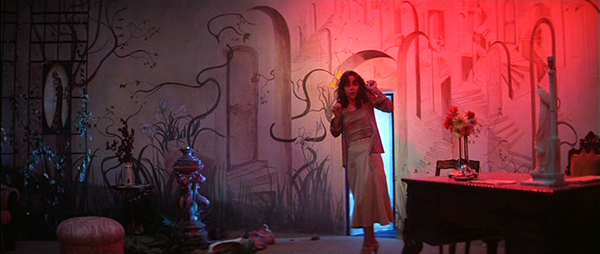
Dario Argento’s masterpiece, Suspiria, is a sinister mood experiment, that uses incoherent dream logic and wicked visuals to create a mysterious world of living nightmares.
Suzy is an American ballet dancer who enrolls at a prestigious performance academy in Germany. Soon after her arrival, a series of bizarre murders grips the campus. As Suzy delves into the accursed history of the school, she is drawn deeper into a place beneath reality, a place of dark magic and madness.
Argento’s script presents Suspiria as a string of ideas rather than a conventional plot, making a film that defies explanation. The performances are overly melodramatic, the set design is impossibly audacious, and the colors are loud and out of control. These elements bleed into one another, making it difficult to determine what is real and what is dream, while also conceding to the viewer that this was done with intent. Guiseppe Bussan’s enigmatic sets appear alien and inhospitable. The compositions of every scene are meticulous down the placement of objects and the positioning of the cast. Everything is a clue to a mystery that never asks to be solved, with Suzy sleepwalking from one terrifying experience to the next. Every door promises violence and every window teases a false hope of sanctuary.

Luciano Tivoli’s cinematography uses strange angles and brilliant colors to show that the subconscious is in control and reality is an ethereal concept, lying just beyond the viewer’s reach. The visual presentation borders on sensory overload, requiring multiple viewings to decipher all of the clues and symbols. Both the cinematography and set design are considered to be the pinnacle of the horror genre. This is what sets Suspiria apart from other classics. It is a high concept film presented in a vibrant, unforgettable package that continues to be imitated and dissected 40 years later.
Jessica Harper’s performance as Suzy is paradoxically cliched and nuanced. Suzy is the conduit through which the story is told, making her a passive protagonist. This tactic would normally be a weakness, but Harper uses considerable skill to convey genuine terror and dangerous curiosity, an attribute that Argento continually explores in many of his Giallo works. One of the more intriguing aspects of her turn is that Suzy never ascends to “final girl” status. Every action she takes is a reaction to the fear that she is experiencing and even in the climax, her response to the horror is organic and clumsy, harnessing primal instinctual response and subliminal surrender in equal amounts.
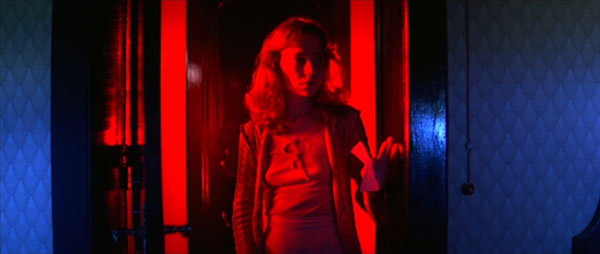
Goblin’s legendary soundtrack has a repetitive quality that bolsters Suspiria’s surreal framework. Luciano Anzellotti’s sound editing fills the spaces in between with ominous footsteps and creepy incantations, making the supernatural elements auditory phantoms that loom in the shadows. The amount of restraint with regard to the fantastical elements is remarkable. Everything is pointedly vague to the point of frustration, with Argento stingily doling out kernels of explanation in a randomized pattern. The abrupt appearance of the credits is a perfect footnote to the experience, snapping the viewer out of the reverie and back to reality.
Available now on a gorgeous 4K transfer from Synapse Films, Suspiria is one of the greatest horror films ever made. Fans of traditional storytelling may be discouraged by Argento’s design, but if approached with complete surrender to its atmosphere, this is a film that delivers an unforgettable cinematic experience.
Highly. Highly Recommend.
The third Hannibal Lecter film is an unorthodox and strange beast. It doesn’t quite live up to the previous two films, MANHUNTER and SILENCE OF THE LAMBS, on the whole; yet it feels like a natural cinematic progression that does the film franchise justice, yet falls short of the powerful impression the novel left.

The film is handicapped before it even leaves the gate with the recasting of Julianne Moore as Clarice Starling. The recasting really isn’t that catastrophic due to Scott’s ability to minimize Starling’s impact on the story and refocus the narrative on the title character and Gary Oldman’s grotesque and obscene performance as Mason Verger, a character so complex he quickly goes from victim to antagonist.
Over the course of the film, it’s an almost exhilarating journey watching Hopkins reprise his seminal role in a way that feels fresh, even though Hopkins has since worn his welcome out in that role. It’s a different Lecter, a reborn Lecter who has been living a new life, leaving his past behind him; or so he tries.
The transgressive nature of the film is a stark contrast to the soft aesthetic and alluring score, and beautiful Italian set pieces. The depravity the film slowly and softly sinks and is startling if you are paying attention. The homoeroticism between Oldman and Hopkins in a flashback, the feeding of the wild hogs, and the infamous Ray Liotta dinner scene are all prime examples of how subversive and disgusting the film can get.

While the ending of the film is a drastic change from the brilliant ending of Thomas Harris’ novel, it’s a sensible and cinematic ending, even though it runs the risk of not saying much, which almost hinders the film as a whole. The film isn’t great, and can feel worn out around some of its edges, but when it’s good, it is really good.
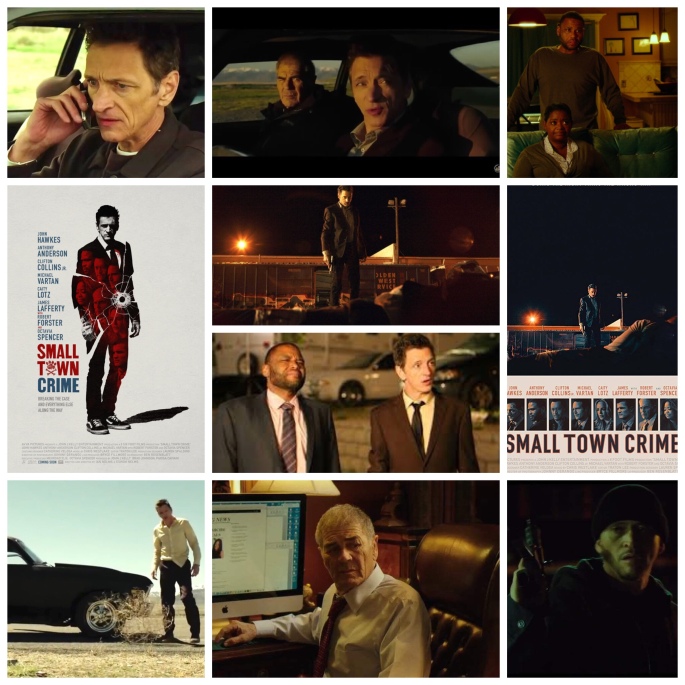
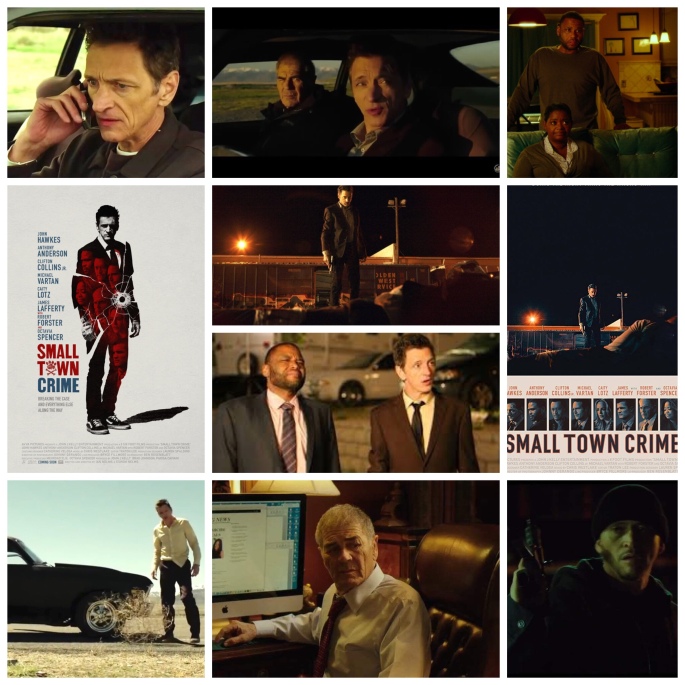
Looking for your annual rural crime/drama/black comedy/character study fix? Well, Three Billboards, which I reviewed the other day, provides that with something more illusory and profound. If you’re after one that’s a bit more old school and straightforward, check out the Nelms Brother’s Small Town Crime, a brutal, breezy thriller starring John Hawkes, an actor I remember from the fringes of the 90’s who seems to have gone newly platinum these days thanks to an Oscar nomination for 2010’s Winter’s Bone. He’s hilariously sympathetic here as a raging alcoholic ex-cop who stumbles right into the middle of a murder ring with the crosshairs latched onto a group of local underage prostitutes. Never one to back down once he gets a few cold ones in him before noon, he’s on the case between sessions at the dive bar and inebriated joyrides in his souped up muscle car. There’s a slightly off kilter, surreal quality to his story and that of those around him, a coming and going sense that these are a cartoonish series of events that aren’t really happening, when one looks at the supporting characters. Robert Forster has never been more deadpan or watchable as the tycoon grandfather of one of the slain hookers, a hands-on gent who isn’t afraid to dust off his giant scoped rifle to help out. He’s joined by outlandish Latino pimp Mood (Clifton Collins Jr., who needs way more roles), both of them assisting Hawkes in his crusade. Even the psychotic hitman (Jeremy Ratchford) dispatched to kill everyone in sight has a distinctly ‘out there’, roadrunner vibe. But Hawkes anchors the whole deal with the mopey, sad-sack realism of his character, a loser who’s dead-end existence has been given a new lease on legacy. His best buddy Anthony Anderson and wife Octavia Spencer give the plot some gravity too, a neat seesaw effect that sits opposite Forster and Collins exaggerated antics. The film has a funny way of both ambling along at it’s own pace and jumping out at you with warp speed jump cuts and brazen, bloody violence. The dialogue is pure poetry in areas and knowing camp in others, neatly balanced. Don Harvey and veteran tough gal Dale Dickey have great bits as salty bartenders, while Daniel Sunjata and haggard looking ex-pretty boy (remember him in Monster In Law with Jane Fonda and J-Lo?) Michael Vartan play two local detectives who are always frustrated to be a step behind Hawkes, who plays off the grid and close to the chest. Small Town Crime is a small time film, but the craft gone into bringing it to our screens couldn’t be bigger or more commendable from all angles. Highly recommended.
-Nate Hill
 Podcasting Them Softly