mother! – a reaction by Jason Callen

mother!

Art is the most selfish act of all, and the most consumptive.  The artist, compelled to create, consumes all around them. No one, and nothing, is safe. Nature, industry, culture, politics…all are ingested and processed in the desperate need to express that inner voice. Love too. Love is the tastiest morsel of all. With love, with a muse, the artist can transcend, reach heights once thought unattainable. Unfortunately for the muse they don’t always survive the process, as the artist is prone to discard them once they’ve served their purpose. The muse’s needs are of no concern to the artist in the midst of creation. The muse does not control its own power. The muse is activated when necessary, otherwise lying dormant. Their heart crystalized and preserved until the next desperate need strikes the artist. Sometimes the muse malfunctions, provides no fruit for consumption. These are dangerous moments for the artist, who must now distract themselves while waiting for the return of their inspiration. At these times the artist can become aware of their own selfishness, their gluttony.  This may trigger a spasm of altruism. In an attempt to balance hour upon hour of forced isolation, the artist may open themselves up, inviting people into the process and sharing with them their passion. But the artist is compulsive and often doesn’t realize when this “altruism” again becomes a part of their consumption. Soon the artist begins to feed again on those they have brought close, turning their lives into part of the work. A side effect of this is adulation. Feeling connected to the artist, the mob begins its own feeding. The artist can thrive on this adulation as much as they do the muse’s love. Sometimes it supplants it entirely. Having claimed partial ownership of the artist, the mob feels threatened by the muse. They fear its ability to return the artist to isolation. And so they destroy it, pummel it, dissect it. The artist is impotent to act. “It’s all because they love me,” he chants as his love dies and ego grows. The muse’s attempt to reignite the artist’s passion cause sparks that ultimately just burn everything to the ground. Undeterred, the artist simply changes medium. Now they work in ash.
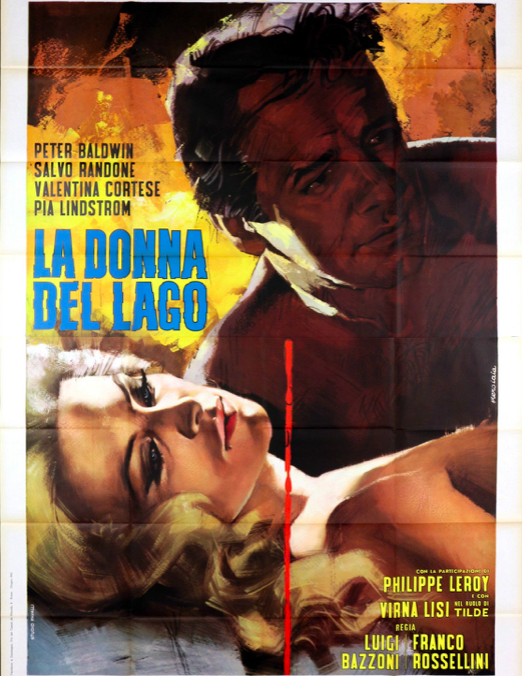
THE POSSESSED aka THE LADY OF THE LAKE(1965) – A REVIEW BY RYAN MARSHALL

Small towns, wherever they may be, tend to carry with them a rather distinctively suffocating burden. Those who have visited such places, either extensively or not, know the feeling; sensory awareness seems to have been filtered out with any discernible definition of time and space upon arrival. You either go with the flow or get caught up in its aggressive vortex, in which case surrendering to your surroundings seems to be the easiest path to contentment.

This particular sensation has enjoyed its share of cinematic representation in the past, though few have captured it as purely as THE POSSESSED (aka THE LADY OF THE LAKE), the haunting debut from Luigi Bazzoni and Franco Rosselini (the same pair behind genre-bending phantasmagoria FOOTPRINTS ON THE MOON and boozy Franco Nero-starring giallo THE FIFTH CORD). The coastal village which serves as the duo’s muse is one of exquisite and often unseen (or unspoken of) secrets, home to the same lost souls that it lures into its eternally intoxicating web from the outside. The existential dread exhibited isn’t so much inspired as it is painfully extracted and inseparable from the setting, tightening its grip on the audience until they no longer have ample room to squirm.

vlcsnap-2017-09-23-14h19m04s161.png

vlcsnap-2017-09-23-14h18m26s027

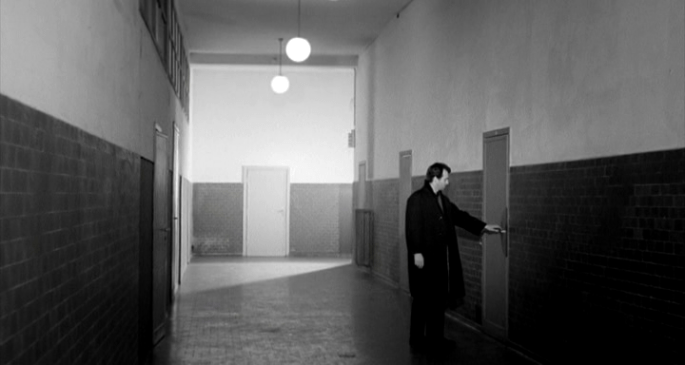
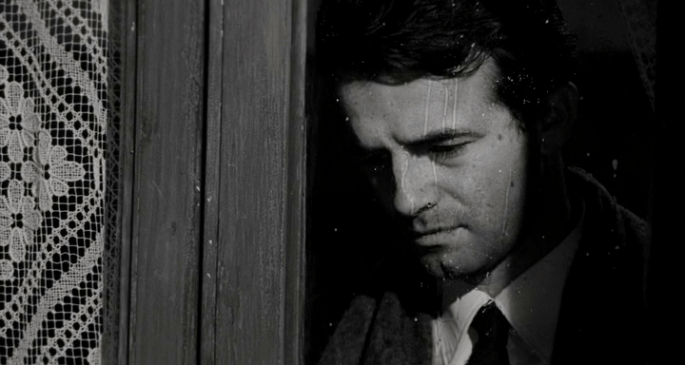
Like many a weary traveler walking directly into the jaws of death, the unlikely hero in this ghastly tale is a writer in search of a lost lover. Bernard (Peter Baldwin) finds himself chasing repressed guilt and ruminating over potentially misleading memories in a place where clear consciences appear to be in rather short supply though, as he makes very clear throughout his unorthodox journey, he is among familiar faces.

This isn’t to say that his obsession is any easier to transcend as a result; almost immediately after setting foot in town, the residents inform Bernard that his woman has committed suicide under some disconcertingly mysterious circumstances, and they don’t wish to elaborate any further on that. Proving himself to be a determined and self-sufficient fellow, the outsider fails to abandon his personal agenda in favor of preserving the nastier secrets festering just below the surface, even when the townspeople threaten its stability. The unwelcoming unease slowly creeps in from the dimly-lit streets to the musky hotel where most of the subconscious digging takes place, in no time obscuring the line between reality, delusion, and dream.

vlcsnap-2017-09-23-14h18m57s205

vlcsnap-2017-09-23-14h16m00s655

Although he’s been here before, the writer feels no less alienated by his circumstances or disturbed by the colorful characters that he encounters during his trek towards the truth. A faceless woman in white strolls by the shimmering lake as if bound to its magnetism, the local butcher leers impassively from beneath his enveloping wooden canopy, the innkeeper’s hospitality is quite obviously one built around artifice, and the local drunkard’s abyssal cries in the witching hour may in fact be far less insignificant than they at first appear.. Everyone harbors a perversion that they’re not keen to speak of, and the only “real” people are those not pretending.

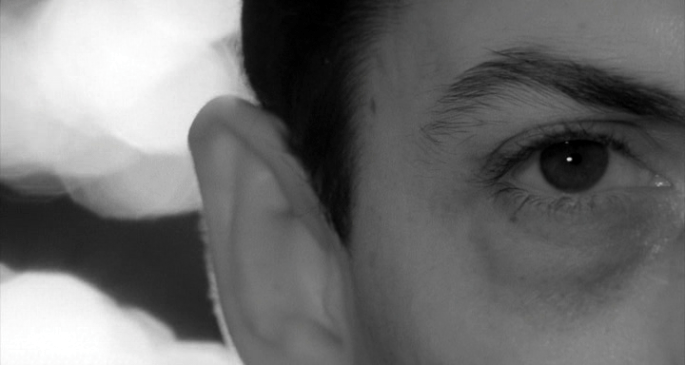
When all else fails, and he realizes that those around him won’t be of much help, Bernard decidedly probes his own imperfect perception, rendered beautifully in either piercingly white light or with softer, no less exceedingly hallucinatory intimacy. Leonida Barboni’s appropriately detached yet – when absolutely necessary – delectably invasive cinematography effectively draws more than a few connections between the darkest recesses of a creative mind and the environment it embraces, with the town’s exteriors evocatively photographed in what feels a lot like the twilight. Such as it is, this is a lot like a zombie movie without the zombies, or a giallo thriller without the killer, wherein the deep shadows and snow-covered cemeteries feel so much like home.

vlcsnap-2017-09-23-14h16m42s332

vlcsnap-2017-09-23-14h17m08s211

Baldwin makes for an exceptional protagonist, bringing a great deal of introspection and genuine vulnerability to a seemingly cultivated exterior; so much more so than his charismatic demeanor would initially suggest. The commitment to his point-of-view is commendable while simultaneously proving to be one of the film’s few genuine faults; for example, we certainly could do without some of the on-the-nose narration, and towards the end the story gets a little wrapped up in Bernard’s mania for its own good, thus diminishing its dramatic impact.

Even so, these are minor quibbles; this is a hypnotic monochrome nightmare that sucks you in and spits you out entirely at its own will. Some films politely invite us into their headspace whereas this is one that pushes you into it, headfirst. We wander, we wonder, we pace, we lose faith – all to the faint sound of an unloving breeze. It’s a compelling and ultimately hopeless cycle; perhaps not everyone’s cup of (black) tea, but when writhing in such formally arresting melancholia, the experience itself can hardly be equated with misery. Much like the small-town ambience which provides such consistent inspiration, it’s a kind of purgatory  on Earth that one feels almost inexplicably compelled to revisit immediately upon departure. Call it supernatural separation anxiety – as familiar as it is frighteningly unfathomable.

vlcsnap-2017-09-23-14h13m39s392

vlcsnap-2017-09-23-14h13m22s737

PTS Presents the Raymond Benson Auteur Series: DAVID LYNCH Volume 1

Image result for david lynch cow

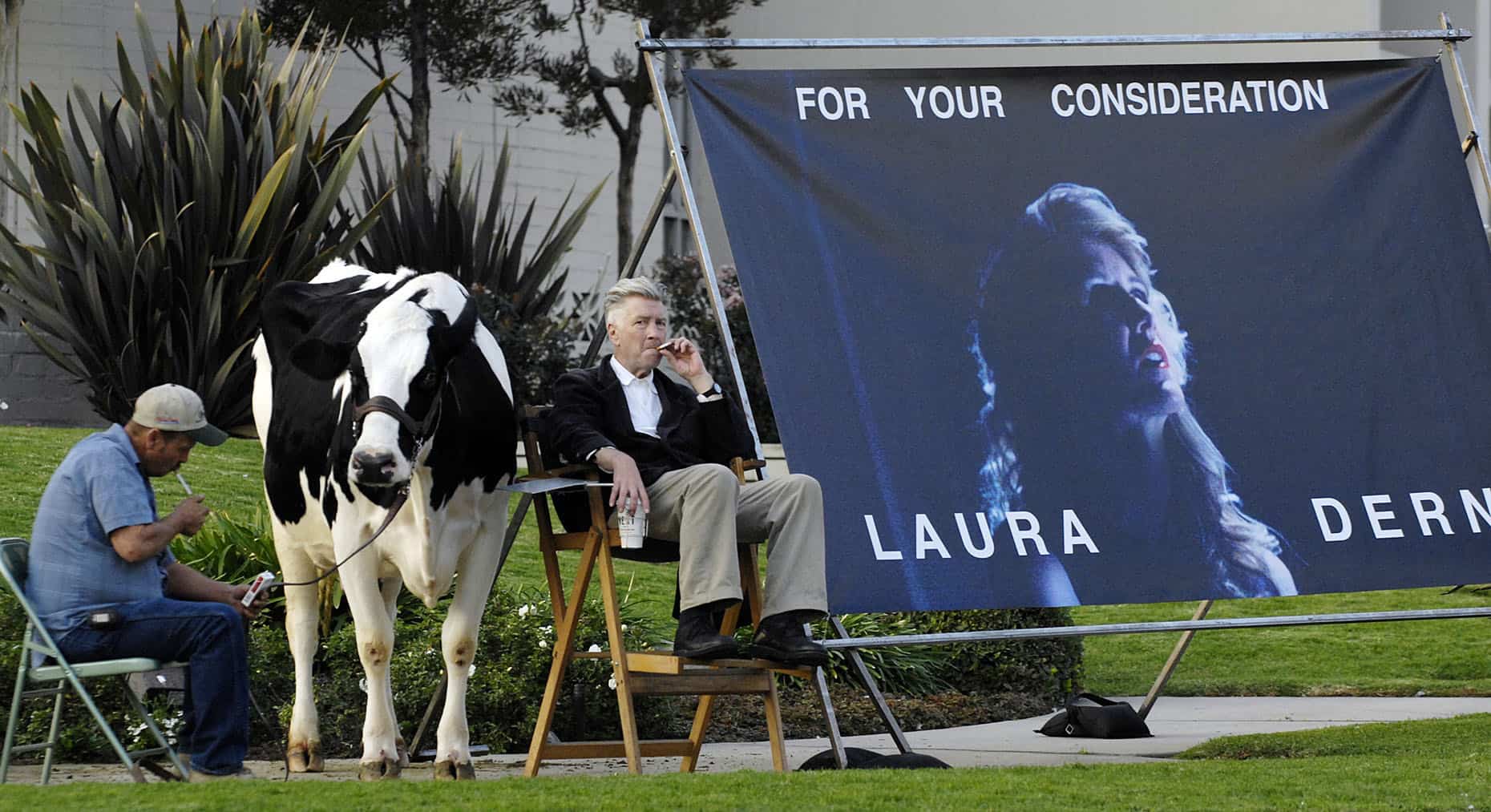
Podcasting Them Softly is incredibly excited to continue our Raymond Benson Auteur Series with our first of a two part chat about the works of David Lynch. Frank, Tim, and Raymond discuss Lynch’s early works continued through his features ERASERHEAD, THE ELEPHANT MAN, DUNE, BLUE VELVET, and the first two seasons of TWIN PEAKS. The three of them will be back soon covering Lynch’s filmography from WILD AT HEART to TWIN PEAKS: THE RETURN. For those local listeners, please check Raymond’s website for upcoming book signing appearances for Raymond’s new novel, THE SECRETS OF CHICORY LANE.

Gregory Hoblit’s Fallen


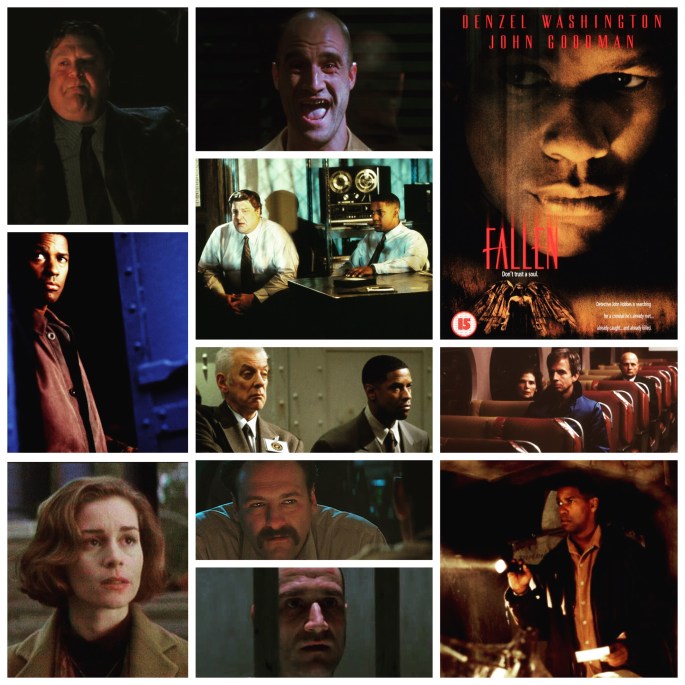
A demon angel. A Badass Denzel Washington. Tony Soprano singing the Rolling Stones. Creeping psychological dread. Browned, burnished production design. A deliciously mean spirited, ballsy twist ending. All this and more can be found in Gregory Hoblit’s Fallen, an atmospheric spook-house of a flick that gets tone, fright and suspense just right. Nestled in that sweet spot of the 90’s where detective stories often had a neat supernatural twist (The Prophecy is another dope one), it’s a film that demonstrates the power of storytelling and atmosphere done right, like a campfire tale that cops tell their youngsters. Denzel is Hobbs, a detective who oversees the graphic execution of serial killer Edgar Reese (Elias Koteas, terror incarnate), a monster he once caught. Case closed, right? Not so much. Soon after he kicks the bucket, one or more copycat killers show up, and once again the crimes happen under Hobb’s watch. Coincidence? Paranormal? It’s a neat, eerie game of cat and mouse with an antagonist who possesses a few unearthly methods of skulking around in the dark. Hobbs is helped by his two colleagues, salt of the earth John Goodman and hothead James Gandolfini, bumps heads with the obstinate police captain (Donald Sutherland), and runs into his foe at every turn, each time in a new vessel which gives the actors, right down to extras, an opportunity to have some devilish fun. Embeth Davidz is her usual withdrawn self as a woman with ties to the killer’s past, and watch for Robert Joy and Gabriel Casseus as well. Composer Dun Tan’s unearthly drone of a score compliments the drab shadows, oppressive nocturnes and threatening frames of the film eerily as well, creating a mood-scape that drips ambience. The end is an acidic kick in the nuts, and I admire a film that has the stones to chuck in such a shock tactic, embracing the dread that has been built up to that point with one last sardonic, hopeless cackle. Film noir to it’s roots, subtly mystical, a perfect one to settle down with as we move into the Halloween season. 

-Nate Hill

Indie Gems: Prisoner


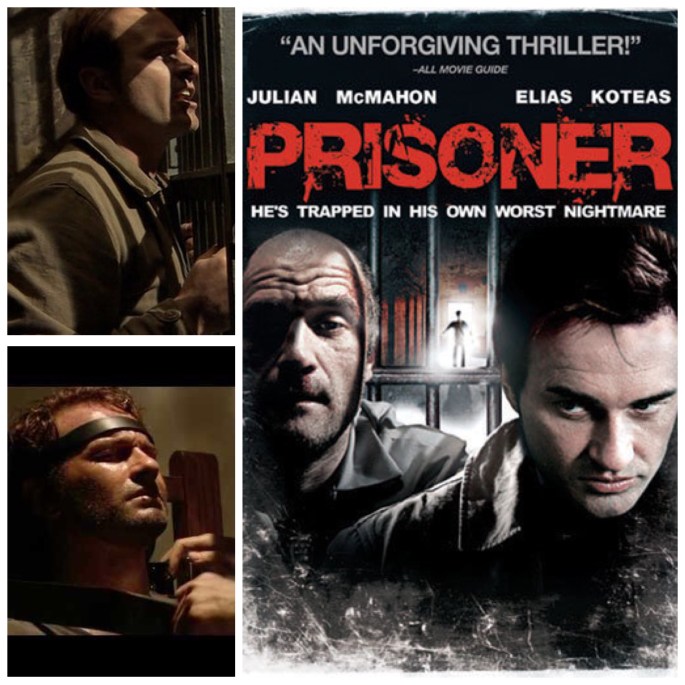
Prisoner is a rough, disturbing little psychological thriller about a potential prison film, or rather the lonely location scouting sessions of controversial, much disliked Hollywood auteur director Derek Plato (Julian McMahon). He’s an arrogant prick of a dude whose newest film has him scouring abandoned penitentiaries for that perfect location. He’s alone, curiously, until all of a sudden… he’s not. Out of nowhere appears the mysterious Jailor (Elias Koteas), a frightening man who forcefully imprisons Plato, mentally berates him and forces the man to look back upon his long and quite unpleasant past in both the film industry and his disaster of a personal life, prodding him with intimate questions and accusations. This is essentially a chamber piece with the two actors being the only ones who appear in the present timeline, which is punctuated by hazy flashbacks to his life before. McMahon carries himself nicely, handling a well worn arc with charisma and giving off an authentically unlikeable vibe early on. Koteas is a beast of an actor and could scare the pants off of real life convicts, as such he steals the show with a brutal, galvanizing performance. Now, these types of films usually head towards conclusions we’ve seen before, and I won’t spoil anything except to say that although I was satisfied with the way the ending did rise up to meet the rest of the film, some won’t be and may find it cliched, but hey, that’s life. Nevertheless, it’s a taut little mind game by way of a character study, clocking in well under ninety minutes, a sleek little piece that leaves the viewer no time to lag or lolly-gag as it trundles along through it’s intense story beats. Cool stuff. 

-Nate Hill

John Maybury’s The Jacket


The Jacket is a curiosity of a film, and didn’t stand out for many critics when it came out, but for some reason it’s stayed in my thoughts for years since and has become one of my favourites, of any genre. Moody, cold, desolate and sketchy, it’s an at once alienating and life affirming piece that puts you front and centre with the kind of crushing loneliness one must feel when the mind becomes broken, and then wraps us in a comfort blanket with the notion that forces unknown to us, and some not so mysterious (human contact is touched upon), one might extricate themselves to a better situation. Adrien Brody is confusion incarnate as haunted gulf war vet Jack Starks, a gaunt silhouette of a soul who suffered a head wound, the neurological fallout of which has left gaps in his perception of reality and a jagged sense of cohesion. Shipped off to a nightmare of a mental facility run by Kris Kristofferson, whose character almost certainly shouldn’t be left in the care of troubled minds as his idea of treatment consists of pumping patients full of untested pharmaceuticals and shunting them into a morgue drawer. This is where, by unexplained phenomena, Jack is able to bounce forward in time from his drab 1999 timeline over to a slightly less drab 2007, where he meets Jackie (Keira Knightley), a girl who might have ties to his past. The film sounds high concept, almost Sci Fi, but the way it’s composed is anything but. The supernatural elements are shown frankly and never overblown, gilding the psyche of the characters in a more internal, psychological fashion, especially when Brody is in that drawer and all manner of bizarre subconscious phantasms dance before his vision, before he’s whisked off to the future. All the characters but one are listless, withdrawn and somber, from Jennifer Jason Leigh’s sympathetic, forlorn doctor (she’s terrific here) to Kristofferson, who provides grizzle and a welcome depth where other actors would have gone the straight up Dr. Frankenstein cop-out route. Daniel Craig is the one live-wire who breaks the mold, and I enjoy his early career work before he calcified into the stoic 007 template. He’s a treat here as a rambunctious fellow patient and spirit guide to Starks. Appearances from Brad Renfro, Kelly Lynch and Stephen MacKintosh are notable as well. There’s a despondent, bleak blanket over much of the film, a coldness brought through in broad strokes by director John Maybury, whose distinct European approach to filming (multiple extreme closeups, subtle voiceover, trippy experimental effects) helps the mood really soak in. There’s a contrast at work too though, amidst the film’s themes of loneliness and unrest there shines through a deep emotional warmth, a reassuring grasp on the reins from Brody’s character to seize back a life that was taken from him, and wake up from his nightmare, with help from those around him. A willingness to keep going, to change the course of one’s life when it swerves off track, explored quietly, underplayed in harmony with the seeping discomfort hidden in many of the frames. Part Hollywood thriller, romance, art house flick and psychological horror show, there’s just no other film like it. 

-Nate Hill

Julio Quintana’s THE VESSEL

Image result for the vessel 2016

For those latter-day Terrence Malick junkies amongst us, THE VESSEL is a film that has mistaken slipped under the radar. It’s a small and very intimate picture that is set in modern-day Puerto Rico where a small town is still deeply affected a tsunami’s wave that wiped out a school, killing all of the children. The dilapidation became suffocating until a series of divine events happened that instilled hope and caution.

From executive producers Terrence Malick and his, partner Sarah Green comes a film that is cut from the Malick cloth;  the film tells an acute tale but has so much more to say than the fragmented events we see on the screen. Quintana keeps a very taut narrative structure, yet with very elusive camerawork and a beautiful score by Hanan Townshed, he creates a film that is a whimsical force of nature.

Martin Sheen anchors the film as the Catholic Priest who has been the town’s shepherd since the tsunami wave that washed the life out of the town. Sheen, like in all his turns, is deeply moving with his performance, straddling the line between apathy and hope. Sheen has rarely been better, and for an actor of his caliber, that’s saying a lot.

THE VESSEL is a deeply spiritual film that breathes life into our cinematic realm that’s being taken over by whatever big budget franchise is set to implode at the nearest theatre. It’s a wonderful film filled with hope, tragedy, and inspiration.

THE VESSEL is now streaming on Starz.

DAVID GORDON GREEN’S STRONGER — A REVIEW BY NICK CLEMENT

9

Stronger is emotionally potent true-life cinema, a cautiously inspiring film about grotesque physical and mental tragedy, and a film that resists easy sentimentality which would have cheapened the overall package. Directed with a strong sense of focus by the eclectic filmmaker David Gordon Green (Pineapple Express, Snow Angels, Joe), the film was written by first-time screenwriter John Pollono, who adapted the novel of the same name by Boston Marathon bombing survivor Jeff Bauman and Bret Witter. Stronger is anchored by the customarily intense and all-together fantastic Jake Gyllenhaal, who in film after film over the last 10 years, has demonstrated some of the best acting chops and taste in material without ever truly getting his full due from critics and audiences.

1

Consider this list of recent films and performances: Prisoners, Nightcrawler, Okja, Brokeback Mountain, Jarhead, Zodiac, Rendition, Brothers, Source Code, End of Watch, Enemy, Southpaw, Everest, Demolition, and Nocturnal Animals. This guy is on creative fire like few others in recent years. In Stronger, he plays it close to the vest and gets extraordinarily intimate with both Green and versatile cinematographer Sean Bobbitt (The Place Beyond the Pines, Shame), as well as his superb co-star Tatiana Maslany, who I’ve never seen on-screen (not viewed Orphan Black yet…), but hope to see a lot more of in the future. She’s absolutely spectacular in a fully-fleshed out “girlfriend role” that feels just as important and moving as Gyllenhaal’s gutsy lead performance. They have genuine emotional and sexual chemistry, and share one scene of extreme intimacy which is heightened because of the tragic circumstances of the situation.

3

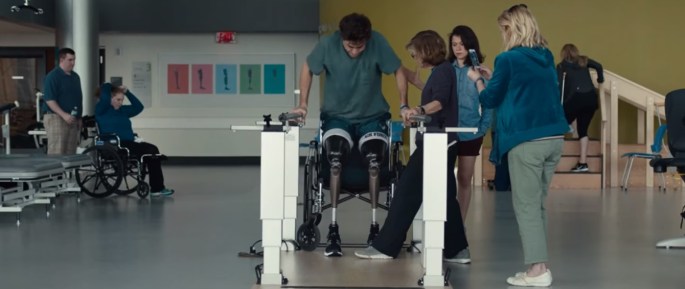
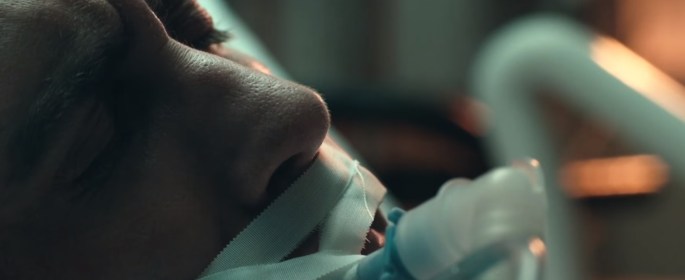
The film centers on the harrowing in-the-moment trauma and grueling rehabilitation process for Bauman, who had his legs blown off below the knees during the Boston Marathon bombing a few years ago. Playing like an excellent counterpart to Peter Berg’s riveting and underrated procedural Patriots Day, in Stronger, the filmmakers zero in on one man, and the people that surround his orbit, giving an extremely personal side to this far-reaching event. And yes, you get to find out about “that guy in the cowboy hat,” who in those iconic photos, could be seen rescuing Bauman at the point of impact, his legs a distorted bloody mess, and clinging to life with all that he had left. The invisible and fully seamless visual effects used to show Gyllenhaal moving without his real legs is astonishing, and entirely convincing in every single shot.

5.jpg

Miranda Richardson is unrecognizable and depressingly excellent as Jeff’s alcoholic mother, while Clancy Brown gets some effective scenes as Bauman’s hot-tempered father. The on-screen family dynamics that are depicted feel honest and true to the lower-middle class Boston neighborhoods that are on display, while the “Boston Strong” theme is echoed multiple times, but it never comes off as annoying or pandering, because Pollono’s script never tries too hard, and Green never injected any unnecessary directorial blustering into the proceedings. This is the sort of topical film that audiences have been sadly shunning of late, and its low box-office and early-in-awards-season release date isn’t going to help when trying to get Gyllenhaal a much deserved Oscar nomination (for those who care about these things; I personally don’t, but just making an observation…) or the film any sense of commercial traction.

0

‘Kingsman: The Golden Circle’ Fails to Find its footing

History is replete with the spoils of cinematic spies; resources and gadgets are ready at an instant; beautiful locales, venomous villains and gorgeous ladies on tap. James Bond was fashionable, Steve Rogers was symbolic, Austin Powers was hip, Derek Flint was cool, Ethan Hunt is grace under pressure. And then there was Eggsy Unwin, the unwitting street thug turned superspy. He returns to theaters in Matthew Vaughn’s farcical Kingsman: The Golden Circle.

Each of the aforementioned superspies were successful because their creators managed to put their characters in the middle of timely stories; they reflected the challenges that faced modern society while the actor inhabiting the role brought a certain braggadocio and swagger that made the performance ultra-cool for swooning audiences looking for an escape.

Vaughn has successfully delivered on this formula in the past, most notably X-Men: First Class and to an extent, the Kingsman’s previous outing, 2014’s Kingsman: The Secret Service. The story there gave our future hero, Eggsy (Taron Egerton) an identity thanks to a life-oath sworn to between his dad and Harry Hart (Colin Firth). The bond that Jane Goldman and Vaughn created worked so well because it was about polishing the street-wise punk, making him realizing his potential; a proverbial rags-to-riches story. And, as much as it was The Secret Service’s script, Egerton and Vaughn are an exceptional duo when it comes to films.  See the melodrama Eddie the Eagle for a solid example of the actor-director’s teamwork.

In the over-long The Golden Circle, Eggsy is back, more polished with just a wink of his former street-wise life. In the opening frame, he demonstrates how well he can handle himself in a defensive situation, thwarting a former Kingsman applicant (Edward Holcroft). In the next frame, we see him with his girlfriend, Tilde (Hanna Alstrom) and his street-wise punk friends, establishing that he hasn’t fallen too far from his original tree, but he’s sprouting new leaves. Of course, he’s wiser as evidenced by the snarky, expletive-laden commentary throughout the course of the film.

Following a disaster that all but decimates the Kingsman, Eggsy and Merlin (Mark Strong) find themselves turning to bourbon and their American brethren, the Statesman. Here, Jeff Bridges, Channing Tatum, Pedro Pascal and Halle Berry come to the Kingsman’s rescue, and unless you live under a cinematic rock, the next part will not be a shock: Harry returns from the dead. Vaughn and Goldman go to great lengths to explain how this is possible.  This plot instrument is valuable in a sequence later in the film, but it’s an instrument that wears its welcome.

As spy networks cross, a sinister plot lurks around the other side of the globe with a deliciously evil Poppy Adams played by Julianne Moore. Moore’s performance is a highlight of the film, her pitch-perfect villainy was enough to make Blofeld blush. Except Charles Gray’s turn in Diamonds Are Forever. That’s a story for another time. Sadly, Moore’s presence on the screen is marred towards the end of the third act, but it isn’t enough to make you dismiss her character completely. Bruce Greenwood puts on his stately manner as the President of the United States and gives us a good show.

What troubles me about The Golden Circle is that I was left to wander off in my own thoughts during a key action sequence, partially because it was Bond-lite; something I’ve seen so many times. The parallel characters between the two spy organization are so similar, they seemed unnecessary, which is why it is a shame that neither Jeff Bridges nor Channing Tatum had too much to do in this film. What managed to bring the film around for me was a quote by Winston Churchill, uttered by Harry Hart.  I won’t recite it here, but you’ll know it when you hear it.

Despite the film’s shortcomings, the film is timely, even if it is over-the-top. Several strong character moments, specifically between Egerton and Strong support the film’s premise. Its length and distracting antics don’t always work. Rest assured, Vaughn, Eggsy, Harry and the rest of the team will be back.  Your box office dollars will ensure that.

Now in theaters, Kingsman: The Golden Circle is rated R by the MPAA.

Cameron McHarg: The American Badass

Frank is joined by filmmaker, writer, actor, fellow podcaster, and all around American Badass, Cameron McHarg to talk about his work, his process, Harvey Keitel, 70s films, and about his influences and future projects. Cameron is the producer, founder, and host of Triumph and Disaster, and had Frank as a guest a few months ago. Check out everything and anything about Cameron here, and their podcast on Triumph and Disaster here.