Aeon Flux


Before Ghost In The Shell, Dragonball (fucking shudder) and a host of other attempts at making anime content work as a live action film, there was Aeon Flux, a supremely weird dystopian Sci-Fi palooza that should have just been the first and last of it’s kind, ground zero for moving forward, lesson learned in terms of knowing that such specifically artistic material just *doesn’t* translate at all beyond the original animation versions. You’d think they would have learned with this one, but nope. Charlize Theron can practically carry any material on her own, she’s just that dynamic, and when supported by an impressive vessel of visual effects and a clinical, sleek stylistic palette she’s even better, but this beast has no heart beating at the centre of all that, and it shows. Theron is Aeon, a powerful assassin working for the Handler (Frances Mcdormand), assigned to bring down a dangerous regime in a utopian city where humanity’s last vestige of populace exists following some viral plague decades before. Of course nothing is as it seems and when she gets to the man behind the group (Marton Csokas) she discovers all kinds of secrets. There’s plenty of inventive future-world action, including a neat sequence where Aeon sends in wicked fast micro-bot marbles to blast through a door, and interesting aerobics courtesy of a character played by Sophie Okenodo, who has hands instead of feet, an anomaly the film finds little time to coherently explain. Even less explained is the sudden appearance of Pete Postlethwaite as someone who resides in a giant floating thingy far above the city, kind of like the man in the moon in the midst of chemotherapy. It all makes not a great amount of sense, through no fault of it’s own. That goes back to my thoughts at the beginning of the review though: Sometimes, a specifically drawn or written anime saga is just too much in it’s own abstract, perfectly balanced embryonic harmony, and trying to shunt it along into the very different realm of live action storytelling just isn’t possible. That’s certainly what has happened here, and with pretty much every other attempt I’ve seen to adapt the medium. 

-Nate Hill

Miami Blues 


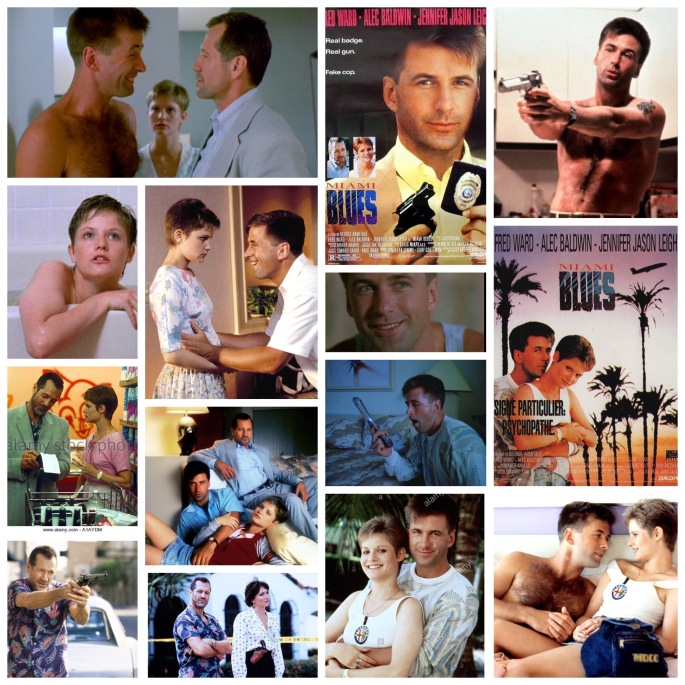
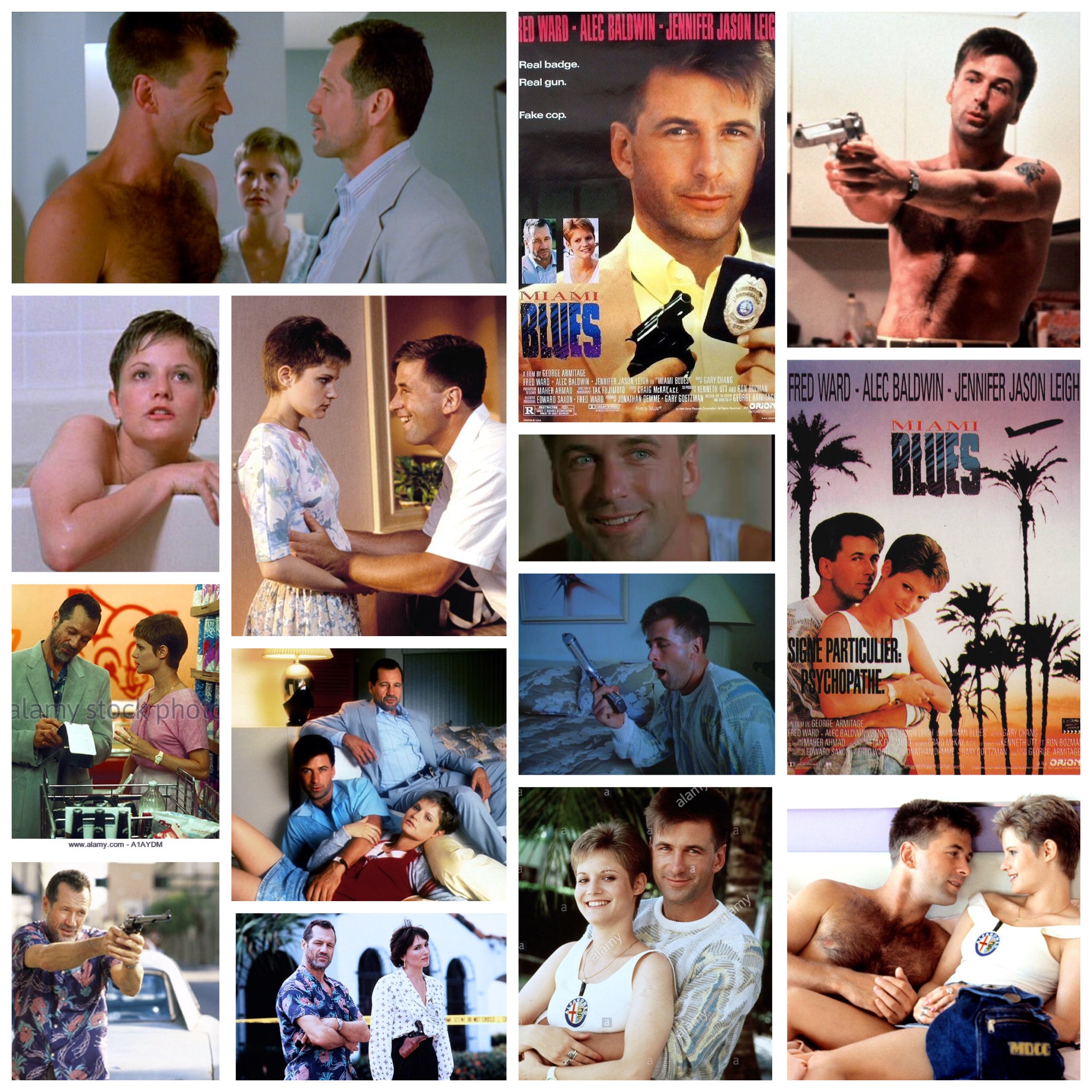
Miami Blues is a crime film full of loose ends, incompetence, wanton violence and meandering characters who seem lost within their own story, and I mean all that in the best way possible. Some pulp affairs are sharp, succinctly plotted creatures, every cog in the machine placed to serve the momentum of plot and character, while other efforts have messily dropped the cogs all over the floor for an untethered, ‘wing it’ type approach in which story and character are like aimless leaves blowing about in a restless pond. Isn’t life like that though? There’s no narrative structure to a lot of what we do, and as such there’s little to be found in the tale of highly self destructive, psychotic criminal Alec Baldwin, who has barely left the airport upon arriving in Miami before he’s already got a serious warrant out for his arrest. He’s a violent sociopath who takes what he wants when he wants and, most aggressively, how he wants. He’s also very smart, which is a dangerous mix in anyone whose moral compass has flatlined. His anarchic crime spree gains the attention of an aloof older detective (Fred Ward) whose badge he steals for some good old law enforcement impersonation, leading the poor weary cop on a darkly comical mad goose chase all over town. He also picks up an endearing dumb blonde (Jennifer Jason Leigh, excellent) who’s infatuated with him and blatantly tunes out any and all red flags, of which there are…many. That’s pretty much all there is to it, but with these three actors it’s pure gold. The knowingly audacious arch criminal, the Betty Boop wannabe wifey sidekick and the exasperated, constantly outsmarted copper, a trio of archetypes augmented slightly in favour of each performer’s stellar work. Never takes itself too seriously, knows full well how heinous the turn of events within it’s frames are, yet firmly refuses to not have fun, a cheeky, sexy, sweaty and altogether terrific little venture. 

-Nate Hill

B Movie Glory: The Alphabet Killer


The Alphabet Killer is a silly one, a stone-serious account of some serial killer out there that tries to go the route of straightforward, down to earth fact tracking, and then deliberately messes up it’s own tone by tossing in cheap, ineffective ghostly gimmicks that seem so out of place one wonders if the editor accidentally spliced in frames from an episode of Supernatural or something. The film would have been something pretty decent without those jarring schoolyard level scare tactics tossed in, but I guess shit happens. This is very, very loosely based on an actual set of murders over in Rochester, NY, but what actual similarities to that case we see here is beyond my knowledge and, I suspect, pretty scant. What we get is Dollhouse veteran and cutie pie Eliza Dushku as a determined cop, hunting a killer of children all over upstate New York, while an impressive load of a character actors make slightly unnecessary yet well acted cameos, if only to pad the pre credit billing on the DVD cover and boost rentals. Tom Noonan, who has a running theme in his career of playing exactly the type of beast she’s tracking here, switches it up to play her stern Police Captain boss. Michael Ironside briefly plays a belligerent small town sheriff who withholds information gleefully, Bill Moseley as a reformed sex offender who’s tagged as a suspect, Timothy Hutton her wheelchair bound scholar and consultant buddy, as well as Cary Elwes and Melissa Leo. None of these actors do much but show up for a minute or two to make their presence known, and recede into the frays of supporting plot, until it’s time for one of them to resurface as the killer in the third act, the end of a whodunit guessing game we’ve seen countless times over. It wouldn’t be such a tiresome thing if they left out the spooky-dooky stuff, but there you have it. The film’s otherwise fascinating, earnest docudrama style is somewhat ruined by the occasional presence of moaning, white eyed spectres of murdered children that leer out at Eliza like minimum wage kids doing weekend shifts in the haunted house at the local county fair. Shame. 

-Nate Hill

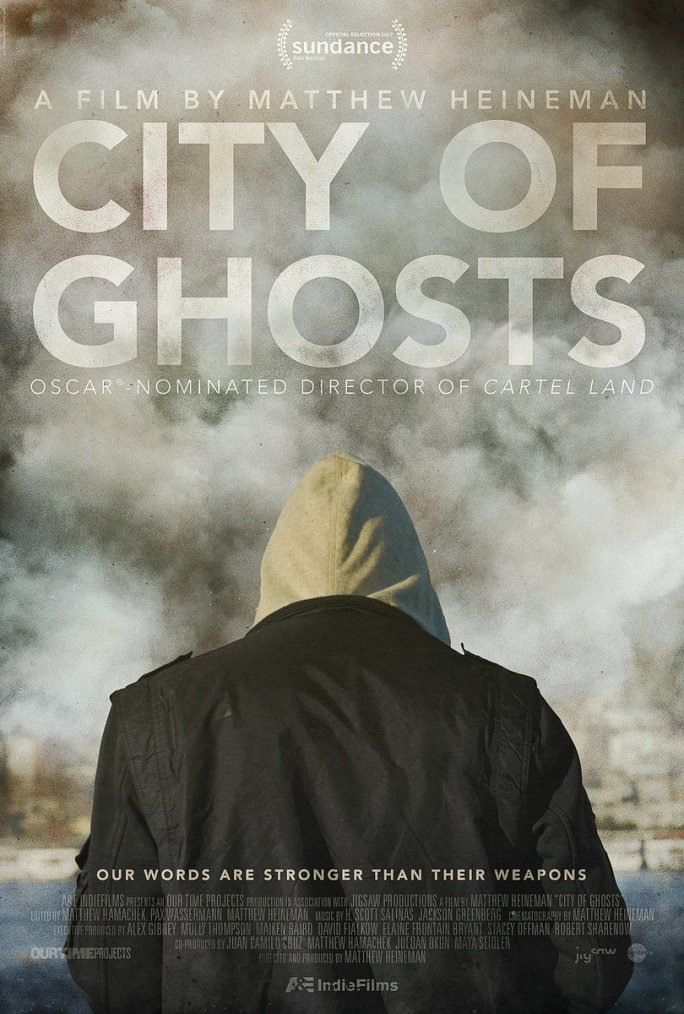
Heineman’s ‘City of Ghosts’ is an eye-opening experience

I grew up with Walter Cronkite and Dan Rather who shaped our opinions and our discussions.  We as an audience had trust in what they had to say, and more importantly in how they delivered it.  Today, the news needs to be delivered as quickly as possible, and corrections issued if a mistake is discovered.  It has become so much a part of my everyday life that I have all but abandoned traditional news outlets.  Despite this, I find myself living inside the vacuum created by social media and online news media and yet, I’m still all-too-well aware of what’s happening in the world.  However, I find that online media introduces a high-level of bias colored by a cacophony of voices rather than one person delivering the news each night.  That’s why, when I sat down to watch “City of Ghosts,” I was quite taken by surprise.  I was only peripherally aware of the Arab Spring rising of ISIL and its dangerous stranglehold on the Middle East.  I was not aware of a group of citizen journalists who have risked everything to raise awareness of the occupation of Raqqa, a city deep inside Syria on the Euphrates.  Academy Award – nominated director Matthew Heineman managed to open my eyes very quickly to the true nature of both sides of this conflict as he lays out ISIL’s ascension to power and the rapid growth of citizen journalist network Raqqa is Being Slaughtered Silently (RBSS).

After opening the film with the group receiving the International Press Freedom Award in 2015, Heineman goes on to describe ISIL’s rise to power, appeasing a war-torn populous looking for freedom.  The state-run news agency portrays life in Raqqa as peaceful, where basic services meet the needs of the people.  RBBS starts capturing footage of ISIL’s atrocities; using social media, they work tirelessly to create an online campaign attracting the attention of global media outlets and the ire of ISIL.

With unprecedented access to the core members of the group, Heineman depicts their everyday struggles to flee Syria for a safe haven in Turkey and Germany while the team remaining in Raqqa struggle to anonymously capture footage and photos of the atrocities that ISIL forces are inflicting. The team that remains in Raqqa upload the photos and videos of the atrocities to the teams in Europe.

As ISIL becomes aware of the clandestine efforts inside their borders we discover that there is truly no safe haven, for anyone.  In Raqqa, they order the citizens to destroy satellite dishes restricting internet access and cellular communications.  On the European continent, they execute members of RBBS.

In its simplest form, the picture Heineman paints is that of a propaganda war similar to one the British had with Nazi Germany during the early stages of WWII.  History is repeating itself.  Here, time is on the side of RBSS as they viral nature of social media works in their favor.  The more they post, the more it puts innocents in other countries at risk as evidenced by the attacks in France and in the United States.  And, it puts their own family members in harm’s way.

The efforts of this citizen journalist network bring to light real-world problems.  The images and the flow of the narrative convey the situation succinctly.  I could imagine audiences who watch this would be shell shocked at best.  Not for the feint at heart, Matthew Heineman touches a raw nerve here and it will stick with you long after you leave the theater.

5 out of 5 stars.

This review was written for and originally featured on phoenixfilmfestival.com.

Ladies of Espionage – Five Favorite Films

the_long_kiss_goodnight

Oh, what a tangled web we weave if only to deceive.  What better way to celebrate this week’s wide release of Atomic Blonde than to honor the lady spies of the silver screen.  While most of these femme fatales are modern in their respective incarnations, Kyle and Ben chose five films that they think are excellent showcases of powerful female characters in the male dominated genre of spy films.


Salt

salt-still-750x410.jpg

BEN: It’s hard to believe that Philip Noyce’s Salt was released to unassuming audiences just 7 years ago.  And yet, Angeline Jolie proved once again that she could kick ass and take names.  Noyce, who directed Harrison Ford to success as Jack Ryan in Patriot Games and Clear and Present Danger used the same steel and grit here to tell the story of a supposed Russian sleeper agent on the lamb to clear her name.  The cast and the crew are a veritable who’s who of names, but the hero here is the uncredited Brian Helgeland who reworked the script for Jolie.  The role was originally written as a male and a Tom Cruise vehicle.  When they reworked the character and Jolie stepped into the role, Helgeland did a re-write to whip it in to shape.  Robert Elswit’s cinematography is a highlight in this globetrotting adventure and action editors Stuart Baird and John Gilroy really stepped it up in crafting a unique tale of intrigue.

KYLE: I think my favorite part about this one is how all of the players within the universe of the film are terrified of Jolie’s Salt.  While the script was reworked for a female lead, I feel that in the context of a spy microcosm, Jolie’s character is treated as an equal.  Aside from the subject matter having a not intended relevance to today’s headlines, it was nice to see a post-cold war action story with some thrills and albeit telegraphed surprises.  Jolie really is the whole picture, and this is one of her best roles, balancing the physicality of the action with the uncertainty of her character, with her ethos falling into question and it’s remarkable to see.

Point of No Return


mhtB1jPCQoIXGhBJHwtswvGPFbg.jpg

BEN: Absolutely amazing stuff, Kyle.  Jolie got us started with a bang.  Now it’s time to turn our attention to John Badham’s spectacular Point of No Return.  Bridgett Fonda electrifies the screen as another agent on the lamb after her death is faked.  The interesting twist here is her origins.  They are almost superhero in their quality.  Gabriel Byrne who made an appearance last week is back this week as her handler, Bob.  He is as smooth as she is.  Harvey Keitel is his usual bad-ass as the ‘cleaner’.  Audiences will be familiar with this film’s European origins as a reimaging of Luc Besson’s La Femme Nikkita.

KYLE: Let’s not forget the amazing Anne Bancroft as Fonda’s etiquette trainer.  The training sequence is amazing, so much so that the actual espionage parts suffer, but Fonda carries the uneven script through to the end.  I also love the origin story and watching Fonda’s transformation.  While she becomes the ultimate operative, her street level beginnings pulse everywhere throughout the remainder of the film and it is her origins that ultimately define the character.

Spy  
 

spy1.jpg

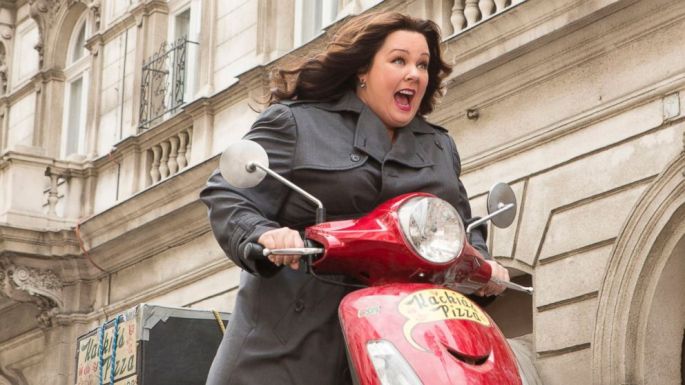
BEN: The next movie on our list, Spy, has a lot of heart, something Paul Feig and Melissa McCarthy delivered in spades. It isn’t your typical spy movie and the comedy plays well to the film’s action pieces.  McCarthy is a CIA desk jockey who dreams of being able to save the day when her agent is gunned down during a mission.  The assailant is off camera, but she is adept enough at following the clues that she pieces together what happens and feels the need to vindicate her partner and herself.  This leads to bureaucracy and a hilarious pissing contest with Jason Statham.  A mix of James Bond and Inspector Clouseau, the cinematography here is breathtaking as are the action pieces.

KYLE: This is easily my favorite teaming of Feig and McCarthy.  As always, McCarthy’s performance is a profanity laced fireball, but it works so perfectly in this film.  Her chemistry with Byrne and Statham is palpable and I loved how it paid tribute to spy films of the past, but also was its own story, using Feig’s vulgarity to both inject irreverence into the action and bridge the gap of vintage tradecraft with modern technology.  Feig’s humor can be hit or miss at times, but I was genuinely shocked at how funny this film is.  It’s terrific, and as you mention, Statham’s performance is comedic perfection!

Sky Captain and the World of Tomorrow

skyangelina-xlarge.jpg

BEN: We seem to have found our rhythm, Kyle.  Our second film this week to feature Angelina Jolie is Kerry Conran’s underappreciated Sky Captain and the World of Tomorrow.  A technical marvel in its own right, I could spend hours talking about its use of CG to blend a living world with the performances.  Without intending it, Jude Law also makes his second appearance in our list.  Set in 1939, with WWII raging on, Sky Captain (Law) commands a private air force while Gwyneth Paltrow plays the spunky reporter, Polly Perkins as they battle the robots of the mysterious Dr. Totenkopf, posthumously played by Sir Laurence Olivier.  Jolie has an extended cameo as the commander of the Royal Fleet.  This film’s spy themes fit more in line with the time it is set in rather than the actions of the characters, but both Jolie and Paltrow’s character display tactical prowess and undeniable courage throughout.

KYLE:  This is probably the most controversial choice off the list and I’m glad we chose to include.  The film is a loving homage to the serials of the 30’s while using CGI to enhance the story, not overwhelm it.  This is one of a handful of films that was done entirely in the digital realm with green screens and seeing the final product shows that not only can heavy CGI films be done well, the medium can be used to transport the viewer to another reality.  Paltrow’s Polly is about what you would expect for a story such as this, but she does remarkably well with the material.  Jolie’s Franky is easily the best part.  Aside from being a strong presence whenever on screen, Jolie’s preparation for the role bears mentioning.  Even though Jolie only shot for a handful of days, she conducted several prolonged interviews with real pilots to ensure she had their terminology correct.  The off screen dedication paid off, with Jolie nearly stealing the show in every one of her (regrettably) few scenes.

The Long Kiss Goodnight 
The-Long-Kiss-Goodnight.jpg

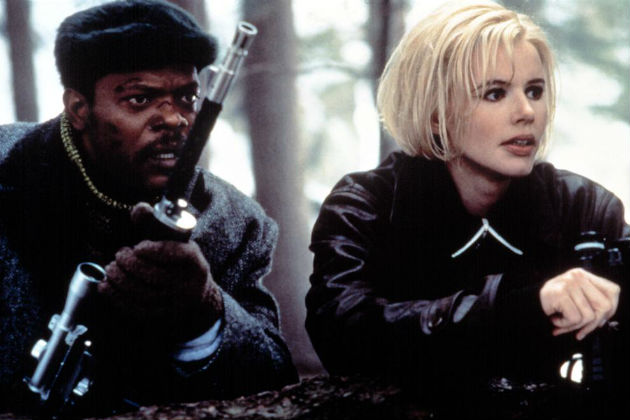
BEN: Our final film is what I consider the Gold Standard of modern femme fatales: Renny Harlin’s The Long Kiss Goodnight.  Written by Shane Black (Predator, The Nice Guys), Goodnight features Geena Davis, who has never really had a big screen presence, but when you see her she just lights the screen up.  Set in rural New England, we learn that housewife Samantha is not all she appears to be.  Through flashbacks, we learn about her past, which is covered up by a low grade form of amnesia.  She hires Mitch Hennessey, a foul-mouthed private dick to solve the mystery.  An accident brings Charlie to the surface and brings Timothy (Craig Bierko) on to their tails.  A stunning supporting cast including Brian Cox, David Morse (who saw a brief comeback after this film) and Patrick Malahide, the husband-wife team of Harlin and Davis worked wonders.  I was in college when this film came out and I just could not wait to see it.  The trailers didn’t disappoint. The ice and the blood glistened in a land of snow and fire – lots of action, lots of laughs; this film is what audiences wanted in an action flick at the time it was made.

KYLE: This movie is ridiculous and I love it!  Davis’ Charlie Baltimore is iconic from the first second she appears, forever vanquishing her quiet housewife persona to oblivion.  Davis and Jackson’s chemistry is off the charts, and it’s rare to see Jackson in a straight up sexual scene and he does remarkably well and allows Davis to remain in the focus throughout.  It’s easy, in an action film, to let the lead be invincible and over the top.  Davis lives in her character’s flaws, using them to fuel her hatred for those who wronged her Charlie.  Everything builds like a fuse heading into the over the top finale in which a torrent of blood and bullets blaze across the screen, allowing Davis’s assassin to unleash the rage that has been roiling under the surface.   This is one of Harlin’s best as well.  He’s very focused in this film and it shows in almost every scene.

BEN: This was a blast, Kyle.  Next week, we will look at five of Katherine Bigelow’s top films as we prepare for her new film, Detroit.

KYLE: I can’t wait!

pointofnoreturn

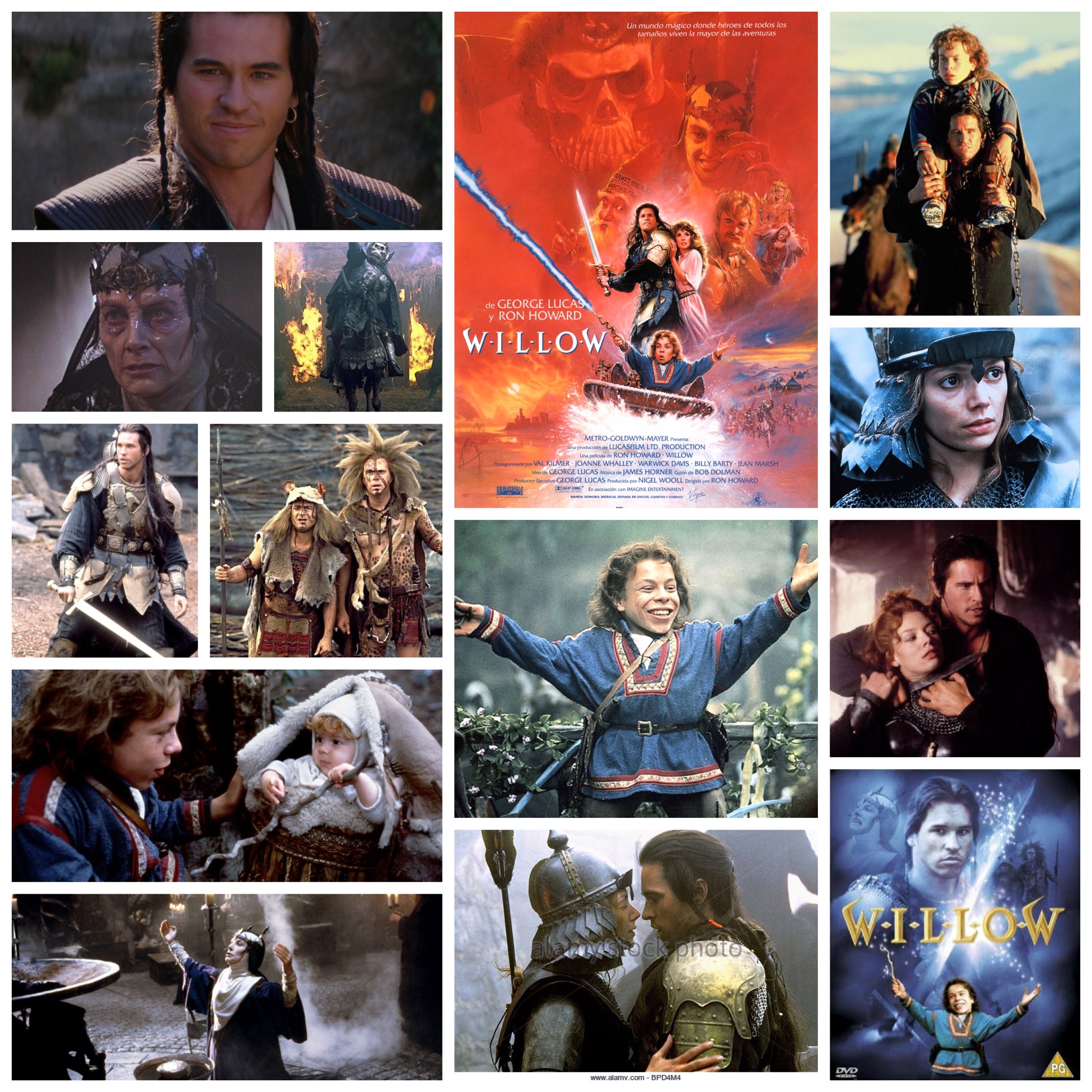
Ron Howard’s Willow


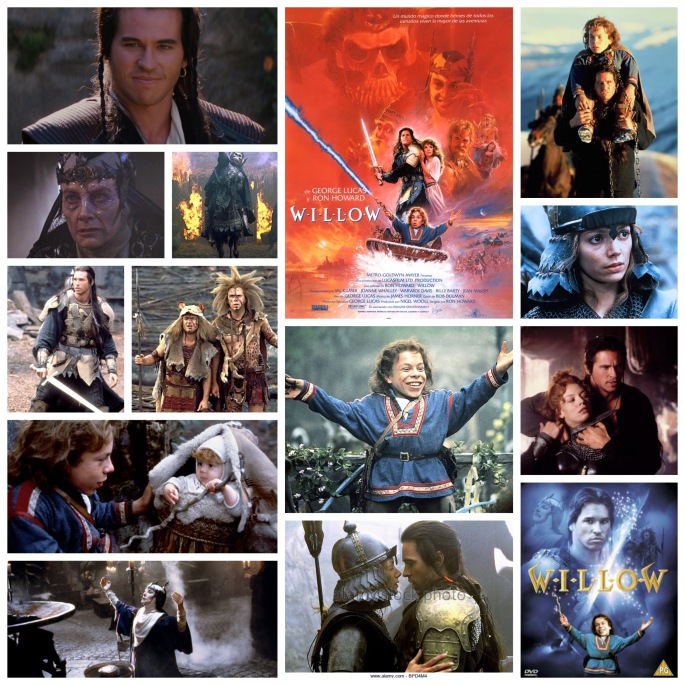
Who doesn’t love Ron Howard’s Willow? Hopefully nobody, because it’s a brilliant fantasy classic that’s aged like the finest wine. From a story by George Lucas (vague Ewok vibes abound), it’s just a rollicking picture, oriented towards the little ones whose sense of wonder hasn’t dimmed, yet eager to include a very real sense of danger and darkness, the perfect recipe to make a film like this noteworthy and nostalgic. In a village inhabited solely by dwarf-like creatures, a secret has been unearthed by the family of young would-be sorcerer Willow Ufgood (Warwick Davis). In their little Hobbitsville of a town on the edge of a vast fantastical realm, a human infant has floated down river like Moses, a special child with the power to defeat a nefariously evil witch (Jean Smart) who has terrorized the land for ages. After the baby attracts danger to their village, the council gives Willow the task of bringing the child out into the world so it can fulfill it’s potential and bring goodness back to the realm. So begins a dazzling big budget journey into the heart of sword and sorcery darkness, a well woven blend of humour, heart and magic that is never short of thrills or visual splendour. Val Kilmer steals the show as rambunctious Madmartigan, a fiercely funny rogue of a warrior who protects and guides Willow through a harsh, threatening world, while Kevin Pollak and Rick Overton score comic relief points as two pint size little pixie things with vaguely European accents, which they use to hurl many a colourful insult in Kilmer’s general direction. Val’s real life wife Joanne Whalley plays sultry Sorshia, daughter to the villainous queen and badass beautiful warrior princess with dark sex appeal for days. There’s just so much to love about this film, from the wildly boisterous score by James Horner that gets our pulses up, the gorgeous production design and attention to detail, the story itself full of wondrous magic and peril, to the reliance on practical effects as per the times. It’s adorable that the filmmakers went out of their way to cast hordes of actual little people as opposed to relying on camera trickery, right down to Willow’s tiny, impossibly cute dwarf children. Highlights I will always remember from this one are the impressively staged sled race down a snowy peak using shields as careening vehicles and the surprisingly gory attack from giant worm/gorilla hybrid creatures that seriously disturbed seven year old Nate for years after. You simply can’t go wrong with this one. 

-Nate Hill

KUSO (2017) – A REVIEW BY RYAN MARSHALL

Screen Shot 2017-07-22 at 11.26.52 PM.png

As it turns out, even three years after his masterful Tibetan-tinged acid jazz odyssey YOU’RE DEAD, Flying Lotus is still very much in the headspace of bringing the beauty of our shared fate out with the existential anxiety and the bile. The unapologetically ambitious electronic musician (real name Steven Ellison, credited on-screen simply as Steve) seems to have dug about as deep as one can go before approaching critical damage with his marvelously grotesque directorial debut, and the results are as hypnotic as they are genuinely horrifying.

The framework for this loose tapestry of absurdist revulsion is remarkably simple at its core. KUSO begins in the aftermath of an LA earthquake of apocalyptic proportions and proceeds to subject the audience to a seemingly never-ending stream of increasingly disturbing vignettes. These tantalizing tales flow into one-another like transmissions via vintage television sets, the impression being that everything and yet nothing at all is connected.

Screen Shot 2017-07-22 at 11.27.08 PM.png

In one story, an impressively mustached man (Zack Fox) seeks to cure his fear of large breasts via the psychoactive juices of a cockroach named Mr. Quiggles that resides in the rectum of a seedy doctor (George Clinton) and can only be coaxed out with a song. In another, horrorcore rapper The Buttress gets high with furry inter-dimensional entities (voiced by Hannibal Burress and Donnell Rawlings) and ponders artistry and abortion simultaneously. Elsewhere, a young boy (Shane Carpenter) smears his feces onto a strange blob-like creature growing in the forest, which brings us to the creation of the new world. Or something like that.

Throughout his musical career, and especially on the aforementioned Captain Murphy album, Ellison has never held back when it comes to getting down with his bad, bad self; as a filmmaker, what with KUSO’s rampant display of animalistic sexual fetishism and exceedingly surreal animated segments (courtesy of Jimmy Screamerclauz and Cool 3D World), he simply turns this up to eleven. This is the kind of film that drags you into its weird world mercilessly, and with little regard for conventional standards of “good taste”.

Screen Shot 2017-07-22 at 11.40.15 PM.png

There’s a considerable amount of kick that the filmmaker seems to derive from riling up his audience – as would be the case with just about anyone willing to entertain such bizarro atrocities in the first place – and yet the film is clearly made out of joy rather than spite. Sure, it’s consistently abrasive and often just plain gross, but it’s also genuinely amusing and at least makes conscious efforts to be subversive. It’s more REN & STIMPY than torture porn, and Ellison is able to make more than a few astute observations in regards to the African-American experience which effectively compliment the excess.

Indeed, a talking boil voiced by David Firth (creator of SALAD FINGERS) which appears on a woman’s (Iesha Coston) neck and promptly felates her boyfriend (Oumi Zumi) isn’t a particularly pleasant notion in theory, but viewers who have made it that far will know whether or not it’s possible to find humor in such things. On the opposite end, a story involving a sickly Asian woman (Mali Matsuda) searching for her lost child behind closed walls is anything but droll, and features some of the most disconcerting imagery on display (legs growing on legs, munching on concrete which results in the loss of multiple teeth, etc).

Screen Shot 2017-07-22 at 11.39.20 PM.png

The film is probably best described as an absurdist anti-comedy; true to this, not every joke sticks the landing, but enough of them- such as a scene in which Fox’s character attempts to have a conversation with a particularly noisy blow up sex doll – hit their mark just right. In a way, it’s sort of charming that something this transgressive could also possess so much unorthodox warmth. In the end, it’s a film about regression and rebirth, about accepting the ugliness that lies within and making it work, and anyone whose sensibilities are even remotely similar to its creator’s will surely take comfort in this.

Ultimately, Ellison’s history serves him well, as he’s able to summon an impressive slew of memorable sequences set to an elaborate and often haunting original score. Featuring contributions from the likes of Aphex Twin, Thundercat, Akira Yamaoka, Ellison himself, and Busdriver (who steals both the intro and the tail-end of the film with a song and a poem, respectively), the soundscape here is rarely stagnant for long. Perhaps it’s a testament to Ellison’s unfailing ability to allow the colorful sounds to compel his visions that the most disturbing moments are largely the result of his sonic world-building; take for example a tit-filled nightmare trip wherein the subconscious implications are the most immediately frightening quality aside from the grotesque 3D animation, or a blissfully confrontational Buttress music video which comes totally out of left field in the best way.

Screen Shot 2017-07-22 at 11.26.31 PM.png

This may not ultimately be suitable for mass public consumption, and it’s true that a few of its stories could have been certainly benefitted from a more clear sense of closure, it nevertheless amounts to a unique cinematic experience; a multi-faceted body-horror collage that, by lacking any discernible pretense as to what its aspirations are, achieves a very specific sort of purity. Ellison is maybe the only one who could have channeled something so unabashedly soaked in its own oddity and achieved the level of humor and pathos that he does here. KUSO just is, and you’re either immediately immersed in its perverted portal or you’re not. “Do not fear the feces”, advises a dapper cockroach at one point; wise words, all things considered.

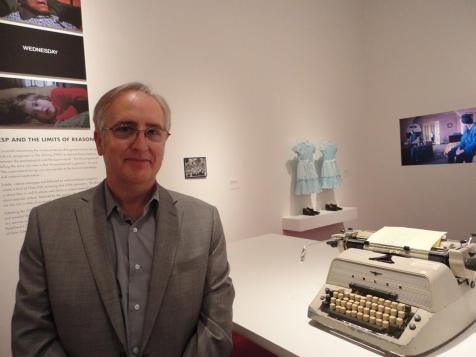
The Auteur Series: Stanley Kubrick Volume 1 with Special Guest Raymond Benson

Image result for stanley kubrick

BensonWelcome to our next installment of The Auteur Series, and this episode will be our first installment focusing on the works of Stanley Kubrick. Tim and I are joined with an incredibly special guest, Raymond Benson. Mr. Benson is a writer, novelist, and film professor at the College of Dupage. He’s well known within the Bond community as authoring original Bond novels as well as film novelizations, side note, I vividly remember reading his novelization of TOMORROW NEVER DIES when I was in Middle School. He served on the Board of Directors of The Ian Fleming Foundation from 1995 to 2011. Aside from Bond he’s an all around film expert, teaching film classes on Stanley Kubrick, David Lynch, Ingmar Bergman, Martin Scorsese, Alfred Hitchcock, Terrence Malick. – if I read all of Mr. Benson’s credentials, it would literally fill up our entire website! For any and all information on Mr. Benson, please visit his website, raymondbenson.com.

BABY DRIVER-A REVIEW BY JASON CALLEN

baby-driver-movie-15

BABY DRIVER is a tale of two movies. The first is what I can only think to call a near-musical, where a young ace driver performs to tunes of ipod a bevy of death defying maneuvers any one of which could get you killed everyone in the vehicle if inches are missed. The diegetic music and the ways it inadvertently syncs with the driving, turn the driving into a metallic dance. Said driver, Baby, as it where, sees himself as having an equal grace when he’s on two feet. This is not necessarily the case as he his frequently getting told to “watch out” as he, still listening to music that we hear as the soundtrack, dances down the street weaving in and out of foot traffic and performing a little routine. The sequence is reminiscent of both Gene Kelly and Tony Manero. It is screaming out to be a bigger more musical moment, to allow that energy of the opening chase to carry over, to look and feel even more choreographed. Instead, director Edgar Wright stays mostly close on Baby and robs the scene of its potential. Moments later another scene evokes Gene Kelly’s first appearance in AN AMERICAN IN PARIS, where he fluidly moves about a tiny apartment, turning every action into a dance. Here, Baby is making a sandwich for his foster father and moves through the kitchen in much the same way, but instead of a wide shot where we can appreciate that movement and the space, Wright cuts needlessly through the scene, even breaking the 180 degree “rule” for no apparent reason. Here again the scene seems to end before it begins, right when you’d expect a more musical moment. A scene in a laundry mat also seems primed to burst but Wright holds it back. This continues throughout these lighter moments of the film (mostly in the first third of the feature).

The other movie within this movie is a hyper violent, fairly conventional cops and robbers flick about a young man who lost his parents (abusive father, loving mother) in a car accident and becomes a car thief/joy rider in an attempt to control the thing that took the life of the only person who loved him. One day he gets caught by a bigger criminal, Doc, played by Kevin Spacey, and rather than turn him in to the police Doc sees what an incredible driver Baby is and blackmails him into being the getaway driver on a series of robberies. But don’t worry, he’s cool, once Baby pays his debt he’ll be free to go. Sure sure. Doc, despite claims of being extremely careful and smart about the crews he uses, employs on more than one occasion, Bats, played by Jamie Foxx. Bats is a psychotic (Batshit crazy, haha, yeah we get it) whose pretty much kills or wants to kill everyone he meets/works with. In reality he’s the fun killer. As soon as he shows up (far too early in the film), all the joy and musical whimsy that the, let’s say, first 20 minutes of the film promised is overwhelmed by Bats’ personality and Foxx’s one note performance.

During those delightful opening moments Baby also manages to find a love interest in Lily James’ Debora. Perhaps surrogate mother is a better description though, as she works at the restaurant that Baby’s mother used to work at (which he haunts daily), looks vaguely like her, and sings vaguely like her. There budding romance is kept separate from the cops and robbers narrative, until of course it needs to be integrated so that Debora can become a hostage and a reason for Baby to take up the violence that he has personally avoided during his time with Doc. It’s all quite depressing, particularly when circumstances lead Debora to use violence as well. Despite another 10 or 15 minutes of coda, the movie ended for me with that act, which also finally and completely ends the promise of the film’s opening. Sure, Wright continues to use the diegetic music in the later half, but now he cheats it, bringing in a conventional thriller score when he needs to during later scenes. It sure would have been fun to continue using Baby’s playlist during these moments. But alas.

I’ve enjoyed Edgar Wright’s work since I was first introduced to the show SPACED, which he directed every episode of. I’ve liked all his previous features as well and make no mistake, BABY DRIVER is made with just as much skill as any of them. His usual energy is there as he works with long time collaborators Bill Pope (cinematography) and Jonathan Amos & Paul Machliss (editing). If this had just been a straightforward heist film I’d probably be singing its praises right now but the open teases a much more interesting genre exploration that never materializes. Or rather, gets crushed by the weight of convention and violence. Wright’s had such success adding humor and pathos to genre films, it would have been so great to see him really attack the musical with the same bravado, even in the karaoke style that takes plays here. Is BABY DRIVER devoid of entertainment? No, but it’s the weakest film from a still young filmmaker whose ceiling is very high.

MACON BLAIR’S I DON’T FEEL AT HOME IN THIS WORLD ANYMORE — A REVIEW BY NICK CLEMENT

3

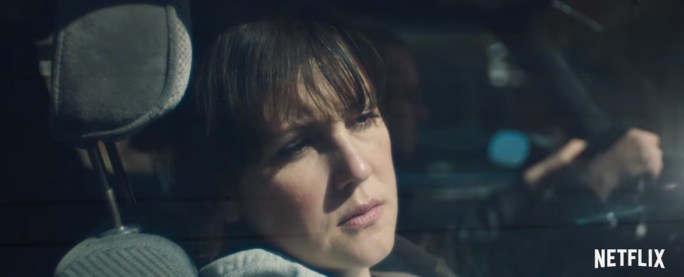
Macon Blair’s directorial debut I Don’t Feel at Home in This World Anymore, which he also wrote, is a black comedy with serious balls, and as such, this film won’t be for everyone. I love subversive and unexpected material, and this nasty little Netflix acquisition goes to some truly bizarre, and often times (for me at least) hysterical places; it’s just a question if you think watching someone getting their hand blown off at close range by a shot-gun is funny. As always, it’s about context, and the degenerates featured in this wild narrative mostly get what they deserve. The plot shares a Falling Down vibe, with Melanie Lynskey essaying a character who probably lives down the street from everyone reading this — the sort of person who is fed up and sort of directionless and at odds with most of society, and revolts against the random idiocies that life throws their way. The film details her attempts at moral revenge against a hoodlum who breaks into her house and steals some of her belongings.

2

Her dark and twisted odyssey opens up a can of worms she could never have expected, and is forced to deal with some sinister baddies who feel as desperate as they look unclean. Shot in some really questionable areas of Oregon with down and dirty aplomb by stylish cinematographer Larkin Seiple (Swiss Army Man, Cop Car), this scrappy indie features Elijah Wood in an off-beat supporting role as Lynskey’s unlikely counterpart in all of the madness, and to her credit, Lynskey, who was so excellent on HBO’s recently cancelled marriage dramedy Togetherness, charts the uneasy narrative waters with serious gusto, investing her character with plucky spirit that hopefully helps her by the end of the blood-soaked proceedings. I can’t wait to see what Blair, who so memorably starred in the brilliant thriller Blue Ruin and appeared in Jeremy Saulnier’s hard-core follow-up, Green Room, does next as a filmmaker. Something tells me that he’s not likely to lose his perverse edge.

1