THE CRITERION COLLECTION PRESENTS: MICHELANGELO ANTONIONI’S BLOW-UP — A REVIEW BY NICK CLEMENT

1

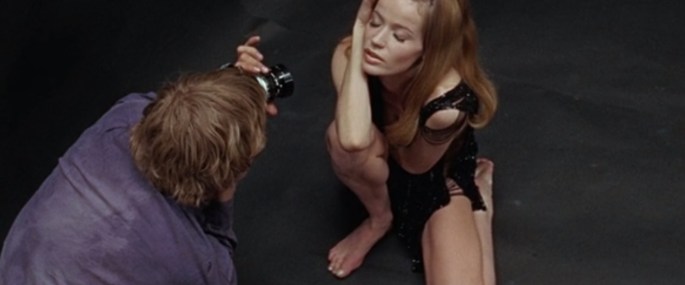
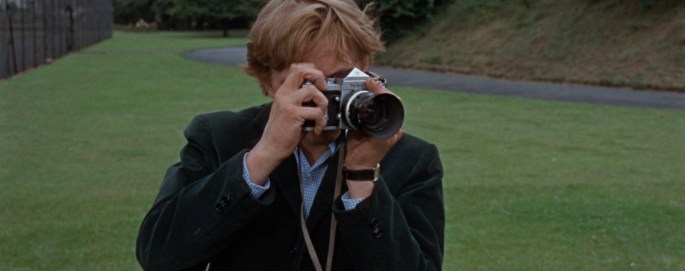
The recently released Criterion Collection Blu-ray Special Edition of Michelangelo Antonioni’s masterpiece Blow-Up is a thing of pure beauty. From the gorgeous packaging to the wonderful and thoughtful full-color booklet to the plethora of bonus features, they’ve given one of the best films of all time superb physical media treatment. Blow-Up is a true study in cinematic cool-factor, and it will always be one of my absolute favorite films. It radiates sex and style and class and sophistication and the way Antonioni primarily used images to tell his story will always fascinate me to no end. You get David Hemmings in one of the quintessential screen performances and Vanessa Redgrave in all of her beatific splendor, not to mention an absurdly talented (and rather photogenic…) supporting cast. This was the first of three movies that Antonioni made for MGM (Zabriskie Point and The Passenger are the other two), and it remains one of the most influential, form-busting movies of its era, a wild romp through London’s swinging 60’s, with the out-sized exploits of famed fashion photographer David Bailey serving as a character influence. I can’t stress enough how sexual vibrancy just flows all throughout this film; the photo-shoots were directed, shot, and preformed as if the actors were simulating lovemaking, and when you look at the faces of everyone in the hot-stuff cast, you get the sense that the carnal feelings being felt may not have been phony.

2

The plot was adapted by Antonioni, Tonino Guerra, and Edward Bond from the short story The Devil’s Drool by Julio Cortazar, with Hemmings portraying a cocky, womanizing photographer, and revolves around a series of photos that he snaps out in the park one afternoon, which may or may not contain the identity of a killer and a murder in progress. Brian De Palma would do a riff on this material with his classic 1981 thriller Blow Out, which starred John Travolta in one of his best performances as a movie sound mixer collecting sound effects near a river when he inadvertently witnesses and records the sounds of a car crash which may be more than it seems. But back to Blow-Up; this is a film I’ve viewed multiple times, and I love how it’s come to mean so many different things to me as a person each time I encounter it. The film has a bewitching nature, a dreamy quality (but not hallucinatory), and it sort of resembles a methodical thriller without the conventional ending that we’ve all come to expect after years of Hollywood shoving plot contrivances down our throats. Antonioni, a master filmmaker who loved to subvert his audience at every opportunity (I adore this man’s work), was clearly fond of the open-ended finale, a storytelling device that can be extremely effective when properly handled, but can also feel amazingly cheap and artificial in the hands of lesser filmmakers. Here, because Antonioni has set so much up and given the audience so many tantalizing bits to examine, the fact that the film ends the way it does shouldn’t provoke anger, but rather, further mystery with the potential for more discoveries on repeated viewings.

3


Herbie Hancock’s jazzy score punctuates the film in all the proper ways, but what Antonioni excelled at best was silence, and how it can be used in so many ways to evoke so many emotions. The cinematography by Carlo Di Palma is absolutely brilliant, each shot informing the one previous and the one following, with an expert sense of camera placement, color, and space within the frame. The fluid editing by Frank Clarke plays with time, expectations, and the specific way visual information is presented, and ultimately serves as a textbook example of how not to over-cut your picture. And then there’s the parade of gloriously beautiful women that are trotted out for Hemmings to flirt, photo, and party with, with one extremely memorable sex scene clearly ranking as one of the best ever put on film. Hemmings gives a fascinating performance, filled with self-assurance then self-doubt, all the while displaying a unique resentment towards women despite his glamorous job, with a stare that could cut glass and shake anyone off their guard. He’s a man who has become jaded by his lifestyle, but when he’s offered the chance to do something with true meaning, he becomes re-energized by the possibilities that his craft allows and by the random nature of life itself. Blow-Up isn’t a movie where you’re going to learn all of the plot points in an easy fashion, and in many instances, Antonioni leaves his audience to interpret what they’ve seen and what he’s shown. For me, that will always be the mark of a GREAT artist – that rare ability to create something rich and complete while still allowing for room to grow and rediscover.

Dunkirk: Christopher Nolan’s latest is an unforgettable masterpiece – A review by Josh Hains

“We shall not flag or fail. We shall go on to the end. We shall fight in France, we shall fight on the seas and oceans, we shall fight with growing confidence and growing strength in the air, we shall defend our island, whatever the cost may be, we shall fight on the beaches, we shall fight on the landing grounds, we shall fight in the fields and in the streets, we shall fight in the hills; we shall never surrender.” – Winston Churchill

Most, of the war films I’ve seen post Saving Private Ryan have been about American soldiers and the battles they’ve fought during World War II, Vietnam, and more recent wars, save for the war sequences of Atonement. It was refreshing to see a World War II film yesterday afternoon that was shown from the perspective of British soldiers, and with the German enemy only shown for just barely a few seconds. It’s a perspective we used to encounter often decades ago that for one reason or another fell to the wayside. Hopefully this masterfully crafted piece of cinema will encourage other directors to widen their landscapes and tell more stories from the British perspective, or perhaps even the French or another allied nation.

By now you have no doubt seen many talking up a storm about this year’s undeniable “masterpiece”, and that it should be a major Oscar contender for Christopher Nolan when the season hits its stride in a few months. I dislike using the word masterpiece to encapsulate all of my positive thoughts about any given movie, and I feel it is quite often improperly attributed toward movies that aren’t actually considered masterpieces some years after they’re released. Film culture has this odd habit of using a wide assortment of colourful, hyperbolic wordage to emphasize how good a movie is during its first couple of weeks in theatres, yet the majority of movies dubbed a masterpiece during Oscar bait season seem to fade into obscurity. But the film being heralded as a masterpiece over the last week, I believe wholeheartedly, will be regarded as such decades from now and for a worthy variety of reasons, but most of all because of the way the imagery lingers within your mind like dirt under your fingernails.

There’s an image I can’t shake no matter how hard I try, of a man looking upon a fire that’s been, for lack of a better word, burned into my mind since the moment my eyes bore witness to it. If I close my eyes, or think of it in my minds eye, I can see it as clearly as if it were happening right in front of me in this very moment. To be honest, I can see nearly the entire movie that clearly, I remember much of it so well having seen it just under a day ago, but it’s images of smaller moments that seem to have been etched into my mind with a hot knife better than others. One would think the more traditionally spectacular moments, of boats exploding and planes being shot down, would stick out in one’s mind the way they always seem to with other war movies, but surprisingly, and refreshingly, that just isn’t the case here. No, I remember the man watching the fire grow as the sun sets, a trio of young men watching a fellow soldier wade suicidally into treacherous waters, a pilot running on fumes while gliding past thousands of men on the beach as they cheer.

Dunkirk is a war film comprised of small moments such as those that, when put together in the form of a complete picture, creates the sensation of a much larger war epic without ever having to actually become one. Yes, it’s a war movie that shows us Christopher Nolan’s perspective on Dunkirk, but it’s not about the war itself, but rather these small moments within the war and the collective struggle of soldiers and common folk affected by the event, and the personal toll the war takes on every soul who had the misfortune of experiencing it.

Much has been made about a lack of a single protagonist for audiences to latch onto and invest themselves in, as if the lack of such a character is a major deprivation for audiences that’ll leave you feeling cold and emotionally detached from the movie. That’s just not true. Dunkirk is about the collective experience of the soldiers and civilians who were a part of this event, and by not choosing a single person to use as our guide through this hellish experience, Nolan allows the audience to feel like they’re right there amongst the soldiers and sailors as planes swoop overhead and bombs periodically detonate with horrific results. No one character is glorified or given the special treatment by Nolan, and thanks to his wise decision to interweave three different perspectives non-linearly together, each and every act of courage or bravery that he focuses on regardless of the immense stakes surrounding them, are treated with equal importance.

I am thankful I am not one of those people who had difficulty following the non-linear presentation of the film. While watching Dunkirk I felt that the non-linear style only amplified the suspense I was feeling, making me clench my fists tighter and my knuckles turn whiter. I enjoyed the sensation of being tossed around from one situation to the next, trying to guess what direction I’d be travelling in until the three interweaving perspectives collide toward films end, and  the pieces come together perfectly like a puzzle.

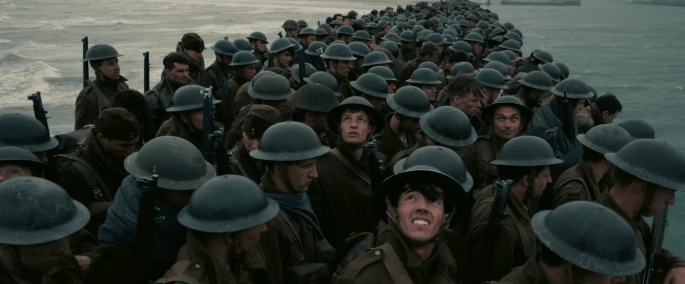
The opening scene of soldiers including young Tommy (Fionn Whitehead) running down a street trying desperately to escape enemy gunfire before finding the mole of Dunkirk harbour where Commander Bolton observes the chaotic situation while soldiers like Tommy repeatedly try to escape the clutches of the beach over the course of a week, sets the tone of the movie immediately: frantic, intense, terrifying, sudden. We spend a day upon the Sea where Mr. Dawson (Mark Rylance), his son Peter ( Tom Glynn-Carney) and their young deckhand George (Barry Keoghan) pluck soldiers like the Shivering Soldier (Cillian Murphy, and yes, that’s what he’s called in the credits) and the RAF pilot Collins (Jack Lowden) from the depths of the icy waters. Then there’s an hour in the Air where Farrier (Tom Hardy) chases down German Messerschmitt planes in his Spitfire, halting most of their attempts to bomb boats.

I’m also thankful I heard every line of dialogue crystal clear, well enough to accurately identify Michael Caine as a radio communicator for the Royale Air Force. Admittedly, I heard the explosions and gunfire so loudly I jumped a few times when the overwhelming sound caught me off guard. Many continue to emphasize the need to see this film in 70mm IMAX, but I believe that regardless of what format you choose, it’s the experience of seeing Dunkirk theatrically that is necessary, and perhaps not so much the format, though it helps if the screen you’re looking at is bigger than most. As great as our surround sound has gotten for use in our homes, nothing will ever compare to seeing this film on the biggest screen you can find. When the sound of a Messerschmitt comes roaring from behind you, then almost sounds like it’s passed overhead before screaming way out in front of you, it genuinely feels like the closest thing to actually being there that any of us will ever encounter, and it’s absolutely terrifying. When soldiers are forced into the water, typically in fleeing from a sinking vessel, you can almost feel, smell, and taste the frigid waters. And when bombs are dropped and gunfire erupts, both at near deafening decibels, you can’t help but tense up as if one of the bombs or bullets might collide with you. It’s an immersive experience you really need to experience for yourself to believe and understand the full extent of.

The actual images of the film are less terrifying than the sounds of explosions and machine gun fire, in part because Nolan leaves the film devoid of blood beyond a few cuts and scrapes, a decision that had even myself second guessing how he might make this work. Once you understand that Dunkirk is a psychological war film that asks you to ponder what you’re watching rather than simply bombard you with heaps of exposition and gory carnage aplenty, you realize there really is no need for an R rating for this picture. Dunkirk is just an hour and 46 minutes long, lean and devoid of unnecessary fats comprised of character beats, long and frequent exposition dumps, and bloody war horrors, and all the better for it. This film didn’t need to be longer or shorter than it is.

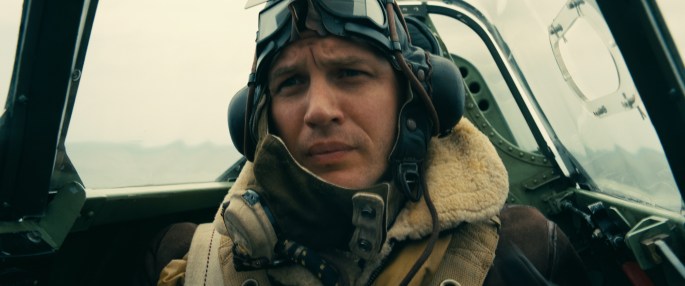
I don’t have any qualms with Dunkirk at this juncture (the qualms others have encountered I don’t have), and while I love everything I saw in the film and greatly admire the ensemble cast’s performances, from Fionn Whitehead to Kenneth Branagh, Mark Rylance, and others and the scenes they all inhabit, it was the perspective titled The Air I felt the deepest investment in. That’s not a knock against the other scenes, I just found The Air more hypnotic than anything else in the film, mostly due to the truly stunning cinematography from Hoyte van Hoytema (seriously, every frame of this film is gorgeous and should be framed and hung in a museum), and Tom Hardy’s near silent performance (he has maybe 10 lines of dialogue in total). It didn’t occur to me until today that after a certain point in the film, Tom Hardy’s Farrier never speaks again. That Hardy conveys outwardly and through his eyes (because he wears yet another mask in Dunkirk) everything Farrier is thinking in the moment is in itself is quite the accomplishment, and only goes to show just how great an actor Hardy has become. That his scenes are the most riveting and awe inducing sweetens the deal.

The first thing my mind floats to when I think about Dunkirk is still the image of a man watching the fire grow on the beach, as clear as if it happened just a moment ago. The sky turning charcoal, the flames glowing against the sands and his face, his stern expression showing accomplishment and sacrifice in the same breath, the wind snapping against his skin and tossing his hair, his story coming to an end moments before the film does. I know I’ll see Dunkirk many more times, but if I only saw it just once, I’m willing to bet I’d remember that image for the rest of my life.

P.S I Love You


P.S. I Love You is pretty grounded, affecting stuff as far as romantic dramadies go, a sorrowful story that’s light on sap and earns your tears. It’s sad, to be sure, but that’s a necessary element to balance out any otherwise happy-go-lucky narrative, which is something many forget when making these types of films. Jarringly soon after we meet adorable and slightly dysfunctional couple Gerry and Holly (Gerard Butler & Hilary Swank), Gerry passes away, leaving her bereft and broken, but not necessarily alone. Knowing of his illness beforehand, he’s left a series of love notes that lead her on a scavenger hunt, each new note and following action geared towards easing her pain, saying goodbye and trying to help her start a new life. Although consoled by her two caring friends (Gina Gershon & Lisa Kudrow) as well as her mother (Kathy Bates) this is Holly’s solo journey at heart, a meditation sent from the afterlife by the world’s most thoughtful husband, unconventional in his methods yet intuitive to his last breath. Losing a loved one, especially your other half, is a kind of pain one could never fathom unless, heavens forbid, we find ourselves in that situation one day. Holly and Gerry didn’t always work well, as we see in a few of the haughty flashbacks, but their love for each other was real, and the subsequent pain on her part is palpable in Swank’s performance, which must be no easy task. A trip to Ireland, an encounter with a handsome stranger there (Jeffrey Dean Morgan), flirting with a kindly potential suitor (Harry Connick Jr.), she circles many endeavours in her time after his passing, all part of a grieving process and a desire on deceased Jerry’s part that she live her life, remember him yet not fall into an abyss of chronic grief and let it stall her, which happens to some. It’s a sweet and good-natured way to tell a very grave, emotionally corrosive story, but like I said before, it’s never manipulative or deliberately mushy, it lets the story push your buttons naturally, until the floodgates on your tear ducts are opened by observing the story and characters, not connived by soap opera histrionics or tacky melodrama. A beautiful little film that makes you deeply sad, but also puts in an effort to cheer you up along the way, just like Gerry does for his Holly. 

-Nate Hill

Christopher Nolan’s DUNKIRK

Dunkirk

2017.  Directed by Christopher Nolan.

dunkirk.png

One of the first things that becomes clear, seconds into Christopher Nolan’s audacious thriller Dunkirk is that it is not a conventional war picture.  It may not even technically be a member of the genre.  Regardless, Dunkirk is Nolan’s crowning achievement.  A ferocious, tightly constructed tribute to one of the greatest acts of national heroism in the history of mankind.  Bordering on horror at times while exploring the darker side of survival and the effects of trauma, Nolan commands a cinematic arsenal in a symphony of destruction, balancing a pulse raising score, harrowing cinematography, and unparalleled practical effects.  These combine to form a living prison around the audience, forcing them to inhabit the souls of the combatants, both their acts of unthinkable courage and their primal need to survive at all costs.

400,000 allied soldiers are stranded on the beaches of Dunkirk.  What follows is a nonlinear recounting of the rescue operation that inspired the world to fight back against inhuman darkness.  The point of view is split between the soldiers on the beach, civilians mounting a rescue effort by sea, and the Royal Air Force pilots protecting the operation.  Nolan’s script is a showcase on minimalist storytelling, to the point that Dunkirk often feels like a silent film homage and this only furthers the oppressive feeling that pervades every frame.  There are no Nazis present on the screen; they are wraiths coming to reap the souls of the stranded.  There is no respite, no sanctuary, and from the first ear bursting gunshots, the film drops any sense of conformity with its predecessors.

kenneth-branagh-dunkirk.jpg

Some have commented on the film’s distinct lack of exposition and character development; however the lack of focus on a singular “hero” is what allows Nolan’s vision to truly shine.  Who these people were is not of interest to the master auteur, it is the sum of masses that is on display.  It would be unfair, however, to ignore the work of Tom Hardy and Mark Rylance.  Both of these talented performers have scenes that are so emotionally gripping, they manage to imprint on the viewer, despite the absolute bravura of everything else that is happening around them.  This was a day where men made the ultimate sacrifice for the many and where boys became men against their father’s wishes.

Hans Zimmer, who will hopefully garner awards gold this season, has created the best score of his prolific career.  Emulating the ticking doomsday panic that afflicts the soldiers, his ominous notes are relentless, taking the narrative into the depths of despair, only to then deliver the proceedings into hope.  The sound design is impeccable.  The viewer is there, on the beach when bombs cascade across the sounds, in the surf when ignited oil snatches away all hope of escape, and in the sky, where split second decisions decide the fate of thousands.  This is a film that requires IMAX viewing, if possible.  It is not only the reason these titanic theaters exist, it is a great example of the power of the big screen.

dunkirk-trailer-image-16.jpg

Hoyt van Hoytema’s pristine cinematography is breathtaking.  While the editing allows it to truly shine, there are a plethora of moments where the camera lingers on desolate beaches and aeronautical specters that enrich the three pronged approach with unflinching realism.  There are so many unique tactics employed, it seems daunting, but they flow together with a dangerous sense of truth.  While other efforts rely on tracking shots and shaky-cam trickery, Hoytema is interested in the soul of Nolan’s vicious poetry, and the result is a cold, omnipotent viewpoint that leaves everything on the table.  There are no favorites, no shining stars, and nothing but the events themselves matters.   This is a startling film, but one that is relentlessly human in its retelling and this is something that will either resonate with the viewer, or repulse.

In theaters now, Dunkirk is one of the few masterpieces of 2017, and the best film of Christopher Nolan’s fabled portfolio.  Every element of what mystifies and entices us to watch films is present.  There is tragedy and redemption, heroism and cowardice, and most importantly darkness and unyielding light.  If you see one film in the theater this year, this is the one.   If you’re looking for a traditional war film, look elsewhere.  Nolan’s masterful, tightly paced epic is an endurance test for the mind and heart.  Dunkirk is a retelling of history in a hands-off, brutally realistic manner that will leave you stunned for its duration, and long after the lights have come up.

Highly. Highly Recommend.

maxresdefault.jpg

VANISHING POINT — A REVIEW BY NICK CLEMENT

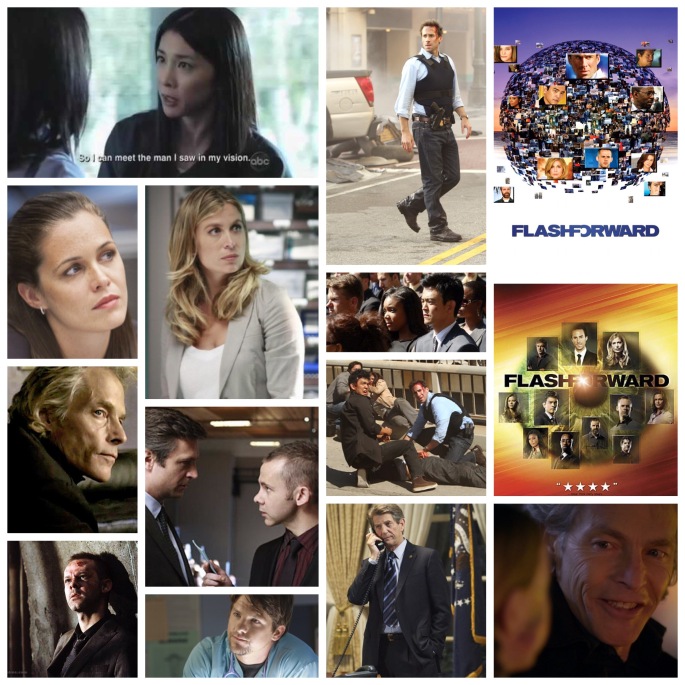
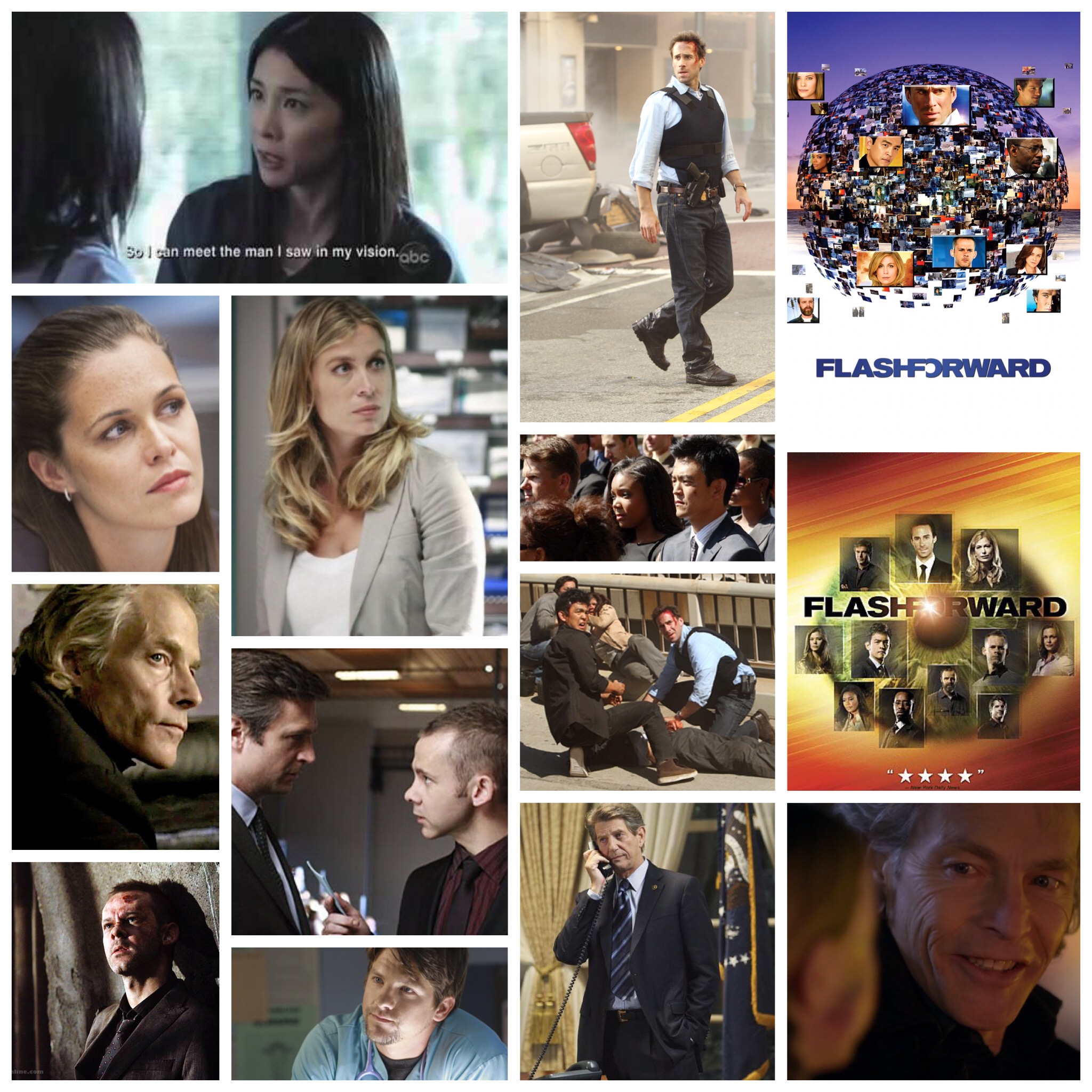
ABC’s FlashForward: here in a flash of brilliance and gone after one season 


ABC’s Flashforwad was a gripping psychological/supernatural epic with potential to run many seasons and provide us with solid entertainment for a long time a lá Lost (which it bears some similarities with), but the network mysteriously axed it after a single season, leaving a vacuum in the air as far as it’s story, and many viewers left stranded, wanting more. The show was built around a wicked concept: one day, every human being on planet earth simultaneously blacks out for a few minutes, and in that time has a precognitive vision of the future some months away from their present time, then promptly wakes up. This of course causes sheer chaos all over the globe, initially with millions of car crashes, disasters and planes falling out of the sky, and eventually the uncertainty, paranoia and confusion as to just what these flash-forwards are all about, and if it will happen again. An FBI task force spearheaded by the likes of Joseph Fiennes and Courtney B. Vance is commissioned to investigate the matter, and their mission takes them to some truly weird places, both geographically and thematically. There’s strange forces at work with this one, secrets that are kept close to the chest and gradually doled out over the expansive twenty three episode arc, a great length of run that should really be the standard for television. It’s similar to Lost in the sense that every week the mystery deepened as opposed to circling a resolution, clues and questions piled on top of the previous ones without a hint of finality or exposition to light the way, an audience tested, surefire way to keep people from flipping the channels mid episode and a great of garnering new viewers via word of mouth. The trick is to also add rhyme and reason to your bag of mysteries, provide a modicum of answers to keep the frustration just at bay, a formula which this one actually succeeds better at than Lost ever did. The scope and budget here are both enormous, giving new meaning to both the terms ‘globetrotting’ and ‘ensemble piece’, a truly vast attempt at long form storytelling. The cast is eclectic, other leads including John Cho as another hard-nosed Fed, Zachary Knighton as a doctor whose life is perhaps affected most by the incident, and brilliant turns from Jack Davenport, Sonya Walger, Peyton List, Dominic Monaghan, Brian F. O’Byrne and the late Michael Massee as nefarious, shadowy ultra-villain Dyson Frost, who serves as a sort of mcguffin during the first act of the show. Guest arcs included James Remar, Thomas Kretschmann, Rachel Roberts, Gabrielle Union, Shohreh Ahgdashloo, Annabeth Gish, Callum Keith Rennie, James Frain, Peter Coyote as the US President and so many more. The show looks amazing too, a brightly lit, well oiled mystery machine with all sorts of storytelling wizardry including nifty slow motion musical montages, trippy time jumps, non linear what-have-you and all manner of neat stuff. Gone way, way before it’s time, this one is well worth a watch and shouldn’t have been written off so soon. And remember: D. Gibbons is a bad man. 

-Nate Hill

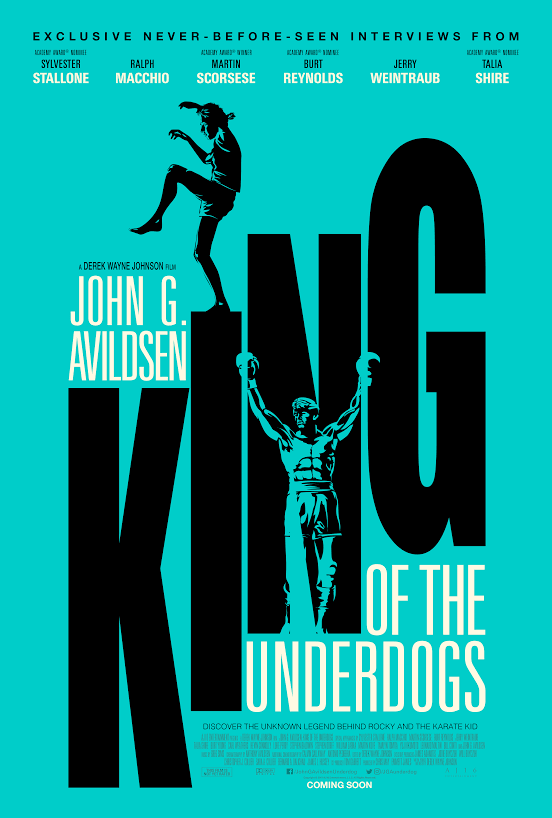
Derek Wayne Johnson’s JOHN G. AVILDSEN KING OF THE UNDERDOGS

JGA Underdogs


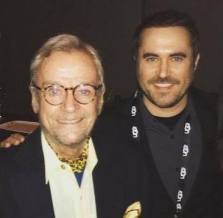
19225757_10102471107188568_2867561815267919866_nJoining Frank is filmmaker Derek Wayne Johnson whose film JOHN G. AVILDSEN KING OF THE UNDERDOGS premiered in February at the 32nd Santa Barbara International Film Festival. It is a fantastic film, chalked full of interviews with Sylvester Stallone, Martin Scorsese, Talia Shire, Ralph Macchio, Burt Young, Carl Weathers, Burt Reynolds, Bill Conti, and John Avildsen himself. Derek is currently going into production on his next two films, STALLONE: FRANK THAT IS and 40 YEARS OF ROCKY: THE BIRTH OF A CLASSIC. For those who tuned into our SBIFF podcast, you should remember my red carpet interview with Derek. 

The film hits theatres, blu ray, DVD, and VOD on August first. Please, pre-order the film at Chassy.

To order on iTunes, please click here.

OUT OF ORDER: FIVE NONLINEAR FAVORITE FILMS

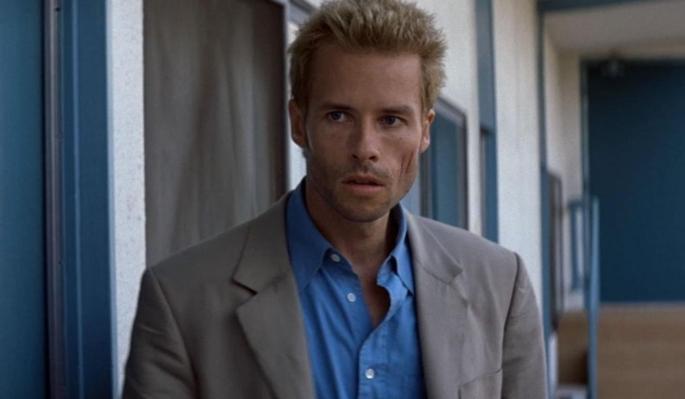
pearce-memento-wallpaper-1784482100.jpg 

The art of storytelling has developed over the years and although there are only so many ways to tell a story, there are no rules as to how we as an audience witness a protagonist’s journey unfold.  D.W. Griffith experimented with nonlinear presentation with Intolerance in 1916, while Goddard branched out in the late 1950’s to this technique.  Quentin Tarantino modernized it with Reservoir Dogs and other directors have continued to expand the influence of in medias res to this day.  In celebration of Christopher Nolan’s Dunkirk, Ben and Kyle talk about five of their favorite nonlinear narrative films.

Pulp Fiction
1242911076001_3839236617001_hulu-et-pulpfiction-101414.jpg

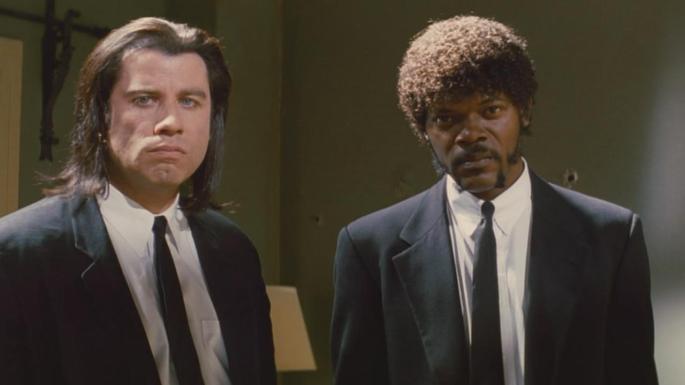
BEN: Though he introduced a modernized version of the nonlinear narrative with his first film, Quentin Tarantino’s Pulp Fiction cemented its revolution.  The year was 1994, just before the dawn of the World Wide Web (in today’s parlance, the Internet). Buzz about films traveled at a snail’s pace, which is funny considering that this film won the Palme d’Or at that year’s Cannes Film Festival.  Okay, the joke’s not that funny, yet Tarantino’s sophomore film, a black comedy and a modern neo-noir was responsible for not only reigniting John Travolta’s career, but also for changing the way stories could be told, something that he and writing partner Roger Avary won a Best Original Screenplay Oscar for in 1995.  It was the first film that Miramax fully financed and distributed, altering the way independent films were distributed.  And then there’s the nonlinear way that Tarantino tells his story.  The way the sequences are edited together, we’re never jolted out of the moment, which is why this film works so very well.  I think the key to his success here is in the characters and the settings.  I remember seeing the movie on VHS and in widescreen and being blown away by the change in perspective that it created.  At the time, it was one of the more unique movies that I had seen.  I think I’ll watch this again soon while enjoying a Royale with cheese.

KYLE: It’s an amazing film that has held up well over the years.  As you mention, the script, with respect to perspective is what has allowed it to endure.  Yes, there are endlessly quotable lines, but the magic lies in the well-defined characters and the unique presentation. Knowing the fates of certain characters increases the impact over other scenes when they transpire, which I think is one of the benefits of nonlinear storytelling and why so many carbon copy rip offs failed during the crime flick heyday of the 90’s.  Most auteurs tried to cash in on Tarantino’s ideas but failed to grasp the importance of the story as well as the characters.  There is a rotating door of VHS cult gems that each have memorable characters or scenes of violence, but they pale in comparison to Pulp Fiction because they don’t weave them together into a complete picture.  It also continued the tradition of building a stable of performers that Tarantino continues to use to this day.

The Usual Suspects
 the usual suspects.jpg

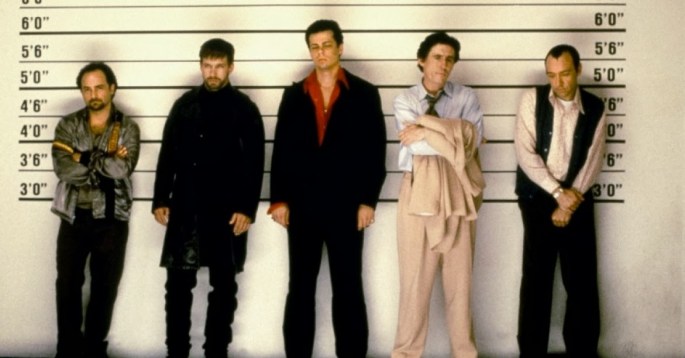
BEN: Bryan Singer’s sophomore feature film is the electrifying The Usual Suspects which took the world by storm with the famous ending and the line, “Who is Kaiser Söze?” Based on the Oscar-winning screenplay by Christopher McQuarrie who also wrote Public Access for Singer, would use the nonlinear format to tell “Verbal” Kint’s version of events that would lead to a drug deal gone bad for the police involving a severely wounded Hungarian mob boss.  Throughout the story, McQuarrie and Singer lay clues as to who the mastermind is, resulting in one of the most celebrated plot twists in cinematic history.  The film works because of the sublime cast including Gabriel Byrne, the cool and collected one, Stephen Baldwin, the balls-out nut job, Benicio del Toro, whose broken English plays well into this collection of misfits.  Kevin Spacey plays “Verbal” and his Oscar-winning performance is the highlight of the film.  Chazz Palminteri does an exceptional job grilling “Verbal” and Pete Postlethwaite is pitch perfect as the ominous courier.  This is another one of those films that I saw in college on home video (I didn’t get to the theater as much as I do today for obvious reasons.)  Seeing this film on VHS was an eye opening experience.  Interesting note:  the title came from an issue of ‘Spy’ Magazine which lifted it from a famous line spoken by Claude Rains in “Casablanca”.

KYLE: While I don’t think it has held up as good as some of the others on this list over the years, Singer’s film is a masterclass in narrative construction.  Yes, the clues are easy to parse and in plain sight, but the totality is a precise formula that toys with the neo-noir genre to ultimately produce an inverted whodunit.  Palminteri, and his scenes with Spacey are the main event, while the lovable cast of rogues moves the story from one point to another.  The infamous line-up scene is my favorite sequence, because not only it is continually quoted by film lovers everywhere, it’s evident that the cast are having a good time filming it, which always enhances the mood of a film.  While this one is not necessarily nonlinear in the same manner as Fiction, it uses the fractured narrative as a device to explore perspective and truth with narrators who may be unreliable, one of the best attributes for a mystery.

 Memento
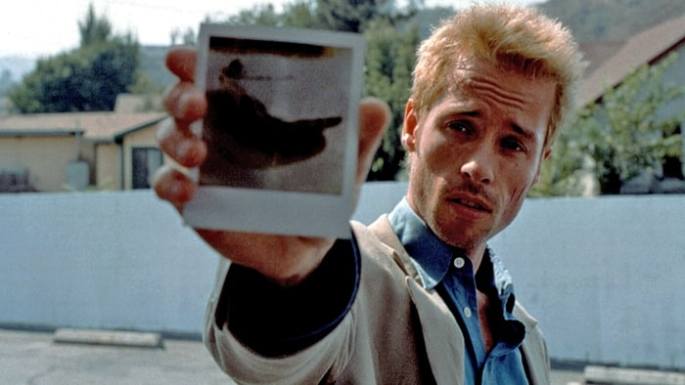
memento_image_3.jpg

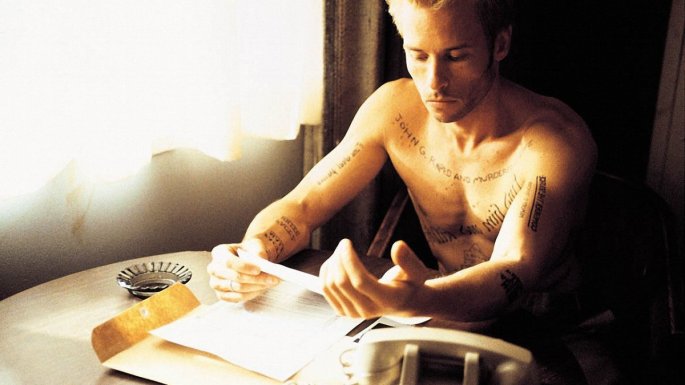
BEN: I think we’re on a role with sophomore directorial efforts.  Our third film is another sophomore effort, this time by Christopher Nolan.  Starring Guy Pearce and Matrix co-stars Carrie-Anne Moss and Joe Pantoliano, this film is a look at anterograde amnesia, where the protagonist is unable to form new memories while suffering from short-term memory loss.  The way Nolan visually interweaves and ultimately intersects the two side effects of the amnesia is breathtaking.  In addition to interweaving the various vantage points, he differentiates the two side effects with color and black & white images supporting the deteriorating condition of our protagonist and his world. The narrative is cohesive in its progression, no matter which way you go.  While Nolan had a clear direction, Guy Pearce did such an exceptional job at conveying the events he experienced that we suffer right along with him until the last minute.  I expect we’ll see a similar style of storytelling in Nolan’s upcoming Dunkirk.

KYLE: Let’s hope!  I know a lot of readers are saying, it’s just told in reverse!  While this is true, linear stories are about going from A to B.  Memento goes from B to A in a puzzlebox presentation that requires multiple viewing to grasp all of its intricacies.  I remember seeing it in the cinema and being blown away by the implications of the ending, as well as how disturbing the mood is for the duration.  This flirts with psychological horror, dipping a toe into Lynch’s end of the pool, but then quickly reverts into a gritty neo-noir. Speaking off, our first three films have all been neo-noir.  Ben, do we have films from a different genre on the list?

Solaris (2002)
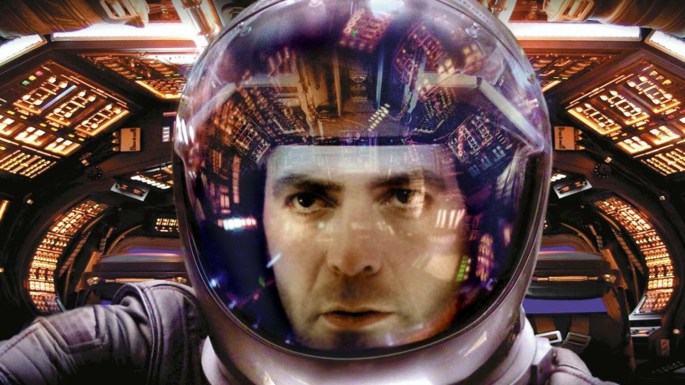
 

lsn6ddg5cf.jpg

BEN: As a matter of fact, we do.  This is also where we end our sophomore directorial efforts; however this film’s director is linked with another director we’re celebrating.  Soderbergh who has been established in Hollywood since the late 80’s when he broke out with Sex, Lies, and Videotape worked with producer James Cameron to bring a reimagining of the celebrated Solaris to modern audiences.  Featuring one of his mainstay actors, George Clooney, the story is centered around Dr. Chris Kelvin, a clinical psychologist who is called on by the DBA to review a disturbing message from a colleague, who along with a crew of astronauts is on a space station orbiting Solaris.  Kelvin travels out to the space station to determine why they stopped communicating.  Soderbergh’s script remains close to the original novel where he uses flashbacks to create a nonlinear story.  Solaris is capable of something greater than the human mind, and it is this existentialism that allows Kelvin to reconnect with his dead wife.  Cited as a love story in space, which Stanislaw Lem didn’t agree with, the 2002 version failed to connect with audiences, which is a shame.  It is an exceptionally well done film where we get to see Viola Davis in as strong a performance as she gave us in last year’s Fences. Jeremy Davies was amazing as Snow, one of the scientists on the station and although he has a small role, Ulrich Turkur had a lot of fun as Gibarian.  McElhone lit up the screen as Kelvin’s doomed wife Rheya.  What I liked most about this is its ambiguousness.  Is it a love story?  Is it a Sci Fi film?  Roger Ebert, who loved it, called it “the kind of smart film that has people arguing about it on the way out of the theater . . . . it is essentially a psychological drama.” I still revisit it and long for the day it is released in high definition.

KYLE: I’m a huge fan of both this and the original by Tarkovsky.  I actually find myself returning to Soderbergh’s version more often because I think he strips away everything but the raw connections at the heart of the story.  Tarkovsky’s dreamlike masterpiece is a lifetime on film, while Soderbergh’s version is a fading memory, and both of them have merit.  With respect to the 2002 version, I think the nonlinear presentation is essential in order for the release of the finale to impact the viewer.  Themes of love are actually a large part of the science fiction genre and Soderbergh keys into essential, base human emotions in this film.  It’s devastating, terrifying, and ultimately unforgettable because the viewer is treated to the gambit of not only the cycle of grief, but how love and loss filter differently through different kinds of minds.  Davis (who I also love in this) plays against Clooney so perfectly, I often feel her performance is undervalued.  You have science vs. psychological theory and both are plagued by the inevitable baggage we all bring to the table.  Davies, in the middle, is the film’s best surprise, bringing home the startling actions of Clooney during the first act.  Soderbergh’s Solaris is an organism connected by the fabric of mankind and I hope more viewers give it a chance after reading this.

Arrival
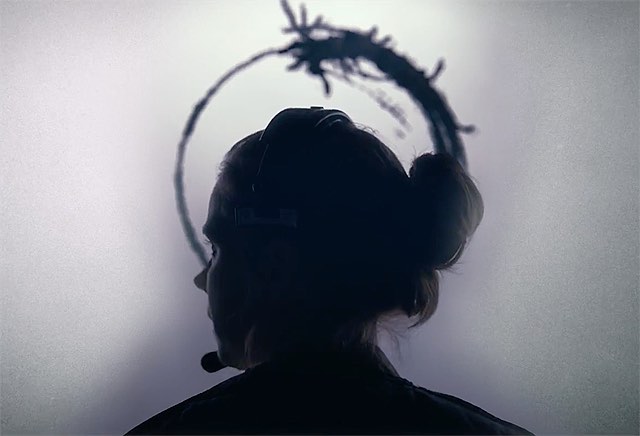
 

16465387_1774490656212224_2951863673158631424_n.jpg

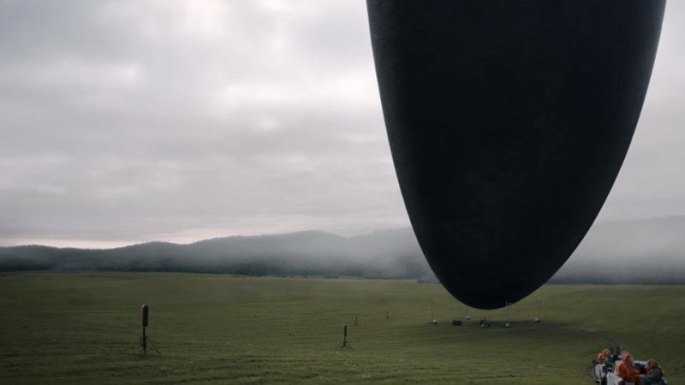
BEN: Denis Villeneuve, who always wanted to do a science fiction film, gave it to us in spades with 2016’s Arrival.  Based on Ted Chiang’s Story of Your Life, Eric Heisserer delivers a top notch sci-fi film featuring Amy Adams, Jeremy Renner, Forest Whitaker, Michael Stuhlbarg and Tzi Ma.  Part Solaris, part Contact, part The Day The Earth Stood Still, Heisserer uses the nonlinear narrative to sew together a story of grief, love, passion, and empathy as Adams’ Elizabeth Banks races to develop a language database that the military can use to communicate with an alien race whose spaceships have settled above our most populous cities.  The structure of the story keeps you guessing what the true nature of the film really is, which is a beautiful thing.  Adams gave an Oscar-caliber performance as the emotionally wrecked and passionately driven Elizabeth Banks.  Villeneuve’s direction is exemplary here, and is the key reason why Heisserer’s story works as well as it does.

KYLE: Could not agree more.  I was shocked Adams was overlooked for an Oscar nomination. This is another…non-traditional choice.  The nonlinear narrative is integral to the story, but its reason for inclusion is the film’s most challenging revelation.  One of my favorite aspects of this film is how the scientific and military sequences are interspersed with intimate scenes of familial life.  This sets the stakes for the viewer, reminding them of the countless souls that hang in the linguistic balance.  Communication is the central theme, both in how we interact with the extraterrestrials, but also with each other as a species.   Given the divisive last couple of years, Arrival was a breath of fresh air that showed (not preached) love, mutual respect, and most importantly, tolerance.  I think it’s important to mention that Bradford Young was the first African American to be nominated for the Oscar for Best Cinematography.  It was some of my favorite imagery from last year’s awards season.
 

ext.jpg

BEN: That’s about right, Kyle.  Oh!  I forgot to mention the connection that Soderbergh has to another of the directors we mentioned – he was one of the producers of Insomnia by Christopher Nolan.  We really do live in a small world.

KYLE: Most assuredly.  Thanks, once again for the engaging conversation.  I look forward to our next topic!

We hope you enjoyed this brief look at our linear list of nonlinear narrative films. As you’re venturing out to your nearest IMAX film to catch Dunkirk this weekend, what are your favorite nonlinear films?
rs-216690-MSDMEME_EC005_H.jpg

Michael Mann’s Luck: A short lived masterpiece 


Michael Mann’s Luck was a painfully short lived HBO original series with reach-for-the-stars potential, a mind blowing cast and a terse, eccentric script from David Milch, all fuelling a brilliant ensemble storyline set in a pristine Los Angeles horse racing track. I’ll get the elephant out of the room right away: the series was cancelled due to a few of the horses dying on set, for whatever reasons. Had it been allowed to continue though, I imagine it would have gone on to become one of the network’s, and Mann’s, most hallowed and heralded works. Dustin Hoffman is the centrepiece of the cast as Chester ‘Ace’ Bernstein, a sharp witted Jewish mobster who’s recent stretch in the joint has somewhat dulled his edge. Nevertheless, he slyly takes a stab at playing his hand with horse ownership, joined by his charismatic driver Gus (Dennis Farina, reliably wonderful). There’s all kinds of other hoopla going on, and it’s cool to see the story focus on both the upper crust elite doing their shady deals as well as everyday joes tossing their money into these worshipped games. Kevin Dunn is terrific as a disabled firebrand of a gambler, joined by his two scrappy pals (Ritchie Koster and Jason Gedrick) as they try out their own brand of luck. Jill Hennessy is a determined horse trainer who clashes with a belligerent owner (Yul Vasquez), and there’s two ominous crime kingpins played by Michael Gambon and Ted Levine who hover in the shadows as well. Further still is a heartbreaking turn from Richard ‘Bing Bong’ Kind as a stressed out jockey manager, Nick Nolte as a crusty, broken-down horse trainer, Joan Allen, Alan Rosenberg, Spencer Garrett, Don Harvey, Ian Hart, W. Earl Brown, Shaun Toub, Bruce Davison, Frank Collison, Mercedes Rhuel, Tony Curran and a cameo from Jurgen Pröchnow as the stern owner of the whole track. How’s that for a cast. I must say that the dense, peculiar dialogue from Milch takes some time getting used to, but once you tune in to it’s jive, it’s pure poetry being rattled off by every character, and a gorgeously structured, meticulously layered script at that. The actors are all on a plane of pure excellence as well, many of them turning in career best efforts and bringing their roles vividly to life. The cinematography from various artists is pure spun gold too, every sparkling irrigation sprinkler, glistening horse coat, careful closeup and crop of dirt kicked up by hooves captured succinctly and smoothly. This seriously is as near to a perfect season of television as one can get, and it kills me that it got cut down before it had a chance to really get going, because just think of the places it could have gone. At least we still have this first glorious season to admire, and I recommend every minute of it. 

-Nate Hill

NETFLIX’S GLOW — A MINI-REVIEW BY NICK CLEMENT