2016 CINEMATIC FAVORITES — BY NICK CLEMENT

2

With nightly viewings at home (many of which were first time screenings) and close to 50 trips to the theater, I was able to see over 400 movies in 2016. I don’t subscribe to official Top 10 list-making; it’s fun to keep track and look back at what you’ve seen, but I don’t feel that there’s any true way to know what the “best” movie of the year is. Cinema viewing is a highly subjective and deeply personal experience for many, so I’d never tell you that you’re wrong for loving a movie that I didn’t connect with; that’s what affected you the most and what hit you in all the proper ways. So while I can certainly say, without hesitation, that Kenneth Lonergan’s masterpiece Manchester by the Sea is my favorite film of the year by a wide margin, there are many other films that provoked an emotional or psychological response from me, that challenged my expectations and abilities as a viewer, and that appealed to me on a personal level, and probably more than they will to others. And that’s totally fine, and to be honest, that’s sort of the point of cinema in general. So, rather than rank these selections in any particular fashion, and outside of the fact that nothing even came close to the overall impact of Manchester by the Sea, here’s a rundown of the movies that spoke to me the most as a human being and cinephile, and will likely be the films that I will revisit the most in the coming years. And all of this is written with the caveat that some big titles remain unviewed, including Loving, Gold, Paterson, Certain Women, Jackie, Silence, 20th Century Women, The Handmaiden, Elle, and The Founder, to name just a bunch.

3

Kenneth Lonergan’s eloquent slice of life, Manchester by the Sea, is not going to be for everyone. Its characters are flawed and not easily likable (if sympathetic), the setting and atmosphere is grim and chilly and forbidding, and the themes explored go to some serious emotional depths that not everyone will feel constitutes a “nice night out at the movies.” But those are the reasons why I love it so much, and why it towers over anything else I’ve seen all year. Casey Affleck is remarkable in a Brando-esque performance as a man shattered by his past, and tentatively looking to the future, while he’s surrounded by an estimable cast of familiar faces, relative newcomers, and total unknowns, all of whom deliver the lived-in, just outside of Boston goods. The scene between Affleck and Michelle Williams which is hinted at in the trailer is spellbinding stuff, and yet there’s an even more powerful scene, a confessional involving Affleck that will leave you speechless. I’ve only seen this movie once, and I remember every single second. I can’t wait to revisit this work of art, as it reconfirms that Lonergan (You Can Count on Me, Margaret) is the most unsung voice of his generation.
pd

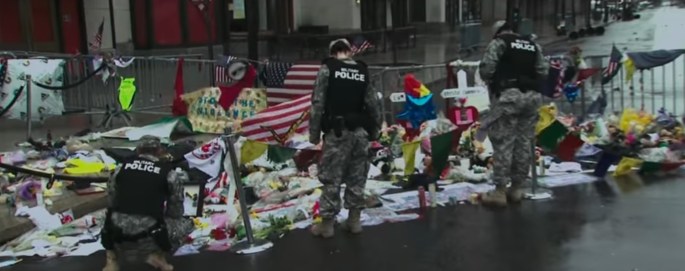
Director Peter Berg had a banner year in 2016. He first released his disaster movie epic Deepwater Horizon in September, and most recently, his late December release, the Boston Marathon bombing drama Patriots Day, has gone into nationwide expansion, and is easily the most important and riveting piece of work that he’s likely made to date. The film is gripping, sad, expertly directed, with verisimilitude levels off the charts (Tobias A. Schliessler’s outstanding and highly visceral camerawork is stunning), and I can’t believe this film isn’t getting the respect it deserves. It’s a total crime that Berg will go unrecognized during awards season for either of his two topical films from 2016; I can’t imagine the intensity of working on these projects back to back. Everyone knows, or thinks they know, about the Boston Marathon bombing and what ensued during the immediate aftermath, so even if the events seem familiar, that doesn’t keep Berg and his creative team from establishing a tremendous amount of suspense through his customary hand-held shooting style, while being aided immensely by the pulsating, unnerving musical score by Trent Reznor and Atticus Ross. The Watertown shoot-out sequence was beyond thrilling and more than a little scary; you’re not accustomed to seeing full-scale combat in the streets of American suburbs. Maybe it’s because I live in Connecticut and the massive theater was absolutely PACKED and nobody spoke a word and there was huge applause at the end, but this movie is going to hit hard for some people.

berg

And listen, I get it – it’s a scary world out there, and most people don’t want to be reminded that they can get blown up at a marathon, but I’m continually stunned by what a nation of ostriches we’ve mostly become. I can’t wait to see this film again, as it reminds me to live every day to its fullest, and how nothing is certain in life. Ever. Something this immediate and cinematic can’t get lost in the shuffle. In general, the cinematic depiction of urban warfare was on high display in 2016, with Michael Bay bringing a very vivid and explosive eye to his vastly underrated Benghazi-set 13 Hours. In both Patriots Day and 13 Hours, the two directors applied the run-and-gun filmmaking aesthetic, with some key artistic differences, and achieved maximum results, with Bay ditching the toy robots and telling a grown-up story of survival and bloodshed that’s similar in spirit to Ridley Scott’s Black Hawk Down, while Berg opted for his customary doc-style to evoke those jittery fears that everyone had on that terrible day in April. Way less jingoistic than certain members of the press would lead you to be believe and far from “right-wing propaganda” as many clueless people have been labeling them as, both of these fantastic actioners are cut from current events which keeps them vital and important, and they are the two most potent action films of the year, along with Paul Greengrass’ exciting Jason Bourne, which took things in a more personal and less mythic direction.
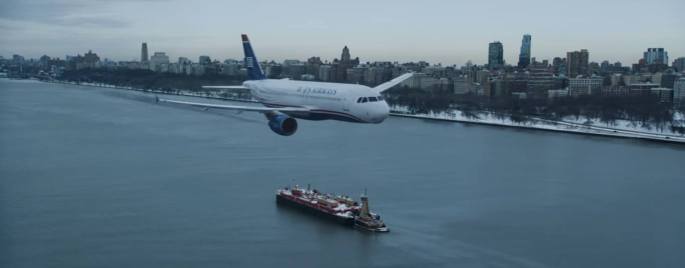
sully

Clint Eastwood’s bold and humanistic drama Sully is a monument to humble American professionalism, a tribute to a man and to a city in general that feels both modern and old-fashioned in equal and appropriate measure. As written by Todd Komarnicki, the film wisely places a narrow focus on its narrative, never overreaching, concentrating mostly on the immediate aftermath of the “Miracle on the Hudson” jetliner incident, while allowing for some smart uses of flashbacks in order to bolster the notion that Sullenberger was just about the only man fit for this particular emergency. And of course, the entire film is anchored by the amazing Tom Hanks, who yet again crafts a compelling portrait of a regular man thrust into circumstances beyond his control; this is a companion piece, of sorts, to his intense performance in Captain Phillips, and similar to that great piece of true-story entertainment, Hanks’ confident work informs every aspect of the film, allowing himself to become consumed by the material. Sully is an important cinematic reminder that human beings are still capable of greatness in ways that could never be predicted.
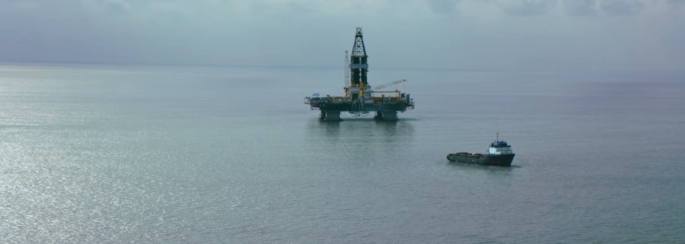
dwh

But back to Peter Berg for a moment, because speaking of American professionalism, look no further than the visually astonishing disaster epic Deepwater Horizon, which was an absolute tour de force of action filmmaking, and one of the most gargantuan physical productions that I’ve ever witnessed on a movie screen. Seeing this film in the IMAX format was a total treat; the experience was damn near overwhelming. I am predisposed to being interested by true life, topical stories that define our lifetime, and the BP oil spill is one such event. There are any number of ways that one could fashion a story around this monumental disaster, but what Berg, screenwriters Matthew Sand and Matthew Michael Carnahan, director of photography Enrique Chediak, production designer Chris Seagers, and the rest of the insanely committed crew and cast did was put the audience on the middle of an exploding oil rig for nearly an hour, after some very effective character intros coupled with almost unbearable tension building. Berg, a director mainly drawn to projects either based in truth (Friday Night Lights, Lone Survivor) or inspired by the world around us (The Kingdom), has been one of the most continually underrated filmmakers for the last 15 years, inspired by the work of cinematic greats like one-time mentor Michael Mann, Tony Scott, and Michael Bay, and seemingly always hard at work on something new and exciting. Deepwater Horizon was made on a scale that would make James Cameron blush, and is a testament to heroism, and the idea of sudden, catastrophic loss, and similar to Sully, is a study of doing one’s job and doing it extraordinarily well. And in many instances, going above what could ever be expected. Berg and his team recreated the Deepwater Horizon to 85% scale, and in doing so, produced a film that feels 100% authentic at every turn. Had this film been shot on a closed stage with wrap-around green screens, it would be nowhere near as effective. CGI was brilliantly and seamless integrated into each shot, and there are so many moments of “How they do that?” movie magic that a second viewing is necessary. Chediak’s breathtaking hand-held cinematography is appropriately rough yet extremely coherent, with the camera trying to make sense of the devastation, but no more so than how any member of the crew would have experienced it.
arrival

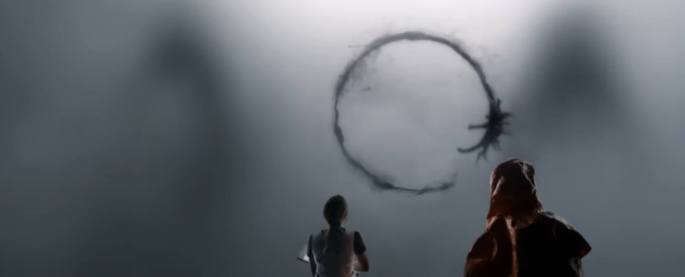
Arrival is cinema I crave – a thought-provoking, somber yet stylish, and thoroughly cerebral piece of storytelling within one of my favorite milieus, and produced independently of the major studios, thus feeling resolutely unconcerned with satisfying endless rounds of notes and enduring creative compromises that could have potentially sabotaged the crux of the piece as well as the emotional wallop it delivers well after the fade to black. Telling a legitimate story about actual people rather than CGI/spandex superheroes, the writing favors pragmatic decision-making and reactions, instead of going for the bombastic or over the top. The filmmakers have concocted a narrative that weaves a scholarly sense of linguistics into its eerie, otherworldly implications, which makes the film stand out even more. Hot-shot director Denis Villeneuve (Incendies, Prisoners, Enemy, Sicario, the upcoming Blade Runner 2049) and genre specialist screenwriter Eric Heisserer (this past summer’s surprise horror hit Lights Out) have retooled the original short story by author Ted Chiang into an intelligent science fiction tale that not only intelligently explores what first contact with an extraterrestrial species would most likely resemble, but also contains a full dose of the mind-bending and unexpected. Heisserer’s script perfectly balanced the need for the audience to connect with Adams’ psychologically fraught character as well as our demand for something new and exciting, and because Villeneuve is such a strong image maker with a tremendous feel for mood, texture, and atmosphere, every shot inside the ship is goose-bump inducing and always photo real. The film has been given a smoky and full-bodied visual sheen by rising star cinematographer Bradford Young (A Most Violent Year, Selma, Pawn Sacrifice), who has an absolutely tremendous eye behind the camera. The creepy, almost mournful score by Johann Johannsson feels oh-so-right in every single moment, both big and small, while the final act really sticks the landing, offering up visceral excitement which feeds into the story rather than overtaking it with needless special effects.

midnight

The experience of watching Midnight Special was akin to eating 50 Oreos with a humongous glass of ice cold milk. In short, I loved every single second of this fantastic film, but I’m not too surprised, considering how Jeff Nichols has only made quality films, with his sophomore effort, Take Shelter, registering as a masterpiece of introspective, existential cinema. He’s back in semi-ambiguous mode here after the solid southern drama Mud, and to be honest, I want Nichols to stick to this arena, the thought provoking genre bender that you can’t quite pin down. It’s a miracle that a major studio funded this film – bravo, Warner Brothers. But it’s egregious how this film was marketed and half-heartedly released to a dumbfounded public! And yet, something must be said for a movie like this with no chance of a sequel or lunchboxes or action figures to get made in this day and age. Midnight Special was crafted with BRAINS as the motivating factor, not endless action scenes or noisy visual effects. Instead, the audience is treated to tantalizing ideas, smart dialogue and riveting plotting, excellent performances, realistic family dynamics that propel the narrative, and CGI that’s used to enhance the story, and not act as the central focus. I loved the Amblin-ness of Midnight Special, and how it reminded me of John Carpenter’s Star Man and other nostalgic offerings from the 80’s, yet still made with modern panache and overall exquisite style, rarely ever calling overt attention to itself. Adam Stone’s shimmery and bold widescreen cinematography meshed perfectly with Chad Keith’s inspired and subtly stylish production design, which went a long way in evoking these feelings. And the last 20 minutes of the film are spellbinding in their ability to transport you out of the theater and into a movie world where you just have to know what’s going to happen next.

anth

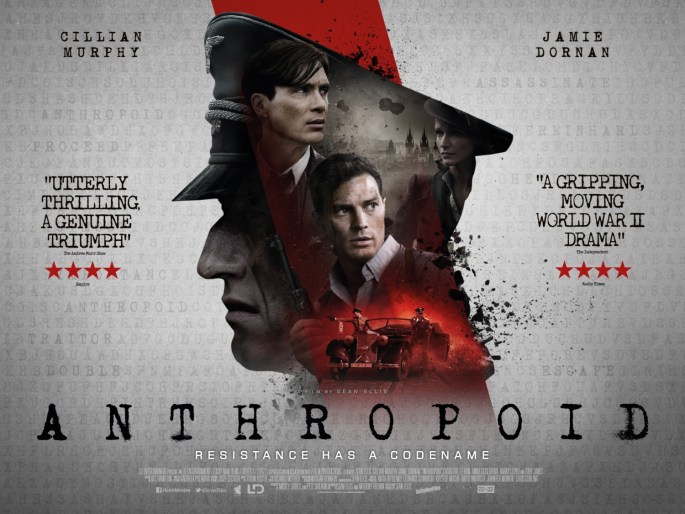
Released in limited theatrical markets last August, the rather stunning WWII espionage thriller Anthropoid deserved a much higher profile. Co-written, produced, and directed by the hugely talented filmmaker Sean Ellis (the brilliant Metro Manila and the sexy-cool Cashback), who also served as his own astute cinematographer and nimble camera operator, this riveting piece of work tells the true story of Operation Anthropoid, which centered on the assassination of Reinhard Heydrich, one of the chief architects of the Nazi’s Final Solution, and the harrowing battle that took place in the immediate aftermath. The always focused Cillian Murphy and fast-on-the-rise Jamie Dornan (similarly gruff and commanding in Netflix’s The Siege of Jadotville) are both excellent as the Czech soldiers who are sent into their occupied homeland with a dangerous mission in tow, and because I didn’t know anything about this particular story, I was continually left guessing as to how it would all play out, and if the dangerous plan would be successful.
high-water

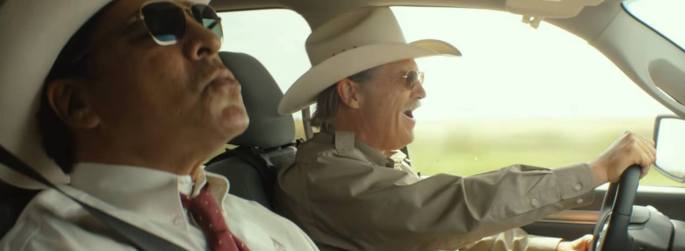
Hell or High Water is easily one of the most satisfying films from 2016. Of course Peter Berg produced (and was at one point attached to direct) this shit-kicking, extra-dusty, Texas-set tale of brotherly love and bank robbing. It’s nothing revolutionary, but rather, underrated filmmaker David Mackenzie does everything just about perfect, with a complete command of tone, atmosphere, and dramatics. Jeff Bridges brilliantly garbles his way through yet another study of neo-Western machismo, the volatile Ben Foster is literally a loose-cannon all throughout this dangerous little film, and Chris Pine delivers the best, most nuanced performances of his career, while resembling Colin Farrell in both Miami Vice and True Detective Season 2. There’s zero fat on Taylor Sheridan’s terse and authentic screenplay, and after his firecracker of a script for last year’s thoroughly absorbing Sicario, he’s at the top of my list in terms of writers whose name means quality. Shot with striking clarity in a no nonsense fashion by cinematographer Giles Nuttgens, the film never overreaches, and gets down and dirty with its locations, themes, and overall presentation.  Pacing is kept crisp and clean by ace cutter Jake Roberts. The score from Nick Cave and Warren Ellis is evocative without ever becoming cloying, hitting repeated grace notes to match more menacing chords of sonic edginess. The topical overtones about the greediness of banks and the lunacy of open-carry gun permit laws only sweeten the deal. Honestly, watching this film slightly restored my faith in the theatrical experience, after months of films that have failed to lived up to their various expectations, or just a lack of interesting options in general. I was on board with Mackenzie as a filmmaker after the one-two-punch of Perfect Sense and Starred Up, but this movie really announces the arrival of someone special, and is one instance where the critical acclaim is highly warranted.

neptune

A narratively complex, visually arresting coming of age story set in 1989 off the coast of Maine, director Derek Kimball’s Neptune is a fascinating indie offering that will delight just as many as it confounds, leading to passionate praise in some circles; look for it On Demand and on DVD/Blu-ray in the coming months. I had a chance to view this film for an article I wrote in Variety Magazine about last year’s Slamdance film festival, so while the film’s profile is limited, it’s no less exceptional or worthy of praise. This is a film that’s interested in having the audience feel something, and because it’s less concerned with traditional plot points and story structure, the dreamy tone might be considered to slow for less attentive viewers. Centering on the peculiar life lessons of a 14 year old girl as she develops a fixation on a local boy who has gone missing, but more a study of a mind in flux and a body and spirit in transition, Kimball and his co-writers Matthew Brown, Matthew Konkel, and Douglas Milliken add layer upon layer of subtext to their emotionally gripping story in an almost fevered effort to stack the deck. First time actress Jane Ackermann is fantastic as Hannah Newcombe, a teen living with her strict guardian who happens to be a Reverend (Tony Reilly, commanding). She’s attending an all-girls school when something tragic happens in her small town which takes her down a road of unexpected self-discovery. A local boy goes missing, prompting her to deeply question everyone and everything around her, with the film possessing an experiential quality that becomes instantly engrossing. She abandons her religious upbringing, which of course spurs on resentment from the Reverend, and she develops a unique relationship with the missing boy’s father, Bill McDonough in a subtle yet emotionally frazzled performance, taking a job working on his fishing boat, helping him with the lobster traps.

neptune-poster

What Kimball and his co-writers were going for with this somber and introspective tale is to hold accountable a society and its seeming randomness as a way into the psyche of a young woman as she herself takes on a certain level of outward and inward change. Ackermann is up to the task in more ways than one, fleshing out here character in nonverbal ways which help to anchor her quiet performance with a level of severity, and projecting a young Sarah Polley quality that was noticeable in any number of scenes and instances. Kimball infuses his unpredictable debut with a creepy sense of atmosphere all throughout, while displaying a firm grasp of the material and essentially crafting exactly the sort of film that it seems he set out to make. Refreshingly uninterested in traditional narrative, his surrealist strokes come across as studied, adding a further component to the evocative mix of ingredients. Whether or not that will satisfy certain audience members remains to be seen, because while Neptune does contain what many would consider to be expected payoff, the journey to get to those moments is one filled with a sense of unplanned discovery and an interest in mood more than concrete plot developments. The tech package may be low in budget but it’s high on smarts and confidence, with dual cinematographers Jayson Lobozzo and Dean Merrill making huge, deeply moody impressions (the underwater photography is especially memorable), while Kimball’s astute editing creates a steady sense of unease. Sound design produces the intended chills in all the right spots. Neptune recently screened as part of the 2016 Slamdance Film Festival.

blue

Directed with grace and simplicity by first-timer Alex Lehmann, Blue Jay moves through its 80 heartfelt minutes with a great sense of atmosphere and casual style; Lehmann also served as his own cinematographer and camera operator, making great use out of the chilly California mountain locations. This little gem, both funny and poignant, utilizes the walking-and-talking format, essentially operating as a coyly sexy yet surprisingly sad two-hander with Mark Duplass (who also wrote the terrific script) and Sarah Paulson (fabulous, yet again). Certainly reminiscent of Richard Linklater’s Before Trilogy but definitely its own thing, this story of two, long-ago lovebirds who randomly reconnect moves in some surprising directions, and always allows for the narrative to be born out of the characters and the generous performances from the well-matched co-stars. And look out for Clu Gulager in a rather wonderful scene at a convenience store that underscores the humanity at the heart of Duplass’ tricky script. Because the film revolves around two characters, there has to be something at the center of the narrative that’s important to the both of them, and because the final act involves confessions and realizations from their past (none of which I’d spoil), all that has come before it takes on even more meaning. When they first see each other, it’s clear that there’s something unfinished between the two of them; both Duplass and Paulson do a great job conveying emotion through casual facial gestures and awkward body language. And throughout the sometimes painful and often times hilarious story, there’s an eternal bond that re-emerges between the two characters, becoming nearly unbreakable, even if their futures are uncertain. Duplass is one of the busiest people in Hollywood, and this film is his first production to hit Netflix streaming in a multi-film deal; I’m so excited that he’s found an outlet for his particular brand of low-key cinema because there’s been very little (if anything) that he’s been creatively involved with that I haven’t enjoyed.

1


MANCHESTER BY THE SEA (2016) – A REVIEW BY RYAN MARSHALL

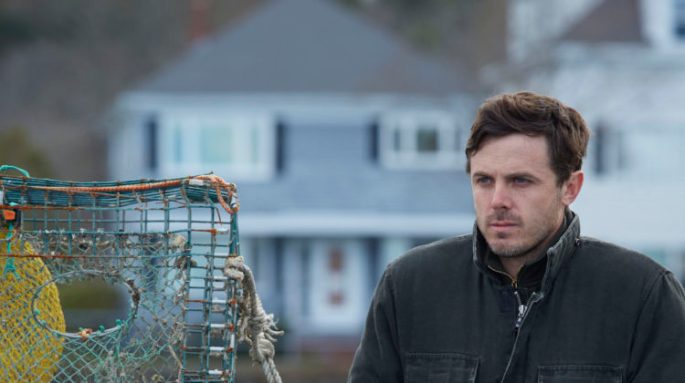
The finest films tend to engage fervently with their specific time and place; entertaining the bigger picture as well as those more effectively intimate spaces. For Lee Chandler (Casey Affleck), the solitary sad sack at the heart of Kenneth Lonergan’s devastatingly beautiful MANCHESTER BY THE SEA, the coastal Massachusetts town of the film’s namesake – which he is summoned to upon the death of his brother Joe (Kyle Chandler) – represents the abode of old bones, a wretched abyss from which he never truly escaped.

This painfully resonant examination of grief has the tendency to feel almost operatic – due in no small part to Lesley Barber’s unforgettably somber score – but it is perhaps even more indebted to the director’s history as a successful playwright. With this being his third feature at the helm, it would appear Lonergan has established a comfortable middle ground between naturalism and artifice; conversations and evocatively-lit interiors evoking the essence of a hang-out flick at times, but without the same redemptive tranquility, and the most ample truths are recouped from awkward silence.

manchester-by-the-sea-1[1].jpg

Lee seems to carry the weight of the world on his shoulders from the moment he’s introduced, serving the unappreciative tenants of the apartment complex where he works as a janitor. On top of that, his relationship with the bottle proves somewhat detrimental, and agonizing flashbacks bleed into everyday reality so seamlessly, and constantly, that the transitions tend to appear rather subtle at first. It’s only when Lee returns to his home town and discovers that he is to become the legal guardian of his brother’s teenage son Patrick (Lucas Hedges) that the most painful memories of all permeate his psyche once again.

This extended flashback is as close to a revelatory moment as the viewer is going to get, but granted a better understanding of Lee’s history, it’s much easier to empathize with his plight. He’s simply a man attempting to subvert his sins, stuck in his own moderately self-imposed limbo. For him, Manchester signifies suspicious stares, possibly seeing Randi (Michelle Williams), Lee’s ex-wife who shares in his suffering, on the streets, and having to confront several decades worth of honest failures; it’s no longer just a picturesque setting.

854full-manchester-by-the-sea-screenshot

One look into Affleck’s cold, inconsolable eyes inspires immediate compassion; everyone here is marvelous, but he’s never been better, and in less capable hands the character could have been a one trick pony. His world is a deeply disturbed one, and though there’s plenty of comic relief on the road to redemption, it remains a carefully crafted crescendo of melancholy. If it’s even there to begin with, the happy ending is well out of reach, but what Lonergan provides in its place is even more enduring. As a celebration of the little moments that can either make or break who we are – like, for instance, a panic attack brought on by frozen meat – and who we’re meant to be, MANCHESTER BY THE SEA is an invaluable testament to inordinate darkness giving way to understated wisdom as well as progress in its many, obscured forms.

DENZEL WASHINGTON’S FENCES — A REVIEW BY NICK CLEMENT


3Denzel Washington delivers a volcanic performance in his latest directorial effort, Fences, while the magnificent Viola Davis counters with her own blistering piece of internalized acting; the two artists literally explode off of the screen. Efficiently directed by Washington, the film was adapted for the screen by playwright August Wilson, whose original, Pulitzer-winning effort was performed on Broadway by both of the leads. It’s a story about unfulfilled potential and shattered dreams and how anger can run its way through a person in a variety of ways; the manner in which Washington projects inner resentment and regret is astounding. Playing a former Negro Leagues slugger who never made it to the majors for a variety of reasons, Washington is the ultra-commanding backbone to the narrative, which pivots on the relationships he has with his wife of 18 years (Davis), his two sons (Jovan Adepo and Russell Hornsby, both excellent) by different mothers, his mentally challenged and war-scarred brother (Mykelti Williamson, superb in a tricky role), and his best friend, played with sagaciousness by Stephen McKinley Henderson. The bravura performances from everyone in the tightly-knit cast easily cements Fences as one of the strongest pieces of purely dramatic storytelling from 2016.

2

Hughes Winborne’s well-paced editing is a study of when not to cut, just as much as it is of when to cut; I can’t imagine sitting in the editing bay watching these actors for various weeks, trying to decide which take to use. Because this entire film is built upon its galvanizing performances, to cut too soon or too late would be to rob the piece of various emotional impact moments; there’s also extra-smart use of reaction shots all throughout. In tandem with the crisp and clean cinematography by Charlotte Bruus Christensen, Fences feels polished and graceful, while the restrictive setting definitely keeps the picture feeling like a filmed play, and yet is incredibly evocative of time and place. Washington feels totally enmeshed in this character, unafraid to go to some very dark and unlikable places as an actor, while the story never lets anyone off the hook; for better or worse, you are what you make of yourself in the world that Fences presents. It might not be a film I’ll be able to revisit over and over again, but it’s a piece of work that lingers, demanding attention and respect. Producer Scott Rudin also worked on the stage production, while Tony Kushner apparently helped to craft the screenplay, but only received a co-producing credit.

1

Episode 35: A Conversation with Dan Mirvish

mirvish2Tim and Nick were delighted to talk with Dan Mirvish, independent filmmaker and co-founder of the infamous Slamdance Film Festival. We discuss his entry into the business, how Slamdance came about, and his new book, The Cheerful Subversive’s Guide to Independent Filmmaking, which is a must read for any up and coming auteurs.


Denzel Washington’s FENCES

This truly is a remarkable film.  It is made with so much delicate care and craftsmanship, the entire two hours and nineteen minutes is fluid and seamless.  It’s the picture that feels like Denzel Washington has been working his entire career to not only make, but perfect.
Set in a dilapidated Negro ghetto in 1954, Washington is the tough and oblique patriarch of a family suffocated by their hopes and washout of the American Dream.  Viola Davis not only gives her career best performance, as Washington’s steadfast wife, she easily gives one of the best performances in recent cinematic memory.

While the performances and Washington’s perfection behind the camera are a sight to behold, the cinematography by Charlotte Bruus Christensen, production design by David Gropman, and editing by Hughes Winborne are so perfect, they go unnoticed.  As the film progresses, whether it is a performance, an aesthetic, or a technical aspect, they work in such unison that nothing stands out, the score does not out perform the editing nor does the writing outshine Davis.

The narrative strikes a hidden chord between being timeless and culturally and politically relevant.  It’s a tough story about a (black) working class family that deals with the conventional setbacks of life, yet they have their own uniquely complex set of hurdles that are undoubtedly self inflicted.

FENCES is truly the epitome of a Best Picture.  Everything, and I mean everything, is perfected in the film.  It has all the ingredients to be that Best Picture, but what makes the film surpass the run of the mill, end of the year Oscar bait,  is at its core it is filled with an unmatched amount of heart about what it is to be a family.

PODCASTING THEM SOFTLY PRESENTS: 15 QUESTIONS WITH FILMMAKER SEAN ELLIS

ellis-banner

Filmmaker Sean Ellis is ready to bust out. With a background in short films and photography, his feature debut, 2006’s Cashback, was an expansion of his Oscar nominated short film of the same name, which won numerous awards at festivals worldwide. He followed that up in 2008 with a cerebral psychological thriller called The Broken, before finding further international acclaim for his gutsy and powerful dramatic thriller Metro Manila, which was released in 2013, winning awards on the festival circuit and quickly acquiring a devoted following. In 2016, he released his most ambitious project to date, the tense and terrific WWII action thriller Anthropoid, which is now available on Blu-ray/DVD and via various streaming providers. Podcasting Them Softly is proud to present a 15 QUESTIONS interview with Sean, as he discusses his career, inspirations, and the future. He even presents his personal “watch list” from 2016!

(This interview was conducted via email and was edited by Nick Clement.)

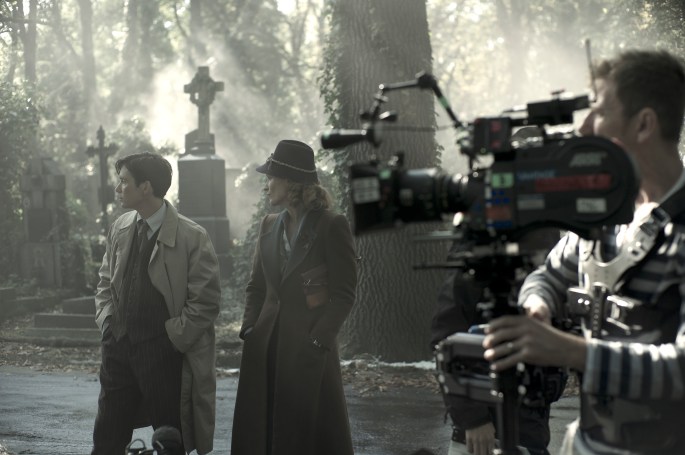
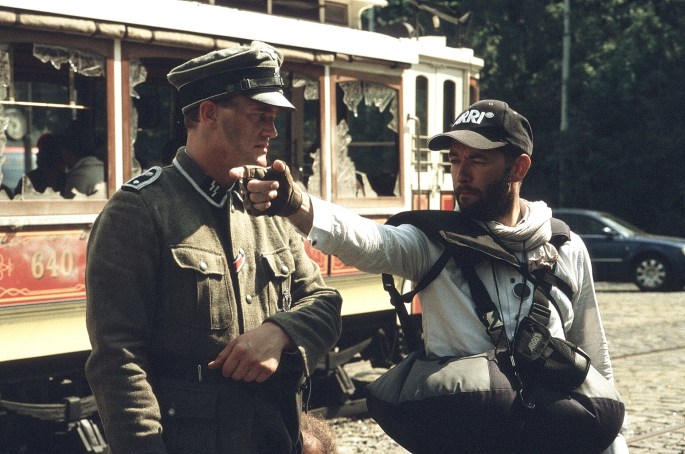
0172.jpg(Director Sean Ellis, Cillian Murphy and Jamie Dornan, Anthropoid)
HOW DID YOU GET INTO FILMMAKING?

I got into filmmaking through photography. I became obsessed with photography from the age of 11. It was the idea that you could use the camera to create an image you might have in your head – like a technical pencil you could draw with. I would drive my parents crazy by setting fire to my action figures and photograph them burning. I’m inspired by many people and things, not just film makers. When I was younger I gravitated towards many films and filmmakers, because when you’re young, you’re still trying to figure out what you like and what you have to say and the way you would like to say it. It takes time to develop creatively as you need to have seen a little bit of the world, and know a little bit about what makes us tick. I think filmmakers start hitting their stride in their forties but obviously there are directors that blow this theory out of the water. Steven Spielberg was 28 when he made Jaws. I think Steven is the modern day film equivalent of Mozart. There are some directors that are just playing at a different level than everyone else, like a grand-master chess player. It’s like any other art-form; you have to work at it every day and get into that head-space that allows ideas to flow freely. The problem with the medium of film is that it’s so closely linked to the commercial aspects, both in making and in the end result. There are filmmakers that bridge these two worlds incredibly well and I find that inspiring.

cashback

DO YOU HAVE ANY FAVORITE FILMS, OR FILMS THAT CONTINUE TO INSPIRE YOU?

I have so many favorites! I’m still a filmmaker that loves watching films. I believe you have to see as much as possible to have an encyclopedic knowledge of the art-form that you work in. How can you comment if you don’t? People want to learn from people that know more than them, correct? So you better make something that does that, and that means you should be learning ALL the time about the process of filmmaking and life in general. For a number of years now I have written down all the films I have seen in a given year, so here is everything I have seen in 2016. I’ve only included Anthropoid once but I probably watched it 20 times at different screenings through 2016. An (R) indicates that I have seen the film before and it’s a re-watch.

January 2016

Anthropoid, We are Many (Doc), Suffragette, Carol, The Program, Woman in Gold, Infinitely Polar Bear, The Hateful Eight, He Named Me Malala (Doc), Joy, The Lobster, Ant-Man, Room, Timbuktu, Beasts of No Nation, Truth, Black Mass.

February 2016

Fear the Walking Dead – Season 1, Hard to be a God (2013), Macbeth (2015), Mad Men – Final season, Shackleton (2002), No Country for Old Men (R)

March 2016

Everest, La French (The Connection), Midnight Special, Son of Saul, Game of Thrones – Season 5, Listen to me Marlon (doc), Guardians of the Galaxy.

APRIL 2016

45 Years, The Endurance (2000 Doc), Singing in the Rain, The Artist (R), By the Sea, 2001 A Space Odyssey (R), Interstellar (R), Short Term 12

May 2016

Everything or Nothing (Doc), Palio (Doc), Big Hero Six (R), It’s a Beautiful Life, My Nazi Legacy (Doc), Bird (R), Brave (R), Bolshoi Babylon (Doc), Marshland, 99 Holmes.

June 2016

Suite Francaise, Southpaw, Crazy Heart (R), Hitchcock/Truffaut (Doc), Tracks, A War, The Past, Le Doulos, Closely Observed Trains, The Singing Detective (TV), Pennies from Heaven (TV), The Assassin.

July 2016

The Lure, Intimate Lighting (1965), Grandma, Demain (Doc), Populaire, How I Live Now, Lost in Munich, Tina – What’s Love Got to Do With It, Coal Miner’s Daughter, Ray, Beyond the Sea, De-Lovely, Great Balls of Fire, Walk the Line, Sweet Dreams, Tender Mercies, Theeb, Stop Loss, The Red Violin.

August 2016

The Night Of – Season 1, The Affair – Season 1

September 2016

Mr. Robot – Season 1, The Americans – Season 1

October 2016

Jane Got A Gun, Roma, Deadpool, Toni Erdman, Manchester by the Sea, Arrival, Hell or High Water, The Americans – Season 2, In the Shadow of the Moon (Doc), Fleabag – Season 1, The Stuntman, The Robber, Born to be Blue, Endurance (1999), Two for the Road, The Athlete, The Godfather (R), The Godfather part II (R), The Godfather part III (R), Personal Best, Prefontaine

November 2016

McFarland USA, Casablanca, My Way (Korean), Nocturnal Animals, The Walking Dead – Season 6, Running (1979), Saint Ralph, Embrace the Serpent, The Secret Life of Pets, Love, Amadeus (R), Wild (R), Dallas Buyers Club (R), Chariots of Fire (R), The Girl, Marnie (R), Harry and Son, Natalie (R), Sex and Lucia (R), Frida, The Boxer (R), Eyes Wide Shut (R), One More Time with Feeling, Hail, Caesar!

December 2016

The Omega Man (R), I Am Legend (R), La La Land, Assassin’s Creed, Under the Shadow, Silence (1971), Silence (2016), Rogue One, The Founder, Jackie, Hidden Figures, Shrek (R), Moonlight, Shrek 2 (R), Miss Sloan, Shrek the Third, Hacksaw Ridge, Zootropolis, Mustang, Eye in the Sky, Patterson, Fences, Train to Busan, Loving, The Loneliness of the Long Distance Runner, This Sporting Life, 13th (Doc), Captain Fantastic, Eddie the Eagle, Sing Street, The Eagle Huntress (doc), Allied, Victoria, Evolution, My Scientology Movie, Deepwater Horizon, Julieta.

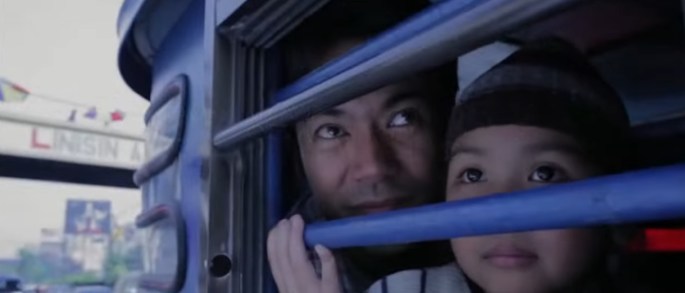
manila-1(still from Metro Manila)

DO YOU HAVE ANY FAVORITES OR DO YOU HAVE A TOP 10 LIST? I SUBSCRIBE TO THE IDEA OF “FAVORITES” BECAUSE I DON’T THINK IT’S POSSIBLE TO SAY WHAT IS TRULY “BEST” WITH ANY TYPE OF ART FORM.

Don’t ask me to rate my top 10 of the year. It’s like asking what are your favorite paintings from 1765? It has no relevance as only time will tell if a film has longevity, and I believe that’s the only merit there is – wanting to revisit a film 10 or 20 years from now. There are very few films I saw this year that I will revisit in 20 years. Some were just entertainment, and that’s fine. Some were fashionable footnotes and a few were highly over-praised and left me feeling underwhelmed. And there were a couple of small gems that made my life better for seeing them, but it’s all subjective and people place too much importance on what other people are saying about films. If you are serious about film then you have to discover it by yourself, by seeing everything without reading a review or seeing a trailer. There is one critic who uses the tagline “We see all the bad films, so you don’t have to…” You would have to be a pretty arrogant cunt to think you are saving people from films you think are bad, and that people would rather read your ‘bad’ review than have their own opinion. But that is the problem with smart phones – it gives people access to idiots like this, and it takes away the chance of discovering a film. When I was young, I used to pick my films based on the poster artwork alone – the same way most people choose a book – by its cover or the title and the synopsis on the back. If that’s not enough to make you want to see a film then maybe you don’t love film as much as you want people to think you do.

0179(Cillian Murphy and Anna Geislerová get ready to shoot a scene, Anthropoid)

WHAT SORT OF CHALLENGES COME WITH BEING YOUR OWN CINEMATOGRAPHER, NOT TO MENTION CAMEA OPERATOR, AND HOW HARD IS IT TO SHOOT IN THIS FASHION?

It’s all one job for me. I’m a filmmaker. I make them from the ground up. I come from photography so not having the camera in my hands feels unnatural to me. I work much faster with a camera in my hands as I can make any adjustments on the fly. If you have to stop and explain these adjustments it just takes a lot longer.  The last two films I have made have been handheld because I felt the style served the story. Both felt like they need to be in a documentary style to place the audience on the shoulders of the characters. So I would say they are the style of the film and not necessarily my style. It’s just a creative choice. To shoot in this style, I had to prepare for 4 months, with 2 hours of weight training every day. The cameras weigh about 18kg so all the training revolved around lifting, and carrying and running with that kind of weight. You have to be physically fit to run around with the camera on your shoulder for 9 hours a day, 6 days a weeks, and for 8 weeks without getting hurt or too tired to think creatively.

anth-fire(still from Anthropoid)


WOULD YOU EVER WANT TO COLLABORATE WITH AN OUTSIDE CINEMATOGRAPHER?

Absolutely! There are many fantastic cinematographers whose work I love. I know their work just as well as the directors they work with. A chance to work with one of the greats is never an opportunity that should be missed, as it will only deepen your experience and understanding of the craft.

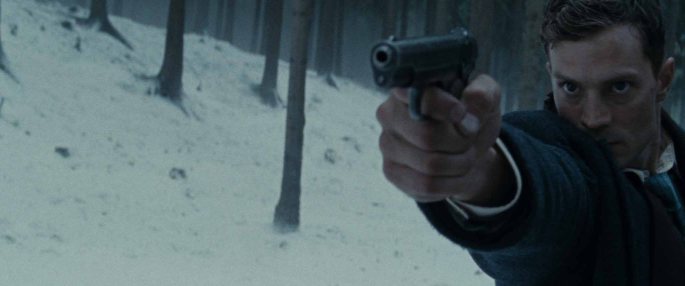
0003(Jamie Dornan as Jan Kubiš, Anthropoid)

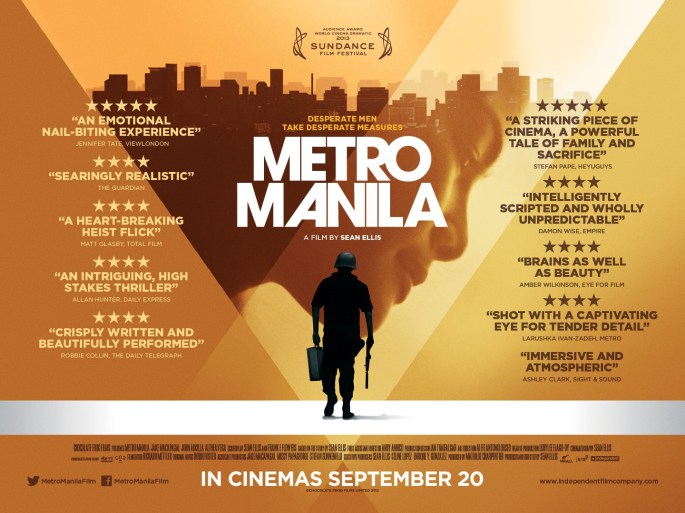
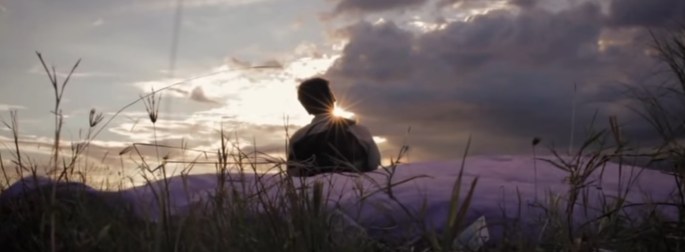
HOW DID METRO MANILA PREPARE YOU FOR ANTHROPOID?

I think it gave me back my confidence. The making of The Broken was not a pleasant experience for me but I did learn a lot about the sort of filmmaker I wanted to be. I made Metro Manila on my own terms with my own money. It was a huge gamble but the result was a film that I’m very proud of. You take that confidence into the making of your next film and hope it gets you through the day to day process.

manila-2(still from Metro Manila)

I WANT TO DISCUSS THE FINAL ACTION SEQUENCE IN ANTHROPOID. WHAT WAS IT LIKE PUTTING THAT TOGETHER ON A LOGISTICAL LVEL, AND DID YOU ACHIEVE WHAT YOU SET OUT TO ACCOMPLISH? IT’S A STUNNING PIECE OF UNRELENTING ACTION THAT RANKS UP THERE WITH SOME OF THE BEST SET-PIECES IN RECENT MEMORY.

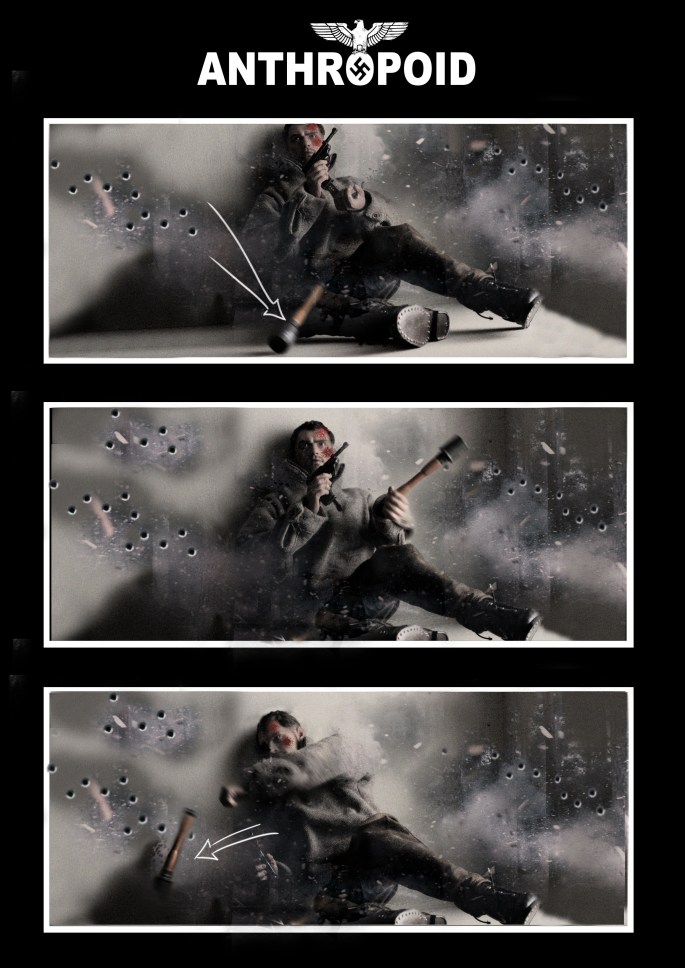
Thank you. Logistically it was huge! I always knew it would be. You had to understand emotionally what those men went through, and the courage it took to face their last hours with such a defiant roar. That echo is still felt today in the Czech Republic. Shooting in the real church was not going to be logistically possible except for all the exteriors. The interior of the church was built on a soundstage at Barrandov studios and is a 1:1 replica of the real church made from the original plans. It took 13 weeks to build, as it was a 360 degree set with no green screen anywhere. Morgan Kennedy, my production designer, first built me a 1/6th scale church. I was able to light it and then crawl inside it. Using 12 inch action figures I photographed the sequence frame by frame. To dramatize the action I had the Gestapo reports, the autopsy reports, and the real church where you can still see where the grenades went off. Using all this I pieced together the events in storyboard form. We had a total of 6 days for the church interiors so they were pretty hard and long days. I’m happy with the sequence and I think we accomplished what we set out to achieve.

page_18(Action figure storyboard, Anthropoid. Courtesy of Sean Ellis)
 

WHAT WAS IT LIKE WORKING WITH CILLIAN MURPHY AND JAMIE DORNAN, AND IN GENERAL, WHAT’S YOUR PROCESS WITH ACTORS?

They were both great! Actors are marvelous creatures! I have no idea how they do what they do, so you have to treat each one differently and ask what they need in order for them to do their job. Cillian and Jamie worked in a similar manner so it was easy for me to slot in and give them what they needed in order to get what I needed. They both hate rehearsal. We would throw the scene ‘up on its feet’ in the morning when would entail walking through the scene, talking the lines but not acting the lines. Here we see any potential blocking issues, and any logic questions normally arise here as well. It was here that myself and Derek Walker, my second camera operator, would watch what the actors were doing and figure out how best to effectively cover the scene. Lines are often changed here too. I’m not precious – it has to work for the actor before it can work for me, but if I disagree, we shoot both ways and choose later. Once happy, I would light the set with my brilliant gaffer, Martin Granilla. I try to light without any lighting stands on the set, as I want the freedom of movement for both myself and my actors. When we are ready we shoot, I often do two or three takes within a slate. Stopping and starting can break concentration so I like to keep the actors working in the moment for as long as possible.

poid


THE BLENDING OF LOCATION SHOOTING AND SOUNDSTAGE WORK IN ANTHROPOID WAS REMARKABLE. WHAT WAS IT LIKE SHOOTING AT BARRANDOV STUDIO IN PRAGUE?

The studio was so good and has such history! We were on the same soundstage as Amadeus, Yentl, and Casino Royale, to name a few! But yes, mixing location shooting and studio shooting should be seamless and Morgan Kennedy and art director Radek Hanak did a fantastic job in bringing that altogether. I hate it when a set looks so obviously like a set, as it just pulls you out of the film!

anthrpoid

HOLLYWOOD HAS A LONG TRADITION WITH WWII FILMS. WERE YOU EXCITED TO TAKE ON A PROJECT OF THIS SCALE?

Yes, and scared too! You have to do your homework and see every war film that’s ever been made! There is a lot of preparation. I watched a lot of the BBC TV drama Secret Army and found it had the right tone for what I was looking for. But more than make a war film I really wanted to make a film about the emotional toll on the people involved. If you go into this film thinking it’s a war film you might miss the subtlety of the situations that these people found themselves in.

metro_manila_xlg

WHEN CONDUCTING RESEARCH AND TELLING A STORY THAT’S BASED ON TRUE EVENTS, HOW IMPORTANT IS IT TO YOU TO SICK TO THE FACTS? HOW MUCH ROOM DO YOU ALLOW FOR POETIC LICENSE?

I wanted to stick to the historical facts. I spent 10 years researching this story and spent months in the company of the people in charge of the Anthropoid archives. But there is always someone out there who loves to tell you that you got it wrong and they know more about it from their fourth year history lesson in school. I’m sure there will be someone out there saying “What does he know? He doesn’t even know that Josef is with a ‘Z’ as Jozef”. Well to answer that – he was born Jozef but later changed it to Josef and all the documents I have seen signed by him, were signed Josef. But obviously the main thing about Anthropoid is that there are different accounts based on different testaments. I presented the story knowing all the information and made certain informed guesses as to what testament to believe. The main dramatic license comes with relationships and dialogue. Jan and Josef did not shoot Nazi spies when landing in Czechoslovakia. They were greeted by a man who knew the resistance, but that’s a pretty boring start and also does not tell the audience that there were Nazi spies who were paid to inform on anti-Nazi activity. So this change helped to inform the story as well as opening the film with a set-piece. Also Jan and Josef were shagging everything in Prague! They both had at least three girlfriends each and moved around Prague staying with various different families and single mothers. But that doesn’t help their noble persona and it takes time away from developing the Mrs. Moravec character, played so brilliantly by Alena Mihulova. We also know that the seven men faced the 700 Germans with only hand guns and not Sten guns but this was a creative choice on my part. Also Jan Kubis was killed by a grenade blast and didn’t take his own life. But everything else was drawn from archive documents.

page_86(Action figure storyboard, Anthropoid. Courtesy of Sean Ellis)
HOW DO YOU FEEL ABOUT THE CURRENT STATE OF FILMMAKING AND DISTRIBUTION MODELS? ARE YOU A FAN OF THE SAME-DAY VOD/THEATRICAL PLATFORM?

It’s a long answer and I’m not even sure I have the right answer. All I know is I’m unhappy with the current situation with cinemas. I’m even unhappier about this attitude that you can illegally download a film for free and that it’s okay. It’s not and it’s hurting the industry but people are no longer educated about this. The industry needs more help to protect the jobs that are lost to illegal downloads. There needs to be a cinema revolution the same way there was a coffee revolution. It’s starting to happen but slowly. I think studios should be allowed to take back the right to own their own cinemas. The monopoly rule is way out of date and the internet threatens the whole industry. For instance, Warner Brothers show a Warners Brother film and the only way to see it is in a Warner Brothers cinema. Force people back into theaters again with the experience of seeing something they can’t see elsewhere. And of the theatrical experience itself – BAN MOBILE FUCKING PHONES IN CINEMAS! One reason I don’t go to public cinemas anymore is the total lack of phone etiquette. People have to treat cinema like live theater. You wouldn’t take a call in the middle watching live theater so why do it in the cinema? I’ve seen people on their fucking laptops in the cinemas. Are you kidding me? Cinemas should just block phone signals to the auditoriums. Just force people to switch off. Cinemas are frightened people won’t come if there is no signal. News flash – people have stopped coming because there is signal. Cinemas use the excuse of needing signals in case of emergencies. That’s rubbish! What about before mobile phones were invented?

manila-3

WHAT DO YOU LOOK FOR WHEN SEARCHING FOR NEW MATERIAL? ARE YOU ATTRACTED TO PARTICULAR GENRES?

It’s the whole package really. The process is going to take two years of your life minimum so it helps if you really like the material and have a general interest. I can’t work any other way. I have to be obsessed about it, and I have to fall in love with it. But different people work in different ways.

0162(Director Sean Ellis explains the direction of fire to actor David Bredin, Anthropoid)
 

DO YOU THINK YOU COULD EVER BRING SOMETHING TO THE TABLE WITH A BIG FRANCHISE SUPERHERO MOVIE? ARE YOU INTERESTED IN THAT STUFF?

Again it depends. If I find something in that situation that I love then yes I would do it. But there seems to be this consensus among some filmmakers that Hollywood is the goal. You make an interesting film, it gets some heat, and then do a big budget studio film. You have to ask yourself why you are doing the studio film. And if the answer is to produce something entertaining with mass appeal that is really your vision, then you are in a great position. But many people take that route because it means access to a bigger budget. Bigger budget doesn’t mean a better film, and if the film then fails at the box office, where does it leave you? Most film makers have spent time in director’s jail at some point or another, and it’s a cold and lonely place.

manila-purple


WHAT’S YOUR NEXT PROJECT? DO YOU DEVELOP MORE THAN ONE FILM AT A TIME? CAN YOU TELL US WHAT THE FUTURE HOLDS?

I’m adapting a novel so my day job currently consists of writing. I don’t like the process of writing but I like the fact that it is something that needs to be done every day and over a period of weeks, and you are rewarded by a pile of pages that one day, you hope, will become your film. I rarely work on more than one project at a time. I have various ideas percolating in my head at any given time but when the hard work needs to be done you have to be faithful to the idea you are working on and knuckle down to get it done. It’s a marathon, not a sprint.

ellis-banner


STEFANO SOLLIMA’S SUBURRA — A REVIEW BY NICK CLEMENT

2

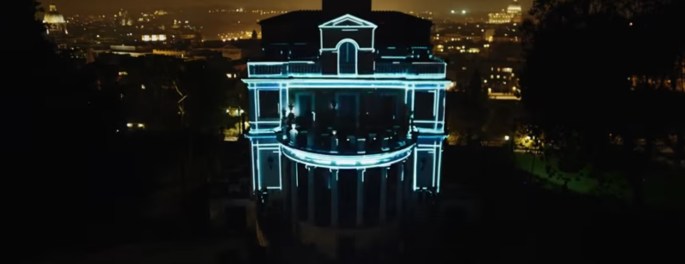
Suburra is lethal cinema. Directed with vice-grip intensity by Stefano Sollima, this sprawling and propulsive crime film centers on modern organized crime in Italy and how it intersects with politics and the Vatican in present day Rome. Feeling like an unofficial sequel to Matteo Garrone’s Gomorrah, Suburra presents the audience with a slew of characters, almost all of whom are morally questionable and operating outside the lines of accepted society. The violence and sex are graphic and in your face, the cynical narrative is dense yet coherent, leaving no stone unturned or any of the various plot lines dangling, and the vivid and incredibly atmospheric cinematography by Paolo Carnera is frequently eye-scorching, with an extra-smart use of neon and nocturnal rain resulting in some elegant widescreen visuals. The tough as nails screenplay was adapted by Stefano Rulli, Sandro Petraglia, Carlo Bonini, and Giancarlo De Cataldo from the novel by Bonini and De Cataldo. There are unexpected twists and turns that this film takes, and all of it has an unpredictable charge that leaves you pumped for the next scene. Sollima has been hired to direct the sequel to Sicario; I never felt one was needed but now I’m very excited to see it. An Italian-French co-production, Suburra is currently streaming on Netflix (who also partially funded the project), and ranks as one of the best surprises in recent memory.

3

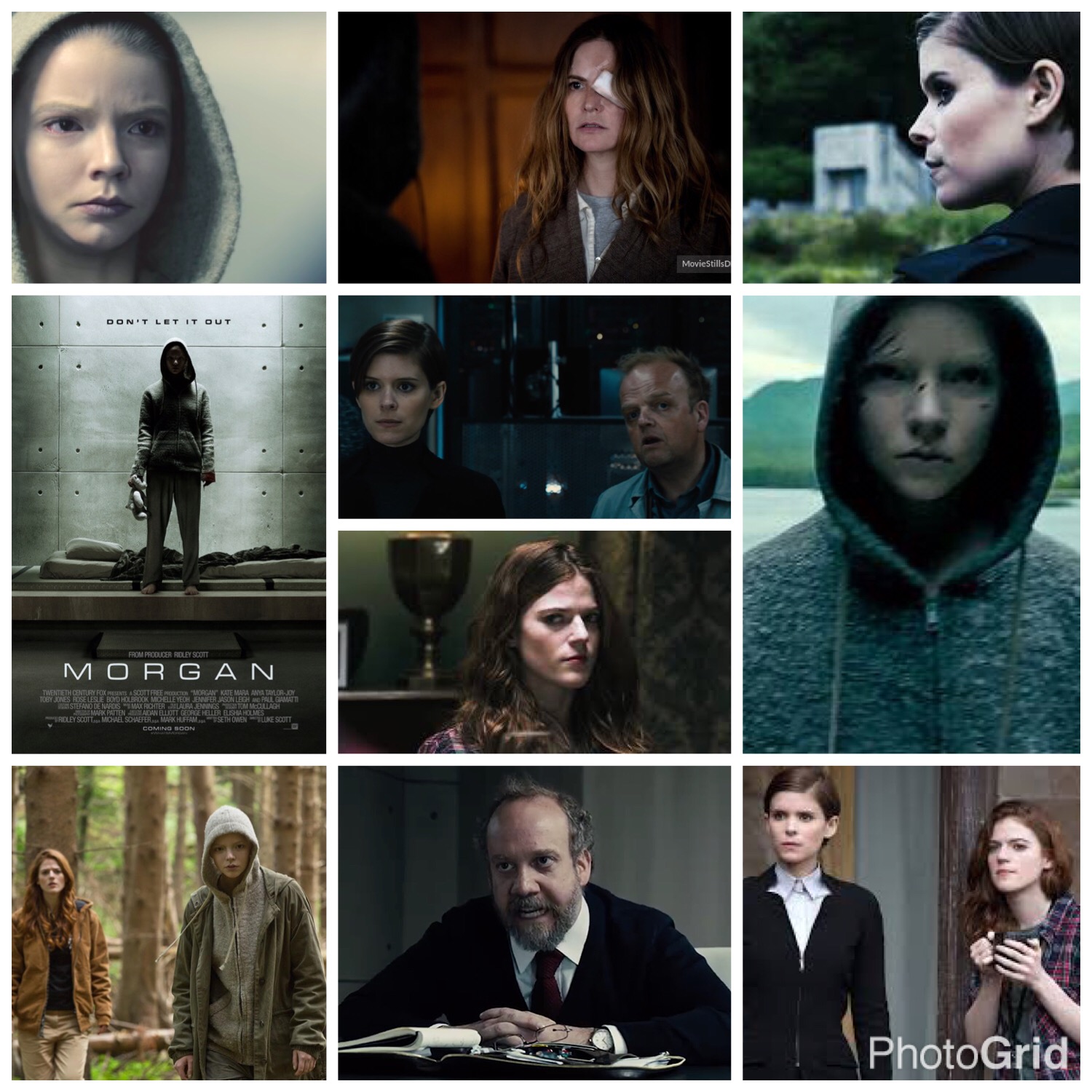
Morgan: A Review by Nate Hill


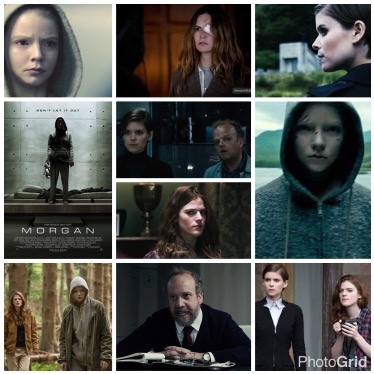
Morgan is one of the slickest genre flicks I’ve seen in recent years, finely tuned like a barbed wire tightrope, full of nasty surprises, throat ripping action and that ever present ethical turmoil that hangs about in any films that deal with artificial humanoid beings. It’s only weakness is exactly that stylistic strength: it’s so tight and streamlined that one occasionally feels like the scales tip in the favour of style over substance, but it’s a minor quibble when you take a step back and look at just how entertaining and fired up this piece is. The filmmakers are minimally concerned with the moral grey areas that cloning wades into, and subsequent philosophical pondering, but more than anything they just want to pull the ripcord and blast full throttle into an adrenaline soaked, R-rated sci-if tale with vague aspects of a character study. The title refers to Morgan (The Witch’s Anya Taylor-Joy in a performance both terrifying and heartbreaking), a genetically engineered humanoid girl held at a secluded facility alongside researchers, one of which she has just had a violent incident with. The corporate honcho (Brian Cox in a sly, all too brief honcho) dispatches a cold, clinical asset in the form of Kate Mara, sent to assess the situation and implement any measures necessary. She is an outsider, a callous bicep who flexes at the whims of the company. The researchers and handlers, however, are not. They have grown up around Morgan, invested time and, somewhat unwisely, emotion into her and will stop at nothing to ensure her survival. Paternal Toby Jones, opinionated Jennifer Jason Leigh and compassionate Rose Leslie prove to be a formidable armada against Mara’s evaluation, and tensions arise. Morgan has her own cloudy agenda though, and whether by flawed design, ghost in the shell syndrome or pure survival instinct, proves to be the greatest danger of all. She experiences people at their best, worst and most enigmatic, and her startling behaviour is a reflection of all of it, and a sobering example of humanity’s pitiful inability to perfect the creation of artificial life, at least in this film’s universe anyway. From Mara’s threatening presence, to an intense evaluation from a particularly nasty psychiatrist (Paul Giamatti overacting so hard he almost sucks the set dec up into his orbit), it’s no wonder Morgan snaps. Now when she snaps, the film more or less whips all its chips on the table, flips said table and hulk slams it two floors down. All subtlety and thought provocation kind of get left in the dust as everything careens towards an especially visceral climax, and that’s okay, as long as it doesn’t leave you feeling underwhelmed. I kind of had the intuition it was going to take the rambunctious root overall, and took comfort in the fact that it at least somewhat focused on the delicate aspects earlier on. It’s a well oiled machine, impeccably casted, given just enough pathos to keep our sentimental sides invested, and more than enough visceral hullabaloo to get our pulses dancing, all set to a score both thundering and graceful. Great stuff. 

James Foley’s GLENGARY GLEN ROSS

ggr-1_758_426_81_s_c1

The deconstruction of the alpha male has never been so fierce as it is in GLENGARRY GLEN ROSS. The entire film is one pitfall after pitfall of brazen machoism being shed, and the true colors of all the characters are blatantly glowing by the end of the film. They are men who strive to be the best, without having any idea what that really means.

David Mamet is one of America’s most seminal playwrights, and James Foley has always been a filmmaking champion in regards to slow burning character studies. Mix both these auteurs with the greatest cinematic ensemble ever, and what we have is a masterclass of filmmaking in any and every aspect possible.

The blistering dialogue and fiery performances are so powerful that after each dialogue exchange we’re left completely gobsmacked by what we’ve just witnessed. Regardless of how many times you’ve seen the film, how many times you’ve quoted Alec Baldwin’s punchy lines; the film is still as fresh and potent as your first viewing.

The film strikes a very fine balance bewteen tearing down the archetypal 20th century man, yet shadows as a cautionary tale of how hollow and empty all these characters are. Beneath the ego and big talk, these are all men who have put up the ultimate eminence front (it’s a put on). They are all incredibly sad and broken people, who have lived lives of emptiness, regardless of the charade of their salesmen banter.

This film remains the benchmark for an acting ensemble. Jack Lemmon, Al Pacino, Alec Baldwin, Ed Harris, Alan Arkin, Kevin Spacey, and Jonathan Pryce all feed off each other so well, it is an awesome experience to absorb. There have been fantastic ensembles before this film and after this film, but there will never be an equivalent calibre of actors together on screen ever again.

“What happened to you?”A review of The Autopsy of Jane Doe by Josh Hains

The R rating description for the Autopsy of Jane Doe reads “bloody horror violence, unsettling grisly images, graphic nudity, and language”, a misleading description that may give future viewers the impression they’re in for a hearty gore fest. I thought I might be in for a suspenseful slasher, something akin to a cross between Don’t Breathe (another great horror entry from 2016) and The Ring, but with a greater focus on gory splatter. I wasn’t disappointed per se, but the graphic qualities of this movie don’t unfold the way you might expect them to, which admittedly caught me off guard yet pleasantly surprised me.

Without giving anything away (as this is a spoiler free review), I can tell you that this particular horror movie actually shows barely any on-screen violence. In fact, the bulk of the “bloody horror violence” actually comes in the form of the autopsy itself, which doesn’t shy away from giving viewers prolonged sequences of dissection, which plays directly into the “unsettling grisly images” of the rating description. Think of any CSI: Crime Scene Investigation autopsy scene, but make it run for an hour and twenty six minutes. The graphic nudity doesn’t come from an impromptu sex sequence, but from Jane Doe’s seemingly lifeless corpse laying nude on the cold steel table. It’s nothing exploitive or fetishized, just protocol when examining a dead person for cause of death. And as far as the language portion of the description is concerned, you might find more profanity in one scene in Planes, Trains, and Automobiles than in the entirety of this film, not that it’s a bad thing.

The movie introduces us to a gruesome multiple murder scene where a nameless nude young woman is found buried in the sands of the house’s basement floor and whisked off to the mortuary run by Tommy (Brian Cox) and Austin Tilden (Emile Hirsch), a father-son coroner duo, given until the early morning hours to find Jane Doe’s cause of death for the sheriff. Austin has plans with his girlfriend for the night, but once Jane Doe shows up, he feels compelled to stick around and assist Tommy, despite his girlfriend’s immediate unhappiness with being ditched yet again. Jane Doe’s is an extremely odd case for the duo, her entire outer body in perfect condition but her insides boasting a series of horrifying injuries including broken ankles and wrists. With how she died becoming a more frightening answer with every new internal injury discovered, the autopsy draws on, and as an unseen storm outside increases in its catastrophic potential (as heard via a radio that provides comfort music) several unexplainable supernatural occurrences begin to manifest, eventually trapping the duo in the mortuary and threatening to terrorize them all through the cliche dark and stormy night.

Early exchanges of dialogue between father and son, both personal and professional, as well as the blatant chemistry between the two actors, illustrate a believable history and relationship between the characters. You could change Hirsch’s last name to Cox and never doubt for a second that he is indeed Cox’s son, and it’s that believability that elevates the material from standard issue to fare to something special and unique. Both actors bring their A-game, and are not just convincing as family but also as coroners, the technical jargon adding another layer of authenticity and believability to the film. Your eyes and ears might be drawn to Cox more than Hirsch, as Cox has so often been a magnetic scene stealer everything from Manhunter to Braveheart to Red, but don’t underestimate Hirsch’s nuanced work here; this is his finest hour since Into The Wild.

For his first foray into American cinema, director André Øvredal (Trollhunters) does a splendid job of crafting a movie that contains characters we believe in and come to care for, all the while gradually among up the suspense as the movie unfolds. It’s always a delight when a movie sets up an intriguing premise while simultaneously providing characters worth watching, and not just the usual dumb victims.

The first hour of The Autopsy of Jane Doe is both interesting and totally suspenseful, but sadly the movie becomes a less interesting (yet still suspenseful) endeavour as more information about the titular Jane Doe is revealed. You’ll stick around to find out the fates of the characters, but after a third act exposition dumping of information about Jane Doe that lacks the subtlety of the scenes that precede it, the plot stops dead in its tracks: there is no plot left to tell. Once that information comes to light, the focus of the movie shifts to the survival of the characters against the overwhelmingly horrifying odds and lacks the surprise and intrigue of earlier scenes. I still found myself deeply involved, but not necessarily surprised or shocked by the revelations. This misstep by no means makes Jane Doe a bad movie, just underwhelming. 

Regardless of how I might feel about the third act reveals, I have to admit I still really enjoyed watching the movie right up until the final frames snapped to black. I especially enjoyed the relationship between Tommy and Austin, and even appreciated the brief but effective appearances of the girlfriend Emma (Ophelia Lovibond) who thankfully didn’t feel like a cliche and more like a real breathing human. I also appreciated the technical jargon and the extensive look at the practice of being a coroner and conducting an autopsy. It’s grisly stuff, sure to make even some of the most hardcore gore hounds’ stomachs churn, but in the context of the movie and its unique premise, makes complete sense and doesn’t feel like shoehorned gratuitous gore. The Autopsy of Jane Doe isn’t a perfect horror movie, a tall order these days, but it’s still a great and unique entry into a genre in need of a little spicing up. Somehow, despite the underwhelming feeling I got from the third act, I found the ending oddly satisfactory albeit predictable and not at all surprising. It works, like a knife through butter. If you’re in the mood for a good horror movie, open up your heart to The Autopsy of Jane Doe. You just might thank me after the sun shines in.