Wonder Woman

Wonder Woman

2017.  Directed by Patty Jenkins.
Wonder-Woman-2017-Movie-Wallpaper-10-1600x798

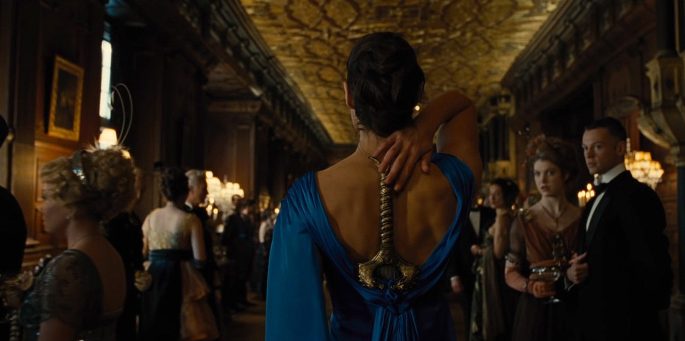
Patty Jenkins’ Wonder Woman is two films.  On the surface, it is the most Marvel-esque of DC’s cinematic universe, using all of the tried and true blockbuster clichés to present a feel good origin story in which love triumphs over evil.  However, beyond the expected trappings of the genre, Jenkins’ unique directorial style and Gal Gadot’s larger than life performance take the narrative beyond costumed mayhem into a thrilling exploration of sexual politics and morality that almost escapes the constraints of its three colored origins.

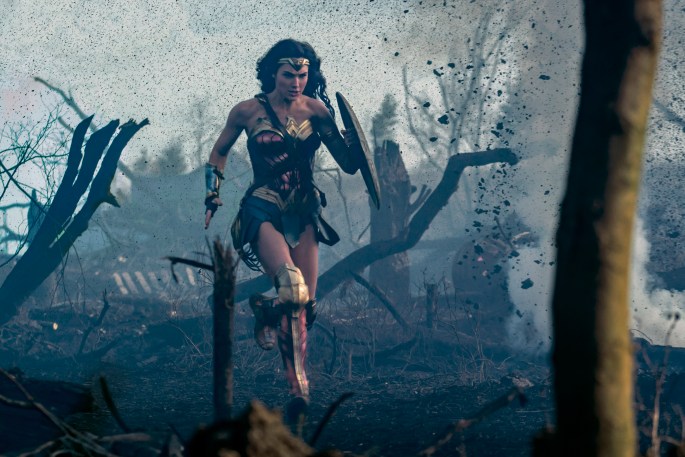
Wonder Woman is thrust into the Great War when a British spy crash lands on her island sanctum.  Believing that Ares, the god of war, is responsible for the carnage, she sets out with a group of unconventional soldiers to bring an end to his reign of terror and restore peace to the world.  Jenkins balances the fantastical elements of Wonder Woman’s origins with the plight of the trenches in a remarkable dance.  There are stunning scenes of otherworldly bravura mixed with gritty war sequences that conjure a feeling of epic adventure that never loses steam.  Gal Gadot’s emotional turn as the titular hero is one for the ages, bringing gravity and vulnerability to a role that could have easily misfired.  Although she is not mortal, her basic, possibly naïve, understanding of the heart of the human experience is what carries the film.

Vamers-FYI-Movies-Full-Length-Wonder-Woman-Trailer-is-Stunning-Screen-Shot-07

Chris Pine does an admirable job as the love interest, codifying the human experience through genuine exchanges with Gadot and outstanding scenes with the supporting cast of misfit soldiers.  One of the film’s best surprises is in its candid approach to the cost of conflict, both in the heart and soul.  Gadot approaches moral dilemmas with the benefit of not only being an outsider, but with a level of innocence that springs from never experiencing inequality.  The ramifications of this play throughout the narrative, both playfully and with serious intent.  While Wonder Woman plays to the Marvel formula with perfection, it transcends the entire MCU catalogue with conviction through its acknowledgement of these truths and its doubling down on the hero’s story.   While there’s nothing immediately new, what Wonder Woman does, it does exceptional well.

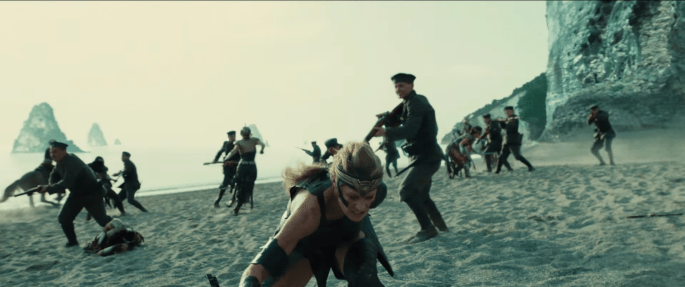
Matthew Jensen’s cinematography approaches the combat with an intriguing mix of gentile splendor and brutal omnipotence.  The bird’s eye capture of the No Man’s Land sequence is flawless, delivering an action extravaganza that builds upon the notion of hope in desperation that propels Gadot’s heroine into an iconic status.  While the slow-motion captures become tedious as the film winds on, there’s so much to digest that the painfully long running time isn’t a factor until the clunky, CGI bonanza of the finale.  Die-hard fans will not be able to unsee the glaring similarities with The First Avenger, however, the recipe is one that continues to prove, time and time again that it works and Wonder Woman simply does it better.
3099273-screen+shot+2016-07-23+at+2.27.18+pm

The importance of a female focused superhero film cannot be understated.   This is a unique film because of its treatment of the complex issues of gender, violence, and heroism.  However, as a sum of its parts, Wonder Woman stays regrettably in bounds, offering nothing fresh to the summer blockbuster and while this may disappoint viewers looking for the next best thing, it’s important to remember that films are meant to entertain, and Wonder Woman not only eclipses this humble goal, it also inspires.

Highly recommend.

wonder-woman_wp

B Movie Glory: Johnny 2.0


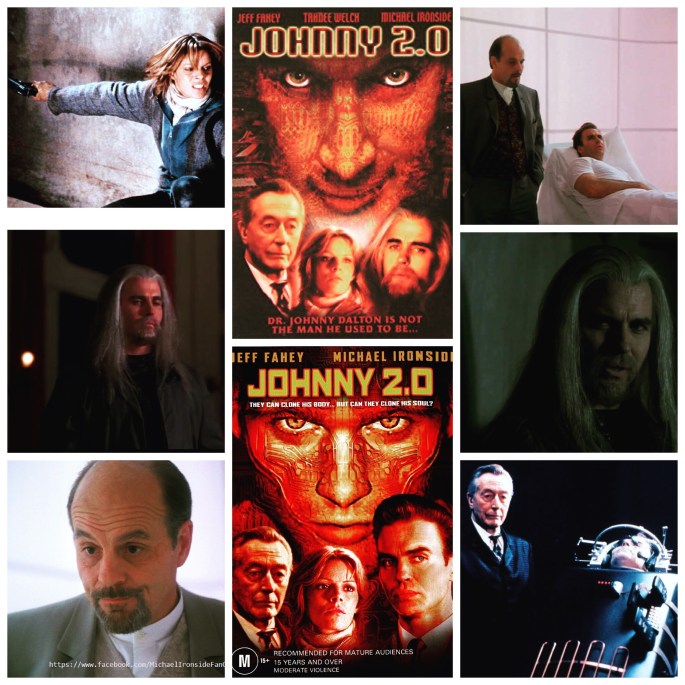
It’s always fun to come across genuinely intelligent science fiction films, especially when you go into them expecting a half assed, clunky yawn, which happens frequently. Johnny 2.0 is an overlooked little cyber-punk gem in an unassuming release package, a thinking man’s sci-fi story that could have easily gone the other way, but contains enough inspired creativity to rise above the muck. Jeff Fahey plays Johnny Dalton, a genetic researcher whose facility is attacked by activists. Waking up from the disaster he is stunned to find that he’s not Johnny at all anymore, but a clone who has been in cryo for 25 years, awakened now for one purpose: set out across a post apocalyptic wasteland to retrieve the original Dalton and smoke out a web of conspiracies that have hatched over the years. There’s all sorts of really intriguing ideas at play here including MRI memory mapping, organic tracking suits, genetic reconfiguration and personalized holograms, a wealth of scientific world building that earns this film its stripes in the artistic departments. Fahey is excellent, as is a noble Michael Ironside, Tahnee Welch and John Neville. Super solid storytelling, ideas worth exploring, an impressive level of design and atmosphere achieved despite the limited funds, there’s not too much you can say about this one that is not the highest of praises. 

-Nate Hill

Gabe Ibáñez’s Automata 


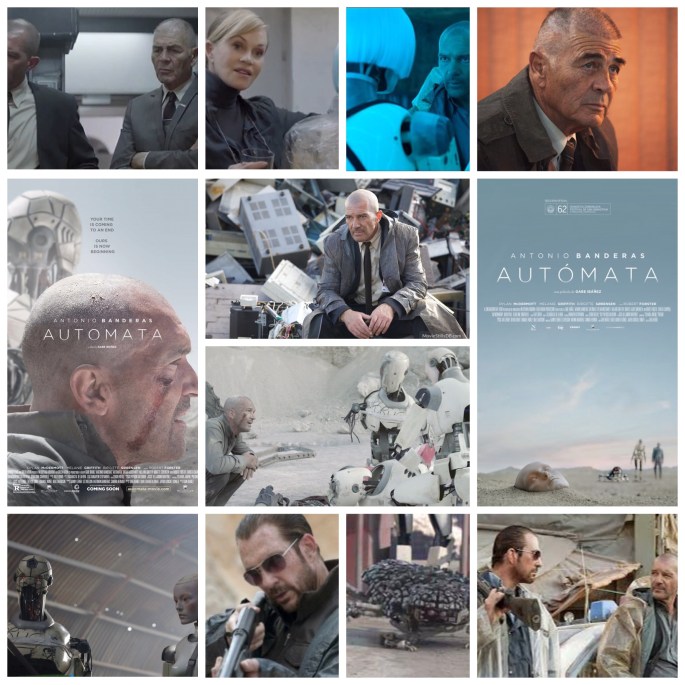
Gabe Ibáñez’s Automata had the misfortune of being released in the shadow of another film concerning robotics and artificial intelligence, Ex Machina. It’s hard to compete with the kind of hype that film generated back in 2015, and as such it kind of slipped through the cracks. It’s a shame because there’s much about that’s striking, stylized and fascinating, despite being a bit too elaborate for it’s own good. Drenched in a rainy neon Blade Runner atmosphere, it follows a bleak story involving insurance investigator Jacq Vaucan (a bald, somber Antonio Banderas) as he navigates a broken world ravaged by solar storms that have whittled down the human populace to around twenty million. Robots have been employed to rebuild the dying infrastructure, and Jacq keeps tabs in case any of them violate their primary directive, under the stewardship of his boss (Robert Forster). When rogue police officer Wallace (Dylan McDermott is dynamite) shoots a robot he claims was trying to alter itself, Jacq surmises that there’s a ‘clocksmith’ out there trying to give them minds of their own. It’s all very vague and we never really have anything more than illusory whispers or half explained concepts to go on, but these matters find him and the company’s nasty head of security (Tim McInnerney) venturing far out into the desert where a faction of robots, led by Javier Bardem no less, have grossly deviated their protocol and are evolving into… something else. Banders’s once wife Melanie Griffith does double duties as a creepy liaison in their case and the voice of a sympathetic sex slave-bot who plays a key role. I’m not entirely sure what the story arc is supposed to be, as it’s often muddled and dense, but it seems confident that it has one, and isn’t just flying blind into Euro experimental abstract mode as some scenes suggest. It has a point to make, it’s just wrapped that up in enigmatic fashion and cloaked any sense of linear exposition in blankets of atmospheric ambient sound, deliberately indistinct story beats and strangeness. I’m okay with that to an extant, as there’s plenty to enjoy visually, especially with the robots and their design, but many won’t be and will want more than just machine dreams without a manual to guide them. I for one enjoyed the memorable image of bald, parka clad Banderas hunting primordial androids in a washed out, used up wasteland. All that’s missing is a score by Vangelis or Tangerine Dream.  

-Nate Hill

Four Rooms


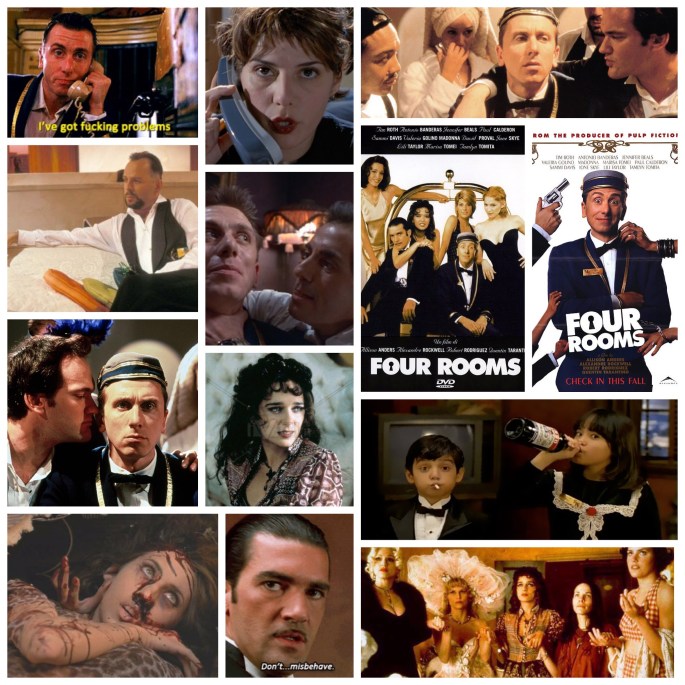
Four Rooms is an anthology film of sorts, segmented into four episodes, two of which are pretty inspired as they just happened to be helmed by Robert Rodriguez and Quentin Tarantino. The other two outings… well, let’s just say they kind of bring the whole film down. As solid as Robert and Quentin’s efforts are, they’re two quarters of a whole that needs to be engaging all the time to work as a cohesive package, and sadly that’s not the case. These four tales all take place in one hectic and seedy L.A. hotel, in various rooms that showcase a host of troubled weirdos just trying to get through the night. This quartet of nocturnal misadventures is tied together by one central character, Ted The Bellhop (a peppy Tim Roth). In the first, which is also the weakest, a goofy coven of witches carry out some asinine ritual. This is a well casted bit as we see the likes of Madonna, Ioan Skye, Valeria Golino, Lilli Taylor and Alicia Witt, but the tone comes off as grade school level shenanigans and there’s many a cringe to be had. The second is an oddly placed noirish bit that finds Ted caught between an unhinged gun wielding whacko (If I’ve said it once, I’ve said it a hundred times, David Proval is criminally underrated) and his femme fatale wife (Jennifer Beals). This one isn’t as awful as the first, yet feels a little off putting and claustrophobic. The third sees Robert Rodriguez step up to bat with ‘The Misbehavers’ a riotous black comedy concerning an upper class couple (Antonio Banderas and Tamlyn Tomita) who leave Ted in charge of their troublemaker kids for the night as they go out dancing. Anything can and does go wrong here, as the youngsters get into all kinds of shit including finding a half decomposed hooker (Patricia Vonne) stuffed in a mattress. Rodriguez shows comedic flair in fits and starts in the pulpy action side of his oeuvre, but here he’s purely having fun and the result is a sleazy hoot of a good time. The fourth and best is by Tarantino, and as such is mostly talking. But what talking it is; Ted stumbles into the penthouse suite which is home to a string out Hollywood film crew, and they’ve decided to place a dangerous bet that involves bodily dismemberment. Quentin is usually a fairly awful actor, but he’s not bad here as the motor mouthed ringleader of this insane posse, while Paul Calderon, Marisa Tomei and a very stressed out Bruce Willis chime in as well. This segment is pure gold, with an abrupt, trademark Tarantino payoff that leaves you chuckling darkly. All kinds of folks have cameos, so watch for the recently disgraced, supremely ugly Kathy Griffin, Lawrence Bender, Salma Hayek and others. There’s always stronger and weaker entries in an anthology film, competition is par for the course. This one has quite the ups and downs though, and would have been far better off being just a Tarantino/Rodriguez double feature, but oh well. 

-Nate Hill

Wonder Woman

WW2

The road’s been rocky for the fledgling DC comic books extended cinematic universe (tagged with the clunky acronym DCEU), with a dark, violent Superman reboot, a controversial introduction of everyone’s favorite Gotham City orphan all grown up, and a deplorable studio hack job forced on David Ayer’s antihero romp.  One of the shining moments agreed on by almost all fans was the inclusion of Wonder Woman in Batman v Superman: Dawn Of Justice, raising expectations for a solo adventure that’s finally being released to the world this week.  There’s some very good news for Time Warner, DC and anyone else who’s paying attention, which is that actress Gal Gadot continues to make a riveting heroine.  Every minute she’s onscreen, you can’t take your eyes off her; heroic, beautiful, strong, and warm, she’s a marvel and the long wait to see the character front and center on film is rewarded by the casting and performance alone.  As for the rest of it, your enjoyment will vary depending on how interested you are in slipping on the fraying comfort jeans of the now typical superhero origin story.

Set in a nostalgic milieu that occasionally borders on Captain America:  The First Avenger copyright infringement, Wonder Woman starts with our heroine’s journey from the magic island where her Amazonian tribe, created by Zeus himself, lives in a literal bubble to the raging battles of World War I going on everywhere else.  The door to the real world is opened by a man, but at no point are we ever led to believe anyone has the presence and agency that Gadot’s Diana Prince has.  The screenplay does a wobbly but noble job of ruminating on the role of male aggression and violence in the world, offering Wonder Woman up as a have-your-cake-and-eat-it-too alternative to their historically destructive tendencies by engaging in the destruction at a higher level than any of the boys have ever been capable of.  Director Patty Jenkins does a fairly good job of trying to embrace and squeeze the most of the quiet moments, sometimes nailing the burgeoning romance between Diana and Chris Pine’s Steve Trevor but other times allows explication scenes to drag for no particularly apparent reason.  She does manage to simultaneously ground and celebrate this historic character, who arrives at a lovely ‘why we fight’ philosophical end point by the final reel that feels honestly earned.

The film does suffer from a variety of familiar beats, with standard bad guys (spoiler alert for the historically challenged, there are Germans and they’re up to no good), a predictable twist that ends in one of the more disconcerting bad guy casting jobs the genre’s ever seen, and of course a series of fight sequences that roll out with a scheduled regularity that one can set their watch to.  But those action scenes, clearly influenced by the hand of co-writer and producer Zack Snyder, crackle and pop with every bit of proud slow motion swagger and high speed collision you’ve come to expect from big budget comic book fare in the digital age, and it’s fairly apparent that most if not all of these going forward are going to end with the inky darkness of night, punctuated by fire.  But again, Gal Gadot commands the frame from start to finish, so it’s tough not to be caught up in her confident jaunt through her first full film.

WONDER WOMAN

PAUL THOMAS ANDERSON’S INHERENT VICE — A REVIEW BY NICK CLEMENT

3

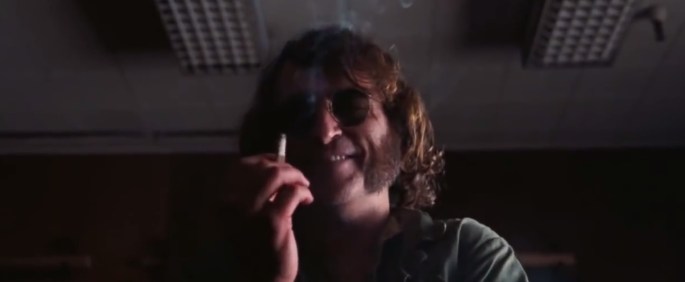
The skunky stench and hazy after-effects of marijuana can be found all over Paul Thomas Anderson’s hysterical, bewildering, utterly zonked-out shaggy-dog detective movie Inherent Vice. Based on Thomas Pynchon’s much celebrated novel, this is a wild, ridiculous, totally blazed piece of work that had “cult-classic” status written all over it the moment it was released in theaters a few years ago. Different and yet similar to obvious inspirations such as The Big Lebowski, The Big Sleep, and The Long Goodbye, Inherent Vice likely annoyed many who went in looking for something more traditional, but at the same time, was probably “just-right” for many others. There’ll be no real middle ground with this one. You’ve got to be interested in watching a perpetually stoned, lackadaisical, possibly hallucinating lead character that can’t seem to get out of his own way. The cast is peppered with tons of stars (Reese Witherspoon, Owen Wilson, Benicio Del Toro, a debauched Martin Short in one of the best scenes in the film) but Phoenix owned the picture. Coming on the heels of his exquisite and varied work in both The Master and Her, he delivered a totally different performance in Inherent Vice, cementing his chameleonic quality to any role he takes on, investing every performance with integrity, intensity, and odd charm. He’s long been one of my favorite actors and I can’t wait to see him in the new film by Lynne Ramsay that just premiered at Cannes.

2

The “plot” of Inherent Vice can be followed, but I’ll admit that it’s taken me a few viewings to fully digest everything that this film has to offer, as great movies allow for constant exploration. Because Phoenix’s character is essentially an unreliable narrator, and because everyone he comes into contact with screws with him in some way, there’s this sense of randomness to the plot that won’t be to everyone’s liking. Inherent Vice is more about the crazy characters and the druggy aroma and the floral dialogue and stony voice-over and the minutiae of the time period – those looking for an “air-tight” plot need to go find something else. It’s also about the collision of two subcultures, and how America, in particular Los Angeles, was rapidly changing during this time period. Josh Brolin absolutely nailed his supporting role as an angry LAPD officer who clashes with Phoenix multiple times throughout the story. And there’s some of the bravest nudity I’ve ever seen from an actress on the part of the lovely and talented Katherine Waterston, who injected her character with an earthy sensuality that you don’t normally see on the big screen. Inherent Vice carries a distinct visual atmosphere, with master shooter Robert Elswit’s purposefully hazy and scratchy cinematography being just the right tonal fit for the offbeat material. The on-location shooting adds to the cool-factor, and the play-through soundtrack is completely groovy – Can POWER!

8

Stephen King’s Graveyard Shift


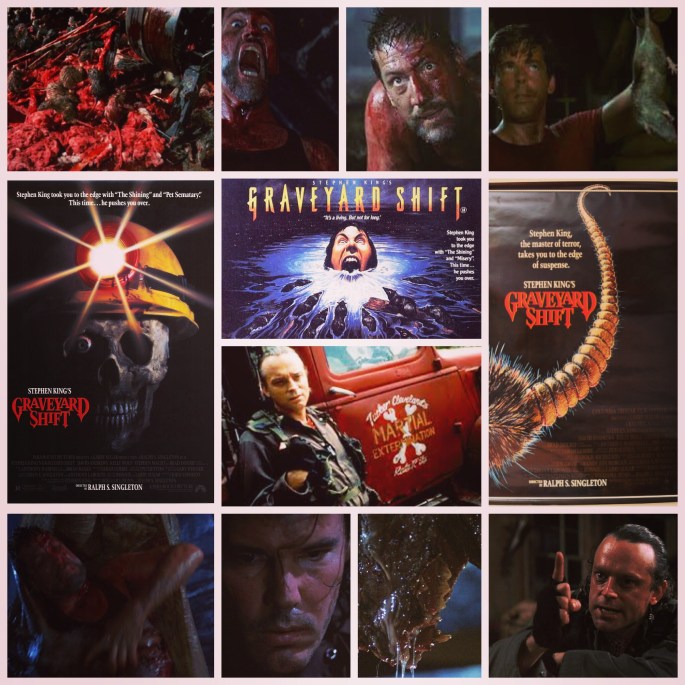
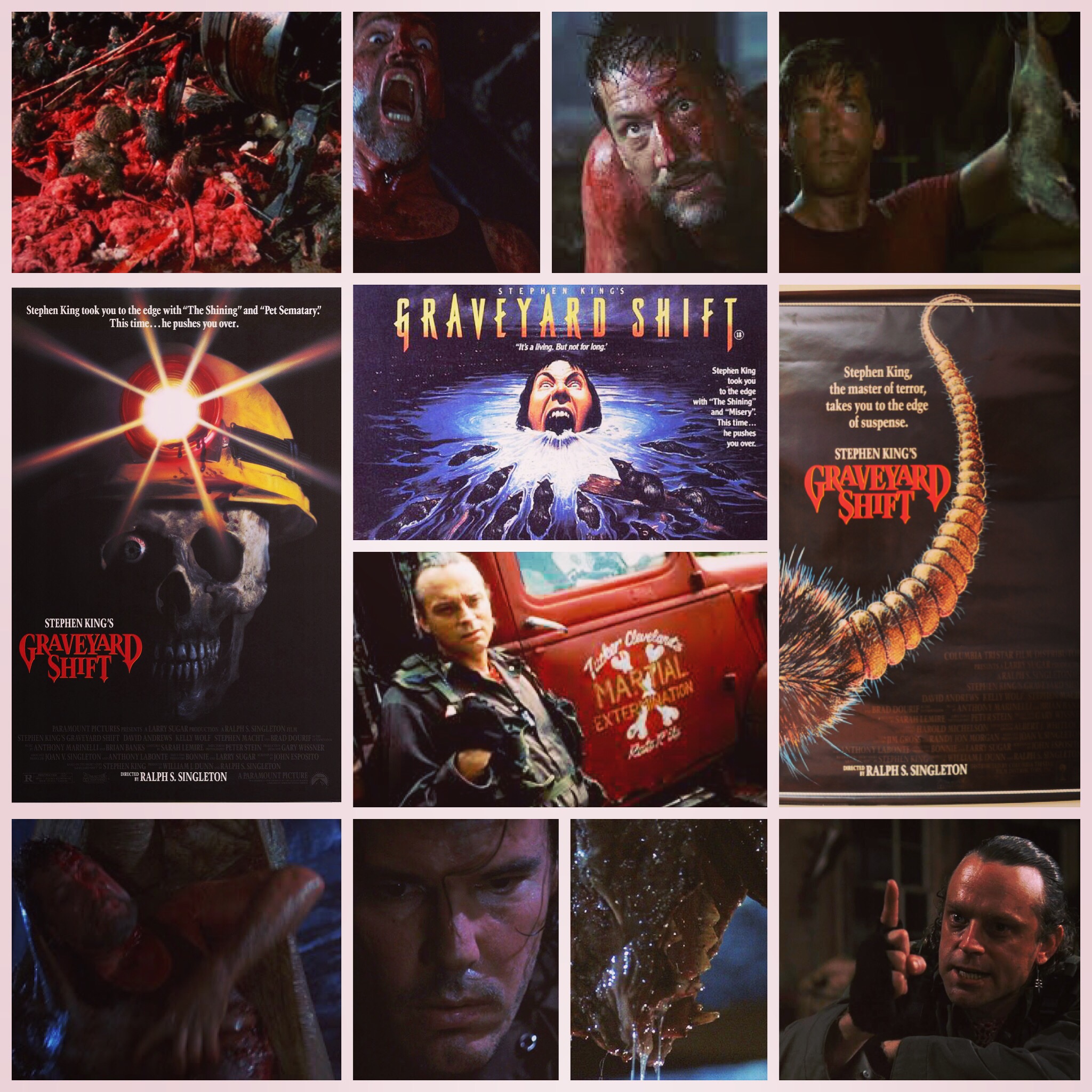
Stephen King’s Graveyard Shift is curiously one of my favourite adaptations of his work. I say curiously because it’s not a very tasteful film, let alone even a good one. It’s simple schlock and awe, goo and slime for 90 minutes straight, every human character either an unsettling nutcase or cardboard stock archetype. There’s just something so Midnite Movie-esque about it though, a sense of fun to its gigantic, hollowed out mess of a textile mill in which some kind of vile denizen stalks a night crew that pretty much deserves everything they get. People wander about, squabble and are picked off in ways that get steadily more gruesome until the final reveal of the monster in some overblown puss-palooza of a finale. What more do you need in your bottom feeder helping of horror? Steven Macht is the sleazebag who runs the mill at his tyrannical whim, while David Andrews is the closest thing you’ll find to a stoic protagonist. Andrew ‘Wishmaster’ Divoff shows up as a stock character, but it’s Brad Dourif who chews scenery and ends up the only memorable person as the world’s most simultaneously intense and incompetent exterminator, a bug eyed little weirdo who freaks people out with extended monologues about Viet Nam when he should be perusing corridors to find whatever’s lurking there. The monster itself, if I remember correctly, is one big pile of grossly misshappen, poopy prosthetic puppetry, as is often the case in early 90’s King fare. Would you want it any other way? Simple, efficient and impressively gory is what you’ll find on this shift. 

-Nate Hill

B Movie Glory: G-Men From Hell


G-Men From Hell is.. well, pretty much exactly what the title suggests. Based on a comic book, I think, it concerns two melodramatic 1950’s FBI Agents named Dean Crept (William Forsythe) and Mike Mattress (Tate Donovan) who are gunned down by mysterious assailants, and sent off to the inferno to rot, only they aren’t finished their business earth-side, and escape using some magic dimension opening crystal. Once back in the realm of the living, they set up their own private detective agency, forced to keep up their good deed quota in order to prevent from being dragged off again. The Devil (Robert Goulet, hilarious) is furious and dispatches an agent of his own to retrieve them. Meanwhile, a relentless and fairly nutty police detective (Gary Buddy) is also hot on their trail. Busey, as usual, flips the script into the dustbin and does his own warped thing with the dialogue, making scene partners visibly try to hold in laughter and bewilderment, proving once again that any film he appears in will never get boring. Forsythe and Donovan play it like Looney Toons in noir mode, two campy gumshoe performances that are so knowingly tongue in cheek that it almost seems like a stage play. Cameos include Bobcat Goldthwait, David Huddleston, Kari Wuhrur, Charles Fleischer, Frank McCrae and Vanessa Angel. I feel like the whole thing is just a bit silly to work, even as one big riotous in-joke, but it’s a colourful diversion nonetheless, and any film with that title deserves a watch as an ode to it’s sheer commitment to blatant inanities. Please excuse the pitiful lack of high def photos in my collage, whoever was in charge of screen caps and production stills on this should be shot in the face.  

-Nate Hill

Stuart Gordon’s Fortress


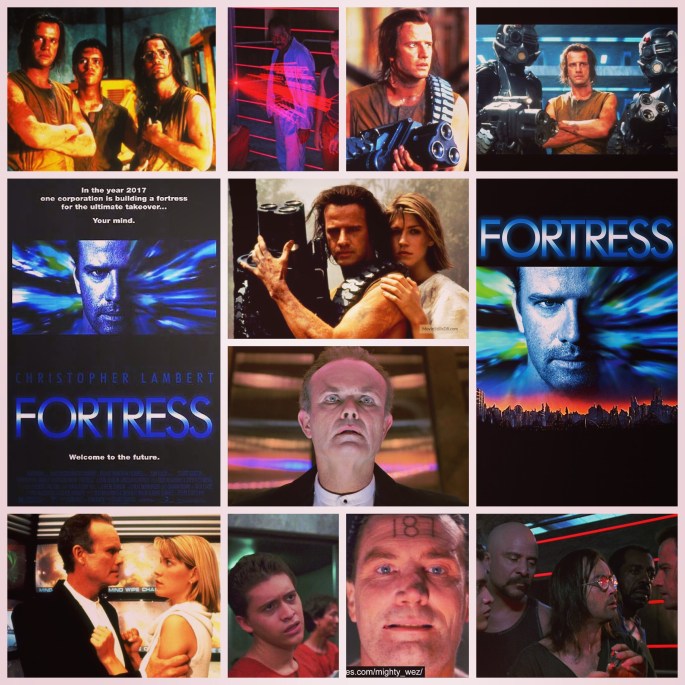
Stuart Gordon’s Fortress is one of the more overlooked dystopian sci-fi thrillers of the 90’s, and despite somewhat being a B-movie, it holds its own in pretty much every department. Quality story, terrific acting (even from the king of stilted delivery himself, Christopher Lambert) and a story with more depth than the poster or marketing might suggest. Lambert plays an unfortunate man on the run with his wife (Loryn Locklin) in an America of the future where having more than one child per mother is prohibited. They’re both nabbed trying to make a break for Mexico, locked away in a horrific prison called Fortress, a place where science has run amok and all kinds of neurological and biological experiments are performed on the inmates under the steely direction of evil Director Poe (Kurtwood Smith). Fortress is an unorthodox nightmare where basic rights are replaced by those of cattle or worse, and no one is safe from micro implants, mind alteration and all sorts of fun stuff. Lambert plans an elaborate escape with the help of various inmates including Vernon Wells, the late Tom Towles, Jeffrey Combs and Clifton Collins Jr., all putting in excellent and varied performances. The scene stealer is Kurtwood Smith though, who is usually cheeky, psychotic or sarcastic in his work. Taking on the type of role that typically goes to a Malcolm McDowell type guy, he tackles a character that is the farthest thing from sympathetic you could find and sort of turns that on its head, making him seem very much human in one galvanizing piece of acting work. You can label this type of thing second tier or low budget, write it off or not take it seriously, but the fact remains that many of these efforts are works of art in their own right, beautifully crafted adventure stories set in universes more vibrant and imaginative than our own, stories just to the left left of normal and full of schlock, machines, creature effects and smoke machines. Gordon is a master in this arena (remind me to tell you about Space Truckers one day), a creative force to rival Roger Corman and the like. Fortress is my personal favourite in his stable, and one shouldn’t underestimate its entertainment value and ability to hold up decades later. Oh and also, this suffers from an adorable condition I call Blade Runner Syndrome™, in which the far off year the film’s timeline exists in has been caught up to by our own trajectory, making the films future look like our past. This film’s specific year? 2017, as you’ll see in the poster above. That means that right now, Lambert and Smith are duking it out in that clandestine compound somewhere out there. Cool thought. 

-Nate Hill