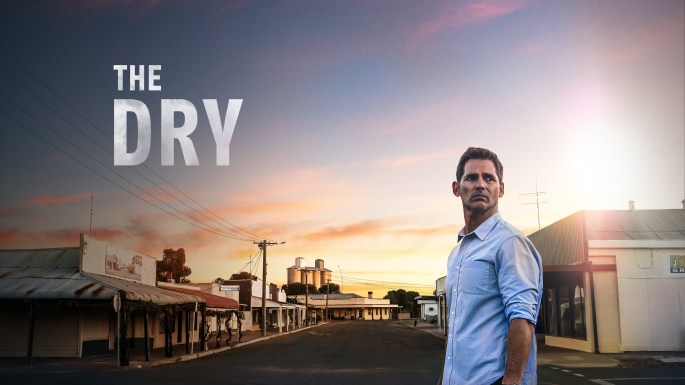
John Connolly’s The Dry

Australia is the perfect place to set a good mystery, there’s just this inherently unexplored magnitude of desolation, otherworldly geological splendour and ghostly vastness to the landscape, an advantage that director John Connolly seizes with The Dry, an absolutely sensational noir singed thriller starring Eric Bana in a galvanizing comeback of sorts, or at least in my eyes I feel like I haven’t seen the dude in a while and he comes roaring back into play here. Based on the novel by Jane Harper, Bana plays Melbourne detective Aaron Falk, who returns home to Kiewarra, the outback bush-town he grew up in after the family of a childhood friend is found brutally murdered, including a young child. He initially only plans to stay for the funeral but the moment he arrives, the entire suppressed collective memory of the townsfolk dredges back up to the surface and before you know it old grudges are stirred and painful memories of the unsolved murder of a teenage girl from their past come back to haunt them, especially Aaron who was unofficially implicated as a teen. As if all this isn’t stressful enough already, the region is also going through an apocalyptic drought that makes the threat of wildfire an ever present source of anxiety and causes threatening, Mordor-esque flares of fiery colour on the horizon. The film expertly meanders through a narrative that feels languid and as slow paced as the sun etching across the desert horizon and as brittle, succinct and unforgiving as the landscape. We weave back and forth between hazily recollected flashbacks to the teenage years of this group, jigsawed together with laser precision and tethered to the present day investigation that bit by bit, conversation by conversation, memory by memory, yields truth to both mysteries. The eventual resolutions to both threads are shocking, cathartic, operatic and intensely emotional experiences impeccably acted by the entire cast, beautifully and eerily scored by Peter Raeburn (check out his amazing musical work in this year’s Amazon Prime show Tell Me Your Secrets as well) and given the evocative atmospheric boost of the ever present Australian wilderness enveloping everything. Great film.

-Nate Hill

THE ROBERT ALTMAN FILES: QUINTET (1979)

O.C. and Stiggs aside (and we’ll get to that later), if there is another movie in the canon of Robert Altman that has been as torched and reviled as Quintet, first in a pair of films Altman released in 1979, I know it not. Laughed out of the theaters and dismissed upon its initial release, Quintet now camps comfortably at the precise halfway mark between maligned masterpiece and deserved disaster though, in the end, it will likely never amount to anything other than being a nobly interesting film that pleases exactly nobody.

Stepping about as far away as he could from the crowded canvasses that had served him well throughout the decade, Quintet tells the story of Essex (Paul Newman), a seal hunter living in the final, frozen days of civilization who, with his pregnant traveling companion, Vivia (Brigitte Fossey), returns to his iced-over and ruined city after a decade-long sojourn/hunt in the south. Upon his return, he rejoins his brother, Francha (Thomas Hill), and learns that there is no longer any employment or hope in the civilized world and that people mostly pass the time playing Quintet, a backgammon-like game played on a pentagonal board. When a pipe bomb is slipped through the doorway to Francha’s apartment while Essex is away and kills all of the inhabitants within, Vivia included, Essex becomes embroiled in an enigmatic search to unravel the reason for their murders and the numerous deaths that occur soon afterward.

This summation makes this all sound terribly exciting and, to be sure, there’s probably a better film to be made from the elements that make up Quintet, but, as released, it’s readily apparent that there was just simply nobody around to tell Altman “no.” What began life as a star-studded meditation on the unknown ended up looking more like a yarn someone heard while huddled around a water pipe with some friends in a dorm room. As a contemporary piece of entertainment in 1979, it’s unclear who this movie would be for and its audacity is as equally admirable as it is peculiar. But it also shows just how far away Altman was from the pulse of America he so keenly tracked during the first half of the 70’s as popular entertainment, and Altman himself, had been rocked by bubblegum films such as Superman: The Movie, Star Wars, and Grease.

Quintet is designed to be an intellectual mystery film (though it’s more a whydunit than a whodunit) crossed with some trace elements of science fiction and it succeeds far more in the latter than it does the former. In creating a location as unique as Presbyterian Church in McCabe & Mrs. Miller or Sweethaven in Popeye, the utilization of the derelict portions of Montreal’s Expo 67 was a stroke of genius as both the art direction of Wolf Kroger and production design Leon Ericksen help create a believable, ice-encased metropolis. Likewise, Altman is 100% committed to the frozen world he builds in Quintet which seeps into the smallest parts of the film. Whether it’s your cup of tea or not, there is a mad genius to cinematographer Jean Boffety, returning from Thieves Like Us, smearing Vaseline around the outer edge of his lenses, giving the visuals a patina of translucent frost that contributes to the perpetual and uncomfortably frigid atmosphere that blows off the screen.

Also impressive is the assemblage of Altman’s top tier, globe-spanning cast which also helps sell the illusion that the inhabitable world which remains is a frozen coagulation of run-off from the four corners of the earth. American Paul Newman and Swedish Andersson mingle with Spanish Fernando Rey, French Brigitte Fossey, Danish Nina Von Pallandt, and Italian Vittorio Gassman, the latter two exchanging their marriage license in the previous year’s A Wedding for opposing sides in the deadly tournament of Quintet. All of these performances are very unique and mix in a way that is sometimes tin-eared and jarring but probably comes close to fully realizing a world where language is being boxed up and only the physical actions and gestures in the service of all-encompassing gamesmanship matter.

But allowing Altman to take the audience on a joyride to the edge of extinction couldn’t help but give audiences of the time a case of the grumps. For this is a film Altman wants everyone to Take Very Seriously and, as such, it is completely without joy and utterly faithful to its hopelessness. Staking its claim in this grim territory early by killing off the pregnant Fossey, the film’s one beacon of life, Altman presents a world so bleak that wild dogs are devouring the bodies of the dead within thirty seconds of them hitting the ground; a civilization so dark, the word “friend” has been replaced with “alliance.” Perhaps Altman felt the world was coming to a place that was so pained and depressed that a post-coital embrace would be met with a flood of sadness at the remembrance of what’s been lost. And maybe it was (and is). But to think that anyone in 1979 would pay hard-earned money and burn a Friday or Saturday night to be told these truths was just as mad as the pulpit rankings of Gassman’s St. Christopher, telling his flock of frigid miserables that the unknown blackness that awaits after death is so completely terrifying and all-consuming that they should be happy with the disconsolate lives they lead even as they slowly starve and freeze to death.

As an unearthed relic that is slowly becoming lost to time, Quintet is a kind of fascinating curio. An outlier in his filmography, there still remains through-lines to his work both past and future. The opening mostly resembles California Split as it moves the poker club to the end of the earth, people huddling around frozen gameboards and fighting off boredom instead of feeding their gambling addictions. Likewise, the whole idea of the sixth man, a player position in the game of Quintet that’s festooned with all kinds of allegorical meaning, is something Altman first toyed with in 3 Women, specifically with the character of Willie Hart (Janice Rule). Representing the silent watcher on the margins of the frame, Willie Hart was the unknowable-known; a creature filled with middle-aged emptiness that can only fully understood when it’s too late to change the course of destiny.

In the end, Altman does find a kind of hope as Newman refuses conventional wisdom and marches (for five straight minutes of screen time) into the great white north, following a goose he spied with wonder in the opening minutes of the film. But ending on an opaque note of hopeless bravery just wasn’t what a lot of people who had just watched John Travolta and Olivia Newton-John fly away in a car wanted to put up with. And while a lofty piece of nonsense dialogue such as “You’ll never understand the scheme until you are part of the scheme” seems ponderously risible and ultimately head-scratching when deployed in the film, I can’t help but think it would have been better served as the Orson Welles-voiced tagline to the (non-existent) board game adaptation of Quintet by Parker Brothers.

“One Man Against the World” screamed the tagline on the Quintet one-sheet, plastered under the contemplative mug of Paul Newman and his mid-distance stare. Replace his face with that of Robert Altman and you were probably closer to the truth as the seventies began to sputter to an unfortunate close.

(C) Copyright 2021, Patrick Crain

Zack Snyder’s Army Of The Dead

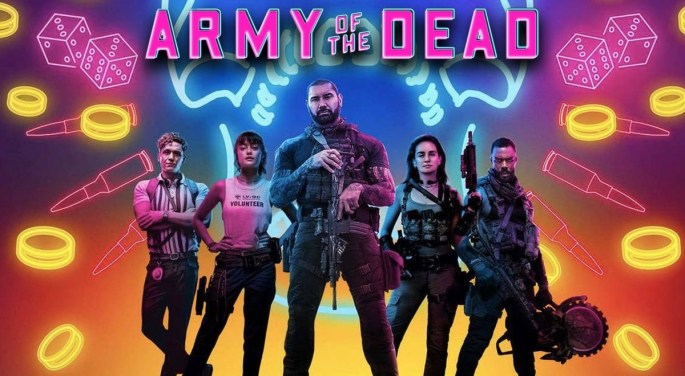
We don’t deserve a movie as outright cool, fun, entertaining and badass as Zack Snyder’s Army Of The Dead. Know how I know? Because of all the flagrant, inflammatory hate I’m seeing in discussion threads across the universe of social media, hate being doled out largely (not exclusively, before you lunge for my throat) by people who would have surely left this film alone and even enjoyed it if Snyder had nothing to do with it. Know how I know *that*? Just trust me, I know how these fuckwit Snyder hating trolls operate and I know it’s only because of his involvement that they are being this way. Anyways enough about them and onto the film, which is sensational and one of the best I’ve seen this year. Snyder sets the action in and out of a cordoned off Las Vegas where an undead outbreak several years before has decimated sin city and the zombies, unlike anything you’ve seen so far in the genre by the way, have taken up a sort of primordial tribal residence amongst the once glitzy landmark city. A Japanese billionaire (Hiroyuki Sanada) assembles a team spearheaded by Dave Bautista’ ex special forces short order cook to venture in and bust open a casino vault with millions inside, but is that what he’s really after? Bautista is wonderful and proves yet again what a talented presence he is on top of being a solid action dude. His character reconnects with an estranged daughter (Ella Purnell) who works inside the quarantine zone and here the film finds a pathos usually uncommon in this arena. Others in the cast make vivid impressions including Tig Notaro as a cavalier helicopter pilot, Mathias Schweighöfer as an adorably aloof safecracker, Theo Rossi as a despicably abusive government soldier, Ana de la Reguera as a fearsome warrior and perennial slime-ball Garrett Dillahunt as a smarmy private security expert with a shady agenda. My favourite was the lovely Nora Arnezeder as the aptly named Coyote, a highly trained scout who regularly ventures into the hot zone and serves as their guide, she brings a humanity and urgency to both her lines and action choreography that really struck a chord with me. The zombies are ruled by a sort of patient zero Alpha named Zeus, played ferociously by Richard Cetrome, who also played the leader of the pack Big Daddy Mars in John Carpenter’s Ghosts Of Mars, a nice shoutout to a similarly maligned flick that actually totally rocks. Zeus has a Bride (Chelsea Edmundson) who for me was the most striking character in the film, a serpentine zombie queen with fiery contact lenses, a shrieking battle cry and wonderful physicality provided by model Edmundson. And yes there is a zombie tiger too, and yes she is one incredibly badass and beautifully rendered creature creation that is a highlight of the film. Look, this is a torqued up, totally ridiculous, hyper-stylized B movie about an outbreak in Vegas, wherein lies an undead jungle cat, zombies who ride skeletal horses and can both breed and have little zombie babies all wrapped up in a heist flick with a father daughter relationship, anti government undercurrents and more action that you can shake a severed head at, so if you’re trying to poke holes of logic and burrow for plot holes in a film that intrepidly incorporates all of that under one two and a half hour tent, well babe the only person you’re fooling is yourself. So what the story isn’t a succinct high-wire act of pushpin writing beats and realistic arcs? It’s a kickass old school horror flick with a huge cast, buckets of beautiful and strikingly graphic gore (eat your heart out, Bear attack scene from The Revenant), wonderfully unique mythology, dark humour, tons of gorgeous twilight and magic hour cinematography, splashes of genuinely affecting emotional work and a fucking zombie tiger named Valentine! So chill out. My top film of the year so far 🐅 🐯

-Nate Hill

THE RUSS MEYER FILES: THE IMMORAL MR. TEAS (1959)

There is much more to be said about Russ Meyer’s films outside the obvious. In fact, it’s something of a shame that one feels that they need to qualify their love of his movies or justify placing him in the ranks of other great filmmakers. Sure, he peddled tits and ass, but if that’s all there was to him, his films nor his legend would have endured for as long as they have. For in Russ Meyer, the audience got what they came for and then some. His starlets, as impressively and impossibly built as they were, were always photographed with a master’s eye. And beyond that, the images were always hooked together in a rapid-fire montage of unmistakable rhythm that would have made Sergei Eisenstein proud.

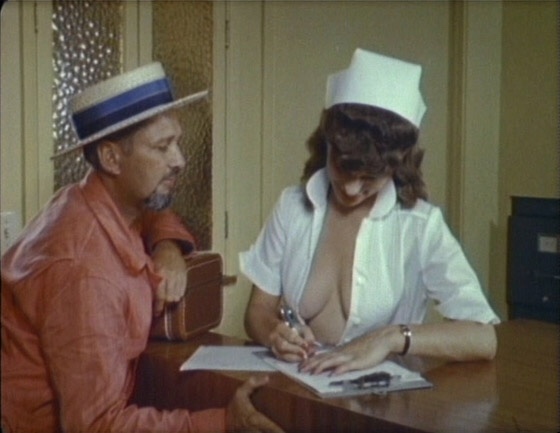
The Immoral Mr. Teas was Meyer’s first film and while it’s no Citizen Kane it’s a much more laudable first effort than Stanley Kubrick’s anti-masterpiece Fear and Desire. Most of the film’s faults can be placed squarely on the constraints of the time. In fact, it’s somewhat amazing that The Immoral Mr. Teas was released at all. Shot in four days and containing a threadbare, almost non-existent plot that covers a couple of days in the life of the hapless titular character (Meyer Army buddy, Bill Teas) who, after a molar extraction, begins to see the peripheral women in his life in the nude, The Immoral Mr. Teas has all the pitfalls of a film that is really only interested in making excuses to display some flesh.

But, after all, this was 1959 and The Immoral Mr. Teas holds the distinction of being the first non-documentary, non-educational, non-naturist film to display on-screen nudity. That really should be given a great deal of quiet reflection. In this day and age when nudity is mostly the norm and passé, it’s hard to imagine that there was a day where on-screen nudity wasn’t a consideration at all. But one day it wasn’t there and the next day it was and when this film punched through that specific ceiling, the walls began to collapse. It’s staggering to consider but every single second of nudity that has occurred in our films and television programs is due to this film. And, sure, had The Immoral Mr. Teas not been made, something certainly would have come along and taken its place as ground-zero for cinematic smut. But history is what it is and just as Herschell Gordon Lewis single-handedly invented on-screen gore with Blood Feast in 1963 and created a piece of actual history, The Immoral Mr. Teas, quaint and naive as it is, lives in a display case in the cinema history museum of the mind, a pioneering relic yet very much one of its time. Along with shattering the taboo of displaying women in the buff, it single-handedly invented the “nudie cutie” subgenre of film; movies that just barely qualified as feature length and were stacked to the rafters with bare breasts and butts but completely devoid of plot (and one to which Meyer would contribute another few titles before shifting into narrative work). The film also caught a wave where, in America, social mores were beginning to become more relaxed and subversive entertainment, found both in juvenile delinquent movies and the nascent Rock and Roll music, was getting eaten up en masse by the youth culture, creating a potent chemistry for change. Though it’s mostly a inauthentic mock-up, 1978’s Grease is something of a celebration of this specific period when a seismic shift in the culture occurred with drag racing, rock music, and a healthy amount of open, teenage libidinousness replacing hand-holding and Your Hit Parade (and, in fact, the cover of Jules Feiffer’s 1958 omnibus of his satirical cartoons, Sick, Sick, Sick, is seen in both The Immoral Mr. Teas and the opening credits of Grease).

What Meyer was after here was, basically, a Playboy magazine come to life. And, to that end, the film is a success. But, in other ways, the film works just as well. The repeated gag of the hula-hoop girl is pretty golden and some of the flat, industrial film-like narration, utilized to keep our sad-sack hero’s mind off of all the nekkidness around him, winds up being subversively funny. Also present is Meyer’s amazing eye for composition and rhythm. When watching the film, it’s apparent that this wasn’t made by someone who couldn’t care less but, instead, it’s a film made by a craftsman who labored over all of his shots and even managed to find a fun, creative angle to the dream sequences, stripping them down to their most basic images with a dash of Chuck Jones’s backgrounds thrown in as a whimsical garnish.

Despite its strengths, The Immoral Mr. Teas, is much more a historic document than it is a compelling piece of filmmaking. It’s dull and wears out its welcome before it sputters out and dies but, at just over an hour, it’s a pretty painless affair even when the novelty of seeing naked flesh on screen has long since become rote and commonplace. The Immoral Mr. Teas may not still light one’s fire as it did when it was first released but it’s a much more watchable and digestible piece of filmmaking than the myriad other nudie cuties that followed in its wake And, yes, I’m talking explicitly about you, The Adventures of Lucky Pierre.

(C) Copyright 2021, Patrick Crain

Nick Willing’s Altar

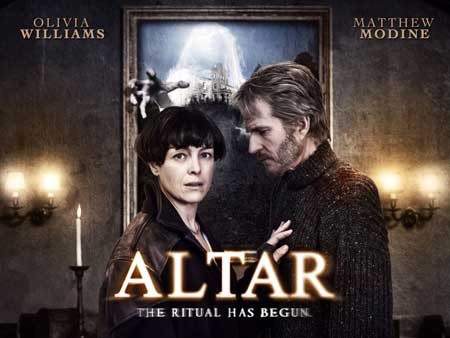
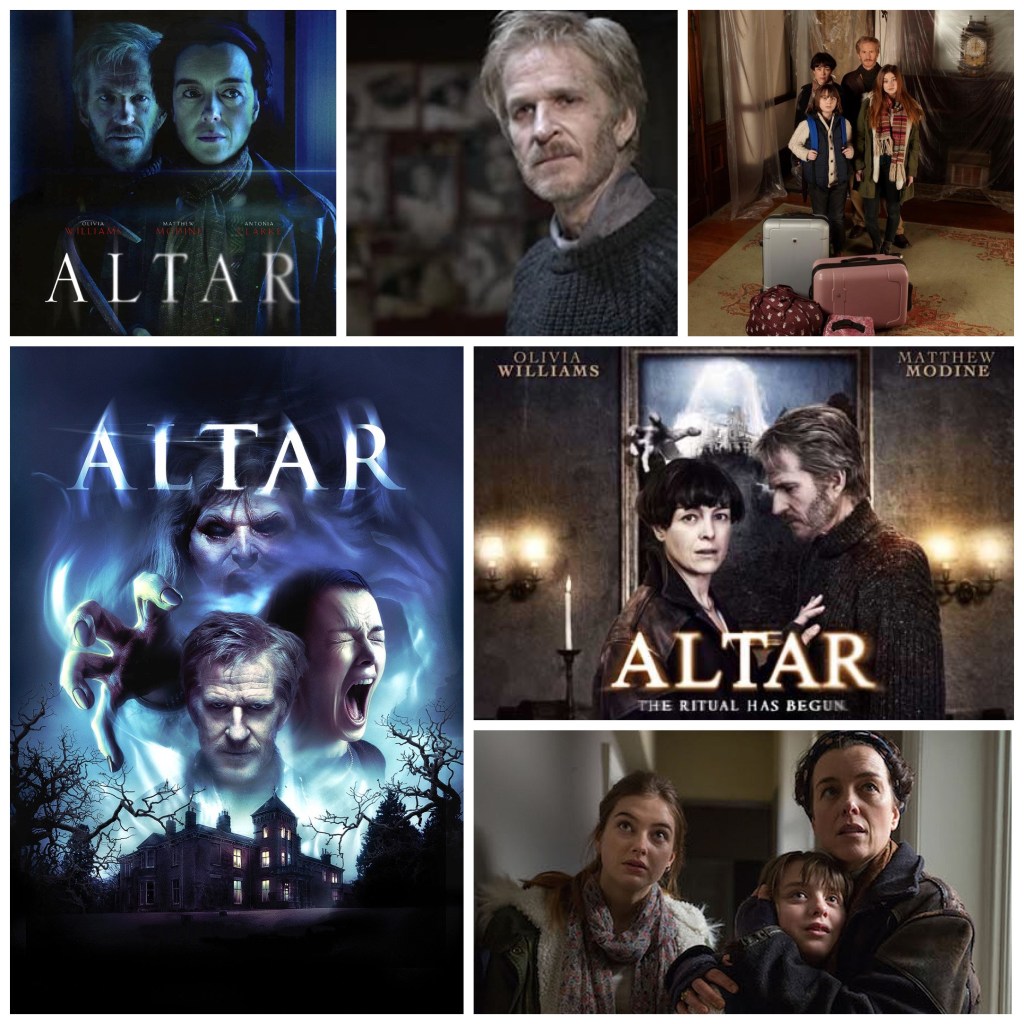
◦ There’s a few spooky touches in Altar and a handful of well orchestrated scenes that are fun but for the most part this is a murky, depressing slog through the well travelled “American family moves into a creaky old British manor that is clearly haunted’ sub-genre that I’m sure by now any seasoned horror fan can tick off the narrative beats of in their sleep. Matthew Modine and Olivia Williams are an artist couple who take up residence in a country house with a sordid past that comes back to claim their souls and their sanity, starting with Modine’s husband who gradually begins to act very very strange. Now, there’s two scenes that are genuinely great: their daughter (Antonia Clarke), who seems to be the only one in the family with any sense in her head, is spectacularly haunted by a female ghost that crawls into her bed one night, sits beside her and looks her *right* in the eyes. Most horror films would use gruesome prosthetics, moonlit contact lenses and fake blood for this but the film chooses to view this spirit through a sort of ‘fragmented mirror kaleidoscope prism’ veil that is like shifting broken glass come to life and I thought it was just so cool. There’s another terrific scene where Modine and Williams mesmerically unearth a sort of ritualistic mural depicting sacrifice beneath their home that is just wonderfully edited and set to a piece of the score that stuck with me and is a sequence of true power and dynamism. That’s all the film musters that grabbed me though, and I was frustrated by the fact that Williams’s as the wife and mother consistently and flagrantly made shitty decisions to the point where I was yelling at her through the screen. At least Modine had an excuse because he was already under the influences of dark spirits. Only the daughter acted with rationality, logic and seemed to want to get out of there and, ironically, no one listens to her. This is a good time waster and it does shine in those two instances I described unfortunately it doesn’t do too much of anything else we haven’t seen before.

-Nate Hill

Boys From County Hell

I’m not sure what I expected from Boys From County Hell, probably more than what I got, which was a meagre, serviceable but ultimately forgettable ‘Irish gothic’ monster flick that seems so wrapped in its own Bram Stoker inspired mythology that it forgot to have some good old splatter filled fun. The story sees a dysfunctional road workers crew somewhere in Ireland who accidentally unearth an ancient Irish vampire who has been slumbering for thousands of years, prompting wanton bloodshed. The crew is run by a father and son duo who are constantly at each other’s throats, which adds a well rounded character dynamic and in that sense the film is kinda fun but it fails to present to us a monster that is anything close to memorable or remarkable and worse, the same thing doesn’t even seem to show up much at all throughout the whole runtime. The narrative tries to build this lore around the vampire mythos and do something unexpected with the via some obscure Stoker offshoot story but it ends up just being sort of muddled, forgettable and seriously lacking a vampire that shows up for more than a few minutes at a time.

-Nate Hill

Jordan Graham’s Sator

I love when a horror film hits all the right notes in the aesthetics department of what resonates with me, so listen up if you are into: elemental, esoteric folk horror, lyrical, almost Malick level dialogue and character interaction, eerily hazy home video footage, misty, rugged wilderness cinematography, atmosphere so think you could cut it with an antler knife, demonic pagan deities that live unseen in the natural world and can be summoned by unwitting, weak minded human beings and more. Jordan Graham’s Sator is a stunning, immersive, spectacularly terrifying and absolutely visually gorgeous folk horror that cuts right to the heart of what genuinely freaks me out in the genre: atmosphere, the unknown, being alone, dark forces outside our narrow scope of belief and knowledge and how these forces corrupt, reshape and pervert the human condition to disturbing new heights. The film sees one man (Michael Daniel) alone far out in the remote California wilderness, living in a ramshackle cabin and setting out each day into the territory looking for… something. He has introspective flashbacks to a mother (Wendy Taylor) who went missing years before, a sister (Aurora Lowe) who was on the verge of mental illness, a brother (Gabriel Nicholson) who tried to keep the family together and an ailing grandmother (June Peterson) who spent the last few dementia ridden years of her life chronicling her unsettling internal relationship with a being she calls ‘Sator’, who reportedly talks in her head, dictates books filled with disquieting scripture and seems to have some stranglehold over this family as a group. When he’s not lost in dreamy memory recollection he wanders the perimeter of his property checking on motion sensor cameras he has set up all over the place and trust me you do *not* want to know what he finds they saw. This is a slow burn, arthouse, borderline surreal film through and through, and anyone without the patience for atmosphere, gradually cultivated tension and lyrical storytelling will be lost. There are payoffs and they are huge but first the film asks you to settle, to surrender and be swept away by the sights, sounds and dreamy world it offers before it reveals any secrets. It’s like if A24 did something akin to Blair Witch but with really earthen, nature based lore and a very atmosphere based approach. And as if the film weren’t scary enough, the concept of Sator and all the handwritten lore we see is authentic, very real stuff that actress June Peterson (who is the director’s real grandmother by the way) experienced in real life after a Ouija experience left her in psychiatric care going on about this ‘Sator’ thing for the rest of her life. If that doesn’t stand your hairs directly on end I don’t know what will, because when a film this scary can legitimately claim to be based on a true story in the *truest* sense of the concept, it’s enough to send anyone running for the hills and back again once they find whatever’s really out there. An absolute stunner of a horror film in every sense and one of those rare finds like It Follows, Hereditary, or The Blair Witch Project that successfully do what so many films in the genre promise to yet seldom deliver: scares the absolute fuck out of you. Streaming on Shudder now.

THE ROBERT ALTMAN FILES: A WEDDING (1978)

Robert Altman understands that weddings are semi-goofy affairs on which, each year, a whole lot of money is dropped on lavish, nerve-wracking, and anxiety-inducing ceremonies and even more unthinkably gaudy receptions, all in the service of unions that have less than a 50% chance of succeeding. He’s also keen on the notion that all weddings are secret disasters waiting to happen as the joining of two families is generally a nightmare recipe. So it’s curious that A Wedding, Altman’s first contemporary and reality-bound work since Nashville, feels like more like a rough idea than it does an actual movie. To be sure, it’s a mostly wonderful and quotable film, but it’s also frustratingly overstuffed, laboriously too busy (even for an Altman joint), and, perhaps most consequentially, permeated with an ugly and rank contempt for almost all of its characters.

A Wedding is the story of the wedding and subsequent daylong reception of Muffin Brenner (Amy Stryker) and Dino Corelli (Desi Arnez, Jr.). Opening as a grand and reverent enterprise, the film slowly peels layer upon layer from almost every character in its purview to the point where, at the end, the entire party on both sides of the aisle has been exposed as unpleasant, sick, and/or corrupted in almost embarrassing measures.

On the groom’s side is an air of a nouveau riche aristocracy and is one that is likewise laced with ennui-induced drug addiction. On the bride’s side, there is more established wealth that masks a lower-class of people where bored complacency leads to wanton hedonism and where familial relations are far too close for comfort. Between them is an assortment of friends, siblings, in-laws, ex-boyfriends, ex-girlfriends, estate staff, and event contractors, all of whom share secrets, desires, loves, laughs, drinks, weed, politics, and indignities throughout the day and into the evening.

I suppose that in his defense, Altman thought it was all ok if he stuck it to everyone on the screen with equal force and measure and therefore couldn’t be branded as an elitist if he did so. But it’s almost as if the cynical summations of America that he presented in both Nashville and Buffalo Bill and the Indians had disgusted Altman to the point where the poison couldn’t help but flow into his creative juices which, sometimes, does minor damage to the film. I mean, it’s one thing to introduce a creepy, almost incestuous relationship between two of the family members in the pursuit of some dark humor but, from a sexual standpoint, the bride’s side of the family is presented as such a gaggle of grossly dysfunctional and regressive hayseeds that the film sometimes veers dangerously close to being mean-spirited. Like the world on display in Buffalo Bill and the Indians, the groom’s side of the family is a closed, perverted environment and one that is so decadently incorrect that “Chairman of the Board” William Williamson (Altman regular Bert Remsen filing his last performance for the director) is the only guest to show amid the “few more than a hundred” regrets.

Sometimes, the need to cover everything crowds out Altman’s better sense and further dulls the piece. While the former supplies at least three of the film’s hilarious moments, both Viveca Lidfords’s Ingrid Hellstrom and Maureen Steidler’s Libby Clinton could have been completely excised from the film without affecting its structure in the least. Likewise, less time could have been spent on extraneous characters and situations such as the sometimes farcical security detail (which includes co-screenwriters Patricia Resnick and John Considine) and the film crew (which includes another co-writer, Allan Nicholls). While well-intentioned, neither of these conceits feel very organic and they likewise suck up a lot of oxygen that could have been of better use by focusing on the specific relationships between the myriad characters or on Geraldine Chaplin’s delightfully uptight wedding planner, smartly utilized as the film’s master of ceremonies/center of the hurricane.

As is to be expected, the entire cast is incredible. While her broadly pitched performance sometimes tilts in the direction of the Eunice character she created for her variety show, Carol Burnett is wonderfully hilarious as Tulip Brenner, mother of the bride. Almost better is Nina Van Pallandt as Regina Corelli, mother of the groom. Nursing a secret yet crippling addiction to heroin, Pallandt is by turns nervous and jittery before her performance relaxes into an enunciation minefield where all of her hard r’s are sanded down and she glides along on a soft, narcotic cloud. Vittorio Gassman, playing beleaguered father of the groom Luigi Corelli, turns in a softly hilarious and ultimately touching performance as he slowly reveals himself to be perhaps the most decent person in the whole bunch. But, if anything, the film’s greatest casting coup was to pair Paul Dooley and Dennis Christopher as father and son. Portraying, respectively, father and brother of the bride, Snooks and Hughie Brenner, both find the exact temperature in every scene they’re in and create a truly believable dynamic which no doubt led Peter Yates to cast them as father and son in the following year’s Breaking Away in which both gave career-best performances.

And on a technical level, A Wedding is a marvel. As much as any multi-tracked ensemble film from Altman, it demands to be seen twice as half of the film’s best jokes are found in the grout and away from the camera, in snippets of random dialogue that rise above the maelstrom of its staggering cast of characters (there are about twice as many people in this than in Nashville). Additionally, most of the scenes contain an energetic and bustling choreography of actors moving in and out of the staid and static frame that sit nicely alongside Altman’s more familiar, “roaming-eye” camera flourishes.

By now, it probably sounds as if A Wedding is something of an unlikeable failure which is most definitely not the case. While it’s far from a masterpiece, it contains a great many worthwhile insights that live underneath its thorny and acrid surface and, despite the film’s tone, the natural beauty of Altman’s style can’t help but elevate the picture to something more than just a moving portrait of unappealing wax dummies. Even though the air is mostly foul, there’s a vivaciousness in this movie and perhaps the point of the film is that it’s as as equally hilarious and nauseating as real life.

In retrospect, though, Altman’s greatest idea involves the death of Nettie Sloan (Lillian Gish). It’s probably no accident that Gish, the doe-eyed “First Lady of American Cinema,” is cast as the matriarch of a family which is helplessly dishonorable. Dying in the film’s early moments (setting up one of the film’s best gags that predates Ted Kotcheff’s Weekend at Bernie’s by a full decade), she seems utterly relieved to no longer have to lord over a family where the relationship between her daughter Clarice (Virginia Vestoff) and Randolph (Cedric Scott), the African-American house butler, is explicitly dictated to remain in the closet (as is the family’s biggest secret which reveals itself in the film’s closing moments). An antiquated sense of race and class dissolving as the natural winds of change blow about her, Altman symbolically uses Gish’s demise to trumpet the new cinema which had, by 1978, choked out the old system.

“When it’s over, it gets real sad,” says Rosie Bean (Lesley Rogers) to Geraldine Chaplin’s Rita Billingsley about the exhausting comedown that occurs after the ceremonial brouhaha surrounding a wedding. On one hand, it’s an indictment of the kind of dichotomy that naturally exists between a wedding and a marriage. On another hand, it’s something of an existential conundrum put to people like Billingsley who make a living feeding the beast and widening that delta. But another possibility is that it could also be Altman speaking to himself; reckoning that his Hollywood stroke had become less and less significant and perhaps feeling his best days were shrinking into the horizon behind him. But like the detestable and doomed Wilson Briggs (Gavan O’Herlihy) and Tracy Farrell (Pam Dawber), the bride and groom’s respective exes who each show up to the wedding reception as bad-faith discomfort agents, Altman was too busy being a condescending wisenheimer to see the jackknifed tanker sitting in the middle of the highway toward which he was barreling at top speed.

(C) Copyright 2021, Patrick Crain
Joss Whedon’s The Nevers

Oh, how the mighty have fallen. A bit of a cliché to open the proceedings, sure, but we’re discussing the career of a filmmaker who’s turned the fine art of quipping into the geek equivalent of endless dad jokes, so let’s just stick with it when discussing Joss Whedon. The longtime cult darling and supposed feminist responsible for Buffy The Vampire Slayer (both the failed film and more successful television show), Firefly and some movies about a superhero team or two you may have heard of saw an upward trajectory in his comic book nerd via Shakespeare fanatic career like few others from the late 90s to about 2017. That’s when the wheels started coming off, as his jump from Marvel to DC ended almost as soon as it began with a trash rewrite/reshoot of Zack Snyder’s Justice League, a bitter ex wife laying bare his infidelities for the world to see, and a seemingly endless parade of cast members on his projects going public with tales of his on-set cruelties and arrogance. The little guy made good/uplifter of women façade is a thing of the past—the world now knows he’s just another Hollywood skirt chasing prick. However, before the internet rained holy fire on his career, Whedon managed to sneak one more deal out of the Time-Warner conglomerate and get an HBO series, truncated into a six episode run by global catastrophe and reputational ruin.

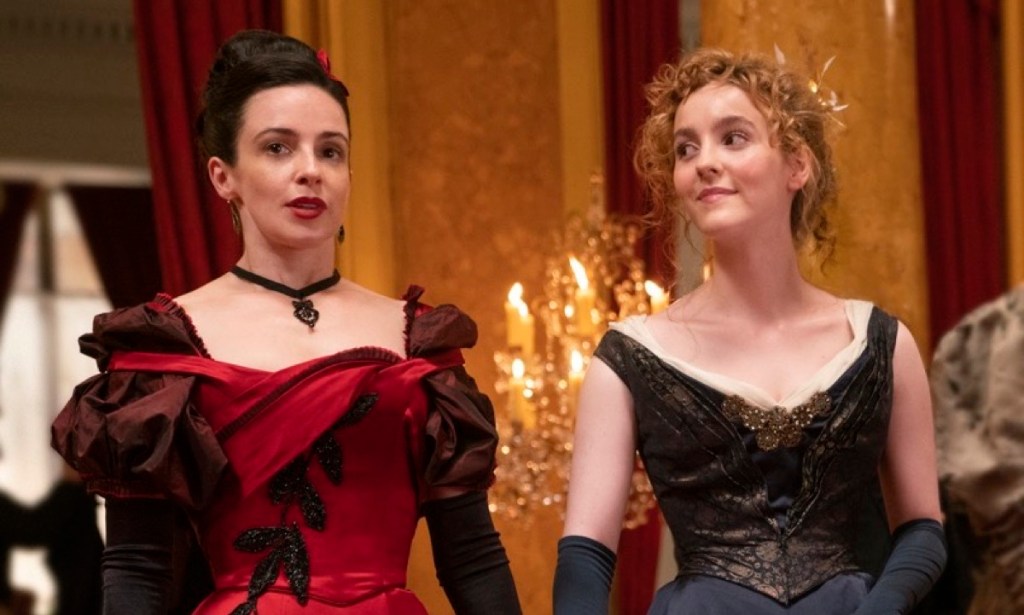
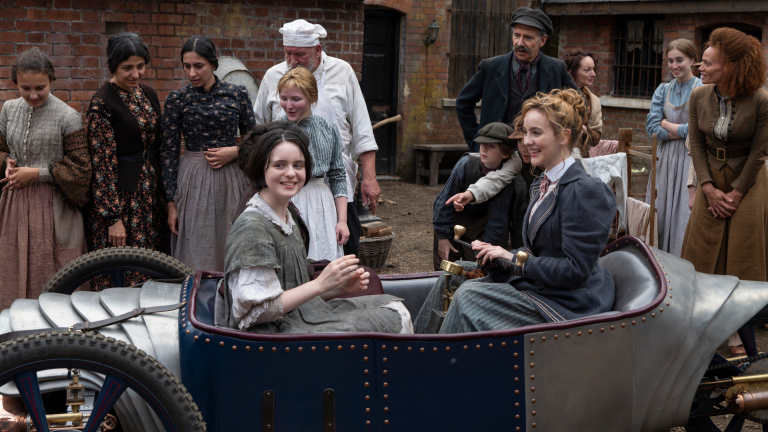
The Nevers appears on the surface to be something new for the writer/director—a Victorian period piece! But almost immediately the familiarities start to pile up like garbage thrown out a London window onto the street. Superhero women (a slight twist being that powers have been granted to both women and the other lower classes, not that it’s focused on much) fighting a sniveling patriarchy isn’t exactly a bold new direction. The Victorian setting brings back the steampunk aesthetic of Firefly, and really, there’s nods if not outright theft of former characters, ideas, stories and even one liners from his previous work. There’s a giant girl just like from the Buffy comics! There’s a little flying toy from the Agents of S.H.I.E.L.D. premiere! There’s Badger from Firefly, but played by Nick Frost! It’s tough to blame an artist for sticking to their wheelhouse, but the list of familiar things grows so long by episode six that  you can’t help but catalog and roll eyes each time another one pops up. The intrepid team of misfits, approximately Joss’ 6th or so of those, is led by Amalia True, a tough gal with a mysterious backstory who seems oddly over and underwritten at the same time. She can glimpse the future and punch men in the nards, perhaps even dropping a one liner while doing both. Penance Adair, a tech whiz, is her sidekick, and as a rather loud bonus you can combine their last names to make a stale pun.  There are the usual shifts in who might be a good guy and who might be a bad guy, a chase and a fight or two per hour, plot twists and banter. Adding the ability to drop F bombs and naked breasts to Whedon’s arsenal at this late stage doesn’t seem like good arrows to add to his quiver, but it’s HBO so you get bits of those too. While no doubt many talented people are in front of and behind the camera working away, the whole affair reminds one of the opening musical number of Once More, With Feeling: Joss is going through the motions.

In one of the least subtle firings ever seen in the film world, Time Warner brusquely parted ways with the showrunner after Ray Fisher’s detailed accounting of Whedon’s antics towards him and others on the set of Justice League came out. Claiming exhaustion, Joss’ PR department promised a bold new direction soon to come, yet here we are months later and no word on upcoming projects. Nor do we have anything approaching an apology or explanation for the legion of past cast that has echoed Fisher’s charges, more than a bit of a cowardly move from a guy who’s made his mint writing heroic characters for the better part of 30 years now. For a time, and for its time, Buffy and related projects were groundbreaking representation for women, lgbtq relationships, family trauma and more. Seen through the blistering 20/20 lens of hindsight, however, most of it feels like a swirl of fridging and gaslighting, both for his characters and on his audience. Maybe Joss sees the light, does what he can to make things right and returns to what was once quite the brilliant career. If in fact The Nevers ends up being his professional swan song, though, I’ll once again return to cliché and note that he exited stage left with not an Avenger-sized bang, but an overly familiar whimper.

B Movie Glory: Deep In The Darkness

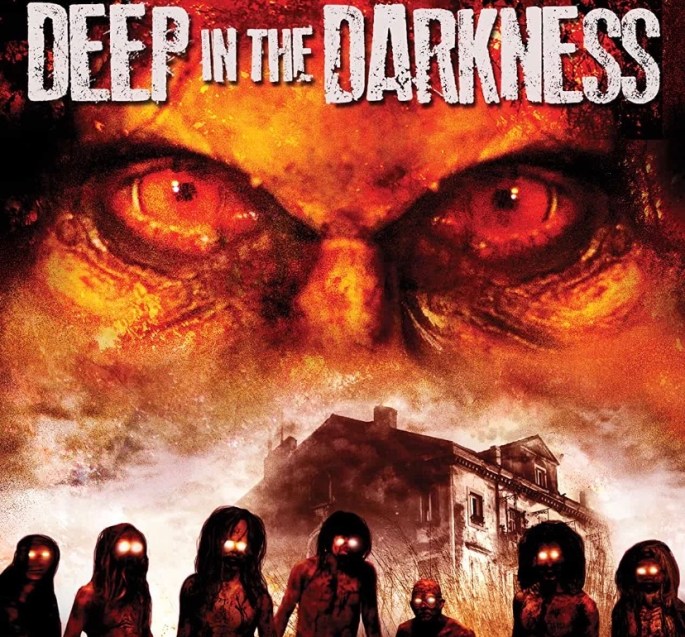
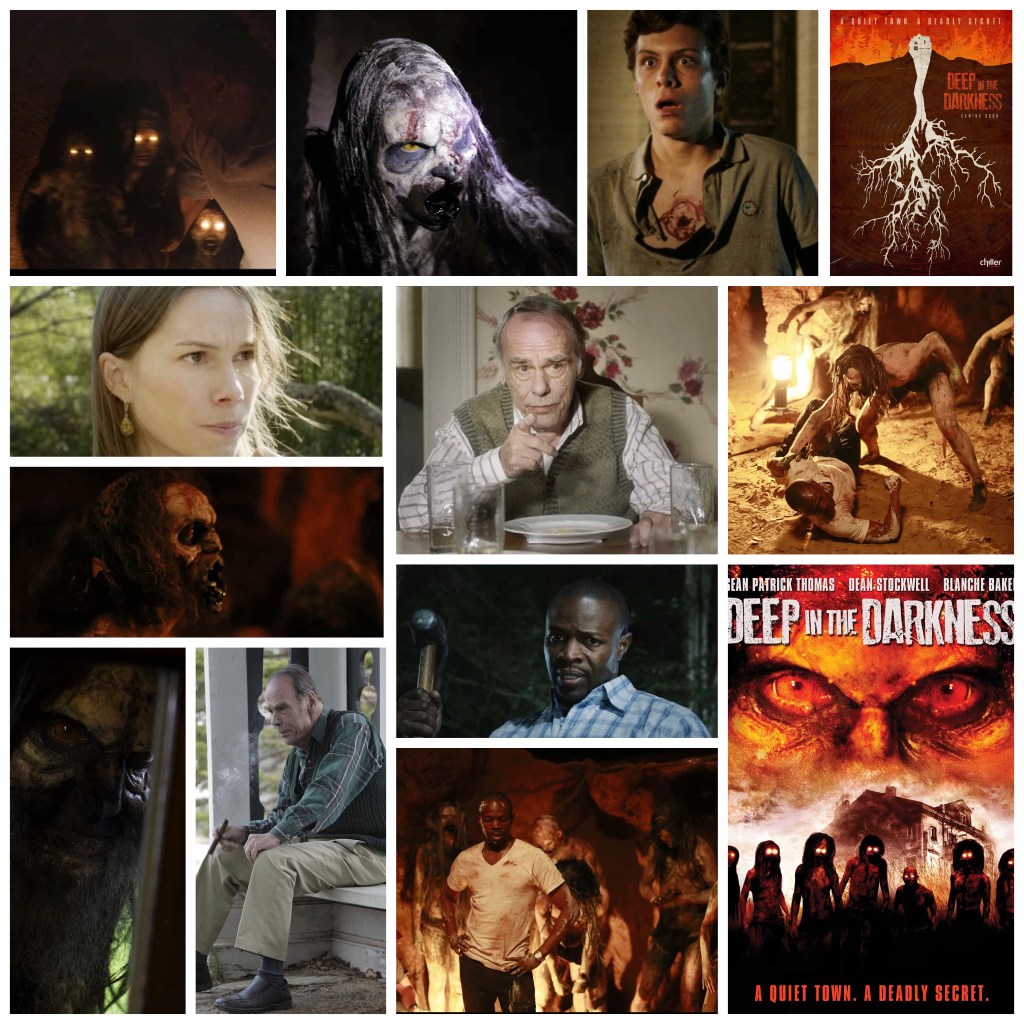
I love being pleasantly surprised by a DTV horror flick because there’s honestly so much garbage out there it can be like navigating a minefield, but Deep In The Darkness is a fun, vicious, well made little folklore shocker that kept me entertained throughout and was legitimately scary here and there. Sean Patrick Thomas plays a big city doctor who moves with his wife and kid to set up his practice in a town so small they “don’t even have cable,” as the stressed out, cigar chomping mayor played by the wonderful Dean Stockwell informs him. He’s met mostly with acceptance and hospitality as a newcomer but it soon becomes clear this town has a very, very disturbing secret underneath it. In subterranean caverns dwell an ancient race of spectacularly ugly, murderous humanoid beings called ‘Isolates’, who pretty much call the shots throughout the county. As the only doctor in the region he now finds himself and his family drawn into a dangerous hereditary power struggle between the isolates, those who have cross-bred (fucken EW) with them over centuries and the humans caught in the middle. These things are a fascinating bunch, all played by real actors with no CGI, absolutely drenched in nauseating, terrifically creative prosthetic makeup and they come across as a less ruthless, more esoteric version of the Troglodytes we saw in Bone Tomahawk. The film is lower budget and naturally has that feel but all of the actors are very good in their roles, particularly Stockwell who gives his tired patriarch genuine guilt and a hint of long dimmed warmth. When the Isolates do show up they are an incredibly fearsome presence full of snarls, blood and fluid, lithe physicality that makes them a memorable antagonistic pack indeed. The story has some twists I didn’t see coming and one kick in the nuts of an ending, a narrative that’s not just full of cheap scares, chases and gore but one that actually feels like a proper story, of the folk horror variety infused with a creature feature aesthetic. Recommended for fans of easygoing, accessible monster horror fare, this can be found streaming on Canadian Amazon Prime!

-Nate Hill