OLIVER STONE’S SNOWDEN — A REVIEW BY NICK CLEMENT

1

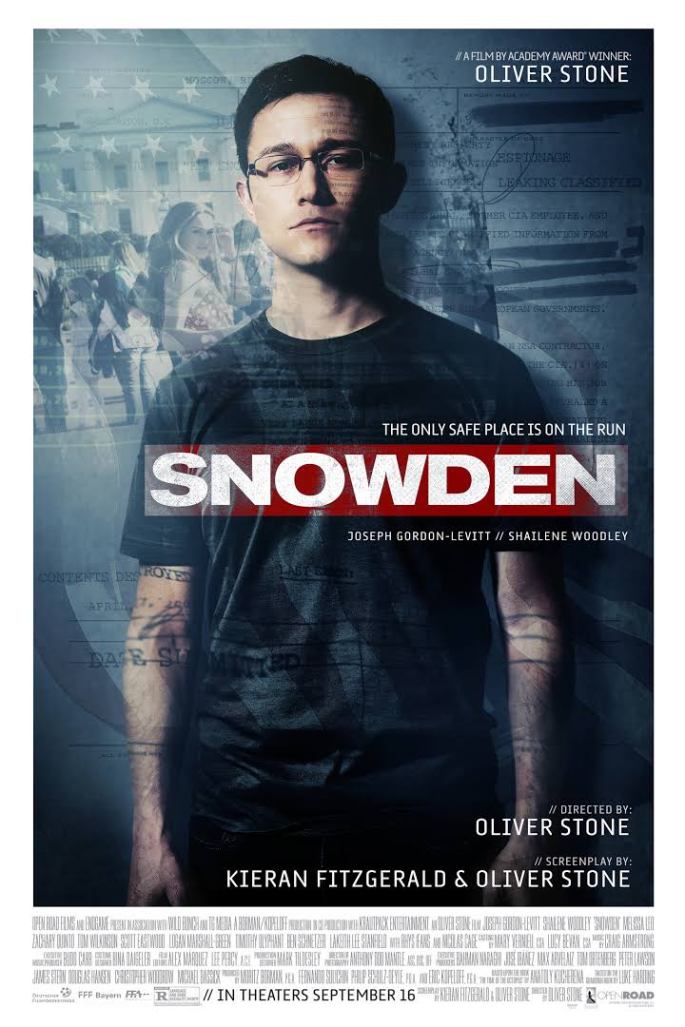
Regardless of what your stance is on mass data collection supervised by Uncle Sam, Oliver Stone’s engrossing political thriller Snowden raises some extremely provocative and timely questions about our right to privacy, the ever evolving war on terror, and how trustworthy our government has been and can be in the future in regards to these types of surveillance programs. Joseph Gordon-Levitt is very strong as Edward Snowden and there isn’t a performance in the entire cast that’s not well rounded and effective; Rhys Ifans has a casually chilly demeanor which he exhibits to maximum effect as Snowden’s boss, Nicolas Cage is perfectly cast as the old spy who has been sent to the basement, and Shailene Woodley is both natural and extremely easy on the eyes as Snowden’s long suffering and always-in-the-dark girlfriend. The film uses the Citizenfour interview by doc filmmaker Laura Poitras (motherly Melissa Leo) and Guardian newspaper writer Glenn Greenwald (easily angered Zachary Quinto) as its entry point, folding back in time to Snowden’s discharge from military service, his journey through various governmental branches, and eventual hiring as a data analyst. Working for various subcontractors, he got a bird’s eye view of what our post-9/11 espionage world is like, and even had the chance to build some of those systems. It’s totally wild to see how far the government has progressed with the digital monitoring of its citizens and everyone else across the rest of the world. Starting out as an uptight conservative and ending up a liberal defector, Snowden saw things he wished he hadn’t, and for various reasons, felt that he had to tell the world what was going on, thus resulting in his permanent exile in Russia. The busy narrative uses Snowden’s complicated relationship with his girlfriend as an emotional through line, presenting a compelling portrait of a man caught between what he thinks he needs to do and how others are expecting him to act.

2

The thing that I noticed the most while watching Snowden was how eerily prescient the 1998 film, Enemy of the State, from producer Jerry Bruckheimer and director Tony Scott, has become. Researched and written in the mid to late 90’s and three years before the Twin Towers would fall, that film imagined a scenario where the U.S. government is ready to employ a far-reaching and questionable policy called the Telecommunications Security and Privacy Act, which is essentially what the Patriot Act would become a few years down the road. The technology shown in Enemy of the State is EXACTLY THE SAME SORT OF STUFF being used in real life today, as depicted in films like Snowden, which actually break down the official programs being used by big brother. Even some of the stuff glimpsed at during Scott’s sci-fi genre-bender Deja Vu feel like they have been sampled from reality. By the end of watching Snowden, and due in no small part to the dynamic if measured camerawork by digital ace Anthony Dod Mantle (Slumdog Millionaire, 127 Hours, Rush), you’ll have a great sense of what is capable due to the work being done in various underground compounds and secret spy bases all over the world. One of the best sequences in the film is a visual approximation of what it’s like to put a trace on a phone call to one person, and how that one person can spiral into millions of people by the end of the digital process. With whiz-bang ease, so much information can be culled at a moment’s notice, that it’s hard not to be equal parts impressed and alarmed by what’s able to be achieved.

1

Stone’s film, which he co-wrote with Kieran Fitzgerald, is engaging at all times, frequently incensed by the story being told, and yet, it never went for the jugular in the way that the best, most long-lasting films from this proudly defiant and trouble-making auteur have done in the past. Which is fine. Stone has become a different filmmaker over the last 10 years, which apparently, many people cannot accept. Stone hasn’t “lost it,” but rather, after his sensational and aesthetically groundbreaking run of films during the 1980’s and especially the 1990’s, he’s become more sedate, especially after the grand ambitions of his tour de force historical epic Alexander back in 2004, which for my money, is still one of the best achievements in the sword and sandal genre that’s ever been mounted. World Trade Center, which I feel is his John Ford movie, is wildly underrated, celebrating a country that he so often took to task on a variety of issues; in this film he paid tribute to the notion of sudden heroism, resulting in an emotionally resonant motion picture that scaredy-cat viewers dismissed as “too soon” when it was first released. And while I thought W. could have been better and different and more scalpel-sharp, over repeated viewings, I’ve come to find it a delicious black comedy of political buffoonery. Wall Street 2 was a bit of a let-down but still entertaining, but I absolutely loved his sexy and stony marijuana actioner Savages; he made his Tony Scott adventure with that one, even hiring Scott’s longtime cinematographer Daniel Mindel to call the shots, resulting in one of the slickest looking films of his career. And with Snowden, Stone is clearly conveying a ton of anger towards both the Bush and Obama administrations, while reminding audiences that he’s incapable of making an uninteresting movie. I’d actually wager a guess and say that this is one of the most anti-government movies that has been released in years, going beyond the term liberal and entering into its own new realm. It’s no surprise that indie distributor Open Road were the ones to take this on and that there are about 20 people listed as producers from various overseas entities in various capacities; no major studio would have the balls to put their logo on this one.

3

Indie Gems with Nate: Wildlike

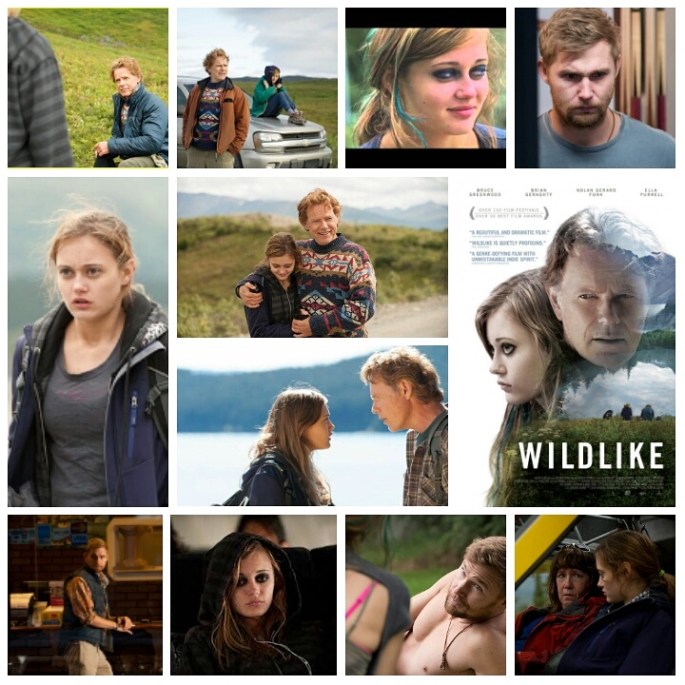
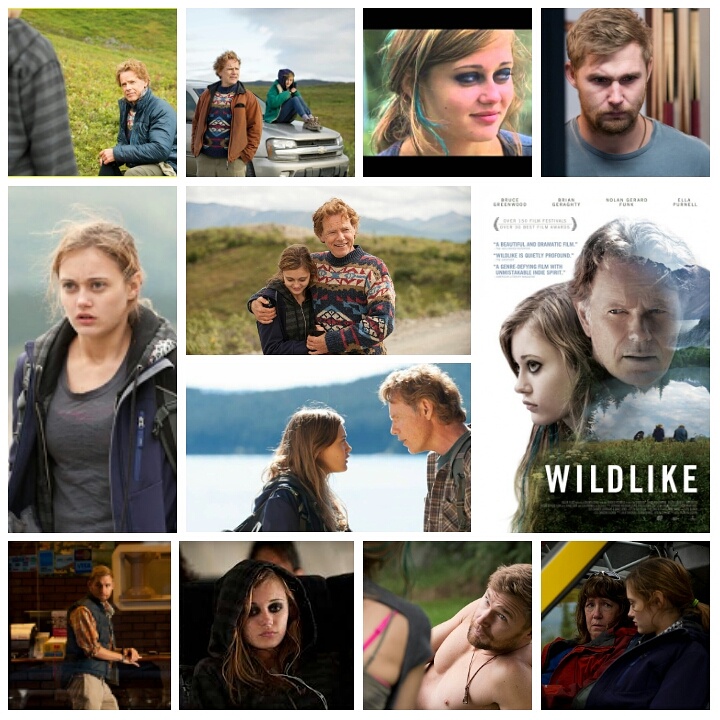
It’s random netflix time again, where I decided to take a look at Wildlike, a film I’ve never heard of before, and one that I will not be getting out of my head anytime soon. I have a certain affinity for films set in the wilds of the pacific northwest, films that use nature and scenery to accent themes relating to humans (eg. The Grey, Into The Wild). I also saw Bruce Greenwood on the poster, and that guy just seems to have a head on his shoulders when it comes to choosing scripts, so off on this journey I went. Newcomer Ella Purnell is astounding as 14 year old Mackenzie, sent off to live with her uncle (Brian Geraghty) after her mother has a breakdown following a family tragedy. The poor girl goes from the frying pan into the fire though, when it’s revealed that her is sexually abusing her, and may have in the past. The abuse shown in this film is not loud or violent, nor is it melodramatic or designed for shock value. It’s quiet, frank and subtle, the damage of it measured in a glance, a tear streaming down a cheek or a barely percievable shift of weight from Mackenzie when he looks at her. Geraghty is a handsome dude, nowhere near the bespectacled, paunchy clichéof abuser so often seen. He plays it straight, a pleasant and agreeable fellow who can’t even comprehend the kind of damage he’s doing. The scenes of abuse themselves are quick and fleeting, made all the more uncomfortable by how intimate they seem. This is the closest to what I’d imagine realism with this sort of thing looks like, and i had trouble not turning away. When she can’t bear it any longer, Kenzie makes a run for it into the nearby town, hiding out and eventually befriending lone hiker Greenwood, who is healing from wounds of his own. Kenzie is confused and broken from what has happened, and the filmmakers know that when this befalls someone whose brain and soul are not developed enough to understand it, they act in strange ways. Purnell is heartbreaking and should have been in contending for some sort of award. Going from almost no film work to lighting up the film with this brave, staggering turn was something I was honored to see unfold on my humble iPad screen. Much of the story unfolds in the breathtaking Alaskan wilderness, the camera capturing misty mountains, verdant landscapes and little coves that ferries weave in and out of. You just have to contrast this type of subject matter with beauty of some kind, and Kenzie’s journey takes her from darkness into the possibility of light, surrounded by the natural world and the companionship of her new friend and protector. Most of the time it’s just the two of them out in the desolation, aside from when they meet a kindly group of campers, including Ann Dowd, an incredible actress who seems to be riding some sort of comeback these days. Films about this sort of thing range all across the board, from hamfisted pulp revenge, to tender and inquisitive documentation. This one respectfully shows you the kind of irresponsible, selfish and sick behaviour humans are capable of, particularly towards the ones they are supposed to love and protect. It also looks at kindness and compassion that can come from a complete stranger and shelter those who have been broken. There’s both light and dark in this world of ours, and Kenzie meets them both face to face. Purnell owns the film, and I think we will see great things from her. Couldn’t recommend this film, and her performance, enough. 

PTS Presents ACTOR’S SPOTLIGHT with STEPHEN LACK

lack-powercast

1002747_10151651644449691_942999894_nWe are very excited to announce and introduce artist and actor STEPHEN LACK to join our actor’s spotlight series.  All of our listeners will instantly recognize Stephen as Cameron Vale in David Cronenberg’s 1981 classic SCANNERS.  He then re-teamed with Cronenberg in the role as Andres Wollek in DEAD RINGERS.  He was also featured in Larry Cohen’s PERFECT STRANGERS, Michael Grant’s HEAD ON, and Allan Moyle’s RUBBER GUN which Stephen also co-wrote.  Please check out Stephen’s website STEPHENLACKART.COM to get a glimpse at his fantastic no-expressionist art work.  For our listeners in New York, Stephen’s work is on display at the Castor Gallery on the lower east side throughout September.  We hope you enjoy this as much as we did!

SPIKE JONZE’S WHERE THE WILD THINGS ARE — A REVIEW BY NICK CLEMENT

1

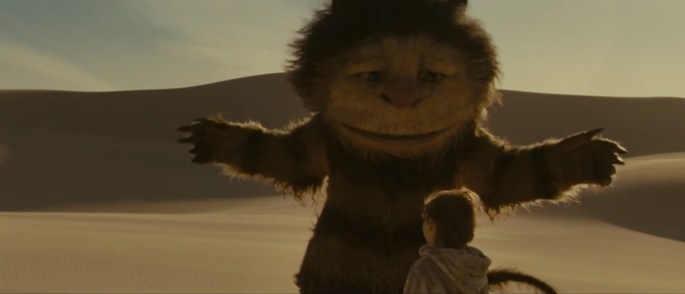
With Where the Wild Things Are, idiosyncratic genius Spike Jonze tapped his inner Kubrick and his inner Malick, and made a $100 million art film, a project not necessarily for children, but centering on a child, told in a mature, intelligent, creative, and singular way. I was expecting something grand when I first encountered this film on the big screen roughly six years ago, and I definitely got that. It’s just that I wasn’t sure what the end result was going to be, what with all of the fighting between Jonze and Warner Brothers during production, and the troubled shoot and endless post-production process. The film is definitely “the book,” so anyone who was afraid that Jonze and crew wouldn’t remain faithful to Maurice Sendak’s original source material can stay calm. But for me, it’s much more than the book; it’s a painful movie about the effects of divorce and how it shapes children, and in the case of the film’s hero, Max, how it informs an awkward boy as he starts to understand his uncertain familial future. This is as bold of a “kids” movie as I’ve ever seen, but again, I hesitate to really call it a “kids” movie. For a film that went through years of production and creative turmoil, you’d never know it. Where the Wild Things Are is, above all, a visual marvel; the creatures themselves are some of the most beguiling cinematic creations that have ever been imagined. The idea to go man-in-suit with the Wild Things was a great idea. This low-tech, old-school approach has been perfectly mixed with state of the art visual effects for the eyes and mouths, and the results are nothing less than stunning.

2

Lance Acord’s gorgeous, hand-held, and totally engrossing cinematography was some of that year’s best shooting, and the driving, upbeat yet melancholy score brought everything together. And one must credit director David Fincher, for showing Jonze the technology he was using at the time on Benjamin Button, as that gave Jonze the confidence to use a blending of CGI and men-in-suit performances. And I haven’t even touched upon the performance of Max Records as Max; in short, it was an auspicious debut. The entire movie hangs on his performance, and he really was captivating. But it was the interactions between the Wild Things that will keep me coming back to this film in years to come. Where the Wild Things Are was one of the best films from 2009, but it’s not going to be loved by all; it’s too specific and too artistic to garner universal love. I think little kids, by and large, will be scared by it, and will probably be turned off by the lack of major action set-pieces and cheap and easy cutesy-humor bits. This isn’t a whiz-bang CGI creation with bright colors and easy to digest themes. It’s a potentially damaging film that is more likely to be appreciated by adults, and by people who loved the book as a child. And maybe most impressively, few other films have conjured up fever-dream images quite like the way Wild Things does. Despite receiving warm critical embrace, the film failed to achieve blockbuster status. But that doesn’t mean that the movie is uniquely special in ways that money can’t describe.

22

THE BLAIR WITCH PROJECT: A Retrospective by Joel Copling

Rating in Stars: **** (out of ****)
Cast: Heather Donahue, Joshua Leonard, Michael C. Williams
Directors: Daniel Myrick, Eduardo Sánchez
MPAA Rating: R (for language)
Running Time: 1:21
Release Date: 07/14/99 (limited)

It is the unknown we fear when we look upon death and darkness, nothing more.
— Albus Dumbledore in 
Harry Potter and the Half-Blood Prince

We fear the silent darkness because it seems such an unnatural thing; we fear the noises that penetrate it, not because of the potential source of those noises, but because the unnaturalness is now layered on top of itself. A bear in the dark woods is far less frightening than the suggestion of the bear in the dark woods. Alfred Hitchcock once posited that suspense was a bomb placed underneath a table, refusing to explode far past the point at which it would, for the purpose of drama, comfortably explode. The bomb itself is secondary: What frightens is the mere suggestion, and if you doubt this, think about the adage regarding yelling, “Fire,” in a crowded place.

The Blair Witch Project applies that thesis to yet another source, layering the unnaturalness threefold: We are also frightened (sometimes in a playful way, it is true) by ghost stories. Writers/directors Daniel Myrick and Eduardo Sánchez concoct quite the corker. Stories are told of an ancient town in Maryland known as Blair that was discovered abandoned and renamed Burkittsville and of a woman who lived there before being condemned for witchcraft. Since her own vanishing, disappearances and gruesome murders have followed. The early parts of the film detail the legend through faux interviews with the townsfolk of Burkittsville in precisely the anecdotal fashion shared by all ghost stories.

Myrick and Sánchez’ method introduces a fourth bit of layering to the unnaturalness by choosing to frame the story from the point-of-view of a documentary crew investigating the local legend. Heather (Heather Donohue) is the host and leader of a school project. Josh (Joshua Leonard) is the cameraman. Mike (Michael C. Williams) is the sound guy. They are the only primary characters we see as they interview the townsfolk, including a particular woman who saw the Blair Witch up close and somehow survived to tell about it, and then head into the Black Hills woods toward the campsite where, in the 19th century, five men were ritualistically murdered.

In the years since the film’s release, the number of so-called “found footage” films has increased, so that the method now effectively leads a sub-genre within horror. Here, in one of the first examples of the method, is a film that would not work without it. The intimacy of Neal Fredericks’s camera works to dig into the psychology of three young adults who entered into a situation far beyond their ability to control it, and by doing so, he makes the audience a participant in the terror. A member of the group goes missing, his screaming for help useless when the others cannot locate him. At some point, they find they’ve gone in a circle. The most frightening aspect of the film is its rising psychological terror, causing anxiety, panic attacks, and even something near a mental breakdown.

Eventually a more traditional kind of horror must be introduced, as two among the trio enter an ancient house with ties to this legend. What does transpire will not be revealed here for those who haven’t seen the film, but the filmmakers leave much — nearly everything — to the imagination. The audience does not need to know what happened, because, again, the suggestion is far more horrifying than being shown what happened. The performances, especially Donohue’s, are exceptional at conveying a sense of deteriorating sanity. They help to make The Blair Witch Project a positively, desperately, relentlessly horrifying experience, and that’s before the haunted-house tour.

Fried Green Tomatoes: A Review by Nate Hill 

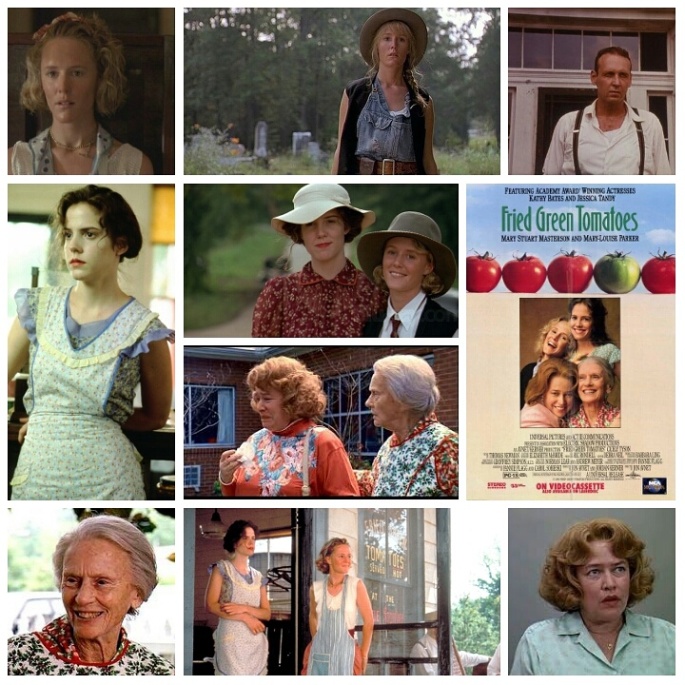
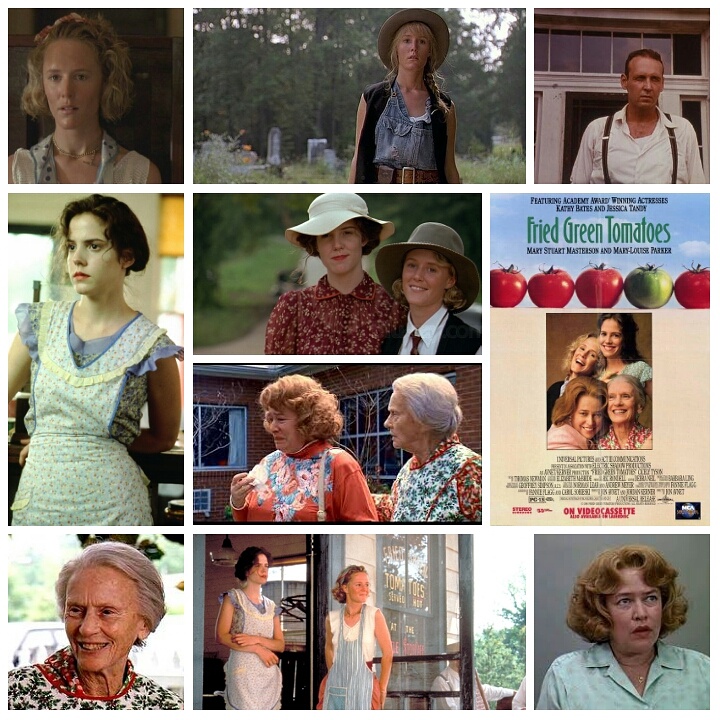
Fried Green Tomatoes is one of those films that presents two narratives, simultaneously woven together and unbound by the laws of past and present. A character from the present tells tales of the past, and the film jumps ever back and forth between the two, until a connection emerges. You’ve seen it in stuff like The Notebook, where it works beautifully, and both stories support each other. That’s the issue with this film: One of the narratives is lovely and works quite well. The other? Mmm…not so much. Kathy Bates plays a hospice worker in a retirement home who is charmed by stories of life, freedom, injustice and romance from long ago, all told with wit and passion by an excellent Jessica Tandy. She tells of life growing up during the early 1900’s in the American southwest, of free spirited tomboy Idgie (a fierce and emotional Mary Stuart Masterson), the girl she loves (Mary Louise Parker, radiant) and the whirlwind of trouble and conflict going on around them. Idgie lost her brother and best friend (a short lived and very young looking Chris O ‘Donnell) to a horrible accident, and sort of has a lost pup complex, holding on to Parker for dear life and trying her best to extricate her from an abusive relationship with her monster of a husband  (Nick Searcy is evil incarnate). It’s whimsical, touching and flavored with just the right touches of sadness and danger. Now, the story with Bates in the present just feels aloof and silly. The scenes with her and Tandy fare better than glimpses of her home life and attempts to empower and change her for the better. Don’t get me wrong, I love that idea, the notion of inspiration  transcending time and the ability to help others simply with the spoken word and the wisdom of the past, but it just didn’t work in this case. As for the scenes in the past, I fell hard for them. Masterson is a terrific actress who usually gets saddled with light, fluffy roles, but here gets a chance to let some raw emotion out. Parker is more reigned in but every bit as soulful, as the girl in a situation no one should have to endure, her soul practically screaming out through those beautiful brown eyes. I suppose you could say that it’s half of a great film, that couldn’t quite pull off it’s own narrative flow. 

BLAIR WITCH: A REVIEW BY TIM FUGLEI

blair-witch-1

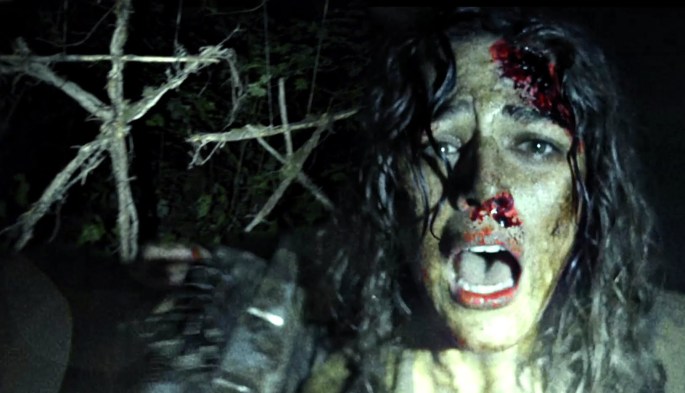
Few could have predicted the ‘broadcast yourself’ era, and fewer realize it was predicted by a no-budget indie smash film that cruised across pop culture like a steamroller before most people had personal phones, much less YouTube accounts.  Back in 1999 The Blair Witch Project was sold to audiences with a desperate selfie video of an aspiring documentary filmmaker who was about to die a horrible death, apologizing for her actions and begging forgiveness.  It was gripping stuff that launched a thousand copycats—a whole genre unto itself of microbudget ‘found footage’ frights—and never really had any true challengers to its first jolt to the zeitgeist.  Fast forward your camcorder to 2016, where indie cinema of the nineties has given way to studio tentpoles and remakes, wherein we of course get a return to Burkittsville (sorry, only one way tickets) helmed by the talented filmmaking duo of Adam Wingard and Simon Barrett.  Responsible for the successful indie thrillers You’re Next and The Guest, not to mention a sneaky brilliant anti-marketing campaign that harkened back to the clever promotion of the original, thus raising expectations  (the film was publicly titled The Woods until a San Diego Comic Con reveal earlier this year), the pair have lovingly crafted Blair Witch as a direct sequel to the 17 year old horror classic.  Unfortunately love and talent don’t trump genuine creativity, and the new film embodies most criticisms you’ll hear these days about slavish fan service and the attempts to create a franchise out of every successful movie ever made.

Not to say we get poor effort here.  Wingard and Barrett know thrills, pacing and how to entertain, and they definitely know their source material.  Gushing in fandom during a live Q&A session after the screening, they discussed everything from the deep mythology to their clever Easter Eggs sprinkled throughout (keep an eye open for a blink-and-you’ll-miss-it cameo from the original camera itself, supposedly one of the most expensive props on the production), so believe me when I say there truly is a lot of love up on the screen throughout Blair Witch.  We’re introduced to a larger group of players led by the kid brother of Heather, the first filmmaker to fall victim in the Maryland woods.  Despite huge search parties, no remains or house were ever found after the last collection of footage went viral, so James (James Allen McCune) harbors hope that his sister is still out there, and as luck would have it his new friend/love interest Lisa (Callie Hernandez) is an aspiring documentary director! Together they will assemble friends and bravely repeat every mistake the other doomed crew made, and then some.  Modern technology enables all filmmakers involved to capture multiple angles in a much richer fashion than the single camera of The Blair Witch Project, and thanks to years of self obsessed iPhone footage littering the internet the audience doesn’t even stop to throw out the loudest criticism of the genre—why would anyone still be filming this as the situation goes to hell?  In 2016, of course they would.

Sadly all of these ingredients don’t add up to the original magic.  A small group of non-actors allowed to improvise almost every scene in the first film is now replaced by a large ensemble of professionals clearly following a script.  Additions of digital quality sound jolts and lighting end up subtracting from the immersive experience that cast a spell on audiences back in the day.  And in trying to amp up the third act, Wingard and Barret commit an unforgivable sin that undermines every suggestive horrific joy we all loved the first time around—they show us the monster.  Amp up that third act they do, but instead of achieving thrills with new terrors, they simply continue to ape the exact three act structure of The Blair Witch Project, which is ultimately Blair Witch’s downfall.  Figuring out a creative way to get a different group of people fiddling with their smartphones into peril and not slavishly repeating most of the beats that were much fresher in The Blair Witch Project would have served the movie well, but safe choices are made through the film, leaving the viewer stewing in a musty brew of nostalgia and disappointment.

blair-witch-2


PAUL THOMAS ANDERSON’S THE MASTER — A REVIEW BY NICK CLEMENT

6

When I first viewed The Master, Paul Thomas Anderson’s scathing critique of Scientology and blind hero worship, I didn’t know what to make of it. His previous film, There Will Be Blood, was a towering work of American cinema; how would he follow up one of the most acclaimed of modern films? Released in 2012, the film confounded some critics initially, with many others leaping to sing its praises; for me, this is the first and only PTA effort that took a few viewings for me to totally fall in love with rather than be head over heels upon first sight. And I think, the big reason for the personal disconnect at first, was that I didn’t realize that, at heart, the film is a bitter black comedy, designed to make you laugh over events that are outrageously absurd.

1

But the more I revisit the film, the harder and harder I laugh and the more brilliant I realize it to be, with each performance informing the rest of the ensemble, and PTA’s deliriously bleak worldview on caustic display, spinning a story about psychologically fractured people and the way that one’s own self can become transformed by the power of thoughts and words and repeated actions. It’s also interesting to note that PTA based this film from some unique sources, including the “work” of Scientology founder L. Ron Hubbard, portions of early drafts from There Will Be Blood, drunken Navy stories that were told to him by Jason Robards during the filming of Magnolia (the draining of the torpedoes for their ethanol, for instance), and the life events of iconic author John Steinbeck. Boogie Nights and Punch Drunk Love still remain tied as my favorite works from PTA, but this is a filmmaker who only knows how to craft masterworks.

2

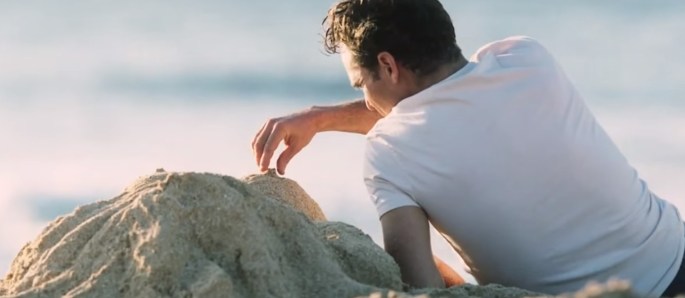
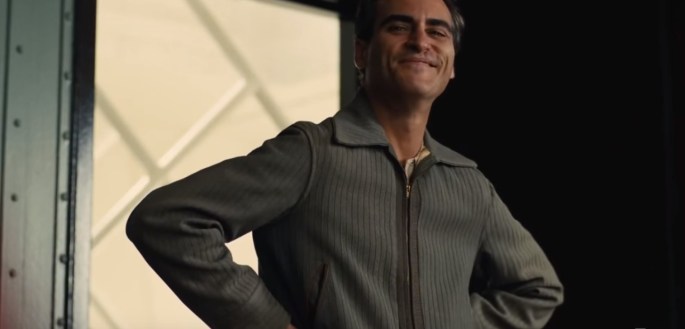
Starring Joaquin Phoenix in a slippery-serpent performance of total animalistic rage, The Master takes a piercing and highly critical view of a fictitious “religious movement” called “The Cause”, which is a not-so-thinly-veiled reference to “The Church of Scientology.” Phoenix is Freddie Quell, a PTSD-afflicted WWII veteran who is having severe difficulty adjusting to life post-combat. After some aimless and wasted drifting, he crosses paths with an enigmatic man named Lancaster Dodd (Philip Seymour Hoffman in one of his best, most hysterical performances, all pure hostility and empty bravado) who purports to be a religious leader, ready to unleash “The Cause” upon the American masses. He’s a fraud, of course, and over the course of the narrative, Freddie will learn all about how Lancaster is nothing more than a cheap salesman with a twisted agenda.

4

Amy Adams’ is Dodd’s strange and brainwashed wife, who likely knows that her husband is full of hot-air, but blindly goes along with his ruse and emotional deception. And as per usual with a PTA picture, the film has a stacked deck of amazing character actors and pitch-perfect faces, all of whom bring a distinct level of class to the entire production. As the story unfolds, you watch various levels of madness unfold all around each person caught up in the story, with Phoenix’s performance becoming something completely surreal by the end. And as you watch the relationship between Phoenix and Hoffman evolve, a sort of kinship can be seen between the two actors; they clearly loved working with each other as they both brought out something special from each other.

3

The Master boasts some immaculate production values, from the pristine and gorgeous cinematography by Mihai Mălaimare Jr., who shot the film in 65mm, producing an image that had a pristine quality on the big screen, and resulting in a Blu-ray transfer that is beyond spotless. Johnny Greenwood’s pensive and entrancing musical score is yet another distinguished collaboration with PTA, and the dreamy editing patterns by Leslie Jones and Peter McNulty only amplifies the surreal nature to the entire piece. The evocative and politely sinister production design by Jack Fisk and David Crank, especially in Dodd’s compound, only ups the level of anxiety (both physically and emotionally) felt by everyone in the film, especially Freddie. On an aesthetic level alone, the film is a marvel, and when combined with PTA’s heady and provocative themes, not to mention his subtle sense of comedy, the film becomes something rather dense and brilliant.

7

And none of this – NONE OF IT – would have happened without the financial backing of producer Megan Ellison, who for the last few years has utterly dominated the auteur-driven independent filmmaking space, with credits such as Inherent Vice, Zero Dark Thirty, Killing Them Softly, Spring Breakers, True Grit, Lawless, The Grandmaster, Her, American Hustle, Foxcatcher, Joy, Everybody Wants Some!, Wiener-Dog, Sausage Party, and upcoming films from PTA (a 50’s fashion world drama with Daniel Day Lewis), Kathryn Bigelow (an untitled but sure to be masterful Detroit riots drama), and Alexander Payne (the corporate satire Downsizing). Fucking-A. Without her, we’d be NOWHERE as film lovers. The Master made its premiere at the Venice Film Festival, where it won the FIPRESCI Award for Best Film. It was released on September 14, 2012, and was met with excellent if curious reviews, and despite not bringing in a big haul at the box office, it would end up receiving three Oscar nominations: Best Actor for Phoenix, Best Supporting Actor for Hoffman, and Best Supporting Actress for Adams.

11

Breaking into the rec room: An Interview with S.S. Wilson by Kent Hill


This slideshow requires JavaScript.


Steven Seth Wilson is the writer, director, producer best known for his work on the Tremors films and TV series. These credits though, are not all he has accomplished in his fascinating career. He also gave us Johnny 5, *batteries not included, episodes of the animated series MASK, and had the misadventure (one might say) of heading out into the Wild Wild West.

Time, however, has elevated the films he has penned (along with long-time friend and collaborator Brent Maddock) into that of cult status, and has seen him go from not only writing, but to talking them helm of his productions as a founding member of  Stampede Entertainment.

It was a treat for me recently to be granted the chance to interview this filmmaker whose works I heartily admire.

KH: Sir you are the writer connected to some of the cherished movies and one animated television program of my youth thank you for this opportunity?

SSW: I am happy to contribute.

KH: Did you always want to work in movies?

SSW: Believe it or not, my father “pushed” me into the film business.  He is a psychologist, so when I left for college, I signed up for psychology courses.  When he found this out, he went to my advisors and changed my major to film and television, saying to me, in effect, “You’ve been making movies in our back yard since you were twelve!  What are you thinking?”  I had not thought of trying to have a career in film making until that moment.

KH: What was your first job in the industry?

SSW: I began work as a stop-motion animator, doing animation scenes for educational short films that were sold to schools and libraries.  I was enraptured by the films of Ray Harryhausen (7th Voyage of Sinbad, etc) and had studied stop-motion techniques from an early age.

KH: MASK was one of my morning cartoon staples; how did you come to work on that show?

SSW: Like most jobs in Hollywood, it was “who you know.”  My first roommate when I came to California to go to University of Southern California film school was Terrence McDonnell.  We kept in touch and, many years later, he landed the job of story editor on M.A.S.K.  The story editor approves stories and oversees the writing of all the episodes.  The show was unusual in that the studio had ordered 65 episodes at once.  That was an absurdly large show order, so the editors had to develop lot of stories as fast as possible.  Terry joked, “I was hiring anybody I knew who could type!”  I ended up writing quite a few of the episodes.

KH: We now come to the adventures of Johnny 5, can you tell us of the genesis of Short Circuit?

SSW: It spawned from an educational short film.  One of them I wrote, called “Library Report,” starred a stop-motion robot that I also animated.  The film was so successful, my writing partner, Brent Maddock, and I decided to write a spec script featuring a robot.  We had written several other scripts with no success. We couldn’t even get an agent.  But this one turned out to be the one that got us the break.  A fellow Brent met in a screenwriting workshop knew the son of producer David Foster, and knew that Foster was looking for scripts with robots.  He showed it to the son, the son showed it to Foster, and the next thing we knew we were being called to a meeting on the old MGM studio lot (now Sony).

KH: A couple years after Short Circuit 2 arrived; was this commissioned purely on the success of the first or did you simply have more to say?

SSW: We always have more to say!  But in truth it was green-lit because Short Circuit 1 was quite successful (No. 1 at box office for a time).   By the way, this was long before the remakes and sequels craze in which Hollywood is now mired.  You may be surprised to know that our agent lobbied against our writing the sequel.  Back then such work was regarded as best handed off to hacks.  But we didn’t want anyone else coming up with stuff for Johnny Five.

KH: *batteries not included is a wonderful movie, it brought to mind my bedtime stories like the elves and the shoemaker. Can you tell us of the making of the film and the Spielberg connection?

SSW: Spielberg was making the TV show Amazing Stories at his studio, Amblin Entertainment, at the time.  *batteries  was based on a script written by Mick Garris for that show.  Spielberg liked it so much he felt it should be a feature instead of a TV episode.  Director Matthew Robbins and Brad Bird then wrote a movie-length version, but became so busy in pre-production they didn’t have time to keep re-working it to fit the budget.  Brent and I were already working at Amblin on other things, so Steven Spielberg asked us to do the revisions, working closely with Matthew and Brad.   It was a very intensive process, as the movie was already in pre-production, with sets being built, robots designed, etc.  Spielberg was personally involved every step of the way, often in the script meetings when we turned in each new version.

KH: Are you, or have been one of those writers that have been ever present on set?

SSW: Hah, it’s a rare writer who ever gets that opportunity.   In general, writers aren’t welcome on the set.  The director wants to do his/her own thing with the material and doesn’t want to be bothered with your petty ideas and complaints.  We were frustrated by this reality, and our agent counselled us that if we wanted more creative control, we’d have to become producers/writers. 

KH: You have written a couple of films with a similar keynote being Heart and Souls and Ghost Dad, spectral comedies?

SSW: That’s just by chance.  Spielberg originally came to us to re-write Ghost Dad (which was originally called Ghost Boy).  Then, for a variety of political reasons, the movie was not made at Amblin.  Since the script was owned by Universal, it got re-written and re-considered by other people over the years, eventually being made by Sidney Poitier and Bill Cosby.  We had forgotten all about it.  Indeed, we did not even realize it had been put into production until we read about it in Variety (that’s how much power writers have in Hollywood).  There was very little left of our original script. 

Heart and Souls was a movie based on a short film, called “Seven Souls.”  By the time it was made, we were known for the fantasy/sci-fi slant to our writing, so Universal approached us about turning the short film into a feature.  We worked with the film’s creators, adding ideas to flesh out the story — and successfully lobbying them to let us reduce the original’s seven ghosts to four!

KH: Before we come to the Tremors films, can we touch on another monster: the Wild Wild West? Big budget, Big losses, Jon Peters and the Razzies?

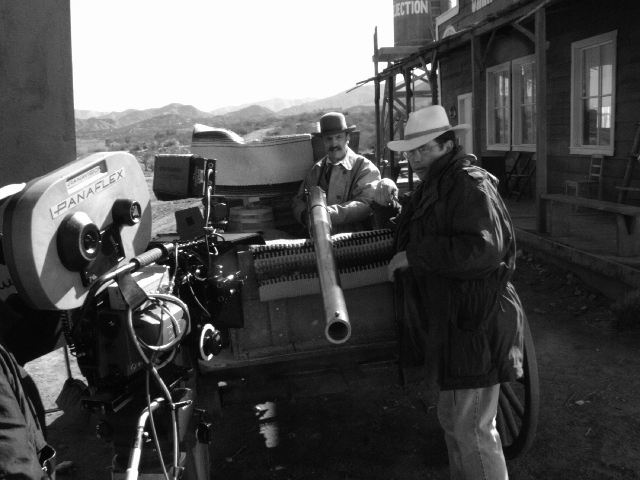
SSW: Oh my, long story.   Two producers acquired the rights to the much-loved TV show and contacted us about writing the feature.  They’d already had some scripts done, but didn’t like them, and wanted us to start from scratch.  We loved the show, re-watched episodes, contacted fan groups, etc.  Then came up with our story and turned in our script.  At first it didn’t go anywhere and, as one must with many Hollywood projects, we forgot about it.  Then, maybe a year or so later, we got a call that Barry Sonnenfeld was going do it.  So we were plunged back into the action, working on a revision under his supervision.  Somewhere along the line, since it was now a BIG movie, it was handed over to BIG producer Jon Peters.  The story we like to tell there is that, in our first meeting, he did not realize it was a Western, and wasn’t pleased to hear it.  Anyway, we worked very hard on it, occasionally being given some very strange demands.  As an example, at one point the Peters group insisted we change the spider machine to a modern stealth bomber.  We tried to compromise, shading it toward a Victorian era steam-punk flying machine.  In the end, Barry didn’t like the flying machine, and late in the process he asked to see earlier drafts with the spider machine, which we happily gave him.

Then, quite suddenly, we were off the movie.  We turned in our latest revision and never heard from anyone on the production again until we were sent tickets for seats in the back of the theatre at the premiere.  It was rewritten many times by many writers after we were fired and, like Ghost Dad, very little of our original script remains, other than the spider machine itself.  We were surprised that the Writers Guild ended up granting us shared screen credit.

So, yes, you get Razzies for something over which you had no control whatsoever.

KH: Let’s talk Graboids, tell us of the genesis of Tremors?

SSW: It grew out of the desire to have more control.  We took our agent’s advice and wrote the script on spec, so that we could dictate what happened when it was sold.  It was a tough sell, but with a great deal of behind-the-scenes deal-making, agent Nancy Roberts finally sold it to Universal, getting them to agree to let us produce and our long-time friend (from the short film days) Ron Underwood direct.   We were delighted to be in the trenches with Ron every day on location, battling the elements and coming up with creative ways (with much help from our brilliant crew) to stay on time and on budget.  Eventually, the dailies were looking good enough that the studio even gave us little increases here and there.  The famous car-sinking scene was originally cut, for example, but finally got approved and was the very last scene shot.

KH: One good turn deserves another. Was Aftershocks a given?

SSW: Not at all.  Tremors was not a box office hit.  It did not become a cult film until much later, thanks to the then-new world of movies going out for rent on VHS tape.  Years later, as Universal began to see how much it was making in that secondary market, they came to us and asked if we were interested in making a sequel, for less than half the original’s budget.  But we said yes.  And I got to direct it.

KH: Three, four and even more. You directed a couple of instalments and then came the series?

SSW: Yes, the movies were all quite successful in the DVD universe.  Universal had a whole division dedicated to making sequels to its theatrical features and they kept asking for more Tremors.  We had total creative control over all of them, so they were a delight to make even though we worked for the minimum rates.  And Universal was fine with us directing them, our now business partner in Stampede Entertainment, Nancy Roberts, “the mother of Tremors,” producing, etc.

The series came out of the blue, when Sci-Fi network (now the comical “SyFy”), asked us if we wanted to do it.  As always, we said, “Sure!”  Ironically, we had tried to sell the idea of a Tremors series a few years before, with no takers.  So it was fun to be able to use some of the ideas we’d already come up with.

KH: What happened regarding Bloodlines (Tremors 5)?

SSW: You will have to ask Universal.  We had written the script ford Tremors 5 immediately after making Tremors 4.  But Universal chose not to make it at that time.  Then, some ten years later, they let us know they’d decided to make it after all.  They asked us to rewrite/update it, but were adamant that we would have no other creative control of any kind.   We could not direct, produce, go to the set, etc.  We were given no explanation for this decision.  For us, the only reason to make these low budget movies was for the fun of continuing to innovate while staying true to the creature rules and character personalities that fans had told us for decades they loved.  So we felt we had no choice but to decline.  The studio quickly hired another writer and the movie was made without us involved in any way.

KH: Can you talk a little about your friendship/collaboration with Brent Maddock and the rise of Stampede?

SSW: Brent and I have written now together for some 35 years.  We just consistently seem more successful working together than independently.  Broadly speaking, he’s the “character” guy and I’m the “story” guy, though by the end of each script we work together line by line in polishing.

Stampede was the brainchild of our agent, then manager, then partner Nancy Roberts.  It grew out of our desire to make our own movies the way we wanted to.  For many years we maintained an office and staff.  For now we have downsized, with the ability to ramp up again if we sell something we can control and produce or direct.

KH: IMDB is not always reliable, but I noticed Short Circuit was at the top of your credits with (announced) following it?

SSW: The rights to a remake were granted by the owner (not us) to Dimension Films.  Since David Foster was involved, he invited us to work on the remake our own movie.  It was actually fun to try to solve the problems of updating it, both technologically and artistically — and there are problems.  After all, in the original it was easy for Johnny Five to remain hidden.  No one had cell phones or, for the most part, even home computers! 

But after a couple of drafts, Dimension rejected our version.  For one thing, they insisted that the remake should star a little kid along with the robot.  So we were fired and they moved to other writers and directors.  It has been years since then, so it is unclear if they are still on track to make the movie.

KH: Sir, thank you for this opportunity, as a fan of your work this has been a privilege?

SSW: You are most welcome.  Thanks for your interest.


That was S.S. Wilson dear readers. If you haven’t kicked back and enjoyed any of his movies recently then do it now Laserlips, ’cause your mama is a snowblower…

Coming Soon: Zero Defects: Remembering Innerspace with Vernon Wells by Kent Hill

JOHN D. HANCOCK’S LET’S SCARE JESSICA TO DEATH — A REVIEW BY NICK CLEMENT

lets_scare_jessica_to_death

I am very picky with my horror movies, especially when it comes to revisiting them throughout the years. But one film that’s always gotten under my skin is the Connecticut-set chiller Let’s Scare Jessica to Death, from eclectic filmmaker John D. Hancock (Bang the Drum Slowly, the underrated Nick Nolte prison drama Weeds), which was released in August of 1971 and made terrific use of the unique locale and rural setting. Centering on a woman named Jessica (Zohra Lampert) who has just been freshly released from a stint at a mental institution, the narrative charts her attempts at regaining control of her life, and returning to a fully functional state of mind. Jessica and her husband and friend decide to take residence in a farm-style country house, but upon arrival, they uncover someone (or something…?) potentially deadly, which results in Jessica becoming unhinged again. Will she spiral back into total madness, or can she be saved? Operating simultaneously as a freaky psychological thriller and eerie pseudo-vampire story, Let’s Scare Jessica to Death remains unnerving precisely because it’s multiple things all at once, while Lampert’s performance has the instant ability to gain your sympathy and suspicions in equal measure. I’m a big fan of movies that mix tones and do things differently, and that’s why I think I’ve responded to this particular film throughout the years.

Hancock and his co-writer Lee Kalcheim (working under respective pseudonyms of Ralph Rose and Norman Jonas) were able to craftily layer their story in multiple levels of ominous behavior, and instead of being totally upfront with every single plot move and story development, they allowed the viewer to make some guesses as to where things will end up, but in the end, if you’ve not seen this movie, the art of the surprise is likely inevitable. Lampert’s performance steals the entire show, as she was able to project fear and emotional hostility to an alarming degree. The eerie cinematography by Robert Baldwin (McBain, Frankenhooker) suggests casual menace at almost every turn, relying on terrific camera angles and smart blocking, and when combined with the sharp editing by Murray Solomon and the ominous, early-synth score by Orville Stoeber (Weeds, Hancock’s 2015 indie The Looking Glass), the film feels even more impressive considering its extremely low budget and probable fast production schedule. But when a film in this genre works as well as this one does, it becomes a genre mainstay, as Let’s Scare Jessica to Death has become. The film conveys an incredible sense of time and place, with the carefully chosen locations continually subverting expectations, and when the narrative gets down and dirty, it suggests bits and pieces from future works like Carrie and many other films that have come to define the genre.