FANDANGO – A REVIEW BY J.D. LAFRANCE

fandango1

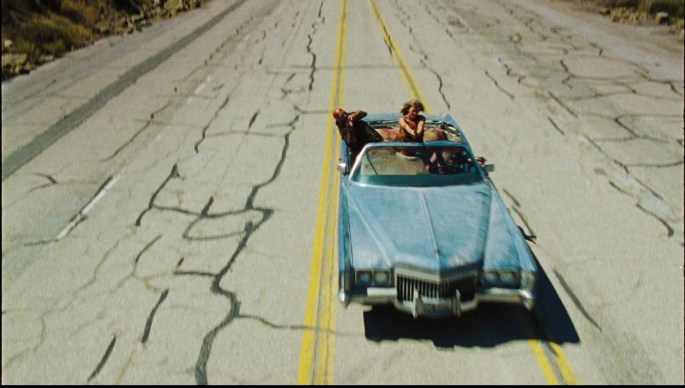
Fandango (1985) is a celebration of being young. It’s a coming-of-age film that takes place during that nebulous time between graduating from college and when you are about enter the workforce and finally became an adult, supposedly leaving childish things behind. The film is much more than freewheeling road movie; it is also has its poignant moments as various characters face an uncertain future. Fandango marked the directorial debut of Texas filmmaker Kevin Reynolds and was also the first time he collaborated with actor Kevin Costner, a relationship that would continue over the years on other projects.

We meet the main characters, known collectively as the Groovers, in an Animal House-ish fraternity house in Austin, Texas, 1971. Gardner Barnes (Kevin Costner) and his buddies are graduating. One of their own, Kenneth Waggener (Sam Robards) is supposed to get married but he just found out that he’s been drafted into the army and will eventually be sent to Vietnam. In an attempt to prolong the inevitable, Gardner decides that the Groovers are going to go on one last road trip. Along for the ride is Phil Hicks (Judd Nelson), a square, perpetual stick-in-the-mud whose car they use, Dorman (Chuck Bush), large fellow who studied to become a minister, Lester Griffin (Brian Cesak), who ends up sleeping through the entire journey, and, of course, Waggener.

The opening title card for Fandango defines the film’s title, one of which describes it as “a foolish act” – an apt description for most of the first half of the film. Reynolds captures the Groovers’ ecstatic, joyous journey in a montage of the guys drinking, laughing, driving fast along the highway, and generally goofing off – all to the strains of “Saturday Night’s Alright for Fighting” by Elton John blasting away on the soundtrack. This eventually gives way to the sobering reality of Phil throwing up on the side of the road and an overheated Waggener dunking his head in a cooler of water. Phil is the group’s nagging moral conscience and reminds them that they have to report to boot camp in a few days. Gardner convinces him to extend their road trip a little longer so that they can go dig up Dom, a vintage bottle of champagne that they buried on the border of Texas and Mexico.

Fandango contains plenty of “foolish acts,” like when the boys are out of gas and they tie fence post cable to the bumper of the car. Then, Dorman lassos a passing train to hitch a ride. It doesn’t work, of course, and the front part of the car gets ripped off. This is only the first of several bits of damage that is inflicted on Phil’s car, much to his chagrin. They push the car to a gas station (the attendant is played by none other than Pepe Serna of Scarface and The Adventures of Buckaroo Banzai fame) and find themselves in the town where Giant (1956) was shot. Later that night, they actually camp out at the site where the famous house from the film stood but all that remains is a pathetic, skeletal frame.

While they wait for the car to get fixed, the Groovers hang out at a Sonic drive-in diner, mooching food off of unsuspecting people. This gets them noticed by two teenage girls (one of whom is played by Elizabeth Daily from Valley Girl and Pee-Wee’s Big Adventure fame) whom they charm for some food and a good time, all to the strains of “Spooky” by The Classics IV, which evokes those fun Saturday nights where all you do is goof off with your friends. The girls invite the guys to shoot off fireworks in a graveyard and everyone has loads of fun aiming them at each other. But this harmless lark gives way to a sobering dose of reality as Gardner and Waggener stumble across the grave of a young man who died over in Vietnam. They look back at the fireworks-induced chaos and it now looks a lot like a warzone, a smoky landscape complete with the image of a mini-mushroom cloud. Is this to be an ominous foreshadowing of what these guys are in for if report to boot camp and are sent to Vietnam?

Not surprisingly, Kevin Costner plays Gardner as a cocky ladies man. As he tells Waggener at one point, “I’ve never been serious about a woman in my life,” but through several flashbacks we know this not to be true. One of them reveals Gardner frolicking with an ex-girlfriend (Suzy Amis) to the strains of that wonderful Carole King song, “It’s Too Late.” I can take or leave Costner as an actor (although, I thought he was great in Bull Durham and A Perfect World) but he’s really good in Fandango. He plays Gardner with a mischievous glint in his eye and has the natural charisma to be the leader of the Groovers. His character isn’t just about having fun as he occasionally flashes back to the girl he once loved but that he let get away, as a dream sequence literally visualizes. Among the group, Gardner has the strongest sense of tradition. He is the driving force behind their quest to dig up Dom. He’s a restless spirit and has a hunger for the open road a la Jack Kerouac. Costner nails this free-spirited vibe so well.

Phil is a complainer and a constant wet blanket who is missing the point of the trip. As Gardner says at one point, “There’s nothing wrong with going nowhere. It’s a right of youth.” Phil just hurls insults at Gardner until Waggener has finally had enough and explodes, telling Phil exactly what he thinks of him. I’ve never been a huge Judd Nelson fan but he is excellent as an initially unlikable character, a “weenie” as Gardner calls him. Partway through the film, Gardner proposes that Phil take a sky diving lesson in order to prove that he’s not a weenie. This sequence was the short film that was the basis for Fandango. After Phil survives his lesson he is much more tolerable and loosens up considerably. Sam Robards is also quite good as Waggener and he, Nelson and Costner would all go on to bigger things, having worked steadily ever since this film.

The camaraderie among the Groovers is believable and fun to watch, especially the scene where they gleefully mess with Phil as he learns the basics of skydiving from Truman Sparks (Marvin J. McIntyre), a burn-out instructor-cum-hippie who looks like he’s done a little too much acid in the 1960s and never really recovered. The skydiving sequence in Fandango is shot-for-shot taken from Reynold’s University of Southern California thesis film “Proof” from 1980. He originally did a stint at Baylor Law School but was unhappy with the prospect of becoming a lawyer and wanted to go back to film school. He practiced law in the daytime and went to film school at night. After a year of doing this he realized that he had to make a choice.

Reynolds applied to USC film school, got accepted and quit his job. His goal was to have a screenplay that he could sell and a film he could show. He ended up selling his first script and got an agent because of it. He finished “Proof” and shortly afterward, Steven Spielberg’s people contacted him. He met with the famous filmmaker who liked “Proof” and two days later got a call from his assistant. Reynolds was told that Spielberg was making arrangements for him to do a feature film version of “Proof.” Once Reynolds got the OK he had to write a script around the action sequence in his short film. Costner had originally auditioned for “Proof” but didn’t get the part. He came back when Reynolds was casting for Fandango and within the first lines during the reading; he knew that Costner “was the guy.”

Fandango culminates with a wedding in a small, sleepy border town which sees Gardner and Phil perpetuating a pretty clever scam by managing to enlist the entire town to help out for free. This leads into the ceremony itself which reveals who Waggener’s bride-to-be is – the girl that Gardner has been thinking about it in the film’s flashbacks. The wedding ceremony is scored to Pat Methany and Lyle Mays’ “It’s For You,” creating a wistful mood that has a slight bittersweet tinge to it because of Gardner’s relationship to the bride. Then, the soundtrack swells with emotion when she and Costner dance the fandango, which takes us back to one of the definitions at the film’s opening title card. And who would’ve thought Costner could dance but he cuts an impressive rug that is shot in such a way that you know it’s really him doing it. This entire sequence is beautifully lit with strings of lights decorating the gazebo where Waggener and his bride are married. The final farewell of the Groovers is a melancholic one as Gardner takes off and Phil is left alone with Dorman telling him to “have a nice life.” The final shot is of Gardner watching from the outskirts of town as the lights go out and he raises a bottle for one last toast.

fandango2Reynolds is a native Texan and Fandango is a love letter, of sorts, to the state. At one point, Phil criticizes Texas and Gardner replies almost reverentially, “It’s wild, Philip. Always has been. Always will be.” As if to reinforce this point, Waggener laments calling off his wedding after coming across a plaque recognizing the McLean Massacre, a place where two Indian fighters were ambushed and killed in 1837. The film has all the energy and vitality of a first-time director who’s willing to go for it and has a burning desire to tell a story. However, the film’s joyful celebration of youth is tempered by a melancholic tone that surfaces periodically as the Groovers realize that their carefree college days are over and the sobering reality of army boot camp and Vietnam hangs over their heads like a dark storm cloud. As Reynolds said in a recent interview, Fandango is “the end of era for these four, and some realized it more than others.” He would graduate to bigger, more ambitious studio films like Robin Hood: Prince of Thieves (1991) and Waterworld (1995), but none of his subsequent work has had the personal touch of Fandango. It’s as if Reynolds lost track of where he came from and had his personality, which is apparent in every frame of his debut feature, removed by the impersonal machinations of Hollywood.

HAL ASHBY’S COMING HOME — A REVIEW BY NICK CLEMENT

1

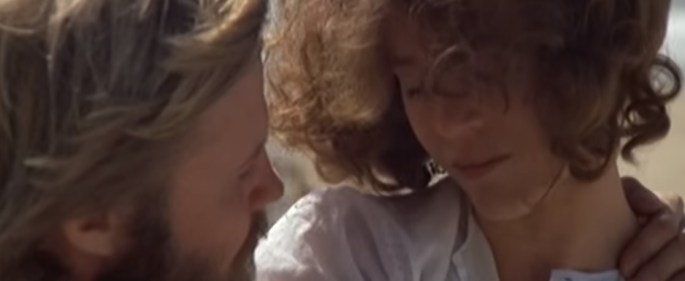
Coming Home is one of the most shattering Vietnam films ever crafted, concentrating not on battlefield heroics or action, but on the emotional and psychological turmoil that veterans would face upon their return home. Starring Jon Voight, Jane Fonda, and Bruce Dern in three of their greatest performances, this is a searing drama, something that’s impossible to forget once it’s been seen, further cementing director Hal Ashby’s confidence as a storyteller during that glory decade for him as a filmmaker. He was a storyteller who was interested in human behavior and the consequences of our actions, and each of his films, no matter how compromised, demonstrated this humanistic quality. This is a heartbreaking film, showing three extremely vulnerable characters reaching their tipping points as humans, and because the screenplay by Waldo Salt and Robert C. Jones was so honest and sensitive, the actors were able to really invest themselves in their roles, thus painting forceful portraits of lives constantly in flux.

2Voight plays a paralyzed veteran who is helped by a volunteer therapist (Fonda), and Dern is Fonda’s battle-scarred husband who returns home with too many inner demons and no way of receiving the help that he needs. The soundtrack, as per usual for Ashby, is an incredible and evocative mix of now-greatest hits that date the film, not in a bad way, but in an organic fashion, thrusting the audience into the politically and socially charged environment of the story, while Ashby never lost sight of the intimate story details and the awkwardly beautiful relationship that Voight and Fonda embark upon. The final act of Coming Home is startling and scary and almost overwhelming in its intensity. Shot for $3 million and grossing over $30 million in the United States, the film struck a chord with audiences, and would go on to snag Oscars for Best Actor (Voight), Best Actress (Fonda), and Best Original Screenplay (Salt, Jones, and original story creator Nancy Dowd). Voight also won Best Actor at the Cannes Film Festival.
3

Confessions Of A Dangerous Mind: A Review By Nate Hill


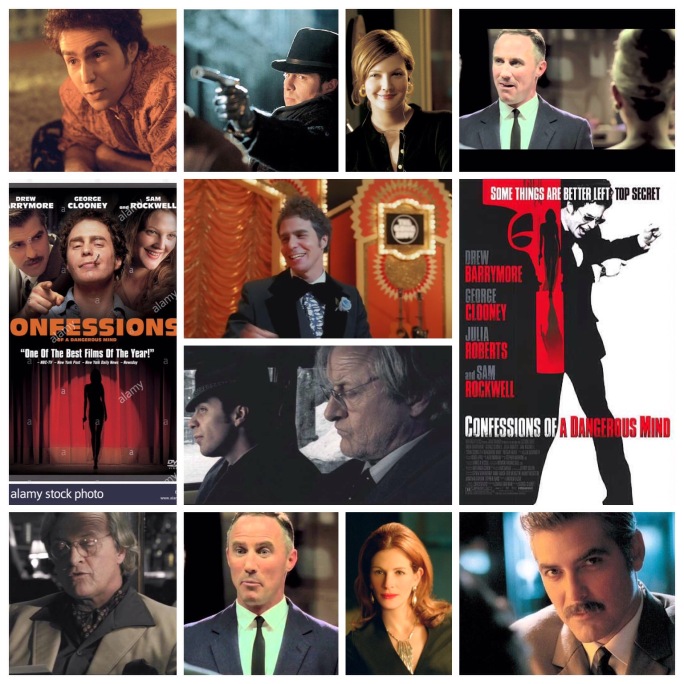
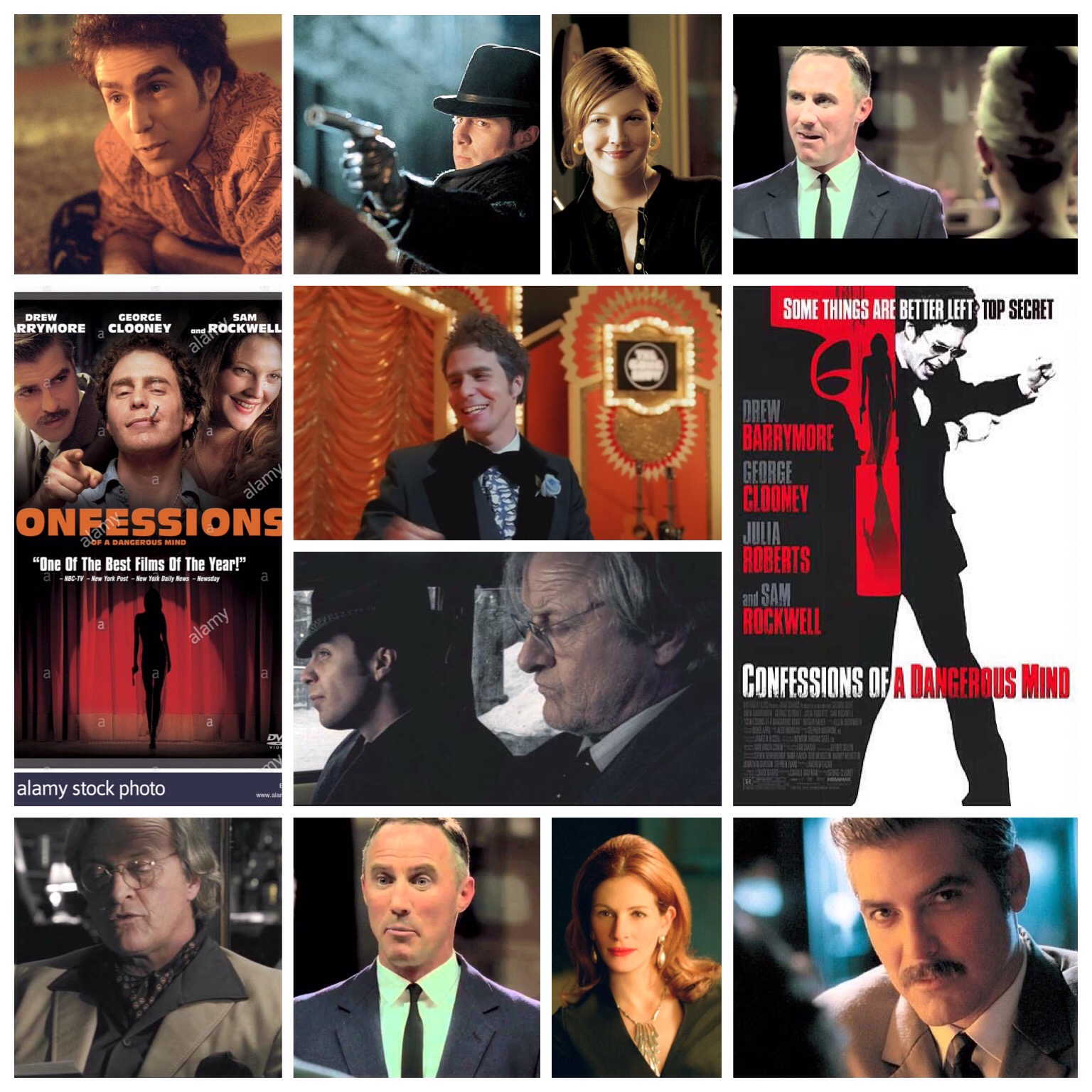
As soon as George Clooney built up enough clout and reputation in the industry to a point where he could make his own projects, he started to send some unique and refreshing stuff down an assembly line that needed some shaking up. Confessions Of A Dangerous Mind is such a curiosity, but it’s so specific and idiosyncratic that I can barely say what makes it so special. I can go over the plot, performances etc. and give the reader a general idea, but to get it you had to be there. I suppose that’s the case with all movies, this one just sort of has its own frequency that you have to be tuned into. For a square jawed leading man, Clooney sure busted the box open with this directorial effort, as well as a few others, all just as distinctive. A screenplay by Mr. Abstract himself, Charlie Kaufman, helps with making an impression as well. Sam Rockwell, who continues to prove himself as one of the best actors of his generation, plays Chuck Barris. Chuck was the brain child behind numerous gaudy television game shows in the 60’s, including the infamous ‘Dating Game’. Flippant creative output was his brand, but there was another side to him as well, a darker period in which he claimed to be recruited by the CIA to carry out cloak and dagger assassinations. Whether or not this was ever a factual part of his life is murky, but he certainly believes it to be true and has written extensively about it in the novel which Clooney based this on. The film deftly intersperses his life at the television network and the genesis of the programs with his training and eventual missions for the Company. It’s an odd contrast, but when you’re treated with Clooney’s dutiful storytelling and an extremely committed turn from Rockwell, it’s hard not to be drawn into it. Not to mention the supporting cast. Julia Roberts is cast against type as a lethal, sociopathic femme fatale who crosses paths with Barris more than a few times. Rutger Hauer mopes about as a loveable alcoholic operative who covers Barris’s back on a few assignments. Drew Barrymore spruces things up as a ditzy love interest, Michael Cera plays Chuck as a young’in, Clooney himself underplays his CIA handler, letting an epic moustache do the talking, and there’s cameos from Maggie Gyllenhaal, Brad Pitt and Matt Damon. At one point the film stops dead in its tracks for the funniest performance which hijacks a scene briefly, in the form of Robert John Burke as a maniacal censorship board hyena. Burke pulls the ripcord and delivers roughly 40 seconds of pure comedic genius that I could watch on loop, and is the only moment of its kind in the film. You’d think it’d offset tone, but in a film this organic and quirky, it simply serves as a garnish of hilarity. The whole thing has a Soderbergh feel to it (perhaps due to Clooney), a sharp, crystalline precision to the burnished cinematography from Newton Thomas Sigel, who previously wowed us with similar work on Blood & Wine, The Usual Suspects and Gregory Hoblit’s Fallen. His lens captures the melancholy accompanying Barris’s very strange path path in life with moodily lit frames, and pauses for the brilliant moments of absurd black comedy which seem to follow him around like the spooks he was always running from. A film with dual aspects that never tries to prove or disprove Chuck’s claims, but loyally tells the story the way he told it, guided by Clooney all the while. A little stroke of genius. 

THE DEVIL’S REJECTS – A REVIEW BY J.D. LAFRANCE

12_devils_rejects_blu-ray

In an effort to appeal to the largest audience possible, Hollywood studios have neutered so many horror films into PG-13 movies that they lack any edge or ability to scare beyond the usual fright tactics. They then release the slightly more explicit R-rated or unrated versions on DVD to exploit devotees who don’t want the sanitized theatrical version. Lions Gate, a small, independent studio, flies in the face of this trend by distributing R-rated independent and international horror movies like High Tension (2003) and Saw (2004) that push the boundaries of on-screen violence. Hard rocker turned filmmaker Rob Zombie has taken advantage of this by making and releasing his first two films through Lion’s Gate. The second of those was The Devil’s Rejects (2005), a gritty, balls-to-the-wall horror movie cum road picture – imagine The Hills Have Eyes (1977) directed by Sam Peckinpah.

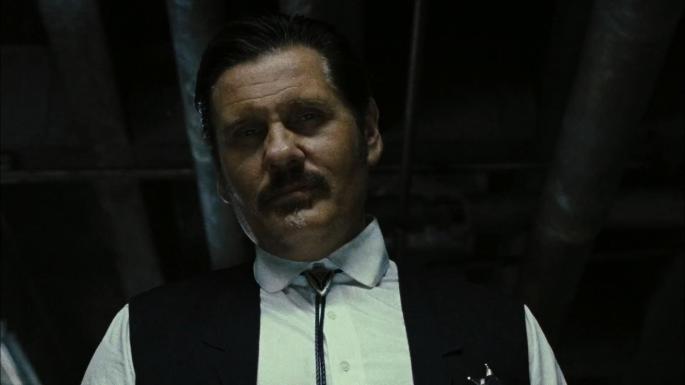
Not quite a sequel to Zombie’s first movie, House of a 1000 Corpses (2003), but rather the further adventures of a few of its characters – the notorious Firefly family. Early one morning, the police raid their farm. In the ensuing chaos, Otis (Bill Moseley) and his sister Baby (Sheri Moon Zombie) manage to escape with Sheriff Wydell (William Forsythe) in hot pursuit and bent on revenge because they killed his brother (see House of 1000 Corpses). Otis and Baby take a country and western band by the name of Banjo & Sullivan hostage in a motel room. They eventually hook up with their partner Captain Spaudling (Sid Haig) and take refuge at a whorehouse owned by Spaudling’s brother, Charlie Altamont (Ken Foree) where they get ready for the inevitable confrontation with Wydell.

When Zombie wrote House of 1000 Corpses, he had a “vague idea” for a story about the brother of the sheriff that the Firefly clan killed coming back for revenge. He did this just in case the film did well enough at the box office and created interest in another film. After Lions Gate made back all of their money on the first day of Corpses theatrical release, the studio wanted Zombie to make another film and he started to seriously think about a new story. With Rejects, he wanted to make it more horrific and the characters less cartoonish than in Corpses. He was interested in making “something that was almost like a violent western” and has cited films like The Wild Bunch (1969), Bonnie and Clyde (1967), and Badlands (1973) as influences.

Zombie hired Phil Parmet, who had shot the legendary documentary Harlan County USA (1976) because he wanted to adopt a hand-held camera/documentary look. To prepare for the film, Parmet watched many horror films but when he and Zombie started talking about the approach they wanted to take on Rejects, they actually connected on revisionist westerns like Hang ‘Em High (1968), Monte Walsh (1970), and El Topo (1970). They also looked to films like The French Connection (1971), In Cold Blood (1967), and Fat City (1972) for inspiration. During pre-production, they decided to shoot the film on 16mm and Zombie cited films like Amores Perros (2000) and 21 Grams (2003) as jumping off points for how he wanted to shoot his own film. Zombie told Parmet that he wanted to use two cameras at all time and for certain scenes, like the chaotic gunfight at the Firefly house at the beginning of the film, to have as many as six cameras running simultaneously.

Zombie populated his cast with an impressive collection of B-horror character actors: Sid Haig (Spider Baby), Ken Foree (Dawn of the Dead), P.J. Soles (Halloween), and Michael Berryman (The Hills Have Eyes). They are not cast for kitsch or novelty value but because they have the acting chops to pull off these meaty roles. Zombie cast actors with interesting faces that have character. Every line or glint in their eyes says so much and he captures them in close-ups a la Sergio Leone. And no one personifies a fascinating face more than Sid Haig who plays Captain Spaulding as the scariest clown with evil make-up that includes black lips and horrible yellow teeth augmenting his already grizzled looks.

After starring in numerous forgettable direct-to-video efforts, William Forsythe finally gets a substantial role. Every once in a while, he pops up in a mainstream film, like Things To Do In Denver When You’re Dead (1995) and The Rock (1996), usually playing some generic bad guy role. He harkens back to a bygone era of tough guys, like Lee Marvin or Robert Shaw, who naturally exuded a ferocious intensity that is exciting to watch. With his deep, gravelly voice Forsythe plays an unstoppable force of nature that is just as ruthless in his methods as the Firefly clan.

The dialogue crackles and pops with its own profane rhythm. The tough guy-speak works because it is believable and the actors deliver it with conviction. Zombie breaks it up with some very funny bits and truly laugh-out-loud moments of black humor. For example, the Firefly clan uses aliases of names of Groucho Marx characters. To crack this code, Wydell brings in movie critic Marty Walker (Robert Trebor) and they end up getting into an argument about the merits of Elvis Presley movies that is hilarious and helps relieve some of the unrelenting tension that this film generates.

The Devil’s Rejects is a good looking movie that features a lush glow of reds, greens and blues during the night scenes and then Zombie cuts to one with a minimalist single light source with nothing in the background so that we focus on the two actors in the scene and what they are saying. In contrast, the day scenes have a warm, saturated sun-burnt look. The darkest scene in the movie in terms of tonality actually takes place at high noon and this makes it even more sinister because there is nowhere to hide.

Zombie references all kinds of movies and not just the usual horror movies that other filmmakers quote. When he does refer to other films he does so in a subtle way and not in a look-how-clever-I-am way that Quentin Tarantino does. Tarantino is a cinematic show-off content to sample his favorite scenes from other movies without showing any kind of understanding about how they work. The Devil’s Rejects is a down ‘n’ dirty celebration of outlaw 1970s cinema complete with a fantastic score of southern rock classics from the likes of the Allman Brothers Band, Joe Walsh and Lynyrd Skynyrd. In case of the last band, the way their anthem “Free Bird” is used in this movie is incredible. What could have been so clichéd comes across as a poignant and iconic scene in the film, befitting the song itself.

devilsrejects2This film does not quite look like it was shot in the ‘70s but made by someone who grew up in that decade. Rejects was made by a horror film fan for horror film fans. Zombie has created a truly disturbing horror movie with no real redeemable characters, that is refreshingly unpredictable and this is what makes it so scary, like the original The Texas Chain Saw Massacre (1974). Both movies are feverish nightmares except that in Massacre you felt sympathy for the female protagonist. The Devil’s Rejects does not even have that. You may find yourself rooting for the Firefly family early on but Zombie quickly rejects this notion by portraying them as truly irredeemable people. There is no sappy love story or cop-out ending and this remains true to many of the nihilistic movies of the ‘70s. Horror film obsessives always brace themselves for the wimp out ending — it is the downfall of so many horror films — Rejects does not make this mistake. Zombie has shown a real growth as a filmmaker, creating I daresay a modern horror masterpiece.
MARK L. LESTER’S STUNTS — A REVIEW BY NICK CLEMENT

stunts

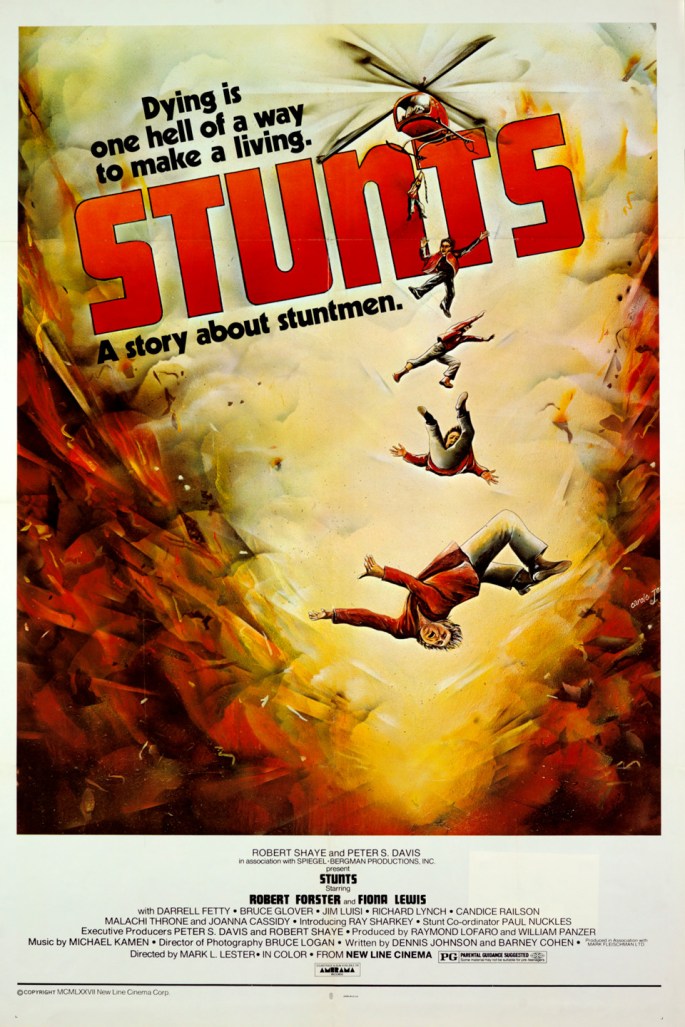
Mark L. Lester’s 1977 action flick Stunts takes its B-movie premise and injects some satirical Hollywood commentary to match the dare-devil sense of adventure that the title promises. Pre-dating Richard Rush’s The Stunt Man by a few years, and certainly no where near as existential or surreal, Lester’s movie has a nifty premise — someone is killing off all of the stuntmen on the set of an action-adventure movie — with a young Robert Forster projecting all sorts of steely resolve as the brother of one of the dead stuntmen who shows up looking for answers. The accident scene with Forster’s brother is especially sketchy and rather nasty in execution. Made in the days before CGI and excessive blue-screen techniques, all of the set-pieces have a great sense of rough, physical action, and while the plotting is more or less what you might expect, there are a few surprises thrown in for good measure. Bruce Logan’s crisp and measured cinematography took full advantage of the various meta possibilities that the film-within-a-film narrative afforded, while capturing the action with a clear sense of spatial geography and an emphasis on lots and lots of car crashes. The filmmakers made terrific use of the legendary Madonna Inn (if you’ve never been then book a trip!) and as usual, Forster brought that amazing sense of gravitas, even as a relative up and comer, that so few current actors possess. Lester’s rather amazing and prolific career includes the iconic 80’s blockbuster Commando, and the extreme cult classic Class of 1984. Michael Kamen’s energetic score set an appropriately jaunty vibe with some streaks of menace peeking out from around the corner. Stunts has the distinction of being the first fully funded New Line Cinema production, after 10 years of being the premiere indie distributor in town. Available on DVD; recently screened via TCM HD.

JOHN FLYNN’S THE OUTFIT — A REVIEW BY NICK CLEMENT

1

Gritty 70’s action doesn’t get much more crisp and clean than John Flynn’s The Outfit, which was adapted from the Richard Stark/Donald Westlake novel and released in 1973, and starred Robert Duvall, Joe Don Baker, Karen Black, and Robert Ryan as the chief baddie. Concerning a low level criminal (Duvall) who upon release from prison discovers that his brother has been murdered after a bank heist gone awry, the script concocted by director Flynn takes on the form of a hybrid revenge movie, with Duvall teaming up with Baker for some serious bouts of ass-kicking, and the two of them slowly realizing that they may be in over the heads. Shot with rough and tumble smarts by cameraman Bruce Surtees and featuring a peppy musical score by Jerry Fielding, this is a ripping actioner made with style and attitude in all the key places, mixing black comedy (those final moments…!), vicious action, and constantly shifting plotting into a fantastic stew of noir-ish fun. Flynn was apparently a huge fan of Westlake’s “Parker” novels, and despite some chatter to the contrary, never intended The Outfit as a 1940’s period piece they way some had claimed. The studio initially wanted a lighter ending, but Flynn insisted on staying true to the violent and pulpy material. The Outfit served as the screen debut for actress Joanna Cassidy.

2

Triangle: A Review by Nate Hill 

  
Structured like a labyrinthine video game. Packed with loads of paranoid suspense and style. Tuned with the hazy thick atmosphere of a bad dream. A diabolical guessing game from scene to scene. Triangle is one of the most enjoyable mind benders out there, a funhouse of a thriller that sails into murky metaphysical water and doesn’t let either it’s protagonist or its audience off with a cheap resolution. Imagine Dead Calm crossed with Memento and you’ll begin to have some notion as to where this film will take you. It’s a freaky voyage, as star Melissa George finds out after a yachting expedition with friends hits a nasty patch of storm weather. Soon a massive, deserted ocean liner crosses their path, and they are forced to board it after the typhoon wreaks their smaller craft. The rest of her crew just seemed puzzled by the derelict vessel, but Melissa has an eerie, gnawing feeling that she’s been on this boat before, a feeling that something is very wrong. Suddenly there’s a mystery person hunting and killing them, and if I just made it sound like a run of the mill slasher flick, please be assured that it’s anything but. What I’ve described happens in what is maybe the first quarter of the film, and everything after that point is a trip into a dizzy, seafaring twilight zone of psychological mystery and reality warping uncertainty that makes George unsure if anything, including her own perception of reality, can be trusted. Events repeat themselves, characters dart in and out of the wormhole of a narrative arbitrarily yet with a hidden purpouse that managed to scarily elude me for much of the film. It’s scary in the way that ducks usual horror trends. There’s violence and even some ghastly gore, but the real fear here lies in the unknown, the idea that forces beyond what we perceive as reality are messing around with us, and indeed they do mess around with her and then some, right up until the last frame of an ending that’s commendable, haunting and difficult to process. George makes great work of the confusion that morphs into terror and then outright existential panic, keeping us on our toes with the way she handles her character arc. Keep an eye out for a young Liam Hemsworth too. For psychological thrillers, it don’t get much better than this, and it’s off the radar enough that you’ll be able to recommend it to your friends who chances are, haven’t even heard of it.

Titan AE: A Review by Nate Hill 

Titan AE is one of the best 2D animation ventures out there that isn’t Disney. Science Fiction and animation just seem to inherently go hand in hand (affirming my belief that Treasure Planet is the best one that Disney ever churned out, but that’s another story), perhaps because of the dazzling possibilities in a form of creation like that, tools which make the visual patterns of the artist’s dreams and beautiful renditions of the cosmos a reality. This one nails the visual aspect, but it was story that hooked me ultimately. Along with the artwork there is a boundless creative surge, a very human plotline that’s relatable to anyone who’s ever felt lost or like they don’t fit in. In the year 3028 A.D., a marauding race of aliens called the Drej decide that us humans are a threat, and obliterate earth, leaving few survivors. Dark way to kick off an animated movie, amirite? That’s another great thing about it, it’s not exactly for kids and reaches for themes that are a little more than your standard animated flick, getting fairly intense in the process. One of the few human survivors is young Cale (later played by Matt Damon), whose scientist father (Ron Perlman) was working on an idea that could have greatly advanced our civilization. In the years following the destruction, Cale has been left to wander the galaxy with the sparse, impoverished remains of the human race, now looked down upon by other alien tribes for essentially being homeless. When human Captain Joseph Korso (Bill Pullman) comes to him telling of a mysterious device created by his father long ago, Cale is reluctant, resenting his him for disappearing on the Titan ship so many years before. Soon it becomes clear that Perlman’s device is the key to creating a new earth, and reuniting humanity. Thus begins an epic race across the universe to find it before the Drej do. Drew Barrymore lends her sassy voice talents to Akima, Korso’s tough lieutenant, and there’s also work from John Leguizamo, Nathan Lane, Janeane Garofalo, Charles Rocket, Alex D. Linz and rapper Tone Loc who has a perfect voice for this kind of thing, playing a kindly alien mentor named Tek. This one is timeless, feeling fresh and vital with each passing decade it’s allowed to age through. A celebration of imagination and the creative force of will that lies inside each and every one of us humans, no matter how dire our situation. Classic stuff. 

LUIS LLOSA’S THE SPECIALIST — A REVIEW BY NICK CLEMENT

specialist

Hollywood has seemingly abandoned the slick and disreputable big budget actioner, and I’m slowly realizing how the 90’s were essentially the last decade that really took full advantage of the big spec-script sale which would then lead into the over-inflated star vehicle. I love The Specialist. It’s obviously not a great movie, but it’s massively entertaining, featuring a trio of bad guy performances from a maniacal James Woods, an extra-sleazy Eric Roberts, and a hysterical and way over the top Rod Steiger. Stallone was rather quiet in this one, as an explosives expert who is drawn into considerable danger by his lusting for a super-hot Sharon Stone, playing Roberts’ trophy girlfriend, while his ties to Woods which stem for their CIA operative days have left them mortal enemies. Stallone and Woods go at each other’s throats all throughout the cliche and predictable narrative, while the epic and gratuitous sex scene between Sly and Stone is one for the books, featuring action in an out of the shower, and more than one moment of laugh-out-loud corniness. The cheese-ball yet extremely plot-heavy script by Alexandra Seros, who also wrote the tepid La Femme Nikita remake Point of No Return for director John Badham, was based on the novel by John Shirley, and has all sorts of terrific howler lines as well as some really nasty tough-guy talk, while the entire production was overseen by legendary producer Jerry Weintraub.

The action, all well staged by famous B-movie filmmaker Luis Llosa (Sniper, Anaconda, various Roger Corman titles), is slick and violent and explosion-happy, with the entire film given a phenomenally luxurious yet still gritty visual veneer by the tremendous cinematographer Jeffrey Kimball, who shot Top Gun and True Romance for the late, great Tony Scott. Every single shot in this film is gorgeous, with Kimball lighting the radiant and ultra-sexy Stone like a true cinematic Goddess, while the Miami setting at least allowed for the excuse to lather all the stars in faux-sweat and body oil, all in an effort for maximum gloss. Jack Hofstra’s tight editing kept a fast pace and the entire picture was bolstered by John Barry’s exciting score. A decent hit at the domestic box office but totally trashed by critics who couldn’t be bothered to see the film for what it is — a good old stupid-fun time at the movies — this is one of those mid-90’s efforts that signaled the downturn in American interest in Stallone’s output, but would become a massive financial success overseas, just as almost all of his films have been. While certainly not revolutionary on any level, this is a solid and undemanding time waster that I’ve watched repeatedly throughout the years, and it’s a reminder of how tame and prudish the studios have become with their inclusion of violence and sex in pop-corn action fare.

Batman Forever: A Review by Nate Hill 

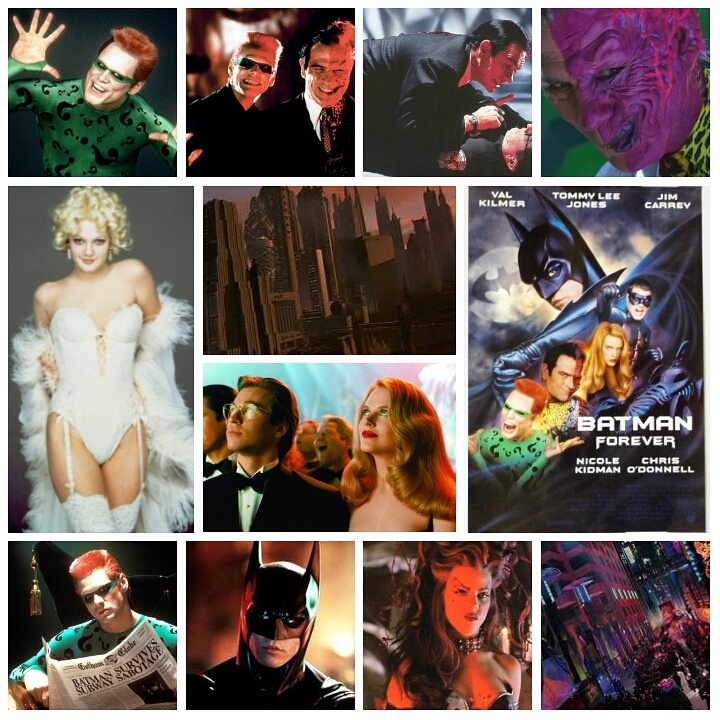
It’s true, Batman Forever is a silly, overblown, cartoonish riot of buffoonry.  But so what? It’s also awesome in it’s own way, and inhabits a certain corner of the Batman culture, the side of things that is rooted in camp and unhinged wonderment. Now, there’s an important and discernable difference between taking things far and taking things too far. That difference is delineated on one side by a willingness to be goofy, colorful and not take this superhero stuff too seriously. The other side of that of course is a disregard for limits, throwing every ridiculous line, costume and awkward scene into it you can imagine. I’m referring to Joel Schumacher’s followup to this, Batman & Robin. Everything that is weird, wonderful and extravagant about Forever just revved up to much in Robin, resulting in a piss poor typhoon of mania and over acting. Not to say that Forever doesn’t have over acting. Ohhhh boy is there over acting. Between Tommy Lee Jones and Jim Carrey, the thing is liable to give you epilipsy. But it somehow works despite its madness, a lucky stroke that Robin couldn’t have cared less about adhering to. Val Kilmer is the sedating antidote to Jones and Carrey, a remakably laid back Bats and a pretty solid casting choice, both as Brooding Bruce and Buttkicking Bats. Eternally broken up about the death of his patents, Bruce fights off Harvey Two Face Dent (Jones) in a garish, disarming Gotham City that resembles Mardi Gras in Dr. Seuss land. Jones’s Two Face is so far over the top, so rabid that it’s a wonder he didn’t give himself a bloody heart attack in the first take. Anyone who’s interested can read up on his performance, and how he pushed himself right to the heights of bombast in order to try and out-Carrey the Jim. Carrey, playing the Riddler, is a ball of twisted nerves himself, set loose on the wacky sets and basically given free reign to.. well.. go fucking nuts. It’s one of his most physical performances too, prancing around like a loon in green spandex that leaves nothing to the imagination. Aaron Eckhart’s Two Face may have had the edge for grit, but Jones has the rollicking clown version, and runs away to kookoo land with mannerisms that even call to mind The Joker in some scenes. The only thing I’ve seen him more hopped up in is Natural Born Killers, but shit man its hard to top his work in that. The story is all over the place, involving a nonsensical subplot with a mind control device, multiple elaborate set pieces, endless scenery chewing and the eventual arrival of Robin, played by Chris O’Donnell who is like the cinematic Buzz Killington. Michael Gough and Pat Hingle dutifully tag along as Alfred and Commissioner Gordon, both looking tired at this point. Debi Mazar and Drew Barrymore have amusing dual cameos as Two Face’s twin vixens, and Nicole Kidman does the slinky love interest shtick for Bruce as a sexy psychologist. Watch for an uncredited Ed Begley Jr. Too. There’s no denying the silliness, but one has to admit that the achievment in costume, production design and artistry are clear off the charts with this one, and visually it should be a legend in the franchise. Say what you will about it, I love the thing.