ROB BOWMAN’S THE X-FILES: FIGHT THE FUTURE — A REVIEW BY NICK CLEMENT

1

The X-Files: Fight the Future is easily one of the best transitions ever for a TV show to feature film. Directed with supreme style and smarts by series veteran Rob Bowman and sporting absolutely fantastic widescreen cinematography from veteran shooter Ward Russell (Days of Thunder, The Last Boy Scout), who utilized a rich color palette in full 2.35:1 widescreen and made smart use of the excellent locations chosen for the story. I absolutely loved the Neanderthal/Quest for Fire-esque opening sequence with the first alien encounter – raw, nasty, primal, and scary. Series mastermind Chris Carter took full advantage of the inherently cinematic possibilities with his iconic material, and along with Frank Spotnitz and undoubtedly many others, crafted a fabulous continuation of the central alien mythology plot-line, while jacking everything up visually and thematically. I’ve gone back to this movie for years, not just out of my love for The X-Files in general, but because, on its own, it’s a damn good movie. Fine, some of it might be impenetrable to the casual viewer or non-fan, but even in those instances, the gripping set pieces, tremendous production design, and excellent performances should alleviate any concerns.

2

Bowman and Carter threw in nods to various political thrillers from the 70’s, most notably Alan Pakula’s masterpiece The Parallax View, and all throughout, there’s an unnerving vibe that fills each scene, from the ominous back-room deals with the Syndicate, to the sub-Antarctic government base that forms the absolutely smashing action-oriented finale. All of the regular faces from the TV show were present in the film, while the filmmakers brought in some excellent supporting players like Martin Landau, Armin Mueller Stahl, Blythe Danner, and Terry O’Quinn. The opening domestic terrorism bombing sequence is rivetingly staged, while the mid-film action set piece inside those incredibly sketchy domes out in those corn stalks was expertly shot, cut, and directed. And when those bees are released, the scene kicks it up a further notch. David Duchovny and Gillian Anderson were at their best here as Mulder and Scully, and their “almost-kiss” moment registered as one of the absolute best moments in the series, big screen or small. Everything about this movie clicked, which you can’t say for the decade later follow up, The X-Files: I Want to Believe, or last year’s reboot. I’d love for them to get back on the big screen with another alien-centric narrative, as that’s where I’ve always felt the heart of this series rested.

3


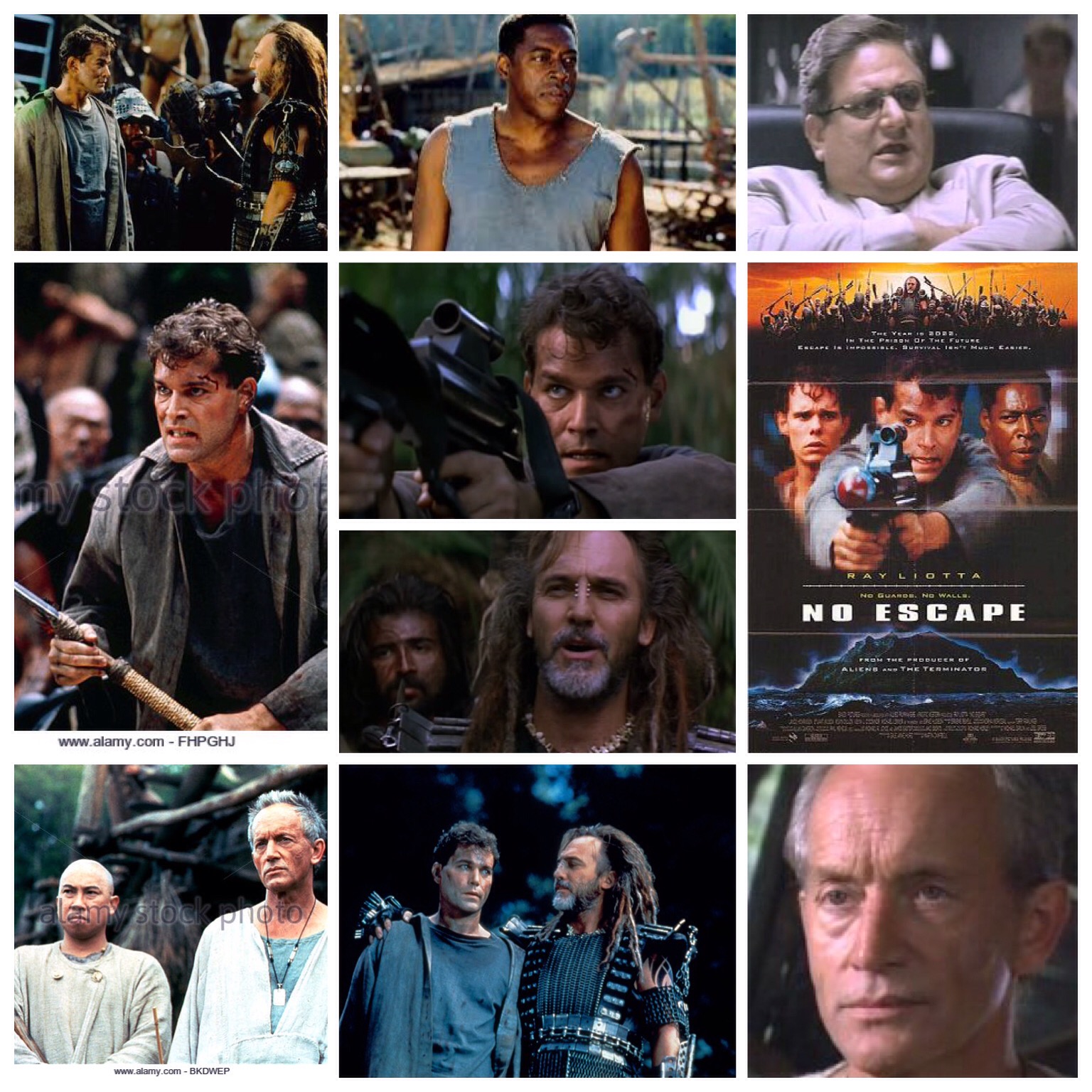
No Escape: A Review by Nate Hill 


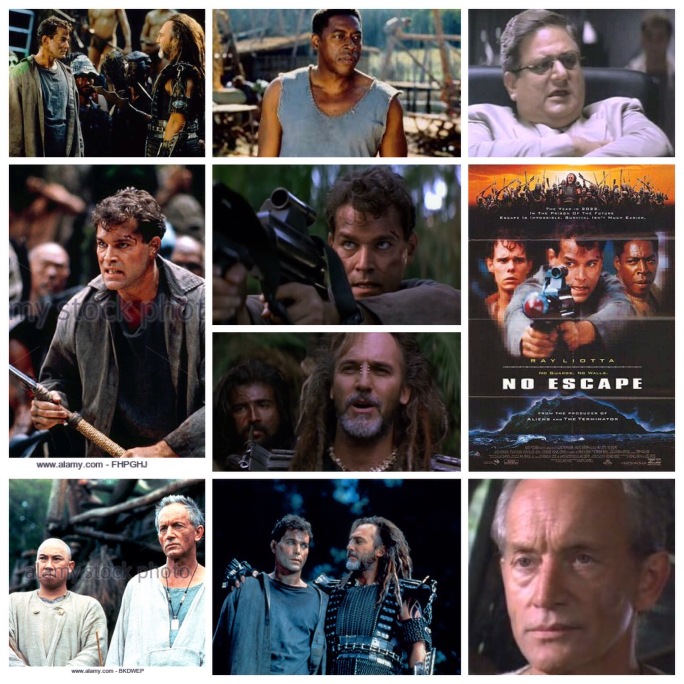
No Escape is the type of flick that Stallone or Schwarzenegger would have headlined, had it been given a higher budget and major studios presence. It’s almost better that it didn’t, because instead we got a scrappy little post apocalyptic actioner starring a cheeky, roughneck Ray Liotta, who you just can never say no to when he shows up. He plays J.T. Robbins here, an army official who’s been disgraced and stripped of his title following an incident involving a superior officer. He’s being shipped off to Absolon, a remote island that’s been fashioned into a massive prison for convicts who are never to be released. Two groups of prisoners inhabit Absolon: a piratical group of violent miscreants led by flamboyant Walter Marek (Stuart Wilson commands attention with his uproariously weird performance), and a peaceful tribe of hut dwellers, presided over by father (Lance Henriksen). Robbins wants only to escape, a prospect that has been fervently shot down in his face by Absolon’s overbearing Warden (Michael Lerner). Using his military cunning and inherent brute force, he tries to start a war between the two factions and raise enough of a commotion to make a break for it. What he doesn’t count on is his fondness for the people within Father’s group, and his eventual need to get some of the, out as well. It’s pure aged mid 90’s dystopian action cheese, and a delight for any lovers of the gourmet dish. Liotta is strong, silent and nasty when provoked, a great antihero. Henriksen is unusually compassionate and reserved, and Wilson struts around without any inhibitions, wearing his best grade school play face chomping scenery like a wildebeest. Watch for work from Kevin Dillon, Ian McNeice and Ernie Hudson as well. A lighthearted romp with its heart in the right place and the competence to back it up. 

Cop Car: A Review by Nate Hill

image

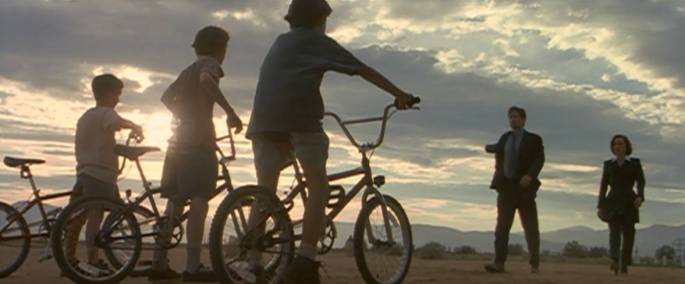
Cop Car is the sort of callous thriller that socks you right in the gut, then kicks you in the nuts before you’ve had a chance to grab a breath. It’s premise is simple: on the quiet plains of rural Colorado, two young lads wander about aimlessly, practicing their cuss words and trying to impress one another with various mischief. All of a sudden they stumble on a seemingly abandoned cop car in a secluded glen. What do they do? They do what any respectable, rational one of us would, of course. They steal the thing and careen about across the terrain, before taking off down the highway. It’s just their luck that the vehicle happens to belong to Sheriff Kretzer (Kevin Bacon) an evil son of a bitch who’s just about as far from the law as one can get. He was out there doing dark deeds in the bush, and arrives back to find his cruiser gone, reacting with an amusing fight or flight tantrum not unlike that of a cornered coyote. Bacon has a canine look to him as well, amplified by the fact that he’s in his late 50’s and is looking all brittle and scary as hell these days. He panics and goes on a mad yet calculated hunt to find the car before his dirty little secrets are flung about the county and his jig is up. Employing MacGyver worthy tricks, chilling cruelty and a bone rattling, hyena esque cackle, he hunts the two youngsters down relentlessly, and they elude him through sheer dumb luck. Speaking of dumb, the kids are remarkably stupid even for ten year olds, and it’s tough for the film to draw forth any sympathy from us by any means other than the fact that they are children, run disastrously amok. They’re forced not only to deal with Bacon, but a sleazeball who they find bloodied up in his trunk, played by the ever entertaining Shea Wigham. He has an exchange of dialogue with the boys that will seperate those with a dark, messed up sense of humour from those without, and I was laughing up a storm. The film reminded me of similarly vehicular themed thrillers like The Hitcher and Duel, and can certainly be put on that same pedestal of quality. Blood, burnt rubber, sweat and tears abound here, and what’s more, the thing makes sense in its turn of events. So many thrillers erupt into bombastic and unbelievable plot turns that serve shock value or simply exist to be a showcase piece for the trailer. This one gallops along a series of events that are stacked up like a nasty Jacob’s Ladder of fate, each step of the way a logical piece of the story, nothing brashly jumping at us or taking us out of the story. Admirable traits, not found too often these days. Watch for Camryn Manheim and an invisible Kyra Sedgwick as well. A lean, mean little flick, guaranteed to raise a pulse and steal a few well earned, guilty grins from you, as well as impress you with it’s competence in execution, and restraint in keeping things fast, to the point and mean to the core.

The Phantom Of The Opera: A Review by Nate Hill

image

I’ve never seen The Phantom Of The Opera on stage, so so I have nothing to really compare Joel Shumacher’s 2004 cinematic vision to, but I know that it was one of the most glorious and formative theatre going experiences for me, so much so that I think I probably went and saw the thing like eight times when it came out. I had never heard a single of Andrew Lloyd Webber’s music before then and had not a clue as to what the story was. My extant of Phantom knowledge at that point was only of a chalky faced, emaciated Lon Chaney Jr. skulking around a silent black and white frame.
   I was cosmically blown away by the magic of it, the story, the songs, the rich production design and especially the two elemental lead performances from Gerard Butler and Emmy Rossum. Again, no idea how the stage actors compare to these two, but Gerard and Emmy’s take on the Phantom and Christine are now scorched into my psyche as the definitive versions. Butler nails the formula perfectly: scary when he needs to be, tender when he wants to be and always a formidable force of dark romanticism and tragic damnation. Rossum is like an angelic comet as Christine Daae, with the best singing voice of the cast and a presence that will bring the viewer to tears and make you instantly fall in love with her.
   Christine works in the prestigious Opera Populaire as a chorus girl, until she is shunted into the limelight when their prima donna of a star singer (a flat out brilliant Minnie Driver) walks off in a huff. Rossum then proceeds to move heaven and earth with her rendition of ‘Think Of Me’, accompanied by some of the most incredible camera work I’ve seen, sweeping through the elegant halls along with her crystal clear voice.
   The mysterious Phantom watches her from dark alcoves and hidden buttresses, entranced by her talent and brimming with love sickness. He has love in him no doubt, but we all know there is hate there too, catalyzed by an unfortunate deformation and a cruel past that has left him in exile. He basically runs the show from the shadows though, with utmost class and heaps of theatrical menace.
   Christine also has eyes for her childhood friend Raoul (Patrick Wilson). Wilson is the only player who seems a bit out of his depth, perhaps because he hadn’t yet found the assurance in stride and charisma he has in his roles these days. Miranda Richardson is excellent as ever in an understated turn as Christine’s aunt and teacher. Jennifer Ellison is her friend and fellow singer Meg. Ciaran Hinds and Simon Callow are inspired as the comic relief duo who purchases the opera house, and watch for Kevin R. McNally as well.
  Every song is a winner, every frame composed of grandiose ambition and every ounce of vocal strength thrown forth by the cast, particularly Rossum and Butler who go a mile and then some, holding their own individual presence as well as pulling off the sorrowful chemistry between the Phantom and Christine. There’s a few key sequences that should go down in the history books on how to stage a scene, including a dazzling masquerade ball, a wintry swordfight in a cemetery, the aforementioned Think Of Me, and my personal favourite: a mournful black and white prologue set decades after the story, kicking the film off with a rousing flourish of motion and music. I’m sure there are scores of people who swear by the stage production and want nothing to do with this, or simply weren’t wowed to the levels I was. That’s fine. For me though, I don’t see any version ever topping this jewel of a film, and the classic two disc dvd sits proudly on my shelf, daring any other rendition, cinematic or otherwise to give it a run for it’s money.

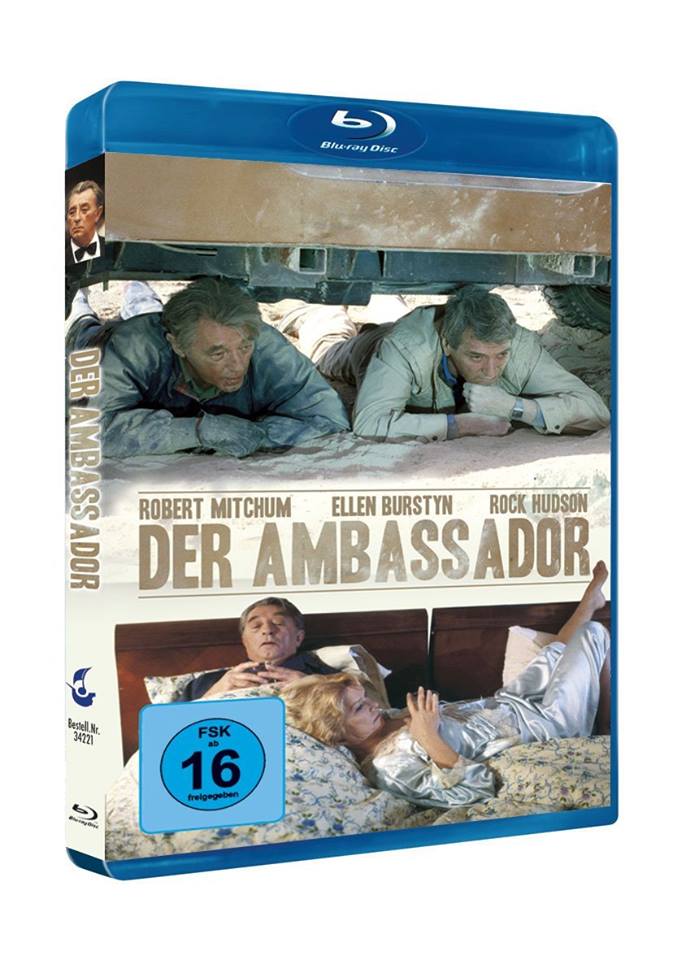
J. LEE THOMPSON’S THE AMBASSADOR — A REVIEW BY NICK CLEMENT

3

The Ambassador is very likely one of the better Cannon Films/Golan-Globus productions. This was one of eight collaborations between the notorious producers and action maestro J. Lee Thompson (The Guns of Navarone, Death Wish 4, Kinjite: Forbidden Subjects, The White Buffalo), and overall it’s got to be one of the most earnest political action thrillers that I can think of. This film really thought it had some quick and easy answers for peace in the Middle East; you have to admire the sense of chutzpah at work here. Starring Robert Mitchum, who seemed half (if not fully) in the bag for most of the film as the U.S. Ambassador to Israel who becomes entangled in various conspiracies both personal and international, the film’s script was written by Max Jack (with uncredited work provided by Ronald M. Cohen), and was mildly based on the Elmore Leonard novel 52 Pick-Up (they borrowed the sex-film blackmail subplot but that’s about it), which itself would be officially made by Cannon Films as a feature film by John Frankenheimer a few years later. 2Rock Hudson, in his final screen performance, had lots of fun as Mitchum’s slick and lethal right-hand man and security advisor, and doesn’t look like someone suffering from the AIDS virus, as he had to have been sick during production. The pairing of these two legendary old-timers brings a level of gravitas to the proceedings. Ellen Burstyn was great as Mitchum’s world-weary and cheating wife, and it must be said, at 52 years of age, she looked super sexy in her topless scene. Donald Pleasence got some solid supporting bits, while the entire production as a whole felt more robust for your typical Cannon feature. You have to hand it to the producers — they knew how to court talent and how to package all of the ingredients in order to make a sale. Create that tagline, get that verbal commitment, craft a quick and sexy poster — BOOM!

5

Crisply edited by future big-time cutter Mark Goldblatt (Terminator 2, True Lies, Bad Boys 2) and shot by a then up and coming Adam Greenberg (Terminator 2, Alien Nation, Snakes on A Plane), veteran director Thompson never paused for a moment, keeping a fast pace with minimal distractions, and building to a crescendo of over the top and ridiculous bloody violence that reminds you of who was in charge of this unique, slightly odd, but undeniably entertaining obscurity. The almost two-in-one musical score felt out of place and not in tandem with the rest of the elements. Reportedly, Mitchum and Hudson fought with each other all throughout the shoot, which was filmed on location in Israel. Telly Savalas was at one point attached to the role that Hudson eventually took, and it’s entirely possible that the film may also hold the record for the longest opening text scroll of all time.

1

LAND OF THE DEAD – A REVIEW BY J.D. LAFRANCE

land of the dead blu-ray7

The 2000s saw a resurgence in the zombie film with the good (28 Days Later), the bad (Resident Evil) and the funny (Shaun of the Dead), but all of them pale in comparison to George A. Romero’s trilogy of zombie films. The first two have been remade already, most significantly with Dawn of the Dead (2004), and both failed to build on or even recapture what made Romero’s films so great in the first place. They seem to only be in love with the gore and miss (or just didn’t understand) the socio-political message of them. Romero returned with a zombie movie that was years in the making and was well worth the wait.

As with his other zombie films, Land of the Dead (2005) is a stand-alone story but looks like it could exist in the same universe as the others. The zombies have completely taken over and the dwindling human population tries desperately to hold onto what little land they have left. A small, heavily armed group venture regularly into zombie territory to scavenge whatever supplies they can find and then return to an island complex known as Fiddler’s Green. The island has been heavily fortified by the military who rule with complete control with rich businessman Kaufman (Dennis Hopper) as their leader.

Society has degraded even further since Day of the Dead (1985). The wide gulf between the rich and the poor is even more pronounced. In the slums of the city people can get their pictures taken with captive zombies or shoot them with paintball guns. At one point, they even throw a woman (Asia Argento) into a steel cage with two zombies for sport. The rich people aren’t much better as represented by Kaufman who is corrupt and amoral enough to make money off of and sacrifice his own people. It’s as if Romero’s saying that it wouldn’t be so bad if the zombies wiped us out. Look at what we’ve become.

The glimmer of hope is represented by Riley (Simon Baker), the leader of the scavengers and his sidekick and ace sharpshooter Charlie (Robert Joy). Like the protagonists in Romero’s Dead trilogy and Knightriders (1981), Riley is a reluctant leader who is tired of this corrupt world and is quietly planning an escape route to a more natural way of life. However, this is disrupted by another member of his group, Cholo (John Leguizamo), who represents the dissenting voice. He’s only in it for the money and has a secret pact going with Kaufman. However, when Kaufman rips off Cholo, the mercenary goes rogue and takes off with Dead Reckoning, the island’s heavily armored vehicle. So, Kaufman cuts a deal with Riley to find Cholo, kill him and bring back the vehicle.

To make matters worse, the zombies are getting smarter as exemplified by Big Daddy (Eugene Clark) who not only learns how to use a gun but is also able to organize legions of the undead. It’s nice to see a return to the slow moving zombies that we all know and love, but with a definite upgrade in the intelligence department while the humans continue to regress, embroiled in more bickering and in-fighting. After all, the zombies are the ultimate have-nots in this world. They are clearly tired of being shot at and exploited by the living. It’s almost as if Big Daddy is some kind of zombie Che Guevara leading an undead revolution that wants to take down corrupt, rich capitalists. In fact, Land of the Dead can be read as Romero’s critique of the George Bush administration with Kaufman as a Donald Rumsfeld stand-in.

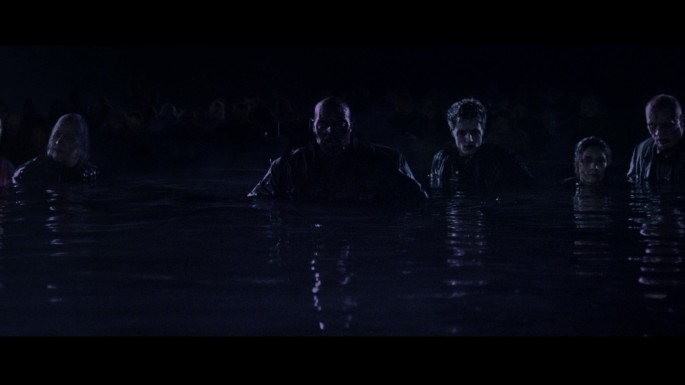
Romero has crafted a very smart horror film, which is something of a rarity these days what with all of these lames remakes littering the landscape. Land of the Dead has all of the requisite gore (and the unrated version has even more) while actually trying to say something. There are plenty of powerful images, like the undead rising out of the water at night (a nice nod to Carnival of Souls, one of the films that inspired Night of the Living Dead) or zombies crashing through the posh apartment complex and feasting on the wealthy. Like with his other zombie films, Land of the Dead is a commentary on the times in which it was made. And for that alone, his movie is a refreshing breath of fresh air.

JONATHAN LEVINE’S 50/50 — A REVIEW BY NICK CLEMENT

1

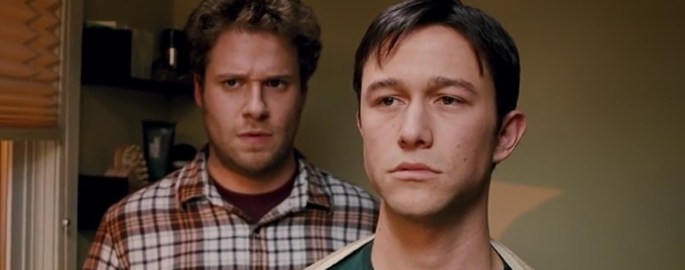
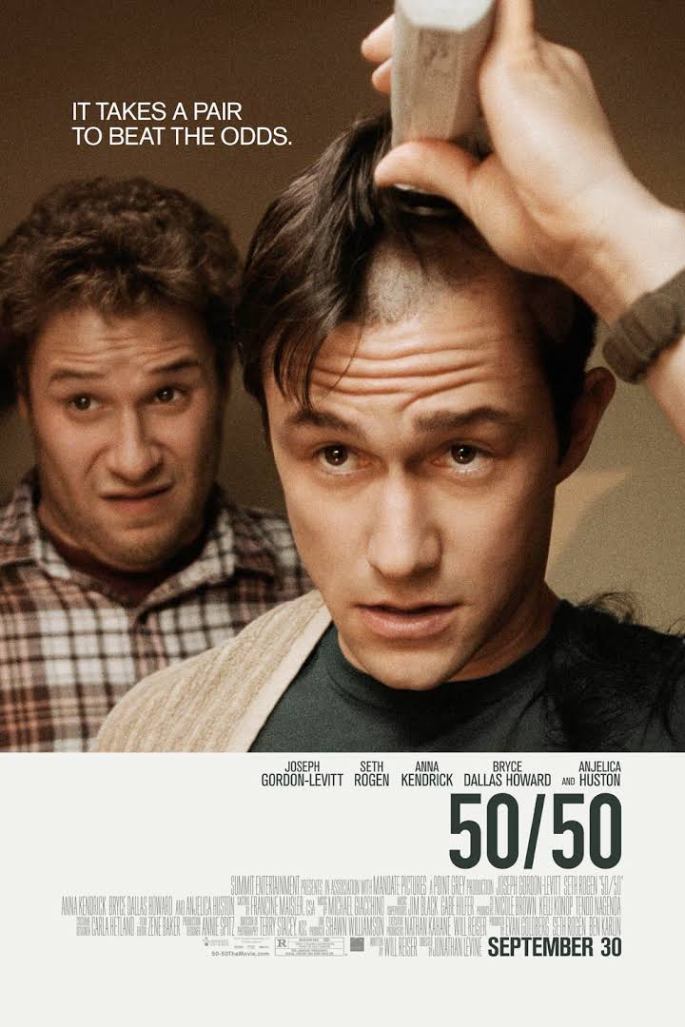
50/50 is an honest and funny film that dares to stare cancer in the face and laugh at the issues that it creates. I was not prepared for how accomplished this film would be. This is a true story, one that’s sad but oddly uplifting, and lead actor Joseph Gordon Levitt was absolutely perfect in his role – understated, never going too hard for the emotions, always feeling 100% natural. Seth Rogen was spot-on here as Levitt’s best friend who has to deal with the fact that his buddy has been given 50/50 odds of survival after being diagnosed with cancer. He’s always able to make us laugh with his affable stoner routine, but when Rogen wants to get serious, as he did here and in Sarah Polley’s obscenely underrated Take This Waltz, he can be very effective. And for 50/50 to work at all, it needed a lot of genuine humor, as there’s nothing remotely funny about the situation that JGL’s character is facing. Unfortunately, cancer has become one of those almost universal things in the world, and if you haven’t been affected by it personally, then you probably know someone who has, perhaps a friend, family member, or a close loved one. There’s a moment in the film where JGL makes a startling confession to his therapist (the always lovely Anna Kendrick, who exudes confidence and smarts and warmth in everything she appears in) that he just wants people to stop bull-shitting him and tell him straight up that he’s going to die. It’s a great moment of acting and direction and it was then that the movie grabbed me by the heart.

2

Director Jonathan Levine has had an interesting career, starting with the cult horror item All the Boys Love Mandy Lane, the 90’s marijuana-infused period piece The Wackness, and the cute and quirky zombie rom-com Warm Bodies; he’s a tough filmmaker to pin down. But as you watch the film unfold, you notice a seriously talented hand guiding this graceful movie, and it’s all the more impressive to learn that Levine was a last minute replacement for another filmmaker who apparently left the project over creative differences. The humor and pathos are well balanced, nothing goes over the top, and Levine’s unforced manner in which he directs his actors adds to the organic quality to the entire piece. Terry Stacey’s intimate and measured cinematography is stylish but never ostentatious, and the editing is sharp as a tack. And it’s got a killer soundtrack – I don’t remember a collection of semi-older-pop songs in a movie that’s as good or as well selected as the ones sampled here. Michael Giacchino’s score is subtle yet highly effective, and that right there is why 50/50 works as well as it does. It never hammers you over the head with how inherently sad the entire scenario is, and because Levine doesn’t wallow in anything for too long, nothing ever becomes maudlin in the way that lesser movies dealing with this subject matter have been.

1.jpg

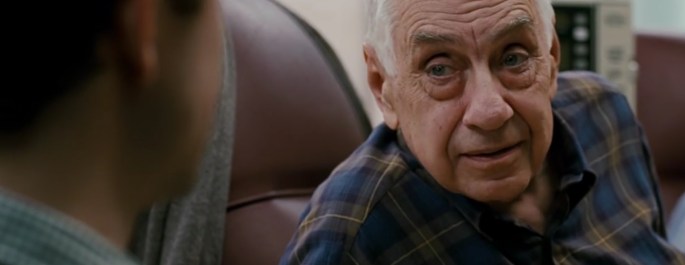
But the best asset of the entire piece is Will Reiser’s tender screenplay, who based the work on his own experiences, with JGL portraying him on screen. While comfortably predictable in some respects, he gets so much right in the little details, and for the first time in a long time, I felt that the voices of the thirtysomethings in this film were 100% believable depictions of actual people living in the here and now. The dialogue felt true to the times and to the people speaking, and the frequently colorful (and often times laugh-out-loud-funny) vulgarity was just what friends would say to each other. Confusing and stressful interactions with doctors were skillfully handled, and tearful and painful discussions with parents are heartrendingly examined (Anjelica Houston nails a few scenes as JGL’s mom). Plus, there’s this terrific scene where JGL, Rogen, Philip Baker Hall (really good in an uncharacteristic role) and Matt Frewer all get high on medicinal marijuana, and I swear, the way it’s shot and cut – you feel like you’re getting a contact high because of Levine’s aesthetic. I absolutely love this movie. You laugh in all the right spots, you choke up when necessary, and the film has a quietly powerful quality that’s very tough to convey with words. And without spoiling anything, the ending is fair and earned and completely believable. This is a potent slice of filmmaking that deserves a higher profile.

3


HBO’s Vendetta: A Review by Nate Hill

image

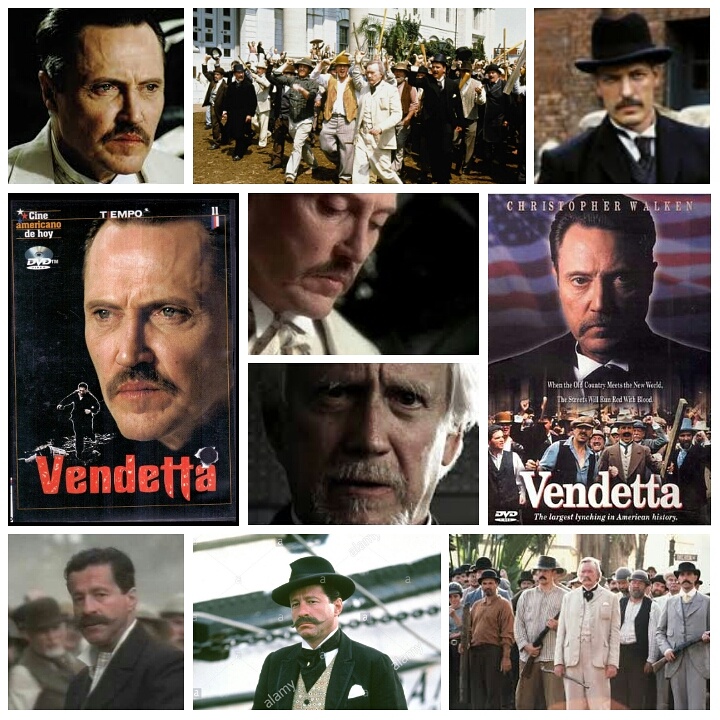
Vendetta is a tough film to watch without feeling sadness and outrage, but such is the stuff that HBO churns out, honest pieces of history that sting you with their refusal to honey coat or gloss over the nasty details (I’m looking at you, History Channel). This one takes place in 1890 New York City, a time of mass Irish and Italian immigration which spurred a ton of unrest among those already settled and raised in that area. Everyone is fighting tooth and nail for a piece of the pie and a chance to feed their families, and the ones with a bunch of pie just greedily want more. The influx of Italians is a cause for insidious worry for James Houston (Christopher Walken), an obscenely wealthy and deeply corrupt piece of shit. He’s joined by equally nasty William Parkinson (Luke Askew), and Mayor Joe Shakespeare (Kenneth Welsh), as the trio cook up an evil scheme to implicate a few young Italian men in the mysterious death of a sympathetic and kindly Irish police chief (Clancy Brown). This sets in motion a tragic outbreak of riots and and angry acts of violence against the Italians. Even their union representitive Joseph Macheca  (Joaquim De Almeida) cannot bring peace or stop what Walken and team have started. You may think why make a film of this, as it heads straight for the bleakest of resolutions, but I think it’s important to shine a light on even the darkest patches of history, in order to understand the levels of deception and human cruelty so that we may see it coming before it’s too late next time around. This was a terrible, terrible event and the film hits you square in the face with it’s blunt truth and unwavering honesty. Kudos to HBO fpr taking it on. Watch for the late Edward Herrmann and Bruce Davison as rival lawyers in the chaos.

THE NEON DEMON-A REVIEW BY TIM FUGLEI

Neon Demon 2

George Miller made one of the wiser decisions in modern film history when he recognized his limitations in the feminism department and brought Vagina Monologues scribe Eve Ensler on as a consultant to his franchise-rebooting summer smash Mad Max: Fury Road.  Nicolas Winding Refn, always a willing collaborator (in one of many examples, he let Bryan Cranston write his own death scene in Drive), has done one better and co-written his latest film, The Neon Demon, with the talented Mary Laws and Polly Stenham, and the results are nothing short of stellar.  The work is a grim meditation on society’s focus on beauty, spiked with unease, biting humor and a story that may well be Refn’s most fully realized.  In the wrong hands, this material could easily play as misogynist fantasy (something we already have an abundance of in Hollywood), but here the writers have stuck the landing on crafting a surprising and clever tale that reveals its intent slowly while satirizing our surface obsessions with almost limitless style.  In the dog eat dog world of the fashion industry, Refn has found the perfect metaphor for how chasing the ideal of beauty at all costs can devour us whole.

Speaking of style, the visual variety is Refn’s calling card,  and he’s outdone himself with The Neon Demon.  Applying his Kubrickian pristine framing and penchant for Lynchian dreamlike interludes to an industry based entirely on how things look, the director has crafted a near-flawless playground for his considerable talents.  Even better, it’s not mere eye candy—there is purpose and progression to every image he shows us, and within those images is some of the strongest work he’s drawn from his actors to date.  Each raised eyebrow, pregnant pause or quick sigh is loaded with meaning, and you won’t find a bad performance from any member of the cast.  Not to say the likes of Elle Fanning and Jena Malone simply gaze at each other for the duration; Refn and his co-writers have come up with some of the most stinging dialogue you’ll hear at the movies this year, sometimes uproarious and often sharp as a razor.  Nods to other genre films abound, from the older likes of Repulsion and The Hunger to more recent additions to the canon such as Under The Skin and The Witch, yet the film very much stands on its own two perfectly sculpted legs.  And in keeping with a current delightful trend of 80s-style synthesized scores, collaborator Cliff Martinez turns in some of his best work.

I’ll avoid diving into any great detail on the story, because to discuss it would be to rob the experience of its building momentum and payoffs.  Fanning is a simple waif from the south named Jesse who’s deposited herself in a seedy Los Angeles motel with dreams of modeling superstardom; as she points out to the lone sympathetic male character in the movie, she’s never been good at anything, but she’s always been pretty.  With an almost vampiric relish, everyone who enters Jesse’s orbit obsesses over her innocent beauty and either tries to claim it for themselves or resents it with feverish jealousy.  She quickly rises through the ranks of the modeling world, growing in experience and ego, seemingly supercharged by the attention and desires of all around her.  Where her powers lead her is the business of the third act, of which I will say little although those who find the first two more or less devoid of the R in Refn will be glad to hear that the last 10 minutes generated more walkouts at the screening I attended than any other I’ve ever been to, so patience will be rewarded–depending on your definition of reward, that is.  While the male characters are, with one exception, generally vile, this movie is squarely focused on women’s relationships with each other and how the ever elusive ideal of physical perfection shapes them, frequently for the worse.  The Neon Demon, bitter, beautiful pill that it is, may be Refn’s finest work to date.

Neon-Demon 1

Richard Donner’s Timeline: A Review by Nate Hill

image

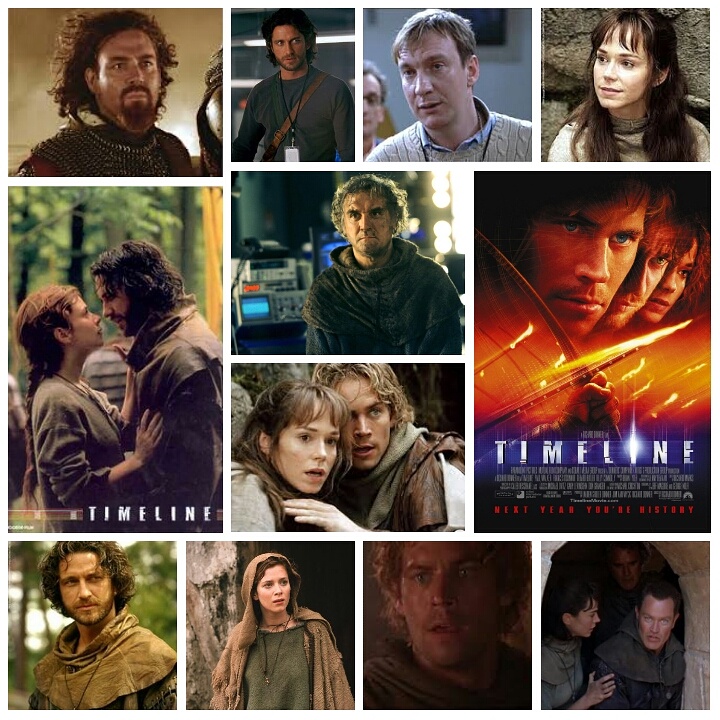
I really enjoyed Richard Donner’s Timeline, despite some bad reviews and an awful reputation. It’s based on a book by the great Michael Crichton, and centers around what is one of the most fascinating and enjoyable premises out there: time travel. There’s nothing like a time travel flick, in any way, shape or form. I’m a sucker for them. This one starts off with an archeological dig somewhere in England, leading to the abrupt discovery of forces that allow a wormhole in time to be used, sending people back to the middle ages. Paul Walker discovers that his researcher father (Billy Connolly) has made the leap back in time, and may be in trouble. Along with his sort of girlfriend (Frances O Connor) and his father’s friend (Gerard Butler) they venture back to find him, and of course everything goes wrong. They land smack in the middle of a skirmish between a poncy English lord (Michael Sheen) and the leader of the French faction (Lambert Wilson), with no identities, nothing to defend themselves with and not a clue what to do. Back home in our time (or, rather, 2003. Time flies, don’t it?), the head of the program responsible for harnessing the wormhole’s power (a slimy David Thewlis) is a greedy prick who can’t really be trusted with the technology, prompting the suspicion of his assistant (Matt Craven). Walker, Butler and company are now faced with a full on castle siege that’s quite the dandy set piece, forced to take up arms and fight for their lives as well as a way home. Walker is amusingly out of place in a medieval setting but it works considering the plot. Butler is terrific, bringing his old world style to a character arc that is lovely to see play out. Connolly, although not in the film that much, lights up the screen with his genial kindness and likability that he brings to every film. Neal McDonough, Anna Friel and Marton Csokas also costar. It’s simply an adventure piece that doesn’t think logistics too much, and in turn doesn’t require you to do so either. Underrated stuff.