JOHN MCNAUGHTON’S MAD DOG AND GLORY — A REVIEW BY NICK CLEMENT

1

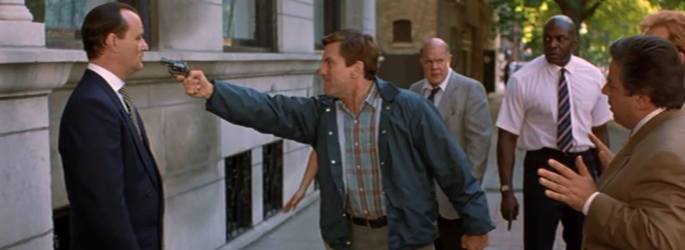
The 1993 oddball comedy Mad Dog and Glory is a truly fun and special little movie, but that’s been underrated director John McNaughton’s stock-in-trade for his entire career: Make films that fly just a tad under the radar but then become huge genre influences down the line. His brilliant and utterly startling 1986 debut Henry: Portrait of a Serial Killer is still one of the most chilling examinations of evil ever put on film, and which introduced the world to the amazing actor Michael Rooker. Five years later, he followed up with the sci-fi curiosity The Borrower, which I’ve not seen, but which sounds VERY interesting. Then, two years later, he dropped genre-bender Mad Dog and Glory, which really announced the mark of a majorly unique voice.

mad_dog_and_glory

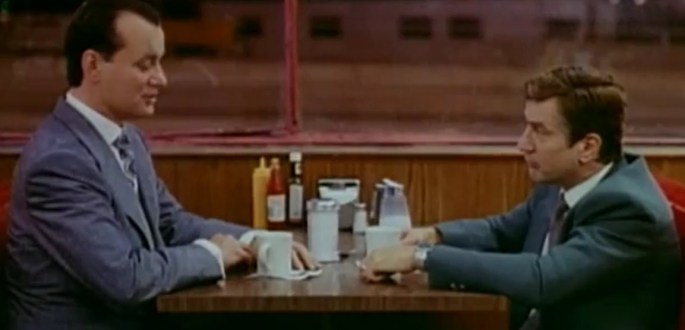
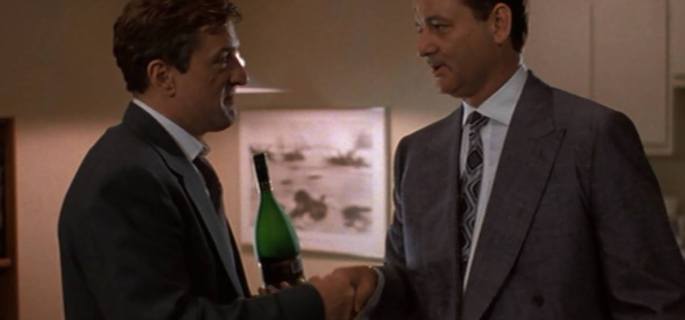
There’s only one problem; audiences aren’t receptive to the quirky mix of violence, comedy, and pathos. Despite strong critical support (Ebert and Canby were notable supporters), the film died in theaters, but has over the years found a well-deserved cult following. Executive produced by crime genre master Martin Scorsese and written with the usual sense of tough guy banter and attention to character and plot detail by Richard Price (Clockers, Ransom, Sea of Love, The Wire), the film tells the story of a lonely and depressed cop (Robert De Niro), who saves the life of a NYC gangster (Bill Murray), and who become unwitting frenemies through a variety of circumstances. Murray wants to repay De Niro for saving his life in the form of female companionship, so he offers one of his girls to him as a “gift,” the beguiling, radiant, impossibly young Uma Thurman, thoroughly lovely and exceedingly funny and pre-face-destruction.

2

What follows is an unconventional romance between De Niro and Thurman, an unconventional friendship between De Niro and Murray, and scene after scene of inspired comedy and drama. The notion of casting De Niro as the hapless guy and Murray as the confident gangster was a stroke of genius, but for whatever reason, people didn’t buy into the idea. Which is a pity, because Mad Dog and Glory works so well, and would go on to inform later De Niro movies like Analyze This and the misbegotten Showtime, which paired him with Eddie Murphy. It’s a bummer that De Niro and Murray haven’t worked together since because the two of them shared great, natural, and easy-going chemistry, bouncing off one another with great comedic timing and scene-balancing generosity.

3

McNaughton deftly mixed graphic violence with big laughs in a way that few are able to do, and despite the film having a compromised finale (rewrites and reshoots were required which delayed the final product by a full year), so much of this movie comes up aces so often that it’s easy to look past the traditional ending to what was otherwise anything but traditional as a whole. The fantastic supporting cast includes David Caruso, Mike Starr, the recently deceased Tom Towles, Kathy Baker, Jack Wallace, and Richard Belzer, with screenwriter Price making a cameo as a detective. After Mad Dog and Glory slipped in and out of theaters, five years would pass with McNaughton working only in television before his next feature, the notorious and wildly entertaining neo-noir high-school-sex-romp Wild Things, which would reunite him with Murray, and still stands as a juicy, sexy, hot-blooded genre entry.

1

Lulu On The Bridge: A Review by Nate Hill

image

Lulu On The Bridge is an odd one, and that’s a compliment. It subtly strains at the constrictions of genre until you realize just how unique it has gotten right under your nose. I’ve always thought of it as the Abel Ferrara fiom that he never made. Harvey Keitel delivers a home run of a lead performance as Izzy Maurer, a renowned jazz musician who loses his ability to play after he is shot by a lunatic gunman (Kevin Corrigan) while he is performing his music in a cafe. He sinks into a deep depression following the incident, and then something curious happens. One day he finds a mysterious stone, with a phone number attached to it and some seemingly mysterious qualities which alter the psyche, mood and perception of anyone in its vicinity. The phone number leads him to Celia Burns (the ever excellent and under estimated Mira Sorvino), an aspiring actress who’s fallen just south of the success line, and has a taste for Izzy’s music. The two seem destined to meet and as you might guess, begin a passionate love affair that begins to get a bit obsessive, with strong hints directed towards the stone that seems to govern will and volition. Their romance is hot, heavy and volatile, threatened when a mysterious man named Dr. Can Horn (a classy but dangerous Willem Dafoe) separately kidnaps them in attempt to retrieve the stone. The script deliberately shades over its true intentions until the very last minute, stopping to pick many dialogue and thematic flowers along the way, as well as leave a few red herrings behind. Gina Gershon is great as Izzy’s ex wife, and the monumantal supporting cast also includes Richard Edson, the great Victor Argo, Harold Perrineau, Mandy Patinkin, Vanessa Redgrave and a brief Lou Reed who is pricelessly credited as ‘Not Lou Reed’. If you snag a dvd you can also see deleted scenes work from Stockard Channing, Jared Harris, Josef Sommer and Giancarlo Esposito. The film attempts music, mystery, doomed love, urban mysticism, thriller and drama elements. I’m happy to report that it succeeds at all of them, a gem not unlike the mcguffin stone within the plot, and a haunting little modern fairy tale. Check it out.

The Adventures Of Buckaroo Banzai Across The 8th Dimension: A Review by Nate Hill

image

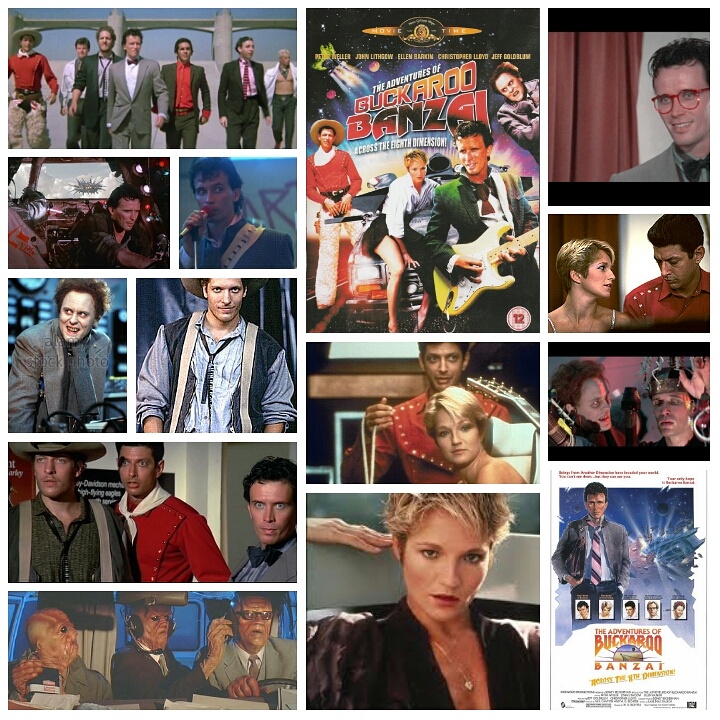
The Adventures Of Buckaroo Banzai Across The 8th Dimension. There’s a title, eh? The film lives up to it too, and is simply one of the most unique, bizarre and original sci fi flicks out there. It’s the very definition of cult to its abstract bones, filled to the brim with eccentricities and idiosyncrasies. For me it represents a certain genre niche that’s nestled squarely in goofball mode, splayed out across the borders of science fiction, comedy and farce, without a care in the world and not an iota of self consciousness or any fucks given. Call it Buck Rogers meets The Avengers meets Bonanza doesn’t even scratch the surface. Peter Weller, that eternally cool bastard, plays Buckaroo Banzai, who is somewhat of a renaissance man. He’s a neurosurgeon, a rock star, a scientist and above all a lover of adventure, always sporting Weller’s unmistakable deadpan charm. Buckaroo and his band are also a crime fighting team called The Hong Kong Cavaliers, and include roughneck but lovable cowboy Rawhide (Clancy Brown) and slick New Jersey (Jeff Goldblum). Buck has perfected a device called the oscillation overthruster, which allows him to travel through solid matter and on into the eighth dimension. Only problem is, the red lectroids, an alien race from planet 10, want to steal the device for their own. They are led by an unbelievably funny John Lithgow who gets the spirit of the film and then some. Buck also finds romance with the adorable Penny Priddy (Ellen Barkin), whisking her off into super sonic adventure with him and the Cavaliers. It’s beyond silly, super arbitrary and random, and I love every glorious unfiltered minute of it. This type of wantonly bizarre stuff is my cinematic bread and butter, especially  when it’s done with such pep in its step, as well ass love and commitment to being an oddball venture. The cast is huge and all in that loopy sleep deprived state where everything is funny and strange organic creation comes from the abstract. Watch for Dan Hedaya, Lewis Smith, Pepe Serna, Vincent Schiavelli, Jonathan Banks, John Ashton and Christopher Lloyd too. A wacky gem with a style all its own, constantly tapped into a well of creation, humour and fun.

TRON – A REVIEW BY J.D. LAFRANCE

tron1

When Tron came out in 1982, it was intended to be a visually stunning parable against the abuse of powers by computers and technology. More than thirty years later, the film plays more like a nostalgic ode to the early 1980s than a simple good vs. evil morality tale. Tron evokes the heady days when video games like Pac-Man, Defender and Centipede ruled the arcades and when it seemed like everyone owned a Commodore 64 or an Atari 2600 – the eight track of personal computing. It also anticipated the proliferation of CGI special effects and was not a big hit back in the day but its influence is widespread – it enjoys a loyal cult following today.

Kevin Flynn (Jeff Bridges) is a hot shot computer programmer turned computer hacker after being fired three years ago by ENCOM corporate big wig, Ed Dillinger (David Warner). To add insult to injury, the executive stole a series of video games that Flynn created and transformed them into wildly popular and profitable products, chief among them Space Paranoids – much to the young programmer’s chagrin. Flynn can prove true authorship of the games but only if he can gain direct access to ENCOM’s mainframe. Enter ex-girlfriend Laura (Cindy Morgan) and her current beau, Alan (Bruce Boxleitner) – both disgruntled employees at ENCOM – who give Flynn the access he needs to find out the truth. However, the corporation’s artificial intelligence, the tyrannical Master Control Program, discovers what Flynn is doing and uses a high tech laser to digitize the troublesome hacker and transport him inside the computer world.

This is where Tron really begins to get interesting as writer/director Steven Lisberger creates a flashy, neon-drenched world, a cybernetic version of Social Darwinism where lowly computer programs must participate in gladiatorial battles against the Master Control’s ruthless minions. These involve games where opponents throw glowing discs at each other or, in another game, hurl a ball of energy at one another. If either one of these things hits someone, they are killed or de-rezzed – slang for deresolution. Even though the computer effects are primitive by today’s standards, back then they were considered ahead of their time. There is a certain clunky charm to the effects that makes Tron all that more endearing to its fans. The look of the computer world is all blacks and dark blues, which is in nice contrast to the vivid neon red and blue of some of the characters and vehicles that inhabit it.

Undeniably, the coolest sequence in the film is the light cycle race where Flynn, Ram (Dan Shor) and Tron take on three of the MCP goons. It involves futuristic vehicles made out of energy and that leave behind a solid trail that one uses to block in their opponent and destroy them. The action is fast-paced and exciting to watch with dynamic visuals. The computer world is beautifully realized in vivid detail that immerses one fully and is obviously a large part of the film’s appeal. Lisberger adopts a pretty simple color scheme of predominantly primary colors. Tron is one of those rare examples where style over substance works. The computer world that Lisberger and his team worked so hard to create is rich in detail. It also plays on our romantic notions of what really goes on inside our computers – not a collection of microchips and circuit boards but a vast world where programs fight each other for survival. It’s no wonder that visionary science fiction writer, William Gibson once commented in an interview that the cyberworld in Tron is how he envisioned the cyberspace in his own novels.

The film’s genesis began in 1976 when Lisberger, then an animator of drawings with his own studio, looked at a sample reel from a computer firm called MAGI (Mathematical Applications Group, Inc.). At the time, he was researching technology in the late 1970s. Shortly afterwards, Atari came out with Pong and he was immediately fascinated by them. He wanted to do a film that would incorporate these electronic games. According to Lisberger, “I realized that there were these techniques that would be very suitable for bringing video games and computer visuals to the screen. And that was the moment that the whole concept flashed across my mind.” He was frustrated by the clique-ish nature of computers and video games and wanted to create a film that would open this world up to everyone.

tron2

Lisberger and his co-producer Donald Kushner borrowed against the anticipated profits of their 90-minute animated television special, Animalypmics to develop storyboards for Tron. They moved to the west coast in 1977 and set up an animation studio to develop Tron. Originally, the film was conceived to be predominantly an animated film with live-action sequences acting as book ends. The rest would involve a combination of computer generated visuals and back-lit animation. Lisberger planned to finance the movie independently by approaching several computer companies but had little success. One company, Information International, Inc., was receptive. He met with Richard Taylor, a representative, and they began talking about using live-action photography with back-lit animation in such a way that it could be integrated with computer graphics.

Lisberger and Kushner took their storyboards and samples of computer-generated films to Warner Bros., MGM and Columbia – all of whom turned them down. Lisberger spent two years writing the screenplay and spent $300,000 of his own money marketing the idea for Tron and had also secured $4-5 million in private backing before reaching a standstill. In 1980, Lisberger and Kushner decided to take the idea to Disney, which was interested in producing more daring productions at the time. However, Disney executives were uncertain about giving $10-12 million to a first-time producer and director using techniques that, in most cases, had never been attempted.

The studio agreed to finance a test reel which involved a flying disc champion throwing a rough prototype of the discs used in the film. It was a chance to mix live-action footage with back-lit animation and computer generated visuals. It impressed the executives at Disney and they agreed to back the film. The script was subsequently re-written and re-storyboarded with the studio’s input. At the time, Disney rarely hired outsiders to make films for them and Kushner found that he and his group were given a less than warm welcome because “we tackled the nerve center – the animation department. They saw us as the germ from outside. We tried to enlist several Disney animators but none came. Disney is a closed group.”

One the reasons why the cyberspace in Tron is so striking is because of the creative brain trust assembled to help realize it. Futuristic industrial designer Syd Mead, legendary French comic book artist Jean “Moebius” Giraud, and high-tech commercial artist Peter Lloyd served as special visual consultants. Mead designed most of the vehicle designs (including Sark’s aircraft carrier, the light cycles, the tank and the solar sailer). Moebius was the main set and costume designer for the film. Lloyd designed the environments. However, these jobs often overlapped with Moebius working on the solar sailer and Mead designing terrain, sets and the film’s logo. The original Program character design was inspired by the main Lisberger Studios logo, a glowing body builder hurling two discs. CGI had been used in films before, most notably in Westworld (1973) and Star Trek: The Motion Picture (1979), but it was used much more extensively in Tron. In order to pull it off, four of the United States’ foremost computer graphics houses produced the computer imagery for the film. They invented the computer techniques and created the visual effects in approximately seven months. More than 500 people were involved in the post-production work, including 200 inker and hand-painters in Taiwan.

Jeff Bridges brings a playful energy to the film both in the real world – like when he breaks into ENCOM – and in the computer world, like when he gets acclimatized to his new surroundings. Tron is the no-nonsense hero while Flynn provides comic relief. We are introduced to Flynn in his environment – the video arcade that he owns, beating the world record score for Space Paranoids, one that he invented but was stolen from him. Now, he plays the game and the only profits he sees from it are the quarters that kids put in it. Bridges brings an engaging, boyish charm to the role as is evident in the way he gleefully circumvents ENCOM security and then proceeds to sneak in so that he can find and use an unattended computer terminal. There are the little touches, like when Flynn sneaks on ahead and hides from Laura, that keep the mood light and fun, just before our hero is zapped into the computer world.

In the real world, Tron’s alter ego, Alan is a bespectacled, slightly bookish programmer who is frustrated by the lack of access he has to his company’s computer system. Bruce Boxleitner plays these two contrasting roles quite well. He knows he’s the straight man to Bridges’ charismatic goofball Flynn. We meet his character as he tries to access a high level of security so that he can run his Tron program, an independent security program that would act as a watchdog to the company’s MCP computer. There is a cut to a long shot and we see that Alan’s cubicle is one of hundreds – impersonal and he is treated as an insignificant cog in a massive corporation. Interestingly, the corporation’s name is ENCOM, which eerily foreshadows another evil empire, but in the real world – ENRON.

tron3Amazingly, Tron wasn’t even nominated for a special effects Academy Award because “the Academy thought we cheated by using computers,” Lisberger remembers. However, his film and the world he and his team created captivated a small group of moviegoers. A loyal cult following developed around Tron over the years. The film may have not captured the public consciousness when it first came out but it has since developed a loyal following that loves it dearly. In many respects, Tron is a snapshot of the early ’80s when video games were just starting to take off, but it also was a harbinger of things to come. It paved the way for the elaborate computer graphics we see in movies like The Matrix (1999) and the new Star Wars movies. However, Tron warns that we cannot rely totally on computers to do everything because in doing so we run the risk of losing our humanity. I always imagine Flynn going on to become Bill Gates or maybe Steve Jobs.
BOB FOSSE’S ALL THAT JAZZ — A REVIEW BY NICK CLEMENT

1.jpg

Directed with a hefty, grinning dose of chuck-it-all, piss-and-vinegar-abandon, Bob Fosse’s All the Jazz is movie magic. Exasperating, nasty, lighting-fast, dark-hearted movie magic but movie magic all the same. Using the framework of a heightened, pseudo-autobiographical narrative with diversions into fantasy and utilizing the trappings of the movie-musical in exciting ways that are rarely ever attempted, this is a sensational piece of storytelling and filmmaking, with Roy Scheider dropping an Atomic Bomb of a performance as a stressed out, over-sexed, over-drugged, loose cannon of a director, a man simultaneously mounting a large-scale Broadway show and putting the editorial touches on his latest movie. Things aren’t going correct with either project, women keep coming and going at the worst of times, and his young daughter clearly needs her father for support. Alan Heim’s frenetic yet coherent editing in this film is spectacular, all jagged patterns that underscore the fragility and hostility of Scheider’s fractured mental and spiritual psyche, while the frenzied, energetic cinematography by Giuseppe Rotunno, filled with extreme close-ups and doc-style jitters, added a level of vitality to every single sequence.

2

Clearly a personal statement about the artistic process and what it can do to the artist in question, this is a film that could only have been made by Fosse, and All the Jazz serves as his celebration of both mediums, film and stage, and as his own cautionary tale for everyone else to follow in his artistic footsteps. This is a film that’s about the rush and excitement of success, about how some people have a burning fire raging inside that can never be extinguished, and because Scheider’s performance is so completely full-throttle at every moment, you get the sense that Fosse found exactly what he was looking for in his choice of leading man. The restoration wizards at The Criterion Collection have done an utterly superb job with their 4K transfer, stripping away any blemishes and pictorial imperfections, but still allowing the Blu-ray disc to have that special, old-school filmic quality that I adore and miss in relation to modern films, which increasingly look less and less like actual movies, and more like video games. The sound pops with clarity and balance, and the special feature line-up is a treasure trove of goodies.

3


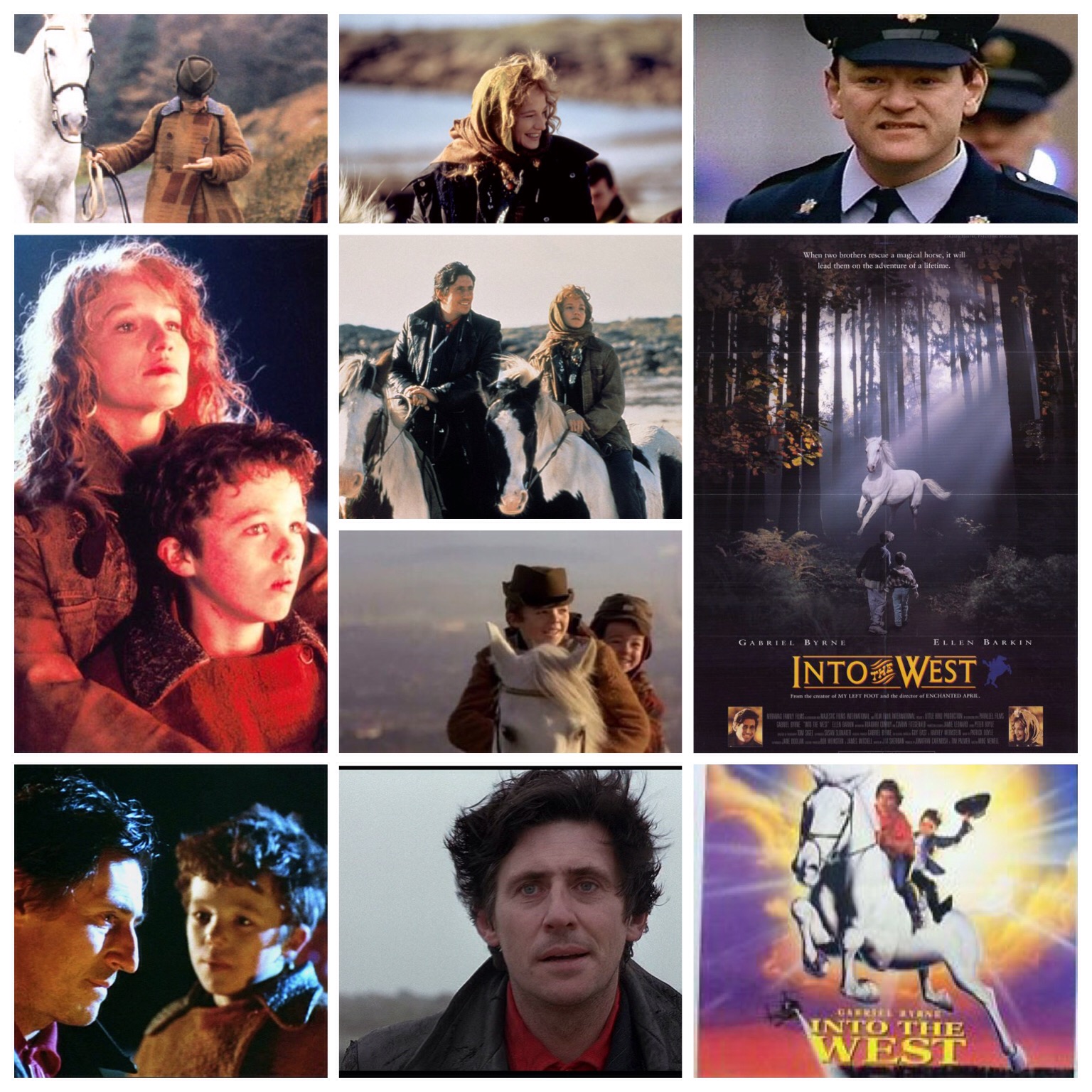
Into The West: A Review by Nate Hill


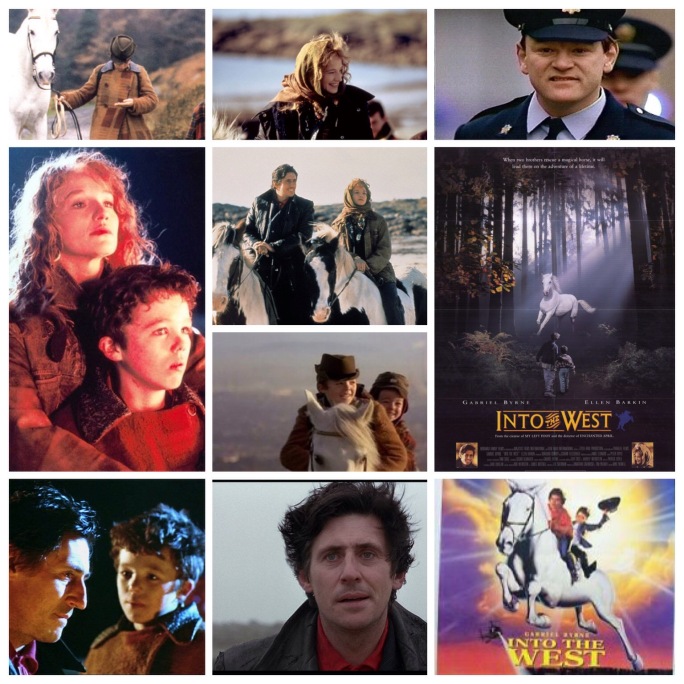
Into The West is a charming Irish folktale with two excellent lead performances from Gabriel Byrne and Ellen Barkin, who have been married in the past and therefore have a natural, easygoing chemistry. The film takes place in rustic Ireland, where two young boys are given a magnificent and mysterious white stallion by their gypsy grandfather (David Kelly). They come from a poor neighbourhood, somewhat left to their own devices by their downbeat alcoholic father (Byrne), who lost his wife and their mother years before. The horse seems to have some type of sixth sense related directly to their family history. The two boys are in that state of wonder where fables and magic still exist, and follow the horse wherever it leads. Byrne desperately pursues his sons to whatever end, helped by a fellow Traveller and old flame (Ellen Barkin, excellent and passing quite well as an Irishwoman). The horse seems to know his past and leads him to places which have sentimental value to him, leading him one step closer to his kids, while teaching him an esoteric lesson along the way. Great stuff, kid orientated but still has an eerie and mature atmosphere. Watch for early appearances from Brendan Gleeson and Liam Cunningham. Beautiful film. 

STAR WARS EPISODE II: ATTACK OF THE CLONES – A Review by Frank Mengarelli

AoTC 2

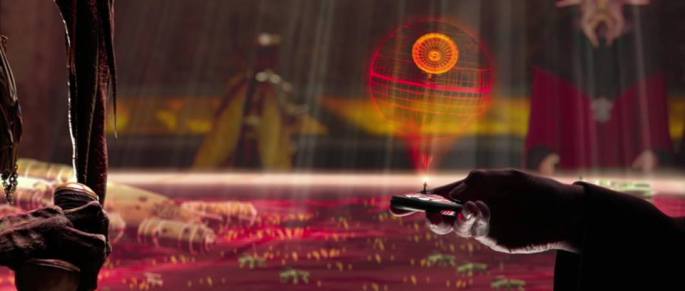
The galaxy has begun to divide amongst the Republic and the newly formed Separatist Movement, led by former Jedi Master who was trained by Yoda and mentored Qui Gon Jinn, Count Dooku (perfectly played by Christopher Lee). ATTACK OF THE CLONES follows in line with THE EMPIRE STRIKES BACK as the transgressive center of the trilogy.

Like the rest of the prequels, the film has its recurring base of people who champion to dismiss the film at all costs. Yes, some of their points are valid, but some of them are ridiculous just to be ridiculous. We know people hate the prequels, but that will never stop the ones who love the films from continuing to do so.

The darkness of Episode II is very subtle, and upon first glance, it’s hard to pick up on due to the films cinematic glossiness. The first being the forbidden love between Padme and Anakin Skywalker. We know how this is going to end, and watching the beginnings of their courtship is the equivalent to looking for a gas leak with a match.

AoTC 1

For me, the most fascinating aspect in which Lucas included in the film is Anakin’s motivation for accepting the dark tendencies he feels. Anakin’s mother gets kidnapped by Tusken Raiders, and he returns back to Tatooine to save her. He approaches the camp, and finds his Mother, who has been gone for months, beaten, bloodied, and chained up face first on a rack.

Anakin’s mother dies in his arms, and then he proceeds to kills every single Tusken Raider in the village. Including the women and children in a fury of anger. Yoda and Qui Gon call out to him, but that can’t stop him form seeking vengeance.

Anakin’s mother was being raped. Repeadly. There is not another sound explanation as to why she was still alive, or why she would be chained up face first against a rack. This was the spark that lit the dark fire inside of Anakin.

While, at times, the second act featuring the overly romantic love story between Padme and Anakin can drag it’s feet, it is all worth it for the final act that a lot of us have waited our entire lives to see: an all out Jedi battle.

AoTC 3

At least thirty Jedi, led by Yoda and Mace Windu, backed by the Republic’s new Clone Army descend upon the Separatist hub planet of Geonosis and wage war against the Geonosians and the Separatist’s droid army.

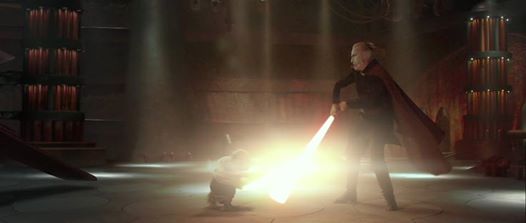
The film includes my favorite (yet widely unpopular) light saber duel featuring Yoda facing off against his former Padawan turned Sith Lord, Count Dooku. This is the moment when we are shown exactly why he is the head of the Jedi Council, General of the Republic’s Army, and how powerful he is with the Force.

ATTACK OF THE CLONES remains an imperfect film, aside from some clunky dialogue and misguided casting, I’ve come to wholeheartedly accept the film, and still marvel at George Lucas’ unbelievable command and vision behind the camera.

JAMES GUNN’S SUPER — A REVIEW BY NICK CLEMENT

1

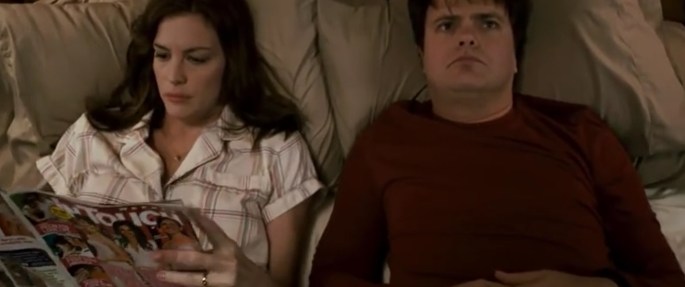
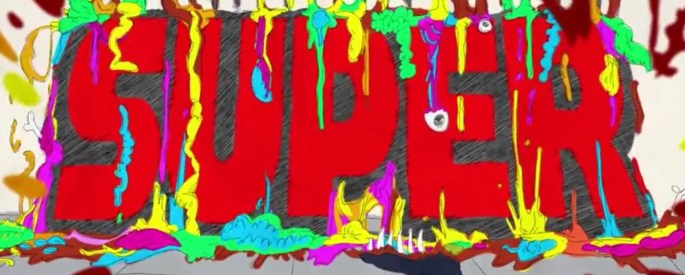
Out of all of the cinematic output from writer/director James Gunn, my favorite thing he’s done is Super, his low-tech “superhero” deconstruction which was released in 2010 to mixed reviews and scant box office returns. Which is a shame, because this film has more wit, both verbal and visual, than most “comedies” that get released on a weekly basis, and it demonstrated that Gunn is one the best when it comes to mixing tones within the narrative. Like a less slick and expensive Kick-Ass, Gunn’s film centers on superheroes who don’t have any superpowers, and gets tons of comedic mileage out of poking fun at the various idiocies that these overblown movies tend to revel in, while still sticking with its playing-for-keeps attitude.

2

Starring the fantastic Rainn Wilson as a meager guy pushed to his emotional and physical brink by various external forces, the plot hinges on him becoming a regular-guy vigilante named The Crimson Bolt, intent on taking out society’s trash (murderes, rapists, pedophiles, etc.) any way he sees fit. Gunn’s wild little film, which feels like Falling Down on crystal meth, has a great supporting cast, including the phenomenal Ellen Page as Wilson’s unhinged sidekick, Liv Tyler as Wilson’s wife, Nathan Fillion, Michael Rooker, Gregg Henry, Rob Zombie as The Voice of God, and an extra-smarmy Kevin Bacon as a truly nasty chief villain. Taking full advantage of its hard-R rating, this is a super-charged, super-funny, and super-violent satire that has generous doses of devilish black comedy, strange sexual hijinks, and rough-house action sequences that truly bring the pain.

3

BEAUTIFUL GIRLS – A REVIEW BY J.D. LAFRANCE

b1

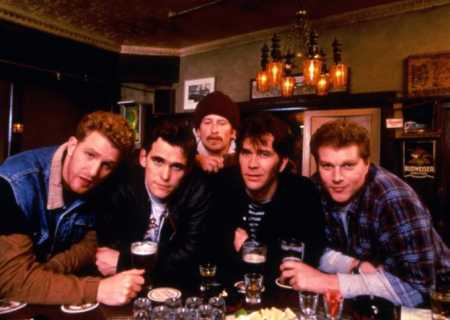
There is something about turning 30 that makes one re-evaluate their life. It is that time when you are forced to grow up, find direction, settle down, and become an adult. Beautiful Girls (1996) concerns a group of men faced with this dilemma. They have been living in the past and recent events have forced them to confront it head on. This is also the late director, Ted Demme’s best film in an all-too brief career. As he said in an interview at the time of the film’s release, “I don’t think there are too many movies about turning 30, or just about to turn 30. Those issues are whether to get married or not, whether to have kids or not, am I happy in my job, do I need to find another job, am I unsettled with myself. You’re not a teen anymore, and you don’t want to admit you’re an adult either.”

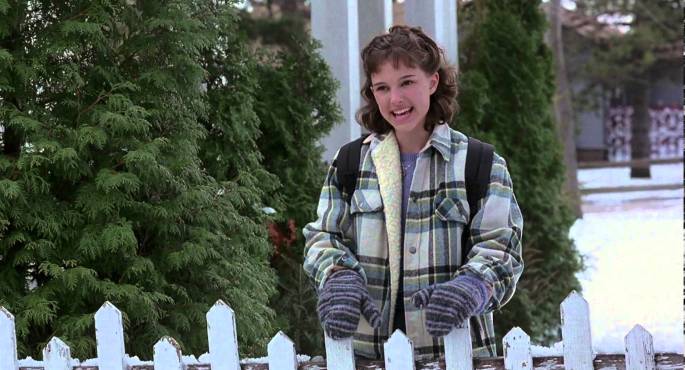
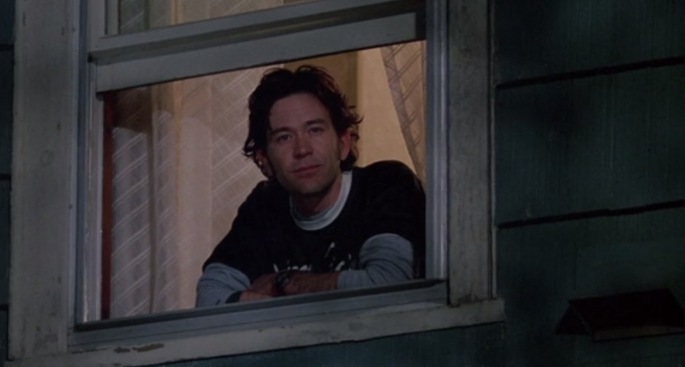
Willie (Timothy Hutton) returns to his small, Northeastern hometown for his ten-year high school reunion, hook up with buddies, and get his life in order. His mom has recently died (leaving his younger brother and father in a deep funk) and all of his friends are having relationship problems. Willie strikes up a friendship with a young girl named Marty (Natalie Portman) who has moved in next door. She is a character out of J.D. Salinger short story – wise beyond her years. Marty sets the tone for the rest of the women in the story. They are all intelligent and end up suffering with men who don’t appreciate what they have right in front of them.

Screenwriter Scott Rosenberg was living in Boston, waiting to see if Disney would use his script for Con Air (1997). “It was the worst winter ever in this small hometown. Snow plows were coming by, and I was just tired of writing these movies with people getting shot and killed. So I said, ‘There is more action going on in my hometown with my friends dealing with the fact that they can’t deal with turning 30 or with commitment’ – all that became Beautiful Girls.” The resulting screenplay turned out to be quite autobiographical, with Willie being Rosenberg’s surrogate.

The friendship between Willie and Marty pushes the boundaries of what is comfortable in a comfort movie but it never goes beyond it. Rosenberg’s screenplay is smart enough to be self-aware of this and even addresses it in a scene between Willie and his friend Mo (Noah Emmerich). Fortunately, the film narrowly avoids letting things get too uncomfortable and therefore taking us out of the captivating spell established by the movie. It also avoids clichés like the beautiful Andrea (Uma Thurman) having sex with one of the guys. Instead, she rebuffs them all because she is loyal to her boyfriend who, makes her martinis listens to Van Morrison and reads the newspaper with her on Sunday mornings – simple pleasures. She is not a perfect ideal, just on another level than these guys.

Rosenberg’s script is also able to juggle the various subplots without resorting to cliché resolutions. Tommy (Matt Dillon) is cheating on his girlfriend Sharon (Mira Sorvino) with his high school sweetheart (Lauren Holly). When he gets beat up by her husband (Sam Robards) and his buddies you anticipate Willie, Paul (Michael Rapaport) and Mo to mobilize and kick some ass but at the last second they stop because the man’s child will see her father get beaten up. This stops Mo who also has kids.

In addition to the clever plotting, Rosenberg’s script also features a lot of funny, memorable dialogue. Tommy chastises Paul for getting his on again-off again girlfriend, Jan (Martha Plimpton) a brown-colored diamond when he tells him, “Buddy, you been eating retard sandwiches.” There is also great throwaway dialogue like Stinky (Pruitt Taylor Vince) with his proprietor lingo, “We got apps!” or the often-used word “crease” to convey frustration at something, like when Tommy asks, “What’s got him creased?”

b2All of the guys in Beautiful Girls are essentially the same person. Willie is just finding his luck, Paul just lost his luck as the film begins, Tommy loses it over the course of the movie, and Mo has already found and achieved it with his family. Demme does not waste an opportunity to subtly illustrate his point. In one scene, he frames all three guys together: Paul (lost luck) is driving with Willie (finding luck) and Mo (achieved luck) along for the ride. The women counterpoint their men in this cycle: Tracy (Annabeth Gish) for Willie, Jan for Paul, Sharon for Tommy, and Sarah (Anne Bobby) for Mo.
The women in the film are smarter than the guys and make them (and us) feel like they are lucky that their behavior is even tolerated much less loved despite all of their failings. This is epitomized in Gina (Rosie O’Donnell)’s famous monologue where she chastises Tommy and Willie for obsessing over the women in Penthouse magazine. She tells them, “If you had an ounce of self-esteem, of self-worth, of self-confidence, you would realize that as trite as it may sound, beauty is truly skin-deep.” Gina speaks for the women in the film when she reminds the men to forget the airbrushed ideal of women that we see in magazines and movies. They do not exist or are unattainable to any normal guy.

To counter her argument, later on in the movie, Paul delivers a monologue defending men’s idealization for the impossibly perfect image of women. “She can make you feel high full of the single greatest commodity known to man – promise. Promise of a better day. Promise of a greater hope. Promise of a new tomorrow.” It is a rare, articulate moment for Paul, suggesting that he may be more than some lunkhead who drives a snowplow. He may actually be a romantic. It is nice to see a film that is obviously told from a man’s point of view trying to show both sides of the argument.

The women in the film are not treated like excess baggage. They all have a soul and a brain which is rare for a film written and directed by men. There is a tendency to make them perfect or marginalized with their problems defining them. This is not the case with Beautiful Girls. This is reversed and it is the problems that define the men.

Ted Demme assembled a fantastic cast of independent character actors for his movie: Michael Rapaport, Max Perlich, Pruitt Taylor Vince and Mira Sorvino to name only a few. They all work so well together and their friendships are believable because of the preparation the director made them do. He had the entire cast come to Minneapolis and live together for two to three weeks so that they could bond. One only has to watch a scene like Andrea’s first appearance in Stinky’s bar as Willie and his friends try desperately to impress her that the two week bonding session paid off. There is an ease and casual nature between everyone that is authentic.

The setting is a character unto itself. Demme has set his film in a charming east coast hamlet that is filled with little diners and bars that look so inviting that you want to go there, you want to be there. It all looks so comforting, so inviting and this is so hard to achieve properly in any film. He commented in an interview that he “wanted to make it look like it’s Anytown USA, primarily East Coast. And I also wanted it to feel like a real working class town.” To this end, Demme drew inspiration from Michael Cimino’s The Deer Hunter (1978). “The first third of the film is really an amazing buddy movie with those five actors. You could tell they were best friends, but they all had stuff amongst them that was personal to each one of them.” Demme wanted to make Beautiful Girls more than just a buddy movie. When he read Rosenberg’s screenplay he told him, “‘You know, we really need to take this to another level.’ If I was ever going to make a buddy movie, which I never thought I would, I wanted to make sure it had some real depth to it.”

b3The film does not wrap everything up nice and neatly. Paul and Jan’s subplot is not resolved in the sense that we don’t know if they settle their differences and get back together. Tommy and Sharon will probably get back together but it is not spelled out. Instead, as the closing credits appear we are left to imagine what happens to the characters. It is Paul’s parting comments to Willie as he is about to go back to New York City, “Come and see us any time, Will. We’ll be right here where you left us. Nothing changes in the Ridge but the seasons.” This is also a message to the viewer as well. Come back and see Beautiful Girls again. The film’s world and its characters are comforting and making you want to revisit them again and again.
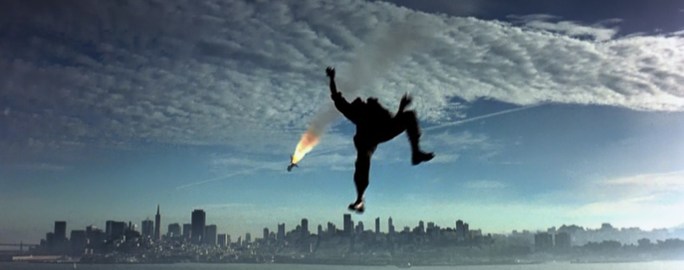
MICHAEL BAY’S THE ROCK — A 20th ANNIVERSARY RETROSPECTIVE REVIEW BY NICK CLEMENT

16

The Rock remains the best film that Michael Bay has made. It might not have the action-bombast of Bad Boys 2, the satirical edge of Pain & Gain, or the overwhelming intensity of 13 Hours, but the film simply works on every level as a tremendous piece of audience pleasing, late 90’s, high-concept action filmmaking that has only gotten better over the years as countless genre entries have come and gone. Directed with slick and gritty efficiency by Bay, who was in major Tony Scott mode with his first big-time blockbuster after 1995’s surprise hit Bad Boys, The Rock features a trio of big, brawny star turns from Nicolas Cage (the reluctant hero), Sean Connery (doing a riff on Bond), and Ed Harris (the morally conflicted villain), with a ridiculous supporting cast in tow. Made back when you could make such a picture for a somewhat affordable price tag and far more reliant on practical effects than excessive CGI, this is exactly the sort of movie we aren’t getting in cinemas these days, and that’s a damn shame, because when done correct, you get summer popcorn fun like this.

55

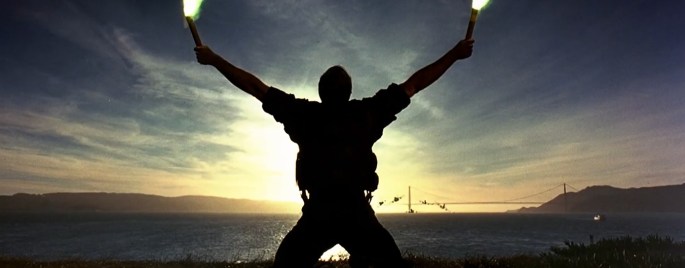
Successfully merging the buddy picture with formula elements from Die Hard, Bay was able to tap into his lightning-quick visual sensibilities, creating a super glossy San Francisco in 2.35:1 anamorphic widescreen; while viewing this film on the Blu-ray format, one marvels at the filmic quality to the entire presentation. Bold, saturated colors dominate the endless horizon, almost always seen at sunrise or sunset, a classic visual motif that has been a signature shot for Bay in almost every single one of his features (if not all…), as John Schwartzman’s gorgeous cinematography set a modern standard that so many would ape in the following years. Richard-Francis Bruce’s dynamic editing was in perfect synch with the loaded visuals, while the tremendous musical score by Nick Glennie-Smith, Harry Gregson-Williams, and Hans Zimmer is a bonafide all-timer, becoming sampled by numerous trailers over the years. The action was huge, from a breathless car chase throughout the crowded S.F. streets, to the all-out assault on Alcatraz that comprised much of the second and third acts.

8

The impact that The Rock has made on the action movie landscape is nearly indescribable, and stands as one the greatest Simpson-Bruckheimer collaborations, primarily because of its script. As written by David Weisberg, Douglas S. Cook and Mark Rosner (with additional uncredited work done by Aaron Sorkin, Jonathan Hensleigh, Quentin Tarantino, Dick Clement, and Ian La Frenais), the film presents a semi-plausible yet still over the top scenario that’s just believable enough, but far-fetched to the point that the audience can disengage a bit and watching something extremely cinematic unfold. The decision to ground Harris’s chief baddie, General Hummel, in a fog of moral confusion and militaristic outrage has been one of the key ingredients to the overall success of The Rock, as it gives the film an edge in the character department. Because you’re able to understand General Hummel’s anger, his reason for action is all the more drastic and exciting. Harris brought his usual brand of steely intensity to every scene, and as a result, The Rock bristles with menace whenever Harris appears. But beneath the hostility were shades of confusion suggesting a complexity not normally afforded a gene picture such as this.

12

And then when you combine the Odd Couple-esque pairing of Cage and Connery, who honor the time-tested tradition of great buddy pairings, the narrative takes on yet another angle and runs with it all the way to the finish line. Cage got all the overtly funny lines, and would pave the way for his ascent into action hero mode with this quirky and sympathetic performance. And Connery, clearly having a blast playing a version of 007 within the more visceral confines of an R-rated picture, was all class at all times, bringing vigor and elegance to his role of an imprisoned spy who gets to use his old skills one more time to save the day. When you look at the list of actors in the supporting cast, the mind does somersaults: Michael Biehn, William Forsythe, David Morse, Tony Todd, Philip Baker Hall, John Spencer, John C. McGinley, Vanessa Marcil, Claire Forlani, Stuart Wilson, Danny Nucci, Philip Baker Hall, Bokeem Woodbine, David Greg Collins, Gregory Sporleder, Brendan Kelly, David Marshall Grant, Xander Berkeley, and Jim Caviezel as F/A-18 Pilot. Bay had all the ingredients here – a disciplined screenplay, a phenomenal cast of actors, producers who knew exactly how to maximize every situation, and a populace of moviegoers who were extremely interested in this sort of decadent, big-budget cinematic pyrotechnics show. It still feels like yesterday that I went to see this film on opening night and then the next afternoon; 20 years have breezed by.

1