Harlan County War is a rare little TV movie that takes a partly fictional look at the union wars in rural Kentucky during the 1970’s, when a plucky band of coal miners and their wives took to the picket line in attempt to establish better working and living conditions. The story and title of the film have roots in the union wars of the 1930’s, which set the stage for this tale. Holly Hunter plays Ruby Kincaid, wife of Silas (Ted Levine) a miner who suffers through the harsh labor everyday. The townspeople are tired of the injuries, the deaths and the deadly black lung infections, and are given reluctant hope when compassionate union official Warren Jakopovich (Stellen Skarsgard) arrives to their county, promising change. Many locals are skeptical due to past corruption and disloyalty, but soon the company gets nasty and they realize that Jakopovich may be their only chance. Hunter is as fired up as she always is, her accent thicker than the moonshine everyone swills. I tracked this film down for Levine (Skarsgard too), and this is one of the best roles he’s ever gotten. He’s usually in character parts like the violent thug, stern general, gruff cowboy or yes, the skin stealing serial killer. Here he’s just a plain rural family man, a good hearted fellow who wants the best for his kin and county. Levine works wonders playing it straight here and I wish he’d get thrown more meaty and down to earth roles like this. Skarsgard can jump between being the most terrifying psychopath to the most comforting, sympathetic characters, and plays Jakopovich with compassion and dogged determination. The character building scenes between the three actors is brilliant. I feel like there’s a longer edit out there somewhere, because it jumps a bit and forgets to address one plot turn entirely, but alas it’s a tough one to affordably track down and this is the only version I could get. It’s made for TV and that shows at the seams sometimes, but it’s still solid drama about something important, and crafted very well.
Category: Film Review
The Fifth Patient: A Review by Nate Hill
The Fifth Patient is a super awesome amnesia thriller, in the tradition of The Bourne Identity. It stars Nick Chinlund (in one of his rare lead roles) as John Reilly, an american who awakens in a remote rural hospital somewhere in Africa, with no memory of who he is, how he got there or what’s going on. A local military official (Isaach De Bankolé) interrogates him, believing that he works for the CIA. He has several visitors including a woman who claims to be his wife (Marley Shelton) and a former colleague (Henry Czerny). Gradually he pieces together the fragments of his damaged mind and suddenly has memories of being involved in a terrorism plot, planting seeds of doubt and causing him to suspect he isn’t who they think he is at all. Now all he can trust are his instincts, wary of everyone around him and unsure of his own past. It’s a serpentine story with hefty work from Chinlund who handles all facets of the character superbly, including some third act surprises. Sometimes these type of thrillers fall apart at the seams in the conclusion, tripping over the rug they’re trying to pull out from the audience in terms of plot points. Not this one. It’s well constructed and makes concise sense of its story right up to the last frame. Also watch for work from Brendan Fehr, Olek Krupa as a mysterious russian prisoner and the great Peter Bogdanovitch in a nearly unrecognizable turn. Now, I’m fairly certain that this one was never officially released back in 2007, because you literally cannot find it anywhere, it doesn’t have a legit poster and even seems nonexistent in some databases. Years ago it popped up on Netflix canada for about a month, thus ending my tedious quest to see it. You’d think that such a solid film with the prolific actors in it would have been treated better, but for one reason or another, it’s been forgotten. Hopefully one day a distributor will pick it up, because it’s quite the well made, entertaining thriller with a crackling lead performance.
Nicolas Winding Refn’s DRIVE – A Review by Frank Mengarelli

DRIVE is a film that could have easily been made by Michael Mann in the height of his 80’s neo noir phase. It would have starred William Petersen, Robert Prosky, Tom Noonan, Dennis Farina – the seminal Mann players. Tangerine Dream would have composed a remarkable score. But it wasn’t, and that’s what makes this film an undeniable masterpiece. It was made by Nicolas Winding Refn, with Ryan Gosling transforming himself into a top tier actor, and Cliff Martinez providing a hypnotic score in the year 2011.
There are many aspects of the film to marvel over. The vibrant neon color scheme, the stoicism and deep introspective turn from Gosling, Refn’s tranquil direction. Career pivoting performances from Albert Brooks and Bryan Cranston. There is such a fertile quality to this film that sets the tone for this decade’s cinematic landscape.

Gosling, who has been remarkable since DRIVE, is perfect in this film. His dialogue is minimal, as are his physical actions. His performance is commanded through his eyes. He’s always watching, always internal, he is slowly calculating everything.
The forbidden love between Gosling and Carey Mulligan is handled with such sensibility and grace by Refn. It is never overplayed, and at no point in the film does it become generic. The purity of their relationship splashes off the screen and leaves impending doom on the viewer.

Bryan Cranston and Albert Brooks are phenomenal in the film. Cranston completely shakes his comedic shtick as well as the trajectory of Walter White. He’s likable, due to his casting, but overall he’s smarmy and pathetic. Neck tattoos, chain smoking, hobbling around the frame looking for his next get rich quick deal.
Brooks, who was completely robbed of an Academy Award nomination, is a fascinating antagonist. Yes, he’s the monster, but he’s also genuine. He doesn’t want to do what he does, but his back is against the wall due to the unraveling of the plot. As the viewer, we like him, even when he’s pulling an eyeball from a guy’s head with a fork. Because the guy he’s doing it to had it coming.

Refn struck gold with this film, and by making a mainstream-ish film, he was able to gather the clout to make whatever he wanted in the future, no questions asked. ONLY GOD FORGIVES and the much anticipated NEON DEMON are complete validations. Refn has a progression that is akin to post TREE OF LIFE Malick; with each new film, he’s not only challenging the audience, but himself as an artist. DRIVE is one of the finest films of this decade, and it only grows more poignant and incredible as time passes.
James Foley’s AFTER DARK MY SWEET – A Review by Frank Mengarelli

James Foley is master of deception, blurred lines, and skeevy noir. AFTER DARK, MY SWEET is a taut and mischievous opus. Jason Patrick gives his finest performance as a mysterious and unstable drifter who crosses paths with Rachel Ward as the sexy femme fatale, and the always superb Bruce Dern who is as sleazy as ever with his mustache, floppy hair, and aviators/Hawaiian shirt/Members Only jacket combination that shows us all we need to know about his character without him having to say anything.

The double, triple, and quadruple crosses that build in this film keep us unsure of how exactly this story of lies and desire will unfold; yet however the plot unravels, it is not going to end well for anyone. Jason Patrick is electrifying as a mentally and physically unstable former boxer who drifts into the wrong place at the wrong time, slowly being groomed by Ward who has a penchant for alcohol, cigarettes, and sexual control.

Bruce Dern is the smooth talking man with the devious plan, giving one of his finest performances. Dern has recently been reawakened with NEBRASKA and Quentin Tarantino’s use of him in THE HATEFUL EIGHT and DJANGO UNCHAINED. He remains one of the most underrated and undervalued actors of all time. He is able to blend together sleaziness, affability, and menace all at once in such a way that it is amazing to watch.

Foley’s strategically slow camera pans, David Brisbin’s production design, costumes by Hope Hanafin – all these elements are masterclass and create a world of dilapidation and deception. The environment of this film is carefully crafted, and the details of the visuals are so grabbing that you can smell the cigarette smoke and taste the cheap wine. AFTER DARK, MY SWEET is one of those films that anchors itself as not only a staple transition from the 1980’s into the 90’s, but also a one of the best erotic noirs that has ever been made.
THE RUSSO BROTHERS’ CAPTAIN AMERICA: CIVIL WAR — A REVIEW BY NICK CLEMENT

The Russo Brothers know exactly how to blend all of the ingredients within the parameters of a Marvel super-production. Captain America was always my #1 Marvel hero, so it’s no surprise that Joe Johnston’s square-jawed and retro-futurist Captain America: The First Avenger remains my favorite film from within the MCU. The Russo brothers’ follow up, Captain America: The Winter Soldier, was a fabulous integration of current pop blockbuster trends and the vibe of a 70’s paranoid thriller, with the added bonus of leathery Robert Redford as the chief baddie. And now, with Captain America: Civil War, the sibling filmmakers have added an epic scope to their already sharp sense of intelligent storytelling, with a superhero royal rumble for the ages, with all sorts of (mostly) seamless special effects being hurled at the audience with an almost elegant sense of wonder, primarily due to Trent Opaloch’s bold, vibrant, absolutely sensational widescreen cinematography. I wasn’t a big fan of The Avengers: The Age of Ultron, so while this film picks up in the aftermath of the destructive events of that recent effort, Civil War boldly sets forth in a seemingly new direction. And even if all of the main characters are on relative speaking terms by the end of the film, we get a sense that an interesting shift has occurred in the overall group dynamics moving forward with this particular world that’s been built over the last 10 years. I just wish that the creative team had called this The Avengers: Civil War, and had included Thor and the Hulk, as they’re off-screen for no discernible reason. Yes, the friendship between Captain America and his buddy Bucky, aka The Winter Soldier, is explored even further, with a crucial plot twist really sealing the deal in terms of an organic reason for the most exciting and hard-core moments of superhero vs. superhero action. But overall, this is a major team-up flick of the first order.

The film feels like a logical extension of the ever growing universe, with the introduction of a new and brash Spiderman (Tom Holland, excellent and joyful), the mysterious and lethal Black Panther (a fierce Chadwick Boseman), and a focus on the civilian collateral damage that has taken place during the various globe-stretching brawls from all of the previous films. The plot involves the creation of a set of rules that are set to govern superhero involvement all around the world, with the numerous group members all displaying their own responses to the idea of being overseen by a higher power. Much like this year’s earlier superhero blow-out Batman vs. Superman: Dawn of Justice, Civil War feels overstuffed, but yet more focused, and while I preferred Zack Snyder’s film more as a whole, that has a lot to do with nostalgia and an intense love for that filmmaker’s particular visual aesthetic, even if I think he could have dialed back some of the CGI this time around. What I admire about the Russo’s is that they ground their film in as much reality as possible, keeping the themes topical and relevant, with a solid emphasis on character motivation and not as much reliance on quirky humor, though the film certainly has its numerous moments of inspired levity. Chris Evans continues to own the role of Captain America, as he dominates the film whenever he’s on screen, and Robert Downey Jr. will forever have a problem shedding the visage of Tony Stark/Ironman, as he’s way too good as the dual characters. Paul Rudd steals the show every time he appears as Ant-Man, while Elizabeth Olsen gets some cool and very comic-booky moments during the numerous action scenes. Daniel Bruhl’s credible villain keeps the film’s main dramatic conflict intimate rather than world-ending, a refreshing change of pace, and while clocking in at close to two and a half hours, the visuals have a snap and the pacing has a pop so that time goes by rather fast while viewing.

Undertaking Betty: A Review by Nate Hill
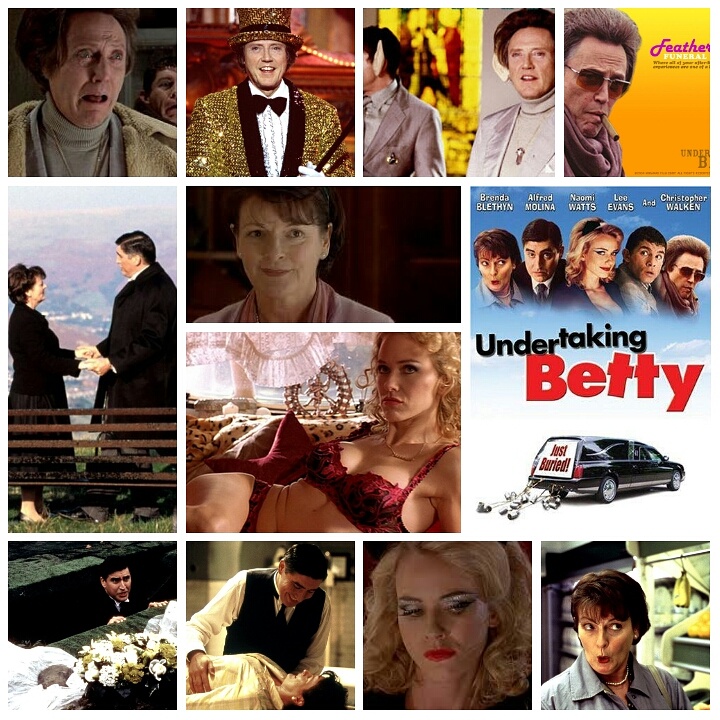
Undertaking Betty (or Plots With A View, as it’s called in the UK) is British black humour at its most brilliant, hilarious and surprisingly touching, in the tradition of stuff like Waking Ned Devine and Monty Python. It’s carefree and harmless but not without a raunchy sting that can’t help but be met with loving reception due to its charm and top drawer silliness. Brenda Blethyn plays a woman who has spent thirty years of her life in a small Welsh town, married to an absolute pig of a man (Robert Pugh). He’s a sleazeball who is shagging his slut of a secretary (Naomi Watts in full gumball sickening skank mode). Blethyn is secretly in love with the local undertaker and mortuary owner (Alfred Molina), the romance sparking up as the two try to find a way to get her away from Mr. Awful husband. Molina has the brilliant idea to fake her own death, letting her off the hook and allowing them to elope. She’s willing but reluctant, and so they proceed. Only one problem: Molina isn’t the only funeral outfit in town. Garish eccentric Frank Featherbed (Christopher Walken) and his peevy associate (Lee Evans) owns his own business and plans to steal Blethyn’s funeral for his own. Walken dials up the kook factor to the maximum and is pure genius, an entertainer at heart who believes that every funeral should have the showmanship and dazzle of a broadway show, leading to some amusingly awkward scenes. Just the fact that an american Chris Walken is working as a funeral home director way out in rural Wales is enough to bust a gut, let alone his off the wall performance. The resolution reaches comic heights that made me truly query why this film’s praises weren’t sung to high heaven upon release, but such is life, and death. The romance between Blethyn and Molina is sweet, endearing and balances out the larger than life sense of humour that the film keeps tossing around like confetti. Walken fans, dark comedy fans, film fans alike…please check this out.
David Twohy’s Below: A Review by Nate Hill
David Twohy’s Below cleverly combines two genres which seem to be made for each other, yet had never met up until this film. The atmospheric ghost thriller goes on an underwater ride with the submarine film for quite the unique and eerie experience. Strange occurances happen aboard a US army submarine during a routine WWII patrol mission, starting with the rescue of several stranded British castaways from a decimated ship, including Olivia Williams and Dexter Fletcher. The Captain (Bruce Greenwood) attempts to keep his crew calm, but apparantly it’s bad luck to have a woman onboard and soon uneasiness creeps in amongst them. There’s a mystery about their quarters as well, involving the supernatural, and pretty soon crewmembers are seeing, hearing and reporting eerie stuff, which adds to the tension. The crew is rounded out by an eclectic bunch of actors including Nick Chinlund, Holt McCallany, Matthew Davis, Christopher Fairbank, and Zach Galifianakis as a guy named Weird Wally who really lives up to the name. There’s some spooky moments, high drama between the cast which they pull off well, and a twist ending that explains the ghostly elements. Underrated stuff.
The Hunger Games: A Review by Nate Hill
I have never read the Hunger Games books, and didn’t rush out to see this first installment when it was released. I have this thing where I sometimes resist a largely popular project simply because it’s buxzingwith so much hype. There’s a word for that that I resist even more, which starts with H, but good luck getting me to admit to that. Anywho, I did watch it one day on netflix, loved the hell out of it, and have seen every subsequent entry, up til last year’s final one. It’s damn great storytelling that soars on a brilliant extended performance by Jennifer Lawrence, who is the actress of her generation and a genius of the craft no matter what anyone says. People called this a slick version of Battle Royale, and while that may be true, it’s certainly not a bad thing, and not the sole extent of what the franchise achieves. There’s stinging social commentary which both condemns and makes satirical light of modern North American culture. It examines the power of propoganda for both good and bad ends. It looks at the abuse of power, and the potent rise of fascism and fear tactics, and how quickly they can become commonplace. And this is all in a young adult orientated film that stars a strong, unhindered female protagonist. Gives you hope for the world. Lawrence is powerful as Katniss Everdeen, a young woman chosen from her district to compete in the much celebrated and very violent Hunger Games, a death tournament which serves as a purge and reminder to the citizens what it cost them to rebel against their oppressors years before. This is all at the behest of mega villain President Snow (Donald Sutherland oozes quiet malice with every articulate and icy syllable), who lives in the wealthy and decadent capitol city of Panem, a dystopian version of North America. Along with Katniss there’s also Peeta (but no hummus) a local baker’s boy played by Josh Hutcherson, who really struggles to match the skill level of almost everyone around him, especially Lawrence. They are thrust into the posh and stylized razzle dazzle of Capitol life as they train for the ruthless games, watched over by previous Victor and proud alcoholic Haymitch Abernathy (Woody Harrelson), as well as preening diva Effie Trinket (Elizabeth Banks channellig Marie Antoinette crossed with a poodle). The film takes some time to ramp up to the games, but as soon as it does the events unfold in breathless fashion set against a lush wilderness background, each and every member fighting tooth and nail to stay alive against both each other and the obstacles which gamesmasters have placed in their way. Anyone with an intense fear of wasps will want to be warned. A clever riff on the talk shows of our climate is shown, as the competitors are quizzed by Ceasar Flickerman (Stanley Tucci) a manically hopped up pop personality with a hairstyle that would make a samurai jealous and teeth so white they get accused of stealing oscar nominations. Tucci is truly a well of energy and the proceedings go electric whenever he’s around. Watch for Paula Malcolmson, Liam Hemsworth, Wes Bentley, Toby Jones and Lenny Kravitz as Cinna, a kindly fashion guru who takes a shine to Katniss and designs her a dress to end all dresses. Lawrence carries the entire thing on her mockingjay wings, making Katniss a spirit of unrest, a true symbol of hope and above all, a scared girl tossed into events she can’t possibly imagine navigating. Her performance is most of what makes these films so solid, and they couldn’t have made a better casting choice. Be sure to stay fpr the credits to hear ‘Abraham’s Daughter’, a fittingly grandiose original song by Arcade Fire.
Spotlight: A Review by Nate Hill
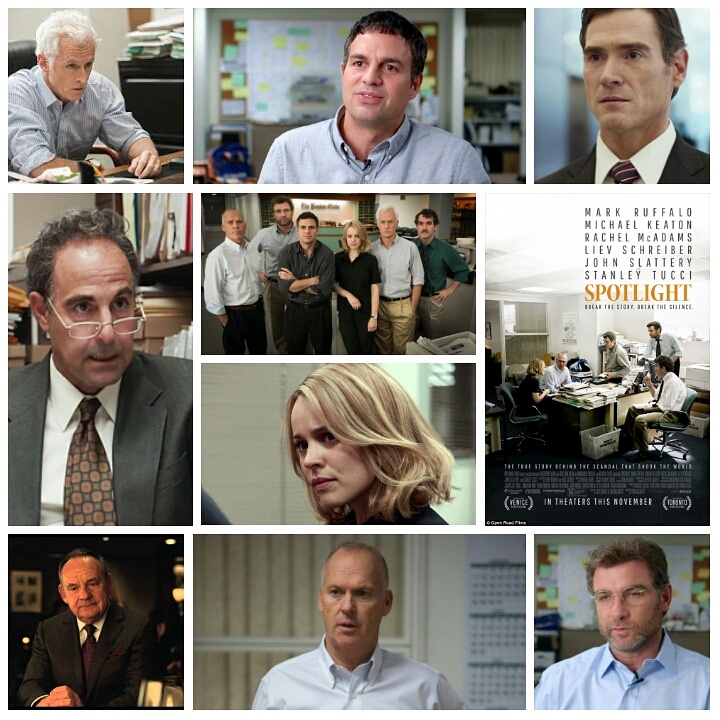
Spotlight focuses on a devastating turn of events which were ripe for melodrama, and instead turns out to be a spare, minimalistic entry that knows how to keep things close to the chest and still be deeply affecting. Director Tom McCarthy takes a fly-on-the-wall approach to his technique, showing us an intimate glimpse at what it no doubt must have been like for these Boston reporters as they brought to light one of the most sickening and heinous atrocities of our time, the sexual abuse scandal of the Catholic Church, which rotted through many a priest, parish and law firm who insidiously kept their mouths shut about the whole deal. For the reporters, ignorance was just not on the table, no matter what the consequences. Rachel McAdams is tender and fearless as Sacha Pfeiffer, a keen operative who is first to smoke out a lead, bringing it to her boss, the legendary Walter ‘Robby’ Robinson, (Michael Keaton), and the executive in charge of the paper, Ben Bradlee Jr. (John Slattery). The matter is brought to further attention by Marty Baron (Liev Schreiber), who arrives from out of state. It’s Mike Rezendes though, played by a stunning Mark Ruffalo, who drives the point home, refusing to give up and shoving loads of empathy down the throats of those who would look the other way. Ruffalo is note perfect, his determind sentiment delivered with compassion and impact that lingers. He hounds diamond in the rough lawyer Mitchell Garabedian (Stanley Tucci hides the sympathy behind the sass) to allow him access to the victims, giving him something concrete to go on. The bitter side of the lawyer coin comes in the form of Eric McLeish (underrated Billy Crudup), a passively belligerent guy who is anything but cooperative until the hammer comes down. Richard Jenkins proves that he can turn in excellent work with nothing but his voice, playing a source who is heard only via phone calls. Keaton is brilliant, bringing the laid back nature and giving the character an easy listening style Boston accent. McAdams mirrors the hurt in those she interviews with eyes that echo years of suffering. Tucci comes the closest the film gets to comic relief, and then veers into dead serious mode as he realizes his character is in control of lives with the info he has, snapping to rigid attention. Watch for work from Jamey Sheridan, Len Cariou, Brian D’Arcy James and Paul Guilfoyle as well. The film arrives at its destination free from obvious emotional fireworks, on screen text or sensationalism, elements which often permeate true life stories. It’s simple, to the point, grounded and diligent to story, character and truth. That approach makes it all the more shattering.
DENIS VILLENEUVE’S SICARIO – A Review by Frank Mengarelli
“You should move to a small town, somewhere the rule of law still exists. You will not survive here. You are not a wolf, and this is a land of wolves now.”

SICARIO is a blunt unveiling of the dark side of America’s foreign policy. Set on the Mexican border, the film follows a shadow team made up of different agencies shaking down drug cartels, all the while the team plays kingmaker by rearranging power. The plot and political commentary is dense. Not once does the film come across as heavy handed, nor does it preach bias. In turn, it makes the film that much more powerful and brutally honest.
The brilliant cinematic team of filmmaker Denis Villeneuve and cinematographer Roger Deakins (who are reteaming for the untitled BLADE RUNNER sequel) are a force to be reckoned with. Villeneuve keeps a taut and thrilling pace, while Deakins composes remarkable visuals frame by frame. Taylor Sheridan’s icy script, Johann Johannsson’s score, and Joe Walker’s editing complement the film in a perfect way, keeping the tight narrative intact while balancing such heavy subject matter.

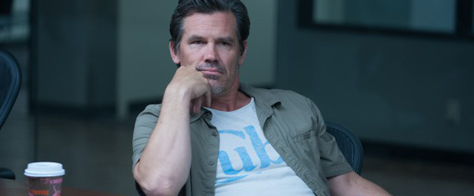
The cast is led by the idealistic Emily Blunt, supported by the realist CIA man Josh Brolin, and the lethal assassin Benicio Del Toro who all give career high performances and play off of one another in a way that meshes the film together wonderfully. Blunt is amazing. She’s more than a badass woman with a gun; she’s the heart of the film. She’s out for blood after members of her team get killed on a cartel raid in the opening scene, and she’s lured in by the affable Brolin, promising to cure her bloodlust if she comes along on his secret mission. Most importantly, the reality of what the team is doing slowly starts to grind at her, and she quickly begins to realize that what they are doing is not the “right” thing to do.
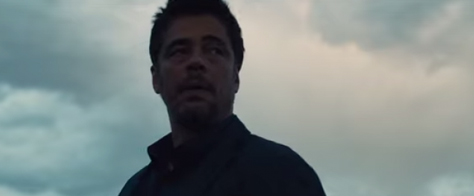
Benicio Del Toro is the standout in an already masterful film. His stoicism is this mysterious fuse that is slowly burning. The entire film, we know nothing about him, until the third act where we learn everything in one short and impactful scene. The scene is so jaw dropping, that even upon rewatching the film; you can’t believe it is actually happening.

There are few Hollywood films that are as bold as SICARIO. The thematic elements are heavy, as is the brutal violence, but what the film is saying is what makes it so powerful. Sometimes America needs to bring down the iron fist to be the overall good guy. Regardless of morality or holding ourselves to a higher standard, the world needs a shadow team like the one in SICARIO to help restore and counter the evil powers that be in this world.