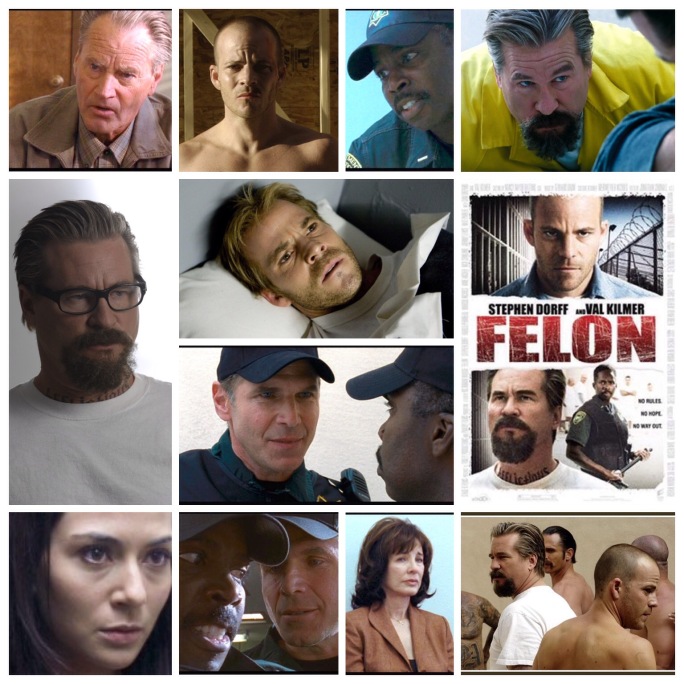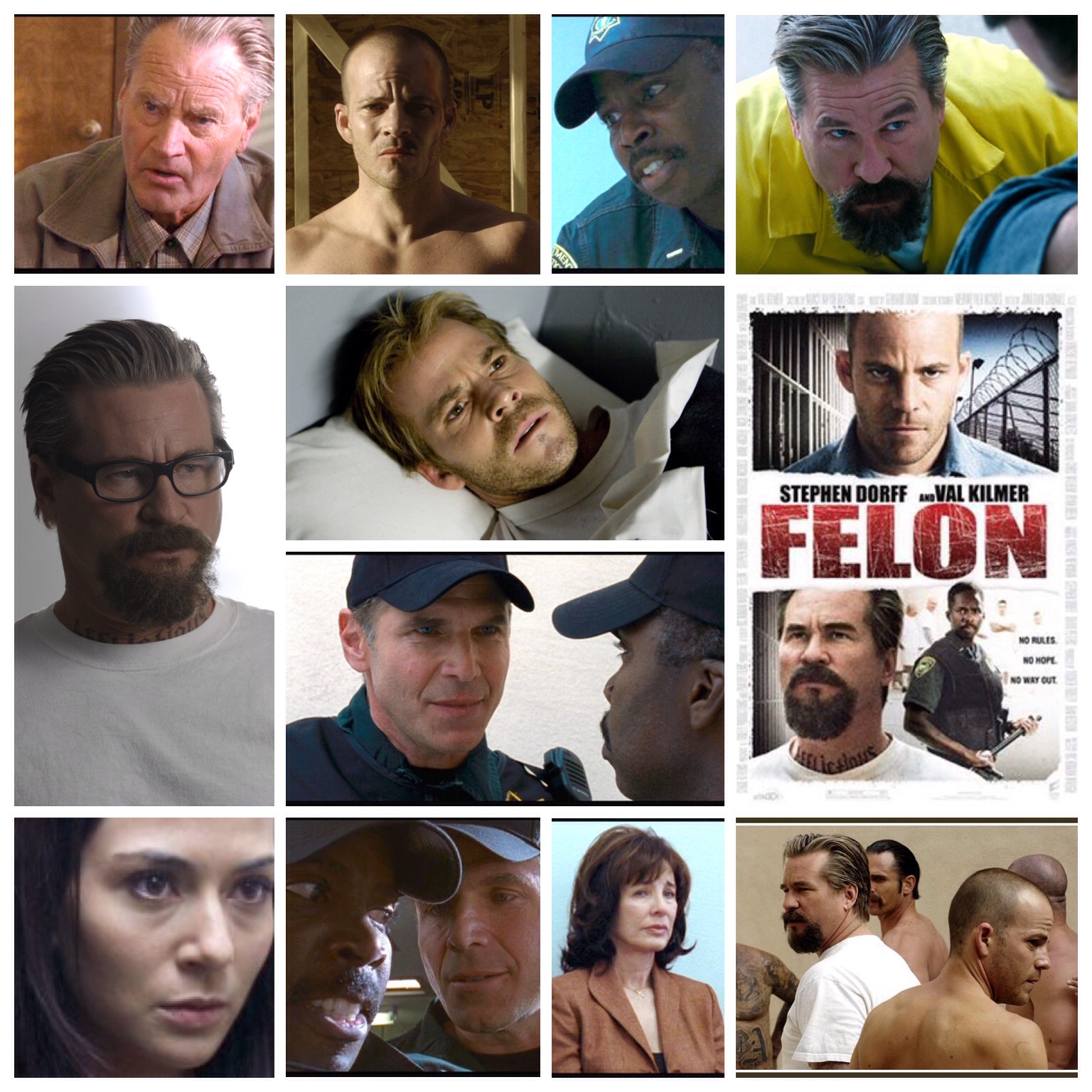
Felon is a bitter,and tragic prison drama that’s packed with wrenching injustice, simmering anger and caged animal violence. Loaded with the kind of tough guy elements which make prison films exciting (check out Lock Up with Stallone), it’s also has a tender side brought forth by its extremely thoughtful and well written script, which explores ideas that are both hard to swallow and very sad. Stephen Dorff, a guy who already has the gritty look as soon as he walks into a frame, plays Wade Porter, a simple family man who is just starting out at life along with his wife (Marisol Nichols). Their hopes and dreams turn into a nightmare, however, when a violent intruder breaks into their home one night. Wade strikes out in defence of himself and his wife, accidentally killing the criminal. Because of the backwards ass way the States run things, he is accused of manslaughter and sentenced to serve out jail time. He is then thrown into the dog pit, literally and figuratively. The penitentiary he is sent to is run by sadistic and corrupt Lt. Jackson (Harold Perrineau) along with his brutal enforcer Sgt. Roberts (Nick Chinlund). Jackson organizes vicious fight club style matches between the inmates, totally off the books and beyond any correctional legislations. Wade is forced to adapt, adjust and bring out monstrous aspects within himself to survive, and make it through his sentence with both his life and humanity intact. It’s not an easy turn of events to watch unfold onscreen, but necessary in the sense that this probably happens quite frequently to people in real life, and should be seen. The only solace Wade finds is with his gruff, veteran cell mate John Smith (Val Kilmer) a lifer who once went on a massacre of revenge against individuals who murdered his family. Smith is his guiding light, steering him through the hellish carnage of what he’s forced to do and helping him to keep the candle of compassion alive within him, never losing sight of what is essential in his fight to claim his life once more. Kilmer is a force that will knock you flat in this role, an old bull with dimming fury in his eyes, a man with a bloody history that has forged the weary dog we see in the film. Late in the film he has an extended monologue to Wade, giving him both blessing and advice with some of the most truthful and affecting gravity Kilmer has showed in his career. The writer/director, who appears to be primarily a stuntman, should be commended for such a script, that could have easily been a straight up prison flick without the pathos that drips off its heartstrings. We as an audience view this painfully and prey nothing like this ever happens to us or anyone we know, hoping to see a light of hope at the end of the dark tunnel for Wade. I won’t spoil it, but it’s worth the hit that your emotions will take while watching, and there is hard earned catharsis to be had, and penance for the characters you want to shoot in the face along the way. The extends to brilliant work from Chris Browning, Anne Archer, Nate Parker, Johnny Lewis and a fantastic Sam Shepherd as another seasoned convict. This was correct to video as I recall, which is a crime. It’s up there as my favourite prison set film that I’ve ever seen, a soul bearing piece.
Category: Film Review
CLINT EASTWOOD’S SPACE COWBOYS — A REVIEW BY NICK CLEMENT

I’ve always been a big fan of Clint Eastwood’s Space Cowboys. Released in August of 2000, the film is a sincere and compelling tale of retired ex-test pilots who take the chance of a lifetime. It appears that an old Soviet satellite is in need of repair, and nobody knows how to handle business better than Eastwood, Donald Sutherland, Tommy Lee Jones, and James Garner. Sort of like Armageddon for the AARP audience, this refreshingly small-scale but still high-stakes scenario g…ot a lot of comic mileage out of the collective ages of the co-stars, but still told a lean and effective story, with Ken Kaufman and Howard Klausner’s peppy screenplay giving each actor their moment to shine, and not wimping out at the finale. In fact, the final shot of this movie has continued to haunt me for the last 16 years; I’ve never forgotten it as it still chills me to the bone whenever I think about it. A great supporting cast including Loren Dean, Marcia Gay Harden, William DeVane, Courtney B. Vance, Rade Šerbedžija, and James Cromwell all did solid character work, while Jack N. Green’s stylishly composed cinematography never called overt attention to itself while still displaying visual gravitas and a smart use of the widescreen frame.

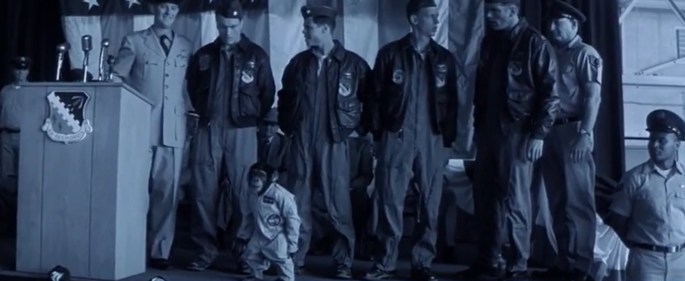
This isn’t a game changer, but rather, a comfortably solid film, the sort of late summer programmer that was better than it had any right in being, which is mostly due to Eastwood’s classy sense of direction, and the amusing performances by all of the old-timers. There’s emotional pay-off, terrific action, and a genuine sense that everyone involved was having fun. The opening sequence, set in 1958, is a stunner, showing the test-piloting exploits of the guys when they were young hot shots, with the entire prologue captured in a unique shade of black and white which also gave off a cool blue-grey visual sheen; I always get totally engrossed in this film from its opening moments. Shot for an economical $60 million but never feeling skimpy at any moment, the film became a solid box office hit, taking in $90 million domestically and another $40 million overseas. Nominated for an Oscar for Best Sound Editing and carries a triumphant musical score courtesy of frequent Eastwood collaborator Lennie Niehaus. The film marks the feature film debut of Jon Hamm. Fly Me to the Moon POWER.

ROCK ‘N’ ROLL HIGH SCHOOL – A REVIEW BY J.D. LAFRANCE

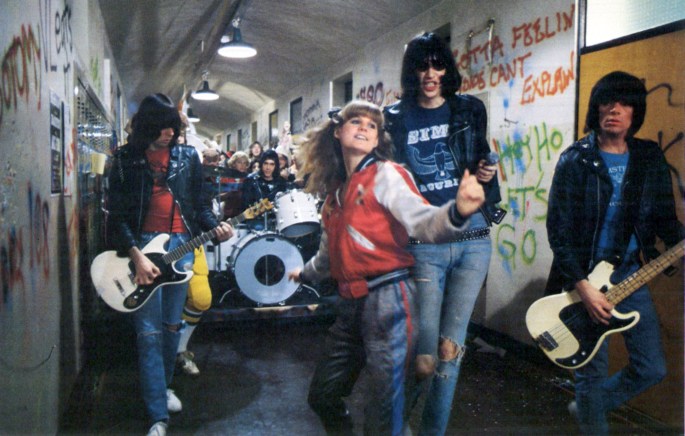
Hey Ho! Let’s Go! Listen up, kids. Rock ‘n’ Roll High School may have been released way back in 1979 but it still kicks the ass of any of those square MTV movies. Forget about Britney Spears and Mandy Moore’s brand of bubblegum pop music and their equally bland movies – they don’t hold a candle to the unbridled power of those punk rockers from New York City… the Ramones! Making a band the central focus of a film is nothing new. The Beatles did it with A Hard Day’s Night (1964) and The Monkees with Head (1968). Hell, the Spice Girls even did it with Spice World (1997). But to do it with an anti-social punk rock band like the Ramones?! And to have it produced by legendary B-movie mogul Roger Corman?! The results: a cult classic in the proud tradition of juvenile delinquent films of the 1950s.
Riff Randell (P.J. Soles) is the ultimate Ramones fan. She’s introduced gleefully bypassing Vince Lombardi High School’s PA system so that she can blast “Sheena is a Punk Rocker” to the entire school population. The energetic song wakes up the students, shatters glass, and shakes tables and pictures right off the wall. The school erupts into complete anarchy as the student body begins to spontaneous dance to the boisterous rock ‘n’ roll music. How kick ass of an opening sequence is that? It also does a great job of conveying the excitement and energy of the Ramones’ music.
Riff dreams of meeting the Ramones and giving them a song she wrote entitled, “Rock ‘n’ Roll High School.” She tries it out on her gym class causing all the girls in their skimpy gym outfits (ah, Corman and his exploitation tendencies) to dance around in what can only be described as the greatest gym class ever.
Riff even camps out for days to get tickets for the Ramones’ upcoming concert while her best friend, Kate Rambeau (Dey Young) covers for her by telling the nasty, shrewish Principal Togar (Mary Woronov) that various members of Riff’s family have died. Not surprisingly, Togar doesn’t fall for it and takes Riff’s ticket away, forcing the two girls to find another way to meet their heroes. Meanwhile, good girl Kate has a major crush on the school’s quarterback, the bland Tom (Vincent Van Patten), but he has his sights on the dynamic Riff.
The film was originally called Girls Gym, then it was changed to Disco High by Corman, who wanted to capitalize on the disco craze, but was (fortunately) persuaded otherwise by director Allan Arkush. Originally, the filmmakers wanted Devo and then Van Halen before approaching the Ramones. They finally settled on Rock ‘n’ Roll High School after Arkush convinced Corman that the Ramones were the perfect band for the film. To their credit, the Ramones knew that it was the right move. Guitarist Johnny Ramone was a huge fan of Corman’s films and when he heard that the producer was behind the film, he agreed to do it. And the rest, as they say, is history.
Rock ‘n’ Roll High School does a great job of playfully championing the Ramones as rock gods and yet shows them being accessible to their fans as well. The band first appears in a car driving down the street on the way to their venue as they play “I Just Wanna Have Something To Do.” Once outside the club, they get out of the car and interact with the crowd of ticket buyers (who were, incidentally, actual Ramones fans). The editing, coupled with the insanely catchy song, gives the scene an infectious energy that is so much fun to watch. Incidentally, Dean Cundey was the film’s cinematographer and he would go on to shoot some of John Carpenter’s best films, including Halloween (1978) and Escape from New York (1981).
From B-movie veterans like Paul (Eating Raoul) Bartel and Mary (Death Race 2000) Woronov to newcomers (at the time), P.J. (Halloween) Soles and Dey (Strange Invaders) Young, the entire cast has a lot of fun spouting the film’s wonderfully inspired cornball dialogue (“If you don’t like it, you can put it where you the monkey puts the nuts,” Riff says defiantly to Togar at one point) courtesy of National Lampoon magazine writers Richard Whitley and Russ Dvonch. I would be remiss without also mentioning the presence of Corman regular Dick Miller (as a cop) and Clint Howard who plays matchmaker for Tom. The Ramones are good sports and mumble their way through the film and truly come alive during the music sequences like the pros that they are. This film rightfully cements their reputation as legends.
Shot in only 15 days (which, when you think about it, is entirely appropriate for this kind of film), Rock ‘n’ Roll High School embodies the essence of the punk rock music that made the Ramones famous. The film is bursting with youthful energy, a dose of good ol’ fashion anarchy, and is loads of fun to watch. These are also the ingredients that made Rock ‘n’ Roll High School a cult film. Corman cannily marketed it as a Midnight Movie in the hopes that the same people who flocked religiously to The Rocky Horror Picture Show (1975) would come to see the Ramones. It was a modest commercial success upon its initial release and actually garnered critical praise – very unusual for a cult film.
While Rock ‘n’ Roll High School will appeal predominantly to fans of the Ramones (duh!), it is also one of those fun, goofy movies to invite friends over and watch with copious amounts of junk food on hand. This film is all about loving music and a particular band unabashedly. Riff gives herself up to the music and this translates into an enthusiastic celebration of the Ramones and the rowdy, rebellious spirit of rock ‘n’ roll music. Repeated midnight screenings, coupled with steady appearances on T.V., have helped the film endure over the years so that is has become a beloved cult classic.
Quentin Tarantino’s THE HATEFUL EIGHT – A Review by Frank Mengarelli
Quentin Tarantino’s eighth film, THE HATEFUL EIGHT, came out at a hostile time in contemporary America. Tarantino joined marching protests against police violence; then the overly sensitive millennial online “journalists” chastised the film, and Tarantino, for painting shades of misogyny and racism. Tarantino was unfairly attacked by the extreme wings of each political party. Had no one paid attention to Tarantino films prior? Of course racism and misogyny plays a vital part in this film, because not only did those elements exist in the post-Civil War 1800’s, but also exist in reality.

This film is a cataclysm of Tarantino’s self-indulgence. He constantly references his prior works (mainly RESERVOIR DOGS) while homaging Sergio Leone, Billy Wilder, and John Carpenter. His limited casting is formed of new Tarantino players: Kurt Russell, Walton Goggins, and Bruce Dern who Tarantino has worked with twice prior; as well as his seminal ensemble made up of Samuel L. Jackson, Zoe Bell, James Parks, Tim Roth, and Michael Madsen. Joining the Tarantino crew for the first time is Jennifer Jason Leigh, Demian Bichir, and Channing Tatum.
For as visionary as Robert Richardson’s cinematography is and Ennio Morricone’s Academy Award winning hypnotic score, the greatness of this film lies within one of Tarantino’s best screenplays and one of the best acting ensembles since GLENGARRY GLEN ROSS. Tarantino is one of the most talented actor’s directors who has ever sat behind the camera. He carefully crafts each character with an actor in mind, playing on their strengths and bringing out untapped potential from even the most veteran actor he’s working with. The cast is absolutely brilliant.

Kurt Russell does the best John Wayne impression ever as the hard barked simpleton whose stupidity is even more outrageous than his facial hair. Russell is always a joy to watch, and Tarantino’s use of him are highlights in an already legendary career. Samuel L. Jackson is one of the best linguists to ever grace the screen. Tarantino’s dialogue has never sounded better than coming out of Jackson’s mouth (aside from Harvey Keitel). Tim Roth gives one of his best performances delivering an English shtick of Mr. Orange from RESERVOIR DOGS. Perhaps the most surprisingly great performance in this film is that of Michael Madsen playing a caricature of himself. I can’t say anything more about Jennifer Jason Leigh that hasn’t already been said. She should have won the Oscar.
Tarantino outdoes himself with THE HATEFUL EIGHT; the script is outrageously funny, giving these talented actors so much to play with. Only Quentin Tarantino would be able to craft an epic western built upon heightened paranoia that is three hours long, set inside a tiny cabin that is filled with eight larger than life characters, filmed with a wide angle lens that is constantly on the move. Tarantino has reached Terrence Malick status by making films for himself, not for an audience, or a demographic, and that’s what he has excelled since GRINDHOUSE. No one loves movies more than Quentin Tarantino. Oh, and about that overt racism in this film, did those people not stay until the end?

Antoine Fuqua’s Tears Of The Sun: A Review by Nate Hill
Antoine Fuqua’s Tears Of The Sun is a brutal, tough war machine of a flick in the tradition of the old 70’s war films, kind of like a brooding Dirty Dozen. Bruce Willis stoically heads up a team of special ops soldiers who are sent into a war torn region of Africa to rescue a doctor (Monica Belucci) from a missionary camp. Genocidal maniacs are encroaching into the area and it’s no longer safe for locals or relief workers. His orders are simple: locate and extract the doctor, and no one else. However, when he comes face to face with the refugees, and their situation, he simply can’t find it in himself to turn his back on them when he can do something to help. He then disobeys his orders, collects both his team, Bellucci and the Africans and makes a run through the jungle for diplomatic protected soil. His team are a grizzled band of warriors, each with their own unique qualities and opinion on his decision. Kelly (a badass, mohawk adorned Johnny Messner) believes it’s too much of a risk, and not their concern). Michael ‘Slo’ Slowenski (Nick Chinlund, excellent and understated) takes a compasionate standpoint. Second in command Red Atkins (Cole Hauser) trusts Willis is making the right call. Soon they are pursued by the extremists, led by a hulking Peter Mensah, before King Leonidas kicked him into the Sarlak pit. The combat scenes are hard hitting, seemingly very well rehearsed and researched. The only problem for me was the overbearing and extended sequences of genocide, which are harrowing and quite tough to watch. When it’s combat based it’s a damn fine piece, with a rugged, thoughtful band of heroes who are an absolute joy to see in action. Rounding out the team are Eamonn Walker, Charles Ingram, Paul Francis, Chad Smith and a briefly seen Tom Skerritt as Willis’s commanding officer. Tough, muscular and no nonsense, with burgeoning compassion that gives that soldiers purpouse beyond the cold lethality of the mission. Fuqua has a terrific collection of lean and mean action flicks under his belt, and this is one of the best.
FRANK OZ’S BOWFINGER — A REVIEW BY NICK CLEMENT

Silly and smart in equal measure, the Frank Oz showbiz comedy Bowfinger hit some really sharp notes of pointed satire, while still displaying a care-free, absurdist sense of its own willfully unbelievable plot. Released in the summer of 1999 and feeling more and more unique as the years have progressed, the film showcased Steve Martin (who also penned the witty screenplay) in pure rapscallion mode, portraying a bottom-barrel Hollywood producer looking to trick the world’s biggest action star, Kitt Ramsey (an absolutely superb Eddie Murphy), into starring in his sci-fi B-movie that he’s been shooting undercover. After the plot gets entangled in various idiocies, Ramsey disappears, which causes Bowfinger to hire a dimwitted lookalike, again played by Murphy, with serious comic hijinks ensuing. The sequence on the freeway is an all-timer; I can’t believe that the studio asked Martin to cut it out of the script as it’s the funniest sequence in the film. And it goes without saying that Murphy hasn’t been this good in years, maybe since Bowfinger, delivering two very different and equally successful comedic performances.
Coming on the heels of the more serious minded The Truman Show and the more audience friendly EDtv, this was the third meta-reality-TV-movie in this late 90’s cycle of prophetic filmmaking, and if Bowfinger didn’t go for the jugular the way Truman did or play it as enjoyably safe as EDtv, Oz and his collaborators were still able to craft their own special little gem, a movie that moves to its own beat and plays by its own rules. Featuring a fantastic supporting cast featuring Heather Graham, Christine Baranski, Terrence Stamp, Robert Downey Jr., Jamie Kennedy, and Adam Alexi-Malle, and including some hilarious jabs at Scientology throughout the playfully mischievous script, Bowfinger feels like very few other studio comedies that I can think of, as it deftly juggled multiple tones in an effort to create something purposefully different. Warmly embraced by critics, the film did $60 million domestic and just about $100 worldwide, which seems about right, as the ingredients were certainly more challenging than most of your typical big budget offerings from roughly 20 years ago. Originally titled Bowfinger’s Big Thing. Chubby Rain POWER.
HELLBOY – A REVIEW BY J.D. LAFRANCE

The success of X-Men (2000) and Spider-Man (2002) opened the door for a new wave of comic book adaptations. In the past, studios have played it safe and only green-lighted adaptations of mainstream comic books with large followings. However, this changed with adaptations of independent fare like Ghost World (2000), American Splendor (2003), and with Hellboy (2004). Based on Mike Mignola’s comic book of the same name, the title has a dedicated cult following at best so it was a pleasant surprise to see a major studio take a big budget gamble with it.
October 1944. The Nazis have begun mixing science with black magic in a desperate attempt to regain the advantage in World War II. The seemingly invincible Russian, Rasputin (Karel Roden) has teamed up with the Germans and plans to open a portal to another dimension and bring about an apocalypse. However, American troops arrive and disrupt the procedure just in time. In the process, something comes through: a red-skinned demon baby that the soldiers adopt and call Hellboy.
With the World War II prologue, director Guillermo del Toro does two important things: he vividly introduces this colorful world and the characters that inhabit it by creating just the right moody atmosphere and with detailed production design and excellent special effects. Secondly, Del Toro establishes the film’s mythology and what exactly is at stake through a clever mix of science fiction and the supernatural. He does this via an exciting action sequence as a young Dr. Broom and U.S. soldiers confront Rasputin and the Nazis.
Present day. Rasputin has been resurrected and continues his plans to summon destructive supernatural forces that will result in the end of the world. Hellboy (Ron Perlman) has matured (sort of) and now works for the Bureau for Paranormal Research and Defense (BPRD) in New Jersey — under the guise of a waste management company (just like Tony Soprano). Along with Abe Sapien (Doug Jones with an uncredited David Hyde Pierce doing the voice), an amphibious humanoid (“the fish guy” as a guard puts it), firestarter Liz Sherman (Selma Blair), and the token “normal guy,” John Myers (Rupert Evans), Hellboy tracks down Rasputin and tries to prevent him from fulfilling his nefarious goals.
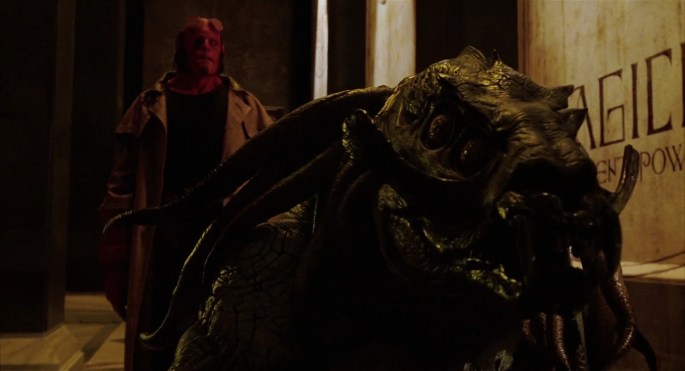
Del Toro, a die-hard comic book fan and self-described film geek, shoots the action sequences much like he did in Blade II (2002), with crazy camera angles and fantastically choreographed fights. Case in point, Hellboy’s extended tussle with Sammael (Brian Steele). It’s like Del Toro took panels right out Mignola’s comic book and made them move but with the same kind of explosive energy that made Jack Kirby’s art so exciting. Del Toro also has incredible production design at his disposal to create a fully realized world rich in detail and drenched in atmosphere. He is heavily influenced by Italian horror films and not only references Mario Bava’s Black Sunday (1960) but also the saturated primary color scheme of Dario Argento’s Suspiria (1977) to name just a couple of examples. This is a great looking film, from the warm colors and ornate architecture of the library where Abe Sapien resides, to the darker, colder colors of Rasputin’s mausoleum in Moscow.
Del Toro was shooting Mimic (1997) and discovered the Hellboy comic book but never thought that it could be made in Hollywood and if it did they would ruin it. He heard that it was going to be adapted into a film at Universal Pictures and started writing a screenplay in 1997. He met Mike Mignola when they worked together on Blade II, which they used as their “rehearsal” for Hellboy. They found out that they read the same comic books and pulp and classic gothic horror novels. With Hellboy, Del Toro wanted to make a self-contained film, “almost a fairy tale, a fable.” His original pitch to executives at Sony-based Revolution Studios was that both The Mask (1994) and Men in Black (1997) were comic books that they were not familiar with and yet went on to become extremely successful films. He told them that the same thing could happen with Hellboy. In April 2002, Del Toro’s film was given the green-light at a budget of $60 million.
Del Toro first saw Ron Perlman in Quest for Fire (1982) and then The Name of the Rose (1986) and was very impressed with his acting, so much so that he ended up casting the actor in his first film Cronos (1994). Del Toro initially wanted him to play Hellboy but Vin Diesel was a rising star at the time and so the director approached him instead for the role. However, with the move from Universal to Revolution, Diesel dropped out of the picture and Perlman was in. Early on, if the actor didn’t work out, Del Toro thought about making Hellboy a mixture of puppet and computer graphics. He talked to James Cameron who warned him that if he went that route he would lose the love story. Del Toro wisely decided to stick with Perlman.
Perlman is perfectly cast as the cigar smoking, two-fisted action hero who eats Baby Ruth candy bars and loves cats. He does a great job of capturing Hellboy’s sarcastic, wise-cracking nature. Perlman gets to utter cool one-liners and looks fantastic in his make-up (thanks to legendary makeup artist Rick Baker). Often, what makes it to the film rarely resembles what was drawn in the comic book. Not the case here — Perlman IS Hellboy. With this role, he firmly established himself as one of the cult film icons of the new millennium (much like Bruce Campbell was in the 1990s). Perlman has got the drop-dead cool action hero shtick down cold. With his hulking, imposing physique, he’s Arnold Schwarzenegger with brains and irony.
Del Toro cast Selma Blair because he always saw a “haunting quality in her eyes and in her look. Sort of a doomed, gothic beauty in her.” He was a fan of The Larry Sanders Show and felt the Jeffrey Tambor had that “smarmy, wannabe bureaucratic presence” that was ideal for Tom Manning. He cast Tambor against type and wanted him to be an “absolute asshole in the beginning, and play it straight.” Del Toro and Mignola created the character of Myers to guide audiences into Hellboy’s world. The director interviewed a lot of young Hollywood actors but many of them were “just too cute and too Calvin Klein beautiful to put in the movie.” He liked Rupert Evans because he had “such an open face, and he had a real innocence about him.” Del Toro saw John Hurt in Love and Death on Long Island (1997) and felt that the actor had “that little air of tragedy about him” that suited Professor Bruttenholm.
Hellboy is one of those rare comic book movies with depth. It takes time to develop its characters and the relationships between them. There is the touching father-son relationship between Hellboy and Bruttenholm and the romantic love triangle between Hellboy, Myers and Liz. While the film has the requisite slam-bang action sequences, it is not dominated by them. The film is not driven by them but rather by the characters and the story. And this is because Del Toro has strong source material to draw from: Mignola’s comic book, in particular “Seed of Destruction,” which chronicles Hellboy’s origins. Both Del Toro and Mignola’s works are steeped in the gothic and horror genres, in particular the fiction of H.P. Lovecraft. The author’s influence is all over this movie as Hellboy trades blows with Cthulhu-inspired creatures that would make ol’ Lovecraft proud. While Del Toro’s film didn’t exactly rack up the kind box office numbers the studio was hoping for, it did prove to be quite popular on home video and eventually spawn an even better sequel in 2008.
NASH EDGERTON’S THE SQUARE — A REVIEW BY NICK CLEMENT

The 2010 Australian crime film The Square is one of the best thrillers that you’ve never seen. Tautly directed by Nash Edgerton (his brother Joel is one of the main characters and co-wrote the brilliantly layered screenplay), this shady and shifty neo-noir sits atop of the genre pack with titles such as Red Rock West, The Last Seduction, Blood Simple, and Bound – it’s a damn near flawless piece of cinematic screw-tightening and air-tight filmmaking. There is a confidence to this film that’s highly engrossing to observe, as right from the start, you know you’re in the hands of a filmmaker who knew exactly what he wanted. With twists coming left and right and all the way up until the end, The Square requires your attention, for which you’ll be handsomely rewarded. Spoiling any of plot’s surprises would be criminal, but the action centers on an unhappily married guy named Raymond (the gruff David Roberts), who is carrying on an affair with his beautiful young mistress named Carla (Claire van der Boom), who in turn is stealing from her mullet-sporting, low-life boyfriend, Billy (a skeevy and oily Joel Edgerton). When a plan to rob Billy goes haywire and unexpected deaths ensue, all hell breaks loose. Plus, Raymond is dealing with shady contractors at his construction site who may or may not know what Raymond has been up too with Carla.

Mysterious notes are sent, people are followed, chased, and killed, and more than one person gets shot. Nobody is safe in The Square. Not even the family pet. All of this is done with expert style and with a minimum of logic lapses and inconsistencies. And across the board, the acting is excellent, with Roberts and Boom registering strongly as two people who never should have met, let alone fallen in love. Mixing a De Palma-esque voyeuristic shooting style (be on the lookout for some amazing stedicam work) with gritty, hand-held realism, Edgerton ramps up the suspense in one scene after another, with maximum results by the conclusion. This is a genuinely unpredictable film that only the smartest genre enthusiasts will be able to guess before the end credits start rolling. Because there is so much going in within the plot during The Square, the film could have easily felt bogged down in exposition or gone off the rails into implausible realms, so it’s a testament to Edgerton’s writing and directing skills that the narrative never grinds to a halt, with the brisk pace complimenting the ruthless action sequences. The Square feels like an early Coen brothers film to me, reminiscent of Blood Simple, a movie totally in command of its story and style, made by people who love the genre they’re working in, and who want to wow people with a good old fashioned crime thriller. Films like this are in short supply.

Perrier’s Bounty: A Review by Nate Hill
Perrier’s Bounty tries hard to be as pithy and witily profound as In Bruges, but doesn’t quite manage the task. To be fair, Bruges is a masterpiece and a Goliath of a script to aspire too, but this one has its own brand of scrappy crime fun, full of enough beans to keep the viewer jumping for its slight running time. Few films can boast narration provided by the Grim Reaper, and fewer still can say that said Reaper is voiced by Gabriel Byrne. But indeed, Byrne beckons us into this violent fable with his patented tone, both baleful and quaint. The fable in question concerns Michael McCrea (Cillian Murphy) an irresponsible young Irish lad who is seriously bereft of both luck and common sense. He lives in a small town in northern Ireland and owes a hefty loan to local crime lord Darren Perrier (Brendan Gleeson). Because of how tiny the town is, it’s pretty easy for Perrier’s goons to find and engage him in a road runner goose chase all about the area, forcing him to scoop up his on and off girlfriend (Jodie Whittaker), and head for the hills. He’s also joined by his uber eccentric father (Jim Broadbent) who believes that the Grim Reaper has visited him at night and given him the alarming prognosis that he will die the next time he falls asleep. Broadbent is a solid gold asset to any film he’s in, and practically spews perfectly timed comic banter non stop. Michael thinks he has a way out of trouble with local petty thief The Mutt (Liam Cunningham, aka Ser Davos Seaworth, also a comedic treasure here), which turns out to be another notch in the belt of bad judgment. Meanwhile, Perrier’s crew reels after one of their slain thugs (at Michael’s hand) turns out to have been involved in a love affair with another, who now has the wrath of vengeance in his eyes. There’s a scene where Gleeson comforts the bereaved hoodlum and seems deeply wounded at the couple’s reluctance to tell him of their love. Gleeson assures them he has no issue with homosexuality and wishes they would have shared with him. In the context of hardened criminals out for blood, this kind of exchange is priceless and brings rigid archetypes right down to earth, for maximum hilarity and well earned pathos. The film meanders a bit, but never out ran my attention span, following through with it’s story in ways both welcomingly bloody and predictably quirky. It doesn’t add up to anything life altering when all is said and done, but damn if the things which are said and are done along the way aren’t just pure genre entertainment, inducing chuckles, thrills and nostalgia for other films withing the niche. In the troupe of writers who look up to Guy Ritchie, Quentin Tarantino and Martin McDonough, this scribe is on to something. Keep an eye out for Lord Varys, Roose Bolton and a young Domhall Gleeson too.
Commanding the White Walkers, orphaning Bruce Wayne and more- A chat with actor Richard Brake: An interview by Nate Hill
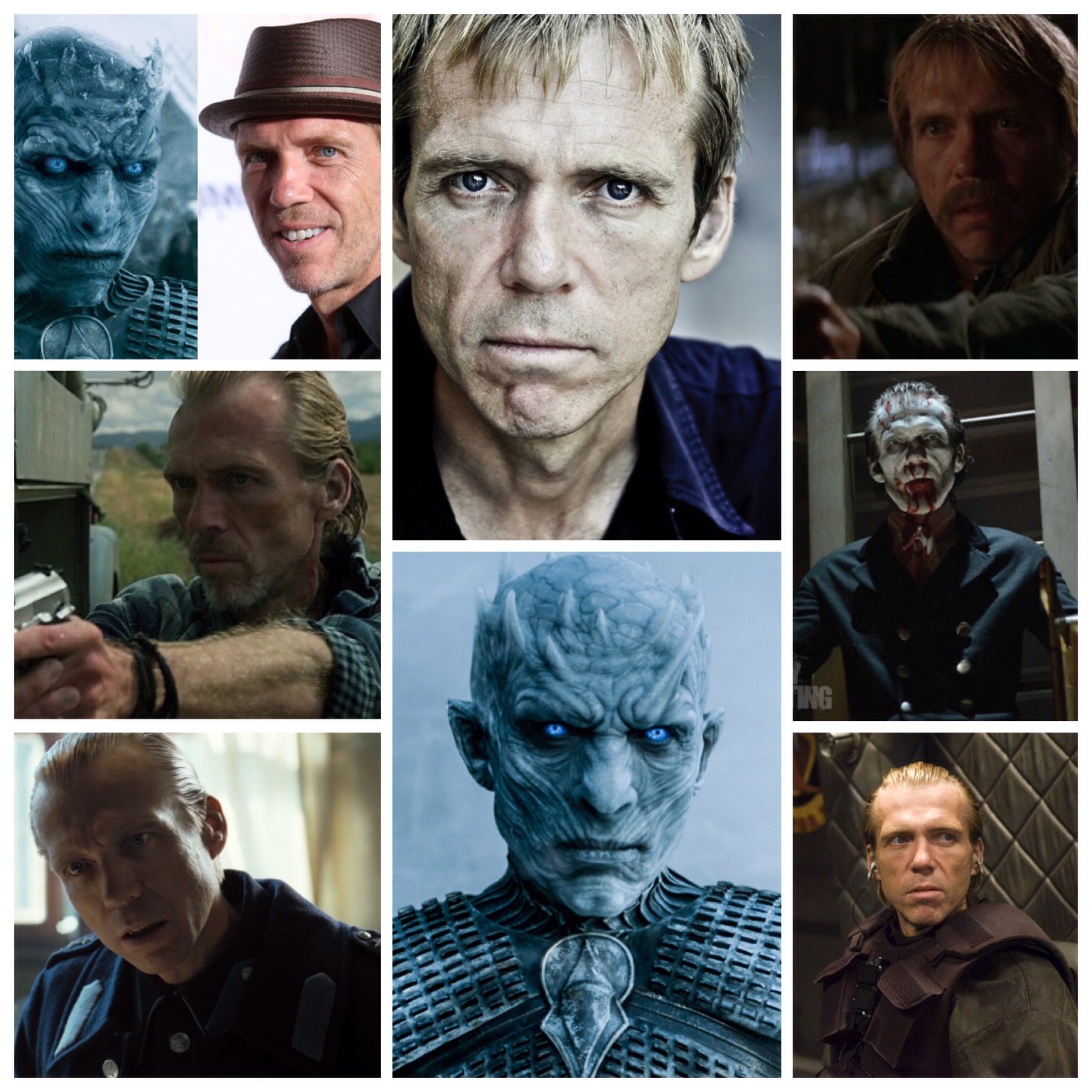
Very excited to bring you my latest interview, with actor Richard Brake! Richard has a legendary career, appearing as the fearsome Night’s King in Game Of Thrones, the murderous criminal Joe Chill in Batman Begins, and in countless films and shows including Ridley Scott’s The Counselor, Hannibal Rising, Rob Zombie’s Halloween II and the upcoming 31, Doom, Spy, Kingsman: The Secret Service, Water For Elephants, Death Machine, The Numbers Station, Ray Donovan, Peaky Blinders, and more. Please enjoy!
Nate: You were born in Wales. Are you purely of Welsh background, and when did you make your way to America? Was acting something you always wanted to do, or did it find you by happenstance? Did you attend any acting schools?
Richard: I’m Welsh through and through. My parents are Welsh and my grandfathers worked in the coal mines. But we moved to America when I was young. I grew up all over, mostly down south. But we came back to Britian a lot and lived there for a while when I was a teenager.
I wanted to be a writer. I started writing stories when I was very young. When I was 17 I started writing plays, short plays, heavily influenced by Edward Albee. I went to a small high school in Ohio, and one evening I was sitting outside with my best friend when a girl came over and begged us to audition for the school Play. It seemed they didn’t have enough boys auditioning and it was a big cast. Arthur Miller’s The Crucible. My friend and I sort of reluctantly agreed to audition and we got cast as the judges. After a few rehearsals I was hooked. I loved the collaborative nature of it all, rehearsing, playing, all of it. I actually loved that more than the performances. I remember walking back to my dormitory with my friend after one of the rehearsals and saying to him “this is what I want to do for the rest of my life.” I’ve been lucky to see that come true.
I went to Duke University and studied English and Drama. I did a lot of theatre there, then studied in New York at the Michael Checkov Studio with an amazing actor Beatrice Straight. I knew I wasn’t very good, or at least as good as I wanted to be. So I went to England and Studied at a Mountview Drama school for three years. I was incredibly lucky that they had just hired a Russian teacher named Sam Kogan. He was a genius. An amazing teacher.
Nate: You have a very distinct style and energy that lends itself to playing larger than life, comic book style characters. Did you mean to take this avenue, or did those types of roles just happen to find you because of your style?
Richard: I think that just comes from the writing of those particular projects. It lends itself to a certain extreme expression. And I am willing to be extreme if it works for the piece.
Nate: What does life look like for you besides acting? Hobbies, interests, family? What lines of work did you find yourself in before the industry?
The usual, waiting tables, telephone sales, all kinds of jobs to make a few dollars.
I have two great kids, an ex wife I get on with, and a girlfriend. That keeps me busy!! If I get a chance I play a bit of guitar, badly. I also practice Ashtanga yoga. I’ve been doing that for a long time, almost daily. It keeps me sane in this insane business.
Nate: I watched an interview with you once where you mentioned that having an active imagination is important in the craft. Would you care to elaborate on that? Does it stem from your training or is this a quality you’ve unearthed in your own exploration of the work?
Richard: Active imagination was a term coined by Sam Kogan. Before I studied with Sam, if I was working on a character, I often saw the character in my imagination as if he was in the third person. I’ll give an example of what I mean, that’s probably the best thing to do. Let’s say my character needs to find out where the money is hidden. He’s a bad guy, a drug dealer. He’s captured the person who knows and tied him to a chair and now he’s torturing him. It’s a lot of money and he wants it so he can quit drug dealing and live on a remote island with the woman he loves.
An actor needs to have an objective (Sam called them “purposes”) to motivate his action. That’s a pretty basic acting tenant. You hear that all the time as a young actor. “What’s your character’s objective. What does he want?” So in this case, I want the guy to tell me where the money is. In passive imagination I see my self in the third person standing over the guy as he blurts out the location of the money. In active imagination I see it all through my eyes, feel the temperature of the room, the smell of his sweat, ect. My character has a long term objective of being on the island, peacefully enjoying life with my girlfriend. So in passive imagination, I see myself sitting on a chair in the sun drinking a mai tai, while my girlfriend rubs suntan lotion on herself. It’s like watching a movie. It’s all in the third person. In active imagination, I can feel the chair under me, the heat of the sun, the smell of the lotion, the taste of the mai tai. I see it all through my eyes, rather than watching it outside of myself. It is far more effective to prepare for a role using active imagination than passive. Passive just causes bad acting, because it doesn’t really motivate. Active imagination motivates. It get’s those objectives into the actor’s being not just his head.
Nate: Game Of Thrones: you made quite an impression as the Night’s King. How were you approached to play the role? How much of you was make up and how much was cgi? How was the battle of hardhome scene for you? Mainly cgi or a lot of practical?
Richard: I auditioned.
Very little CGI. I was in the make up chair for close to 6 hours. Then a couple of hours to get it off. The contact lenses were massive, as big as you can put in a human eye. Torture. But worth it. I loved the episode and playing the character. I’m very proud of it. It’s an amazing show that has resonated with so many people.
Unfortunately, I wasn’t available for Season 6. I had a long contractual commitment on The Bastard Executioner. I was very sad about that as I love the show and being a part of it.
Nate: Another iconic, yet smaller role- Joe Chill, from Batman Begins. How was that experience for you?
Richard: Great. I loved working with Nolan. He is so assured. Great director. And I was a huge Batman fan as a kid, so it was a dream come true to play the guy who killed his parents. Hahahaha, that’s a pretty weird dream, come to think of it, but there you go.
Nate: You mentioned before on Twitter that your favourite role you have done is Doom Head from Rob Zombie’s upcoming film 31. Why was that? And what can we expect from the film, and from your work in it?
Richard: I saw the film at Sundance and it rocks! Rob Zombie is a genius. He’s so creative, generous, inspiring. I can’t say enough good things about him. He has this incredible ability to bring out the very best in everyone who works with him. It’s a real gift, and it shows on screen. I can’t wait for people to see it.
Nate: A film I really enjoyed you in was Good Day For It, with Robert Patrick and Lance Henriksen. Was that an enjoyable experience?
Richard: We had fun. We shot it on a super low budget in the Poconos for 2 weeks or so. We all stayed in this off season ski lodge. All I remember is laughing all the time. Lance is a very funny guy.
Nate: You appeared in Death Machine in a central role pretty early in your career, with it a lot of previous credits? How did were you cast in that?
Richard: As always, I auditioned. I think I was 27 years old. I was probably a little too young in truth to play the President of an Arms Corporation, but I got it. I was so thrilled to work with Brad Dourif. He’s so focused and very generous. I was young and nervous and he was very kind to me.
Nate: Besides 31, are there any other projects you are excited for and would like to mention?
Richard: I’m in the new season of Peaky Blinders. It’s going to be the best season yet. It was one of the bests things I’ve read, and the director, Tim, did a great job. I think it comes out in early May. I’m filming Ray Donovan at the moment. It’s also incredibly well written, acted and directed. Two great shows to be a part of. I’m also hoping to shoot a film my friend Jeff Daniel Phillips wrote later this year. He stars in 31 too. It’s a psychological horror we would like to film in Wales. We are raising the money, etc now. I play a reclusive Goth Rocker from the 80’s. Things get pretty crazy and dark when a young woman comes to visit.
Nate: Thank you so much for your time, Richard, it has been an honour!