Barry Levinson’s What Just Happened: A Review by Nate Hill


Barry Levinson’s What Just Happened is an unfairly overlooked little Hollywood satire, a little less bombastic than his excellent Wag The Dog, but no less biting. It’s like Entourage on Zanax, a surprisingly laid back entry into an oeuvre that is usually foaming at the mouth with frenzy. Robert De Niro plays Ben, a very stressed out movie producer who is dealing with a zillion different things at once, most of which are going wrong. The character is based partly on real life Hollywood producer Art Linson, and his book. Ben has a lead actor (Bruce Willis playing Bruce Willis) who refuses to shave his bushy beard for a film. Anyone who remembers the film The Edge with Alec Baldwin and how big his beard was in that, well, that’s where the idea came from. That’s just a taste of how many weird things that both Hollywood and his personal life toss at Ben. He’s also in post production on a Sean Penn film (Penn also plays himself) with a very stubborn and flamboyant director named Jeremy (Michael Wincott) who refuses to cut the film in accordance with the studio’s wishes (here manifested by an icy Catherine Keener). Ben’s daughter (a weepy Kristen Stewart) is going through personal crisis, he’s also got a bitter rivalry with an obnoxious writer (Stanley Tucci) and has to babysit an anxiety ridden agent (John Turturro). It’s all a lot for him to handle and we begin to see the turmoil start to boil under Ben’s cool exterior. The cast is beyond ridiculous, with additional work from Moon Bloodgood, Peter Jacobson, Lily Rabe and Robin Wright as Ben’s estranged wife. Standouts include Michael Wincott who is a comic gem and gives the film it’s life with his pissy, enraged and altogether charming performance. Willis is also priceless as he ruthlessly parodies himself to the hilt. It’s slight, it’s never too much and is probably a bit too laid back for its own good, but I had a lot of fun with it, and it’s always cool to see meta movies about the inner workings of Hollywood. 

MARTIN DAVIDSON’S LONG GONE — A REVIEW BY NICK CLEMENT

1

Released in 1987 as an HBO movie of the week, the minor league baseball film Long Gone is something of a coveted genre entry by baseball film fans. Never receiving a proper release on DVD and only available on VHS, the film was based on Paul Hemphill’s 1979 novel, and was directed by Martin Davidson (The Lords of Flatbush, Eddie and the Cruisers, Heart of Dixie). Featuring superb camerawork by then up and coming cinematographer Robert Elswit (Boogie Nights, There Will Be Blood, Mission: Impossible — Rogue Nation), this is a loving and funny and extremely entertaining throwback to the 1950’s, showcasing a time and place when baseball truly was America’s favorite sport. Starring a super cocky William Petersen as a broken-down player and reluctant manager with WWII battle scars, the narrative charts an up and down season for the Tampico Stogies, a Class D farm team competing in Florida’s Gulf Coast League.

A super-hot and super-young Virginia Madsen was cast as Petersen’s love interest, and Dermot Mulroney (was he even 20 years old?!) got some great scenes as a young second basement who, in addition to another recent free agent pick-up, might hold the key to his team’s potential reversal in the standing. Thrown in a shady subplot with the team’s corrupt owners and social observations and comments about the racial barrier in sports about to broken open and you’ve got a richer than expected film that really deserves a much higher profile; surely HBO could release a DVD, no? Shot on location in Bradenton, FL and featuring some excellent action on the baseball field, the script is peppered with witty zingers and a nice amount of casual vulgarity, while Petersen’s inherently brash vibe is felt in scene after scene, as he totally owned this film with boozy swagger and supreme confidence. Try to track this one down – it’s so much fun.

The Devil Wears Prada: A Review by Nate Hill

  
The Devil Wears Prada is an interesting one. It’s one part sincerity, two parts cynicism and possesses a certain love for each and every character within its narrative that it’s reluctant to admit to at times, perhaps jut to keep a low profile with its realism. I’ve never read the book, but the film starts off going one way and seems like it will tidy itself up in a nice little resolution, and abandons it’s comfort zone two thirds of the way through for something that cuts cuts a bit deeper. Anna Hathaway starts her arc in the adorable zone and progresses through confidence and finally arrives at in a jaded daze at a tough life lesson. She plays Andrea Sachs, a would be journalist who decides to take a detour and work as second personal assistant to Miranda Priestly (Meryl Streep) the editor and slave driver at Runway magazine, in hopes that doors will eventually open for her in her field. Not quite the breezy excursion she hoped for, as Priestly turns out to be a full on nightmare. Streep blusters into the film like an acy tornado, steady at the reigns of her character and completely owning every syllable of her delicious dialogue. Streep plays her as the ultimate boss from hell, and then cleverly shows us the woman beneath in one key scene that resonates nicely. Most of the time her personality resembles that of my fifth grade schoolteacher on a bad day, and it’s utterly hilarious to see Streep, a god amongst progessionals, go for it like a praying mantis. Andrea also comes under the scrutiny of prim Emily (Emily Blunt, excellent), Miranda’s first assistant who is aghast at her decision to hire this walking fashion disaster. Andrea quickly catches on though, holding her own with this difficult job at the expense of her relationship with her boyfriend (Adrian Grenier of Entourage). Stanley Tucci is equal parts snazzy and snooty as Nigel, Miranda’s associate and eventual mentor figure for Andrea, superb as always. Simon Baker also shows up as a hotshot who tries just a little too hard to sweep Andi off her feet. Like I said before, the film tricks you with fluff and banter and eventually ends up somewhere more serious, with a painful look at what it takes to cut it in the business world, and the allegiences which sometimes get slashed and burned in favour of covering your own ass. Ugly stuff, for sure, but necessary and honest, a decision that helps the film greatly. Plus, it’s pretty damn funny most of the time. Great stuff.

BEST SELLER – A REVIEW BY J.D. LAFRANCE

best_seller_03

Best Seller (1987) is an example of an odd convergence of talent with a screenplay penned by B-movie schlockmeister Larry (It’s Alive) Cohen, directed by journeyman crime film director John (Rolling Thunder) Flynn, and starring A-list talent like James Woods and Brian Dennehy. The key to enjoying this film is if you can swallow Cohen’s pulpy B-movie nonsense: a slick, corporate hitman convinces a hard-boiled police detective, and sometimes author, to write his memoirs. Once you get past this rather odd premise, Best Seller is quite enjoyable to watch, especially the interplay between the two lead actors who do their best to sell the film’s set-up.

Flynn’s no-nonsense, self-assured direction quickly establishes itself in the film’s prologue set in Los Angeles circa 1972 with an ill-fated bank heist. There are some nice touches in this sequence, like the lone bum sleeping on the steps of the building that is about to be robbed, and all of the crooks wearing Richard Nixon masks (anticipating the Ex-Presidents in Point Break). A cop named Dennis Meechum (Brian Dennehy) barely survives the heist (although, a couple of his fellow officers aren’t so lucky) and goes on to write a best-selling book about the incident.

Fifteen years later, Meechum has graduated to undercover work, despite being a high-profile author in his spare time (?!), busting bad guys. During one case he’s almost killed if not for the last minute intervention by an enigmatic stranger. We are given a little insight into this cop. He’s a widower raising a teenage daughter (Allison Balson), facing lots of unpaid bills, and has missed the last four deadlines on his latest book. He’s not quite the burn-out cop that Nick Nolte was known for playing in the 1980s but he’s stuck in a rut.

Meechum finally meets the mystery man known as Cleve (James Woods) who proceeds to pitch an idea for a new book about his life and the dirty work he did for tycoon David Madlock (David Shenar) and his company Kappa International. During one of their meetings, Cleve lays it all out for a skeptical Meechum: “Corporations deal in two things, period: assets and liabilities. I removed the liabilities and I provided some assets.” It turns out that Cleve was in on the bank heist back in ’72 and helped Madlock get his start. However, he’s had a falling out with the businessman and wants to expose his corrupt enterprise with Meechum’s help. And so, Cleve and Meechum form an uneasy partnership that is volatile at best as the hitman attempts to back-up his wild claims to the understandably wary cop.

James Woods had quite a run in the ‘80s with intense performances in films like Salvador (1986), Cop (1987) and True Believer (1989). He’s in fine form here as an ultra-confident killer. His best moments are when he tries to convince Brian Dennehy’s cop of some of the people he murdered for Kappa International. Woods brings his customary intensity to these scenes and a certain reptilian charm as a corporate assassin. Cleve really isn’t a nice guy – in fact’s he’s an arrogant prick – but Woods manages to get us to like him anyways because the actor is so charismatic in his own right.

Woods plays well off of Dennehy’s variation of the cop he portrayed in F/X (1986). He’s not as rumpled and still has his issues but there’s the same sharp intellect. Meechum plans to string Cleve along until he gives him enough evidence to bust him and get some much deserved payback for the ’72 bank job. While Woods is all wiry intensity, Dennehy is a solid, imposing figure with his stocky figure. Most of the film’s best scenes involve watching these two top notch actors bounce off each other.

This is evident in a scene where Cleve tries to pick up a woman at a bar and gets into it with her date only for the guy to be put in his place by Meechum. Just one look by Dennehy makes the man back down. I know I wouldn’t want to mess with someone like Dennehy. Cleve demonstrates his considerable willpower (and threshold for pain) and, in doing so, reveals a part of his past that sets off Meechum. The tension between the two characters in this scene is tangible and ups the ante in their relationship.

Cleve’s crusade against his former corporate handlers is Larry Cohen’s blatant attack on corporate greed so prevalent in the “Greed is good” decade. Cohen wrote the screenplay, reportedly based loosely on Los Angeles cop Joseph Wambaugh, who tried to remain on the police force after several of his novels became best-sellers, in 1981 for Columbia Pictures but it was stuck in development hell due to a change in management. Orion Pictures eventually picked it up. Flynn rewrote Cohen’s script but was unable to get credit because he failed to prove to the Writers Guild of America that he had written 51% of it. The film was originally called Hard Cover but was changed to Best Seller in post-production as the former title didn’t test well with preview audiences. At the time of the film’s release, Cohen said, “I think the idea of being a killer for a major corporation was a little bizarre seven years ago. But time has caught up with the story when we’re reading all these stories about corruption in big business and corruption in Wall Street and the craziness in Washington.” Cleve’s ruthless tactics for Kappa International are meant to show just how far corporations are willing to go to exert their influence and power. It is this commentary that elevates Best Seller above your typical crime thriller – that, and the performances of Woods and Dennehy.

Best Seller
was backed by Orion, an independent studio that pushed through all sorts of fascinating cinematic gems in the ‘80s, from efforts by auteurs like Woody Allen, to genre fare like RoboCop (1987). None of the major studios would’ve touched pulpy material like this and it’s a shame because a film like this has become scarce in the 2000s. The film does a good job delivering the requisite genre conventions under John Flynn’s workman-like direction and the television cop show production values only add to the tawdry B-movie vibe. Best Seller is certainly no masterpiece but it is a solid piece of entertainment and one of those underappreciated gems from the ‘80s waiting to be rediscovered.

TONY SCOTT’S TOP GUN — A 30TH ANNIVERSARY RETROSPECTIVE REVIEW BY NICK CLEMENT

1

At this point in our culture, it’s nearly impossible to discuss Top Gun with any amount of clear-eyed objectivity. The film is a milestone for all of its key contributors, a pop culture touchstone for multiple generations of people, and an often imitated and parodied relic from a very specific time and place in cinematic history. For director Tony Scott, it was his early-career masterpiece, the film that announced an exciting new voice in commercial cinema while showcasing his slippery-slick yet still gritty visual aesthetic, which would come to dominate the action genre for decades. It’s also the film that got him out of director’s jail after the critical and box office failure of his artsy debut, The Hunger, which is now of course a premiere cult classic. For producers Don Simpson and Jerry Bruckheimer, it was the movie that truly solidified them as the uber-showmen of the 1980’s, with Flashdance and Beverly Hills Cop arriving before and Beverly Hills Cop 2 and Days of Thunder immediately following.
10

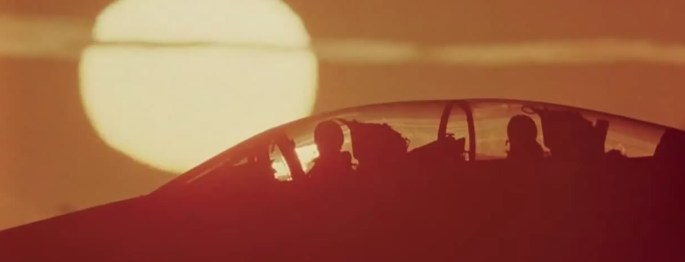
As legend has it, Simpson and Bruckheimer were in their office, and an issue of California magazine was sitting on their desk, featuring a clean cut fighter pilot standing next to a jet. And with that evocative and elaborate “Nothing On Earth Comes Close” Saab commercial that Scott had made in the early 80’s continually turning heads (the one that showed a Saab 37 Viggen fighter jet going neck and neck with the Saab 900), it was clear that it would be a match made in heaven between the producers and their ace in the hole. And for star Tom Cruise, it was his first runaway blockbuster sensation, his first taste of global superstardom, and the film that made him a house-hold name. Top Gun is a product of its time in a way that so few films can claim to be, and over the years, has come to mean so many different things to so many different people, which is why it remains imminently watchable 30 years later.

2

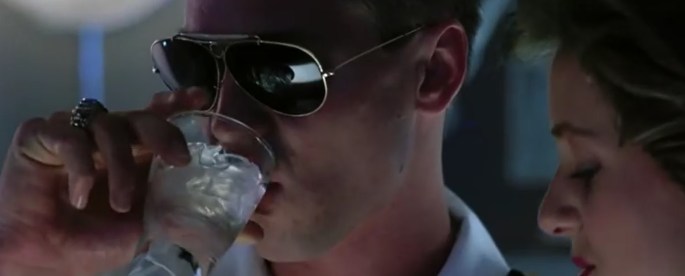
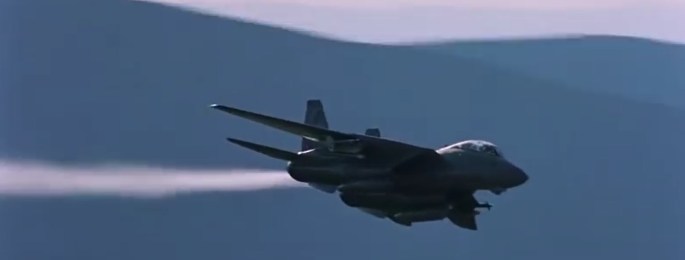
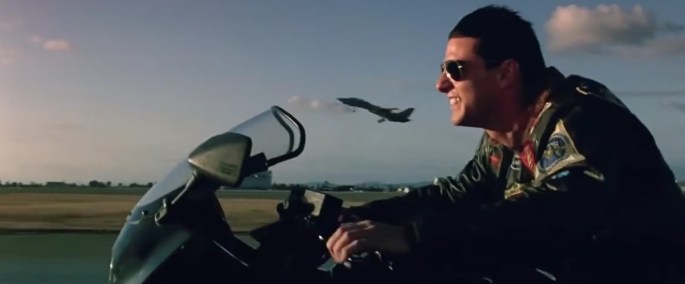
Released in the summer of 1986, Top Gun played on the still lingering fears of war with the Soviets, and carried a rah-rah, jingoistic spirit that seems laughable to some nowadays, but probably felt very honest at the time of release. It feels pointless to rehash the plot of Top Gun – anybody with a pulse has seen it and knows all about Maverick (Cruise, in all his perfect-grinning excellence) and Goose (Anthony Edwards, everyone’s best buddy) and Iceman and Jester and Charlie and the rest of the crew. The scenes on the ground carry an earnestness to them, playing off of melodrama (the mysterious death of Maverick’s father, himself a legendary pilot; workplace romance; the death of a best friend), but the film truly comes alive when it’s up in the sky, as Jeffrey Kimball’s gorgeous, smoky, 2.40:1 anamorphic widescreen cinematography is still a lesson in mid-80’s perfection. Every single shot in this film is spectacular, whether the moment is big or small, with cool blues and sunset reds dominating the horizon. It can’t be understated how influential the look and feel of Top Gun would become for so many films and filmmakers to follow in the years, and whether or not this style is your favorite or not, it’s undeniably exciting on a visceral and stylistic level, with an emphasis on the balance of light, visual minutiae, and overall atmospheric texture. It’s commercial cinema without a shred of pretension, smartly focusing on the drama and action inherent to the story’s scope, and all balanced out by Harold Faltermeyer’s propulsive, oh-so-80’s musical score and the lightning quick editing patterns of Billy Weber and Chris Lebenzon. And when you add in the ridiculously quotable one-liners conjured up by co-screenwriters Jim Cash and Jack Epps, Jr. (who knew that rubber dog shit originates from Hong Kong?) and the high-flying airborne camerawork which is still unmatched to this day, then it’s no wonder that the film plays every Sunday on TNT and has become one of the most influential and iconic movies ever made, with so many other movies attempting, and failing, to ape its success.
3

On a thematic level, the film is all about machismo (a major theme in all of Scott’s work), and how men deal with expectations, loss, tragedy, acceptance, and success. Those classic scenes in the shower (or during a particular game of beach volleyball…) seem homoerotic in hindsight (and maybe they did upon first glance…), but what they’re really about is men trying to one up each other, trying to figure out how to best your opponent, and always remembering that there are no points for second place. To say that Top Gun is one of the most macho movies ever made would be understatement; you can practically smell the testosterone on the set. I’ve often wondered if PA’s were kept solely for the purpose of spraying down the actors with water in order to simulate excessive sweat, because everyone is glistening in this film. Top Gun also expertly understands male camaraderie and friendship, and how people are willing to go the extra step for those that they care about, both professionally and personally. Kelly McGillis and Meg Ryan were the objects of affection for Cruise and Edwards respectively, while the absurdly masculine supporting cast included Val Kilmer, Anthony Edwards, Tom Skerritt, Michael Ironside, John Stockwell, Clarence Gilyard, Jr., Whip Hubley, James Tolkan(!), Barry Tubb, Rick Rossovich, Duke Stroud, Tim Robbins, and Adrian Pasdar.
5

Shot for a now hard to believe $15 million, Top Gun opened on roughly 1100 screens nationwide, grossing $8,193,052 on its opening weekend. The film would eventually gross $176 million in the U.S. and another $177 million overseas, truly cementing the Simpson-Bruckheimer brand after the similar worldwide gross two years previous from Beverly Hills Cop. Top Gun would also break every single VHS sales record, as it was one of the first movies made available to the public at the $20 price point. Scott would continue his legendary streak with the two producers in the following years with the equally huge Beverly Hills Cop 2, and then in 1990 with the summer hit Days of Thunder, which while not becoming the blockbuster some might have thought, is still a splendid piece of action moviemaking that was all accomplished with zero CGI and some of the greatest racing footage ever put on film. But Top Gun would be the film that all of the creative parties would become remembered for, what with its sleek visual design, tough guy banter, love story for the ladies, and the dynamic aerial combat footage that still pops off the screen to this day, especially when viewed in the Blu-ray format. In 2015, the United States Library of Congress added the film to their preservation vaults, deeming it “culturally, historically, or aesthetically significant.” And if you’re not a fan of Top Gun, then just remember, the plaque for the alternates is in the ladies’ room.

11


Renny Harlin’s Cliffhanger: A Review by Nate Hill

image

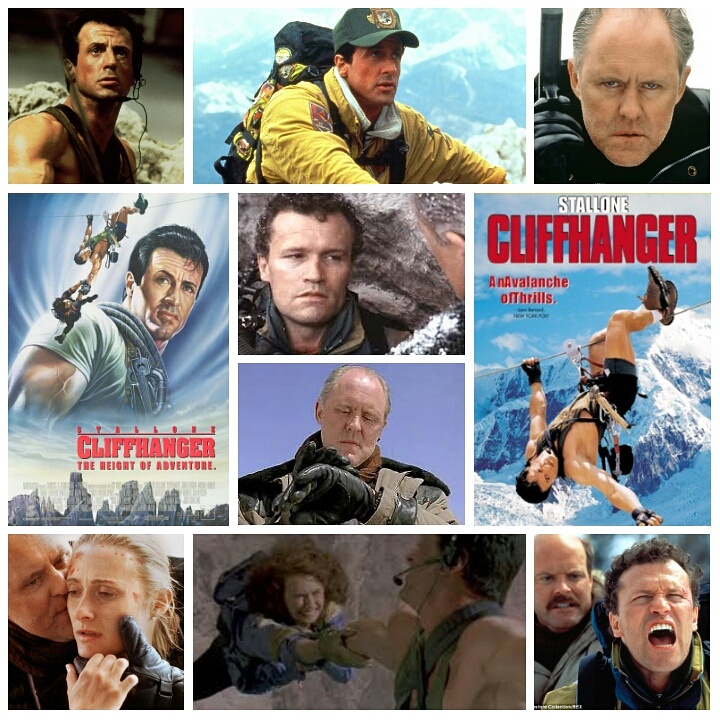
Renny Harlin’s Cliffhanger is to this day one the best and most exhilarating action films of the 1990’s. It’s big, bold and full of protein for lovers oft the genre. From the lively villain to the unbelievable stunts to the set pieces, it’s a tough package to beat. A stunning, vertigo inducing opener set high atop a snowy peak that ends in tragedy. A breathtaking airial heist carried out between two planes via cable wire. A whopper of a helicopter crash. Countless bone snapping, visceral hand to hand combat scenes. The list goes on. Sylvester Stallone puts his physique to great use as Gabe Walker, a rock climbing mountaineer guide who is accidentally responsible for the falling death of his best friend’s girlfriend. His buddy Hal (Michael Rooker) blames him no end, and he leaves in personal disgrace. Elsewhere, ruthless backstabbing psychopath Eric Qualen,  (John Lithgow) leads a team of dangerous mercenaries through aforementioned heist, plundering millions from a US treasury department plane and disappearing into the snowy desolation. Soon they come across Hal and a group of people touring the region, who are soon hostages. Word somehow gets out to Stallone and he’s back in business, out for redemption and then chance to brutally dispatch this gang of snow pirates. The action, refreshingly absent of digital gimmicks, packs one hell of a punch. Every fight scene feels breathless, dangerous and desperate. Every blow is thunderously felt, courtesy of director Harlin’s commitment to his work and the efforts of a stellar stunt team. Stallone isna beast and I forget that every time I haven’t seen him in a while. He’s almost as big as the mountains he scales here and each and every bad guy damn well finds this out. Rooker is as intense as he always is, love the guy. Lithgow is a freaking villain for the ages, in a role intended first for David Bowie, then Christopher Walken. I’m glad the ball ended up in his court, because he subsequently knocks it back out of the park with his cold blooded, deliciously evil performance. He makes Qualen so scary and merciless that even his own people get the jitters around him. There’s also work from Rex Linn, Caroline Goodall, Craig Fairbrass, Max Perlich, Paul Winfield, Ralph Waite, Don S. Davis, Bruce McGill and Janine Turner. This is just one of the finest action movies to ever swing into theatres or onto dvd. Brutal, scenic, adventurous, exciting, violent, snowy, just plain kick ass. If you don’t like this movie, you don’t like ice cream.

CITY OF INDUSTRY – A Review by Frank Mengarelli

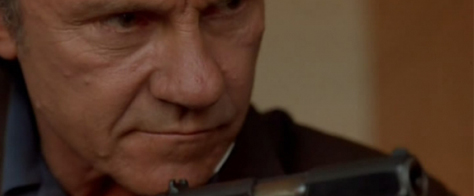
CITY OF INDUSTRY is that seedy noir where men treat their own gunshot wounds with whisky and cigarettes in a rundown bathroom of a motel, talk in short and blunt alpha male code, and live by a code of honor and revenge. The film has a fantastic cast led by Harvey Keitel giving his archetypal tough guy performance. Supporting Keitel is Timothy Hutton, Famke Janssen, Lucy Liu, Michael Jai White, Stephen Dorff, and Elliot Gould.

City of Industry Keitel.jpg

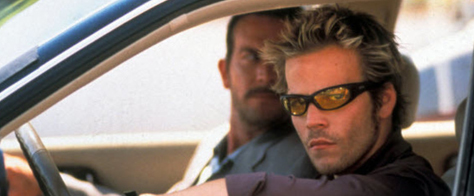
The film’s premise is the Richard Stark esque caper/revenge story of four men robbing a jewelry store, and then one of them (Dorff) kills off two (including Keitel’s younger brother played by Hutton) and then Harvey Keitel spends the rest of the film tracking him down and killing anyone in his way.

City of Industry Hutton.jpg

The film thrives on its minimalist approach. It knows exactly what it is, and it does not try to be anything more. Keitel commands the screen with his scowls and his pistol whipping anyone who stands between him and Dorff. Along the way, Keitel befriends the widow (the always great Janssen) of one of his slain crew members, and of course finds solace and redemption in helping her while tracking Dorff.

City of Industry Dorff.jpg

The film is what it is. For those who enjoy the heavy B movie revenge genre, this film was made for you. Keitel’s stoic performance is solid as ever, Dorff and his blonde highlights is sleazy as ever, and Elliot Gould makes a brief yet groovy turn as a sweaty and smooth crime boss. CITY OF INDUSTRY is one of those gems that stand out among the best of the 1990’s straight to VHS crime films.

JAMES FOLEY’S AFTER DARK, MY SWEET — A REVIEW BY NICK CLEMENT

1.jpg
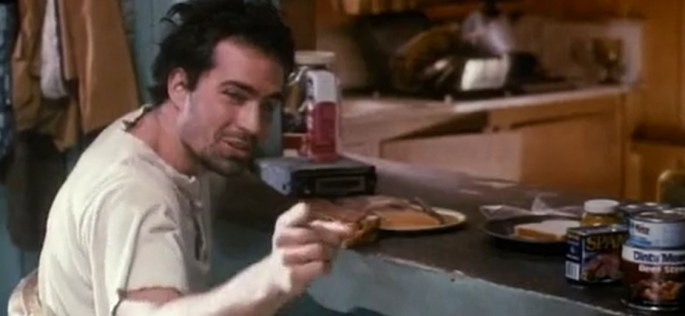
I can see why everyone continually raves about James Foley’s 1990 neo-noir crime film After Dark, My Sweet – it’s one of the most brilliant genre exercises that quietly slipped under the cinematic radar when it was first released. Grossing under $5 million during its entire (albeit limited) theatrical run, critics did back-flips (Ebert most notably), but maybe it was the lack of huge star power or the intrinsic nature of the genre that relegated this one to the sidelines. I’ve seen this film a few times now, but on first glance, I knew nothing about the plot of this twisty suspense piece before viewing, and I’d encourage anyone who hasn’t seen After Dark, My Sweet to avoid any spoilers and just check it out with as little knowledge as possible. Starring Jason Patric (also see Rush for another wildly underrated gem from the 90’s), Bruce Dern, and Rachel Ward and based on the 1955 Jim Thompson novel of the same name, the action is set outside of Palm Springs, and involves an ex-boxer (Patric), his new and mysterious lover (Ward), and an ex-cop turned criminal with a kidnapping scheme (Dern) that of course goes wrong but not in the ways you’d expect. Foley’s visceral direction keeps the suspense at a tight coil, resulting in a film that never fails to excite.
 2
That’s all I will say about the mechanics of the story. What I will say is that Patric delivered yet another exceptional, deeply internal performance, Dern was fantastic as an odd sleaze-ball, and Ward, an actress I’m not incredibly familiar with, was all sorts of sultry and intense, delivering a laser focused performance that plays with the notion of the femme fatale while also embracing her character as a full-fledged individual. Maurice Jarre’s score is wonderful, suggesting temptation at almost every turn, and Mark Plummer’s measured and controlled cinematography heightens the anxiety and dangerous atmosphere at all times, and is in perfect tandem with Howard E. Smith’s tight editing. There’s an epic sex scene between Patric and Ward that is shot and cut in a most unique manner, resulting in one of the most erotic spectacles of cinematic lovemaking that I’ve ever seen in a film, and as usual for Foley, the film exists outside of the normalized margins, with a rough and dirty aesthetic that fits perfect with the fatalistic narrative. The film premiered at Cannes, was released in late August 25 years ago, and it barely made a blip. This is one to track down on DVD (it’s a $10 purchase) or via streaming providers as it’ll completely knock you out.
3

JUSTIN KURZEL’S MACBETH — A REVIEW BY NICK CLEMENT

1

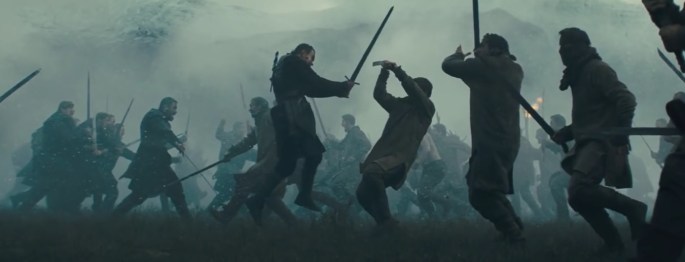
Ultra-atmospheric and wildly stylish, Justin Kurzel’s unique interpretation of Macbeth is an aesthetic powerhouse, containing some of the most gorgeous individual shots that I’ve seen in an any movie in recent memory. Cinematographer Adam Arkapaw delivered some insanely detailed and lushly realized images all throughout this stunning motion picture, utilizing time-heightening slow-motion in a way that would make Zack Snyder proud, and concentrating on natural light and a heavy use of filters and smoke. The film looks to have been shot at the end of the Earth, recalling the eerie vibe that was presented in Nicolas Winding Refn’s Valhalla Rising, with striking location work, evocative production design, and a thundering musical score that’s as propulsive as the visceral filmmaking. Kurzel and Arkapaw and the rest of the creative team stress grit, muck, and mud while focusing on crimson reds, deep blacks, and various shades of amber and gold; this is a simultaneously warm and cold feeling and looking movie, one that feels damp one moment and lit-by-fire-cozy the next.

2

Michael Fassbender is power mad and drunk with bravado, delivering an all-stops-out performance, while Marion Cotillard is every bit his equal in a more restrained but no less engrossing turn as his long suffering companion. This is Macbeth as historical action film, complete with elaborately staged battle sequences that are more interested in hallucinatory style than overly bloody carnage; it’s brutal yet oh-so poetic. This is pure cinema, exactly the sort of thing I want to see when I sit down to watch a movie, a work made by a supremely confident and talented filmmaker. It was clear after watching Kurzel’s magnetic yet extremely disturbing debut, The Snowtown Murders, that he was someone to look out for in the future. I cannot believe how no attention was paid to his bold and breathtaking reimagining of Macbeth, as he took classic material and did something different and modern with one of history’s most classic pieces of literature.

4

Margin Call: A Review by Nate Hill

image

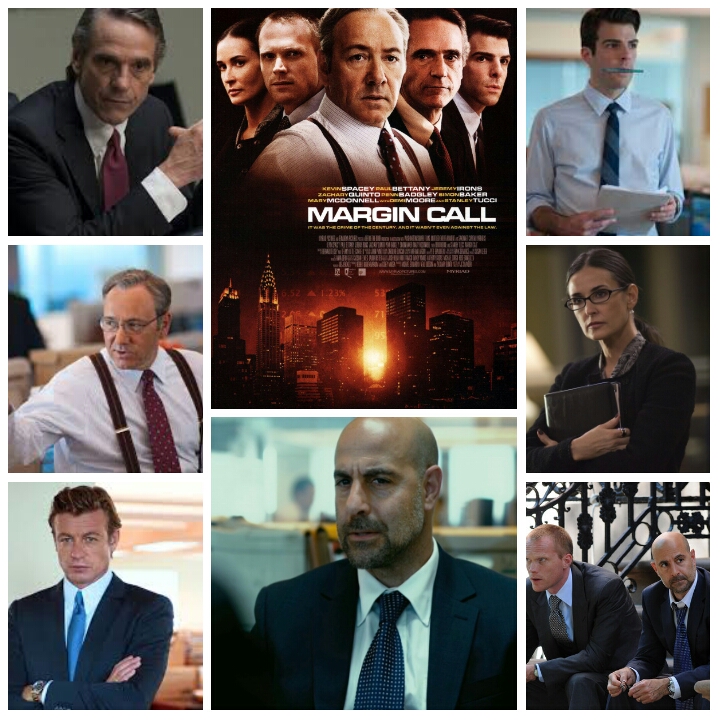
J.C. Chandor’s Margin Call sustains a laser focused, wilfully meticulous look at the days leading up to the 2008 financial crash, showing us life within one wall street office building during a nervy period which now no doubt is remembered as the calm before the storm. Various characters in different positions of the hierarchy anxiously brace themselves as the jobs begin to get cut and the dread looms towards them like the inevitable rising sun at dawn. It’s set all in one afternoon and night, compacting a far reaching event which spanned years into the microcosm of a single 24 hour window, a tactic which sits through the larger world implications and brings it in for something a little more intimate. Zachary Quinto plays a young trader who discovers a rip in the lining of the economic infrastructure, a precursor to the eventual disaste. I’m not being purposefully vague and cryptic with that, I just don’t personally understand all the exact ins and outs of what went wrong back then, and having not the slightest knowledge of wall street jargon, that’s the best I can do. He brings this knowledge to his superiors who react in varying ways. Kevin Spacey is a disillusioned big shot who sees his life going off the rails alongside the country’s market, and mopes in his swanky office. Paul Bettany is a cocky young upstart who uses casual indifference to shade the bruises he’s got from knowing what will happen. Demi Moore is a company head who looks out for herself while others in the company. Jeremy Irons provides scant moments of humour as a bigwig fixer who arrives on a chopper to set things straight, or at least assess the damage. The best work of the film comes from Stanley Tucci (surprise, surprise) as a jilted employee who has been laid off in the confusion, and is seething about it. His melancholic monologue about what it takes to propel America’s industry and economy forward resonates with a humanity that cuts deep. The film ticks along with a pace that’s both measured and swift, with little time for introspect, yet showing it to us anyway amid the chaos. Watch for appearances from Penn Badgley, Al Sapienza, Simon Baker and Mary McDonnell as well. Chandor let’s the proceedings thrum with an inevitability that hangs in the air as the promise of the impending crisis, a feeling that serves to impart not why it happened, not how it happened, but the fact that it did happen, to each and every individual person who was affected, as opposed to the country as a whole.