“It’s just you and me now, sport.” – A ‘Manhunter’ Review by Josh Hains

12383626_169631770076406_1936271223_n Of the film and television productions based on Thomas Harris’ series of acclaimed “Hannibal” novels, Manhunter is the most underrated piece. When the film was originally released in 1986, it met with (surprising to me) mixed reviews, with some critics calling into question director Michael Mann’s use of music, and the film’s unique visual aesthetics. Leading performer William Petersen’s acting skill was also the cause for concern amongst some critics, and the film was sadly a box office failure, raking in just 8.6 million dollars. In recent years, thanks to the popularity of The Silence Of The Lambs, its sequels and prequels, and a television series based on the books, Manhunter has been critically re-reviewed and wildly accepted as more than just a cult film, but as one of the finer films Mann has made to date, and quite possibly a superior film to The Silence Of The Lambs. Not every critic is right every time they put pen to paper.

Manhunter is a rich, meticulously layered, deeply psychological experience that crawls under your skin and seeps into your mind with its concoction of pulsating music, gorgeous cinematography, unsettling production design, and tortured characters. The film chronicles the investigation by former FBI criminal profiler Will Graham (Petersen) into a recent slew of grisly murders of rich families committed by the elusive Tooth Fairy, as the police have dubbed him after the bite-marks he leaves on his victims.

We first meet Will relaxing at his secluded Florida beach house with his wife and son, when his friend and former FBI superior Jack Crawford (the late Dennis Farina, who was a Chicago cop before his film career) comes knocking, asking Will to help authorities nab the killer. After a prior attack involving a certain cannibalistic serial killer I’ll mention later, Will is hesitant to become involved in the case. Most of him wants to stay far, far away from the dangers of this line of work, and doesn’t want to bear the deep psychological burden these kinds of cases can have on law enforcement. However, an unsettled part of his soul is thirsty for one last hurrah, and so Will joins up with authorities in the hunt for the Tooth Fairy.

Simultaneously, the Tooth Fairy himself, Francis Dollarhyde (Tom Noonan), continues to kill including the unlucky journalist Freddy Lounds (Stephan Lang), all the while becoming involved romantically with a co-worker at a St. Louis film lab, Reba McClane (Joan Allen). Meanwhile, both Graham and Dollarhyde receive help from that particular cannibalistic serial killer, the famous Dr. Hannibal Lektor (Brian Cox). Yes, you read that right. Lektor. Spelled that way just for this film, but “Lecter” in the books and other film and television properties. I know that seems odd, but it works. By the time the film’s violent conclusion erupts with the ferocity of a blood craving tiger to Iron Butterfly’s ominous In-A-Gadda-Da-Vida, between the pulsating score, the dazzling cinematography, the tense psychological atmosphere, and the nuanced performances, you’ll surely be white knuckled and riveted to the bone.

In The Silence Of The Lambs, and subsequent Hannibal oriented products, Lecter is somewhat of an over the top, grandiose villain. Sir Anthony Hopkins plays him with a venomous, spiteful, cynical aura and personality, with a twinkle in his eye and a grin ever present on his face. He seems to have waltzed out of a Shakespeare production, with his colourful verbiage and posturing. Even his slightest physical movements seem grand. But here in Manhunter, Lektor is brought down to Earth by Cox’s nuanced performance. Cox is genuinely creepy and unnerving in a  way Hopkins isn’t (Cox based his performance on Scottish serial killer Peter Manuel), precisely because Hopkins Lecter is so gloriously over the top, while Cox maintains a relaxed, collected atmosphere about his Lektor. One can imagine his Lektor character prowling the streets, conning unsuspecting folks into his maniacal grasp with his classy vocals and subtle charms, feasting upon their corpses without breaking a sweat. That sounds plenty terrifying on its own to me, and thus I don’t find the larger than life qualities of later Hannibals all that necessary. I suppose the staying power of Hopkins’ performance is partially reliant on that larger than life aura, because it sticks out stronger in one’s mind than the perfectly realistic, bone chilling performance Cox delivers that doesn’t rely on operatic antics for impact.

Part of what makes Manhunter great is that with it, we are given a film that isn’t reliant on the grisly violence the television series is most famous for. In fact, there’s hardly any onscreen violence at all, the most carefully tame of any Hannibal adaptation, never once gratuitous or overly detailed in the aftermath of violence. Mann is careful to never reveal too much violence, which could easily have turned the film into an unnaturally violent splatter-fest, the lack of which perfectly suits the material and the general themes and tonalites of the film. Instead, Mann cares more about the creation of a sensation of anger toward the killer coupled with the anxiousness and tension within the viewer akin to Graham’s own feeling of these sensations. I think we are meant to feel as though we have stepped into his shoes.

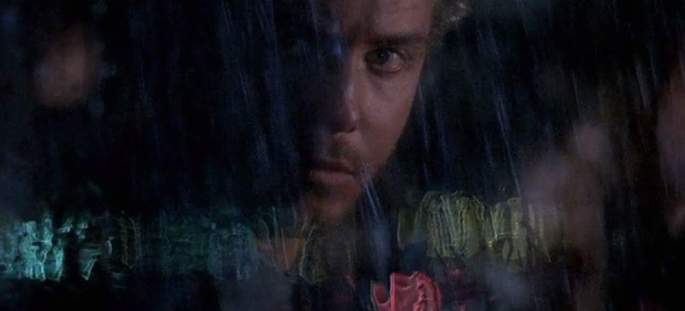
The beauty of the film always manages to catch me off guard more than anything, specifically during a sequence midway through the film when Graham, seated before a rain soaked window, professes his desire to catch the so-called “Tooth Fairy”, arguably one of the films most beautifully realized moments thanks to brilliant cinematographer Dante Spinotti, who also worked with Mann on The Last Of the Mohicans, Heat, The Insider, and Public Enemies. The combination of the psychological nature of the film and the undeniable beauty of Manhunter makes it a very difficult experience to shake. Like other serial killer thrillers such as Seven, Zodiac, American Psycho, and Frailty (to name a few), Manhunter tends to leave a stain on my mind for a little while that no soap known to man could ever wash away, and that’s a good thing in my book. I’m greatly looking forward to seeing this film restored in all its grim glory thanks to the folks at Shout Factory, whose slick new box art for the Collector’s Edition of Manhunter is the second image featured at the top of this review.
WILLIAM FRIEDKIN’S TO LIVE AND DIE IN L.A. — A REVIEW BY NICK CLEMENT

to live and die in LA


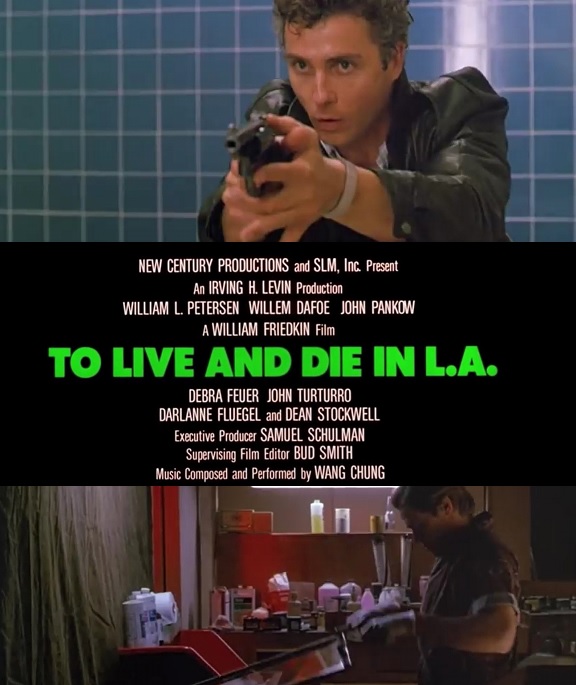
To Live and Die in L.A. is most likely the best Michael Mann film that Mann didn’t actually direct. Yes, the film certainly shows some trademarks of it’s legendary director, William Friedkin, but there’s a general ambience and sense of style that feels cut from Mann’s early-80’s cloth; call it a fascinating amalgam of two of cinema’s best tough-guy directors. William Petersen got one of his absolute best roles as a volatile Secret Service agent hot on the trail of counterfeiter Willem Dafoe, who has figured out a way to mass produce nearly flawless fake cash. Petersen is also deadest on avenging the death of his partner, who is dispatched in the first act via shotgun blast to the face, a moment of cinematic violence that once seen cannot be unseen. The plot is somewhat standard but never uninvolving, mixing the expected cops and robbers tropes into a sprawling, Los Angeles-set narrative that makes tremendous use of the city and all its potentially dangerous locales. Robby Müller’s stylish cinematography portrayed Los Angeles and its surrounding areas as lethal, neon-scorched hell-pits, while also evoking Alan Pakula’s seminal 70’s thriller The Parallax View during the frightening opening sequence.

Most of the action takes place during the day, whch separates this film from Mann’s mostly nocturnal urban playgrounds of violence and mayhem. The film’s main action set-piece, featuring a car chase that’s set against traffic along the 405, is phenomenally well-staged, feeling dangerous at every turn, and done with zero CGI, making it even more impressive. John Frankenheimer would riff on the against-traffic car-chase in his masterful thriller Ronin. Friedkin based his screenplay on Gerald Petievich’s novel; before becoming an author, Petievich was a member of the U.S. Secret Service. The famous Wayne Chung score only underscores this film’s essential 80’s-ness. Features a boisterous supporting performance from John Pankow. Real life counterfeiters were brought on as technical advisors, thus ensuring legitimacy during the various sequences showing the manufacturing of the phony greenbacks. Two endings were shot, with Friedkin ultimately going with the downer finale, which certainly has helped to keep this film a cult favorite after a solid theatrical run in the fall movie season of 1985.

KNIGHT OF CUPS: A Review by Joel Copling

Rating in Stars: **** (out of ****)
Cast: Christian Bale, Brian Dennehy, Wes Bentley, Cate Blanchett, Natalie Portman
Director: Terrence Malick
MPAA Rating: R (for some nudity, sexuality and language)
Running Time: 1:58
Release Date: 03/04/16 (limited)

One must remember that suffering is relative to the sufferer. A certain Republican Presidential candidate’s woes regarding his father’s “small” loan of a million dollars and the subsequent problems that so “little” money caused for him are, to the wide universe and to any moral measure, as nothing to a child starving in a third-world country. Getting by on an amount of money that doesn’t actually get one very much within his circles, however, is, to the candidate, akin to that child’s starvation in an existential way. Neither he nor the child, in his mind, has it easy when taken in the context of their individual situations. That is neither to defend the candidate’s cheap way of playing victim when he is one of the richest individuals in the world nor to trivialize the starving child’s predicament within economic strife. But, as Terrence Malick’s Knight of Cups wisely reasons, suffering is suffering to the individual, no matter what it looks like.

On the privilege scale, the central figure of Malick’s newest slice of poetic visual storytelling in the vein of his two previous efforts, a screenwriter named Rick (Christian Bale), is closer to the aforementioned Presidential candidate than a child in an impoverished country. This is a man beset on all sides by an existence mired in materialistic woes to go along with the ones of reflection and regret that come with the territory of a brother who has ended his own life (or so they say). Rick’s other brother Barry (Wes Bentley) is a ball of nerves and rage that explodes out of him when even thinking upon their father (Brian Dennehy), whom they resent for his lack of outward sympathy (Their mother, played by Cherry Jones, was a mostly uninvolved one).

Rick lives a cozy life in a Los Angeles apartment constantly fraught by low-level earthquakes. His writing projects take him to parties and raves populated by celebrities (Recognizable names and faces, such as Antonio Banderas, Kevin Corrigan, Nick Offerman, Clifton Collins Jr., and even Fabio, appear in cameos as themselves or perhaps not) and into the employ of agents played by Michael Wincott, Patrick Whitesell, and Rick Hess who try to “tell [him] about [him]” and to encourage him to take various projects for various studios. Rick, meanwhile, is reflecting on his five failed relationships with women in his life and looking forward to the sixth (played by Isabel Lucas) as the ideal to which he aspires (That a romance with her is, on the face of it, as materialistic as what he’s escaping proves that, perhaps, we do not ever truly change, except in the baby steps of recognizing we must).

In chronological order of when the narrative, split into chapters named after figures on tarot cards, presents them to us, the women are as follows. Della (Imogen Poots) is a free spirit, unencumbered by worries but unsure of her own emotional drive. Helen (Freida Pinto), whom Rick meets at one of those lavish parties, is just in search of a fling after feeling a burden to every man with whom she truly connected. Nancy (Cate Blanchett) is Rick’s ex-wife, who ended because he never felt as if the marriage was worth the trouble of sharing in her enthusiasm for children or even being kind to her after a while. Karen (Teresa Palmer) is a stripper who, like Helen, is only looking for something temporary and distracting. Elizabeth (Natalie Portman) is a woman who consciously entered an extramarital affair with Rick that ultimately splinters apart.

These women are not characters, which might inspire controversy in a current climate of examining female roles in cinema, but figureheads that represent much for Rick the roller coaster shifts in his life–from progressing in his romantic pursuits to regressing once again. Each actress, but especially Blanchett and a devastating Portman, is up to the task of Malick’s challenging performance showcase of alternating plaintive gazes with disaffected blank stares (and so, for that matter, is Bale, who excels especially in the quietest moments of a very quiet performance). The film is also another magisterial collaboration between Malick and cinematographer Emmanuel Lubezki (who makes a conscious decision to frame the actors mostly from behind, highlighting their disassociation with each other and with their situations). Knight of Cups is stirring, searching, soulful stuff.

B Movie Glory with Nate: For Which He Stands

  
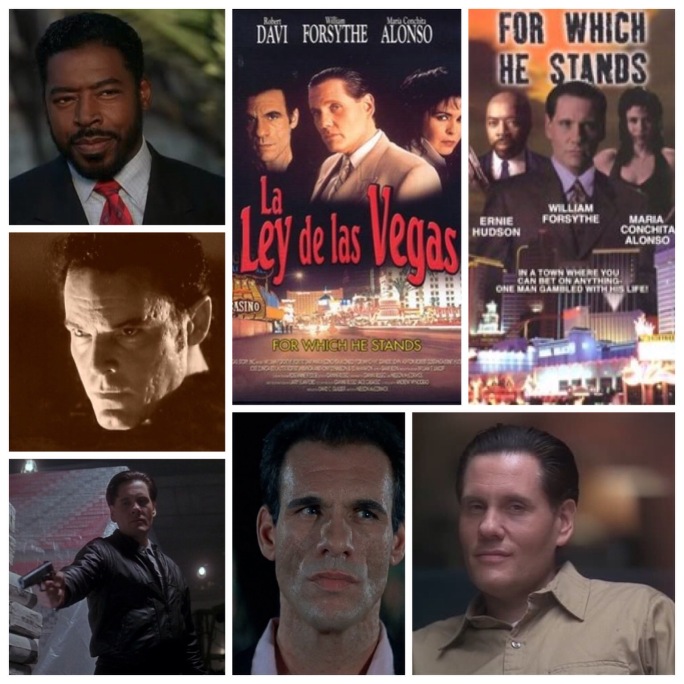
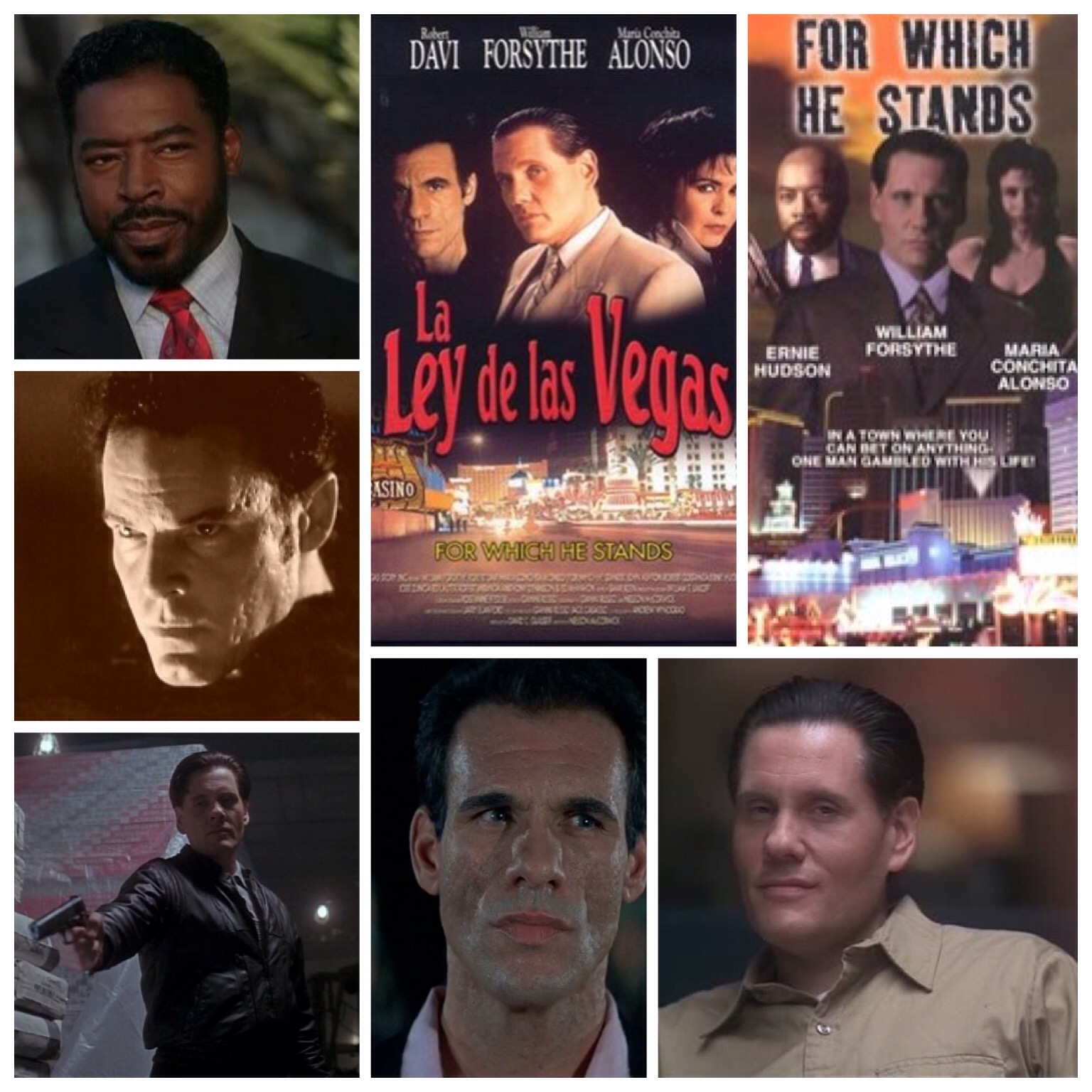
For Which He Stands is a lean, mean, nasty crime drama and cautionary fable about the dangers of pride and ego, and the spiralling disaster ones life can turn into when these qualities within the human nature go unchecked. It’s also a shamelessly slimy B movie treat featuring a tough as nails lead performance from William Forsythe as Johnny Rochetti, a small time Vegas casino mogul who runs afoul of some extremely dangerous South American criminals. He plays the role like Liotta from Goodfellas crossed with Bronson from Death Wish, an initial belligerent cockiness wiped promptly out of his personality by the very real danger stalking him, replaced by a reckless calm and willingness to get his hands dirty to defend his loved ones. One night, a Latin scumbag causes a raucous in his casino by violently threatening a girl. Johnny has a reflex reaction to defend her, and inadvertently kills the prick. This makes him a local hero, but also paints a huge target on his back for the Colombian cartel, who his deceased quarry had connections with. He’s forced to leave his wife (Maria Conchita Alonso) and contend with the dangerous criminal forces aiming to eliminate him. There’s some truly freaky cartel baddies here, including Andrew Divoff in a cameo as a gravel voiced psycho, and Robert Davi in a fire so,e turn as Carlito Escalara, a ruthless assassin hell bent on destroying Johnny. He’s got some legendary villain roles in over the years, and this one is among the nastiest, and best. Johnny’s only help comes from an intrepid federal agent (Ernie Hudson) and a D.A. (John Ashton’s). It’s Forsythe’s show though, and his transformation from untouchable big shot to caged animal on the run to eventual pistol packing hero is fun to watch. The atmosphere is pure crime cinema, told almost like a dark fairy tale that just happens to be set in Vegas. This one is positively buried in obscurity though, I had to seek out a screener VHS copy of a dusty corner of Amazon to get my hands on it. Good luck. 

MEAN STREETS – A REVIEW BY J.D. LAFRANCE

Mean Streetts 4

Martin Scorsese’s truly great films have all had a personal touch to them. One only has to look at films like Mean Streets (1973), Taxi Driver (1976) and Raging Bull (1980) to see a real vitality and energy to the action on-screen. It is these early films that convey a real sense of someone intensely in love with film — which may be due in part to the fact that Scorsese and his cast and crew were just starting out. Mean Streets, in particular, is a visceral, intimate experience that is just potent today as it was when it first came out.

Mean Streets
takes the notion of the American success story and reduces it to almost nothing. The characters that inhabit this film are small-time hustlers and punks with no real direction in life and no future. Set in the “Little Italy” neighborhood of New York City, we are introduced to most of the main characters in the opening moments of the film. Each one is given his own little scene in order to showcase his distinct character-defining obsession. We first meet Tony (David Proval), the order-obsessed owner of a local bar, as he throws out a junkie and then chastises his bouncer for his lack of initiative. Next, is Michael (Richard Romanus), a serious looking loan shark who ineptly tries to sell a man a shipment of German lenses only to be told by the customer that they are actually Japanese adapters. This is followed by the explosive Johnny Boy (Robert De Niro), a happy-go-lucky punk who gleefully blows up a mailbox and then runs off. Finally, we meet the film’s protagonist, Charlie (Harvey Keitel), an ambitious young man who is embroiled in conflict — both personal and external.

Charlie is torn between two worlds: the static isolation of his uncle’s environment and the constricting chaos of Johnny Boy’s lifestyle. He must make a choice between the two, while trying to exist in both. Conflict occurs when these two worlds inevitably collide and Charlie is left to pick up the pieces. This revisionist approach is in stark contrast to the traditional gangster film which almost always follows a curve that traces the criminal’s rise and eventual fall. However, Scorsese disrupts this notion by having no rise and leaving the fall unresolved. The only thing that is truly alive and vital in the film is Scorsese’s camera which dollies and tracks all over the place with incredible energy and enthusiasm which is truly infectious.

The source of this intensity stems from Scorsese’s personal identification with the material. At the time, the young filmmaker was writing the screenplay for Mean Streets (then known as Season of the Witch) and he had just finished wrapping up Boxcar Bertha (1972) for B-Movie guru, Roger Corman. Scorsese showed the rough cut of the latter to famous actor/director John Cassavetes who told him, “you just spent a year of your life making a piece of shit. You’re better than that stuff, you don’t do that again.” Cassavetes asked Scorsese if he was working on something that he really wanted to do. He showed him the Season of the Witch script and Cassavetes urged Scorsese to work on his own material and not on others.

So, the aspiring auteur began to seek financial backing for his script which initially began as a continuation of the characters in his first film, Who’s That Knocking At My Door? (1968). Scorsese changed the title to Mean Streets, a reference to famous pulp writer Raymond Chandler, and sent the script to Corman who agreed to back the film if all the characters were black. Scorsese was so anxious to make the film that he actually considered this option, but fortunately actress Verna Bloom arranged a meeting with potential financial backer, Jonathan Taplin, who was the road manager for the musical group, The Band. Taplin liked the script and was willing to raise the $300,000 budget that Scorsese wanted if Corman promised, in writing, to distribute the film.

According to Scorsese, the first draft of Mean Streets focused on the religious conflict within Charlie and how it affected his worldview. “See, the whole idea was to make a story of a modern saint, a saint in his own society, but his society happens to be gangsters.” Along with fellow writer Mardik Martin, Scorsese wrote the whole script while driving around “Little Italy” in Martin’s car. They would find a spot in the neighborhood to park and begin writing, all the while immersed in the sights, sounds, and smells of what would eventually appear on-screen. Mean Streets, for them, was a response to the epic grandeur of The Godfather novel. “To us, it was bullshit,” Martin remembers, “It didn’t seem to be about the gangsters we knew, the petty ones you see around. We wanted to tell the story about real gangsters.” It is this rejection of the often pretentious and operatic approach of The Godfather films that really makes Mean Streets distinctive. It was one of the few gangster films, at the time, to use a personal, almost home-movie view of its subjects. The settings and situations are so intimate and personal that you almost feel embarrassed, as if you are intruding on someone’s actual life.

Once the financing was in place, Scorsese began to recruit his cast. Robert De Niro had met the director in 1972 and liked what he had seen in Who’s That Knocking. De Niro was impressed with how the film had so accurately captured life in “Little Italy” where he had also grown up. Scorsese offered the actor four different roles, but he could not decide which one he wanted to portray — they all had interesting aspects to them. After another actor dropped out of the project, Scorsese cast Harvey Keitel in the pivotal role of Charlie. Keitel’s first film was also Scorsese’s debut with Who’s That Knocking and as a result, the two already had a rapport. This may explain why the director ignored the fact that the actor had little experience, and instead opted for a certain amount of rawness and a familiarity with the subject matter that Keitel possessed. Scorsese’s gamble paid off and Keitel’s strong performance is one of the many highlights of Mean Streets. He manages to convey the inner turmoil that threatens to consume Charlie’s character as he struggles to save everyone around him and ends up saving no one.

Keitel was also responsible for convincing De Niro to play Johnny Boy. “I didn’t see myself as Johnny Boy as written, but we improvised in rehearsal and the part evolved.” This improvisation also resulted in some of the most memorable scenes in the film, including the back room conversation between their two characters where Johnny Boy explains to Charlie, in a rather humorous fashion, why he has no money to pay off his debt to Michael. It is also incredible to see how much energy De Niro instills in Johnny Boy — the embodiment of the film’s frenetic force. He is the unpredictable element in Charlie’s otherwise, structured world. Whenever Johnny Boy is on-screen the camera mimics his furious pace that absolutely bristles with intensity. Scorsese reinforces this energy in an early scene where Johnny Boy enters Tony’s bar to the strains of “Jumpin’ Jack Flash” by the Rolling Stones. Even though the entrance is captured in a slow motion tracking shot, De Niro’s character is so energetic that not even this technique can slow him down.

The whole cast was prone to improvising dialogue and Scorsese only encouraged them more by creating a very collaborative atmosphere to the whole shoot. This provided actors like Keitel room to grow and learn their craft. “Mine was a gut, root, raw experience of trying to express myself, and express the character of Charlie in Mean Streets, and trying to discover what it meant to express yourself in a character. I was learning my technique, learning how to apply it. Marty and I always discussed a scene, and usually he trusted me to do what I had in my mind to do.” This trust resulted in a great performance from not only Keitel but the whole cast who transformed into their characters effortlessly.

Keitel was not the only actor who felt like he could make his character his own, the whole cast was encouraged to personalize their roles. Richard Romanus, who played Michael in the film, remembers that Scorsese “allowed you to flesh out the character. Even if you were in the middle of a scene and something came up that was organic, he wouldn’t dismiss it. He would respond to it, and he would probably include it. To me, that is his great gift. He’s an actor’s director.” This approach created a fun environment for the cast and crew to work in and allowed them more opportunity to be creative. As a result, Scorsese, as he put it, “kept pushing the limits of the budget and drove everybody crazy. But that was the only thing we could do because the more we got down there, the more fun we had and the more we realized the atmosphere we wanted to get.” To his credit, Scorsese and his crew achieve this effect with smoky, dimly-lit bars for his characters to inhabit and an amazing classic rock soundtrack to compliment the proceedings. There are several moments in the film where the actors are laughing at something and it seems like they are genuinely enjoying the moment and the experience of making this film which only enhances the enjoyment of watching it.

One of the real joys of Mean Streets is the way Scorsese’s camera captures the action. The camera is restless and frantic as it moves in tight, narrow spaces that lead to dead ends. This is done to convey the destiny of the characters. They are full of energy, but are going nowhere in life. In Mean Streets, Scorsese also used a hand-held camera to create a jerky, off-balance effect that conveys the sensation of disorientation. There is no center of power. No other scene demonstrates this effect more than the famous pool hall brawl where Johnny Boy, Charlie, and Tony go to collect some money from the owner. A fight breaks out when Johnny Boy’s bravado insults the owner. Scorsese uses a hand-held camera to convey the constant confusion of the fight. The camera darts and weaves all over the place, following one fight for a while before shifting to another brawl in an indiscriminate fashion. This effect raises the fight to a frightening level as the audience is drawn right into the middle of the pool hall melee.

We are in as much danger as the characters and this adds an element of realism not seen in traditional gangster films. The combatants in Mean Streets are not easily identified and separated, but instead everything is mixed up and obscured to duplicate the spontaneity of the ensuing chaos that constitutes a real brawl. The violence has no meaning or nobility and no one becomes a hero or succeeds as a result of using excessive force. After the pool hall fight is broken up, the conversation continues as if it never happened. The fight served no purpose and achieved no real end, except to enliven the characters’ mundane existence for a few minutes. Mean Streets excels in its realistic portrayal of violence that goes so far as to implicate the viewer in the spectacle, as the pool hall fight scene illustrates. The camera, and by extension, the viewer enters the fracas, which creates a sense of danger not only for the characters but for the audience as well.

Mean Streets
opened at the New York Film Festival to good reviews and good business. It did so well that Scorsese wanted to show it in Los Angeles where, despite favorable reviews, it promptly flopped. However, it began to gradually find an audience and has since become an influential and much imitated film amongst up-and-coming independent filmmakers who identify with the low-budget exuberance of Scorsese’s film. Even Scorsese himself returned to the same neighborhood, only with greater command of his craft and on a bigger scale with Goodfellas (1990). One only has to look at indie films like Laws of Gravity (1992), A Bronx Tale (1993), and Federal Hill (1995) to see that Mean Streets still continues to inspire filmmakers more than twenty years after its release.

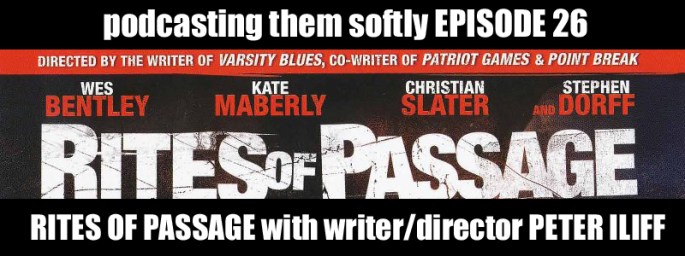
Episode 26: RITES OF PASSAGE with writer/director PETER ILIFF

rites of passage

We’re back to a “regular” episode where we discuss a film that is underseen, underrated, and/or unfairly criticized.  This week’s episode is Peter Iliff’s RITES OF PASSAGE, and we were fortunate enough to have Peter back on our show to discuss his film.  This film hits an array of genres, has a fantastic cast, and excels madly.  RITES OF PASSAGE is available on DVD, blu ray, and streaming via Amazon or you can buy or rent the film digitally on Vudu.

MARIELLE HELLER’S THE DIARY OF A TEENAGE GIRL — A REVIEW BY NICK CLEMENT

2
The Diary of a Teenage Girl will likely serve as a frightening wake-up call to any parents with a 15 year old daughter. Or a daughter of any age! Set in hippe-dippy 1970’s San Francisco, this is a highly sexual account of a young girl going through a serious emotional and physical awakening, all raging hormones and misplaced ideals, and the performance from Bel Powley is absolutely incredible from first frame to last, fearless in ways that you don’t normally see on the big screen. Adapted and directed by Marielle Heller and based on the graphic novel The Diary of a Teenage Girl: An Account in Words and Pictures by Phoebe Gloeckner, this is a quirky, serious but funny, acutely aware movie that feels very personal and expressive. It’s also got a unique visual style, with floral animation being used all throughout to tap into the cluttered headspace of the lead character. That the narrative centers on a high school girl who enters into a torrid love affair with her mother’s boyfriend should give you an idea of the type of movie that this is, and because of the delicacy to the performances (the spot-on Kristen Wiig is the hard-partying mother while an effectively understated Alexander Skarsgård is the boyfriend/illicit lover), the film achieves a level of clarity that might not have happened had it been in the hands of lesser performers and storytellers. After premiering at the 2015 Sundance Film Festival, the film received a limited theatrical release last summer, and is now available to stream or rent/buy on disc.

Leaving Las Vegas: A Review by Nate Hill

image

Upon my first ever viewing (I know) of Mike Figgis’s Leaving Las Vegas last night, I discovered that it’s not the film I thought it was all these years. I had an image of a quirky, star crossed lovers tale with a modicum of sweetness. What I got wasn’t insanely far off the mark, but I have to say I was disarmed and deeply affected by the sense of decaying bitterness which prevails throughout the story and hangs over it like the sour, neon stained moon over a feverish, perpetually nocturnal Vegas. Every character besides the two leads sort of flits dimly in and out of the story, never having any impact further than they need to service the plot with. This leaves Nicolas Cage and Elizabeth Shue eerily alienated and gives the movie a hypnotic flair. Even though these two abide in a bustling setting, it oddly seems at times that they are the only two human beings in existence. That also most likely stems from the film’s willingness to take the time to get to know them, lingering on every glance, murmur and mannerism, be it mundane or essential, to try and get a feel for these two completely broken souls. Cage is Ben, a failing Hollywood screenwriter who is quite literally drowning in alcoholism, plagued by some tragic past of which we never learn about. He is fired and splits for Vegas to hole up in a motel and deliberatly drink himself to death. There he meets Sera (Shue) a hooker with a heart of gold (Shue torches the cliche bravely). They are immediately attracted, and begin a relationship.  She continues to see Johns, after being freed of her sadistic Latvian pimp (Julian Sands, terrifying). He makes her promise to not attempt to stop his drinking. Their romance is born out of the primal lonliness that each human being feels to a certain extent, that instinctual urge to reach out and grab for anything, anyone to put out the pain. Cage is everything in the role: pathetic, charming, sad, manic, desperate and deeply, scarily committed to his lethal quest of inebriation. The scenes of liquor consumption in this film go beyond excess and make Denzel in Flight look like a high schooler. It will make many uncomfortable, but looking away for our own peace of mind takes away from the urgency and dark poetry of Cage’s situation. Booze is a low burn, but it’s still suicide, and an agonizing method for anyone to behold in action: the person has an extended period of time to rethink, reevaluate, and if they don’t, then their resolve is extended and far more disturbing than a split second decision. Cage displays this in harrowing form in a career highlight. Elizabeth Shue is heartbreaking as the girl who loves him but can’t quite say why, a girl who has spent years in loveless copulation, confused and torn upon feeling it for the first time. Her character goes through some truly hellish things here. You will cry for her, fall in love with her alongside Cage and swell with admiration at her steely resilience in the face of some of the ugliest things life has to offer her. Each member of the supporting cast is like a star in the desert sky, a moment of flickering purpouse before fading into the background again to let Cage and Shue continue their dance of the damned. Graham Beckel as a shaken bartender, Xander Berkeley as a cynical cab driver, Valeria Golino as as a Barfly and R. Lee Ermey as a taken aback conventioneer are all perfect. Director Mike Figgis composed the score himself, a moody blues melody that clings to your perception after the film like a dream that won’t let go. Just to make the film more haunting, it’s based on a novel by a severely alcoholic writer who took his own life two weeks after production was underway, furthering the disconcerting vibe to a saturation point. This one is a tough watch, and you’ll be forced to see two human beings at the absolute end of the road, miles past rock bottom with seemingly no hope in sight. And yet, if you are patient and try to empathize, you will see the kind of flickering positivity and briefly life -affirming intimacy and light that humans cling to even in the darkest of times. Cage and Shue beautifully paint a bittersweet portrait of this through their work. It’s overbearing with the better, but that makes the sweet all the more precious and lasting. Just watch something happy after.

Michael Mann’s The Insider: A Review by Nate Hill

There are some films that are so perfectly made in every way possible that
I sit there thinking ‘Every persons effort and every element of creative energy that went into making this movie has been implemented flawlessly, arriving here and now to give me the viewing experience I’m getting. A perfect movie’. Michael Mann’s The Insider is such a movie. I held off on reviewing it for a couple days after seeing it, partly to let it sink in but mostly to see if I’d feel any different about it once my synapses had cooled down and the frames had dimmed from my consciousness. Perhaps the fiery reaction it drew from me in the moment was cheaply earned, or I was just in the right mood to love it at that time. Not a chance. If anything I’ve become more enraptured by it as time has passed, already aching for a second viewing. Every performance and aspect of is just so rich, deep and rewarding that for its two and a half hour runtime I found myself externally distracted not once. Occasionally Mann deviates from his comfort zone in the nocturnal crime zone. The occult themed period piece, the colonial adventure, the psychological horror, and this, the blistering drama based on a true story. One might not think the subject matter deserves a two and a half hour film, let alone would make a great one, but Mann has the cinematic Midas touch, and never half asses it. His films always contain traces of a true master at work, telling little details that engrave the film with a sense of immaculate skill and unwavering dedication to telling the story in its finest, and most honest form. The Insider tells the story of Jeffrey Wigand (Russell Crowe), a chemist who turns whistleblower on the tobacco corporation he was once employed by, finding shelter under the wing of CBS News’s 60 minutes, and particularly hard nosed reporter Lowell Bergman (Al Pacino). The network wants his take, in order to do an exposé on Big Tobacco, a plan with predictably disastrous and dangerous results, for both Wigand and CBS. The film shakes off any impending sensationalism or deliberately emotional stylistic cheats, instead keeping a microscope focus on the three lead performances and letting all the hurt, determination and emotion come forth naturally through their work, as opposed to smothering their story with an overbearing score and cheap cinematic manipulation. I’ve never been that won over by Russell Crowe until now. He always seems ‘halfway there’ in his work, like he’s missing something. This changed things for me. He’s like a raw nerve here, a family man pushed to the precipice of an impossible decision. One can almost see him wrestling with his conscience behind those haunted eyes, a storm with a lid barely kept on and anchored by Crowe in his finest hour. Pacino holds us captive with his work until we realize we’re not breathing. He’s the moral compass of the piece, and to see him explode at the injustices served up to him will give you goosebumps. The third leg of the table is Christopher Plummer as Mike Wallace, the 60 minutes anchor who also struggles morally with the situation they are in. Plummer is so good you forget you’re watching a film, giving Wallace buried gentleness and chiselled emotional intensity that you can scarce believe is even possible through the craft of acting. The supporting cast is peppered with bushels of talent. Colm Feore, Philip Baker Hall, Gina Gershon, Stephen Tobolowsky, Diane Venora, Nester Serrano, Rip Torn, Michael Gambon and an unusually sedated Debi Mazar are superb. It’s Bruce McGill, however, who almost steals the film in one blistering scene, playing a lawyer with enough righteous anger to shatter your tv screen. A career best for him. No one puts you into a story by forcing you to feel alongside the characters quite like Mann. Here he guides us through the trials that Crowe, Plummer and Pacino face with steady hand and heart until we are invested. Then he pulls the ripcord and let’s the sparks fly, making monumentally intense work of events that could seem pedestrian in lesser hands. We really feel for Crowe and clutch the seat with the same desperate intensity that he clings to his family, and sanity. We feel the same jilted fury alongside Pacino as he wades through sickening bureaucracy for a shot at retribution. We take pause with Plummer as he ponders his legacy and are incredulous with all three at the snowball effect the entire proceeding has had on them, devastating us as an audience the same as them, in turn making us feel closer to them. This is all laced with the incredibly heartfelt music from Lisa Gerrard, who sang alongside Crowe in Gladiator and was a favourite of Tony Scott as well. Mann is a ceaseless monster of storytelling, tone and pacing. The story has flair simply because he doesn’t wantonly throw it in the mix; the feeling and reaction come from story and character and not the razzle dazzle. Mann knows this, and let’s the fireworks naturally spring from the absence of deliberation, like music in the vacuum of space. This one will live on to stand the test of time far longer than the decade and a half its help for already. It’s a revelation. 

THE HUNT FOR RED OCTOBER – A REVIEW BY J.D. LAFRANCE

maxresdefault

Has it really been over 20 years since The Hunt For Red October (1990) was released in theaters? It has aged surprisingly well. Fresh off back-to-back successes of Predator (1987) and Die Hard (1988), director John McTiernan was at the top of his game. He had become the go-to guy for big budget, blockbuster action films. So, it made sense that he would be entrusted with kickstarting a potential franchise with Red October, an adaptation of Tom Clancy’s best-selling novel of the same name, in the hopes of launching a series of films featuring recurring Clancy protagonist Jack Ryan. Paramount Pictures wasn’t taking any chances, casting screen legend Sean Connery and pairing him up with up-and-coming movie star Alec Baldwin. The result, not surprisingly, was box office gold and arguably the strongest entry in the Jack Ryan franchise.

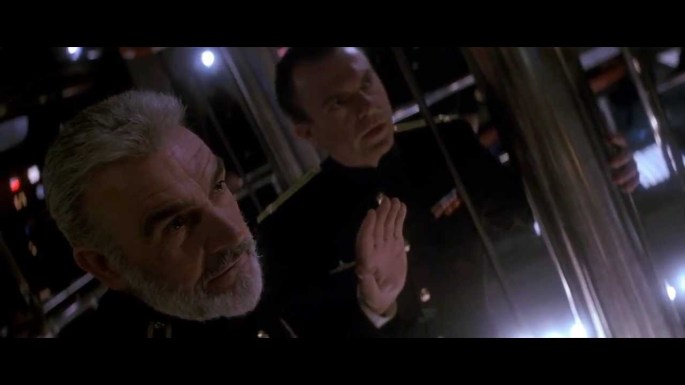
It’s the mid-1980s and the Cold War is at its peak. American Naval Intelligence discovers that the Russians have created the perfect nuclear submarine — one that can run completely silent. CIA analyst Jack Ryan (Baldwin) is called in to confirm that this is true, but at the meeting with the Joint Chiefs of Staff, he puts forth a radical theory: the sub-commander of this new submarine, Captain Marko Ramius (Connery), may actually be trying to defect and not trying to start World War III as they all fear. This is further complicated when the Russians report that they’ve lost all contact with Ramius. The powers that be send Ryan into the field in the hopes that he can contact the Russian sub-commander before his countrymen blow him out of the water. The film becomes a race against time as Ryan boards the USS Dallas, the American sub closest to the Red October, and convinces its commander (Scott Glenn) that Ramius plans to defect.

McTiernan does a nice job of showing the camaraderie aboard the USS Dallas in a brief scene where the captain of the sub tells a story about how fellow crew member Seaman Jones (Courtney B. Vance) had Pavarotti blasting over the sound system during an exercise with other subs in their fleet. It’s a nice moment of levity amidst this generally serious film. McTiernan also doesn’t bog the film down with an overabundance of technical jargon. And what techno-speak there is in the film is spoken expertly by the cast in a way that is understandable. You may not understand it but you know what they mean.

Along with Das Boot (1981), Red October remains one of the few decent submarine films. And this is because McTiernan builds the tension with the right amount of white-knuckled intensity. The film attempts to maintain the suspense of whether Ramius has gone rogue or is defecting for as long as it can but since Sean Connery is playing the character this removes all doubt as to his true intentions. Connery playing a villain at this stage in his career? Ridiculous! The first hour of Red October is all set-up as the film establishes the major players and their intentions. Then, it shifts into an elaborate game of cat and mouse as both the Russians and the Americans pursue Ramius. If that wasn’t enough, McTiernan ratchets up the tension with the discovery of a saboteur aboard the Red October.

After reading the galley proofs of Tom Clancy’s novel The Hunt for Red October in February 1985, producer Mace Neufeld optioned it. The book went on to become a best-seller and still no Hollywood studio was interested because of its complicated technical jargon. Neufeld said, “I read some of the reports from the other studios, and the story was too complicated to understand.” After 18 months, he finally got a high-level executive at Paramount Pictures to read Clancy’s novel and agree to develop it into a film.

Screenwriters Larry Ferguson and Donald Stewart worked on the screenplay while Neufeld approached the United States Navy in order to get their approval. Initially, they were uncertain because of the fear that top secret information or technology might be exposed. Fortunately, several admirals were fans of Clancy’s book and argued that the film could do for submariners what Top Gun (1986) did for the Navy’s jet fighter pilots. To that end, the director of the Navy’s western regional information office in Los Angeles offered possible changes to the script that would make the Navy look good.

Alec Baldwin was approached to appear in the Red October in December 1988 but was not told for what role. Austrian actor Klaus Maria Brandauer was cast as Marko Ramius but unfortunately two weeks into film he had to quit due to a prior commitment. The producers quickly faxed a copy of the script to Sean Connery. Initially, he declined the offer because the script didn’t make any sense. It turned out that he was missing the first page which stated that the film was set in the past during the Cold War. He agreed to do it and arrived in Los Angeles on a Friday and was supposed to start filming on Monday but he asked for a day to rehearse in order to get into the role.

The Navy gave the production unparalleled access to their submarines, allowing them to take pictures of unclassified sections of the USS Chicago and USS Portsmouth for set and prop design. Key cast and crew members took rides in subs including Alec Baldwin and Scott Glenn, both of whom took an overnight trip on the USS Salt Lake City. To research for his role, Glenn temporarily assumed the identity of a submarine captain on board the USS Houston. The crew took “orders” from Glenn, who was being prompted by the sub’s commanding officer.

Shooting in actual submarines was deemed impractical and in their place five soundstages on the Paramount backlot were used with two 50-foot square platforms housing mock-ups of the Red October and the USS Dallas were built. They stood on top of hydraulic gimbals that simulated the sub’s movements. Connery remembered, “It was very claustrophobic. There were 62 people in a very confined space, 45 feet above the stage floor. It got very hot on the sets, and I’m also prone to sea sickness. The set would tilt to 45 degrees. Very disturbing.”

With The Hunt for Red October, Alec Baldwin was being groomed for A-list leading man status. Prior to this film he had appeared in an impressively diverse collection of films, playing a bland, dead Yuppie in Beetlejuice (1988), an unfaithful greaseball boyfriend in Working Girl (1988), and an unscrupulous radio station manager in Talk Radio (1988). Throughout Red October, Ryan is constantly proving his credentials to veteran military officers that he encounters, including a memorable briefing with a group of generals where he puts one of them in their place after the man condescendingly scoffs at his theory about Ramius.

After all this time has passed and two other actors have assayed the role, Alec Baldwin is still the best Jack Ryan for my money. He brings a solid mix of serious action hero with a whimsical sense of humor to his version of Ryan that is sorely missing from the stuffy, no-nonsense approach of Harrison Ford and the wooden acting of Ben Affleck. Baldwin instills a certain warmth and humanity in Ryan that is a refreshing contrast to the technology that dominates the film. Baldwin does a good job of conveying Ryan’s intelligence – after all, he’s a thinking man’s action hero – but he has his doubts and this humanizes the character.

With his baggage of iconic movie roles, Sean Connery is well-cast as the confident Ramius. There is a scene where he tells his inner circle of defectors his true intentions. Calmly eating his dinner, Ramius tells them, “Anatoli, you’re afraid of our fleet, hmm? Well, you should be. Personally, I give us one chance in three.” Connery says this in casual fashion as only he can. I suppose I believe him as a Russian sub commander as much as I believe him as an Irish cop in The Untouchables (1987). Which is to say not so much but it’s Sean freakin’ Connery, dammit! He’s the most virile Scottish actor alive today. He was James Bond and Indiana Jones’ father fer chrissakes! He pulls off the role through sheer charisma. Who else could play the enigmatic veteran commander of the entire Russian Navy? Connery has the gravitas and the iconic cinematic presence to make him seem like the ideal choice to play Ramius.

The Hunt for Red October
features a stellar cast of fantastic character actors supporting Connery and Baldwin. Two of Ramius’ senior crew members are played by Sam Neill and Tim Curry. Neill is excellent as Connery’s no-nonsense second-in-command who defends him against the other defectors who doubt Ramius’ motivations but in private voices his own concerns. You’ve got Scott Glenn as the commander of the USS Dallas, James Earl Jones as Ryan’s superior and friend, and Stellan Skarsgard as the Russian sub commander hunting down Ramius. Richard Jordan even pops up in a small but memorable part as the President’s National Security Adviser and talks like how I imagine most politicians do when they are among their own. At one point, he tells Ryan, “Listen, I’m a politician, which means I’m a cheat and a liar, and when I’m not kissing babies, I’m stealing their lollipops, but it also means that I keep my options open.” It takes a special kind of actor to come in and knock it out of the park with very little screen time but Jordan does it so well and makes it look easy.

Techno-thrillers don’t get any better than this film — you’ve got Baldwin as the reluctant hero who steps up when he has to, casting Connery with his iconic presence as the enigmatic Ramius, and a top notch supporting cast of character actors. Add to this, expert direction from McTiernan and you’ve got the best Jack Ryan film to date. Sadly, this would be his last really good film. With the exception of The Thomas Crown Affair (1999), he has struggled with the tiresome Medicine Man (1992), signed on for the redundant Die Hard with a Vengeance (1995) and finally taken up residence in Hacksville with the brainless Rollerball remake (2002). Watching The Hunt for Red October again is a sobering reminder of what a good director he used to be.