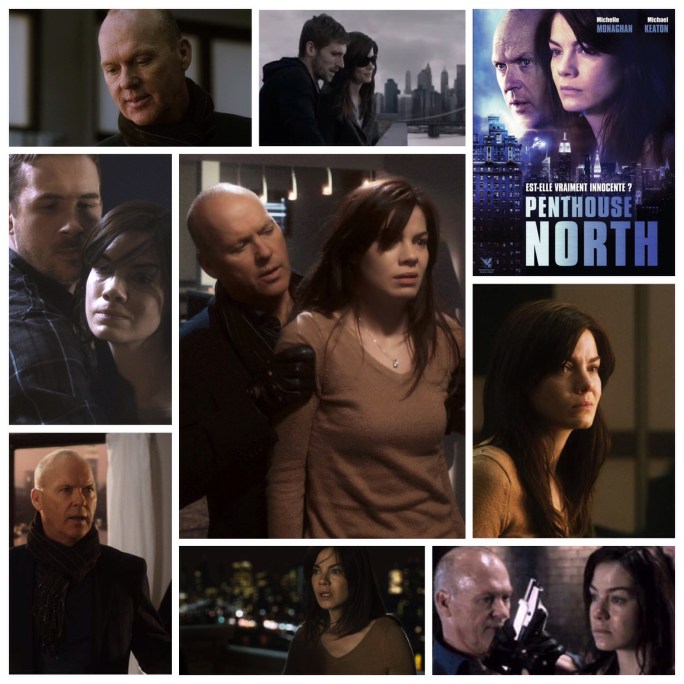
Penthouse North is a vicious little 90’s inspired slice of thriller fun, which sadly seems to have gained zero marketing and promotion, so unless it catches your eye on US Netflix or Shaw On Demand (which is where I watched it), you’ll prolly never even know you missed it. It’s nothing groundbreaking, and sometimes is very predictable, but as I found myself calling plot twists on the dime, and figuring out story beats before they happened, I didn’t find myself frustrated or feeling cheated out. I got a burst of nostalgia for the 80’s/90’s time period when these type of thrillers were in full bloom. Michelle Monaghan throws herself into the role of Sara, an ex-war photojournalist who was blinded in an incident. She lives in an ornate NYC penthouse with her boyfriend now, only just beginning to adjust to her new condition and emerge from reclusiveness. On New Year’s Eve, that auspicious time of year that buzzes with possibility, trouble comes knocking in the form of homicidal criminals in search of something hidden within the apartment. We are then treated to the archetypal game of cat and mouse as she fights tooth and nail for her survival. The film benefits greatly from a frenzied performance from Michael Keaton as Hollander, the lead criminal and a real piece of work. Keaton rarely plays in the bad guy arena (check out Pacific Heights for a more restrained yet equally dastardly turn), but he’s got a reptilian ferocity that’s equally scary and amusing, sometimes both at once. His Hollander is a royal prick, and oodles of fun to watch. Mark Mancini composes a solid score of jangly apprehension, and the film makes great use of its setting, with several clammy moments that didn’t sit well with my fear of heights. Good stuff.
Category: Film Review
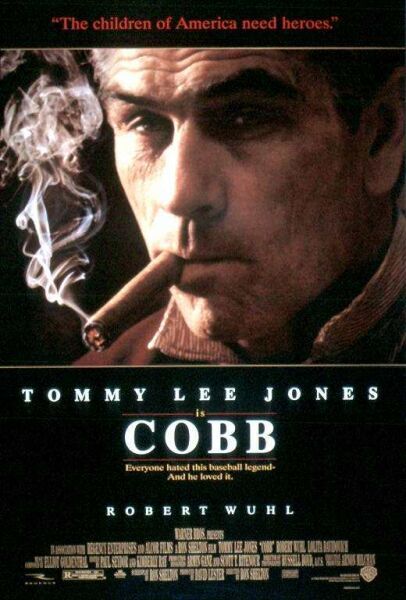
RON SHELTON’S COBB — A REVIEW BY NICK CLEMENT

Except for a handful of people, everyone hated Cobb when it was released in 1994. It got savaged by almost every critic and it died a very quick death at the box office, grossing less than $2 million domestic. My dad took me to see it when it played at a local college campus theater during its second run (Trinity College in Hartford, which is still equipped with 70mm projection), and I’ve long been fascinated by its dark edges, its morally compromised center, and its stubborn refusal to play it safe for the biopic genre. Some filmmakers might have tried to soften Ty Cobb’s life story for the sake of potential audience sympathy and empathy, but not writer/director Ron Shelton — he’s too smart for those type of cheap tricks. By almost all accounts, Cobb was a racist, a drunkard, a drug addict, a wife beater, a general all-around asshole who also happened to be one of the greatest baseball players ever to pick up a glove and bat, a man with a ferocious desire to win at all costs, with a dangerous sense of reserve and purpose that outright scared other human beings. Shelton’s rather brilliant creative decision to totally limit the baseball action (you quickly glimpse Cobb on field in a few flashbacks and highlight footage) allowed for a more introspective narrative, thus taking the game out of the man, but never the sense of sport or competition.
Robert Wuhl, as Cobb’s autobiographer Al Stump, and Lolita Davidovich were both excellent in vivid supporting turns, while the production benefited enormously from Russell Boyd’s burnished and elegant lensing and the lived-in production design by Amin Ganz and Scott Ritenour. And then there’s Jones as Cobb, giving one of his greatest performances, unafraid to be unrepentantly nasty, and going for the emotional jugular in almost every single sequence. His fiery back and forth with Wuhl remains volatile all throughout the angry screenplay, providing a unique sense of awkward camaraderie and legendary reverence between subject and author.
Shelton had an absolutely tremendous run of sports films in the 80’s and 90’s, with the classic baseball comedy Bull Durham, the crowd-pleasing yet still subversive blockbuster White Men Can’t Jump, the challenging and unforgiving Cobb, the utterly lovely Tin Cup, and the underrated Play it to the Bone (which would make for a great double feature with Michael Ritchie’s unfairly neglected Diggstown), before moving into the cop genre in the 90’s and 2000’s with the superb Dark Blue, the humorous Hollywood Homicide, and scripting duties on Michael Bay’s at times hallucinatory Bad Boys 2. The Paul Newman political comedy Blaze is a fun and curious offering that found release in 1989. Roger Ebert’s personally conflicted review of Cobb is one of the most interesting pieces that he ever wrote, and is worth checking out.
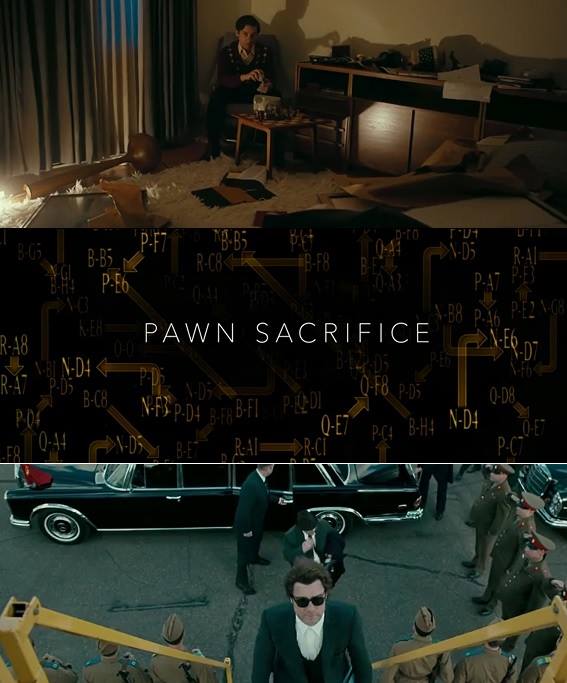
EDWARD ZWICK’S PAWN SACRIFICE — A REVIEW BY NICK CLEMENT

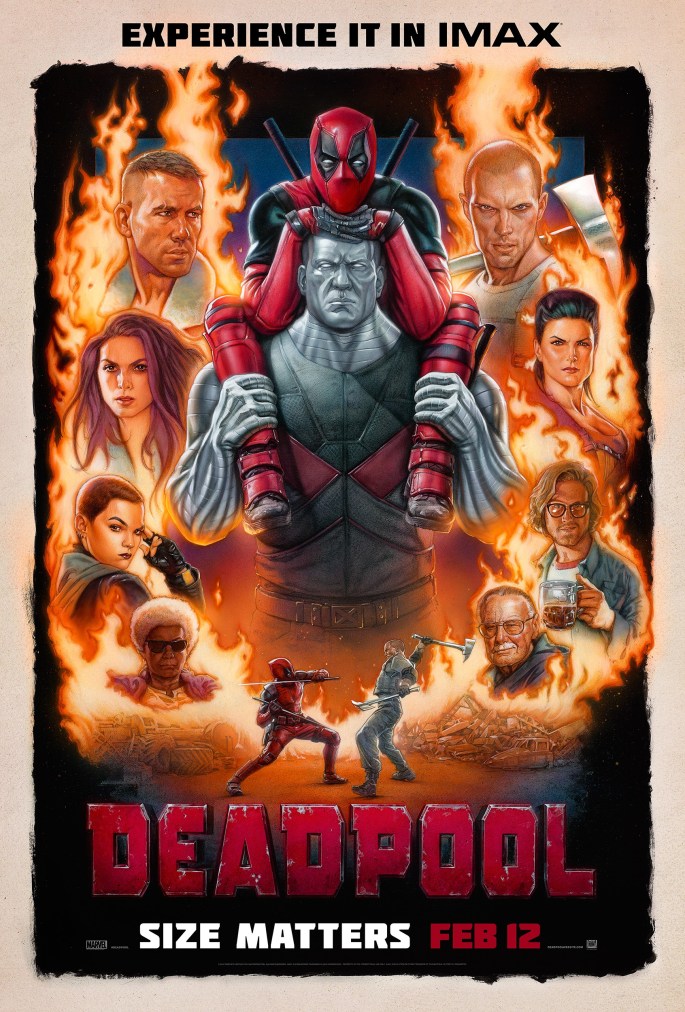
Deadpool – A Review by Josh Hains
Whoever said Deadpool was going to suck probably only heard about the movie within the last year and would rather watch X-Men Apocalypse…ew. They’ve probably never read a Deadpool comic book in their life, and had no idea who he is until the hugely popular marketing campaign kicked into full swing. They probably didn’t like that either and made that very clear on IMDb. And they probably have absolutely no appreciation for Ryan Reynolds. But of course, they can’t always be right. Deadpool is kickass!
Deadpool is light on its feet, hilarious, action packed, and accessible, but also rude, crude, violent, sexy, and not for everyone! Also, the main character isn’t green or animated, which means his chances of appearing in the next Avengers movie are slim to none, which is great because Hollywood tried sanitizing him once before and that was a bitch to get through. Deadpool speaks his mind loud and clear regardless of who is listening via voiceover or right into the camera breaking like 16 walls with a verbal diarrhea-like spontaneity that is much appreciated given how boring narration tends to be these days. It’s also 100% authentic to the character of Wade Wilson aka Deadpool aka The Merc With A Mouth, and his personality and mannerisms, the narrative style of his comics, his schizophrenia propelled fourth wall breaks, and the coarse, crude, profane and violent fun fans have come to expect from this parody of the Slade Wilson aka Deathstroke DC Comics character.
He’s as much of an anti-hero as Daredevil, but with a wicked sense of humour and comic timing that lands him the woman of his dreams, Vanessa, who sees our anti-hero Wade Wilson for the crudely mannered tough guy with a heart full of unicorns and Wham! for who he really is. But just when things get good and Wade gets laid constantly with his new lover, his life takes a giant shit on his shoulders and gives him cancer in his lungs, liver, brain, and prostate. All things he can live without. Some sketchy dude that looks like he should stay 500 yards away from schools offers Wade a cure and super human abilities, so Wade leaves Vanessa behind to become a super something. Unlike Daredevil however, after weeks of grueling experimentation, his eyesight is still intact along with his sense of humour and garrulous ramblings, his cancer completely gone, but his skin is all Freddy Krueger. Wade dubs himself Deadpool after a gambling racket his buddy Weasel runs, and with the assistance of Weasel, Blind Al (a crude old lady that let’s Wade crash at her place during his time of need), X-Men characters Colossus (a shiny CGI hero) and the moody Negasonic Teenage Warhead, Wade sets out to kill the guy who made his face look like an avocado had sex with an older, more disgusting avocado…the British bad guy Ajax and his sidekick Angel Dust, a less angry Rosie O’Donnell.
Along the way, bullets fly, blood spills and swords separate limbs and heads from bodies, all while Wade cracks jokes every other minute and breaks the fourth wall more times than he shoots people (count it if you don’t believe me), none of which is a bad thing! Deadpool is a load of furiously funny, blood soaked fun, right from the first milliseconds of the film until the end of the post credits sequence. It’s not the first R rated comic book movie, it surely won’t be the last, and it doesn’t have a huge budget or a Zack Snyder in the director’s chair. But it has a lot of heart, a great deal of humour, and some wicked bloody action, all of which have helped push the film into record breaking infamy. As a meta comic book film, Deadpool makes similarly themed comic book movies like Kickass look like the cheap wannabes they’ve always been, and does so with balls and attitude to spare.
Cue the music!
TWIN PEAKS POWERCAST No. 4: AN INTERVIEW WITH JOHN NEFF

When David Lynch set about making a home studio in the late 1990s, he liked the work studio engineer John Neff did in designing it so much that he hired him to run it. Thus began a partnership that lasted over two albums, three films, a website and a one-off concert in Paris for the ages. Nate and Tim had the pleasure of picking the talented and generous Mr. Neff’s brain for loads of anecdotes about working with Lynch, projects that almost came to pass, the origins of some of Lynch’s most challenging work, and more. Truly a David Lynch insider, this is essential listening for any fan of this enigmatic genius.
SHANE BLACK’S KISS KISS, BANG BANG — A REVIEW BY NICK CLEMENT

I can still remember seeing Shane Black’s wild and crazy genre bender Kiss Kiss, Bang Bang in the theater, at the Arclight in Hollywood, on opening weekend. I immediately fell in love with this film. It’s got great action, lots of pointed humor, terrific style from cinematographer Michael Barrett, with a satirical spin that allows for a unique tone to take over. The theater was packed and everyone loved it. There was a near constant stream of laughter, and all of the well-timed action and playful yet lethal violence was perfectly integrated into a smart, twisty screenplay that holds up remarkably well on repeated viewings. So it’ll always boggle my mind why, after premiering at the Cannes Film Festival, the film never broke out at the U.S. box office in the manner that it deserved; I don’t even think it got a fully wide release at any point during its theatrical life despite excellent critical support. It’s certainly become a recent cult item, which isn’t hard to see why. Predating the rapid A-list ascension for future Iron Man Robert Downey Jr. by three years, Black’s hugely entertaining shaggy-dog crime film involves a small-time criminal named Harry Lockhart (Downey Jr.) who accidentally stumbles into a movie audition while he’s being chased by the police after a botched robbery has left his partner shot.
A totally absurd set-up, but due to the near-whimsical way that Black stacks the deck from the opening sequence, the entire film feels pleasantly over the top if frequently quirky and always engaging. Much to his surprise, Lockhart gets the part after an impressed casting director mistakes him for a method actor, and once ensconced in Hollywood, he gets mixed up with a shady private eye (a hilarious Val Kilmer) and a sexy, potentially dangerous femme fatale (Michelle Monaghan) with ties to his past. A terrific and eclectic supporting cast including Corbin Bernsen, Rockmond Dunbar, Dash Mihok, Larry Miller, and Shannyn Sossamon all make memorable appearances. And as per usual for Black, there’s a Christmastime setting, thus continuing his tradition of writing actioners that take place over the winter holidays. This was Black flexing his witty and subversive neo-noir muscles, poking fun at a genre that he helped to shape and expand, with results that feel extremely knowing and well observed. And yet, it would take eight more years before Black would find himself back in the director’s chair, for one of the best Marvel offerings to date in Iron Man 3. But if you’re a Shane Black fan, don’t worry, because he’s about to bust loose with this summer’s hilarious looking The Nice Guys, and is hard at work with his Monster Squad co-writer Fred Dekker on The Predator. Fun tidbit: Black titled his film after film critic Pauline Kael’s 1968 film reviews and essay collection.
CHRIS WEITZ’S A BETTER LIFE — A REVIEW BY NICK CLEMENT

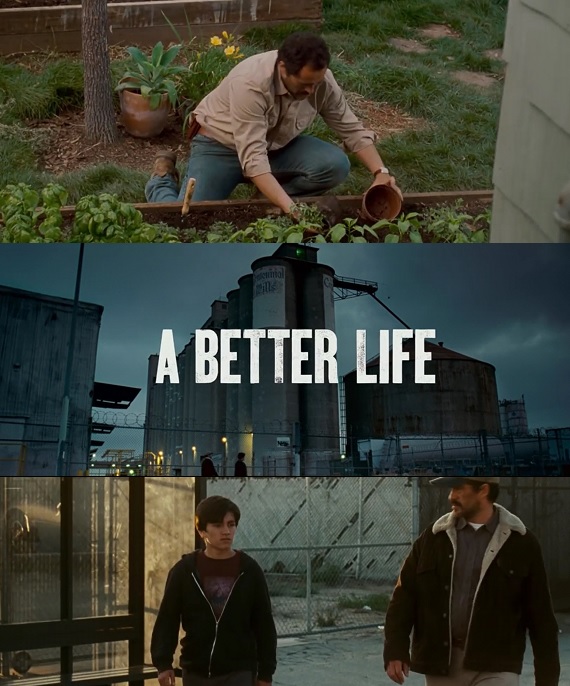
A Better Life is a wonderful film. Released to warm critical support in 2011, Chris Weitz’s poignant and frequently well observed film garnered lead actor Demian Bichir a much-deserved Oscar nomination for Best Actor. Loosely based on the classic Italian film The Bicycle Thief, Eric Eason’s intelligent, touching, and humanistic screenplay was based on the short story The Gardener, by Roger L. Simon, and concerns a Mexican gardener named Carlos (Bichir) living in Los Angeles and trying to provide for his impressionable son Luis, the excellent José Julián, a high school underachiever who is dating the sister of a local gang member. When Carlos’ new pick-up truck and tools are stolen by a devious day laborer, life begins to get even more complicated for the father-son duo, as they attempt to better one another in ways that only the two of them individually know how to do. This is a fairly devastating piece of cinema, and a rarity for Hollywood in that it features an almost entirely Hispanic cast, and concerns the realistic challenges that face immigrants in a city, that, for years, has thrived off of exploitation of the illegal day laborer market.
Weitz and Eason made changes to the script to reflect the various language differences and slang being used on the streets, consulting with gang members and local community figures in an effort to accurately portray this specific lifestyle, which is starkly contrasted with the comings and goings of a mostly indifferent city. Bichir’s performance is absolutely remarkable, conveying fear, love, and hopefulness for his son at all of the key points in the narrative, essentially allowing the audience to peer into his mind, soul, and heart. The ending stings with honest sentiment, never going “Hollywood” at any point, while reminding the audience of how hard it is for so many people to make ends meet for their family. Javier Aguirresarobe’s unfussy and golden-hued cinematography meshed perfectly with Alexandre Desplat’s contemplative score. Foolishly buried in mid-summer with a why-bother? release by Summit Pictures, the film completely died at the box office, grossing less than $2 million, thus making Bichir’s righteous Oscar nomination something of a tremendous surprise.
ROMAN POLANSKI’S FRANTIC — A REVIEW BY NICK CLEMENT

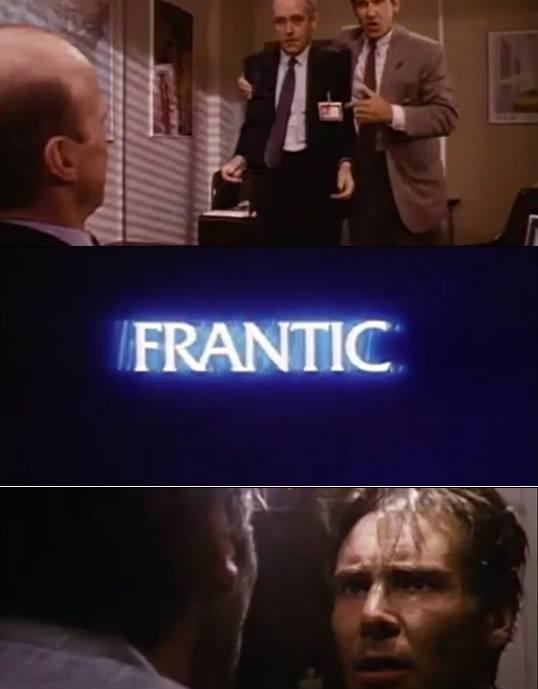
Roman Polanski’s Frantic was maybe his most overt nod to Hitchcock, and features a strong turn from Harrison Ford as a man who has his life turned upside down when his wife is kidnapped while on vacation in France. One thing leads to another, and before you know it, he’s caught in a game of international intrigue, with a potentially dangerous femme fatale waiting to muck things up. There’s a bit of some tonal inconsistency at times, but nothing to derail the picture, and you might question some of Ford’s actions in the final reel, but overall this is a fun mystery thriller that seems to be mostly forgotten in the realm of Polanski’s filmography. It’s got visual and verbal wit, Ennio Morriconne’s twisty score adds an extra layer to the entire piece, and Polanksi seemed to be delighted by throwing Ford through the ringer all throughout the piece. Look for a very young and gorgeous Emmanuelle Seigner (Polanski’s wife) as the mysterious woman who may or may not be more than she appears to be, while the eclectic supporting cast includes Dominique Pinon, John Mahoney, Betty Buckley, and David Huddleston. The film was well received by critics but did only moderate box office. Witold Sobocinski’s sharp cinematography keeps the vantage points smartly out of focus in crucial moments, while possessing an overall visual crispness at almost every other turn. Robert Towne did uncredited rewrites on the screenplay.
John Hillcoat’s Triple 9: A review by Nate Hill
John Hillcoat’s Triple 9. Bloody. Nasty. Blistering. Nihilistic. And surprisingly deft in its presentation of character. The only clear cut, out and out protagonist is Casey Affleck’s Marcus Allen, a young detective with a wife and kid, brutally unaware that he’s been targeted by a group of stunningly dirty cops and a few ex special forces hardcases to bite the dust in a planned homicide, sparking an ‘officer down’ over the airwaves to distract the force from what’s really going down. With the exception of his straight arrow heroics, the entire rest of the cast is a snake pit of depraved, slimy, reprehensible degenerates, populating a decayed, gang infested Atlanta where the cops are just as likely to empty a clip into your skull as the cholos. Chiwetel Efjor plays Atwood, leader of a most unfortunate crew of misfits who are forced to perform near suicidal heists for tyrannical Israeli-Russian mafia bitch Irena (a bleach blond, terrifying Kate Winslet). Their newest venture is so impossible that they’re attempting to use a slain officer as a ditch effort to get their stake. Of course it all goes to high hell, as we’ve come to expect and love in these type of films, with bullets, profanity, self destructive behaviour and wanton violence languishing all over the screen in glorious excess. Efjor is crackling good, showing brief glimpses of humanity in a dude who has lost his soul down a deep dark well, a caged animal fighting tooth and nail to no avail. The rest of his crew spend the film savagely trying to out – sleaze each other, and I mean that in the best way possible. They are really a bunch of snot rags, and this is a group of outstanding actors having bushels of fun being irredeemable bad boys. Anthony Mackie is walking C-4 as Efjor’s right hand, a guy rotten to the marrow with moral conflict. Norman Reedus leaks grease as an ex special ops prick and their getaway driver. I didn’t think Aaron Paul could be anymore despicable than in breaking bad, but somehow manages it here, playing a dude so grungy you’ll squirm. It’s Clifton Collins Jr. who scores the points though. He hasn’t had a great role in years and he comes out blazing as the icy sociopath of the group. Then there’s Woody Harrelson. Oh, Woody. He’s clearly having a ball as Affleck’s stoner uncle and high ranking cop. He spends the entire film ripped off his gourd on joint after joint, and take it from me, he knows how to play stoned impeccably. Despite the laconic bumbling, he shows that fire and ferocity we’ve come to know from him in brief unmistakable flashes, especially where it matters. Throw in Teresa Palmer as Affleck’s loving wife and Gal Gadot in full slut mode and you’ve got a cast for the time capsule. Hillcoat wastes not a second in propelling his narrative forward with the force of a bulldozer, giving us minute moments of respite amongst the surging monsoon of bloodshed and dirty deeds. Composer Atticus Ross whips up a foreboding, hair raising war cry of a score that kicks in from the first frame and doesn’t quit till the last shell casing has hit the ground. The only misstep the film makes is killing off its best actor way too early on, vut its not enough to be an actual concern or hurt it overall. If sickeningly satisfying ballets of blood, broken limbs and morally bankrupt people engaging in all kinds of giddily fun criminal activities are your thing, this is a great way to kick off the year, cinematically speaking. Hell even if it’s not your thing go check it out. It’ll shake your shit up and then some.
THE WITCH: A Review by Joel Copling
Rating in Stars: *** (out of ****)
Cast: Anya Taylor-Joy, Ralph Ineson, Kate Dickie, Harvey Scrimshaw, Ellie Grainger
Director: Robert Eggers
MPAA Rating: R (for disturbing violent content and graphic nudity)
Running Time: 1:33
Release Date: 02/19 (limited)
In its most sinister form, religious fundamentalism can look a lot like its complete reverse, or so says The Witch, an unnerving and effective look at the blurred lines between such a religious persuasion and that of Satanic paganism. The film’s screenplay, written by director Robert Eggers, purports to have gained a lot of momentum from writings in the era in which it is set (the 1630s). The dialogue takes on the Early Modern English dialect of the setting (New England), and the actors perform it with the sincerity of a stage production of something written by Shakespeare. The film is also positioned, rather awkwardly, as studio horror, which it is pretty firmly not for at least 85 of its 93 minutes.
Instead, we have about 45 minutes of build-up to a chamber drama that happens to sometimes take place outdoors. The central characters are the members of a close-knit, Christian family. William (Ralph Ineson) and Katherine (Kate Dickie) are the mother and father, whose strict control of their children is clearly a loving and not abusive attribute of their relationship with them. The elder daughter is the hard-working Thomasin (Anya Taylor-Joy), after whom her prepubescent, hormonal brother, eldest son Caleb (Harvey Scrimshaw), yearns in a way that speaks fairly openly about the confined nature of their tiny, household society, and there are a couple of adorable twins, too, named Mercy and Jonas (Lucas Dawson and Ellie Grainger).
Katherine has just given birth to another son, who goes missing during an innocent game of peek-a-boo with Thomasin. Evil forces are at work on this piece of land owned by the family, and they do their damnedest to try and ward off those demonic spirits to whom they are merely seven more victims. Eggers and cinematographer Jarin Blaschke appoint a suffocatinguse of natural light to the proceedings, which fits well with their oppressive grimness. The film has drawn comparisons in the critical community with the work of Ingmar Bergman, and the film’s insular nature certainly gives those comparisons some weight, especially in the climax that proceeds the baffling final moments.
Those final moments, by the way, offer a kind of black-and-white choice and disturbing sort of sacrifice that feel at odds with the calmer cautionary tale that proceeded them but no matter. The film does quite the job of building the kind of tension that can’t be cut with the proverbial knife, and those performances, kept on that knife’s edge, are an enormous part of this. Not a single cast member here lets the material down, even the younger ones (Scrimshaw is particularly effective during a possession sequence), though Taylor-Joy is very good as Thomasin, whose innocence is quickly corroded by the penetrating forces surrounding her.
Before that baffling final few minutes, the film takes on the patience of an old-school thriller from the 1970s (to be specific, it feels like Nicolas Roeg’s Don’t Look Now, especially in how it all seems to lead up to those final shocking moments, though they were more suggestive in the earlier picture). It’s a considerable achievement of craft and performance in holy matrimony that occasionally outshines a script that isn’t exactly stretching the boundaries of its central thesis. Luckily that theme is striking enough that crafty effort is all it needs to work. The Witch reciprocates the effort with frightening precision.