HAL ASHBY’S BOUND FOR GLORY — A REVIEW BY NICK CLEMENT

2

Intimate on a narrative level and epic in visual scope, the 1976 film Bound for Glory is a supreme piece of American filmmaking, centering on one of the country’s most despairing time periods, filled with all of the small but vital humanistic touches that defined the work of director Hal Ashby. David Carradine delivered nothing less than a tour de force performance as folk singer Woody Guthrie, who traveled the country looking for fortune and fame during the Great Depression. With a colorful supporting cast including Ronny Cox, Melinda Dillon, Gail Strickland, Randy Quaid, and John Lehne, there’s never a dull moment, even if the film moves at a purposefully languid clip. But because Ashby took his time with this story, you get all the more invested in Guthrie’s plight and his desire to get a leg up in the world; the sequence where he gets to show his family their new house is nothing short of misty-eyed touching without veering into the overly sentimental. This was the first movie to employ the use of the Steadicam, with inventor Garrett Brown handling the operation, and the legendary Haskell Wexler calling the shots as cinematographer (he’d win the Oscar for his bronzed and beautiful work on this film). This film also features a few bar fights and train brawls that are some of the best staged sequences of cinematic beat-downs that I’ve ever seen; punches fly with vigor in this movie! There’s also a fascinating hobo component to the movie, with a majority of the picture highlighting the hardscrabble life of desperate men living in one of the most desperate of times in America; while beautiful looking, there’s an emotional harshness that permeates most of the scenes. Bound for Glory would be nominated for Best Picture, Best Adapted Screenplay, Best Costume Design, and Best Editing, but would only take the statues for Wexler’s groundbreaking photography and an Oscar for Best Original Score. The DVD that Netflix shipped was, sadly, presented in non-anamorphic widescreen, but never fear — Twilight Time is releasing the film on Blu-ray this year, along with another classic Ashby title, The Last Detail. Time may have forgotten about Bound for Glory, but viewers shouldn’t; it makes for an excellent companion piece to The Grapes of Wrath and is a further reminder of the genius that was Hal Ashby.

bound_for_glory_ver2


ROY ANDERSSON’S A PIGEON SAT ON A BRANCH RELFECTING ON EXISTENCE — A REVIEW BY NICK CLEMENT

2

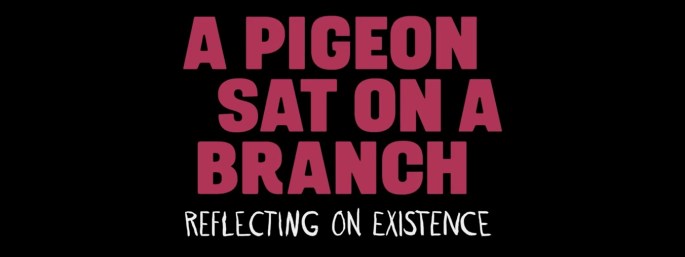
The absurdist and thought provoking black comedy A Pigeon Sat On A Branch Reflecting On Existence is going to prove to be an endurance test for some viewers. I’m not gonna lie – people are gonna either turn this off within a matter of 10 minutes, or, fall totally under its beguiling spell. And my guess is that the filmmaker’s would be beyond happy with this fact. It’s literally 100 minutes of wide static shots, no real plot to speak of, highly artistic in a very private manner, eschewing any sense of the traditional, all in an effort to communicate an existential and experiential study of human beings and the banalities of life. I found it to be hysterical, cynical and progressive at the same time, endlessly interesting on a formal level, and all together bewildering by the conclusion. Swedish director Roy Andersson crafted a thematically linked trilogy of movies about the simplicity (both ugly and beautiful) of life, with Pigeon acting as the concluding chapter (the previous two efforts, Songs from the Second Floor and You, The Living, are unseen by me), and I can honestly say that there’s nothing else I can think of that truly feels like this movie.

There are elements of it that reminded me a tad of the French curiosity Lil ‘Quinquin, but Pigeon is truly its own thing, offering a series of vignettes featuring a rotating cast of characters in increasingly bizarre and surreal situations, learning hard but true lessons about life, while the beyond patient camera stares unflinchingly (and with zero judgement) at its subjects with almost cruel and unnerving intensity. The stuff involving the world’s most humorless salesmen selling joke and novelty items is a stroke of genius, and the last act involves some highly arresting (both visually and narratively) sequences that sort of just need to be seen to be believed (the human cauldron is something I’ll not soon forget). This isn’t a thriller or anything salacious, but because of the fixed compositions, lack of mickey-mousing with the music, and the unfamiliar actors, one gets the sense that anything is possible within the world of this strange film. I’m doing a poor job of explaining the content of this movie; watch the trailer and you’ll know rather quickly if this movie will be up your cinematic alley. It’s available as a streaming option via Netflix, and I would presume that there are other ways of finding this offbeat and totally original piece of work.


WOODY ALLEN’S MANHATTAN — A REVIEW BY NICK CLEMENT

1

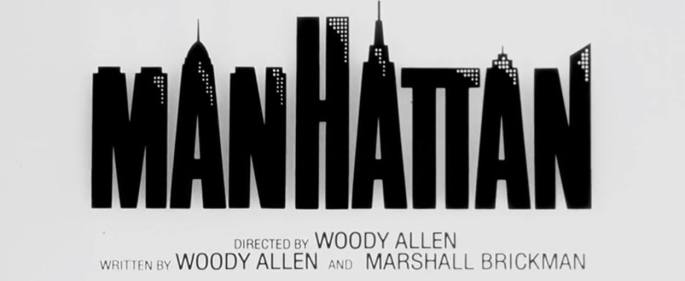
There are so many reasons why Manhattan is considered one of Woody Allen’s greatest films. The pitch perfect performances, the astute direction, the funny and self-reflexive screenplay, and maybe most of all, the dreamy photography, Manhattan is a cinefile’s dream. One of the silkiest black and white films ever committed to celluloid, the widescreen cinematography by Gordon Willis is some of the most impressive and shimmery work that the master craftsman ever produced. This is one of Allen’s most romantic films (albeit bittersweet), as the script that he co-wrote with Marshall Brickman covered the usual neurotic behaviors that came to dominate his oeuvre. Directed with a sense of grace by Allen, the film became an immediate classic, and through the high contrast photography that casts New York City as its own special character, Manhattan possesses a formidable sense of style that feels incredibly particular and nuanced. The unforgettable image of Allen and Diane Keaton sitting near the 59th Street Bridge is one of those iconic moments in film history, with Willis demonstrating an innate understanding of how to frame his actors within the anamorphic 2.35:1 compositional space, and it’s key to note how he favored spatial geography as a way of representing distance and comfort for the characters within the emotionally fragile narrative. It’s interesting to observe that Allen demanded that all home video copies of this film be released in letterboxed format only, thus preserving the original aspect ratio. Take that, philistines!


PTS Presents ARTISAN WORKBENCH with ED KRAMER

ED KRAMER POWERCAST

16935753-11da-4961-8f84-99b927f247b0Podcasting Them Softly is honored to be joined by visual effects master, ED KRAMER.  Ed spent twelve years working for INDUSTRIAL LIGHT AND MAGIC, and is now currently an instructor at THE ART INSTITUTE OF COLORADO.   Ed was the Senior Technical Director and Sequence Supervisor on TWISTER, THE LOST WORLD: JURASSIC PARK, THE MUMMY, THE MUMMY RETURNS, THE PERFECT STORM, GALAXY QUEST, THE ISLAND, HARRY POTTER: THE CHAMBER OF SECRETS, and was a part of the Academy Award winning team on PIRATES OF THE CARIBBEAN: DEAD MAN’S CHEST.  Ed was apart of the team that created the Columbia Pictures “Lady with a Torch” logo.  Ed worked with the groundbreaking visual effects team that changed cinema forever with the use of digital effects and filming digitally with the three STAR WARS prequels, EPISODE 1 THE PHANTOM MENACE, EPISODE II ATTACK OF THE CLONES and EPISODE III REVENGE OF THE SITH.

Check out Ed’s AMAZING highlight reel here!

DAVID O. RUSSELL’S JOY — A REVIEW BY NICK CLEMENT

3

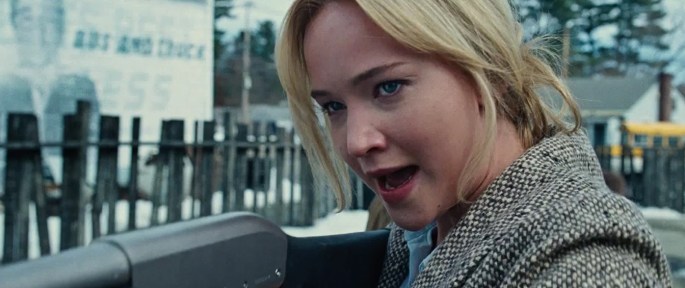
Joy is a good, inspiring movie, filled with lots of heart and genuine emotion, about something honest and real and tangible, featuring the radiant Jennifer Lawrence in a sensational movie-star performance that easily cements her as THE hottest (both in terms of looks and acting ability) actress of the moment. Seriously…name me one other actress her age who can command the screen in the same exact fashion as she does – you can’t because there is nobody else doing this sort of thing. She’s the total package, and it’s abundantly clear that writer/director David O. Russell has found his muse. I’ve been a huge fan of Russell’s work since the beginning of his career; Three Kings, Flirting with Disaster, I Heart Huckabees, and Silver Linings Playbook are all great pieces of cinema. And if Joy feels relatively small or slight in comparison, it’s only because the narrative feels a bit more traditional in its scope, but when looked at up close, there’s plenty to chew on. Reteaming yet again with Bradley Cooper and Robert De Niro, Russell has assembled a sterling supporting cast which also includes Isabella Rossellini, Diane Ladd, Edgar Ramirez, and Virginia Madsen, all of whom get a chance for some major scene stealing.

Russell again demonstrates his affinity and inherent understanding of the complexities of the dysfunctional home front and fractured family unit, with his cinematography (this time handled by Linus Sandgren) and editing (Jay Cassidy, Tim Cross, Alan Baumgarten, and Christopher Tellefsen were the cutters) neatly complimenting each other; the images have a simple and effective beauty to them while the editing is traditionally frantic yet coherent per Russell’s manic standards. Sandgren’s use of the close-up, especially with Lawrence, was very smart, as it helped to get into the character’s psyche, while offering the viewer a glimpse into her soul, not to mention her face, which the camera lovingly surveys and studies. Lawrence is a force of nature here, in almost every scene, serious one moment and funny the next, always sexy, always confident yet still somewhat vulnerable; it’s a big and juicy part that any actress would kill to get and she just owns this movie from top to bottom. De Niro gets some hearty laughs, and it was a treat to see the odd yet important relationship between Lawrence and Ramirez take shape. And here I haven’t said anything about the plot! Nominally a sort-of-biopic about the woman responsible for the Miracle Mop and the rise of QVC, Joy is above all else a story about perseverance and believing in yourself no matter the odds. Some people just don’t quit, and in Joy, Lawrence gets one of her most unique and thoughtful roles to date, portraying a strong and independent woman who isn’t interested in hearing the word no unless she’s the one saying it.


Quentin Tarantino’s The Hateful Eight: A Review By Nate Hill

If Quentin Tarantino has achieved anything in his love letters to the spaghetti western genre, it’s his notable subtraction of the noodles from aforementioned dish, leaving decadent swaths of scarlet marinara sauce to be flung about the screen as blazing bullets rock various characters to their bones, sending blood all over the place in quantities that defy physics or biology. He did it with Django, and he does it again with The Hateful Eight, a somber, simmering snow opera that fell just south of winning me over entirely. Don’t get me wrong: there’s much merit to be found here, and as usual QT has a solid gold ear for dialogue that is as pleasing to the ear as Ennio Morricone’s unusually restrained, palm sweating score. He also shows his uncanny knack for chasing awesome actors out of the woodwork and casting them in his films. In his attempts to resurrect 70mm panavision he has achieved undisputed success. I’m also a sucker for both Agatha Christie style mysteries and snowbound locations (and what locations!!), both of which are in abundance here. And yet.. something just didn’t quite click for me, story wise. Perhaps it’s the fact that trailers had worked my imagination up to imposible heights of intrigue that couldn’t be brought to the table with this tale. In that regard, I suppose it’s my own fault. In any case, the eventual revelations just didn’t feel as profound and fitting after having sat through the endless, tantalizing set up. But oh, what a set up. QT deliberately marinates his characters in a stew of unease and malcontent, each player a grizzled picture of vague evil intent, firing missiles of distrust and loathing at one another until the ill will is as thick as the snow drifts they fight through. In the throes of a gathering blizzard, bounty hunter John ‘The Hangman’ Ruth (Kurt Russell in a sly nod of the head to beloved R.J. Macready, only saltier and far meaner) leads shackled prisoner Daisy Domergue (Jennifer Jason Leigh in the best performance of the film) to the town of Red Rock, to be hung. Along the way, and with much chatter, he picks up two stragglers: pissy fellow hunter Major Marquis Warren (Samuel L.Jackson) and one Chris Mannix (Walton Goggins). They arrive at Minnie’s Haberdashery, an oasis in the sea of winter, where four other undesirables have already shacked up in refuge: Owaldo Mobrey (Tim Roth earns his keep and then some) a self proclaimed hangman with some serious pep in his step, crusty confederate Sanford Smithers (Bruce Dern), Bob the Mexican (Demian Bichir is restrained comic perfection) and dangerous looking cowboy Joe Gage (Michael Madsen, that gravel voiced wildcat, is always awesome). They all hunker down to ride out the storm and quickly begin to realize that one or more amongst them isn’t who they say they are, and there’s devilry afoot. Sound intriguing? It did to me too, and I can’t say much about what exactly let me down without giving stuff away, but it just felt like such a pedestrian knockoff of a second act after the absolute slow burning joy of a guessing game which preceded it. Maybe it’s a bit like a Christmas present: you spend months in a giddy daze wondering what you’ll get, you get there christmas morning and there your present is: shiny, gleaming and filled with endless possibility, but unmistakably shaped by your specific anticipation of what lays within. You open your present… and there it is, mystery evaporated, no longer a present but an actual object, or in this case a story that you must wrestle with to appease the lingering wonder of what you expected, as opposed to what you got. I know it’s too much to expect every film to be that perfect christmas present that is as satisfying wrapped as unwrapped, but with QT’s stuff I feel I always act that way a bit, having pictured my definitive version of the films before having seen them, and feelng somewhat underwhelmed. That’s not to say I didn’t enjoy it: It’s chock full of macabre surprises, earnest performances and expectedly nasty violence. Jennifer Jason Leigh owns as Daisy, a frothing feral beast. Leigh has no shortage of courage in taking on courageous, unflattering roles, and she dives right into this one with fists and teeth clenched, eyes narrowed and a steely will to survive. It’s truly a blessing to see her on the big screen again and I hope to see more in the future. There’s one casting decision which almost ruined the last act for me. I won’t spoil it here but the ‘actor’ in question is so unbelievably untalented and sticks out like ten sore thumbs in his ineptitude, really making me wonder about QT’s sanity. The rest of the cast makes up for it in spades though, particularly Madsen, Roth and Russell. Goggins also gets loads to do and does it with grinning flair that would make Boyd Crowder proud. The cinematography by legendary Robert Richardson is staggeringly beautiful. The wintry Vistas sweep by in splendor, eventually moving inward to the firelit cabin where everything has a burnished, lived-in texture that’s transfixing to look at. If only the story had the weight and impact I was expecting, I could have given this glowing accolades, but there’s always next time. Gorgeous Tarantino outing with a cast that chomps at the bit relentlessly, and although it ultimately falls short, it’s quite the piece of cinema all the same.

FLECK & BODEN’S MISSISSIPPI GRIND — A REVIEW BY NICK CLEMENT

3

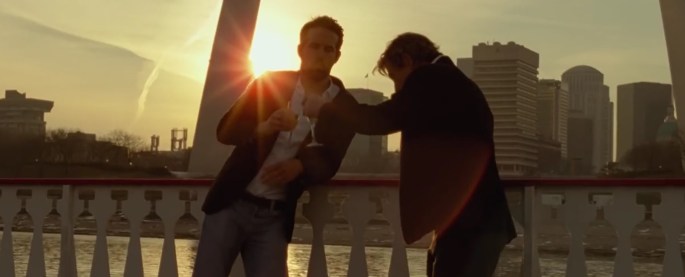
My top 10 from 2015 is getting harder and harder to pin down. There isn’t one bad scene in Mississippi Grind, the new film from Ryan Fleck and Anna Boden, who previously crafted the masterful baseball/immigrant drama Sugar (and before that the harrowing Ryan Gosling on crack drama Half-Nelson). In fact, I’d go so far as to say that it’s a virtually faultless piece of work; upon first glance, I have absolutely zero to quibble about in terms of the decisions made by the filmmakers. It’s true that there’ll be flashier, more heavily promoted films than this one, but when a movie works as well as this one does, you must take notice. Actor of the moment Ben Mendelsohn can do no wrong; he’s immediately engaging, and here, stripped of his customary forehead grease and sweat, he’s able to create a character who we want to see win, something mostly new for him as an actor. He’s been in huge demand of late (peek his IMDB credits as they’re just insane…) but it’s always for the skeevy-drugged-out bad-guy or henchmen; in Mississippi Grind, he’s as close to “leading man” as he’s been allowed to get and he’s wonderful and warm and even affable. Ryan Reynolds was used perfectly here — as the colorful support — and he nails every single scene. His usual brand of cockiness is on full display here, getting lots of mileage out of facial gestures and his immaculate line delivery. The plot hinges on a degenerate gambler (Mendelsohn), who becomes convinced that his new friend (Reynolds) is the ultimate lucky rabbit’s foot. The two guys hit the road and embark on a trip to a high-stakes poker game in New Orleans, with all sorts of detours along the way. There’s an unforced sense of style to this film, akin to an effort from the 70’s (it’s been said that this movie was conceived as a riff on Robert Altman’s California Split), with cinematographer Andrij Parekh boldly shooting in 2.35:1 widescreen but never sacrificing intimacy. The ending is well earned and smartly calibrated on a creative level, there are a few nice twists along the way, and Sienna Miller and Alfre Woodard show up in juicy peripheral roles. This is one of the best movies from 2015, a simple story told in an honest, upfront manner, without the need for contrived stupidity or a dumbing-down of any of the elements. I absolutely loved every single moment of Mississippi Grind, and I have a feeling it’ll become a movie I revisit often. We Can’t Lose POWER.


HERBERT ROSS’ PENNIES FROM HEAVEN — A REVIEW BY NICK CLEMENT

2

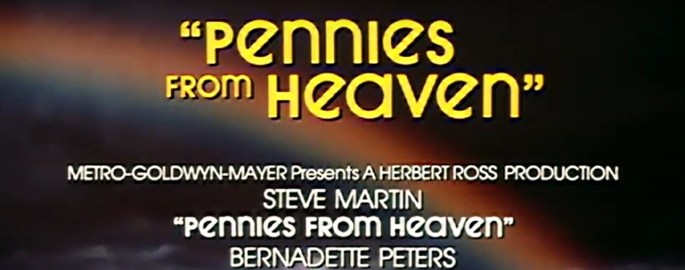
Pennies from Heaven is a continually underrated film, featuring Steve Martin in his first dramatic role, with a stellar supporting cast including Christopher Walken, Bernadette Peters, and Jessica Harper. The film was a massive box office bomb, as it followed Martin’s blockbuster comedy The Jerk, and audiences probably weren’t ready to accept him in a lavish and ambitious musical where he was being asked to be taken seriously. Skillfully directed by Herbert Ross and smartly written by Dennis Potter, Pennies from Heaven allowed cinematographer Gordon Willis to make some bold stylistic decisions as an artist, as he deftly balanced the bleakness of the Depression era and the characters’ unhappy lives with exciting and brightly colored musical set-pieces that take on a fantastical/dreamlike quality. With the various characters breaking into song and dance all throughout, smart framing and rhythmic camera moves were required, and in this department, Ross and Willis made the film light on its feet while still grounding it in a hard and firm style that stressed the trappings of film noir and Chicago Art Deco flourishes. One of the more unsung gems from the 1980’s, this is a film that’s ripe for rediscovery, and further underscores the range of talent that legendary cameraman Willis exuded as a craftsman. A Blu-Ray is long overdue for this unsung cinematic gem.


HAL ASHBY’S SHAMPOO — A REVIEW BY NICK CLEMENT

1

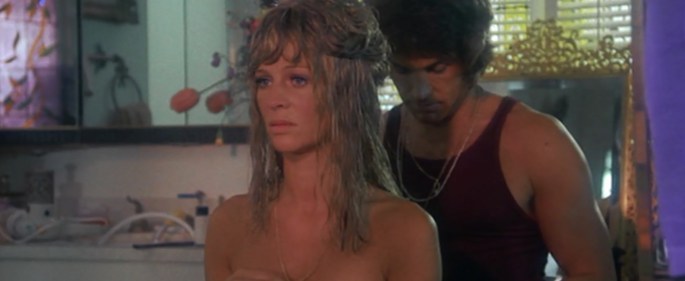
Hal Ashby had such an extraordinary run of directorial efforts in the 1970’s, and one of this funniest, sexiest movies was Shampoo, a piercing satire of the sexes, which was co-written by star Warren Beatty and screenwriting legend Robert Towne (Chinatown). Shot in a casually stylish manner by the extremely prolific László Kovács (Five Easy Pieces, Paper Moon, Ghostbusters), this is a sex comedy in its purest form, with the shifting social codes and barriers firmly on display and ready to be picked at and smashed, while Ashby was up to his normal subversion of material from within the script’s fine details. Beatty is one of the ultimate big-screen womanizers in this film, bouncing from one beauty to the next, but none more alluring than the bewitching Julie Christie, who in this film, has one of the ultimate come hither glances that has ever been put up on the silver screen. Beatty, playing a composite of flamboyant real life hair dressers (some say that the infamous producer Jon Peters was an inspiration), is trying to get a loan for his business, while juggling the many women who have fallen under his spell, with the narrative set against the backdrop of the 1968 Presidential election. Jack Warden is absolutely hilarious (the scene with him walking into the plate glass window at the party is an all-timer), Tony Bill has some priceless supporting moments, and an extremely cute Goldie Hawn is also featured as one of Beatty’s many lovely girlfriends. Carrie Fisher has a brief appearance (her screen debut, actually), while the film, typical for Ashby, has an eclectic soundtrack and some seriously fluid editing. In the top five box office hits from 1975, this is yet another classic film that drops you in the middle of the action right at the start, and over the course of two hours, tells an intimate, funny, and ultimately sad story of people facing the many crossroads of life and passion.

WOODY ALLEN’S ZELIG — A REVIEW BY NICK CLEMENT

1

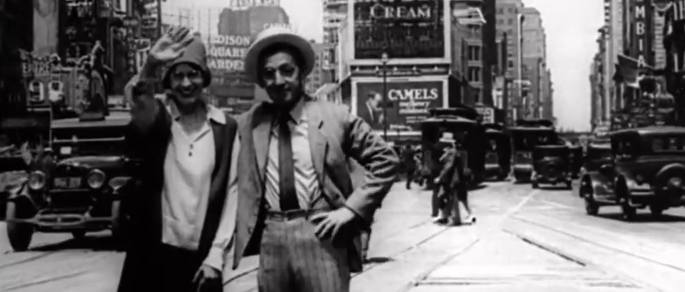
One of the most aesthetically heightened films on Woody Allen’s resume, and boldly shot by master cinematographer Gordon Willis, who wasn’t used to this sort of stylistic affectations, Zelig is a brilliant comedy, and it’s the film that would mark the first time that Willis would receive an Oscar nomination. Simply put, this film is a cinematographer’s dream come true, as the narrative offered up nearly every artistic chance for a technician to feel truly unleashed. His highly inventive work on this film, in tandem with Allen’s clever screenplay, which effortlessly combined various film aging techniques, blue screen compositions, and old-fashioned stills photography, was done in an effort to credibly place the film’s main character, played by Allen, into a virtual archive of popular images from 20th century events. The film was shot and narrated in the style of 1920s black-and-white newsreels which were then intertwined with archival footage and re-enactments from real historical events, and also included color segments from the present day. This was years before computers and CGI would make these technical endeavors easier and more readily seamless, so it’s even more impressive in retrospect to see what Allen and Willis were able to create in this hilarious, touching, and extremely unique mockumentary that feels like one of Allen’s more under discussed efforts on his endlessly fascinating filmography.