Paul W.S. Anderson’s Resident Evil


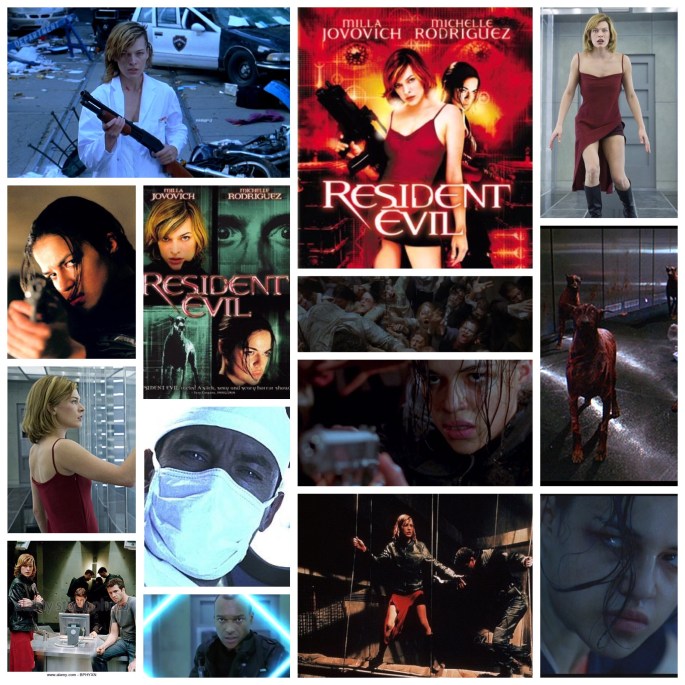
Paul W.S. Anderson’s Resident Evil is probably the second best video game adaptation out there (I’ll remain vague so you all lose sleep arguing about what the best is) and a damn fine horror/shocker flick. I’d stay away from most of the sequels unless you’re really invested in Milla Jovovich’s ass kicking Alice character (guilty here), but it can be said that this lean, mean initial entry is a genuinely terrific film full of grisly traps, gnarly zombie dogs and a butch Michelle Rodriguez that’ll make you weak at the knees. The world’s most irresponsible biotech corporation Umbrella is perpetually up to no good, and their underground research lab ‘The Hive’ has been overrun with monstrosities of their own creation which will eventually spill out into the streets of fictitious Raccoon city, and the entire world beyond in some of the bombastic later sequels. Minimalistic claustrophobia is what makes this one work so good, as a hardened team of mercenaries led by Rodriguez and Colin Salmon descend into this manufactured hell for a bit of shoot em up fun. Jovovich is Alice, security expert turned survivalist who they find down there and recruit as a tag along and just happens to be wearing an impractical yet eye catching red dress for the duration. It’s a deliriously fun female bromance between her and Rodriguez, with just the right dose of sexual chemistry, while the rest of the team, including Eric Mabius and James Purefoy as Alice’s shady ex husband, fare pretty well. Anderson regular Jason Isaacs also has an inexplicably brief cameo as Umbrella’s head honcho mad scientist, a character who would later be recast by Ian ‘Ser Jorah Mormont’ Glen in the following films, even though the guy is clearly credited as Dr. Isaacs, begging one’s curiosity as to just what drove Jason away from the role. The thing that makes this one work so much better than any of it’s sequels is the sweaty single location format: we’re with these characters inside the Hive for the entire film as opposed to watching them slice their way through some helicopter filled globetrotting apocalyptic gong show, a classic case of too much thrown into the pot ruining the recipe. Keep it simple, a few scattershot mercs navigating a haunted funhouse full of lethal canine mutants, slobbering undead and bone slicing laser beam grids, all watched like a hawk by a ruthless AI security system designed to look and sound like the red queen from Alice In Wonderland. Pretty cool, eh? I thought so, and still do every time I give it a rewatch during Halloween season. 

-Nate Hill

Jon Watts’ SPIDER-MAN: HOMECOMING

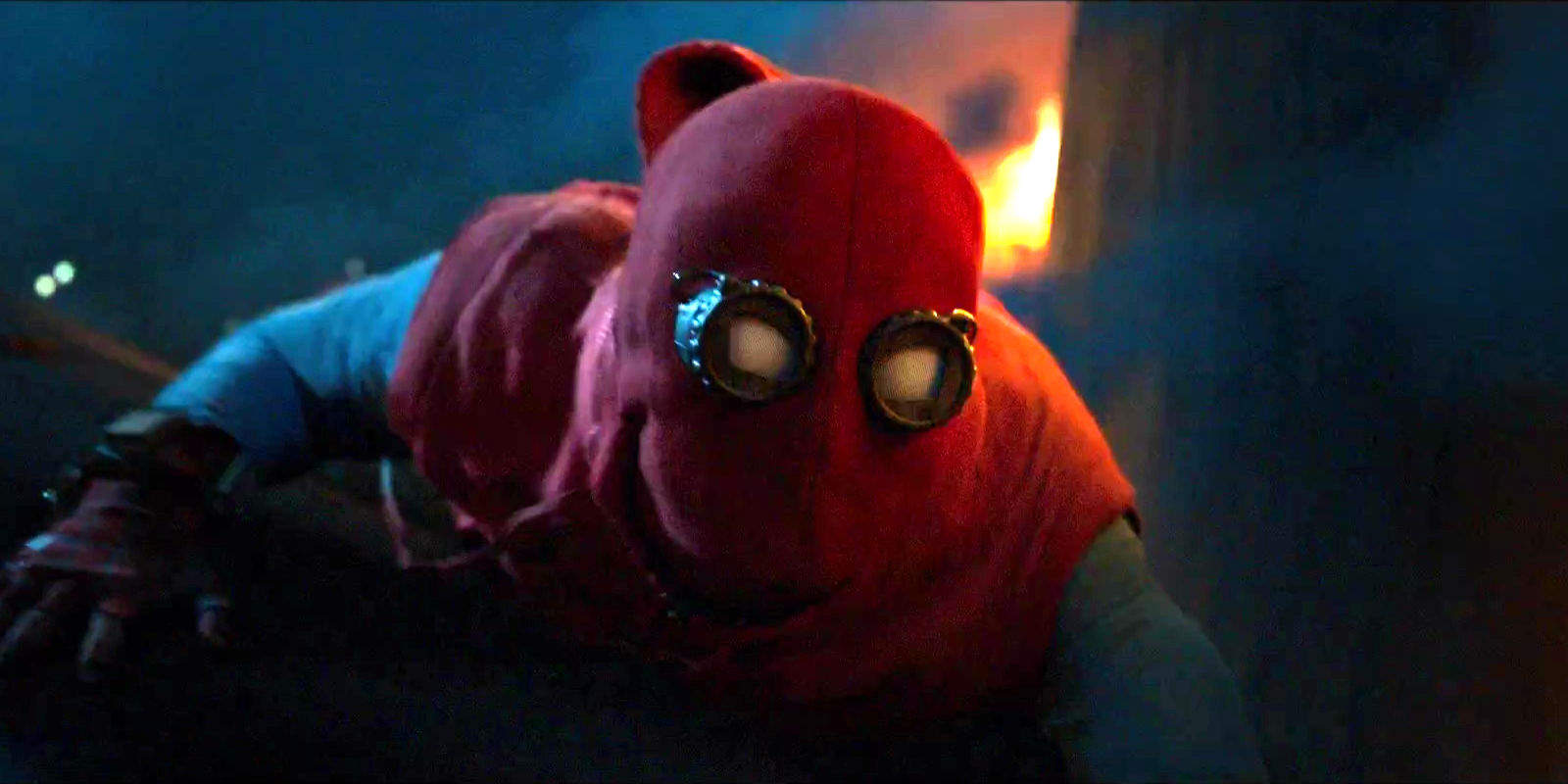
When the credits rolled it all made perfect sense. The film had six screenwriters. Six. SPIDER-MAN: HOMECOMING is two films. The first story is an incredibly engaging story of class warfare; an examination of how the assembly of the Avengers created an even greater economic divide between the ruling class and the common people. The second story tries to play it smart. It forgoes the origin story, it ignores Uncle Ben’s lore, yet it is the coming of age/teen angst/generic internal struggle. The film tries so hard but the two narratives never fully fuse together.

The film looks great. Salvatore Totino’s cinematography is sharp and shot with authority. Michael Giacchino delivers the best score of the MCU and director Jon Watts does a very good job juggling a film that acts as a slight follow up to CIVIL WAR whilst staying true to who Peter Parker is.
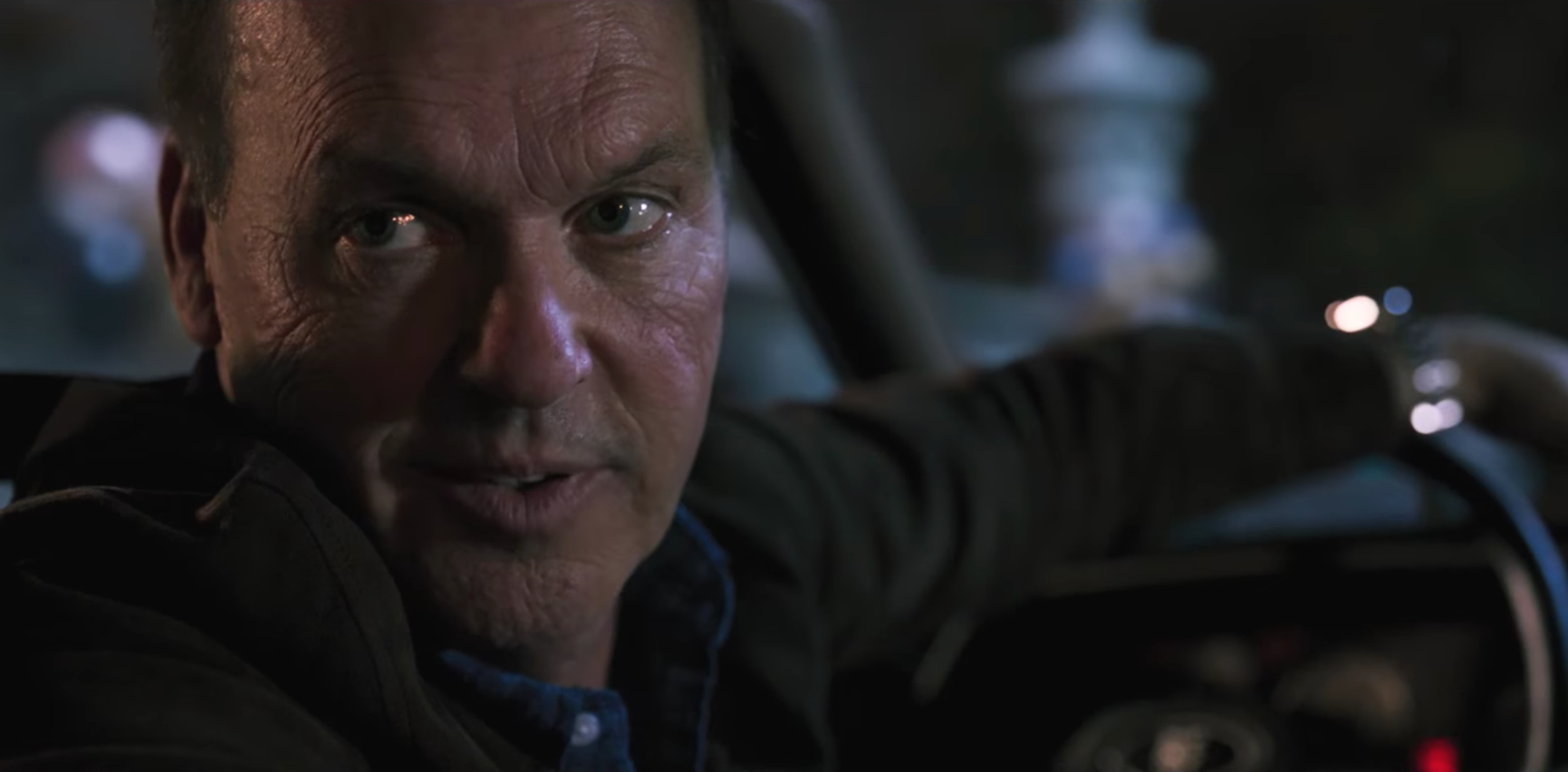
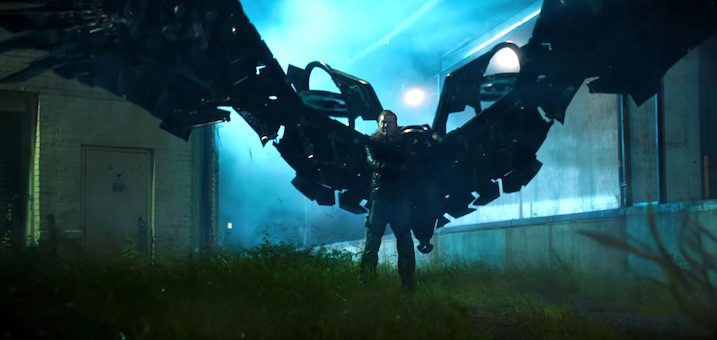
Tom Holland is great as Spider-Man/Peter Parker, but he and the film are overshadowed by the command performance of Michael Keaton. Keaton completely owns the film. He ranks at the top tier of Marvel’s cinematic villains, joining the likes of Jeff Bridges’ Iron Mongerer and James Spacer’s Ultron. 
The problem is Keaton is too good a villain in the film. Not only is his storyline of a salt of the earth scrapper turned big bad supremely rich, he outweighs an untested Spider-Man. It’s apparent in their first altercation, and by the final showdown when Spider-Man doesn’t have his Tony Stark super suit it is literally a showdown that is near impossible to accept.

Keaton doesn’t pull any punches. He’s cashing in on his star power with a big paycheck from Marvel, and good for him, he’s more than earned it with his phenomenal filmography. He doesn’t go through the motions with his performance, he’s frightening yet he’s a sympathetic man pushed to the brink to provide the life that his family deserves. The best scene of the film is a brief car ride, where Keaton figures out the true identity of Spider-Man that is cued up to Traffic’s THE LOW SPARK OF HIGH-HEELED BOYS. That scene is more than worth the price of admission alone.
Marvel makes solids films. They always have. You know exactly what you’re going to get. They may change the ethnicity of a character, they may try and sex up a character (heyyyy Aunt May), but they always serve a conventional fan service. They have yet to strike the balance of giving the diehard herd of fanboys what they want while at the same time formulating an emotionally dynamic story for those who after sitting through nine years of the Marvel machine expect a little bit more.

JOHN CASSAVETES’ LOVE STREAMS — A GUEST REVIEW BY FILMMAKER AND CRITIC DAMIAN K. LAHEY

LoveStreamsPoster


‘Love Streams’ (1984) dir. John Cassavetes

This is far and away my favorite Cassavetes film.

In general I am not a fan of movies about angst ridden people in the entertainment business. ‘Love Streams’ is an exception. This is a film about a boozy womanizing screenwriter (Cassavetes) and his mentally fractured sister (Gena Rowlands). It painfully details how the sexes deal with aging – women with the frantic loss of confidence as their looks diminish and men searching for sexual conquests to hold on to the boyish vigor they either lost long ago or never had. It’s all front and center in that emotionally grotesque way that only Cassavetes can convey. The complexity of truth in relationships has always been what he has explored in his films, the undercurrent being the desperate affection that binds us all together.

I believe the Cassavetes style of filmmaking to be at its most accessible here. For a drama of this type and at such a robust running time (141 min.) it never drags or becomes annoying. It’s important to find a balance with these things. That sweet spot between cinema verite style docudrama filmmaking and conventional narrative in order to get across what you’re trying to say. I don’t want to come off as dense but I prefer my films accessible for the most part. I just do. There is only so much esoteric, experimental and self absorbed footage I can withstand before I feel I am either being sold a bad bill of goods or I lose respect for the person making it. I don’t mind studied but I can’t do boring. The more rambling Cassavetes is in his narratives the less I enjoy them despite what I admire about the aesthetics and their texture. So ‘A Woman Under The Influence’ (1974), ‘The Killing Of A Chinese Bookie’ (1976) and ‘Love Streams’ are the Cassavetes films I gravitate towards as opposed to ‘Shadows’ (1959) or ‘Faces’ (1968).

As an independent filmmaker I certainly appreciate what Cassavetes represents to the spirit of the movement rather than his collective body of work. His spirit and Dionysian drive is one that fires me up more than most though I don’t consider him one of my filmmaking heroes and at the end of the day it is their work I’ll revisit rather than his – Fellini, Peckinpah, Argento, Leone, Forman etc…but that’s just my personal preference.

‘Love Streams’ sees people stretching into late middle age and finding themselves no longer comfortable in the world they inhabit and becoming increasingly agitated by it. All they know how to do is cling to the relationships in their lives no matter how old, torn or frayed. Cassavetes makes it clear that while life is finite, love in all its various streams – is infinite.

LoveStreamsStill


NETFLIX PRESENTS BONG JOON-HO’S OKJA — A REVIEW BY NICK CLEMENT

3

Thank the movie gods that Bong Joon-ho is getting a chance to make movies, and that Netflix had the scratch to finance a $60 million art film that would never have been made at this level anywhere else. I don’t care how many theaters Netflix Originals have access to; that’s not my business, I don’t finance movies, I don’t care what they gross. I care about seeing NEW STUFF and thought provoking social commentaries and this is exactly that. It’s also a family drama, a CGI-thing-a-ma-bob experience, a corporate satire, and a haunting rumination about “where does the beef come from?” The final moments of this movie left me with a lump in my throat, and reminded me of why I stopped eating cattle and pork roughly 5 years ago. Also, more massive Brad Pitt POWER for helping to get this film made through his Plan B shingle; this guy can do no wrong from where I sit in terms of delivery high-caliber films both in front of and behind the camera. Tilda Swinton is insane, the cinematography by Darius Khondji (Seven, Evita, The Lost City of Z, The Immigrant) is frequently gorgeous and more elaborate and tricked-out than I’m accustomed to seeing from this master of the moving image, and the overall tone can never be pinned down, which I’m always a fan of.

2

But that’s Joon-ho for you. In all of the films that I’ve seen from him, including Barking Dogs Never Bite Memories of Murder, The Host, Mother, Snowpiercer, and now Okja, there’s so much going both inside and outside of the frame, that sometimes his narratives feel overstuffed, but in a great and fascinating way. And that’s because he understands that life isn’t just one thing at all times; we’re allowed to be happy and sad in the same exact moment, and he always allows for humor to bubble to surface, no matter how dire or upsetting the situation becomes. He’s also prone to mixing graphic violence into his stories, something that’s done a bit less here, but the film still retains that special edge that he always brings to the table. It’s also interesting to note that Joon-ho collaborated with co-writer and gonzo journalist Jon Ronson (the brilliant The Men Who Stare at Goats) on this project. Also, I’m a stickler for poorly integrated digital effects, so I’m happy to report that, for the most part, and especially considering how much occurs during daylight hours, the renderings of Okja are very strong and tangible, despite a few ropey looking moments from time to time. But overall, this is a phenomenally cool piece of work, with winks to classics like 12 Monkeys, while still defiantly marching to the beat of its own drum.

1

Fantastic Beasts and the Man who made them: An Interview with Chris Walas by Kent Hill

77594-10-maghi-degli-effetti-speciali-da-oscar-11

When I think of the work of Chris Walas, a few things pop into my head.

The first is how much I loved Dragonslayer when I saw it at the cinema as a kid. It like The Black Hole was a dark, different Disney movie. This was the era when Disney was trying to be more like a studio and not purely focused on the animation that had garnered it so much love.  I remember waiting for the moment when the dragon would finally be revealed and I was not disappointed. I was becoming aware of how movies were made at that time, so the prospect of any giant creature on screen, knowing that it was actually there, that it had to be built was incredible.

The second is Enemy Mine. A movie for the longest time I had only seen the last twenty minutes of. During the heyday of video piracy, it was not uncommon to borrow a tape from friends or family and find the tail ends of stuff that had been taped over. Ironically I can’t remember the film that was taped over it, but those final scenes from Enemy had me intrigued. I think it was one of my cousins who I borrowed the tape from, so I asked him about the clip at the end. “Oh I taped over that ‘cause it was kinda boring. Some dude and an alien have a baby together.” Yes folks, I have some really classy relatives, and that was how he pitched Enemy Mine to me. Still, undaunted, I sought it out and it is a whole lot more than that; indeed another great film from Wolfgang Petersen who had blown my mind prior with The Neverending Story.

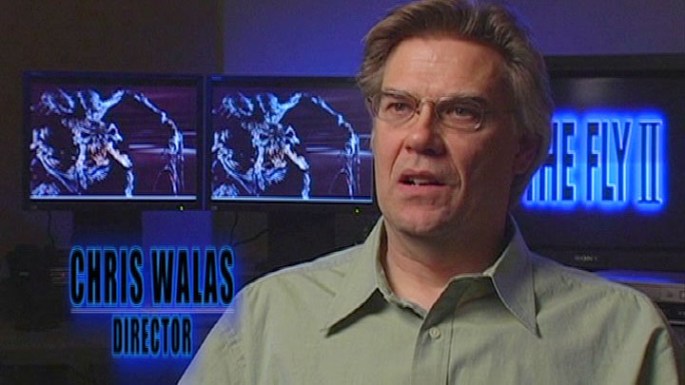
Finally I reflect on The Fly 2. One of two films I have literally lost my lunch watching. And, let me be clear, up to that point, I had seen gruesome stuff before so it wasn’t so much the imagery as it was the visceral qualities of the imagery. As the years go by, and because I haven’t seen it in a long time, so it’s sketchy at best, but one thing that I recall was Daphne Zuniga wiping away Eric Stoltz’s slimy coating from this one scene and giving him a kiss. I remember that or something like that, like I said, it’s been a long time between drinks, but that scene and a few others helped my lunch get its own sequel that day.
fly2_shot5l

But enough about me, let’s talk about Chris.

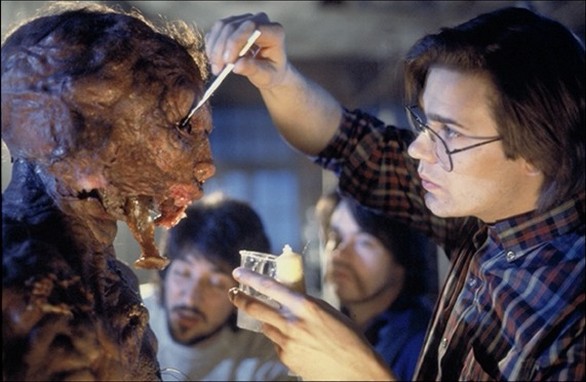
Chris Walas has worked on a handful of truly iconic films. You can see is work in Raiders of the Lost Ark, Return of the Jedi, Gremlins. He is an Academy Award winner – that Oscar being for The Fly and part of a terrific association with David Cronenberg who he would go on to work with on other films like Scanners and Naked Lunch.

He has sat in the director’s chair on (of course) The Fly 2, The Vagrant and “Til Death”, an episode of Tales from the Crypt. He was part of the Roger Corman stable; he worked on Airplane!, Galaxina, Caveman and Virtuosity – he is a very talented man who has had a hand in the truly grand cinematic experiences of my youth and it was an utter delight to interview him, and subsequently, to present said interview to you. Ladies and Gentlemen . . . I give you . . . Chris Walas
gremlins chris walas tony mcvey

KH: Sir, it is truly an honour to make your acquaintance. You have the distinction of being the first Oscar winner I have interviewed for podcastingthemsoftly.com

CW: That’s hard to believe with all the Oscar winners out there these days, but I’m happy to be here.

KH: Before we get into the meat of things, I was wondering if working in the picture business has be a lifelong pursuit, and if so, what were the films that lit the fire, so to speak?

CW: You know, it’s interesting because so many interviewers ask “What was the film that made you want to do what you do?”  I don’t think it’s a simple as that. It’s like asking painter what painting made them want to be a painter. It’s not about a single event; it’s about an artform that creates the magic in the imagination. I was a movie fan as far back as I can remember. I loved all films. I loved what the medium could do. I didn’t understand any of it, but I loved “Citizen Kane” as a little kid. It was riveting to me. I grew up on the old Universal Horror Classics and still love them. The Sci Fi films of the 50’s hold a special place in my heart for sure. But I can definitively say that the single film that made me DECIDE that movies were where I wanted to be was Ray Harryhausen’s , “Jason and the Argonauts”. It was the first film I ever saw in a theatre and I was transfixed by the experience. I knew at that moment (even though I understood nothing about it) that that was what I needed to be a part of in my life.

KH: You have worked on some truly iconic movies, many of which are my personal favourites. But, how did you get into the business after your schooling ended?

CW: I wanted to get into films somehow. At that time I was on the East Coast and the film business was pretty dead just then. So I left for Hollywood with a couple hundred bucks in my wallet and a sublime ignorance of the realities of LA.  I was lucky enough to get a job shipping film for Disney, which was magical for a naive kid from New Jersey. Discount tickets to Disneyland, and I could spend all my lunch hours on the back lot talking to the original animators of Snow White or the wire rigger for the Squid tentacles from 20,000 Leagues Under the Sea. They all brought their lunches and sat out in the backlot relaxing or practicing their watercolours. And they loved to talk. It was my introduction to the world of movies. Wonderful. I then took filmmaking classes for a year until my money ran out and I took a job at Don Post Studios, a company that made high quality Halloween masks and occasionally did some film and TV work. I was there a year and started out painting a gross of masks a day on the cheap line to being a member of the lab crew, developing new product and working on the occasional outside project. It was an education I would have paid for. I learned more in that year than in four years of college. But I was antsy and impatient, and one of the other Lab guys (Bob Short) and I left and started a little partnership doing odd projects. We both started to get good reputations, but each doing different things, so we split up and went our separate ways. And it just grew from there.

KH: Tell us, if you will, about working on some of your early credits like Island of the Fishmen (Screamers), Humanoids from the Deep and Piranha?

CW: Piranha was my first on set film experience. Jon Berg, who was in charge of the effects on the film, had been to Don Post to see about them running some of the rubber piranhas. That didn’t work out, but the connection had been made and when the FX shoot needed more people, Bob Short got pulled on board and then through Bob, I got pulled in. That was my entry into the crazy world of Roger Corman films. It was wild and desperate filmmaking in those days; no money, no time. The only good part was that IF you could actually make something to get in front of the camera within the meagre time and budget, you were a hero. It was a process that very quickly filtered out those who could from those who couldn’t. But it was exhilarating and magic at the same time. Isle of the Fishmen was a bit of a mess. The original Italian production had been purchased by some fly by night LA outfit and they wanted to “beef it up” for the American audience. We had almost nothing as far as a budget, but it was with some people that I felt comfortable with.  Miller Drake and (unofficially) Joe Dante. It was a small and relatively close group in those days at New World Pictures. We shot out at the beach in the middle of the night in January and nearly froze to death soaking wet in the Fishman costume. Other inserts were shot in Joe’s garage; it was that kind of filmmaking.  But Humanoids was a different story. New World had asked me to do it, but I was busy on GALAXINA and a couple of other films at the time, so I suggested Rob Bottin. But the schedule was a tough one on that show and Rob asked me to come in and do a bunch of the sculpting and running on the Humanoid costumes. As well as those absurdly huge arm extensions! It was an extremely intense time for me as there was way too much work and not enough people in town to do it all.
a1d5fa5869ca270b31756deb87e5a5b7

KH: I know you probably get a lot of “Fly” questions and I think that if people really want a good insight into the making of that film they should watch the comprehensive Fear the Flesh. But, you worked on a few movies with Cronenberg (The Fly, Scanners and Naked Lunch). What was making pictures with David like?

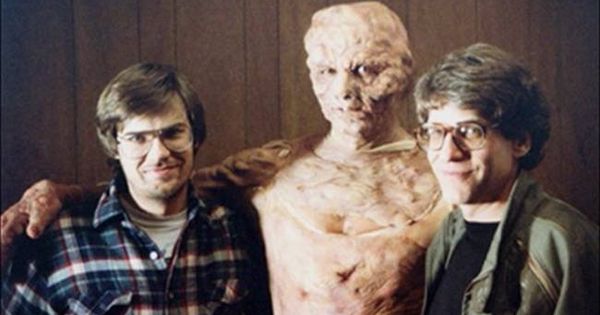
CW: This is a great question, if for no other reason than it lets me applaud one of my very favourite directors I’ve had the honour to work with.  David Cronenberg is an amazing filmmaker. He’s not just a director. His films truly belong to him. They are his vision. He’s an astonishing writer. When I was first approached for The FLY, I turned it down. I didn’t want to do a remake, etc. Stuart Cornfeld, the producer, said, ” I know,  I agree. Just read the script”. I read the script and it was superb. David had redone the original script and made it his own. I couldn’t say no to that script.  And David is an astonishing director because he really understands the process that everyone is going through. A lot of directors are absolutists; it has to be a certain way. David understands that production is about compromises and that a good director only makes compromises that don’t hurt the film. He was demanding and understanding at the same time. Very unique qualities in a film director and I feel very fortunate to have worked with him.

KH: I have vivid memories of The Fly 2. I remember watching it on video with some cousins and felt my lunch coming back on me a couple of times during that flick. How was it to finally sit in the director’s chair on Fly 2 and the other films you directed?

CW: Somehow, we hold the director’s chair as some ethereal pinnacle in filmmaking. And in some ways it is. It is the ultimate decisive position, historically. But I had already been directing teams of dozens of artists at my company, coordinating large operations and such, so I don’t think I was as intimidated as a lot of first time directors. I was quite comfortable directing, especially as I had such a wonderful crew of true talents on the FLY II. I never actually wanted to be an effects person. It was just the easiest way for me to get into the business.  Besides, it’s ALL filmmaking. All of it. From craft service to timing final prints. Directing is just the most focused, exhausting position. But I loved it.

galax14

KH: I interviewed William Sachs recently, director of Galaxina. Can you tell us about your work on that film?

CW: I’ve only lost money on two films. GALAXINA was the first one. At that time there were a lot of productions trying to cash in on the STAR WARS phenomenon. So there were a lot of over-ambitious, under-funded films being made. GALAXINA was right smack in the middle of those. Bill (Sachs) had his hands full on that film. He really did. And for me, it was a really, really tough show as there was a lot of stuff and very little money. We had to make a couple of the alien costumes overnight; the schedule kept changing wildly. I don’t know how Bill dealt with it all, honestly. It was furious alien making, to be sure. We had Angelo Rossito as the little alien creature. Little Angie, as he had been known, was a dwarf who had worked on countless films. The schedule changed dramatically and the three weeks we had scheduled to make his suit turned into 18 hours. But he was a total pro. He showed up with some of his old clothes for us to use as the base for the suit! We built the suit right on him and he never had a word of complaint at all. Total pro. Everything we did for Galaxina was done scraping the bottom of the barrel because there was so much work.


KH: I have a great fondness for both Dragonslayer and Enemy Mine, they speak to my youth. Tell us about working on those pictures; especially Enemy Mine, it’s one of my all-time favourites?

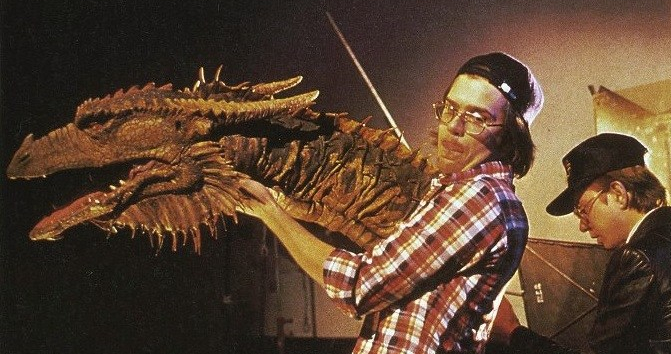
CW: Phil Tippet brought me up to ILM to work on the team for Dragonslayer. And that was a wonderful experience working with some of the absolute top talent in the field. Every day was an education for me. I was strictly on the in-house FX team and didn’t go over to England for the shoot. I made most of the molds for the dragons and baby dragons as well as running most of the rubber pieces.  I rigged the puppets for the baby dragons and built a few odds and ends pieces for individual shots; smaller scale grabbing legs, a bit of wing, etc. The biggest thing I was involved with was the close up Vermithrax puppet. It wasn’t part of the original plan, but they just couldn’t get the footage they wanted out of the full size head and neck that Disney had done, so I designed and built, and operated an animatronic puppet head. That was exhausting because the puppet had to be dripping water all the time, so the puppet became supersaturated and just kept getting heavier and heavier. But I think it worked in the end and helped the picture.

Enemy Mine was basically problem after problem. I started out working with the first director, Richard Loncraine, who I really liked and admired. We shot for six weeks on lava fields in Iceland before 20th Century Fox closed the picture down and hired Wolfgang Peterson to direct. We were supposed to be closed down for two weeks for the restart, but it was a full six months before we got going again.  I think, for us, the production got bogged down in a lot of committee decision making, which slowed everything down.  But in the end I was happy with the designs. We had an opportunity to do quite a lot of different effects for the film between the Dracs and all the odd creatures. The newborn Zammis puppet was one of my favourite rigs on that show.
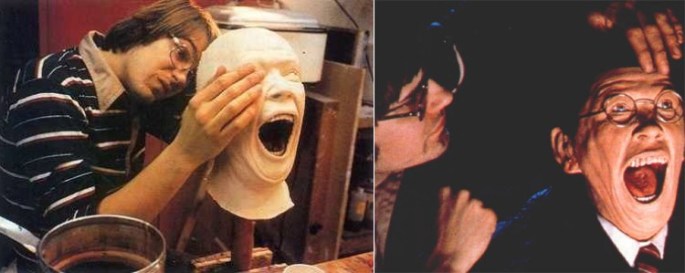
toht chris walas raiders of the lost ark strange tales1

KH: You worked with Joe Dante on Gremlins which was produced by Steve Spielberg whom you worked with on Raiders which was produced by George who brought us Return of the Jedi which you are also credited as having worked on. In retrospect, what was it like working on these milestones of cinema?

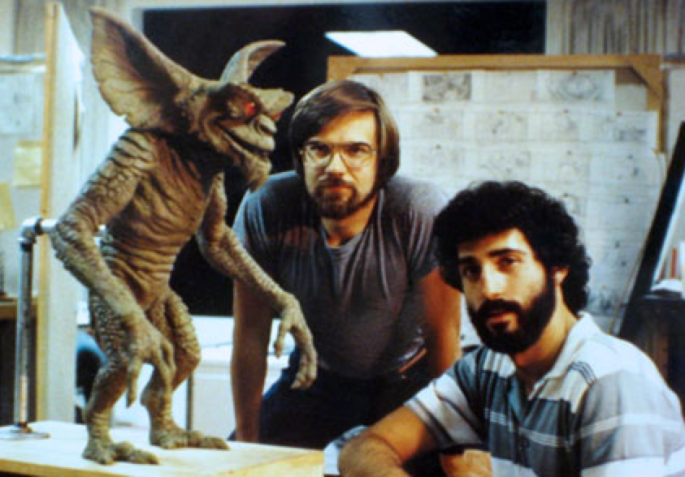
CW: Every once in a while you get lucky. Gremlins was a true milestone for me in both my life and my career. It was the first time I was in charge of running such a big crew on a studio picture. It was truly an insane experience for me as the picture just kept changing and growing, with new gags being developed for the Gremlins almost daily.  I don’t think I’ve ever been worn out so completely on any other film. But at the same time it was great fun, like a bunch of grown up kids playing. We had no idea we were working on a film that would be so successful and impacting.

Working on Raiders of the Lost Ark was great. Challenging. But it was at ILM, which was then the absolute pinnacle of FX houses in the entire world. I really wasn’t used to being able to say, “I sure could use one of these…” and then having someone order it right up or just get it from another department. So I had options available to me that I hadn’t really had up to that time.  Richard Edlund was in charge of the FX on the show and he was great about making sure that I had what I needed for the melting head and the other shots. I didn’t get to see the film until just before it opened and I was blown away. It’s such an amazing film. I feel so lucky to have been a small part of it.

For Jedi, I really only did design maquettes for some of the alien races in the film. I set up the creature shop for ILM, but then I left to pursue other projects. It was very nice to be included in the credits on that one!


KH: You have a number of diverse entries among your credits like Deep Star Six, Arachnophobia, Hot Shots and Virtuosity. Were these genres you sought after or were the film’s concepts interesting or was it simply the want to be constantly working that brought you to these projects?

CW: After Gremlins, I had set up a genuine facility with a great crew who knew what they were doing and so I had to take what projects I could to keep the shop going. But some of the projects were favours; Deep Star Six was for Jim Isaac, who was striking out on his own after being on my crew for a number of years. House II was for Ethan Wiley, who had also been a member of my crew on Gremlins and others. Some films were projects I really wanted to do; ANYTHING David Cronenberg was doing. Anything for Amblin, Spielberg’s company. But in between those projects it was a matter of trying to choose what projects seemed like they might be good films as well as keeping the shop going as long as possible.

KH: You’ve been a writer, director and producer having a film you co-wrote come out in 2016. Did you ever want to make more of your own pictures and do you, like so many people in the industry, have dream projects that might have come close but never saw the flickering light of the silver screen?

CW: I would have loved to have done more directing.  But it just wasn’t in the cards. I have a number of projects I would love to see resurrected someday. One of my favourites is a project called “Dathulgon”, which is a steampunk combination of characters and plot lines from Jules Verne and other early steampunk writers mixed with the cosmic horror of H.P. Lovecraft. That project was humming along nicely when the big market crash ruined a lot of financing for films.  I have a whole list of projects I would still like to see happen!

KH: Well sir, as a long-time fan this has been a very large pleasure, and though we were not able to conduct this interview via recording I care not, for as I said I am honoured to have met you and am humbled that you have taken this time to be interviewed for podcastingthemsoftly?

CW: It’s been a pleasure. It’s fun to reminisce and I really appreciate knowing that there are people out there who look back fondly and remember the work kindly. Thanks!

scanners 1981 movie pic2

So there you have it. Chris Walas folks. Applause is totally necessary for this talented man and his amazing career.


I’ll just take a moment to let you know some other interviews I have coming up. I’ll be bring you chats with Mike Marvin (director of The Wraith), Chris Olen Ray (Two & Three-Headed Shark Attack), The Outlaw film critic VERN, Scott Rosenberg (creator of Cowboys and Aliens). Prior to the release of SHARKNADO 5 (because that’s the kind of nerd I am) I’ll be presenting a double feature that week prior to August 6th of my interviews with Steve Alten (we discuss the long cinematic gestation of Meg) and the man himself Anthony C. Ferrante (director of the SHARKNADO series). So as ever, thank you for checking out podcastingthemsoftly.com, and watch this space…

Cheers

Kent
Joseph Kosinski’s Oblivion 


Joseph Kosinski’s Oblivion is slightly flawed Sci-Fi heaven, a film that could have easily been perfect if it weren’t for a few snags, chief among them being over-length and lack of clear plotting. There’s so much going on in the realm of visual and auditory stimuli though that one can let oneself just get wrapped up in the pure music video style rhythm of it. Speaking of music, the film only really exists to serve the absolute banger of an electronic score from M83, a gorgeous album packed with sonic synths, beautiful thundering beats and celestial interludes complete with angelic vocals from Susanne Sundfor. Kosinski pulled a similar stunt with Tron: Legacy, hiring Daft Punk to whip up a soundtrack that outshines the actual film itself, and while that’s certainly the case with Oblivion as well, there’s much fun to be had in other aspects, particularly visually. Tom Cruise is Jack, steward and caretaker of a small piece of the earth’s surface after an alien ambush forced most of the human race to run off to one of Jupiter’s moons. Collecting data and doing routine scope checks on his sleek hover bike, he’s a curious fellow who begins to see the lapses in logic and believes there’s something else at play other than survival, a notion that his partner (Andrea Riseborough) and dispatch handler Sally (a sly Melissa Leo proves that one can still be effective when skyping in one’s performance). Jack is haunted by visions of a beautifully mysterious girl he’s never met (Olga Kurylenko) and pursued by dangerous surface dwelling scavengers led by Morgan Freeman and Jamie Lannister. The film’s story is a cool one indeed and has a whopper of a twist, but the pacing and exposition just can’t seem to get itself out of a slight muddle and impart these events to us in a clear, unhindered fashion, a kink that no doubt could have been worked out with a little more time spent in the editing room. The aesthetic production design is a wonder, calling to mind everything from Half Life 2 to Portal while retaining it’s own unique, modernized look (I want that glass sky pool/deck so bad). It’s all about that score though folks, and it’s an album for the ages, bringing to life a film that otherwise just wouldn’t have been as memorable. 

-Nate Hill

Bong Joon-ho’s Okja is full of heart and depth.

Four years ago Bong Joon-ho surprised us with his astounding Snowpiercer, giving us a dystopian future in which the entire world was contained on a train.  It had a limited theatrical release and those that were able to catch it, were treated to an out of this world experience.

Bong has returned in full force with his latest adventure Okja which premiered at the Cannes Film Festival this year.  Netflix acquired the rights prior to the Film Festival with Plan B producing.

The film opens in 2007 with Bong’s perennial favorite, Tilda Swinton as Lucy Mirando having just taken over as CEO for Mirando, the multinational agro-chemical company.  Amid a growing scandal, Lucy pledges to the world that she will turn the company around with a special super pig which they have been breeding.  Twenty-six of them will be distributed around the world to be raised with the goal of having a contest to crown the biggest and best pig 10 years later.

Ten years later, Mija and her grandfather, Heebong have been steadfastly raising Okja when they are visited by zoologist and Mirando spokesperson Dr. Johnny Wilcox.  Wilcox has been on a global journey to crown the biggest super pig.  Mija, played by Ahn Seo-hyun, is suspicious of Wilcox’s purpose while Heebong, played by Byun Hee-bong understands all too well the purpose of the visit.  And when she is taken away, Mija follows Okja, meeting some interesting people along the way.

I want to get this out of the way, first:  I am not a fan of Netflix’s original content strategies; I don’t care for their exploits as a company to bring content to the masses and I really wish they work to bring their content to multiple formats rather than focusing on their subscriber base.  That’s a discussion for another article.

Ironically, I couldn’t help but to put myself in Mija’s shoes trying to fight the ever-changing tides of media distribution, much the same way as she struggled to find Okja and return her home.  This was never more apparent than in the overhead scene featuring Mija in a brightly colored purple jacket, going with the flow of the Soul rush hour foot traffic.  As she gets to the top of the stairs, bathed in sunlight, she turns and walks down the stairs, going against the grain.

okja 1

The love and care Bong gave to this film is evident from its opening frame to its [first] closing frame.  From the mountainous forests of Korea to the underground subways of Soul to the streets of New York City, Darius Khondji’s cinematography is absolutely first rate.  It’s too bad that I had to enjoy it on a 13 – inch screen instead of a 40 – foot-wide theater screen, though the detail was not lost on me.

Bong’s strengths as a story teller are steeped in rich, nuanced characters.  It’s difficult not to love Ahn’s understated approach to Mija as she struggles to cope with a world she does not understand; our moral compass, her determination is on her sleeves as much as her heart is.  Byun’s Heebong tries to stop her, knowing what awaits her and Okja.  Tilda Swinton is frighteningly hilarious as the scheming Lucy Mirando, a miss-goodie too shoes and her twin sister, Nancy, who is so morally bankrupt that she will stop at nothing to keep the engine moving forward.

Where Swinton’s outbursts are controlled, Jake Gyllenhaal’s Dr. Johnny Wilcox’s deranged rambunctiousness radiates.  During a crucial staff meeting, where Mirando is scheming her way to recover from a PR nightmare, Wilcox tries to remind her that he is the face of the company which she dismisses instantly.  The dejected Wilcox plots his own scheme to try and outdo Lucy.

Paul Dano plays Jay, the leader of the animal rights group Animal Liberation Front (ALF) trying to expose Mirando for what it is.  Dano’s character was meant as a bridge between Korea and America, guiding us through the narrative and while I thought his performance was very good, the character and the ALF function was unnecessary.  Mija could have and did achieve the same objective without the ALF.

The script by Bong and Jon Ronson (The Men Who Stare at Goats) works on multiple levels.  Mija’s interactions with Okja mirror Dr. Grant’s interactions when he leans on the Brachiosaur to hear it breathe in Jurassic Park:  they are both astonished and connected to the creatures they’re trying to protect.  Swinton shines in her roles and Gyllenhaal was cloyingly sweet. The story felt disjointed, due in part to the inclusion of the ALF.  Dano’s performance was good, but it felt like an afterthought.

Okja as a CGI character was gorgeous to look at, up close.  When seen at a distance or in the processing center towards the end of the movie, the CGI look came through loud and clear, becoming a distraction.

None of these concerns should dissuade you from checking out this timely tale.  I’d tell you to go to a theater to see it, but Netflix has seen to it that you can only watch it on their streaming service.  That aside, Bong Joon-ho’s Okja deserves all the recognition in the world.  It is a great accomplishment.

Top Ten of 2017, so far . . . .

It’s crazy to think that half of 2017 has gone by.  It’s crazier to think that I’ve seen approximately 210 movies since January and 190 of those films have been in a theater.  April was an exceptionally busy month with the Phoenix Film Festival and, as you guessed, I am the Alamo Drafthouse’s second favorite customer.

What’s even crazier is that a Netflix original film has made my Top 10 list. Yes, be shocked.  Very shocked.  Several titles don’t have a distributor yet and some will release later this summer.

Without further ado, here is my Top Ten of the first half of 2017.


10. Okja; directed by Bong Joon-ho, Netflix – A multi-national company coming to grips with a PR disaster is full of quirky characters and an off-beat story that is sure to please everyone. The heartfelt story misses some beats, but Bong’s strength is in his characters and for that reason it is recommended. Now streaming on Netflix and playing in NYC.

9. The Lovers; directed by Azazel Jacobs, A24 – The film debuted at Tribeca this past April to wide acclaim. Debra Winger and Tracy Letts play a dispassionate married couple on the verge of divorce. As they come to terms with their future lives apart, they find they have more in common than either realized.  Funny and heartfelt, Jacobs’ story is a strong indictment on the state of marriage and families and is recommended.  Available on VOD starting July 25th from Amazon.

8. Buster’s Mal Heart; directed by Sarah Adina Smith, Well Go USA – Sarah Adina Smith’s sophomore theatrical effort is set around the turn of the Millennium; this surreal mystery film features Rami Malek (USA’s ‘Mr. Robot’) in dual roles as Jonah and as Buster questions more than it answers. Buried deep within the questions, one is rewarded with a plethora of answers. Co-starring DJ Qualls, who made his mark in teen comedies of the early aughts, the local Alamo Drafthouse featured this film along with an insightful Q&A with the director.  It is available now on Amazon VOD and will be released on Blu-ray and DVD on July 18th.  Seek out the Inversion for yourselves.

7. Baby Driver; directed by Edgar Wright, TriStar Pictures/Sony – Wright who is known for his quirky Cornetto Trilogy (The World’s End, Hot Fuzz, and Shaun of the Dead) brings us an homage to pulp 70’s cinema with his latest film, Baby Driver. Featuring an all-star cast with Ansel Elgort, Kevin Spacey, Jon Hamm, Jon Bernthal, Jamie Foxx, Lily James, Eiza Gonzalez, this mixture of music and visual imagery is one of the most original films to hit screens this year. Now playing in theaters, I can’t recommend this film enough.

6. The Midnighters; directed by Julian Fort, The Midnighters – Making its appearance at this year’s Phoenix Film Festival, Fort took home that festivals’ Best Screenplay Award, and he deserved it. Featuring Leon Russom as an aged safe cracker, he now has to cope with life on the outside. Infused with the essence of Michael Mann, the film holds no punches as we see the hardened Victor stuck at a crossroads.  Peppered with amazing supporting characters, this film is a gem on the festival circuit and it’s only a matter of time before it gets picked up for distribution.

cropped-slide2rev

5. The Big Sick; directed by Michael Showalter, FilmNation, Lionsgate/Amazon Studios – I am a sucker for romantic comedies and this true life story of Pakastani stand-up comedian Kuamail Nanjiani and his courtship of Emily is no exception. The story by Nanjiani and Emily V. Gordon is heartfelt, intelligent, and witty and the supporting cast of Ray Romano, Holly Hunter, Adeel Akhtar and Anupam Kher round out this 21stcentury romantic story for the ages. It made its debut at Sundance this year where Amazon picked it up for a record $12 million and is co-distributing it with Lionsgate.  It also won the Audience Award at this year’s SXSW.  Now in a limited theatrical release it opens wide on July 14th.

4. War for the Planet of the Apes; directed by Matt Reeves, Twentieth Century Fox – For a franchise that will celebrate its fiftieth anniversary in 2018, Fox has managed to capitalize on an out of this world struggle between man and ape. In a trilogy that started with 2011’s Rise of the Planet of the Apes, continued with Matt Reeves’ Dawn of the Planet of the Apes in 2014. Now, two years later, in War for the Planet of the Apes we see Caesar warring with the remaining band of humans while at the same time, he is fighting his own demons. Releasing on July 14th, audiences are in for a visual and sonic treat.  Make sure to check this out on the biggest screen with the loudest sound.  You won’t be disappointed.

3. Dave Made a Maze; directed by Bill Watterson, Gravitas Ventures – Making its appearance at this years’ Slamdance Film Festival, Watterson’s quirky adventure finds our hero has built a maze. The trouble is that he’s become trapped in his own device and his friends, who he warns not to come after him, do so. Part Goonies, part mad house and all fun, this film also became an after – hours highlight of the Phoenix Film Festival.  The film was able to secure a distributors and I encourage everyone to run to theaters in August to catch this, if you dare.

2. The Lost City of Z; directed by James Gray, Plan B Entertainment, Amazon Studios/Bleecker Street – The second film in my top 10 to feature outstanding cinematography from Darius Khondji, Gray’s stunning story of Percey Fawcett’s adventures in to the Brazilian rainforests is an exercise in patience where the viewer is rewarded with the aforementioned cinematography and a cast that is second to none, featuring Charlie Hunnam (in his second release of 2017), Robert Pattinson, Sienna Miller, Angus Macfayden, Ian McDiarmid and in a second cameo of 2017, Franco Nero. The film sat with Paramount for six years and was finally picked up by Amazon, which released it theatrically via Bleecker Street where it sadly underperformed. The film is currently available for sale through Amazon streaming and will be available on Blu-ray on July 11th.  I cannot recommend this film enough.

1. Land of the Little People; directed by Yaniv Berman, Fresco Films –  Berman’s first narrative film is very much in line with his previous short films; the story revolves around four children who fight two military deserters for their territory where the violence is unrelenting, even up to the final frame. From what I understand, the film is an homage to Lord of the Flies, which I have not seen; I related it more to Rob Reiner’s Stand by Me. It serves as a punch in the gut, a wake-up call to the every-day struggles that other societies in the world face. This film has screened at multiple film festivals over the past year, including the Phoenix Film Festival where it won Best Picture and Director in the World Cinema category.  I very much hope more people get to see this important film; I cannot recommend it enough.

We’d love to hear from you.  What you have you seen and what has made your top list so far?

Forgotten gems:  Remembering 1988’s hypnotic, bizarre Heart Of Midnight 


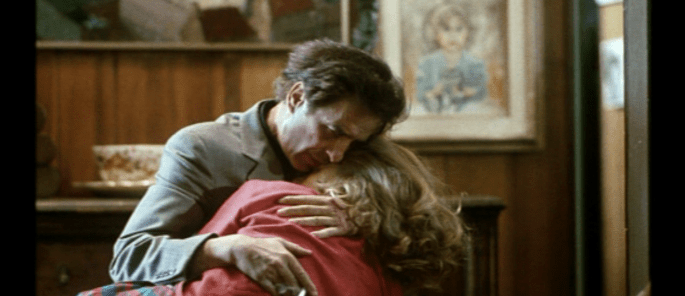
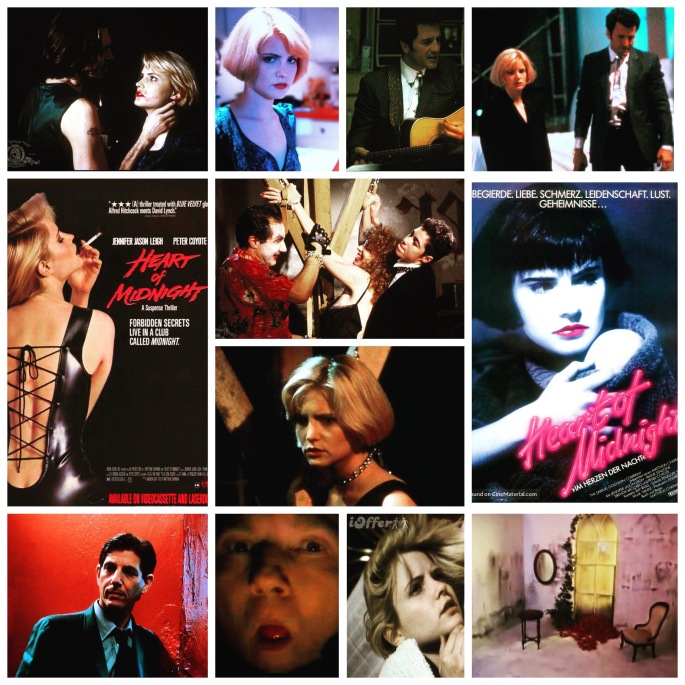
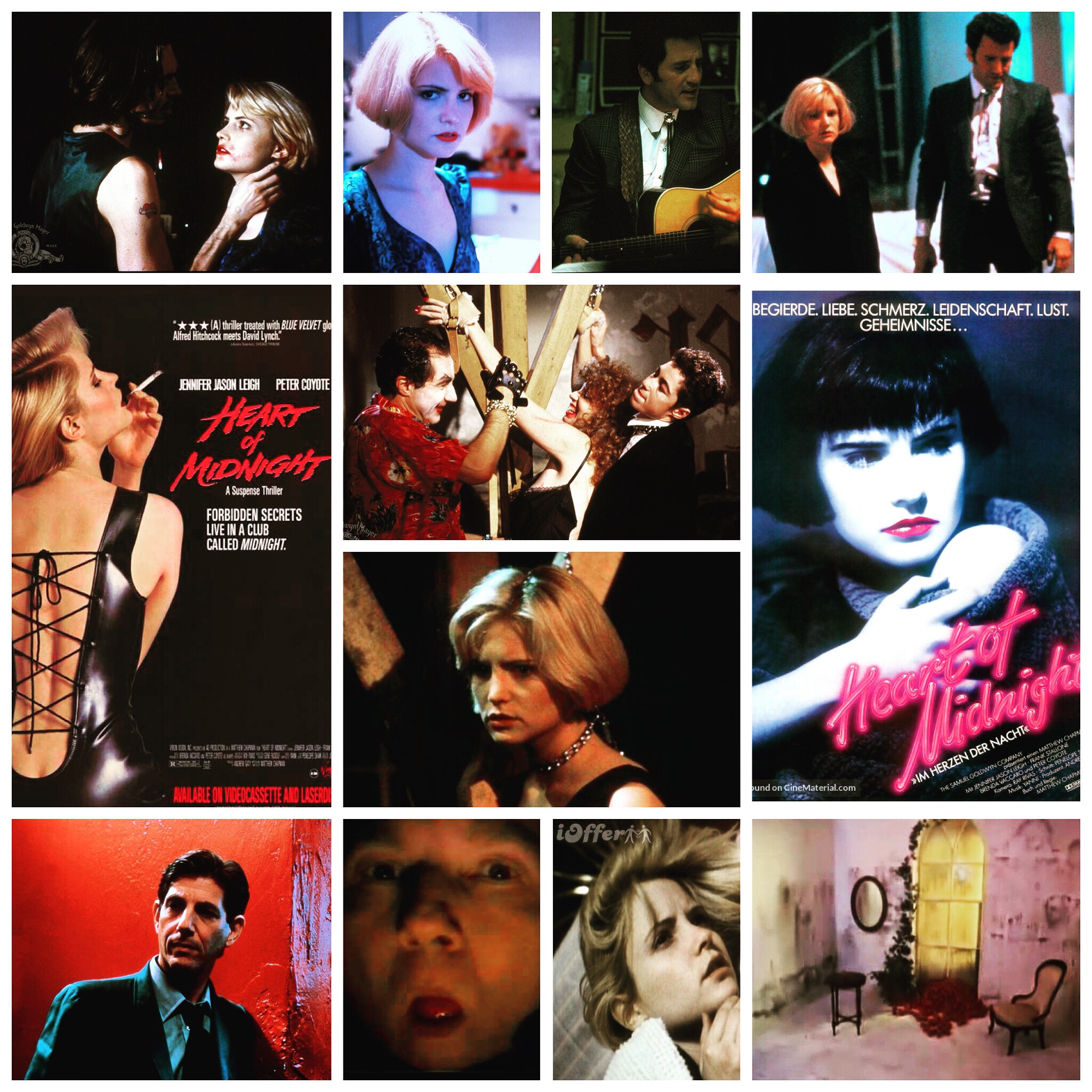
Somewhere between the dustbowl basilicas of 1980’s VHS town and the restless urban decay of metropolitan Americana lies the Heart Of Midnight, a dilapidated abandoned sex fetish nightclub full of nightmarish corridors, dead end rooms with ominous stains on the wall and a perpetual sense of acrid dread. Jennifer Jason Leigh is the reluctant heir to this heap, passed on to her by a weird old uncle she barely remembers, now deceased. It’s in a ruined, crime ridden part of town that still seems safer compared to the various themed rooms of this erotica dungeon, but she’s a trooper anyways, giving her best efforts to fix the place up and make something decent of it. Leigh seems to have deliberately go out of her way to pick kinky, controversial roles since her career began, always with sexual undertones and never short on psychological turmoil. She’s put through a wringer here, as the sordid, perverse and highly disturbing history of both the club and her uncle comes back to haunt her in full sleazy swing, a turn of events not for the squeamish or puritan side of the crowd. Walls seem to move, eyes peer through cracks and haunted cries echo through the fissures in the structure, as well as howling bad dreams that distort her reality. When a detective (Peter Coyote, brilliant work) shows up to help, he’s just as unsettling and shady as the building itself, clearly in the know or up to something. The only borderline sane character is another cop played by Frank Stallone, getting some of the best much needed comic relief of the piece. It’s priceless to see Leigh wander into the police station looking for answers only to find him in the middle of a ukulele folk ballad with the rest of the precinct belting out the chorus. Things don’t go very well for our heroine, as the dark forces playing with her seem to close in for a suffocating finale that leaves you feeling violated and disoriented. This is a film that seeps right to the root of human unpleasantness and psychosexual decadence, and one should firmly equip oneself mentally before going in. It’s also a film of startling dark beauty and alluring atmosphere, like a dreamy black velvet orchid that warbles a lullaby both dangerous and seductive, beckoning you to let your guard down until you wish you hadn’t, and are under it’s spell. One of the most overlooked mood pieces of the 80’s, a gorgeously horrific phantasm of a film that gets under your skin and crawls into your dreams. 

Mike Hodges’ GET CARTER

Image result for get carter michael caine poster

In the back rooms of London, gangsters smoke cigarettes, drink scotch, and view pornographic images on a slideshow. While the stoic John Carter watches his secret fiance getting felt up by his boss, he gets a phone call telling him that his brother has been killed. The next day he gets on a train traveling to his hometown to kill anyone and everything that stands in his way to find out what happened. GET CARTER is a no bullshit hard genre gangster film that is propelled by its perverse and transgressive narrative and its self-titled leading man, Michael Caine.

The film flawlessly executes the pulpy elements that make genre pictures such a joy to watch. The mysteriously perverse big bad, the femme fatal, a bloody climax, and a hero’s fall from grace during the finale. Michael Caine is cinematic perfection as John Carter. He brutishly navigates the back alleys, barrooms, and streets of Newcastle without speaking very much at all, doing all of his talking brandishing a shotgun or better yet, his commanding gaze.

Image result for get carter 1971

A lot can be said for Caine as an actor. He’s a lot of fun to watch, whether he’s playing an English intellectual version of Woody Allen, or a caricature of himself, Alfred Pennyworth; in GET CARTER his screen presence is as terrifying as it is commanding. You can’t take your eyes off of him. He’s brutishly mysterious, yet he’s as capable as he is cunning – always being one step ahead of impending danger that is one step behind him.

The film captures what makes English gangster films so great: the gray aesthetics of a de-glorified England. It’s rainy and smokey, with side stares from bar patrons and supremely unfriendly looking men in heavy overcoats brandishing shotguns that drive around in tiny sporty looking cars.

Image result for get carter michael caine

Another remarkable aspect of the picture is how it handles its very dark and pornographic subject matter. It doesn’t try to hide anything or deceive the audience. From the opening scene, the viewer is fully immersed into the underground world of crime and pornography.  The nudity is as unapologetic as the fierce perversion of the men the film revolves around, including Carter himself.

GET CARTER is that film that was the preface to universally adored films of the genre like THE FRIENDS OF EDDIE COYLE, THE HIT, THE LONG GOOD FRIDAY, MONA LISA, and SEXY BEAST. There are not any limitations to how far the plot will trek into the moral ambiguity of the “hero”, nor will it soften the blow as the narrative slowly pulls itself to a pitch black finish.