Conceptually Speaking: An Interview with Sylvain Despretz by Kent Hill


Sylvain Despretz really is the personification of honnête homme. And he has been a man of the world since an early age. Travel was a part of his life; the other constant being his love of the cinema.

He is an artist of great style and skill and after his schooling he worked as an art director for a top Madison Avenue agency then moved on to illustrating Graphic Novels in California under the mentoring of the internationally famed artist Moebius. From there he would set out upon what would become and astonishing career as a story board artist and conceptual designer.


This slideshow requires JavaScript.

His work you’ll have seen, gracing the screen in a myriad of films in a variety of genres. Movies like Gladiator, Alien Resurrection, Panic Room, The Fountain, (Tim Burton’s) Planet of the Apes and The Fifth Element. These including work on Don’t tell Mom the Babysitter’s Dead and the coming Luc Besson sci-fi extravaganza: Valerian. He has worked with  and on films directed by the true masters of the screen including Ridley Scott, Stanley Kubrick, David Fincher and Jean-Pierre Jeunet.

But, as you will hear, Sylvain has become disenchanted by the current repetitive nature of Hollywood’s cookie-cutter output. He is now driven by the notion that the only way to usher in change, is to be part of a creative revolution that places an emphasis on original voices instead of corporate responsibility.


This slideshow requires JavaScript.

To this end he is now embarking on a journey that will see him stepping away from the drawing board and moving behind the camera; bringing his own visions to life using that mysterious blending of industrial light and storytelling magic.

He is a learned Hollywood veteran who has seen the Dream Factory from the inside, and his stories and wealth of knowledge and experience was and is fascinating to experience.

The designer behind the scenes and the future man in the director’s chair, proud am I ladies and gentlemen to present this interview with the one and only, Sylvain Despretz.

VISIT SYLVAIN’S OFFICIAL SITE:

http://www.metaprogram.net/

Out of the Shallows: An Interview with Sandy Collora by Kent Hill

Error
This video doesn’t exist

“Why weren’t you in the pros making stacks of cash and getting your toes licked by beautiful women?”

This line of dialogue from Shyamalan’s Signs always springs to mind when I think of the man and the career of Sandy Collora – and I told him as much. I have watched as filmmakers of lesser skill, passion and moxie rise and rise again with relative ease through the ranks of the Hollywood system.

But, while it boggles the mind as to why a man of Sandy’s talent has thus far been denied a shot to bring his truly awesome visions to fruition – his career has not been without triumphs. He has worked on some truly cool pictures like The Abyss, The Crow and Men in Black; along the way enjoying the benefits and encouraging tutelage of such luminaries like Stan Winston and Henri Alvarez.

Then came that little fan film you may have heard of, Batman: Dead End. Not only was it a game-changer, but it was also a life-changer, propelling Sandy into a league of his own and catapulting him toward the attention of the Hollywood players.

I referred to this period as Sandy being romanced by the industry. He refers to it differently. But he concedes that mistakes where made, and what might have been is anyone’s guess had he played the game by their rules.

Still the testament of all great artists that we applaud still, no matter the length of time it has been since they delivered unto the world their masterworks, is a resolve born of (in some ways) uncompromising vision and unshakable self-confidence. And, while Sandy freely admits the art of compromise will be necessary, if he hopes to realize his works on a larger scale, he (I hope) shall not lower his standards below that which work of his quality richly deserves.

Hunter Prey gave us a taste of feature-length Collora, and now he is at it again with his dynamic and compelling short, Shallow Water.

A new beast emerges, and with it comes the prospect of the reawakening of a genre made famous by its creatures like Alien and the Predator. It also marks the opening of another door for Sandy to, at last, the big time – a place in which he has fought hard to attain and worked tirelessly to offer some exuberance and, no doubt, something extraordinary.

There are so many great stories of great stories that have been a part of the life and cinema of Sandy Collora. I encourage you to check out the link below; find yourself a copy of, not only his incredible art books, movies and merchandise, but also the inspiring documentary: Behind the Mask.

Grand adventures, heartbreaking turmoil; this is the agony and the ecstasy, but also the the wisdom and the wonderment of the Collora cinematic universe. Dear listeners, it is my pleasure to present . . . Sandy Collora.

VISIT SANDY’S OFFICIAL SITE:

http://montaukstudios.com/

AND DON’T FORGET:

https://www.youtube.com/watch?v=TBSm6ZDY7n0

HEADSHOT — A REVIEW BY NICK CLEMENT

3

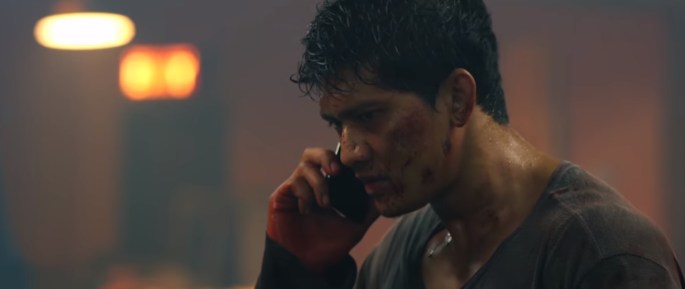
For the most part, and with only a few recent exceptions, the studio-funded American action picture is dead. The PG-13 rating, the homogenized superhero film, and an over-reliance on CGI have become the new norms, with films like Con Air, The Rock, Air Force One, Face/Off, and Bad Boys 2 never feeling like they could be made again; those films, and many others, used computerized visual effects to ENHANCE their set-pieces, not OVERTAKE them. In recent years, I’ve been looking to Asia for as many imports as I can find, and one of the nastiest I’ve discovered in recent memory is the absolute blood and guts festival Headshot, from the directing duo of Kimo Stamboel and Timo Tjahjanto. This hardcore ass-kicker was done in the vein of The Raid and The Raid 2, complete with that film’s enigmatic star Iko Uwais, who here slices and dices his way through an army of baddies with only one objective: Stay Alive. He’s suffering from amnesia after waking up from a coma, and lots of people are after him? But why? You’ll find out. There’s nothing deep or complicated here on a narrative level, with the brutally efficient script presenting archetypes and then letting the fisticuffs fly.

4

The martial arts choreography in this film is utterly stunning, mixing various fighting forms into the action in a smart way though the story, while the straight forward plotting is merely an excuse to showcase Uwais and all of the other fearless stunt performers, who went above and beyond the call of duty for our entertainment. Shooting in widescreen, Yunus Pasolang’s in-your-face cinematography gets the viewer extremely up close and personal to all the action, displaying each smack down with fresh and edgy camera angles, and a mix of shaky-cam and long-take shooting; it’s absolutely incredible on a technical level all throughout. Exceedingly violent and unrelenting almost to the point of madness, Headshot all but eviscerates the competition, and yet again shows how filmmakers from overseas are totally schooling everyone else when it comes to unadulterated and boundary-pushing action filmmaking. After premiering at the 2016 Toronto International Film Festival, Headshot received an extremely limited theatrical release worldwide, and is now a streaming option on Netflix and Amazon, and also available on DVD for purchase. This film is only for total bad-asses who like their action cinema full-throttle, pulse-pounding, and exceptionally, nearly pornographically violent.

1

Mimi Leder’s The Peacemaker


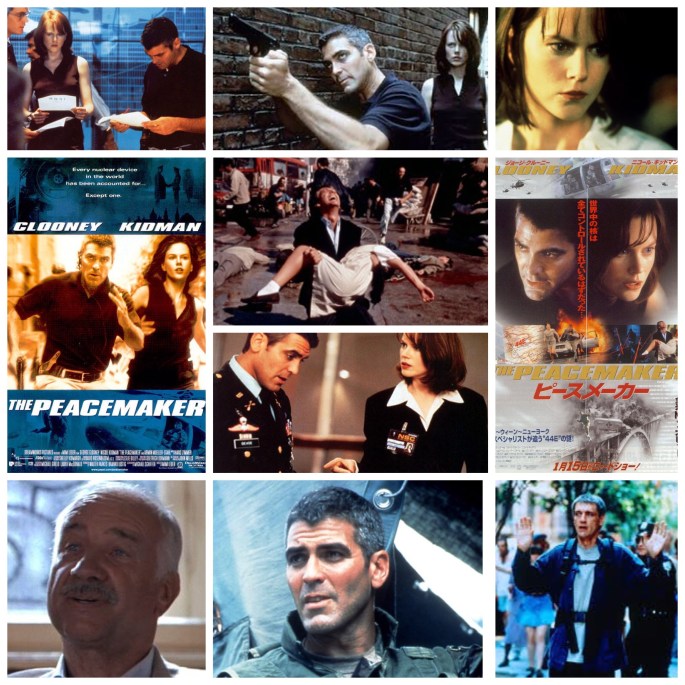
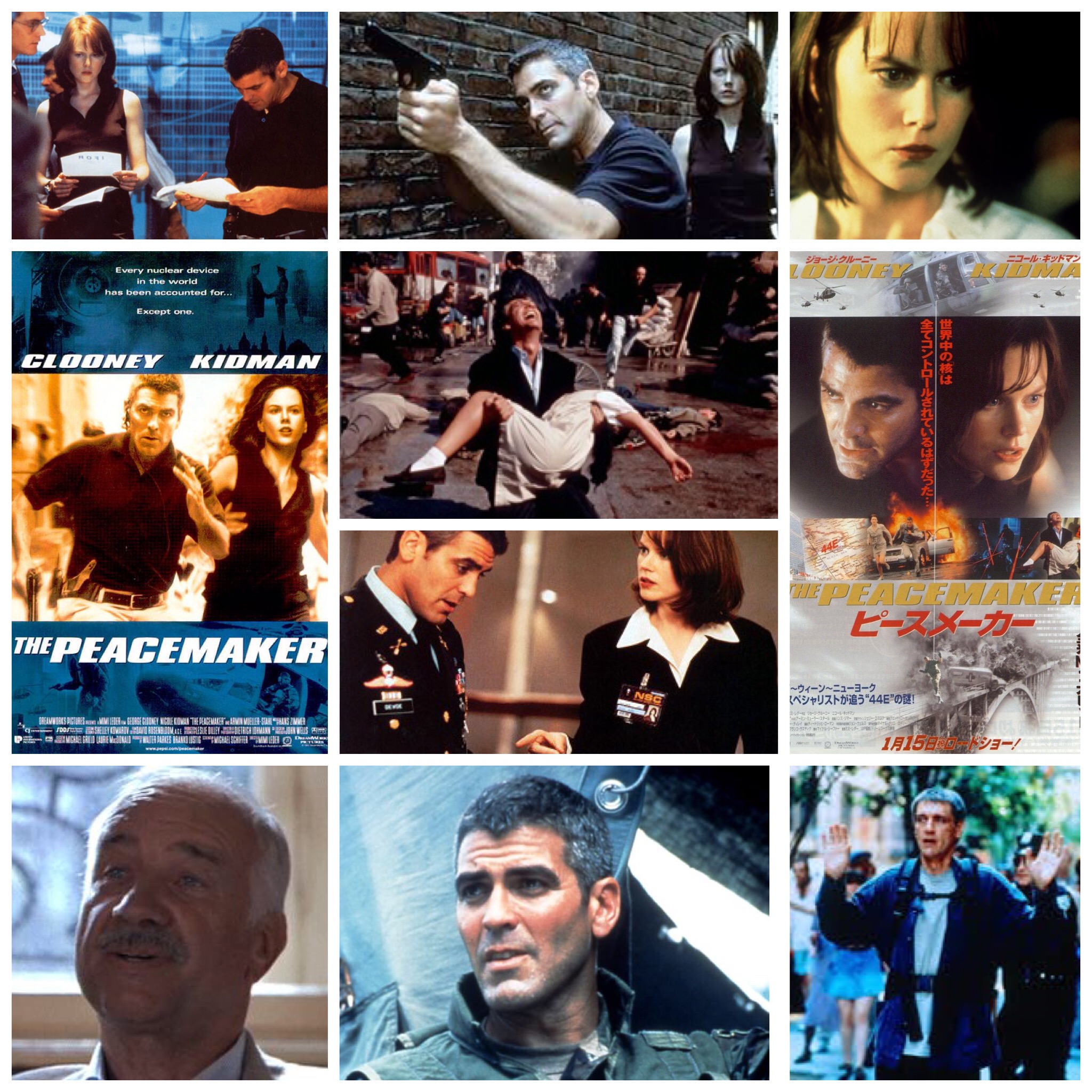
Despite being a fairly dull film overall, Mimi Leder’s The Peacemaker has a few redeeming qualities that almost put it up there with other far better efforts in the wartime espionage subgenre, namely a terrific score from Hans Zimmer and one of the most flat out badass George Clooney actions scenes you’ll find anywhere in his career. It’s a shame the film you find these qualities in is a heavy handed, by the motions anti-terrorism headbanger that says and does nothing we haven’t seen a million times over. Clooney is the seasoned military man, on a globetrotting mission with Nicole Kidman’s intuitive agency analyst, tracking down several Russian nukes that were lifted off a train somewhere in Europe during a painfully static opener. There’s a radical out there played by French actor Marcel Iures, hiding as a piano teacher of all things, biding his time till he gets to go kaboom somewhere stateside and get revenge for some horrendous misdeed against his family. He’s actually the most interesting character, thanks to Iure’s obvious talent and the near sympathetic light they’ve painted his character in. The film is so by the numbers it’ll put you to sleep though, and the positively supersonic score from Zimmer feels like it deserves a better film. Still, you can’t go wrong with the sequence just after a droning car chase where Clooney has T-boned the baddie’s ride and trapped him inside. George promptly steps out, walks over and empties an entire fucking clip into this guys face, it’s pretty much the coolest thing the he’s ever done onscreen. Too bad the film as a whole couldn’t keep up with the organic, intimate level of energy infused into this one moment, we could have gotten something memorable. 

-Nate Hill

THEODORE MELFI’S HIDDEN FIGURES — A REVIEW BY NICK CLEMENT

3

I don’t get too hung up on poetic license and the reshaping of history when it comes to glossy and well-meaning Hollywood biographical tales, so in that regard, I enjoyed last year’s Oscar nominated drama Hidden Figures from director Theodore Melfi (St. Vincent). This is the compelling story of three African-American women who led the scientific charge of helping to get John Glenn into outer space. But I don’t understand why Taraji P. Henson wasn’t the one to the acting nomination out of the main trio which included her, Octavia Spencer, and Janelle Monae. Not that anyone was bad, but I thought Henson’s arc and character was easily the most affecting and effective. Melfi, who co-wrote the script with Allison Schroeder, took liberties with the facts and that’s his prerogative as a filmmaker; he crafted an engaging film about important subject matter, and injected warmth, humor, and some solid social critique. Kevin Costner can do no wrong, Cullen Moss gets some nice close-ups (The Heroes of Arvine Place POWER!), cinematographer Mandy Walker (Shattered Glass, Australia) gave the film some solid visual polish, Hans Zimmer’s score shoots for the stars with appropriate bombast, and the inherent “goodness” of the story is felt at all times. A massive theatrical success to the tune of $230 million world-wide on a $25 million budget (that’s REAL $$$ right there), Hidden Figures is now available on Blu-ray, and will likely entertain audiences for many years to come. 2

A Civil Action


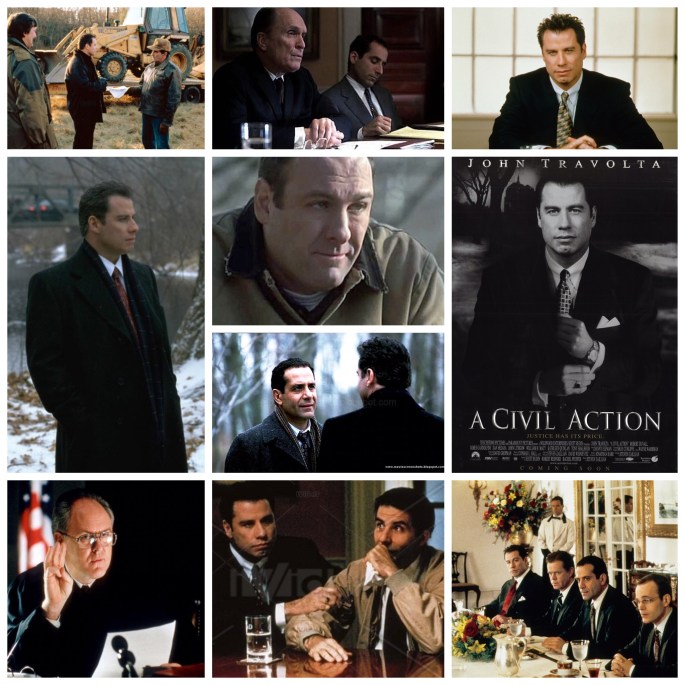
A Civil Action is a quiet, sobering tale of gross corporate evils and one lawyer with the stones to stand up to it all. John Travolta can be the skeeviest slimeball, the most affable Everyman, terrifying arch villain or unwavering hero in his work, he’s just that adaptable. His character here is a small time lawyer in a four partner firm that can barely afford a collective pot to piss in, and are in dire need of a case. In a local county, there’s suspicion of a factory dumping lethal toxic waste into the nearby rivers, causing the death, illness and birth defects among many children. Problem is, it’s a ruthlessly expensive case that could bankrupt their entire firm, and the rival lawyer (Robert Duvall) is an Ivy League bigwig who could bury them. Travolta is steadfast though, calmly and methodically tackling one obstacle at a time with compassion for the victims, determination to smoke out the corruption and a reserved charm that puts the film in a relaxed yet pressing groove. The cast here is absolutely unreal as well. Standouts include James Gandolfini and David Thornton in heartbreaking turns as blue collar workers affected by these misdeeds, Dan Hedaya as a malicious perpetrator, William H. Macy and Tony Shaloub as Travolta’s firm partners, Daniel Von Bargen as a belligerent witness, as well as further work from John Lithgow, Harry Dean Stanton, Zelijko Ivanek, Mary Mara, Sydney Pollack, Stephen Fry, Paul Ben Victor, Michael P. Byrne, Josh Pais and more. It’s never too hectic though, despite having so many characters and being a courtroom drama, a sub genre usually steeped in fire and brimstone melodrama. There’s a sad, quiet aura to the proceedings here. The damage is done, and all these people are looking for is a little recognition, compassion and a settlement to ease the strife thrown at them by a very callous and uncaring bunch of people. Travolta is the harbinger of catharsis, a warmhearted man who gets invested in so deep that it isn’t about the money anymore for him, it’s about helping those in need. Powerful, understated stuff. 

-Nate Hill

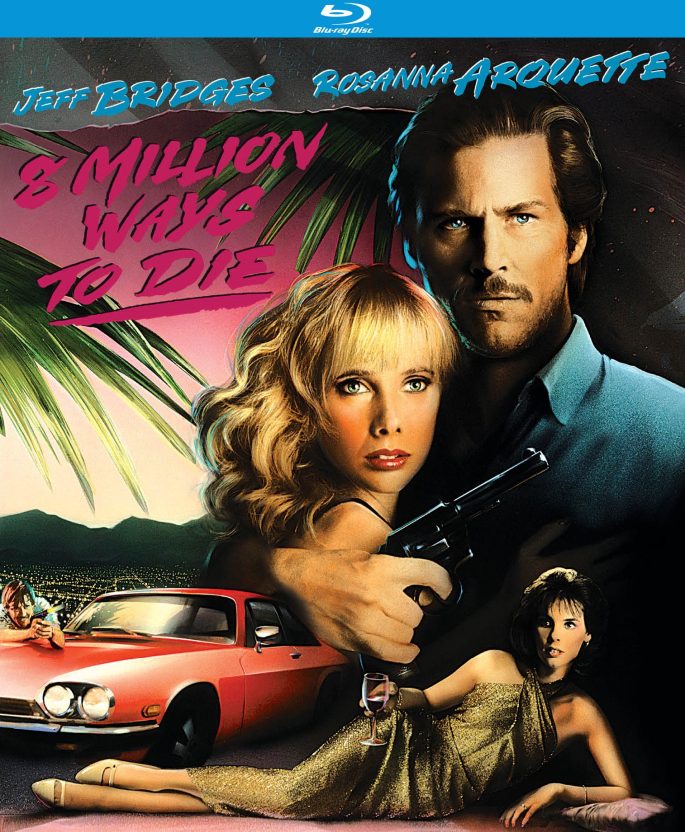
BLU-RAY REVIEW: HAL ASHBY’S 8 MILLION WAYS TO DIE — BY NICK CLEMENT

4

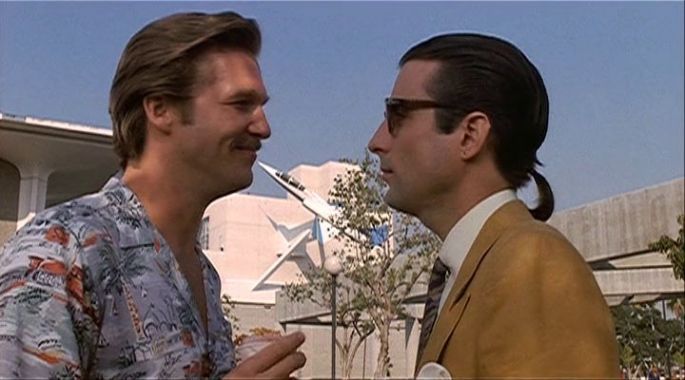
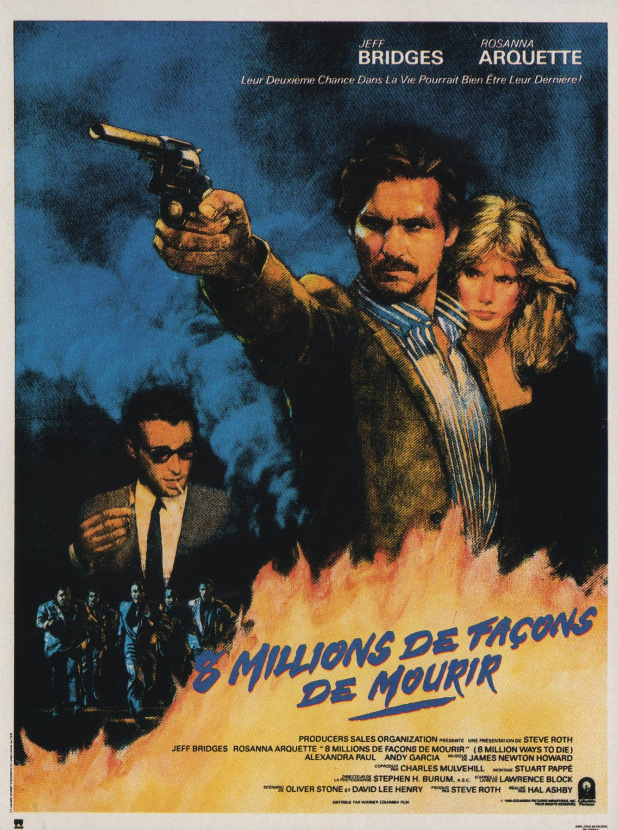
It took me a few viewings to totally appreciate Hal Ashby’s barely released 1986 film 8 Million Ways To Die, which was the eclectic and troubled helmer’s unique spin on the crime film, and would serve as his final major motion picture. This was the first attempt to cinematically adapt the Matt Scudder detective character from author Lawrence Block (A Walk Among the Tombstones), with a gritty screenplay coming from future auteur Oliver Stone (JFK, Natural Born Killers) and R. Lance Hill (Road House, Out for Justice, The Evil that Men Do), who was credited under the pseudonym David Lee Henry, with uncredited rewrites courtesy of Robert Towne (Chinatown, Days of Thunder, Ask the Dust). Starring  a gruff and sweaty Jeff Bridges, Rosanna Arquette in one of her best and sexiest performances, and an extra-volatile Andy Garcia in one of his first leading roles and in total scene stealing mode, the movie died a very fast box office death, and was met with savage reviews from critics. But over time, it has become a bit more appreciated, most certainly by Ashby fans, but also as an example of the slick and dangerous neo-noir movie world that doesn’t very often get a chance to be seen in quite this fashion on screen. There’s a booze-soaked quality to this film that feels vivid in nearly every moment.

5

8 Million Ways To Die has a scattershot narrative involving cops, scum-bags, drug dealers, prostitutes, murders, and liquor, that’s both pulpy and energetic and certainly coherent, and yet still feels compromised in some instances (Ashby had final cut taken away from him by the producers). But there’s still something fascinating going on within the narrative and with certain aesthetic choices made by Ashby and his team. Stephen H. Burum’s sinewy and seedy cinematography stressed an alternatively shadowy and sometimes neon-inflected color palette, while the excellent music from James Newton Howard kept an appropriately shifty and dangerous sonic ambiance; the opening helicopter shot with Howard’s sleazy music blaring is 80’s-perfect. And considering that Ashby was reportedly fired from the movie before it was finished, that might explain why the film feels so choppy in spots, as he wasn’t allowed to collaborate on the final editorial process. It’s an odd yet entertaining film, with some cool moments, but exists as a curious “What if?” on Ashby’s legendary filmography. Another interesting tidbit is the involvement of the production/distribution entity Producers Sales Organization; check out their story and credits on Wikipedia for some extra-fun reading.

1

For a long time, 8 Million Ways To Die was a hard film to track down. It was never given an American DVD release, but was released by Second Sight in the UK on that format. Now, thanks to Kino Lorber, Ashby’s swan song has been given the Blu-ray treatment, and the results from a picture and audio standpoint are excellent, showcasing deep blacks and rich colors all throughout, with a very clean transfer which retains Burum and Ashby’s intended 1.85:1 aspect ratio. Howard’s spectacular musical score, especially that sax-heavy opening, sounds luscious to the ear, a further reminder of that composer’s stellar gifts with musical accompaniment. Special features include interviews with Garcia, Arquette, Block, Alexandra Paul, a trailer gallery, and an informative and entertaining audio commentary with Howard S. Berger and Nathaniel Thompson. This film certainly had a helluva production, with various rewrites occurring much to the annoyance of key creatives and Ashby battling it out with producers over his unconventional filmmaking approach, and despite all of this, I really think it’s a lot of fun, and if it’s not everything it might’ve been under less hellish circumstances, it serves as a unique final offering from Ashby, who rarely repeated himself and was clearly interested in exploring various genres during his amazing career.

blu art

Steven Spielberg’s Indiana Jones and the Last Crusade

Indiana Jones and the Last Crusade

1989.  Directed by Steven Spielberg.

Screen shot 2014-04-09 at 5.07.16 PM

“You lost today kid, but it doesn’t mean you have to like it.”

The Indiana Jones films and their architect, Steven Spielberg are household names, stitched into the fabric of modern pop culture with two-fisted pulp icons battling the forces of evil with brains and brawn, and always in a larger than life fashion.  The first two films are considered to be some of the greatest action epics ever committed to film and Spielberg chose to return to his beloved world of whips and relics with a fantastical epic steeped in themes of fatherhood and the power of knowledge over hatred.

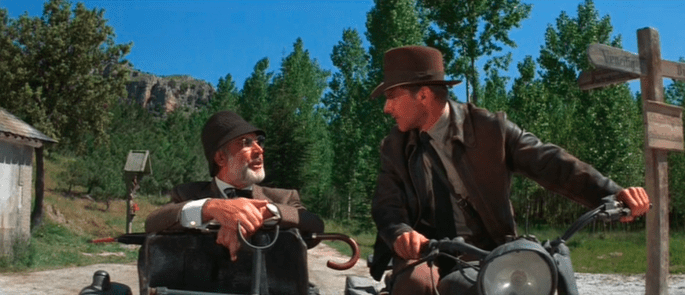
Indiana Jones sets off in pursuit of his father, who’s gone missing while questing for the Holy Grail.  Beset upon by wicked Nazis and greedy scholars, Jones and his father must overcome their differences and believe in the power of family and friendship to persevere over the forces of darkness.  Jeffrey Boam’s script begins with a childhood flashback to one of Indy’s first adventure, setting the tone for the familial morality tale at the center of Crusade’s larger than life story.    The intimate moments between the Jones’ and the action set pieces are perfectly balanced, never overtaking one another.  The dialogue is packed with endlessly quotable lines, allowing each of the cast to shine in their particular moments.  Harrison Ford’s solid embodiment of Indy is beyond reproach, but it is Sir Sean Connery’s brilliant turn as Indy’s father that is the highlight.  His wizened dedication to the Grail is only outdone by his emotional realizations of its cost on his life and still even these moments of depth pale in comparison to his legendary beachfront confrontation with a fighter plane and his pitch perfect, boyish charm in his scenes with Denholm Elliot’s hilarious sidekick.  His monologue about the importance of the quest for the Grail is one of the film’s best moments.

LastCrusadeChoosingWisely

Douglas Slocombe’s robust cinematography takes advantage of the lighting in sweaty close ups only to pull back into beautiful wide shots that encapsulate the wonders of nature and the incomprehensible malice of Nazi Germany.  John Williams brings his formidable harmonics to bear with the expected triumphs previously established and then surpasses them with unforgettable tones that clearly divide good and evil.  While there are betrayals and shifting motives, the heart of the franchise has always been about right and wrong, black and white, and Williams is perfectly in rhythm with this concept.

The final ingredient is the heart racing action that is the heart of the film.  Beginning with a dazzling chase sequence featuring the late River Phoenix and then transitioning into no holds barred rescue involving a tank, The Last Crusade takes its time getting to the next explosion and when it arrives, there is nothing but excellence to feast upon.  In a time of CGI saturation, action fans will always have classics such as this to return to, a powerful reminder of the power of practical effects and inspired creativity.

tlc_clifflook

Available now for streaming on Amazon Prime and Hulu, Indiana Jones and the Last Crusade is essential viewing for anyone who’s ever entered a theater.  Featuring a heartwarming story about fathers and son, hilarious exchanges amidst pulse pounding battles, and a golden age presentation, this is one of the all-time greats and a perfect example of how to do the blockbuster right.

Highly.  Highly Recommend.

indiana-jones-3-and-the-last-crusade-1989

Olivier Assayas’s Boarding Gate


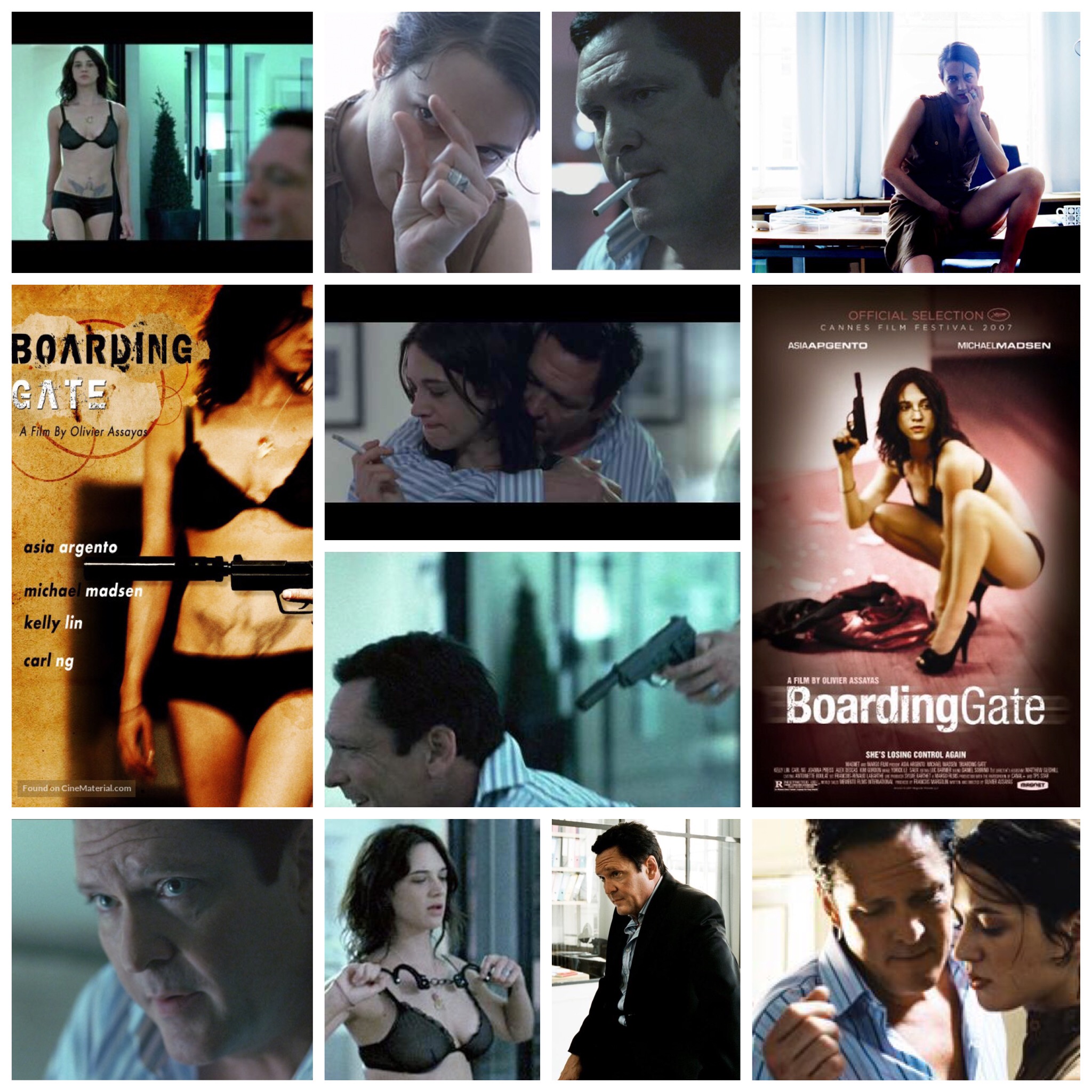
Olivier Assayas’s Boarding Gate is a fascinating and frustrating chamber piece that may have been more effective as a stage play. At any rate it certainly leaves an impression, thanks to two vivid, jagged edged performances from it’s leads, Asia Argento and Michael Madsen. Assayas is apparently known for patiently pacing his work, but this one takes the term ‘slow burn’ and gives it a whole new dimension of meaning. I won’t bother trying to outline the plot as it’s more mixed up than iPod headphones coming out of your pocket, except to say that Argento and Madsen are two former lovers who shared some extremely kinky sex before betrayal, greed and corporate espionage got in the way, and now play a psychosexual game of cat and mouse for most of the film. Madsen is the cruel bigwig with ice-water coursing through his amoral veins, Argento the manipulative, caged animal harlot and it’s fun seeing the two exchange smouldering looks and violent outbursts in between trying to ruin each other. This isn’t everyone’s thing, and many will give up on it purely because it ambles along on it’s own time, also for being quite the unpleasant affair through and through. I’ve never seen any of Assayas’s other work, but he certainly knows his way around a camera here, giving each shot gauzy, excessively focus pulled style and intimate close ups of our two stars. They are the best thing about the film, Madsen his usual gruff, enigmatic roughneck and Argento exuding exotic, danger tinted sex appeal. I can’t really say if it’s my thing either, to be honest, but it has it’s moments, and never slouches into something unoriginal. A true curiosity. 

-Nate Hill

Patty Jenkins’ WONDER WOMAN

WONDER WOMAN is a rather terrific film. Yes, it follows the template of an origin story, and it is somewhat uninspired at times following that formula (first reel death, sacrificial death at the end of the film, “surprise” villain), but regardless of the generic template used, the film and its star propel forward creating a very engaging, entertaining, and invigorating film.

The constant comparisons to CAPTAIN AMERICA: FIRST AVENGER does have some slight merit, but it is a rather lazy comparison. Sure, both films revolve around a set piece pertaining to each World War, and sure it’s a ragtag crew of soldiers that support the hero in their take-down to essentially end the war; yet there is so much that separates the two.

Image may contain: 1 person, smiling, hat and outdoor

The craftsmanship of WONDER WOMAN stands superior.

The cast of this film may be one of the best ensembles constructed for a comic book movie. Supporting Gal Gadot is Chris Pine (in probably his best performance to date), Connie Nielsen, Danny Huston, Ewan Bremner, Said Taghmaoui, David Thewlis, and a scene-stealing Robin Wright. All of these characters, regardless of screen time and/or limited development are giving a substantial amount to do and say, and casting each specific actor to their respective role immediately creates authenticity for that character.

Hans Zimmer’s theme for Wonder Woman, which made its debut in BvS, is perhaps the best piece of music that he has ever composed. When it cues itself up to Gadot kicking German ass in the film, it creates even more excitement for the viewer. The action pieces in this film are incredible.

Image may contain: one or more people and people standing

Everyone deserves full credit for this picture. Gal Gadot completely owns the role while simultaneously propelling herself to a bonafide movie star. Director Patty Jenkins has become a rising star within Warner Brothers, and Zack Snyder deserves his due credit for discovering Gadot and creating the aesthetic that WW cultivates.

WONDER WOMAN didn’t save the DCEU, it was doing just fine before this film, but it certainly stopped a lot of the negative press. Though those who constantly fill their social media feeds with unapologetic bias and echo chamber nonsense will remain undisturbed. This film may not completely warrant the abundance of overwhelming and over the top accolades, it is a very fine picture, and don’t be surprised if this film has legs going into awards season.