Tim Burton’s Planet Of The Apes


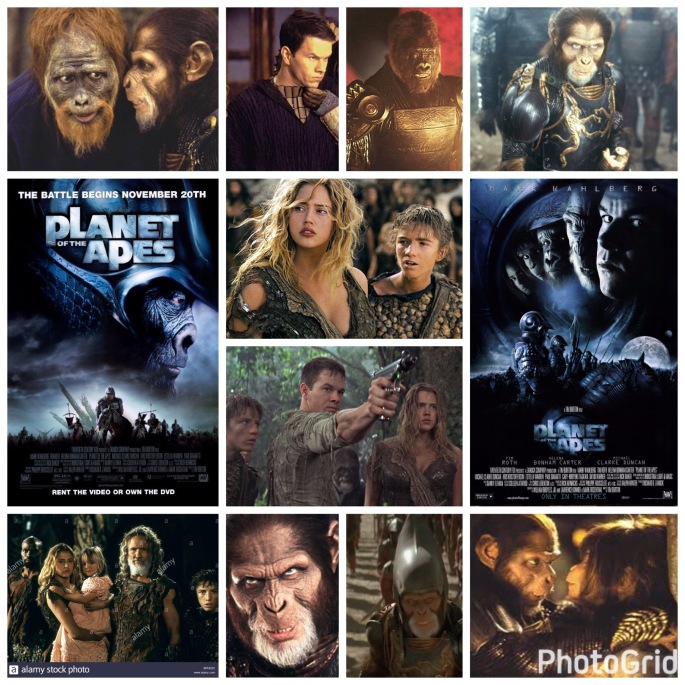
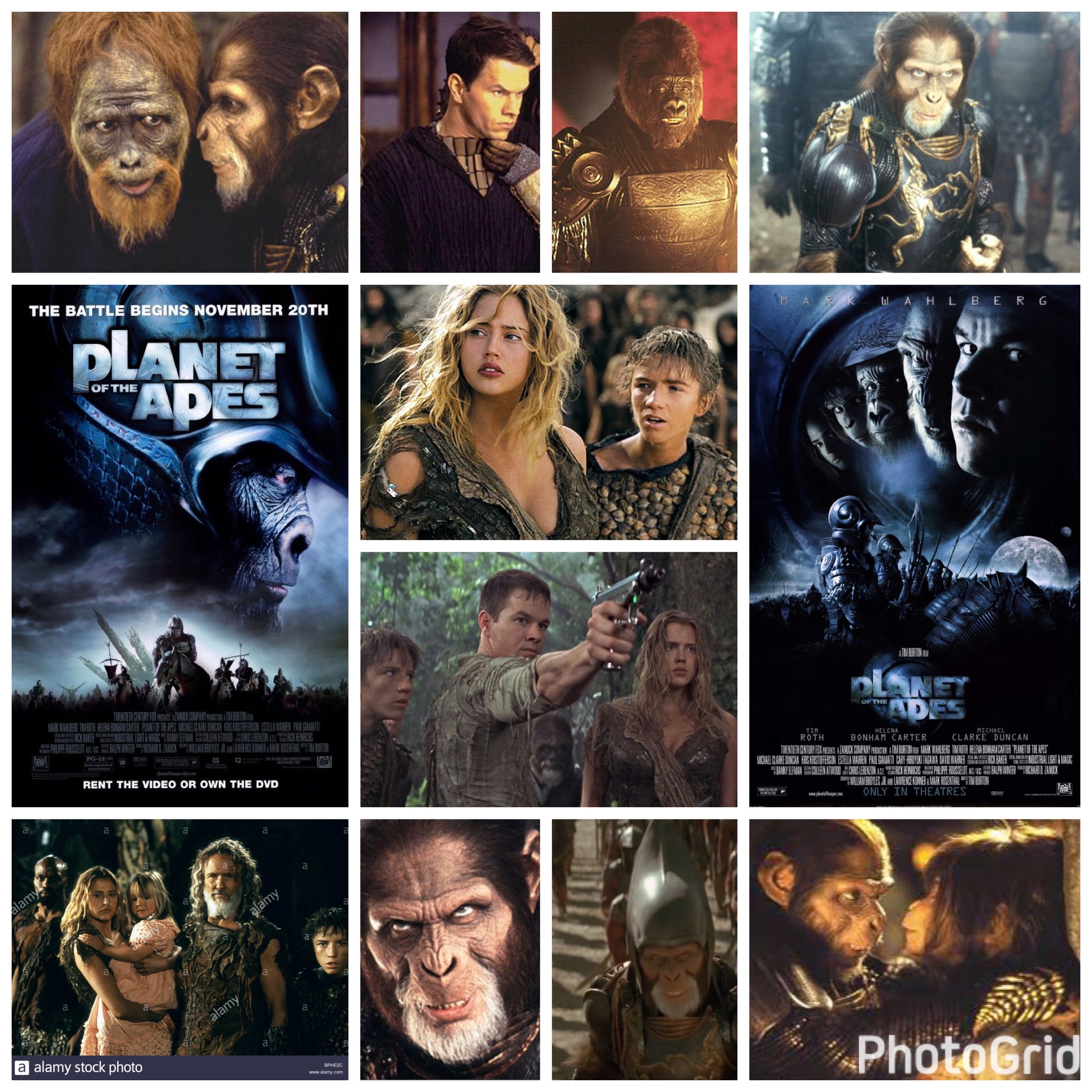
I’m going to catch some heat for this, but I’ve found Tim Burton’s Planet Of The Apes to be a far better film than any of the three recent versions. I can’t explain it, but there’s something so otherworldly and exotic about the production design, makeup and effects, a true storyteller’s touch used, resulting in a piece with elements of fantasy and world building brought lushly to the forefront, whereas the newer films just felt somewhat clinical and sterile, going through minimalist motions without any real sense of wonder applied. Oh and another thing: real, tactile makeup on actual human actors, which will win against motion capture/cgi any day. There’s also an old world, medieval feel to this planet, as the ‘humans being subservient to apes’ dynamic has already been in full swing for generations, as opposed to a lengthy origin story that takes up most of the newer trilogy. No build up here, just Marky Mark getting marooned on a distant world dominated by simians, fighting his way through their ranks, sort of falling in love with one (Helena Bonham Carter as a monkey=kinky) and attempting to find a way back to earth. There’s various apes of all shapes and sizes at war, the most memorable of which is a sleek, snarling Tim Roth as Thade, a volatile warlord who despises humans. Michael Clarke Duncan towers over everyone as Attar, his cohort and fellow soldier, and seeing already be-jowelled Paul Giamatti as a cumbersome orangutan is priceless. The human faction is led by weathered Kris Kristofferson and his daughter (Estella Warren, quite possibly the most beautiful girl on the planet), leading the dregs of humanity as they exist in hiding and fight for their lives. No expense was spared in filling every frame of this planet with lived-in splendour and atmospheric decoration, from suits of armour and architecture to the overgrown thickets of mountainous vegetation that grow on this world. As for the apes themselves, it’s terrific how real they feel. It’s the same thing that happened with Lord Of The Rings vs. The Hobbit, and the switch from practical Orc effects to the overblown cgi madness of the goblins in the later films. The human eye is inherently adept at deciphering what is real and what is not, and the effects of the later Ape films with Andy Serkis just felt lifeless and orchestrated, whereas here the makeup prosthetics are organic, authentic and wonderful to look at. Don’t even get me started on the ending either, it’s completely brilliant and will leaving you in cold isolation as the credits roll, a perfect gut punch to a film that could have easily turned sappy in the eleventh hour. So that’s my two cents. Bring on the backlash. 

-Nate Hill

B Movie Glory: Mojave Moon


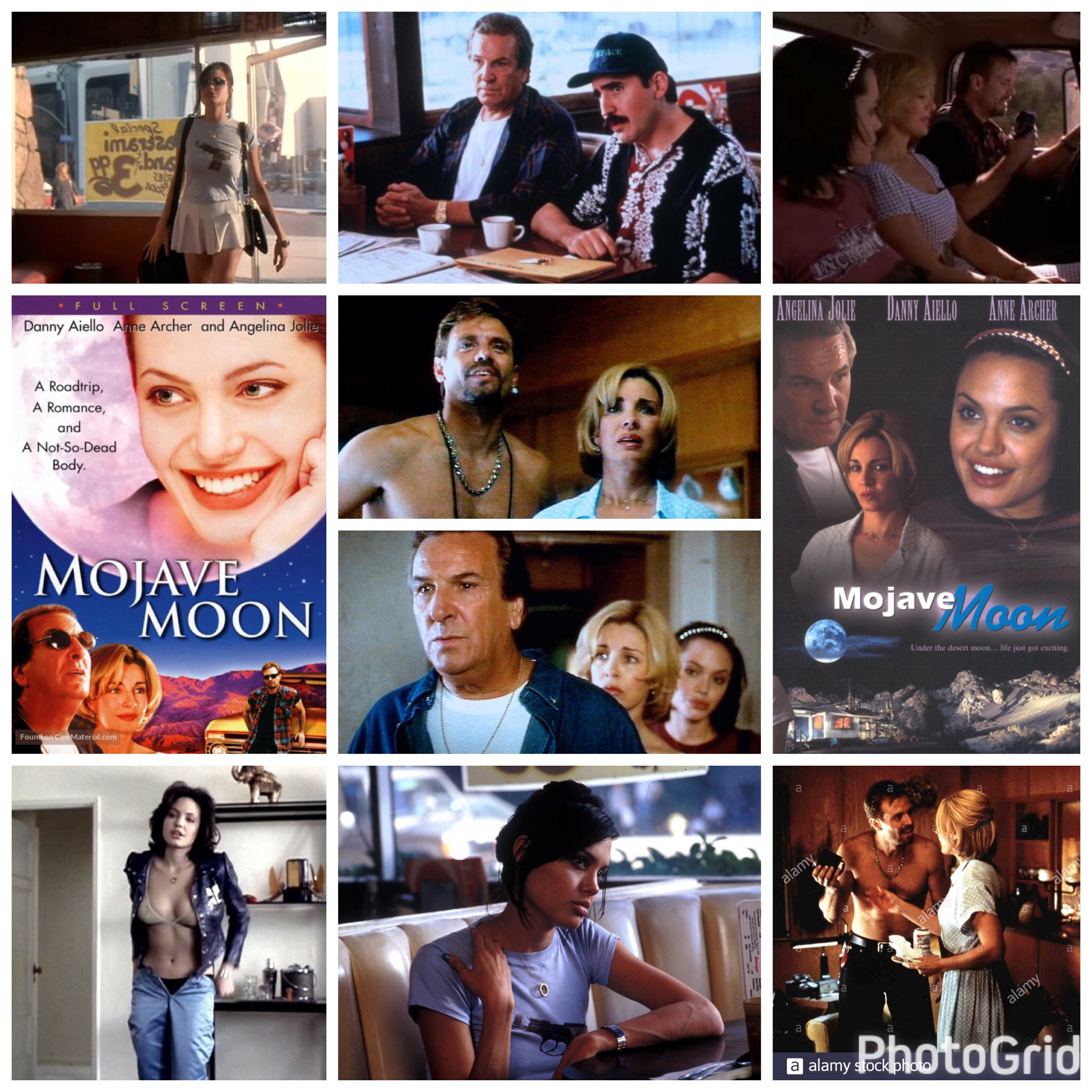
Before Angelina Jolie blew up front and centre, she got her start in some wild and wacky b movies and genre stuff, the weirdest of which has to be Mojave Moon. It’s one of those low rent flicks where not much of anything happens, the characters meander in and out of a non-story and almost everyone is completely nuts. ‘B movie dramedy’ I suppose would be the specific sub-genre. The ‘story’, as it were, follows drifter Al (Danny Aiello), who meets pretty young Ellie (Jolie) in a diner and hitches a ride out to the desert for seemingly no reason at all. As Ellie takes a shine to him, he begins to fall for her mother (Anne Archer). Only problem is, her mom has a boyfriend played by Michael Biehn who is quite possibly one of the weirdest characters I’ve ever seen in a film. Volatile, berserkly unstable and constantly in near hysteria mode, it’s an odd performance that off-sets the quirky tone straight into the twilight zone. That seems to be the idea here though, the dreamy desert climate having a strange effect on these folks, causing all kinds of outrageous behaviour and scenarios. The town offers a rogue’s gallery of characters including Michael Berryman, Alfred Molina, Jack Noseworthy, Peter Macnicol, John Getz, Michael Massee and others, all of whom don’t really do much other than show up, act weird for a bit and then wander off again. I like this type of film though, purposeless other than to languish about with characters who don’t want much, their arcs sputtering in a flatline of small town doldrums and behaviour that only makes sense to them. It’s not for everyone, which is why no one really gives credit to this stuff, but it’s enjoyable once in a while, when you’re in as strange a mood as the residents of this one horse sideshow of a town. 

-Nate Hill

B Movie Glory: The Last Drop


Before The Monuments Men, there was a dopey little WWII art heist flick called The Last Drop. Alright, it’s a tenuous connection but they’re centred around the same idea: what better time for a heist than the fog of war? Well, chaos is indeed the name of the game with this scrappy, obviously low budget barrel of fun, both in terms of setting and the film itself. The cast is the main draw, as is always the case with B movies.. without a few names, some veteran charisma, pieces like this would just be bereft of any value. Well they got Michael Madsen, because every movie needs a Michael Madsen, getting more screen-time than usual here as an American military honcho on the hunt for some priceless works of art that have gone missing from Berlin. It’s pretty much just a European wartime Rat Race, with various factions scrambling to find the loot and not get killed along the way. A platoon of Brits blunders across Holland, led by Sean Pertwee and including Tommy ‘Chibs’ Flanagan, Nick Moran, Rafe Spall, Alexander Skarsgard and more. A volatile German double agent (intense Karel Roden) pursues them all. Oh yeah, and Billy Zane calmly and deliberately poses for the camera as a Yankee operative with a fetish for wistful wartime romance, being as weird as Zane ever was. It all doesn’t make a ton of sense or add up to anything much at all, but it’s B movie bliss, and honestly I’d willingly watch this cast install drywall for ninety minutes, so one can’t complain about a silly little war flick that’s a bit rough around the edges. Good times. 

-Nate Hill

MEL GIBSON’S HACKSAW RIDGE — A REVIEW BY NICK CLEMENT

1

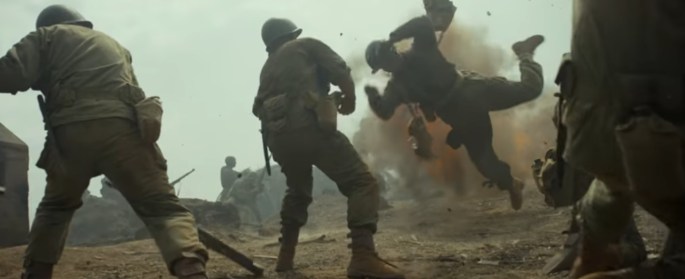
Mel Gibson’s unsurprisingly savage WWII film Hacksaw Ridge delivers the fiery-action goods. I was definitely impressed by the wild stunt work and some of the individual bits of action, and it’s truly lunatic/nuts of conscientious objector Desmond Doss to have done what he did in real life. The religious angle, thankfully, isn’t hit too hard on the nose, which was a surprise; the trailers were very off-putting in this regard and the movie just presents the facts as the facts – this guy just didn’t feel like killing anyone, but had it in him to save other people’s lives. Good on him. A bit insane to contemplate given the battlefield circumstances, but he’s certainly a “hero” in the squarest sense of the word. The movie is pleasurably old-fashioned and very familiar in the early stretches, some of the dialogue exchanges are corny (perhaps intentionally? it’s even sort of commented on mid-film…), and the scenes at basic training are very “seen it before” but Vince Vaughn clearly had some fun with his salty dialogue. But when the combat footage kicks in, Mad Mel went all out, really showing some savage and grotesque battlefield atrocities with tons of blood and explosions and lost-limbs.

2

Andrew Garfield is a very specific actor and his whiny vocal tone and lanky physical characteristics sometimes make it a challenge to fit with the material, but in Hacksaw Ridge, he showed grit and brawn in a way not previously seen. None of the film ever felt new or groundbreaking, but rather, it’s a solidly told war film that rose above the preachy and mildly embarrassing trailers. Teresa Palmer is also very, very photogenic. But it’s the action and stunt work in this film that I’ll remember the most, with tons of people getting lit on fire and blown backwards from grenades and mortars; I really don’t get how that stuff is done with any sense of true safety as most of the action felt very “done for real.” Also, annoyingly, there are some chintzy moments of odd CGI and process-shots; I hate that crap so thankfully it was kept to a minimum, with on-location shooting and practical effects ruling the day. Overall, the film looks frequently stunning thanks to cinematographer Simon Duggan and will definitely satisfy fans of the war genre. Listen – there’s no doubt that Gibson has some incredibly intense personal demons (as do many of us…) that he’s likely still wrestling with, but as he demonstrates time after time, he’s a helluva filmmaker.

3

The Pang Brother’s ReCycle


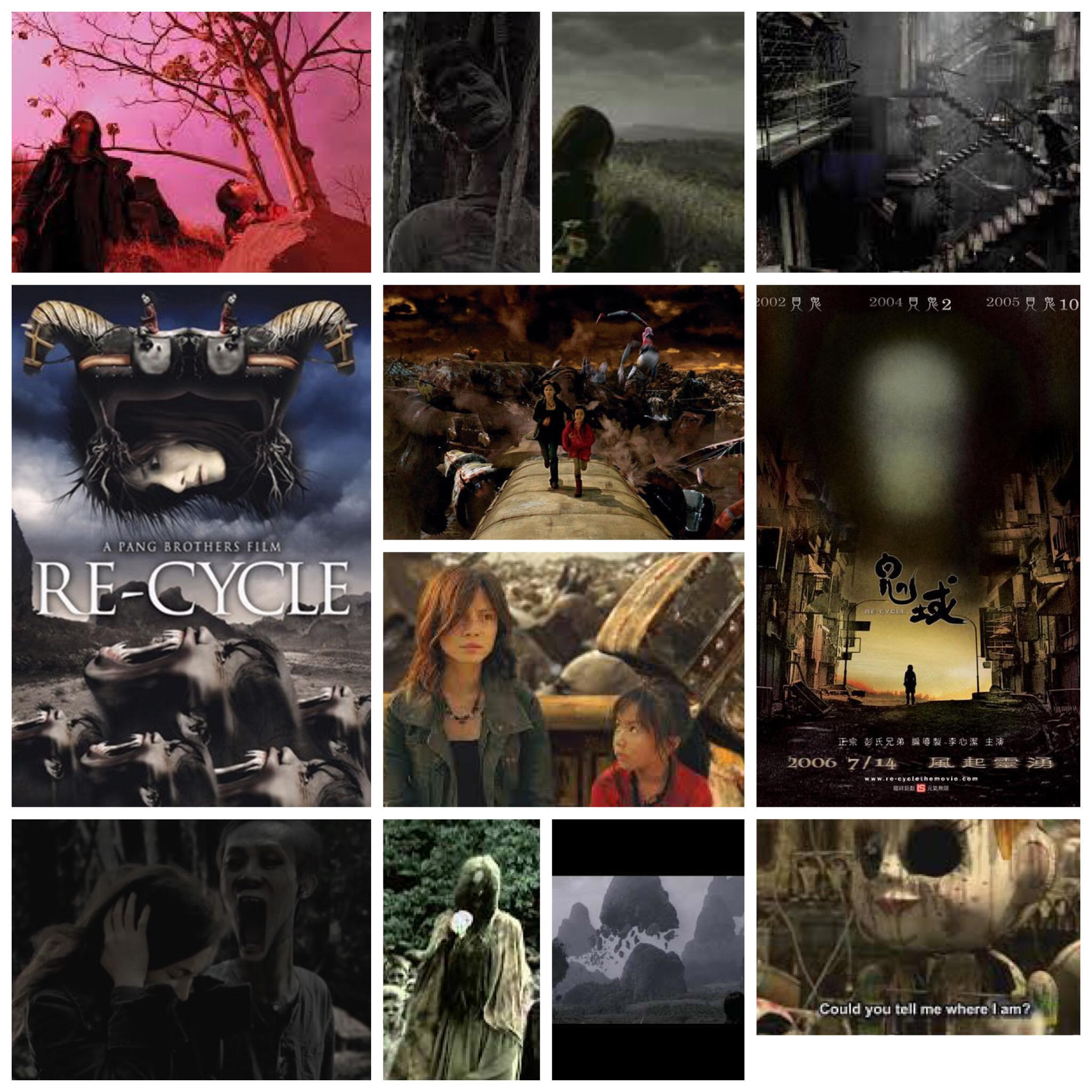
What do you get if you take a mixing bowl and toss in The Cell, The Grudge, some Stephen King, Alice In Wonderland, The Lovely Bones and a not-too-subtle anti abortion message? You get ReCycle, a visually unbelievable, absolutely terrifying, boundlessly imaginative Chinese horror fantasy that no one saw, got overlooked to the max, and occupies an eternal spot in my DVD collection. Novelist Tsui (The Eye’s Anjelica Lee) is suffering from writer’s block following two bestsellers, expected by her publisher to churn out another one posthaste. Plagued at first by paranormal visions in her apartment, she’s suddenly thrown headlong into the otherworldly dimension of ReCycle, a place that can turn from beautiful to hellish and back again within minutes. Picture a surreal, abstract realm where everything that’s ever lost, forgotten or abandoned ends up, thrown together in a gorgeous but threatening dream world with various levels, planes and passages, seemingly endless and never predictable. The dead also reside here, as she soon learns, some of which don’t take kindly to intruders and can be pretty volatile. Forced to flee from one area of the realm to others and beyond, she’s joined by the spirit of a lost little girl, and put through one hell of time trying to find her way out. Included are dilapidated, haunted amusement parks, fields and mountains that extend for millions of miles, eerie forests where the ghosts of hanged prisoners leer out at them, vast crumbling cities, acres of forgotten children’s toys and in the film’s most wtf sequence, a giant gooey room filled with aborted fetuses that spring to life and slime anyone within reach. That’s right, the filmmakers aren’t really subtle with their pro-life sentiment, especially near the end, but as long as you can get past that, the rest is all incredible. The sheer scope of the film commands attention though, and anyone who daydreams or lets their imagination run wild will get an absolute kick out of it. It’s kind of like the world’s weirdest video game in cinematic form, structured like a play-through but given all the disorienting unease of your worst nightmare. 

-Nate Hill

Review of THE ASSIGNMENT

Michelle Rodriguez, Sigourney Weaver, Tony Shalhoub, Caitlin Gerard, Anthony LaPaglia. Directed by Walter Hill. Rated R. 95 minutes. 2017.

Walter Hill’s The Assignment is interesting to observe as a movie whose foundation is built upon a premise of obvious misguidedness but that ultimately doesn’t do anything with said premise. Much will be and has been made about that premise, but we’ll get there in a second. It’s worth some build-up, too, because this is a movie that will strike at a primal nerve within a certain, underserved part of the marginalized community in our country (and those abroad who might see it). It is also a movie that leads into a second half that is only notable for how uninteresting it is, especially in the wake of a first act that is, certainly, quite interesting. It’s a film quite literally of two halves – of a first that is off-putting in ways that are constantly being discovered by the viewer and of a second that settles into a stale routine. It gets better as it becomes more familiar.

Now let’s get to the premise, because that’s the thing that will embroil and has embroiled the film in controversy leading to its release: Michelle Rodriguez plays Frank Kitchen, a male assassin who is “punished” with forced gender reassignment surgery after a hit ended up being personal for our primary antagonist. That would be Dr. Rachel Kay (Sigourney Weaver), whose motivation is almost entirely indecipherable, even after she lays it out in a speech. Much of her screen time is spent with Dr. Ralph Galen (Tony Shalhoub), who performs psychoanalysis that seems completely useless. The plot has Frank finding and revenging himself upon the people who made him into a woman, and yes, it seems prudent to misgender intentionally a character who spends the duration wanting to get back to his ideal self.

That’s the trickiest element of Hill’s screenplay (co-written by Denis Hamill): The desire to retain the simple compassion of referring to the correct gender of a transgender male-to-female person (which, for the uninitiated, is by way of “she/her” pronouns) is at constant odds with a plot that expends a lot of energy upon believing that a forced transition like this is a fate merely a step above death on the scale of desirability. It’s even stranger given the casting of Rodriguez, even if this is the only actress who could pull off a role this tricky. Rodriguez does a serviceable job, both in the early segments of the film as a man (Yes, we get a series of close-ups involving Frank’s manhood, both of the physiology and in the throes of passion) and after the reassignment surgery. The problem is the character, who remains in the service of mercenary killings and ceases to be interesting as soon as he gets over the shock of having breasts, a vagina, and a lot of hormonal supplements to take.

That’s when the plot proper kicks in, and it’s hard to imagine that the screenplay could withstand much more expository dialogue than what this film has in store for its viewers. Almost every sentence is an establishing declaration of the plot’s forward movement, and there’s really nothing here that’s of much interest: Frank follows the bread crumbs straight to each of the people on crime boss “Honest John” Baconian’s (Anthony LaPaglia) payroll, then faces down the good doctor in a final ten minutes that seems rushed to conclude all of the various subplots, which also include a romance of sorts for Frank with a nurse named Johnnie (Caitlin Gerard). It’s really not very involving stuff, although the weird case of this stretch of The Assignment being better than what came before is complicated by the fact that, before this stretch, at least something interesting was happening.

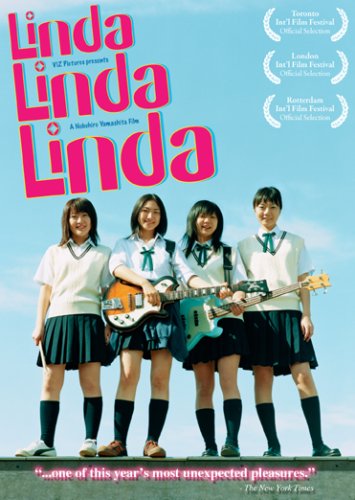
LINDA, LINDA, LINDA — A REVIEW BY GUEST CRITIC/FILMMAKER DAMIAN K. LAHEY

LindaLindaLindaPoster

Linda, Linda, Linda (2005) dir. Nobuhiro Yamashita


This film centers around a group of high school girls who have three days to put together a band to perform at their school’s cultural festival after their lead guitarist and singer quit. The spunky narrative hums along vibrantly as the girls struggle to get their band together for the big event. Yamashita does a tremendous job of evoking the raw emotions of the high school experience. And has so much fun with them. The anxiety of love, the anxiety of fitting in, the anxiety of needing to achieve – it’s all there. Being an art school brat, this story resonates with me more than others. The best high school movies, like Kazan’s ‘Splendor In The Grass’ and Lucas’ ‘American Graffiti’ for example, pull off the tricky job of portraying the experience as it happened in the moment and also how it would become once filtered by the passage of time. I believe Yamashita accomplishes this here. This film is also shot and paced in a timeless manner. It’s not loaded down with the gimmicky editing tricks or the over stylized camera moves of its time.


Doona Bae’s breakout performance is one of foppish uncertainty and well timed awkwardness. But she’s a team player. Like the band in the film she knows she’ll only look good if she lets the others shine as well. This is not only one of the best films I have ever seen but also one of the best theatrical experiences I have ever had. I had the honor of having my work screened as part of the Rotterdam International Film Festival in 2005. An unforgettable time. I saw many films and met incredible people from all over the world. But sitting there in the theater with a multi-cultural audience and watching this film was a different kind of magic. This was the first time that I really became aware of how connected the human experience is. I was in the Netherlands watching a Japanese high school pop punk flick with people from Russia, Iraq, France, China…and the themes of the film were universal to everyone sitting in that theater. I became acutely aware of how so many people rob themselves of enriched lives by never watching or reading the works of other cultures and never discovering how really alike we all really are in this world. It is that collective experience that holds us together and ultimately what can save us. But only if we embrace it. When the girls took the stage at the end of the film and tore through the Blue Hearts’ hit single ‘Linda, Linda’, Linda’ like they wrote it themselves the audience cheered and I cried because it was all too much and I’m totally cool with people knowing that.

LindaLindaLinda2


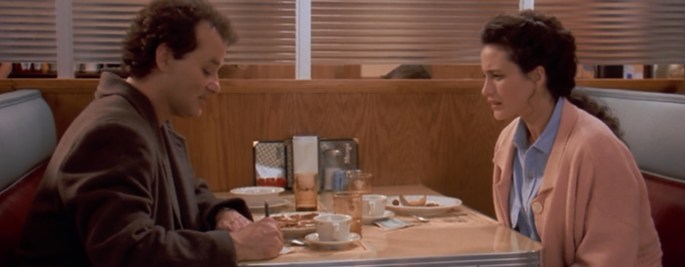
HAROLD RAMIS’ GROUNDHOG DAY — A REVIEW BY NICK CLEMENT

3

One of my favorite comedies, the immortal Groundhog Day feels like the sort of studio-crafted entertainment that would be hard to replicate these days. Directed by Harold Ramis, who co-wrote with Danny Rubin, this 1993 offering was a big box-office hit and critical favorite, with Bill Murray turning in one his best and most playful performances as an egotistical Pennsylvania weatherman who is cosmically forced to relive the same day, over and over again, in order to be a better person and win over the woman he truly loves. Some might call this movie a high-concept stalker flick, and you wouldn’t be too far off, but because there’s nothing truly menacing on display in this family-friendly item, with Murray’s romantic wooing of Andie MacDowell coming off as sweet rather than salacious. The supporting cast is packed to the gills with character actors and familiar faces, while the dialogue is instantly quotable and often times extremely hilarious (“Don’t drive angry” and “Is it snowing in space?” are two of my favorites). I also think that this is a movie where repeated viewings are required to truly appreciate every single brilliant layer to this thoughtful, introspective, and hugely entertaining piece of work.

1

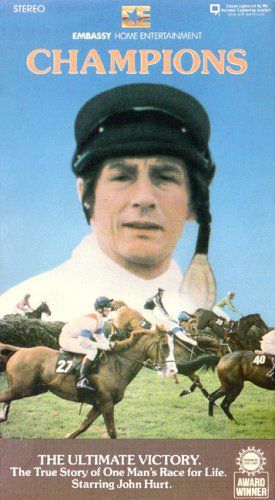
John Irvin’s CHAMPIONS


Champions19848639_f.jpg
Credit: Bizzaro World

John Irvin’s Champions (1984)


Champions isn’t your typical success story. It’s a rollercoaster ride of emotions, which the film delivers well.

It’s based on the true story of British jockey Bob Champion. The movie begins in the middle of Champion’s career, having already established himself as a successful jockey in the height of his career. While in the US on vacation, he starts to feel severe pains, and a trip to the doctor reveals that he has cancer. Champion endures agonizing treatment without a guarantee of success. He only has his ironclad will to help him survive and get back to doing what he loves the most – riding and racing.

Meanwhile, things aren’t looking great for his horse, Aldaniti either, after he sustained chronic leg injuries and was vetted not to race again. Aldaniti exhibits the same strong will as Champion, and with the help of his owners, trainer Josh Gifford, he recovers and gets back into racing shape.

The two, now sharing a common bond and the same level of courage, successfully enter and win The 1981 Grand National.

Champion was played by the magnificent Sir John Hurt (may he rest in peace), and his stellar performance earned him an Evening Standard British Film Award in 1985. To prepare for the role, he spent a lot of time with the real Bob Champion – The Guardian shared a photo of the two together in 1984.

Many of the supporting cast including Edward Woodward, Jan Francis, and Ben Johnson were all exceptional in the movie as well. The movie “grips the viewer from the start,” as described in a review by The Horse Studio.

The Grand National

The Grand National is an insanely tough race which makes their achievements that bit more memorable. The jump race totals roughly 7 kilometers and the fences are bigger than other steeplechase races, not to mention the open ditches. Due to its difficulty, there have been a number of horse fatalities either at the race or sometime later as a result of injuries sustained on the Aintree track. There have also been jockeys who have suffered serious injuries, too.

On the flipside though, that handicap is also what gives the race its grandeur. It takes serious skill to cross the finish line, and that in itself is already an achievement. This led to the increasing popularity of The Grand National, and the festival grew so much over the years, it has become one of the most high-profile horse racing events in the world. Approximately 600 million viewers tune in to watch the race annually.

Betting is also a major component of the occasion, with even casual spectators joining in. A post from The Conversation mentioned that 2 out of every 3 adults in the UK bet on the race, many of whom only do so when The Grand National takes place and not for any other race in the year.

The same happens in other countries too, which is why analysts have begun to offer their projections through up-to-the-minute race previews. World renowned trainer Paul Nicholls is a regular columnist for Grand National Daily Tipping on Betfair and his previews of the race have won many awards over the years for their meticulous nature, not to mention accurate forecasts. Nicholls’ columns are just an example of how digital content supports The Grand National and its lead-up to the big race. They also help garner the race a huge audience across the globe, and this is why it’s been in a league of its own since the 80s.

With all that established, it’s easy to understand how big the stakes were for our two warriors. In the year when Bob Champion and Aldaniti emerged as the victors, only 12 out of the 40 contenders finished the race. And to think that both of them had just overcome major health problems to win The Grand National was impressive, to say the least. Stories like that rarely play out in a positive manner. Champions is a wonderful film that can truly inspire you to persevere and achieve your dreams, no matter how big.

RAW

Raw

2017. Directed by Julia Ducournau.

hero_Raw-2017

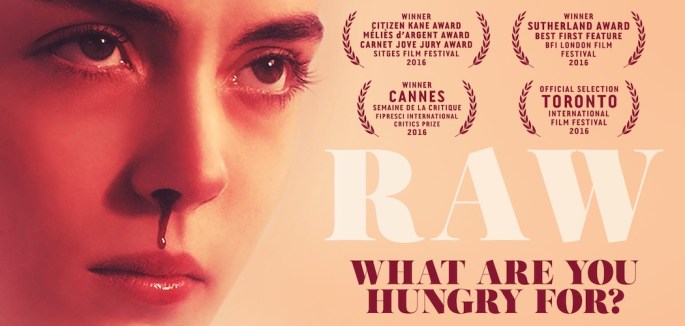
Julia Ducournau’s debut feature film masquerades as a cannibalistic horror thriller while exploring the psychological extremes of its protagonist’s sexual awakening in the dog eat dog erotic playground of a medical college.  Substance abuse and the curiosities of casual sex are blended with the sins of the parent to present a bloody parable about the dark side of nascent pubescent desires.

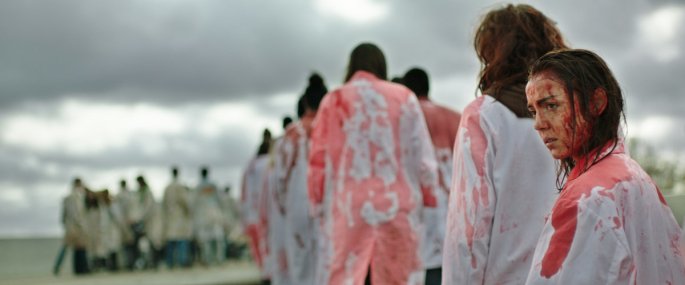
Justine is a vegetarian who is in her first week of veterinarian school.  After being forced to consume raw meat, she develops a taste for human flesh that sends her on a macabre odyssey of self-discovery.  Ducournau’s script is a brilliant convergence of conflicting themes that never overshadow one another.  From the first chilling scene, the viewer is drawn into Justine’s lucid daydream where the wonders of collegiate freedom are soiled by tides of animal blood summarily thrown onto the freshman by their social superiors.  What begins as a hazing ritual organically transforms into a culture of comradery and primal excess, punctuated by an animalistic sojourn made by the freshman as they crawl towards the neon Heaven of a vodka soaked soiree.  Justine’s transition to reluctant predator unfolds through a loosely structured morality play in which she defines her rivalry with her sultry older sister and her budding romance with her roommate.

raw-cannibal-movie-4

Sexuality, identity, and control are all on display, but Ducournau sidesteps the simple implications of these concepts through intense compositions and ominous colors.  Ruben Impens’ cinematography floods the night life of the campus with electric reds to highlight both the passion and disquiet of youthful hedonism, while using rustic blues and greens to simulate the adult world beyond the campus.  There’s a remarkable shot of Justine washing body paint off in the shower that acts as a bridge between the apparent danger and the undeniable power of self-acceptance.  Garance Marillier’s performance as Justine harnesses the potent elements at play to communicate a formidable aura of blossoming femininity, symbolized by an uncomfortable dance sequence involving a mirror.  Marillier is supported by Elle Rumpf as her confident sister and their chemistry is the heart of Raw, pinballing between violent rivalry and intimate confidants.

Ambiance is an essential ingredient.  It begins with Impens capturing Justine under the covers, itching and convulsing in a suffocating denial of tranquility and then briskly moves to Justine wandering lonely red corridors while Jim Williams’ creepy score oozes through the campus’s institutional aesthetic.  Laurie Colson’s art direction supports by presenting the school as an otherworldly place, caught between the liberty of self-absorption and the cold realities of adulthood.  There are moments of comedy sprinkled throughout, but even these are false sanctuaries, reminding the viewer that the beast must ultimately be fed.  This concept is first explored in the opening, and then later Ducornau “shows the monster”, explaining the nefarious details of a hunting ritual and its wanton casualness is a horror lover’s ambrosia.

hero_Raw-2017

In theaters now in limited release, and coming soon to digital on demand, Raw is a truly unique entry into the thriller genre.  It would be easy to categorize Raw as a traditional horror film; however this is a disservice to Ducournau’s work.  In the veins of Lynch, Ducournau elects to focus on the terrors of everyday life; the undeniable fears associated with the plight of a young girl becoming a woman.  This dovetails with a telegraphed commentary on the fool’s errand of parents who desperately try to keep their children from repeating their mistakes, which is delivered via a deliciously patronizing final line, cementing the film’s satire of the female’s plight in polite society

Highly.  Highly Recommend.

RAW-MOVIE-2016