Review of A UNITED KINGDOM

 David Oyelowo, Rosamund Pike, Jack Davenport, Tom Felton, Vusi Kunene. Directed by Amma Asante. Rated PG-13. 111 minutes. 2017.

It is important, first and foremost, to remember that film is a visual medium. It’s an obvious point to make about an art form that forces its consumer to view a series of rapidly moving photographs, but it is also important to remind oneself that, when it comes to relaying a true story through such a medium, the result must not simply coast on the extraordinary nature of its specifics. This is the trap into which Amma Asante’s A United Kingdom falls, unfortunately, for here is a film whose makers seem to have believed that the story they were telling was of more importance than their telling of the story. Even the broad subject matter is fascinating for the previously uninformed, such as myself, who had no idea of the marriage between the heir to an African king and a salesman’s daughter from London.

The heir is Seretse Khama (David Oyelowo, offering a fine performance that would make a good companion piece to the one he gave as Martin Luther King Jr.), and as his parents both died when he and his sister (Terry Pheto) were very young, Seretse is ready to take the throne of rule in the British protectorate of Bachuanaland (now known as Botswana) that was previously their grandfather’s. He is soon to return from London, where he has been completing his schooling, to assume his reign, but within the final months, he meets Ruth Williams (Rosamund Pike), who, unlike Seretse, doesn’t come from great wealth and is white. Their courtship is quick, and when he is faced with a return to his country without the woman with whom he has fallen in love, he asks her to marry him, much to the disapproval of his uncle (Vusi Kunene) and her parents (Nicholas Lyndhurst and Anastasia Hille). She, of course, says yes.

The situation is, to put it lightly, complicated, as it also turns out that neither the African regime nor the British government is approving of this union, especially after it is consummated. For the African tribe of which Seretse is meant to be king, it is a question of tradition: The wife of a king is also their queen, and they understandably see the rule of a white queen as another power move from colonialist England. For the British government, it is a question of decency: Sir Alistair Canning (Jack Davenport), the government’s liaison to South Africa, and Rufus Lancaster (Tom Felton), a commissioner, can barely remain discreet about his smug prejudice, which is shared by many whites among the upper class. For Seretse and Ruth, it is a question of love: Theirs for each other is undying, even in the face of such discrimination and a game of proverbial chess between countries.

The problem is that screenwriter Guy Hibbert, adapting a book by Susan Williams, doesn’t offer much insight here beyond what is on the page. Seretse and Ruth have an appropriate sweetness as a couple (Pike is also solid as Ruth, especially in moments when she realizes she has entered situations beyond her control), but they remain cyphers when treated individually. They are defined entirely by their roles as subjects of a biographical picture whose intent seems to be hitting the beats of the story without much to-do. There are scenes of individual power, such a pair of speeches given by Seretse that prove both his worthiness of a position of leadership and Oyelowo’s skill at delivering them, but the whole of A United Kingdom is too broadly drawn to garner much response beyond the kind that one has to the story it tells.


Review of LAND OF MINE

Roland Moller, Louis Hofmann, Joel Basman, Oskar Bokelmann, Mikkel Boe Folsgaard. Directed by Martin Zandvliet. Rated R. 100 minutes. 2017.

The men must scour the shore for landmines that their fellow soldiers laid down to trap the enemy. It is slow and grueling work, and the catch is that these are not actually men. Many of them are boys, these prisoners of war, and the hard men that lord over them care not a lick if they live or die. The sergeant says so, repeatedly, including after a bout of hunger in his workers and even when one of them catches ill, vomiting into the night and unable to stay awake for very long. The workers must use poles to prod the ground at intervals of roughly six inches, and the process to defuse the mines is simple in theory but unthinkably tense in practice. It’s a potentially hopeless life that is led by these young men in Martin Zandvliet’s Land of Mine, but the writer/director doesn’t wallow in it.

That’s an important achievement, because it means the characters are able to be and grow as characters, rather than needing to supply fodder for a message movie. This is, quite decisively and effectively, an anti-war polemic, but it doesn’t have the anger of the usual polemic. There are no blustering speeches raging against the System for sending these boys into a war they hardly understand. The situation is harrowing on its own terms, and it doesn’t need the burden of such acidic political statements. The realpolitik here is inherent in the story Zandvliet is telling, although the film does supply melodrama of a different kind by way of the story framing the situation. It loses some of its potency in those stretches, but that also matters less than it could have. The urgency is still present.

Some of the young men are essentially interchangeable, although a few of the interchangeable ones are afforded a personality trait (or, if they are lucky, two), such as one boy whose hands are so shaky we are never sure that he will survive. The job, after all, requires a steady hand. The ones who are not so interchangeable act as our entryway into the story. Sebastian (Louis Hofmann) wears a cross that reminds him a father whose fate he does not know, and he’s the one who readily stands up to their commanding officer on behalf of his brothers in arms. Helmut (Joel Basman) is the eldest and the makeshift leader of the young men, but his squirrelly attitude and conniving ways are a constant source of punishment for the whole group. There is a pair of twins, Ernst (Emil Belton) and Werner (Osker Belton), so one must only count the minutes until the pair are separated.

The commanding officer is Rasmussen (Roland Moller), and the focus on him is where the film occasionally stumbles. He begins with contempt for the boys, whom he sees as nothing more than another group of German soldiers worthy of death. “Better them than us,” says his own superior officer Jensen (Mikkel Boe Folsgaard), and Rasmussen’s look of concession to the point says it all. That sense of murderous superiority shifts quite radically, albeit slowly, when deaths occur (The craftsmanship in showing us the aftermath of a mine explosion is effective and somber, even after we start to expect it by way of a cleverly framed shot) and especially when Jensen abuses his power to humiliate the boys. The film essentially becomes another drama about a stern teacher who learns to warm to his students, although Moller’s performance is good enough that it doesn’t hurt the picture too much.

And that’s especially true when everything else is as effective as it is. The emotion might push a bit too hard in such scenes as a silly game of soccer, scored to some flowery compositions, but it’s a stark outlook elsewhere. Every scene in which the prisoners much go forth with their mission to find and defuse landmines is rich with tension and unpredictability. No character is safe here, and the stark presentation of the violence at hand is utterly compelling. Also effective are performances that, every one of them, are convincing and precise. There is not a single actor here that makes a misstep. The sense of focus in Land of Mine is less assured, but the drama is in the pitiable nature of a war that forces boys to fight as men and, if not fight, die without dignity.

Review of KONG: SKULL ISLAND

Tom Hiddleston, Samuel L. Jackson, Brie Larson, John C. Reilly, John Goodman. Directed by Jordan Vogt-Roberts. Rated PG-13. 118 minutes. 2017.

I hesitate to call Kong: Skull Island a “good” movie, for it is also a movie of undeniable idiocy that contains an ensemble of characters who are really just cutout cardboard figures in the path of the ape of the surtitle. To embrace its simple pleasures, though, one must disconnect with one’s own expectations of seeing a movie with Kong in it, for this is not really a traditional King Kong movie. It uses the character popularized by the 1933, 1976, and 2005 pictures (and the various sequels they might or might not have spawned) as a springboard for an ensemble-driven action-comedy that, if the post-credits stinger is to be believed, wishes to insert the eighth wonder of the world into a new cinematic universe. Whether that franchise has legs remains to be seen, but it’s also immaterial to this film, which is just a lot of expository build-up to a string of action sequences.

The human characters matter approximately none, but we are still offered an eccentric cast of them, played by an eccentric troupe of actors. There is the expedition group that leads the charge of the main narrative engine: John Goodman as Bill Randa, who heads an ultra-secret government group that wants to explore the untapped terrain of a recently discovered island, Corey Hawkins as Houston Brooks, the college kid confronted by Randa because of his theory that the earth holds secrets, and Tian Jang as San, who just kind of exists to echo Brooks’s confidence in his theory. They confront a military colonel to green-light their expedition, which of course involves also green-lighting a military escort, a tracker who can guide them through the muck of the island, and a photographer to capture the journey for scientific and journalistic purposes.

The military escort is led by Samuel L. Jackson as Preston Packard, a soldier fighting in Da Nang who believes the U.S. has abandoned the war in Vietnam when President Richard Nixon calls it off. He’s grateful for one last mission, even one as seemingly trivial as an escort for a scientific study, and spends the rest of the movie apparently feeling he is still in combat with the human enemy. His men, who are mostly interchangeable, are still played by the personality-driven likes of Toby Kebbell, Jason Mitchell, Shea Whigham, Thomas Mann, and Eugene Cordero. Tom Hiddleston is James Conrad, the tracker in question, and Brie Larson is Mason Weaver, a photojournalist who passes up the cover of a popular magazine to tag along on something historic.

That seems like a lot of introduction to characters that, this review claims, don’t matter, but that’s also all the introduction we get. They are cutout cardboard stand-ins for the audience, with the exception of John C. Reilly, who is boatloads of fun when he shows up as Hank Marlow, a WWII veteran who was marooned on the island of the subtitle before his deployment ended. The real story of the movie kicks in when they reach the island. They encounter Kong (whose movements are provided by Kebbell via motion-capture) immediately in a superbly mounted scene of controlled chaos in which Kong considers the helicopters in which they arrive to be nothing more than giant gnats. The beast isn’t so much a tragic one here, though, as a territorial one, even more so when the interfering humans awaken the creatures that reside underground: They are fearsome beasties – giant lizards with lots of teeth.

There are yet more monsters on this island, such as an inexplicable cross between a bison and a leviathan or a far less mysterious arachnid with bamboo legs. The spectacle here is enormous and infectious, with screenwriters Dan Gilroy, Max Borenstein, and Derek Connelly keeping the tone light while director Jordan Vogt-Roberts approaches the genuinely berserk action violence with as much aplomb as anyone has recently. The film exists for the sole purpose of witnessing various evolutionary nightmares do battle and seeing foolish humans come between them. It’s all very inconsequential, frequently dumb-as-rocks, and almost exclusively successful in a way that requires one immediately discard one’s brain at the door, but Kong: Skull Island works, and it works because it knows it is all of these things. Sometimes, good-enough is good enough.

STEVEN SPIELBERG’S CATCH ME IF YOU CAN — A REVIEW BY NICK CLEMENT

2

Lighthearted, spirited, and undeniably charming, Catch Me If You Can is easily one of Steven Spielberg’s most purely entertaining films, and it’s a work that I find to be hugely re-watchable and always a pleasure to behold. Leonardo DiCaprio was light on his feet in a way that feels very far removed from his more recent performances, taking on the role of a notorious conman whose exploits seem too impossible to be true. The based on a true story narrative is extremely well calibrated, with screenwriter Jeff Nathanson effortlessly blending family dynamics, chase-film elements, con-artistry, various love interests and side-plots, and two, off-beat, father-son relationships that stretch between DiCaprio and his dad, warmly played by Christopher Walken with twinges of sadness in-between the margins, and Tom Hanks, as the FBI agent who doggedly pursues the young criminal as he hitches free rides on planes and cashes his own perfectly forged checks. There isn’t one aspect to this film I’m not enamored with, between the jaunty John Williams score to the gorgeous cinematography from Janusz Kaminiski, and then there’s that amazing opening title sequence, Michael Kahn’s peppy editing, and that ridiculous supporting cast. This movie is pure fun and yet another reminder of how generous and loving The Beard can be as a storyteller.

4

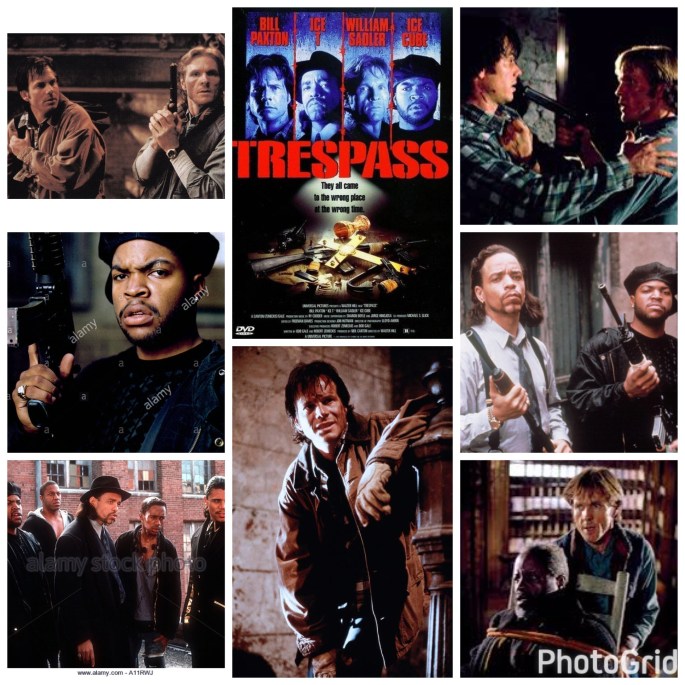
Walter Hill’s Trespass


Walter Hill’s Trespass could raise a pulse in a quiet graveyard, it’s so relentless. It’s one of those single location, breathless siege thrillers where two unlucky dudes, this time Bill Paxton and William Sadler, are barricaded in some unfortunate building while hordes of inner city criminals try to smoke them out. Billy and Willy are two firemen in the wrongest of places at the wrongest of times, led to a dilapidated St. Louis warehouse in search of a hidden cache of stolen gold. When one of them stumbles into a gangland assassination, the two are immediately branded as witnesses and hinted like dogs by boss King James (a snarling Ice-T), his lieutenant Savon (Ice Cube) and armies of their men. That’s pretty much the premise, and simple as it is, action maestro Hill turns it into a ballistic bloodbath that barely slows down for a second once it gets going. Paxton and Sadler are soon at each other’s throats in a feverish haze of adrenaline, whilst the two Ices argue amongst themselves about tactical logistics. Yelling, shooting, running, borderline parkour, cat and mouse games, beloved 90’s action tropes and fight scenes that almost wind the audience as much as the characters. This is a lean cut of a film, concerned only with thrilling the pants off the viewer, hurtling by at a locomotive’s pace without rest until that final shell casing hits the pavement. 
-Nate Hill

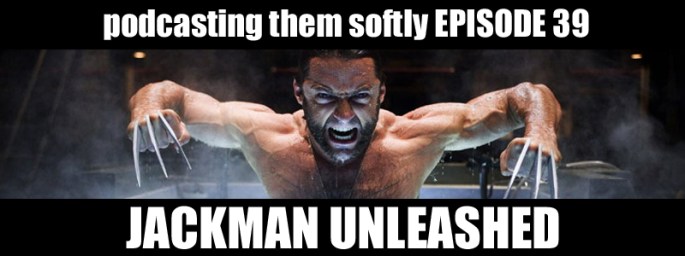
Episode 38: JACKMAN UNLEASHED

39

This is a big episode for a few reasons.  No, we didn’t get to talk to Hugh Jackman, but joining Frank is an array of PTS contributors: Joel Copling, Kyle Jonathan, and Ben Cahlamer.  We spend an hour discussing James Mangold’s LOGAN, Hugh Jackman’s seventeen year; seven-year span playing Wolverine, and an overall assessment of Hugh Jackman’s filmography!  We hope you enjoy!

DAVID CHASE’S NOT FADE AWAY

1

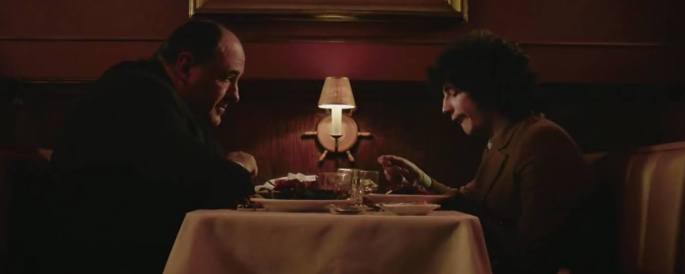
Totally buried by Paramount Vantage at the end of 2012, David Chase’s Not Fade Away is a funny and nostalgic time portal back to the 60’s, with a fantastic soundtrack, and a killer supporting performance from James Gandolfini. While the film possibly feels incomplete (I really would love to see a miniseries that picks up right after the events of the final scene), it’s yet another reminder of how well-observed Chase is as a storyteller, and how he really needs to be doing more work. The dialogue is sharp as a tack and I loved the freewheeling, almost rambling quality to Not Fade Away’s narrative. Bella Heathcote is positively alluring as Grace, the object of desire for eager musician Douglas, played with sensitivity by John Magaro, who with his buddies has dreams of making it big as a Beatles-inspired musical act. Gandolfini is Douglas’s extremely disapproving father who doesn’t understand the “noise” that his long haired son is creating in the garage.

2

There’s an excellent sense of time and place in Not Fade Away, and you get the feeling that Chase really knows these characters. If only he had been given a bit more time to tell the story (I wouldn’t be surprised to learn that stuff was left on the cutting room floor) because while what we’re left with is strong and enjoyable, there were times that I felt like it could have been even more expansive and thematically probing. Still, great music, solid performances, Heathcote and Gandolfini steal the show, and really nice cinematography from Eigil Bryld (House of Cards, In Bruges). After debuting at the NY Film Festival, this $20 million production would go on to gross less than $1 million in a shamefully small release, and while critics were mostly kind, people underrated this one a bit; it didn’t deserve to die on the vine without anyone even knowing that it was an option. Not Fade Away is available on Blu-ray and via various streaming providers.

3


Walter Hill’s Tomboy: A Revenger’s Tale


Walter Hill’s Tomboy: A Revenger’s tale went through a few different titles, first Tomboy, then (Re)assignment, and has been quietly released this week under the simple and bland ‘The Assignment’, which tells you nothing of how batshit crazy it is. It’s a film I’ve waited to see a long time, partly due to its controversial, bizarre premise (it’s been boycotted already), and partly because it marks the return of action guru of yesteryear, the great Walter Hill. I’m sad to say the final product is somewhat underwhelming, aside from a few key elements that shine through the dour mood, the best being star Michelle Rodriguez, in her first leading role since 2000’s Girlfight. Here she plays Frank Kitchen, a scumbag of an assassin who takes his orders from wiseguy mobster ‘Honest John’ (Anthony Lapaglia, quite fun in the film’s only other decent performance). Frank is a creature of brutal instinct, a street rat and cold blooded killer with a taste for bullets, booze and blonde bimbos, basically the finer things in life. So, Michelle Rodriguez as a man. This could have gone either way, and she herself, always having a somewhat masculine presence anyway, does fairly well. She can only do so much with the makeup and prosthetics she’s given though, and let me tell you, they are horrendous. Sporting a ponytail, goat’s pube beard and plastic looking Ken doll torso, she’s a shining beacon of amateur hour from the effects team, for the first third of the film, impossible to believe as a dude. Anywho, ‘Honest’ John proves to be anything but trustworthy, double-crossing our Frank and delivering him into the hands of a rogue plastic surgeon played laughably by Sigourney Weaver, who has quite the bone to pick with him. Here is where it gets nuts: Weaver forcibly performs a gender reassignment surgery on Frank, turning him into a woman to release him from his ‘macho prison’. Frank wakes up with brand new lady parts, the prosthetics all gone and Michelle in her final form, ready to dole out vengeance on both John and the surgeon. This is all told in retrospect of course, as Weaver sits in a padded cell and blathers on and on to a wormy psychiatrist (Tony Shaloub), about the philosophical nature, the lofty how’s and why’s that fuelled her actions, while the audience is sitting there going, “Nah bitch you just crazy.” It’s all the sleaziest fare, and doesn’t work as well as a premise like this should, but there’s something about the gritty sight of a post surgery Michelle wandering around in a hospital gown, tits loose and waving a gun around that has potential and may have done well in a better film. As far as the concept itself goes, anyone who arches their back or (lol) boycotts this film is expending unnecessary energy; it’s a down n’ dirty B movie throughout, never meant to be taken seriously one bit. It’s just a shame it wasn’t more fun. 
-Nate Hill

I Don’t Feel at Home in This World Anymore

I Don’t Feel at Home in This World Anymore

2017.  Directed by Macon Blair.

i-dont-feel-at-home-in-this-world-anymore-elijah-wood-melanie-lynksyd870f71_o-1200x520

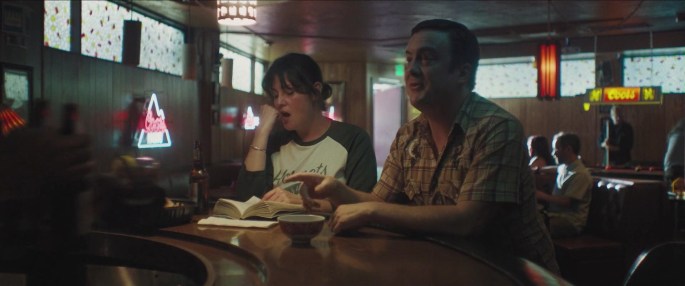
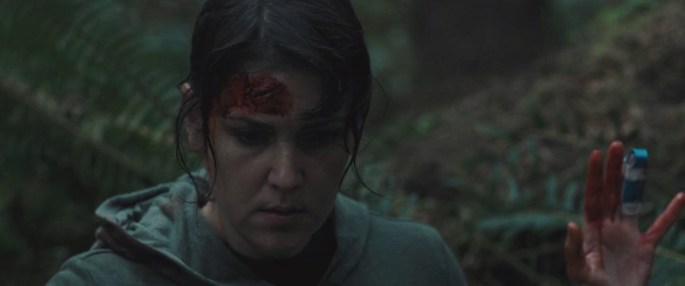
The casualty of self absorption is often common courtesy, with the hallmarks of charity being forsaken on the altar of fast paced living.  Macon Blair’s pugnacious directorial debut, I Don’t Feel at Home in This World Anymore frames the grand questions of existence in a bluesy package, filled with inept criminal mayhem, a twisting nosedive into violence, and an endearing pair of performances by its two leading actors.

Melanie Lynskey’s central performance is both a totemic representation of the ignored and exploited and a cheer inducing portrayal of a woman who finally hits her limit.  The story revolves around a depressed nurse whose breaking point involves a peculiar robbery that leads her on a mission of revenge that rapidly spirals out of control.  Lumet’s Network is anchored by Peter Finch’s televised dissent in a post Watergate world, while Lynskey’s medicated ferocity is the perfect satirical remedy for the digital age.  Comparisons with the Coen Brothers are unavoidable, as the entire premise hinges upon normal people becoming involved in extraordinary circumstances, however Lynskey’s wry understanding of Blair’s surprisingly poignant script is sensational.  She is the person in the express lane who complains out loud when someone pulls out a checkbook.  She is the rage in your head when someone won’t pull forward enough to let you get into the turn lane.  She is the sum of every real and imagined sleight that we endure on a daily basis, and she is the viewer, a deeply flawed human who has the possibility for greatness.  Lynskey is a spinning wheel of emotional resonance blending the sadness of insatiable anger and the unmistakable satisfaction of doing the right thing, regardless of the cost.

22K2EQC

Elijah Wood supports as a quirky, Kung Fu wielding neighbor who balances the furnace of his personal anger with the calm of shared spirituality.  His chemistry with Lynskey is a platonic oddity, a potent ingredient for the bizarre microcosm on display,  Jane Levy (Don’t Breathe) has a dark turn as a trailer park disciple that keeps the roiling narrative grounded in the dangerous plausibility of a caper gone wrong.  This is the essence of I Don’t Feel at Home in This World Anymore.  The unfettered bliss of finally lashing out at the world always ends and reality has a nasty way of reminding you how important your normality is.  This concept is enhanced  by Brooke and Will Blair’s soundtrack that offsets the humor with deep, brooding tones which hold the promise of the violence to come.

Larkin Seiple’s cinematography has a dime store quality that is perfectly at home in the world Blair has created around his criminal miscreants and Samaritans gone awry.  Grungy blues and exhausted browns flood the screen, while shadowy, reverse shots in doorways put the impending malice on display.  The deep greens of the Oregonian wilderness are shot with interesting light combinations that enrich the mysterious idea of providence that hangs over the final act.  Everything is detached, with even the film’s most endearing moments framed at arm’s length.  On the surface this film says go away, but beyond the bellicose presentation lies a warm fable about loving oneself that is undeniably inviting.

64fc4a68efb9ea9c9241b75c44322dbe

Available on Netflix now, I Don’t Feel at Home in This World Anymore won the Grand Jury prize at the Sundance Film Festival.  This is a film that is not for everyone.  Its characters are extremely odd (making them even more human) and the plot borders on fantastical, turning the dials of the crime genre on their head, displaying the misfit backyard of Macon Blair’s mischievous subconscious, a place I am eager to return to.  If you’re looking for a film that will make you laugh and cringe in equal amounts, all the while reminding you of the importance of contentedness, this will not disappoint.

Highly Recommend.

athomemain

James Cameron’s Aliens 


Each of the four Alien films has their own distinct and noticeable personalities. Ridley Scott’s original creeping horror show is a tense, streamlined, gracefully vicious film that slinks along at its own pace, not unlike the resident feline Jonesy who wondered about on the spaceship Nostromo back then. If Alien has the qualities of a cat, James Cameron’s Aliens has those of a rambunctious puppy dog, a rip snortin, go get em action backyard barbecue knockout that runs up and gives the audience a big wet slimy kiss. All animal metaphors aside (I’m running out of oh-so-clever ways to open my reviews, ok? Been at this shit for two years now), Cameron’s film is an undisputed classic, still jaw dropping to this day, even after what feels like hundreds of viewings, nostalgic yet fresh in different ways every time, and simply one of the best films ever made. It’s the gold standard for creature feature sci fi too, and while many argue whether or not it in fact outdid Scott’s original white knuckler, I can’t bring myself to be petty and pick favourites out of the quadrilogy, I love them all for a whole bunch of reasons. Aliens picks up quite a while after the catastrophic events of the first, with Ripley floating around in that cryo-pod for way too long, until she happens to cruise past earth, crossing the vision of the Weyland/Yutani corporation once again. Because they always make astute, well thought out choices, they decide to send a research team, accompanied by a very reluctant Ripley and a group of hoo-rah, bull in a China shop colonial marines to far off industrial exomoon LV-426, where they have lost communication with the settlers. After a brief, clammy build up, all hell breaks loose, and we get to see the full impressive extent of Cameron’s skill as a visual storyteller, as well as the oh-so-gooey, inspire practical effects work that brings those gorgeous Xenomorph beauties to snarling life. The cast is the epitome of badass, as we are constantly reminded of by Bill Paxton’s Hudson, the film’s resident squirrel who gets hilariously skittish when things get dicey (“game over, man!” Will never not out a big, Paxton sized grin on my face), but who heroically holds his own once he gets his sillies out. The other side of that coin is Corporal Dwayne Hicks (Michael Biehn, never slicker), cool as ice, shaken by nothing, including an atmosphere entry landing that would make Alfonso Cuaron pee himself, but doesn’t come close to disturbing Hick’s afternoon nap. Every Alien team must have an artificial human, some of which are trustworthy, and some not. Lance Henriksen’s Bishop is as solid as they come, never losing his head (despite being reduced to a puddle of spilt dairy product) and sticking by Ripley’s side until the bitter, hectic end. Ripley herself is a little older, a little wiser and a lot tougher, her intensity calcified into grit after losing her daughter, and given somewhat of a surrogate in the form of Newt (Carrie Henn) an orphaned child who has survived months living like a rodent in the air ducts. “They mostly come at night… mostly” she eerily warns Ripley. Oh boy, do they ever. LV-426 is positively teeming with them, and they show up to provide speaker shattering, pixel scattering action like only Cameron can do. The facehugger in the room sequence is still one of the most terrifying sequences in any film, and serves to make you hate Weyland weasel Burke (Paul Reiser) with that deep loathing reserved for the scummiest traitors in film. The final thirty minutes of the film are a showcase of action cinema, and it’s amazing to think they pulled off the Queen fight without any cgi back then, a slam-bang marvel of a climax that fires on a thousand cylinders, and to this day has never been topped. That goes for the film too. It’s *the* action sci-fi film, and as close to perfection as you can get.  
-Nate Hill