Jackman Unleashed Week: Gavin Hood’s X-MEN ORIGINS: WOLVERINE

The idea behind this film was to franchise origin stories, including a Magneto film that turned into a soft reboot of the X-Men films with FIRST CLASS.  We were also supposed to get a solo Gambit film that is still currently in development limbo, and a Deadpool film with Ryan Reynolds that eventually took seven years to get off the ground.  What ended up happening was an unintentional Wolverine trilogy.

Related image

This film has some major flaws and is an imperfect picture.  The two sequels, THE WOLVERINE and LOGAN, remain superior films to this, yet Origins still remains my favorite Wolverine film warts and all.  The X-Men franchise has never taken continuity into consideration.  Actors were recast in important roles, most notably in this film Danny Huston as William Stryker and Liev Schreiber as Victor Creed/Sabertooth.  Timelines get blurred, especially after the hard franchise reboot of DAYS OF FUTURE PAST, and what ends up happening is reinvented origins for Wolverine.  Basically, the takeaway here is that the timeline continuity of the X-MEN films is almost as confusing as the TERMINATOR saga.

What saves this film for absolute failure are two important factors and why this remains my favorite Wolverine centered film.  Firstly, the opening credits sequence is phenomenal.   Spanning the course of every major American war from The Civil War to Vietnam we watch Jackman and Scheiber, brothers in arms, relentlessly fighting and almost single-handedly winning each war for America.  As the wars rage on, Logan observes and acknowledges Creed’s bloodlust and morality eroding.

Image result for liev schreiber victor creed

Secondly, which is encompassed in the opening credit sequence, the relationship between Logan and Creed.  They’re brothers, they share the same mutant powers.  Freakish regeneration and organic weapons from their hands.  What sets them apart is important.  Creed isn’t as strong as Logan when it comes to regeneration, he would not be able to survive the Adamantium process as Stryker tells him.  Most importantly, Creed lacks the morality that Logan attains.  Logan has empathy, Creed does not.

Violence is what both of them were born into, what their sole purpose became as they aged into warfare.  Creed’s bloodlust overtook him and what little compass of morality he had was disbanded, while Logan was more sensible – more in touch with humanity.  This comes full circle in the botched third act of the film that turns Wade Wilson into this super mutant Weapon X.  It is a silly ending that promises the future reconnection of Logan and Creed.  Regrettably, that never happened; which is a total and complete shame considering this year’s LOGAN was the perfect opportunity to do so.

Casting the dated CGI and third act aside, this film is still steeped with fertile X-Men lore.  We get a cool glimpse at Taylor Kitsh as Gambit, which leaves us wondering what could have been had he reprised his role in future films.  Taskforce X led by Stryker (who does Brian Cox’s original turn absolute justice) is a very fun aspect of the film yet is underutilized.  Aside from Logan and Creed, the team is made up with Reynolds as Wade Wilson (pre Deadpool), Daniel Henney as Agent Zero, Kevin Durand as Fred Dukes/Blob, Will.i.am as Wraith, and Dominic Monaghan as Bolt.

Image result for liev schreiber victor creed

This film could have been monumentally better, but if you take it for what it is, it remains an incredibly enjoyable picture.  Had the film focused more on Logan and Creed fighting their way through major wars, or made Taskforce X the focal point, this film would have been fantastic.  What we’re left with is an at times clunky vehicle with an easter egg packed third act that left most Wolverine diehards disappointed.  Regardless of keyboard warriors trolling of this film, it’s a lot of fun with colorful dialogue, heavy adult themes, and a once in a lifetime performance from Liev Scheiber as Victor Creed.  ORIGINS: WOLVERING rightfully earns its keep as the starter for one of the most beloved superhero trilogies in recent memory.

‘Logan’ Review: Hugh Jackman’s final Wolverine film is a bloody, heartfelt farewell to the last X-Man- by Josh Hains

Before I break into the review portion of this piece, special mention must be made of the alleged cut scene from Deadpool 2 that serves as a preview or teaser of sorts for the upcoming sequel to the R rated smash hit. I greatly enjoyed experiencing the company of the darkly comical Merc With A Mouth once again, to the tune of John Williams’ epic Superman: The Movie score, and the song that closes out the late Tony Scott’s underrated True Romance. What a fun little riot, a pleasant albeit all too brief little tease of the pleasures to come. Cue the music!
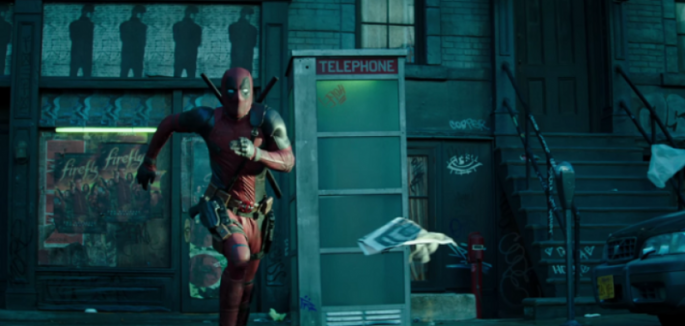
deadpool-2-trailer-release-date-800x381

In 2029, the ageing James ‘Logan’ Howlett (Hugh Jackman) is a pale shadow of the once iconic mutant hero he used to be, Wolverine, popularized in comics that both exaggerate and sanitize the truth. Mutants are extinct save for Logan, Professor Charles Xavier (Sir Patrick Stewart), and the albino mutant Caliban (Stephen Merchant). A mutant birth hasn’t been recorded in 25 years either. Logan is an alcoholic, sporting a visible limp and a frequent cough, and a cynical, cantankerous, almost always pissed off demeanor. He’s kind of an asshole now. His body is slowly breaking down thanks to the cancerous adamantium that covers his entire bone structure and trademark claws, his wounds healing slower and leaving big ugly scars. He’s also plagued by nightmares if the brutal acts committed against and by him. At 200 years old, Logan has experienced multiple lifetimes of violence, tragedy, loss, heartbreak, and grief, the result of which coupled with his age, has broken the poor guy’s soul. He lacks the conviction and strength to get through each day, hence his worsening alcoholism and overbearing cynicism. Life has truly beat the hell out of Logan, yet he presses onward. If an adamantium bullet doesn’t kill him, time, our own worst enemy, surely will. Eventually. By this juncture in Logan’s life, violence isn’t just a way of dealing with other violent beings, it’s become a part of who he is, as if a genetic code for violence is coursing through his veins.

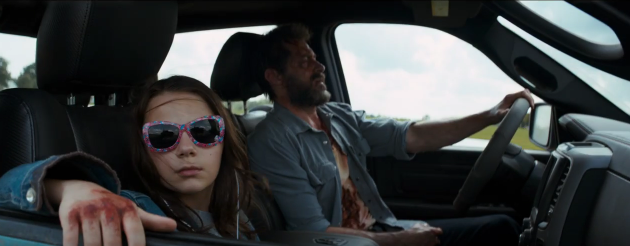
Logan works day and night as a limousine driver in Texas for the kind of drunken party girls who like to flash the driver, and foolhardy guys that dickishly chant jingoistic phrases. His work provides him with just enough cash to afford him the medicine he and Caliban require to help control a neurodegenerative disease that produces seizures Charles is suffering from, the result of which if left untreated renders anyone in the vicinity, save for Logan, temporarily paralyzed, or dead. They live in seclusion in a dingy private smelting plant in Mexico, until their relatively peaceful existence is shattered by the arrival of a merciless cybernetically enhanced assholes called the Reavers. They’re led by Wolverine fanboy and henchman Donald Pierce (Boyd Holbrook), and Zander Rice (Richard E. Grant), a bioengineer and Donald’s boss. They’re seeking the mute Laura aka X-23 (newcomer Dafne Keen), an 11 year old mutant who bears eerie resemblance to Logan. I think we all know why. A brutal encounter sends the trio on their way to Eden, a supposed place of salvation for young mutants in North Dakota, with the Reavers hot on their trail. Yes, this is a road movie but don’t worry, it’s a great one.

I’ve been an X-Men fan since I was a little kid, watching the ’90’s animated series on television, watching every live action movie adaptation, and collecting action figures and comic books along the way. I don’t have anything against PG-13 movies or comic book movies, with the sole exception that the rating limits on-screen violence. I’ll gladly watch jokey, fun superhero flicks any day of the week, a few of which even populate my own favourite films list. But Logan required an R rating to get across the precise tone director James Mangold and Hugh Jackman have been aiming for over the last few years. Just like many other fans, I’ve been waiting 17 years to see Wolverine finally cut loose and tear people to shreds the way I’ve always known he can, because foot-long metal claws from the strongest metal on the planet (in their reality), don’t just poke the bad guy – they dismember, disembowel, and decapitate. Rest assured, he finally does in Logan.
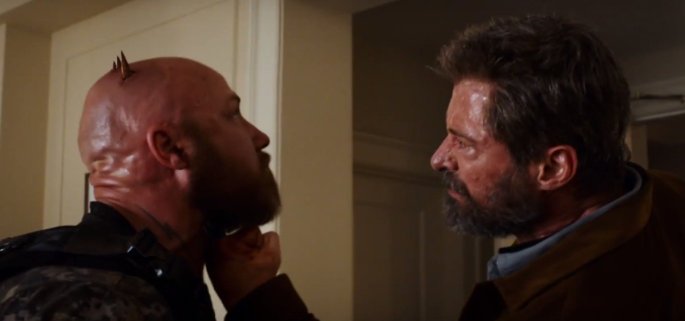
logan-wolverine-3-hugh-jackman

The rumours are true, Logan is packed with plenty of bloody violence, far from tame, and with enough blood soaked carnage to satisfy even the most bloodthirsty gore-hounds. Heads roll, limbs fly off, threats are ripped open wide, and buckets of blood are spilled as Logan finally delivers a whopping heap of berserker rage fuelled killings throughout its 135 minute runtime, especially in two scenes of 100% pure classic Wolverine berserker rage that will blow minds. Two fight scene in particular, one midway through the movie, and the other the bloodstained finale, offer up some of the most intense, brutal, and graphic comic book movie violence committed to film. These two scenes in  particular are stand-out action set pieces due to the physical and dramatic weight the R rating allows them to possess. When Logan becomes physically drained, weakened by multiple gunshots (*spoiler alert* or stabs wounds from an experimental clone of himself *end of spoiler*), we feel his exhaustion through his body language and facial expressions. When he or Laura are dispatching foes left and right, we feel the primal anger and blood lust. A PG-13 movie could never have that dramatic heft to it. Logan also bears a significant amount of profanity, enough to rival last year’s similarly R rated comic book movie hit Deadpool, but unlike that movie, profanity isn’t used like a comedic tool to up the wattage of vulgarity as was needed. Rather, the frequent uses of the f-bomb accentuate the anger and frustration the characters (Logan in particular), are experiencing at any given moment. Logan isn’t for the faint of heart, but there’s more to Logan than just gory violence.

Hugh Jackman deserves an Oscar for his performance as Logan. I’m not just saying that for the sake of it. Hugh has never given a more layered, meaningful, naturalistic performance in the 17 years I’ve been watching his movies. If Logan is a truly his final outing as the iconic character, I don’t think he could have given a better performance than what you’ll see in Logan. The script by Mangold and co-writers Scott Frank and Michael Green, along with that R rating, affords Jackman the opportunity to work with dialogue and scenes that at ask for more of dramatic work than physical, allowing Hugh to go to places he wouldn’t otherwise be able to reach. It’s the work of an actor who knows this character better than anyone else outside of his creators, who isn’t simply playing a role, but living within the skin of him. He is our Logan, through and through in every way in this subtle, deeply human performance. Sir Patrick Stewart has never been better as Charles Xavier, and acting on the assumption that this is also his final turn as his iconic character, as reported in recent days, I couldn’t have asked for a more fitting end to his reign. Dafne Keen needs an X-23 movie pronto, she’s so good for such a young newcomer. Boyd Holbrook makes for a menacing villain, his smooth talking Texas accented Donald acting as quite the ice cold delight in a sea of CGI, oversized doomsday super villains, and Richard E. Grant gives multiple dimensions to his Zander, bringing a welcomed honesty, tenderness, and sheer cruelty to what could have otherwise been a thinly developed villain.
17097525_1294482667310470_5932397460279918760_o

At first glance, Logan is a comic book movie meant to bring a satisfactory yet heartbreaking end to a 17 year long career and story arc spent on the iconic hero. Peel back the layers and it’s a redemption through justice and revenge western tale, the kind kind of story carried through history books for centuries to come. Logan is right from the get-go, a classic western yarn, and the best kind too. The kind of western where a tired gunfighter has to take up their guns one last time in the name of frontier justice. The western frontier may be gone, but the idea of the stubborn hero who needs persuading still exists, right down to the classic Shane appearing on a hotel television.

That Logan uses a couple of the same tropes seen in westerns decades ago doesn’t mean the film is a slave to those tropes, as Logan firmly stands on its own two feet as a unique amalgamation of comic book fantasy, the classic western, and the modern family road trip drama. Remove the use of mutant powers and you have a modern day western about a tortured soul waiting for death to end his suffering, until his skills are called upon to assist those in need, one last time. Hollywood hasn’t run out of fresh ideas, rather they’ve just found creative ways of reinventing the wheel from time to time. Taking the fantastical world of the X-Men and grounding it in the themes of the classic American western is a brilliant manner of humanizing and personalizing Logan’s story. Logan has more in common with Clint Eastwood’s Unforgiven than any of the X-Men movies that precede it. The presence of X-Men comics in the film (real comic books with newly commissioned art by their original artist Dan Panosian), seems to suggest that the world in which the previous 9 X-Men movies occupied may also have been a sanitized embellishment of the grim world Logan inhabits. I quite enjoy the notion. 

Last year Deadpool proved an R rated comic book movie about a fourth wall breaking, profane, crudely humourous, violent mercenary out to rescue his lover and not look like an avocado had sex with an older more disgusting avocado, could out perform multiple other comic book movies released this past decade, if the correct amount of love and respect are applied to the material. This year, Logan has proven that Deadpool’s success wasn’t just beginner’s luck, but that lightning struck twice because just as much love, passion, and respect were applied in all the right places. That they had the balls to make a commercial comic book movie about a broken man learning to love one last time, proves they broke the mould when they made Logan. That we’ll likely never see another comic book movie that treads these waters again is fine by me. I wouldn’t want it any other way. This final ride was perfect.
logan-final-trailer-image-40


Man Down 


I’ll say this right off the bat: do not watch Man Down if you’re already in a mood, because it will emotionally lay you the fuck out. I learned that the hard way the other night. Billed as a war film, marketed as such and discreetly snuck onto iTunes without so much as a hint of theatrical release, its easy to see why they’ve tried to bury this one, it’s the bleakest film I’ve seen so far this year, and possibly the previous one. If there’s any doubt still surrounding Shia Labeouf’s acting talent (there shouldn’t be at this point), his work here should solidify greatness. All publicity antics and oddball muckery aside, he’s proven time and again that he’s one hell of a performer, and this is the best work he’s ever done, by a long shot. As Afghan war vet Gabriel Drummer, he’s put through an emotional wringer, sent back to an America ravaged by some vague pandemic, on a hopeless mission to locate his wife (Kate Mara) and young son (Charlie Shotwell). Joined by his best friend and fellow soldier Devin (Jai Courtney), Gabriel’s mission seems hazy and desperate, his family always just out of reach, tormented by the psychological wounds of combat but determined not to give up. This is interspersed with an extended dialogue scene between him and General Peyton (Gary Oldman, restrained, patient and careful), in which he heartbreakingly opens up about the horrors he has seen. This is where Labeouf shines, his tears uncannily genuine, his work visibly shaking up Oldman and tearing at the edges of the screen in it’s implosive intensity. Trust me, this is not the film you are expecting, not even close. By the time the third act rolls around and you see what’s really going on, you’re emotionally sucker punched when least expecting it, and the film’s quiet, devastating anti-war message is hit home with the force of a sledgehammer. I can’t say too much more without ruining it, but it’s one of the most thoughtful, understanding war films I’ve seen, one that gets the reality of what it’s like to have seen such atrocities, and come out of it a different person. Strong, stinging stuff that takes a while to shake off. 

-Nate Hill

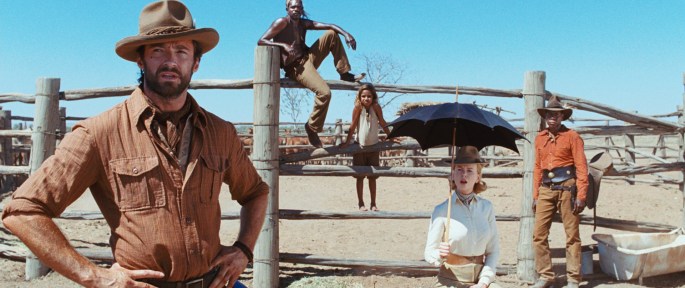
Jackman Unleashed Week: Baz Luhrmann’s Australia

2008_australia_hugh_jackman

By J.D. Lafrance

After his debut film Strictly Ballroom (1992), writer/director Baz Luhrmann never looked back, creating lavish, ultra-stylish musicals William Shakespeare’s Romeo + Juliet (1996) and Moulin Rouge! (2001), and let’s not forget that $5 million Chanel commercial starring his cinematic muse, Nicole Kidman. With, Australia (2008), he decided to take national pride to a whole new level by creating a sweeping romantic epic about his home country that takes place between the World Wars and was made by and starring Australians. With a budget in the neighborhood of $130 million, the pressure was on Luhrmann now more than ever before to deliver at the box office and, while underperforming in North America, it went on to gross $200 million worldwide despite a lukewarm critical response.

Lady Sarah Ashley (Kidman) is a headstrong English aristocrat who travels to Northern Australia in 1939 to meet her husband at their ranch Faraway Downs. Within a few minutes of arriving, she meets her guide to this strange new land, a man known as the Drover (Hugh Jackman), a hard-drinking, two-fisted Australian version of a cowboy. They take an instant dislike to each other: she thinks that he’s crude and uncultured and he thinks that she’s too prim and proper.

They arrive at Faraway Downs to find her husband dead (apparently at the hands of an Aboriginal) and the ranch in disarray and in danger of being foreclosed. Mr. Carney (Bryan Brown), the local tycoon with a monopoly on the local economy, has his right-hand man, Mr. Fletcher (David Wenham) try to sabotage Lady Ashley. In order to save Faraway Downs, she has to drive 1,500 head of cattle to Darwin and so she enlists the help of the Drover. Along the way, they befriend a young Aboriginal boy named Nullah (Brandon Walters) whom she protects from being taken away and forced to assimilate with white folks.

As with his previous films, Luhrmann populates Australia with broad, stereotypical characters and tells a classic story. The film revels in archetypes: Ashley is a pure, upstanding woman, the Drover is the rugged western hero, Fletcher is the dastardly villain, and Nullah is the adorable child who narrates the story. As he proved with is previous films, Luhrmann has an uncanny knack for casting. Who can forget the undeniable chemistry between Leonardo DiCaprio and Claire Danes in Romeo + Juliet and the sparks that flew between Ewan McGregor and Nicole Kidman in Moulin Rouge!? He’s at it again with this film with the casting of Hugh Jackman and Kidman as the romantic leads.

Jackman finally fulfills those early comparisons to Clint Eastwood, playing the Drover as a tough, dependable hero who’s not afraid to show his vulnerable side. He’s never been more charismatic as he proves to be equally adept at the physical demands and the emotional range that the role requires. No one knows how to photograph Kidman quite like Luhrmann. She looks stunning, even covered in a layer of dirt and dust from a cattle drive. At first, her stuffy English aristocrat comes off as a cartoonish stereotype but as her character becomes acclimatized to the country and she develops a bond with Nullah, she becomes warmer and more empathetic.

Beginning in 1939 and climaxing with the Japanese bombing of Darwin in 1942, Luhrmann’s Australia mixes the larger-than-life melodrama of Gone with the Wind (1939) with the exciting cattle drive in Red River (1948) and with a dash of The Wizard of Oz (1939). His film clearly harkens back to the kind of cinema that they just don’t make any more with very little CGI used and everything built from scratch and on location. Australia is the kind of ambitious Technicolor epic that might have been made by John Ford or George Stevens. It is a marvel of absolutely stunning cinematography – only Luhrmann could make the desolate outback look vibrant and alive. He alternates between sun-drenched day scenes and night scenes that appear to be impossibly illuminated by the stars.

One should not go into Australia expecting realism. Luhrmann presents a mythologized take on his country. Love him or hate him, you have to respect Luhrmann for not being afraid to wear his heart on his sleeve. He’s arguably the most romantic filmmaker working today with the possible exception of Wong Kar-Wai. And with Australia, he has made an unabashed love letter to his homeland on a grand scale.

Kong: Skull Island

Kong-Skull-island-700x300

Remakes and monster movies continue to be reviled in many corners of the filmgoing public, which is surprising considering both are practically as old as the form itself.  King Kong debuted on the silver screen not long after silver screens themselves took their initial bow, so the royal title remains apt to this day.  The creature’s climb up the Empire State Building remains iconic, not only for the audacity of the image but the promise of the fantastic that cinema itself offered newly minted movie fans—the very idea that walking into a theater would take you away from reality and show you things you’d never see anywhere else.  Clearly the great ape was built to last, as he’s turned up in one form or another over the years, most recently in Peter Jackson’s 2005 laborious love letter to the original.  Fast forward 12 years and Time Warner, fresh off the relatively successful Godzilla reboot, is looking to craft its own interconnected series of blockbuster films just like all the other remaining major studios, hence Kong: Skull Island is set to be released (somewhat tentatively in March instead of tent pole-y in May).  Is it a successful undertaking?  The short answer is yes and no, and a somewhat longer answer follows.

First of all, you’re not going to get the coy buildup towards monster mayhem that Gareth Edwards’ Godzilla offered, although you do get a credit sequence similar enough to that films’ that you’ll pick up on the universe building intentions right off the bat.  Once Kong arrives, he’s in full view and he’s rampaging just the way you want him to, smacking down uninvited guests on the titular island and throwing down with its fellow oversized inhabitants on the regular.  This all commences after fifteen minutes of highly perfunctory character introduction and motivation establishment.  At times the dialogue and reasoning feels like it’s being generated by a scripting software app, but at least Kong: Skull Island assembles a relentlessly charming cast, from handsome Tom Hiddlesworth to Oscar winner Brie Larson to affable John Goodman and badass Samuel L. Jackson.  A lesser group would have probably sunk the proceedings, as several of them—especially the purported leads, Hiddlesworth and Larson—are so underwritten it’s safe to say the film could have marched through its explosions without their presence.  Fortunately Goodman and Jackson are given a bit more to do, the former harboring a belief in the fantastic that’s not explained right off the bat and the latter adopting the warmongering swagger of Duvall’s Colonel Kilgore by way of Melville’s Captain Ahab.  They each have what the film comes closest to offering as far as character arcs go, and Jackson especially stands out.  The best story and performance hiding in between the flying bullets and crashing helicopters belongs to John C. Reilly, a punchy World War 2 veteran looking to return to civilization with our band of heroes.  He gets the strongest lines from a script that struggles to find any rhythm outside of the genre tropes we all expect.

On the plus side, Kong and his monstrous neighbors are lovingly (and of course digitally) rendered, and Larry Fong’s camera guides us around location sets ranging from Hawaii to northern Vietnam with grace and awe.  Once director Jordan Vogt-Roberts (an interesting choice given the indie film and television comedy background he brings to the table) stumbles through the early expositional scenes, he does a fine job staging the carnage, chases and explosions, of which there are many.  And Kong himself, in keeping with the typical incarnations of the character, really is just a hero in screaming ape’s clothing, there to provide deus ex machina services when the other creatures get too problematic.  There are enough tributes, visual and otherwise, to make fans of the previous films feel right at home on Skull Island as well.  In short, this is a fine action setpiece delivery system if that’s what you’re in the mood for.  A perfectly fine if not transcendent slice of fantastic escapism, with the inevitable promise of more to come if enough tickets are sold.

kong-skull-island-legendary-530x298

Top Five Hugh Jackman Performances

With LOGAN being a gigantic hit at the box office, after seventeen years and seven turns as the Wolverine, Hugh Jackman is done with his most seminal character.  I imagine we’ll see him again, at some point down the road, but time will tell.  Jackman is so much more than the rough and tough Canadian mutant, he’s a wonderfully rounded actor that can mix brute blood lust with musical performances and soul bearing dramatic performances.  While Jackman is just hitting the sweet spot of his career, I wanted to take a look back at his finest performances.


THE FOUNTAIN 2006 Dir. Darron Aronofsky

jackman fountain

This is a film that has accrued such a following over its lackluster release, that one day, this will be looked at as not only one of Aronofsky’s finest films but also one of Jackman’s best performances.  Here, he plays the same soul over a course of three different centuries.  It’s apparent he’s a different man with each new becoming, yet he still is able to remain the same person.  It’s an incredibly heartfelt and touching performance in a film that needs more acclaim.

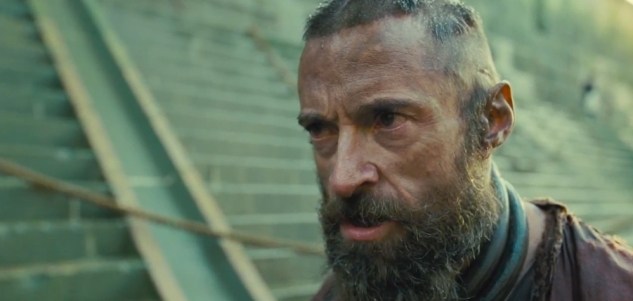
LES MISERABLES 2012 Dir. Tom Hooper

Les-mis-hugh-jackman-2

Hugh Jackman has gone through a bounty of physical transformations playing Wolverine on screen, but nothing like his turn as Jean Valjean in LES MISERABLES.  Here, he embodies a fugitive, for decades, on the brink of the French Revolution – well, I’m pretty sure everyone knows the story.  But here, Jackman is able to pivot back to an area of performing that he loves: musicals.  While the contemporary Hollywood musical comes back in fads, I think this film stands out due in part to the actors are all singing live while being filmed.  This not only enhances their performances but makes them feel honest and organic, particularly Jackman.

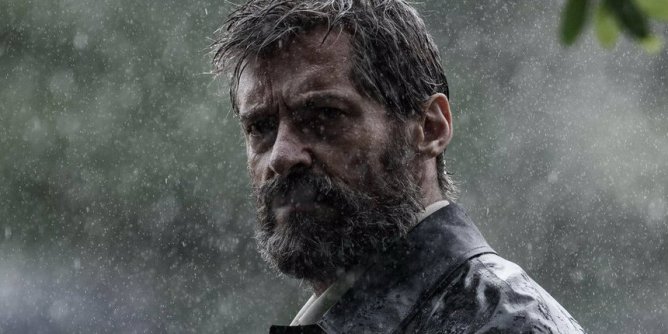
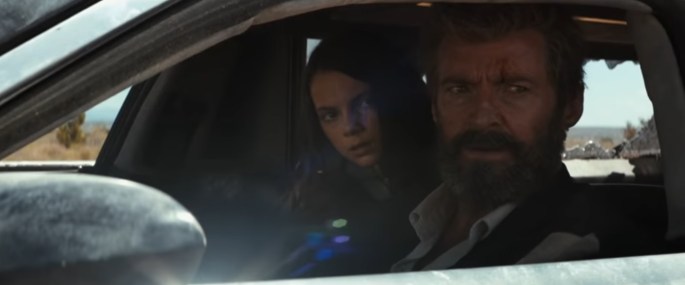
LOGAN 2016 Dir. James Mangold

jackman logan

This is it (maybe).  Jackman in his last turn as Wolverine.  He brings his all to this film, not once coasting in a character he’s played seven times in seventeen years.  Here, Logan is broken, surrendered, and wanting his life to finally be over.  Bravo to Jackman for going all out for this role.  He didn’t have to, and it is incredibly admirable of him to treat this character with such fondness and respect.  While the overwhelming echo chamber of hype is loud, I imagine this is the film that everyone is going to remember Jackman for.

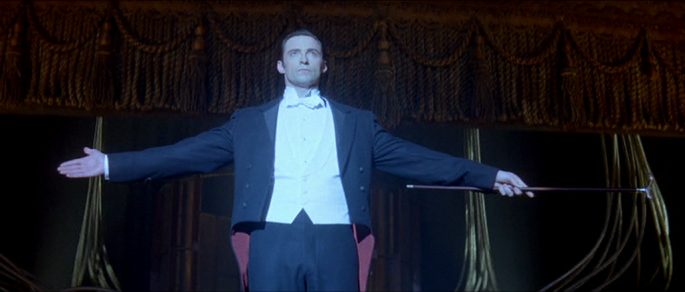
THE PRESTIGE 2006 Dir. Christopher Nolan

jackman prestige

Jackman has an incredible knack for taking all of his affability and rolling into ambiguous characters that are cast in the greyscale of morality.  Here, Jackman’s obsession takes him down a rabbit hole of darkness where he ends up doing things so unforgivable, there is not really much of a shot at redemption, but I suppose that’s the point of this dark and twisted tale of magicians bent on obsession.

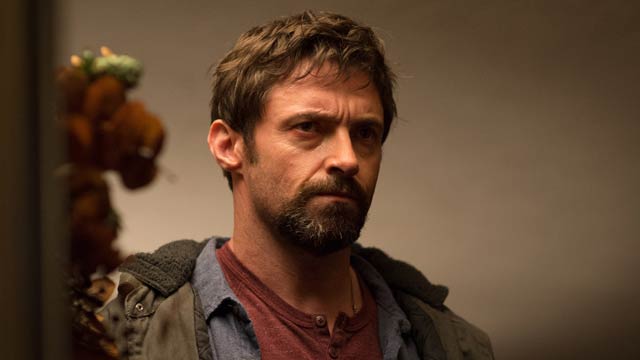
PRISONERS 2013 Dir. Denis Villeneuve

jackman prisoners

In the role of a grieving father, blinded by revenge and rage, Jackman plays his most complex character.  The brilliance of the film, but in particular, the development of Jackman’s character, is that we’re given clues to who this man in before the events of the film unravels at a rather rapid pace.  While some of the clues are aesthetic choices or shot composition, a majority of them are cued in by subtle actions Jackman takes.  While his character becomes more and more vested in revenge and violence, the path to atonement becomes more and more opaque, and Jackman eventually gets the ambiguous end that he deserves.  Or does he?


JAMES MANGOLD’S LOGAN — A REVIEW BY NICK CLEMENT

3

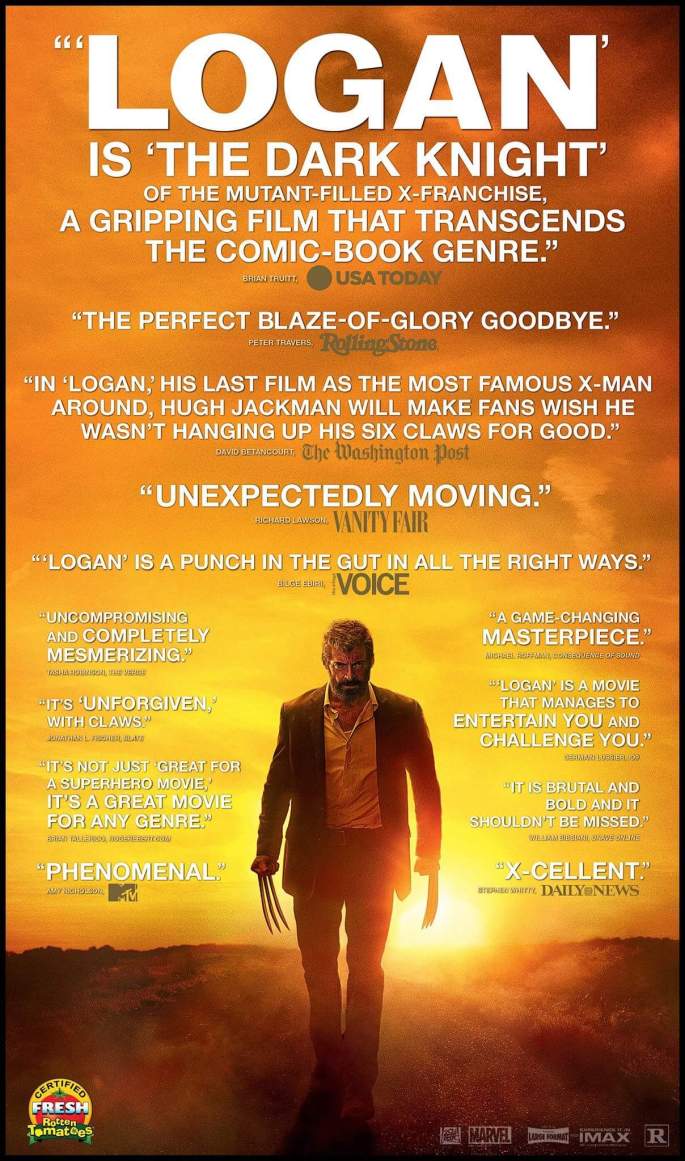
Depending on your sensibilities, you may agree with how I feel about Logan – this is the most satisfying comic-book/superhero movie since The Dark Knight Rises and EASILY the best movie to have that flashing-image Marvel logo attached to it. It took 17 years, but they finally made an R-rated Wolverine movie, and because of this decidedly different tone and approach, no other cinematic endeavor featuring any of the X-Men can remotely come close to touching it. This film feels as if it was created for adults rather than for children; look elsewhere for spandex outfits and reassuring, jokey humor. I’ve always felt that there’s nothing PG-13 about a mutant with razor blades that pop out of his knuckles when he’s pissed, so considering that director James Mangold got a chance to go balls-out with the character, it would be sort of hard to screw up the potential that this particular premise has to offer. Mangold has long been a solid craftsman with more than a few very strong pictures on his resume (Cop Land is my favorite work that he’s released and I’ve viewed Walk the Line countless times), and after he delivered two-thirds of a good entry back in 2013 with The Wolverine (the final act is really dumb with that mechanical samurai thing), it’s clear he learned from that film’s shortcomings, dialing it back a notch, and making a genre film that is refreshingly free of distracting and needless CGI.

2

It’s pointless to reiterate the fact that Hugh Jackman is perfectly cast in the lead role; this will be the big-screen character that he’ll always be remembered for. He’s absolutely on fire in Logan, all animalistic fury but with a broken heart as well as a crushed soul; he needs one final shot at redemption. I loved that the film felt like a desolate Western, both visually and thematically, and Dafne Keen was a total scene-stealer as the mutated child, all feral rage and explosive anger to match Jackman’s patented brand of ferocity that he’s always brought to his dual character of Logan/Wolverine. Patrick Stewart is, as usual, terrific as Professor X, and gets some key emotional moments because of the surprisingly thoughtful screenplay. Richard E. Grant smartly underplays the chief baddie role, while Boyd Holbrook is very menacing as one of the main henchmen, with a flawlessly integrated mechanical hand that’s definitely creepy. And under albino make-up, Stephen Merchant is affecting as the link between the two parties, as this is essentially an extended chase scenario, with an ailing Logan and Professor X trying to protect a special girl with a dark history.

2

The screenplay by Mangold, Scott Frank, and Michael Green is literate, witty, and packed with brutal action, with cinematographer James Mathieson doing some beautiful yet low-key work behind the camera. The set=pieces sting with a level of brutality that feels bracing for the gore-free previous outings, which seem downright jokey and lame in comparison. I don’t really care, on the whole, about the comic-book movie genre; to me, these types of movies are fast-food-cinema. They get the job done, and then you’re hungry for something more substantial. But Logan is a different beast in that it DOES feel substantial, like there’s some emotional heft and weight behind it. And the way it subverts your expectations is a crucial reason for its success. The filmmakers present a narrative with true stakes, never spinning out of control and unleashing the dreaded CGI vortex in the sky, keeping the themes intimate so that you actually care about the outcome, while the action is bloody, unrelenting, and consistently savage. As it should be. Free of creative constraints, it’s abundantly clear everyone had a blast with this seemingly final chapter of this particular saga.

1

Marvel has boxed themselves in with Logan; how can one be asked to take their product seriously when they’ve offered a definitive portrait of one of their most iconic characters, doing it the gritty justice that it deserves? The best thing that one might be able to say is that someone has come along and made a superhero film that doesn’t really feel like a superhero movie for nearly the entire runtime. I’m no easy-lay with Marvel product; I’ve skipped or not enjoyed as many as I’ve been able to hang with. My favorite stuff has included the two Captain America films, Iron Man 3, and Ang Lee’s underrated Hulk. But Logan is something all-together different. It doesn’t give a fuck about anything that’s come before it and doesn’t give a fuck if you don’t like it or think that it’s too nihilistic or aggressive. In short, it’s the Wolverine movie we all deserve and I can’t imagine myself feeling inclined to see too many more movies of this type in the future.

1

“I am very sure that’s the man who shot me.”: Zodiac 10 years later – by Josh Hains

The idea of offering up a defence for David Fincher’s Zodiac seems rather silly given that ten years later it’s widely regarded as perhaps Fincher’s greatest film, often revered as one of the finer films released over the past decade. We all know it’s great, though admittedly, I didn’t know that for several years.

I avoided Zodiac like it was coated in radioactive slime until 2014. I had heard a great deal of positive things about the movie, and had been greatly intrigued by the marketing behind it, but the knowledge that not only was it was a long, slow paced movie, but also a rather unsettling one too kept me away for so long. When I did finally give it a chance late September 2014, my mind immediately gravitated toward Google, scouring through page after page of information about the investigation in an attempt to better understand the finer details of the case, and come to my own conclusions about who the Zodiac killer may have been. My gut however, felt like I’d eaten a bad take out meal, disturbed, shaken, and stupidly hungry for more. I felt like how I imagined Robert Graysmith felt all those years ago, minus the fear, paranoia, and impending danger of course.

That David Fincher populated Zodiac with such a great cast is a marking of a great director who knows how to compile actors who will treat the characters as individuals and not just caricatures. I find it intriguing and perhaps even ironic, or merely coincidental, that Jake Gyllenhaal starred in last year’s underrated thriller Nocturnal Animals, given that in Zodiac he is essentially one. His Robert Graysmith is a nocturnal animal, an increasingly gaunt, wide eyed mouse sniffing around for a piece of cheese, in this case the next tangible clue or lead worth obsessively investigating. And it’s all thanks to his unshakeable love for puzzles, a factor that helps decode the first Zodiac letter. As he digs deeper into the case, we come to fear for his safety, in particular during a genuinely white knuckling scene in which the unarmed and unimposing Graysmith ventures into the basement of someone we begin to assume might put an abrupt end to Graysmith’s life.

Before the blockbuster splash that was Iron Man in 2008 thundered into the film scene, one could have argued that Robert Downey Jr.’s performance as the San Francisco Chronicle reporter Paul Avery was the best he’d ever given. An argument can be made that while he was seemingly born to play the billionaire tycoon and saviour of the planet Tony Stark, his best work still resides in the fractured Avery. The deeper the investigation gets the further Avery seems to slip from cool as a cucumber journalist to a paranoid, spineless slob.

Prior to his self induced exile on a houseboat, I got a kick out of the scene where he joins Graysmith (Jake Gyllenhaal) for drinks at a populated watering hole, chugging back those luminous bright blue Aqua Velvas while rambling about the case and their personal lives. There’s a great sense of both humour and humanity in that scene, as Avery lets his guard down and actually engages with someone beyond a superficial relationship, while Graysmith sheds his mouse-like internalized mannerisms in favour of energetic, loud behaviour, though briefly. From this point forward however, Graysmith has a spine, albeit a rather loosely fitting one, and Avery has seemingly lost his, donning “I am not Paul Avery” buttons in the hopes of fending off potential threats. He’d have made a wonderful Doc Sportello.

And of course, there’s San Francisco detective Dave Toschi played with a real sense of respectable authority by Mark Ruffalo. Toschi, an Animal Cracker snacking family man, and the inspiration behind both Steve McQueen’s preferred method of wearing his service revolver in Bullitt, and Dirty Harry’s iconic law breaking detective Harry Callahan, can’t seem to figure out how to put the pieces together in the Zodiac case, understandable in light of the overwhelming amount of contradictory information at hand. Under Fincher’s direction, Ruffalo portrays Toschi as a driven yet logically minded detective. He remains dedicated for years to catching the Zodiac, but lacks the desperation and paranoia Graysmith possesses. Instead, Toschi approaches every aspect of the case with the kind of logical thinking and reasoning every detective should be in possession of, following procedure by the book, and generally doing everything he can to crack the case until the psychological burden becomes far to heavy to bear. You can see how heavy sits in his mind by Ruffalo’s subtle body language in later parts of the movie, and you soon feel sorry for the guy.

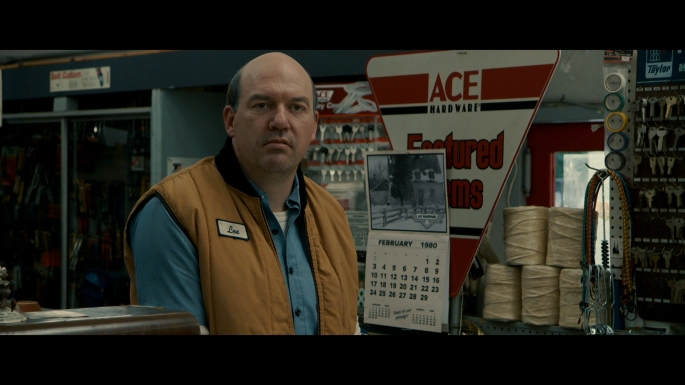
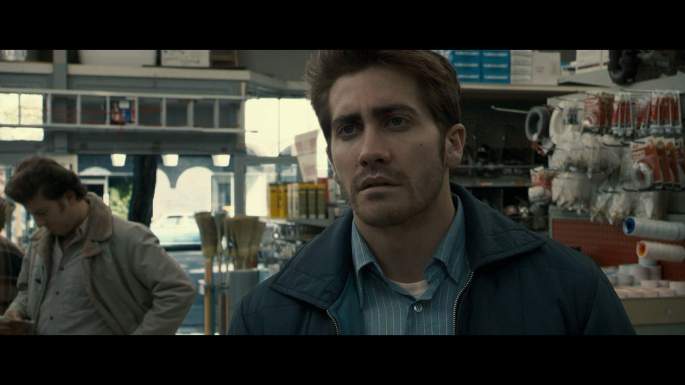
Near the end of the film, Graysmith declares “I need to stand there, I need to look him in the eye and I need to know that it’s him.”, desperate to prove that Arthur Leigh Allen (John Carroll Lynch; perfectly unnerving and subtle) is indeed the cold blooded killer. He gets his wish a short time later when he encounters Allen at an Ace Hardware store in Vallejo where Allen works as a clerk. Allen offers his assistance to Graysmith with a polite “Can I help you?”, Graysmith responds with a “No.”, the two men simply staring at one another until Graysmith leaves, Allen thrown off by Graysmith, and Graysmith appearing much more certain that Allens is the man they’re after. The movie moves forward eight years to when Mike Mageau, survivor of the Zodiac killer at the start of the film, meets with authorities to potentially identify the Zodiac killer, positively identifying Arthur Leigh Allen as the man who shot him and killed Darlene Ferrin. While many had their suspicions and some evidence pointed in his direction, Allen died in 1992 before he could be questioned. Not that he would have confessed anyway.

Admittedly, I have intentionally left out many details and characters, with no disrespect intended, and it should be said that every actor involved in this film, from the leading performances to the smallest of cameos (for exmaple, Ione Skye of Say Anything as Kathleen Johns, a woman who was threatened in her car by the Zodiac killer), give world class performances, some even the best of their careers to date. And the script by James Vanderbilt, based on books by Robert Graysmith, is an achievement of impeccable research and respect for the case. And the cinematography  by the late Harris Savides is bar none the greatest work the man had ever crafted, richly capturing everything with immaculate detail, from the lush valleys of California and its busy, inviting cities and streets, to the Aqua Vera drinks, to beams of red light emanating from police cars. He painted a gorgeous picture for us to gawk at for years to come.

Ten years later, I find it astonishing that Zodiac never truly ends like other movies do. Most movies tie up every loose thread with a ribbon to go with it, others leave room for potential sequels. You can’t end a movie when their is no resolution in reality, forcing a tacked on Hollywood ending wouldn’t sit right with anyone in possession of a brain. You can only leave the audience with the next best thing, the assurance of a living Zodiac victim that the man in the picture they’re pointing to is indeed the man who shot him. That Fincher was bold enough to choose this manner of ending his film shows us he’s a director capable of unsettling viewers long after the film ends, without needing to manipulate his audience or present alternative facts. Zodiac is a bona fide masterpiece, the crime film equivalent to All The President’s Men, and just as good too.

11415612_862880327137375_6688093266983067936_o

Sam Peckinpah’s The Osterman Weekend 


-Nate Hill-
Sam Peckinpah’s The Osterman Weekend is so strangely plotted, so illogical and hard to understand, that not even John Hurt providing a play by play from an ever present tv monitor can seem to make sense of it. It’s not that it’s a bad film, parts are very well done and there’s that nostalgic Cold War vibe that 80’s espionage thrillers always have, it’s just that somewhere along the way, whether in the editing room, the shot list or scheduling, someone quite literally lost the plot. It’s enjoyable, well acted and supplies some of that classic Peckinpah grit he’s known for, but it’s just one massive loose thread that no one bothered to pull taut, which is a shame when you look at the talent involved. The film opens with the murder of a beautiful woman, the wife of a CIA spook (Hurt). Now, this inciting incident is what spurs on the rest of the plot, but the how and the why seem to be missing, and the matter of his wife doesn’t come into play again until all is almost said and done, and seems to have not a lot to do with the entire rest of the film. The bulk of it focuses on controversial talk show host John Tanner (Rutger Hauer), a man who lives to rub people the wrong way and put men of power on the spot with provocative, candid questions, all from the safety of his brightly lit studio. He’s forced to get his hands dirty though when Hurt contacts him, informing him that his three friends he’s planned to spend the weekend with (Craig T. Nelson, Dennis Hopper and a sleazy Chris Sarandon) are in fact soviet spies in hiding. Forced to bug his weekend home and play host to Hurt as he watches them all via hidden cameras, tensions arise as they try to smoke the three out and figure out… something. But what? It’s anyone’s guess what three potential traitors have to do with a murdered agent’s wife, and I’m sure the novel by Robert Ludlum on which this is based covers that a little more pointedly, but this film is just all over the place. It drags where it should glide, and skips hurriedly over scenes with potential to be great. Nevertheless, they achieved some level of class at least, with a crackling on-air conclusion that cathartically weeds out some corruption and provides almost a glimmer of an answer to what’s going on. There’s a fight scene between Nelson and Hauer that’s excellently choreographed, the performances are committed and engaging, and I’m always a sucker for cloak and dagger theatrics. But the thing just can’t seem to cohesively pull itself together and present a story that makes sense. It’s not even that it doesn’t make sense in a Tinker, Tailor, Soldier Spy sense, because I’m sure that if I sat down and watched that film like five times in a row, id get it, it has a plot buried under all of it. This one though, it’s like there’s pieces missing, and the ones that are left are either out of order, or from a different puzzle entirely. Close, but no cigar. 

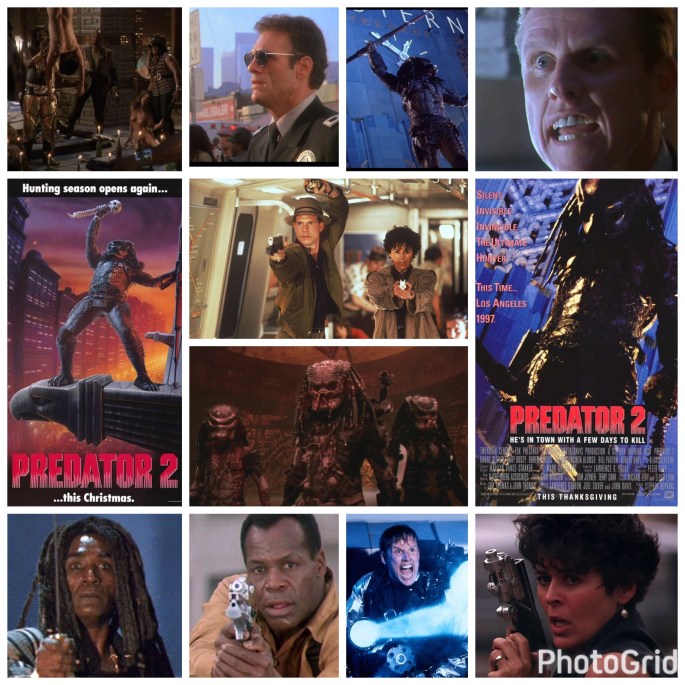
Predator 2


-Nate Hill-
Predator 2 is a gem of a film, and don’t let anyone ever try and convince you otherwise. It’s just so different and so much crazier than the first that I think people had a knee jerk ‘wtf’ reaction and panned it. It’s tough to top the sheer bombastic overdrive of the first one, which is considered a classic, but if anything the sequel switched the nitrous dial past maximum and blasts off into the stratosphere of excessive R rated chaos, an impressive feat. It also switches settings, from the sweaty jungles of South America to the equally sweaty and opulent grime of the urban jungle, namely Los Angeles of the future, bursting at the seams with so many over the top criminals and hectic, delirious violence that by the time the Predators show up they not only fit in, but seem relatively sane compared to everyone else. Seriously, every human character in this film is a coked up tornado of cartoonish energy and brashness it’s hard to keep up unless you’ve hoovered up a few rails yourself prior to sitting down and popping in the blu ray (the blu ray of this is wicked by the way, gorgeous transfer). So get this: Danny Glover, before he got too old for this shit, basically serves as a renegade SuperCop in this hellhole of a metropolis, waging all out war on loads of feral gang members and degenerates, constantly leaned on by the obligatory pain in the ass of a police commissioner (Robert Davi, god bless his republican ass) and backed up by a team of state of the art badasses, including Aliens’s Bill Paxton, who gets all the best lines and delivers them with the gusto the material deserves. He’s also backed by Ruben Blades and tough girl Maria Conchita Alonso, whose appearance and scenes with Paxton call to mind him and Jannette Goldstein side by side in Aliens, or is that just the fanboy in me having an aneurysm? Together they achieve 80’s action movie squad goals by messily wiping out as much of the criminal faction in the city as they can, including weird Rastafarian crime lord King Willie (Calvin Lockhart, spooky as all hell), until something else comes along. Something they can’t see, hear, or easily empty clips at whilst cheerfully spewing profanity. The predators have branched out, and this time there’s more than one, giving their inherent tactical nature a whole new twist. So who better to take on these extraterrestrial game wardens? Glover of course, who positively froths at the mouth. You know you’re overacting when Gary Busey has to keep up with you, and he does his loony best as some hush hush Fed who has been keeping tabs on the Preds for sometime, and has big notions of taking them down. It’s all in good fun, with jaw dropping, spectacularly brutal set pieces, violence that would not go over well these days (the 80’s didn’t give a fuck, man) and a seriously chaotic vibe humming through the whole breathless ordeal. I’d even be so bold as to say that this is the better of the two Predator films, upon getting all misty eyed and craving a rewatch after writing this. Go ahead, shame, me. It’s just too great of a flick to be as under appreciated as it is. Oh, and watch for a sly cameo from another otherworldly baddie late in the third act.