THE ROBERT ALTMAN FILES: A WEDDING (1978)

Robert Altman understands that weddings are semi-goofy affairs on which, each year, a whole lot of money is dropped on lavish, nerve-wracking, and anxiety-inducing ceremonies and even more unthinkably gaudy receptions, all in the service of unions that have less than a 50% chance of succeeding. He’s also keen on the notion that all weddings are secret disasters waiting to happen as the joining of two families is generally a nightmare recipe. So it’s curious that A Wedding, Altman’s first contemporary and reality-bound work since Nashville, feels like more like a rough idea than it does an actual movie. To be sure, it’s a mostly wonderful and quotable film, but it’s also frustratingly overstuffed, laboriously too busy (even for an Altman joint), and, perhaps most consequentially, permeated with an ugly and rank contempt for almost all of its characters.

A Wedding is the story of the wedding and subsequent daylong reception of Muffin Brenner (Amy Stryker) and Dino Corelli (Desi Arnez, Jr.). Opening as a grand and reverent enterprise, the film slowly peels layer upon layer from almost every character in its purview to the point where, at the end, the entire party on both sides of the aisle has been exposed as unpleasant, sick, and/or corrupted in almost embarrassing measures.

On the groom’s side is an air of a nouveau riche aristocracy and is one that is likewise laced with ennui-induced drug addiction. On the bride’s side, there is more established wealth that masks a lower-class of people where bored complacency leads to wanton hedonism and where familial relations are far too close for comfort. Between them is an assortment of friends, siblings, in-laws, ex-boyfriends, ex-girlfriends, estate staff, and event contractors, all of whom share secrets, desires, loves, laughs, drinks, weed, politics, and indignities throughout the day and into the evening.

I suppose that in his defense, Altman thought it was all ok if he stuck it to everyone on the screen with equal force and measure and therefore couldn’t be branded as an elitist if he did so. But it’s almost as if the cynical summations of America that he presented in both Nashville and Buffalo Bill and the Indians had disgusted Altman to the point where the poison couldn’t help but flow into his creative juices which, sometimes, does minor damage to the film. I mean, it’s one thing to introduce a creepy, almost incestuous relationship between two of the family members in the pursuit of some dark humor but, from a sexual standpoint, the bride’s side of the family is presented as such a gaggle of grossly dysfunctional and regressive hayseeds that the film sometimes veers dangerously close to being mean-spirited. Like the world on display in Buffalo Bill and the Indians, the groom’s side of the family is a closed, perverted environment and one that is so decadently incorrect that “Chairman of the Board” William Williamson (Altman regular Bert Remsen filing his last performance for the director) is the only guest to show amid the “few more than a hundred” regrets.

Sometimes, the need to cover everything crowds out Altman’s better sense and further dulls the piece. While the former supplies at least three of the film’s hilarious moments, both Viveca Lidfords’s Ingrid Hellstrom and Maureen Steidler’s Libby Clinton could have been completely excised from the film without affecting its structure in the least. Likewise, less time could have been spent on extraneous characters and situations such as the sometimes farcical security detail (which includes co-screenwriters Patricia Resnick and John Considine) and the film crew (which includes another co-writer, Allan Nicholls). While well-intentioned, neither of these conceits feel very organic and they likewise suck up a lot of oxygen that could have been of better use by focusing on the specific relationships between the myriad characters or on Geraldine Chaplin’s delightfully uptight wedding planner, smartly utilized as the film’s master of ceremonies/center of the hurricane.

As is to be expected, the entire cast is incredible. While her broadly pitched performance sometimes tilts in the direction of the Eunice character she created for her variety show, Carol Burnett is wonderfully hilarious as Tulip Brenner, mother of the bride. Almost better is Nina Van Pallandt as Regina Corelli, mother of the groom. Nursing a secret yet crippling addiction to heroin, Pallandt is by turns nervous and jittery before her performance relaxes into an enunciation minefield where all of her hard r’s are sanded down and she glides along on a soft, narcotic cloud. Vittorio Gassman, playing beleaguered father of the groom Luigi Corelli, turns in a softly hilarious and ultimately touching performance as he slowly reveals himself to be perhaps the most decent person in the whole bunch. But, if anything, the film’s greatest casting coup was to pair Paul Dooley and Dennis Christopher as father and son. Portraying, respectively, father and brother of the bride, Snooks and Hughie Brenner, both find the exact temperature in every scene they’re in and create a truly believable dynamic which no doubt led Peter Yates to cast them as father and son in the following year’s Breaking Away in which both gave career-best performances.

And on a technical level, A Wedding is a marvel. As much as any multi-tracked ensemble film from Altman, it demands to be seen twice as half of the film’s best jokes are found in the grout and away from the camera, in snippets of random dialogue that rise above the maelstrom of its staggering cast of characters (there are about twice as many people in this than in Nashville). Additionally, most of the scenes contain an energetic and bustling choreography of actors moving in and out of the staid and static frame that sit nicely alongside Altman’s more familiar, “roaming-eye” camera flourishes.

By now, it probably sounds as if A Wedding is something of an unlikeable failure which is most definitely not the case. While it’s far from a masterpiece, it contains a great many worthwhile insights that live underneath its thorny and acrid surface and, despite the film’s tone, the natural beauty of Altman’s style can’t help but elevate the picture to something more than just a moving portrait of unappealing wax dummies. Even though the air is mostly foul, there’s a vivaciousness in this movie and perhaps the point of the film is that it’s as as equally hilarious and nauseating as real life.

In retrospect, though, Altman’s greatest idea involves the death of Nettie Sloan (Lillian Gish). It’s probably no accident that Gish, the doe-eyed “First Lady of American Cinema,” is cast as the matriarch of a family which is helplessly dishonorable. Dying in the film’s early moments (setting up one of the film’s best gags that predates Ted Kotcheff’s Weekend at Bernie’s by a full decade), she seems utterly relieved to no longer have to lord over a family where the relationship between her daughter Clarice (Virginia Vestoff) and Randolph (Cedric Scott), the African-American house butler, is explicitly dictated to remain in the closet (as is the family’s biggest secret which reveals itself in the film’s closing moments). An antiquated sense of race and class dissolving as the natural winds of change blow about her, Altman symbolically uses Gish’s demise to trumpet the new cinema which had, by 1978, choked out the old system.

“When it’s over, it gets real sad,” says Rosie Bean (Lesley Rogers) to Geraldine Chaplin’s Rita Billingsley about the exhausting comedown that occurs after the ceremonial brouhaha surrounding a wedding. On one hand, it’s an indictment of the kind of dichotomy that naturally exists between a wedding and a marriage. On another hand, it’s something of an existential conundrum put to people like Billingsley who make a living feeding the beast and widening that delta. But another possibility is that it could also be Altman speaking to himself; reckoning that his Hollywood stroke had become less and less significant and perhaps feeling his best days were shrinking into the horizon behind him. But like the detestable and doomed Wilson Briggs (Gavan O’Herlihy) and Tracy Farrell (Pam Dawber), the bride and groom’s respective exes who each show up to the wedding reception as bad-faith discomfort agents, Altman was too busy being a condescending wisenheimer to see the jackknifed tanker sitting in the middle of the highway toward which he was barreling at top speed.

(C) Copyright 2021, Patrick Crain
Joss Whedon’s The Nevers

Oh, how the mighty have fallen. A bit of a cliché to open the proceedings, sure, but we’re discussing the career of a filmmaker who’s turned the fine art of quipping into the geek equivalent of endless dad jokes, so let’s just stick with it when discussing Joss Whedon. The longtime cult darling and supposed feminist responsible for Buffy The Vampire Slayer (both the failed film and more successful television show), Firefly and some movies about a superhero team or two you may have heard of saw an upward trajectory in his comic book nerd via Shakespeare fanatic career like few others from the late 90s to about 2017. That’s when the wheels started coming off, as his jump from Marvel to DC ended almost as soon as it began with a trash rewrite/reshoot of Zack Snyder’s Justice League, a bitter ex wife laying bare his infidelities for the world to see, and a seemingly endless parade of cast members on his projects going public with tales of his on-set cruelties and arrogance. The little guy made good/uplifter of women façade is a thing of the past—the world now knows he’s just another Hollywood skirt chasing prick. However, before the internet rained holy fire on his career, Whedon managed to sneak one more deal out of the Time-Warner conglomerate and get an HBO series, truncated into a six episode run by global catastrophe and reputational ruin.

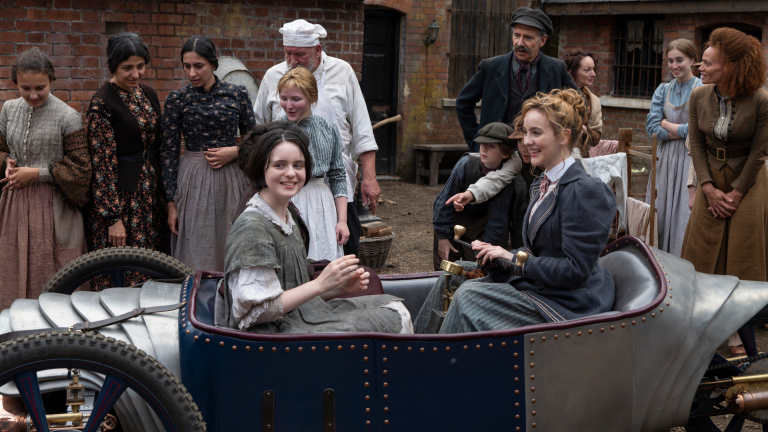
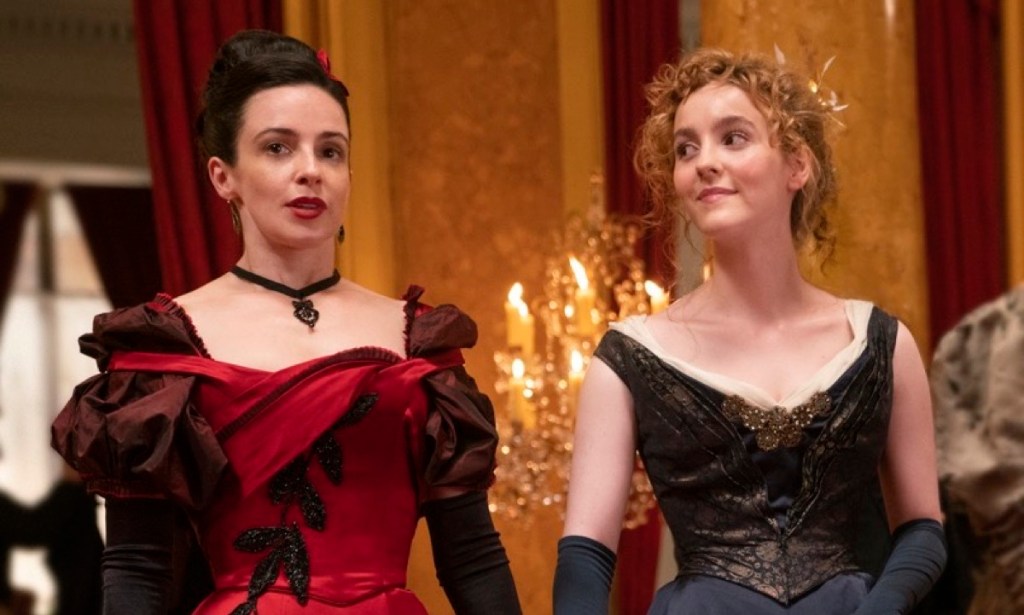
The Nevers appears on the surface to be something new for the writer/director—a Victorian period piece! But almost immediately the familiarities start to pile up like garbage thrown out a London window onto the street. Superhero women (a slight twist being that powers have been granted to both women and the other lower classes, not that it’s focused on much) fighting a sniveling patriarchy isn’t exactly a bold new direction. The Victorian setting brings back the steampunk aesthetic of Firefly, and really, there’s nods if not outright theft of former characters, ideas, stories and even one liners from his previous work. There’s a giant girl just like from the Buffy comics! There’s a little flying toy from the Agents of S.H.I.E.L.D. premiere! There’s Badger from Firefly, but played by Nick Frost! It’s tough to blame an artist for sticking to their wheelhouse, but the list of familiar things grows so long by episode six that  you can’t help but catalog and roll eyes each time another one pops up. The intrepid team of misfits, approximately Joss’ 6th or so of those, is led by Amalia True, a tough gal with a mysterious backstory who seems oddly over and underwritten at the same time. She can glimpse the future and punch men in the nards, perhaps even dropping a one liner while doing both. Penance Adair, a tech whiz, is her sidekick, and as a rather loud bonus you can combine their last names to make a stale pun.  There are the usual shifts in who might be a good guy and who might be a bad guy, a chase and a fight or two per hour, plot twists and banter. Adding the ability to drop F bombs and naked breasts to Whedon’s arsenal at this late stage doesn’t seem like good arrows to add to his quiver, but it’s HBO so you get bits of those too. While no doubt many talented people are in front of and behind the camera working away, the whole affair reminds one of the opening musical number of Once More, With Feeling: Joss is going through the motions.

In one of the least subtle firings ever seen in the film world, Time Warner brusquely parted ways with the showrunner after Ray Fisher’s detailed accounting of Whedon’s antics towards him and others on the set of Justice League came out. Claiming exhaustion, Joss’ PR department promised a bold new direction soon to come, yet here we are months later and no word on upcoming projects. Nor do we have anything approaching an apology or explanation for the legion of past cast that has echoed Fisher’s charges, more than a bit of a cowardly move from a guy who’s made his mint writing heroic characters for the better part of 30 years now. For a time, and for its time, Buffy and related projects were groundbreaking representation for women, lgbtq relationships, family trauma and more. Seen through the blistering 20/20 lens of hindsight, however, most of it feels like a swirl of fridging and gaslighting, both for his characters and on his audience. Maybe Joss sees the light, does what he can to make things right and returns to what was once quite the brilliant career. If in fact The Nevers ends up being his professional swan song, though, I’ll once again return to cliché and note that he exited stage left with not an Avenger-sized bang, but an overly familiar whimper.

B Movie Glory: Deep In The Darkness

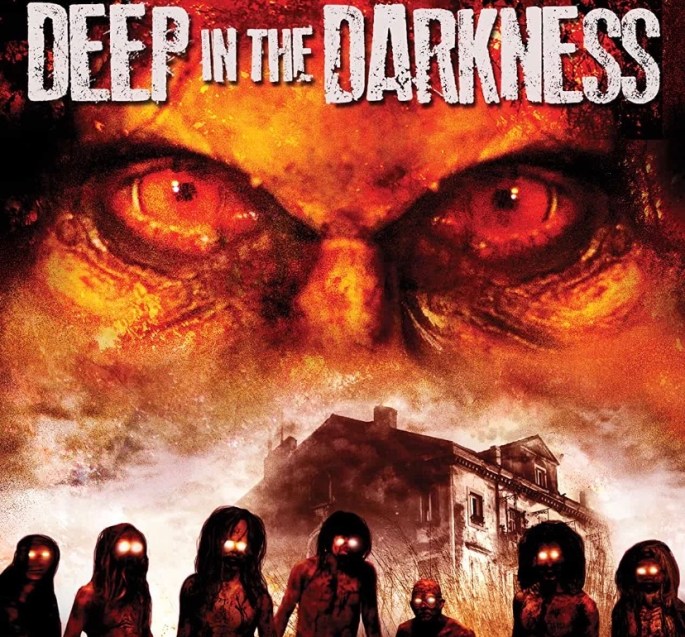
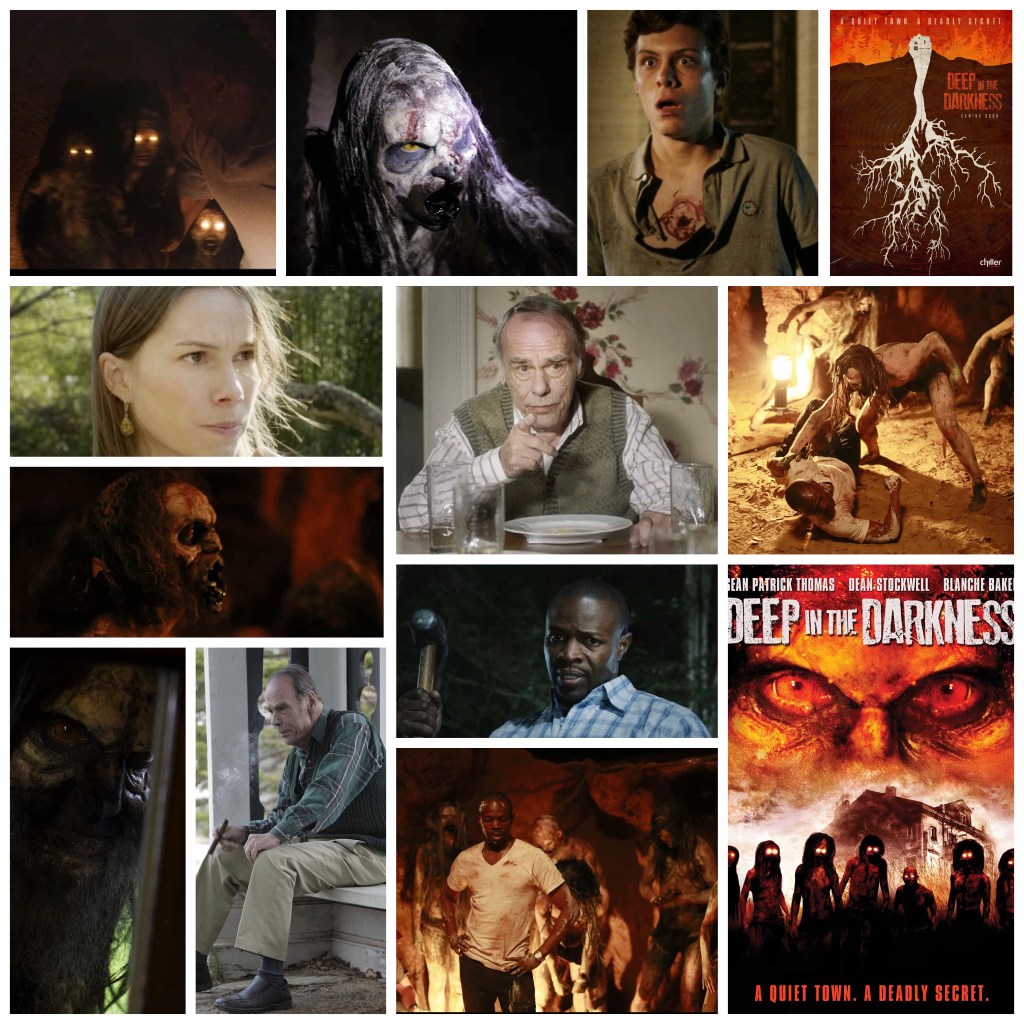
I love being pleasantly surprised by a DTV horror flick because there’s honestly so much garbage out there it can be like navigating a minefield, but Deep In The Darkness is a fun, vicious, well made little folklore shocker that kept me entertained throughout and was legitimately scary here and there. Sean Patrick Thomas plays a big city doctor who moves with his wife and kid to set up his practice in a town so small they “don’t even have cable,” as the stressed out, cigar chomping mayor played by the wonderful Dean Stockwell informs him. He’s met mostly with acceptance and hospitality as a newcomer but it soon becomes clear this town has a very, very disturbing secret underneath it. In subterranean caverns dwell an ancient race of spectacularly ugly, murderous humanoid beings called ‘Isolates’, who pretty much call the shots throughout the county. As the only doctor in the region he now finds himself and his family drawn into a dangerous hereditary power struggle between the isolates, those who have cross-bred (fucken EW) with them over centuries and the humans caught in the middle. These things are a fascinating bunch, all played by real actors with no CGI, absolutely drenched in nauseating, terrifically creative prosthetic makeup and they come across as a less ruthless, more esoteric version of the Troglodytes we saw in Bone Tomahawk. The film is lower budget and naturally has that feel but all of the actors are very good in their roles, particularly Stockwell who gives his tired patriarch genuine guilt and a hint of long dimmed warmth. When the Isolates do show up they are an incredibly fearsome presence full of snarls, blood and fluid, lithe physicality that makes them a memorable antagonistic pack indeed. The story has some twists I didn’t see coming and one kick in the nuts of an ending, a narrative that’s not just full of cheap scares, chases and gore but one that actually feels like a proper story, of the folk horror variety infused with a creature feature aesthetic. Recommended for fans of easygoing, accessible monster horror fare, this can be found streaming on Canadian Amazon Prime!

-Nate Hill

B Movie Glory: Trading Paint

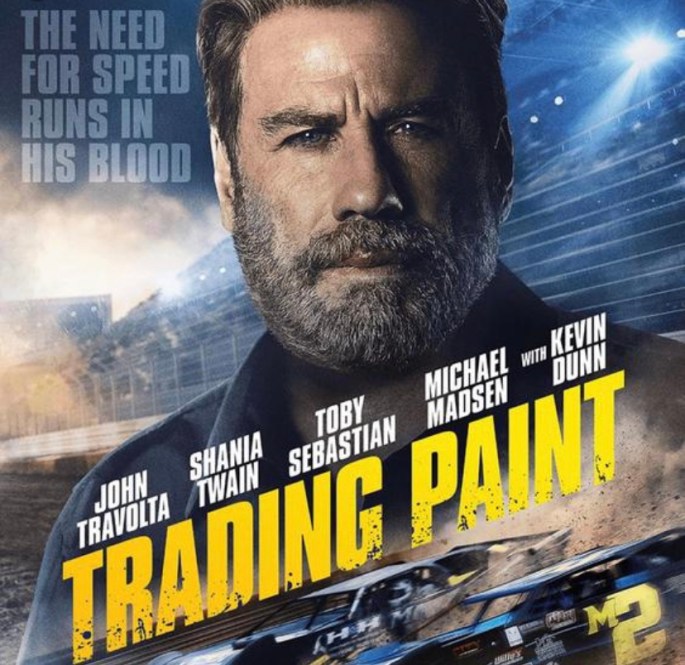
John Travolta is balls deep in the direct to video phase of his career and sadly can’t quite churn out as interesting, varied and increasingly bizarre entries like his buddy Nic Cage, most of his B stuff is pretty gnarly (Gotti Omggg). However, there’s a few that are somewhat charming and Trading Paint is one of them. Riffing on stuff like Days Of Thunder we see John play an ageing stock car racing guru whose glory days seem to be behind him. His son is into racing but instead of following in pops’s footsteps he’s taken up oaths with a far richer, more well connected racing promotor played by the great Michael Madsen, who is unfortunately a bit of a dickhead. This spurs dad into getting back into the game, and he’s supported by his lovely girlfriend (Shania Twain, of all people), and adorable best friend (Kevin Dunn, most excellent as ever) who he once saved from a fishing related alligator attack that took the poor guy’s leg but gave them their steadfast friendship (no I’m not making this up). This is laidback, low budget, all American schmaltz as only the DTV facet of the US film industry can provide, but you know what it really isn’t that bad when you consider the competition, especially where Travolta’s script choices are concerned. The racing scenes are modest, down to earth and tactile, the narrative and runtime blessedly short and swift. The film genuinely shines in a few specific areas: we get to see a truly captivating confrontation scene between Travolta and Madsen that is very well acted by both and probably the closest thing we’ll ever get to seeing that Vega Brothers Tarantino film we’ve been promised for so many years. Also, the relationship dynamic between Travolta’s self deprecating borderline old timer, Twain’s supportive and absolutely wonderful girlfriend and Dunn’s blustery, salt of the earth BFF is truly, legitimately sweet and endearing and provides the film with actual heart that so many of this type just seem so tone deaf with. It’s not a great film but it’s not a bad one either, worth it for the cast and the leisurely downtime these actors just get to chill and have fun with.

-Nate Hill

Joe Wright’s The Woman In The Window

Joe Wright’s The Woman In The Window is one of those big, expensive, star studded thrillers you used to see in the 90’s a lot, ones that would have folks like Harrison Ford or Julia Roberts headlining, always backed up by a galaxy of impressive supportive talent. Here it’s Amy Adams, an actress I’m almost convinced can do pretty much anything she’s so good, playing an agoraphobic ex-psychologist who has been hiding away in her Manhattan brownstone for several months following some vague traumatic incident. She has regular sessions with an unhelpful shrink (an uncredited Tracey Letts, also adapting a screenplay from AJ Finn’s novel) and speaks forlornly with her estranged husband (Anthony Mackie, heard and not seen) over the phone, until her new neighbours across the way give her a real fright when she believes she witnesses a violent murder one night while spying from her window. The frantic husband (an explosively intense Gary Oldman with an accent I’ve never heard him do that I’m pretty sure doesn’t exist in the real world) insists nothing happened, his odd wife (Jennifer Jason Leigh) looks on, a shady mystery woman (Julianne Moore) lurks about the place, and the cop (Brian Tyree Henry) in charge of helping out doesn’t seem to want to do much of anything. This film is an obvious homage to Alfred Hitchcock’s Rear Window and this is apparent in not only the central premise but many of the shots, colour schemes, musical cues and even old school movies that Amy has crooning in the background as she gets absolutely torqued on booze/medication cocktails to drive out the memory of some horrific past. I was more engaged with the narrative when it was about her and this past that has caused her to become such a ragged recluse. There’s a genuine mystery there and it’s shot and presented in a surprisingly artistic, unconventional and kaleidoscopic fashion that shirks the standards of dry Hollywood glossy cinematography these films usually employ and had me thoroughly immersed. The mystery as to what’s going on next door regarding this troubled family is also engaging in a lurid, potboiler kind of way, a bit overblown and melodramatic for its own sake but every plot turn and explanation does eventually check out, even if the road getting there is a bit of a loopy one. The acting is all solid, with Adams going all out for a truly impressive performance, Oldman being the most fired up and scary I’ve seen him since maybe Book Of Eli, which is a nice change of pace from his usual restraint of late. It’s far from the most original thriller out there and feels a bit scattered at times, but there’s a lot to enjoy with standout work from Adams and the trippy, borderline surreal internal world of her mind, with intense visual cues probing at a haunting mystery the film deftly withholds from us for some time juxtaposed against the stark, steep geography of her apartment full of curling staircases, gaunt angles and one hell of a rooftop patio, all brought to life by a creepy score from Danny Elfman, of all people. Fun times, if a bit… overstuffed for a 100 minute film.

-Nate Hill

William Butler’s Madhouse

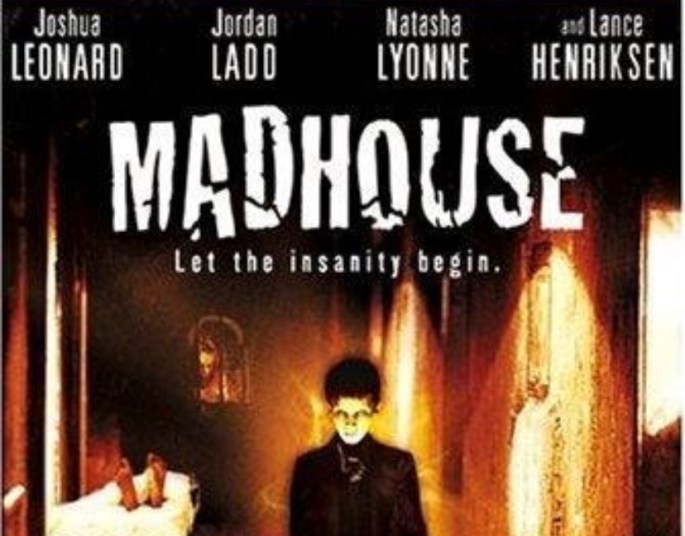
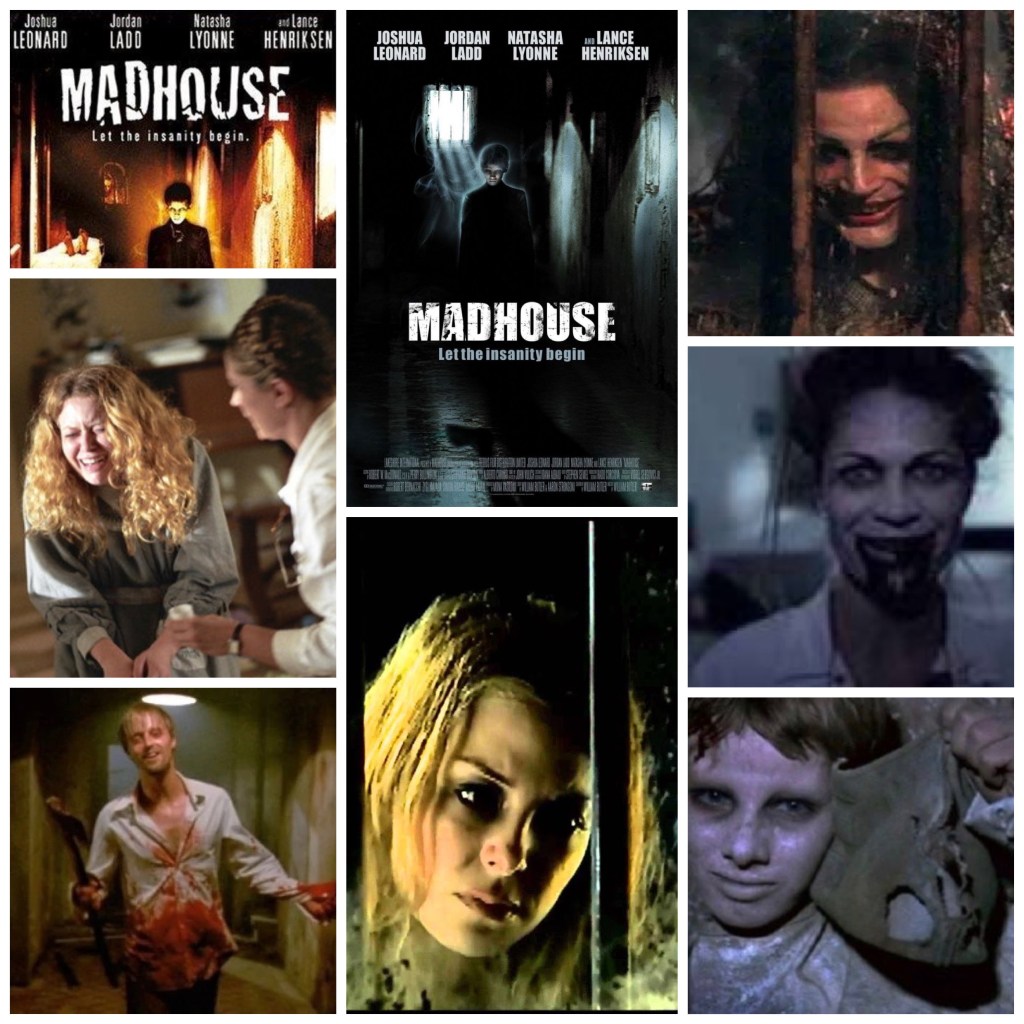
There are so many horror movies set in mental institutions that it’s pretty much a sub genre at this point, and while these days we realize that the aesthetic of presenting that world in such a.. heightened and lurid manner isn’t all that enlightened, we can still appreciate a good entry on its own trashy terms I guess. William Butler’s Madhouse is a gory little diversion with a kind of messy story that it makes up for with some truly unsettling, deeply disturbing visuals that are very clearly influenced by Adrian Lyne’s Jacob’s Ladder, but such influences on other works are welcome, even if worn shamelessly on their straightjacket sleeves. Joshua Leonard, who comes across as a kind of subdued, less succinct Sam Rockwell, plays an intern taking up residency at an underfunded, spooky asylum run by a head doctor (Lance Henriksen, naturally) who has little interest or compassion for the patients and whose safety protocols and ethical groundwork are, shall we say, questionable. Most of the patients run about willy nilly and the terrifying subterranean maximum security wing is a furnace heated nightmare corridor of leering monstrosities and deliberately grotesque personalities, like the hallway of prison cells from Silence Of The Lambs went to sleep and had a bad dream. There he finds a sort of ‘patient X’, a mysterious mummified individual who tells him a long forgotten tale of a young boy decades before who was mistreated by the asylum staff (you know, more than usual anyway) and whose ghost still runs around at night, and I found it funny how the script acts as if the ghost of a little kid is the *scariest* thing left to run about the place at night when the film has this level of freaky production design and prosthetic soaked extras on hand, which are really quite impressive, even if the story can’t quite get it up. Henriksen does little more than bluster, but his presence is always welcome, the lovely Natasha Lyonne has an extended cameo as a severely distressed patient and that adorable little southern dandy hobbit Leslie Jordan (a frequent staple of American Horror Story) has a nice bit as one of the facility’s doctors who reaffirms our primal fear of being murked while we sneak out to the refrigerator for that 2am snack. Director William Butler has a solid body of DTV horror work including the Danny Trejo/Tom Sizemore vehicle Furnace and while he can’t quite land the narrative here with overall coherence and the twist is felt a mile away, Madhouse has atmosphere in spades, truly horrific gory imagery that borders on the surreal and a very effectively creepy vibe.

-Nate Hill

Joseph Kosinski’s Tron Legacy

I took a revisit trip to the world of Tron Legacy this weekend and it’s just… even better than I remembered it, and I was already blown away when I saw it in theatres way back when. Front and centre you have all of this ridiculously beautiful technicolor eye candy in the online world of a The Grid, stunning cyberpunk costume design, dazzling ballets of movement all set to the thundering, glorious, hellbent, super sonic galaxy of sound provided by Daft Punk’s unbelievable original score. But beneath that there’s also an incredibly clever, very poignant and intuitive script full of ideas, themes and nuance that I suppose can get lost in the sound and fury of surface level spectacle or just flew over my head (I was only 16 when this came out) at the time, but make no mistake: this film is anything but style over substance. I would almost compare this to Denis Villeneuve’s Blade Runner 2049 in the sense that director Joseph Kosinski (Oblivion) takes a beloved, dusty old analog classic from the 80’s and not only revamps it in terms of style and technical innovation but blasts open the pod bay doors of world building, thematics and expands on the lore exponentially. Jeff Bridges’ Kevin Flynn has been stuck in the digital matrix of his own making for decades after trying to pioneer it as a new frontier, leaving his son Sam (Garrett Hedlund) a troubled orphan and his Vancouver based Encom company in the hands of ruthless number crunchers with former friend and board member Alan (Bruce Boxleitner) powerless to do anything. Sam is eventually propelled into the hypnotic world of the grid to join forces with rogue program Cora (Olivia Wilde) and reunite with his father (Bridges) to fight against his tulpa Clu (a CGI Bridges) who plans to launch an attack on the real world and escape through the one remaining portal with a legion program army. There is an entire universe of visual design, colour scheme and motion on display here as Sam competes in the deadly bike races, lethal ultimate frisbee matches and darts all over the grid’s map from Clu’s thunderous gladiatorial stadium to the dark, mysterious outlands where his father hides out in a tranquil, purgatorial abode high atop a digital cliff. It goes without saying that Daft Punk’s score is some of the most spellbinding, beautiful electronic music ever laid over a film and gives it much of it’s personality. But something I missed before is the sheer imagination, poignancy in the father sun relationship and the immersive nature of this world, not just a kaleidoscopic realm of flash and dazzle, but one with rhyme, reason and genuine inspiration put into the inspired idea of ‘Isomorphic Algorithms ‘, basically anomalous, sentient programs birthed of organic energy independent of human creation, both a ghost in the machine and new race of beings sprung forth from the depths of infinite server space. This concept resonated greatly with me and apparently with Jeff Bridges too, because his line delivery, charisma and energy when describing this miraculous discovery is up there with the best work he has ever done, so too is the character progression from fledgling, prodigious programmer in the 80’s Tron to godlike, pseudo hippie, compassionate father we see here. Tron Legacy is truly a magnificent film on every level, on all fronts and one that shows true artistic inspiration and thematic resonance in striving to pioneer new frontiers and discover new life, put together in one iridescent SciFi action opus that has aged gorgeously and only gotten better with time.

-Nate Hill

For Your Ears Only: Quantum of Solace

We’re pleased to bring you our latest discussion in our For You Ears Only series featuring Frank and Tom. This time, we’re joined with special guest playwright and actor Jeremy Kareken to discuss Daniel Craig’s second outing as James Bond in 2008’s Quantum of Solace, which is a direct continuation of the storyline from Craig’s debut, Casino Royale. The film was directed by Marc Foster, and Neal Purvis and Robert Wade collaborated again with Paul Haggis, and the film also features Olga Kurylenko, Mathieu Amalric, Gemma Arterton, David Harbour, Giancarlo Giannini, Jeffrey Wright, Jesper Christensen, and Judi Dench.

THE MICHAEL MANN FILES: MIAMI VICE (1984 – 1989)

“You ever forget who you are?” Saundra Santiago’s Detective Gina Calabrese asks Detective James “Sonny” Crockett (Don Johnson) as they stand on the deck of his boat and take a brief respite from their jobs as undercover vice cops in an early episode in the first season of Miami Vice.

“Darlin’,” Crockett replies with a wide grin that made millions of Americans fall in love with him, “sometimes I remember who I am.”

By the end of the series, all of his wise guy charm will be burned to the ground as a hollowed out and gutted Sonny Crockett will slowly come to terms with himself and what he’s been through over the course of the past five seasons and 111 episodes. “Things I’ve done, things I can’t remember. I can’t believe that was me,” Crockett will eventually muse to his partner, Detective Ricardo “Rico” Tubbs (Philip Michael Thomas). “Jesus, Rico. What kind of a person am I?” His smile muted and with his tres chic ripped jeans and stylishly shaggy, $500 Beverly Hills haircut causing him to look more like a self-destructive stepdad who has missed his last three AA meetings than a People Magazine cover boy, the denouement of Sonny Crockett is one befitting a pastel festooned and neon-filigreed Greek tragedy. And, regardless of the many hands that stewarded the show from its origins to its finale in 1989, Miami Vice is 100% the crystallized vision of executive producer Michael Mann.

In its most embryonic form, Miami Vice was an idea for a television show that grew from a seed that was a scrap of paper with the words “MTV Cops” written on it by NBC head Brandon Tartikoff. By the time it passed through the hands of Anthony Yerkovich, producer and writer of the popular crime procedural Hill Street Blues, he had filled in the idea with the notion of vice cops and their bottomless supply of impounded goods that they could then use in their sting operations. But when it worked its way to Michael Mann, he found in it the perfect vehicle in which he could blend his then-radical power-chord coupling of music and image, then saturating the world of music videos, with his fascination regarding the fine line and symbiotic relationship between heroes and villains. For not even fifteen minutes into “Brother’s Keeper,” Miami Vice’s pilot episode, the thesis of almost every Michael Mann enterprise that will come after has been spoken by Caroline (Belinda Montgomery), Sonny Crockett’s ex-wife. “You’re all players, Sonny,” she says to him. “You get high on the action.” For all of the ephemeral details that surrounded it and the many pop culture flourishes that it inspired, Miami Vice is the cornerstone of all of Mann’s works; a fable about professional men who cannot hold their personal lives together because they’re too busy chasing themselves around the block.

When it first aired in September of 1984, there was simply nothing on network television that was remotely like Miami Vice. But unlike other television shows that made a splash, not a one rearranged the entire landscape like Miami Vice did when audiences began to eat it up during its first season’s summer reruns. From the way television shows looked and were produced to the emphasis on post-modern architecture to, finally, men’s fashion, Miami Vice made an impact in such a way that one could argue for a pre-MV and post-MV line in the sand when discussing pop culture in the 1980’s.

But Miami Vice isn’t exactly the 80’s fluff that nostalgia-porn hounds try and make it out to be. Jabronis could and will costume themselves in linen jackets and pastel colored shirts to the end of all eternity but the show’s dated touchstones can never erase the sheer sadness that acts as the undercurrent in Miami Vice. Of the original five characters in the vice division at the end of the show’s pilot episode, only two remain at the close of the series, the other members either suspended, dead, or having participated in voluntary attrition. Likewise, contrary to the white-hot look the production stills of the duo conveyed to mass audiences via slick posters sold in the local mall’s Spencer’s Gifts, Crockett and Tubbs aren’t flashy players with cool clothes who lounge on the hood of Sonny’s Ferrari Daytona (or his Ferrari Testarossa, depending on the season) while parked on the banks of a Miami waterway, chasing hot women and solving crimes on the side. Mostly everything on their backs and in their possession are loaners from impound, their romances and relationships are all doomed, and for all of their diligent and valiant efforts as low-paid public servants (as the heavy in every fifth or sixth episode is fond of reminding them), they are rewarded with absolutely nothing; the series ending with both of their lives in virtual shambles.

Of course, Miami Vice wouldn’t have been the monster hit that it was if the show’s deeper and more existential nature not been dressed up with the kind of irresistible mix of pop music and slick visual style that worked like dopamine on television audiences for a good couple of years. The first two seasons, encapsulating the time in which Michael Mann was most involved as the series’s showrunner (and scored his sole writing credit on the show with season one’s “Golden Triangle, Part II” episode), have the best balance between party and pathos and are likely the seasons that are most etched into the collective minds of those who might have caught an episode or three, but mostly soaked up Miami Vice as it permeated everything else. And, while ensuring the cosmetic side of the show was its ace in the hole, it gave the series a sly ability to reveal so much about the rot of the 80’s while simultaneously celebrating it. It’s all incredibly sexy to look at but underneath all of it is a show that reflects bottomless excess as the criminals in their vast, empty mansions reveal the vacancy of the soul and the slicked down edges reveal an artificiality of the spirit. Likewise, the show doesn’t skimp on taking viewers to the less glamorous parts of Miami and the redneck-festooned, outer limits of the state, reminding viewers that Florida is 10% Miami club scene and 90% Oklahoma with a beach view.

While Mann would later plant the seeds for the more tightly-plotted kind of serialized television we’d come to expect in the late 1990’s and early 2000’s with 1986’s Crime Story, Miami Vice adheres to a looser narrative arc which feels both comfortable and realistic. Ensuring that there was always a way for new viewers to feel at ease with the show no matter when they dropped in, Miami Vice was less rigorous in its continuity than a nighttime soap like Dallas and, instead, it would frequently loop softly back on itself and move forward in believable, incremental time bursts by weaving perpetual side characters such as Charlie Barnett’s Noogie Lamont and (especially) Martin Ferrero’s Izzy Moreno in and out when needed but also by bringing characters back from previous seasons and episodes to deliver closure to their stories.

Being a network show not anchored to a serialized format and one that was bound to myriad forces beyond its control, Miami Vice sometimes fell victim to the fickleness of the broadcast order causing the narrative illusion to sometimes falter as beards (and Daytonas) disappeared and reappeared. Additionally, though it’s not quite as bad an offender as VEGA$ (and this may very well be a matter of personal taste given that it was completely normal for shows of its day), Miami Vice occasionally had higher-end guest talent popping up in multiple roles throughout the series (looking at you, Martin Ferrero and Stanley Tucci).

But, perhaps worse than VEGA$, the sheer amount of stunt casting in the show (particularly season two) is embarrassing, indicative of a property so immensely popular that it was becoming self aware and learning all the wrong lessons. For every musical artist who could act (Glenn Frey or Phil Collins) there were ten others who couldn’t (nine of them being Frank Zappa) and the random appearances of non-MTV musical artists such as Peter Allen and Leonard Cohen (who’s actually pretty great in his episode) shake out as downright bizarre. And given that the show was basically 111 one-hour movies, you can be certain that there were some recycled storylines peppered throughout with the occasional irredeemably awful episode thrown in just to ensure you were paying attention. And, for whatever it’s worth, it’s a horse race between “Missing Hours” and “The Big Thaw,” fourth season entries that feature, respectively, a plane-shifting James Brown and the cryogenically frozen remains of a reggae artist, as to which is the episode most up its own ass.

But the most egregious issue facing Miami Vice was the network’s decision to slash four episodes from season five during its original broadcast run to move the finale up, cancel the series, and free up its Friday night time-slot, which shortchanged a bit of the show’s narrative drive. While a fun, if inconsequential, back-door pilot was buried by this decision, two of the series most emotionally rewarding stories involving Dennis Farina’s crime boss, Al Lombard, and Pam Grier’s NYC detective (and Tubbs’s love interest), Valerie Gordon, were either relegated to being shuffled into the non-syndicated 1989 summer rerun schedule or, in the case of Grier’s episode, not being shown until 1990 after the episode was sold as part of a syndication package to the USA cable network. Anyone curious in revisiting the series would be well served to remember that, whatever order the episodes appear on whatever streaming service or physical media release, “Freefall” is the episode that closes out the series and that those “lost episodes” are only marked as such because of a business decision by NBC and were indeed originally produced and intended to be broadcast before the finale (and, as a side note, if the streaming package doesn’t include “Evan”, one of the greatest episodes from season one, protest loudly).

And for a show widely remembered as surface pap, Miami Vice took sympathetic, serious, and direct looks at AIDS, homosexuality, rape, the homeless, child molestation, and generally saved its anti-drug ire for dealers and cartels, refusing to sanctimoniously point fingers at casual users or addicts. For a show cemented down in Reagan’s America, it was unashamed when it cast a critical eye to the United States’s shady relationships with South American dictators, itself the dark heart of the final episode of the series. And while it mainly focused on the exploits of Crockett and Tubbs, Miami Vice did stretch out a bit with the characters of Detectives Calabrese and Trudy Joplin (Olivia Brown), giving both room to develop and breathe in episodes with layers of psychologically complicated issues at play. Additionally it also allowed second-banana characters Larry Zito (John Diehl) and Stan Switek (Michael Talbott) to go beyond their initial boundaries as the sometimes-bumbling duo who provided the laughs and ultimately toward something much darker and more tragic in the third season. And unlike other shows at the time, episodes would avoid traditional closure by eschewing a pre-end credit tag in favor of episodes that would run out the clock and employ effective freeze frames to keep the audience in its grip, contemplative of the (usually) downer ending with which they’d just been hit.

On a technical level, Miami Vice was probably the most impressive show of its time and it remains a masterful piece of network television. The character arcs are satisfying and its stylistic choices have proven to have longer legs than the fashions it inspired. Jan Hammer’s music sounds like the perfect cross of Giorgio Moroder and Tangerine Dream and hasn’t dated one day and the kind of pop songs employed in the show now have enough mileage on them to be considered oldies, giving their utilization a new kind of life. In its day, the usage of Crowded House’s “Don’t Dream It’s Over” (used beautifully in the fourth season episode “Rock and a Hard Place”) had an immediate emotional relevance. Closing in on forty years later, it lands a whole other kind of way. Likewise, the utilization Peter Gabriel’s “Don’t Give Up” is so masterful in blending the music with the image that when it occurs in the fifth season’s “Redemption of Blood” episode, it provides the series with one of the most emotionally disarming moments. Most surprising was that it was never beyond Miami Vice to make ironic use of pop music, its most notable and perverse example occurring during the “Rites of Passage” episode from season one as Foreigner’s “I Want to Know What Love Is” is laid over a cross cut juxtaposition of Tubbs and Valerie’s lovemaking and a tragic, lethal dose of heroin being forcibly delivered.

Ultimately, though, Miami Vice could only work with the right chemistry between the cast members. Don Johnson wasn’t the first choice to play Sonny Crockett but he was the right choice. It was a fairly portentous move to cast Johnson as he is able to deftly move the attention from his megawatt smile and, as the series unfurls towards its closing seasons, incrementally closer toward the sadness in his eyes. Additionally, as he becomes more comfortable with the role, Johnson begins to pitch so naturally that, in the closing episodes of season four and beginning episodes of season five, the differences in that of Sonny Crockett and Sonny Burnett, Crockett’s deep undercover persona, are all built out of minor subtleties. It’s one hell of a performance. Philip Michael Thomas is an even more inspired piece of casting as he brings a much more authoritatively hip and relaxed feel to the show and he never lets his New York vibe slip into the background, no matter how long he stays in Miami. Although he’s saddled in earlier episodes as the “dialect guy” where he’s forever going undercover as a Jamaican, his character goes through as many dark turns as Crockett’s and, by show’s end, Thomas’s impressive range has been given an appropriate showcase. And likewise, Diehl, Santiago, Brown, and Talbott are all fantastic in their roles and each of them get moments where they do a great bit of impressive heavy lifting.

At the center of the show, though, is the taciturn stoicism of Edward James Olmos’s Lt. Martin Castillo. A character who spends 90% of his time keeping his words to a minimum while staring a hole through whoever is pissing him off, it’s kind of staggering just how fleshed-out Castillo is by the time the series ends. For within the series is an actual Castillo arc that is both incredibly moving but also serves as a reminder that, along with those episodes that focus on the other characters on the show, Miami Vice was big enough to encompass stories for all of the members of the team and each and every single one is an encapsulation of downbeat pragmatism.

But the guiding light of the show had to be the vision and thematic elements planted in the first two seasons by Michael Mann. As the show grew outward and influenced the culture, it took on a life of its own. But the stylistic flourishes that continued to bounce off the show, even during Dick Wolf’s reign during seasons three and four, were just the clearing of the heavy exhaust fumes Mann had put in the air in 1986. Stepping away from the show to put both Band of the Hand, of which he was executive producer, and Manhunter, which he wrote and directed, into theaters while prepping Crime Story, a new television series starring Dennis Farina that debuted in September of that year, made 1986 a busy and pivotal year for the filmmaker. And though none of those projects had quite the same impact of Miami Vice, they all played a part in making Michael Mann’s name something recognizable; a kind of visual and aural brand of moody entertainment whether on the big screen or the small.

In the world of Michael Mann, the balance between compelling, operatic drama and high-camp self parody is as tenuous as the balance between the cops and criminals in his works. In Miami Vice, this balance was perfected in a way impervious to those who would go through the show with an ironic detachment. And those who would purposefully do that would sadly miss what is perhaps Michael Mann’s greatest contribution to his own cinematic legend.

“You know, you and I aren’t that different,” crime boss Al Lombard says to Crockett near the end of the first season of Miami Vice.

“All I am is what I’m going after,” Lieutenant Vincent Hannah will confess to his wife as his third marriage swirls down the drain in Michael Mann’s Heat almost exactly ten years later.

Will Graham, call your office.

(C) Copyright 2021, Patrick Crain
Arthur Hiller’s Nightwing

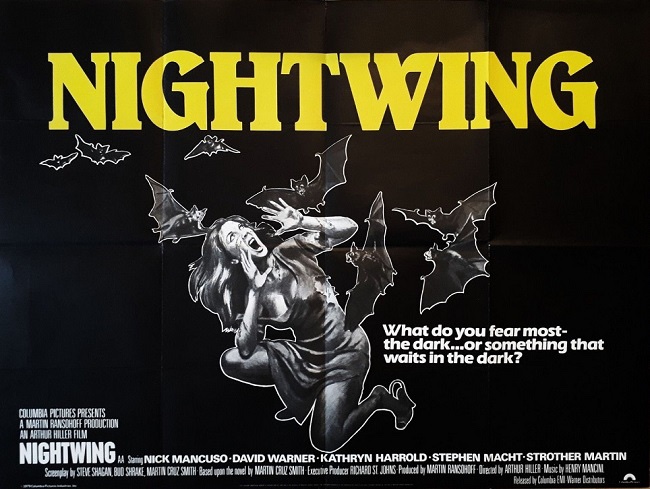
Arthur Hiller’s Nightwing is ostensibly billed as a horror flick about bats plaguing a native reservation in New Mexico and yes it is about that, but it’s less about the beasts themselves in the traditional monster movie sense and more about the very well written characters, the sociopolitical underpinnings and economic issues in the region, the indigenous mysticism and shaman folklore surrounding the situation and the biological threat of very real vampire bats, all coalescing into one hell of an entertaining film. I admire a script and execution that makes room for all facets of a story and doesn’t just opt for a cheesy creature feature with no real narrative or thematic heft. Nick Mancuso plays a sheriff from the Maski tribe who is investigating mysterious human and livestock deaths in his jurisdiction while carrying out the burial ritual of his mentor and local witchdoctor, a man greatly feared by others in the tribe. At the same time a vivacious, worldly bat hunter (the great David Warner) arrives and warns everyone that there may be a massive colony of deadly vampire bats roosting in the canyons nearby, while another opportunistic Maski (Steven Macht) wants to sell mining rights on their land to a nasty oil company and all of the factions get the surprise of a lifetime when the bats start attacking. You also get a cantankerous old Strother Martin as the local general store owner who married into a Maski family and still has the balls to talk shit about them to their faces. I’m not gonna lie, the bats themselves aren’t that impressive overall, they’re just a standard combo of shots of real bats flying and then rubber prosthetics for the actual attacks. There’s a scene inside a makeshift ‘shark cage’ style contraption that generates good suspense and a terrific sequence inside their creepy cave, but they’re not the most memorable monsters I’ve seen. What this film does have is atmosphere, very well written characters and genuine sense of place. It’s filmed in New Mexico and the scenery is breathtaking, brought to life by a wonderful score from Henry Mancini that samples Native instruments and echoes off the canyons eerily. There’s very cool shaman lore and the performances are exceptional, especially Mancuso’s fierce tribal cop, Macht’s slippery, morally secretive entrepreneur and Warner’s bat hunter who makes an almost religious, zen like fervour out of the vocation. Good times.

-Nate Hill