MARTIN MCDONAGH’S IN BRUGES — A REVIEW BY NICK CLEMENT

1

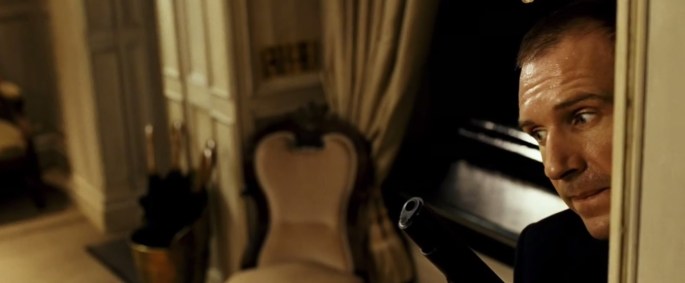
Martin McDonagh’s directorial debut In Bruges is a nasty, unpredictable piece of noir-soaked entertainment that pokes holes in the hit-man-on-the-lam genre while also displaying a wickedly funny sense of humor and a deathly serious sense of morality. McDonagh, an acclaimed playwright (The Pillowman, A Behanding in Spokane) directed from his own original screenplay, and crafted a David Mamet-esque big-screen debut with this tough-talking, wise-cracking, and happily bloody crime film that threatened to spiral out of control in the last act but didn’t thanks to some terrific performances and a surreal narrative. It’s the sort of movie that loves its own movieness, a work that’s steeped in tradition while also feeling uniquely original. It’s a debut that instantly noted the arrival of a talented new filmmaker, and if his follow up, Seven Psychopaths, wasn’t as fully realized, there was still a lot of demented fun to be had; it comes close in some ways to matching the anarchic spirit of Oliver Stone’s underrated U-Turn. If you saw the misleading trailer for In Bruges you might be under the impression that it’s an action film first and a dark comedy second. In reality, it’s the other way around; Focus Features cut together some dishonest previews trying to lure people in with the promise of constant gun fire and violence.
3

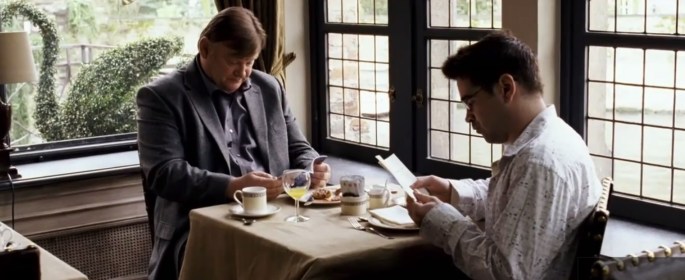
Colin Farrell, in what’s possibly a career best performance (his work in the trifecta of The New World, Ask the Dust, and Miami Vice is beyond underrated), is Ray, a Dublin-based hit-man who has just botched his first job. He’s accidentally killed a child after taking down his intended target, a priest. He and his partner Ken, the always fantastic Brendan Gleeson, are told by their wild-man boss Harry (Ralph Fiennes, snarling and utterly amazing) to hide out in Bruges for roughly two weeks, or until he deems it’s safe to come back to Ireland. So the two men, in tried and true buddy movie form, get a hotel room in the ancient city and start doing some sight-seeing. They visit art museums, take a boat tour, and experience some night life. Then, Harry comes calling, and he’s pretty pissed off. The way an independent movie-shoot, a horse-tranquilizer abusing little person, a smoking-hot French drug dealer (Clemence Posey, so sexy), and a bizarre nihilist with a unique fashion sense all figure into the plot are things I will let you discover.

5

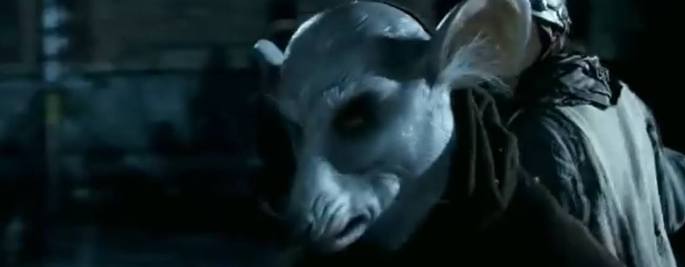
The climax, which is what the bullet-filled trailer is predominantly made up of, echoes back to Hitchcock while simultaneously calling to mind Guy Ritchie and Quentin Tarantino. It’s a heady mix of action, pathos, and jet-black humor that brings In Bruges to its satisfying conclusion. There is nothing cookie-cutter or “safe” about In Bruges, and the bold, surreal story turns that it took always keep me massively buzzed as a viewer. We’ve seen tales like this before so in order to make it fresh, McDonagh was required to have some fun with his characters and the plot. And fun he certainly had. He also showed himself to be quite capable, yet never show-offy, with his visual style, creating an excellent sense of atmosphere and dread. Making great use of the medieval, gothic city of Bruges, McDonagh and his ace cinematographer Eigil Bryld dreamt up a nightmarish landscape that perfectly suited the damaged psyches of the morally conflicted hit-men. These are men who live by codes, no matter how off-putting or morally reprehensible those codes may be, and the visual flourishes that went along with the thematic underpinnings were in perfect synch.
44

Politically incorrect at almost every opportunity and gleefully profane (there are lots of F-words), In Bruges carries a subversive, casual disdain for Americans that was aggressively funny. McDonagh, who is Irish, has created characters who speak their minds, no matter how rude, racist, or inconsiderate they may sound. Farrell, who is best when playing tightly coiled characters with live-wire intensity buried underneath, was given some fantastic one-liners that he delivered with a great sense of humor. A stand-out scene, taking place in a restaurant where Ray gets into it with an American couple, is one of the funniest (and meanest) scenes in recent memory, displaying true attitude that makes sense rather than just being thrown in for shock value. Fiennes, doing his best Ben Kingsley-in-Sexy Beast-riff, stole every scene he appeared in; what a rush it was to see this typically reserved actor chew the scenery with such gusto. And the older, regal Gleeson hit perfect notes of melancholy and wisdom that was well-balanced in terms of his hot-tempered partner. This film was a massive surprise when I first saw it back when I was living in Los Angeles, and over the last few years, it’s a title that I’ve come back to on any number of occasions. It’s currently streaming on Netflix, and the Blu-ray looks absolutely fantastic.
2

Episode 30: Alan J. Pakula’s KLUTE with Special Guest FRANCINE SANDERS

ep-30

We welcome back Frank’s former film professor Francine Sanders to discuss Alan J. Pakula’s masterpiece KLUTE.  We talk in depth about the film, and also cover some of Pakula’s other films.  We hope you enjoy!

GAVIN O’CONNOR’S JANE GOT A GUN — A REVIEW BY NICK CLEMENT

3

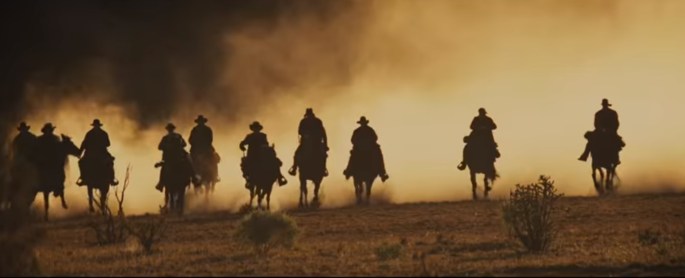
Other than the misleading title which suggests some sort of revisionist feminist twist on the old west milieu which never comes to pass, I’m not so sure what the problem was with Jane Got A Gun. This is that supposedly “bad” outlaw revenger that came and went this past winter, getting beat up by “critics” who were more interested in rehashing the lengthy behind the scenes turmoil that the project endured and the ensuing bankruptcy of distributor Relativity Media, rather than the solidly entertaining final product. There’s nothing game-changing about Jane Got A Gun; it’s a line drive up the middle with the hitter taking second base standing up. Sometimes a film doesn’t need to hit a grand-slam; sometimes it’s just fine to be well made and competently written and traditional. And to be honest, I’ll take ANY movie I can get that’s set in gunslinger territory. Gavin O’Connor’s sensible direction never went above and beyond the call of duty, and he was able to whip up some evocative shots with his skilled cinematographer Mandy Walker (Australia, Shattered Glass), while the tight editing by Alan Cody never wasted a moment. Everyone in the cast gave a committed and believable performance, with producer-star Natalie Portman and Joel Edgerton sharing some fine chemistry. Ewan McGregor made for a vicious baddie, and Noah Emmerich, Rodrigo Santoro, and Boyd Holbrook all offered up good support. The Blacklist-approved script, originally written by Brian Duffield with input from Anthony Tambakis and Edgerton, moves in a straightforward manner, totally unfussy and to the point, with terse dialogue and lots of opportunities for violent confrontation. The plot isn’t anything you haven’t seen before — a woman enlists the help of her bad-ass former lover to protect her home as a band of outlaws are coming for her and her husband, who has already taken a bullet in the gut.

2

This is yet another bad-luck item for director O’Connor, a classical director with a slew of underrated credits on his resume, including the Olympic hockey drama Miracle (which made some decent coin), the rough-house cop film Pride & Glory with Ed Norton and Colin Farrell (and a script co-written by Joe Carnahan), and the absolutely sensational MMA drama Warrior, which features Tom Hardy, Nick Nolte, and Edgerton in a trio of fabulous, method-y performances. O’Connor is attracted to quality material, he’s a strong visual storyteller, and he lands big stars in all of his projects; it would be nice if one of them would strike box office gold. This fall’s upcoming hit-man thriller The Accountant, with Ben Affleck, looks to be a return to the glossy, 90’s-styled, star vehicle movie for adults, and I’m hoping it delivers on the promise of its exciting trailer. But what a shame about the entire situation that Jane Got A Gun faced; it was never given a chance to succeed, and when the Weinstein company released it this past January, it bombed on a spectacular level, grossing $865,572 on its opening weekend from roughly 1,210 theaters. It would limp to a $3 million domestic total, making it the worst wide release opening in the history of The Weinstein Company. Currently streaming on Netflix, this is a movie that will satisfy almost anyone who gives it a chance, and if you’re a big fan of westerns like I am, this will definitely serve up a nice slice of undemanding yet enjoyable genre entertainment.

1

Well Documented by Kent Hill


This slideshow requires JavaScript.

It’s late at night here in the land Down Under, and as usual, I have just finished watching a movie. It has been a good week for it, watching movies. While my wife binge-watches her Supernatural, I have had the pleasure of watching two truly astounding portraits. One was De Palma and the other Life Itself.

I find myself as unable to speak at the end of this heart-breaking adventure through the life of the great watcher, Roger Ebert, as I remember being after coming out of the theatre seeing Braveheart. My Scottish blood was up that night, and I felt a pride for my heritage that any gift I might have with the English language shall come up short trying to relate it to you. It is my own trials of these last weeks that move me now as I witness the last days and last deeds of Ebert.

I recently had a health scare and am on medication to try to tame these issues. But they pale in comparison when I look had the degeneration of the mighty critic, whose battles with his friend Gene Siskel I enjoyed so often. It was not who was right or wrong about the films that moved me, but simply, the passion they exuded for this medium which is for me also, a life’s grand obsession.

We see Roger struggle in his final times, his end of days with a determination that is the embodiment of courage. Some may call it foolish courage, but fools and heroes are one and the same. To see him, as I have in myself early this week, have the frustration of his trials be swept away by a moment of enthusiasm and inspiration (in my case for this new gig that is writing for PTS.) When a filmmaker I approach to have a chat about their work gets back to me suddenly and I find myself throwing all else aside, taking to the keyboard, readying my thoughts so as not to waste what time I may be granted; so that this precious audience with another of those whose work has coloured my dreams and set fire to my desire to be a doer as well as a watcher is not squandered.

I am so moved I am grateful to my wife for interrupting me as the credits roll on the Ebert portrait. She wants to show me a defining moment on her Supernatural, and its helps to let the lump in my throat sink, as the building thoughts of the scare I have sustained, the thoughts of my father’s debilitated state after his stroke some years back all were climbing to the surface.

This is more than just a documentary about a film critic. It is a look into a life. It is a look at what drive can do for those with the will, with tenacity to not only chase their dreams but also not to stop until they are realised. We hear Ebert, though aided electronically to communicate, still fighting the good fight; this man Herzog proclaims the good soldier of cinema.

The equal to his film is the aforementioned De Palma – in this dude in the audience’s opinion – a long overdue tribute to a master that came to prominence with likes of Spielberg, Lucas and Coppola. The soft but blunt speaking student of Hitchcock sits centre stage to talks candidly of his work, his influences, shit behind the scenes and the personal life that was going on around and outside the set of his films.

From his early days working with a very young De Niro, to being there the eve the music of Bernard Herrmann fell silent, to the joy of The Untouchables and Mission Impossible, to the crushing blows of Bonfire of the Vanities and Casualties of War (one of my personal favourites of his films.)

I wish there were more master classes like this with the filmmakers I revere. I went to film school and was often taught by instructors who knew well their fundamentals, but then I watch something like this and feel as though I was ripped off. You sit and listen to this man as he breaks it down. His films, his methods, his reflections and it’s like the best lecture on making movies you have ever sat through. There was honestly many moments that I felt guilty somehow that I wasn’t taking notes.

I was pleased indeed that De Palma spoke a little longer on some films more than others. Grateful I was that these chapters were on the films of his I have watched over and over as my passion for them dictates. Though I do wish he had talked a little longer on the others, the likes of Mission to Mars, which I thought at the time and still do, was a really bizarre choice for him to helm. But I find I am satisfied – more so than I was with the Milius portrait (which I still loved mind you) for skipping over Farewell to the King, my favourite of all his movies.

Needless to say I have watched De Palma more times this week than Life Itself, being how I just received it in the mail today. Normally I would have watched it again before writing something about it, and you’ll forgive me, but I was just so moved by it I just had to fire up the keyboard and knock this out before sleep over takes me.

There are two things I walk away from these films with.

One, those that have truly mastered the art of the moving image, whether it is by making them or writing and informing an audience with a critical eye and a passionate tongue; these kinds of people know that it is a privilege to do what they do for a living. As Kubrick I believe said best: though it can be like writing War and Peace in a bumper car at an amusement park, when you finally get it right – nothing else comes close to it.

And two, these are the music makers and these are the dreamers of the dreams, as it was once said. Those of us that are still out here striving for a day in the sun must take heart and look to these examples of giants in the industry. We are not yet giants, but we must climb atop the shoulders of such, then and only then can we see the heights and know them for their glory, till giants ourselves we shall one day become.

I’m going to bed now. You seek out these films and watch them.

I pray you do.


JOHN BADHAM’S NICK OF TIME — A REVIEW BY NICK CLEMENT

3

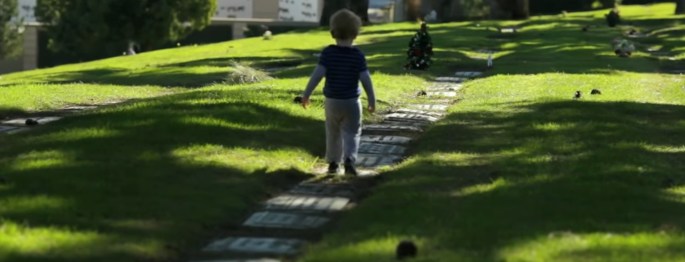
This is such a nifty flick – it’s basically an inflated B-movie with some low-key A-production values, with journeyman action filmmaker John Badham directing with a plucky sense of verve, and Johnny Depp doing a great “every-man” performance as a regular Joe forced into an extraordinary circumstance. Depp starred as mild-mannered businessman/father who is nabbed at the train station, along with his daughter, by corrupt cops, and is told that he has roughly an hour to kill the Governor of California. If he doesn’t, his daughter gets whacked. It’s that simple, a premise to make Hitchcock smile, and carried out in a slick and theatrically heightened manner to always remind you that you’re watching a movie. Nick of Time is so mid-90’s, and I mean that as a compliment. I can remember seeing this on the big screen, and then watching it 250 times on HBO. Badham and screenwriter Patrick Sheane Duncan did the “real-time” conceit very well here, with the action starting immediately and rarely letting up for 90 minutes. Sinister and cheesy in almost equal measure, this is the sort of disposable entertainment that’s become a rarity on studio slates in recent years.

2Christopher Walken was terrifically menacing to the extreme, all bug-eyed crazy and sweaty-desperate; Marsha Mason was fun in a key supporting role; Charles S. Dutton did a great job as the one guy you can trust; and Courtney Chase was fantastic as Depp’s perpetually scared and kidnapped little girl. This movie absolutely revels in child endangerment, and really reminds you how things have changed in Hollywood over the years. Arthur Rubinstein’s sketchy score kept the tension palpable, and the hot-white-light cinematography by Roy Wagner cleverly used numerous POV shots and skewed angles to ratchet up the anxiety; this is a very visual movie in many regards, and he must’ve had a really fun time figuring out how to cover all the action. Frank Morriss and Kevin Stitt’s nimble editing was a lesson in pure economy, never allowing the pace to sag for a moment. Most of the film was shot on location at the Westin Bonaventure Hotel in downtown Los Angeles. I seem to remember a number of films shooting there in the 90’s. Currently streaming on Netflix; it’s lots of silly fun.
1

MARK WEBBER’S THE END OF LOVE — A REVIEW BY NICK CLEMENT

3

Mark Webber’s The End of Love is a small masterpiece, a film filled with such aching sadness and yet such hopeful possibilities that it consistently reminds me of how fragile life is, and how we often take it for granted. This film will be too much for some people, too raw and nakedly emotional, and I totally understand that; you have to want to take this particular journey as it goes to some very real places that might be uncomfortable for some viewers to process. And I know that my perception and respect for The End of Love has changed throughout the last few years, as I now have a child of my own, and could never begin to think of raising him without his mother. The power of family and what it does to people can’t really be put into words, and when this bond is cut short, it produces feelings of fear, uncertainty, and anger. Webber’s delicate screenplay never leaned too hard in any one direction, and because he cast himself in the lead role and acted with his own two-year old son, Isaac, the entire film has an authentic quality that is rarely seen on screen. The moments between the two of them are incredible to observe, as a real paternal instinct can be viewed all over Webber’s expressions, while Isaac steals the show at every point, delivering an impossibly adorable performance that never felt cloying because of the skillful way that Webber structured the entire piece.

2

Webber plays a struggling actor living in Los Angeles, shuffling from one audition to the next, without any sense that his career is gaining any forward momentum. Then, suddenly, his life is changed in an instant and forever, when his wife, and the mother of their child, unexpectedly dies, leaving him as a confused and stressed single parent, who is still trying to figure himself out as a person, let alone being fully prepared to tend to the needs of a small child. The observational aspects to Webber’s filmmaking aesthetic produce a low-key vibe that very much feels inspired by European art cinema, in that the film is more concerned with catching small moments in an effort to create a larger picture. The supporting cast includes some familiar faces such as Michael Cera, Amanda Seyfried, Michael Angarano, Aubrey Plaza, Alia Shawkat, and Jason Ritter, while the underutilized and alluring actress Shannyn Sossamon cut a convincing portrait of a single mother trying to navigate some of the same precarious waters. There’s a level of sensitivity in Webber’s direction that casts a spell over the viewer, and despite a low budget, the film was expertly shot by the smart cinematographer Patrice Cochet, who knew exactly when to opt for close-ups and when to settle his camera in the background, so that it could simply observe the behavior and relationships of the various characters, especially those moments between father and son. What an amazing document to have as a parent, as this is a piece of art that truly defines the term forever lasting. And while the movie is called The End of Love, it could easily have been called The Beginning of Love, as it presents a world that demands change and acceptance, while demonstrating that people are capable of just about anything, no matter the situation, if they use their heart and their mind to accomplish their goals.

1

Rob Zombie’s 31: A Review by Nate Hill 

I couldn’t help but feel fairly underwhelmed and a bit let down by Rob Zombie’s 31, which is a reaction I never thought I’d have to a film from one of the most dedicated and talented artists working in the horror genre these days. 

Now I’m not saying saying I hated it or even really disliked the film, there’s actually a lot of incredibly creative visual material and good old fashioned practical effects to feast your fangoria loving eyes on, but the fact remains that Zombie has regressed to the primal state he opened up his first few films with. 

  There’s two phases of his work so far: a rip snortin’ hoo rah gross out redneck scumbucket pile of profanity and bottom feeding trailer trash human garbage, which is what we saw in The Devil’s Rejects, House Of 1000 Corpses and somewhat in Halloween. Then there’s quieter, more thoughtful and meditative Zombie, using an art house, Argento psychedelic slow burn template that he brought hints of to the table in the excellent Halloween II and then full force with The Lords Of Salem, which to me is his best film so far. Now I love the trailer trash aesthetic to bits. It’s mile zero, the genesis of his fascinating career so far, and his writing is detailed, character driven, lifelike and oh so hilarious. But there’s a natural progression to any filmmaker’s career, moods and states which ebb and flow into new regions of stylistic exploration, and 31 just feels like a detour down the wrong road. I expected the atmosphere we got with Salem to churn forward and be a leg on the table of whichever phase came next. But alas, he has done a willful throwback to his earlier work, and although solid (I believe he’s incapable of making a truly bad film, there’s just too much creative juice with him), it’s sadly the least memorable among even phase 1 of his work. 

 31 is essentially a variation on The Most Dangerous Game, with a dirty dustbowl setting thrown in. A group of potty mouthed carnies, including Meg Foster, Jeff Daniel Philips and the ever present Sheri Moon Zombie, trundle through the desert, reveling in promiscuity and lewd behaviour, another trope that is getting old and icky, even on Rob’s barometer. Attacked and kidnapped one night by a band of scarecrows, they find themselves unwitting contestants in a vicious game called 31 (why is it called that? I still don’t know), on Halloween eve. The masterminds are a group of creepy aristocrats led by a plummy Judy Geeson and Malcolm McDowell, sporting a powdered wig, attire of french royalty and going by the name Father Murder. They release Moon and her peeps into a dismal maze and set a group of demented cackling psychopaths called the “heads” after them, dressed like clowns and seriously adjusted I’ll adjusted, these folks. Now you’d think that premise would be just a bucket of horror fun, and it’s nominally entertaining but just never really takes off into the desperate, visceral fight for survival I wanted to see. The clowns are varying degrees of scary and amusing. EG Daily fares well as whiny creepshow Sex Head, and there’s Sick Head, a chatty midget dressed up like Hitler who yowls at his prey in garbled Hispanic incantations. The film’s real energy shows up in the form of Richard Brake as Doom Head, a repellant maniac who is the only actual scary one of the bunch. Brake is a criminally underrated actor who I had the honour of interviewing some months ago, and when asked what the favorite role of his career is so far, he promptly said this. One can see why, it’s the most he’s ever been given to do in a film and he milks it with virile ferocity and animalistic sleaze that will leave you crying in the shower. McDowell and his cronies are here and there, but feel oddly disconnected from the events at hand, and while visually ravishing, ultimately aren’t given much to work with. I will say though that Zombie has a flair for the musical finale, and the end sequence set to ‘Dream On’ here is a blast that does indeed touch the epic heights of his older films. 

 And there you have it, kids. I wanted to rave about this one, I really did. But it use felt loose,

cobbled together and nowhere near as cohesive and brutally mesmerizing as his earlier work, all of which still hold up. There are elements here that work, but unfortunately just not enough, and framed by a whole lot of choices that feel copied and pasted. Now Zombie at his worst is still better than most in this sagging genre these days, but for those of you who know his work well and have expectations for the guy, you may just feel a little let down, like I did.

CURTIS HANSON’S IN HER SHOES — A REVIEW BY NICK CLEMENT

1

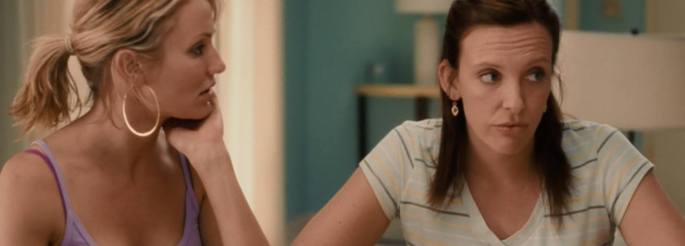
I love In Her Shoes. This is a wonderful movie, filled with big laughs and lots of heart, never succumbing to anything cheap, and always demonstrating compassion for its characters. Curtis Hanson’s naturalistic direction was a perfect fit for the emotionally sensitive material, while he demonstrated a deft hand for light comedy, and as always, a generous ability to coax excellent performances out of an ensemble cast. He made SO many solid or great films all throughout his steady directorial career: The River Wild, Wonder Boys, 8 Mile, L.A. Confidential, Bad Influence, The Hand that Rocks the Cradle – he could do any genre seemingly at any point, and it’s a terrible shame that health issues slowed his life and filmic output, and even more sad to learn of his recent passing just yesterday. I need to go back and revisit his poker drama Lucky You, with Erica Bana, on which he collaborated with the great writer Eric Roth (The Insider, Munich, Benjamin Button). The eclecticism of Hanson’s storytelling choices simply cannot be denied, and because he placed a large emphasis on the people within his narratives, all of his films have a humanistic quality to them, even when dabbling in genre-y elements.

2

Cameron Diaz was super-sexy as Maggie, a promiscuous, hard-drinking, and perpetually aimless couch potato who can never pull her shit together, and was matched very well with Toni Collette as her all-business sister named Rose, a woman trying to successfully balance her career and love life in equal measure. Shirley MacLaine did fantastic work as their grandmother who sets them both straight in all areas of life, while Norman Lloyd stole the entire show and elicited tons of tears as a blind patient of Diaz’s (she becomes a nurse for the elderly) who asks her to read poetry to him as he lays in his bed; the unique friendship that develops between the two of them always melts my heart and makes me smile. Seriously – this is a great little film, with nary a false moment or wasted scene. The screenplay by Susannah Grant was witty and funny and sharp and Terry Stacey’s warm lensing made the most out of the sunny Florida locations and Diaz’s bikini-ready body. Call it a chick-flick if you want — I’ll just call it an awesome movie that never fails to entertain and enlighten, and a further reminder of how elegant and clean a filmmaker Hanson was all throughout his quietly underrated career.

3

DAVID CRONENBERG’S SPIDER — A REVIEW BY NICK CLEMENT

1

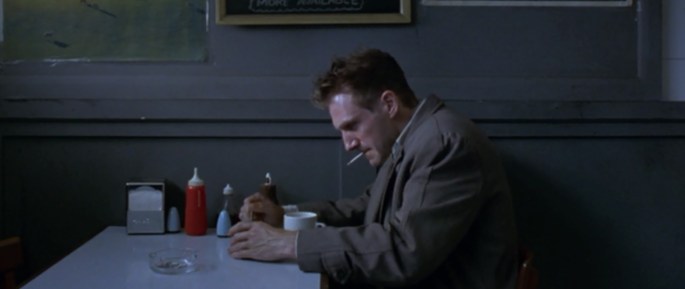
Spider is easily one of my favorite films from master filmmaker David Cronenberg, with other personal highlights on his wild and provocative resume including Videodrome, A History of Violence, Dead Ringers, Scanners, Eastern Promises, and The Fly. He’s made so many great films, almost all of them extremely memorable, but I think this is one of his sharpest and most deceptive works to date, a movie that’s hard to explain without spoiling, so if you don’t know too much about this one, I would suggest staying far away from anything that might give up it’s numerous secrets. The narrative centers on Dennis Cleg, aka “Spider,” played by Ralph Fiennes in a shattering performance that’s very hard to shake upon first viewing, a man who is recovering at a halfway house after being released from a mental institution after decades of treatment. He begins to attempt to make sense of his fractured life, striking up a friendship with another resident of the house, played by the great John Neville. It seems that Spider’s childhood was one filled with terror, as he was abused by his father, played by Gabriel Byrne, and lived through the murder of his mother, hauntingly played by Miranda Richardson. Themes of transference, emotional isolation, and mental duplicity are all at work, while Fiennes went all out in a performance that ranks as one of his absolute best.

2

The layered screenplay by Patrick McGrath, which was based on his novel, perfectly balances the real world with Spider’s remembrances, while adding a trippy “is-this-really-happening” element in certain spots. The appropriately dark, shadowy, and murky cinematography by Cronenberg’s regular director of photography Peter Suschitzky casts a gloomy pall over the entire film, that feels very much in line with psychologically complex story being told. Howard Shore’s creepy score and the tack-sharp editing by Ronald Sanders keeps you on edge at all times. Spider premiered at the Cannes Film Festival and was released in 2002, and while it received extremely strong reviews from critics, it failed to catch on with audiences, as it was only released in a handful of theaters in select cities in America. Cronenberg won Best Director at the Genie Awards. Produced by the legendary Samuel Hadida (Domino, True Romance, Freeway, The Rules of Attraction, Perfume: The Story of a Murderer, and Good Night, and Good Luck).

3

Brett Ratner’s Red Dragon: A Review by Nate Hill


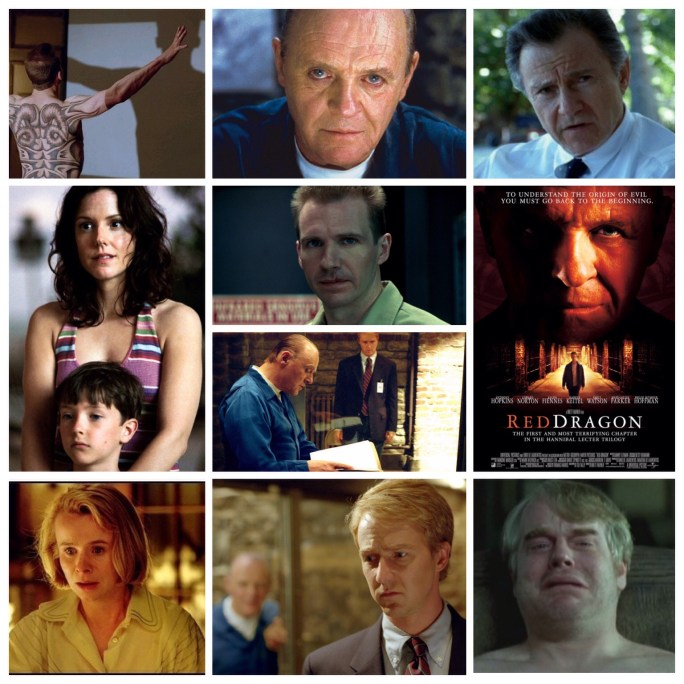
Brett Ratner’s Red Dragon, although pretty darn stylish, is just cursed with being the least engaging and unique Hannibal Lecter film out there. It’s not that it’s a bad flick, but when you have Silence Of The Lambs, Hannibal and the far superior Manhunter to compete with, you’re trucking down a rocky road. The strongest element this film has going for it is Ralph Fiennes, who plays the hell out of the role of Francis Dolarhyde, the disturbed serial killer also known as the Tooth Fairy. Previously played by an introverted and terrifying Tom Noonan, Fiennes gives him a more rabid, haunted vibe and steals the show, but then he always does. Edward Norton is a bit underwhelming as FBI behavioural specialist Will Graham, sandwiched between William L. Peterson and Hugh Dancy’s modern day, definitive take on the character. Graham has the tact and luck to ensnare notorious cannibalistic murderer Dr. Hannibal Lecter (Anthony Hopkins purrs his way through a hat trick in the role), whose help he subsequently needs in pursuing Dolarhyde. Harvey Keitel clocks in as rock jawed Jack Crawford, Graham’s boss and mentor, solidly filling in for far mor memorable turns from Laurence Fishburne, Dennis Farina and Scott Glenn. All the scenes with Dolarhyde fare best, given some truly impressive rural cinematography that sets the mood for the killer’s twisted mindset nicely. The cerebral jousting between Graham and Lecter only half works here, dulled in comparison to the crackling exchanges that Jodie Foster masterfully handled with Hopkins, who was far, far scarier back then. Emily Watson lends her doe eyed presence to the blind girl that brings out the only traces of humanity still left in Dolarhyde, Philip Seymour Hoffman shows up as bottom feeding tabloid reporter Freddy Lounds, and Mary Louise Parker, grounded as always, plays Graham’s wife. You could do worse in terms of films like this, but in the Lecter franchise it falls pretty far short of any of the other entries, save for the few inspired moments involving Fiennes.