BLAIR WITCH: A REVIEW BY TIM FUGLEI

blair-witch-1

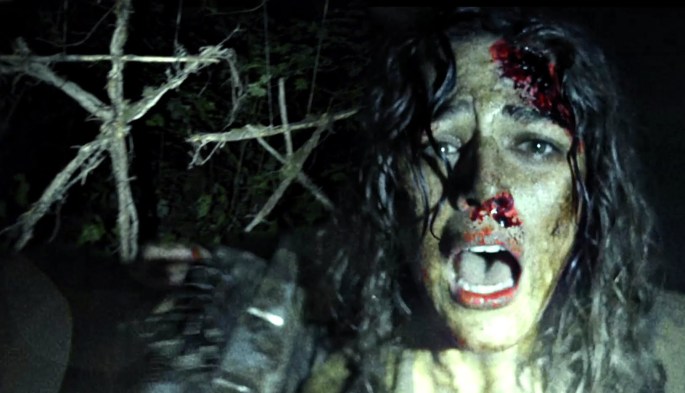
Few could have predicted the ‘broadcast yourself’ era, and fewer realize it was predicted by a no-budget indie smash film that cruised across pop culture like a steamroller before most people had personal phones, much less YouTube accounts.  Back in 1999 The Blair Witch Project was sold to audiences with a desperate selfie video of an aspiring documentary filmmaker who was about to die a horrible death, apologizing for her actions and begging forgiveness.  It was gripping stuff that launched a thousand copycats—a whole genre unto itself of microbudget ‘found footage’ frights—and never really had any true challengers to its first jolt to the zeitgeist.  Fast forward your camcorder to 2016, where indie cinema of the nineties has given way to studio tentpoles and remakes, wherein we of course get a return to Burkittsville (sorry, only one way tickets) helmed by the talented filmmaking duo of Adam Wingard and Simon Barrett.  Responsible for the successful indie thrillers You’re Next and The Guest, not to mention a sneaky brilliant anti-marketing campaign that harkened back to the clever promotion of the original, thus raising expectations  (the film was publicly titled The Woods until a San Diego Comic Con reveal earlier this year), the pair have lovingly crafted Blair Witch as a direct sequel to the 17 year old horror classic.  Unfortunately love and talent don’t trump genuine creativity, and the new film embodies most criticisms you’ll hear these days about slavish fan service and the attempts to create a franchise out of every successful movie ever made.

Not to say we get poor effort here.  Wingard and Barrett know thrills, pacing and how to entertain, and they definitely know their source material.  Gushing in fandom during a live Q&A session after the screening, they discussed everything from the deep mythology to their clever Easter Eggs sprinkled throughout (keep an eye open for a blink-and-you’ll-miss-it cameo from the original camera itself, supposedly one of the most expensive props on the production), so believe me when I say there truly is a lot of love up on the screen throughout Blair Witch.  We’re introduced to a larger group of players led by the kid brother of Heather, the first filmmaker to fall victim in the Maryland woods.  Despite huge search parties, no remains or house were ever found after the last collection of footage went viral, so James (James Allen McCune) harbors hope that his sister is still out there, and as luck would have it his new friend/love interest Lisa (Callie Hernandez) is an aspiring documentary director! Together they will assemble friends and bravely repeat every mistake the other doomed crew made, and then some.  Modern technology enables all filmmakers involved to capture multiple angles in a much richer fashion than the single camera of The Blair Witch Project, and thanks to years of self obsessed iPhone footage littering the internet the audience doesn’t even stop to throw out the loudest criticism of the genre—why would anyone still be filming this as the situation goes to hell?  In 2016, of course they would.

Sadly all of these ingredients don’t add up to the original magic.  A small group of non-actors allowed to improvise almost every scene in the first film is now replaced by a large ensemble of professionals clearly following a script.  Additions of digital quality sound jolts and lighting end up subtracting from the immersive experience that cast a spell on audiences back in the day.  And in trying to amp up the third act, Wingard and Barret commit an unforgivable sin that undermines every suggestive horrific joy we all loved the first time around—they show us the monster.  Amp up that third act they do, but instead of achieving thrills with new terrors, they simply continue to ape the exact three act structure of The Blair Witch Project, which is ultimately Blair Witch’s downfall.  Figuring out a creative way to get a different group of people fiddling with their smartphones into peril and not slavishly repeating most of the beats that were much fresher in The Blair Witch Project would have served the movie well, but safe choices are made through the film, leaving the viewer stewing in a musty brew of nostalgia and disappointment.

blair-witch-2


PAUL THOMAS ANDERSON’S THE MASTER — A REVIEW BY NICK CLEMENT

6

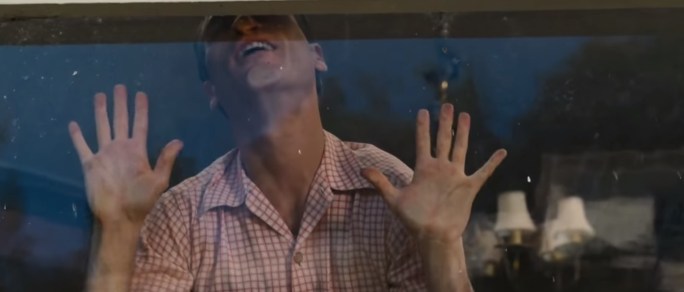
When I first viewed The Master, Paul Thomas Anderson’s scathing critique of Scientology and blind hero worship, I didn’t know what to make of it. His previous film, There Will Be Blood, was a towering work of American cinema; how would he follow up one of the most acclaimed of modern films? Released in 2012, the film confounded some critics initially, with many others leaping to sing its praises; for me, this is the first and only PTA effort that took a few viewings for me to totally fall in love with rather than be head over heels upon first sight. And I think, the big reason for the personal disconnect at first, was that I didn’t realize that, at heart, the film is a bitter black comedy, designed to make you laugh over events that are outrageously absurd.

1

But the more I revisit the film, the harder and harder I laugh and the more brilliant I realize it to be, with each performance informing the rest of the ensemble, and PTA’s deliriously bleak worldview on caustic display, spinning a story about psychologically fractured people and the way that one’s own self can become transformed by the power of thoughts and words and repeated actions. It’s also interesting to note that PTA based this film from some unique sources, including the “work” of Scientology founder L. Ron Hubbard, portions of early drafts from There Will Be Blood, drunken Navy stories that were told to him by Jason Robards during the filming of Magnolia (the draining of the torpedoes for their ethanol, for instance), and the life events of iconic author John Steinbeck. Boogie Nights and Punch Drunk Love still remain tied as my favorite works from PTA, but this is a filmmaker who only knows how to craft masterworks.

2

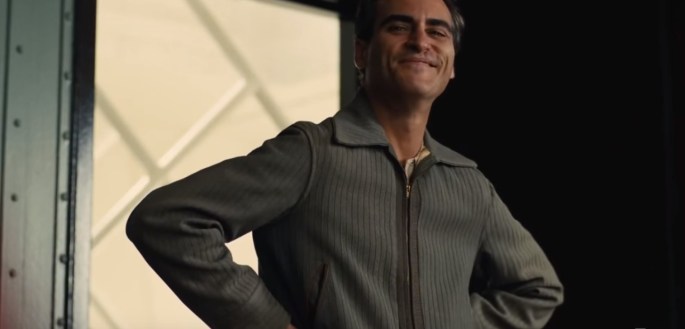
Starring Joaquin Phoenix in a slippery-serpent performance of total animalistic rage, The Master takes a piercing and highly critical view of a fictitious “religious movement” called “The Cause”, which is a not-so-thinly-veiled reference to “The Church of Scientology.” Phoenix is Freddie Quell, a PTSD-afflicted WWII veteran who is having severe difficulty adjusting to life post-combat. After some aimless and wasted drifting, he crosses paths with an enigmatic man named Lancaster Dodd (Philip Seymour Hoffman in one of his best, most hysterical performances, all pure hostility and empty bravado) who purports to be a religious leader, ready to unleash “The Cause” upon the American masses. He’s a fraud, of course, and over the course of the narrative, Freddie will learn all about how Lancaster is nothing more than a cheap salesman with a twisted agenda.

4

Amy Adams’ is Dodd’s strange and brainwashed wife, who likely knows that her husband is full of hot-air, but blindly goes along with his ruse and emotional deception. And as per usual with a PTA picture, the film has a stacked deck of amazing character actors and pitch-perfect faces, all of whom bring a distinct level of class to the entire production. As the story unfolds, you watch various levels of madness unfold all around each person caught up in the story, with Phoenix’s performance becoming something completely surreal by the end. And as you watch the relationship between Phoenix and Hoffman evolve, a sort of kinship can be seen between the two actors; they clearly loved working with each other as they both brought out something special from each other.

3

The Master boasts some immaculate production values, from the pristine and gorgeous cinematography by Mihai Mălaimare Jr., who shot the film in 65mm, producing an image that had a pristine quality on the big screen, and resulting in a Blu-ray transfer that is beyond spotless. Johnny Greenwood’s pensive and entrancing musical score is yet another distinguished collaboration with PTA, and the dreamy editing patterns by Leslie Jones and Peter McNulty only amplifies the surreal nature to the entire piece. The evocative and politely sinister production design by Jack Fisk and David Crank, especially in Dodd’s compound, only ups the level of anxiety (both physically and emotionally) felt by everyone in the film, especially Freddie. On an aesthetic level alone, the film is a marvel, and when combined with PTA’s heady and provocative themes, not to mention his subtle sense of comedy, the film becomes something rather dense and brilliant.

7

And none of this – NONE OF IT – would have happened without the financial backing of producer Megan Ellison, who for the last few years has utterly dominated the auteur-driven independent filmmaking space, with credits such as Inherent Vice, Zero Dark Thirty, Killing Them Softly, Spring Breakers, True Grit, Lawless, The Grandmaster, Her, American Hustle, Foxcatcher, Joy, Everybody Wants Some!, Wiener-Dog, Sausage Party, and upcoming films from PTA (a 50’s fashion world drama with Daniel Day Lewis), Kathryn Bigelow (an untitled but sure to be masterful Detroit riots drama), and Alexander Payne (the corporate satire Downsizing). Fucking-A. Without her, we’d be NOWHERE as film lovers. The Master made its premiere at the Venice Film Festival, where it won the FIPRESCI Award for Best Film. It was released on September 14, 2012, and was met with excellent if curious reviews, and despite not bringing in a big haul at the box office, it would end up receiving three Oscar nominations: Best Actor for Phoenix, Best Supporting Actor for Hoffman, and Best Supporting Actress for Adams.

11

Breaking into the rec room: An Interview with S.S. Wilson by Kent Hill


This slideshow requires JavaScript.


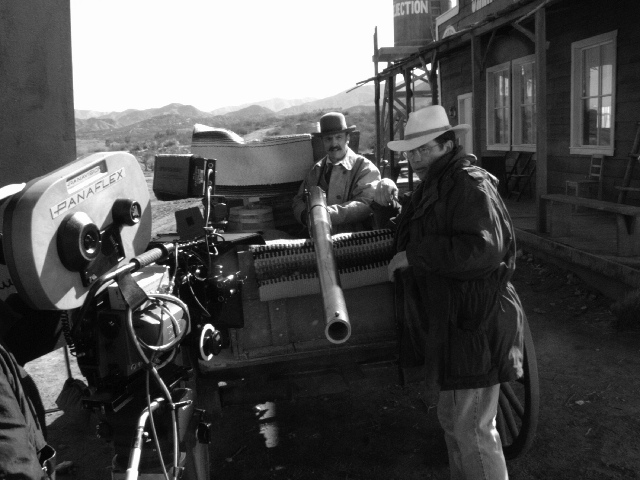
Steven Seth Wilson is the writer, director, producer best known for his work on the Tremors films and TV series. These credits though, are not all he has accomplished in his fascinating career. He also gave us Johnny 5, *batteries not included, episodes of the animated series MASK, and had the misadventure (one might say) of heading out into the Wild Wild West.

Time, however, has elevated the films he has penned (along with long-time friend and collaborator Brent Maddock) into that of cult status, and has seen him go from not only writing, but to talking them helm of his productions as a founding member of  Stampede Entertainment.

It was a treat for me recently to be granted the chance to interview this filmmaker whose works I heartily admire.

KH: Sir you are the writer connected to some of the cherished movies and one animated television program of my youth thank you for this opportunity?

SSW: I am happy to contribute.

KH: Did you always want to work in movies?

SSW: Believe it or not, my father “pushed” me into the film business.  He is a psychologist, so when I left for college, I signed up for psychology courses.  When he found this out, he went to my advisors and changed my major to film and television, saying to me, in effect, “You’ve been making movies in our back yard since you were twelve!  What are you thinking?”  I had not thought of trying to have a career in film making until that moment.

KH: What was your first job in the industry?

SSW: I began work as a stop-motion animator, doing animation scenes for educational short films that were sold to schools and libraries.  I was enraptured by the films of Ray Harryhausen (7th Voyage of Sinbad, etc) and had studied stop-motion techniques from an early age.

KH: MASK was one of my morning cartoon staples; how did you come to work on that show?

SSW: Like most jobs in Hollywood, it was “who you know.”  My first roommate when I came to California to go to University of Southern California film school was Terrence McDonnell.  We kept in touch and, many years later, he landed the job of story editor on M.A.S.K.  The story editor approves stories and oversees the writing of all the episodes.  The show was unusual in that the studio had ordered 65 episodes at once.  That was an absurdly large show order, so the editors had to develop lot of stories as fast as possible.  Terry joked, “I was hiring anybody I knew who could type!”  I ended up writing quite a few of the episodes.

KH: We now come to the adventures of Johnny 5, can you tell us of the genesis of Short Circuit?

SSW: It spawned from an educational short film.  One of them I wrote, called “Library Report,” starred a stop-motion robot that I also animated.  The film was so successful, my writing partner, Brent Maddock, and I decided to write a spec script featuring a robot.  We had written several other scripts with no success. We couldn’t even get an agent.  But this one turned out to be the one that got us the break.  A fellow Brent met in a screenwriting workshop knew the son of producer David Foster, and knew that Foster was looking for scripts with robots.  He showed it to the son, the son showed it to Foster, and the next thing we knew we were being called to a meeting on the old MGM studio lot (now Sony).

KH: A couple years after Short Circuit 2 arrived; was this commissioned purely on the success of the first or did you simply have more to say?

SSW: We always have more to say!  But in truth it was green-lit because Short Circuit 1 was quite successful (No. 1 at box office for a time).   By the way, this was long before the remakes and sequels craze in which Hollywood is now mired.  You may be surprised to know that our agent lobbied against our writing the sequel.  Back then such work was regarded as best handed off to hacks.  But we didn’t want anyone else coming up with stuff for Johnny Five.

KH: *batteries not included is a wonderful movie, it brought to mind my bedtime stories like the elves and the shoemaker. Can you tell us of the making of the film and the Spielberg connection?

SSW: Spielberg was making the TV show Amazing Stories at his studio, Amblin Entertainment, at the time.  *batteries  was based on a script written by Mick Garris for that show.  Spielberg liked it so much he felt it should be a feature instead of a TV episode.  Director Matthew Robbins and Brad Bird then wrote a movie-length version, but became so busy in pre-production they didn’t have time to keep re-working it to fit the budget.  Brent and I were already working at Amblin on other things, so Steven Spielberg asked us to do the revisions, working closely with Matthew and Brad.   It was a very intensive process, as the movie was already in pre-production, with sets being built, robots designed, etc.  Spielberg was personally involved every step of the way, often in the script meetings when we turned in each new version.

KH: Are you, or have been one of those writers that have been ever present on set?

SSW: Hah, it’s a rare writer who ever gets that opportunity.   In general, writers aren’t welcome on the set.  The director wants to do his/her own thing with the material and doesn’t want to be bothered with your petty ideas and complaints.  We were frustrated by this reality, and our agent counselled us that if we wanted more creative control, we’d have to become producers/writers. 

KH: You have written a couple of films with a similar keynote being Heart and Souls and Ghost Dad, spectral comedies?

SSW: That’s just by chance.  Spielberg originally came to us to re-write Ghost Dad (which was originally called Ghost Boy).  Then, for a variety of political reasons, the movie was not made at Amblin.  Since the script was owned by Universal, it got re-written and re-considered by other people over the years, eventually being made by Sidney Poitier and Bill Cosby.  We had forgotten all about it.  Indeed, we did not even realize it had been put into production until we read about it in Variety (that’s how much power writers have in Hollywood).  There was very little left of our original script. 

Heart and Souls was a movie based on a short film, called “Seven Souls.”  By the time it was made, we were known for the fantasy/sci-fi slant to our writing, so Universal approached us about turning the short film into a feature.  We worked with the film’s creators, adding ideas to flesh out the story — and successfully lobbying them to let us reduce the original’s seven ghosts to four!

KH: Before we come to the Tremors films, can we touch on another monster: the Wild Wild West? Big budget, Big losses, Jon Peters and the Razzies?

SSW: Oh my, long story.   Two producers acquired the rights to the much-loved TV show and contacted us about writing the feature.  They’d already had some scripts done, but didn’t like them, and wanted us to start from scratch.  We loved the show, re-watched episodes, contacted fan groups, etc.  Then came up with our story and turned in our script.  At first it didn’t go anywhere and, as one must with many Hollywood projects, we forgot about it.  Then, maybe a year or so later, we got a call that Barry Sonnenfeld was going do it.  So we were plunged back into the action, working on a revision under his supervision.  Somewhere along the line, since it was now a BIG movie, it was handed over to BIG producer Jon Peters.  The story we like to tell there is that, in our first meeting, he did not realize it was a Western, and wasn’t pleased to hear it.  Anyway, we worked very hard on it, occasionally being given some very strange demands.  As an example, at one point the Peters group insisted we change the spider machine to a modern stealth bomber.  We tried to compromise, shading it toward a Victorian era steam-punk flying machine.  In the end, Barry didn’t like the flying machine, and late in the process he asked to see earlier drafts with the spider machine, which we happily gave him.

Then, quite suddenly, we were off the movie.  We turned in our latest revision and never heard from anyone on the production again until we were sent tickets for seats in the back of the theatre at the premiere.  It was rewritten many times by many writers after we were fired and, like Ghost Dad, very little of our original script remains, other than the spider machine itself.  We were surprised that the Writers Guild ended up granting us shared screen credit.

So, yes, you get Razzies for something over which you had no control whatsoever.

KH: Let’s talk Graboids, tell us of the genesis of Tremors?

SSW: It grew out of the desire to have more control.  We took our agent’s advice and wrote the script on spec, so that we could dictate what happened when it was sold.  It was a tough sell, but with a great deal of behind-the-scenes deal-making, agent Nancy Roberts finally sold it to Universal, getting them to agree to let us produce and our long-time friend (from the short film days) Ron Underwood direct.   We were delighted to be in the trenches with Ron every day on location, battling the elements and coming up with creative ways (with much help from our brilliant crew) to stay on time and on budget.  Eventually, the dailies were looking good enough that the studio even gave us little increases here and there.  The famous car-sinking scene was originally cut, for example, but finally got approved and was the very last scene shot.

KH: One good turn deserves another. Was Aftershocks a given?

SSW: Not at all.  Tremors was not a box office hit.  It did not become a cult film until much later, thanks to the then-new world of movies going out for rent on VHS tape.  Years later, as Universal began to see how much it was making in that secondary market, they came to us and asked if we were interested in making a sequel, for less than half the original’s budget.  But we said yes.  And I got to direct it.

KH: Three, four and even more. You directed a couple of instalments and then came the series?

SSW: Yes, the movies were all quite successful in the DVD universe.  Universal had a whole division dedicated to making sequels to its theatrical features and they kept asking for more Tremors.  We had total creative control over all of them, so they were a delight to make even though we worked for the minimum rates.  And Universal was fine with us directing them, our now business partner in Stampede Entertainment, Nancy Roberts, “the mother of Tremors,” producing, etc.

The series came out of the blue, when Sci-Fi network (now the comical “SyFy”), asked us if we wanted to do it.  As always, we said, “Sure!”  Ironically, we had tried to sell the idea of a Tremors series a few years before, with no takers.  So it was fun to be able to use some of the ideas we’d already come up with.

KH: What happened regarding Bloodlines (Tremors 5)?

SSW: You will have to ask Universal.  We had written the script ford Tremors 5 immediately after making Tremors 4.  But Universal chose not to make it at that time.  Then, some ten years later, they let us know they’d decided to make it after all.  They asked us to rewrite/update it, but were adamant that we would have no other creative control of any kind.   We could not direct, produce, go to the set, etc.  We were given no explanation for this decision.  For us, the only reason to make these low budget movies was for the fun of continuing to innovate while staying true to the creature rules and character personalities that fans had told us for decades they loved.  So we felt we had no choice but to decline.  The studio quickly hired another writer and the movie was made without us involved in any way.

KH: Can you talk a little about your friendship/collaboration with Brent Maddock and the rise of Stampede?

SSW: Brent and I have written now together for some 35 years.  We just consistently seem more successful working together than independently.  Broadly speaking, he’s the “character” guy and I’m the “story” guy, though by the end of each script we work together line by line in polishing.

Stampede was the brainchild of our agent, then manager, then partner Nancy Roberts.  It grew out of our desire to make our own movies the way we wanted to.  For many years we maintained an office and staff.  For now we have downsized, with the ability to ramp up again if we sell something we can control and produce or direct.

KH: IMDB is not always reliable, but I noticed Short Circuit was at the top of your credits with (announced) following it?

SSW: The rights to a remake were granted by the owner (not us) to Dimension Films.  Since David Foster was involved, he invited us to work on the remake our own movie.  It was actually fun to try to solve the problems of updating it, both technologically and artistically — and there are problems.  After all, in the original it was easy for Johnny Five to remain hidden.  No one had cell phones or, for the most part, even home computers! 

But after a couple of drafts, Dimension rejected our version.  For one thing, they insisted that the remake should star a little kid along with the robot.  So we were fired and they moved to other writers and directors.  It has been years since then, so it is unclear if they are still on track to make the movie.

KH: Sir, thank you for this opportunity, as a fan of your work this has been a privilege?

SSW: You are most welcome.  Thanks for your interest.


That was S.S. Wilson dear readers. If you haven’t kicked back and enjoyed any of his movies recently then do it now Laserlips, ’cause your mama is a snowblower…

Coming Soon: Zero Defects: Remembering Innerspace with Vernon Wells by Kent Hill

JOHN D. HANCOCK’S LET’S SCARE JESSICA TO DEATH — A REVIEW BY NICK CLEMENT

lets_scare_jessica_to_death

I am very picky with my horror movies, especially when it comes to revisiting them throughout the years. But one film that’s always gotten under my skin is the Connecticut-set chiller Let’s Scare Jessica to Death, from eclectic filmmaker John D. Hancock (Bang the Drum Slowly, the underrated Nick Nolte prison drama Weeds), which was released in August of 1971 and made terrific use of the unique locale and rural setting. Centering on a woman named Jessica (Zohra Lampert) who has just been freshly released from a stint at a mental institution, the narrative charts her attempts at regaining control of her life, and returning to a fully functional state of mind. Jessica and her husband and friend decide to take residence in a farm-style country house, but upon arrival, they uncover someone (or something…?) potentially deadly, which results in Jessica becoming unhinged again. Will she spiral back into total madness, or can she be saved? Operating simultaneously as a freaky psychological thriller and eerie pseudo-vampire story, Let’s Scare Jessica to Death remains unnerving precisely because it’s multiple things all at once, while Lampert’s performance has the instant ability to gain your sympathy and suspicions in equal measure. I’m a big fan of movies that mix tones and do things differently, and that’s why I think I’ve responded to this particular film throughout the years.

Hancock and his co-writer Lee Kalcheim (working under respective pseudonyms of Ralph Rose and Norman Jonas) were able to craftily layer their story in multiple levels of ominous behavior, and instead of being totally upfront with every single plot move and story development, they allowed the viewer to make some guesses as to where things will end up, but in the end, if you’ve not seen this movie, the art of the surprise is likely inevitable. Lampert’s performance steals the entire show, as she was able to project fear and emotional hostility to an alarming degree. The eerie cinematography by Robert Baldwin (McBain, Frankenhooker) suggests casual menace at almost every turn, relying on terrific camera angles and smart blocking, and when combined with the sharp editing by Murray Solomon and the ominous, early-synth score by Orville Stoeber (Weeds, Hancock’s 2015 indie The Looking Glass), the film feels even more impressive considering its extremely low budget and probable fast production schedule. But when a film in this genre works as well as this one does, it becomes a genre mainstay, as Let’s Scare Jessica to Death has become. The film conveys an incredible sense of time and place, with the carefully chosen locations continually subverting expectations, and when the narrative gets down and dirty, it suggests bits and pieces from future works like Carrie and many other films that have come to define the genre.

STEPHEN FREARS’ DIRTY PRETTY THINGS — A REVIEW BY NICK CLEMENT

2

Writer/director Steven Knight has a list of aggressively amazing credits in either capacity (Locke, Eastern Promises, Peaky Blinders, Pawn Sacrifice, Burnt, Closed Circuit, creator of TV’s Who Wants to be a Millionaire) but his script for the 2002 thriller Dirty Pretty Things might be his best overall effort. Combining his writing with the effortless direction from Stephen Frears, this is a creepy and unsettling story of the illegal organ/body-parts trade on the black market, and how two very different immigrants living in the UK (Chiwetel Ejiofor as a cab driver/hotel desk clerk and Audrey Tautou as a hotel maid) get mixed up in some decidedly dangerous and potentially fatal criminal activities, while trying to figure out just what the hell is going on around them. With sinister cinematography by the incredible Chris Menges, extremely fluid editing by Mick Audsley, grubby-gorgeous production design by Hugo Luczyc-Wyhowski, and a devilish musical score by Nathan Larson, the film seriously scores as a majorly stylish and always clever thriller that benefits from Knight and Frears’ inherent intelligence as storytellers, and from the committed performances by a great, ethnically diverse cast of characters who amp up the unknown factor into some very sketchy realms of unpredictability.

1

Red: A Review by Nate Hill 

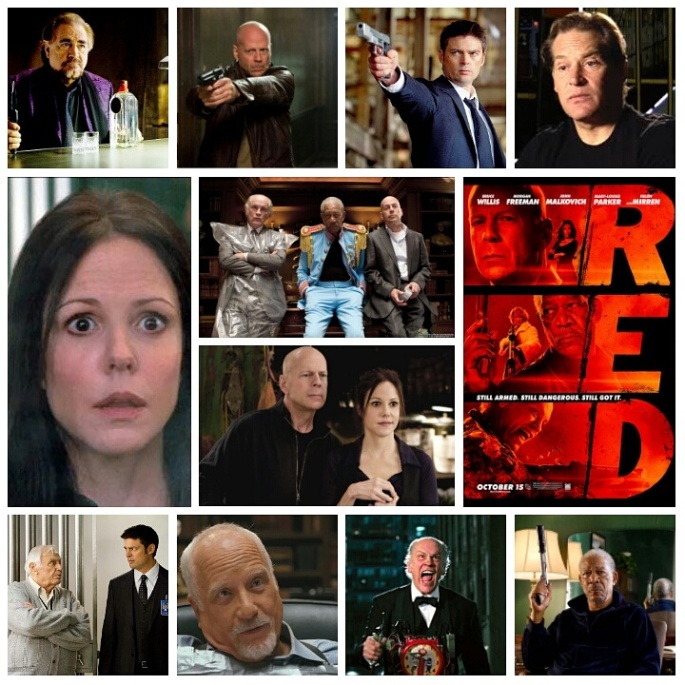
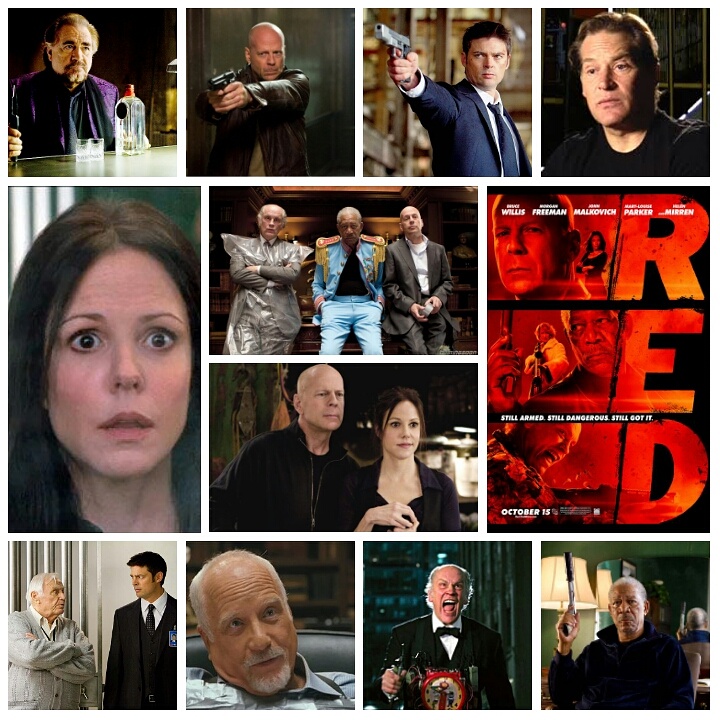
Despite being somewhat neutered by the ever present annoyance of the PG-13 rating, Red is some of the most fun you can have with in the glib assassin subgenre of action comedy. Bold, hilarious and just a little bit demented, it jumps right off the pages of the graphic novel it was based on for just under two hours of wiseass popcorn movie nirvana, hosted by a cast that’s almost too good to be true. ‘RED’ stands for ‘Retired Extremely Dangerous’, a moniker given to aging ex contract killers who have laid down the guns, but are still closely watched by the CIA. Frank Moses (Bruce Willis) is one such person, languishing in the doldrums of forced retirement, bored out of his mind and chatting endlessly with a cutey call center girl (Mary Louise Parker). Things get freaky when deranged former associate Marvin Boggs (John Malkovich) pays him a visit, belting out wild theories about the CIA sending operatives to terminate him. Before he knows it, Frank is swept up in espionage and intrigue once again, pursued by a slick, ruthless agency man (a deadly Karl Urban doing the anti-007 shtick nicely), with Parker in tow, whose terrified reactions to the escalating violence and deadpan sociopaths around her get funnier and funnier as the film progresses. Helen Mirren is regal gold as a well spoken ex MI6 spook who dissolves corpses in bathtubs full of acid, right before afternoon tea, I presume. Watching this dainty waif rock a Barrett 50 caliber and make red mist out of her enemies is one of the many mental pleasures one can get from this flick. Morgan Freeman takes it easy as another former buddy of theirs from the older, and I imagine, more agile days. As for the supporting cast, hell, take your pick. Richard Dreyfuss is a slimy Trump-esque politician lowlife, an underused James Remar shows up for a very brief cameo, as does that old toad Ernest Borgnine, Julian McMahon once again shows that no one wears a suit like Julian McMahan, and that lovable imp Brian Cox almost walks away with the film as a sly devil of a Russian agent who woos Mirren with the silver tongued virility of a fox. What works so well the dynamic between the three leads; Malkovich is mad as as hatter, Willis plays exasperated babysitter and Parker looks on in horror that starts to turn into amusement with every outlandish scenario. Action comedies are tricky recipes, and it’s easy to let too much of one ingredient slip into the pot. This one keeps a steady trigger finger that’s locked onto the funny bone and positively sails. 

RICHARD LINKLATER’S BERNIE — A REVIEW BY NICK CLEMENT

1

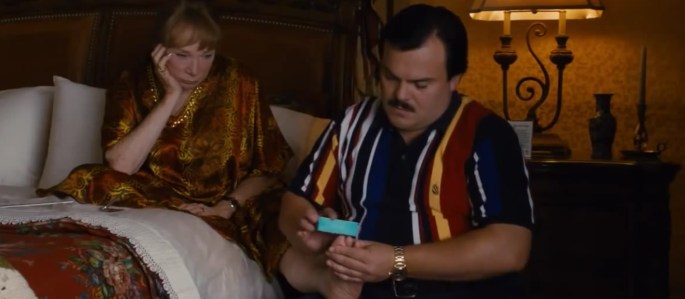
Bernie is one of those movies that not enough people have seen. Richard Linklater often makes under the radar gems, and I think this is one of his best feature films, which also happens to contain Jack Black at his absolute best.  Pitch-black-dark and viciously funny, this is an inventive piece of true-crime cinema, filled with tons of incredible supporting performances, and spotlighting a story so bizarre and twisted that no screenwriter could have ever conjured it up. Co-written by Linklater and Skip Hollandswoth, the film centers on a quirky assistant funeral director named Bernie Tiede (Black), who happened to be one of the most well-loved members of a small Texas community called Carthage. The film pivots on his strange relationship with an older widow, a truly nasty piece of work named Marjorie (an amazing Shirley MacLaine), and how Bernie is literally the only person in town who can tolerate her. But things get crazy when Marjorie turns up dead (and folded into a freezer) and Bernie is prime suspect number one. It can’t be stressed enough how brilliant Black was in this film, and while I’m typically more of a fan of him when he’s in a supporting capacity (Tropic Thunder and The Cable Guy are faves), this is easily his greatest overall on-screen effort.

2

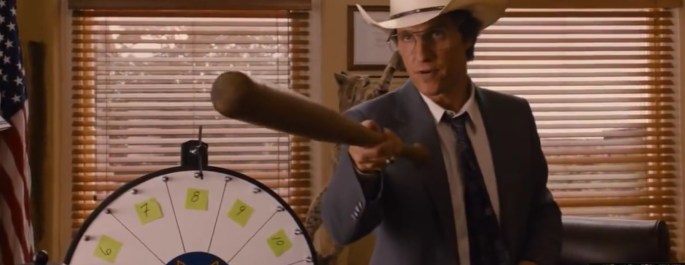
Released in 2011 to mostly supportive reviews but not much in the way of box office receipts, Bernie becomes something strangely hilarious through the use of a faux-interview framing device, with all of the townspeople rallying to support Bernie, even if they truly know he’s guilty. Linklater’s sense of the satiric along with just general ha-ha comedy is in full effect all throughout, with moments that are both laugh out loud funny and slyly hilarious. Matthew McConaughey was superb as the local district attorney trying to make sense of the chaotic mess, sporting an awesome cowboy hat and total laconic charm, while all of the naturalistic performances from the various Carthage residents sealed the black comedy with a devious kiss. How this film is able to shift back and forth between tragedy and comedy is also extremely interesting, as Linklater always employs a subversive touch to whatever material he tackles. Dick Pope’s unassuming but extremely effective camerawork never intruded on anything, while the fleet editing by Sandra Adair kept the comic timing sharp and the pacing brisk; the films feels modest yet still consistently creative. I have long been a fan of Linklater, and this is definitely one of the best movies of his unique, varied, and often underrated career.

3

Terry Gilliam’s The Fisher King: A Review by Nate Hill 

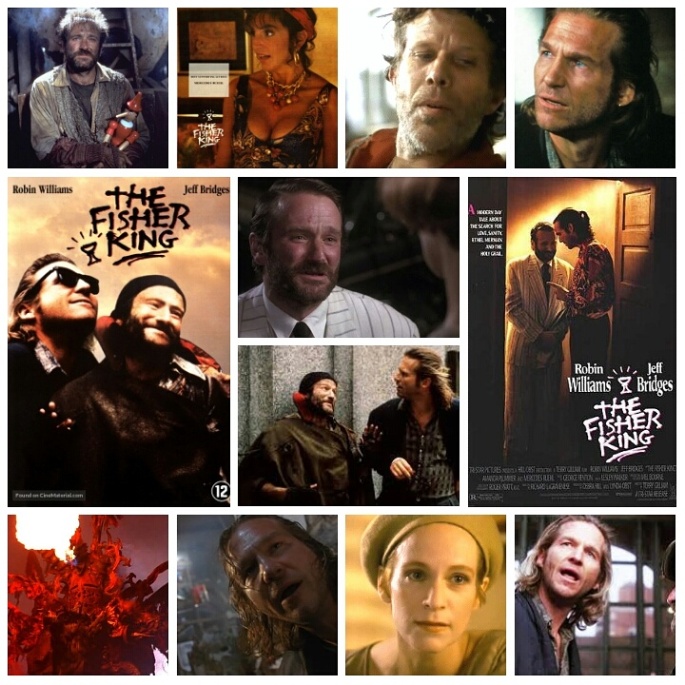
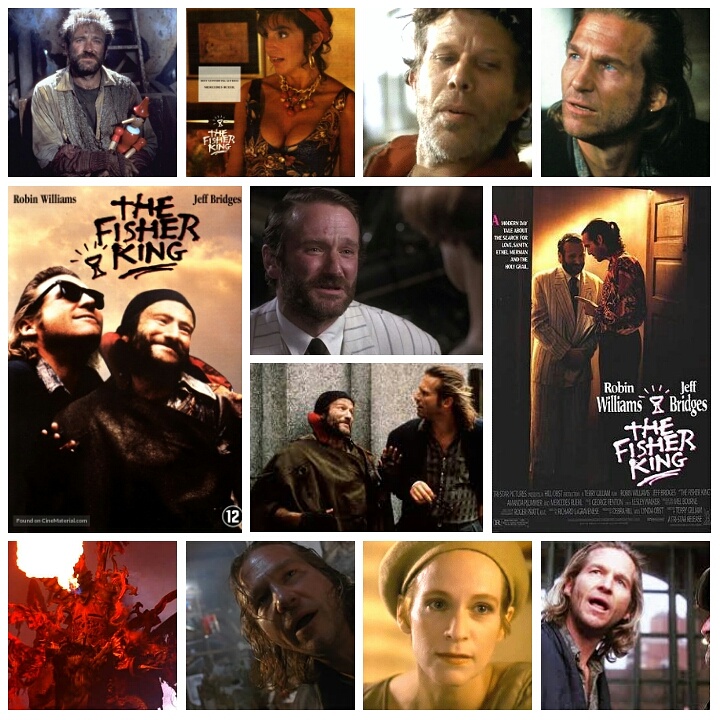
Tragic. Uplifting. Comical. Bittersweet. One of a kind. Terry Gilliam’s The Fisher King takes on mental illness by way of a fantastical approach, an odd mix on the surface, but totally fitting and really the only way to put the audience inside a psyche belonging to one of these beautiful, broken creatures. Sometimes an unlikely friendship springs from a tragedy, in this case between a scrappy ex radio DJ (Jeff Bridges) and a now homeless, mentally unstable ex professor of medieval history (Robin Williams). Bridges was partly responsible for an unfortunate incident that contributed to William’s condition, and feels kind of responsible, accompanying him on many a nocturnal odyssey and surreal journey through New York City, an unlikely duo brought together by the whimsical cogs of fate that seem to turn in every Gilliam film. Williams is a severely damaged man who sees a symbolic ‘Red Knight’ at every turn, and seeks a holy grail that seems to elude him at every turn. Bridges is down to earth, if a little aimless and untethered, brought back down from the clouds by his stern, peppy wife (Mercedes Ruehl in an Oscar nominated performance). They both strive to help one another in different ways, Williams to help Bridges find some redemption for the single careless act that led to violence, and Bridges assisting him on a dazed quest through the streets to find an object he believes to be the holy grail, and win over the eccentric woman of his dreams (Amanda Plummer). In any other director’s hands but Gilliam’s, this story just wouldn’t have the same fable-esque quality. Straight up drama. Sentimental buddy comedy. Interpersonal character study. There’s elements of all, but the one magic ingredient is Gilliam, who is just amazing at finding the way to truth and essential notes by way of the absurd and the abstract. Watch for fantastic work from Michael Jeter, David Hyde Pierce, Kathy Najimy, Harry Shearer, Dan Futterman and a quick, uncredited Tom Waits as well. The hectic back alleys and silhouetted trellises of NYC provide a sooty canvas for Gilliam and his troupe to paint a theatrical, psychological and very touching tale of minds lost, friendship found and the past reconciled. 

Hard Eight: A review by Patrick Crain


The screen is black and the opening credits begin. The first thing we hear is a dirge called Clementine’s Loop, composed by Jon Brion. The mood it pitches is stark and foreboding. The audience is immediately keyed in to the notion that the next 102 minutes will probably not be a reflection of the life-affirming highlights of the characters’ lives.

When the image comes up, we’re outside a Denny’s. Well, a reconverted Denny’s. The world of Hard Eight is one of unshakable reputations; it can say Ray’s Cafe on the sign but it’s still a Denny’s that has been broken down, sold off, and is quietly functioning in its new skin. Walking towards this cafe is Sydney, a shadowy, yet direct man who, seemingly at random, offers to buy a poor stranded soul named John a cup of coffee.

It seems appropriate to note that, once upon a time, Peter Yates directed Robert Mitchum in a film called the Friends of Eddie Coyle which was not too dissimilar from Hard Eight. Set in the less-cinematic parts of Boston, that film chronicled the lives of the lowest-level functionaries in the organized crime business; bottom feeders who would feed on each other if need be. And in that film, everyone spoke with a clarity that ensured that whoever was listening understood what was said and what was not being said.

Hard Eight is very much like this world. In the earlier film, Robert Mitchum got to put the fear of God into a hot shot gunrunner by explaining why you never ask a man why he’s in a hurry. In Hard Eight, Sydney helpfully reminds John never to ignore a man’s courtesy. In both scenes, the veteran looks dog-tired and slow but you never once doubt his wisdom and respect the commanding way he delivers it.

In Hard Eight, Sydney is played by Philip Baker Hall and John is played by John C. Reilly. During the course of the opening scene, we will learn just enough about each character to want to tag along with them; Sydney is a well-dressed, professional gambler and John is a sweetly dim loser who only wants to win enough money in Vegas to pay for his mom’s funeral. Fifteen minutes into the film, we’re hanging on Sydney’s every word and John’s receptiveness to them. By the time sad-eyed cocktail waitress-cum-prostitute Clementine (Gwenyth Paltrow) and reptilian casino security manager Jimmy (Samuel L. Jackson) are added to the mix, we slowly begin to see the ingredients of disaster come together and, like John, we look to Sydney for his guidance and trust his every movement. For there’s no doubt he’s seen disaster before.

What’s most astonishing about the debut film of Paul Thomas Anderson is how subdued it is, Made by a young man of 26, Anderson refuses to fall into the trap that 99% of nascent filmmakers do which dictates that one must be as flashy as possible by jamming in as many cinematic references and tricks that they can. In his first time out as a filmmaker, Anderson shows a real maturity in his restraint and his ability to approach material correctly and there is an amazing wisdom in the dialogue.

The film’s setting is interesting, too. Like Robert Altman’s California Split, Hard Eight takes place in the unglamorous world of daytime nightlife. Garish hotel rooms, eerily desolate roads, and the sparse, Wednesday afternoon crowd in dumpy Reno casinos are all writ large on cinematographer Robert Elswit’s wide canvas. And John Brion’s Hammond B3-laced score injects the right amount of lounge-lizard sleaze into the atmosphere. The characters and plot, a potent blend of a Jean Pierre Melville’s Bob Le Flambeur, Louis Malle’s Atlantic City, and an Elmore Leonard novel, mix with its harsh, cinematic world in such a way that you can smell the stale cigarette smoke on every frame of film.

To achieve this, a film has to be extraordinarily observant and meticulous in its details. Take, for instance, a scene in which Clementine, who has to leave town with John in a hurry, gives Sydney instructions for feeding her cats and how to unlock her apartment door with a key ring we never see, but can hear is ridiculously overloaded with keys and trinkets. It’s not played for laughs and it doesn’t even call attention to itself. It’s simply a detail that serves as a reminder that Anderson knows characters like Clementine; someone who sadly, and in the name of basic survival, gives so much of herself away that overloading her keychain with goofy charms and ephemera seems like one of the few remaining frontiers of self-expression and individuality.

As well-realized its world and well-written its dialogue, Hard Eight is, above all, an actor’s film.

Philip Baker Hall, an actor who before Hard Eight was mostly known as Richard Nixon in Robert Altman’s film adaptation of Secret Honor, got one of the biggest gifts from the gods with a role for the ages. Stoic and precise, Hall gets the immense actor’s pleasure of both being able to express himself with his stoney face and the right to spit hot-fire lines of dialogue like “You know the first thing they should have taught you you at hooker school? You get the money up front.” It’s a performance of masterful skill, immense control, and sheer perfection. I’ll fight the man, woman, or child that disagrees.

John C. Reilly can never get enough credit and is one of the finest character actors working today. In Hard Eight, he turns in one of his greatest performances as a truly pitiful lug who needs a hug and an emotional anchor. While Hall is tasked with the heavy lifting during the scenes of severe gravity, Reilly gets a few astonishing moments of emotional counterbalance, most especially during a telephone conversation in a key scene in the film’s third act. Also bringing the lumber is Gwenyth Paltrow who summons up the depressing cheapness that runs through her character while also making her vulnerable and human. It helps that her character is the hooker with a heart of despair and loneliness, not gold and half of the time her smeared lipstick makes her look like a clown that escaped a black velvet painting.

Fourth-billed Samuel L. Jackson brings fire to the film as the charismatic yet crudely loathsome security manager who knows everything that goes on in, and out, of the casino. With his wide grin, his maroon leather jacket, and his driving gloves, Jimmy is a study in someone who wouldn’t know class if he fell into it, yet is supremely lethal and projects a menace that, once he’s introduced, hangs like a pall over every remaining second of the film.

Looking back on how Hard Eight was marketed, it must be said that the trailer for the film is ridiculous. Obviously cut to capitalize on the then-red hot Samuel L. Jackson and Quentin Tarantino vibe, the film was marketed as a explosive fire of witty banter, cool Vegas shenanigans, and gritty gangster action. To give the film more of that post-Rat Pack fetish vibe that washed all over indie cinema in the mid to late 90’s, the trailer assigns face-card titles to the characters (Gwenyth Paltrow is the Queen!). That the film had none of the aforementioned elements probably surprised the few that were able to overcome the distributor’s shameful mismanagement and see it in a theater. For some, the surprise was likely a let down. Regardless of quality, there was an audience that ate up every single post-Pulp Fiction-ish film indiscriminately. This, by the way, is how the noxious Boondock Saints, the Sublime of the Pulp Fiction wannabes, ever became the hot property it did. If a film didn’t have that same pop, slash, and burn, it was chucked as boring. And Hard Eight doesn’t have that pop. Despite the use of a quick pan here or there and one tremendous tracking shot of Sydney moving like a shark across the casino floor, the film’s dynamism comes solely and bravely in its silences and what it doesn’t say. The electricity it emits is a slow burning charge that feels confident.

But, finally, Tarantino fashioned the mood of Pulp Fiction after those deliciously chosen pop tunes, Anderson fashioned Hard Eight after a Tom Waits song; a broken boulevard of heartache and misery where, after an evening of carnage, one can merely adjust their coat sleeve to cover up the bloodstains and move about their day unmolested.

hard-eight-poster

THAT THING YOU DO! – A REVIEW BY J.D. LAFRANCE

the-wonders

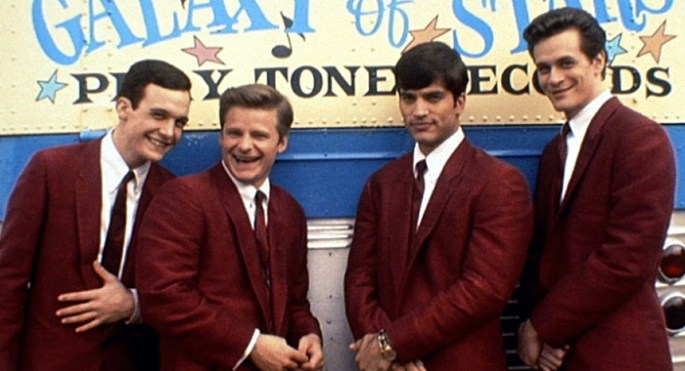
That Thing You Do! (1996) is Tom Hanks’ tribute to the slew of rock ‘n’ roll bands that followed in the wake of the Beatles’ phenomenal worldwide success. Record companies in the 1960s were desperate to find the American equivalent in the hopes of making the same kind of profit. The result was a lot of one hit wonder wannabes. Hanks’ film (his directorial debut) is a fictionalized account about one of these bands.

After their regular drummer (Giovanni Ribisi) breaks his arm, a band approaches one of their friends to fill in. They rehearse for a talent show, playing the one original song, “That Thing You Do,” a slow ballad-type deal. However, at the show, the overly enthusiastic drummer speeds up the tempo and the crowd eats it up, breaking spontaneously into dance. They easily win the show and realize that they are onto something. Guy (Tom Everett Scott), the drummer, becomes a permanent member of the band and they call themselves the Oneders (bad idea) and start playing gigs in their home town of Erie, Pennsylvania. Jimmy (Jonathan Schaech) is the good-looking singer and primary songwriter. Lenny (Steve Zahn) is the wisecracking guitarist who is interested in picking up girls. The bass player (Ethan Embry) doesn’t say much and is content to go along with what everybody else wants to do.

Guy uses his family connections to allow the band to make a record, a single of “That Thing You Do” and it transforms them into a minor local sensation. The Oneders soon get their song played on the radio and their popularity only increases. They meet Mr. White (Tom Hanks), a slick executive from Play-Tone Records, who signs them to his label. He changes their name to the Wonders, changes their look to smart-looking suits and takes them on a whirlwind promotional tour across the country. Along for the ride is Jimmy’s fun-loving girlfriend Faye (Liv Tyler) and, to a lesser degree, Guy’s uptight girl, Tina (Charlize Theron).

Hanks does a nice job of recreating the time period, complete with vintage cars, outfits and hairstyles but doesn’t dwell on them too much or draw unnecessary attention to them. Best of all, is the music. The band’s hit song is indicative of the era’s pop music (think of it as the whitebread flipside to the Dreamgirls’ music), a catchy three-minute ditty that sticks in your head. Hanks also captures the youthful energy of these young guys – the rush of playing in front of an appreciative audience that loves their music and the excitement of hearing their song on the radio for the first time. He is also successful in conveying the dynamic between the band members and how it changes over time, especially after they enjoy national exposure and success. Predictably, it affects them in all kinds of different ways. Hanks shows how success can spoil a band. Egos get inflated and this often leads to conflicts within the group. There is also the pressure to follow up a hit with another and another so that the record label continues to make money.

For his directorial debut, Hanks wisely doesn’t try to bite off more than he can chew. He keeps his ambitions modest and isn’t too flashy with the camerawork. He understands that nothing should get in the way of the story or the characters. However, his script does show a lack of experience as little things, like a repeating gag of Guy proclaiming, “I am Spartacus,” wears thin very quickly.

That Thing You Do! is an affectionate, nostalgic look back at simpler, more innocent times, just before the country became mired in the Vietnam War and the social and political climate changed radically and with it the music. Hanks recaptures a time when hundreds of screaming teenage girls would mob the bands that they worshipped, a time before the Internet so that music was promoted via the radio which had the power to make or break a band.