E.L. KATZ’S CHEAP THRILLS — A REVIEW BY NICK CLEMENT

1

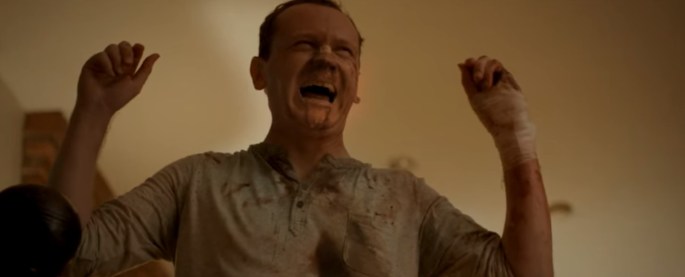
Pardon my French but the black comedy Cheap Thrills was fucking disgusting. And aggressively amazing. And never not fully entertaining. But fucking disgusting all the same. This is as nasty of a movie as I can think of – only strong stomachs need apply. The idea is simple: Two down on their luck guys (the go for broke Pat Healy and wild-man Ethan Embry) are suckered into a series of absurd, questionable, and violent dares for inordinate sums of cash by a rich married couple (the deranged David Koechner and super-hot Sara Paxton), with the idea being that these two desperate souls will debase themselves repeatedly while the couple gets off on the morally and ethically reprehensible antics. How far will people go before they essentially become thoughtless animals?

3

I’ll give first time director E.L. Katz and screenwriters David Chirchirillo and Trent Haaga some serious credit, as their film is totally diseased and fully demented, made with a striking conviction to the jet-black and deadly-serious material, never backing off for a moment and always approaching the taste police ready to riot. The performances are all full-tilt and extremely committed, which helps to sell the increasingly dangerous, transgressive, and ludicrous narrative. It also has one of the best final shots of any movie from in recent memory; it’s totally balls-out in its level of madness. A carnival of grotesqueries and a major slap to the cinematic face, Cheap Thrills will leave you wanting a long, hot, soapy shower, which I’d have to imagine was the intent from everyone involved.

2

DEREK CIANFRANCE’S THE LIGHT BETWEEN OCEANS — A REVIEW BY NICK CLEMENT

3

Films like The Light Between Oceans are a tough and tricky task for some moviegoers, as pure, heartfelt, cinematic melodrama seems to be mostly out of fashion these days. I am not sure what some people were expecting from this visually lush, overtly sentimental, yet extremely dark film. While I would have preferred that this two hour and 10 minute film had lasted closer to three hours in total, there’s lots to admire all throughout writer/director Derek Cianfrance’s newest and most polished motion picture, and it reinstates his inherent interest in family dramatics, passages of time, and the generational effects that major decisions and their consequences have on people’s lives. In his previous films, the destructive marriage scorcher Blue Valentine and the tragically underrated crime drama The Place Beyond the Pines, Cianfrance brought a Cassavetes-esque intensity to his stories and characters, allowing for moments of seeming spontaneity to bubble to the surface and inform the proceedings. In The Light Between Oceans, he’s telling a story that on the surface feels 1,000 miles removed from his previous studies of interpersonal discord and genre subversion, but when examined closely, there’s the same sense of tragedy and open-wound intensity to be found all throughout. And while The Light Between Oceans feels rushed in some spots where more time and discovery might’ve enriched the picture in general, there’s a sense of classical epic sweep mixed with delicate intimacy that hasn’t been seen on the big-screen all that much in recent memory.

4

Adapted from the 2012 novel by M.L. Steadman, Cianfrance has two of the best current actors leading his overwhelmingly beautiful film, with both Alicia Vikander and Michael Fassbender doing excellent work as tortured souls who have to spend most of their life dealing with the ramifications of their morally questionable behavior. Tom (Fassbender) is a lighthouse keeper and war veteran living off of the coast of Western Australia, at the tail end of WWI. He meets and quickly falls in love with a local woman named Isabel (Vikander), with the two of them heading off to their private island in search of happiness. Unfortunately, tragedy and despair is all that they encounter, as Isabel suffers multiple miscarriages, while it’s clear that motherhood is the one driving force in her heart. But everything changes when, miraculously, an infant washes ashore in a rowboat, along with the dead body of what they presume to be the child’s father or other relative. Rather than report the incident, Tom buries the body, and the couple begin raising the little girl as their own child; Isabel’s happiness is beyond compare. But their familial bliss is cut short when the girl’s real mother, an anguished and despondent Rachel Weisz, crosses paths with the illicit family, thus setting into motion a serious case of guilt for Tom, who starts to feel compelled to tell the truth.

2

The production values on this film are extraordinary. Every single shot is museum quality. Cinematographer Adam Arkapaw (last year’s deliriously photogenic Macbeth) bathes a good portion of the movie in a golden hue which gives off a warmth which challenges the sad subject matter; it’s an interesting and unique dichotomy of aesthetics and thematics, reminding of the work done on the similarly gorgeous study of human suffering, The House of Sand and Fog. Jim Helton and Ron Patane’s velvety editing has a graceful spirit that, when in tandem with the luscious photography, recalls the artistic freedom of recent Terrence Malick pictures; there’s an internal hum and rhythm to this movie that’s interesting to observe. The production design by Karen Murphy and costume work handled by Erin Benach evoke a simpler time without ever calling attention to the period trappings. Alexandre Desplat’s alternately mournful and soulful musical score supplies dollops of sonic accompaniment, all but consuming Arkapaw’s eye-melting imagery. And of course, the entire film is firmly anchored by the impassioned acting, which hits numerous notes of raw emotion which is now a customary expectation for any film from Cianfrance. And as usual, Cianfrance has gravitated towards flawed characters who aren’t easily likable at times, which is always more interesting to observe on screen. I just wish that the film had been given more time to breathe and ruminate upon its many internalized threads, as there’s nothing easy about the challenges that the characters find themselves in during the course of the story. But in the end, this is another forceful piece of work from Cianfrance, who clearly has an affinity for his actors and the unpredictable nature of life itself.

1

One Hour Photo: A Review by Nate Hill 

One Hour Photo is as stark and unnerving as the clinical, creepy photo negatives being developed in the darkroom of your local London Drugs, or whatever the equivalent is stateside. Back in the days before the social media boom, every single photographic memento passed through those hallowed halls, and through the hands of the hard working folks at the photo counter. One such person is Seymour Parrish (Robin Williams), a sweet, good natured guy with a subtle and growing offset in his personality. He loves his job, and finds solace and ritual in handling the precious memoirs of the masses, even getting to know many of them in a friendly manner. He takes a particular shine to the Yorkin family (Connie Nielsen and Michael Vartan), gradually becoming obsessed with the life they have that he observes through the constant stream of photos he develops. Friendly soon turns to freaky as he becomes a bit too fascinated in them, and he finally takes up the mantle of disturbed stalker, digging up dirty secrets they have that he has no right to know about, and even less to interfere with. It’s a nightmare for any unsuspecting family to got through, but the real horror story is Seymour’s damaged psyche, set off by this idyllic lifestyle he watches from haunted eyes. Williams has the hard task of making him sympathetic, which he does, but we are only willing to give pity at arms reach; this is a scary, twisted man we see, with demons bottled up so tight he isn’t even aware they exist anymore, until they come crawling forth for a psychologically naked and raw final sequence that will leave you reeling. An unpleasent film in almost every way, bathed in an eerie sickness that matches the sheet white fluorescent glow of the store that is Seymour’s world, externally and in his tragic, broken mind. Bring a steady set of nerves and a strong stomach. 

KILL BILL VOLUME I – A Review by Frank Mengarelli

“How did you find me?”

“I’m the man.”

KB3

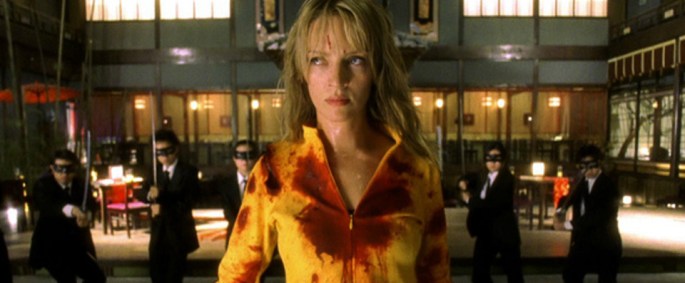
When you strip away all the genre and sub-genre elements from Quentin Taraninto’s KILL BILL VOLUME 1, what lies beneath is a heart wrenching story of a woman seeking vengeance against a former lover who tried to kill her, her unborn child, and her fiance and the new life she constructed after she fled from him.

What we end up with, is the genius of Quentin Tarantino. This film is a full on culmination (obsession, even) of everything that is Quentin Tarantino. His obsession with actors, westerns, kung-fu, women’s feet, popular music; absolutely everything he loves is smeared all over the screen. A faceless David Carradine, a sly Michael Parks, the resurrection of Sonny Chiba, an iconically cool Michael Madsen are all acute aspects that support the greatness of this film.

Tarantino uses the camera to make love to his muse, Uma Thurman, constructing one of the fiercest alpha females to ever be on screen. She’s a woman on a one way mission. She is going to lay waste to everything her path, as she slowly crosses names off her hit list, until she gets to her former master and lover Bill.

KILL BILL is a lot of fun to watch – Tarantino’s homages from Sergio Leone to Brian De Palma, his love for all aspects of cinema is blatant. It’s not just that love for cinema that makes his films such an explosion, but it’s also his love for pop culture, comic books, and music that creates such a fertile pallet for his films to create themselves upon.

KB2

The short anime segment, explaining Lucy Liu’s background is supremely emotional! Perhaps even more emotional than most give it credit for. It’s heartbreaking! The beauty of Sonny Chiba crafting and passing his sword over to Uma Thurman so she can progress on her mission of vengeance; and one of the best action sequences in modern film that achieves it all without any explosions, monsters, or superheroes is an enormous cinematic feat.

This film really hits the mark on every level. Cinematography, stunts, editing, costume design, production design, sound design, original music by RZA; every single corner of every single frame of this film is fleshed out in full detail. It truly is a marvel to watch. At the core of this film, apart from all the sheen and the cinematic perfection, Tarantino delivers us his most heartfelt and emotional film to date.

F. GARY GRAY’S THE NEGOTIATOR — A REVIEW BY NICK CLEMENT

3

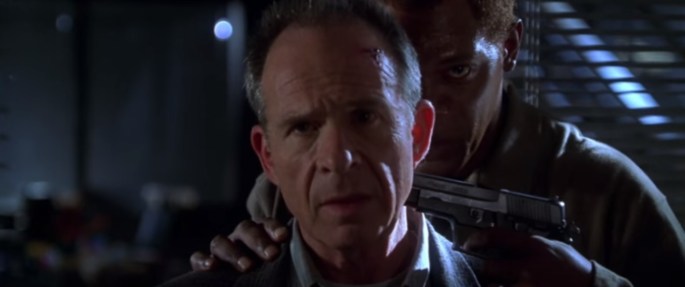
F. Gary Gray’s well above average late 90’s thriller The Negotiator remains a solid chop off the Dog Day Afternoon block, telling a riveting story of police corruption, mistaken motives, shadowy conspiracies, and high-pressure bits of action. Exciting and tense direction, smart writing from James DeMonaco and Kevin Fox, crisp editing by Christian Wager, and classically shot by the great cameraman Russell Carpenter – this film really was the total genre package back in the day, and it deserved a higher profile during the summer of 1998, where it was released to solid reviews and solid if unspectacular box office. It’s the sort of movie that I’d love to see get made these days; tough-guy cinema like this is always in short supply.

1

Yes – Samuel L. Jackson and Kevin Spacey delivered showy and terrific star turns, but this movie BELONGS to its AMAZING supporting cast, which is essentially a roll-call of the A-1 best character actors and “faces” that ever graced a policier potboiler of this sort. Hear me now: David Morse, Ron Rifkin, John Spencer, J.T. Walsh, baby-faced Paul Giamatti, Michael Cudlitz, Dean Norris, Nestor Serrano, Carlos Gomez, and Jack Shearer just to name a few. You have to wonder how Henry Czerny didn’t make it on the cast list as well. Seriously – these names may not all be familiar, but take a moment and do a Google image search and you’ll realize how incredible these guys were in SO MANY MOVIES throughout the 90’s.

negotiator

Gray has had a solid career directing slick and disposable Hollywood entertainment, but last year’s Straight Out of Compton and this juicy, exceedingly entertaining ensemble piece rank as his best. I should also revisit Set It Off, as I remember really enjoying that as well. And of course, Friday is an all-time stoner classic, a film that “gets it” in ways that few other films do; it’s as sly and subversive as it is in-your-face-funny. But with The Negotiator, he dared tread in the same waters as genre masters like Sidney Lumet did before him, and he ended up crafting a movie that has some nice edges to go along with its smooth sense of style. This is the definition of a Sunday afternoon matinee that could be joined at any point in the narrative.

2

Joe Dante’s Burying The Ex: A Review by Nate Hill 

Everyone has that one psycho ex. Well… not everyone. But a lot of folks. I do, many do, enough do for there to be a whole lot of movies on the subject. Joe Dante’s Burying The Ex takes that predicament one step farther, straight into the realm of the supernatural, as the director always does. We haven’t had a Dante flick in a while (he’s the genius behind Gremlins, Innerspace and Small Soldiers, for those who don’t know), and it amazes me the lack of marketing which led to me taking my sweet time in seeing this. Glad I did, because it’s a treat. Any headline that boasts Dante, Ashley Greene, Anton Yelchin and the luscious Alexandra Daddario in the same film is automatically a rental, before I’ve even read a synopsis. This one is a darkly comic zombie romantic comedy and subtle Hammer Studios homage, an irresistible flavour indeed. Yelchin is a lad who works at a halloween FX store, has an affinity for retro horror and all things macabre, and is dating prissy Ashley Greene, who couldn’t be more different than him. She’s an abrasive, vegan type A personality jealous manipulative control  freak banshee who is sinking their relationship quicker than the Titanic. Enter Alexandra Daddario, a hip, horror movie themed ice cream parlor owner, and sparks fly between her and Yelchin. Those sparks are shot down by a dagger glare from Greene, and it’s in that moment Yelchin realizes he has to dump her. Before he can do the deed, she’s fatally hit by a bus, dies and essentially solves his problem. Or does she? Cue gothic organ music. Before he can take Alexandra on one date, she rises from the grave, now a sex starved psycho zombie bitch hell bent on keeping him for her own, pretty much forever. Quite the situation eh? Dante is never one for metaphors and heady trickery (a refreshing trait), all of his premises are straight up, face value, 100% genre simplicity. She’s dead, he needs to somehow kill her… again. It’s charming and lighthearted, while still retaining the macabre, like Tim Burton by way of Stephen Sommers. Greene is disarmingly hilarious as everyone’s worst nightmare of an ex, Yelchin is earnest and exasperated in equal doses, and Daddario is a babe and a half, always winning me over with them eyes. They all frolic in Dante’s casually R rated inter zone where everything is purely rooted in movie-land, and nothing needs to be seriously thought out. The writing is sharp, heartfelt and riddled with easter eggs for fans of horror from back in a better day. Brilliant stuff. 

Bobcat Goldthwait’s World’s Greatest Dad: A Review by Nate Hill 

Worlds Greatest Dad is a true curiosity, a film I had to sit back and really think about right after I had watched it. It has such a strange arc, and wasn’t the pithy dark comedy I was expecting from the trailers. I mean, it is a pithy dark comedy, just not in the way you’d think at all. I still can’t even figure out if I liked the thing, but it wouldn’t leave my head for a while after, so it certainly has a kick to deliver, one that’s decidedly below the belt. Williams is Lance, a high school English teacher with traces of old world in his methods. He prefers to instruct his students in poetry, which makes him a bit unpopular, sadly. He also has an absolute snot nosed, shithead fuckwit douchebag of a son, played by Spy Kid’s own Daryl Sabara. Think my description of him is too harsh? Nah, son. This kid is a royal asshole of the highest degree, and one wonders what Lance did in a previous life to deserve such evil spawn. He’s a mean, spiteful, discouraging, porn addicted little piss stain, and ironically enough, it’s the spank material that results in his untimely death. I won’t say exactly how it happens, but for those who know what I’m talking about, he and David Carradine share an embarrassing fate. What’s curious is Lance’s reaction upon discovering the body: the kid treated him with nothing but disdain and disregard for years, but he’s still devastated. A father’s love, I suppose. He then writes a passionate suicide note and passes it off as his son’s, to hide the perverse truth. Everyone at the school, in town, even the local newspaper goes ballistic and praises the deceased boy’s work. Suddenly he’s a local hero, a beacon of hope for troubled youth everywhere, and a martyr to spur copies in flying off the shelves. There’s the joke, though. He was pretty much the worst person ever in the world, and now the writing Lance worked so hard on is being not only credited to, but hailed as that of his shitty dead kid. Even in death, one final jab of abuse bites back. Like I said, a very odd turn of events, and definitely like no other dark comedy, or other film, for that matter. When you consider this is a script by irreverent comedian Bobcat Goldthwait, who also directed, it’s easier to understand and appreciate the twisted nature of the story, and the places it goes. Williams is inspired, turning Lance from a sulky mess to a hero behind the curtain, finding his own life in Sabara’s demise, as wrong as that sounds. I guarantee you’ve never seen a film like this, and we probably will never get another just like it. 

WALTER HILL’S 48 HRS. — A REVIEW BY NICK CLEMENT

3

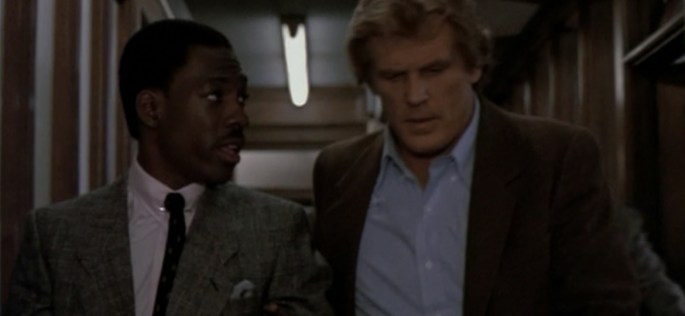
Truly great “buddy movies” are very hard to find these days, so I find myself often returning to the classics of the genre, with the totally terrific 1982 action-comedy 48 Hrs. continually leading the way. With dynamite chemistry between Nick Nolte and Eddie Murphy (in his big-screen debut), macho-man director Walter Hill was armed with a superb screenplay that he co-authored along with Roger Spottiswoode, Larry Gross, Steven E. de Souza, and Jeb Stuart, and he brought the same sense of hard-charging action to all of the set-pieces that he had become known for during the 70’s with his prolific output. Marking the producing debut for future genre overlord Joel Silver, the narrative was fast and loose, with big laughs running parallel to big stunts and shootouts, while the interplay between Nolte (as a crusty cop) and Murphy (as a convict) really helped to elevate the film beyond what it might have been with different actors in the lead roles. The great supporting cast includes an oily James Remar, Annette O’Toole, David Patrick Kelly, Sonny Landham, Brion James, and Jonathan Banks(!). James Horner’s score was big and magnificent, Ric Waite’s cinematography appropriately rugged and gritty, and the tight editing by Bill Weber, Mark Warner, and Freeman Davies kept the film moving at a fast clip.

2

Helping to revitalize the “buddy cop” genre after films like Busting, The Super Cops, and Freebie and the Bean exploded on the scene in the 70’s, the excellent work done by all of the creative parties on 48 Hrs. would go on to inspire future efforts like Lethal Weapon, Midnight Run, Beverly Hills Cop, and Rush Hour, with many imitators coming and going along the fringes. The film spent a while in development, with various writers and directors all taking shots at the material before Hill settled down to roll cameras; Clint Eastwood was attached to star for a while as well. This is a timeless film. Sure, it was made with an 80’s aesthetic, but because the script is genuinely witty and there are actual stakes to the plot, you become immediately invested, while truly liking the leads and wanting to see them succeed. Nolte and Murphy knew exactly how to play off of one another, resulting in an unlikely pairing that has now become something of cinematic legend. And for Hill, it’s yet another reminder of how sturdy a filmmaker he was in his heyday; his entire body of work is worthy of reconsideration. A critical success and box office hit, this is one of Hill’s most overtly entertaining films, and a true call-back to a different type of action blockbuster.

1

Disney’s Flubber: A Review by Nate Hill 

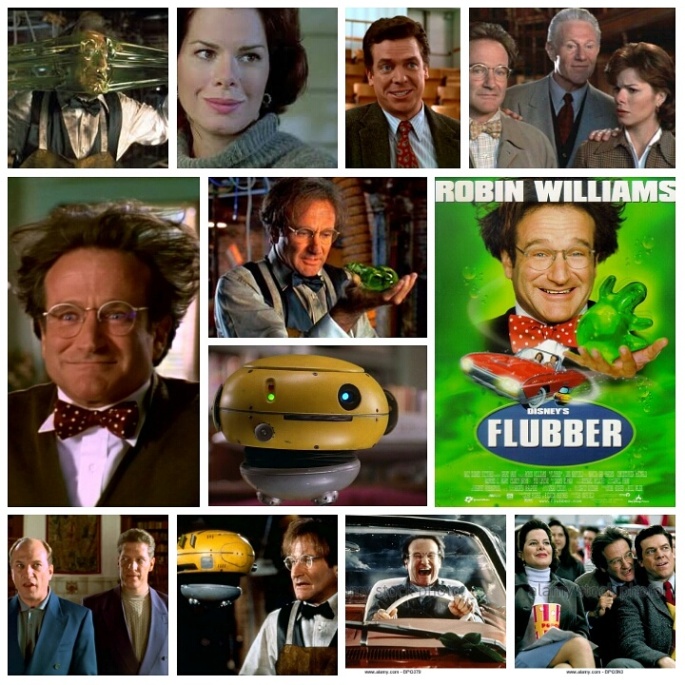
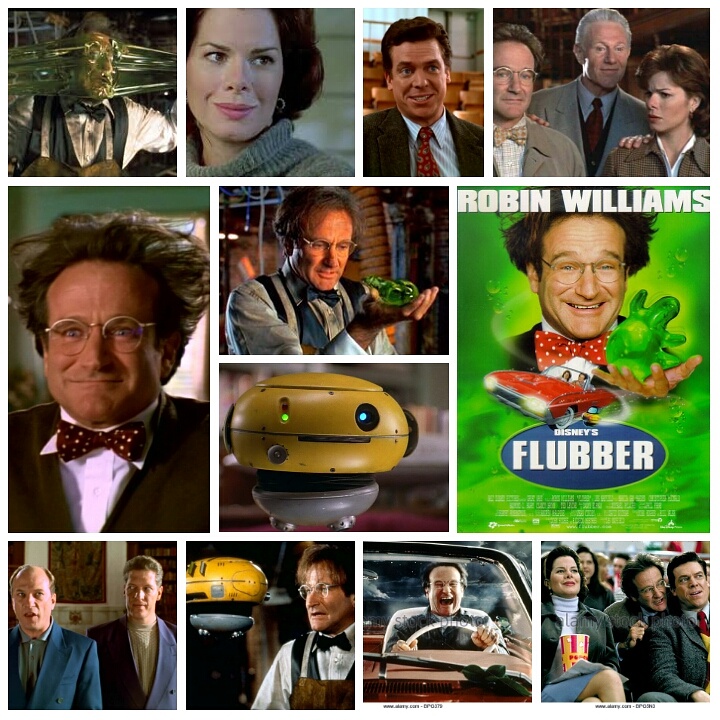
A remake of an old black and white Disney flick called The Absent Minded Professor that has long since gotten a bit stale, Flubber took all the best elements of that and breathed new 90’s life into the premise, most of the pep in its step coming from star Robin Williams. Keep in mind it was a critical bomb though, which just doesn’t make a shred of sense to me. It’s fun, lighthearted, hilarious and just a bit raunchy in places where it can pull it off. For whatever reason, it didn’t sit well with anyone other than fans like me who will furiously shove a copy in your face if we hear that you haven’t seen it. Williams is college professor Philip Brainard, who is so absent minded it borders on dementia.  He leaves his lovely fiance (Marcia Gay Harden) at the alter TWICE, prompting the advances of irksome college dean Shooter Mcgavi- I mean Christopher Mcdonald. He’s on a quest, you see, an obsessive quest to find the formula for… something. That something turns up after a destructive whirlwind of disasters in his basement lab, and in the form of Flubber, a lovable ball of green goo, infected with incurable ADHD and an inexhaustible sense of humour. While the utter the life of the party, Flubber does have its practical uses, such as making cars fly and turning the hopeless varsity basketball team into a bunch of flying Tasmanian devils who nail every dunk. This all gets the attention of insidious local philanthropist and lowlife Chester Hoenicker (Raymond J. Barry) who greedily wants the discovery for his own. He sends his two goons Smith (Ted Levine) and Wesson (Clancy Brown) to rob Brainard of his precious sentient mucous, which turns into one of the most hilarious displays of slapstick comedy since the Three Stooges. Oh, did I mention Williams has a little flying UFO sidekick named Weebo, who has a perfect GIF reaction to everything, before GIF’s were even a thing? So much to love about this little classic. Williams is his usual buoyant self, with some of his trademark razor focus diminished in favor of doe eyed, vacuous forgetfulness that would make Jason Bourne guilty for ever whining about his predicament. Special effects are top drawer too, Flubber would look dapper in Blu Ray if they ever felt so inclined as to release one, not to mention aforementioned airborne automobiles and dear little Weebo. Can’t give enough glowing praise to this little treasure, and hiss enough venom towards those sourpuss critics who assaulted it. Flubber for the win.   

B Movie Glory with Nate: Pawn

Pawn is another gift from the assembly line of slightly muddled second tier crime dramas, cobbled together with elements of greats from yesteryear, and barely held together at the seam by acting titans who have fallen on hard times chasing that almighty paycheque. That’s not to say it’s bad (although plenty of its breed are woeful), but simply inconsequential and forgettable. Starting off with a simple diner robbery that will inevitably spiral beyond control, we meet a band of clueless petty thieves lead by Michael Chiklis, doing his utter best with a silly cockney accent that has no reason to exist here. Little do these geniuses know, the diner they picked to lift happens to be a front for the Russian mob, setting off a chaotic chain of events that could end in all their deaths. The mob panics, and brings in everyone they can to clutter things up. Two corrupt cops show up, one inside the diner, played by Forest Whitaker, looking like he had some trouble understanding his portion of the script, and one outside, played by Marton Csokas who is underused a lot it seems. Common shows up as a hostage negotiator of all things, which made me chuckle. Stephen Lang is dangerously quiet as the restaurant owner and strong arm of the Russians. He hires a chatty Ray Liotta to hold one of the thieves wives (Nikki Reed) hostage and appear vaguely menacing until everything blows over. So we have scenes of him talking to her in cyclical metaphors interspersed with all the intrigue going down at the diner, and it all amounts to… what, exactly? Well, you’ll have to take a look for yourself, but the while thing seemed rather pointless to me.