PTS Presents EDITOR’S SUITE with MARK GOLDBLATT Vol. 2

Goldblatt v2

goldblatt

Podcasting Them Softly is incredibly excited to present PART 2 of our epic conversation with veteran film editor Mark Goldblatt! Up for discussion — his work on James Cameron’s Terminator 2: Judgement Day (aka one of the greatest movies ever made), Tony Scott’s The Last Boy Scout (one of our all-time favorites!), the off-the-wall big-screen video game adventure Super Mario Bros., Cameron’s spectacular action-comedy True Lies (try getting this one made today…!), Paul Verhoeven’s extreme cult classic Showgirls, and Verhoeven’s bold and bloody sci-fi satire Starship Troopers. This is yet another fabulous and informative chat with a true legend in the industry. And just wait – there’s still one more episode with Mark coming in the near future….! We hope you enjoy!

CONSTANTINE – A REVIEW BY J.D. LAFRANCE

constant

Constantine (2005) marked the feature film debut of music video director Francis Lawrence who, judging by the look of this movie, would like to follow in the footsteps of David Fincher. For his first time out, Lawrence takes on the daunting task of adapting the excellent comic book, Hellblazer. Its main character, John Constantine first appeared in the pages of Swamp Thing, during an illustrious run by Alan Moore. Eventually, Constantine got his own series with the launch of DC Comics’ Vertigo line. Jamie Delano was the primary writer and fleshed out the character’s backstory, his friends (like Chas the cabbie) and family. These stories typified late 1980s comic book horror and provided a bridge between Moore and the next creative heavyweight to tackle the character, Garth Ennis. His run on Hellblazer is where the movie gets most of its material from. Constantine is a chain-smoking, hard-drinking guy suffering from terminal lung cancer. He becomes embroiled in a complex war between Heaven and Hell with humanity caught in the middle.

The movie moves the comic’s setting from London to Los Angeles with John Constantine no longer being a blond-haired Englishman who looks like Sting to a very un-British-looking Keanu Reeves. The opening sequence introduces Constantine as an expert demon hunter trying to get back in with the good graces of God and the way he figures it, buy his way back into Heaven, but it isn’t that easy. We meet him as he exorcises a nasty demon from a young girl (a snazzy CGI updated riff on The Exorcist) while his twentysomething sidekick, Chas (Shia LeBeouf) waits in the car and perfects his Travis Bickle routine. Despite these cliches, this introduction is quite impressively shot and Lawrence successfully establishes this supernatural world and wisely limits Reeves’ dialogue, conveying most of what we need to know through the visuals.

Angela (Rachel Weisz) is a police detective whose twin sister has just died, committing suicide in a psychiatric hospital. Angela suspects foul play and this leads her to Constantine. They learn that demons are finding a way to crossover into our world and it has something to do with the Spear of Destiny (the weapon used to kill Jesus) being instrumental in summoning the son of Satan. To make matters worse, Constantine is rapidly dying from lung cancer and this gives his mission a certain sense of urgency.

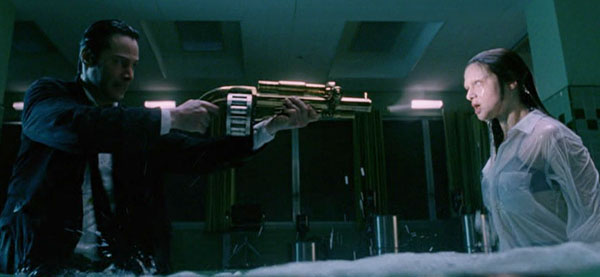
Fans of the comic book are probably not going to like this movie. Constantine is supposed to be world-weary, a sarcastic drunk and womanizer but Reeves doesn’t quite pull it off. He presents a more sanitized version of the comic book character and even that feels forced. Another major betrayal of the character is having him wield a gun (a cool-looking crucifix shotgun), something that the Constantine of the comic would never do. Guy Pearce or Clive Owen would have been a much better choice to play Constantine.

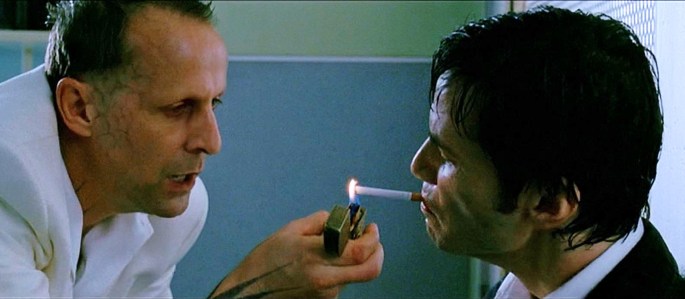
Rachel Weisz is also miscast as Constantine’s potential love interest. Her line delivery throughout the movie is flat and lacks passion. She has zero chemistry with Reeves (didn’t they learn anything from Chain Reaction?) and someone like Fairuza Balk or even Drea DeMatteo would have been much better in this pivotal role. On the plus side, alternative rocker Gavin Rossdale plays a very dapper Balthazar who looks like he stepped right out of a GQ photo shoot. He has a lot fun chewing up the scenery and his confrontation with Reeves is one of the highpoints of the movie.

Lawrence certainly knows how to establish atmosphere and does an excellent job of presenting a seedy, Los Angeles underworld populated by bars filled with demons, dilapidated apartments and grungy city streets slicked with rain. Thankfully, he doesn’t fall into the trap of shamelessly ripping off Blade Runner’s (1982) dystopic cityscape. If anything, his vision of Constantine’s world is like an episode of the television show Angel on big-budget CGI steroids. He also is able create an effectively creepy mood throughout. For example, there’s a nice, throwaway scene where Constantine and Angela are on a city street when all the lights systematically go out as a slew of nasty, winged demons swarm all over them.
constant2Despite the miscasting of Reeves and Weisz in the two main roles, Lawrence’s take on Constantine is actually quite entertaining, even more so if you haven’t read the comic book. However, fans of the series will have problems with the major liberties the filmmakers have taken with the characters – especially Constantine and Chas. Like most comic book adaptations, this film only sprinkles certain elements from the source material, just enough to vaguely resemble it while watering it down for mainstream consumption. It’s a shame because in the right hands, Constantine could have been more like Hellboy (2004) instead it’s closer to the flawed, missed opportunity of The Punisher (2004).

JAMES FOLEY’S GLENGARRY GLEN ROSS — A REVIEW BY NICK CLEMENT

3

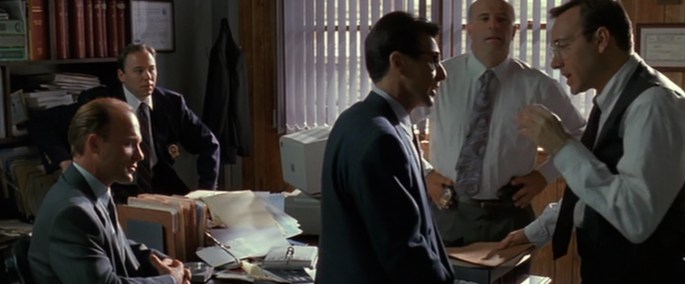
Al Pacino. Jack Lemmon. Ed Harris. Alan Arkin. Kevin Spacey. Bruce Altman. Jonathan Pryce. Jude Ciccolella. Alec Baldwin. Glengarry Glen Ross. All director James Foley had to do was point his camera and shoot. David Mamet adapted his own blistering play for the screen with a tremendous sense of vulgar energy and edgy verve, so all that was required was someone to capture the words and do little else. But instead, because Foley has quietly fashioned himself into one of the most underrated filmmakers of my lifetime, he brought his own sense of macho style to this testosterone-fueled war of the words, and as a result, the film still feels every bit as incendiary now as it likely did upon first release as a Pulitzer winning play back in 1983. Showcasing the desperate and volatile lives of a group of Chicago-based real estate salesman, this is one of those special narratives that provides every single actor with a serious chance to shine on multiple occasions, while allowing for one of the most show-stopping single scenes of character interaction that’s ever been captured on film to take place (the bit with Baldwin and his hostile threats to the entire group). After the agents come under fire for lack of results, the story’s pace becomes even quicker, with each man doing their best to not be fired by the end of the week. Words are flung like extra-sharp daggers all throughout this whip-fast and supremely observed character study, with Mamet basing certain aspects of the office life depicted on screen on his own experiences working in a real estate office when he was just starting his writing career.

2

In working with the great cinematographer Juan Ruiz Anchia, Foley was able to craft a casually menacing visual atmosphere, shooting through glass with streaks of bold yet smeared color, and lots of rain drops, with an uncertain vibe thanks to the jazzy and cryptic score from James Newton Howard. Howard Smith’s judicious editing kept an extremely fast pace, which is all the more a challenge when a film is as dialogue heavy as this one. And what can one really say about Mamet’s perverse sense of humor and his caustic worldview? Each character in Glengarry Glen Ross is given their own distinct voice, despite everyone letting the F-bombs fly with gusto; few other writers have understood the value and meaningful nature of the word “fuck” the way Mamet does. What you end up hearing all throughout this movie amounts to a form of brutal, tough-guy poetry, and it’s the way that there’s always this sense of honesty and concrete logic to Mamet’s writing that keeps it solidified even when it becomes highly stylized. Despite not catching on at the box office, Foley’s magnetic piece of filmmaking has become a well deserved classic as a result of the VHS and DVD era, and has inspired any number of motion pictures moving forward. Lemmon won the Volpi Cup for Best Actor at the Venice Film Festival, while Pacino nabbed Oscar and Golden Globe nominations for Supporting Actor (while winning Best Actor for Scent of a Woman). Many consider Baldwin’s extended cameo to be his greatest screen achievement. This is a piece of work that simply gets better and better as the years progress.

1

Marcus Nispel’s Conan The Barbarian: A Review by Nate Hill 

I’ve never seen any of the original Conan films with Ahnuld (I know, get the torches and pitchforks), so I don’t really have anything to compare Marcus Nispel’s remake to, but on it’s own I found it to be a solid, servicable sword and sandal outing with a welcome hard R rating and some neat work from legendary actors. Jason Momoa was fresh of his Game Of Thrones stint, jumping right into a very similar role as iconic Conan, a musclebound soldier of fortune on a grisly quest to exact revenge against warlord who decimated his village when he was but a pup. Momoa exudes a different aura than I imagine Schwarzenegger must have, a stoic, silent tunnel vision style as opposed to posing theatrically. It works, but it’s a new Conan from the one I’ve seen in many a trailer and snippet on tv, that’s for sure. My favourite part of the film is the extended prologue, which just somehow feels like the most grounded part, whereas everything else is almost cartoonish, reminding me of stuff like The Mummy. The opening is terrific though, introducing us to a young Conan (Leo Howard) and his father Corin (Ron Perlman, who else?), living in their nomadic village on the edge of nowhere. Enter tyrannical villain Khalar Zym (Stephen Lang) and his super freaky daughter Marique (Ivana Staneva), played later down the line by Rose McGowan, before she got all lame on us. Laying waste to Conan’s home and killing countless people including Corin, he is left to breed fearsome vengeance for years, until he sets out into the wide world on a journey to find Zym and mess him up real good. The story is standard, the action is well staged by Nispel, who has a golden eye for spectacularly orchestrated displays of violence in his films, and pulls no punches here. He also casts roles on the nose, and has for years. Lang is in overdrive, practically frothing at the mouth and turning Zym into something scary indeed. McGowan is straight out of a Takahashi Miike film, all bone white hissing snarls and needle sharp appendages, a hellcat with supreme bloodlust that you just don’t want to encounter. Momoa has the brawn for Conan, but a few extra syllables of dialogue wouldn’t have hurt, if only to round the guy out some more and give Jason something to say, which he rarely gets to do in his work it seems. I think parts of the film, especially the finale, were somewhat ruined for me by the catastrophically bad 3D they used (when oh when will they learn with the damned 3D), so I feel like a Blu Ray revisit is nigh, in which I can fully appreciate some of the set pieces without being reminded of a popup book. It’s a good time at the movies, but like I said, I have nothing to compare it to as far as Conan goes. 

JOHN CASSAVETES’ HUSBANDS — A REVIEW BY NICK CLEMENT

3

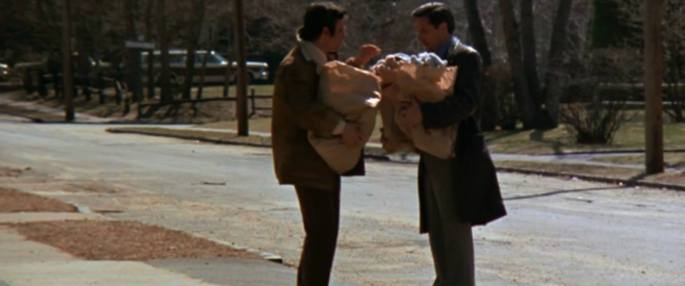
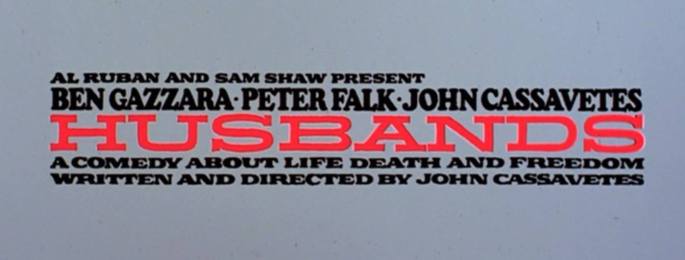
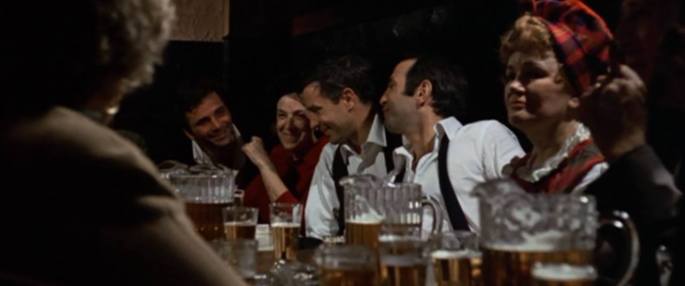
Husbands is a take no prisoners drama about men facing uncertainty in middle age. I can see how this film was so polarizing for many people back when it was released in 1970, but there’s no question that writer/director John Cassavetes was on to something extremely intense and raw and honest with this purposefully ragged account of men being boys who think they are being men. I loved the improvisational spirit and style, the performances from Ben Gazzara, Cassavetes, and Peter Falk all complement one another brilliantly, and all three men got a chance to etch an extremely detailed portrait of masculine malaise that felt rooted in truth and feeling. This is one of those epic waste-festival movies that will turn off some viewers because of the excessive debauchery, but I found it to be thought provoking, emotionally stirring, and frequently hysterical.

2

You can definitely see why this film has been so inspirational to so many filmmakers over the years, and how the style has been appropriated countless times. Victor Kemper’s bold cinematography shoved every image in your face with force, while the spontaneous nature of the filmmaking aesthetic and acting in general allowed for unpredictable beats of true life to bubble to the surface. This has got to be one of the ultimate cinematic explorations of manliness in all its forms and complexities, while it simultaneously operates as a scabrous indictment of the marriage in suburbia. The film’s final scene stings with a poignancy and uncertainty that is hard to shake. Oh, and I absolutely adore the opening credit montage with the still photos – such a great way to immediately grab the viewer.

1

Tombstone: A Review by Nate Hill 

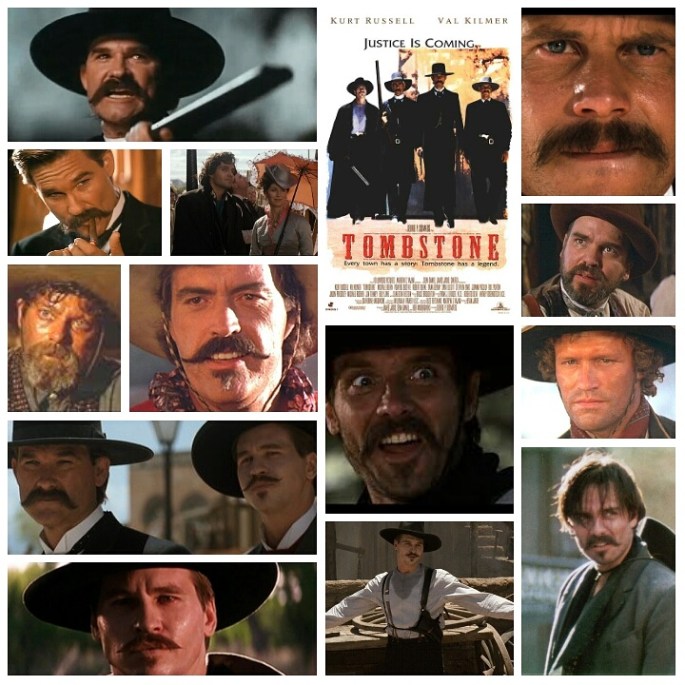
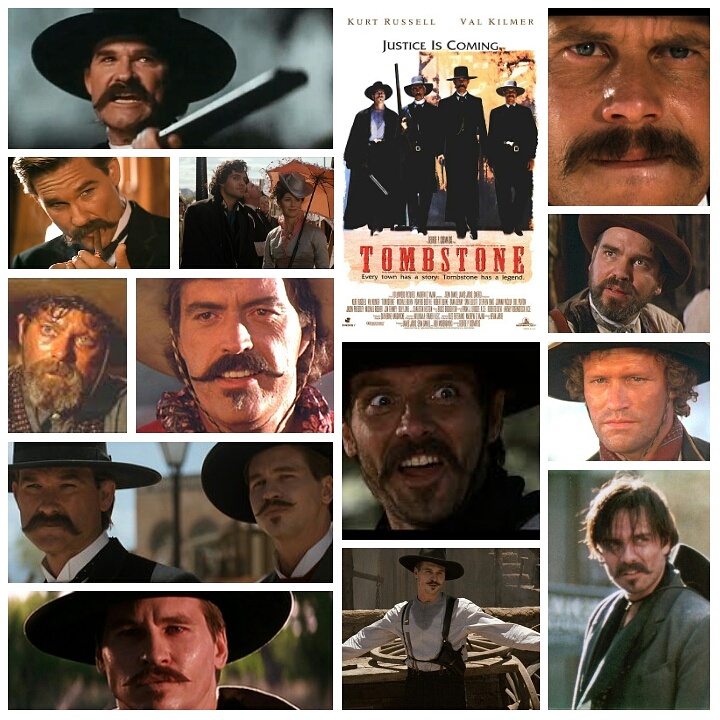
There are two main film versions based on the life of infamous outlaw Wyatt Earp: a serious, sombre one with Kevin Costner (and a whole lot of others), and a rolkicking circus sideshow starring Kurt Russell, bedazzled with a jaw dropping supporting cast that doesn’t quit. Both films are great, but if you held a six shooter to my head and demanded a preference, I’d have to give Tombstone the edge. It’s just too much fun, one wild screamer from start to finish, filled with swashbuckling deeds, evil outlaws and bawdy gunfights galore. It should have been called It’s A Mad Mad Mad Mad World In The Wild West. Kurt Russell is in mustache mode again here, but looks younger and leaner than last year’s western double feature his mutton chops starred in. Along with his brothers Virgil (Sam Elliott) and Norman (Bill Paxton) he arrives in Tombstone with a life of law enforcement in his dust and designs on retirement and relaxation. He gets pretty much the opposite though, when every lowlife bandit and villain in the area comes crawling out of the woodwork to give him trouble. Michael Biehn is the worst of them as crazy eyed Johnny Ringo, a deadly smart and ruthless killer, and Powers Boothe hams it up terrifically as drunken scoundrel Curly Bill Brocius. They are the two main causes of grief for the Earps, backed up by all sorts of goons including Michael Rooker, Billy Bob Thornton and a petulant Stephen Lang as Ike Clanton. Russell is joined by an off the wall Val Kilmer as Doc Holliday, the wheezy southern prince with a silver tongue that’s constantly fuelled by booze. He gives the best work of the film, and it’s fascinating to compare it to its counterpart, Dennis Quaid’s turn in the other version. Theres also great work from Billy Zane, Dana Delaney, Thomas Haden Church, Paula Malcomson, Tomas Arana, Johanna Pacula, Paul Ben Victor, Robert John Burke, John Corbett, Terry O Quinn, Robert Mitcham and even Charlton Heston good lawd what a cast. The standoffs, both verbal and physical, are a thing of beauty and the reason we go to the movies. Of all the westerns out there, this has just got to be the most fun. It’s constantly alive, there’s always something going on, a cheeky glint in its eye and a vitality in every corner of every frame, like a kid that won’t sit still. Russell is a champ as Earp, a no nonsense killer, plain and simple, but a man of both style and charisma, two weapons that are equally as important as his side arms. Kilmer gets all the best lines and goes to town with his portrayal, creating electric tension whenever he faces off with Biehn, who is equally mesmerizing in a more intense way. The three of them kill it, and along with the howling mess hall of a supporting cast, make this simply the liveliest western I’ve ever seen in the genre. 

THE WALKER – A REVIEW BY J.D. LAFRANCE

07walker-600

After dabbling briefly with a major studio with Dominion: Prequel to the Exorcist (2005), writer/director Paul Schrader returned to the relatively safe confines of the independent film scene with The Walker (2007). This film continued his fascination with loner protagonists ostracized by their profession as examined in American Gigolo (1980) and Light Sleeper (1992), or by their worldview as in Taxi Driver (1976).

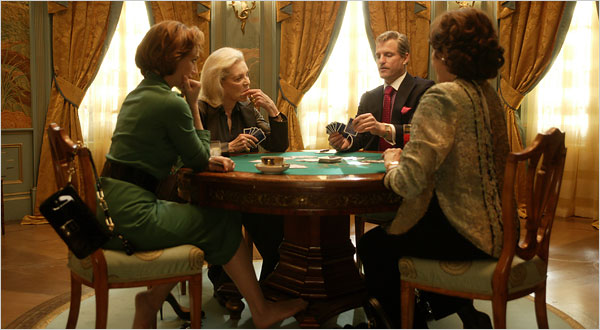
Carter Page III (Woody Harrelson) is a popular socialite who works as a confidant, companion, and card player to the wives of politicians in Washington, D.C. – a professional “walker,” a term coined for Nancy Reagan’s companion when she was First Lady. Carter is the epitome of the Southern gentleman. He plays a weekly card game with three women as they gossip and tell stories complete with salacious details about the denizens of Capitol Hill. Carter is finely groomed and impeccably dressed with only the finest suits, living in a beautifully furnished place.

With the stories Carter tells his dates, he hints at a rich backstory but he is careful not to reveal too much about himself. While waiting for Lynn Lockner (Kristin Scott Thomas), one of his dates, to meet up with her lover, she comes back in shock. Her lover is dead and she asks Carter to keep the incident quiet. Of course, he decides to get involved (he knew the victim). Carter used to trade in juicy gossip and now he has become the subject of it. It doesn’t help that he lost considerable money on an investment that the victim advised and this gives the socialite a motive. As a result, he decides to investigate the murder using his own insider contacts and uncover a few dirty secrets that people in positions of power don’t want revealed. His efforts to clear his name become more urgent once the Feds apply pressure thanks to a particular nasty agent (William Hope). Pretty soon, events conspire against him and Carter becomes the prime suspect.

Woody Harrelson disappears into the role affecting a flawless accent and does an excellent job with Schrader’s witty dialogue and distinctive cadence. Every few years between amiable comedies Harrelson gets a juicy dramatic role to sink his teeth into and showcase his acting chops: Natural Born Killers (1994), The People vs. Larry Flynt (1996), and now this film. Schrader’s screenplay, as you would expect, snaps and pops, especially the scenes where Carter and his companions banter and gossip. It doesn’t hurt that he has the likes of Lauren Bacall, Lily Tomlin, and Kristin Scott Thomas delivering it. The Walker is a fascinating inside look at a subculture that exists in Washington, D.C. under the auspices of a murder mystery. It shows to what lengths politicians will go in order to protect themselves and their dirty secrets. Schrader has crafted a smart thriller with interesting characters that is driven by a well-plotted story and not a bunch of noisy, hastily edited action sequences.

COREY ALLEN’S THUNDER AND LIGHTNING — A REVIEW BY NICK CLEMENT

thunder_and_lightning

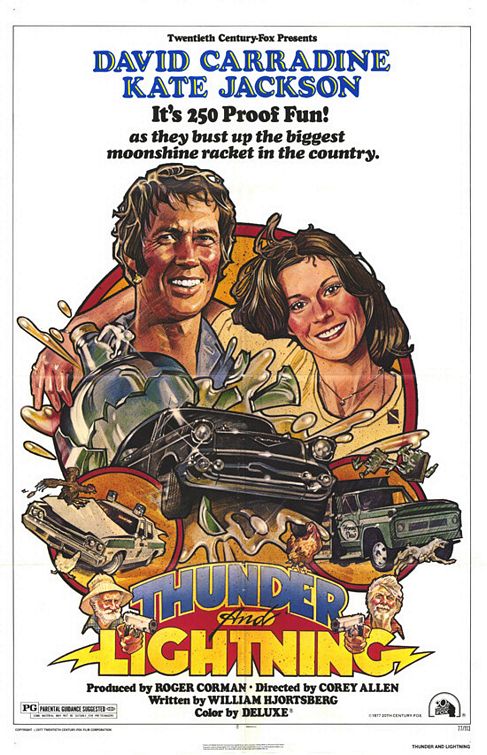
Thunder and Lightning is exactly what the amazing one-sheet promises — tons of backwoods idiocy with chases galore and all sorts of redneck hijinks leading the way. Produced by Roger Corman and directed by Corey Allen, this zippy and ramshackle B-movie from 1977 (it was released as the second half a double bill with The Driver) benefitted from the filmmaker’s total sense of gonzo energy, a frequently witty script, and game performances from the entire cast, lead by David Carradine as a Florida moonshine runner who runs up against rival bootleggers, and crosses paths with a buxom bombshell (Kate Jackson) who has personal ties to the baddies. The film’s big speed boat chase is undeniably impressive and rather dangerous looking, as are most of the vehicular stunts, of which there are a ton. Mix in trigger happy local cops, throw in a dash of alligator wrestling, sprinkle the proceedings with some explosions, and splash it all with a boozy sense of fun, and you’ve got this scrappy little B-movie that makes for a rowdy late night selection to enjoy with some pizza ‘n beer. The film’s screenwriter, William Hjortsberg, would go on to craft the script for Ridley Scott’s Legend, as well as the book which would serve as the inspiration for Alan Parker’s Angel Heart. The film marked the final big-screen credit for the prolific actor and voice-artist Sterling Holloway (Dumbo, Alice in Wonderland, The Jungle Book). Available on DVD (at a very expensive price), Amazon streaming, and on YouTube.

PTS Presents SHITTY AMAZING SERIES Episode 2

shitty amazing CR

There really isn’t too much to say about this gem from 1994.  Move over, PULP FICTION, Michael Ritchie directed Chevy Chase, Jack Palance, Diane Wiess, and Robert Davi in this glorious National Lampoons knock-off, COPS AND THE ROBBERSONS.  Enjoy this ten minute chat of giggling.

KEN ANNAKIN’S SWISS FAMILY ROBINSON — A REVIEW BY NICK CLEMENT

3

Ken Annakin’s Swiss Family Robinson, released in 1960, was one of my absolute favorite movies to watch on VHS when I was growing up, and upon a recent revisit, I was reminded of how enjoyable this film is, and how it’s one of the most violent family films ever made. Seriously – killing bad guys is treated like a family event in this film, a sort of sport, with everyone getting in on the action, including good-old Mom! Coconuts are turned into improvised hand-grenades, massive logs and tree trunks are used to roll over henchmen, swords and muskets are busted out at a moment’s notice, while a general air of smiling menace hangs over the entire film. A splendid cast including John Mills, Dorothy McGuire, James MacArthur, Janet Munro, Tommy Kirk, and Kevin Corcoran made the most out of each role, while the stranded on a deserted island plot line allowed for all sorts of shenanigans and pratfalls.

2

Harry Waxman’s full bodied cinematography is sensational, while the film itself was the first widescreen Disney movie shot with Panavision lenses, as the company had predominantly used matted widescreen or CinemaScope as their preferred photographic process. Filmed on location in Tobago and London’s Pinewood Studios, Swiss Family Robinson does truly feel epic at times, with lots of extras, huge ships, big action set pieces on shore and at sea, while the film never lost track of some of the smaller details that make this one better than you might remember. William Alwyn’s robust score was the cherry on top of the sundae. The film would become a huge financial success, grossing $40 million off of a $4 million budget, and that was back when money was real.

1