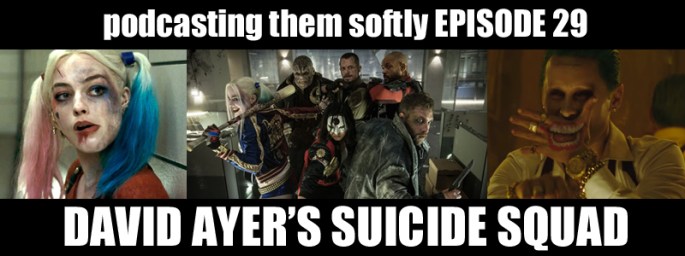
We’re back with a regular episode. This time we talk about David Ayer’s SUICIDE SQUAD and touch upon BATMAN v SUPERMAN, and the future of the DC Universe.
We’re back with a regular episode. This time we talk about David Ayer’s SUICIDE SQUAD and touch upon BATMAN v SUPERMAN, and the future of the DC Universe.
”Who’s there?”
There’s no other way to put this; DON’T BREATHE is fucking gnarly. Set inside a singular house, a group of young friends set to rob a blind man for an easy “once in a lifetime” heist. Sounds simple enough.
Except the blind man is Stephen Lang.
Fede Alvarez is one of the best young directors currently working in Hollywood. His EVIL DEAD remake, which at the time seemed incredibly unnecessary, remains to be one of the best remakes of recent years (very much akin to Marcus Nispel’s fantastic TEXAS CHAINSAW MASSACRE remake). Alvarez is an absolute maestro behind the camera.
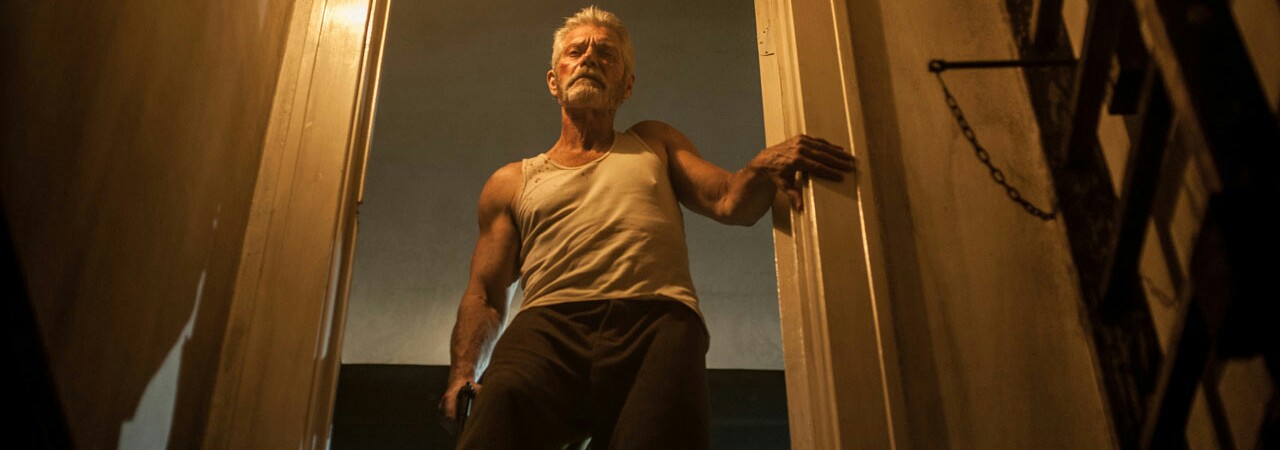
While the film could have been just another run of the mill genric horror/thriller film, it excels with Avarez’s razor sharp eye and the casting of Stephen Lang in one of his most sinister and brutal turns yet.
Lang is one of my favorite actors. The guy has been in so many great films, projected so many great characters, yet he never has been held to a typecast. In this film, he takes the big bad antagonist and obliterates the screen with his physical intensity. He’s a blind man, with a dark secret, who surpasses any and all boundaries to keep it safe.

Alvarez creates a small and intimate film, that builds and layers suspense to the point where you are constantly squirming in your seat and find yourself looking away from the transgressive visuals and sounds protruding off the screen. If you enjoyed the dark nature of GREEN ROOM, you’re going to love DON’T BREATHE.
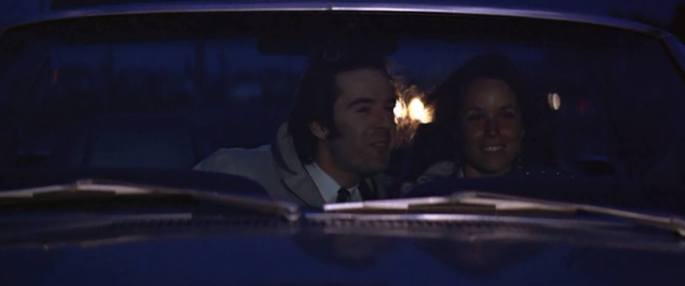
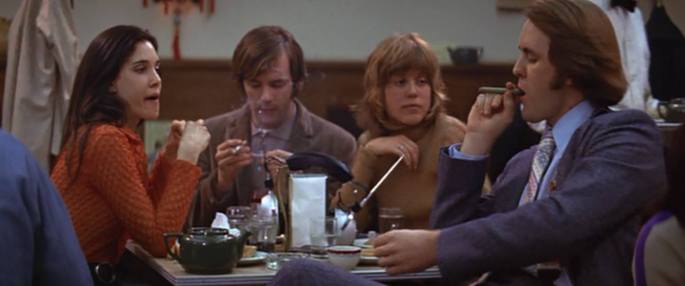
Dealing: Or the Berkeley-to-Boston Forty-Brick Lost-Bag Blues is one of my favorite recent obscure cinematic finds. Available on DVD thru Warner’s Archives label, this is a sly, strange, and totally cool movie that juggles genres and tones all the way up until the surprisingly nasty finale. Directed by Paul Williams (Out of It, The Revolutionary), Dealing: Or the Berkeley-to-Boston Forty-Brick Lost-Bag Blues was released in 1972, and was based on the novel by Michael and Douglas Chrichton under the pseudonym Michael Douglas(!). The plot centers on a Harvard law grad student, played by the interesting if a bit stiff Robert F. Lyons, who decides to smuggle of massive shipment of marijuana from Berkeley to Boston after doing numerous smaller-scaled jobs. Along for the ride is Barbara Hershey, in all of her youthful, gorgeous splendor, as the reluctant pseudo-girlfriend who decides to help with the big score, but soon finds herself in way over her pretty head. And can she fully be trusted?
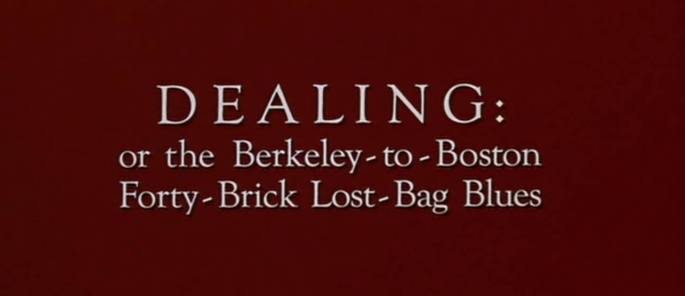
Produced by cinematic legend Ed Pressman (Conan the Barbarian, American Psycho, Walker, Blue Steel, Wall Street, Phantom of the Paradise), Dealing: Or the Berkeley-to-Boston Forty-Brick Lost-Bag Blues has the distinction of having one of longest official titles in movie history. The film also sports a nifty supporting cast including John Lithgow (in his film debut as a shifty pot dealer), Charles Durning as a shady cop, Paul Sorvino as a cabbie, and the prolific character actor Victor Argo. The jazzy and offbeat musical score by Michael Small contributed to the overall stoniness of the entire picture. It was also very well shot by cinematographer Edward R. Brown (The Hot Rock, Lovin’ Molly), who gave the film a laid back vibe while still keeping things visually interesting. Funny, weirdly sexy, offbeat, and dangerous in spots, this is a unique item that would likely please many viewers who are looking for something totally unexpected.


Somewhere deep in the rugged mountainsides of the Pacific Northwest, a mother and father have chosen to raise their five children off the grid, away from society and by a completely different set of rules and customs than anyone in our day and age is used to. Viggo Mortensen doesn’t take on just any film, and in fact since his breakout role in Lord of The Rings which allowed him some clout, he’s done nothing but carefully thought out, worthwhile cinema, Captain Fantastic being probably one of the best. He is intense and caring as Ben, an intellectual renaissance man who has been bitterly put off of capitalism and commercialism. His wife (Trin Miller, angelic in flashbacks) is mentally ill and eventually passes away, leaving him on his own with the brood. He does what he knows best, sticking to the rigid physical and intellectual education plan in place for them. They learn to hunt wild game with homemade tools, read from classics like Lolita and Brothers Karamazov every evening, grow all their own grains and vegetation, practice complex defense, combat and survival skills, and live a life of elemental potency, far from the lemming’s march of consumerism just beyond their verdant and very isolated homeland. Trouble has a way of finding paradise though, however well it hides, and here it arrives in the simplest form of all: the absence of a mother. Things aren’t the same following her death, and they all take up arms and head south to New Mexico for her funeral, in a big old repurpoused school bus. They’re the most ecentric family you’ve ever met, and the ironic part is they’re the closest thing to what we were meant to live like in this world you’ll find. The real absurdity is the technicolor strip mall fast food fever dream we inhabit today, far removed from our earthy origins. It’s just because it’s become so commonplace that it seems normal to us. The family clashes spectacularly with an unprepared outside world who react to their behaviour in many different ways. The children all have the physique of a professional athlete and the academic abilities of six college professors, but somewhere along the way Ben forgot to teach them about what matters most: How to interact with one another, how to care for and love another human, and the simple social cues one aquires from growing up around a large number of people. His jaded father in law (knockout work from Frank Langella) sees Ben as a loose cannon, a danger to his grandchildren and the cause of his daughter’s death. At one point the film levels out and let’s us see things in a complete objective way: yes there are extreme benefits to a method of raising children like this, an experience that no one else could have and an implementation of their human potential that goes several degrees farther than usual. But how far is too far? Is there a dangerous element to their training and conditioning that goes beyond what they’re capable of and poses a threat? Mortensen is a picture of conflict, his undying love for his children tested when he’s thrown out of the comfort coccoon he has forged for them. Suddenly he is not the all knowing protector they’ve gotten used to, and the world outside is just as much a cause of fear for him as it is for them. They are a family though, which is achingly, evidently clear in each performance. George Mackay is the eldest and bears the brunt of realization when it comes time to meet other people. The others, including Annaliese Basso, Shree Crooks, Nicholas Hamilton and Samantha Isler are all sensational and have a lived in, well worn and often quite hilarious dynamic. It’s essentially a fish out of water story that begs us to question both the water and the land, and how going from one environment to the other, both worlds apart but in the same realm, can affect a human being. This is the best film I have seen so far this year, one that challenges us to ponder what we see unfold, urges us to be more than just another fish in the school, but to laugh, be crazy, think for ourselves and pitch in an effort to find the scattered pieces of the puzzle we call the human condition. Fantastic is the word indeed.

When My So-Called Life debuted on television in 1994, it was seen as a smart alternative to mindless teen pap like Beverly Hills 90210. I don’t know about you, but I didn’t know anyone like the “teens” (just how old were the actors anyway?) on that show. In comparison, the kids on My So-Called Life were awkward, vulnerable and, most importantly, real. All of the characters on this show acted like actual people. Sure, the writing, at times, was a little too touchy-feely and bleeding heart liberal for its own good – the influence of Thirtysomething’s Mitchell Herskovitz and Ed Zwick – but its observations about teenage life (and life in general) and the many melodramas that make it so difficult were right on the money.
Angela Chase (Claire Danes) is a nice girl still figuring out who she is as she pines after the dreamy Jordan Catalano (Jared Leto) who, initially, barely knows that she exists. Angela is friends with party girl Rayanne Graff (A.J. Langer), the openly gay Rickie Vasquez (Wilson Cruz), Sharon Cherski (Devon Odessa), who used to be Angela’s best friend but has since been replaced by Rayanne, and the awkward Brian Krakow (Devon Gummersall) who secretly has a crush on Angela. In the first episode, Angela dyes her hair crimson as an act of rebellion against her mother (Bess Armstrong) who tries so hard to understand her daughter but doesn’t have a clue what she’s going through. Her father (Tom Irwin) is a nice enough guy but also equally clueless about his daughter’s day-to-day trials and tribulations. Angela’s parents are both liberal-minded people who were probably Hippies in the 1960s, grew up and bought into the system while still retaining their liberal sensibilities.
One of the great things about the show is how the writers flesh out the characters and the relationships between them. The conflicts that Angela has with her mother are spot-on and have a real ring of honesty to them. Rayanne’s self-destructive, partying ways are addressed in one episode. In another, Rickie comes out to his relatives and is kicked out of the house by his abusive uncle. The seemingly perfect Jordan turns out to be flawed as we find out in one episode that he can’t read or write.
There are so many stand-out episodes (let’s face it, they are all good), like the one with Angela’s substitute teacher (played to perfection by Roger Rees) who inspires her to think outside the box. However, she becomes blind to his flaws by his dynamic charisma. Arguably, the best episode is the Christmas one where singer/songwriter Juliana Hatfield plays a homeless person that Angela tries to help. It’s a truly moving episode as materialism and the commercial aspects of Christmas are rejected in favor of family, friendship, and selfless acts of kindness.
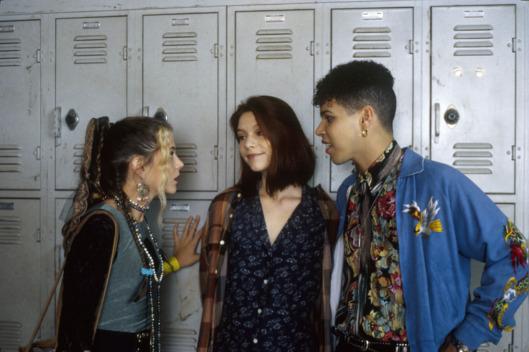
Looking back at it now, My So-Called Life is a wonderful snapshot of the mid-1990s with the hairstyles and the clothes (you can even spot an REM poster in Angela’s bedroom) distinctive of that decade prominently on display. One can now look back at this decade through nostalgic glasses via this show. Despite its brief run, My So-Called Life not only helped launch the careers of Claire Danes and Jared Leto, but without it there would be no Freaks and Geeks or Joan of Arcadia or Gilmore Girls, which also presented smart and sensitive teens in a realistic way. Both of these shows also had brief runs which seem to suggest that American viewers favor escapist fare like The OC and not heartfelt shows like My So-Called Life.
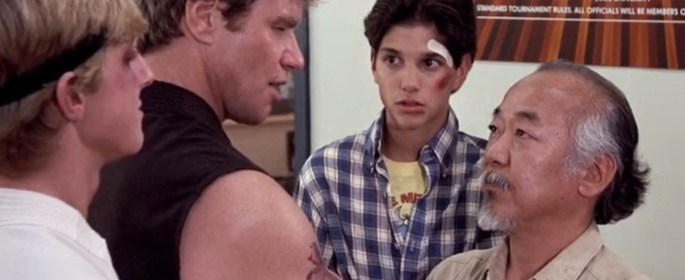
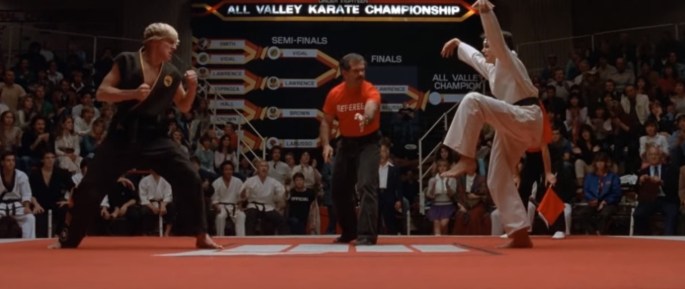
When a movie works it works. And that’s The Karate Kid — it’s so well calibrated that no matter how many times you’ve seen it you’re left with a lump in your throat when that final freeze frame of Mr. Myiagi appears on screen. Released in 1984 and becoming an immediate blockbuster, the film was heroically directed by John G. Avildsen (Rocky, The Formula), from a triumphant screenplay by the extra-prolific Robert Mark Kamen. Ralph Macchio was presented with the role of a lifetime in Daniel LaRusso, for better or for worse in regards to the rest of his career, projecting the perfect amount of innocence and potential for underdog success. Noriyuki “Pat” Morita delivered one of the most iconic screen performances in the history of the medium as young Daniel’s semi-reluctant mentor, and when push comes to shove, isn’t afraid to lay the smack down on some beer bottles and high school hooligans. And let’s talk about those hooligans for a moment; this film absolutely nailed the fear that some kids have when confronted by bullies, and I love how the story feeds off intense emotions for all of the characters, so when the action arrives, all the kicks and chops mean something to everyone.
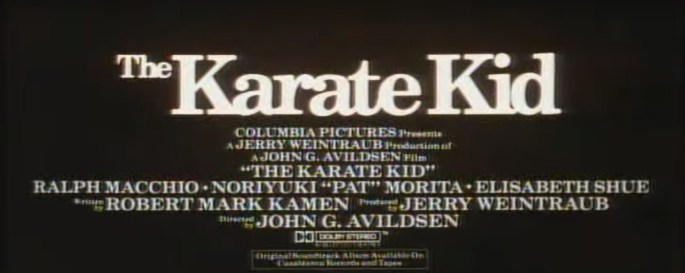
Led by the menacing William Zabka as the infamous Johnny Lawrence, he and his evil sensei John Kreese (the amazing Martin Kove) and a band of other karate-kicking bad-asses making life a living hell for poor Daniel, until he decides enough is enough, and that someone needs to get their face crane-kicked into oblivion. Elisabeth Shue made for one of the ultimate early screen crushes for my personal generation, and in retrospect, it’s a wonderful and warm performance that mildly transcends the stock-girlfriend role that’s required by these types of narratives. Bill Conti’s soaring, totally engrossing musical score hit every single note of sonic perfection, going hard in the most dramatic of moments, and allowing for silence during some crucial spots. Morita would rightfully receive an Oscar nomination for Best Supporting Actor, while the film would spawn multiple sequels (two of them also directed by Avilsden), and a surprisingly successful reboot from 2010. But nothing will ever match the honest passion and clear-eyed sentiment of the original Karate Kid. Avilsden knew how to exploit the material for all it was worth, and as a result, the film became critically acclaimed, and has resonated for years with various generations of moviegoers. Finish him!
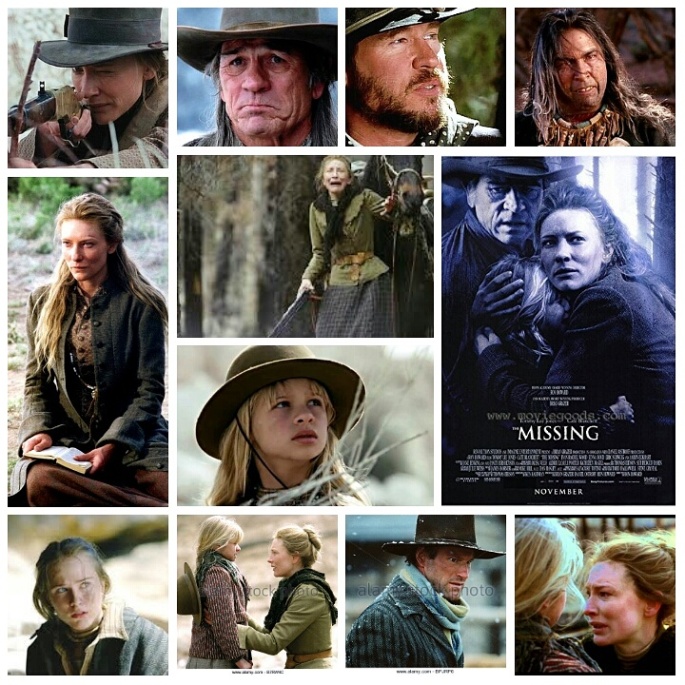
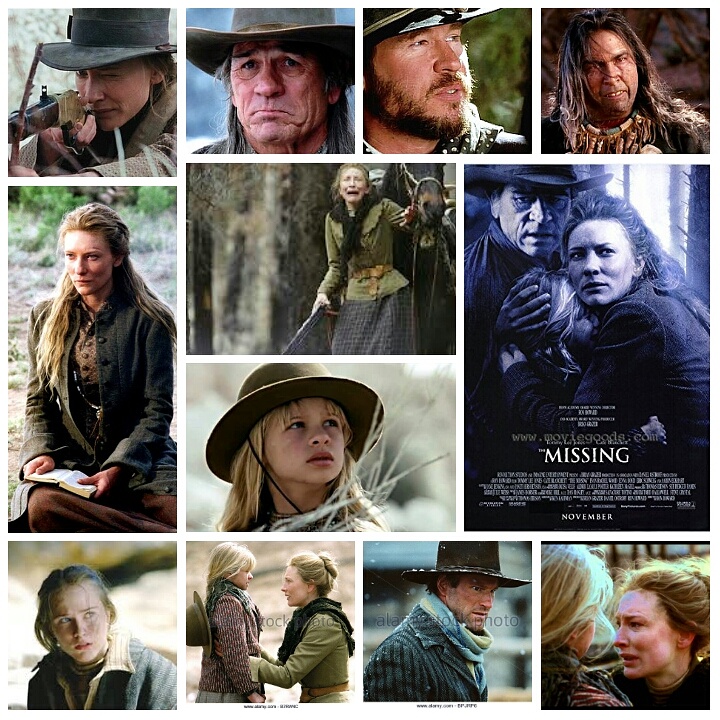
Ron Howard usually plays it both straight and safe, never taking too many risks, never siding too much with abstraction or grey areas, and over the years this has made me somewhat of a non fan. Not a hater, simply seldom blown away or challenged by his work. With The Missing, however, he strayed from the path and brought us a dark, threatening picture of life on the frontier in all its brutal, treacherous glory. With the success of last year’s brilliant Bone Tomahawk, I couldn’t help but be reminded of this beauty, as there are elements of horror and evil dancing on a thread with origin points in both films. Different altogether, but from the same elemental stew and highly reminiscent of each other. Cate Blanchett is hard bitten single mother Magdalena, trying her best to raise two daughters (Evan Rachel Wood and the excellent Jenna Boyd) with only the help of her sturdy farmhand (Aaron Eckhart). One misty night, someone or something snatches Wood right out of her bed and disappears into the wilderness with her. Magdalena is raw and determined, launching a desperate search across woods and plains to find her kin. Joining her is her half breed injun father Samuel, played by an eerily convincing Tommy Lee Jones. Samuel left her years before and only re-emerges in her life for fear of being punished for forsaking his family in the beyond. Gradually he turns around and a bond is formed through the crisis, an arc which Jones nails like the pro he is. It turns out they are tracking a group of despicable human traffickers who take girls and sell them across the border into sex slavery. They are led by a mysterious witchdoctor (Eric Schweig) whose tactics border on voodoo prowess. It’s scary stuff, never outright horror, but sure aims for that with its hazy nocturnal atmosphere in which any denizen of the night could be poised behind the next thicket or cluster of trees, ready to pounce. Blanchett is tough as nails, a terrific female protagonist blessed with a mother’s love and a winchester to back it up. Jones is gruff and badass, believable as a native american and treated as a well rounded character seeking redemption in his twilight years. There’s also fine work from Steve Reevis, Clint Howard, Elizabeth Moss and a cool cameo from Val Kilmer as a sergeant who helps them out. My favourite Ron Howard film by far. Just a mean, dark genre piece that aims to thrill and chill in equal measures and comes up aces.


Some people give me funny looks when I say I enjoyed the Hobbit films. There’s this giant festering stigma around the entire trilogy that’s hard to wade through if you are one who geniunly did enjoy a lot of what Peter Jackson brought us with his second barrage of Middle Earth sagas. Now don’t get me wrong, there’s plenty of things he muffed up, the chief aspect being editing and length. We did not ask for, need or want an entire LOTR lenghth trilogy based on a book that could have fit into one volume of that series. Jackson has a tendancy to overreach, film too much and throw it all into his final cut. It started with the extended cuts of LOTR, which were somewhat unneeded, continued with King Kong, which could have been at least 45 minutes shorter, and has now climaxed with The Hobbit films. They’re so long and stretched out that at times we realize we’re not even watching stuff from Tolkien’s annexes or archives, but simply shit old Petey made up to pad the waistline of content that’s begging to be slimmed down. I’m still waiting for a fan edit that condenses everything down into what is necessary to tell the story, and pitch everything else into the purgatorial halls of DVD deleted scene land. And therein lies my argument: There’s gold to be found here, but a lot of folks are so turned off by all the unnecessary razzle dazzle that they have become blind to what actually worked. An Unexpected Journey kicks off the trilogy and definitely fares the best, feeling the most akin to the book. Martin Freeman is lovely as a young Bilbo, baffled to find thirteen rowdy dwarves dumped on his doorstep, the work of Gandalf The Grey (Ian McKellen, like he never left the role), who wishes to prod him in the direction of a most dangerous and thrilling adventure. Bilbo is a mild creature and deeply in love with the comforts of home, but is whisked along all the same, after a chaotic dinner party and plate throwing contest from this knobbly group of mountain dwelling pygmies. Orcs, Wargs, Goblins, colossal mountain giants and an appearance by the ever fascinating Gollum await them. There’s an interlude into Elrond’s heavenly glade where Gandalf, Saruman (Christopher Lee) and Galadriel (Cate Blanchett) have a little CSI: Rivendell episode with an ancient dagger that hints towards the return of Sauron. One thing Jackson added that is a highlight is additional wizard Radagast The Brown (Sylvester McCoy) an eccwntric hippie who rides a chariot led by massive rabbits in breakneck bouts of Need For Speed: Middle Earth with Orcs atop Wargs. A distinct feature about these films compared to LOTR is the ramping up of CGI; many Orcs are no longer stuntmen in gloriously goopy makeup, but giant computer rendered behemoths, taking some of the texture and authenticity away. Jackson also chose to shoot in many more frames per second than the human eye is used to, giving everything a strange, wax museum sheen that is pretty distracting. Close your bag of tricks and make us a goddamn straightforward flick Pete. Fuck sake. For all the issues, it’s terrific to be back in Middle Earth, however different it looks and feels. The production design is still an elaborate wonder of creative design and decoration, Howard Shore’s now timeless score makes a triumphant return and there’s a beautiful new song courtesy of the dwarves. Say what you want, bitch and moan til the Wargs come home, I love this first outing dearly and rank it nearly as high as LOTR. I can’t say the same for the next two, especially the exhausting Battle Of Five Armies which diminished my patience for Jackson and his tricks a whole lot. But, like I said, there’s always gold to be mined from the needless padding that’s been tossed in. One day someone will edit that perfect cut for us, and we’ll have that definitive Hobbit film. Until then, cherry pick the best parts and try to put the rest from your mind.


La Cucaracha means cockroach in Spanish (duh), which is somewhat of an ironic and sad reference to the main character of this exquisite little indie character study, a damaged man named Walter Pool (Eric Roberts). Walter is a writer drowning in alcoholism as he spend his days hiding out in a Mexican shanty town. Wallowing in self despair, he’s the perfect protagonist just waiting for an inciting incident, and as we all know, rural Mexico is a breeding ground for trouble of all sorts to spur on a good campfire tale. While on a bender in town, Walter is approached by a shady American lawyer (James McManus) and offered a job with malicious implications involving the son of local Mexican mobster Jose Guerra (Joaquim De Almeida). He takes the task, but nothing is what it seems and he realizes he’s been set up, lied to and left for dead. Used to being a write off, something snaps in him and he fires up with a need to know the truth about Guerra and his family. He’ll wish he never bothered, because the truth is disturbing and not at all what you’d expect from this kind of tequila soaked, south of the border intrigue. There’s very little action, gunplay or usual thriller tropes, and pretty much all the narrative is left to the actors and the writing, making it very unique amongst this type of fare. This is essential for any Roberts fan, he’s not doing one of his extended cameos or winking supporting jaunts here. He’s front and center the entire time and owns it with vulnerability and resilience, especially in a curiously sad monologue that goes into his past and let’s us see some of what has led him to his unique, end of the road situation. Almeida once again plays a Latin criminal, but unlike most of the other times, he’s given something to do here besides wave a gun around and be the villain. He’s treated intimately by the script, giving Guerra a personality, secrets and a haunted soul of his own. The scenes later in the third act between him and Roberts crackle with charisma and potency. The cover of the dvd for this shows a gunslinger type guy brandishing two pistols. Ignore that fully. Nowhere in this film is there anything that can be branded as an action flick. It’s all about character, good and bad deeds, redemption, evil and choices we make. An astonishing little story that’s been seen by almost no one up til now, deserving of far more accolades.

The Avengers (2012) was the culmination of an ambitious project that was carefully planned by Marvel Studios over several years and spans several films utilizing characters, both major and minor, from each. While the notion of a shared universe with characters from one franchise appearing in another is a relatively novel idea in film, it is nothing new in comic books where costumed superheroes cross-pollinate all the time and even contribute to a larger story (see Secret Wars II). With Iron Man (2008), Marvel decided to do in film what they’ve been doing in comic books for decades. Its commercial success paved the way for subsequent adaptations of The Incredible Hulk (2008), Thor (2011) and Captain America: The First Avenger (2011), each one featuring a scene that hinted at something bigger and it has finally arrived with The Avengers, which features heroes from all of these films banding together to form a super team of sorts.
The challenge that Marvel faced was to find a director that could successfully bring all of these wildly different heroes together and also handle the movie stars playing them. Up to that point, Marvel had employed journeymen studio directors like Jon Favreau (Iron Man 1 & 2), Louis Leterrier (The Incredible Hulk) and Joe Johnston (Captain America: The First Avenger). But with Kenneth Branagh directing Thor, it was the first time the company had hired someone with auteurist sensibilities since Ang Lee and his fascinatingly flawed yet ultimately ill-fated take on the Hulk in 2003. And so, the hiring of Joss Whedon to direct The Avengers surprised some. With only one feature film on his resume – the cult film darling Serenity (2005), and known mostly for his television work on Buffy the Vampire Slayer, its spin-off Angel and sci-fi western Firefly, there was some question if he could handle a $200+ million blockbluster populated with movie stars.
Whedon got his start as a screenwriter and honed his chops over the years on T.V. sitcoms and as a prolific and often uncredited script doctor (Speed, Twister, etc.), but more importantly were his hardcore comic book fan credentials, having actually written a brief run for The X-Men, so he knew how they worked in terms of dialogue, plotting and depicting visual action – perhaps the most important criteria for The Avengers gig. It was a calculated risk that paid off as the film amassed an impressive box office result and received strong critical response.
The Tesseract, a powerful energy source that was featured prominently in both Thor and Captain America, has activated itself and appears to be trying to open a portal to outer space. Sure enough, exiled Norse god Loki (Tom Hiddleston) arrives with the intention of using it to take control of Earth and enslave its inhabitants. To this end, he brainwashes brilliant physicist Dr. Erik Selvig (Stellan Skarsgard) and S.H.I.E.L.D. (a top secret government organization) operative Clint Barton a.k.a. Hawkeye (Jeremy Renner) to help him do his bidding. This doesn’t sit too well with S.H.I.E.L.D. director Nick Fury (Samuel L. Jackson) and he decides to enlist Earth’s mightiest heroes to stop Loki.
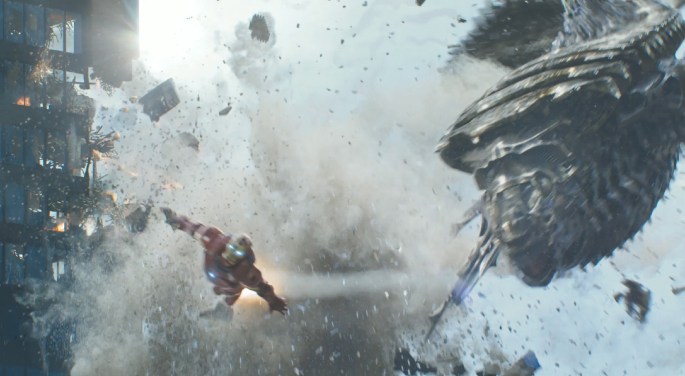
This includes Russian super spy Natasha Romanoff a.k.a. Black Widow (Scarlett Johannson) who quickly finishes her “interrogation” of Russian gangsters to approach Dr. Bruce Banner (Mark Ruffalo), a philanthropic scientist now staying “off the grid” by working in the slums of India and trying hard not to unleash his Hulk persona, a being with superhuman strength that is off the charts. Captain America (Chris Evans) has been thawed out since being trapped in ice at the end of World War II and is still trying to sort things out with Fury’s help. S.H.I.E.L.D. also approaches Tony Stark a.k.a. Iron Man (Robert Downey Jr.), interrupting his work on a clean energy source. Norse god of thunder Thor (Chris Hemsworth), and Loki’s adoptive brother, is the wild card, arriving out of nowhere to intervene when Iron Man and Captain America attempt to capture him, resulting in an impressive skirmish. This all builds up to a spectacular climactic battle between Loki and an alien army that comes swarming out of the portal created by the Tesseract and the Avengers.
With the unfortunate exception of Jeremy Renner, the entire cast gets a chance to flex their acting chops the best they can between massive action set pieces. Mark Ruffalo, the third person to play Banner after Eric Bana and Edward Norton, really nails the human side of his character, playing him as slightly twitchy and paranoid drifter. He appears confident (because, hey, he can turn into the Hulk) yet distracted – a jumble of emotions. This is easily the best representation of the Hulk on film, both visually in terms of CGI and also how he’s portrayed – as a rampaging monster – the Mr. Hyde to Banner’s Dr. Jekyll.
Not surprisingly, Robert Downey Jr. gets the lion’s share of the funny quips – he was born to spout Whedon’s witty dialogue. It is a nice return to form after the cluttered rush job that was Iron Man 2 (2010). Based on Whedon’s perchance for having prominent strong-willed female characters in his projects, Scarlett Johannson’s Black Widow gets a beefed up role and proves to be an integral part of the team. Not only does she show off a considerable physical prowess but she also holds her own against the likes of Robert Downey Jr. and Mark Ruffalo.
Chris Evans and Chris Hemsworth carry on with their characters from their respective films without missing a beat, each adding their own unique flavor to the team. In particular, Evans does a good job when Captain America steps up and takes tactical control during the war in New York while Hemsworth has some nice moments with Tom Hiddleston as warring brothers who just happen to be gods.
The Avengers is chock full of eye candy for comic book fans, from the S.H.I.E.L.D. Helicarrier to actually seeing superheroes fight each other – something, oddly enough, you don’t see in most films but that happens all the time in the comics. It is pretty cool to see the likes of Thor, Iron Man and Captain America duke it out while engaging in playful superhero banter. Unlike the other Marvel films starting with and including Iron Man, Whedon creates a real sense of danger for our heroes. There’s a feeling that they might fail and this tension is thrilling because it is so rare in these kinds of films, except maybe The Dark Knight (2008). It also raises the stakes when Whedon’s film needs it because there is a real sense that the Avengers are fighting for something tangible. He gives them something personal to fight for than just the usual let’s save the world goal. This culminates in the climactic battle in New York City between Loki and his alien army and the Avengers in one thrilling sequence after another, each filled with large-scale slugfests. The choreography during this massive battle is top notch. There is never any confusion as to what is happening and where, which is quite refreshing. The end result is pure, unfiltered comic book geek nirvana.
 The Avengers falls rather nicely within Whedon’s wheelhouse as it is all about a group of misfits that band together to save the world from a great evil, just like Buffy the Vampire Slayer, Angel, Firefly, and so on. It doesn’t get any more disparate than a Norse god, a billionaire playboy, a World War II super soldier, a brilliant scientist, and two spies. Like much of the aforementioned work, the heroes in The Avengers bicker and fight amongst themselves but when the need to step up for the greater good arises, they put their differences aside and make a stand together. Loki continues in the tradition of eloquent Whedon villains who are incredibly confident because, well, in his case he wields great power and knows it. However, Loki isn’t just out to rule the world. For him, there is a personal component – he seeks vengeance for the slights he feels were incurred in Thor. This film was a great way to kick off the summer blockbuster season in 2012 and is a potent reminder of what a filmmaker who knows how comic book works can do if given the chance. The result is a smart, witty film that is a throwback to entertaining, crowd-pleasing comic book adaptations like Superman: The Movie (1978) and Batman (1989).

