Star Trek: Beyond Not Quite a Review by Kent Hill

So the other day my wife had to go into the big smoke on a work assignment. I figured I’d tag along and since there would be time to spare, I’d go to the movies. After all the lure of the multiplex, its plush seating, its well stocked candy bar – a far cry it is from the local, tired twin cinema that hasn’t had work done to it since the week it opened – and that my friends, was a long time ago.

So the next item on the agenda, what to see? Well what was playing? Not a lot, at least nothing I was absolutely chomping at the bit to see anyways. It came down to two choices. The controversial Ghostbusters Reboot or Star Trek: Beyond. Time would be the factor which would decide and being that I missed the 10 o’clock Ghostbusters I had to look Beyond. Now I glanced at Vern’s review of the film the night before and he had gone on about, as he was a fan of Lin’s (Justin) Fast flicks, how they were connected in some aspects and the director had brought fluent and frenetic directing style to the table. Well, I haven’t see any of the Fast films and I was disappointed with Into Darkness. Abrams first outing I had so much fun at. it was the first time in a long time I had go in and come out and gone in again to the next screening. It was (for this dude in the audience) that much fun. It all worked.

Now I aint no Trekker or Trekkie or whatever it is y’all call yourselves – but, I love The Wrath of Khan. I saw that when it first came out and not knowing anything much of the whole Trek universe I loved it – and continue to do so. Into Darkness, took a lazy crap on a good movie. It brought back the rage I have against the Matrix Reloaded. It’s just sloppy storytelling. You start out with something vital and then you smoke eight packs of cigarettes, chow down on ten Big Macs, drink a case of beer and go make the next one. Sad, lazy, but I’ll save the my contempt for The Matrix Reloaded for another time.

Alright, Beyond. So we got a new director, new scribes, same crew, new villain. The movie opens with a return to traditional Trek formula: they are boldly going where no one has gone before but, there are folks there. The early exchanges between  Kirk (Pine) and a bunch of pissy little aliens is fun. Then he gets back aboard the Enterprise and when are reunited with the gang. I gotta say there is a lot of Scotty, and it is to be expected I suppose, since Simon Pegg is one of the writers. Turns out Kirk is bored. He’s Bored. He joined Starfleet on a dare and now he couldn’t give a hoot. So he’s throwing them back with Bones (Urban) who pinches Chekov’s booze, “thought he be a vodka guy.” Right, so he’s as bored as my son gets without his electronics and then come to this very cool space station. Everyone gets off. Uhura (Saldana) and Spock (Quinto)  are not sharing kisses anymore, turns out Sulu (Cho) has been made gay because it’s fashionable it seems for art to imitate life. I do care if you’re gay or straight or like to pull rabbits out of your ears. I really thought that was something that was thrown in for no reason except as social commentary. Let’s stick with plot shall we. Ok, so sadly Nimoy has passed away and Spock is discombobulated. Kirk tells the honcho at the space station he looking for a desk job and then its time to off and deal with a distress call. Enter the alien bad dude Krall (Elba) and his swarming hordes. They rip the Enterprise a knew butthole looking for the artefact that Kirk was offering as gift at flick’s opening.

First he has it then he doesn’t. Kirk and Krall fight as everybody jumps ship and are captured by the bad dudes so they can keep Krall alive. He sucks energy out of folks or something. So then we get to the planet and we are broken up into pairs. We got Spock and Bones, we got Kirk and Chekov (the late Yelchin), we got Uhura and Sulu and Scotty, that’s right, more Montgomery Scotty. Scotty hooks up with Jaylah (Boutella) and its turns out she is sitting on a hundred-year-old Starfleet vessel. Spock tells Bones he is going to go be more Vulcan and has him a laughing fit. Kirk and Chekov hook up with Scotty and the white alien chick and Kirk finds a motorbike just like the one dad used to have and then …

…then I had to go and pick up my wife, the only thing I love on this earth more than movies. She was done early and though there was a good portion of the flick to go, I walked because my wife need me. So you’ll have to tell me what happened and if it was any good cause I gotta go pick up my wife again. Kirk out.
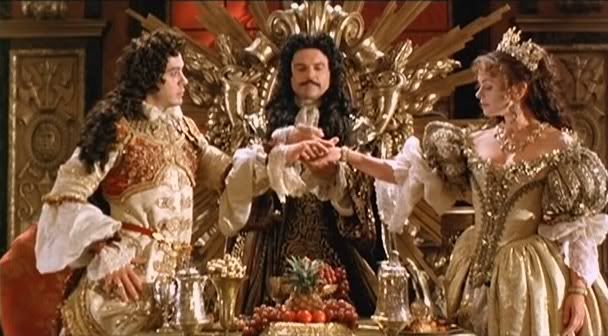
Restoration (1995) A review by Kent Hill

I admit a hidden passion for the depictions of this age and the language used by the people of the period. I first read the opulent novel by Rose Tremain in the form of its movie tie-in edition. It is language that you can devour with glorious passages like:

“I am fond of Bathurst. His claret is excellent, and his table manners worse than mine. His conversation is pure drivel, but spoken with a perpetual passion, emphasised by his constant farting and thumping of the table.”

Sad it is, and I will spoil it for you here, Lord Bathurst does not survive the adaptation. But, take heart. This is a period film with a fart joke in it.

Robert Downey Jr. gives another silently beautiful performance as Robert Merivel, the son of a glove-maker, a talented physician. He and his friend John Pearce (played by the always dependable David Thewlis) work at the local hospital where the sick flock to in droves; so much so that as it is uttered in Merivel’s dialogue (and I’m paraphrasing here) “there isn’t enough time to eat, there isn’t enough time to sleep, and there is barely enough time for us to look after our patients.”

After an extraordinary event where Merivel and Pearce are brought in to examine a man whose beating heart is exposed, save for a plate which he straps to his chest to cover it, he catches the eye of the visiting King Charles II (portrayed exultantly by Sam Neill). Merivel his hence plucked out his gloomy existence and is given a place at court after curing the King’s sick spaniel.

Oh what bliss, a life of sophisticated debauchery and decadence, all Merivel need do is at every moment please the King, care for the royal dogs, and make people laugh via his ability to fart at will. (told you, fart joke)

Things however, such as they are often disposed to do, take on an degree of complication when the King decides to offer Merivel up as a husband (in name only) to his mistress Lady Celia Clemence (Polly Walker). He is given a splendid wedding party, a knighthood and an agreeable estate in Suffolk. The King’s plan is to hide his mistress as Merivel’s wife and commands him only to not, in any way, shape or form, fall in love with her.

So leaving his new wife in the King’s bed, Merivel takes to the river and to his new home. Here he meets and becomes close friends with his steward Will Gates (a grand little performance by Ian McKellen). Merviel sets about making something of the house and takes also to drinking and entertaining until that is, his wife comes to the house. Celia, it turns out, has been temporarily banished from court for being too forward with his majesty. She is commanded to wait for return of the King’s favour, during which time she is to have her portrait painted by one Elias Finn (a deviously stuffy performance by Hugh Grant). Everything is going swimmingly but then love, O forbidden love rears its head. The one thing prohibited of the newly knighted Merivel sees him cast out of paradise.

Grudgingly the wheel turns and Robert takes to his horse, off to find his friend Pearce who has found his peace in Quakerism and a job at country mad house. Merivel lost and dismayed begins to rediscover his gifts as a physician and also becomes intrigued with the case of self-inflicted insomnia and she that is haunted by it, a young Irish woman named Katharine (an actorly turn by Meg Ryan). Thus life continues for a time and Merivel introduces alternative methods of healing such as the joy of music. This is not automatically welcomed by the Quakers but soon their elder Ambrose (Ian McDiarmid) begins to warm to these notions. But just as all seems harmonious the dark clouds gather and Merivel’s long-time friend Pearce is taken, try though he does to heal him.

The journeyman Sir Robert (Merivel) leaves the Quakers, taking Katharine with him: as she is carrying his child.

After a whimsical journey back to London, Merivel takes up his work again in the hospital under the guise of his deceased friend Pearce. He has arrived at the heart of darkness, the black plague is running rampant in the streets and the sick and the well are quarantined together. Merivel works tirelessly until he is marked again by tragedy. He loses Katharine whilst delivering his own daughter Margaret.

Little time passes and his reputation garnered for his work in the hospital sees him again summoned to court. Lady Celia is feared to have been struck by the plague. As John Pearce, Merivel examines her and finds that she is in the clear. Leaving the name of his friend as the man to whom the lady, his former wife, is indebted.

On his way back from the royal summoning, Merivel is just in time to witness the great fire of London. He rushes carelessly, with no fear for his own life, into the blaze in search of his daughter. The burning ruin that was his lodgings gives way and he tumbles into the Thames. The broken Merivel is carried in a small boat away from the fire and back into fate’s waiting hands.

When he awakes Sir Robert finds that he has returned to his former estate and is in the company again of his former steward Will Gates. Gates is not far into the explanation of Merivel’s unexpected arrival when another occurs hard upon it. The corridor is flooded by the royal dogs flowed by courtiers and finally the King himself. He explains that a nurse-maid came to the court looking for her master and father to the baby she is carrying, the physician Robert Merivel.

O for joy and happy endings, Robert has at last come full circle and is restored. His daughter is reunited with him, his title and house returned to him by the King, he wandered the path long and winding and has suffered and been blessed by the hands of fate.

This is a largely overlooked gem of a film that not only boasts a wonderful cast but has extraordinary work behind the camera. It is helmed handsomely by Michael Hoffman ( Gambit/ The last Station) and superbly adapted for the screen by Rupert Walters (Some Girls/True Blue). The look of the film garnered it an Oscar for Eugenio Zanetti’s (Flatliners/The Last Action Hero) sumptuous production design and it is stunningly captured by the eye of Oliver Stapleton (The Grifters/Accidental Hero). The film’s final architect is the hands of the skilled editor Garth Craven who has cut everything from Bloody Sam’s Pat Garrett & Billy the Kid to My Best Friend’s Wedding.

I find it hard I’ll admit to sugar-coat films I think are passable to mediocre. I also find it difficult not to gush or spew hyperbole about the films that I love. Still I have endeavoured to keep this one coming to you neat and off a measured tongue. But, don’t I beg you, take my word for it. Find this film and enjoy a story which is one that we can all identify with; a story about how we all go on journeys; about how we seize days and regret deeds. It’s about winning and losing and finding your way even in the midst of hopelessness. We are all travellers and are travelling still. Take a chance on this, I pray thee.

Danny Boyle’s Trance: A Review by Nate Hill 

Danny Boyle’s Trance is that rare head spinner that follows through with it’s audacious vision, uses dazzling sleight of hand to win us over and make us believe we’ve discerned the outcome, then whips the technicolor rug out from under our feet, hurls a psychedelic curve ball at us and makes a beeline for a conclusion that is both unpredictable and shocking, to say the least. Not to mention the fact that the journey leading up to said conclusion is a reality shattering cerebral laser show that will have you questioning not only your own sanity, but that of every character as well. I watched it with a friend who was nonplussed, dazedly uttering the sentiment “Who can ever tell what of that was real or not?”. A fair enough concern, but not really the kind of hangup you should trip over if you expect to have fun in a film like this. Boyle has a knack for bucking the trends, both in the versatility of his career and in the uniqueness found in each project as an individual. I guarantee that you haven’t seen anything like this before, and that any brief plot description you see on netflix or the like won’t even begin to prepare you for it. Read any further online and you’ll deliberatly spoil what will be a divine treat. James Mcavoy is the meek art curator who finds himself on the wrong end of a heist. Vincent Cassel is the volatile thief determind to find a piece that’s been hidden by Mcavoy, and subsequently forgotten after severe head trauma. Rosario Dawson is the enigmatic hypnotherapist hired by Cassel’s crew to help unlock the secrets of his mind and locate the painting. That’s all you really need to know. The rest is a spiraling cyclone of mind tricks, betrayals, candy colored cinematography that blasts you along with fiercely hopped editing, a whizz-banger of an electronic soundtrack that leaves your pulse playing hopscotch double time and some surprising emotional depth, taking you just as off-guard as the frequent and unforseeable plot twists. Mcavoy just continues to put forth commendable work in sublime films (if you haven’t seen Filth or The Disappearance Of Eleanor Rigby, please queue them up immediately), his turn here being one of the best in recent years. I’ve never been super hot on Cassel, but he holds his ground here nicely. Dawson is just groundbreaking in what is so far the performance of her career. This kind of arc is just so tricky to land, let alone carry believably the whole way, especially when there’s so much cognitive commotion to distract the audience from her work. She’s an emotional lighthouse in a sea of pixelated madness, and serves as the heart of the whole piece. Boyle is a director who is hopelessly in love with film. What it can do. How it can make you feel. The many and varied ways which it can entertain us and make us fall for the medium over and over again anew. He’s crafted a corker of a psychological slam dunk here, with an essential human core that gives all the trippy heady stuff some discernable weight. I’d say it’s a tad overlooked, to be sure. It has its audience but I wish it’d been the smash hit it so deserved to be. Imaginitive, confusing, unconventional, visually alive and crackling with an auditory soundboard in both score and soundtrack. Masterpiece for me. 

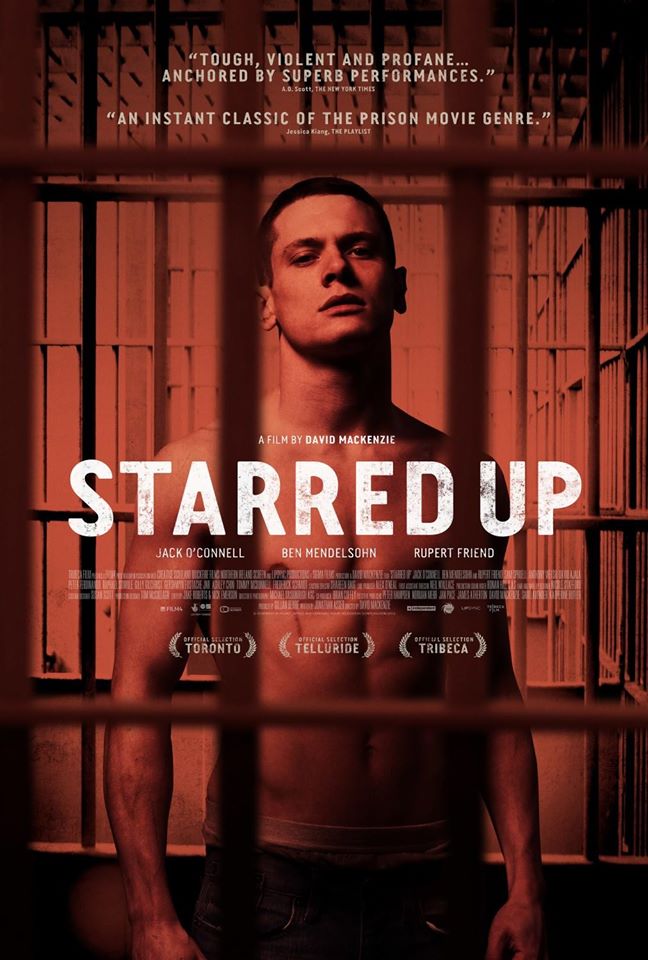
DAVID MACKENZIE’S STARRED UP — A REVIEW BY NICK CLEMENT

1

David Mackenzie’s startling and brutal prison film Starred Up brilliantly upends genre conventions, offering the familiar glimpse into hell that one expects from this sort of milieu, but taking it a step further psychologically by focusing on a surprising, compelling father-son dynamic that comes off as one of the most disturbing displays of dysfunctional family bonding that I’ve ever seen. Jack O’Connell is riveting as a 19 year old violent offender who is “starred up” (or transferred) from juvenile detention to an adult facility, where he encounters any number of obstacles, including one he never expected – meeting his estranged and unstable father behind bars, played by the amazingly skeevy Ben Mendelsohn, who has fast become one of my absolute favorite actors. This is a violent movie, both physically and emotionally, and O’Connell lets it all hang out in more ways than one; similar to Tom Hardy’s transformative work in Bronson, this is a film that required intense physical dedication at all times, and O’Connell burns up the screen with charisma and rage to spare.

Mendelsohn, who has essayed some of the most memorable cinematic creeps in recent memory (Animal Kingdom, Killing them Softly, The Place Beyond the Pines, Blacksea, the Netflix series Bloodline), is again beyond engrossing to watch, his every move worth studying, as he creates a tragic and bizarrely sympathetic portrait of a man who will never be able to make things better for himself or his son. Rupert Friend, so good as Quinn on Homeland, is a prison therapist who attempts to help O’Connell and a variety of other inmates. The tightly wound script was written by Jonathan Asser, who based the story on his experiences as a prisoner rehab specialist. Mackenzie’s direction is crisp and clean, with a stylish but un-showy style that relies more on exacting camera placement than overt tricks and flourishes. The economical and compact editing only helps to ramp up the tension from scene to scene. This is excellent, truly hard-hitting stuff.

PTS Presents SHITTY AMAZING SERIES Ep. 1 BLUE JEAN COP

sam

We’re very excited to present to you our new series of mini-podcasts.  Join us for a twenty minute long chat where we celebrate some of the most SHITTY AMAZING movies in film history.  For our first episode, we’ve chosen a film that we instantly bonded over, BLUE JEAN COP aka SHAKEDOWN.

MIKE JUDGE’S IDIOCRACY — A REVIEW BY NICK CLEMENT

1

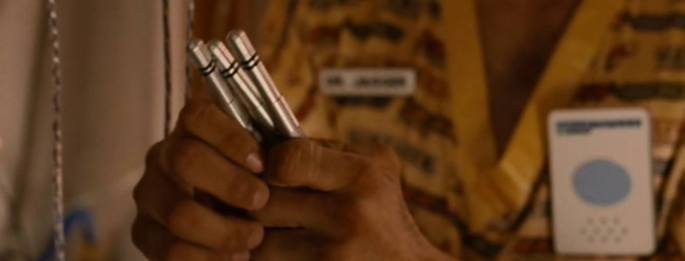
I’ve written about this one in the past, but that’s not going to stop me from writing about it again and again in the future, especially with the direction we’re headed in America. I can think of few films that would qualify more as “of the moment” than Idiocracy. Despite being released 10 years ago, this film feels more relevant and applicable each and every day, as seemingly half of the U.S. populace are mentally out to lunch, and I can think of no better time than right now to reignite the fire for this scathingly brilliant, insanely prescient satire that also happens to be a genuine opus of dick and fart jokes on top of it. Endlessly screwed with by 20th Century Fox, it’s sort of hard to take subversive co-writer/director Mike Judge (Office Space) and co-writer Etan Cohen (Tropic Thunder) to task for the obviously crude and partially unfinished CGI and some of the more questionable production values. And yet, some of the ramshackle qualities actually worked to the film’s benefit, and is in keeping with the silly, flippant, yet harsh tone. But repeatedly and rather strikingly, this film hits so many truthful notes of ugly, bitter humor that’s coming from an aggressively smart and all too honest place.

2

Luke Wilson plays an amazingly average military desk jockey who decides to take part in an experiment where he’s frozen in a top secret government program. When the morons running the project forget to thaw him out, he’s left on ice until the year 3001, where he’s unleashed upon a society consisting solely of complete and utter fools. He’s the smartest man in the world, and the film chronicles his desperate attempts to try and find a time machine to get back home while evading various idiocies that are thrown his way. It’s pointless to try and rehash the hilarious bits and pieces of this punishingly funny movie, but make no mistake – this film is a glorious PISSER. It also has the potential to anger a lot of people, especially those of us who don’t want to be reminded of how astonishingly accurate this film is, and how it seems to be correctly predicting where much of our society is heading – into a field of dead crops being hydrated by Brawndo.

8

And I’d just like to make it be known that I saw this film, in the theater on opening weekend at a total shitplex in Sherman Oaks – I’m very happy to have contributed to its $495,303 worldwide box office gross. It’s ridiculous how Fox treated this film, and while I’ll never personally be privy to the behind the scenes issues that plagued this project, there are SO MANY AWFUL movies that get made and released on a WEEKLY basis, so it’s totally crazy to think that a film this smart, this bold, and this consistently funny would get the red-headed step-child treatment. I’m also not sure if I’ve ever seen a studio film so lovingly bite the hand that’s feeding it; the level of corporate disdain that Idiocracy revels in is bracing to behold. The film also went by the titles The United States of Uhh-merica and 3001 at various stages of development/production. Idiocracy is a film that began its life as a piece of fiction, but has actually revealed itself to be a documentary in hiding.

3

DENNIS HOPPER’S COLORS — A REVIEW BY NICK CLEMENT

1

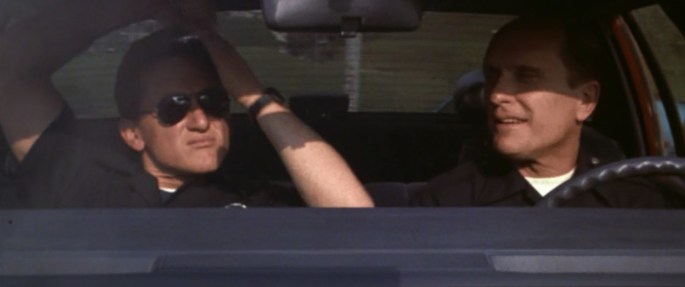
Dennis Hopper’s gritty cop movie Colors, released in 1988 to critical acclaim and strong box office, is precisely the sort of film not being made today and precisely the sort of film that I would pay to see on the big screen, as opposed to another tired, CGI-infested remake or bloated sequel. Featuring a live-wire Sean Penn and an extra-sage Robert Duvall as down and dirty Los Angeles cops taking on some of the worst of the worst, this is an explosive, extremely violent movie with a strong screenplay by Michael Schiffer (Crimson Tide, Lean on Me), and evocative, stylish lensing by legendary cinematographer Haskell Wexler. Examining the intense rivalry between the Bloods and the Crips and never stopping to pull any punches, Schiffer’s sharp script and Hopper’s attuned direction really demonstrated a true sense of authenticity, with the various sequences detailing gang life feeling all too believable and more than a tad sad and scary. There’s also a fabulous supporting cast peppered with familiar faces and character actors from the day, including Don Cheadle, Glenn Plummer, Grand Bush, Trinidad Silva, Randy Brooks, Damon Wayans, and Mario Lopez. Oh, and massive Maria Conchito Alonso POWER, too. For some reason, studios decided to stop making policiers, which have found their true home on television, but I am always down for a cinematic cop and crime story, and this is definitely one of the better genre entries I can think of. The period-appropriate and extremely lively soundtrack seals the deal while Robert Estrin’s tight editing keeps a crackling pace. Available on DVD, this one really deserves an American release Special Edition Blu-ray, as I gather there’s a UK blu available for those across the pond or living REGION FREE POWER…

2

Elmore Leonard’s Killshot: A Review by Nate Hill 

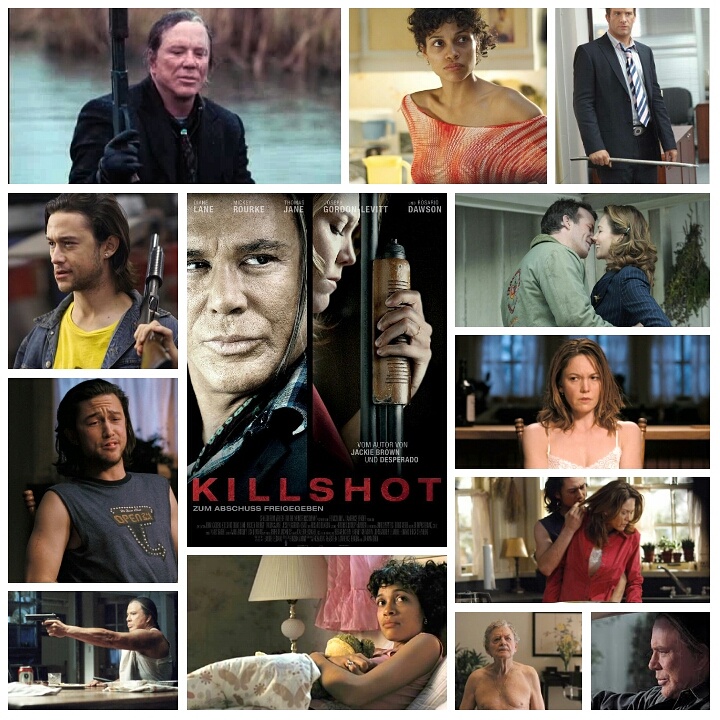
John Madden’s Killshot went through the ninth ring of production hell before it was finally released in 07 or so, after like three years of gathering dust on the shelf. The resulting film didn’t win anyone over who waited all that time with baited breath, because you can see the cuts, chops and gaps in story where it’s been muddled around with, no doubt by the fuckwit studio. I still love it, flaws and all. Based on an Elmore Leonard tale (you can never go wrong with his work, it’s a sombre tale of psychopaths, assassins and one hapless estranged couple (Thomas Jane & Diane Lane) caught in between. When legendary native american hitman Arman ‘The Blackbird’ Degas (Mickey Rourke) botches a job for the Toronto mafia, he’s forced on the run, and hides out with aimless young lunatic

criminal Ritchie Nix (Joseph Gordon Levitt), who somewhat reminds him of a litte brother he lost years before. Rourke pulls off the native angle quite well, and shows vague glimpses of a humanity that was once there and has long since been buried in violence. When Jane and Lane accidentally witness him murder someone, he won’t let it go, pursuing them beyond rationality or reason, even to his own end. Levitt never gets to play the wild card, and he rocks his redneck sociopath brat role with scary aplomb. Rosario Dawson has an odd appearance as Ritchie’s girlfriend, an elvis fan who is seemingly a little bit challenged upstairs. Watch for a cameo from Hal Holbrook as a crusty old mobster too. You’ll just have to imagine the federal agent character played by Johnny Knoxville though, because he never made it into the film and can now only be seen in ages old trailers that were a false start. Despite it’s issues, I find it to be an atmospheric little pulp outing that does have the classic Leonard feel, a hard bitten, cold-hearted turn from Rourke that’s one of his best characters in recent years, and a mean, unforgiving narrative set in picturesque northern Canada. Give it a shot, it deserves way more love than its received so far. 

Jason Bourne: A Review by Nate Hill 

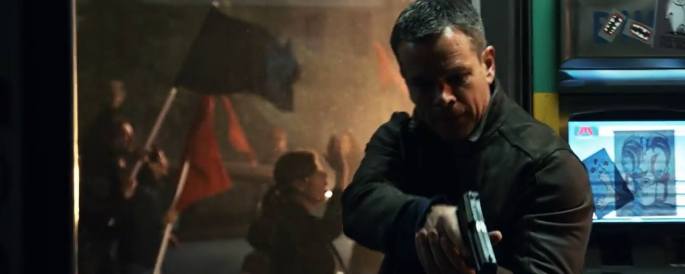
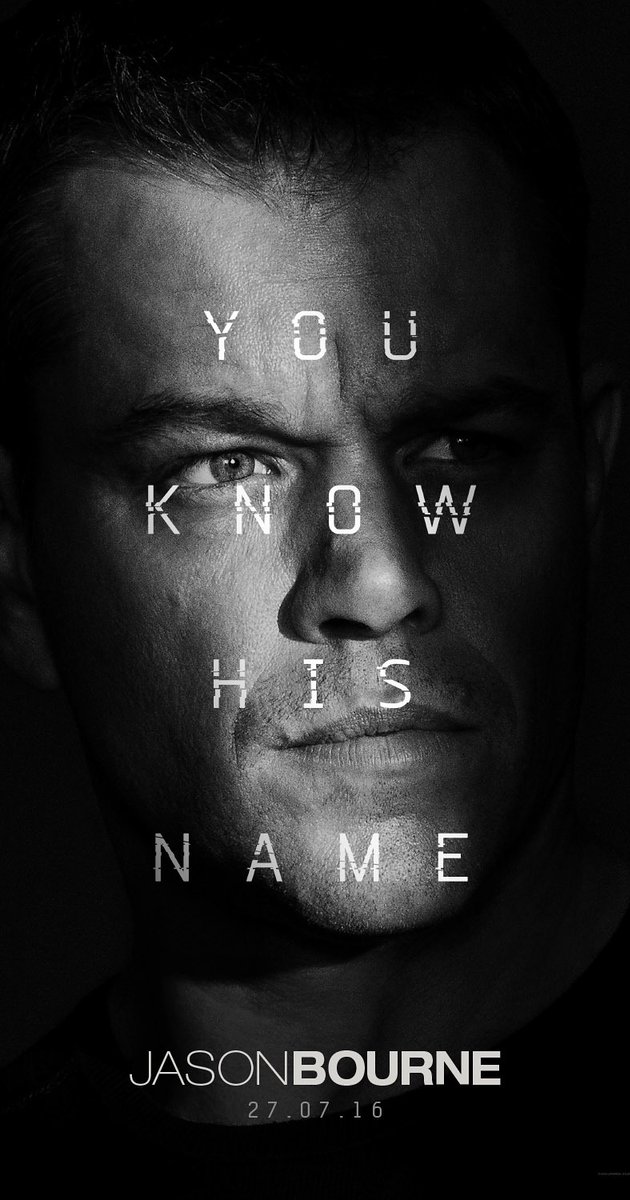
He’s back, baby. God it’s so good to see Jason Bourne doing his thing on the big screen again, especially in a flick that’s every bit as excellent as the original trilogy in all the old, good ways, while adding a few twists of its own that suit the digital age we have progressed into, and the concerns which go hand in hand with it. It’s been sometime since Jason swam away out of frame as an unsure news report claimed that his body was never recovered, and a slow smirk spread over Nicky Parson’s (Julia Stiles) face as she observed on TV. With ex CIA director Kramer (Scott Glenn) no doubt incarcerated, the agency is headed up by the worst apple of the bunch so far, Robert Dewey (Tommy Lee Jones), a surveillance hound dog who has ties to Bourne’s past and wants to use a record breaking social media app to illegally spy on users for ‘national security’ purposes (heard that one before). Scary stuff, but simply a backdrop for Bourne to come speeding back onto their radar and make hell for them, after Nicky hacks the database and spurs him on. Damon is beefed up, weathered and has never been more furious as Bourne, and if you thought his revenge rampage in Supremacy was something to behold, just wait til you see these fireworks. It feels a bit more intimate than the last three, with a lot of time spent on Bourne, and less agency types howling in control rooms and backstabbing each other, save for Dewey and his eager beaver protégé Heather Lee, played by Alicia Vikander in a slightly perplexing character arc that I’m still trying to think through. She has her own agenda, clashing with that of a ruthless rogue asset (Vincent Cassel is going grey, but damn he can still run around like nobody’s business) that Dewey foolishly sends after Jason. Paul Greengrass is back in the director’s chair again, and after this chapter I can honestly say I think he’s the best captain  to ever sit at the helm of a Bourne flick. He just has this way with action that never feels too stylized or obviously cinematic, while still delivering a pure rush of thrills that exist in a realistic space. There’s an early scene taking place in Greece during a dangerous riot that feels like they just dropped the cast and crew in the midst of a real life police skirmish and started shooting, in more ways than one. My favourite has to be a thundering car chase down the Vegas Strip in which a SWAT tank causes a jaw dropping bout of vehicular Armageddon. Sounds too over the top for a Bourne flick, right? You’d think, but somehow they just make the thing work and stay within the parameters of this world. I had this fear that they wouldn’t be able sneak another Bourne movie onto the back end of an already perfect trilogy without it feeling out of place. While it certainly is different than it’s predecessors (we live in a radically different time), it still has that magic, feverish rush that I love so much and that has carried the franchise along on wings of adrenaline. A blast. Cue Moby’s Extreme Ways to play out my review. 

PAUL GREENGRASS’ JASON BOURNE — A REVIEW BY NICK CLEMENT

3

Jason Bourne is a hard-charging action film, and even if it doesn’t have the narrative complexity and overall depth that series architect Tony Gilroy brought to the table, the film operates as a riveting spy actioner with topical overtones, a serious examination of government surveillance crossed with a straight-ahead revenge plot, and features two absolutely outstanding set-pieces that certainly top anything in the real-deal action department that I’ve seen all year. By this point, you’re either on board with this franchise or you’re not; this film won’t win any new fans but those who want to know a bit more about David Webb should be very pleased. What it really does is provide a sense of bridging from one trilogy to the next. If Identity, Supremacy, and Ultimatum are the spine to the overarching plot, and Legacy served as a daring extension of the universe, the aptly titled Jason Bourne pivots into a new chapter of espionage for one of cinema’s most lethal of characters, taking things in a more stripped-down and personal direction. Written this time around by directorial mastermind Paul Greengrass and the brilliant editor Chris Rouse (who won the Oscar for his astonishing work on Ultimatum), the tense plot relies on terse dialogue and lots of visual storytelling, sending Bourne on a rather violent mission of retribution.

2

Alicia Vikander, Vincent Cassel and Tommy Lee Jones are the new and dangerous faces trying to bring Bourne down, and all deliver strong supporting turns, while series regular Julia Stiles returns and features prominently in one of the big action sequences, a motorcycle and auto chase through the crowded, rioting streets of Athens. In this sequence, and the crash ‘em up wowser set along the Vegas strip, Greengrass further demonstrates how he is at the top of the class in terms of action filmmaking, displaying an uncanny sense of verisimilitude that nearly becomes overwhelming. His trademark shaky-cam shooting style, this time orchestrated by genius lenser Barry Ackroyd (United 93, The Hurt Locker, The Wind that Shakes the Barley), is in full-effect all throughout, with the propulsive musical score by John Powell and David Buckley backing up every foot pursuit, computer hack, and fist fight. I’ll always be a fan of Greengrass’ intensely visceral aesthetic, and it was sort of wild to see him get into Michael Bay mode during the finale, as he stages one of the most spectacular crunched-metal/broken-glass displays of vehicular mayhem since Bad Boys II. It’s the most over the top sequence in any of the five films, and yet, it packs a serious punch and still felt totally believable within its own realm.

MV5BMTU1ODg2OTU1MV5BMl5BanBnXkFtZTgwMzA5OTg2ODE@._V1_UY1200_CR64,0,630,1200_AL_

And that’s what I love about these movies. Whatever CGI is used is totally invisible – these are pristine looking works of visual art that border on the level of expressionistic filmic creation with the use of fragmented information. The technology on display is scarily, almost obsessively showcased, and while “it’s just a movie,” I have no doubt that much of what we see in Jason Bourne is based off of current research. Damon totally commands the screen in every outing; this is his signature role and he knows it and as a result feels wholly committed to the character and all of its facets. And it’s clear that his run of movies as the titular hero isn’t going to slowdown anytime soon, as this newest addition grossed a robust $60 million on opening weekend, all but ensuring future installments. And I like where this one leaves off, with the promise of Vikander looking to muck things up for Bourne, and Greengrass getting a chance to inject more real-world vitality into this already pumped-up and thrilling franchise. Jason Bourne may not reinvent the wheel, but it serves as a very skilled piece of craftsmanship and a smart reconfiguration of the key ingredients so that by the end, we’re already asking for more.

1