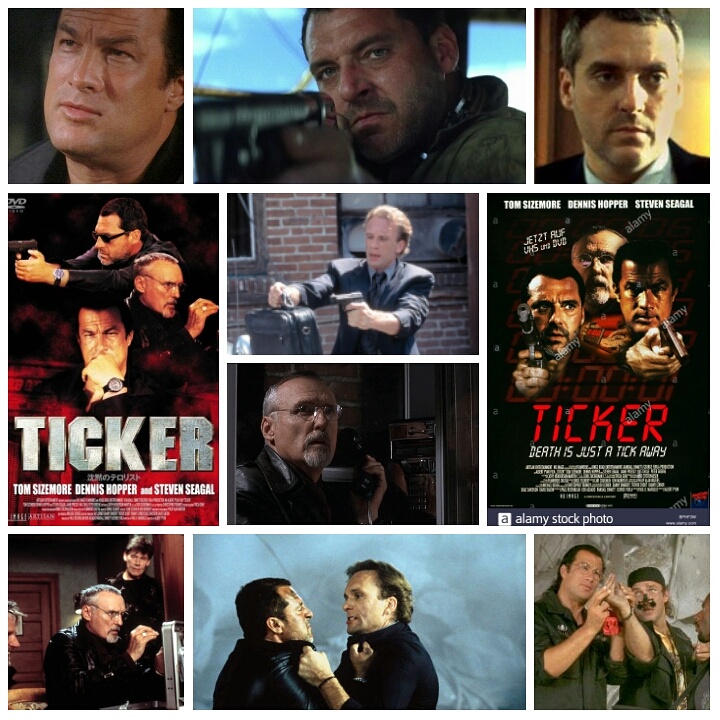
If an eighth grade class raided their parents liquor cabinet, passed around a bottle, got good and loaded and took it upon themselves to make their own version of every 90’s action cliche, it would look something like Ticker, a wonderfully inept mad bomber tale that starts at rock bottom and cheerfully drills farther down, as well as into critics collective patience, it seems. It’s silly clunky and all over the place, but there’s a scrappy likeability to its amalgamated stew of genre tropes, masculine posturing and endless explosions. The bomber in question is Alex Swan (Dennis Hopper), a homicidal Irish extremist intent on making life hard for the San Francisco bomb squad, led by explosives expert Frank Glass (a laughably zen Steven Seagal). Hero cop Ray Nettles (Tom Sizemore) previously lost a partner to bombers and has a big score to settle with Swan. And so it goes. Bombs go off. Cops argue. They chase Hopper, who eludes them until the next set of fireworks destroy a wall glass panels or a bridge. Sizemore is surprisingly sedated, not seizing the opportunity to use his lead role as an excuse to tear through scenery like a bulldozer, as is usually his speciality. Seagal is so silly, his intended gravitas landing with all the profundity of an SNL skit. Hopper is demented, even more so than in Speed, and the rental fee is worth it just to hear his perplexing, absolutely wretched Irish accent. Not since Tommy Lee Jones in Blown Away have I laughed that hard at an actor butchering the dialect to high heaven. There’s appearances from Nas, Jaime Pressley, Kevin Gage and the always awesome Peter Greene as ana a-hole fellow cop that hounds Sizemore any chance he gets. Quite the cast, and in a perfect world the film they wander through would match their talent. I watched this with the same morbid curiosity that the bystanders gawking at the resulting destruction of one of Hopper’s bombs no doubt had: incredulity and the inability to look away for missing a moment of a disaster unfolding in front of you.
Mr. Brooks: A Review by Nate Hill
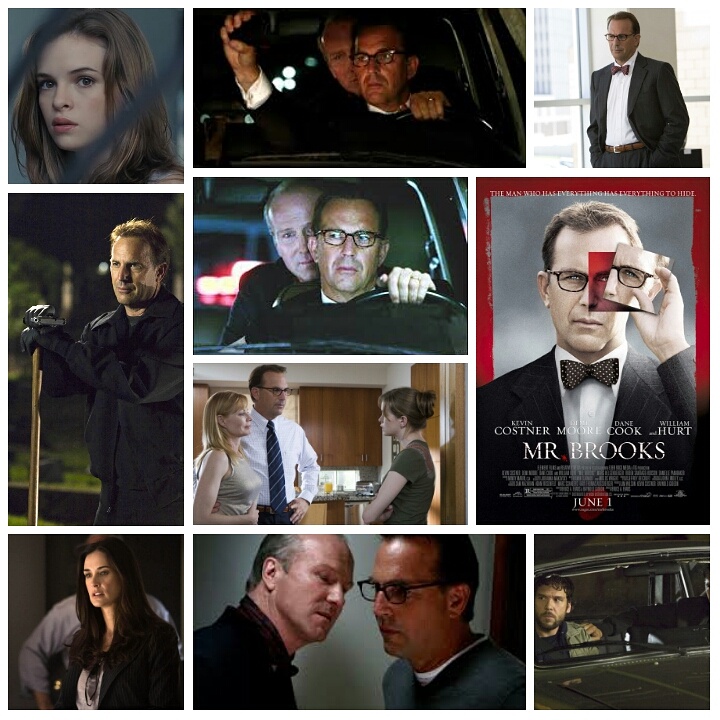
There are a few films Kevin Costner has done in which he has really been allowed and been willing to test the boundaries of what is usually expected from him in a role. 3,000 Miles To Graceland and Eastwood’s A Perfect World are fine examples. Perhaps the finest though is Mr. Brooks, a dark tale that showcases the actor in a terrifying turn and the last type of role you would picture for him on paper. Opposites are paramount in acting and cinema as a whole, and it’s that type of contrarian casting choice that can lead to a performer’s finest hours. In this case it’s certainly one of Kevin’s best outings, and casts him in a frightening new light, or should I say dark. Here he is Earl Brooks, husband, father, businessman and all round stand up guy. Except fpr the fact that he moonlights as a methodical and psychopathic serial killer. He sees it as an affliction, and is almost ashamed of it, whether by a tiny flicker of a soul he may have, or simply by the standards impressed onto society. He’s efficient, cold and hopelessly addicted to the act of murder. His alter ego, or ‘dark passenger’ as the scholars say, is a cynical persona called Marshall, brought to life by a scary William Hurt. “Why do you fight it, Earl?” he drawls in that committed, laconic snarl that only Hurt can do. There’s shades of his character from Cronenberg’s A History Of Violence here, affirming my belief that Hurt is a pure acting prodigy and masterful of both the light and the dark within his craft. Earl has a daughter too (Danielle Panabaker) who he has worrisome thoughts about, and a picture perfect wife (Marg Helgenberger). One can’t keep the turbulent nightlife of the serial killer a secret for one’s entire life though, and pretty soon people start to catch on. A nosy Nelly (Dane Cook) catches a whiff of Earl’s crimes and lives to wish he hadn’t, and a keen Detective (Demi Moore) begins to piece the puzzle together as well. Earl is as clever as he is murderous though, covering his work and tying off loose ends with gut churning gusto. Costner carries the film terrifically, a man who is at once both uncomfortable in his own skin yet fits it like a glove when the camera dutifully bears witness to his killings. He’s like a tiger who really can’t change his stripes but wants to shield them from the judgment of others, and of course his own persecution. The scenes of murder are skin crawling in their frank, fly-on-the-wall nature, no slasher cinematics or gimmicky set ups here, just the icy horror of a predator extinguishing human life to sate the beast, and the nightmarish inevitability of death. Those scenes paint Earl in a horrific light, but the film doesn’t try to convince us he’s a monster using any usual methods, it just presents to us this man, his acts and his life surrounding them, without discernable condoning or condemning. It’s cold, it’s clinical and it’s one of the best serial killer flicks out there.
PTS Presents Director’s Chair with RENNY HARLIN

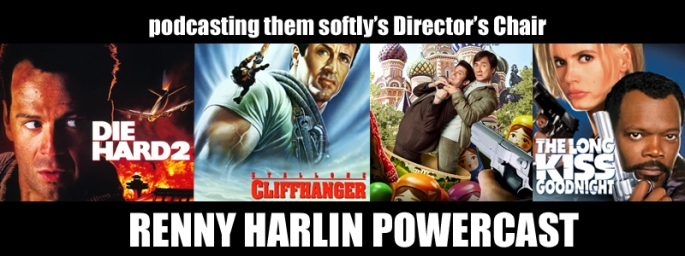
Podcasting Them Softly is overwhelmingly excited to present a chat with veteran action director Renny Harlin, a man who needs very little introduction! Die Hard 2. Cliffhanger. The Long Kiss Goodnight. The Adventures of Ford Fairlane. Deep Blue Sea. Cutthroat Island. Exorcist: The Beginning. And so many others. His latest action extravaganza, Skiptrace, stars Jackie Chan and Johnny Knoxville, and is set to explode into cinemas this summer. Listen as Nick and Frank try and contain their excitement, and Renny dishes on his incredible career and his newest cinematic offering — we hope you enjoy!
INHERENT VICE – A REVIEW BY J.D. LAFRANCE

There are unfilmable novels and then there is Thomas Pynchon, the premiere post-modern novelist responsible for legendary tomes like Gravity’s Rainbow and Mason & Dixon. He is known for producing dense, complex novels that explore themes such as racism, philosophy, science and technology while fusing theological and literary ideas with popular culture references to comic books, films, urban myths and conspiracy theories. Satire and paranoia are common currencies that he uses in his novels. And that’s only scratching the surface.
The 1960s were an important decade for Pynchon. It was at this time that his novels V. and The Crying of Lot 49 were published and the bulk of Gravity’s Rainbow was written. He would revisit the ‘60s again from the perspective of the 1980s with Vineland and, most recently, with Inherent Vice, which was published in 2009. The latter novel has been considered his most accessible work since Lot 49 and has been adapted into a film by Paul Thomas Anderson, the American auteur responsible for such memorable efforts as Boogie Nights (1997), There Will Be Blood (2007) and The Master (2012) among others.
Possibly informed by Pynchon’s stint in Manhattan Beach, California during the mid-‘60s, Inherent Vice is part stoner comedy/mystery and part lament for an era that was all but gone by 1970 when the story takes place. If the ‘60s was about having your head in the clouds then the ‘70s was about having your feet on the ground. Like its source material, the film plays fast and loose with notions of plot and story, riffing on elements of a Raymond Chandler-esque mystery through a counterculture filter.
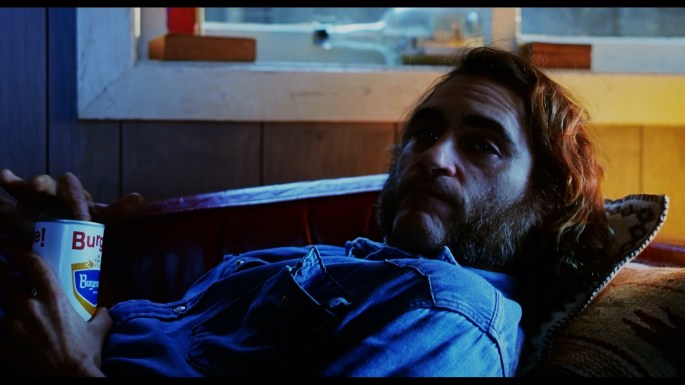
Larry “Doc” Sportello (Joaquin Phoenix) is a private investigator of the rumpled variety. One night, he’s visited by an ex-girlfriend by the name of Shasta Fay Hepworth (Katherine Waterston) whose latest boyfriend, Mickey Wolfmann (Eric Roberts), a big-time real estate developer, and his wife are involved in some kind of shady scheme. Doc soon finds himself framed for murder, Shasta disappears (as does Mickey) and he runs afoul of hardass Los Angeles police detective Christian “Bigfoot” Bjornsen (Josh Brolin). During the course of his investigation, Doc finds himself immersed in the bizarro social strata of California culture, including a drug-addicted surf musician (Owen Wilson), a member of the Black Panthers (Michael K. Williams), a cokehead dentist (Martin Short), and a secret cartel known as the Golden Fang.
Inherent Vice is the second collaboration between Anderson and actor Joaquin Phoenix and the former may have found his cinematic alter ego. Working together brings out the best in both of them with the actor delivering another excellent performance. He portrays Doc as a peaceful hippie P.I. content to coast through life surrounded by a cloud of pot smoke, but is thrust into a strange world when an ex-lover comes back into his life. He acts as our guide on this journey and the key to navigating the sometimes murky narrative waters is to never lose focus of the primary mystery: the disappearance of Shasta. Doc represents the peace-loving idealism of the ‘60s and who is confronted by all kinds of outlandish people that represent the aggressive excessiveness of the ‘70s.
Anderson populates Inherent Vice with a stellar cast of supporting actors that includes Owen Wilson, Reese Witherspoon, Benicio del Toro, and Martin Short, all of whom bring this collection of oddball characters vividly to life. Some may find the cavalcade of recognizable movie stars distracting but, on the contrary, they act as important signposts along the way to help us keep track of the numerous characters Doc encounters during his investigation.
Josh Brolin gets the most screen-time of the supporting cast as Bigfoot Bjornsen, a throwback to cops of the early ‘60s, complete with crew cut and deep loathing of hippies like Doc. Initially, Bigfoot starts off as Doc’s primary nemesis, but over the course of the film he reveals a frustration with his lot in life, displaying a grudging mutual respect. Brolin certainly has the imposing frame to play Bigfoot and wisely plays the role straight, which makes several of his scenes that much funnier because the uptight character is a product of a bygone era that clashes with the more easygoing Doc as much as the excessive culture of the ‘70s.
The trailers for Inherent Vice are misleading in the sense that they sell the film as some kind of madcap comedy and while there are some out-and-out funny scenes, like Martin Short’s cocaine-addicted dentist, there is a melancholic tone that permeates most of the film expanding on “The High Water Mark” speech Raoul Duke gives late in Fear and Loathing in Las Vegas (1998) as he laments the death of ‘60s idealism. Inherent Vice even ends on a surprisingly emotional moment that is quite affecting. Instead of going for quick, comedic beats, Anderson applies the aesthetic he used in There Will Be Blood and The Master by breaking the film down into lengthy, dialogue-heavy scenes between Doc and one of the many people involved either directly or tangentially to Shasta’s disappearance, which may test the patience of some expecting the stylish zaniness of something like Fear and Loathing in Las Vegas. While Terry Gilliam’s film reflected Hunter S. Thompson’s gonzo sensibilities, so too does Inherent Vice reflect Pynchon’s peculiar sensibilities. Like the book, Anderson takes his time and lets you sink into Pynchon’s world, which is certainly not an experience for everyone.
Several reviews have compared Inherent Vice to Robert Altman’s The Long Goodbye (1973) and the Coen brothers’ The Big Lebowski (1998), but they are only similar on a very superficial level. Anderson’s film is its own thing – a shaggy dog journey through a corner of Pynchon’s universe that the filmmaker has brought faithfully and lovingly to life. Much like Walter Salles’ adaptation of Jack Kerouac’s On the Road (2012), Inherent Vice is made by and for fans of Pynchon’s novel, which will leave the uninitiated out in the cold, struggling to follow a film that may seem like an incoherent mess, but is actually quite faithful to its source material with huge chunks of the author’s prose coming out of the characters’ mouths. You shouldn’t have to see a film more than once to “get it,” but there are some that reveal themselves in more detail and whose nuances are appreciated upon repeated viewings. This is such a film. As Pynchon himself once famously said in response to the complexity of his novel V., “Why should things be easy to understand?” The fact that one of Pynchon’s novels has been adapted into a film is quite a significant accomplishment. That it successfully translates his worldview is even more noteworthy.
PETER BERG’S LONE SURVIVOR — A REVIEW BY NICK CLEMENT

Writer/director Peter Berg pulled out all the stops and went for the emotional and visceral jugular with his ferocious combat film Lone Survivor, a harrowing, gut-wrenching modern war movie that deserves to sit alongside other battle-ready, anti-war classics such as Hamburger Hill, Black Hawk Down and We Were Soldiers, truly throwing the audience into the middle of a nightmarish warzone where anything can happen. Crafted with stunning technical proficiency, Lone Survivor aims to put you in the middle of a bloody, unrelenting gun battle, rarely letting up for a breath of air. And what a battle sequence it is. The fluid yet ragged cinematography from Tobias Schliessler is remarkable to behold and the crispness of the editing by Colby Parker Jr. smartly establishes concise geography and clear spatial coherence during the protracted firefight. Berg was as single-minded and determined in his directorial approach to the story as the soldiers-on-a-mission were in his narrative, centering on their attempt at doing their job and coming out of a terrible situation alive. And it’s because Berg stuck to the nitty gritty, never losing focus or succumbing to cheap politicizing, the film operates in a bluntly forceful fashion, and almost immediately kicks into high gear.
No matter what or how many creative liberties the filmmakers took with the true-story aspects of the incident (a botched mission where four Navy SEALS went up against numerous Taliban soldiers in the unforgiving mountains of Afghanistan after allowing civilians to go free), the emotional core of the film is honest and at times overwhelmingly powerful, just like great cinema should always be. It’s no spoiler to reveal that only one SEAL makes it out of the fight alive, and it’s mind-blowing to think that these guys were able to endure what they probably endured during those hellish hours. Berg smartly opens the film with real-world SEAL training footage, and by watching just two minutes of these clips, it’s easy to see how these men could become total warriors, able to drop their enemies with precise head-shots, never succumbing to fatigue or lack of food, always ready to fight and kill. Berg wisely celebrates the warrior spirit in all of the men, while never glamourizing the horrific toll that war brings to multiple societies. And most importantly, he never turned the film into a cheesy political message or soap-box statement – this is truly “War is Hell Cinema,” with a focus on the blood and guts of the situation. Persuasively acted by the grizzled quartet of Mark Wahlberg, Taylor Kitsch, Ben Foster, and Emile Hirsch, this is an unforgettable reminder of what’s been going on for over a decade during the “War on Terror.”
BOB FOSSE’S LENNY — A REVIEW BY NICK CLEMENT

Bob Fosse’s forceful and uniquely constructed biopic Lenny remains as topical and exhilarating today as it likely did upon first release back in 1974. Nominated for six Academy Awards including Best Picture, Best Director, Best Actor, Best Actress, Best Adapted Screenplay and Best Cinematography, the film was a critical and commercial success, even if the potentially distancing aesthetic put off some viewers and film aficionados upon first glance. The film expertly cuts back and forth between key and intimate moments of Bruce’s life, showing him in his full comic glory, but also detailing the darker times, when he was extremely wasted and strung-out. The script also delves into the latter portions of his life where he used his own nightclub as a venting arena for all of his personal problems and hardships, often times reading his arrest reports and court transcripts. Dustin Hoffman was consistently electrifying as Lenny Bruce, burrowing deep into his feverish psyche, always a loose cannon and ready to explode with intelligent vulgarity and a sense of purpose that defined him as a stand-up comic and general rapscallion. It’s a performance of startling conviction, and a further reminder of the live-wire quality that Hoffman exuded in the 70’s.
Similar to the themes in a film like The People vs. Larry Flynt, this is yet another movie to examine the importance of free speech, and to celebrate the idea of the nonconformist. Bruce’s material had a subversive quality that the best types of entertainment can bring out, always questioning himself and those around him, and challenging societal norms and expectations. Valerie Perrine won the award for Best Actress at the 1975 Cannes Film Festival, and it’s easy to see why, as it’s a show-stopping performance of overt sexuality and unquestionable emotional tenderness, and when juxtaposed with Bruce’s hard-charging theatrics, it was easy to see why they were such a great match for each other. The smoky and gorgeous black and white cinematography by Bruce Surtees is a constant treat, and the numerous sequences detailing the various performances and arrests that befell Bruce during his rise to fame are handled with a devil-in-the-eye sense of humor. And of course, this being a tragic story, Fosse doesn’t shy away from the ugly price of fame, showing how Bruce was a true pioneer, and how that fact more than likely cost him his life. Playwright Julian Barry adapted his own work for the screen. Available on Blu-ray via Twilight Time.
TWELVE MONKEYS – A REVIEW BY J.D. LAFRANCE

“It’s one thing to get lost in your own madness, but to become lost in somebody else’s madness is weirder.” – Terry Gilliam
How do you know when someone is crazy? This is a question that filmmaker Terry Gilliam tries to answer in many of his films, for he is obsessed by the notion of insanity – what makes someone insane and how do others view this person. Is someone really crazy or do they simply have a different view of the world than the rest of society? In the past, Gilliam’s films have presented characters that tend to blur the boundary between sanity and madness, but perhaps his most complex treatment of this subject is Twelve Monkeys (1995). It is with this project that the filmmaker combines his long standing obsession of breathtaking visuals with his knack for working closely with actors. This combination has resulted in more mature films for Gilliam who is normally associated with stylish overkill: films that tend to let the visuals overwhelm the story and characters. And make no mistake, Twelve Monkeys contains some of the most stunning images you are ever going to see but never at the expense of the story or its characters and herein lies one of the reasons why Gilliam remains one of the most interesting people working in film today.
Twelve Monkeys is a film that constantly plays with, distorts, and more often than not, manipulates time. The film begins in the year 2035. A deadly virus has wiped out almost all of humanity, leaving the survivors to take refuge deep underground. Only the occasional foray up to the surface in protective gear by a select group of “volunteers” offers any clues as to what went wrong. James Cole (Bruce Willis) is one such volunteer who is particularly good at retrieving information. As a result, he soon finds himself being sent back in time to find out how the virus originated and who was responsible. Unfortunately, he goes back too far, arriving in 1990 and is promptly thrown into a rather nightmarish mental hospital in Baltimore where he meets Jeffrey Goines (Brad Pitt), a fellow inmate with a loopy sense of reality that feeds all sorts of paranoid delusions of grandeur. Cole also encounters Kathryn Railly (Madeleine Stowe) a beautiful doctor who feels sympathy for him and his plight.
As Cole travels back and forth in time he begins to realize that one of the most important clues to the source of the deadly virus may lie in the rather enigmatic underground organization known only as The Army of the 12 Monkeys. Soon, Railly and Goines begin to play integral roles in Cole’s search as he consistently crosses paths with them. But is this all taking place in Cole’s mind? Is he really humanity’s only hope at averting a catastrophic disaster or is he just insane? From the first shot to the film’s conclusion we are never quite sure of Cole’s sanity or lack thereof. It is just one of many questions that the audience must think about not only during the film but long after it ends.
The seeds of Twelve Monkeys lie in an obscure French New Wave film called La Jetee (1962) made by Chris Marker. The film was composed entirely of black and white photographs and set in Paris after World War III. It was an apocalyptic vision in reaction to the threat of nuclear annihilation that became prominent in the 1950s and 1960s. Writers David and Janet Peoples were approached by producer Robert Kosberg to do an adaptation of La Jetee. The screenwriting couple wasn’t that keen on the idea, however. “We couldn’t see the point. It’s a masterpiece and we didn’t see that there was anyway to translate that masterpiece,” David remarked in an interview. And he was no slouch to the art of screenwriting, having rewritten the screenplay for Blade Runner (1982) and penned the brilliant Clint Eastwood film, Unforgiven (1992).
Kosberg got the Peoples to watch La Jetee again and the couple began to see possibilities for a different, more detailed take on the material. “How would we react to people who showed up and said ‘Oh I’ve just popped up from the future’ and in turn how would that person deal with our reaction.” With this in mind, David and Janet set out to write a challenging piece of fiction that not only manipulated our conventional views of time but that also dealt with the notion of madness. Janet explained in an interview, “We were very interested in asking questions like ‘Is this man mad? And how about the prophets of the past, were they mad? Were they true prophets? Were they coming from another time? What are all the different possibilities?'” The film’s script argues that certain people who are classified insane by society at large may not really be crazy at all but are in actuality presenting ideas that are way ahead of our time. And perhaps the blame for this misunderstanding should be leveled at the psychiatric profession which, as one character in the film observes, has become the new religion of a society that has deserted traditional faith for modern technology.
After showing the finished screenplay to Marker and getting his blessings, the Peoples were faced with the daunting task of finding someone who would not only click with the material but also have the visual flair that the story needed. The couple figured that the only director to handle such tricky subject matter was somebody like Ridley Scott or Terry Gilliam. The theme of madness that plays such a prominent role in the script fit right in with Gilliam’s preoccupations and so he seemed the natural choice to direct. As luck would have it the filmmaker was between projects and looking for work after several years of seeing potential projects fall through for various reasons.
Gilliam was also eager to take a lot of Hollywood money (a $30 million budget) and create a strange art film that would fly in the face of the traditional mainstream movie. “The idea that someone’s writing a script like this in Hollywood and getting the studio to pay for it was pretty extraordinary. So I thought let’s continue to see how much money we can get the studio to spend.” Gilliam’s battles with Hollywood studios are the stuff of legend – most notably his struggle with Universal over the release of Brazil (1984). They wanted to revoke the director’s final cut privileges to insert a happier ending instead of Gilliam’s decidedly downbeat ending. Gilliam’s vision prevailed in the end, but the ordeal left him understandably wary of further studio involvement. He had reconciled somewhat with Hollywood by making The Fisher King (1991), which turned out to be a surprise commercial and critical success.
Architecture plays an important role in Gilliam’s films and Twelve Monkeys is no different. “I’ve always used architecture as if it was a character.” To this end, he found all sorts of intriguing architecture to populate his film. This included the transformation of an 1820s prison into a 1990s mental hospital where the film’s protagonist, James Cole first meets the Jeffrey Goines. The director found that the structure was designed like a wheel with spokes and hub. And so Gilliam used one section where three spoke-like parts headed off into nowhere. “It seemed to me [that] this trifurcated room was right for multiple personalities.” This feeling of madness is further amplified by the extensive use of skewed, off-kilter camera angles that are often shot at low angles to constantly distort and disorient the scene. “We started doing it and it got more and more fun to see how far we could push it because I wanted to create an atmosphere that you don’t know whether this guy is crazy or whether he actually does come back from the future.” The unusual camera angles not only mimic Cole’s confused state but also reflect Jeffrey’s manic, hyperactive worldview. By presenting the mindsets of these two characters in such a fashion, Gilliam is inviting us to see the world through their eyes and in the process offer a new, unique take on the world that we might not have been aware of before.
Gilliam was not just content to challenge mainstream audiences with unusual visuals and subject matter, but he also wanted to mess with people’s perception of certain movie stars by casting box office names like Brad Pitt and Bruce Willis against type. “One of the reasons [for doing Twelve Monkeys] was taking Bruce and putting him into situations and asking of him things I don’t think he’s ever done before or that people haven’t seen him do … and with Brad Pitt it’s the same thing. Brad is pretty laconic in some ways. Suddenly he’s a blabbermouth, jabbering away at high speed. I love doing that, playing with the public’s perception of that star; otherwise, it wouldn’t be fun.” As a result we get a very different Bruce Willis here than we have come to expect. Gone are the wisecracks and smart-aleck attitude and instead we see Willis impart a real wounded sensibility to the character of James Cole. The reluctant time traveler always seems to be flinching at every little thing, often appearing disoriented or distracted as he struggles to understand what is going on around him. Willis displays great skill in this role – perhaps the best of his career – as he creates a truly tragic figure that may or may not be losing his mind.
Brad Pitt’s character, Jeffrey Goines, resides at the exact opposite end of the spectrum. Where Cole is a sad, brooding figure, Goines is a frenetic psychotic oscillating wildly between paranoid ravings and calm interludes where his madness is kept in check but still resides behind wild eyes. It’s a daring performance for Pitt who lets it all hang out as he gladly chews up the scenery with his loony radical environmentalist cum revolutionary that all but steals every scene he’s in. It’s a performance that Pitt worked long and hard to achieve and it paid off in a Golden Globe Award that year for Best Supporting Actor and an Academy Award nomination in the same category.
It is easy to see what attracted Terry Gilliam to a project like Twelve Monkeys. In keeping with his past films, this one also played “with the same old things – time, reality, madness – so I was intrigued.” Even though it was one of the few projects he did not originate himself, Gilliam quickly made the film his own. In fact, it is Twelve Monkeys‘ unique look that prevents any easy categorization. As Gilliam observed in an interview, “I’m determined to make it indefinable.” It is this avoidance of any clear cut genre that makes the film a riddle waiting to be solved. The film is also structured somewhat like an onion. On the surface, the audience knows very little at the beginning, but gradually as it progresses and the layers are removed, more and more of the mystery is revealed. However, this is not readily apparent after an initial viewing. Only after subsequent screenings does the full impact and brilliance of what Gilliam and his cast and crew have created sink in. It is this great amount of care and detail that has clearly gone into this film that makes Twelve Monkeys worth watching.
BOB RAFELSON’S BLOOD & WINE — A REVIEW BY NICK CLEMENT
Bob Rafelson’s Blood & Wine is a seriously underrated film. Released 20 years ago, it feels like a downbeat effort that should have been made in 1976, not 1996, and with this cast, it’s hard for me to understand how this film came and went with nary a trace when it was buried with a late February opening. This is a hot blooded neo-noir with ripe dialogue and a starry ensemble, and I just can’t fathom how it only grossed $1.1 million in the theaters. Jack Nicholson was perfectly cast as a desperate wine salesman who concocts a jewelry robbery that then goes way off the mark after the initial job. Stephen Dorff, Michael Caine, Judy Davis, Harold Perrineau, and a very sultry Jennifer Lopez were all terrific in supporting roles, but my guess is that the material was too unlikable to be widely embraced. Critcs were mostly kind but nobody really went crazy for it, which seems a shame, because it’s damn good.
This is a dark movie about flawed people, and while it featured megastar Nicholson in the lead role, he’s nothing like a traditional hero or easy to identify with. There’s a moral ambiguity that strengthens the entire film, with the pungent and twisty script by Alison Cross and Nick Villiers never allowing for easy answers to the complicated situations posed by the increasingly sinister plot. The Florida atmosphere lent an interesting visual texture, with cinematographer Newton Thomas Sigel bathing the film in a gauzy visual sheen that recalled films from two decades previous, while legendary production designer Richard Sylbert made terrific use of the hot and seedy Floridian locations. This was the seventh collaboration between Rafelson and Nicholson, and even if the film is more conventional in its overall schematics than some of their previous team-ups, there’s still a distinct level of old-fashioned confidence in all of the genre tropes that this type of film can exploit. Nicholson has some terrific moments during the big car-crash sequence, and the film ends on a moment of sad realization for all involved.
JULIEN MAURY & ALEXANDRE BUSTILLO’S INSIDE — A REVIEW BY NICK CLEMENT

Inside (À l’intérieur), a stunningly violent French thriller from filmmakers Julien Maury and Alexandre Bustillo, sets the standard (at least from what I’ve scene) for on-screen death and punishment. Listen — I’m no horror junkie — it’s the one genre I’ve seen the least from, but every once in a while I hear about a foreign language effort that supposedly pushes the envelope and Holy Shit does this movie do that. This is a mercifully short (75 minutes) but unrelentingly brutal horror-thriller that utilizes fantastic digital cinematography and brilliant sound effects to create one of the craziest, nastiest, bloodiest cinematic home-invasions ever put on film.

The set-up is simple. A pregnant woman named Sarah (Alysson Paradis), who has just recovered from a devastating and life altering car-wreck where you see portions of the accident from the POV of a fetus in the womb, is home alone on Christmas eve on the probable last night of her pregnancy. A strange woman knocks on her door and asks if she can use the phone as she’s been in an accident. The woman, never named in the film but played with icy, intense devotion by Beatrice Dalle in an astonishing performance, seems to know a little about Sarah, and before long, she has broken her way into Sarah’s house. The general air of mystery helps to propel the slim narrative, with twists being doled out in the final moments that cement the generally believable depravity of the film’s strikingly nihilistic scenario.

What ensues is a vicious fight to the death between Sarah and the mysterious psychopath, with cops and other innocents making their way into the house at various points in the film, but never making it out. The directorial craft and technique of Maury and Bustillo cannot be ignored; they are phenomenally talented at mounting cinematic dread and maintaining a hugely creepy atmosphere, and their level of stylized filmic sadism is something to behold. IF – and ONLY if — you have a strong stomach for blood and gore. Really strong. There’s no question that this is one of the bloodiest movies I’ve ever seen, and while I normally steer clear of genre fare such as this, I couldn’t resist viewing it a while back as people had told me it would raise the hair along my neck. It did. And then some. The performances from Paradis and Dalle, are, in a word, exhausting, both emotionally and physically. Throwing themselves around the house and with the inherently vulnerable Paradis in emotional turmoil for almost an hour straight, the dedication to their parts deserves commendation.

But while the film is technically fantastic and the gore handled in a very up-front and realistic fashion, what purpose does the film serve overall? Many mentions are made throughout the film to the 2007 riots in France, but any ideas of social critique are absent in the story. Instead, what we’re subjected to is a film with brass balls, a movie that punishes its characters and the audience for the sheer thrill of it. And trust me, unless you’re a student of New French Extremity, you’ve probably never seen ANYTHING like this. Most amazing are the subjective “from-the-womb” shots that Maury and Bustillo cut too while the pregnant Sarah fights for her life — terrifying and unforgettable. I doubt I’ll ever watch it again but I’m glad (in some sort of sick and deranged way) I got a chance to see what many people feel is one of the best horror movies in recent years.

Forsaken: A Review by Nate Hill
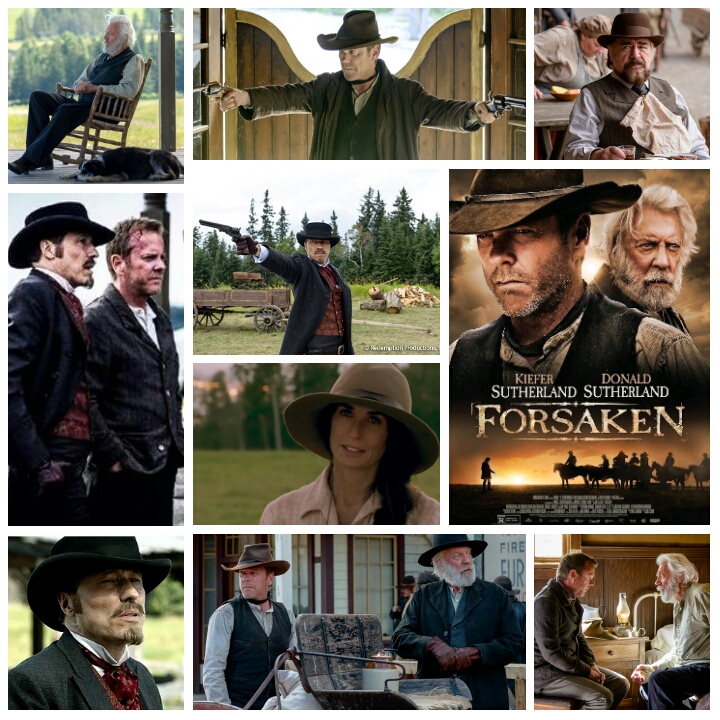
It’s refreshing that in an age populated by revisionist westerns and snazzy new takes on the ancient genre, some filmmakers just want to play it straight and deliver a good old oater without any newfangled bells and whistles. Jon Cassar’s Forsaken does just that, arriving a few years late (turbulent post production issues) but in modest, simple form, here to tell the age old tale of one man who stands up to some evil frontier bankers with stoic heroism. Kiefer Sutherland is John Henry Clayton, a man who has been away from his quiet hometown for nearly a decade. Following a traumatic stint in the war, circumstance led him into the life of the gunfighter. His unannounced return home stirs up old wounds in his preacher father (Donald Sutherland) who cringes in the very presence of his violent aura. John has thrown down the guns and sworn never to pick them up again, but we all know that just ain’t true, and when he meets a certain group of unsavory dudes in town, he becomes a time bomb of righteous anger that’s liable to go off any time. He spends some time mourning his mother and reconnecting with a lost love (Demi Moore), until the inevitable conflict brews. Corrupt banker James McCurdy (Brian Cox) is buying up farms and forcing families who don’t want to sell off their land, using despicable methods carried out by his two goons, vicious Frank Tillman (Aaron Poole) and mercurial ‘Gentleman’ Dave Turner (Michael Wincott). Tensions arise and everyone finds themselves headed for an unavoidable and blistering conclusion. Kiefer always has a jagged rage simmering just below the surface, which is what made him so perfect as Jack Bauer, another time bomb. He’s downright implosive here, delivering the best work I’ve ever seen him give. He’s got a touching scene with his father in which he goes to places I didn’t know he was capable of in his work. Donald is quiet, resentful and compassionate, wrestling internally to keep his serenity in the face of injustice. Cox always puts on a good show as the villain, and he’s exactly what he needs to be here: beaurocratic menace with just a dash of swagger. It’s Wincott who steals the show though, with the best work in the film. He inhabits Dave (and his incredibly dapper costume) with a relaxed, lupine calm, punctuated by sudden bursts of danger and always presided over by the midnight black, raspy croon of a voice that makes him so special. He jaunts along the line between villain and sympathetic antihero so well, the only character in the film to shirk the archetypes, and I was please try reminded of Jason Robard’s Cheyenne from Once Upon A Time In The West. His best work in a while as well, but then he’s always perfect. The film is refreshingly violent in its gunplay, with an earned brutality that never feels gratuituous, and always satisfying. The production took place in wildest alberta, a trip worth the taking for the breathtaking scenery we get to feast on, especially in an opening credit sequence that is very reminiscent of Eastwood films of yesteryear. It’s a landmark in the sense that although both Kiefer and Donald have been in the same film before (Joel Schumacher’s underrated A Time To Kill) they never have shared the same frame until now. Trust me, it was worth the wait. They are both excellent, along with their peers in a simple, honest to goodness Western film that should please fervent fans of the genre and moviegoers alike.