HELLO, MY NAME IS DORIS: A Review by Joel Copling

Rating in Stars: *** (out of ****)
Cast: Sally Field, Max Greenfield, Wendi McLendon-Covey, Stephen Root, Tyne Daly
Director: Michael Showalter
MPAA Rating: R (for language)
Running Time: 1:35
Release Date: 03/11/16 (limited)

The older woman latches on to the younger man because she feels the spark of her youth decades removed from it. The truth is that she didn’t really seem to have a period of youth. Her mother, who has just recently died, required care from early on in the daughter’s independent life. She even refused the chance to move with her husband to a city that would take her away from mom, even if it was her first chance at real love. This was, it is clear, a conscientious decision on her part, but it seems that years of being with her mother have rubbed off on her. She is socially awkward, hoards everything that “might” come in handy in the future, and, for lack of a better term, stalks the young man she meets on the elevator at their place of work to discover common interests.

The truth at an even deeper level is that Doris Miller is a lonely woman getting up in years without the slightest clue of what she’s done with her life until this point. This is the central motivation for every, tiny thing, even a particularly unsavory decision made while drunk on wine, that we see her doing in Hello, My Name Is Doris. Screenwriters Michael Showalter (who is also the director) and Laura Terruso (working from her short film “Doris & the Intern,” unseen by me) understand the woman, sometimes to a fault. Sally Field, who plays Doris, sympathizes with her and shows a compassion with such depth that the fault does not exist for the actress. It’s a strong performance that takes the quirk at the center of Doris Miller and makes it a character trait.

The catalyst for her shift is John (Max Greenfield), a handsome co-worker in his twenties, who reciprocates her awkward, shy demeanor with cordiality and, at times, bemusement. Doris’ best friend Roz’ (Tyne Daly) granddaughter Vivian (Isabella Acres) sets her up on a social networking website, through which Doris is able to learn all of the particulars of John’s personal life, from his music taste (an electronic pop group central among them, whom Doris surprises herself by rather enjoying) to the definition of the slang word “baller” when he uses it to describe her. Meanwhile, a social worker (Elizabeth Reaser) hired by her brother (Stephen Root) and sister-in-law (Wendi McLendon-Covey) wants to talk about that hoarding habit.

Both of these subplots play generally as expected. Doris discovers that John is not exactly looking for such a senior partner in life when he starts dating Brooklyn (Beth Behrs), a chatty, blonde aspiring singer whose first job entertaining an actual crowd Doris attends (It’s amusing the way Field navigates several emotions in this scene in particular, from trying to convey disgust through fake smiling to turning a sweet smile into a death glare when Brooklyn’s lyrics turn lovey-dovey). That drunken act, a transgression through the website that has certainly been committed by many in real life, puts a real damper on things between herself and John.

Somehow more crucial, though, is her resentment of a brother who left her in her time of need; he, meanwhile, must remind her of her conscious sacrifice (The subsequent unconscious realization that occurs late into the third act is particularly touching), and Root, one of our great current character actors, is as solid a presence as ever. Daly is also quite good as a lifelong friend who eventually feels abandoned (A mealtime prayer is pitch-perfect in both its uncomfortable humor and bitterness). The real story, though, remains Field, who takes a potentially impossible-to-warm-up-to woman and makes her impossible to dislike. Hello, My Name Is Doris is the affecting study of the age gap that it is because of its central actress.

EYE IN THE SKY: A Review by Joel Copling

Rating in Stars: *** (out of ****)
Cast: Helen Mirren, Aaron Paul, Alan Rickman, Barkhad Abdi, Jeremy Northam
Director: Gavin Hood
MPAA Rating: R (for some violent images and language)
Running Time: 1:42
Release Date: 03/11/16 (limited)

The central argument will, to some people of one frame of mind and to others who ascribe to the opposite one, seem a false equivalent. The former group might argue that surely the casualty of one small girl as collateral damage in the midst of a heated military operation is acceptable for the greater good of more than eighty who might perish instead. The other group will balk at such an idea, stating firmly that the girl should be given a chance to live, even at the cost of dozens more lives. By offering a literal argument to that end, Eye in the Sky lives in between the two arguments and, simultaneously, outside of it. This is partly a political thriller, but the crux of Guy Hibbert’s screenplay is procedural in nature.

There has been a terrorist attack in Kenya via suicide bombing that left almost seventy people dead and hundreds more wounded. The same group massacred nearly 200 students at a school. One gets the idea that the terrorist cell is, perhaps, stridently against the education of young women when one girl is asked by her father to put away her schoolbooks, lest the knock at his door be a member of the cell. They live behind the house that is currently the meeting place for former British and American nationals who radicalized years before and are, along with the British national’s Nairobian husband, three of the top five targets for capture or kill by the U.S. in the region.

We meet the players in motion. Coordinating the capture is Col. Katherine Powell (Helen Mirren) somewhere onsite in England. She and her team have a direct line with Lt. Gen. Frank Benson (Alan Rickman, whose final role in a live-action setting utilizes the actor’s commanding stillness well) in London as he hosts a viewing party for the capture with members of the British Parliament (played by Monica Dolan, Richard McCabe, and Jeremy Northam). In Las Vegas, rookie airman Carrie Gershon (Phoebe Fox) is partnered with Lt. Steve Watts (Aaron Paul) to man the drone that will overlook the operation (Director Gavin Hood, who expertly builds tension alongside editor Megan Gill and cinematographer Haris Zambarloukos, appears as their CO). On the ground are Major Moses Owiti (Vusi Kunene) and his subordinates Damisi (Ebby Weyime), who runs point, and Jama (Barkhad Abdi), who mans cameras disguised as a bird and a beetle for surveillance.

A major problem arises. Their targets do, indeed, all converge in the same place, but it occurs at a different house in a neighborhood that is nearly impossible to penetrate. Surveillance of the house uncovers the fact that suicide vests and explosive devices line the top of one of the house’s beds, causing the intended capture to become a kill chain into which Powell and Benson both feel locked. The officials cannot agree on a solid option, while the Foreign Secretary Minister (Iain Glen), suffering from a case of food poisoning on a trip to an arms trade gala, and the U.S. Secretary of State, playing a table tennis competition in China, tell them to get a move on. Watts and Gershon await orders.

And then there is a further kink in the works that changes some minds, doesn’t change others, and runs the risk of getting to the brink of another, potentially deadlier attack than what has come before: That aforementioned schoolgirl begins selling bread directly outside the house that is their target. The rest of the film is meticulous in the way it presents each side of this argument: some are united in the opinion that the risk of letting the terrorists leave is too great to save the girl, others are appalled by the idea of allowing her to die, and meanwhile the situation resolves itself in the only way it possibly can. There is another element to Eye in the Sky that raises its head within the final ten minutes, a cruel irony that doesn’t belong except to manipulate, but this is a fittingly tense examination of desperate choices and the spaces between them.

WALL STREET – A REVIEW BY J.D. LAFRANCE

00ef81a325de4cc6a07dcab0cbd38c42

When Oliver Stone made Wall Street (1987), he was riding high from the commercial and critical success of Platoon (1986). His father, Lou Stone, had been a stockbroker on Wall Street in New York City and this film was a son’s way of paying tribute to his father. Almost twenty years later, it has become one of the quintessential snapshots of the financial scene in the United States and epitomizes the essence of capitalism, greed, and materialism that was so prevalent in the 1980s.

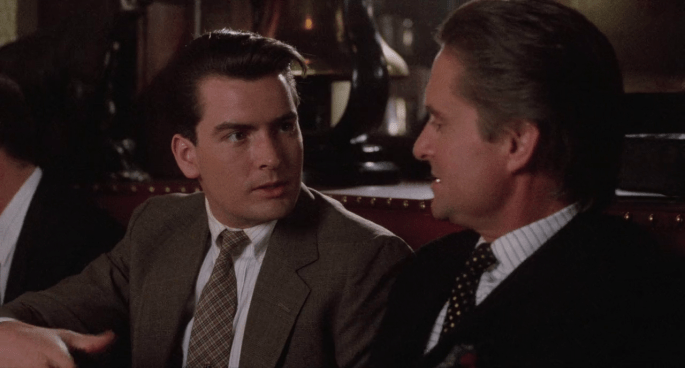
Right from the opening frame, Stone establishes the dominant presence of greed and money by using a gold filter over shots of the New York City skyline with Frank Sinatra (known by his cronies as Chairman of the Board, no less) singing “Fly Me to the Moon,” foreshadowing the dizzying heights that the film’s protagonist, Bud Fox (Charlie Sheen), will briefly ascend. He is an up-and-coming stockbroker in the cutthroat financial world. He is hungry and willing to do anything to get rich. He idolizes Gordon Gekko (Michael Douglas), one of the most ruthless Wall Street tycoons who buys and then takes apart companies for profit. Bud aggressively pursues Gekko in the hopes that he can work for the businessman and follow in his footsteps. Bud soon finds himself in a moral dilemma: does he sell his soul for the gold key to Gekko’s world, or remain true to the blue collar roots of his labor union father (Martin Sheen)?

After the success of Platoon, Stone started researching a film about quiz show scandals in the 1950s. However, at lunch with a film school friend and Los Angeles screenwriter Stanley Weiser, Stone heard an idea for a film that could be “Crime and Punishment on Wall Street. Two guys abusing each other on Wall Street,” as he remarked in an interview. The director had been thinking about this kind of a film as early as 1981. He knew a New York businessman who was making millions and working long days, putting together deals all over the world. This man started making mistakes that cost him everything. Stone remembers that the “story frames what happens in my movie, which is basically a Pilgrim’s Progress of a boy who is seduced and corrupted by the allure of easy money. And in the third act, he sets out to redeem himself.” Stone and Weiser began researching the world of stock trading, junk bonds and corporate takeovers. They met a lot of powerful Wall Street movers and shakers. Reportedly, Bud Fox is said to be a composite of Owen Morrisey, who was involved in a $20 million insider trading scandal in 1985, Dennis Levine, Ivan Boesky, and others.

Stone met with Tom Cruise, who expressed an interest in playing Bud Fox, but the director had already committed to Charlie Sheen for the role. To research his role, the actor spent two days talking with David Brown, a Goldman Sachs trader who pleaded guilty to insider trading charges in 1986. Stone and Weiser began researching the world of stock trading, junk bonds, and corporate takeovers. They met a lot of powerful Wall Street movers and shakers. Weiser wrote the first draft, initially called Greed, with Stone writing another draft. Originally, the lead character was a young Jewish broker named Freddie Goldsmith, but Stone changed it to Bud Fox to avoid the misconception that Wall Street was controlled by Jews. According to Weiser, Gekko’s style of speaking was inspired by Stone. “When I was writing some of the dialogue I would listen to Oliver on the phone and sometimes he talks very rapid-fire, the way Gordon Gekko does.”

Stone wanted to shoot the film in New York City and that required a budget of at least $15 million. The studio that backed Platoon felt that it was too risky a project to bankroll and passed. Stone and producer Edward Pressman took it to 20th Century Fox, who loved it, and filming began in May 1987. Stone switched from 12 to 14-hour days in the last few weeks of principal photography before an impending directors’ strike and finished five days ahead of schedule.

Stone brilliantly sets everything up in the opening minutes of the film. Bud is first shown as an insignificant cog in the city. He’s mixed in with all the other 9-to-5ers — packed in a subway and then in the elevator up to the company where he works. Bud looks uncomfortable and unhappy. He does not want to be in there with all of these other people. He wants to be on the other side with all the money and with Gekko, who rides alone in his spacious limousine. As soon as Bud gets into work, Stone shows a montage of a typical business day — the hectic, rapid-fire pace as people buy, sell, and trade shares.

Taking his cue from another Faustian New York City tale, Sweet Smell of Success (1957), Stone prolongs the first appearance of the film’s most charismatic character. When Bud goes to visit Gekko, we do not see him; we only hear his voice from within his office. It is an enticing teaser that makes Bud and the audience curious to see this man that everyone regards with such awe and reverence. When we finally do meet Gekko, it is a whirlwind first appearance. The camera roves around him aggressively as he never stops talking, making deals, and truly embodying the phrase, “time is money.” According to Stone, he was “making a movie about sharks, about feeding frenzies. Bob [director of photography Robert Richardson] and I wanted the camera to become a predator. There is no letup until you get to the fixed world of Charlie’s father, where the stationary camera gives you a sense of immutable values.” This is such a fantastic way to introduce Gekko as it perfectly conveys what makes him so alluring to someone like Bud: he is always in control, he is smart, and he knows exactly how to get what he wants.

Michael Douglas owns the role of Gekko, and by extension, dominates the film with his larger than life character. He gets most of the film’s best dialogue and delivers it with such conviction. Douglas remembers when he first read the screenplay. “I thought it was a great part. It was a long script, and there were some incredibly long and intense monologues to open with. I’d never seen a screenplay where there were two or three pages of single-spaced type for a monologue. I thought, whoa! I mean, it was unbelievable.” There is a scene between Bud and Gekko in a limousine where he tells the younger man how the financial world works, how it operates and lays it all out, pushing Bud hard to go into business with him. It is one of the strongest scenes in the film because you really believe what Gekko is saying and how Bud could be seduced by his words.

Douglas had just come off heroic roles, like the one in Romancing the Stone (1984), and was looking for something darker and edgier. The studio wanted Warren Beatty to play Gekko, but he was not interested. Stone initially wanted Richard Gere, but the actor passed and the director went with Douglas despite having been advised by others in Hollywood not to cast him. Stone remembers, “I was warned by everyone in Hollywood that Michael couldn’t act, that he was a producer more than an actor and would spend all his time in his trailer on the phone.” But the director found out that “when he’s acting he gives it his all.” The culmination of Douglas’ performance is his much lauded, often quoted, “Greed is good” speech that his character gives to a shareholders’ meeting of Teldar Paper, a company he is planning to take over. He concludes by saying, “Greed is right; greed works. Greed clarifies, cuts through, and captures the essence of the evolutionary spirit. Greed, in all of its forms, greed for life, for money, for love, knowledge, has marked the upward surge of mankind, and greed – you mark my words – will save not only Teldar Paper, but that other malfunctioning corporation called the U.S.A.” This is one of the best delivered monologues ever put to film, as Douglas goes from charming to downright threatening and back again, succinctly summing up the essence of ’80s capitalism and greed.

Stone was smart to cast Martin Sheen as Bud’s dad. He gets a lot of mileage out of the real father-son relationship between them. It makes their chemistry that much more genuine. It also lends itself to their heated conversations — especially the one in an elevator where Bud accuses his father of being jealous and ashamed that his son is more prosperous and successful. The shocked, wounded expression on the elder Sheen’s face says it all, and makes this scene that much more painful to watch. This scene also makes their tearful reconciliation at the hospital after the father suffers a heart attack all the more poignant. It is an intense, emotional moment as the tears start flowing and Bud begins along the gradual road to redemption.

However, Stone made the mistake of casting Daryl Hannah as Bud Fox’s materialistic girlfriend. She was having problems relating to her character and struggled with the role and personal problems. The director was aware early on that she was not right for the role, but arrogantly refused to admit the mistake. He remarked, “Daryl Hannah was not happy doing the role and I should have let her go. All my crew wanted to get rid of her after one day of shooting. My pride was such that I kept saying I was going to make it work.” Stone also had difficulties with Sean Young, who made her opinions known that Hannah should be fired and she should play her role instead. Young would show up to the set late and unprepared. She also did not get along with Charlie Sheen, which caused unnecessary friction on the set. In retrospect, Stone felt that Young was right and he should have swapped roles between her and Hannah.

Visually, Stone ends the film much as he began it, with Bud reduced to an insignificant cog in the city yet again, his future uncertain. Wall Street is a morality play about the seductive nature of greed, examining how far someone is willing to go and what they are prepared to do to become rich. The irony is that many people admired Gekko, and Stone has said on the supplementary material to the film’s DVD that people have approached him saying that they were inspired to get into the financial world because of this character. The 2000 film Boiler Room even features a group of young stockbrokers watching Wall Street on video and quoting along to some of Gekko’s more memorable dialogue. People who admire Douglas’ character don’t seem to realize that Stone is not idealizing him, but merely showing the seductive lure of someone like Gekko. He is not someone to admire, and the film leaves his fate somewhat ambiguous, while it is Bud who goes to jail. It is this stinging indictment that lingers long after the credits end — that rich, powerful men like Gekko never seem to get punished for their transgressions, while the common man, like Bud, suffer instead.
PTS Presents Director’s Chair with PETER HYAMS

HYAMS POWERCAST

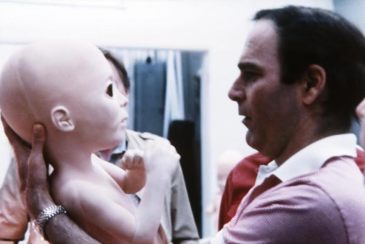
2010, director Peter Hyams on set, 1984, © MGM

Podcasting Them Softly is extraordinarily excited to present a chat with cinematic legend Peter Hyams! An esteemed director, screenwriter, and cinematographer, Peter is extremely well known for the science fiction thriller Outland with Sean Connery as well as the Connery thriller The Presidio; the fake-moon landing actioner Capricorn One which has somehow escaped the clutches of the current remake craze; 2010: The Year We Make Contact, which was the daring sequel to Kubrick’s original classic 2001: A Space Odyssey; the action comedy Running Scared with Gregory Hines and Billy Crystal; the influential thriller The Star Chamber with Michael Douglas, which consciously or unconsciously served as a blueprint for David Fincher’s The Game; Timecop and Sudden Death, which are two of action superstar Jean Claude Van Damme’s best films; horror thriller and audience favorite The Relic with Tom Sizemore and Penelope Anne Miller; the cult classic Stay Tuned with John Ritter; and the Arnold Schwarzenegger vs. The Devil showdown End of Days. You can also hear us talk excitedly about one of Peter‘s early efforts, the trendsetting cop film Busting, with Elliot Gould and Robert Blake, and discuss how that film began to give a particular genre a new and modern feel. Peter has had a tremendous career, and we were beyond lucky and honored to have him as a guest on the show. We hope you enjoy this momentous discussion!

DAVID GORDON GREEN’S MANGLEHORN — A REVIEW BY NICK CLEMENT

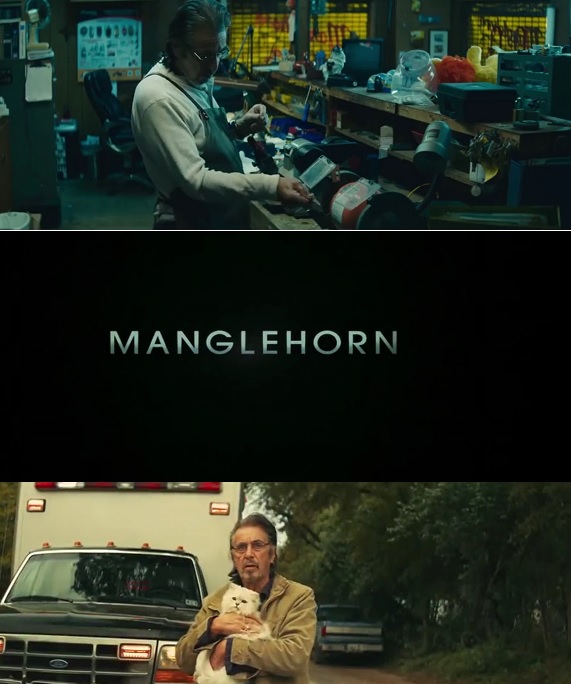
manglehorn movie

Manglehorn continues the low-key trend of eclectic filmmaker David Gordon Green; I’m not sure if there’s a more restless, unpredictable talent out there directing major films. He’s been amazingly prolific over the last 10 years, dropping close to one film per year (sometimes two), and each one is different than the last, while still displaying some common stylistic and thematic trends from project to project. Teaming with acting legend Al Pacino must’ve been a huge draw for Green, and he was able to coax from this iconic actor a soulful and downbeat performance that ranks as one of the more memorable from Pacino in many years. Screenwriter Paul Logan’s intimately scaled story is small and simple and it’s the type of thing you’ve seen before in some form or another, but it’s the way that Green fills the edges of his film with quirky beats and strange flights of fancy that all seem to work despite the fact that, at times, you sort of wonder where the piece is heading.

Green is a master of tone, able to mix comedy, violence, dramatic pathos, and honest emotion throughout all of his films, and as the years progress, his name is one that I am always on the lookout for. Shot by his regular and versatile cinematographer Tim Orr, Manglehorn has a stylish but reserved style, smartly using the 2.35:1 widescreen frame, while the dreamy score by Explosions in the Sky and David Wingo fills the background with a perfect sense of despair, whimsy, and hopefulness. Co-starring Holly Hunter as a bank teller/romantic interest for Pacino’s cat loving, aging locksmith, the two of them have wonderful chemistry, while the film gets a lot of comedic mileage out of supporting player/filmmaker Harmony Korine as a spastic salon owner. After premiering at the Venice International Film Festival, Manglehorn screened at the Toronto Film Festival, before receiving an extremely limited theatrical release by IFC Films last June. It’s available on various streaming platforms and on disc.


B Movie Glory with Nate: Mutant Chronicles

image

Mutant Chronicles is a solid gem, as both a b movie and a legit exercise in bloody high concept fantasy. It’s got a sci fi vibe meshed nicely together with a grinding steam punk sensibility, and it’s pure visceral gold. The vague plot, as I best remember it: Some form of extraterrestrial intellegience takes up residence deep within the earth’s core, using a gigantic machine to turn humans into mindless, rabid killing machine with nasty, pokey, king crab looking things for limbs. The warring corporations who control the remaining resources on the planet commission a crew of dirty dozen style bad asses to venture deep into the earth, stopping the mutants and their makers, and silencing the evil contraption forever. Thomas Jane is Major Mitch Hunter, the stoic tough guy leading the group with grit and guts. He’s also searching for his missing superior officer Nathan Rooker (Sean Pertwee). Along with him is strong, silent monk Brother Samuel (Ron Perlman), his mute daughter (Anna Walton), and other assorted warriors including Benno Furmann and Devon Aoki. That’s pretty much all you get for a plot. The rest is screaming zombie esque hordes that ambush them at every turn and provide especially grisly action set pieces. There’s a really impressive journey in a rickety spaceship that looks like a cross between a hot air balloon and a toaster, and a cameo from an extremely bored looking John Malkovich. Jane and Perlman use their tough guy charisma to bring the story to life, and the special effects are pretty damn cool. This one has bite, imagination and buckets of gore, particularly in a frenetic finale deep within the earth’s interior. Great stuff.

RON SHELTON’S DARK BLUE — A REVIEW BY NICK CLEMENT

dark_blue

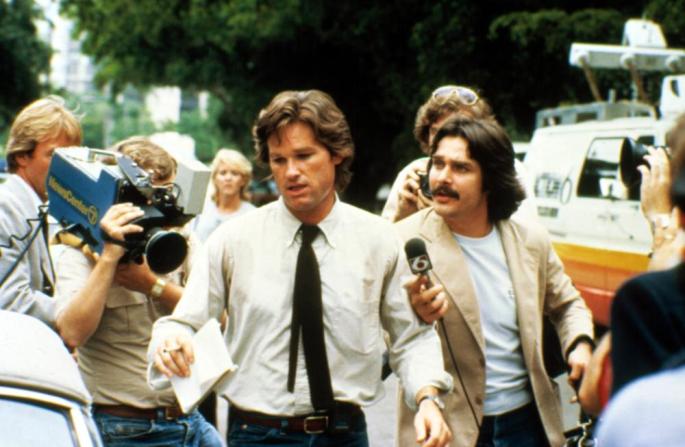
Kurt Russell gave one of his career best performances in Ron Shelton’s shamefully neglected cop film Dark Blue. Maybe it was because the film painted such an ugly, downbeat portrayal of the LAPD without any seriously commercial elements to balance the tone or resolution that it failed to connect with audiences (it grossed $12 million back in February 2003). Shelton’s twisty film, which was co-written by David Ayer (Training Day, Fury, Suicide Squad) and legendary crime novelist James Ellroy (L.A. Confidential, American Tabloid), involves police corruption, cover-ups, and murder, with the action set during the volatile final days leading up to the verdict in the Rodney King trial, with the narrative extending into the nightmarish rioting and looting that befell the city after the police officer’s controversial acquittal. Russell is fantastic as a morally corrupt cop who only knows how to play by his own set of rules, while the entire film carries a distinct whiff of retro cynicism and respect for 70’s cinema, all the way up to the grim finale. The supporting cast is phenomenal, with Scott Speedman, Brendan Gleeson, Ving Rhames, Jonathan Banks, Dash Mihok, Lolita Davidovich, and Michael Michele all offering vivid performances, while cinematographer Barry Petersen brought a gritty visual style that smartly utilized the hand-held camera aesthetic. Terence Blanchard’s serious, almost mournful score seals the deal. Less an action film and more of a character study, Dark Blue deserves to finally find a larger audience, and will likely be greatly admired by fans of this particular genre and the old-school stylings of Sidney Lumet when he was cranking out these scuzzy, visceral pieces of filmmaking.

THE DARK KNIGHT: A Retrospective by Joel Copling

Rating in Stars: **** (out of ****)
Cast: Christian Bale, Heath Ledger, Aaron Eckhart, Michael Caine, Maggie Gyllenhaal
Director: Christopher Nolan
MPAA Rating: PG-13 (for intense sequences of violence and some menace)
Running Time: 2:32
Release Date: 07/18/08

Upon donning the cape, cowl, and alter ego of the Batman, it’s very likely that Bruce Wayne never envisioned that his plan to return fear upon those who prey upon the fearful would be this much trouble. That becomes clear very soon into The Dark Knight, a thunderous sequel to 2005’s Batman Begins, which captures quite forcefully the old adage about good deeds. The symbol for the city of Gotham that the Batman was meant to be has now inspired copycats who resort to the use of shotguns while wondering how their method is any different from the real hero’s and chaos (of the systematic sort) in a city already long prone to it. Here is a symbol meant to inspire good; over there are the forces that would slowly chip away at the influence.

Bruce (Christian Bale) as the Batman has been keeping busy. The mob has been getting hundreds of thousands of dollars at a time from banks that have been infiltrated by their ranks (The opening sequence depicts a meticulous heist of one of these banks, and William Fichtner appears in a cameo as its manager, who is as unabashed to pull out a shotgun as the robbers). Different sects of the city’s mob (whose leaders are played by the likes of Eric Roberts, Michael Jai White, and Ritchie Coster) make deals behind closed doors–and even some of Gotham’s finest are among those on the mob’s payroll, although Lt. James Gordon (Gary Oldman) and the mayor of Gotham (Nestor Carbonell) represent the ones who haven’t been swayed by criminal influence.

Bruce as a public figure is enjoying the nightlife spoils of his wealth, inherited from the parents for whose deaths he still feels guilty, although the fact that popular new district attorney Harvey Dent (Aaron Eckhart) can be seen on the street and in the news with Bruce’s former flame, assistant district attorney Rachel Dawes (Maggie Gyllenhaal, filling in for a missing-in-action Katie Holmes), hanging off his arm forces Bruce’s faithful butler Alfred (Michael Caine) to remind him of the costs of becoming a masked vigilante who spends his nights beating the bad guys senseless. “Know your limits,” Alfred advises; “I can’t afford to know them,” is Bruce’s foreboding reply.

The plot within the screenplay, written by director Christopher Nolan and his brother Jonathan, is remarkably streamlined. We have the conflict raising its head almost immediately upon reintroduction to the central characters, we have the conflict being complicated by twists in the development of the series of events, we have the introduction to a new villain (Again, I will get to him in a minute) who introduces a new dynamic within the balance, and we have those dynamic action sequences (shot with stunning mise en scene by Nolan and cinematographer Wally Pfister, whose compositions are particularly striking here).

And now we get to that villain (who, by the end, is one of a pair, though clearly and distinctly the more dangerous one). He is known only as the Joker. He comes with custom clothing, primitive weaponry such as knives (which, he explains to one character, he prefers to guns because of the methodical way in which he can use them), and a simple request: The Batman must reveal his identity. Oh, and he’ll kill people if this doesn’t happen within his arbitrary time frames. Heath Ledger, who is terrifying here, plays the Joker as a man with both a lack of conscience and a pitch-black sense of humor (a “magic trick” involving a pencil, his reaction to a faulty detonator or to a mob boss suggesting that he thinks he can succeed without bodily injury to himself, his follow-through of the Batman’s plea to “let go” of a hostage).

He’s a villain for the ages because of how merciless he is without even feeling the need to be menacing, and the performance at the center of it is unnerving enough that one doesn’t remotely need to wonder why the Joker character is the Batman’s long-gestating nemesis. The climax, which has two layers to peel back (two boats full of hostages followed by a crisis on a more intimate level), also revolves around the other villain who crops up as a result of the Joker’s influence on the events. They’re far from predictable and manage to reflect the relentless forward motion of The Dark Knight into the territory of not merely a superhero blockbuster but a grand and thrilling crime drama.

THE MEAN SEASON – A REVIEW BY J.D. LAFRANCE

MSDMESE EC004
THE MEAN SEASON, Kurt Russell, 1985. ©Orion Pictures Corporation

The 1980s was quite a prolific decade for actor Kurt Russell. Sprinkled between the genre classics he made with director John Carpenter, the actor tried his hand at a wide variety of roles, from shifty used car salesman in the comedy Used Cars (1980) to a nuclear power plant worker in the docudrama Silkwood (1983) to a police detective in the neo-noir Tequila Sunrise (1988). Often forgotten during this busy decade is a nifty little thriller called The Mean Season (1985). Based on the bestselling 1982 novel In the Heat of the Summer by John Katzenbach, this well-executed film acts as the cinematic equivalent of an engrossing page turner.

Set in Miami during the hot, late summer months, the film opens with an urgent brassy score by the great Lalo Schifrin that plays over shots of stormy skies juxtaposed with the busy printing presses of the Miami Journal, foreshadowing how both will play a prominent role later on. Malcolm Anderson (Kurt Russell) is a veteran crime reporter that has just come back from hiatus/job hunting in Colorado. He’s burnt out, lacking both ambition and drive. He wants a change of pace and threatens to quite… again. But before he can bring it up, Bill Nolan (Richard Masur), his editor, assigns him to cover the murder of a young woman that has been shot in the head.

The crime scene sequence speaks volumes about Malcolm’s character. He’s covered the beat long enough to be on friendly terms with homicide detective Ray Martinez (Andy Garcia) but not his partner Phil Wilson (Richard Bradford). He also knows how to get the guy who found the body to open up and talk then has the decency not to use the man’s name in the article. Malcolm is also tactful and understanding with the mother of the murder victim, listening to the woman’s reminisces about her child while still getting what he needs for the article. This is in contrast to Andy Porter (Joe Pantoliano), the crime photographer who shadows Malcolm on his assignments and has no problem taking a picture of the grieving parent during a particularly vulnerable moment. This scene is important because it establishes that Malcolm is good at what he does and he is a decent person so we like and identify with him.

Malcolm finally confronts Bill about his desire to quit in a scene between veteran character actor Richard Masur and Russell. Bill tells Malcolm, “You haven’t been at this long enough to be as burned out as you like to think you are.” Malcolm feels like he’s seen and done it all but still hasn’t found his Watergate yet – the dream of all ambitious investigative reporters. Malcolm sums it up best when he tells Bill, “I don’t want to see my name in the paper next to pictures of dead bodies anymore.” The editor counters, “Now we’re not the manufacturer, we retail. News gets made somewhere else, we just sell it.” It’s a nice scene that is well-played by both actors as their characters touch on the nature of ethics in reporting the news. How far are they willing to go to get a story that makes their career? Malcolm is about to find out as he gets a phone call from the man (Richard Jordan) that killed the teenage girl. He admires Malcolm’s writing and wants the reporter to be his mouthpiece as he plans to kill again.

Bill is practically salivating at the possibilities while Malcolm’s ambition kicks in as he realizes that he’s found his Watergate. However, as the murders continue, Malcolm finds himself getting more involved in the story until he’s as much a part of it as the killer, which puts his life and that of his girlfriend (Mariel Hemingway) in danger.

While the set-up and plot of The Mean Season are nothing special – the reporter who gets in way over his head – both are executed well enough that you don’t mind and this is due in large part to the engaging performances of the talented cast that do their best to sell the material. Kurt Russell certainly comes across as a believable newsman. He’s got the lingo down and seems to know his way around the newsroom and the beat that Malcolm covers. The actor does a nice job of conveying his character’s transition from someone reporting on the news to the one making it. He also manages to get a chance to show off some of his action chops in an exciting bit where Malcolm races across town to find his girlfriend before the killer does. His frantic, desperate race is intense because the actor knows how to sell it, running full tilt over several blocks like a man possessed, and because we know more than he does. We know just how much danger his girlfriend is in.

Mariel Hemingway is good in the thankless girlfriend role. She and Russell have good chemistry together. They make a nice couple together and her character ends up acting as the voice of reason when Malcolm gets too involved. Hemingway does her best to avoid the damsel in distress stereotype but it is pretty easy to figure out how it’s all going to go down. She is part of a solid supporting cast that includes Andy Garcia as the dedicated cop that cares and Richard Bradford (The Untouchables) as his older, more experienced partner who thinks that Malcolm is a parasite. The aforementioned Richard Masur (The Thing) is also memorable as the opportunistic editor who just cares about selling papers. The great William Smith (Darker than Amber) has a memorable bit part as a pivotal witness that helps Malcolm and the cops track down the killer. He has only one scene with a decent amount of expositional dialogue to convey but he nails it.

Director Phillip Borsos (The Grey Fox) also does a nice job orchestrating the cat and mouse game between Malcolm and the killer thanks to the smartly written screenplay by Leon Piedmont. They manage to hit all the right notes and fulfill all the right conventions of the thriller genre – the grudgingly helpful cops, the ambitious reporter, the sociopathic killer, and so on – and stir it all up. Borsos employs no-nonsense direction like a seasoned studio pro, which lets the actors do their thing. I also like how he conveys a sense of place with the sweaty, summer weather, coupled with the impending hurricane that is almost tangible. It all comes to a head at the exciting and atmospheric climax when Malcolm confronts the killer in the Everglades.

John Katzenbach was a veteran crime reporter who based his debut novel In the Heat of the Summer on years of experiences and that of his colleagues. Producer David Foster, a journalism graduate, had been looking for a good screenplay about reporters for years. He came across the manuscript for Katzenbach’s novel and was impressed by it. He met with the author and they talked about how to accurately convey the life of a newspaper reporter on film.

In April 1984, Borsos and his crew arrived at the Miami Herald offices to study a typical day in the newsroom and on that day Christopher Bernard Wilder, suspected of kidnapping and murdering several young women, shot himself as the police closed in. The resulting flurry of activity at the Herald helped Borsos create a realistic newsroom atmosphere in his film. Katzenbach urged Kurt Russell to hang out with his fellow reporters in preparation for the film. To that end, Russell and Joe Pantoliano accompanied a reporter and a photographer from the newspaper to the scene of a grisly double murder in North Miami. Much like in the film, the actor found cameras were trained on him and later saw footage of himself on the evening news. In addition, Richard Masur spent days and nights on the Herald’s city desk.

Borsos’ previous film The Grey Fox (1982) did not make a profit and so to pay off his debts he agreed to direct The Mean Season. Unfortunately, he had creative differences with Foster over the tone of the film. According to Borsos, he wanted the film to look “somewhat stylized and slightly unreal, more what you would call a 1950’s film-noir type of picture.” In contrast, Foster wanted a more realistic-looking film as Borsos said, “Mr. Foster’s vision was more of action-packed thriller instead of a character-thriller.” It also didn’t help that the director resented the producer’s constant presence on the set. The newsroom scenes were actually shot at the Miami Herald late at night with several staff members used as consultants and extras. Russell and two fellow actors used three real newsroom desks that were outfitted with authentic-looking notepads, books, dictionaries and computer printouts. In addition, Katzenbach was frequently present during filming and acted as a consultant.

The Mean Season
is an entertaining film that falters a little bit at the end with a clichéd “twist” that sees Malcolm suddenly transform into an action hero but Russell does his best to make it work. At times, it feels like there are two kinds of films competing – the character-driven thriller that Borsos wanted to make and the action-packed thrill machine that Foster envisioned. The result is a sometimes uneven effort. Not every film has to try and reinvent the wheel by offering some novel take on the genre. There’s something to be said for a thriller that has nothing more on its mind then to entertain and tell a good story and that’s something The Mean Season delivers on both counts.

STEVEN SODERBERGH’S THE GIRLFRIEND EXPERIENCE — A REVIEW BY NICK CLEMENT

girlfriend_experience

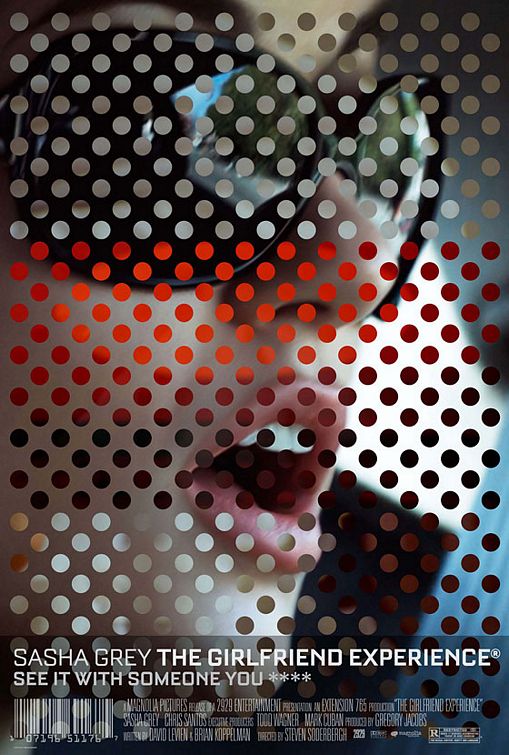
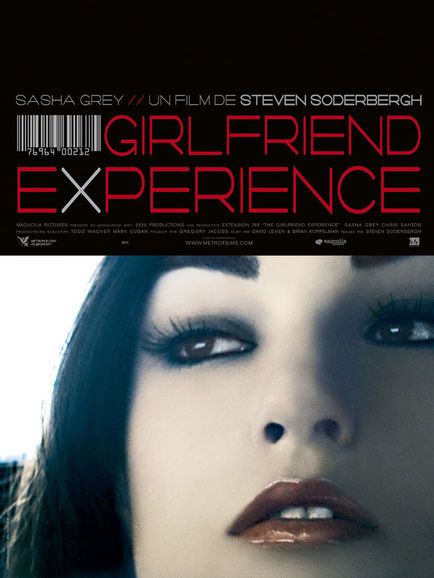
I love the icy-cool precision of Steven Soderbergh’s The Girlfriend Experience. Clinically directed with a purposeful sense of emotional detachment, this is a socially piercing study of sex, rules, expectations, and dominance, with an explicit thematic angle on how our bodies can be used for maximum advantage in almost every situation that we encounter. Written by the fantastic team of Brian Koppelman and David Levien, the film gained a fair bit of notoriety when it was released in 2009 due to the fact that Soderbergh cast former adult film star Sasha Grey in the lead role as a high-priced call girl making the rounds with her quietly rich clients. She’s strong in the film, not because she’s asked to do much in the way of simulated sex or nudity, but because she understood the chilly and sometimes soulless aspects to the narrative, and because Soderbergh was wise to tailor the film to her non-verbal strengths as an actress. She’s got an intense visual presence, and because The Girlfriend Experience is a study of outward appearances and how people react to them, her hardened physical nature helped to define many sequences and worked to create a sense of strength and confidence. Shot digitally by Soderbergh under his usual alias (Peter Andrews) and clocking in at a brisk 80 minutes, the storytelling and filmmaking are as sleek and sexy as the chic production design by Carlos Moore, with everything accentuated by extra-sharp editing by Mary Ann Bernard (another Soderbergh alias), with the ambient, minimalistic musical score by Ross Godfrey hitting all the appropriate notes. Look for film critic Glenn Kenny in a small but extremely humorous role as an escort “reviewer.” Slammed by some as merely an experiment, this is one of the more under the radar Soderbergh efforts, and it’s likely to get some press again soon, as Starz has a TV series that’s based on the film launching in April, with alluring actress Riley Keough in the starring role.

girlfriend_experience_ver2.jpg