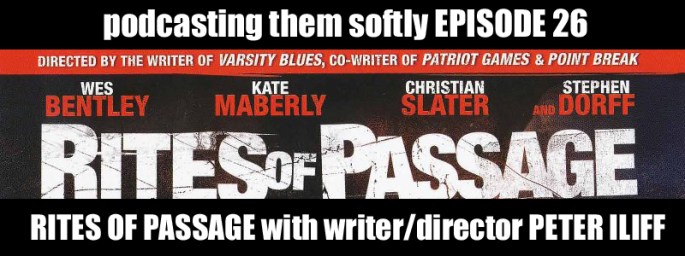
Episode 26: RITES OF PASSAGE with writer/director PETER ILIFF

rites of passage

We’re back to a “regular” episode where we discuss a film that is underseen, underrated, and/or unfairly criticized.  This week’s episode is Peter Iliff’s RITES OF PASSAGE, and we were fortunate enough to have Peter back on our show to discuss his film.  This film hits an array of genres, has a fantastic cast, and excels madly.  RITES OF PASSAGE is available on DVD, blu ray, and streaming via Amazon or you can buy or rent the film digitally on Vudu.

MARIELLE HELLER’S THE DIARY OF A TEENAGE GIRL — A REVIEW BY NICK CLEMENT

2
The Diary of a Teenage Girl will likely serve as a frightening wake-up call to any parents with a 15 year old daughter. Or a daughter of any age! Set in hippe-dippy 1970’s San Francisco, this is a highly sexual account of a young girl going through a serious emotional and physical awakening, all raging hormones and misplaced ideals, and the performance from Bel Powley is absolutely incredible from first frame to last, fearless in ways that you don’t normally see on the big screen. Adapted and directed by Marielle Heller and based on the graphic novel The Diary of a Teenage Girl: An Account in Words and Pictures by Phoebe Gloeckner, this is a quirky, serious but funny, acutely aware movie that feels very personal and expressive. It’s also got a unique visual style, with floral animation being used all throughout to tap into the cluttered headspace of the lead character. That the narrative centers on a high school girl who enters into a torrid love affair with her mother’s boyfriend should give you an idea of the type of movie that this is, and because of the delicacy to the performances (the spot-on Kristen Wiig is the hard-partying mother while an effectively understated Alexander Skarsgård is the boyfriend/illicit lover), the film achieves a level of clarity that might not have happened had it been in the hands of lesser performers and storytellers. After premiering at the 2015 Sundance Film Festival, the film received a limited theatrical release last summer, and is now available to stream or rent/buy on disc.

Leaving Las Vegas: A Review by Nate Hill

image

Upon my first ever viewing (I know) of Mike Figgis’s Leaving Las Vegas last night, I discovered that it’s not the film I thought it was all these years. I had an image of a quirky, star crossed lovers tale with a modicum of sweetness. What I got wasn’t insanely far off the mark, but I have to say I was disarmed and deeply affected by the sense of decaying bitterness which prevails throughout the story and hangs over it like the sour, neon stained moon over a feverish, perpetually nocturnal Vegas. Every character besides the two leads sort of flits dimly in and out of the story, never having any impact further than they need to service the plot with. This leaves Nicolas Cage and Elizabeth Shue eerily alienated and gives the movie a hypnotic flair. Even though these two abide in a bustling setting, it oddly seems at times that they are the only two human beings in existence. That also most likely stems from the film’s willingness to take the time to get to know them, lingering on every glance, murmur and mannerism, be it mundane or essential, to try and get a feel for these two completely broken souls. Cage is Ben, a failing Hollywood screenwriter who is quite literally drowning in alcoholism, plagued by some tragic past of which we never learn about. He is fired and splits for Vegas to hole up in a motel and deliberatly drink himself to death. There he meets Sera (Shue) a hooker with a heart of gold (Shue torches the cliche bravely). They are immediately attracted, and begin a relationship.  She continues to see Johns, after being freed of her sadistic Latvian pimp (Julian Sands, terrifying). He makes her promise to not attempt to stop his drinking. Their romance is born out of the primal lonliness that each human being feels to a certain extent, that instinctual urge to reach out and grab for anything, anyone to put out the pain. Cage is everything in the role: pathetic, charming, sad, manic, desperate and deeply, scarily committed to his lethal quest of inebriation. The scenes of liquor consumption in this film go beyond excess and make Denzel in Flight look like a high schooler. It will make many uncomfortable, but looking away for our own peace of mind takes away from the urgency and dark poetry of Cage’s situation. Booze is a low burn, but it’s still suicide, and an agonizing method for anyone to behold in action: the person has an extended period of time to rethink, reevaluate, and if they don’t, then their resolve is extended and far more disturbing than a split second decision. Cage displays this in harrowing form in a career highlight. Elizabeth Shue is heartbreaking as the girl who loves him but can’t quite say why, a girl who has spent years in loveless copulation, confused and torn upon feeling it for the first time. Her character goes through some truly hellish things here. You will cry for her, fall in love with her alongside Cage and swell with admiration at her steely resilience in the face of some of the ugliest things life has to offer her. Each member of the supporting cast is like a star in the desert sky, a moment of flickering purpouse before fading into the background again to let Cage and Shue continue their dance of the damned. Graham Beckel as a shaken bartender, Xander Berkeley as a cynical cab driver, Valeria Golino as as a Barfly and R. Lee Ermey as a taken aback conventioneer are all perfect. Director Mike Figgis composed the score himself, a moody blues melody that clings to your perception after the film like a dream that won’t let go. Just to make the film more haunting, it’s based on a novel by a severely alcoholic writer who took his own life two weeks after production was underway, furthering the disconcerting vibe to a saturation point. This one is a tough watch, and you’ll be forced to see two human beings at the absolute end of the road, miles past rock bottom with seemingly no hope in sight. And yet, if you are patient and try to empathize, you will see the kind of flickering positivity and briefly life -affirming intimacy and light that humans cling to even in the darkest of times. Cage and Shue beautifully paint a bittersweet portrait of this through their work. It’s overbearing with the better, but that makes the sweet all the more precious and lasting. Just watch something happy after.

Michael Mann’s The Insider: A Review by Nate Hill

There are some films that are so perfectly made in every way possible that
I sit there thinking ‘Every persons effort and every element of creative energy that went into making this movie has been implemented flawlessly, arriving here and now to give me the viewing experience I’m getting. A perfect movie’. Michael Mann’s The Insider is such a movie. I held off on reviewing it for a couple days after seeing it, partly to let it sink in but mostly to see if I’d feel any different about it once my synapses had cooled down and the frames had dimmed from my consciousness. Perhaps the fiery reaction it drew from me in the moment was cheaply earned, or I was just in the right mood to love it at that time. Not a chance. If anything I’ve become more enraptured by it as time has passed, already aching for a second viewing. Every performance and aspect of is just so rich, deep and rewarding that for its two and a half hour runtime I found myself externally distracted not once. Occasionally Mann deviates from his comfort zone in the nocturnal crime zone. The occult themed period piece, the colonial adventure, the psychological horror, and this, the blistering drama based on a true story. One might not think the subject matter deserves a two and a half hour film, let alone would make a great one, but Mann has the cinematic Midas touch, and never half asses it. His films always contain traces of a true master at work, telling little details that engrave the film with a sense of immaculate skill and unwavering dedication to telling the story in its finest, and most honest form. The Insider tells the story of Jeffrey Wigand (Russell Crowe), a chemist who turns whistleblower on the tobacco corporation he was once employed by, finding shelter under the wing of CBS News’s 60 minutes, and particularly hard nosed reporter Lowell Bergman (Al Pacino). The network wants his take, in order to do an exposé on Big Tobacco, a plan with predictably disastrous and dangerous results, for both Wigand and CBS. The film shakes off any impending sensationalism or deliberately emotional stylistic cheats, instead keeping a microscope focus on the three lead performances and letting all the hurt, determination and emotion come forth naturally through their work, as opposed to smothering their story with an overbearing score and cheap cinematic manipulation. I’ve never been that won over by Russell Crowe until now. He always seems ‘halfway there’ in his work, like he’s missing something. This changed things for me. He’s like a raw nerve here, a family man pushed to the precipice of an impossible decision. One can almost see him wrestling with his conscience behind those haunted eyes, a storm with a lid barely kept on and anchored by Crowe in his finest hour. Pacino holds us captive with his work until we realize we’re not breathing. He’s the moral compass of the piece, and to see him explode at the injustices served up to him will give you goosebumps. The third leg of the table is Christopher Plummer as Mike Wallace, the 60 minutes anchor who also struggles morally with the situation they are in. Plummer is so good you forget you’re watching a film, giving Wallace buried gentleness and chiselled emotional intensity that you can scarce believe is even possible through the craft of acting. The supporting cast is peppered with bushels of talent. Colm Feore, Philip Baker Hall, Gina Gershon, Stephen Tobolowsky, Diane Venora, Nester Serrano, Rip Torn, Michael Gambon and an unusually sedated Debi Mazar are superb. It’s Bruce McGill, however, who almost steals the film in one blistering scene, playing a lawyer with enough righteous anger to shatter your tv screen. A career best for him. No one puts you into a story by forcing you to feel alongside the characters quite like Mann. Here he guides us through the trials that Crowe, Plummer and Pacino face with steady hand and heart until we are invested. Then he pulls the ripcord and let’s the sparks fly, making monumentally intense work of events that could seem pedestrian in lesser hands. We really feel for Crowe and clutch the seat with the same desperate intensity that he clings to his family, and sanity. We feel the same jilted fury alongside Pacino as he wades through sickening bureaucracy for a shot at retribution. We take pause with Plummer as he ponders his legacy and are incredulous with all three at the snowball effect the entire proceeding has had on them, devastating us as an audience the same as them, in turn making us feel closer to them. This is all laced with the incredibly heartfelt music from Lisa Gerrard, who sang alongside Crowe in Gladiator and was a favourite of Tony Scott as well. Mann is a ceaseless monster of storytelling, tone and pacing. The story has flair simply because he doesn’t wantonly throw it in the mix; the feeling and reaction come from story and character and not the razzle dazzle. Mann knows this, and let’s the fireworks naturally spring from the absence of deliberation, like music in the vacuum of space. This one will live on to stand the test of time far longer than the decade and a half its help for already. It’s a revelation. 

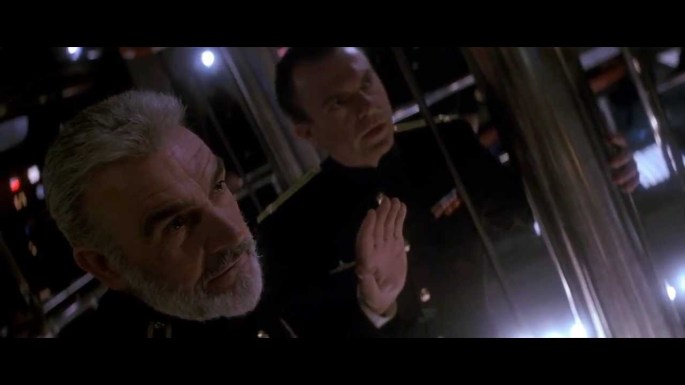
THE HUNT FOR RED OCTOBER – A REVIEW BY J.D. LAFRANCE

maxresdefault

Has it really been over 20 years since The Hunt For Red October (1990) was released in theaters? It has aged surprisingly well. Fresh off back-to-back successes of Predator (1987) and Die Hard (1988), director John McTiernan was at the top of his game. He had become the go-to guy for big budget, blockbuster action films. So, it made sense that he would be entrusted with kickstarting a potential franchise with Red October, an adaptation of Tom Clancy’s best-selling novel of the same name, in the hopes of launching a series of films featuring recurring Clancy protagonist Jack Ryan. Paramount Pictures wasn’t taking any chances, casting screen legend Sean Connery and pairing him up with up-and-coming movie star Alec Baldwin. The result, not surprisingly, was box office gold and arguably the strongest entry in the Jack Ryan franchise.

It’s the mid-1980s and the Cold War is at its peak. American Naval Intelligence discovers that the Russians have created the perfect nuclear submarine — one that can run completely silent. CIA analyst Jack Ryan (Baldwin) is called in to confirm that this is true, but at the meeting with the Joint Chiefs of Staff, he puts forth a radical theory: the sub-commander of this new submarine, Captain Marko Ramius (Connery), may actually be trying to defect and not trying to start World War III as they all fear. This is further complicated when the Russians report that they’ve lost all contact with Ramius. The powers that be send Ryan into the field in the hopes that he can contact the Russian sub-commander before his countrymen blow him out of the water. The film becomes a race against time as Ryan boards the USS Dallas, the American sub closest to the Red October, and convinces its commander (Scott Glenn) that Ramius plans to defect.

McTiernan does a nice job of showing the camaraderie aboard the USS Dallas in a brief scene where the captain of the sub tells a story about how fellow crew member Seaman Jones (Courtney B. Vance) had Pavarotti blasting over the sound system during an exercise with other subs in their fleet. It’s a nice moment of levity amidst this generally serious film. McTiernan also doesn’t bog the film down with an overabundance of technical jargon. And what techno-speak there is in the film is spoken expertly by the cast in a way that is understandable. You may not understand it but you know what they mean.

Along with Das Boot (1981), Red October remains one of the few decent submarine films. And this is because McTiernan builds the tension with the right amount of white-knuckled intensity. The film attempts to maintain the suspense of whether Ramius has gone rogue or is defecting for as long as it can but since Sean Connery is playing the character this removes all doubt as to his true intentions. Connery playing a villain at this stage in his career? Ridiculous! The first hour of Red October is all set-up as the film establishes the major players and their intentions. Then, it shifts into an elaborate game of cat and mouse as both the Russians and the Americans pursue Ramius. If that wasn’t enough, McTiernan ratchets up the tension with the discovery of a saboteur aboard the Red October.

After reading the galley proofs of Tom Clancy’s novel The Hunt for Red October in February 1985, producer Mace Neufeld optioned it. The book went on to become a best-seller and still no Hollywood studio was interested because of its complicated technical jargon. Neufeld said, “I read some of the reports from the other studios, and the story was too complicated to understand.” After 18 months, he finally got a high-level executive at Paramount Pictures to read Clancy’s novel and agree to develop it into a film.

Screenwriters Larry Ferguson and Donald Stewart worked on the screenplay while Neufeld approached the United States Navy in order to get their approval. Initially, they were uncertain because of the fear that top secret information or technology might be exposed. Fortunately, several admirals were fans of Clancy’s book and argued that the film could do for submariners what Top Gun (1986) did for the Navy’s jet fighter pilots. To that end, the director of the Navy’s western regional information office in Los Angeles offered possible changes to the script that would make the Navy look good.

Alec Baldwin was approached to appear in the Red October in December 1988 but was not told for what role. Austrian actor Klaus Maria Brandauer was cast as Marko Ramius but unfortunately two weeks into film he had to quit due to a prior commitment. The producers quickly faxed a copy of the script to Sean Connery. Initially, he declined the offer because the script didn’t make any sense. It turned out that he was missing the first page which stated that the film was set in the past during the Cold War. He agreed to do it and arrived in Los Angeles on a Friday and was supposed to start filming on Monday but he asked for a day to rehearse in order to get into the role.

The Navy gave the production unparalleled access to their submarines, allowing them to take pictures of unclassified sections of the USS Chicago and USS Portsmouth for set and prop design. Key cast and crew members took rides in subs including Alec Baldwin and Scott Glenn, both of whom took an overnight trip on the USS Salt Lake City. To research for his role, Glenn temporarily assumed the identity of a submarine captain on board the USS Houston. The crew took “orders” from Glenn, who was being prompted by the sub’s commanding officer.

Shooting in actual submarines was deemed impractical and in their place five soundstages on the Paramount backlot were used with two 50-foot square platforms housing mock-ups of the Red October and the USS Dallas were built. They stood on top of hydraulic gimbals that simulated the sub’s movements. Connery remembered, “It was very claustrophobic. There were 62 people in a very confined space, 45 feet above the stage floor. It got very hot on the sets, and I’m also prone to sea sickness. The set would tilt to 45 degrees. Very disturbing.”

With The Hunt for Red October, Alec Baldwin was being groomed for A-list leading man status. Prior to this film he had appeared in an impressively diverse collection of films, playing a bland, dead Yuppie in Beetlejuice (1988), an unfaithful greaseball boyfriend in Working Girl (1988), and an unscrupulous radio station manager in Talk Radio (1988). Throughout Red October, Ryan is constantly proving his credentials to veteran military officers that he encounters, including a memorable briefing with a group of generals where he puts one of them in their place after the man condescendingly scoffs at his theory about Ramius.

After all this time has passed and two other actors have assayed the role, Alec Baldwin is still the best Jack Ryan for my money. He brings a solid mix of serious action hero with a whimsical sense of humor to his version of Ryan that is sorely missing from the stuffy, no-nonsense approach of Harrison Ford and the wooden acting of Ben Affleck. Baldwin instills a certain warmth and humanity in Ryan that is a refreshing contrast to the technology that dominates the film. Baldwin does a good job of conveying Ryan’s intelligence – after all, he’s a thinking man’s action hero – but he has his doubts and this humanizes the character.

With his baggage of iconic movie roles, Sean Connery is well-cast as the confident Ramius. There is a scene where he tells his inner circle of defectors his true intentions. Calmly eating his dinner, Ramius tells them, “Anatoli, you’re afraid of our fleet, hmm? Well, you should be. Personally, I give us one chance in three.” Connery says this in casual fashion as only he can. I suppose I believe him as a Russian sub commander as much as I believe him as an Irish cop in The Untouchables (1987). Which is to say not so much but it’s Sean freakin’ Connery, dammit! He’s the most virile Scottish actor alive today. He was James Bond and Indiana Jones’ father fer chrissakes! He pulls off the role through sheer charisma. Who else could play the enigmatic veteran commander of the entire Russian Navy? Connery has the gravitas and the iconic cinematic presence to make him seem like the ideal choice to play Ramius.

The Hunt for Red October
features a stellar cast of fantastic character actors supporting Connery and Baldwin. Two of Ramius’ senior crew members are played by Sam Neill and Tim Curry. Neill is excellent as Connery’s no-nonsense second-in-command who defends him against the other defectors who doubt Ramius’ motivations but in private voices his own concerns. You’ve got Scott Glenn as the commander of the USS Dallas, James Earl Jones as Ryan’s superior and friend, and Stellan Skarsgard as the Russian sub commander hunting down Ramius. Richard Jordan even pops up in a small but memorable part as the President’s National Security Adviser and talks like how I imagine most politicians do when they are among their own. At one point, he tells Ryan, “Listen, I’m a politician, which means I’m a cheat and a liar, and when I’m not kissing babies, I’m stealing their lollipops, but it also means that I keep my options open.” It takes a special kind of actor to come in and knock it out of the park with very little screen time but Jordan does it so well and makes it look easy.

Techno-thrillers don’t get any better than this film — you’ve got Baldwin as the reluctant hero who steps up when he has to, casting Connery with his iconic presence as the enigmatic Ramius, and a top notch supporting cast of character actors. Add to this, expert direction from McTiernan and you’ve got the best Jack Ryan film to date. Sadly, this would be his last really good film. With the exception of The Thomas Crown Affair (1999), he has struggled with the tiresome Medicine Man (1992), signed on for the redundant Die Hard with a Vengeance (1995) and finally taken up residence in Hacksville with the brainless Rollerball remake (2002). Watching The Hunt for Red October again is a sobering reminder of what a good director he used to be.

BATMAN BEGINS: A Retrospective by Joel Copling

Rating in Stars: *** (out of ****)
Cast: Christian Bale, Michael Caine, Liam Neeson, Katie Holmes, Gary Oldman
Director: Christopher Nolan
MPAA Rating: PG-13 (for intense action violence, disturbing images and some thematic elements)
Running Time: 2:21
Release Date: 06/15/05

Eight years after two disastrous attempts by Joel Schumacher to return the series to its comparatively campy cinematic roots following Tim Burton’s darker, far superior spectaculars, co-writer/director Christopher Nolan, popular only for a trio of modest psychological thrillers, attempted to bring the legend of the Caped Crusader to the big screen again by way of, well, a modest psychological thriller that happened to star the Caped Crusader. Batman Begins ultimately does not work as well as Burton’s first take on the character (or, for that matter, his highly underrated sequel), but for a long time, it does. For more than an hour, it establishes a new vision of its titular alter ego in the cape and the cowl that is less important than the man who takes it on as a symbol of mankind’s more vengeful tendencies.

This Bruce Wayne, played by Christian Bale in a solid performance of both charming swagger and privileged but world-weary vulnerability, is pushed into a troglodytic lifestyle by missing the opportunity to avenge himself upon his parents’ killer. This is where the story finds him: locked in a prison in the Far East, fighting the fellow inmates over food and a bullying power structure. He is approached by Henri Ducard (Liam Neeson), a mysterious man who operates within a league of shadows and offers Bruce the chance to fight injustice by turning fear upon the enemy. Take a rare, blue flower up the mountain on which Ducard and his operatives are located in a monastic combat-training arena, the man says, and Bruce shall get his chance.

Ducard is only the direct subordinate to Ra’s Al Ghul (Ken Watanabe), leader of the shadowy group, and the two train Bruce in many techniques of fighting and domination, both by way of what the flower produces (a hallucinogen that acts as a stimulant) and through the skills of ninjutsu training (which is as much learning about how to master misdirecting one’s opponent as it is about actually fighting him). The lesson turns out to be a far more complicated one than this, driving a wedge between Bruce and the League of Shadows and the former to travel back to his own city of Gotham.

The problem is that the great city, compared by one character to Constantinople and Rome (understandably, given its size in one aerial shot, strikingly captured by cinematographer Wally Pfister), is approaching its second recession in as many years as Bruce has been alive. He’s been pronounced dead after being gone so long, and while some, such as his faithful butler Alfred (Michael Caine) and childhood friend Rachel Dawes (Katie Holmes, the weak link among a strong cast), might be celebrating his return, it also rattles cages when he takes upon himself the moniker of the Batman, a vigilante in a thick suit and under a cape who fights the bad guys in a city owned by the mob (Tom Wilkinson plays its chief arbiter, Carmine Falcone, who has most lawmakers and enforcers on his payroll).

The exception is a goodhearted sergeant named Gordon (Gary Oldman in a strong performance), who errs on the side of a masked “vigilante” that brings results to the doorstep of the department; his fellow officers and boss disagree, and public opinion of the Batman sparks debate across the city. The threat, meanwhile, continues to grow as Falcone and a doctor named Jonathan Crane (Cillian Murphy), who sends criminals into an insane asylum instead of prison on the orders of a mysterious person above his pay grade, seem to have involvement in a plan to disperse a type of poison into the air within Gotham itself–a poison that heightens fear and drives its victim mad.

Nolan’s screenplay (co-written by David S. Goyer) is best when building up to a finale that feels a bit more familiar and shopworn than what comes before it. Nolan’s staging of action is occasionally impressive, especially when dealing with Bruce’s operation of a variety of gadgets and a tank-like vehicle spray-painted black (provided to him by Morgan Freeman’s Lucius Fox in a fun montage) and in a finale that challenges the notion of the word “hero.” But what proceeds this is the real deal, a marvel of editing that weaves in and out of multiple time frames with seeming ease and examines the precise, moving steps by which Bruce becomes the Batman. That is the real story of Batman Begins, which is a promising start to a series; the rest is merely what occurs when the Batman is positioned against his first villain.

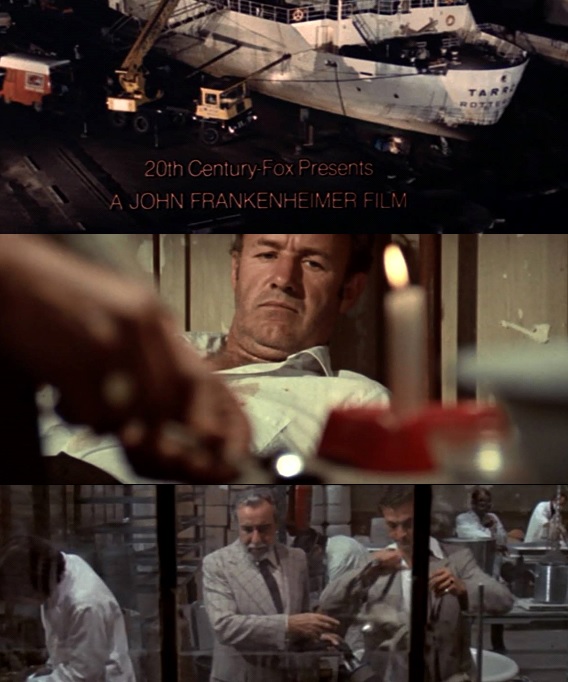
JOHN FRANKENHEIMER’S THE FRENCH CONNECTION II — A REVIEW BY NICK CLEMENT

french connection 2

What’s so thrilling and unexpected about John Frankenheimer’s underrated The French Connection II is that at no point did the filmmaker or anyone else on his team try to totally mimic the success of the Oscar-winning original. William Friedkin’s The French Connection is certainly a masterpiece of American cinema, one of the only “action movies” to win Best Picture with the Academy, and a film that holds up staggeringly well because of how ahead of the curve Friedkin and cinematographer Owen Roizman were with their mise-en-scene and the gritty realism of the fact based story, to say nothing of the gripping performances from Gene Hackman and Roy Scheider. In The French Connection II, Frankenheimer, himself no slouch to great action adventure movies (The Train, Ronin, Black Sunday, 99 and 44/100% Dead, Grand Prix), continued on with the same immediate and visceral visual style that Friedkin had pioneered with the first effort, but he opened up the scope of the story, both visually and narratively, setting a majority of the plot in Marseilles, which was only glimpsed in part one. What results is a film that, while never reaching the glorious heights of its predecessor, hits all of its marks with extreme efficiency and toughness, and seems to be a work that’s been relegated to long-forgotten status.

 Hackman’s Popeye Doyle and arch nemesis drug kingpin Alain Charnier (the slippery Fernando Rey) were the only two returning cast members from the first installment, and the sequel has Doyle following some leads to France in an effort to track down Charnier and his drug smuggling operation, who memorably escaped capture during the final moments of The French Connection (gotta love that final freeze frame!) Upon arriving in France, Doyle is greeted by inspector Henri Barthélémy (a fiery Bernard Fresson), who in typical fashion, resents Popeye’s distinctly American way of handing police business, with Popeye getting pissed upon realization that visiting foreign police officers on French soil aren’t allowed to carry guns. In classic fish out of water style, Doyle struggles with the, customs, language, and people, and hates having to work with the French police. He ditches them, but is followed and attacked by Charnier’s goons, who then tie him down with restraints, and forcibly inject him with heroin in the hopes that he’ll either cooperate or die. Hackman is in a totally different zone in The French Connection II; he’s unsure of himself and paranoid and not confident, a major departure from his demeanor in the first film. You watch as Doyle is rescued, fights the symptoms of smack withdrawal, and then gets back on his feet to lead one last charge against Charnier, staging a massive gun battle and final chase.

Upon initial release, it seems that most critics were indifferent to Frankenheimer’s film, which feels nothing like the obviously more revered initial installment. The exotic setting set the film apart in tone, and the film’s dark and depressing mid-section with Doyle addicted to horse in the shittiest of environments was probably too unrelentingly nasty for mass audience appeal. Also, the lack of a massive car chase or a truly substantial or genre-busting action sequence probably left some people feeling gipped. But what I think makes The French Connection II worthy of re-assessment is because it took something that worked so well the first time, and instead of being lazy and trying to re-hash those elements, it used the material as a spring board to broaden the overall story and take the Doyle character to edgier, tougher realms. Hackman was fantastic here, never stopping with the full-blown intensity, always providing Doyle with a vital integrity that always made you care, no matter how harsh the character talked or behaved. And it goes without saying that Frankenheimer, ever the reliable craftsman, shot the hell out of the film with his director of photography Claude Renoir, giving it that rough and tumble 70’s aesthetic that we all love so much in present day. Many, many people have seen The French Connection. Not enough people have seen The French Connection II. I’d like that to change.


PTS PRESENTS: 20 QUESTIONS WITH FILMMAKER TERRY MCMAHON

Filmmaker Terry McMahon (Patrick’s Day, Charlie Casanova) joined Nick Clement for a chat about his career, the Irish film industry, and what inspires him as an artist. His most recent film, the romantic drama Patrick’s Day, is now available via ITunes here in the U.S., and will also be hitting various VOD platforms on March 17th. The DVD is available for pre-order at Amazon, with a street date of April 5th. The film is a tour de force for everyone involved, and is the very definition of masterful cinema. Seek it out. And we hope you enjoy the interview!

McMahon banner

First of all, thanks so much for chatting, Terry. I know you’re a busy guy. Just to begin – how did you get your start in the film industry?

I never finished school or had any formal training in anything. I signed on welfare on my 18th birthday, secured a one room flat, and for too long led a life of insufferable loneliness. Having been homeless as a teenager I became kind of invisible and that fear of vanishing without a trace compels people to do insane things. Shyness, paranoia, and the aftermath of a mumbling stammer meant connecting with people was impossible. I worked at several menial jobs but that lack of education rendered standard jobs out of the question. In an attempt to connect on some level I figured I’d seen enough movies to maybe write one. That’s how naive I was. I figured if I couldn’t afford a pen and paper I could go to a bookie and steal their pencils and betting slips and write on those. That virgin screenplay was a hardcore prison drama about the illusions men conjure to convince themselves they are men. Called The Dancehall Bitch it took me years to write but I felt that if I could just complete the damn thing it might save my life. Somebody handed that script to somebody, and I ended up on a first class flight to Los Angeles to work with Daryl Hannah on another script she wanted to direct. There were several other commissions so I guess I was officially a writer. Parallel to that was a missus, kids, a home, and the onset of premature old age so you could say writing did kind of save my life. And some day I will make that damn Dancehall Bitch.
sheridan

Ireland is rich in cinematic history. Did you have any idols or mentors within the Irish film community?

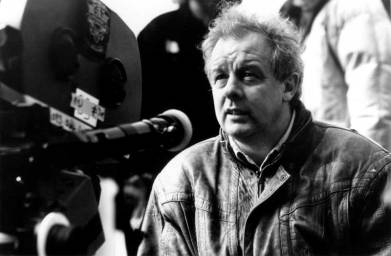
I remember sitting in the cinema watching Jim Sheridan’s In The Name Of The Father and feeling my heart rip through my chest. Sheridan is the talisman for an entire generation. The producer Rob Walpole (I Went Down, The Eclipse, Viva) was very kind to me in those first awkward years and I owe him a lot to this day. Ed Guiney (The Guard, Frank, Room) was very generous too. These guys were way above me on the mythical ladder yet they revealed themselves to be very decent people. Same goes for Conor Barry (Savage, You’re Ugly Too, Mammal). Then, at a festival, I raised a glass or twenty with Tim Palmer (Into The West, A Love Divided, Patrick’s Day) and he proved to be a profound part of making my sophomore film, as did Rachel Lysaght (The Pipe, Traders, One Million Dubliners). We plan to work together again. Then there’s David Collins (Eden, The Sea, Once) who I am working on a project with right now. He’s another remarkable producer doing great work. I’ve been lucky so far to work with some beautiful people.

 1.jpg

How do you see the film business changing in Ireland?

More movies. More poverty.
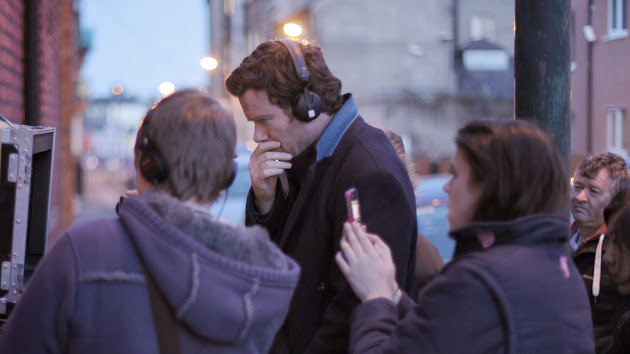
TERRY MCMAHON ON SET

How has digital filmmaking changed the Irish film industry? I’d think it’s been a huge benefit.

Without digital filmmaking there never would have been my first film Charlie Casanova – which some audiences might have preferred. We were given two digital cameras on loan for 11 days and that’s how that film got made. A first time writer-director, an unknown cast, an inexperienced crew all fueled by a blind belief in making something impossible. Without the digital facility to film, record sound, and edit picture, and without being able to burn DVD’s on a cheap home computer, we never would have been selected for competition at SXSW. Without digital, people with no money would not be making movies. And we can’t let that happen.
1

I’m curious to know what films have inspired you? Any particular filmmakers?

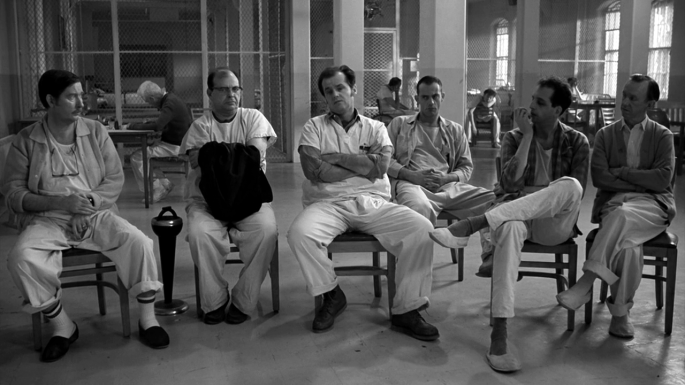
One Flew Over the Cuckoo’s Nest, Scarecrow, The Fisher King, Raging Bull, Do The Right Thing, A Woman Under The Influence, Au Revoir Les Enfants, In The Name Of The Father, The Sweet Smell Of Success…. I could go on forever. Paul Thomas Anderson, Sidney Lumet, Jane Campion, John Huston, Spike Lee, Billy Wilder….same again, I could go on forever.
12

While you were growing up, how important were movies to your daily routine, and when did you first start to get truly serious about filmmaking and storytelling?

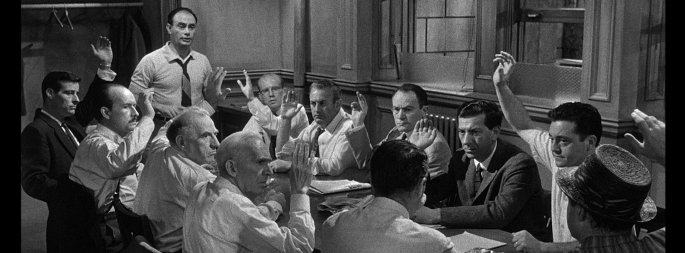
I remember my old man sitting me down as a young kid to watch a movie with him one Saturday afternoon. That wasn’t his style so I was already luxuriating in the new sense of warmth as the movie came on but when I balked at it being in black and white he almost threw me out of the room. I kept my mouth shut and silently read the title card: Twelve Angry Men. I immediately fell in love with the movie, but as it progressed, I began to conceive of Henry Fonda being a disciple of the Devil as part of Old Nick’s plan to get a guilty man off. Sidney Lumet’s movie is enduringly magnificent but that personal need to subvert the existing material was the beginning of wanting to make movies. I never would have articulated such an aspiration of course because nobody from our background was ever going to make movies. Later, when the need to write forced its way out and I began fantasizing about being the silent facilitator of film through words on page, I was still living in that one room apartment, but now I was watching five movies a night.
1

Five movies per night? That sounds great to me. How did this happen?

I had insomnia for a long time and the 24 hour video rental store had a cheap deal on their back catalogue if you returned them the next day, so I’d stay up all night and be emotionally seduced, sucked in, and spat back out by discoveries that I never would have seen had I gone to film school. During the day I’d go to cinemas. At that time there were no cineplexes and many of the smaller Dublin cinemas had deals for second-run movies. Sometimes those movies exacerbated the loneliness but they’d mostly soothe it. A pack of cigarettes – you could smoke in cinemas back then – cheap popcorn and a hankering to connect in a dark room made movies the closest thing to love I could find. Sometimes they still are.

2.png

With the recent Irish success stories of director Lenny Abrahamson and actress Saoirse Ronan, not to mention Colin Farrell, Michael Fassbender, and many, many others, how excited are you to see artists from your country making it big in Hollywood?

I hate them, particularly that sickeningly talented Abrahamson and appallingly beautiful Ronan siren, and don’t even get me started on the Farrell Adonis. How the hell are the rest of us mere mortals supposed to get a piece of the pie with Gods and Goddesses like them around? Bastards.
1

How important is it for Irish talent to head over to Hollywood? Is there pressure to stay at home, or is it everyone’s main goal to make the jump?

Making movies is an addiction, so if you want the most expensive drugs with the best bang for your buck, then you go to the best drug den out there and dive into the orgy. That’s Hollywood and long may it make magic. If you want to get high by growing your own, slipping on the vinyl of Kind Of Blue and floating to a different kind of magic, then the homegrown might be better. But you’re likely sleeping alone tonight. Some nights I want the orgy. Some nights I want Miles Davis. But I want to make movies every night.
2

What was it like making your first film, Charlie Casanova, and can you discuss the response to receiving such a polarizing reaction from critics and audiences?

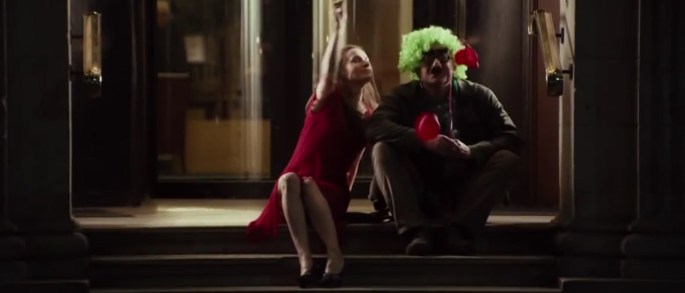
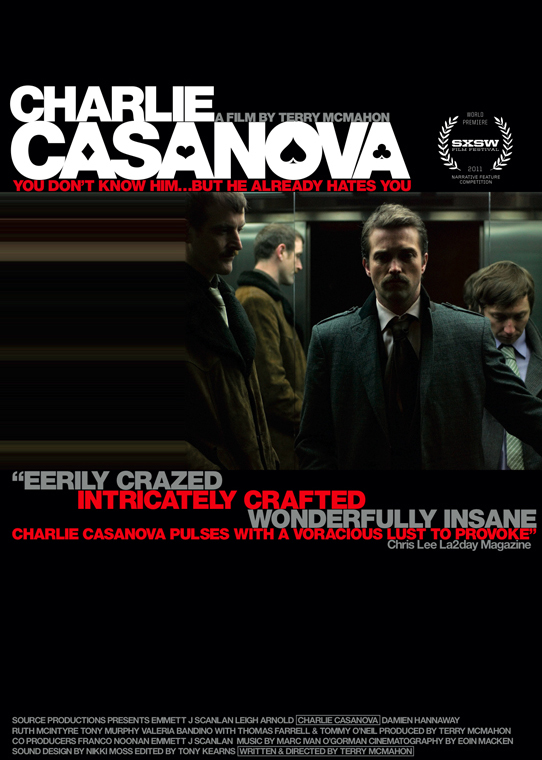
I wrote Charlie Casanova at the same time as Patrick’s Day. Fueled by anger at the controlling class elite that were destroying the country – and still are – combined with a fascination with the indoctrinated self-loathing of the working class, I knew the material would require something audacious from conception to execution. While writing it, I figured there were going to be detractors, but I also hoped there would be champions. I was wrong. This was the time of the Celtic Tiger with all its prosperity and capitalistic swagger, so the very idea of writing a piece on the cancerous undercurrent that kept all that feces afloat was doomed to failure before the first paragraph. But one benefit of having never been coached in the formalities of a conventional education is the dumb inability to be afraid of feeling like an ass. Failure to men like us wasn’t just an option, but rather, it was an inevitability, so why fear it? I typed into Facebook: “Intend making no budget feature Charlie Casanova, need cast, crew, equipment and a lot of balls.” Three weeks later, with me as director, we were on set, many of us meeting for the first time, and eleven days after that – because the loaned cameras had to be back by the 11th day – we finished shooting. We had meticulously stuck to the script and now it needed an editor. I was broke because, like many people in Ireland, I had suddenly lost my “job” as a soap script writer. And there was mouths to be fed and rent to paid. The finished film was selected for the Narrative Feature Competition at SXSW – the first Irish film ever selected and the first non-American film in six years – then it was picked up for distribution by Studio Canal. A fantasy was unfolding. But the stink of reality was about to hit the fan. The film was always intended to be provocative and abrasive but, despite some magnificent champions, many reviewers and audiences found the whole thing a repugnant affair and decided to personally attack the filmmaker as if I was Charlie Casanova. In the week leading up to the cinema release there was a bizarre public battle played out in the national media. I was depicted as a moron and a fraud and the film died before it took its first step. There were words between the behemoth that is The Irish Times and the fly on an elephant’s ass that was me. A two page evisceration of the film and the filmmaker being printed without any right of reply was a little hard to take but one of us had to lose and it wasn’t going to be The Irish Times. I lost everything and thought I’d never make another movie. I was wrong again.

4

Was it your intention to aggressively provoke a response from the audience with Charlie Casanova?

Yes. Presuming people knew what I was doing, I channeled Johnny Lydon from The Sex Pistols, but they weren’t in on the joke, and they, perhaps understandably, wanted me shot.
5

What was the creative genesis of Patrick’s Day? What was your inspiration?

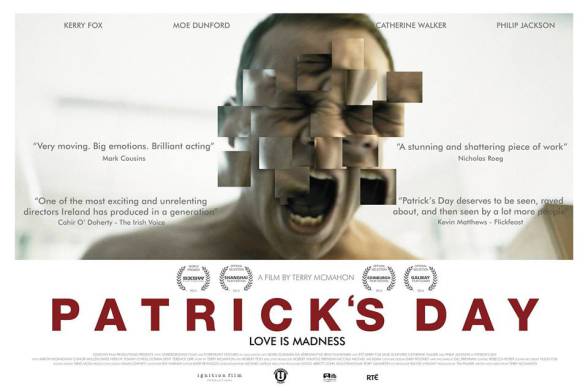
I worked in a psychiatric hospital as an orderly and got to see the almost invisible line separating human beauty and ugliness and how often that line can be crossed without malice or forethought when love is treated as a disease.

6Was there one specific message you wanted the audience to pull from Patrick’s Day?

You are not alone.
7

How was Moe Dunford cast in the lead role?

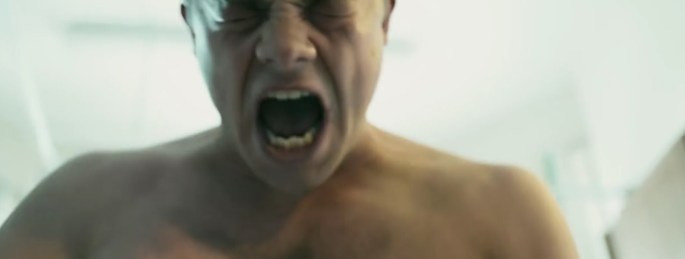
There were a couple of named actors who wanted to play Patrick – one in particular – and Moe Dunford was an unknown entity so some of the financiers were understandably wondering why I’d cast an unknown over a name. But I felt there was something special in Moe, so we communicated privately, set up a call back, and he did a great job. Yet some of the financiers still weren’t convinced that he could be “soft” – whatever the hell that means – so I took him home, got him drunk, rubbed ham on the side of his face, let my beautiful dog lick his face as Moe recited lines from the script, filmed it on my phone, sent it to the financiers and they green lit him that night. He has since gone on to win multiple awards including the Shooting Star at The Berlin Film Festival and he won’t be an unknown entity for long.

8

How did you come to work with cinematographer Michael Lavelle on Patrick’s Day, and what were the discussions about the film’s aggressive visual style?

I met Michael Lavelle at a 10 day film development seminar both of us were on. I didn’t really know his work but really liked his nature over those 10 days. Technical capacity is obviously imperative but if we were going to pull Patrick’s Day off it would require an all-inclusive humanistic approach from conception to completion from everybody. A simple example would be that in contrast to standard set etiquette, I insisted the extras were treated as top billed actors and were fed at the same time and in the same way as everybody else. A year before we began shooting, Michael and I went to the library of the National Film School and spent the day searching out images that might reflect the psychological and emotional state of the characters and we photographed those on a stills camera. Some shots were from movie books, some from art books and others from photography books. Based on the narrative we broke the movie into five psychological stages and allocated specific shots to each of those categories. Later our great producer Tim Palmer agreed to send us to a fancy-ass hotel for three days to draw up storyboards for the film. We just drank expensive wine for three days and came back with nothing more than a half-drawn frame that was quickly abandoned when Michael realized I wasn’t going to approach the film in that formalized way. What we did do was break the script down page-by-page and line-by-line to determine whose ever-shifting point of view we were looking at. One of the thematic questions of Patrick’s Day is the veracity of memory and we wanted a visual language to interrogate that for the viewer – whether consciously or unconsciously for them. The narrative rhythm of the script constantly presents memory as a set-up, a reversal, and a subversion, and we wanted to reflect that visually. So, once we clarified the set-up, we determined the shot and the lens that might most effectively communicate that triadic pattern, then ensured that we detailed the subsequent reversal and subversion within the same frame and lens in the hope that the viewer might have a subtle memory of having been there before. Sounds kind of wanky as I say it here but rather than some pseudo-intellectual conceit, the hope was that the cumulative impact would be visceral rather than intellectual. It also created in an incredibly expedient short-hand for Michael and I because once we established the first set-up we immediately knew the lens and the frame for the subsequent reversal and subversion regardless of whether we were shooting in sequence or not. This meant we were able to execute a hugely ambitious shoot in an absurdly limited 16 days. The same rhythmic principles were applied to the edit with the wonderful Emer Reynolds – a set-up that feels real, a reversal that shatters reality and a subversion that may be a new reality or the propagation of a darker fallacy. Both Michael Lavelle and Emer Reynolds intellectually understood that but, much more importantly in this context, they knew how to bring their own decency and humanity to every aspect of the process and both of them and Tim Palmer are a profound part of what Patrick’s Day became.

10

How has the success of Patrick’s Day in Ireland affected your career?

As writer and director of a film, the time investment bears no relation to the financial return, so in truth, I’m fighting to put food on the family table. But, beyond cash, the reaction has been the stuff of dreams. Patrick’s Day is not for everybody – some are indifferent to it – but we have received a huge amount of mail from people all over the world detailing the impact the film has had on them, and that is a temporary but powerful antidote to financial insecurity.
0

Was it hard marketing Patrick’s Day to Irish viewers or were they immediately receptive?

Because of corrupt governments and scumbag bankers, Ireland is going through Hell at the moment, so it’s tough to gauge what Joe Citizen will get off their couch to go to see in the cinema. Apparently the term they use in Hollywood is “concept rejection,” and that can be just as prevalent in someone’s Dublin sitting room as L.A.’s Chinese Mann Theatre. Once we got people in the door there were standing ovations and the word of mouth was beautiful but the tag of “mental illness” isn’t exactly sexy, so despite all the awards and the accolades it’s not going to take long for a superhero movie to kick an independent movie off the screen. I don’t have an agent or a manager or a lawyer or any of those apparently necessary-to-get-ahead allies, so I wasn’t across the business side of it perhaps the way I should have been. We did seven weeks, and apparently “for an Irish film” that’s top drawer, but it’s a little like winning the league in fourth division football; it feels good for the supporters and the players but the premiership division fans just read about it as a footnote at the bottom of the sports section.

33

What was the process of finding a U.S. distributor for Patrick’s Day on a DVD/VOD level? When does it get released here?

It’s interesting because we have won awards all over the world, garnered four and five star reviews across the board, and received multiple standing ovations yet there is difficulty making that translate to audiences who may be reticent about exploring mental health and the right to intimacy, so, despite all the accolades, it hasn’t been easy. But the good news is that Alchemy releases the film on VOD on March 17th, and BrinkVision puts out the DVD on April 5th. It’s also currently streaming on Itunes.

66

What films, if any, have centered on mental health and made an emotional impact on you? Did any films inspire, or partially inspire, Patrick’s Day?

One of the great payoffs of watching multiple movies every night for your formative years is you make discoveries that become deeply personal to you. I never read the back of the boxes until after I had watched film. I barely even looked at the cover, such was my childlike need to know nothing about what was about to unfold. There was a movie by a director I’d never heard of at the time called Jane Campion. The video cover had a gawky redhead staring out with piercing eyes and beyond that I had no idea what was in store. A few hours later I was sobbing like a child. The movie was An Angel at My Table and the redhead was Kerry Fox. Over 20 years later when we were prepping Patrick’s Day, the magnificent casting director Rebecca Roper asked who I wanted to cast as Patrick’s mother? I knew it would never happen and was almost embarrassed at the naivety of saying her name but I swallowed hard and whispered: “Kerry Fox?” A month later the redhead who blew my heart open 20 years earlier was doing it again except this time it was on my set. And separately, I picked three films for Michael Lavelle and I to watch together before we began shooting: The Graduate for structure and form and long dialogue takes, Punch Drunk Love for tone and awkward love, and One Flew Over the Cuckoo’s Nest for a visceral, almost clinical approach, and just because it’s one of the greatest damn movies ever made. The lovely slingshot is that later when Patrick’s Day screened at the Woodstock Film Festival, Michael Lavelle was also awarded the Haskell Wexler Cinematography Award and the great Wexler himself referenced Cuckoo’s Nest in his speech – which, of course, he was cinematographer on. It was a gorgeous moment, which would further be enhanced by, five minutes later, Emer Reynolds being awarded The Peter Lyons Editing Award. And then, five minutes later, Patrick’s Day picked up The Grand Jury Prize.

2

What advice would you have for up and coming filmmakers?

Think of something that embarrasses you and pick at it. Think of a secret you have that makes you feel alone and scratch at it. Somebody somewhere feels the same thing and they need to know they are not alone. Paper costs nothing and if you can’t even afford that then go to that bookies, steal that pencil, and write on the back of the betting slips. Then film it. On your phone if you have to. Steal a phone if you have to. There are no excuses any more. Write and film like your life depends on it and pretty soon it will.

McMahon banner

Podcasting Them Softly thanks Terry for his time! Can’t wait to see your next film!
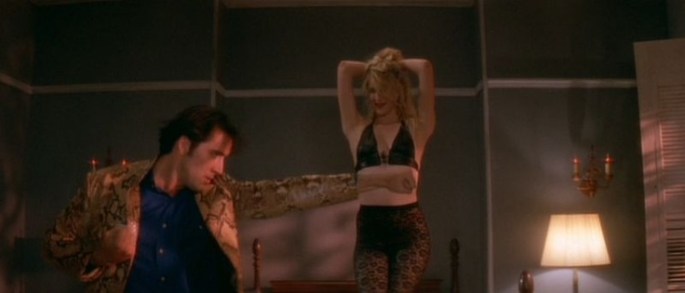
WILD AT HEART – A REVIEW BY J.D. LAFRANCE

12f6e7965cb2fbac31c874eb42335413By 1990, David Lynch was at the peak of his popularity and enjoying the most productive period of his career. His television show Twin Peaks had captivated American audiences and he was directing a number of commercials and performance art pieces (Industrial Symphony No. 1). This all culminated with Wild at Heart (1990), an adaptation of Barry Gifford’s novel, which went on to win the coveted Palme d’Or at that year’s Cannes Film Festival. It also helped establish Lynch as America’s premier cinematic surrealist. At its core, the film is a touching love story between two people whose love for each other remains constant despite all of the obstacles that life throws at them, including an overly-protective mother, a dentally-challenged psychopath, and a grizzled rocket scientist. This film is, oddly enough, Lynch at his most romantic, a rock ‘n’ roll opera with vibrant, fiery imagery.
Sailor Ripley (Nicolas Cage) and Lula Pace Fortune (Laura Dern) are young lovers on the run from her crazed and over-protective mother, Marietta (Diane Ladd). Sailor has jumped parole after serving time for manslaughter and takes off with Lula for sunny California. This doesn’t sit too well with Lula’s mom who sends her boyfriend and private investigator Johnny Farragut (Harry Dean Stanton), and, unbeknownst to him, her lover and ruthless gangster Marcellos Santos (J.E. Freeman) on the trail of the young lovers.

As he would do with the opening scene in Twin Peaks: Fire Walk With Me (1992), Lynch kicks things off with a shockingly brutal act of violence that establishes a confrontational tone – this is a violent world where Sailor is prepared to kill a man with his bare hands in order to protect the woman he loves. The first image is the striking of a match followed by images of flames announcing the color scheme that would be prevalent throughout the film. This is continued in the love scenes between Sailor and Lula that are bathed in red, yellow and orange – all representing their burning love for each other. During the course of the film there are countless shots of cigarettes being lit, matches being struck, an exploding car, and a house on fire. This film is vibrantly alive and energized more than anything Lynch had done before or has done since.

In the summer of 1989, Lynch had finished up the pilot for Twin Peaks and tried to rescue two of his projects – Ronnie Rocket and One Saliva Bubble – that were owned by Dino de Laurentiis when his company went bankrupt. Independent production company Propaganda Films commissioned Lynch to develop an updated noir screenplay based on a 1940s crime novel while a filmmaking friend of his by the name of Monty Montgomery optioned Barry Gifford’s book, Wild at Heart: The Story of Sailor and Lula in pre-published galley form. Montgomery gave him Gifford’s book and asked Lynch if he would executive produce a film adaptation that he would direct. Lynch remembers telling him, “That’s great Monty, but what if I read it and fall in love with it and want to do it myself?” And this is exactly what happened as Lynch recalls, “It was just exactly the right thing at the right time. The book and the violence in America merged in my mind and many different things happened.” Lynch was drawn to what he saw as “a really modern romance in a violent world – a picture about finding love in hell.” He was also attracted to “a certain amount of fear in the picture, as well as things to dream about. So it seems truthful in some way.”

Once Lynch got the okay from Propaganda to switch projects, he wrote a draft in a week. Within four months, he began filming with a budget of $10 million. Lynch did not like the ending in Gifford’s book where Sailor and Lula split up for good. For Lynch, “it honestly didn’t seem real, considering the way they felt about each other. It didn’t seem one bit real! It had a certain coolness, but I couldn’t see it.” Samuel Goldwyn, who ended up distributing the film, read an early draft of the screenplay and didn’t like Gifford’s ending either so Lynch changed it. However, the director was worried that this change made the film too commercial, “much more commercial to make a happy ending yet, if I had not changed it, so that people wouldn’t say I was trying to be commercial, I would have been untrue to what the material was saying.”

When Lynch read Gifford’s novel, he immediately wanted Nicolas Cage to play Sailor and Laura Dern to play Lula. The actor said that he was “always attracted to those passionate, almost unbridled romantic characters, and Sailor had that more than any other role I’d played.” In Dern’s case, this was the first opportunity she had “to play not only a very sexual person, but also someone who also was, in her own way, incredibly comfortable with herself.” During rehearsals, Lynch talked about Elvis Presley and Marilyn Monroe with Cage and Dern. Around this time, Lynch bought a copy of Elvis’ Golden Hits and, after listening to it, called Cage and told him that he had to sing two songs, “Love Me” and “Love Me Tender.” The actor, a big Elvis fan, agreed and recorded each song so that he could lip-sync to them on the set.

Before filming started, Lynch suggested that Dern and Cage go on a weekend road trip to Las Vegas in order to bond. Dern remembers, “We agreed that Sailor and Lula needed to be one person, one character, and we would each share it. I got the sexual, wild, Marilyn, gum-chewing fantasy, female side; Nick’s got the snakeskin, Elvis, raw, combustible, masculine side.”

Lynch’s two leads are also on the same page in this respect, especially Cage who affects an Elvis Presley-like drawl and sings two songs made famous by the King. Sailor, like many of the characters in this film, is larger than life with his snakeskin jacket credo, his unorthodox style of dancing (involving martial arts kicks and punches) and his habit of singing Elvis songs to Lula in public. There is a show-stopping moment where he instructs Powermad, a speed metal band, to back him on a note perfect rendition of “Love Me” while the women in the audience scream in adoration in surreal slow motion like something out of a dream. Cage plays Sailor as an instantly iconic figure, where pointing an accusing finger at Marietta is akin to a declaration of war.

Dern plays Lula to gum-chewing perfection, delivering a completely uninhibited performance as Lula. She exudes a captivating sensuality in the way she carries herself and makes a line like, “You got me hotter’n Georgia asphalt,” sound like an enticing come-on. Lula is a young woman full of energy and vitality as is evident in the scene where she and Sailor dance to the music of Powermad. There is genuine chemistry and heat between her and Cage — rather appropriate for a film dominated by images of fire. However, as the film progresses and the tone becomes darker, Lula’s optimism is chipped away and this culminates in a terrifying scene where Bobby Peru (Willem Dafoe) verbally rapes her in a way that echoes a similar scene in Blue Velvet (1986).

Amidst all of this madness and brutality is a touching tenderness between Sailor and Lula, like the way he softly kisses her after a passionate bout of sex, or a moment where he places her hand over his heart without a word. Nothing needs to be said between them because they understand each other intimately. As she tells him at one point, “You mark me the deepest.” And Lynch takes the time to show a series of conversations between Sailor and Lula where they talk about their respective childhoods (“I didn’t have much parental guidance.” Sailor tells her, not surprisingly.), their dreams, random thoughts, and past relationships. This allows us to get to know and care about them while also taking the occasional breather from all of the weirdness that Lynch throws our way.

Diane Ladd is fantastic as the wicked witch cum mother-from-hell, gleefully chewing up the scenery as evident even in the way she vigorously drinks from her martini glass and the way she delivers threats to Sailor with venomous gusto. Also prevalent is Lynch’s trademark fascination with the dark underbelly of America as personified by the character of Bobby Peru, one of Lynch’s most disturbing psychopaths (right behind Blue Velvet’s Frank Booth). With his horrible teeth and all-black attire (to match his pitch black heart), Peru sets his sights on Sailor and Lula with the intention of killing the former and seducing the latter.

Lynch juxtaposes this darkness with his trademark absurdist humor in the guise of the various oddballs Sailor and Lula meet along the way, like the man at a bar (Freddie Jones) who talks about “pigeon-spread diseases” in a goofy, high-pitched, sped-up voice. Or, Lula’s wildly eccentric cousin, Jingle Dell (Crispin Glover in a memorably bizarre cameo), who believes aliens are after him, enjoys placing cockroaches in his underwear and exhibits odd, nocturnal behavior (“I’m making my lunch!”). There is also a memorable scene that introduces Bobby Peru and his friends, including Lynch regular, Jack Nance in a scene-stealing role as Boozy Spool, a dazed and confused rocket scientist who may have been sampling his own rocket fuel. He delivers a brilliantly surreal monologue that is amongst some of the best moments in any Lynch film and reminiscent of the joyride interlude at Ben’s in Blue Velvet.

Wild at Heart
also features stunning cinematography by Frederick Elmes (who also worked with Lynch on Eraserhead and Blue Velvet). In particular, there is a scene where Lula and Sailor pull over to the side of the road as she is upset and disgusted with all of the terrible news that she’s heard on the radio. He finds Powermad on a station and they get out of the car and dance before embracing passionately. Lynch cuts to a long shot and pans away to a gorgeous shot of a sunset that captures the poetic beauty of this moment perfectly.

Wild at Heart
is a film rich in emotion and feeling as everything is heightened to an operatic level. Surreal is an adjective always used to describe Lynch but he is also a very romantic filmmaker. There is the Douglas Sirkian melodrama of Blue Velvet, the emotional journey Alvin Straight takes in order to reconnect with his brother in The Straight Story (1999), and the town of Twin Peaks dealing with the grief over the death of Laura Palmer. Perhaps the most emotional scene in Wild at Heart is when Sailor and Lula drive along a deserted stretch of highway late and night and while an instrumental version of “Wicked Game” by Chris Isaak plays on the soundtrack, he tells her about how he knew her dead father. The reaction she gives is so heartbreaking, like a daughter who realizes that her father isn’t perfect.

Sailor, in some ways, is a father figure to her. He makes her feel protected and she even comments on how some of his physical features resemble her dad’s. This scene represents the first seed of doubt in their relationship. It is the first step off the yellow brick road and this is reinforced by Lula’s nightmarish vision of her mother as the Wicked Witch. And then they come across a horrible car accident and find one person still alive – a woman (Sherilyn Fenn) walking around in shock from a head wound. She eventually dies in Sailor and Lula’s arms. It is a tragic moment accentuated beautifully by Angelo Badalamenti’s moving score. This scene is a crucial turning point in the film as it descends into much darker territory as Sailor and Lula make a series of bad decisions, most notably getting involved with Bobby Peru.

Lynch loved The Wizard of Oz and put a lot of references to it in his own film. Boozy Spool talks about his dog, comparing it to Dorothy’s pooch Toto; Marietta’s picture disappears at the end of the film just like the Wicked Witch; there’s Lula’s vision of her mother as the Wicked Witch of the East; Sailor has a vision of the Good Witch (Sheryl Lee) at the end of the film, who convinces him not give up on love; and Lula clicking the heels of her shoes together after the terrifying encounter with Bobby Peru.

Early test screenings for the film did not go well with the intense violence in some scenes being too much. Lynch estimated that between 100-120 people walked out. The scene in question was the torture and killing of Johnny Farragut. “I didn’t think I’d pushed it to the point where people would turn on the picture. But, looking back, I think it was pretty close. But that was part of what Wild at Heart was about: really insane and sick and twisted stuff going on.” Lynch decided not to edit anything from the film and at the second screening another one hundred people walked out during the same scene. Lynch remembers, “By then, I knew the scene was killing the film. So I cut it to the degree that it was powerful but didn´t send people running from the theatre.”

The film was completed one day before its premiere at the 1990 Cannes Film Festival. Its first screening was in the 2,400-seat Grand Auditorium and afterwards it received “wild cheering” from the audience. Barry Gifford remembers that there was a prevailing mood among the media that hoped Lynch would fail. “All kinds of journalists were trying to cause controversy and have me say something like ‘This is nothing like the book’ or ‘He ruined my book.’ I think everybody from Time magazine to What’s On In London was disappointed when I said ‘This is fantastic. This is wonderful. It’s like a big, dark, musical comedy.’” When Jury President Bernardo Bertolucci announced Wild at Heart as the Palme d’Or winner at the awards ceremony, the boos almost drowned out the cheers with film critic Roger Ebert leading the vocal detractors.

Wild at Heart
perfectly illustrates Lynch’s love-hate relationship with America. The film is filled with beautifully shot iconography of Americana, like big convertible automobiles from the ‘50s and rock ‘n’ roll music from the period. Sailor and Lula are loving (albeit tweaked) homages to Elvis Presley and Marilyn Monroe. It is also something of an underrated film that is often ignored in favor of Lynch’s more well-known work, like Blue Velvet or Mulholland Drive (2001). One can see the film’s influence in a film like True Romance (1993), with its Elvis-obsessed protagonist and his gum-chewing white trash girlfriend as they are pursued by psychotic gangsters, or Natural Born Killers (1994) with its white trash lovers on the run, or even U-Turn (1997) with its town full of eccentric weirdoes. But no one can pull this stuff off quite like Lynch and his film is a true original that deserves to be re-discovered and re-evaluated.

RICHARD LINKLATER’S BEFORE SUNSET — A REVIEW BY NICK CLEMENT

before_sunset

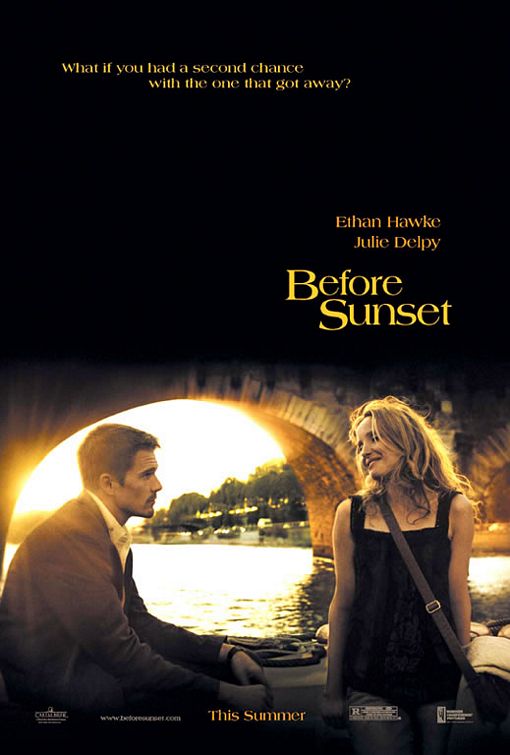
A perfect follow up to Before Sunrise, the second film in this most romantic cinematic trilogy, Before Sunset, is my favorite of the three films with Ethan Hawke and Julie Delpy. In this terrific sequel to the beautiful original, Hawke and Delpy showed us once again how perfect of an on-screen couple they are. Every moment that they share, both big and small, is just divine. The story picks up nine years after their perfect day/night meet-cute in Vienna, with the two of them meeting at a book signing, as Hawke has written a story that closely resembles his love-torn experiences while travelling in Europe. After promising to reconnect with one another six months after their first encounter, they talk about why they never ended meeting up (I would never spoil the specifics), and from there, they rekindle their relationship in ways I dare not reveal. Hawke and Delpy co-wrote the script for Before Sunset, with some help from director Richard Linklater, who co-wrote and directed the first film. The style was kept loose and breezy and sexy, with some wonderful stedicam shots through Parisian streets and back alleys and coffee shops and tour boats. And given that Hawke’s character has become an author on a book tour who is promoting his new novel that deals with his chance encounter with a lovely French girl, all of the collaborators get to play with the conceit of life imitating art. Clocking in at 80 minutes, my only objection to the film was that it was too short, but then again, every scene is virtually perfect, so how can I really complain? I love these two characters, and could have easily spent another hour listening to them talk and reminisce and fall in love all over again. The catch of the film is that Hawke is now married with a child, but the specifics of his situation are layered, and again, I don’t want to share too much. Rent both of these movies at the same time and watch them back to back, and then, take a break, and watch Before Midnight. You’ll never look at cinematic relationships the same way again.