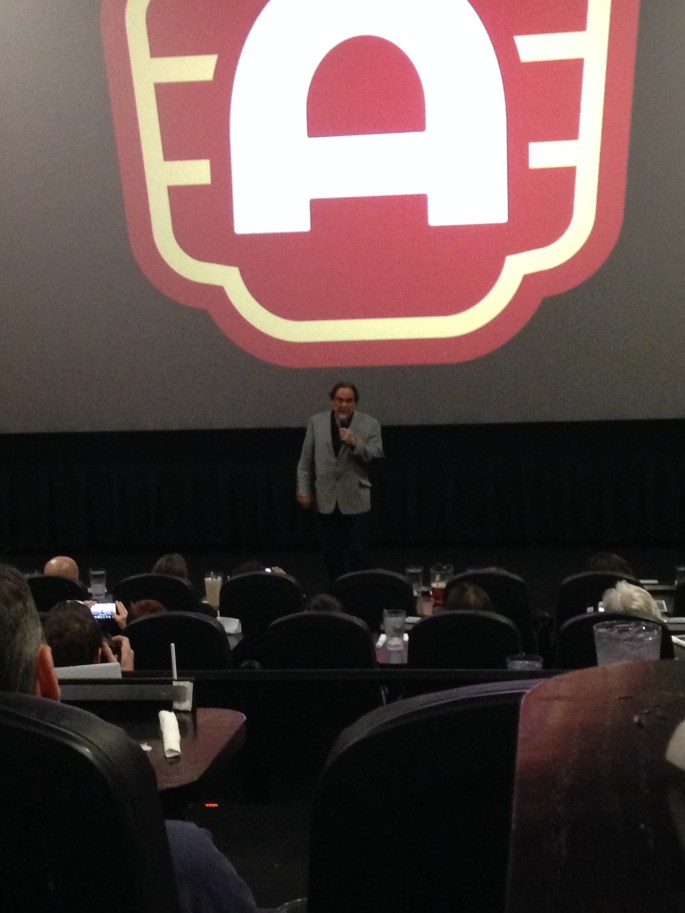
AN EVENING WITH OLIVER STONE AND U-TURN

OStone

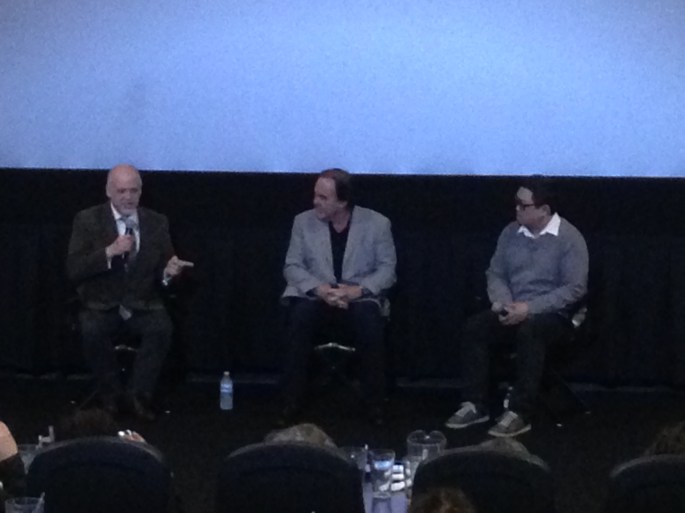
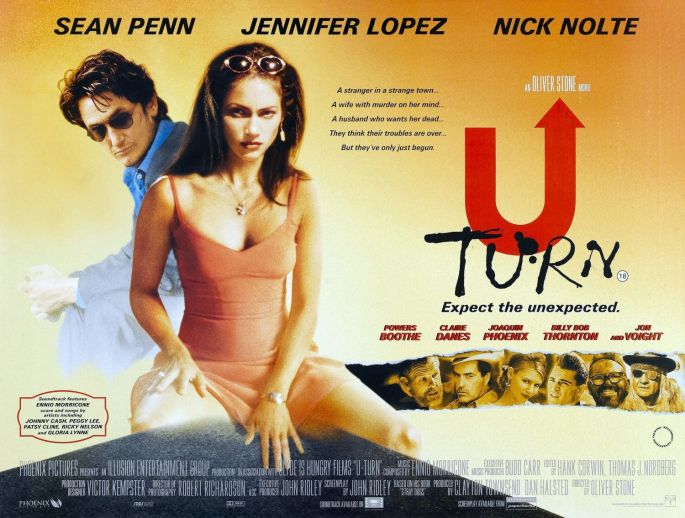
This past Sunday, the sleepy suburb of Littleton Colorado was once again favored by the scheduling magic of the Alamo Drafthouse.  Polarizing mad genius Oliver Stone stopped in to present two of his 90s highlights, Natural Born Killers and U-Turn, with film critic and author of the upcoming “The Oliver Stone Experience” Matt Zoller Seitz in tow to run Q&A sessions after each show.  I was fortunate enough to attend the U-Turn screening, not only for the chance to gain insight on the work from the filmmaker himself but also for the chance to give the overlooked film a second chance.  Its initial run seemed shoehorned into a glut of neo noir exercises that came out prior to the turn of the century, neither registering as the worst nor the best of them, but as Stone himself pointed out, it felt like his core audience simply didn’t appreciate him swimming in the same waters as young upstarts of the day such as Quentin Tarantino and the Coen Brothers.  The revisit proved a minor revelation:  The story, familiar as it may be to genre fans, is airtight and reverential/referential to the best of the bunch; the cast is top notch and finds many (we’re looking admiringly down our noses at you, Billy Bob Thornton, Nick Nolte, and the pre-phenomenon Jennifer Lopez) turning in some of their nastiest, best work; Stone’s obsessions and talents clearly meld with John Ridley’s source material (you may know the writer’s name from his more recent work, like 12 Years A Slave);  Sean Penn’s cocky rube drags the audience along towards the inevitable double and triple crosses, which Stone gleefully paints with a bloody brush across a rocky, desolate canvass.  There’s a ton of fun to be had with U-Turn, and even more in hearing Oliver Stone discuss its place in his filmography.

Zoller Seitz quite nicely described Stone as “The Poet of The Id,” but the writer/director didn’t appear to be feeling up to any lofty titles when this project came along.  Burned out from creating Natural Born Killers, the mixed reception to Nixon, and extensive revisions put into publishing the novel he started as a 19 year old, A Child’s Night Dream, he told our audience he was simply looking for a fun time and perhaps a decent paycheck off a low budget investment.  In typical Stone fashion, even an attempt at relative film production normalcy derailed quickly—Bill Paxton, signed on to star as star-crossed tennis pro Bobby Cooper, dropped out at the last minute, and the entire project almost dove off a cliff (as several protagonists ultimately do in the film itself, referencing the so-called “Arapahoe Leap” suicides of Native Americans in the region as European settlers corrupted the land).  Thankfully Sean Penn agreed to take the role, and heartily threw himself into what Stone described as “the sleaziest work he’s ever done.”  The actor wore the same single blue shirt throughout the entire 42 day shoot and collected so many cuts and bruises, fictional and otherwise, that the director had an official Wound Continuity Diary for the star to keep track.  Through rewrites, Stone slowly but surely evolved the boilerplate noir into an almost Lynchian meditation on small town Americana and its seamy underbelly; he noted that the incestuous relationship at the miserable heart of U-Turn is the type of thing that can live and even thrive in the obscurity of rural areas that coast by on apple pie surface clichés.  There’s brain damage from incest, Stone stated, and pointed out that Nolte’s character is a representation of exactly that.  This wasn’t in Ridley’s book or screenplay but the filmmaker felt it was not only appropriate to the proceedings, but also brought a slice of Bunuel-style surreality to the film, a shot of seriousness and lunacy in equal measure.
StoneZoller1

He continued by discussing the inevitability of Bobby’s downward spiral, pointing out that Billy Bob Thornton’s grease-drenched mechanic and Jon Voight’s Tiresias-like blind seer give the young hustler plenty of warnings, but of course they all go unheeded as karma continues to wind up for its third act wallop.  The director said he found U-Turn to be a classic American narrative, that of a man coming to a corrupt town and either fighting to make things right or falling to the place’s corrosive effects.  Citing Sergio Leone Westerns and Dashiell Hammet’s Red Harvest in making the point, Stone also ultimately feels it’s a Greek Tragedy.  Turning to audience questions, he reinforced his headstrong and no-holds-barred reputation when discussing collaborating with Ennio Morricone on the score and Robert Richardson on the cinematography.  Calling the former a “prick,” Stone said he was a fan of Morricone’s work on 1900 and appreciated the love theme he crafted for U-Turn, but didn’t find the rest of the score effective and dragged the Italian master back to the U.S. from his European home (a trip the scorer apparently despises) and showed him a Tom and Jerry cartoon to illustrate what the film needed.  Suffice to say the two won’t be working together again, and Stone closed that anecdote with this backhanded compliment:  “I’m glad he got the Oscar this year, even if it’s for his worst score.”  Difficulties with Richardson started before the shoot, as the director told the crowd that the cinematographer didn’t like the dark direction of the story and called it a “disgusting, depressing movie.”  Stone’s choice to use reversal stock furthered the stress on their partnership, as they could barely secure insurance for the production based on this decision.  While noting the irony of Richardson’s going on to lens plenty of blood for the likes of Scorsese and Tarantino since, he simply summarized that “it was a marriage for 10 years, and then it was over.”

Oliver Stone went on to answer a variety of queries from the crowd about who some of his favorite filmmakers are–Kubrick, Fellini, Godard, Coppola, Friedkin, as well as recent Oscar contenders Innaritu and McKay—and what a few surprising favorite films as of late are, including the likes of Man From U.N.C.L.E., Battleship and Zoolander 2 (“Malick is a fan too!” “Farrell’s never been better as the pure embodiment of evil!”).  He discussed working with Edward Snowden on his upcoming biopic of the controversial American, saying that the expat is in very good spirits, working hard on a Constitution For The Internet and giving plenty of input on the screenplay.  Snowden’s seen a rough cut of the film and while initially trepidatious about the project he was quite happy with the results so far.  For a man who watches few films, Stone feels that Snowden has an excellent sense of storytelling so he was pleased with the feedback.  In conclusion, Stone seemed to be answering a plea for advice from a young filmmaker in the theater flippantly—“get a good night’s sleep…eat well…”—but quickly turned serious.  “As a director, it’s like you’re running a giant party.  It’s exhausting.  There will always be impediments to your vision, with some actors taking your direction and others rejecting it…there will be compromises all the time, but you always have one last opportunity to cement your vision, and that’s in the editing room.”  With that, the cinematic lion concluded this portion of the program and left a satisfied crowd pondering his comments and enjoying U-Turn in an expansive new light.
1997_-_U-Turn_Movie_Poster_2

STRIPES – A REVIEW BY J.D. LAFRANCE

stripesWatching Stripes (1981) again after all these years makes me nostalgic for the early comedies of the first generation of Saturday Night Live cast members: Animal House (1978), Caddyshack (1980), Fletch (1984), and so on. They were goofy and silly but they also had an engaging, anarchistic attitude that is so much fun to watch. This is definitely the case with Stripes, a film that pits a “lost and restless generation,” as the film’s main protagonist puts it at one point, against rigid authority that is only interested in producing, lean, mean, killing machines, to paraphrase another character. Much of the film’s humor comes from the clash of these two ideologies.
After losing his job, his girlfriend, and his apartment all in one morning (“You still have your health,” deadpans his best friend), John Winger (Bill Murray) decides to enlist in the Army and straighten out his life. He convinces his best friend Russell Zisky (Harold Ramis) to enlist as well (“If I get killed, my blood is on your hands,” he says, to which John replies, “Just don’t get it on my shoes.”). Once they arrive at the base and meet their no-nonsense drill instructor, Sergeant Hulka (the perfectly cast Warren Oates), John and Russell realize that it’s not going to be as easy as they imagined.

Stripes settles into a classic fish-out-of-water formula as John and his misfit platoon (with the likes of John Candy and Judge Reinhold) gradually become efficient soldiers despite their complete ineptitude and perchance for breaking all the rules. The gang of misfits fulfills all the requisite stereotypes: “Cruiser” (John Diehl) is the dumb guy, “Ox” (John Candy) is the lovable oversized oaf, “Psycho” (Conrad Dunn) is the crazy guy, and, of course, John is the group joker and self-proclaimed leader. Other conventions include casual nudity (Ox wrestles three strippers in a mud wrestling contest) and the obligatory love interests as John and Russell get involved with two cute, female MPs (P.J. Soles and Sean Young). This template would prove to be so successful that it was exploited in films like Police Academy (1984), PCU (1994) and countless others.

On his way to the premiere of Meatballs (1979), director Ivan Reitman thought up the idea for a film: “Cheech and Chong join the Army.” At the premiere, he pitched it to Paramount Pictures and, incredibly, they greenlit the project that day. Len Blum and Dan Goldberg wrote the screenplay in Toronto and would read it to Reitman (who was in Los Angeles) over the phone. He would, in turn, give them notes. Reitman gave the script to Cheech and Chong’s manager and he read it and thought it was very funny. He gave it to the comedians but they wanted complete control. Reitman then suggested to Goldberg that they change the two main characters to ones suited for Bill Murray and Harold Ramis, figuring that if they could get Ramis interested in it and let him tailor the script for the two of them that Murray would be interested in doing the film. It worked and Murray signed on to do the film.

Ramis had already co-written Animal House and Meatballs but was unknown as an actor. He screen-tested for Columbia Pictures, who hated his audition but Reitman told the studio that he was hiring him anyway. Judge Reinhold’s character, Elmo, ended up with a collection of all the best jokes from the Cheech and Chong version of the film. Before filming he thought that he had a handle on his character but once filming started, he was “petrified” because this was his first big studio film. The casting agent picked Sean Young based on how she looked and P.J. Soles tested with Ramis and they got along very well together. John Diehl had never auditioned before and this was his first paying acting job. Goldberg knew John Candy from Toronto and told Reitman that he should be in the film. He didn’t even have to audition.

One of the reasons why Stripes is my favorite Bill Murray comedy are the little touches that he adds to a scene that makes it that much funnier. For example, in the first scene where John goes to pay a guy after getting a shoe shine, Murray turns his back to the man so that he won’t see how much of a tip he’s going to give him. It’s an odd, idiosyncratic choice that no one else would’ve thought to make but it enriches the scene ever so slightly. The next scene demonstrates Murray’s gift for physical comedy when he loads a snotty rich lady’s luggage into the trunk of his cab and accidentally bags himself. It’s an obvious gag to be sure but Murray still makes it funny.

John continues to antagonize the lady (Fran Ryan) during the ride to the airport but in a deadpan, sardonic way. At one point she says, “I’ve never gone this way before,” to which he replies, “I’m sure there’s a lot of ways that I’ve gone that you haven’t.,” implying that she’s square and conservative while he’s hip and liberated, thereby establishing a clear generational gap. The rich lady insults John and so instead of getting angry at her he decides to mess with her, including one memorable bit where he starts driving fast. Suddenly alarmed, she says, “Aren’t you going too fast?” He replies, intentionally slurring his words, “Oh, it’s not the speed, really so much, I just wish I hadn’t drunk all that cough syrup.” John proceeds to give the lady a little scare but when she calls him a bum, he’s had enough and quits right in the middle of a bridge, throwing his car keys in a river and leaving her stranded.

It’s not until almost eight minutes into the film that Elmer Bernstein’s first musical cue appears and it is a slightly sad, whimsical tune. The scene where John’s girlfriend Anita (Roberta Leighton) leaves him is interesting because it straddles the line between comedy and drama. She is clearly unhappy with their relationship and he tries to deflect her complaints with humor before half-heartedly saying, “I’m part of a lost and restless generation,” and follows this up asking her a rhetorical question, “What do you want me to do, run for the Senate?” This scene underlines John’s dilemma – he lacks direction and any kind of motivation. Interestingly, no music plays during this scene so that the gravitas of it, if you will, is not undermined by manipulative music. Bernstein’s whimsical score only returns when Russell arrives and the two banter back and forth about John’s sorry state of affairs.

The chemistry between Bill Murray and Harold Ramis is excellent. Ramis is the perfect straight man to Murray’s smart-ass slacker. They had been friends and worked together for some years and play well off each other as evident in the scene where Russell bets John that he can’t do five push-ups. It is in this scene that John realizes that he’s in crap physical shape and that the army is his only hope in turning his life around. Every scene had some element of improvisation and this was due in large part to Murray and Ramis who suggested things for him to say and this spread to the other cast members. Stripes is quite possibly Murray’s best comedy. He was on his way to becoming a big movie star (he had already conquered T.V. with SNL and a scene-stealing turn in Caddyshack) and applied the comedic chops he honed on T.V. to this role. Murray has a way of delivering dialogue and being able to give certain lines a sarcastic delivery or add a look or a facial expression that makes what he says so funny.

Reitman was a fan of westerns that Warren Oates had been in and wanted someone who was strong and that everyone respected to control the misfit platoon. Reinhold said that during filming, Oates would tell everyone stories about working on films like The Wild Bunch (1969) and they would be enthralled. The casting of Oates, the veteran of many Sam Peckinpah films, gives Stripes a dose of gravitas and provides a certain amount of tension in some of the scenes he has with Murray. Sgt. Hulka is the ideal antagonist for the anti-authoritative John and their scene together in the barracks’ washroom, where Hulka finally asserts his authority, is filled with a palpable tension — unusual for a comedy but it works. Reitman wanted “a little bit of weight in the center,” and have a real argument between Hulka and Winger. It wasn’t played for laughs and allowed Murray to do something he hadn’t done before.

However, the improvisational nature of Reitman and some of the cast did not impress an old school actor like Oates. During one of the days of filming the obstacle course scenes, Reitman told the actors to grab Oates and drag him into the mud without telling the veteran actor about it in order to see what would happen in the hopes of getting a genuine reaction. Oates’ chipped his front tooth and was understandably pissed at Reitman, yelling at the director for what he did.

The film’s not-so secret weapon and scene stealer is John Candy as the lovable Ox. For example, the scene where he introduces himself to the rest of the platoon is quite funny. Candy portrays Ox as an earnest guy who wants to lose weight while Russell, in the background, reacts hilariously to what he’s saying. Candy also excelled at physical comedy as evident in the scene where Ox mud wrestles several scantily-clad women. At first, they get the upper hand on him and he’s afraid to hurt them, but after a pep talk from Winger and invoking the spirit of Curly from the Three Stooges, Ox bests six women at once! Initially, Candy wasn’t sure he wanted to do the film. “The original character didn’t look like much but Ivan said we could change it and I could do some writing. Everything fell together and we realized it could be a lot of fun.”

If Stripes has any weaknesses it is in the last third of the film where the platoon, fresh from a successful graduation parade, is trapped in an Eastern Bloc country (remember, the Cold War was still in full swing at this point) looking for John and Russell after they took off with the army’s top secret armored recreational vehicle (the uber Winnebago). This part of the movie feels forced and tacked on. It just isn’t as strong or as funny as everything that came before it. However, the first two thirds of the film are so good that not even this hurts the picture all that much.

Only during a time when the United States wasn’t at war with anyone (unless you count the Cold War), does joining the army to improve your life seem like an option if you’re reasonably educated as John and Russell are in Stripes. One gets the feeling that they could have easily had a productive life in almost any walk of life if they only applied themselves. Joining the army on a whim doesn’t seem that funny in our current climate which does date the film somewhat. Regardless, the script is filled with tons of witty dialogue and funny gags, the cast is uniformly excellent, and Murray and Ramis have never been better. At the risk of falling back on an old cliché, they just don’t make comedies like this anymore.

JOHN HILLCOAT’S LAWLESS — A REVIEW BY NICK CLEMENT

lawless movie.jpg

John Hillcoat’s Lawless is a boozy, rugged, bruiser of a movie, filled with violent spectacle, excellent performances, a sharp script with pungent, poetic dialogue from multi-hyphenate Nick Cave, who also did the spirited music, and a fantastic visual sense that conveys harsh beauty in every frame (it doesn’t hurt when Benoit Delhomme is behind the camera). I love every sweaty, bloody, dirty minute of this prohibition era Western/gangster hybrid, and I get a kick out of the idea that while Hillcoat’s film is unfolding, the events of Michael Mann’s Public Enemies are going down a few hundred miles North-West of the West Virginia locales of Lawless. Hillcoat is turning into a major filmmaker – this is the guy also directed The Road, The Proposition, and Triple 9, and with each film he exhibits a dynamic photographic quality that is reminiscent at times of Terrence Malick in that he seems fascinated with organic beauty and how nature can be corrupted. Light and fun movies he does not make.

Based on true events, this is a rough and nasty film (you get to see someone tarred and feathered amongst other cruelties…), featuring multiple shoot-outs (the climactic gun battle is a wowser), more than a few graphic beat-downs, and lots and lots of macho swagger and dangerous antics. Shia LaBeouf turned in a gritty, more than credible performance as Jack, the youngest of the three Bondurant brothers, a group of men responsible for some of the best moonshine in the area. Quiet and reserved and not ready for violence the way his older brothers are, he’s the most practical of the three, and it’s his character that changes the most over the course of the narrative. Tom Hardy is simply unstoppable as the oldest brother Forrest, a man caught up in his own myth of immortality, and rightfully so – when you see what he was able to survive you just won’t believe it. But…it’s true. Intimidating doesn’t cover Hardy in this film; I love how he simply grunts a quarter of his dialogue! Jason Clarke is the middle brother, and he spends the majority of the film in a drunken stupor, ready for fisticuffs at a moment’s notice.

Their illegal operations are challenged by a big city cop played brilliantly by Guy Pearce, who really cuts loose with a vicious, layered performance of evil menace. Everything about Pearce in this film, from his hairstyle to the shaved eyebrows to the fey mannerisms and his cadence of speech – it’s a delicious piece of acting and it further underscores how he’s one of the most versatile on-screen talents currently working. Jessica Chastain is all elegance and beauty in an underwritten supporting role as a wounded city soul looking for a new start in the wrong country town, but it’s not her story at the end of the day, and for what she’s asked to do, she does so with her usual pointedness and class. I do wish there had been a bit more with Gary Oldman’s gangster character, as he gets involved with the Bondurant’s enterprise at the film’s mid-section, and I could have gone for a few more scenes of interplay between Hardy and Chastain (who develop a romance), but credit Hillcoat for keeping the film on point and moving at a brisk clip; upon second viewing it really becomes apparent how there are zero wasted scenes in this movie.

And because they decided to shoot the film on location in Georgia, the entire production has a realistic atmosphere and lived-in quality, from the backwoods locations to the recreated era-appropriate gas stations and general stores. And the there’s all of the little, detail-oriented bits that Lawless revels in — the gas pumps, the manicure on Chastain’s fingertips during her introduction, the period appropriate cars and clothes and guns and hats and radios — this movie is filled with stuff from yesteryear. This is a really strong piece of work that got respectable reviews and did decent box office but one that deserves to find a big audience on Blu-ray, which I have a feeling it will.

Let Me In – A Review by Josh Hains

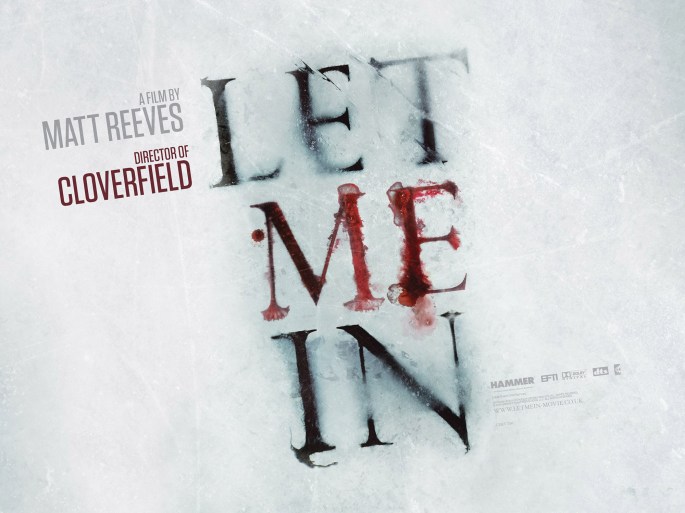
When you hear that a popular film is going to be remade, the general consensus is a large groan of dismay, especially if it’s a remake of a horror film, and even more so if it’s a foreign film to boot. Let The Right One In, the Swedish film from John Ajvide Lindqvist, was such a beloved, original voice in horror cinema in 2008, that horror audiences seemed completely dumbfounded by the notion that Cloverfield director Matt Reeves was going to helm the remake. To their surprise, what Reeves crafted was far from the dreadful slop they were expecting. Let Me In is the best American horror film in years.

Owen (Kofi Smit-McPhee) is a lonely, borderline depressed 12 year old boy, constantly neglected by his divorcing parents and relentlessly bullied by an older boy at school, a royal asshole. Owen befriends a girl the same age as him named Abby (Chloe Grace Moretz), who moves in into the apartment beside Owen with her father figure, Thomas. But Abby isn’t your average girl. She doesn’t have frosty breath like Owen, who skin is perhaps even paler than his, she walks in the snow barefoot because she doesn’t feel cold temperatures; I don’t think she feels warmth either. She doesn’t go to school, and only ever seems to come out a night. But, vampires tend to stay indoors anyways.

As Owen eventually learns, Abby is a vampire, and Thomas is her Familiar, a human who acts less like a father and more like a caretaker, dispatching unsuspecting victims left and right to feed the thirsty vampire. And then there’s the unnamed police detective (Elias Koteas) investigating what he believes to be a serial killer in the area. You would assume the same if you saw the gruesome ferocity of the murders. If only he knew his serial killer was a vampire.

Let Me In makes the right choice of showcasing the inherent loneliness and desperation of the life of a vampire. This isn’t Twilight, and it’s characters aren’t moody teenagers sharing lust for each other and experiencing a contrived, improbable romance. It also isn’t jam packed with elaborate costuming and sets, like the lavish Dracula epics. This is vampirism subverted, brought down to Earth, and made all too real through its delicate handling of the relationship between the two child leads, juxtaposed with the bleak grimness of their lonely existences.

You’ll notice I have been tip-toeing around certain plot details that others may include, and that I have completely avoided comparing the film to its European counterpart. I caught some of Let The Right One In on television once a few years ago, but I wasn’t very interested in allowing myself to indulge in such a bleak, disturbing horror film. Horror isn’t my favourite genre of film (nor is it my least favourite), and the kinds of horror films I most often like, while bleak and disturbing, tend to have a certain amount of kinetic energy about them. Let The Right One In didn’t do anything for me. Watching Let Me In for the first time last year, I was cautious and skeptical right off the bat, but I figured it could be the more accessible film, possessing that unique kinetic energy I enjoy in films like The Thing. It delivered the exact dosage I require, in spades.

Let Me In may take its time, may be patient enough to allow us to grow to care for not just Owen, but Abby, Thomas and even the police officer, but it also keeps your fingers glued to the seat, your knuckles as white as snow, your pulse jacked up by the suspense, your eyes hypnotized by the stunning, dark cinematography. It’s riveting, gorgeous, brutal stuff. I’m not saying the remake is superior to the original film. I just enjoyed it more.

BEFORE SUNRISE – A REVIEW BY J.D. LAFRANCE

tumblr_mf50m3U5GF1s0xicxo1_1280Few people saw Before Sunrise when it was released in 1995 but those who did really loved it. In its own subtle and unassuming way, Richard Linklater’s film flew in the face of most romantic films at the time. It refused to be dated by obvious, trendy popular culture references and music. It featured an honest dialogue between two twentysomethings who meet by chance on a train and decide to get off together in Vienna. Before Sunrise would also mark an interesting change of pace for Linklater. With Slacker (1990) and Dazed and Confused (1993), he had worked with rather sizable ensemble casts, but with this film it was essentially two characters and the occasional people they encounter.
Before Sunrise
opens with Jesse (Ethan Hawke), an American taking a train to Vienna where he plans to fly back home after a disastrous summer trip around Europe. On-board he meets Celine (Julie Delpy), a French student headed for Paris to resume classes at the Sorbonne, thanks to a loudly bickering German couple that causes her to move and sit across from him. In a sly, self-referential nod to the format of Linklater’s to Slacker and Dazed and Confused, which adhered to a 24-hour time frame, Jesse tells Celine about a reality show he would like to see that would consist of 24-hour-long episodes documenting a day in the life of an average person. It sounds like something one of the characters in Slacker would pitch.

Jesse and Celine get to talking in the dinner car and enjoy the experience so much that they agree to get off the train together in Vienna and spend the night walking around the city getting to know each other, taking in the sights. They also encounter several intriguing people along the way, like the two guys who invite them to their play Bring Me the Horns of Wilmington’s Cow, which is an amusing reference to Sam Peckinpah’s Bring Me the Head of Alfredo Garcia (1974). The description of their play sounds quite interesting and every time I watch the film I kind of wished that Jesse and Celine had checked it out. It’s a funny, throwaway scene that appears early on and adheres to the amiable, structure established in Slacker of protagonists going from encounter to the next with no real rhyme or reason.

There’s a great moment early on when Jesse and Celine are in a record store listening booth listening to “Come Here” by Kath Bloom. It’s obviously a romantic song and you can see Jesse thinking about making some kind of romantic gesture but stopping himself because it would be way too corny. As Linklater has pointed out in an interview, there is a wonderful awkwardness about this moment that is true to life and something you don’t see much in romantic films.

Celine seems to be obsessed somewhat with death. She takes Jesse to a graveyard populated by unknown people who washed up on the banks of the Danube River. She points out one grave of a 13-year-old girl, the same age when she first saw it. Celine speaks about how much it impacted her at the time and how it still resonates with her. It’s a nice, poignant moment that reveals a lot about her character. A few minutes later, we learn how Jesse is much more jaded about love and life in general – perhaps as the result of coming from divorced parents and recently being dumped by his girlfriend. At one point, he tells Celine that he views life like “I was crashing a big party.”

Jesse and Celine kiss on the same Ferris wheel made famous in The Third Man (1949) when Orson Welles delivers a famous monologue. It is Before Sunrise’s only obvious, touristy moment. There are so many wonderful little interludes in this film, like when Jesse and Celine are sitting at an outdoor cafe and she gets her palm read by an old gypsy lady who tells them that they are stardust. It’s a funny moment but when the lady first takes a look at Celine’s hand she tells her that Celine has to resign herself to the “awkwardness of life.” It’s the one decent observation among the cliché observations that she tells Celine. After the palm reader leaves they laugh about it but the scene underlines the romantic nature of Celine and the cynical worldview of Jesse.

Celine speaks fondly of her grandmother and how she sometimes feels like an old woman and Jesse replies that he sometimes feels like a 13-year-old boy stuck in a dress rehearsal, taking notes for when he has to become an adult. I remember feeling like that in my twenties; in that transitory state between college and joining the workforce. You don’t quite feel like you belong anywhere and Linklater nails it with this exchange between Jesse and Celine.

One my favorite scenes in the film is when Jesse and Celine happen upon a street poet. Instead of just asking them for money he asks them for a word. He composes a poem for them with the word inserted somewhere. If they like it they can give him some money. He recites a wonderful little poem that is romantic and filled with evocative imagery. Again, this scene reinforces Jesse and Celine’s different views of love. She finds the poem romantic and spontaneous while he says that the street poet probably just inserted the word into a pre-existing poem that he had already written.

By today’s standards, with the proliferation of technology like cell phones and virtual meeting places like MySpace and Facebook, the way Jesse and Celine interact in Before Sunrise is positively old school and dates the film in a good way. For example, in one scene Jesse and Celine talk about past relationships over a game of pinball in a nightclub. Pinball machines are rarely made anymore and not as common as they used to be a couple of decades ago. Linklater grew up in the 1970s when pinball was all the rage and as someone who has fond memories of them, I love how they are used as a piece of business for Jesse and Celine to do while they talk about their ex’s.

What makes Before Sunrise such a great film is that it avoids the sappy clichés that are so rampant in most romantic films. Despite the Generation-X marketing of the film, complete with a Lemonheads song in the trailer, Before Sunrise also avoids that pitfall by not using any contemporary “alternative” music or excessive usage of pop culture references that have mired and dated lesser films. This was a conscious concern for the cast as Delpy said in an interview, “We wanted to avoid any pop culture references and just show individuals attempting to communicate and care for someone else.”

The seeds for the film had been planted long ago. According to Linklater, he had been thinking about Before Sunrise for five years. It would be a film about two people, because, at the time, he had never really dealt with male-female issues or romance. The film was based on an encounter Linklater had in 1989. He met a woman in a toy store in Philadelphia and they spent the night walking around the city together, conversing deep into the night. Originally in the screenplay, who the two characters were and the city they spend time in was vague. He realized that because the film was so much a dialogue between a man and a woman he knew that it was important to have a strong woman co-writer – Kim Krizan who had small roles in Slacker and Dazed and Confused. He wanted to write a script with her because he “loved the way her mind worked – a constant stream of confident and intelligent ideas.”

Linklater wanted to explore the “relationship side of life and discover two people who had complete anonymity and try to find out who they really were.” He put Jesse and Celine together in foreign country because “when you’re traveling, you’re much more open to experiences outside your usual realm.” He and Krizan talked about the concept of the film and the characters for a long time. Then, they worked on an outline followed by the actual script which was written in 11 days.

Before Sunrise
is filled with great conversations about sex, relationships, dreams, death, religion, and life in general. Imagine My Dinner with Andre (1981) if the two characters from that film had actually left the restaurant. There are conversations in Before Sunrise that you swear you’ve had before — they are that good. It doesn’t hurt that the film contains only two protagonists and this enables Linklater to take the time and explore their personalities. “In both Slacker and Dazed and Confused, the audience was literally plopped down amongst the characters and you never really got to know them that well apart from their momentary interactions and behavior with each other. So I wanted to make a movie about a unique relationship while still conforming to a character-driven narrative where their personal thoughts are continually verbalized.” The structure of Before Sunrise lies in the characters themselves. The narrative is propelled by their decisions and their actions. Linklater was careful in who he chose for the two main roles which went to Ethan Hawke and Julie Delpy. The director didn’t care what they had done before, but instead based his choice on his impressions based upon meeting the two actors.

When Linklater first considered casting Hawke he thought the actor was too young. Linklater saw him at a play in New York City and reconsidered after talking to him. To his credit, Hawke amends for his self-conscious hipster from Reality Bites (1994) – something I can’t fault him for entirely as I’m sure he played the character as it was written. With Jesse, Hawke plays a much more developed, three-dimensional character that he obviously had input on how he was going to portray him. Hawke’s character actually suggests some depth and personality than merely turning into a philosophizing, ‘70s sitcom quoting machine like in Reality Bites. Initially, Jesse comes across as Linklater’s philosopher character at the beginning of Slacker with his crazy idea for a reality show, but over the course of the film he falls under Celine’s spell. She manages to get past his cynical exterior with her earnest romanticism. Hawke does a nice job of hinting at the romantic that lurks beneath his facade only to emerge in the subsequent sequel Before Sunset (2004).

Linklater met Julie Delpy and liked her personality. She is simply wonderful in her portrayal of Celine. Before Sunrise is, without a doubt, my favorite performance of hers. She plays Celine as a smart, funny independent woman but with insecurities and self doubts that only make her even more endearing. It doesn’t hurt that she’s beautiful, truly the Botticelli angel that Jesse describes her as being. As she remembers, “Although my character was very much my romantic side, I also had to be strong while dealing with this American man.” Delpy was concerned that her character would be reduced to some “cliché-ridden feminine mass,” but Linklater never lets this happen. This is due in large part to the fact that he wrote the screenplay with Kim Krizan to give the film more balance. “I certainly thought that since the film is so much a dialogue between a man and a woman,” Linklater explains, “it was important to have a strong woman co-writer and a strong woman in the production.” Delpy has incredible chemistry with Hawke and it feels genuine. The way they look at each other, especially when the other one is talking, you can see, over the course of the film that their characters are falling in love.

At one point Jesse tells Celine, “I feel like this is some dream world we’re in,” to which she replies, “It must be like I’m in your dream and you’re in mine.” This is what Before Sunrise is – a cinematic dream world that we can lose ourselves in every time we watch it. Linklater captures a specific moment in time for these two characters – one magical night where they make a true connection that they will never forget. Interestingly, Before Sunrise ends like Dazed and Confused, in the early morning with Jesse and Celine rejoining the real world after spending all night together. Near the end of the film there is a montage of places that they shared together – it’s a visual summary of the film and also a sad reminder of places that they will never be again. Before Sunrise ends on a melancholic note with feelings of longing for what could have been. It’s a very unusual way to end a romantic film but it is keeping perfectly in tone with the rest of the film.

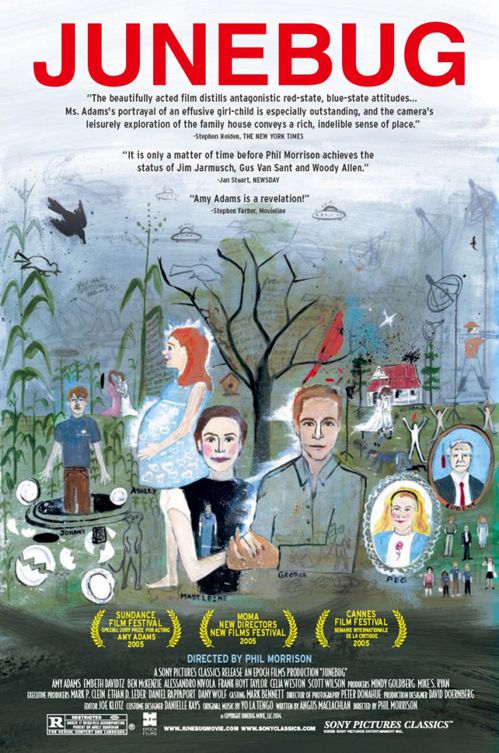
PHIL MORRISON’S JUNEBUG — A REVIEW BY NICK CLEMENT

junebug.jpg

If you haven’t seen Phil Morrison’s terrific independent film Junebug, seek it out on disc or via streaming options immediately. It’s a little gem, and provided a big launching pad for Amy Adams, who delivered a remarkable performance which netted a first Oscar nomination for this most wonderful talent. Working from a beautifully observed and emotionally sensitive script by Angus McLachlan, Morrison weaved a sad and funny southern-fried tale of dark familial dysfunction that will make you cringe one moment and laugh out loud the next. Never condescending or at any point making fun of the characters, Morrison’s subtle direction worked perfectly with McLachlan’s lived-in portrait of distinct American values and a particular lifestyle. The story revolves around George, played by Alesandro Nivola, who takes a trip down to North Carolina with his wife Madeleine, played by Embeth Davidtz. She’s an art dealer specializing in offbeat pieces who is drawn to the incredibly weird paintings of a racist and possibly crazy artist, who also happens to live near her husband’s family. Having only been married for six months and having never met his parents, Madeleine is taken back by the culture shock of staying with his family and his brooding, sullen brother Johnny, played by Benjamin McKenzie. The ensemble cast is perfection all down the line. Adams is astonishing as Johnny’s immature pregnant wife; it’s a performance that is so believable you’ll be convinced it’s not really acting. But to see how Adams has blossomed as a performer, from Enchanted to The Fighter and everything else in between, it’s further proof of how much range she possesses and how skilled she is as an actress. George’s mother, who almost instantly disapproves of Madeleine, is played by the great Celia Weston, who steals every scene she appears in. And the great character actor Scott Wilson is George’s quiet, wood-working father, the sort of many who values the amount of words that leave his lips, preferring to take a step back and experience life as a whole rather than a series of broken up pieces. I don’t want to reveal any plot points or spoil anything in this little film. It’s moving, hilarious, and poignant without being overly sentimental, extremely well-paced and directed, and truly deserves a higher profile.


B Movie Glory with Nate: Cyborg 2: Glass Shadow

image

The fact that Cyborg 2: Glass Shadow has almost nothing to do with the first Cyborg is probably a good thing. I’ve seen both, and the first one is an ugly, grimy early starring vehicle for Jean Claude Van Damme that plays like an episode of American Gladiators on PCP. This sequel, however, is a scrappy little sci fi delight. It takes plays in a futuristic B-Movie realm where maniacal corporations wage war on each other for the control of lucrative artificial intelligence, cyborgs who can be programmed to be slaves, soldiers or whatever you want. Angelina Jolie is Casella ‘Cash’ Reese, a gorgeous warrior Cyborg held under the watchful eye of the Pinwheel corporation, ruled by a hammy Allen Garfield. Her trainer, a mercenary named Colton Hicks (Elias Koteas) starts to fall in love with her. In this particular B movie universe, it’s implied that there are fragments of what may resemble a soul that begin to grow inside the cyborgs, and gradually Cash falls for him as well. They plan their escape, and embark into a delightfully cheap looking metropolis of the future, seeking an oasis far away that’s basically a non extradition zone for robots. Pinwheel sends some dangerous bounty hunters after them. There’s fighting. And running. And shooting. And Cyborg sex including a 17 year old Angelina going fully topless, which makes me wonder how the filmmakers ducked the authorities on that one. Not that I’m complaining. Aside from baring her chesticles, she makes a pretty solid action heroine at that age, and even before making a name for herself she carries the film pretty well. Koteas is pretty much capable of anything as far as acting goes, breezing through this one in his sleep whilst still keeping one eye open to give Hicks a vulnerability and desperation that the film hardly deserves. Character actor Billy Drago gives a scene stealing performance of sheer unbridled lunacy as Danny Bench, a terrifyingly unhinged contract killer who pursues the pair and has an absolute smackdown of a fight sequence with Koteas. That old salty dog Jack Palance even shows up for an amusing, warmhearted supporting role as a mysterious hacker who helps the duo out and in turn gets his own retribution. Get one thing straight right now: this a B movie. If you go into one of these with your critic’s brain shoveling coal into the fires of cynicism, you’re gonna have a bad time. These films are overtly cheap, chock full of deliberate plot holes and speckled with acting that could wilt flowers. But I love them anyway. I grew up watching an endless stream of direct to video horror, sci fi and thriller flicks that maybe ten people on planet earth besides me have seen. I love them, they are amazing and they exist in a realm far, far outside film ‘criticism’. It’s best to gear your brain into fun mode before hitting play, then just relax and enjoy. If you’re the type of person that can do that, you’ll love this kind of stuff. If not, steer well clear. Cyborg 2 is the perfect example of a B movie done right, and I’ll be the first to admit that there’s plenty that are made with the kind of lifeless ineptitude that doesn’t even deserve a place in the genre. This one’s cheaply made, doesn’t have much of a budget to its name, yet admirably creates it’s own little world with what it has, spinning a story of action, romance, robots and Angelina Jolie. Honestly, who can say no to those things? You, that’s who.

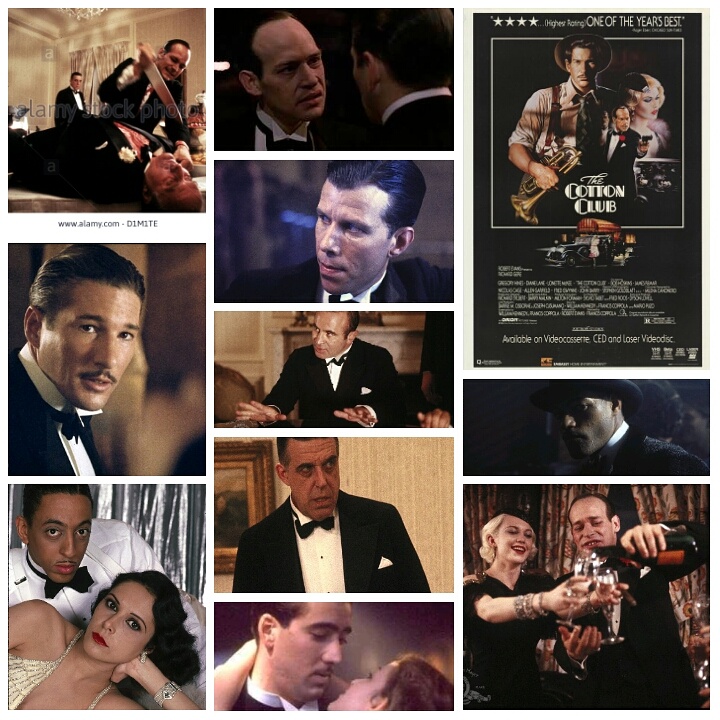
The Cotton Club: A Review by Nate Hill

image

Francis Ford Coppola’s The Cotton Club is every bit as dazzling, chaotic and decadent as one might imagine the roaring twenties would have been. it’s set in and revolves around the titular jazz club, conducting a boisterous, kaleidoscope study of the various dames, dapper gents, hoodlums, harlots and musicians who called it home. Among them are would be gangster Dixie Dwyer (a slick Richard Gere), Sandman Williams (Gregory Hines), a young Bumpy Johnson (Laurence Fishburne) and renowned psychopathic mobster Dutch Schultz (a ferocious James Remar). Coppola wisely ducks a routine plot line in favor of a helter skelter, raucous cascade of delirious partying, violence and steamy romance, a stylistic choice almost reminiscent of Robert Altman. Characters come and go, fight and feud, drink and dance and generally keep up the kind of manic  energy and pizazz that only the 20’s could sustain. The cast is positively stacked, so watch for appearances from Nicolas Case, Bob Hoskins, Diane Lane, John P. Ryan, James Russo, Fred Gwynne, Allen Garfield, Ed O Ross, Diane Venora, Woody Strode, Giancarlo Esposito, Bill Cobbs, Sofia Coppola and singer Tom Waits as Irving Stark, the club’s owner. It’s a messily woven tapestry of crime and excess held together by brief encounters, hot blooded conflict and that ever present jazz music which fuels the characters along with the perpetual haze of booze and cigarette smoke. Good times.

A PERFECT WORLD – A FILM REVIEW BY J.D. LAFRANCE

apw059In 1993, Clint Eastwood was enjoying a resurgence in popularity. His revisionist western Unforgiven (1992) won three Academy Awards and he received critical and commercial acclaim for his performance in the action-thriller, In the Line of Fire (1993). When he was approached with the screenplay for A Perfect World (1993), he was still making Line of Fire and doing promotion for the Academy Award nominations for Unforgiven. As a result, Eastwood anticipated only directing A Perfect World. However, when Kevin Costner came on board, he felt that Eastwood would be perfect for a smaller role in the film. Eastwood agreed because it wouldn’t require him to spend a lot of time in front of the camera.
A Perfect World is essentially a road movie set in Texas, 1963, three weeks before the John F. Kennedy assassination (an event that subtly hangs over the film with ominous foreshadowing) that recalls a simpler, even more innocent time. Thematically there is much more going on as the film wrestles with father/son relationships, child abuse and religion. The film begins with two convicts making a daring escape from prison only to take refuge in the neighboring suburbs. Terry Pugh (Keith Szarabajka) is the more amoral one as he wants to kill the driver of the vehicle they commandeer to leave the prison. He then later tries to rape a woman whose house he breaks into. The other convict, Butch Hayes (Kevin Costner), steps in before things go too far with Pugh and the woman. Butch even convinces her little boy, Phillip (T.J. Lowther), to give him the handgun that was dropped during the ensuing scuffle.

This is a crucial moment because it establishes early on the instant bond between Butch and Phillip. Despite the circumstances, there is something about Butch that Phillip intrinsically trusts. What this is will become more apparent later on in the film. When a neighbor intervenes unexpectedly, Butch and Pugh kidnap Phillip and take off in a stolen car. Texas Ranger Red Garnett (Clint Eastwood) is called in to track down and bring in the fugitives. However, the Governor (Dennis Letts) assigns him a criminologist by the name of Sally Gerber (Laura Dern). He immediately resents her intellectual approach to the situation as opposed to her being a woman, which would have been the norm at the time. He tells her, “This is not a penal escape situation, this happens to be a manhunt. And no talking around in circles is gonna fix all that.” Eastwood immediately establishes an antagonistic relationship between Red and Sally, which parallels the antagonistic relationship between Butch and Pugh. In no time at all, both conflicts will be resolved – one amicably, the other violently.

Like many of Eastwood’s characters, Red works on instinct and common sense. He resents authority figures and bureaucracy. He likes to be left alone and do things his own way. He sees Sally as an annoyance and a possible obstacle in his path. However, she clears the air pretty quickly, letting him know that she’s no pushover when she tells him, “But the one thing I won’t do is be your straight man so you can play hero to a bunch of morons who think you’re some kind of hillbilly Sherlock Holmes.” These lines deflate Eastwood’s traditional stoic lawman façade and Red even offers a compromise of sorts. He encourages Sally to speak up and even though he might not agree with her theories, he’s willing to listen. A Perfect World proceeds to cut back and forth between Butch and Phillip’s developing friendship and the partnership between Red and Sally with the two storylines dovetailing finally at the film’s conclusion.

One of the hallmarks of Eastwood’s directorial efforts is an emphasis on character and the relationships that are created between them. This film is no different with John Lee Hancock’s superbly written screenplay. He would go on to adapt Midnight in the Garden of Good and Evil for the film of the same name that Eastwood also directed in 1997. Sadly, they haven’t teamed up since but these two efforts are proof that they were a good match for each other. Hancock’s screenplay is filled with clever dialogue, like when Butch tells Phillip his theory about how a car is a time machine. Everything behind them is the past, everything in front is the future and inside the car is the present. “We’re time traveling through Texas,” Butch proudly proclaims. And in a way that’s what the film is doing – taking us back to a time that doesn’t exist anymore, to a time before President Kennedy was killed and when people were more hopeful and optimistic. His assassination (and that of other key figures of the 1960s) changed all that and we watch these events transpiring with the knowledge of how radically history will change in a few short months.

Hancock’s screenplay should also be noted for how well it develops the relationship between Butch and Phillip. Early on, Butch puts his trust in the boy by leaving him and Pugh in the car with the gun while he goes into a store for supplies. Pugh is able to get the drop on Phillip and take the gun away from him only to find out that there are no bullets in it. Butch assumed that this would happen and did not want to see Phillip get hurt. He may be a convict but he is not as heartless as Pugh. In turn, Phillip trusts Butch and stays with him even when he has the option, on a couple of occasions, to escape. Butch makes Phillip feel important and needed. Once they are on the road, having ditched Pugh, Butch refers to the boy as the navigator of the car. Later on, he asks Phillip to scout a car that he is interested in stealing. Butch doesn’t make Phillip feel like a passive observer but encourages him to become involved in their adventures.

Another significant factor in their friendship is Phillip’s lack of a father figure – something that Butch can also relate to and this provides common ground between them. Butch also speaks honestly to the boy. In one scene, when Phillip says that his mother told him his father would return, Butch replies that she lied and that he is never coming back. He doesn’t come out and say it but we sense that Butch knows this from his own personal experience. He also broadens the boy’s horizons by allowing him to experience things that his Jehovah’s Witness practicing mother would never condone, like drinking soda or wearing a Halloween costume and going trick or treating.

The relationship between these two characters works so well not just because of the excellent script but also because of the strong performances from Costner and T.J. Lowther. On the surface, Butch seems like one of Costner’s cocky, cool characters that he is often known for (i.e. Fandango, Silverado or Bull Durham), yet underneath lurks a dark, dangerous streak that surfaces when he sees a child being abused (the sure sign that Butch was probably abused when he was a child as well). Eastwood never lets us forget that Butch is a criminal. Costner is able to balance this element of danger with his trademark charm, like when he helps Pugh differentiate between a fact and a threat in a scene that is slightly threatening because violence is involved but is also funny as well because of the absurd tone. If Costner had any doubts about his character going into this film, Eastwood assured him that movie stars like Humphrey Bogart and James Cagney weren’t afraid to play convicts and “have a bad side,” the director said, “and I had Kevin play a much harder edge than he has played.”

Lowther matches Costner’s performance with his superb take on a shy, young boy who develops a strong bond with his captor. He has such an expressive face, which he uses to great effect during emotional scenes, like the internal conflict that becomes apparent when Phillip is given the chance to escape or stay with Butch. He has been cut off from everything and everyone he knows. He has little choice but to stay with the convict. Lowther doesn’t have too much dialogue but he is able to convey so much with a look and with his expressive eyes. He is more than capable of holding his own with Costner and their scenes together are well-played as we see their friendship develop over time. Eastwood was never interested in playing the sympathy angle with this friendship. He said, “You can’t have him treat the kid as if he’s paternal. I didn’t want it to come off like he’s cuddling the kid.” Above all, the director did not want the boy to “become precious. I wanted an un-Disneyesque kid.”

The script also provides motivation for Red’s personal interest in this case. We learn that the lawman put Butch in juvenile hall when he was young in an attempt to save him from his abusive father but it turned him into a career criminal. Red even paid off a judge so that Butch would stay in longer and so he feels guilty and responsible for what happened to him. Even though he never comes out and says it, one feels that Red wants to be the person to find Butch and try set things right. This backstory also explains the convict’s hatred for any kind of child abuse (Pugh hitting Phillip or a mother physically scolding her two children) and this manifests itself in a particularly strong way towards the end of the film when he and Phillip take refuge in a poor family’s house in what is surely the darkest scene in the film. After witnessing the father repeatedly abusing his little boy, Butch hits and threatens the father, his own rage threatening to boil over. A scene that started off warm and inviting turns into one that is uncomfortable and filled with tension as Phillip sees just how dangerous Butch can be. He ties up the entire family and we see how this affects Phillip as he observes the fear in the eyes of the mother and her child as Butch threatens the father repeatedly.

Phillip stops Butch before anything fatal happens to the family but the question lingers, was he going to kill them or just tie them up so that they couldn’t get away? Regardless, Phillip shoots Butch and runs away, setting the stage for the film’s climactic showdown between Red and Butch. Even here, Eastwood defies our expectations by drawing out the stand-off. The relationship between Butch and the boy continue to play out as he apologizes for shooting him. They have one last emotional conversation and because we have gotten to know these characters, we care about what happens to them. Their final moments are very touching, even moving. Costner and Eastwood finally have a scene together and this is what we’ve been waiting for the entire film. Not much is said between them and this is because we already know their motivations, Eastwood has been building to this moment. Visually, A Perfect World begins and ends the same with a slow motion shot of Butch lying in a field with money floating around him in the wind but by the film’s conclusion we know how and why he got there.

These sequences feel like something out of a dream and coupled with the leisurely pace probably didn’t endear it to mainstream audiences who were expecting another crowd-pleasing popcorn movie like In the Line of Fire. A Perfect World is closer to Unforgiven thematically as both films explore how the sins of the past affect the present with Eastwood playing tortured characters that try to fix old mistakes that had life-altering consequences but end up resolving things violently. In the case of Unforgiven, Eastwood’s character takes an active part in this resolution but with A Perfect World events spiral out of his control. This film is one of his most underrated efforts to date with its almost lyrical approach making it ripe for rediscovery by another generation of filmgoers receptive to an Eastwood film with complex relationships and a tragic conclusion reminiscent of more recent efforts like Mystic River (2003) and Million Dollar Baby (2004).

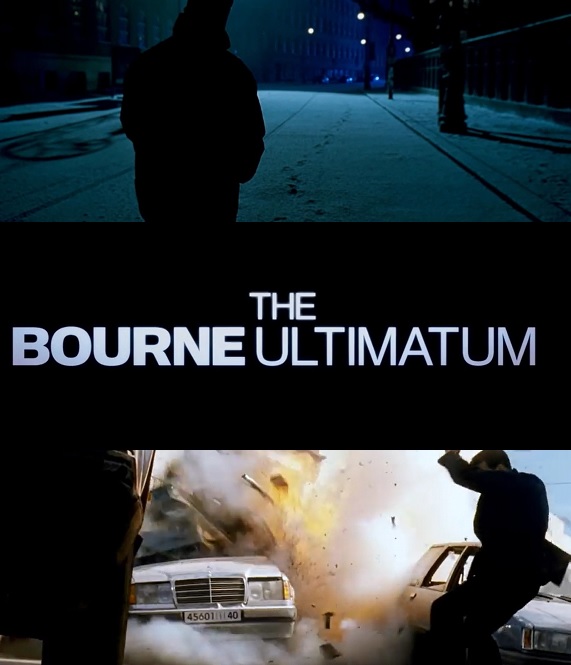
PAUL GREENGRASS’ THE BOURNE ULTIMATUM — A REVIEW BY NICK CLEMENT

ult

Paul Greengrass is one of my absolute favorite action movie directors, and The Bourne Ultimatum is easily my top choice in the series. Greengrass got his start in British documentary television and exploded on the feature scene with the inexorably intense Bloody Sunday, which is about as compelling as fact based cinema can get. He then moved to the second film in the Bourne franchise, The Bourne Supremacy, which was an excellent follow up to Doug Liman’s terrific first installment. Then, Greengrass directed one of the most unforgettable pieces of filmmaking I have ever seen, the 9/11 drama United 93. That film, though extremely tough to watch, is an extraordinary piece of storytelling, totally riveting and down-right scary at times. It’s some of the best pure direction that I’ve seen in a film, so it was no surprise to see that he would get Oscar nominated for his powerful achievement. Building on his famous brand of shaky-cam style that he used in his fist few movies, the work he did on United 93 is monumental, and he brought the same level of verisimilitude to The Bourne Ultimatium, which was critically acclaimed and did massive box office. Matt Damon kicked a ton of ass in the lead role yet again, and the many story threads developed in the first two pictures were all tied together in an extremely satisfying way.

But what blew me away the most about The Bourne Ultimatum was how Greengrass ratcheted up the intensity from the very first scene. It’s like being on a rocket ship for two hours; the film never stops to catch its breath, it’s refreshingly spare with dialogue (what little is said is all that needs to be said), each action set-piece existed in service of the story, not in place of it, and the hand-held cinematography by Oliver Wood was downright sensational even if a few shots sort of defy normal cameraman logic. And the incredible car chase through NYC was absolutely stellar, up there with some of the better screen pursuits of all time, and really demonstrating how hard it must be to coordinate a massive action sequence during the day in the Big Apple. Greengrass always brings his audience into the action whenever possible, using fast cuts and hectic camera movements not as a distraction, but rather as a way to make the viewer feel as if you’re in the middle of the action. I understand that many people don’t like this filmmaking aesthetic. And that’s fine. There are tons of classically shot action films I could point you in the direction of. But in terms of modern stylistic brilliance within the overcrowded action genre, Greengrass is at the top of the list, and I’m not surprised that so many other filmmakers have adopted his inherently visceral style.