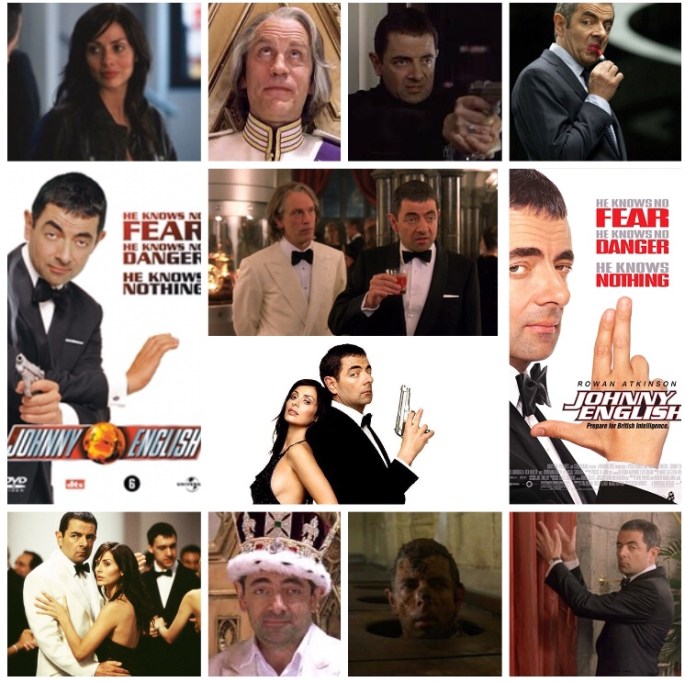
Johnny English is kind of like James Bond, except his stairs don’t quite reach the attic. The bumbling spy comedy has seen many different iteration, from foppish Clouseau to classy but dense Get Smart, but English is my favourite of the bunch because it’s blessed with the star power of Rowan ‘Mr. Bean’ Atkinson, a man who’s so funny that he’s still hilarious when he’s not even trying, or even attempting a serious role. There’s something about his impish, mischievous, pointedly smug yet somehow friendly visage that makes him perfect for comedy. Johnny English is the Crown’s last hope, a hapless desk jockey shunted into the field of MI6 work when literally every other active agent is killed in a failed op. Atkinson plays him to a note: resoundingly confident and assured of his skill, charm and charisma, yet endlessly, unbelievably stupid in every situation he enters. Parachuting onto the wrong building, royally fucking up a London vehicular pursuit, accidentally shooting a poor secretary with a knockout serum from a ballpoint pen, the list goes on. If there’s a carefully planned mission or set piece, it exists solely for him to bumble through and screw up spectacularly, like a room full of dominoes set up for a toddler to decimate. He’s up against one of the most ridiculous villains cinema has ever seen, a ‘jumped up Frenchman’ called Pascal Sauvage, some fruitcake billionaire who wants to turn the UK into a giant prison after he’s stolen the crown jewels and quite literally the throne as well. He’s played by John Malkovich in a L’Oréal worthy wig and spluttering out a French accent that’s so terribly misguided it makes his Russian one from Rounders sound half-legit, and if you’ve seen that film you’ll know what I mean. You need a villain as idiotic as the hero in this type of thing though (McGruber understood that well), and it’s a pleasure to watch ever eccentric pompously send up his own image with good cheer. There’s also a sexy Bond girl, or rather ‘English girl’, who’s eons smarter than the man as well and played by Australian singer Natalie Imbruglia. This is silly stuff all round, non of it believable in anything but a satirical fashion, but it’s great fun, carried by Atkinson’s effortless prancing antics and some genuinely hilarious set pieces. My favourites are when he has to pretend to be retarded to get out of a sticky situation that was naturally his own fault to begin with, and when he actually flips on the palace loudspeakers for Sauvage to hear his whole plan as he whispers it to his sidekick, Malkovich’s exasperated reactions are inspired. There’s a sequel, Johnny English Reborn which is fun but not quite up to this pedigree, and a third one coming out this year that I’ll be checking out as well.
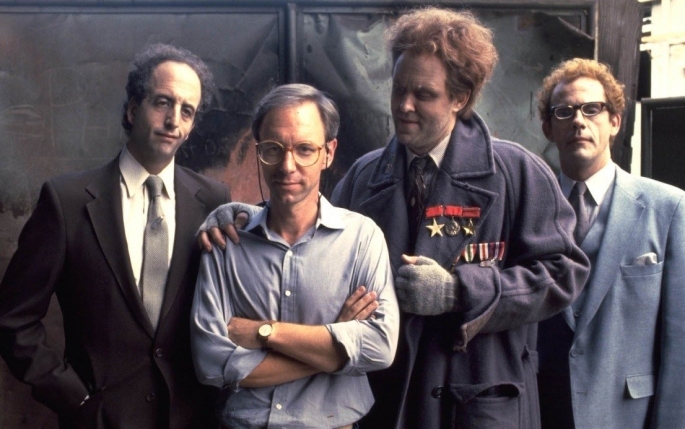
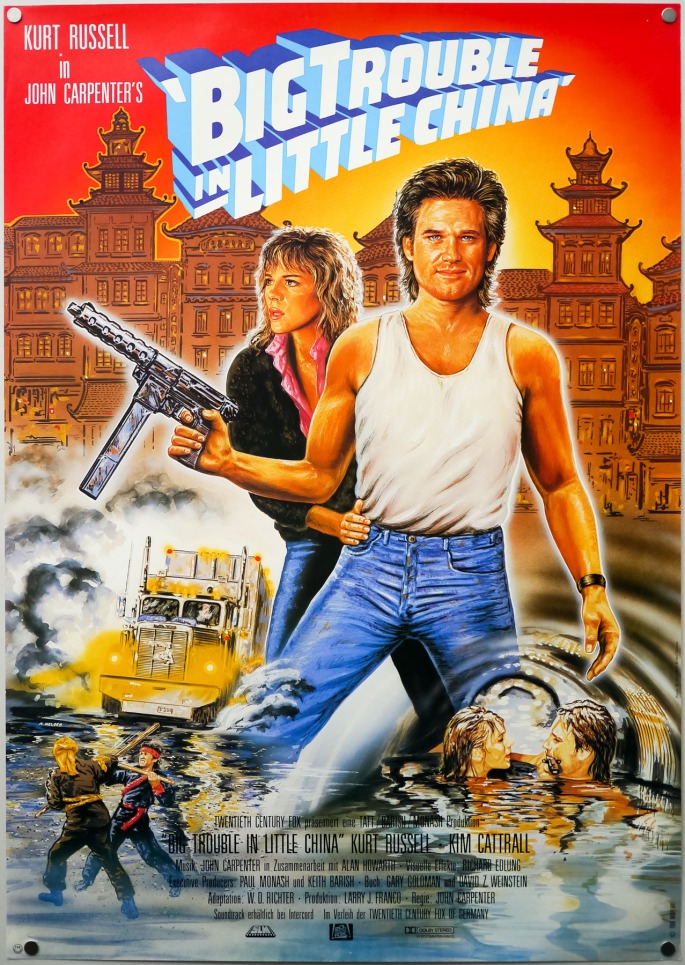
To talk about W.D. (Rick) Richter, is to talk about one of my all-time favorite films, Big Trouble in Little China. It is, to put it simply, one of those films that comes along (not so much anymore) once in a generation. As we know in this age of remakes, reboots and re-imaginations, there is a very good chance that this film, because of its staying power and built-in fan base, will more than likely resurface with Dwayne Johnson playing Jack Burton. Just like Hansel in Zoolander he is, as far as the Studios are concerned, so hot right now!
And you can be your bottom dollar that it will try like hell to recapture the magic of what was – and more than likely – crash ‘n’ burn in its attempt to do so. I might be wrong. Because, BTILC, was and is what is often referred to as a “happy accident”. What began as a seemingly awkward combination of a western with a plot that involved Chinese black magic became, thanks to my guest, a glorious blending of genres that there is really no recipe for.
I rarely get nervous doing interviews, but I was glad to be sitting down for this one. When the person on the other end of the line had a hand in creating a couple of the seminal film of one’s existence . . . it is tough to play it cool, plus for the first time in a long time, I found the need to have my questions written, rather than merely see what the conversation would provoke. Primarily because I knew I was only going to have a limited time, and secondly because during our email exchanges prior to the chat, I found Rick to be extremely matter-of-fact and, wishing not to have the interview published in audio form, he merely wanted to be concise and not ramble on as, he says, has happened in the past.
So I sat and pondered questions. Having read other interviews with him in the past, before he’d stepped away from the business, the focus was on the films he had released at the time and didn’t really get below the surface. Off the record, we spoke about a few of the things that were beneath the polished exterior of the press kits, but that was not all that interested me. There have been many books and articles on his films, as well as many having excellent special features and commentary tracks which mine their depths – so I wasn’t going to waste time there.
In the end I waited till the last minute and scribbled down the first questions that popped into my head. Some of course are elementary, but one or two I’ve had on my mind for a while.
Well, it took a long time, but sometimes, good things do. It was well worth the wait and the frustrating silences in between messages from Rick’s friend who very graciously made the introductions, and I, as a fan first, was humbled, honored and thrilled at the prospect of speaking to yet another film-making idol of mine.
While Rick, early in our email exchanges said, “I prefer to let he films, for better or worse, speak for themselves.” I am and will be forever grateful he took the time to talk a little about his work. In the end I wasn’t nervous or scared at all . . . I felt kind of invincible.
KH: Did you always want to work in movies and if so what were the films which influenced you?
WDR: First I wanted a paper route. Then I wanted to run a circus. Then I thought about pursuing a career as an English teacher. Then I thought, “Why not aspire to become an actual tenured English professor?” But, by the time I got to college, graduate film programs were springing up here and there. Having loved movies since childhood, but never imagining there was a route available into the business, I suddenly saw a way to pursue a career in film in a structured, sensible way.
I went to a lot of movies of all kinds as a kid, but mostly B horror films from the mid-fifties through the mid-sixties. In 1964, I saw DR. STRANGELOVE and in 1965 THE LOVED ONE. They suggested a new direction and deeply influenced me.
KH: How did you break in to the business?
WDR: I wrote screenplays at USC, and one of them secured me an agent. I then worked as a reader for Warners and wrote on the side and continued to do so when Warners and Irvin Kershner let me work as his assistant while he was prepping DIRTY HARRY for Sinatra. That project fell apart, but a spec script I’d written, SLITHER, got to the director Howard Zeiff, and he set it up, odd as it was, and we shot it. Presto! I was a produced screenwriter.
KH: Your early career was full of greats like Dracula,Body Snatchers and your Oscar nod for Brubaker. How much does momentum play a factor in one’s career (films coming out and performing well) as well as recognition for one’s talent?
WDR: Actually, none of those films did perform well, but they were respected, and, as a result, I was respected as a young writer with perceived potential. You must remember that during the seventies and eighties eccentric characters in unusual, small stories were nothing Hollywood ran screaming from. That came later.
KH: You are a part of two of my favourite films of all time withBanzai and BTILC. How do you feel as an artist to be remembered for singular works rather than your entire body of creativity?
WDR: I’ve never given much thought to being “remembered”. After all, sooner or later, this whole planet is going to be forgotten.
KH: If people want the skinny on Banzai, you have already provided an excellent commentary. What I would ask is, did you ever see Kevin Smith’sQ & A whose guests were Wellerand Lithgow, and how did you feel about possible versions of the continuing story of Banzai?
WDR: I thought Kevin did a spectacular job that evening, and it was nice to learn how much the movie shaped him. As long as Mac Rauch is involved, I feel quite confident that a “new” BUCKAROO could be as startling as the original.
KH: BTILC was ahead of its time, in my opinion. What I’ve always wanted to know is, what the “western version” was like prior to your work on the script, and how much of the finished film remains your work?
WDR: The “western version” just didn’t work for anybody, sad to say. It all seemed too distant…the Old West and the Asian occult, etc. So I proposed moving it to a modern, familiar setting and swapping the hero’s horse for a big rig. The pitch went over well, and, with a writers’ strike looming, I dug into the challenge of creating a contemporary script in about seven weeks, choosing to do that with a somewhat dim but hopefully lovable hero at the center. The finished film stayed absolutely true to my screenplay, apart from the inevitable ad libs here and there. Jack Burton’s John-Wayne cadences, though, are definitely nothing I wrote or endorsed. John and Kurt settled on that themselves.
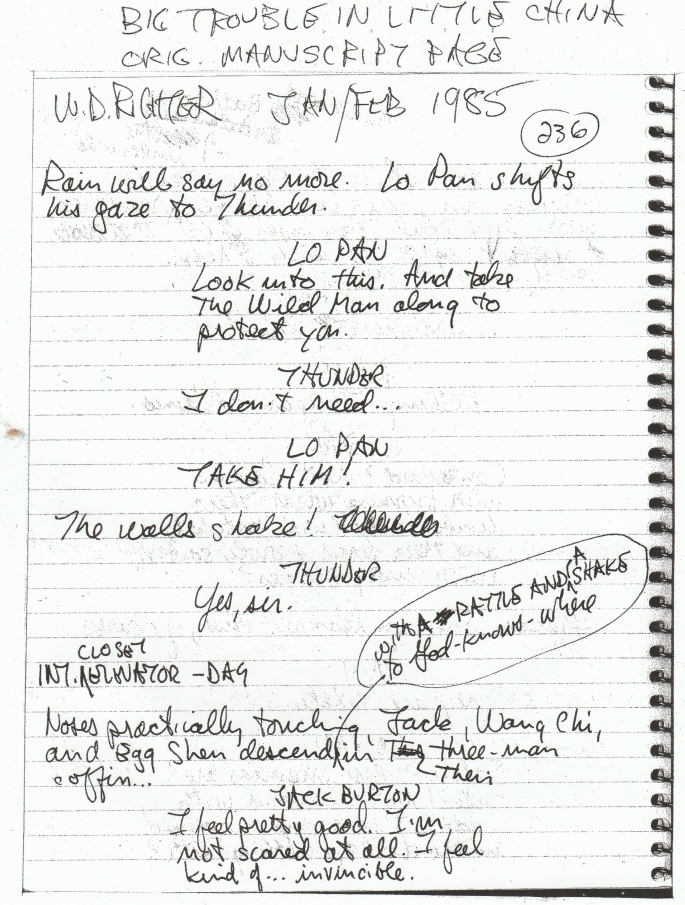
You asked me prior to this conversation: “Did you write the line or was it improvised: I feel pretty good. I’m not, uh, I’m not scared at all. I just feel kind of… feel kind of invincible?”
Turns out I did write it. I wrote the whole script furiously in longhand in several spiral notebooks, and a typist transcribed them into script format.
KH: There was a significant gap between Home for the Holidays and Stealth. I have interviewed many writers who talk of these periods. They say, it’s not that I wasn’t writing, it’s just my scripts weren’t getting made. Was that true of your career at the time?
WDR: Definitely. I had movies actually green-lighted then cancelled when directors went over budget in pre-production.
KH: I understand Stealth was a troubled production.
WDR: STEALTH was just a bizarre and massively unpleasant experience. Directors and location scouts shouldn’t rewrite writers, if you want my opinion. Kind of like Presidents shouldn’t tweet.
KH: Did your involvement end after the writing?
WDR: The “writing” never really stopped. I was removed from the picture several times when my revisions failed to please the director. But I was repeatedly brought back by the studio to pull the script back from the brink after the director (who shall remain nameless) had worked it over again in his spare time. It’s the only film I’ve had made that, with great care, I kept my distance from during production and through release.
KH: I also love Needful Things. What was it like to adapt King?
WDR: Crazy. The book is 690-pages of single-spaced prose. My script was 124 pages, and you know how much “air” there is on a script page. I figured that if one were to retype the novel in a crude screenplay format, it might easily hit 1000 pages. So I lost roughly 876 pages while trying to keep King’s story and mood intact. I have no sense of how that worked out because I’ve never reread the book, but I always imagined a looser, grittier, less-arch movie.
KH: Any advice you would give to a struggling screenwriter – not unlike myself?
WDR: Write. Write. Write. But always try to imagine the movie itself playing to paying strangers. Why would they — or you! — want to watch it?
KH: Sir it has been a profound honor to converse with you. I cherish the moment and humbly thank you.
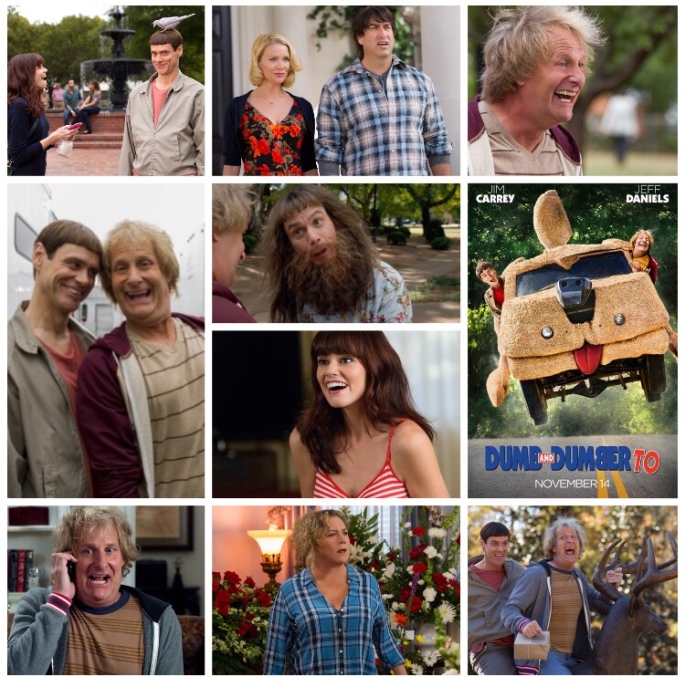
I might catch some royal shit for this, but I loved Dumb & Dumber To, the Farrelly Brother’s decade’s later follow up to pretty much one of the best comedies of all time. It’s different; meaner, raunchier, a tad more meta and way less down to earth than its predecessor, it seems to be almost universally projectile vomited upon by critics and loyal fans alike. Fuck em if they can’t take a joke, because there’s no arguing that this one isn’t funny. In bad taste? Sure, but so was the original in its own 90’s way. Less charming? Maybe, but suck it up. Discontinuous to the nature of the leads in the original? Granted,
but it’s been like twenty years and the filmmakers/actors have changed as artists. Bereft entirely of valuable, effective humour? Not a chance. Just be thankful we got something to erase the pungent memory of Dumb & Dumberer, a prequel wholly undeserving of the legacy’s name. Jim Carrey and Jeff Daniels are a little older and a little more leathery, but they’re still Harry and Lloyd, the two dim witted pioneers of mid 99’s gross out humour and buddy comedy shtick, resurrected for a brand new adventure. After a prologue where Harry rescues Lloyd from a care facility (that catheter is a wince moment), they’re off to find Harry’s daughter (Rachel Melvin) who he spawned with the notorious Freida Feltcher, brought to life by none other than Kathleen Turner in full hoe mode, she’s a face I haven’t seen in movies for years. There’s a half baked crime melodrama unfolding around them just like in the first one, and just like then, they’re too dumb to get what’s going on, a running joke that villains Laurie Holden and Rob Riggle (doing a double shift) carry amiably enough, but they’re no Joe Mental or Nicholas Andre, let’s be real. The highlight for me was when Harry and Lloyd bumble their way onstage at a TED Talk-esque (updating set pieces for a new millennium) as judges, and hurl moronic criticism at every invention that graces the desk. It’s not the same as the original but it’s been years, after all. The Farrelly’s have always been about distasteful, raunchy, whacked out humour that aims low and beats the laughs out of you, which is exactly what I found to be on display here. Vastly undervalued.
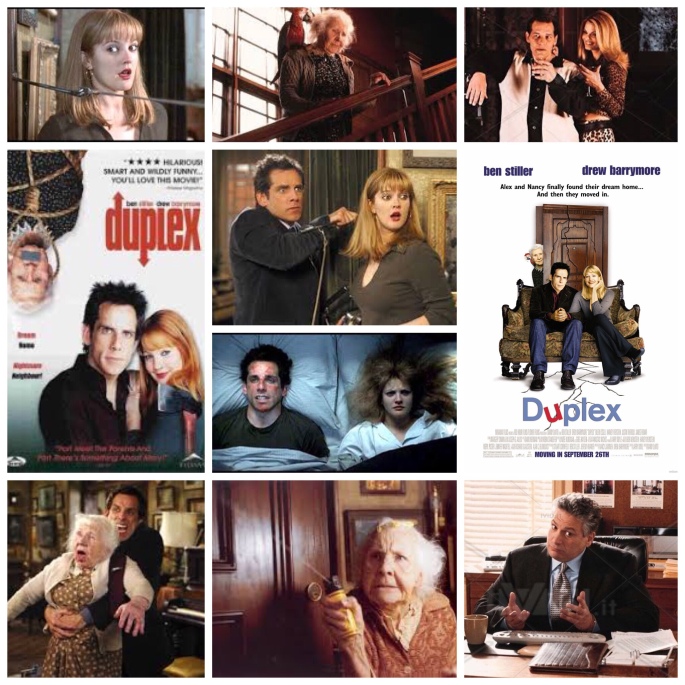
I will never not love Duplex, Danny Devito’s jet-black ode to neighbours from hell, a ninety minute domestic squabble of epic proportions and one of the funniest films of the last few decades. Devito knows how to do comedy at it’s meanest, lowest and most shamelessly un-PC, whenever he’s in the director’s chair you know you’ll get something that will either land squarely with those who have a deranged sense of humour (moi) or drive of the prudes in droves. Ben Stiller and Drew Barrymore play a hapless NYC yupple (yuppie couple, just made that shit up) looking for their perfect little love nest to settle down in. They think they’ve found it in a gorgeous, spacious Brooklyn split-suite, but there’s just one problem: sweet, ninety year old Mrs. Connolly (Eileen Essell), who is the tenant equivalent of the plague. At first she’s a benign darling, but after a few weeks pass, she’s a harridan hellbent on making their lives into an extended nightmare of never ending chores, sleepless nights and maddening disruption. The solution? Well there’s many in the real world, but in Demented Devito realm it’s to kill her, of course, an eventual resolution they come to quicker than your average ruffled landlord. It’s all in good fun if you’ve got the wicked internal lens to angle at it, and I find it to be a consistent laugh riot with each repeated viewing. Essell is comic dynamite, pretty spry for an old gal and always game to make the dialogue sizzle, as the film sort of relies on her character to work. Stiller and Barrymore stir up a collective brew of exasperation and screeching hysterics, while the wicked good supporting cast includes Wallace Shawn, Robert Wisdom, Justin Theroux, Swoozie Kurtz, Maya Rudolph, Amber Valletta, Tracey Walter, Michelle Krusiec, James Remar as a shady hitman and Broadway’s beloved Harvey Fierstein as New York’s sleaziest real estate tycoon. Devito’s scripts almost always veer into a dark, bizarro cartoon style once the antics get feverishly out of hand, and bearing witness to the many varied and idiotic ways Stiller and Barrymore try to kill the old broad are a showcase of him at his nuttiest. Gross, unpleasant, cheerfully in bad taste, relentlessly raunchy and delightfully mean spirited, pretty much all the things a great comedy should be.
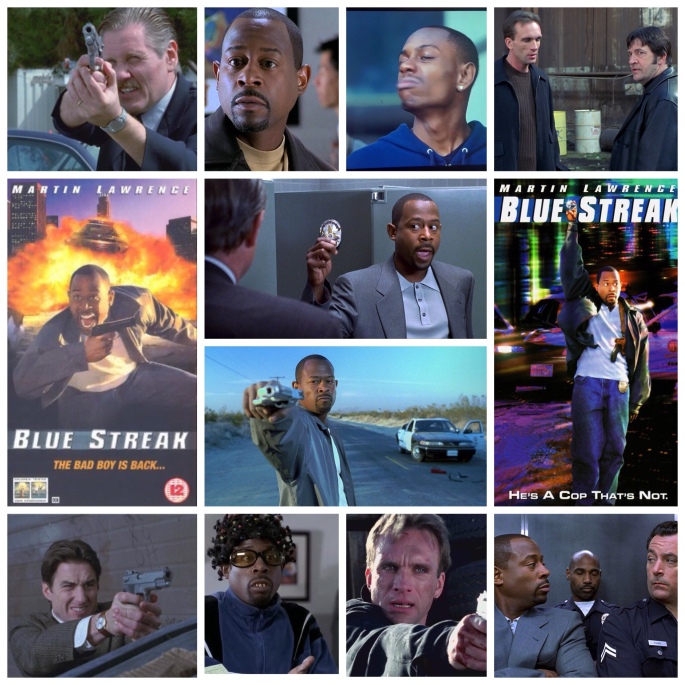
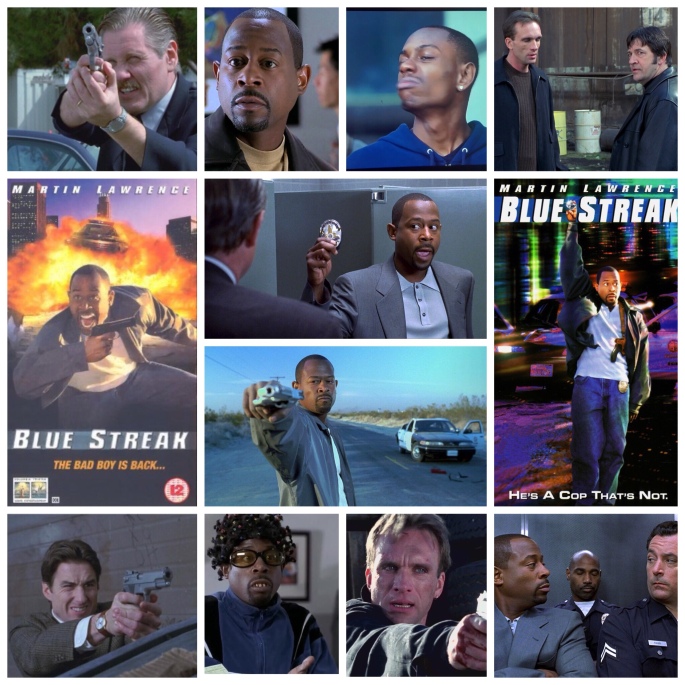
Blue Streak is one of those flicks I’ve probably seen a couple dozen times, whether I’m tuning in intently, comforted by it as zany background noise, viewed on a lazy summer afternoon or a cozy rainy day in. It’s just about as fun as action comedies get, blessed with an adorably implausible story, packed with both notable comedians and a legion of genre talent and speckled with charming action sequences, just the right blend of over the top and entertaining. I don’t give a wet shit what anyone thinks, I love Martin Lawrence to bits, I think he’s one of the best comedic actors of his day, and never fails to put a smile on my face with his exasperated, frenzied persona and motor-mouthed cadence. He’s petty thief Miles Logan here, leading a crew of hapless jewel thieves including Dave Chappelle, John Hawkes and reliably villainous Peter Greene, who double crosses the lot of them in attempts to make off with the loot. Forced to stash a big ass diamond in the air ducts of a building undergoing construction before a stint in the slammer, Miles is released from jail, maniacally frustrated to learn the completed structure is now… an LAPD police station. What ensues is one of the silliest gimmicks in film history: Miles fakes a heap of impressive credentials, successfully impersonates a high ranking officer and infiltrates the ranks of LA’s finest in hopes of snagging that rock from the air vent. Of course, a risky shtick like that is never as simple as planned, especially when both tweaked out, hilarious Chappelle and murderous, scary Greene blow back into town looking for him. The real value lies in his interaction with all these cops though, which borders on Mel Brooks style satire it’s so cheeky and unbelievable. Rookie Luke Wilson and salty vet William Forsythe are tasked with babysitting him as he blunders from scene to scene, and via his inherent street smarts, accidentally starts solving cases and making arrests, when he’s not discreetly turning perps loose out the back door of the station. It’s a full blown laugh riot in areas, numbingly juvenile in others, but never short of a blast to sit through. The cast is peppered with wicked supporting turns from Graham Becker, Octavia Spencer, Nicole Ari Parker as an ice queen defence attorney, Frank Medrano, Steve Rankin, Julio Oscar Mechoso, Olek Krupa and more. To take this film seriously is to unwittingly brand yourself a chump, missing the point completely. It’s an asinine, fired up, ADHD riddled ride through farcical action movie territory, and I love every warped minute of it.
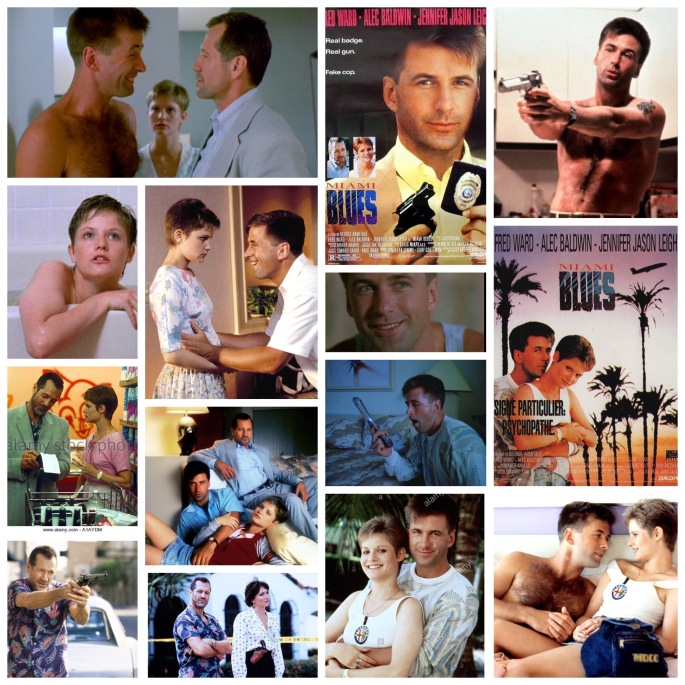
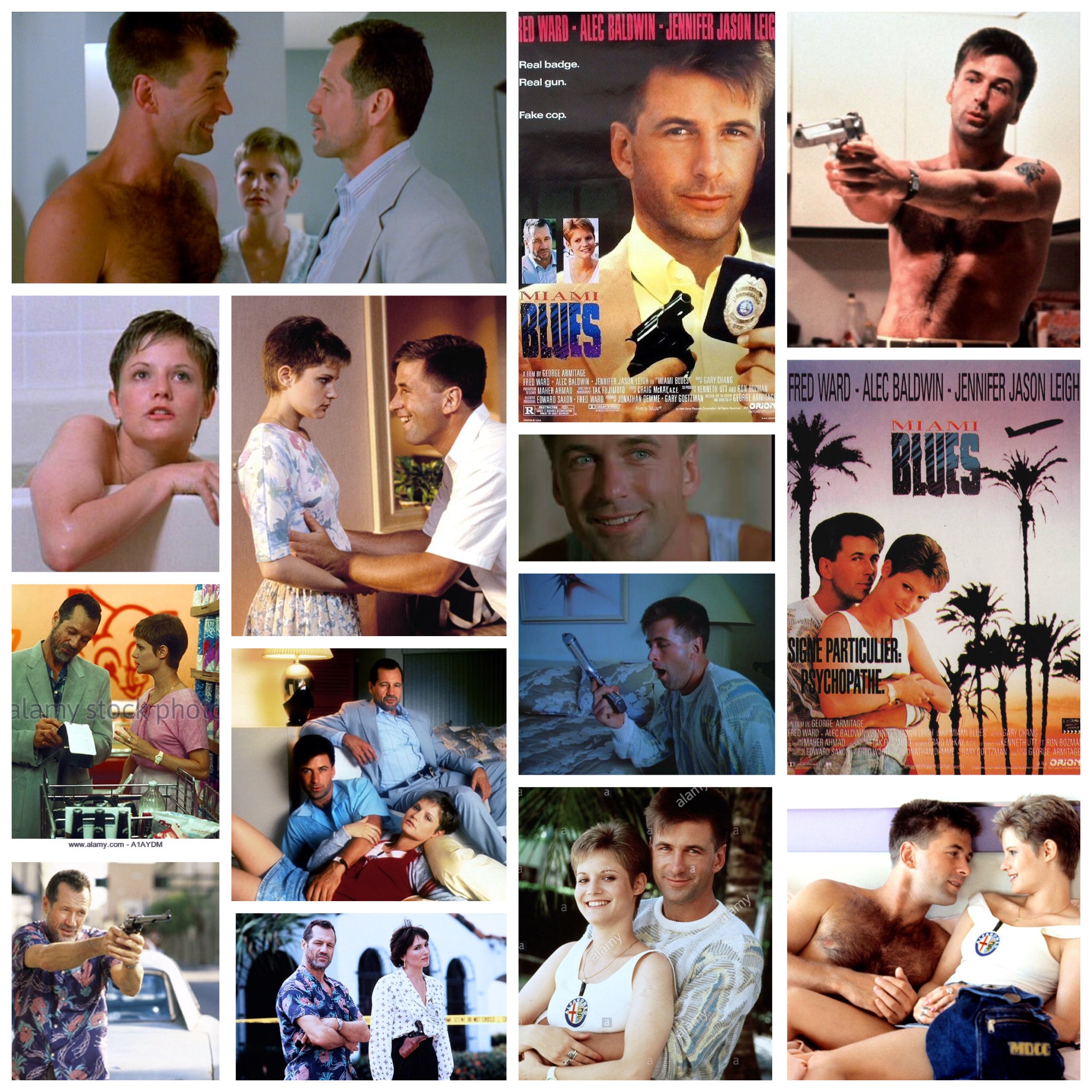
Miami Blues is a crime film full of loose ends, incompetence, wanton violence and meandering characters who seem lost within their own story, and I mean all that in the best way possible. Some pulp affairs are sharp, succinctly plotted creatures, every cog in the machine placed to serve the momentum of plot and character, while other efforts have messily dropped the cogs all over the floor for an untethered, ‘wing it’ type approach in which story and character are like aimless leaves blowing about in a restless pond. Isn’t life like that though? There’s no narrative structure to a lot of what we do, and as such there’s little to be found in the tale of highly self destructive, psychotic criminal Alec Baldwin, who has barely left the airport upon arriving in Miami before he’s already got a serious warrant out for his arrest. He’s a violent sociopath who takes what he wants when he wants and, most aggressively, how he wants. He’s also very smart, which is a dangerous mix in anyone whose moral compass has flatlined. His anarchic crime spree gains the attention of an aloof older detective (Fred Ward) whose badge he steals for some good old law enforcement impersonation, leading the poor weary cop on a darkly comical mad goose chase all over town. He also picks up an endearing dumb blonde (Jennifer Jason Leigh, excellent) who’s infatuated with him and blatantly tunes out any and all red flags, of which there are…many. That’s pretty much all there is to it, but with these three actors it’s pure gold. The knowingly audacious arch criminal, the Betty Boop wannabe wifey sidekick and the exasperated, constantly outsmarted copper, a trio of archetypes augmented slightly in favour of each performer’s stellar work. Never takes itself too seriously, knows full well how heinous the turn of events within it’s frames are, yet firmly refuses to not have fun, a cheeky, sexy, sweaty and altogether terrific little venture.
I’ve never been one to actively nab the Adam Sandler flicks off the rental shelf, but even he has made the occasional winner, one of the best being Little Nicky. For some reason it’s panned over other far worse ones he’s churned out of the gumball machine (ever re-watch Billy Madison? What the fuck were we/they thinking back then?), but when you part the curtains of Sandler Stigma™ and really just look at what the movie is in itself, it’s a hoot. What other film can boast Rodney Dangerfield playing Harvey Keitel’s dad in hell? That’s right, Keitel is the red beast himself, coming down off a ten thousand year unholy monarchy, with no plans to retire. This infuriates his two wicked sons, played by Tiny Lister (must have been a different devil-mom) and a slick Rhys Ifans. They depart the inferno and set up their own devilish franchise up in New York City, raising all kinds of hell, the most amusing of which is lowering the drinking age to ten (where were these guys when I was that age?) and forcing Regis Philbin to say naughty things on live primetime. Their younger, slightly retarded brother Nicky (Sandler) must pursue them on their haunts and trap them in a magic flask before it’s too late. Dumb concept, right? Sure it is, but try and tell me it’s not hilarious m, especially with the amount of inane visual gags and trippy production design these folks have dreamed up. Between Hitler dressed as a slutty maid getting a pineapple repeatedly rammed up his rectum to a giant gorilla massaging mammaries that have sprouted on a dude’s head like fleshy succulent pigtails, there’s no shortage of wtf moments. Sander picks an odd character mask as usual, sporting a metal-head swoosh of a haircut and lisping his way through his lines sounding like he had a stroke from watching Billy Madison dailies one too many times. Patricia Arquette is in it, as a sweet, shy girl he meets topside and the closest thing to a sane person you’ll find in this madhouse. Cameos abound, from usual Sandler cronies like Jon Lovitz, Rob Schneider, Kevin Nealon, Dana Carvey, Peter Dante and Allen Covert, to randoms like Michael McKean, Clint Howard, Laura Harring, Henry Winkler, Ozzy Osborne, Reese Witherspoon as Nicky’s angelic mom and Quentin Tarantino as a blind preacher. I don’t really know what else to say about the thing, because its it’s own thing and you either rock out with it, or you don’t. Visually it’s never boring, the script was conceived in the toilet and jumped straight to the gutter, the performances are all garishly obnoxious and the overall tone is that of an sixth grade birthday party gone rogue.
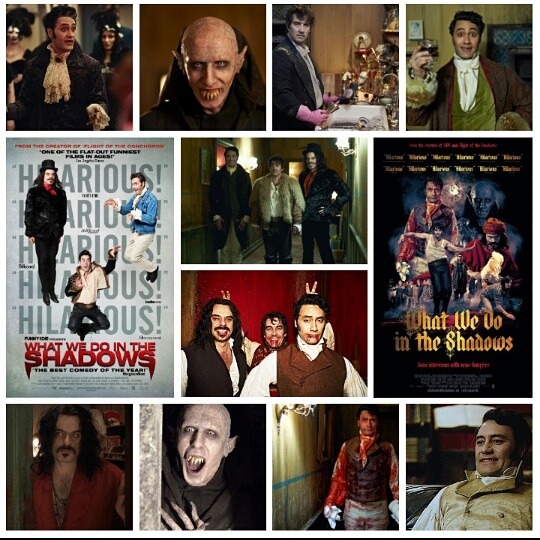
I don’t remember laughing as hard at a film in years as I did at What We Do In The Shadows the other night. It’s pure comedic bliss from front to back, and makes the often tedious chore of making an audience laugh seem effortless. It’s part horror comedy, part mockumentary with a dash of buddy camaraderie and and depth of wit and character all it’s own, thanks to New Zealand filmmaker Taika Watiti, who is fast becoming one of my favorite new voices in the independent field. A master at finding the humour in little moments and dry subtlety, his cameras spend a couple hours documenting pratfalls, squabbles and zany encounters wirh quartet of vampires living in Wellington, New Zealand, each one simultaneously a different caricature of bloodsuckers from previous lore, as well as a completely unique, hilarious individual. Jermaine Clement is the closest thing you’ll find to a household name amongst the cast as Vladislav, a Dracula esque, baroque vamp. Jonny Brugh is Viago, the musically inclined, Ann Rice incarnation, and Ben Fransham, plays Peter, a spooky eight thousand year old Nosferatu clone. It’s Watiti himself who steals the show though, as Deacon, a dandy of a Germanic royal who gets all the best lines and relishes them with adorable deadpan delivery every chance he gets. The film comes nowhere near the classification of horror, and in fact these four resemble a bumbling, lovable frat house, their vampiric nature treated lightly as they cavort about their everyday life like rambunctious nocturnal teddy bears. They navigate household chores, nightlife, inter species relations (there’s a few priceless encounters with a rival pack of werewolves), pesky humans, and have a ball the whole time through. What makes the film so special is the goldmine of comic skill and talent that both director and cast have tapped into. The relationships are unforced, full of idiosyncratic nonsense and always feel utterly organic. For a group of undead fellows, they truly are the life of the party. The documentary style never feels intrusive or irritating, seamlessly taking refuge behind the forceful and side splitting antics which take center stage for the entire film. Comedy is the hardest genre to produce fruitful results in, with horror a close second. What it takes to make you laugh can often be a rare gift, wielded by few and far between, those writers, directors and actors who have that elusive midas touch on our funnybones, combining just the right elements of script, improv and intuition to get us laughing ourselves silly. This one achieves that and then some.
I don’t remember laughing as hard at a film in years as I did at What We Do In The Shadows the other night. It’s pure comedic bliss from front to back, and makes the often tedious chore of making an audience laugh seem effortless. It’s part horror comedy, part mockumentary with a dash of buddy camaraderie and and depth of wit and character all it’s own, thanks to New Zealand filmmaker Taika Watiti, who is fast becoming one of my favorite new voices in the independent field. A master at finding the humour in little moments and dry subtlety, his cameras spend a couple hours documenting pratfalls, squabbles and zany encounters wirh quartet of vampires living in Wellington, New Zealand, each one simultaneously a different caricature of bloodsuckers from previous lore, as well as a completely unique, hilarious individual. Jermaine Clement is the closest thing you’ll find to a household name amongst the cast as Vladislav, a Dracula esque, baroque vamp. Jonny Brugh is Viago, the musically inclined, Ann Rice incarnation, and Ben Fransham, plays Peter, a spooky eight thousand year old Nosferatu clone. It’s Watiti himself who steals the show though, as Deacon, a dandy of a Germanic royal who gets all the best lines and relishes them with adorable deadpan delivery every chance he gets. The film comes nowhere near the classification of horror, and in fact these four resemble a bumbling, lovable frat house, their vampiric nature treated lightly as they cavort about their everyday life like rambunctious nocturnal teddy bears. They navigate household chores, nightlife, inter species relations (there’s a few priceless encounters with a rival pack of werewolves), pesky humans, and have a ball the whole time through. What makes the film so special is the goldmine of comic skill and talent that both director and cast have tapped into. The relationships are unforced, full of idiosyncratic nonsense and always feel utterly organic. For a group of undead fellows, they truly are the life of the party. The documentary style never feels intrusive or irritating, seamlessly taking refuge behind the forceful and side splitting antics which take center stage for the entire film. Comedy is the hardest genre to produce fruitful results in, with horror a close second. What it takes to make you laugh can often be a rare gift, wielded by few and far between, those writers, directors and actors who have that elusive midas touch on our funnybones, combining just the right elements of script, improv and intuition to get us laughing ourselves silly. This one achieves that and then some.
The hype surrounding comedy troupe Broken Lizard quieted down somewhat after the hullabaloo of both Super Troopers and Beerfest, but that didn’t mean they halted their output. In 2009 they released the insanely funny screwball romp The Slammin Salmon, which nobody seems to have seen and garnered nowhere near as much buzz as their previous films. It’s just as much of a riot, this time landing the gang into a Miami seafood restaurant, after their jaunts in rural law enforcement and extreme competitive alcohol consumption. The restaurant they all ‘work’ at is owned by a hulking bull in a china shop named Cleon ‘Slammin’ Salmon, a gigantic ex pro boxer played by the late great Michael Clarke Duncan in one of his last, and best, appearances. Cleon runs the restaurant with an obnoxious iron fist, a giant petulant brat with a penchant for beating up his staff and the social skills of a grizzly bear. On a busy night he announces to his staff that they must sell enough deceased marine life on plates to come up with a ten grand debt he owes to the Asian mob. This sets off a chain of reliably hilarious shenanigans involving the whole Broken Lizard crew, and a few cameos from salty hollywood veterans, a welcome trend that is commonplace among their films. The pushover manager Rich (Kevin Hefferman) attempts to keep the order. The lunatic head chef (Paul Soter) and his dimbulb busboy brother (also Soter) create trouble for everyone. Douchey waiter Guy (Eric Stolhanske) plays dirty to boost his sales. Ditzy server Mia (April Bowlby) dolls up her smile and smart one Tara (Cobie Smulders) plays it crafty to get ahead. Funniest by far is Jay Chandrasekhar as Nuts, a weirdo whose alter ego Zongo makes insane appearances whenever he forgets to take his meds. Clarke Duncan is the bellowing life of the party though, in an untethered romp through the comedic corn that clearly has been improvised a lot and shows the actor having some of the most fun I’ve ever seen onscreen. It’s a chaotic flick that captures the mania of restaurant life perfectly, with nods to everything from Monty Python to Blake Edward’s The Party, while still retaining a contemporary personality of it’s own. Broken Lizard has a knack for making every joke land in their films, and it’s laugh city all the way through this one. From engagement rings in fecal matter, third degree burns from scalding soup, endless situational fisacos and satirical characters, it’s just wild. Watch for Lance Henriksen, Carla Gallo, Olivia Munn, Jim Gaffigan, Sendhil Ramamurthy, Morgan Fairchild, Vivica A. Fox as a pop star named Nutella (lol) and a priceless Will Forte. On par with Troopers and Beerfest, funny in spades and so damn re-watchable. An essential for comedy fans.










 Podcasting Them Softly