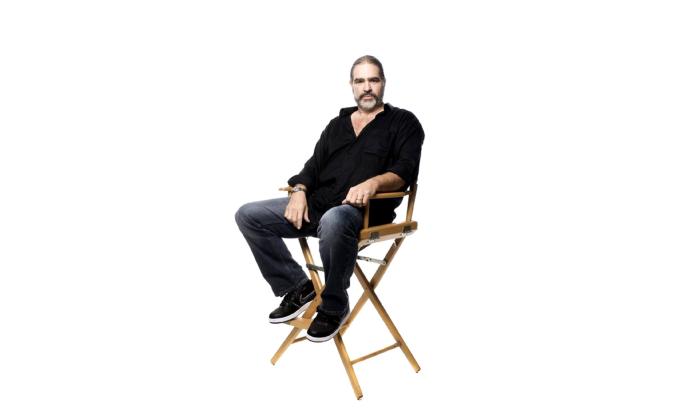
Virtually Speaking: An Interview with Brett Leonard by Kent Hill


My Grandmother was the avid cinema-goer in our family. She passed her love of movies down to my Mother who in turn, passed it on to me. Another little boy who learned about the wonders of the movies from his Mother was Brett Leonard.

This love would grow, forging a filmmaker whose career that has been eclectic, but always on the cutting edge. The man who was once a killer clown from outer space, has in many ways been one the pioneers in the eventually, all-compassing integration of the digital age into the celluloid art form. With his ground-breaking work in The Lawnmower Man, Leonard has since been blazing a trail  throughout the industry. His early concepts of combining virtual reality with the cinematic experience are still expanding, and his vision of where it is all going to go, is far from complete.

Yet I was fascinated with the journey this humble gentleman has taken. He has worked both independently and with the studios, he has directed some of the finest actors to grace the screen, he has bore the brunt of the dark politics that whirls below surface of the filmmaking process. Still, he manages to laugh it off and move on to the next project with an energy and optimism that has served him well.

I thrilled at the revelations Brett shared with me about his movies, which I admire greatly, but also about his personal adventures including something I was, I admit, grossly unaware of: he a spent a significant period of his life living and working here in Australia. To such an extent he even was labelled an Australian filmmaker by the local media. He said, in the great Down Under, he learned not only the true value of mateship, but also spent some of his most glorious days.

He was a pleasure to interview, a true gentleman, a fabulous filmmaker – ladies and gentlemen, I give you, Brett Leonard…

Denzel Washington’s FENCES

This truly is a remarkable film.  It is made with so much delicate care and craftsmanship, the entire two hours and nineteen minutes is fluid and seamless.  It’s the picture that feels like Denzel Washington has been working his entire career to not only make, but perfect.
Set in a dilapidated Negro ghetto in 1954, Washington is the tough and oblique patriarch of a family suffocated by their hopes and washout of the American Dream.  Viola Davis not only gives her career best performance, as Washington’s steadfast wife, she easily gives one of the best performances in recent cinematic memory.

While the performances and Washington’s perfection behind the camera are a sight to behold, the cinematography by Charlotte Bruus Christensen, production design by David Gropman, and editing by Hughes Winborne are so perfect, they go unnoticed.  As the film progresses, whether it is a performance, an aesthetic, or a technical aspect, they work in such unison that nothing stands out, the score does not out perform the editing nor does the writing outshine Davis.

The narrative strikes a hidden chord between being timeless and culturally and politically relevant.  It’s a tough story about a (black) working class family that deals with the conventional setbacks of life, yet they have their own uniquely complex set of hurdles that are undoubtedly self inflicted.

FENCES is truly the epitome of a Best Picture.  Everything, and I mean everything, is perfected in the film.  It has all the ingredients to be that Best Picture, but what makes the film surpass the run of the mill, end of the year Oscar bait,  is at its core it is filled with an unmatched amount of heart about what it is to be a family.

PTS PRESENTS EDITOR’S SUITE HUGHES WINBORNE POWERCAST

winborne

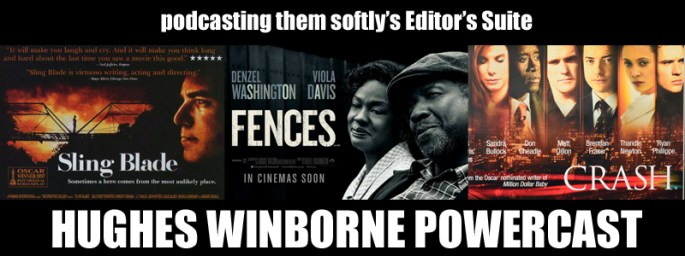
image1Podcasting Them Softly is honored to present a discussion with feature film editor Hughes Winborne! Some of his credits include the Marvel blockbuster Guardians of the Galaxy, The Help, The Pursuit of Happyness, The Great Debaters, and Sling Blade. He won the Academy Award for his editing work on the 2005 film Crash, and this winter, his latest project, Fences, re-teams him with director and star Denzel Washington — the film looks absolutely fantastic and we can’t wait to see it. We hope you enjoy this informative and entertaining chat where we found out more about Hughes‘ process, his experiences, and some his inspirations. Enjoy!

Tony Scott’s Unstoppable: A Review by Nate Hill


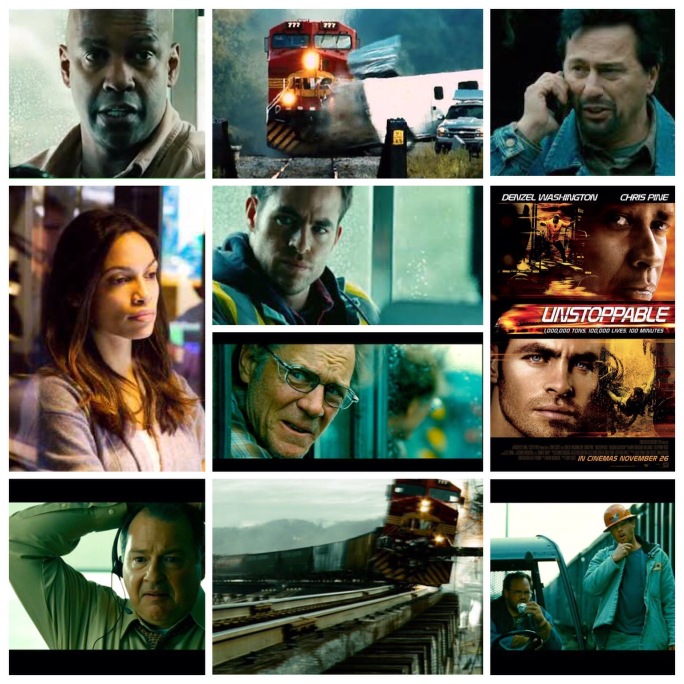
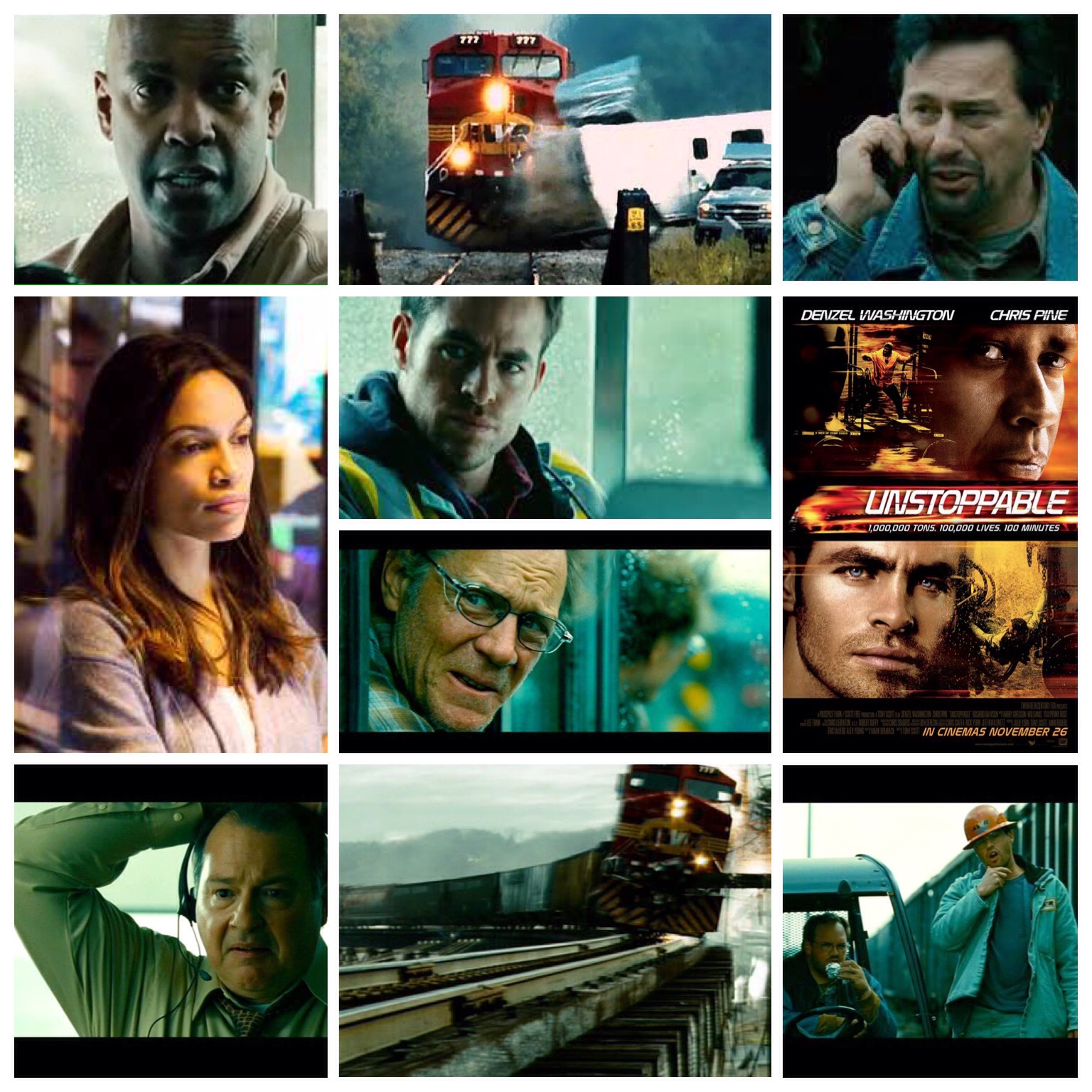
Tony Scott’s Unstoppable was the maverick’s last directorial outing before his heartbreaking and untimely death. It’s ironic because the film’s title is a descriptive term I would have applied to the man’s career, life and approach to filmmaking. But it was not to be. This is some swan song of a film to go out on though, a pleasing juggernaut of an action drama that greases the tracks and goes full steam ahead. Any film about trains run amok will inevitably be compared to the 1984 masterpiece Runaway Train, and although this one is vastly different in both story and tone, they just seem to be sister films. The mournful, resolute nature of Jon Voight’s character in it just seems to echo the sadness surrounding this film, and the fact that it was Tony’s last. But that’s just my strange intuition talking. The film itself isn’t really melancholy or downbeat, in fact it focuses largely on human triumph in the face of gross error. There is in fact a runaway train on the loose here, but the stakes are upped when we find out that it’s packed to the brim with highly toxic and flammable chemicals, and hurtling unchecked towards a densely populated metropolitan area. Denzel Washington is the Everyman veteran railroad worker, in danger of having his job devoured by greedy corporate development and ready to have a meltdown. Chris Pine is the hothead rookie swaggering through his first month on throb, and together they have to deal with the disaster, and prevent any further outcome. Rosario Dawson is the frantic control station operator, trying to coach two other workers (Lew Temple & Ethan Suplee) and help as best she can. Kevin Dunn is the abrasive company CEO, unwilling to get his hands dirty and callously looking for the first readily available solution, even if it results in mild casualties that he doesn’t have to witness. It’s all been done before, no doubt, but not by Scott, and you can never write off a formula, trope or act n cliche as dead until the maverick has had a good crack at it. The scenes involving the train are breathless and edited with a glass shard explosiveness, never to shaky or chaotic, always in control and bursting from the frames like the speeding locomotive they encompass. Look out for Jeff Wincott as Pine’s older brother, as well as Kevin Corrigan, T.J. Miller and David Warshofsky as well. It’s not a bad little flick for a director to put the final seal on his career with, and stands as a wrecking ball of an action flick. I just wish we got to see more from the guy. RIP Tony. 

Tony Scott’s Man On Fire: A Review by Nate Hill 

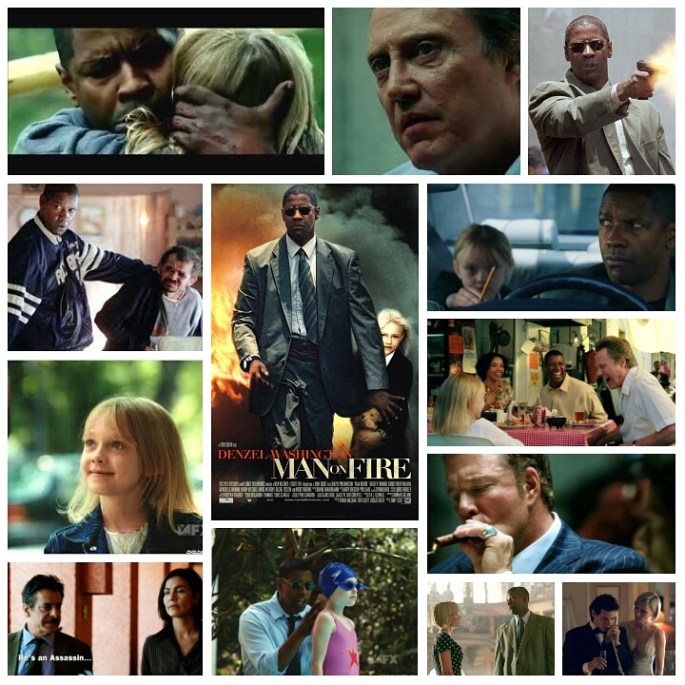
Tony Scott’s Man On Fire is one of those films I can watch time and time again and never tire of, a magnificently melancholy tale of South of the border justice, criminal intrigue and a tequila shot of pulpy, blood soaked style that gets me every time. It’s loosely based on a 1987 film of the same name starring Scott Glenn, Jonathan Pryce, Danny Aiello and Joe Pecshi (there’s a random lineup, no?), but Scott intrepidly branches off into his own territory, and thank god for his vision. This was the first film in which he really explored his sketchy smokehouse of an aesthetic that he would later take to angelic heights with Domino. Colors blur and saturate, editing rockets by with the force of a bullet in a storm, subtitles appear arbitrarily and seemingly of their own volition. It’s a jarring tool set that he employs, and many abhor it. I’m as in love with it as he was though, and whether to throw us right into the protagonist’s psyche or simply because he felt the need to paint his pictures this way, the rest of the films in his remaining career carried the DNA, in varying doses. Fire is the key word for this film, in many of it’s forms. There’s a smoldering ember in Denzel Washington’s John Creasy that is fed by the winds of corruption as the film progresses, erupting into a blazing inferno of violence and fury. Creasy is a broken man, haunted by the questionable, never fully revealed actions of his military past. “Do you think God will ever forgive us for what we’ve done” he grimly asks his old war buddy Rayburn (a scene stealing Christopher Walken). “No” Rayburn ushers back curtly. It’s at this heavy nadir we join Creasy, lost in a sea of alcohol and guilt, an unmooored ship with a shattered hull looking for both anchorage and repair. Rayburn hooks him up with a bodyguard gig in Mexico City, keeping the young daughter of a rich businessman (Marc Anthony, terrific) safe from the very real threat of kidnapping. Dakota Fanning is compassionate, precocious and endearing as young Pita, who spies the wounded animal in Creasy right off the bat and tries to make friends. Creasy draws back in reluctance, but eventually warms up. I love the pace of this film to bits. It spends nearly half of its hefty running time simply getting to know these two characters, forging a bond between them before the inciting incident even looms on the horizon. And when the kidnapping occurs, as it must, the stakes are high as can be and our investment level in the situation is paramount. Setting up character is so key, and Scott nails it with scene after scene of quiet and careful interaction. Then he yanks the lid off the pot, as Pita is snatched in broad daylight, Creasy is injured and the kidnappers vanish into thin air. Pita’s mother (a soulful Radha Mitchell) works with the dodgy Mexican authorities and her husband’s lawyer Jordan (a sleazy Mickey Rourke). Creasy has other plans. Once healed, he embarks on a mission of fury and vengeance, knocking down doors, removing body parts, inflicting gratuitous bodily harm and using every technique in his training (believe me, there are some interesting ones) to track down those responsible and get Pita back. Washington does all this with a calm and cool exterior, letting the heat emanate from every calculated syllable and intense glare. The descent into Mexico City’s poverty stricken criminal underworld is a grisly affair, and all sorts of ugliness is exposed, shredded through the caffeinated prism of Scott’s lens. Two cops do what they can to help Creasy, idealistic Guerrero (Rachel Ticotin) and battle hardened Manzano (the always awesome Giancarlo Gianninni). It’s Creasy’s show though, and he blasts through it like a righteous hurricane of blood and bullets. Scott’s films have a knack for ending in over the top, Mexican standoff style shootouts, but the man subverts that here, going for something far more sorrowful and atmospheric, ending an intense tale on notes of sadness and resolute calm, gilded by the aching tones of songstress Lisa Gerrard and composer Harry Gregson Williams. Walken provides both comfort and catharsis, the only beacon of hope for Creasy other than Pita. Unlike John, Rayburn has moved on from the horrors of their past, but one still sees the trauma in his soul when he looks John in the eye and gets hit with what is reflected back. Tough stuff to get right, but hey, it’s Walken we’re looking at here, and he’s brilliant. Rourke has little more than an extended cameo, but his flavor is always appreciated, and he’s great too. I had no idea Anthony had the chops he exhibits here, but I loved his arc as well as his performance and he holds his own in a blistering scene with Washington. Washington is an elemental beast, shadowing what’s left of his humanity under a cloak of booze and brooding contemplation, until he’s coaxed out by the life saver Pita. Then he’s a lion, riding guns out into a ferocious swan song of a sunset that may just hold rays of redemption for him. This is Scott at his best, his unique brand of storytelling at its height, his creative juices a canister of lighter fluid set aflame with genius and innovation. A masterpiece.
Tony Scott’s Crimson Tide: A Review by Nate Hill 

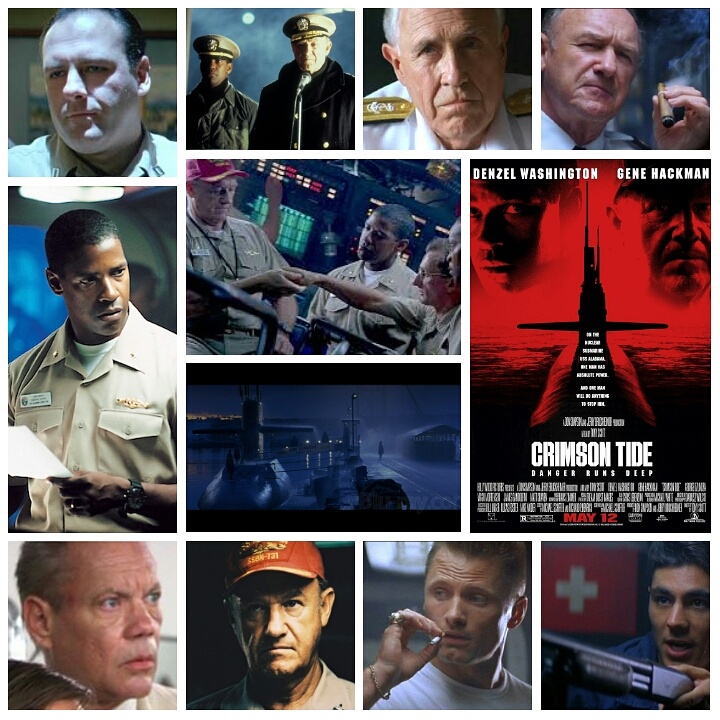
In terms of submarine movies, nothing will light your fire or get your pulse racing quite like Tony Scott’s Crimson Tide (well maybe Das Boot, but that’s another story). Scott just has this way with hyper kinetic tension and a knack for causing whirlwinds of propulsive energy in his work, and even when the material is more melancholy there is still a rousing climate to every frame. Pair his visual skill with Quentin Tarantino’s sterling (and uncredited) ear for dialogue and you’ve got one simmering package. Not too mention the actors and the blood stirring score from Hans Zimmer which is one of the composer’s best and richly orchestrated works. This is the second time Tarantino and Scott have done the writer director duo, albeit the lesser of the two films, it’s still a stunner. When lunatic Russian extremist Vladimir Radchenko (Daniel Von Bargen, RIP) goes off in a huff and threatens nuclear warfare, the Yanks get nervous and send in an ace in the hole submarine loaded with warheads of it’s own, cause, you know, ‘just in case.’ The vessel is captained by an intense and corrosive Gene Hackman, backed by a more reserved and introverted Denzel Washington. The two clash right off the bat and its obvious that fireworks of conflict will erupt between them once the shit hits the propeller. It soon does, in the form of a command order that is partly lost in translation. It could mean go ahead and fire the nukes on Radchenko. It also could not. Hackman, that spitfire, wants to engage and eradicate any chance of action on the extremist’s part. Washington insists on holding back, terrified by uncertainty. This troublesome personal disagreement eventually leads to flat out mutiny amongst the crew, in more ways than one. The crew has no concrete leader to direct their devotion to, and that’s a dangerous thing aboard a military vessel. Hackman and Washington are pure electricity as opposite sides of the same coin, facing off in a claustrophobic arena where one wrong move could end up in cataclysm. Along with internal disruption concerning the crew, there’s also the fact that they’re on a submarine miles below the surface to contend with, and it’s one whopper of a suspense cocktail. Viggo Mortensen is terrific in a conflicted supporting role, and watch for solid turns from Danny Nucci, George Dzunda, Matt Craven, Ryan Phillipe, Steve Zahn, Chris Ellis and a fiery James Gandolfini. Ooo and Jason Robards in an uncredited cameo, which he’s also done for Scott in Enemy Of The State. It’s pure movie bliss, but what can you expect from Scott other than the cream of the crop? The guy gave us pure gold for decades, bless his soul, and this is one of his best.

Antoine Fuqua’s Training Day: A Review by Nate Hill 

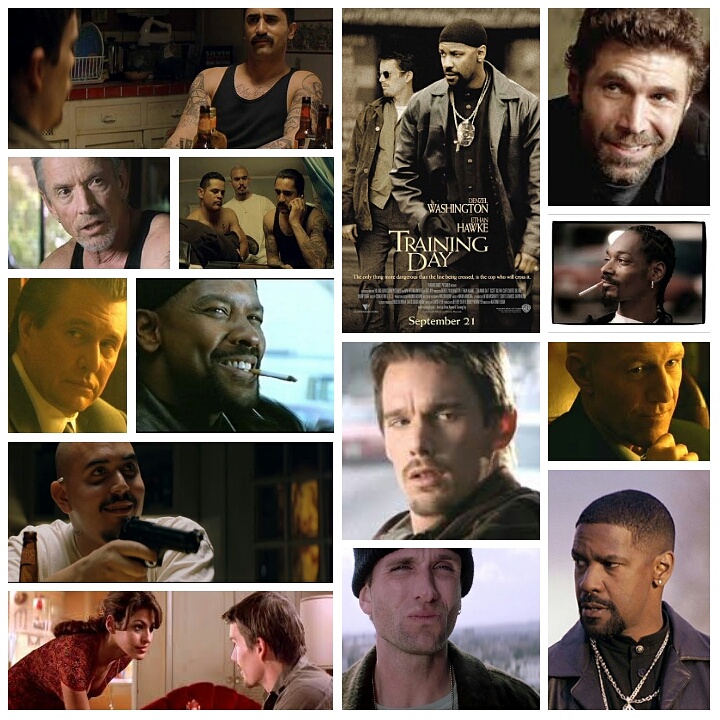
“To protect the sheep, you gotta catch the wolf, and it takes a wolf to catch a wolf.” This questionable sentiment is how rogue LAPD detective Alonzo Harris (Denzel Washington) justifies a heavy laundry list of dirty deeds, scary volatility, sociopathic backstabbing and a complete disregard for the badge that he wears on a chain like dog tags. And indeed, inner city Los Angeles can seem like a war zone, but its like he’s in fact more part of the problem than the dark angel of justice he sees in himself. Antoine Fuqua’s combustible crime drama Training Day rightly won Washington an Oscar for his unsettling runaway train of a performance, and he owns it down to the last maniacal mannerism and manipulative tactic. The film takes place over one smoggy L.A. day (hence the title) that feels like an eternity for its two leads, as well as all the colorful and often terrifying people they meet along the yellow brick road that’s paved with used needles and shell casings. Harris is tasked with showing rookie cop Jake Hoyt (Ethan Hawke) the ropes in his neighborhood, in the hopes that he’ll pass the test and achieve Narc status. Jake is prepared for a run of the mill crash course, but as soon as he’s treated to a verbal beatdown from Harris in the diner they meet at, he has a feeling it ain’t gonna be anywhere close to a normal day. This is just another day for Harris though, as he drags Hoyt by the scruff through drug busts, gang warfare, the worst neighborhood in town and pulls him deeper into his very dangerous world. Fuqua has a knack for getting the atmosphere of his settings just pitch perfect, and the feverish nightmare of the inner city comes alive, seemingly possessing the characters themselves until the atrocities just seem like a way of life. The trouble really starts when they run across Harris’s old drug lord buddy Roger (a wicked Scott Glenn in a role originally intended for Mickey Rourke), who proves a valuable asset later, though not in the way you might think. Harris introduces Jake to his equally crooked and scary team, including Peter Greene, Nick Chinlund and Dr. Dre who struggles in the acting department, especially in a room full of such heavy hitters. Jake is aghast at the horrors he sees and cannot believe the streets are like this. Harris devilishly assures him that this is the job, mutilating the symbol of his badge even more by justifying such behaviour as necessary. Tension reaches unbearable heights during a visit to a Latino gang household run by Cliff Curtis, Raymond Cruz and the eternally scary Noel Gugliemi. This is the heart of darkness fpr the film, a story beat from which there is seemingly no escape, until it becomes clear that Jake has somehow evolved a step up the food chain as far as LA goes, and is now ready to put down the dog who taught him, a dog who has long been  rabid. People complain that the final act degenerates into a routine action sequence. Couldn’t disagree more. With a setup so primed with explosive conflict, it can’t end up anywhere else but an all out man to man scrap, which when followed by no flat out action sequences earlier in the film, hits hard. Their inevitable confrontation is a powerhouse, especially from Washington, who finally loses his composure and yowls like a trapped coyote, his actions caught up to him. In a role originally intended for Tom Sizemore (who would have rocked it in his own way) I’m glad Denzel got a crack at it, for he’s absolute dynamite. Watch for Harris Yulin, Raymond J. Barry and Tom Berenger as the three senior LAPD dick heads, Eva Mendes as Alonzo’s girlfriend, Macy Gray as a screeching banshee of a ghetto whore and Snoop Dogg as your friendly neighborhood wheelchair bound crack dealer. Fuqua keeps attention rooted on the dynamic between Washington and Hawke, who is excellent in as role that could have easily been swallowed up by Washington’s monster of of a performance. Hawke holds his own, and the film is really about how two very different guys view a difficult area of town, how it changes them both, and ultimately how their moral compasses end up on a collision course. One of the best crime framas out there, and quickly becoming timeless.

Robert Zemeckis’s Flight: A Review by Nate Hill 

When I saw the marketing and trailer hype for Robert Zemeckis’s Flight, I was strongly under the impression that when I got around to seeing it I’d get a conspiracy style thriller. Some aviation intrigue, maybe a little government corruption, valiantly unveiled by Denzel Washington’s hotshot pilot protagonist. How very wrong I was. To my credit, it wasn’t my fault, but that of the severely misleading marketing. But then, how do you market a film like this? Hell, it’s a wonder it even made it past the pitching stage! The airplane related fiasco one sees in the previews is but a tiny segment that acts as at catalyst for one of the most searing and honest portraits of addiction I’ve ever seen. Washington is Whip Whittaker, senior pilot, ladies man, assured professional and severe drug and alcohol user. Whip snorts and guzzles day and night, including during the job. He’s functional and hides it well, but thats just another facet of his problem. When an onboard malfunction causes crisis on one of his flights, he takes a giant leap of faith, spectacularly landing the airplane upside down and essentially saving every passenger’s life. End of story? Not really. From there the film throws a curveball, as we dig deeper into Whip’s life, habits and history. An inquiry is launched into his mental state during the event, led by a stern and silky voiced Melissa Leo. His superiors do everything to defend him, but it becomes clear that he has been coming apart at the seams for sometime now, and the incident was one of the final rips. It’s a journey into one man’s refusal to admit his problems, and the often extreme ways in which life holds up a mirror in front of us and demands acceptance. Kelly Reilly is superb as a damaged girl he meets who tries to take his hand and lead down the way to fixing what is broken, but he’s pretty damn far off the path. John Goodman is his charismatic self as Whip’s groovy drug dealer, and Bruce Greenwood reliably steals scenes as an airline official determind to defend Whip to the bitter end. Washington is heartbreaking, especially in the scenes of alcohol abuse, which are tough to watch. He’s never had a character arc quite like this, and it’s one of the most special, vital gifts of acting he has ever given us. The look, feel and tone of the film is anything but gritty or depressing. It has a glossy, aesthetic sheen to it that barely hints at the commotion and strife which befalls it’s lead character. Perhaps this was Zemeckis’s intention: dazzle us out of the gate with crisp frames and bright cinematography and then blindside us with the darker elements, showing us in the process that such issues can befall any one of us in society, no matter how outwardly successful, confident or in control we seem. The film is as complex as it’s protagonist and begs the audience to empathize with him on his journey, despite the glaring shortcomings we observe. It’s one of the most human stories I’ve ever seen; two hours spent with a realistic person who is assured, broken, confused, scared, stubborn, strong willed, weak and deeply wounded all at the same time. Washington paints the picture for us momentously, and it’s the best work he’s ever done. You don’t get too many films like this released by the studio system, and this one is some kind of miracle.  

Devil In a Blue Dress: A Review by Nate Hill 

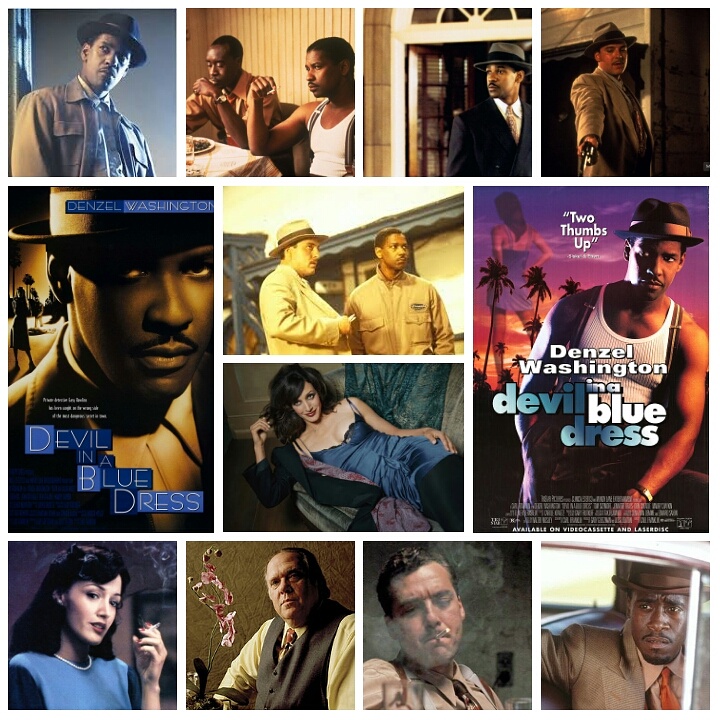
Devil In A Blue Dress takes the classic Raymond Chandler mystery form and uproots it just a smidge, setting it in the African American community of 1948 Los Angeles, with terrific results. Noir takes on a double meaning (naughty pun) as WWII vet turned private eye Ezekial “Easy” Rawlins (Denzel Washington) finds himself mired in the quick sands of corruption, coersion and murder most foul after taking on a job that’s led him straight to the dirtiest little secret in town. After he accepts a missing persons inquiry from mysterious DeWitt Allbright (Tom Sizemore, first shady and then downright scary when we see what he’s really about), he finds himself searching for a girl named Daphne (Jennifer Beals) a runaway with ties to a very powerful politician (Maury Chaykin makes your skin creep and crawl) with some seriously disturbing extra curricular activities. Rawlins recognizes danger when he sees it and tries to back out, but by then he knows too much and it’s way late in the game. Now he must navigate the scene like the pro he to escape not only with answers, but perhaps his life. Washington gives him the underdog treatment, a worn out gumshoe who still has some grit left, enough for one last ride in any case. There’s an L.A. Confidential type feel to the plot in the sense that it ducks some conventions in order to service true surprise from its audience. Sizemore is a charming viper as the kind of dude you never want to trust (isn’t he just the best at playing that?) and Beals subverts the damsel in distress archetype by injecting her performance with a jolt of poison. In terms of L.A. noir this baby is fairly overlooked, but holds its own to this day. Watch for Don Cheadle as well.  

Safe House: A Review by Nate Hill 

Safe House is cut from the same cloth as many a spy movie, but this horse doesn’t have quite as much piss and vinegar as other ones in the stable, notably the Bourne trilogy. It’s more of a slow burn, peppered with a few purposeful action sequences and quite a lot of time spent with Denzel Washington’s world weary spook Tobin Frost, a veteran operative who has gone severely rogue after escaping the grasp of a nasty CIA interrogator (Robert Patrick). He’s soon in the hands of rookie agent Matt Weston (Ryan Reynolds) who has been left to guard an agency safe house in Europe, now overrun with shadowy special ops dudes out to snuff Frost. The two of them are forced on the run together, and attempt to smoke out those behind the chaos, who turn out to be a little closer to home than they thought (don’t they always, in these types of movies?). Weston is young, naive and idealistic, Frost is bitter, jaded and ready to burn the agency down around him for what his career has made him do. They’re a formulaic pair made believable by the two actors, both putting in admirable work. Brendan Gleeson is great as Westons’s dodgy handler, Vera Farmiga shows moral conflict in those perfect blue eyes as another paper pusher in Langley, and Sam Shepherd smarms it up as the CIA top dog. It was nice to see Ruben Blades as well, who doesn’t work nearly enough, and watch for a sly cameo from Liam Cunningham as an ex MI6 agent. It’s not the greatest or the most memorable film, but it does the trick well enough, has a satisfying R rated edge to its violence and benefits from Washington being nice and rough around the edges. There’s a downbeat quality to it to, as Weston watches the futility inherent in the life of a spy unfold in Frost’s actions, which are leading nowhere but a self inflicted dead for a cause that’s bigger than both of them, but ultimately leaves them in the dust. Solid, if just above average stuff.