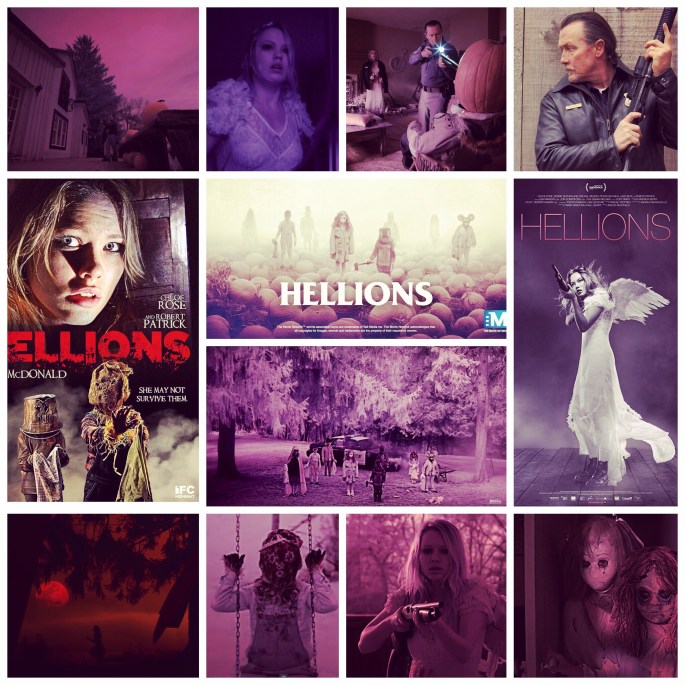
B Movie Glory: Hellions

It’s always frustrating when a horror flick ‘almost’ gets there, like it has a handful of real cool qualities that just sort of get buried by a heap of shitty cliches and and a middle section that drags like a chain. Hellions is such a film, a low budget, atmospheric shocker that I feel would have been better suited to a twenty minute short film format that the usual ninety minute time slot that feature horrors sit in. There’s just not enough of what’s there to go around and a lot of it ends up feeling thin and sort of stretched, like butter scraped over too much bread (seewhatididthere). The film focuses on a teenager (Chloe Rose) who is forced to fight through a Halloween night from hell when something takes over the town, something accompanied by a gauzy, unsettling mauve colour filter and an impressive original score filled with eerie hooting and wailing. Atmosphere is key here, there’s loads of it and they’ve done a fantastic job with it, to their credit. It’s just everything else that goes off the rails or doesn’t seem to fit: Chloe is hunted by weird little munchkins in Halloween costumes, there’s hellish intonations of a pregnancy gone wrong tied into the town’s plight, and a bunch of such mumbo jumbo, with a noisy climax that is only discernible as excessive commotion. Too much is too much, a pearl of wisdom these filmmakers could have heeded better. Grizzled veteran Robert Patrick helps her shoot her way out of the situation as the local Sheriff, a film always gets brownie points for simply having him there. It’s sad because what does work here, really works. The score is truly bone chilling, and the visual palette once dark forces show up is dreamy, unsettling and very creative. The opening shot of future Chloe walking up to the window of a maternity ward in a quiet panic, music on cue, is something incredible, and I wish the whole film could have followed suit. There just needed to be less running about, less chirping demonic midgets, less nonsensical hallucinatory gore, for as everyone knows, less is often more.

-Nate Hill

Ceyda Torun’s Kedi

There’s a ton of films out there that explore humanity’s symbiotic relationships with animals, from the innocuous sweetness of Beethoven to the whimsical fables of Babe. Ceyda Torun‘s Kedi is a brilliant Turkish documentary that focuses on the wild, independent street cats of Istanbul, lovable, curious creatures who have shared countless bonds with the city’s residents since the dawn of time. A handful of individual felines are shown in the spotlight, each with it’s own distinct personality, behaviour traits and each connected to their own human caretaker or friend. They roam free along the streets, alleys, bazaars and canals of picturesque Istanbul, a place where the hum of the old world still survives, only recently encroached upon by the inevitable advance of technology and progress, an aspect which the film comments on and one that has a big effect on these animals. The film is structured simply and wonderfully: each vignette tells the story of a cat, through the words of their human companion, the auditory component, and visually we see these people and this place through their eyes and interactions they have with all those around them. It’s a brilliant, hypnotic rhythm, accompanied by the soothing tones of traditional/electronic hybrid compositions from musician Kira Fontana, and effortlessly creates an immersive, unique atmosphere. You don’t have to be a cat lover to appreciate (but if you aren’t, you’re not cool in my books already) the bond these creatures share with their environment, as it’s fascinating in a scientific way as well, to observe the behaviours, each species intrinsically connected to each other through eons of shared existence. These aren’t docile house cats either, they’ve got the nomad gene through years of genetic memory, yet still function as creatures of habit, and as one girl remarks on camera, “when they’re confined in a house indefinitely, they lose their ‘catness’.” They are an integral, essential part of Istanbul’s soul though, as we see the healing power they have on those who are sad or broken, the therapeutic friendship they provide to all around them, and the way in which they rekindle people’s ‘slowly dying joy of life’, as another character observes, a thought which hit a bit close to home as I heard it. Some may consider this a small or inconsequential film, but make no mistake: this isn’t just ‘a cute cat documentary’, it’s a meditation on some of the core elements of our mindsets and action, relationships and perceptions that many have forgotten in the modern world, and a reminder that animals are more than just furry friends, rather they are an influential force of nature that shape and change our world, as well as us, every day. One of the very best of the year.

-Nate Hill

The January Man

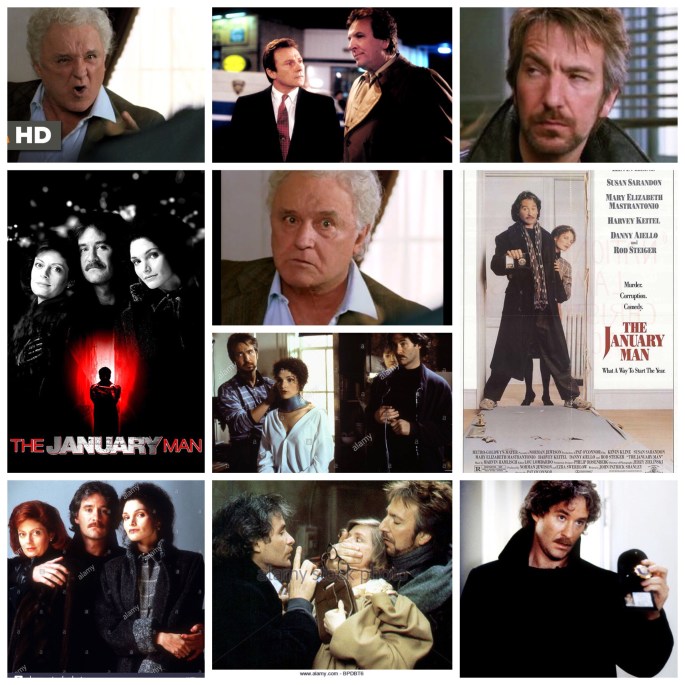
If you ever feel the need to define ‘tonally fucked” in the cinematic dictionary (if there was such a thing), you’d find a one sheet of The January Man, a warped, malignantly silly crime/comedy/thriller… something. It dabbles in wannabe screwball farce, serial killer mystery, breezy romance, high profile police procedural and as a result of it’s genre flim-flamming, has no clue what kind of movie it wants to be, and ends up a raging, tone deaf dumpster fire. It’s so all over the place that marketing churned out a bi-polar publicity package that at times seems like it’s advertising two completely different films. I used to see it on the shelf at blockbuster leering out at me like an eerie gothic murder mystery, Kevin Kline and Alan Rickman glowering evocatively off the dark hued cover. In reality it’s something just south of Clouseau, as Kline plays a bumbling, overzealous guru detective who scarcely has time amongst the silliness to hunt down a shave or change of clothes, let alone a murderer. Rickman? His odd, awkward artist friend who vaguely helps with the case but really isn’t necessary to any of the plot threads, and certainly appears nothing like his freaky persona does on the cover, suggestive of a villain. There’s another poster floating around on IMDb that is more honest about what’s in store, Kline perched like a loon in a brightly lit doorway while love interest Mary Elizabeth Mastrantonio peers adorably around his shoulder in true benign comic fashion. The film wants to be both of those aesthetics and more though, wants to have it’s cake, eat it, regurgitate it against the wall and film that, which is at times what it seems like we’re looking at. The police force brings disgraced cop Kline back on the force to catch some killer, while everyone runs about tripping over their shoelaces. Harvey Keitel is Kline’s brother, now a police commissioner, Danny Aiello the precinct captain, Susan Sarandon Kline’s estranged wife, and so on. Rod Steiger causes a hubbub as the mayor, staging a terrifying meltdown in one scene that goes on for minutes, a curiously unedited, noisy tantrum that dismantles what little credibility and structure the film had to begin with and seems out of place, even by the barebones standards set here. This is a good one to watch if you yourself are making a film and want to see an example of what not to do in terms of deciding on and cementing a certain style, instead of carelessly chucking in every haphazard element on a whim like they did here. Equivalent to a grade school theatre play.

-Nate Hill

Greta Gerwig’s Lady Bird

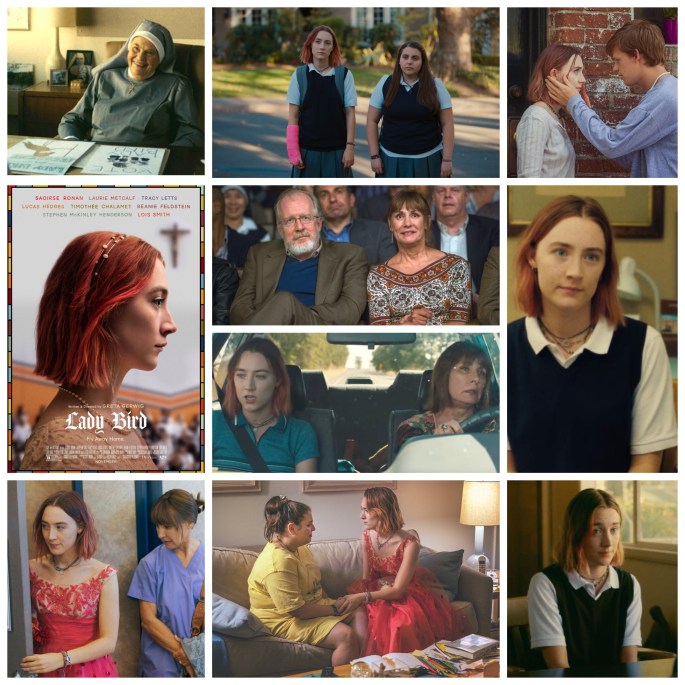
Greta Gerwig’s Lady Bird soars on wings of beautifully blunt dialogue, a traditionalist comic of age story that just somehow feels endlessly fresh with each new scene, three miraculous central performances from Saoirse Ronan, Beanie Feldstein and Laurie Metcalf, plus an editing style that creates lovely organic momentum and never falters for a beat. Coming of age stories are usually structured fairly similar across the board, and although all the recognizable chips are in place here, Gerwig has just managed to spin it in a way that still seems fresh and surprising. When you see that a film stars Saoirse Ronan, you pretty much know that it’s going to be an interesting project, if not an instant classic, she just seems to be a magnet for great scripts. The actress is on a career high here as Christine, or ‘Lady Bird’, her self given name, a feisty high school girl navigating the slippery terrain of being a teenager in a Sacramento Catholic high school. Exploring sex and relationships for the first time, clashing with her hotheaded mother (Metcalf in a fiery, complex and compassionate turn that practically demands an Oscar) over what college she’ll go to after grad (she has her sights set on those lofty east coast boroughs where “writers live in the woods”). Her father (understated, excellent Tracy Letts) is more laid back than her mom’s fire and brimstone approach, but both love her more than anything in their own way. All the restless turmoil and transformative angst of being that age is captured spectacularly by the story, somewhat of an autobiographical take on Gerwig’s own life in the early 2000’s. Broadway actress Beanie Feldstein is especially great as Lady Bird’s best friend Julie, and the scenes between the two have an un-coached, ‘fly on the wall’ realism that’s an admirable feat of acting from both. The film is very episodic, employing a brisk ‘fade in, fade out’ tactic with the editing, but despite that never feels staccato or segmented, all of it’s modest ninety minute runtime a fluid, flowing, near free-form anti-structure, a choice which works wonders and one that Gerwig and team should be very proud of. These types of stories always need a good dose of biting humour, a pinch of sadness and something unique to set them apart, as well as simply being well crafted and authentic. This one blasts off the charts in every category, and is one of the sweetest, most endearing and terrific films all year.

-Nate Hill

Amy Canaan Mann’s Texas Killing Fields

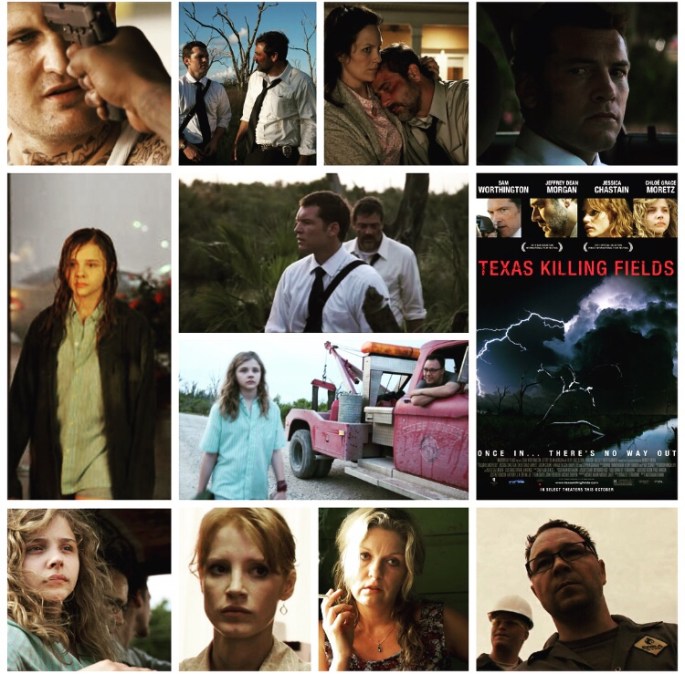
Whenever people say there isn’t enough gritty, messed up modern neo-noir (which there’s some truth to, but that’s another article) I like to dig up ones like Texas Killing Fields, an unforgivably overlooked crime drama from some years back that went by mostly unnoticed. Directed by Amy Canaan Mann, who is none other than Michael Mann’s daughter, and starring a talent trio of Jeffrey Dean Morgan, Sam Worthington and Chloe Grace Moretz, it’s a dark-boned, nihilistic murder mystery set in the deepest south and populated by the kind of folks you’d actively avoid entire sections of the barroom to get away from. There’s a killer loose in the low income doldrums of Texas, as if they didn’t have it bad enough in life, and two scarily mismatched cops are on the case. Intrepid idealist Morgan sees the light in darkest corners, while faithless misanthrope Worthington adopts a hopeless, devil may cry attitude. Caught between them is a wayward teen girl (Moretz), a homeless sitting duck who wanders the byways, a prime target and unfortunate default bait for this monster to come skulking out of the shadows. This is a downbeat, chilling flick with scant rays of humanity here and there, but bleakness takes over the screen like the portentous clouds in the storm-swept skies of the rural Americas, bringing danger and decay in their wake. The suspect list is a mile long because of how many wicked character actors there are in the supporting cast, but the culprit is oddly obvious from the get go. This isn’t to say the narrative is weak or they failed at a whodunit, as one can scarcely say that was there intention at all. It’s less of a whodunit and more of a ‘dunit’, as every character has some evil to hide or stain on their soul, and when the killer is revealed, they’re just another in a long line of wayward beings out there. Sheryl ‘Laura Palmer’ Lee is great as Moretz’s destitute, promiscuous mother, Jason Clarke roars in for a terrifying cameo as a violent pimp with an otherworldly blond dye job, Stephen Graham is dangerously quiet as a psychopathic local yokel, Annabeth Gosh has a brief role and Jessica Chastain gives an early star-making turn as an out of state cop who reluctantly aids Jeffrey and Sam. Dread is the word that seems to be on both Mann and her cinematographer Stuart Dryburgh’s mind, as every shot is composed primarily of darkness, shadows and claustrophobic grain, giving the fields and flatlands of Texas a hellish, oppressive lacquer. Darkness is explored both literally and thematically, and more fervently than most mainstream films care to get, which may be one reason the film wasn’t well received at all, or at least by most. It knowingly plunges headlong into the eye of the hurricane surrounding the hopeless heart of humanity, without much light on the other side or any to guide it, but there’s a bravery in that that I respect. One of the best crime dramas in recent history, a film that should be brought up more in discussion and a treatise on how to make a lasting impression in a genre that sees entries fall through the cracks on the daily. Brilliant, searing stuff.

-Nate Hill

The Collector

The Collector is a booby trap rigged horror flick that not only gives Saw a run for it’s money, but outdoes it in the atmosphere department. This is one seriously spooky film, made so by it’s eerie, claustrophobia ridden single-location setting, elaborate and maximum pain inflicting terror traps and burnished, browned out cinematography that gives it it’s own aesthetic. In a creaky old heritage mansion, a cat burglar leads his team from room to room, robbing the place to pay back a hefty debt owing to his ex-wife. Only problem is, they’re not alone in there. Stalking through the shadows is a silent, mask wearing phantom with a fucked up bag of tricks and a disconcerting leather face mask. Each new hallway or edifice finds them falling into one of his gory, well staged snares, from razor wire to full on bear traps and every gnarly device in between. It’s never really clear who he is or why he’s there save for a minuscule expository scene that you’ll miss if you blink, but it’s scarier that way in most cases, he could be robbing the place too for all they know and he’s just getting territorial. The film is a shadow laced game of spider and fly, as each individual finally realizes they’re no match for this fiend. Terrifically well made horror outing, but avoid the sequel (unimaginably called The Collection), as it takes everything that works so well here and shines a silly, noisy spotlight on it. This one will work you over and spit you out a clammy, nervous mess after it’s 90 minute stranglehold has had it’s way with you.

-Nate Hill

M. Night Shyamalan’s The Visit

I’ve seen M. Night Shyamalan’s The Visit several times now and it gets funnier with every viewing. Funny in a good way, and scary too as it’s a great little fright flick, but there’s just something about demented old people who aren’t right in the head that shunts the deranged part of my funny bone into overdrive (I must’ve subconsciously picked that up from David Lynch). It’s first and foremost a dark comedy for me, and seems like it wants to be that anyways when you consider how it’s shot, edited and lit, but the horror just happens naturally through this very weird set of circumstances, which I found neat. There’s also an unexpected emotional gravitas running through the plot line, which is impressive when you consider how short and fast paced the film is and that it actually had time to throw some real drama in there. In true Hansel and Gretel allegorical form, a brother (Ed Oxenbould, quite irritating and the only weak link in the cast, especially when he ‘raps’) and sister (Olivia DeJonge, radiating talent both beyond her years and what her character is written as, hope to see more of her) head out into the sticks to visit the grandparents they’ve never met, whilst their single mother (Kathryn Hahn) heads off on a cruise with her beau to be. The kids are at first quite taken with their Nana (Deanna Dunegan) and Pop Pop (Daredevil’s Peter McRobbie), but, as any trailer will show, gradually they start to act in a way that would put the word strange in the understatement zone. There’s something terminally off with these two sweet old codgers, as the kids discover hour by hour of their visit, from Pop Pop hoarding up soiled diapers in the shed to Nana scuttling about the house naked at night like a geriatric Emily Rose. Are they possessed? Dementia ridden? High on bath salts? It’s best you figure out the nasty little surprises of Shyamalan’s narrative for yourself, and squirm at every delicious little bit of unpleasantness along the way. McRobbie and Dunegan offer a staggering number of both bone chilling and riotously funny moments in two performances that they should be proud of, for both scaring our socks off and providing endless off colour comedic moments. Now as for the found footage camera aspect, that’s usually something I hate these days, but given how well it works with the subject matter and tone here, plus how non intrusive it is, I can’t bash it too much. This is a neat little departure for Shyamalan, whose usual somber, bleak and airily atmospheric tone definitely needed a little shaking up, and what better new avenue to explore than darkly comic, hyperactive horror?

-Nate Hill

The Nelms Brother’s Small Town Crime

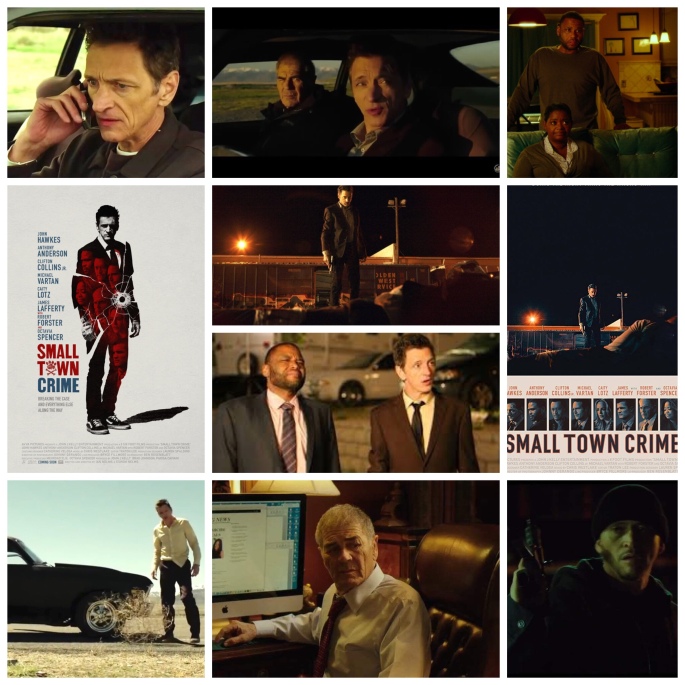
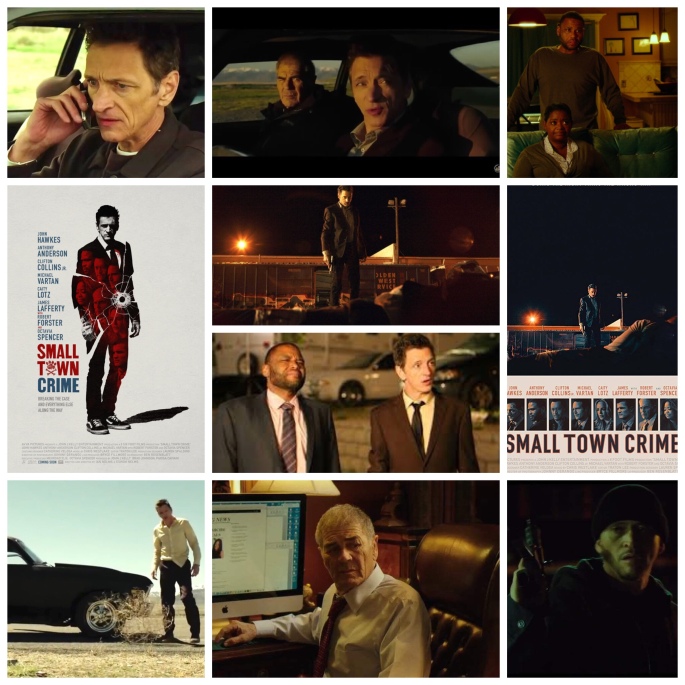
Looking for your annual rural crime/drama/black comedy/character study fix? Well, Three Billboards, which I reviewed the other day, provides that with something more illusory and profound. If you’re after one that’s a bit more old school and straightforward, check out the Nelms Brother’s Small Town Crime, a brutal, breezy thriller starring John Hawkes, an actor I remember from the fringes of the 90’s who seems to have gone newly platinum these days thanks to an Oscar nomination for 2010’s Winter’s Bone. He’s hilariously sympathetic here as a raging alcoholic ex-cop who stumbles right into the middle of a murder ring with the crosshairs latched onto a group of local underage prostitutes. Never one to back down once he gets a few cold ones in him before noon, he’s on the case between sessions at the dive bar and inebriated joyrides in his souped up muscle car. There’s a slightly off kilter, surreal quality to his story and that of those around him, a coming and going sense that these are a cartoonish series of events that aren’t really happening, when one looks at the supporting characters. Robert Forster has never been more deadpan or watchable as the tycoon grandfather of one of the slain hookers, a hands-on gent who isn’t afraid to dust off his giant scoped rifle to help out. He’s joined by outlandish Latino pimp Mood (Clifton Collins Jr., who needs way more roles), both of them assisting Hawkes in his crusade. Even the psychotic hitman (Jeremy Ratchford) dispatched to kill everyone in sight has a distinctly ‘out there’, roadrunner vibe. But Hawkes anchors the whole deal with the mopey, sad-sack realism of his character, a loser who’s dead-end existence has been given a new lease on legacy. His best buddy Anthony Anderson and wife Octavia Spencer give the plot some gravity too, a neat seesaw effect that sits opposite Forster and Collins exaggerated antics. The film has a funny way of both ambling along at it’s own pace and jumping out at you with warp speed jump cuts and brazen, bloody violence. The dialogue is pure poetry in areas and knowing camp in others, neatly balanced. Don Harvey and veteran tough gal Dale Dickey have great bits as salty bartenders, while Daniel Sunjata and haggard looking ex-pretty boy (remember him in Monster In Law with Jane Fonda and J-Lo?) Michael Vartan play two local detectives who are always frustrated to be a step behind Hawkes, who plays off the grid and close to the chest. Small Town Crime is a small time film, but the craft gone into bringing it to our screens couldn’t be bigger or more commendable from all angles. Highly recommended.

-Nate Hill

Joe Dante’s Gremlins

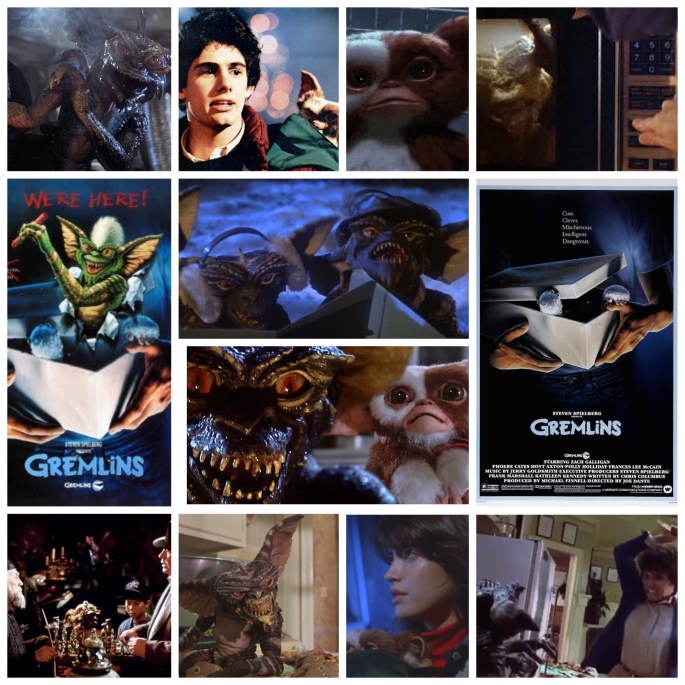
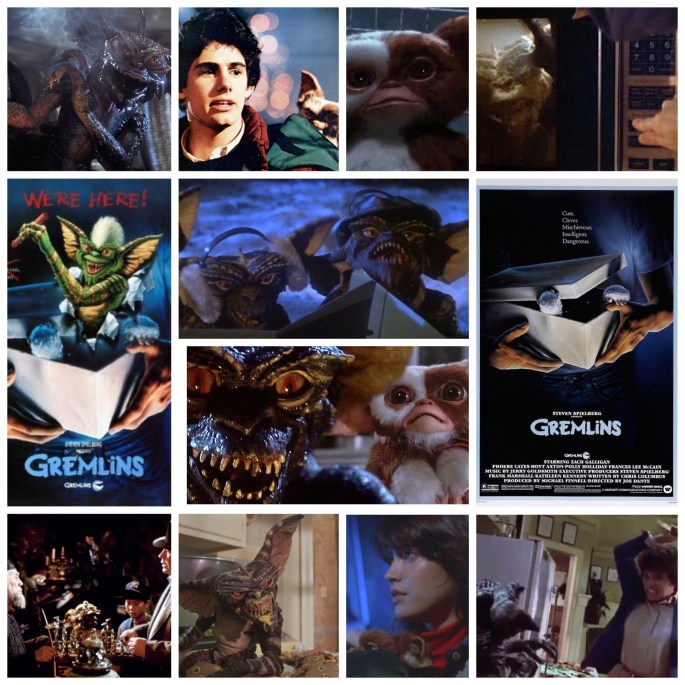
I’d forgotten that Joe Dante’s Gremlins balances creature feature, slapstick comedy, charming holiday movie and outright horror flick so expertly, but it’s a delicious mix that makes for one of the most timeless fantasy films out there. Director Dante is an expert on all things 80’, gooey and larger than life, this being his flagship film of sorts, the one gemstone in a career full of mischievous monsters and supernatural moonshines. Gremlins is an ‘inmates running the asylum’ formula, distilled into the simple premise of little renegade monsters loose about a small town during Christmas. After a wacky inventor (Hoyt Axton, like John Goodman by way of John Candy) buys an adorable Furby looking thing from the back end of Chinatown, things get nuts when he gives it to his son (Zach Galligan). The rules are don’t get the little tyke wet or feed him after midnight, which of course are promptly disobeyed, causing a full on invasion of little green scaly caffeinated crackhead monsters. It’s funny because as playful and charming as most of the film’s vibe is, these creatures are actually straight up down to kill people and cause maximum destruction, a violent atmosphere that hilariously clashes with the benign, Fisher Price motifs also on display. The special effects are gloriously 80’s, tactile and practical to their bones, every grisly gremlin death a symphony of slime and projectile ooze to be savoured, if that’s your thing. The Yuletide setting is perfect for such mayhem, the increasingly dastardly antics of these little fuckers acting as a sly metaphor for the feverish, stressful hoops and hangups we all deal with over the Christmas season, whether it be bustling through a crowded mall last minute or shredding a midget goblin in a whirring magic bullet blender, anyone would be hard pressed to decide which would be more intense. The score from Jerry Goldsmith is cheeky, catchy and has an off kilter Danny Elfman vibe, perfect for the madcap, demented story onscreen. A holiday classic and then some, fuel for anyone who gets a few drinks in them over Christmas and gets bitten by the rowdy big until they’re swinging from the chandeliers throwing plates at people. The sequel, also helmed by Dante, is a lot of fun in it’s own high tech way, but nothing beats the first high flying outing, and plus it’s a Christmas movie to. Good,

Gooey times.

-Nate Hill

B Movie Glory: Silent Night

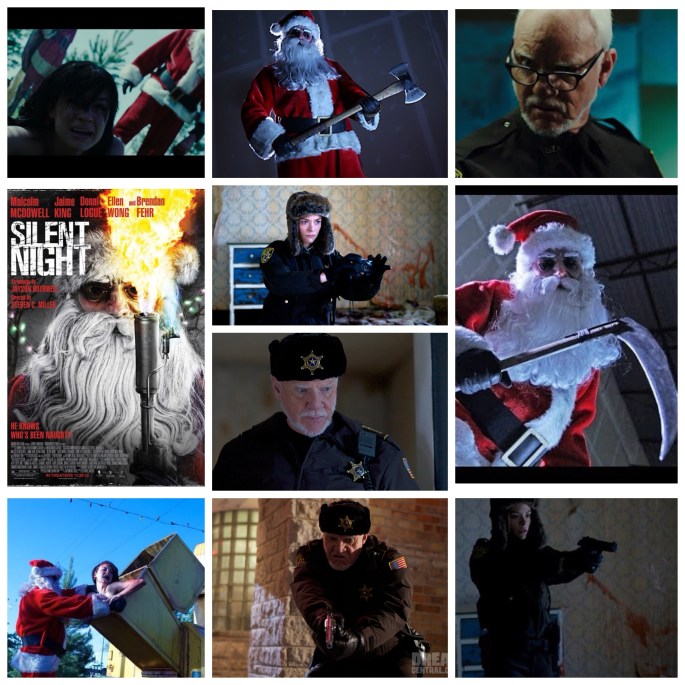
Santa is an axe wielding mass murderer! In Silent Night he is anyway, a slick, excessively gory remake of an obscure 80’s slasher called Silent Night, Deadly Night, which I’ve still yet to see. This new version is a heavy handed, knowingly silly affair, as a small town Sheriff’s department races to find a heinous killer who dresses like the red guy and has been wantonly slaughtering townsfolk all morning. A timid deputy (Sin City’s Jaime King) is the front runner to head him off at the pass, joined by the cantankerous, mouthy Sheriff, played by a hammy Malcolm McDowell with attitude to spare. The murders are so over the top it seems like the filmmakers wanted to outdo each and every slasher film out there, an impossible task, but they throw Paint at the wall furiously anyway. Electrocution by Christmas lights, high powered flamethrower, a souped up stun gun used to skewer an annoying 14 year old chick, but my favourite has to be the naked stripper fed through a giant wood chipper in a scene that would have Fargo covering it’s eyes. That’s the kind of flick it is, sleazed out to the max, tongue firmly in it’s cheek and never too serious. Problem is, a few of the actors (I’m looking at you,

priest dude) take it way too far into camp territory and ruin whole sequences with their wannabe satirical blathering. McDowell gets the tone right though, and is a right treat as the world’s most sarcastic lawman. Donal Logue also fares well as a bad tempered grinch of a mall Santa who eventually tangles with the murderer in a fiery police station set piece. Maybe I was just tired, but when the origin of the killer is finally revealed, which I waited for the whole time, it seemed like kind of a confusing letdown, a bit less of a surprise than it should have been. Worth it for the kills and a couple entertaining performances, but ultimately not much.

-Nate Hill