I love a good old fashioned creaky haunted house story, and HBO’s The Changeling is one of the best, and most under appreciated spooky tales out there. Like I say time and time again (no doubt sounding like a broken record at this point), real effective horror lies in atmosphere and the buildup of tension, chilling our spines instead of bombarding us with tasteless dismemberment. The Changeling takes its time in establishing cozy atmosphere and engulfs us in a gigantic New England mansion (actually Shaughnessy for anyone who can tell), inhabited by the lonely, desperate ghost of a young boy who met a tragic fate there many decades earlier. George C. Scott is the musical composer who moves in all by himself, seeking solitude as he nurses the grief of losing both his wife and daughter in a car accident. He’s barely there one night when strange things begin to happen; rhythmic banging from some far off room, eerie crying noises, doors opening and closing of their own accord and a mysterious toy bouncing ball that ominously follows him around. Saddled with an already troubled mind, he sets out to learn the origins of the ghost and resolve the situation, putting it to rest. The story is smart and succinct, involving ancestral deception and an elderly US Congressman (Melvyn Douglas, stealing every scene) with ties to the past. It’s never too complicated or busy, always keeping it’s cool and reigning in the frightening moments in a minimal fashion that pays off greatly. The lush, overgrown Vancouver locale makes a great setting, almost Stephen King like, and the house itself is a towering cluster of dusty hallways and wide open ceilings that shield ancient secrets and watch over anyone who sets foot inside with an unseen eye. I never thought a bouncy ball and a small children’s wheelchair could raise such goosebumps, but when used as well as they are here, in scenes which set up the creep factor wonderfully, they’ll get to you big time. Scott is weary and wary, but has a strong sense of compassion for the restless spirit that shows in his baleful, ice blue eyes and gives him the charisma a horror protagonist needs. HBO original films are almost always hidden gems of humble craftsmanship and breezy, effortless skill, whatever the genre. Here they’ve tried their hand at the ghostly fright flick, and wrought one of the best I’ve ever seen.
Tag: film review
Calvin Reeder’s The Rambler: A Review by Nate Hill
I can’t picture a single festival screening of Calvin Reeder’s The Rambler that wouldn’t result in at least half the crowd walking out in revulsion. There’s just no way to put it lightly when describing the alienating, severely soul-disturbing kind of sickly atmosphere that hangs over the entire film like a radioactive blanket of surreal dread. The dvd cover barely suggests the beyond Lynchian, out to lunch, bugfuck nuts events which unfold, and instead hints toward a western with vaguely horror themed aspects. Couldn’t be more different than that. The conventional elements like plot and the theme of Western are dimly present, shaky railroad tracks for a train that careens straight into the subconscious of bizarro world, some of what we see even too messed up and disassociate for the hardiest of cultist buffs. Few films are able to capture the purely illogical and disjointed feeling of a dream, but this one nails it scarily well. Sentences don’t match responses, human behaviour is terrifyingly devoid of inhibitions, events repeat and come out of nowhere, and we really and truly feel lost, removed and detached from any kind of rational thought or action. Now the film doesn’t outright announce that it’s all a dream, save for a few hints embedded in the story, but it sure felt like one long nightmare to me, evoking psychological feelings which words really can’t describe. Dermot Mulroney does a ‘Man with no name routine’ as a vacant ex con who is released from prison and blows back into his one horse trailer park town. He does indeed have no name, now that I think of it, and is only ever referred to as The Rambler. Upon returning, he finds his volatile girlfriend (Natasha Lyonne) has taken up with another man, and no one seems to want him around anymore. Time to hit the road, he figures, sauntering out into the acrid desolation of the southwest in a dead cool opening credits scene set to Terry Allen’s Red Bird, one of my favourite twangy tunes. From there it gets hard to describe, comprehend and stomach. He’s off in some John Waters style twilight zone of very unsettling characters, saying and doing things that make little sense and get increasingly shocking and vulgar. A mysterious girl (Lindsay Pulsipher) weaves in and out of the story and seems to be the only one besides him who is remotely coherent. A crackpot doctor (James Cady) shows him an extremely defective device that is supposed to look into people’s dreams. There’s ugly, misanthropic fiends running all about with nothing to say other than loosely strung together verbal diarrhea, and a constant nauseating film of unease over everything. I’ve read reviews wailing about how this film has less than nothing to say, and should have shut it’s mouth. But that’s the point to a nightmare; it doesn’t teach, enlighten or otherwise change us in any way other than to give our sense of dread a workout and provoke a cold sweat. Similarly, the film simply is there to scare, to induce the gag reflex and doesn’t strive for anything else, and in that sense it’s pure, primal and honest about it’s intentions. The very definition of not for everyone, this will even put off bands of counter culture cinephiles who scoff at anything mainstream. Deliberatly vile, constantly off its rocker and so far beyond the event horizon where bizarre ends and something truly indescribable begins, The Rambler will shake the shit out of anyone who claims to have seen it all. You have been warned.
B Movie Glory with Nate: Split Second
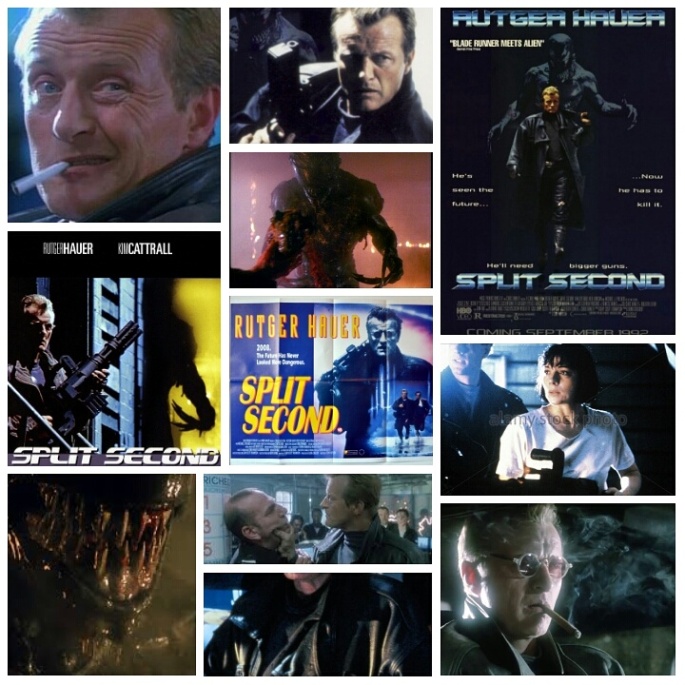
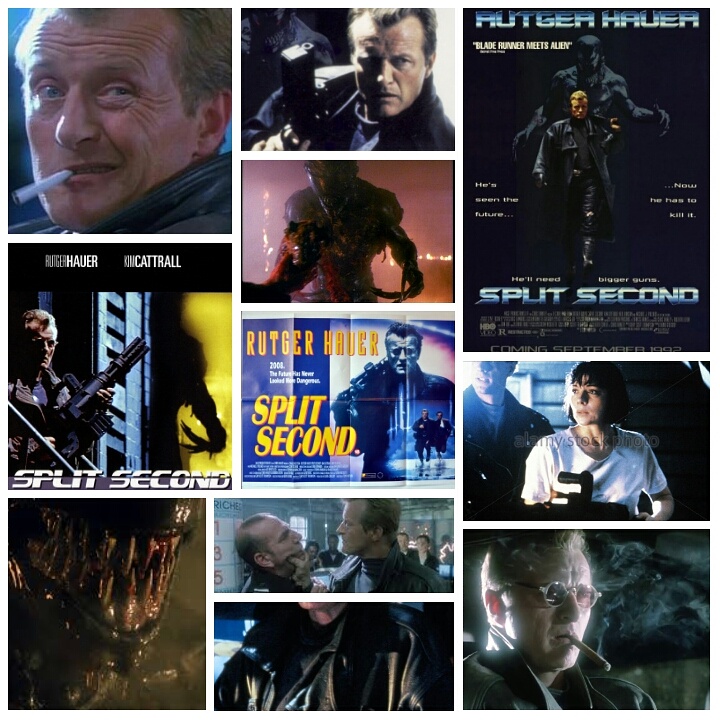
One of the better entries in a long and tedious career of B movies that Rutger Hauer has inexplicably slaved in, Split Second is actually a solid, enjoyable little flick with terrific action, atmosphere to rival any of the big budget films he did and a stoically deadpan performance from the legendary badass. The year is 2008 (lol the future), the place is London, and the sea levels have been rising fpr years, causing a few feet of water everywhere, leading to a stall in infrastructure growth. Hauer plays police detective Harley Stone, a gruff, take no prisoners shit kicker with a big gun who is searching the dank streets and shadowy clubs of London, looking for a killer who dispatched his poor partner a few years before. Only thing is, this ‘killer’ isn’t actually human, as Stone finds out in a series of well staged, murky shootouts in which the muzzle flares and smoke machines combine efforts (with hidden help from the low budget) to ensure we never get a good look at this beast until the bloody finale. Hauer is the perfect lone hero, a physically imposing presence with the laconic wit and unshakable charisma to match it. His Stone is world weary, laid back but dogged, and not without a bleak sense of humour. “I’m a cop” he sarcastically barbs, flashing his badge to a nightclub guard dog who wouldn’t know it from a hole in the ground. Kim Cattrall plays the female counterpart to the fight, and watch for Pete Postlethwaite in an early role as a pesky bureaucratic swine who gets in Stone’s way a few times. If you picture the hard hitting brutality of Predator, combined with the smoky ambience of Blade Runner you’ll have some idea. Admittedly it’s on a far lower budget and as such has to make do with it’s resources, but it does that just fine. Memorable little action creature feature.
Don Coscarelli’s John Dies At The End: A Review by Nate Hill
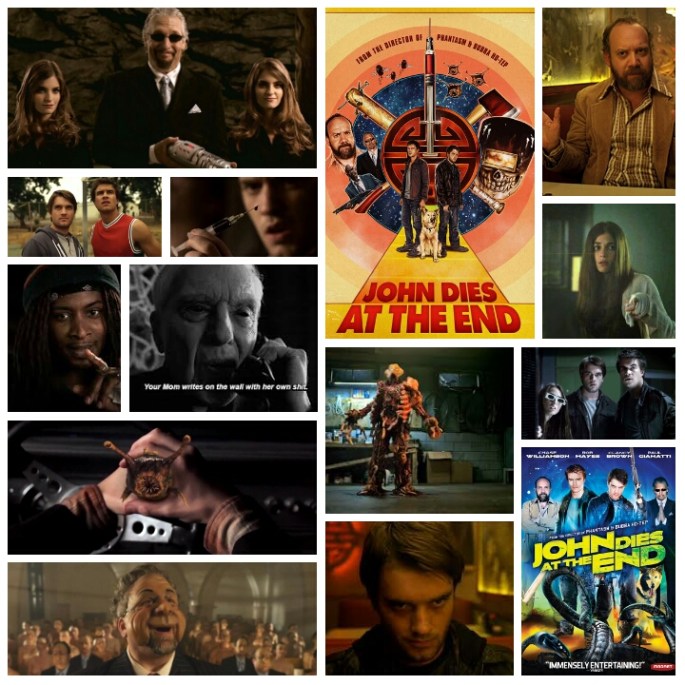
It’s almost impossible for me to describe Don Coscarelli’s John Dies At The End without either giving too much away, sounding ridiculous or just confusing the reader. It is a ridiculous film, in the sense that Buckaroo Banzai or Bill & Ted are, a completely batshit, near stream of consciousness horror hoot that somehow just makes sense on its own terms and in it’s own world. It all kicks off when best buds Dave (Chase Williamson) and trouble magnet John (Rob Mayes, pretty much a late 20’s version of Rob Lowe) decide to try a dubious wonder-drug amusingly nicknamed ‘soy sauce’, a narcotic known for its space/time/dimension altering powers, and pretty much a surefire way to descend into hellish but very funny chaos where nothing makes sense and the story takes a dime store turn into bizarre schlock worthy of a Troma special. Among the delightful surprises in store for them are time travel, a meat monster, an ominous rastafarian stranger named Robert Marley (think they’re so clever, don’t they), aliens, dildos that materialize out of nowhere and all kinds of weirdness exploding from a seemingly endless grab bag of retro looking special effects. Poor Dave rushes to find John before they’re hopelessly cornered by the forces of….. whatever lol, aided by his adorable amputee girlfriend (Fabienne Theresse) and a cop named “Detective Morgan Freeman”, who isn’t played by Morgan Freeman, before you ask. Somehow the film finds time for a brief appearance by Clancy Brown, playing some sort of super sonic Ghostbuster crossed with David Blaine (he’s actually great) and an overarching subplot in which Dave recounts all this hullabaloo to a skeptical journalist, played by none other than Paul Giamatti, whose reactions upon eventually coming face to face with the results of soy sauce are priceless. Did I do a good job describing it? Who knows.. I’m not even sure the film itself does a good job of describing it, but it sure has fun trying and I sure did watching it too. If Mystery Science Theatre tried to put on an X Files episode while loaded up on whatever William Hurt took in Altered States, it might look something like this. Director Coscarelli is most famous for Phantasm and Bubba Ho Tep (a personal favorite), so if you’ve seen those then you’ll have some kind of diving board of an idea as to what this one’s all about. Only, here he flips the diving board upside down, throws it into space and abandons any usual drawing board for something that gets pretty off the wall, even for him. I say bring it on.
Malevolence: Bereavment- A Review by Nate Hill
Back in 2003, director Steven Mena made an ultra low budget slasher effort called Malevolence, chronicling the brutal crimes of a kidnapped child named Martin Bristol, who grew up watching his abductor commit heinous murders in front of him, and as such became a monster himself. The torch of evil was passed, but we never got to see those early years and the inciting incident which led to such madness. Cue a prequel, entitled ‘Malevolence: Bereavment’, a detailed, suffocating and very, very disturbing account of Martin’s childhood initiation into the life of a serial killer, under the wing and at the hands of a madman named Graham Sutter (Brett Rickaby, a walking nightmare). He snatches 6 year old Martin (Spencer List) from a backyard swing, with designs on naming him as both protégé and acting as mentor, kidnapping locals in the area and subjecting them to unspeakable acts of violence and psychological experimentation, all in the name of some illusory philosophy that only makes sense in his diseased psyche. Meanwhile, a young girl (early work from Alexandra Daddario) moves into town to stay with her estranged uncle (Michael Biehn) and his family. While she tries to wade through a romantic coming of age story involving a local boy, events surrounding the killer’s actions get perilously close to everyone, and erupt into one of the most stressful, harrowing chain of events I’ve ever seen in a horror film. Biehn is Hollywood’s resident badass, but the genius in casting him here is that not even he is a match for Sutter’s tedious reign of terror, and it’s in such contrast that the film strikes despair right down to the bones. Sutter is barely human, with ninety percent of his dialogue spent on indecipherable rambling, making us feel all the more alienated by the fact that the only other human being around to soak up this toxic output is poor young Martin, on a clear path to mental destruction. These scenes are as lonesome and depressing as the acrid rural vista in which this all unfolds, and while we’re thankful for atmosphere and setting, we can’t wait to get out and breathe fresh air by barely the halfway mark, lest we choke on such overpowering despair. Keep an eye out for genre legend John Savage in a crotchety cameo, providing the film’s single iota of comic relief. As much of a vicious little sleeper as the first film is, nothing quite compares to the sheer bleakness and soul dampening evil they achieved this time around. Don’t go onto this one in a bad mood, it’ll mess you up.
Stephen King’s The Night Flier: A Review by Nate Hill
Stephen King, the master of deliriously high concept horror, strikes again with The Night Flier, a gruesome, clever and painfully overlooked HBO midnite movie, starring everyone’s favourite grouchy pants, Miguel Ferrer, or Albert Rosenfield to any good Twin Peaks fans out there. Via a creepy take on tabloid journalism and the insidious obsession it breeds, King and Co. take a look at the way words get twisted from fact to bombastic fiction, the jaded reality one arrives at after working too long in such a field, and the hilarious possibility that such ridiculous, “made up” horrors one fabricates might in fact be a reality. Acid tongued Ferrer plays Richard Dees, a bitter and depressingly cynical trash reporter who is one drink away from the gutter and two lousy stories away from retirement, an acrid soul who lives by the mantra “Don’t believe what you publish, and don’t publish what you believe” (a pearl of wisdom that I imagine is rattling around King’s own skull, when we look at the sacrilege being wrought upon his magnum opus The Dark Tower in its cinematic emergence, particularly in regards to the casting of Roland the Gunslinger). Dees is on the hunt for en elusive serial killer who pilots an unnamed Cessna across the Midwest, slaughtering people in and around remote airports before vanishing into the night. Vampiric in origin and very hard to track down, this fiend uses the dark as his ally and seems to slip uncannily across America’s airspace, leaving a wake of bloody murder in his path that gives any old tabloid yarn a run for its money. Jaded Dees gets more than his usual brand of hoaxes and pranks, and seems oddly, morbidly drawn to this spree of horrific crimes, eerily willing to follow the Night Flier into the very jaws of Cerberus himself, if only to find exodus from his pointless, roundabout existence. All of King’s beloved qualities are at play here; grotesque practical effects, gnawing existential calamity, a light at the end of a tunnel that seems to crush our protagonist before they can reach it, and clever morality plays buried like demonic Easter eggs amidst the corn syrup and latex. An overlooked treat.
Ti West’s House Of The Devil: A Review by Nate Hill
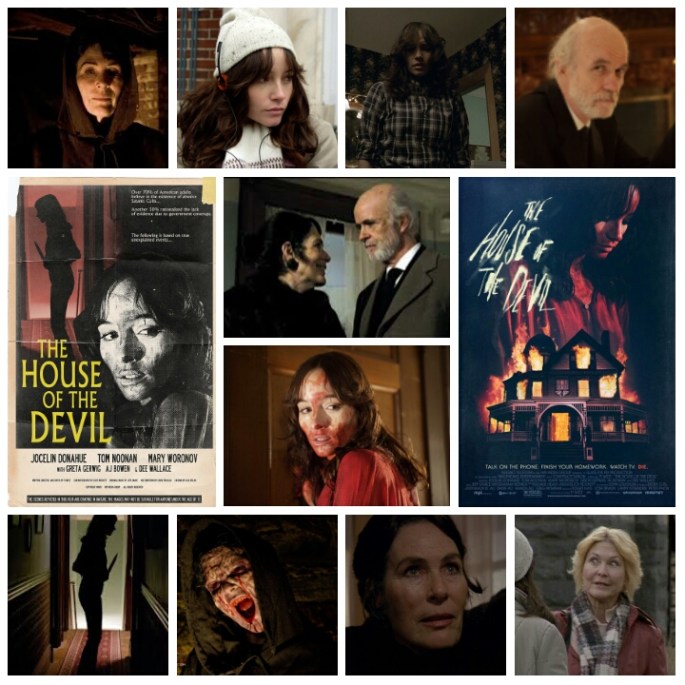
Throwbacks to horror films of the 70’s and 80’s either work or they don’t. The filmmakers are either able to replicate that specific tonal aesthetic and look from back then, or they aren’t. It’s not easy to do, but writer director Ti West makes it seem like a walk in the park with his near flawless House Of The Devil, a gorgeous love note to the satanic works of yester-year that so adeptly recreates that time and place until we really believe we’re watching a film that was made then. From the nostalgic hand drawn poster that beckons with atmosphere of a bygone era, to the use of full on, lovingly lettered credits ahead of the film, it’s pure vintage bliss, like that one perfect vinyl you find in the second hand shop. It starts out like many of these horrors do, with a young teenage girl (Jocelin Donahue) innocently wandering into a situation that leads down an inevitable path of gruesome terror. In this case it’s a seemingly innocuous babysitting job posted on her college notice board, by a cheery enough landlady (horror veteran Dee Wallace). Arriving at a creepy, ornate old manor, she meets Mr. and Mrs. Ullman, two gaunt, old world looking weirdos played by soft spoken yet disconcerting Tom Noonan, and genre legend Mary Woronov. They seem kind yet just kind of…off, explaining to her that the kiddies are alseep already upstairs, assuring an easy night for her. They depart and she’s left alone in the vast empty halls, or so she thinks. She’s been chosen for a bizarre, bloody ritual and soon is plagued by nightly terrors, a ghastly witch, the Ullmans themselves and all sorts of devilish deeds. Noonan could stand there and order a large double double with a honey dip and still make you uncomfortable, the guy is just perfect for horror, and makes a purring gargoyle of a villain for our our young heroine to go up against, backed up by Woronov’s nasty Morticia vibe. Eventually it gets quite graphic and startling, but the slow, solemn lead up is the key in making the horror shock us all the more. Nothing happens for an agonizing first half, filled with silent apprehension, and when all hell finally breaks loose, our nerves are already taut strings waiting to snap, like the ones in the shrill, ragged violin score. That’s how you pace a horror film, and many artists today should take note of this one’s pace, soundscape, mood board and production design, because it’s all about as good as it gets for this type of thing. Essential horror viewing, and I’d love to see a grainy VHS edition complete with box art, if that’s something they even do these days.
James Gunn’s Slither: A Review by Nate Hill
Slimy, icky, yucky and gooey don’t even begin to cover James Gunn’s Slither, a corrosively funny low budget schlock-fest that took the genre by storm a decade ago, charmed horror fans all over and put him squarely on the map. A throwback to many mindless low budget creature features of yore, but still with enough brains in its head (and some splattering the wall) to have decently written characters and a monster that doesn’t feel lame or copied and pasted. When a strange asteroid lands in the forests outside small town USA, it’s only a matter of time before someone stumbles across whatever it contains and becomes infected. That someone happens to be Michael Rooker, here playing the deftly named Grant Grant, local bigwig and proud husband to trophy wife Elizabeth Banks. There’s a deadly parasite with the rock, one that takes him over, turns him into a giant disgusting inbred octopus, and has apocalyptic plans for our planet. Nathan Fillion, who is in literally every Gunn film, does a sly and charming turn as the local Sheriff, never losing his cool long enough to let up with the attitude, and backed up by his trusty deputy (the lovely Jennifer Copping). Gregg Henry, another Gunn veteran, steals the show as the town’s sleazy, foul mouthed mayor who laments “I’ve never seen anything like this before, and I watch Animal Planet all the fuckin time!!!”. Rooker is a champ for sitting through all the makeup, as most of his scenes are him whipping around tentacles that chop people up and covered in a deluge of slimy deformations. There’s slug like parasites that’ll make you suirm (careful getting in that bathtub), morbid obesity to hilarious lengths, gore galore and a tongue in cheek attitude that’s irresistible. What more do you need from a horror comedy?
I DRINK YOUR BLOOD (1970) – A REVIEW BY RYAN MARSHALL
One look at David E. Durston and one might guess that he would be the least likely person to have directed one of the most genuinely shocking horror films of the 1970’s, and one brief glance at the truly ridiculous synopsis for his crowning cinematic achievement, I DRINK YOUR BLOOD, might cause one to anticipate that the sum will not indeed be greater than its parts. Billed during its time alongside I EAT YOUR SKIN, a voodoo cheapie straight out of the 60’s, this is the sort of film that we only think we know going in, although most viewers will soon discover that this is not the case. This is a curio and a half, an invigorating subversion of genre filmmaking that is as delightfully demented as it is thoroughly engaging. It wears its sleaze on its sleeves, devoid of any real pretentions; all thrills and chills with little time for filler.
We open on a naked fireside ritual being held somewhere in the woods amongst a group of hippies with a penchant for the dark arts, led by the exotic Horace Bones (Bhaskar, an Indian performance artist). They kill a chicken and drain its blood into a goblet before spotting a local girl (Iris Brooks) sneaking a peek at the action from between some trees, who is then chased down and raped by a couple of their men. Devastated, she drags herself back into the sleepy town of Sally Hills the next morning, where she’s taken into the care of her kid brother Pete (Riley Mills) and the owner of the town bakery, Mildred (Elizabeth Marner-Brooks). Her grandfather comes over to check on the poor girl and decides that these rowdy characters must be dealt with immediately.
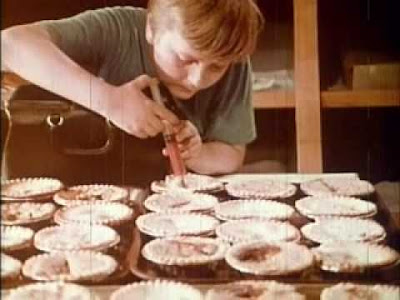
Meanwhile, the Manson-esque cult makes themselves at home in one of the town’s many abandoned hotels, where they run rampant hunting rats and destroying what’s left of the furniture. The grandfather grabs his shotgun and heads out the door in search of the group, but when he finds them, they take him down and he is force-fed LSD before returning home. Unable to stand by whilst his grandpa is in the throes of a bad trip, Pete takes the gun and goes out into the woods to do some snooping of his own. While exploring the woodland, Pete spots a rabid dog that charges at him, but he’s quick to shoot and after killing the wild animal, he takes some of its blood in a syringe. And what, do you imagine, he does with it? Why, what any other reasonable young fellow would – meaning that he injects the blood into some meat pies back at the bakery, which are then sold to the hippies.
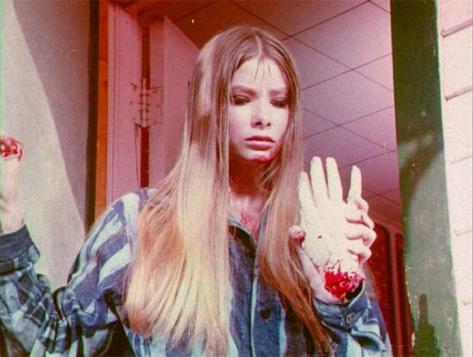
Everyone but Andy (Tyde Kierney), the suspicious and insecure local kid who somehow got mixed up in the group’s nasty business, digs in to the pies and you can probably – emphasis on PROBABLY – imagine where it’s going from there. What ensues is nothing short of sheer lunacy. Psychopathic – not to mention hydrophobic – hippies running rabid around a US ghost town, foaming at the mouth and spreading their disease far and wide. Durston goes all the way, trying his damned hardest to offend as many parties as he possibly can – religious folks, animal lovers, anyone with the tiniest glimmer of hope in the Good Old American Way – and he gets the job done with a more genuine style and class than one might expect.
Jacques Demarecaux’s work here (as cinematographer) should be commended, certainly more than it has been in the past, with his ethereal and startlingly naturalistic compositions complementing the film’s shamelessly nasty contents. Sometimes, filthy movies are shot beautifully, and this is one of them. However, it’s Durston’s willingness to manipulate tone and audience expectations that makes this a significant cut above the rest and it’s interesting to note that it doesn’t immediately register as a dark comedy for most viewers. This nevertheless appears to be the intention, or so the unforgettably over-the-top dialogue (“Let it be known, sons and daughters, that Satan was an acid head!”) and performances, totally psyched-out self-aware soundtrack (credited to Clay Pitts, who has yet to be found), blatant disregard for scientific fact and frequently amusing editing would suggest.

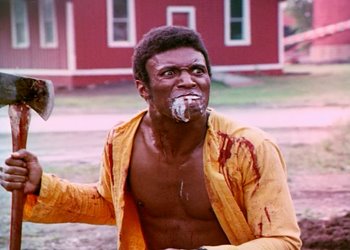
Sure, it all seems quite mean-spirited, but deep down it is the work of a man whose roots and interests were not necessarily in the macabre, and whose sole desire is to entertain. The tonal shifts may prove to be a bit much for some, alternating between hysterical hippie hangout and sad, disturbing body horror once the pies have been consumed, but they are undoubtedly what make up the film’s distinctive identity. For all their inherent crassness, one feels something akin to sympathy for the deadly deadbeats by the end of their separate ordeals, although it’s understood that they’ve made their own problems up to this point. As hard as it is to watch them destroy one-another, it does make for some spectacular set pieces, such as a sequence which has a mute Lynn Lowry wielding an electric meat carver, and another where Horace squares off against a fellow rabid Satanist, Rollo (George Patterson) in an axe-sword fight. There are many others, but one should embrace all the secrets and ask questions later.
The residents of Sally Hills are like lost souls occupying a space where time does not apply. Mildred looks as if she’s just walked off the set of a porno film, Pete’s an overly moralistic little shit who is most likely based on Durston himself, and the construction workers are an ugly bunch who show their true colors once the epidemic is well underway. A kind of hazy ambience hangs over the film, infusing it with a surreal sense of danger which in turn ensures that it never feels too relaxed. There is authentic tension here, and the pacing could not be more perfect; as mentioned before, there’s little time left for wandering around aimlessly. This is a spectacular entertainment as well as a surprisingly transcendent one and there even seems to be a running commentary about the deconstruction of the American Dream, but perhaps that’s all just as a result of context. It’s nothing that is explored in great detail, but these are the kinds of themes that can make or break a movie like this just by showing up (or not).
We feel as if we’re seeing something we shouldn’t, and the emotions that such an experience arouses from deep within are conflicting to say the least, but healthy nevertheless. The grime oozes consistently from this one – reach out and touch it and you might just learn something. I DRINK YOUR BLOOD revels in its absurdism and artifice, playing more like a perverted piece of performance art than a silver screen serenade, and also works well as an invaluable time capsule. Some films skate by on that alone, but luckily Durston’s opus has plenty more going for it. This is quintessential viewing for the insane, the unstable, and the amoral; it may be the closest some come to sheer filth without actually involving themselves directly. The title may be misleading, as there is no drinking of the liquid red at any point and this is certainly no vampire tale, but make no mistake – this is a groovy good time, an important entry in the unofficial “psych” horror sub-genre that is less about mind-melting visuals and more about the essence of psychedelia. Exploitation cinema doesn’t get much better. “Drink from his cup, pledge yourselves. And together we’ll all freak out!”
The Fourth Kind: A Review by Nate Hill

One should go into The Fourth Kind aware of a single important fact: Despite claiming to be based on a true story, and featuring numerous realistically creepy candid accounts, it’s essentially entirely made up stuff. People seemed to have a huge bee in their bonnet about that, but curiously weren’t bothered by it in The Blair Witch Project, another film guilty of the same gimmicks. Cinema is make believe anyways, and if the story works, then what does it matter. This is one of the scariest films I’ve ever seen, thanks to a few well orchestrated and very bizarre moments that transcend what usually gets passed off as horror these days. It tells the alleged story of several incidents and encounters with paranormal beings in and around Nome, Alaska, from the perspective of psychologist Abigail Tyler, played by Milla Jovovich in elaborate, atmospheric reenactments, and by Charlotte Milchard in terrifying newsreel testimonials. Something has come to Nome, and is causing not only disappearances but very, very weird behaviour among the townsfolk, and a general aura of poisonous unease. Abigail does her best to work with patients and locate the source ofnthe trauma without losing her mind or having an encounter herself. Her patients babble and rave, but there’s consistency to their claims, prompting her further belief and summoning of other experts, including a language specialist (Hakeem Kae Kazim) and an old colleague (Elias Koteas), who are equally as stumped. The town sheriff (Will Patton) believes her to be a complete whacko and does everything to hinder her efforts at every turn. Patton starred in another film that’s very similar to this, Mark Pellington’s The Mothman Prophecies, and his grave presence only perpetuates the same kind of eerie supernatural vibe, albeit far closer to outright horror than Mothman. The way the film shows the ‘real’ Abigail sometime following the events chilled me to the bone. She’s broken, haunted and speaks as if there’s a stain on her soul from some otherworldly force. The film knows what gives people that creeping, cold dread fear that we seek so desperatly in the genre, and gave me a fair helping of it. Whether or not the story is even remotely true is trivial; they’ve made a gruesomly scary tale out of it, and that’s what’s important. Also, you’ll never look at owls quite the same way after seeing this. Top shelf horror.