Some people give me funny looks when I say I enjoyed the Hobbit films. There’s this giant festering stigma around the entire trilogy that’s hard to wade through if you are one who geniunly did enjoy a lot of what Peter Jackson brought us with his second barrage of Middle Earth sagas. Now don’t get me wrong, there’s plenty of things he muffed up, the chief aspect being editing and length. We did not ask for, need or want an entire LOTR lenghth trilogy based on a book that could have fit into one volume of that series. Jackson has a tendancy to overreach, film too much and throw it all into his final cut. It started with the extended cuts of LOTR, which were somewhat unneeded, continued with King Kong, which could have been at least 45 minutes shorter, and has now climaxed with The Hobbit films. They’re so long and stretched out that at times we realize we’re not even watching stuff from Tolkien’s annexes or archives, but simply shit old Petey made up to pad the waistline of content that’s begging to be slimmed down. I’m still waiting for a fan edit that condenses everything down into what is necessary to tell the story, and pitch everything else into the purgatorial halls of DVD deleted scene land. And therein lies my argument: There’s gold to be found here, but a lot of folks are so turned off by all the unnecessary razzle dazzle that they have become blind to what actually worked. An Unexpected Journey kicks off the trilogy and definitely fares the best, feeling the most akin to the book. Martin Freeman is lovely as a young Bilbo, baffled to find thirteen rowdy dwarves dumped on his doorstep, the work of Gandalf The Grey (Ian McKellen, like he never left the role), who wishes to prod him in the direction of a most dangerous and thrilling adventure. Bilbo is a mild creature and deeply in love with the comforts of home, but is whisked along all the same, after a chaotic dinner party and plate throwing contest from this knobbly group of mountain dwelling pygmies. Orcs, Wargs, Goblins, colossal mountain giants and an appearance by the ever fascinating Gollum await them. There’s an interlude into Elrond’s heavenly glade where Gandalf, Saruman (Christopher Lee) and Galadriel (Cate Blanchett) have a little CSI: Rivendell episode with an ancient dagger that hints towards the return of Sauron. One thing Jackson added that is a highlight is additional wizard Radagast The Brown (Sylvester McCoy) an eccwntric hippie who rides a chariot led by massive rabbits in breakneck bouts of Need For Speed: Middle Earth with Orcs atop Wargs. A distinct feature about these films compared to LOTR is the ramping up of CGI; many Orcs are no longer stuntmen in gloriously goopy makeup, but giant computer rendered behemoths, taking some of the texture and authenticity away. Jackson also chose to shoot in many more frames per second than the human eye is used to, giving everything a strange, wax museum sheen that is pretty distracting. Close your bag of tricks and make us a goddamn straightforward flick Pete. Fuck sake. For all the issues, it’s terrific to be back in Middle Earth, however different it looks and feels. The production design is still an elaborate wonder of creative design and decoration, Howard Shore’s now timeless score makes a triumphant return and there’s a beautiful new song courtesy of the dwarves. Say what you want, bitch and moan til the Wargs come home, I love this first outing dearly and rank it nearly as high as LOTR. I can’t say the same for the next two, especially the exhausting Battle Of Five Armies which diminished my patience for Jackson and his tricks a whole lot. But, like I said, there’s always gold to be mined from the needless padding that’s been tossed in. One day someone will edit that perfect cut for us, and we’ll have that definitive Hobbit film. Until then, cherry pick the best parts and try to put the rest from your mind.
Tag: film review
Jack Pérez’s La Cucaracha: A Review by Nate Hill
La Cucaracha means cockroach in Spanish (duh), which is somewhat of an ironic and sad reference to the main character of this exquisite little indie character study, a damaged man named Walter Pool (Eric Roberts). Walter is a writer drowning in alcoholism as he spend his days hiding out in a Mexican shanty town. Wallowing in self despair, he’s the perfect protagonist just waiting for an inciting incident, and as we all know, rural Mexico is a breeding ground for trouble of all sorts to spur on a good campfire tale. While on a bender in town, Walter is approached by a shady American lawyer (James McManus) and offered a job with malicious implications involving the son of local Mexican mobster Jose Guerra (Joaquim De Almeida). He takes the task, but nothing is what it seems and he realizes he’s been set up, lied to and left for dead. Used to being a write off, something snaps in him and he fires up with a need to know the truth about Guerra and his family. He’ll wish he never bothered, because the truth is disturbing and not at all what you’d expect from this kind of tequila soaked, south of the border intrigue. There’s very little action, gunplay or usual thriller tropes, and pretty much all the narrative is left to the actors and the writing, making it very unique amongst this type of fare. This is essential for any Roberts fan, he’s not doing one of his extended cameos or winking supporting jaunts here. He’s front and center the entire time and owns it with vulnerability and resilience, especially in a curiously sad monologue that goes into his past and let’s us see some of what has led him to his unique, end of the road situation. Almeida once again plays a Latin criminal, but unlike most of the other times, he’s given something to do here besides wave a gun around and be the villain. He’s treated intimately by the script, giving Guerra a personality, secrets and a haunted soul of his own. The scenes later in the third act between him and Roberts crackle with charisma and potency. The cover of the dvd for this shows a gunslinger type guy brandishing two pistols. Ignore that fully. Nowhere in this film is there anything that can be branded as an action flick. It’s all about character, good and bad deeds, redemption, evil and choices we make. An astonishing little story that’s been seen by almost no one up til now, deserving of far more accolades.
MARVEL’S THE AVENGERS – A REVIEW BY J.D. LAFRANCE

The Avengers (2012) was the culmination of an ambitious project that was carefully planned by Marvel Studios over several years and spans several films utilizing characters, both major and minor, from each. While the notion of a shared universe with characters from one franchise appearing in another is a relatively novel idea in film, it is nothing new in comic books where costumed superheroes cross-pollinate all the time and even contribute to a larger story (see Secret Wars II). With Iron Man (2008), Marvel decided to do in film what they’ve been doing in comic books for decades. Its commercial success paved the way for subsequent adaptations of The Incredible Hulk (2008), Thor (2011) and Captain America: The First Avenger (2011), each one featuring a scene that hinted at something bigger and it has finally arrived with The Avengers, which features heroes from all of these films banding together to form a super team of sorts.
The challenge that Marvel faced was to find a director that could successfully bring all of these wildly different heroes together and also handle the movie stars playing them. Up to that point, Marvel had employed journeymen studio directors like Jon Favreau (Iron Man 1 & 2), Louis Leterrier (The Incredible Hulk) and Joe Johnston (Captain America: The First Avenger). But with Kenneth Branagh directing Thor, it was the first time the company had hired someone with auteurist sensibilities since Ang Lee and his fascinatingly flawed yet ultimately ill-fated take on the Hulk in 2003. And so, the hiring of Joss Whedon to direct The Avengers surprised some. With only one feature film on his resume – the cult film darling Serenity (2005), and known mostly for his television work on Buffy the Vampire Slayer, its spin-off Angel and sci-fi western Firefly, there was some question if he could handle a $200+ million blockbluster populated with movie stars.
Whedon got his start as a screenwriter and honed his chops over the years on T.V. sitcoms and as a prolific and often uncredited script doctor (Speed, Twister, etc.), but more importantly were his hardcore comic book fan credentials, having actually written a brief run for The X-Men, so he knew how they worked in terms of dialogue, plotting and depicting visual action – perhaps the most important criteria for The Avengers gig. It was a calculated risk that paid off as the film amassed an impressive box office result and received strong critical response.
The Tesseract, a powerful energy source that was featured prominently in both Thor and Captain America, has activated itself and appears to be trying to open a portal to outer space. Sure enough, exiled Norse god Loki (Tom Hiddleston) arrives with the intention of using it to take control of Earth and enslave its inhabitants. To this end, he brainwashes brilliant physicist Dr. Erik Selvig (Stellan Skarsgard) and S.H.I.E.L.D. (a top secret government organization) operative Clint Barton a.k.a. Hawkeye (Jeremy Renner) to help him do his bidding. This doesn’t sit too well with S.H.I.E.L.D. director Nick Fury (Samuel L. Jackson) and he decides to enlist Earth’s mightiest heroes to stop Loki.
This includes Russian super spy Natasha Romanoff a.k.a. Black Widow (Scarlett Johannson) who quickly finishes her “interrogation” of Russian gangsters to approach Dr. Bruce Banner (Mark Ruffalo), a philanthropic scientist now staying “off the grid” by working in the slums of India and trying hard not to unleash his Hulk persona, a being with superhuman strength that is off the charts. Captain America (Chris Evans) has been thawed out since being trapped in ice at the end of World War II and is still trying to sort things out with Fury’s help. S.H.I.E.L.D. also approaches Tony Stark a.k.a. Iron Man (Robert Downey Jr.), interrupting his work on a clean energy source. Norse god of thunder Thor (Chris Hemsworth), and Loki’s adoptive brother, is the wild card, arriving out of nowhere to intervene when Iron Man and Captain America attempt to capture him, resulting in an impressive skirmish. This all builds up to a spectacular climactic battle between Loki and an alien army that comes swarming out of the portal created by the Tesseract and the Avengers.
With the unfortunate exception of Jeremy Renner, the entire cast gets a chance to flex their acting chops the best they can between massive action set pieces. Mark Ruffalo, the third person to play Banner after Eric Bana and Edward Norton, really nails the human side of his character, playing him as slightly twitchy and paranoid drifter. He appears confident (because, hey, he can turn into the Hulk) yet distracted – a jumble of emotions. This is easily the best representation of the Hulk on film, both visually in terms of CGI and also how he’s portrayed – as a rampaging monster – the Mr. Hyde to Banner’s Dr. Jekyll.
Not surprisingly, Robert Downey Jr. gets the lion’s share of the funny quips – he was born to spout Whedon’s witty dialogue. It is a nice return to form after the cluttered rush job that was Iron Man 2 (2010). Based on Whedon’s perchance for having prominent strong-willed female characters in his projects, Scarlett Johannson’s Black Widow gets a beefed up role and proves to be an integral part of the team. Not only does she show off a considerable physical prowess but she also holds her own against the likes of Robert Downey Jr. and Mark Ruffalo.
Chris Evans and Chris Hemsworth carry on with their characters from their respective films without missing a beat, each adding their own unique flavor to the team. In particular, Evans does a good job when Captain America steps up and takes tactical control during the war in New York while Hemsworth has some nice moments with Tom Hiddleston as warring brothers who just happen to be gods.
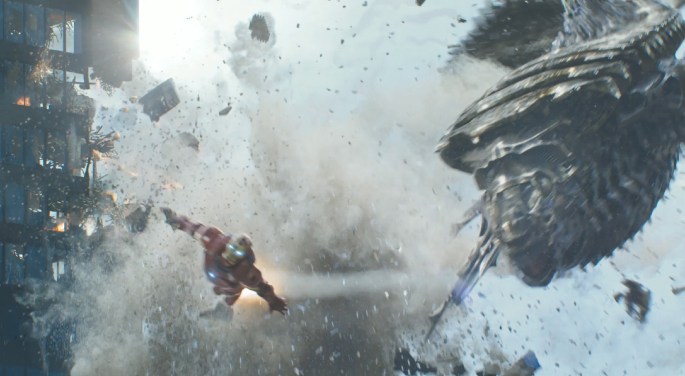
The Avengers is chock full of eye candy for comic book fans, from the S.H.I.E.L.D. Helicarrier to actually seeing superheroes fight each other – something, oddly enough, you don’t see in most films but that happens all the time in the comics. It is pretty cool to see the likes of Thor, Iron Man and Captain America duke it out while engaging in playful superhero banter. Unlike the other Marvel films starting with and including Iron Man, Whedon creates a real sense of danger for our heroes. There’s a feeling that they might fail and this tension is thrilling because it is so rare in these kinds of films, except maybe The Dark Knight (2008). It also raises the stakes when Whedon’s film needs it because there is a real sense that the Avengers are fighting for something tangible. He gives them something personal to fight for than just the usual let’s save the world goal. This culminates in the climactic battle in New York City between Loki and his alien army and the Avengers in one thrilling sequence after another, each filled with large-scale slugfests. The choreography during this massive battle is top notch. There is never any confusion as to what is happening and where, which is quite refreshing. The end result is pure, unfiltered comic book geek nirvana.
The Avengers falls rather nicely within Whedon’s wheelhouse as it is all about a group of misfits that band together to save the world from a great evil, just like Buffy the Vampire Slayer, Angel, Firefly, and so on. It doesn’t get any more disparate than a Norse god, a billionaire playboy, a World War II super soldier, a brilliant scientist, and two spies. Like much of the aforementioned work, the heroes in The Avengers bicker and fight amongst themselves but when the need to step up for the greater good arises, they put their differences aside and make a stand together. Loki continues in the tradition of eloquent Whedon villains who are incredibly confident because, well, in his case he wields great power and knows it. However, Loki isn’t just out to rule the world. For him, there is a personal component – he seeks vengeance for the slights he feels were incurred in Thor. This film was a great way to kick off the summer blockbuster season in 2012 and is a potent reminder of what a filmmaker who knows how comic book works can do if given the chance. The result is a smart, witty film that is a throwback to entertaining, crowd-pleasing comic book adaptations like Superman: The Movie (1978) and Batman (1989).
B Movie Glory with Nate: Sensation
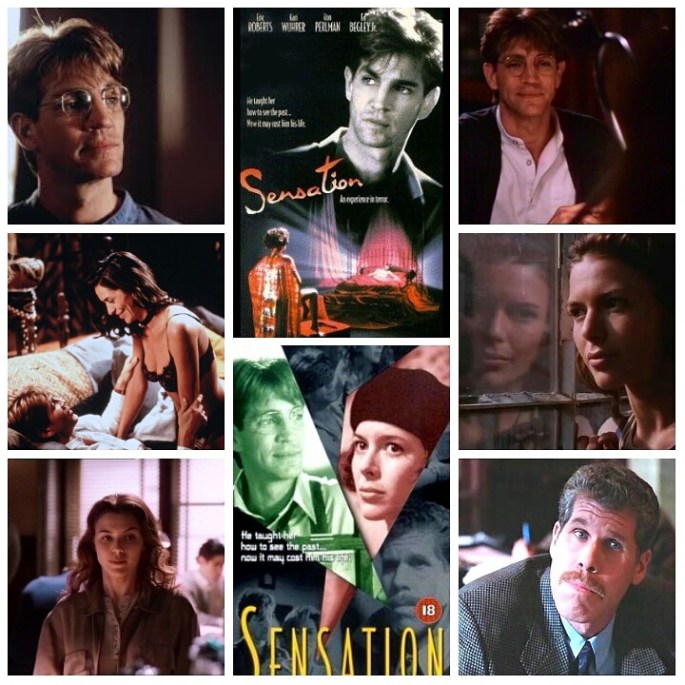
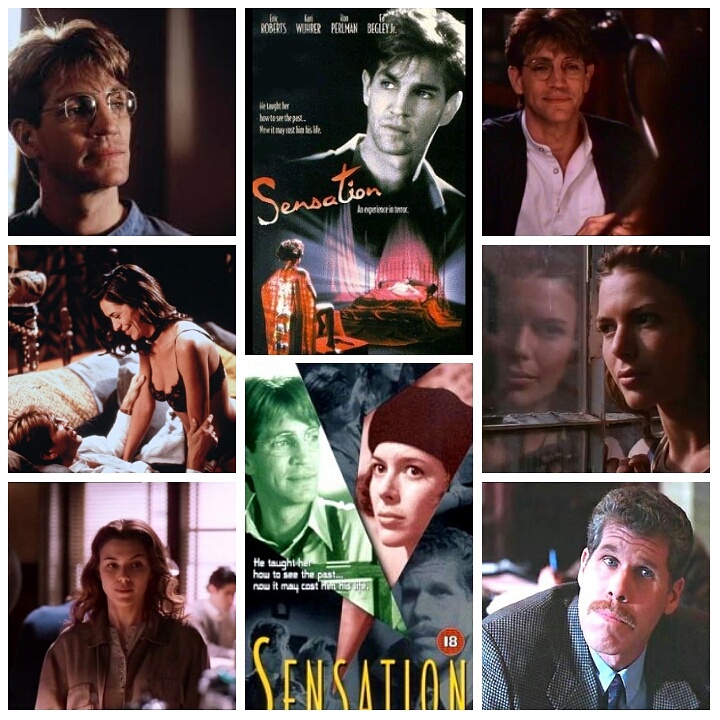
Sensation is a very erotic thriller that breathes hot, heavy and hard all over its audience, almost overpowering the murder mystery at it’s center with the large number of sex scenes throughout. It’s essentially trash, and wouldn’t be worth much of a mention if it weren’t for some great actors, and an opening score that sets an eerie mood the film hardly deserves. Eric Roberts is Dr. Ian Burton, a college teacher who is looking for people with vague psychic abilities, for some sort of research. Enter stunning Lila Reed (Kari Wuhrer), a student with the unique ability to experience an object or person’s past simply by physical contact. Roberts is in fact looking for the person who murdered his lover, unbeknownst to her, and jumps at the chance to use her talent for his investigation. Many suspects run about, there’s sex scenes between Roberts and Wuhrer, in which her abilities flash back to… even more sex scenes from the past, and it’s all a wee bit disorganized, but oh well. Ron Perlman, always welcome, shows up as a Detective who thinks he can crack the case, winding up in over his head as well. There’s also a bizarre and inexplicable cameo from a creepy Ed Begley Jr. who hassles Kari in a bar and runs off as quick as he showed up, never to be seen again. It’s sleazy late night cable fun, without much to go crazy over except the actors, and that score I mentioned. Oh and.. you know… all the naughty bits, of which there is an overload
Remembrance: A Review by Nate Hill
On a chaotic summer day among the poor souls in a horrific Polish concentration camp, 1944, young inmate Tomasz (Mateusz Damiecki) is desperate. German jew Hannah (Alice Dywer) is almost certainly meant for death at the hands of the nazis running the facility. The two have fallen hopelessly in love, and he knows he must get her out and far, far away before it’s too late. In an impossibly courageous effort and in a scene that will pummel your nerves, he uses a stolen SS officer’s uniform, scoops her up from the workhouse wing and quietly leads her right out the front gate. The two disappear into the neighboring Polish woodland in what is one of the only escapes from a nazi concentration camp ever documented. It’s a bold, thrilling, stirring way to start the film, whether or not you know of its origins in actual history. That kind of escape from a place so hellish is a collective sigh of relief from both audience and characters, and it’s one nail biter of an emotional ring of fire we all are forced to jump through. But we know this isn’t the end, the resolute happiness we so wish for these two, because the film has only just started. In the confusion near the end of the war, the two of them are separated, and move forward in life each believing the other to be dead. This is all interspersed with visions of Hannah’s life far in the future of 1976, now married, in her 50’s and played by the sensational Dagmar Menzel. In a dry cleaner shop one day she happens to see a talk show on European television, where a man recounts his daring rescue and escape from Auschwitz. The details are eerily similar, and Hannah’s mind races. Could this be Tomasz? Could he be alive after all these years and most importantly, should she go to him despite the gulf of time that signifies their prolonged separation? The film tugs at your heartstrings in so many different ways and moments, effectively hanging your tear ducts out to dry. No one can say no to a good wartime romance, because the formula is just too workable. Amidst all that confusion, terror and violence it is essential to find some sort of good with which to combat the dark, and what better way than the strongest force of all, love? Dywer and Damiecki are beyond convincing in their roles, so clearly blessed and burdened with that go for broke, die for one another type passion that we all look for and seldom find. American actor David Rasche plays Hannah’s husband in New York, clearly torn up by the tumultuous past rearing it’s head in their lives, but willing to empathize with the woman he loves and strive to do what’s best in this difficult situation. Menzel is conflicted, hurt, hopeful and utterly, convincingly reactive in a role that’s just not an easy one to pull off. Director Anna Justice uses majesterial skill to get the flow of story just right from scene to scene. Narratives which skip backwards and forwards in time can often feel jagged and unfounded in cohesion, but this one ebbs and flows from moment to moment without a single beat skipped or turn of plot out of place. I did some research on the true life tale this is based on, and for the most part they have stuck to fact to bring us as story that’s almost unbelievable, and deeply emotional. Remembrance is a keeper.
How To Train Your Dragon 2: A Review by Nate Hill
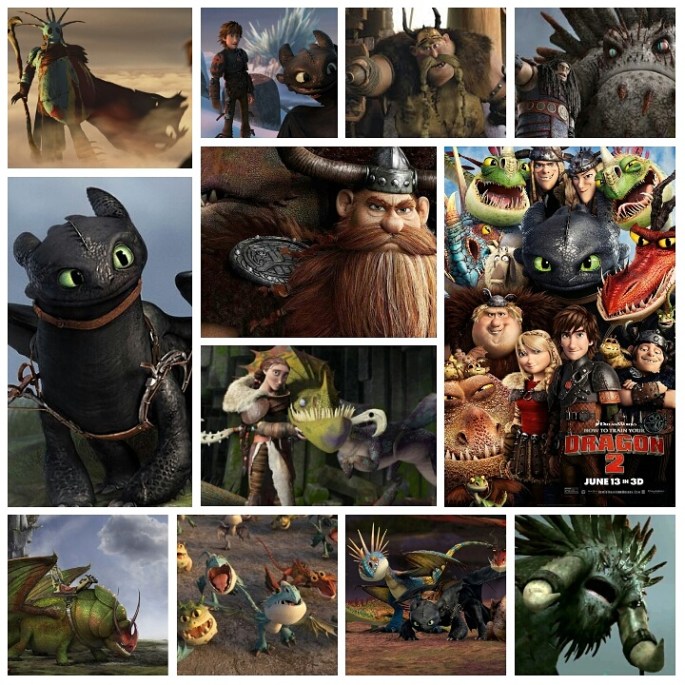
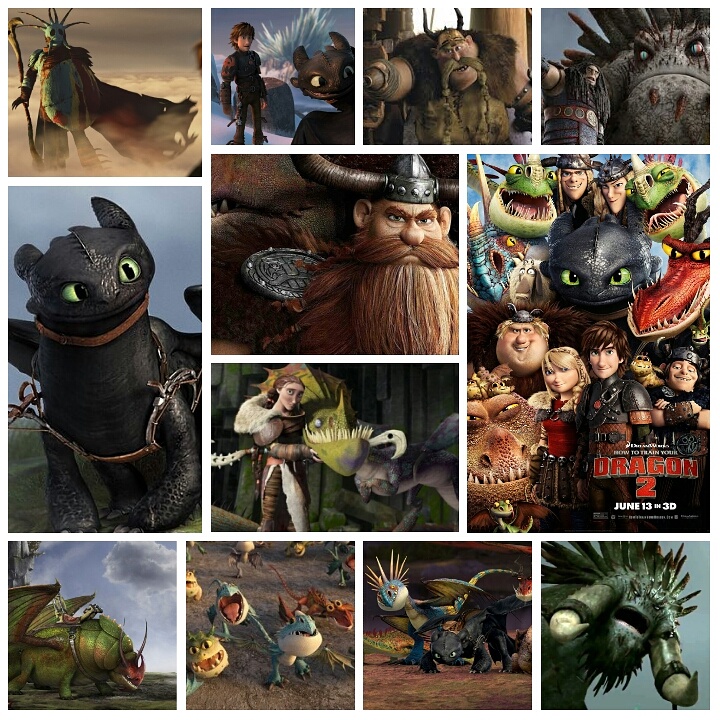
How To Train Your Dragon 2 takes what made the first adventure so special and blasts it even further into the stratosphere of animated thrills and creature comforts, all set to one of the finest scores I’ve heard in recent years, in a cartoon or otherwise. Sometimes sequels forget the ‘less is more’ adage and pile on way too much in order to outdo their predecessor, but this one gets the formula, adding in all the right places while keeping the core of the story alive. There’s also impressive and eye boggling new dragons, which let’s face it, are the reason we show up to these movies anyway. We rejoin again with Hiccup (wiry Jay Baruchel) after he has tamed the gorgeous night fury dragon Toothless, earned the respect of his grouchy father Stoick (Gerard Butler) and proved to his entire viking settlement that dragons are useful friends when treated kindly and understood on their own terms. Life is good, but not for long, as the pair of them discover a mysterious ice cave far on the border of their lands, home to thousands of new breeds of dragons, and watched over by the Dragon Rider (Cate Blanchett), who has a connection to Hiccup’s past. They are all of them under threat by tyrannical warlord Drago (a fearsome Djimon Hounsou) who commands an army and operates out of fear, putting everything the Vikings hold dear in danger. Hiccup must rally all his friends, family and every dragon in their land to fight this menace, all captured in devastatingly beautiful CGI animation that really is a marvel in the medium. Craig Ferguson returns as crusty Gobber the stable master, as do Jonah Hill, America Ferrara, Christopher Mintz-Plasse, Kristen Wiig, T.J. Miller and newcomer Kit Harington. The best part for me was seeing Toothless again. She’s a stunning, adorable little viper of a rascal who won me over fully in the first film, and it was a joy to see her return. There’s all manner of elaboratly rendered dragons on display, and they’re fantastic no doubt, but she just has that winning charm and unique appearance, not to mention flawless efforts by animators in bringing her to life. This sequel, dare I say, tops the first in many ways, without ever overshadowing it or resorting to show-boating. It’s the perfect companion piece.
The Specialist: A Review by Nate Hill
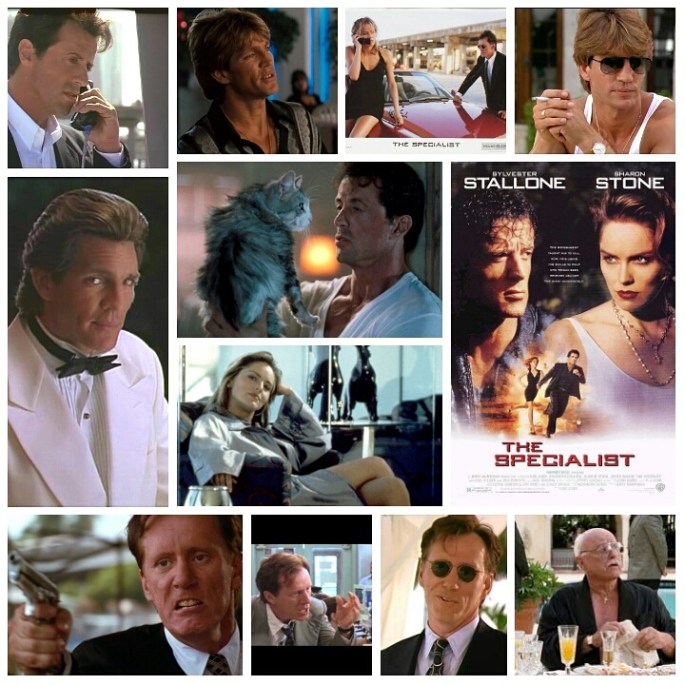
The Specialist is everything that action was about in the 90’s, and simply one of the most exhilarating Stallone flicks out there. This is the type of early career stuff he tried to infuse into his meta action extravaganza The Expendables, and while fun, those films always seemed like a mimicry of original gold like this, trying a little too hard to recreate feelings from a bygone era. This one is right up there with Nighthawks and Rambo as one of his best, despite a lukewarm reputation that has long since settled. You can’t even find a decent dvd of it, which is kind of sad. Sly plays Ray Quick, an ex explosives special ops tough guy who turned in his talents after a falling out with former livewire partner Ned Trent (a rabid James Woods) resulted in needless bloodshed. He spends his days moping around Miami until his services are once more required, by a woman in trouble. Sharon Stone is mysterious May Munro, whose entire family were slaughtered when she was but a young’n hiding in the closet. The mustache twirlers responsible are Cuban mafia don Joe Leon (Rod Steiger juggles his accent like three filing cabinets) and his brash, violent son Tomas (Eric Roberts, never scummier). They have anticipated Ray’s involvement though, and as soon as bombs start decimating their lovely beachfront nightclubs, they hire none other than (guess who) James Woods, now a berserker of a freelance mercenery, to hunt our hero down. It’s big, bold and full of explosions, machismo, gunfights and old school bad boys doing what they do best. Woods nearly walks off with the whole film in a performance so robust it almost outshines the pyrotechnics themselves. Stallone dispatches hordes of baddies using both fists and fancy C-4 gadgetry, bringing home the action bacon enough to sate the fans. Using the sweaty, neon spattered locales of Miami as a playground for these heightened characters to leer at one another and blow everything to smithereens, the filmmakers have forged what I consider to be one of the best in the genre for the decade.
Lasse Hollstrom’s The Shipping News: A Review by Nate Hill
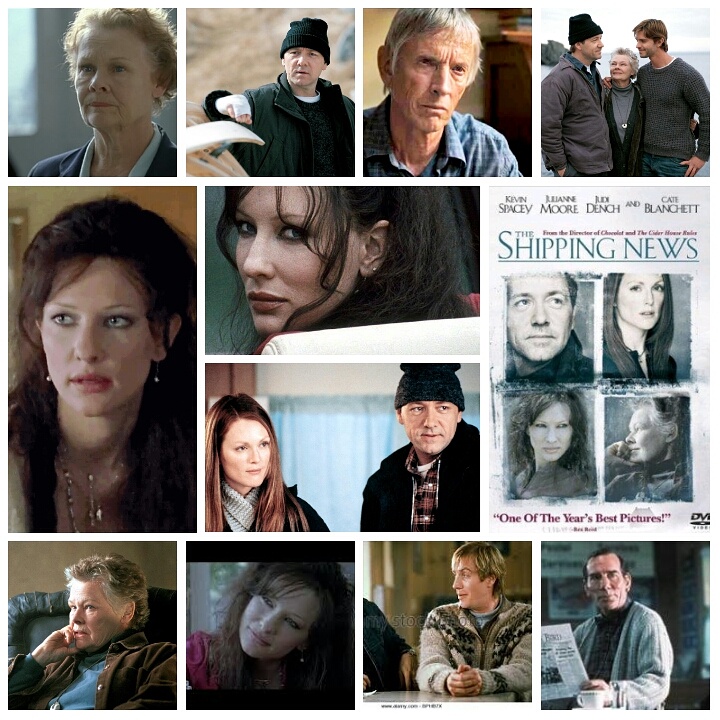
Lasse Hollstrom’s The Shipping News is two thirds of a great movie, but unfortunately has a first act which introduces it’s main character in the most heavy handed of ways, and sort of shoots itself in the foot. It helps that the rest of the film is lovely, but it takes some time to get the sour taste out of your mouth. Kevin Spacey is Quoyle, a meek milquetoast dude who has spent his entire life moping and whining, constantly being walked all over and never standing up for himself, starting right from his childhood relationship with his father (Jim ‘sippy poo’ Lahey, the glorious bastard). He’s so pathetic and such a loser that one wonders where can you go from here, and why did Spacey choose to start his arc at such a sad extreme, instead of livening it up a bit? By chance (and I mean chance) he marries Petal ( half mad Cate Blanchett), a wayward woman-child with barely an ounce of sanity or sensibility in her, and has a daughter with her. She runs off to a tragic self inflicted end, and he is left to raise the girl. Suddenly he receives news that a relative has passed in a small coastal fishing village his ancestral home of Newfoundland, so he packs it in and the two of them head on out there to begin anew. From there it’s an awakening for him, and bit by bit his character becomes believable and tolerable, two traits that were simply not there up until this point. He meets a long lost relative (a salty Judi Dench), befriends a local gal (Julianne Moore), starts working for the gruff local newspaper magnate (Scott Glenn, wonderful) and essentially finds a self within him that he never had before, a life to fill the pointless void he’s lived in for his whole existence so far. The town is charming, the atmosphere authentic and the acting terrific, including Rhys Ifans and the late great Pete Postlethwaite. I just wish the first act could have measured up to the rest and not stuck out like such a misplaced and noticeable sore thumb. Hallstrom has an ear for intimate, rural set family drama (check out An Unfinished Life with Robert Redford fpr his best work), and for the most part, this one delivers the goods.
Notes On A Scandal: A Review by Nate Hill
Notes On A Scandal shines an unblinking and often bitterly tainted spotlight into what makes people tick, how they interact with one another and what a slap in the face it can be when you see what they really think and feel, independent of how they may carry themselves in public. Judi Dench is acid personified as an older woman and veteran teacher at a local high school, who’s ranks have recently been joined by a younger art instructor (Cate Blanchett). Dench is jaded, her only friend being her cat Portia, and has an insidious habit of keep a diary in which she writes down prickly little barbs about everyone and everything around her, often cruel and judgmental in nature. She takes a shine to Blanchett, who is married to a much older and renowned man (the excellent Bill Nighy) and has every vibrant thing in life that Dench is bereft of, left with the vacuum of her own empty existence. She envies, aspires to and resents Blanchett’s existence, and pours a malicious cocktail of verbal attacks into her journal, safe in the knowledge that it’s just as personal and private as her own thoughts, and that she’ll never be found out. Or will she? I’ve lived long enough to know that secrets you try to hide have a way of working their way to the surface, becoming known and hurting those you love or try to connect to. Speaking of secrets, things get incredibly complicated when Blanchett gets caught up in a torrid affair with a teenage boy she teaches, lured in by lust’s song and deaf to consequence, which is something that befalls us all more than we’d care to admit. Dench thinks she can use her knowledge of the affair as leverage to get what she wants, which she may not even be sure of at all, beyond it obsessively involving Blanchett. The two of them are dynamite as two sides of the many faced coin of ambiguity. The human behavior in this film somewhat defies the usual story structure and parameters of character we are used to in film. Decisions are arbitrary, ugliness is exposed, people are contradictory and confused in a way that leaves them stranded without beats to fall back on with their work. High praise is deserved to a piece this honest and willing to explore these places.
Phil Joanou’s Heaven’s Prisoners: A Review by Nate Hill
Phil Joanou’s Heaven’s Prisoners is a great little sweaty southern crime yarn that, as I recall, went through a modicum of production hell which some people seem to think stunted any chance it had. I for one think it came out just fine, a moody little neo noir with an intense yet laconic turn from Alec Baldwin, a gorgeous lineup of femme fatales to contend with played by some of the most talented gals out there, and a wily supporting turn from a cornrow sporting Eric Roberts. Baldwin plays Dave Robicheaux, an ex New Orleans who is rousted from tranquil relaxation on the bayou when a mysterious Cessna plane crashes into the marsh near him. Upon exploring it he turns up a considerable amount of drugs, no doubt on their way from somewhere bad to someplace worse. This is the catalyst for a whole whack of trouble falling into his lap, literally and figuratively. He is drawn into a lethal dragnet involving corrupt DEA, his old pal and drug lord Bubba Rocque (Roberts, a prince in the limited screen time he gets), his dangerous moll (Teri Hatcher, sexy and malicious), and more. Baldwin navigates it all with a cold eyed cool of a professional who has been to these places before, both as actor and character. The stakes are high though, as he has a wife of his own (Kelly Lynch) who could potentially be dragged into the mess, and a former flame (Mary Stuart Masterson) who blows back into his life like a tropical storm cell. This film is based on a series of novels by James Lee Burke, all starring Robicheaux and chronicling his hard boiled adventures. You can also check out the excellent In The Electric Mist, another of these yarns from 2008 where Tommy Lee Jones takes up the mantle. Joanou knows the ropes and rigs of film noir, and paces this baby nicely, never too loud or proud and always with the laid back, simmering vibe of the south.