Elmore Leonard’s Killshot: A Review by Nate Hill 

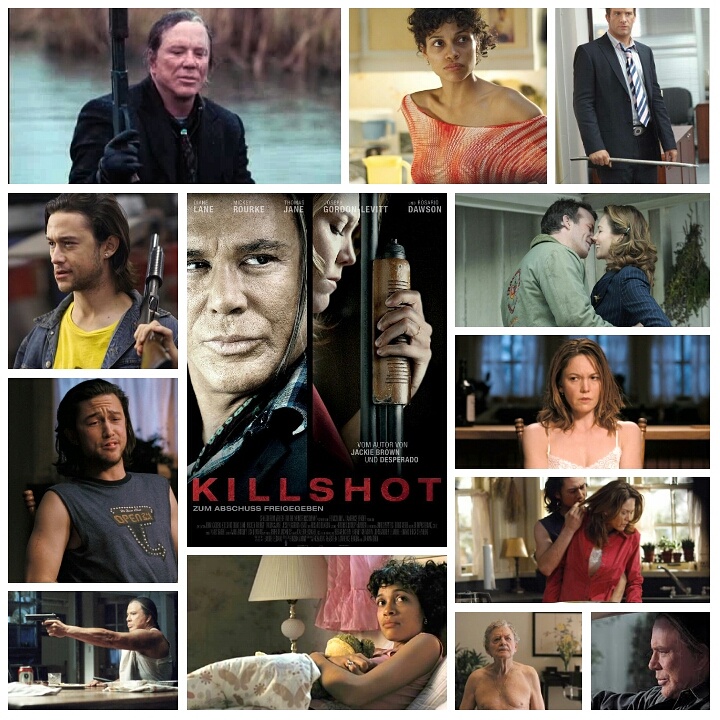
John Madden’s Killshot went through the ninth ring of production hell before it was finally released in 07 or so, after like three years of gathering dust on the shelf. The resulting film didn’t win anyone over who waited all that time with baited breath, because you can see the cuts, chops and gaps in story where it’s been muddled around with, no doubt by the fuckwit studio. I still love it, flaws and all. Based on an Elmore Leonard tale (you can never go wrong with his work, it’s a sombre tale of psychopaths, assassins and one hapless estranged couple (Thomas Jane & Diane Lane) caught in between. When legendary native american hitman Arman ‘The Blackbird’ Degas (Mickey Rourke) botches a job for the Toronto mafia, he’s forced on the run, and hides out with aimless young lunatic

criminal Ritchie Nix (Joseph Gordon Levitt), who somewhat reminds him of a litte brother he lost years before. Rourke pulls off the native angle quite well, and shows vague glimpses of a humanity that was once there and has long since been buried in violence. When Jane and Lane accidentally witness him murder someone, he won’t let it go, pursuing them beyond rationality or reason, even to his own end. Levitt never gets to play the wild card, and he rocks his redneck sociopath brat role with scary aplomb. Rosario Dawson has an odd appearance as Ritchie’s girlfriend, an elvis fan who is seemingly a little bit challenged upstairs. Watch for a cameo from Hal Holbrook as a crusty old mobster too. You’ll just have to imagine the federal agent character played by Johnny Knoxville though, because he never made it into the film and can now only be seen in ages old trailers that were a false start. Despite it’s issues, I find it to be an atmospheric little pulp outing that does have the classic Leonard feel, a hard bitten, cold-hearted turn from Rourke that’s one of his best characters in recent years, and a mean, unforgiving narrative set in picturesque northern Canada. Give it a shot, it deserves way more love than its received so far. 

Jason Bourne: A Review by Nate Hill 

He’s back, baby. God it’s so good to see Jason Bourne doing his thing on the big screen again, especially in a flick that’s every bit as excellent as the original trilogy in all the old, good ways, while adding a few twists of its own that suit the digital age we have progressed into, and the concerns which go hand in hand with it. It’s been sometime since Jason swam away out of frame as an unsure news report claimed that his body was never recovered, and a slow smirk spread over Nicky Parson’s (Julia Stiles) face as she observed on TV. With ex CIA director Kramer (Scott Glenn) no doubt incarcerated, the agency is headed up by the worst apple of the bunch so far, Robert Dewey (Tommy Lee Jones), a surveillance hound dog who has ties to Bourne’s past and wants to use a record breaking social media app to illegally spy on users for ‘national security’ purposes (heard that one before). Scary stuff, but simply a backdrop for Bourne to come speeding back onto their radar and make hell for them, after Nicky hacks the database and spurs him on. Damon is beefed up, weathered and has never been more furious as Bourne, and if you thought his revenge rampage in Supremacy was something to behold, just wait til you see these fireworks. It feels a bit more intimate than the last three, with a lot of time spent on Bourne, and less agency types howling in control rooms and backstabbing each other, save for Dewey and his eager beaver protégé Heather Lee, played by Alicia Vikander in a slightly perplexing character arc that I’m still trying to think through. She has her own agenda, clashing with that of a ruthless rogue asset (Vincent Cassel is going grey, but damn he can still run around like nobody’s business) that Dewey foolishly sends after Jason. Paul Greengrass is back in the director’s chair again, and after this chapter I can honestly say I think he’s the best captain  to ever sit at the helm of a Bourne flick. He just has this way with action that never feels too stylized or obviously cinematic, while still delivering a pure rush of thrills that exist in a realistic space. There’s an early scene taking place in Greece during a dangerous riot that feels like they just dropped the cast and crew in the midst of a real life police skirmish and started shooting, in more ways than one. My favourite has to be a thundering car chase down the Vegas Strip in which a SWAT tank causes a jaw dropping bout of vehicular Armageddon. Sounds too over the top for a Bourne flick, right? You’d think, but somehow they just make the thing work and stay within the parameters of this world. I had this fear that they wouldn’t be able sneak another Bourne movie onto the back end of an already perfect trilogy without it feeling out of place. While it certainly is different than it’s predecessors (we live in a radically different time), it still has that magic, feverish rush that I love so much and that has carried the franchise along on wings of adrenaline. A blast. Cue Moby’s Extreme Ways to play out my review. 

Sin City: A Review by Nate Hill 

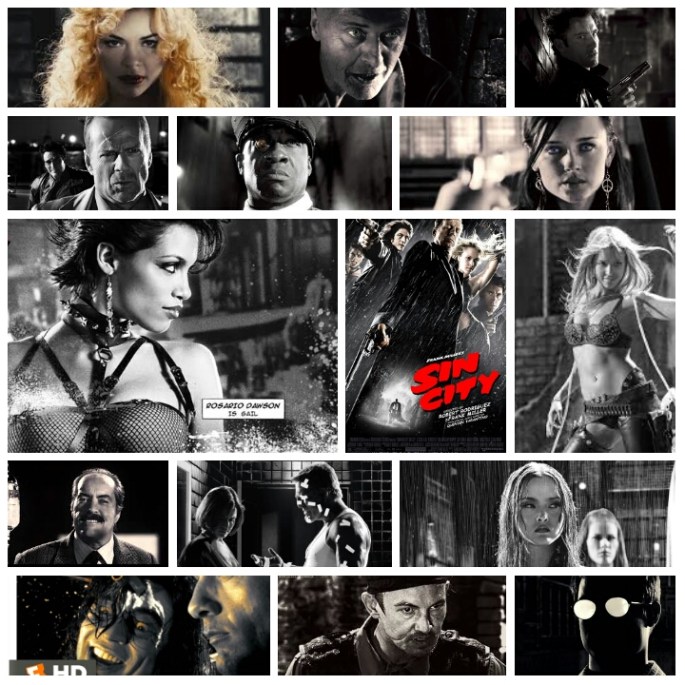
I remember seeing the edgy character posters for Robert Rodriguez’s Sin City hanging on the movie theatre wall when I was younger, having no idea what Sin City was or any knowledge of the books, but thinking they looked incredibly cool and enticing. Then the trailer came out, and it was all I could think, talk or breathe about for months leading up to its release. I was obsessed. When opening weekend arrived I got my dad to take me, and spent two unforgettable hours of cinematic nirvana in a dark auditorium that was packed to the gills with fans old and young alike, each basking in the delectable black, white and colour speckled glow of the piece unfolding in front of us. I had never seen anything like it, and it blew my system into sensory orbit like nothing had before. Around this time I was just discovering a lot of Rodriguez’s and Tarantino’s career, poring over pulp and crime thrillers from all across the decades as my love for cinema expanded, and this was something I just knew would be special as soon as I saw that first provocative teaser poster. The innovation and artistic ambition used by the ever resourceful Rodriguez and his team led to gleaming critical reception, a massive box office hit and one of the most gorgeous pieces of art in the motion picture realm. His decision to simply lift the still frames out of Frank Miller’s graphic novels was something that not every director would be able to go along with, let alone wrap their minds around (director’s are a finicky lot who always have thir own bright ideas, even when the source material is already gold). Rodriguez was so in love with the books that he envisioned them onscreen just the way they were drawn, and that’s pretty much what you get in the film. The pre-credit sequence sets the dark, vibrant, moody and impossibly lurid setting of Basin City, a rotting heap of corruption  where almost everyone is either corrupt, sleazy or just outright evil, and even the ones that aren’t deal out some pretty heinous bouts of violence themselves. The prologue involves girl in in a red dress (Marley Shelton) conversing with a mysterious, well dressed man (Josh Hartnett). The scene takes a turn for the dark and tragic, we zoom out as Rodriguez’s self composed gutter lullaby of a score grinds into motion, and the glowering opening credits trundle by, a moment of a pure joy for anyone watching. The film is separated into three central vignettes, each from a different volume of the comics. The first, and strongest, features a sensational Mickey Rourke as Marv, a hulking bruiser built like six linebackers and basically impervious to anything that could kill a human being. After a heavenly night with hooker Goldie (Jaime King), he wakes up to find her lying dead next to him, not a mark on her. This gives his set of talents a purpouse beyond bar fights and roughing up abusive frat boys, and he wages a war of ultraviolence in her name, to his grave if he must. There are some villains in these stories that seem to be dredged up from the very bottom of the last pit of hell, just the worst of humanity’s many deplorable qualities. Marv eventually runs into evil arch bishop Cardinal Roark (a devious Rutger Hauer) and insane cannibal ninja sicko Kevin (Elijah Wood will haunt your nightmares)., on his bloody quest. Rourke’s genius even shines out through 12 pounds of prosthetic makeup slapped all over his mug, and he captures the wayward warrior soul in Marv, a restless anger and old school, Charles Bronson esque charm by way of Frankenstein’s monster. His work is a great way to kick off the first third of the film, and the gravelly narration hits you right in the film noir nostalgia. The second segment is a lot more lively, with far more people running around, sans the melancholy of Rourke’s bit, and instead emblazoned with a war cry of a story starring Clive Owen as Dwight, a hotshot tough guy who gets on the wrong side of seriously scummy dirty cop Jackie Boy (a growling Benicio Del Toro having a ball) who likes to beat up on waitress Shelley (Brittany Murphy). Dwight pursues him to Old Town, a district run by lethal militant prostitutes lead by no nonsense Gail (Rosario Dawson can use that whip and chain on me anytime). Then everything goes haywire (I won’t say why), and Michael Clarke Duncan gets involved as a weirdly articulate, golden eye sporting otherworldly mercenary named Manute. This middle section is the one that feels most like a comic book, where as the other too have more of a noir flavor, like their old Hollywood roots. The third and most depraved chapter (which is no light statement in this town), sees aging Detective John Hartigan (Bruce Willis) lay his life down in order to protect young Nancy Callahan from a terrifying pedophile child killer (Nick Stahl) who is the spawn of despicable US Senator Roark (Powers Boothe sets up a cameo of the pure evil he would go on to exude with his much larger role in the sequel). Jessica Alba plays the adult version of Nancy, now an exotic dancer and once again in danger from Stahl, who now has some… interesting changes to bis appearance, courtesy of genital mutilation from Hartigan years before. It’s one demented set of stories that would be almost too much to take in the real world, but this is Sin City, a realm that exists in the darkest dreams of Raymond Chandler and his ilk, a seething netherworld of stunningly beautiful women, ghastly corruption and terror,  and good deeds that go unheralded in the night, bloody retribution perpetrated by antiheros and tragic scapegoats who know damn well what a pit of hell their town is, and that nobility is but a drop in the bucket of injustice they wade through on their way to violent exodus. The cast list goes on for miles longer than I’ve mentioned so far, but look out for Alexis Bledel, Carla Gugino, Michael Madsen, Jude Ciccollela, Nicky Katt, Nick Offerman, Tommy Flanagan and Devon Aoki as Miho, a deadly little hooker assassin who can turn you into a pez dispenser with her razor sharp katana. The level of violence on display throughout the film is so far over the top that after a while it seems almost Looney Toons in nature. Throats are slashed, heads are removed, testicles are ripped off, skulls are crushed and all manner of maiming and murder inflicted. What made it acceptable with the ever gay MPAA though is the fact that mic of it exists in the black and white mode of visual storytelling, and only a few instances of actual red blood seen.  That goes for more than just the violence though in terms of color. Amid the sea of stark black and white there are beautiful hidden gems of colour that you have to train your eye to find. A pair of green eyes, a crimson convertible cadillac, the sickly yellow pallor of Stahl’s mutated skin. That’s but a taste of the patchwork quilt of visual artistry you are treated to here, and has constantly been emulated in either work since, but never quite effectively as here. That’s the idea of it though, a heavily stylized piece of hard boiled neo noir that exists simply to plumb the very depths of darkest genre territory, do justice to Miller’s books with a laundry list of wicked actors, a bonus scene directed by Quentin Tarantino and a story that’s pure noir to its bloodstained bones.

Tony Scott’s Unstoppable: A Review by Nate Hill


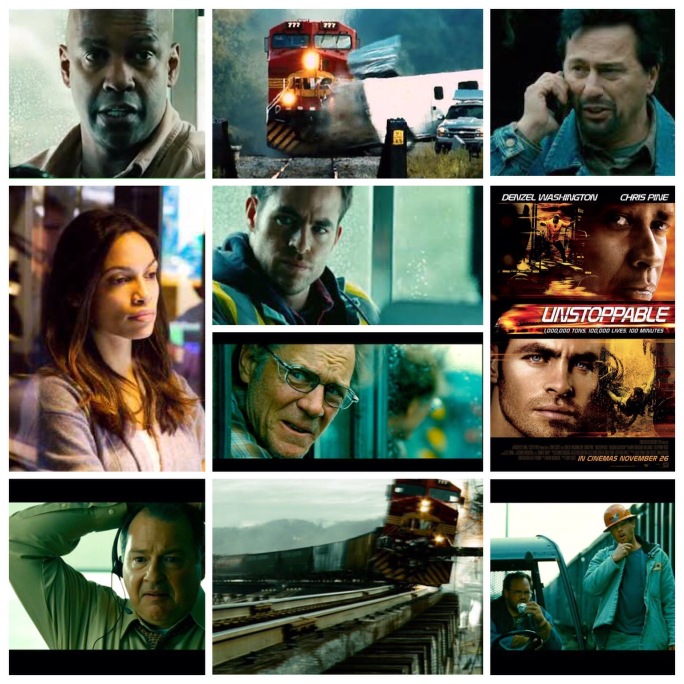
Tony Scott’s Unstoppable was the maverick’s last directorial outing before his heartbreaking and untimely death. It’s ironic because the film’s title is a descriptive term I would have applied to the man’s career, life and approach to filmmaking. But it was not to be. This is some swan song of a film to go out on though, a pleasing juggernaut of an action drama that greases the tracks and goes full steam ahead. Any film about trains run amok will inevitably be compared to the 1984 masterpiece Runaway Train, and although this one is vastly different in both story and tone, they just seem to be sister films. The mournful, resolute nature of Jon Voight’s character in it just seems to echo the sadness surrounding this film, and the fact that it was Tony’s last. But that’s just my strange intuition talking. The film itself isn’t really melancholy or downbeat, in fact it focuses largely on human triumph in the face of gross error. There is in fact a runaway train on the loose here, but the stakes are upped when we find out that it’s packed to the brim with highly toxic and flammable chemicals, and hurtling unchecked towards a densely populated metropolitan area. Denzel Washington is the Everyman veteran railroad worker, in danger of having his job devoured by greedy corporate development and ready to have a meltdown. Chris Pine is the hothead rookie swaggering through his first month on throb, and together they have to deal with the disaster, and prevent any further outcome. Rosario Dawson is the frantic control station operator, trying to coach two other workers (Lew Temple & Ethan Suplee) and help as best she can. Kevin Dunn is the abrasive company CEO, unwilling to get his hands dirty and callously looking for the first readily available solution, even if it results in mild casualties that he doesn’t have to witness. It’s all been done before, no doubt, but not by Scott, and you can never write off a formula, trope or act n cliche as dead until the maverick has had a good crack at it. The scenes involving the train are breathless and edited with a glass shard explosiveness, never to shaky or chaotic, always in control and bursting from the frames like the speeding locomotive they encompass. Look out for Jeff Wincott as Pine’s older brother, as well as Kevin Corrigan, T.J. Miller and David Warshofsky as well. It’s not a bad little flick for a director to put the final seal on his career with, and stands as a wrecking ball of an action flick. I just wish we got to see more from the guy. RIP Tony. 

B Movie Glory with Nate: Fire With Fire

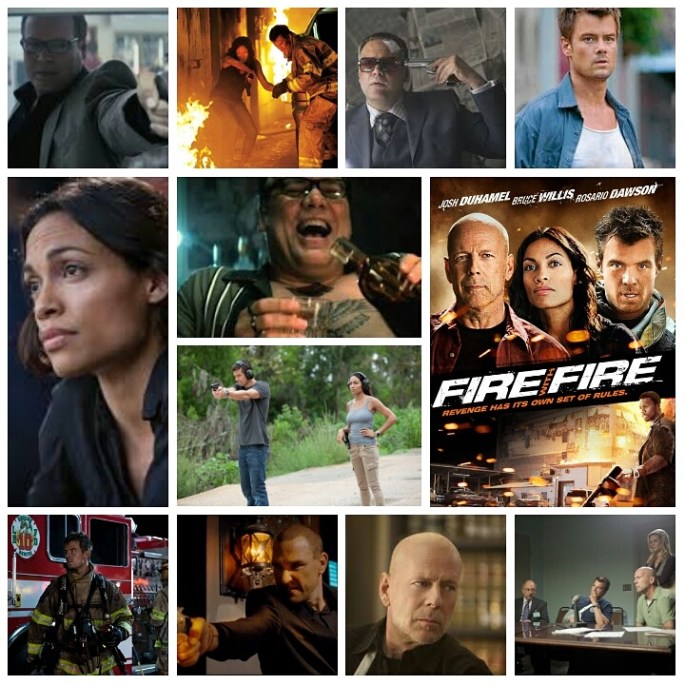
Fire With Fire is one in a long string of recent direct to video flicks that Bruce Wilis seems oddly intent on appearing in. Some are cool (Catch 44), some are halfassed (The Prince) and some are just plain poo (Set Up). This one falls in the first category. It’s an overblown and unbelievable little thriller but it has a great cast on it’s side, and when you score Vincent Donofrio for your villain role, you’ll always at least have some merit. The story is pure B movie: a studly firefighter (Josh Dumahel) ends up seeing something he shouldn’t and gets on the wrong side of a vicious neo nazi psychopath (Donofrio) and his crew. Just his luck though, as his foxy girlfriend  (Rosario Dawson) happens to be an FBI agent working on a task force headed up by a gruff senior operative (Bruce Willis). Willis has been trying to nail Donofrio and his gang for years, and he finally has a handy little firefighter witness to testify. Donofrio won’t stop though, making their lives hell as he shakes their shit up right left and center. He’s a hell of an actor, especially when playing the baddie (his turns in The Cell, Daredevil, The Salton Sea and Men In Black are legendary), and this loose cannon weirdo white supremacist nut job is one more to add to the canon. Duhamel does his classic laid back pretty boy thing, Dawson is tough and oh so attractive as always, and Willis dials up the grumpy metre for a nice little jaded turn that i actually really enjoyed. Vinnie Jones lends his mug to the role of second in command, 50 Cent shows up (wherever Willis and Deniro go in B movie land, he unnervingly seems to tag along), and watch for more work from Quinton ‘Rampage’ Jackson, Julian McMahon, Richard Schiff, Arie Verveen and Kevin Dunn. I like the chaotic formula employed here: a bunch of characters running around, large cast, flashy violent spectacle, flamboyant villain. It almost seems like a 70’s genre piece, and I’d love to have seen a hand drawn, retro style poster with a bunch of stuff sprawled together in a mural like those old school flicks used to do. It sure would beat the generic, vanilla design they went with and I feel like the film deserves more. Great stuff. 

Quentin Tarantino’s Death Proof: A Review by Nate Hill 

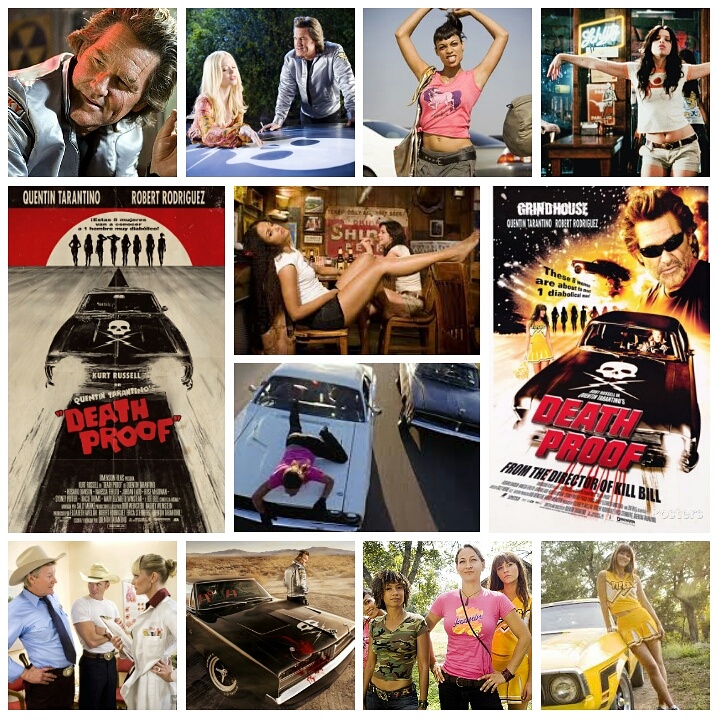
Death Proof is… not the best flick in Quentin Tarantino’s career so far, but an entertaining little ride through the B movie corn nonetheless. It’s Quentin playing in the sandbox, and although he tends to fling it about too energetically in spots, and dawdle around listlessly in others, one can forgive such pacing issues when you consider how much fun it is for the most part. It also helps that his Grindhouse effort is heaps better than his pal Robert Rodriguez’s painfully lame Planet Terror, but that’s a whole other chestnut. Death Proof works mostly thanks to the bubbly, endlessly sexy performances from an extensive roster of irrisistable cbicks, and one gleefully evil bit of work from genre legend Kurt Russell, having a devilish blast as Stuntman Mike, a psychopath who batters helpless chicks to death as he rattles them around in his specially rigged vintage muscle car, primed for murder and ready to burn rubber straight to the ER. A fair chunk of the film is spent simply observing these girls talking, bickering, socializing and indulging in idiosyncratic pop culture banter that’s a facet of the Q Man himself. He loves to project his own affinities onto the written page and use them as backbones for his characters, and although that may be one of the core elements of screenwriting in itself, it’s always a little more pronounced with QT. Writers are books, but he is a popup book, always a tad more garish than the rest of the kids on the playground. I don’t wanna say that such lenghthy swaths of running time spent on girls chilling out isn’t fun (it’s captivating, especially with this bunch), but it is essential to the Grindhouse vibe they set out to emulate? A minor quibble, but a quibble all the same. To their credit, the girls are simply terrific. The first bunch include Rose McGowan’s angelic and short lived Pam, Sydney Poitier’s spunky radio DJ Jungle Julia, and Vanessa Ferlito’s wiseass Latina. The first act sees them run into Stuntman Mike in a roadhouse bar owned by Tarantino himself, who just can’t resist casting himself in his own shit lol. Oh well, at least he didn’t try an Australian accent this time around. The second time act we meet Rosario Dawson, stuntwoman Zoe Bell and cutesy pie Mary Elizabeth Winstead, all in the crosshairs of Mike’s radar, but this time he may be in way over his greaser hairdoed head. The vehicular mayhem is traditionalist and non CGI, and quite honestly a spectucalr firework show of blood, glass, metal and scorched asphalt. I just wish there was more of it, man. Sure, the character building with the gals is awesome, but it eclipses the action in gross proportion. A little balance between talky talky and vroom vroom would have been appreciated. Russell is a hoot in a role that was originally going to be played by Mickey Rourke. He just has that knowing gleam in his eye and good ol’ boy charm that makes it work so well, especially in a naughty little fourth wall break that shows you just how much Mike enjoys his sick little game of bumper cars. There’s characters that bleed in from Rodriguez’s side of the fence, including Michael Parks as the seemingly immortal Texas Ranger Earl Mcgraw, and Marley Shelton as his daughter. It’s a valiant effort, with plenty of Mad Max style merit and a seriously smoking lineup of luscious ladies. I just feel like he over fed certain ingredients to the pot when cooking this one up, and neglected others in areas. Still though, even average Tarantino is brilliant, and this one glows, if for a few dull spots. 

J.J. Abram’s Star Trek: A Review by Nate Hill 

I’ve never really been a trekkie my whole life. Didn’t grow up with the television series and haven’t actively explored it later in life. When the announcement came that wonder-kid JJ Abrams would be taking on the lofty overhaul of a remake, I didn’t freak out or anything. In fact I waited quite a while before seeing it in theatres, dragged along by a buddy who talked it up quite a bit. Well, it was amazing, and still is. Nothing gets you pumped and makes your heart ache quite as much as that epic ten prologue, starring an intrepid Chris Hemsworth who selflessly saves the lives of everyone onboard his ship, including his newborn son, James T. Kirk. When your eyes flood with tears in the first few minutes of a film, it’s always a good sign. Abrams ushered in Star Trek for the new generation, and I imagine strived to keep core elements like friendship, cameraderie and wonder alive as well. Chris Pine makes one hell of a Kirk, but then he’s one of the best in his age group these days. Cocky, belligerent, dysfunctional, impulsive and recklessly brave, he’s the perfect opposing force to Zachary Quinto’s calculated, logical, no nonsense Spock, who goes through quite a wringer when his entire world is decimated by rogue Romulan extremist Nero, played by a sensational Eric Bana. Both Kirk and Spock are no stranger to loss, being affected and reacting to it in different ways. Their initial rivalry tangles into the beginning of a friendship, hinted at by Leonard Nimoy’s Spock Prime, visiting Quinto from far in the future (time travel, baby). The plot and character motivations are in fact mostly about loss and anger; Nero himself is driven by grief which has morphed into poisonous hatred, willing to inflict hurt a thousand fold in return for what happened to his people. Bana finds the wounded areas of Nero, and uses the trademark Romulun leer to cover them up in violent fury. There must always be comic relief too, and when the banter between the two heroes gets too dark, the spotlight shifts to chipper Scotty (Simon Pegg) and a brilliant Karl Urban as Leonard ‘Bones’ Mccoy, the ship’s neurotic doctor. Urban is cast heavily against type in the liveliest role he’s ever been thrown, and clearly loves every antsy second of it. John Cho makes a formidable Sulu, and the sadly departed Anton Yelchin charms the pants off of everyone with his priceless russian accent. Clifton Collins Jr. and Jennifer Morrison are great as well. Abrams loves to cast beloved actors from bygone eras in these things (I peed a little when Peter Weller showed up in the sequel), so keep a look out for terrific work from Ben Cross and Winona Ryder as Spock’s parents. Bruce Greenwood is nobility incarnate as Commander Pike, the kindly captain who sees the potential in Kirk and paternally attempts to clear the wreckage of his personality, dust it off and make something out of him. The special effects and set pieces are a dizzying dream of nonstop adrenaline. The opener I mentioned before, a show stopping fight scene atop a giant chain miles above the surface of a planet, the hair raising arrival of Nero’s ship (it looks like some horrific giant space beetle) and a chase across a snowy tundra pursued by an evil Yeti Muppet thing are highlights that demonstrate how effective and useful CGI can be when implemented properly. For all its razzle dazzle though, Star Trek is ultimately about relationships between different beings (human or other), the ways in which they deal with tragedy, love one another, learn to coexist, help those in need and most importantly, explore the wonders of the universe around them. I admire the fact that in a huge Sci Fi blockbuster such as this, those kind of themes and qualities come first. We are all made of stars, and inward exploration of the ones that reside in us and how they make us what we are is just as essential as the world’s that lie millions of light years away, awaiting our arrival. JJ understands this, and I offer him a well earned Starfleet salute for it.  

THE BOURNE ULTIMATUM – A REVIEW BY J.D. LAFRANCE

bourne1

After two films with Jason Bourne (Matt Damon) on the defensive and on the run, The Bourne Ultimatum (2007) sees our hero going on the offensive and taking the fight to his handlers. Coming full circle not only thematically, but also on a production level – the film was born out of chaos as principal photography began without a completed screenplay – it managed to come out the other side with a coherent final product that endeared itself to both audiences and critics. Ultimatum not only avoids the dreaded third installment of a trilogy jinx (they are notoriously the weakest), but ends up being the strongest one of the series as Bourne gets some definitive answers to who he is and his past.

Ultimatum picks up right where The Bourne Supremacy (2004) left off with Bourne on the run in Moscow after being seriously injured in an exciting car chase with a fellow Treadstone assassin. Meanwhile, Simon Ross (Paddy Considine), an investigative reporter with The Guardian, a British newspaper, is working on a story about Bourne and a top-secret CIA operation known as Blackbriar. Naturally, the agency finds out and puts Ross under surveillance in the hopes that Bourne will contact him, which he does, at a busy London train station.

Bourne’s rendezvous with Ross amidst the hustle and bustle of the train station is a nice homage to the opening of Francis Ford Coppola’s The Conversation (1974) as the two men are heavily scrutinized by all kinds of CIA surveillance. There is a lot of fun to be had watching Bourne masterfully evade all their manpower and hi-tech equipment in a wonderfully intense and insanely choreographed sequence that successfully ratchets up the tension as the CIA closes in. However, before Bourne can get Ross to reveal his source, an extremely efficient Blackbriar assassin (Edgar Ramirez) kills the journalist and disappears like a ghost.

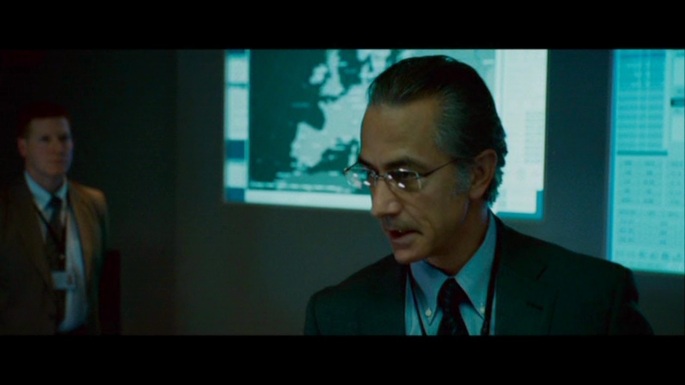
Fortunately, Bourne takes Ross’ notes and figures out that the source is located in Madrid. During the course of his investigation, Bourne is reunited with Nicky Parsons (Julia Stiles), a CIA operative sympathetic to his plight. Within the agency, the man in charge of Blackbriar, CIA Deputy Director Noah Vosen (David Strathairn) wants Bourne dead because he sees him as a dangerous liability while another agent, Pamela Landy (Joan Allen), wants to take him alive because she doesn’t agree with Vosen’s methods. This results in some wonderfully testy bickering between the two actors as they argue over what to do about Bourne. The rest of Ultimatum plays out as a brilliantly staged cat and mouse game with Bourne turning the tables on his handlers.

This time around, David Strathairn is the veteran character actor enlisted to play the CIA honcho tasked to find and eliminate Bourne. Like Chris Cooper (The Bourne Identity) and Brian Cox (The Bourne Supremacy) before him, he has the gravitas to play a take-charge authority figure and part of the enjoyment of this film is watching Bourne constantly thwart Vosen’s plans. In Ultimatum, Landy is a more sympathetic figure as she wants to capture Bourne alive (unlike Vosen). As the film progresses and she learns more about what the United States government did to Bourne and others in Treadstone, she realizes that she can no longer be complicit in the CIA’s illegal activities. Nicky Parsons also undergoes significant development as she ends up helping Bourne and turns out to be a key figure in his past.

Paul Greengrass, who also directed Supremacy, is back behind the camera bringing his trademark, no-nonsense pacing and visceral, hand-held camerawork to Ultimatum. The film’s action sequences are the epitome of edgy intensity as the fight scenes are quick and as brutal as a PG-13 rating will allow. They are realistically depicted – after all, guys as well trained as Bourne don’t waste any time and know exactly how to bring someone down as quickly and as efficiently as possible.

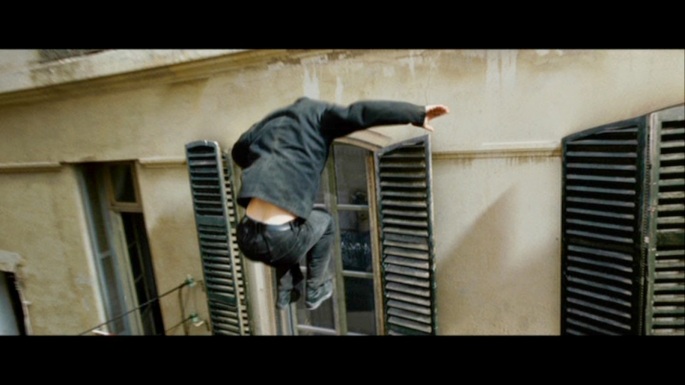
Bourne2Like with the other Bourne films, Ultimatum also has exciting chases, including the police pursuing Bourne over rooftops in Tangiers while he’s chasing an assassin going after Nicky, and a crazy car chase through the busy streets of New York City. Greengrass and his stunt people upped the ante on the chases, most notably the sequence in Tangiers, which starts off with scooters in the busy streets and then after a car bomb goes off, along rooftops on foot. Greengrass’ kinetic camerawork is taken to the next level as we literally follow Bourne leaping through the air from one building to another.

The lo-tech versus hi-tech dichotomy is beautifully realized in all three Bourne films as symbolized in the way he kills the highly trained assassins sent to kill him. In The Bourne Identity (2002), it’s with a pen, in Supremacy it’s with a rolled up magazine and in Ultimatum it’s with a book. The films never make a big deal about it and even show how well Bourne can manipulate technology, but his best chance at survival is to MacGyver it and stay off the grid.

With the phenomenal success of The Bourne Supremacy, Universal Pictures persuaded screenwriter Tony Gilroy to write the first draft of The Bourne Ultimatum for a significant amount of money, but only under the conditions that he could leave after its completion and that he wouldn’t have to speak with director Paul Greengrass, who was also returning, and did not get along with the writer. According to Damon, “It’s really the studio’s fault for putting themselves in that position. I don’t blame Tony for taking a boatload of money and handing in what he handed in. It’s just that it was unreadable. This is a career-ender.”

After Gilroy left the project and a release date looming, Greengrass brought in four other writers including George Nolfi, Scott Z. Burns, and Tom Stoppard, the latter who said of his input: “Some of the themes are still mine—but I don’t think there’s a single word of mine in the film.” Amazingly, before the film’s release date, Gilroy arbitrated and lost to get sole credit. As a result, the filmmakers were writing the script as they were making the film over three continents in 140 shooting days. According to Damon, “There wasn’t a single day where we didn’t have new pages! The main issue was that a question was never answered: Why was Bourne here? … What Paul settled on was that it has to be a story about meeting his maker.”

The exciting chase through the streets of Tangiers was an homage to Gillo Pontecorvo’s Battle of Algiers (1966). It took 14 days to shoot with Bourne’s rooftop leap done by a stuntman jumping right behind Bourne while carrying a small, lightweight camera. According to second unit director and stunt coordinator Dan Bradley, he often allowed the stunt people to hold the cameras because “they’re not too freaked out about getting hit or sliding under something while holding a camera. Some of the best shots in Supremacy and Ultimatum are because the stunt guys were operating.” Once again, Greengrass applied an independent film aesthetic to a big studio movie budget or, as he put it, “one of the ways you do it is to try your luck and set the action in places where you can’t behave like a big movie … You’re forced to sort of be a bit like a student film and make it up as you go along, live on the land and shoot when people are around.”

Bourne3If Identity was about our hero escaping from his CIA handlers and Supremacy was about him figuring out why they are still after him, then Ultimatum is all about getting revenge on those responsible for messing up his life in the first place and figuring out, once and for all, his identity. What elevates Ultimatum (and the rest of the series) above, say, the Mission: Impossible movies, is that it is more than just an exciting thriller (although, it does work on that level). It is also has a sharp, political component in the form of a scathing critique of the CIA’s dirty little secrets. The series ultimately asks, what happens when a highly-trained and conditioned government operative questions what he does and why? How does he undo the programming that made him what he is and come to grips with what he’s done? This film answers these questions to a satisfying degree while also being very entertaining conclusion to the series.

The Bourne Supremacy: A Review by Nate Hill


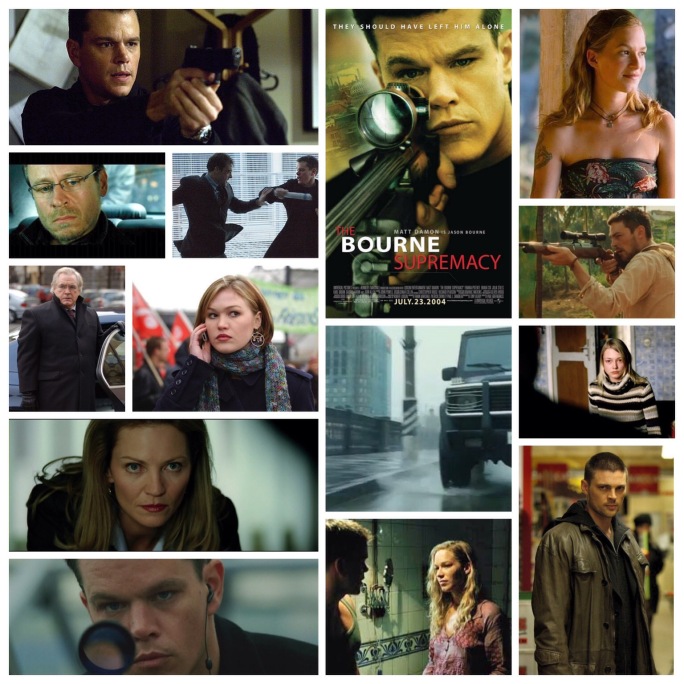
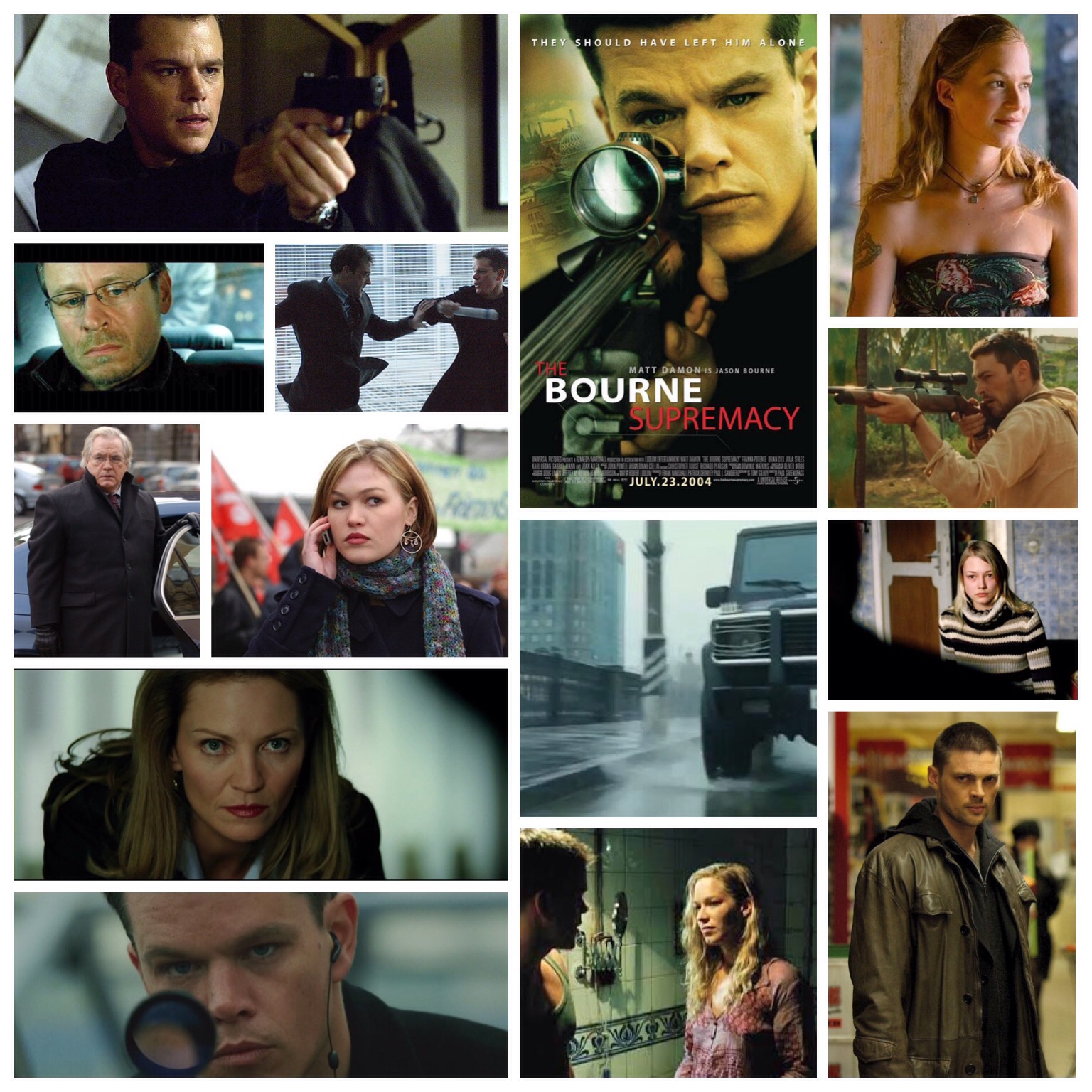
It’s nearly impossible for me to pick a favourite from the original Bourne trilogy, but I suppose if you held a gun to my head I would have to go for the breathless, breakneck Bourne Supremacy. It’s the first one I ever saw and one of the very first big summer movie experiences of my youth, so I have a burning nostalgia. I wouldn’t base my decision solely on that, though. No, I’ve thought a lot about it, and Supremacy just has every element in pitch perfect place, every second of pacing hurtling by on full throttle and Matt Damon taking names like he never did before. I love the fact that Bourne has something driving him other than a need to know who and what he is this time around. He has revenge for the death of someone he loved, which is never something you want to provoke when you have someone like him gunning for you. Life is quiet for Jason and Marie (Franka Potente 😍) for about five seconds at the beginning of the film, until a highly skilled assassin (a capable, relentless Karl Urban) explodes into their lives, sends their jeep careening off a bridge, resulting in Marie’s death. This pisses Jason off and then some, prompting a global excursion to find out who Urban works for and take them down. Also on his trail is CIA bigwig Pamela Landy (Joan Allen, excellent) and the severely morally misguided Ward Abbott (Brian Cox takes slimy to a whole new level in this outing). There’s also scheming Russian oil magnate Gretkov (a relaxed Karel Roden) with his own reasons for wanting Bourne. As is always the case, Jason is the smartest guy in the room, more so even than those that trained him, and he out thinks, out shoots and outruns them all every step of the way that takes him nearer to his goal. He isn’t simply running scared and confused with no outlet or idea how to use his talents anymore. He’s a lethal asset with emotion and forethought on his side, and he takes no prisoners. Damon is just ridiculously badass, especially in the several furious hand to hand combat scenes he dances through, doling out the smackdown faster than anyone’s reflexes can react. There’s also a humanity to him, burgeoning regret when he learns what Treadstone made him do, and the yearning to set it right, or at least make himself known to the daughter (Oksana Akinshina) of a Russian couple he once murdered. People complain about all the shaky cam, but whatever man, it sure fires up an action sequence and places you right there amid the mayhem of a rattling jeep chase through a Berlin tunnel, a bone splintering man to man with an ex Treadstone operative (Marton Csokas) and more. Julia Stiles is terrifically intense as a girl who used to do the psych evaluations for agents, Chris Cooper briefly returns as Conklin, the devious founder of the program, and watch for Tomas Arana, Corey Johnson, Gabriel Mann and Michelle Monaghan too. Like I said it’s a tricky task to pick a favourite, and on any given day I’d just say I love all three equally. This one just has a bit of an edge on the others in certain spots, and never feels like it bears the curse of the middle chapter. It’s a tightly wound coil of a film that springs into kinetic motion with the force of a piston. I’m curious to see how the new Bourne flick does, but I doubt it’ll come close to the first three, let alone this platinum classic. Cue Moby’s Extreme Ways to play out my review. 

THE BOURNE SUPREMACY – A REVIEW BY J.D. LAFRANCE

bourne1

After the grueling experience that was making The Bourne Identity (2002), Matt Damon was understandably wary about reprising the role of Jason Bourne. However, the film’s substantial box office success meant that the studio was eager to crank out a sequel and brought their leading man back into the fold with the promise of a new director after Doug Liman managed to alienate almost everyone on the first film. Paul Greengrass, director of the critically-acclaimed Bloody Sunday (2002) came on board, taking up where Liman left off by adopting the same loose, hand-held camerawork and cranking up the intensity, especially with the action sequences, to the detriment of some that felt the herky-jerky movements resulted in motion sickness. Regardless, The Bourne Supremacy (2004) was a hit both critically and commercially, outperforming Identity.

Bourne (Damon) and Marie (Franka Potente) have gone off the grid by taking refuge in India and this gives him time to sort through his fragmented memories and feverish nightmares. But, as is always the case with these kinds of films, our hero can’t stay hidden for long and trouble finds him. Meanwhile, a top-secret government deal in Berlin goes bad. Two agents are assassinated by Russian bad guys who steal $3 million and files that pertain to the whereabouts of Bourne. Greengrass ups the stakes right from the get-go as he has Bourne framed for the agents’ deaths and the stolen money and has an assassin (Karl Urban) track him and Marie down. An exciting car chase ensues that leaves Bourne alone and putting on him on the run again. This makes him dangerous as he has nothing holding him back so he can focus entirely on finding out who wants him dead and sift through the remnants of Operation Treadstone from the first film.

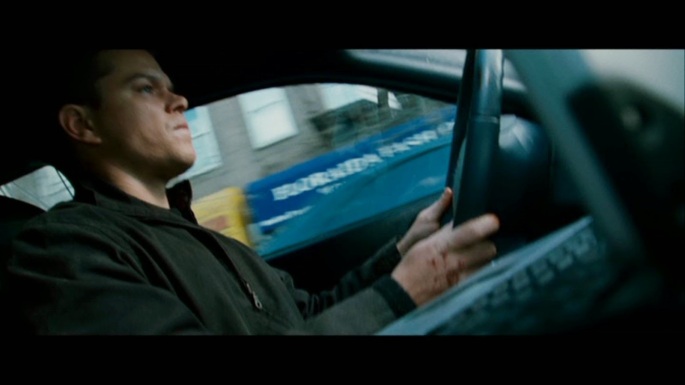
One of the first things that becomes obvious while watching this film is how its look harkens back to 1970s American cinema. Director Paul Greengrass utilizes the gritty, realistic look of his previous film, the powerful Bloody Sunday, with a lot of hand-held camerawork and snap zooms to give a you-are-there rush of adrenaline and urgency to the action sequences. In the car chases, Greengrass often places the camera right in the vehicle so that it is almost like we are riding along with Bourne, trying to piece together his fragmented past. In particular, the first chase in India is like The French Connection (1971) by way of Calcutta. Tony Gilroy’s screenplay wastes no time getting into it. We’re not 15 minutes into the film and Bourne is being chased by a mysterious and ruthless Russian assassin. It is this intense, no-nonsense pacing that propels this film so that one barely notices the two-hour running time.

Matt Damon plays Bourne with a quiet determination and intensity. It’s a surprisingly minimalist performance devoid of self-conscious tics and proves that his performance in the first Bourne film was no fluke. Bourne is not some invincible, super-soldier, but a tortured man trying to rebuild his past and his identity. He doesn’t kill unless absolutely forced to. And yet, he is certainly a man of action, capable of going from an inert, passive figure to one full of explosive action in a heartbeat. Supremacy sheds more light on his past as he’s haunted by a job where he killed a Russian politician and his wife. Damon does a nice job of portraying a man coming to terms with the fact that he is a killer. Bourne also comes to terms with the notion that what was just another mission for him forever changed the life of a young woman who was made an orphan because he killed her parents. It is an important part of the humanizing of Bourne as he sheds his past of being a detached assassin to someone trying to redeem himself. He tracks down people like Nicky Parsons (Julia Stiles), introduced in Identity as a handler to the Treadstone assassins, that can provide him with pieces of his past so that he confronts it and understand what he was in order to change who he is in the present.

The primary bone of contention that critics had with The Bourne Supremacy was how Greengrass films the action sequences. There is an impressively staged fight scene between Bourne and another Operation Treadstone survivor in Munich that is dizzyingly claustrophobic thanks to extensive hand-held camerawork that dives right into the chaos. It is memorable not only for its jarring brutality but also for Bourne’s skill with a rolled-up magazine that he uses to defend himself against a rather large knife. Greengrass’ camera flies around the tight confines of this room, dragging us along for this visceral, almost primal sequence. He treads a fine line between being edgy and incoherent, but knows just how far to push it – something that the countless imitators didn’t always achieve. This approach drew criticism for being too fragmented and disorienting, making it difficult to see what was happening but I think it was Greengrass’ attempt to put the audience right in the middle of the action and to experience the sudden and brutal nature of how quickly these guys fight.

bourne2Joan Allen’s Pamela Landy is an interesting character in that initially it appears as if she will be an antagonist like Conklin in The Bourne Identity, but when she’s assigned to investigate the Berlin job she uncovers the existence of Treadstone and this brings her up against Ward Abbott (Brian Cox), the operation’s caretaker and the man who also mothballed it. She’s no dummy and quickly figures out its nature, what Conklin was up to and Bourne’s role, which, in a nicely executed scene, quickly recaps the events of Identity for those who haven’t seen it. Over the course of Supremacy, she shows indications of sympathy towards Bourne’s plight that are developed further in The Bourne Ultimatum (2007). Allen’s scenes with Cox are interesting as they are often fused with tension as Landy uncovers the secrets of Treadstone while Abbott, clearly uncomfortable with his dirty laundry being aired, tries to cover his ass, which makes for some heated exchanges between the two as they butt heads.

The Bourne Supremacy gives more screen-time to the character of Nicky Parsons. Landy brings her along because of what she knows, but Nicky ends up playing a crucial role when Bourne confronts her, asking questions about the operation. Stiles was an up and coming movie star in the late 1990s with films like 10 Things I Hate About You (1999), but had dropped off the mainstream radar by the mid-2000s. It is nice to see her pop up in the Bourne films even if she isn’t give much to do initially.

The Bourne Supremacy was based loosely on the 1986 best-selling novel of the same name by Robert Ludlum. Universal Pictures offered screenwriter Tony Gilroy $3 million to write the screenplay and he agreed, but only if it wasn’t a repeat of The Bourne Identity. Gilroy used a plot point from the novel – Marie is kidnapped and held ransom, forcing Bourne out of hiding – as the impetus for the sequel. The screenwriter came up with the idea of taking Bourne on “what amounts to the samurai’s journey, this journey of atonement,” said producer Frank Marshall. Gilroy didn’t want to make a revenge movie because “Bourne killed people and he doesn’t start the movie with a clean slate. There’s a lot of blood on his hands.” He decided to make Bourne a reluctant murderer and that he should suffer for his crimes. To this end, Gilroy envisioned Supremacy as “The Searchers of action films,” but was upset that Greengrass came in and placed an emphasis on action and not Bourne’s atonement.

Next, the producers had to find a new director that would have an affinity for the subject matter. Gilroy recommended that Marshall watch Bloody Sunday, directed by Paul Greengrass. It was a gritty recreation of the 1972 peaceful civil rights march in Derry, Northern Ireland that ended in violence. The producers were impressed with the film’s immediacy and sense of realism. Greengrass liked The Bourne Identity and how it “married an independent sort of feel with a mainstream Hollywood sensibility.” He flew to Prague and met with actor Matt Damon and they talked about the character of Bourne. Greengrass said of the character: “I think this film is not so much about a man who’s lost his memory, although that is part of it – but it’s more about what happens when you’ve recovered your memory and realized that you’re actually a bad man.”

Damon spent months doing personal and combat training including special firearm instruction in order to portray a trained assassin. The actor worked with a SWAT expert in Los Angeles so that when Bourne first picks up a gun in the film “it needs to look like an extension of his arm,” Damon said. He and Greengrass got along right away with the actor happy to have a director “who was putting you first and saying, ‘Be as natural and real and honest as you can and it’s our job to capture it rather than yours to adjust for the sake of my shot.’ That’s the thing an actor wants to hear.” The actor had no problem doing most of his own stunts, but was apprehensive doing an underwater scene where Bourne’s car goes crashing into a river. “I didn’t want to do that at all,” Damon said and so he worked with a diving instructor a couple times a week for a month in order learn how to relax underwater without an oxygen mask and eventually be able to do simple tasks like tying a shoe. Still, after one day of shooting under water, he “woke up probably four times gasping for breath, thinking I was drowning. It was terrible.”

Principal photography began on the streets of Moscow then moved to Berlin with the city’s former eastern sector doubling for the streets of the Russian capital and finally ending in Goa, India. Producer Patrick Crowley wanted the transition from locations to mirror Bourne’s arc “from lush, tropical and warm to more progressively cool, steely, blue, then finally to grays.” To depict the visceral car chases, the production utilized a high-speed, low center of gravity, chassis replacement stunt driving camera platform that was piloted by a stunt driver from a moveable cockpit, which allowed all kinds of camera placement around the vehicle.

bourne3The people behind the Bourne franchise are smart and willing to take chances. They cast an atypical action hero with Matt Damon, surrounded him with an eclectic cast that mixed Hollywood and internationally known stars (with the likes of Julia Stiles, Brian Cox and Karl Urban) and hired independent filmmakers like Doug Liman and Paul Greengrass against type to direct, letting them put their own unique stamp on their respective films. Ultimately, The Bourne Supremacy is all about the title character making amends for his past. There is a scene where he confronts the woman, whose parents he killed, that is rich in understated emotion as Bourne takes responsibility for his actions and tells her what really happened. It’s a great way to end the film as Greengrass eschews the cliché of a climactic action sequence (which happens before this scene) in favor of a more poignant one as Bourne atones for one of his many sins while also setting things up for the next installment.