The Coen Brother’s Burn After Reading is the duo at their height of trolling the audience, a mood they seem to make some of the most devilishly funny films of their career. This one reminds me of long days full of running around, confusion and missed appointments, days where I get home and reach the end only to realize that for all the frenzy, nothing I did all day was really of any consequence. This film is sort of like that; a whole lot of clandestine nonsense and tomfoolery that adds up to.. well, not much of anything in the end. If that sounds like I’m being negative, I’m not. That’s part of the Coen’s charm and a core aspect of what makes this one so hilarious. It’s also full of complete dimwitted morons, which only adds to the chorus of lunacy. John Malkovich teeters on the borders of mania, scary and funny as ex CIA half wit Osborne Cox, in a performance so utterly Malkovich that he almost seems like some other actor parodying him. He’s got a cold hearted bitch of a wife (Tilda Swinton) who is fooling around with even bigger idiot Harry Pfarrer (George Clooney is a riot) who is also fooling around with anything that has a pulse, being the squirrelly sex addict that he is. Cox has started a memoir (or, ‘mem-wah’, as Malkovich ludicrously intones it), the contents of which are on a disc that end up in the hands of yet even bigger idiots. Linda Litzke (Frances Mcdormand) and Chad Feldheimer (Brad Pitt) run a gym called Hardbodies (only the Coens, folks) and see the disc as ‘secret spy shit’ they could use to make a buck. That’s where the plot hollers off the rails into pure madness, as each and every character makes the dumbest possible decision along the way. J.K. Simmons are gold as two CIA honchos who are more puzzled than the audience, Richard Jenkins trolls perhaps the subtlest of all, and the cast also includes Jeffrey Demunn, Olek Krupa and a meta cameo from Dermot Mulroney. Among the cloak and dagger chaos, the Coen take every chance they get to spoof and lovingly ridiculue society’s cringe inducing stereotypes, until you start to realize they’re levels of exaggeration aren’t all that over the top. Pitt is gold as the air headed gym rat, Clooney pure screwball, and Malkovich is a force of demented nature, his exentuated word pronunciations reaching a boiling point of absurdity here. This is up there with the Coen’s best, and certainly one of their funniest hours.
Tag: film review
STAR WARS: EPISODE IV: A NEW HOPE – A REVIEW BY J.D. LAFRANCE

For many of my generation, the first Star Wars film (1977) was a defining moment of our childhood and so I always look back at it in a nostalgic way. I had the action figures, the coloring book, the calendar, the t-shirt, and so on – all part of the vast merchandising that helped build the George Lucas empire. But as a kid I wasn’t thinking about that – I loved the film and wanted to have everything associated with it, including the comic books and the novelization. The Star Wars I love is the original incarnation unmolested by Lucas’ awkward revisionist CGI makeover. The Star Wars I know and love has Han Solo (Harrison Ford) firing first. The film has been analyzed and written about extensively so I can only look at it from my perspective and offer various observations that always stick out in my mind whenever I watch it.
One of the reasons Star Wars works so well is because of a solid combination of engaging storytelling and groundbreaking (for its time) special effects. The coming-of-age story is as old as the hills and I’m sure that is part of the film’s appeal – its comforting familiarity. Young Luke Skywalker (Mark Hamill) leaves behind his life on a small, insignificant planet and becomes involved in an intergalactic civil war that involves rescuing a princess from the clutches of an evil empire. In the process, he grows up and becomes a man.
I still get goosebumps when I see that opening text, “A long time ago. In a galaxy far, far away…” And then, John Williams’ rousing score kicks in with a sudden blast from the horn section and we’re on our way. We get that iconic shot of the small Rebel Alliance spacecraft being pursued by an Empire Star Destroyer so massive it takes up at least three-quarters of the screen as it rumbles into view. We soon meet two of the film’s most endearing characters – C-3PO (Anthony Daniels) and R2-D2 (Kenny Baker), droids that have a sometimes slapstick-y love/hate relationship a la Laurel and Hardy. 3PO is the eternal pessimist as evident from his declaration early on, “We’re doomed.” Of course, this is as the Empire prepares to board the Rebel spacecraft. 3PO and R2 play well off each other – the former whines about danger and complains about the conditions of Tatooine (the planet they escape to), while the latter clearly has a purpose, a mission that he must complete with or without his long-time companion. They bicker like an old married couple and even on his own, 3PO still bitches about R2.
Has there ever been a cooler introduction for a villain than the one for Darth Vader (David Prowse)? Having boarded the Rebel ship by force, he emerges from the smoke to survey the damage done. We immediately hear his ominous breathing, that unsettling raspy respirator sound – awesome! We soon hear James Earl Jones’ booming, authoritative voice (later on the voice of CNN no less!) which, coupled with David Prowse’s intimidating physical presence and the brilliantly black armor, creates an instantly memorable bad guy, a real force of evil. Lucas constantly reminds us what a badass Vader is in scenes like the one where he deals with one of his officers who dares to scoff at the power of the Force compared to the power of Empire’s new battle station, The Death Star. Vader warns him, “Don’t be too proud of this technological terror you’ve constructed. The ability to destroy a planet is insignificant next to the power of the Force.”
Unconvinced, the guy foolishly insults Vader’s “sad devotion to that ancient religion,” and, in response, the Dark Lord merely raises a hand and chokes the man from afar. Vader coolly and ominously replies, “I find your lack of faith disturbing.” Now, how badass is that? It takes Peter Cushing’s bureaucrat Grand Moff Tarkin to step in and call Vader off. As evil as Vader is, Tarkin is on a whole other level. He destroys a planet populated by millions of innocent people just to make a point and teach Princess Leia (Carrie Fisher) a lesson. How nasty is that? Vader just chokes a few guys which pales in comparison to what Tarkin does.
I always found it fascinating how the Jawas are basically the used car salesmen of the galaxy and they even try to pawn off a faulty droid to Luke and his Uncle Owen (Phil Brown). Mark Hamill’s take on Luke is right on the money, playing the character as a teenager on the verge of becoming a young man – someone who would rather pick up power converters over at Toschi Station than haggle over the price of droids with Jawas. His uncle sees right through Luke and chastises him, “You can waste time with your friends when your chores are done.” This little moment is one of the reasons why Star Wars appealed to a younger generation – they could relate to Luke’s disinterest in chores and his frustration of being stuck on his uncle’s farm. Who would rather hang out with their friends than get stuck doing boring chores?
This is further reinforced in the scene where Luke talks to Aunt Beru (Shelagh Fraser) and Uncle Owen about transmitting his application to the Academy sooner rather than later but his uncle wants him to stick around for the harvest and another year. After Luke goes off in defeat, his aunt says, “Luke’s just not a farmer, Owen. He has too much of his father in him,” to which Owen replies, “That’s what I’m afraid of.” This conversation cleverly hints at earth-shattering revelations that come in the next film in the series, The Empire Strikes Back (1980). I just want to say how much I love the little moments of domesticity that Lucas shows here with Luke having a meal with his aunt and uncle or another scene where we see Aunt Beru (who I was always struck by what a kind face she has and what a gentle person she appears to be) preparing some sort of meal. It humanizes these people in a short amount of time so that we care about what happens to them later on.
What I also like about the story is that Lucas makes it personal for Luke. His only reason for staying was to help out his aunt and uncle but when they are killed by Imperial Stormtroopers, his life as a farmboy dies that day. He’s got nothing left to lose and his innocence has been taken away from him forever. Lucas makes sure that we understand just how horrible the Empire is with a lingering shot of the aunt and uncle’s still smoking, charred skeletons, which was pretty shocking to me when I first saw the film at a very young, impressionable age. This scene ups the stakes and reinforces just how ruthless the Empire is and how personal it has gotten for Luke.
The casting of Alec Guinness as Jedi master Obi-Wan Kenobi was genius on Lucas’ part. With his classic British accent, he gives his dialogue a classy spin, perfect for the expositional dialogue his character imparts throughout the film. For example, early on he explains the nature of the Force to Luke: “The Force is what gives a Jedi his powers. It’s an energy field created by all living things. It surrounds us, it penetrates us, it binds the galaxy together.” What a great way to describe the Force – it’s succinct and doesn’t give too much away, just enough to let our imagination fill in the rest.
One of the most memorable scenes in Star Wars takes place in the Cantina at Mos Eisley (a place that Obi-Wan warns Luke is a “wretched hive of scum and villainy.”), a bar where all sorts of strange and unusual creatures hang out. Of course, the purpose of this sequence is for Luke and Ben to meet and hire Han Solo and Chewbacca (Peter Mayhew) to rescue Leia, but it is also a fantastic showcase for a memorable collection of exotic-looking alien creatures. There’s one that looks a little like Cousin It from The Addams Family, one that looks like the Wolfman, one that kinda looks like a devil with two horns sprouting out of the top of his head, and so on. The diversity of these creatures is so fascinating that I just like rewatching this sequence to check out all of the various creatures. This sequence has gone on to inspire several other films, including Nightbreed (1990), Serenity (2005), and Hellboy II: The Golden Army (2008). The aliens in Star Wars don’t look cute and cuddly but strange and dangerous. Lucas reinforces this by having Luke bullied by two lowlifes until Obi-Wan steps in with his mad lightsaber skills.
How cool is Han Solo? We meet him haggling with Obi-Wan over the price of taking them to Alderaan and Han tries to impress his prospective clients with the speed and reputation of his spacecraft the Millennium Falcon. However, after their meeting, Han runs into Greedo, a bounty hunter collecting a sizable debt that the smuggler owes notorious gangster Jabba the Hutt. Han acts cool and casual, keeping Greedo talking while he quietly unholsters his gun and blasts the bounty hunter before he can shoot him. How badass is Han? Harrison Ford plays it so well – all cool and accommodating to Greedo so that he has time to get the drop on him. It’s this scene that establishes Ford’s character – is he a bad guy or a good guy? You’re never really sure until the end of the film and this is due in large part to Ford’s performance as a cocky smuggler who only looks out for himself.
I also like Han’s simple philosophy, like when he scoffs at the notion of the Force: “Hokey religions and ancient weapons are no match for a good blaster at your side … I’ve flown from one side of the galaxy to the other. I’ve seen a lot of strange stuff but never seen anything to make me believe there’s one all powerful force controlling everything. There’s no mystical energy field controls my destiny. It’s all a lot of simple tricks and nonsense.” He provides a lot of the film’s moments of humor, like when Luke tries to convince him to rescue Leia by appealing to his greed, or his constant bickering with her. As he tells Luke at one point, “Wonderful girl. Either I’m gonna kill her or I’m beginning to like her.” Han and Leia end up bantering like a couple in a vintage screwball comedy and this is carried over to an even more memorable degree in The Empire Strikes Back.
Another exciting scene is the one where our heroes escape the Death Star while Han and Luke man the Falcon’s laser cannons. Lucas uses editing and Williams’ stirring score to make this scene even more dynamic. It’s a nice warm-up for the climactic sequence where a squadron of Rebel Alliance X-Wing fighters launch an attack on the Death Star. Not only do the Rebels have to worry about the Imperial TIE Fighters, but also the battle station’s laser cannons. Also adding urgency to the assault is the ever-looming threat of the Death Star on the verge of eradicating the Rebel base located on the moon of Yavin. Luke finally gets to show off his piloting skills while many of his comrades are blown up. It doesn’t hurt that he’s aided by Obi-Wan’s disembodied voice and the Force. The use of models in this sequence gives it a more tangible quality, a realness that is missing from most CGI-heavy science fiction films nowadays. This sequence gets even more exciting when Luke and the surviving Rebel X-Wings descend into the trenches of the Death Star to bomb its weak spot. Lucas is able to convey a real sense of speed and urgency that is thrilling, especially when the Millennium Falcon comes from out of nowhere to give Luke the opportunity to destroy the Death Star.
Some feel that Star Wars looks dated and I would agree but for me that is a large part of its appeal, sideburns and all. Watching it instantly takes me back to when I first saw it and the rush of excitement and wonder that I felt as it unspooled before my eyes. It is one of those pivotal moviegoing experiences that I have never forgotten. While I think that The Empire Strikes Back is the better film in terms of story, pacing, characterization, action, etc., Star Wars is the film I enjoy watching the most for all of the reasons stated above. I think that a review in the now-defunct Sci-Universe magazine sums it up best: “even today, would-be sci-fi franchise-builders haven’t learned the lessons about what made Star Wars a cinematic landmark; compelling, but flawed, characters and attention to the smallest pieces of minutiae.”
Hush: A Review By Nate Hill
Well it’s arrived, folks. The first truly effective horror film of the year (that I’ve had a chance to see anyway). I was drowsily browsing Netflix and came upon Hush, sporting a snazzy poster and a premise ripped straight from the vintage horror flicks I grew up with. Compelled to give it a shot, I was rewarded with a slick, atmospheric and sturdily made exercise in suspense. It’s not often I feel true giddy tension while watching a thriller (even though most brashly guarantee it on the dvd cover), but this baby delivers in spades. It’s funny because the storyline is a identical to many movies of the past, and similar to countless more. The secret to success, obviously, is in the execution, and Hush is made with a caring love for a genre deeply ingrained in cinematic culture. Director. Mike Flanagan clearly loves horror films, and seems to want to rise above the primordial crust, calcifying his effort with a steady hand and fresh direction that gives even the most knowing plot turns a dose of torque using simple tools: a killer soundtrack, whiplash inducing editing and…and.. What’s the most important thing in any horror film? I’ve said it before and I’ll keep saying it: atmosphere. The setting finds us in a dusky, desolate area, where a deaf novelist (Katy Siegel) toils in isolation, churning out the trimmings of her next book on a laptop, content in her loneliness yet on the verge of unease stirred by cabin fever, restlessness or so,etching else. It’s not long before the film lands the first punch of many: a masked, crossbow wielding serial killer (John Gallagher spits on his previous good guy image, both terrifying, unrecognizable and superb) begins to stalk her with methodical menace, watching from the inky shadows of her home’s exterior while she cowers in terror. He catches on quick about her deafness and uses it against her, terrorizing her at every turn. Now, the film does use genre tropes to churn out its story, and anyone expecting something truly unique to pop out of the ether. Any be disappointed. But to those who yearn for solid, extremely well made horror entries to wade out of the muck and foretell the return to form of a genre that gets maybe two, three winners every year, can rejoice. This one comes up aces. Siegel is instantly likeable and gorgeous to boot, giving her protagonist a resilience that is actually believable, which can’t be said about every girl being pursued by a killer on screen. Gallagher is icky as the psycho, branded with certain idiosyncratic symbols of society which suggest that he’s a jaded outcast driven to sickening extremes by the hand he’s been dealt, given in to his dark impulses completely. For genre fans: this begs a watch and will likely be a highlight of the year. For casual viewers: fun, fun times and a vibe to get sucked in by. For non horror fans: just watch it anyway.
B Movie Glory with Nate: The Courier
The Courier is a strange little flick that dabbles in the kind of pulpy narrative which the 80’s were famous for. One lone antihero sets out to deliver a package of enigmatic value to a recipient that is always one step ahead of him, proving to be quite elusive. Bad guys and gals hinder him at every turn and violence ensues, leading up to an inevitable confrontation and in this case a neat little twist that admittedly defies any sort of reason, yet is fun for the actors to play out and provides sensationalism, a trait that’s commonplace in such films. Jeffrey Dean Morgan is a haggard presence in any role, a guy you immediately feel rooted to in a scene. He gets the lead role here, playing an underground criminal courier, passing along dangerous goods from one cloak and dagger person to another. His latest task comes from his handler (Mark Margolis): Deliver an odd case to a reclusive criminal mastermind known only as Evil Sivle. Little information is given beyond that, but it soon becomes apparant that his mission is a cursed one, as he finds himself a hot target for all kinds of weirdos. German live wire Til Schweiger plays a dirty federal agent who hassles him with that campy charisma and narrow eyed theatricality that only he can bring to the table. Miguel Ferrer and Lilli Taylor are priceless as Mr. & Mrs. Capo, a pair of married contract killers who discuss their dinner plans whilst hunting their quarry, and have devised some truly vile torture methods involving culinary instruments. Yeah, it’s that kind of movie, where B movie mavericks are let off the chain and allowed to throw zany stuff into their otherwise pedestrian material that often borders on experimental. Morgan is assisted by a young chick (Josie Ho) who saves his ass more than a couple of times. Mickey Rourke shows up late in the game as Maxwell, a mysterious Elvis impersonator and Vegas gangster who plays a crucial role in Courier’s quest. Trust Rourke to take a derivitive, underwritten supporting character and turn the few minutes of screen time he has into utter gold that elevates his scene onto a plane which the film as a whole is sheepishly undeserved of. Morgan is better than the flick too, but he’s great in anything. He ducks the heroic panache of the action protagonist and dives into growling melancholy, his grizzly bear voice and imposing frame put to excellent use. This one got critically shredded upon release. Yeah it ain’t great, but it sure as hell ain’t terrible. Worth it for a cast that makes it work, and for that classic genre feel that can’t be beat.
ALL THE PRESIDENT’S MEN – A REVIEW BY J.D. LAFRANCE

The 1970s was a fertile time for challenging, politically charged movies. Thanks to Easy Rider (1969) a lot of riskier material was getting made by the major Hollywood studios and, in some cases, they were commenting on the current political climate and being socially conscious. One of the best examples from this decade is All the President’s Men (1976) – the Citizen Kane (1941) of investigative journalism films. It’s the benchmark by which all other films of its genre are compared to, from The China Syndrome (1979) to State of Play (2009). Its influence can be felt in the films of Steven Soderbergh (Traffic) and David Fincher (Zodiac).
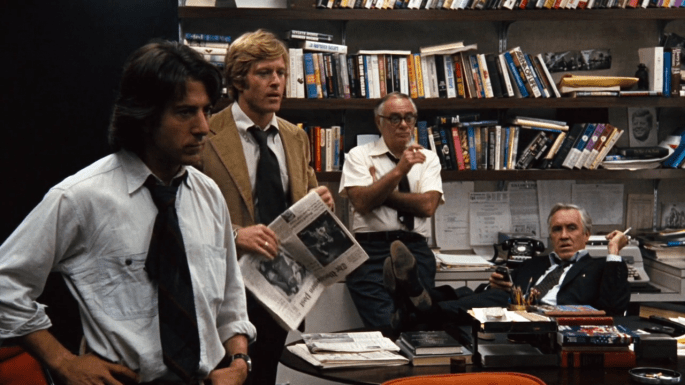
All the President’s Men was immediate and topical, dramatizing Washington Post reporters Carl Bernstein and Bob Woodward’s investigation of the Watergate Hotel burglary and the resulting scandal that would rock the White House and forever taint President Richard Nixon’s tenure there, effectively sending him home packing before his term was up. Alan J. Pakula’s film struck a chord with audiences of the day (and continues to do so) and is credited with inspiring future generations of journalists. Of course, it didn’t hurt that the film starred Dustin Hoffman and Robert Redford, two of the biggest movie stars in Hollywood at that time. Fortunately, they left their egos at the door to deliver thoughtful and intense performances. These are complemented by Pakula’s no frills direction and Gordon Willis’ moody, atmospheric cinematography.
The film begins, rather fittingly, with the actual break-in. We see the burglars at work in the gloom of the hotel, often from a distance which, somehow makes it actually creepier than it should. Pakula juxtaposes this with the next scene, which takes place in the brightly-lit offices of the Washington Post. Bob Woodward (Redford) gets the tip about the burglars and goes to see the charges brought up against them in front of a judge. It is here that he meets the first of many people that will try to stonewall him. Woodward starts talking to a man named Markham (Nicolas Coster) sitting in front of him. He tells Woodward that he’s not there as the attorney of record but reveals who that is and leaves. Woodward follows Markham outside into the hallway and continues to question him. Markham tries to confuse and evade Woodward through dialogue and while not actually saying much of anything he does pique the reporter’s curiosity.
Back at the Washington Post offices, Woodward meets with his editor Harry Rosenfeld (Jack Warden) and fellow reporter Carl Bernstein (Hoffman) who has been calling around getting information of his own. However, neither of them have much and Rosenfeld calls them on it: “I’m not interested in what you think is obvious. I’m interested in what you know.” One of the things that is so great about All the President’s Men is that they show the legwork these guys do in order to get the facts and the details to flesh out their articles. For example, there’s the scene where Woodward calls around trying to find out who Howard Hunt is and his relation to the White House. Pakula has Redford in the foreground but utilizes deep focus photography so that we can make out the hustle and bustle in the middle and background of the scene, which is a nice touch. It makes the scene more than just about dialogue and about what’s being said as Pakula keeps things visually interesting.
The way Woodward and Bernstein team-up is also well done. Woodward hands in a copy of his article to be proofread only for Bernstein to immediately take it and give it a polish. Woodward is upset at Bernstein for doing it without his permission, gives him his notes and says, “If you’re going to hype it, hype it with the facts. I don’t mind what you did. I mind the way you did it.” In an amusing bit, right after he says this, Rosenfeld walks by and tells them that they’re working together on the Watergate story. Early on, Woodward and Bernstein know that they are onto something and the more people evade them or deny any kind of knowledge of what went down at the Watergate, the more they realize that they’re onto something big. I also like that once they team-up, Pakula doesn’t try to make them too buddy-buddy. They work closely together but it is purely professional. They don’t hang out together or go to nightclubs. They are completely consumed by their investigation and getting to the truth.
Woodward and Bernstein show their story to the newspaper’s executive editor Ben Bradlee (Jason Robards) and the way he picks apart their article is devastating, especially if you’ve ever worked at a newspaper or a magazine. But, deep down, they know he’s right – they don’t have the story or the hard facts to back it up. Woodward and Bernstein approach every contact they know that might have even the most remote connection to their investigation. But they are persistent and keep plugging away at the story.
For a film that is ostensibly about two guys talking on the phone and interviewing people, All the President’s Men is always interesting to watch because of Pakula’s no-nonsense direction coupled with Gordon Willis’ textured cinematography. We get one engaging visual after another, like the scene where Woodward and Bernstein pour over index cards at the Library of Congress and the camera starts off with a tight overhead shot of them and then gradually pulls back to reveal the circular design of the building while also showing how insignificant these two men are in comparison to the task they are undertaking. In addition, Woodward’s meetings with his enigmatic informant known only as Deep Throat (Hal Holbrook) in a deserted parking garage at night illustrates why Willis was often referred to as the “Prince of Darkness.” We first see Deep Throat in the distance, enshrouded in darkness. He briefly lights a cigarette that does little to illuminate his identity. Even when shot in close-up, he’s still mostly in shadow except for a very film noirish strip of dim light across his face so that we can at least see his eyes. This emphasizes the ominous nature of this clandestine meeting. Never has a parking garage looked so menacing.
Another visually interesting phone scene has Woodward doing some more legwork at his desk. As he’s talking, off to the left in the background, a group of people are watching something on television. As the scene continues, the camera ever-so gradually moves in on Woodward until a close-up of his face dominates the screen. Pakula flips this in another scene where we get a close-up shot of a T.V. covering Nixon getting voted into the White House for four more years while in the background Woodward works away on the story. The juxtaposition of visuals is particularly striking as the T.V. absolutely dwarfs Woodward symbolizing just how marginalized he is in comparison to Nixon. He has regained the most powerful position in the free world while Woodward is still trying to get some decent facts. Willis’ lighting goes beyond adventurous as he continually pushes the boundaries of available light. For example, there’s a scene where Woodward and Bernstein have a conversation while driving in a car at night and it looks like the scene was done with only naturally available light. There are significant portions of the scene where we can barely or not see Woodward and Bernstein. You would never see that in a mainstream studio film today as it goes against the conventional wisdom of making sure the audience can always see the heroes clearly.
It goes without saying that All the President’s Men features an impressive cast. Redford and Hoffman do a good job showing the incredible pressure that Woodward and Bernstein are under. Not only are they trying to find people to go on the record but are also trying to prove to their editors that they are doing a good job and deserve to be on this story. In addition, they also have to make sure that a rival newspaper like The New York Times doesn’t scoop them first. Redford and Hoffman are not afraid to show the friction that sometimes surfaces between Woodward and Bernstein, especially when they hit dead ends in their investigation. Their frustrations come out as they try to get someone to go on record and give them some crucial information that they can use.
Supporting Dustin Hoffman and Robert Redford are the likes of Jack Warden, Jason Robards, Martin Balsam, and Hal Holbrook who bring their real life counterparts to the big screen in such compelling fashion. Robards brings just the right amount of world-weary gravitas necessary to play someone like Ben Bradlee. He plays the editor as the gruff father-figure that gives Woodward and Bernstein tough love and in doing so pushes them to work harder and dig deeper on the Watergate story. There’s a nice scene where Bradlee sits down with the two reporters and recounts a story about how he covered J. Edgar Hoover being announced as head of the FBI. The story and how Robards tells it humanizes Bradlee and makes him relatable to Woodward and Bernstein.
Hal Holbrook is coolly enigmatic as the shadowy Deep Throat, giving Woodward cryptic clues and vague encouragement. His brief but memorable appearance would go on to inspire like-minded characters in Oliver Stone’s JFK (1991) and the popular T.V. series The X-Files. And, if you look close enough, a young and very good-looking Lindsay Crouse plays a Washington Post office worker that helps out Woodward and Bernstein. Also, look for Stephen Collins, Ned Beatty and Jane Alexander in small but memorable roles.
From the age of 13, Robert Redford disliked Richard Nixon after meeting the man at a tennis tournament when he was only a senator. These feelings persisted when Nixon became vice-president and during his first term as president. While promoting The Candidate in July 1972, Redford became aware of Woodward and Bernstein’s articles in the Washington Post documenting the break-in at the Watergate Hotel. Four Cuban-Americans and CIA employee James McCord broke in and burglarized the Democratic Party’s headquarters. It was later revealed that they were funded by the Republican Party. Redford asked various reporters on his promotional tour why they weren’t covering the Watergate break-in and he was met with cynicism and condescension.
After his promo duties ended, Redford returned home and continued to follow Woodward and Bernstein’s progress in the Washington Post. In October 1972, Redford read a profile about the two reporters and began thinking about making a film about them. His original notion was to make a low-budget, black and white film with two unknown actors and he would produce it. Redford tried to contact Woodward and Bernstein but they did not return his calls. He tried again six weeks later while making The Way We Were (1973) but was rebuffed by them and decided to shelve the project.
In April 1973, a link between the burglars and the Committee to Re-elect the President (CREEP) was uncovered and all of Woodward and Bernstein’s hard work had finally paid off. Redford contacted Woodward again and was able to convince him to meet the next day in Washington, D.C. Redford pitched his idea and passion for the project and Woodward agreed to meet him, along with Bernstein, at the actor’s apartment in New York City. Redford told his friend, and screenwriter William Goldman about the meeting and he asked the actor if he could tag along. Redford agreed and in February 1974, they met with Woodward and Bernstein. They told Redford and Goldman that they were about to expose, and thereby cause the resignations of, chief of staff H.R. Haldeman, assistant for domestic affairs to the president, John Ehrlichman, and Nixon’s lawyer, John Dean.
Redford asked Woodward and Bernstein for the film rights to their investigation of the Watergate Hotel burglary but they were hesitant to do so and told him that they were working on a book. He told them that the film would focus on the early stages of their investigation. He said, “the part I’m interested in is not the aftermath so much as what happened when no one was looking. Because that’s what no one knows about.” Redford also wanted to tell the story from Woodward and Bernstein’s point-of-view. They agreed to give him the film rights but with the stipulation that work on it could not begin until they completed the book in eight or nine month’s time. During this time, Nixon resigned and “an amazing story unfolded while I was waiting to do this movie,” Redford said.
The book’s publisher, Simon & Schuster, demanded $450,000 for the film rights which was a very high price at the time. Redford’s dream of a low-budget film with unknowns was no longer possible and so he had Warner Brothers raise $4 million while his production company, Wildwood Productions, contributed another $4 million. As a result, the studio insisted that All the President’s Men would be a commercial film and that Redford would have to agree to be in it. He still wanted Woodward and Bernstein to be played by unknown actors but the studio refused and the actor would have to play Woodward. So that Bernstein would not be overshadowed as a result, an actor of equal star power would have to be cast opposite Redford and Dustin Hoffman was hired for the role.
William Goldman wrote a draft of the screenplay that Redford was not thrilled about: “Goldman writes for cleverness and was still leaning all over Butch Cassidy and the Sundance Kid. He was borrowing heavily from the charm of that piece and it didn’t work. It was written very quickly, and it went for comedy. It trivialized not only the event but journalism.” The actor wanted Elia Kazan to direct the film but the veteran filmmaker did not like it either and turned down Redford’s offer. Next, he approached William Friedkin because Redford felt that the film needed “a visceral kind of emotional energy, and Friedkin had that.” The director actually liked Goldman’s script but felt that he was the wrong person for the job. Bernstein also joined the ever-increasing list of people who did not like what Goldman had written and with then-girlfriend Nora Ephron, wrote his own draft. Not surprisingly, their version had Bernstein as a dashing, heroic figure while Woodward was a passive follower. Redford was unaware that Bernstein was doing this and when he read their draft he realized that too much emphasis had been placed on Bernstein and rejected it.
Impressed with his work on Klute (1971), Redford asked Alan J. Pakula if he would like to direct All the President’s Men. Initially, the actor was worried that Pakula was too cerebral a filmmaker and lacked the visceral edge that he wanted for the film but when he met with him, Redford “felt so comfortable about our ability to communicate that I just decided to go for it.” Pakula read Goldman’s script and, big surprise, did not like it (these also included executives at the Washington Post). In order to prepare for the film, Pakula spent more than a month hanging out at the Post offices observing the daily routines of the editors and reporters. In addition, he hung out with Bradlee for three days, joining him on phone conversations and news conferences. Afterwards, he insisted that Goldman’s script be rewritten and the lighthearted tone changed. Redford spoke to Goldman and told him that he had to work on the script more and spend time in Washington, D.C. and, in particular, at the Post. However, the actor found out that Goldman was also writing Marathon Man (1976) and realized that the screenwriter would not be devoting the time needed for the All the President’s Men’s script. He confronted Goldman over the issue and the two men had a falling out over the script. In his defense, Goldman claimed that Pakula was “unable to make up his mind” when it came to discussing scenes in the script and as a result he was unable to write productively.
Pakula and Redford checked into the Madison Hotel in D.C. and spent a month rewriting the script themselves. During this process, Woodward and Bernstein turned over all their notes to Redford and Pakula who used them as the basis for their treatment. Redford said, “we were literally able to take these notes and construct a kind of through-line of their investigation.” Ultimately, they used the structure Goldman had created for the script and discarded most of the rest.
Originally, Pakula and Redford had hoped to shoot All the President’s Men in the offices of the Washington Post and use actual employees as characters in the film but the newspaper’s publisher denied them access and was afraid that it would destroy the periodical’s reputation. A replica of the Post’s newsroom was built on two large soundstages at the Warner Bros. lot in Burbank, California at a cost of $450,000. This put a strain on the budget forcing three planned scenes to be cut. However, the Post offices were recreated in the most exact detail. Around 200 desks were ordered from the company that the Post also used. They were then painted in exactly the same color as the real desks. The attention to detail is incredible as the offices of the newspaper look, sound and feel like an authentic newsroom.
Principal photography began on May 12, 1975. Early on, Redford had difficulty portraying Woodward because he found him to be a “boring guy. He’s not the most exciting guy in the world to play, and I can’t get a grip on the guy because he’s so careful and hidden.” Pakula told Redford, “you’ve got to concentrate and you’ve got to think, and the audience has got to be able to see you think and they’ve got to be able to feel your concentration.” The director noticed that for awhile Redford was uncomfortable in the role and was frustrated trying to get a handle on the character. Pakula used this to his advantage early on in filming to convey a more reserved and controlled Woodward. Once Redford got comfortable in the role, Pakula filmed his scenes in the newsroom and saw that the actor’s concentration had improved.
Pakula does the seemingly impossibly by making what is essentially a film about people talking and make it incredibly compelling. This is because of the material and the actors that bring it to life. With the help of Willis’ camerawork, Pakula keeps things visually interesting. This is not an easy thing to pull off and may explain why there aren’t many good journalism films like this one. And that’s because you run the danger of getting bogged down by excessive expositional dialogue that tells us too much instead of showing us. Or, the filmmakers try and spice things up with clichéd genre conventions like a car chase or a shoot-out. Pakula’s film also doesn’t rely on an overtly dramatic score that tells us what to feel. David Shire’s score is refreshingly minimalist and used sparingly by the director. What makes the film work so well is that it shows all the hard, tedious legwork that Woodward and Bernstein had to do in order to break the case: countless phone calls and knocking on doors trying to get anybody remotely linked to the burglary or those arrested to talk. All the President’s Men was a watershed film that would go on to inspire other hard-hitting, investigative journalism movies like The Insider (1999) and Shattered Glass (2003).
David Ayer’s Fury: A Review by Nate Hill
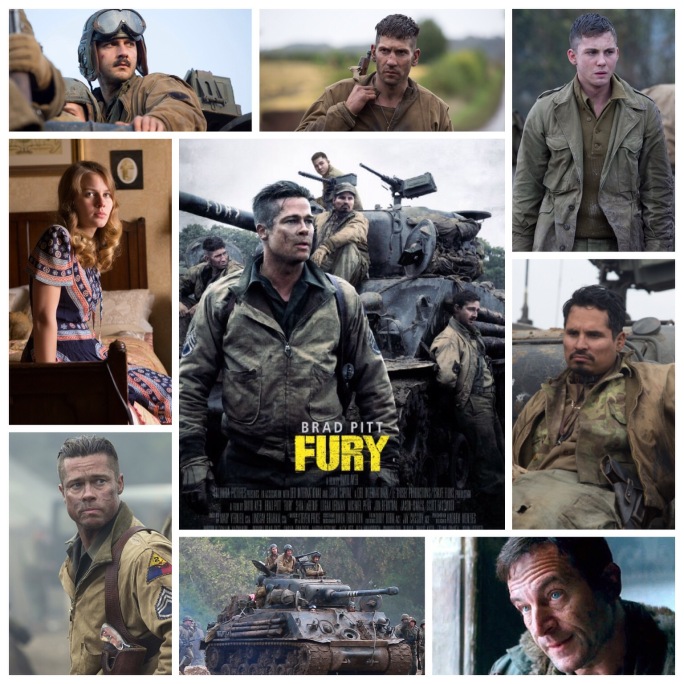
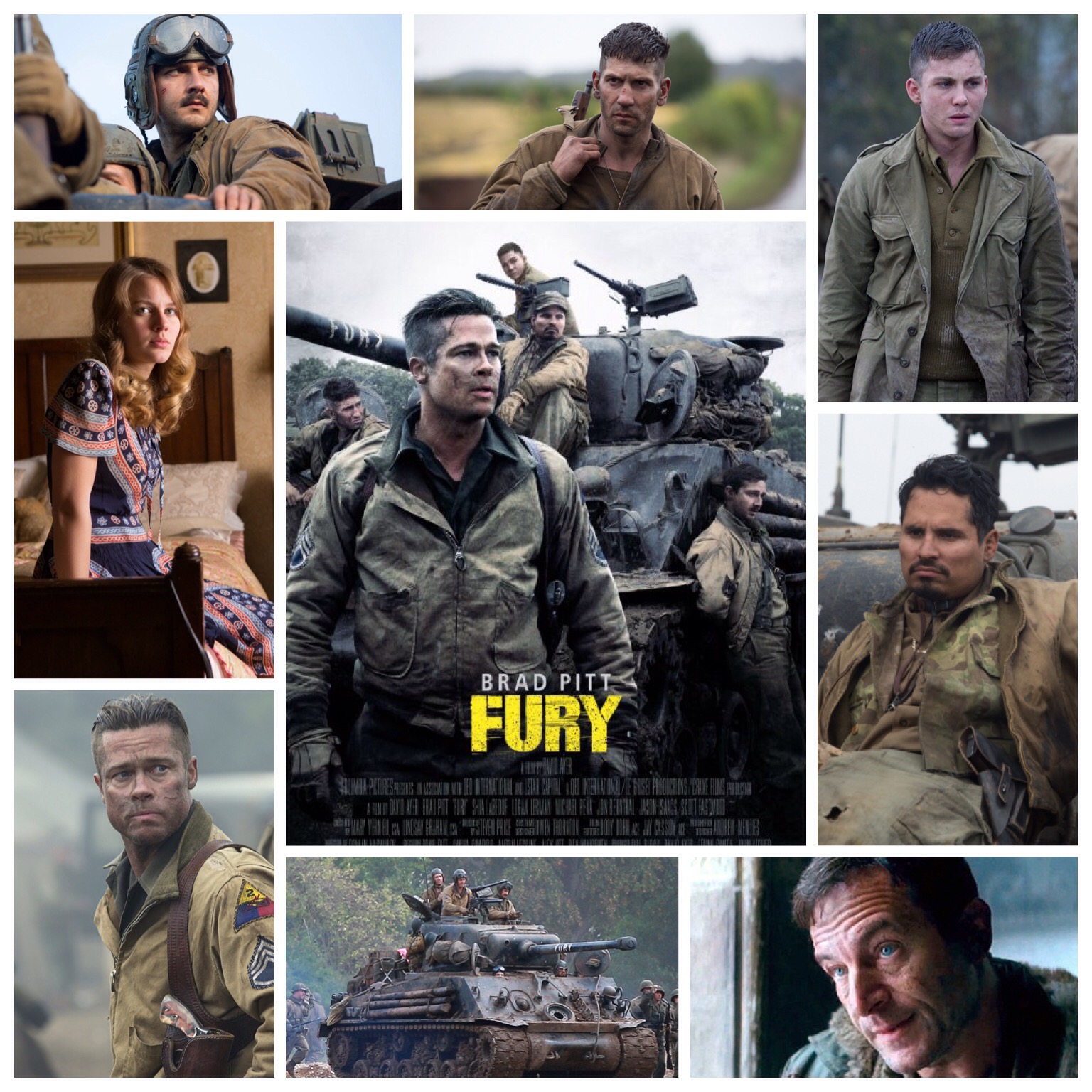
David Ayer’s Fury is the most fearsome, unrelenting war film of the decade and quite the experience to sit through. One stumbles out of the theatre as shell shocked as the brave soldiers we’ve just witnessed onscreen, needing time to wind down from the horror, after which we realize that among the thunderous bravura and non stop, head shattering combat are moments of tender humanity and ponderous reflection, just enough to contrast the madness. Logan Lerman has the pretty boy look, which is quickly stripped away and replaced by frenzied terror and confusion, playing a young army clerk who hasn’t seen one second of combat, suddenly tasked with joining the ranks of a tank warfare crew. They are each hardened in their own way by what they’ve seen and done. Brad Pitt is Wardaddy, their iron jawed commander in a gritty, unstable and altogether brilliant performance. Jon Bernthal is the obligatory redneck Neanderthal, a big lug whose brutish ways mask a childlike yearning beneath. Shia Leboeuf is the restrained one, a bible reader and thinker whose resentment of the war radiates from his eyes like sad and sick beams of sympathy. Michael Pena, reliably excellent, is the closest to neutral of the group. Ayer airdrops us right into the action without pretext, warning or proclaimed intention. This isn’t a ‘men on a mission’ war flick, this is a single harrowing day in the lives of men at the end of the world as well as their ropes, an intimate study of the horror inflicted on both body and soul, both soldier and civilian, the collective horrific impact of the war refracted through the prism of a small period of time. Such a tactic has huge potential, and here it works wonders in brining us closer to these characters, as well as anyone they meet along their way. Pitt leads this ragtag band with the indifferent sentiment of a hardened, brittle man who has been in one too many a tight spot and seen one too many a comrade fall under his care to waste time with compassion for the enemy. Time and tide have turned killing into a purely instinctual, second nature business for him, and we see this unfold in a kicker of a scene where he forces Lerman to murder an unarmed German private who begs for his life. Such is war, and such is Ayer’s film, free from Hallmark moments and structured escapism. Midway through, the film stops dead in its tracks for a beautiful, tension filled sequence in which the band finds temporary refuge in crumbling abode with two German girls. The culture shock is numbed out by the extremity of the war, and these two groups are forced to coexist, if only for an hour or so. The youngest of the girls (Alicia Von Rittberg) is stunning, a baleful example of the corrupts of innocence, her character arc a testament to the senselessness of war. The combat scenes within the tank clank with clammy, claustrophobic dread and desperation, helped by the fact that for the most part they filmed inside real replicas. Jason Isaacs shows up in yet another war movie role as a grizzled commander who briefly assists them, and (of course) steals his two quick scenes in the process. War films often struggle to find humanity amongst the ugliness by trying a little too hard, and by being a little too obvious. This one is frank, unrelenting and assaults you with a deafening roar of chaos, with a few extremely subtle moments of introspect and emotion. It may just have cracked the formula for finding the comfort in such turmoil: less is more. One of the best war movies I’ve ever seen.
Ridley Scott’s G.I. Jane: A Review by Nate Hill
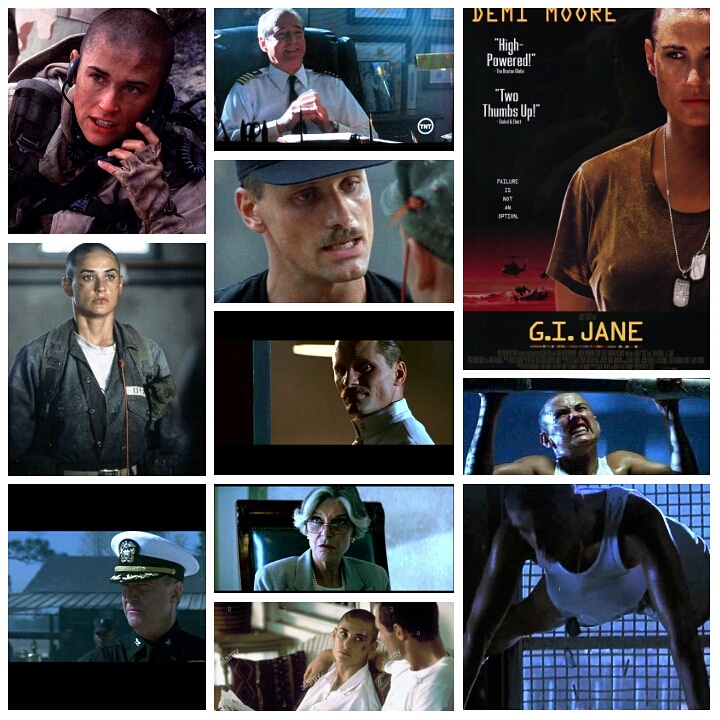
I’ve always thought that Ridley Scott’s G.I. Jane is the movie Michael Bay made in another reality where he matured a little more. I mean that as a compliment to Sir Ridley and the film. The crisp, aesthetically lighted style has Bay written all over it, but it’s employed alongside a human story of one girl facing some truly daunting odds. Demi Moore plays Jordan O Neill, a determind, plucky individual who has her mind and heart set on going through the infamous Navy SEAL training, making her the first woman to undertake the task. She just wants to do her training like the rest of her peers, but unfortunately her situation comes with a tirade of media attention and notoriety, something which she never signed on for. Corrupt politician Theodore Hayes (the late Daniel Von Bargen smarming it up) wants to ruin her, and he’s at odds with a pushy Senator (Anne Bancroft is as stiff and sour as the glass of kentucky mash she constantly pulls from). Meanwhile, Moore begins her training, thrown in with a bunch of testosterone fuelled dudes, rabid dogs who don’t react well to a girl in their midst. Her instructors do their best, but she meets quite the adversary in Master Chief James Urgayle (Viggo Mortensen) a no nonsense guy with a razor sharp intellect and a personality to fuel it. Mortensen gets to do something really special with the role. Where other drill instructors in film are somewhat caricatures, monstrous, profane loud-mouths with all the depth of a wood plank, Urgayle has a metallic edge that encases real human qualities beneath. Mortensen latches on to that right off the bat, blessing the film with a fully three dimensional person. The cast is great as well, with work from Kevin Gage, David Warshofsky, Jason Beghe, Morris Chestnut, Jim Caviesel and the legendary Scott Wilson who is mint as the cranky base commander. His dialogue is straight out of a Mamet script and Wilson bites down hard, especially in a scene where he verbally owns Bancroft. Moore is combustible, lacing her take no prisoners attitude with the grace and power of her femininity. She’s also in wicked shape too, her physique a reflection of both Jordan’s commitment to her goal and Demi’s steadfast need to tell the best possible story. This one is far better than some critics would have you believe, with a story arc both suited to the character and theme. It’s also just plain powerhouse filmmaking that chimes in on all the right notes. Awesome stuff.
ON THE ROAD – A REVIEW BY J.D. LAFRANCE

For years, Jack Kerouac’s novel On the Road had been considered unfilmable. That hasn’t stopped people from trying ever since it was published in 1957 with Kerouac himself sending a letter to Marlon Brando asking the actor to star opposite him in a film version. It isn’t the style or the structure that makes the novel difficult to adapt but rather its iconic status as one of the signature books of the 1950s. Even more daunting is its status as a book that millions of people grew up reading, like The Catcher in the Rye. As a result, it has become a much beloved and cherished book for generations of readers. Anyone attempting to adapt Kerouac’s novel into a film faces the intimidating task of living up to the impossible expectations of legions of fans, not to mention somehow making people forget the equally iconic people the characters are based on – Kerouac and his famous friends, Neal Cassady, Allen Ginsberg, and William S. Burroughs.
The path to an On the Road film has been littered with failed attempts from the likes of Francis Ford Coppola, Joel Schumacher, Brad Pitt, Billy Crudup, Colin Farrell, and Gus Van Sant, who were all attached at one time or another. Of all the people linked to the project, it was Coppola who has remained a constant over the years. He bought the rights in 1979 and has managed to steer it clear of Hollywood interference, finally picking Walter Salles (The Motorcycle Diaries) to direct. He saw it through a turbulent period where financing fell through and actors dropped out. He finally made and released the final product in 2012 with up-and-coming actors Sam Riley and Garrett Hedlund, and, oh yeah, a young actress you might have heard of – Kristen Stewart. On the Road debuted to a lackluster reception at the Cannes Film Festival prompting Salles to cut 13 minutes from the film in an effort to tighten things up and focus more on the two main characters – Sal Paradise (Riley) and Dean Moriarty (Hedlund).
On the Road is a fictionalized account of Kerouac’s numerous journeys across the United States between 1947 and 1950 when he met Neal Cassady, who would become the mythical character Dean Moriarty in the book. The film begins, literally, on the road with a shot of Sal Paradise’s feet walking on several different roads both during the day and at night. Rather interestingly, Salles and screenwriter Jose Rivera’s angle with their adaptation is the theme of absent fathers and Sal and Dean’s yearning for theirs. Sal’s father dies before he first meets Dean and Dean’s elusive father is a semi-famous hobo in Denver who abandoned his family when his son was very young. So, the two men bond over a common missing element in their lives. This is established early on with Sal’s opening voiceover narration that quotes Kerouac’s original scroll manuscript before it was edited into the book most of us know and love: “I first met Dean not long after my father died. I had just gotten over a serious illness that I won’t bother to talk about except that it really had something to do with my father’s death, my awful feeling that everything was dead.” By choosing to quote the scroll instead of the novel, Salles and Rivera are letting fans know that they’ve done their homework and understand the source material.
Sal meets Dean and his beautiful young wife Marylou (Stewart) as the dynamic couple land in New York City to meet a mutual friend. Sal is captivated by Dean’s infectious energy and considerable charisma. Garrett Hedlund does a fantastic job of conveying Dean’s insatiable hunger for learning and for experience. He’s willing to try almost anything once if only for the experience. The actor captures the mischievous glint in Dean’s eye. You can see why he is so initially attractive to people with his dynamic and fascinating personality. However, there are hints early on that he may not be all he’s cracked up to be, like how he glosses over breaking up with Marylou, which was so bad that she called the cops on him.
I will admit that when I first heard of Hedlund being cast as Dean I wasn’t sold on the idea, but after seeing him in the wildly uneven Gwyneth Paltrow vehicle Country Strong (2010), I could imagine him in the role. He was by and far the best thing in that film, bringing a natural charisma that made you want to watch him every time he came on screen. He brings that quality to Dean in On the Road.
Once I got past the fact that none of the actors in the film look like their real-life counterparts, I was able to settle in and enjoy the experience. Salles wisely did not try to go for people who resembled Kerouac and his friends (an impossible task) but rather actors that were able to capture the spirit of the characters in the book. Sam Riley, who was so good as Ian Curtis in Control (2007), is fine as Sal but plays him a little too passively than he comes across in the book. This is due in large part to the fact that Riley is often overshadowed by the more dynamic Hedlund.
For those worried about the presence of Twilight’s Kristen Stewart, you have nothing to fear. Given the strong material and an equally strong director guiding her, the actress sheds her trademark acting tics and affectations and disappears into her character. Freed from not having to carry a massive cinematic franchise, Stewart allows herself to have fun with the role. She is cast wonderfully against type as the sexually hungry Marylou. Despite her movie star status, Stewart only has a supporting role but she makes the most of it and one hopes that a part like this is a sign of things to come for the talented young actress.
While the film is mostly about Sal and Dean, a few of the supporting characters get their moments, chief among them is Carlo Marx a.k.a. Allen Ginsberg (Tom Sturridge) and a memorable extended cameo by Old Bull Lee a.k.a. William S. Burroughs (Viggo Mortensen). A perfectly cast Viggo Mortensen eerily channels Burroughs’ distinctive voice including his trademark drawl as he dispenses pearls of paranoid wisdom to Sal and Dean while Amy Adams grunges herself down as Bull Lee’s equally cryptic wife Jane. They play well off each other and leave us wanting to see more of this odd couple.
To say that On the Road plays like a collection of highlights from the book is not a criticism as the source material is episodic in nature. That being said, Salles’ film is made by and for fans of Kerouac’s novel, possibly alienating the uninitiated. For fans of the novel, your enjoyment of the film will probably be based on how many of your favorite passages made it into the final version as the ones that do are translated quite faithfully with significant chunks of Kerouac’s prose spoken verbatim in the frequent voiceover narration.
For me, it was great to see some of my favorite passages from Kerouac’s novel realized in the film, like Sal’s ride to Denver on a flatbed truck with a hobo by the name of Mississippi Gene and a hitchhiker named Montana Slim that is pretty much the way I imagined it, right down to Gene singing that great little blues song with everyone joining in all photographed during dusk by cinematographer Eric Gautier. None of these characters are identified in the film but fans of the book will recognize them immediately. This scene shows the camaraderie among fellow travelers. Another favorite bit is a brief scene that demonstrates Dean’s amazing ability to park cars on a dime while living in New York. Salles also manages to capture the energy and vitality of be-bop jazz in a sequence early on where Sal and Dean go see a jazz saxophone player in action (Terrence Howard) and we see Dean lost in the music, lost in the beat.
Salles’ film accurately depicts the initial rush of excitement that most of the characters experience with Dean and how this eventually gives way to anger and disappointment when he invariably lets them down in some way. For Sal, it’s disillusionment as Dean turns out not to be the mythic Western hero figure he had imagined but an irresponsible man who does what he wants, oblivious of how it might affect those around him and yet he still loves him like a brother because of the intense bond they developed on their adventures crisscrossing the country. Jose Rivera’s screenplay doesn’t shy away from showing Dean’s poor treatment of women, like how he neglects his wife Camille (Kirsten Dunst) and baby for trivial “kicks,” going out to a jazz club with Sal. The film also shows how he repeatedly cheats on her with Marylou and vice versa, eventually abandoning both. On his path for the ultimate thrill, he leaves a path of failed marriages and destroyed friendships. For Dean, nothing must get in the way of his voracious appetite – be it drink, drugs, women or the open road. He is the quintessential free spirit, a restless soul that burns like the roman candles Sal compares him to.
As far as films directly about the Beat Generation go, On the Road is best one to date. That’s not saying much when its competition consists mostly of failed efforts like Heart Beat (1980), The Last Time I Committed Suicide (1997) and Neal Cassady (2008), which were made by people who understood little about the Beats. Sure, there have been the rare exceptions that got it right, like Naked Lunch (1991) and Howl (2010), but I’ve always felt that the two best unofficial Beat Generation films were Robert Rossen’s adaptation of The Hustler (1961) and Gus Van Sant’s My Own Private Idaho (1991). The former managed to capture the run down, “beat” feeling that is often conveyed in Kerouac’s novels, while the latter brilliantly captures the allure of the open road and the search for a missing parental figure, in this case a mother. At that point in their respective careers, Rossen and Van Sant would have been ideal directors to tackle On the Road.
The attention to period detail is fantastic, from recreating 1940s New York City to the famous ’49 Hudson that Sal and Dean drive across the country. Right from the get-go, Salles immerses us in this time period with the help of jazz music from the likes of Slim Gaillard, Dinah Washington, Charlie Parker, and Dizzy Gillespie. The sets, locations, outfits and music all work together to provide us with a glimpse of that time as seen through Kerouac’s eyes. Rather interestingly, Salles and Rivera don’t shy away from the sex in On the Road as we see Dean with a variety of sexual partners over the course of film as does Sal, which includes his brief relationship with Terry, (Alice Braga), a beautiful Mexican woman he meets in California. The Beat writers were very passionate people and this included their sex lives.
The care and detail applied to every scene clearly demonstrates that this was a passion project for everyone involved. On the Road is not some sterile, impersonal studio film, but rather one made by people with a real affinity for the source material. Salles’ film captures the energy and excitement of Kerouac and his friends who shared a passion for literature and jazz. They lived for the moment, giving into their wildest urges as one sometimes does at that young age where you have your whole life in front of you and feel indestructible. They are the “mad ones” as Kerouac calls them in his book. This is certainly not a film for everyone and rightly so. What it does is perfectly capture the essence and spirit of the novel. It does this so faithfully that it may alienate the uninitiated but so be it. At least Salles has the conviction to pick a specific angle and go for it, making definite choices along the way instead of playing it safe.
Ghost: A Review by Nate Hill
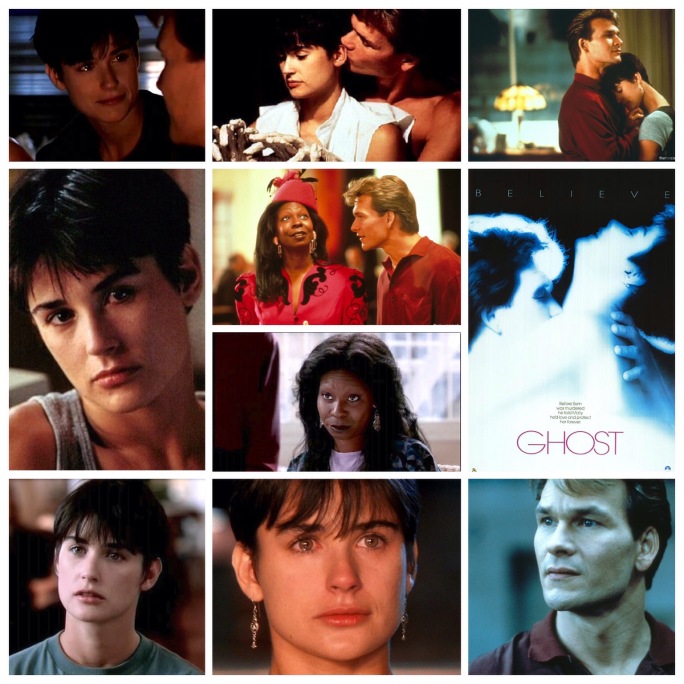
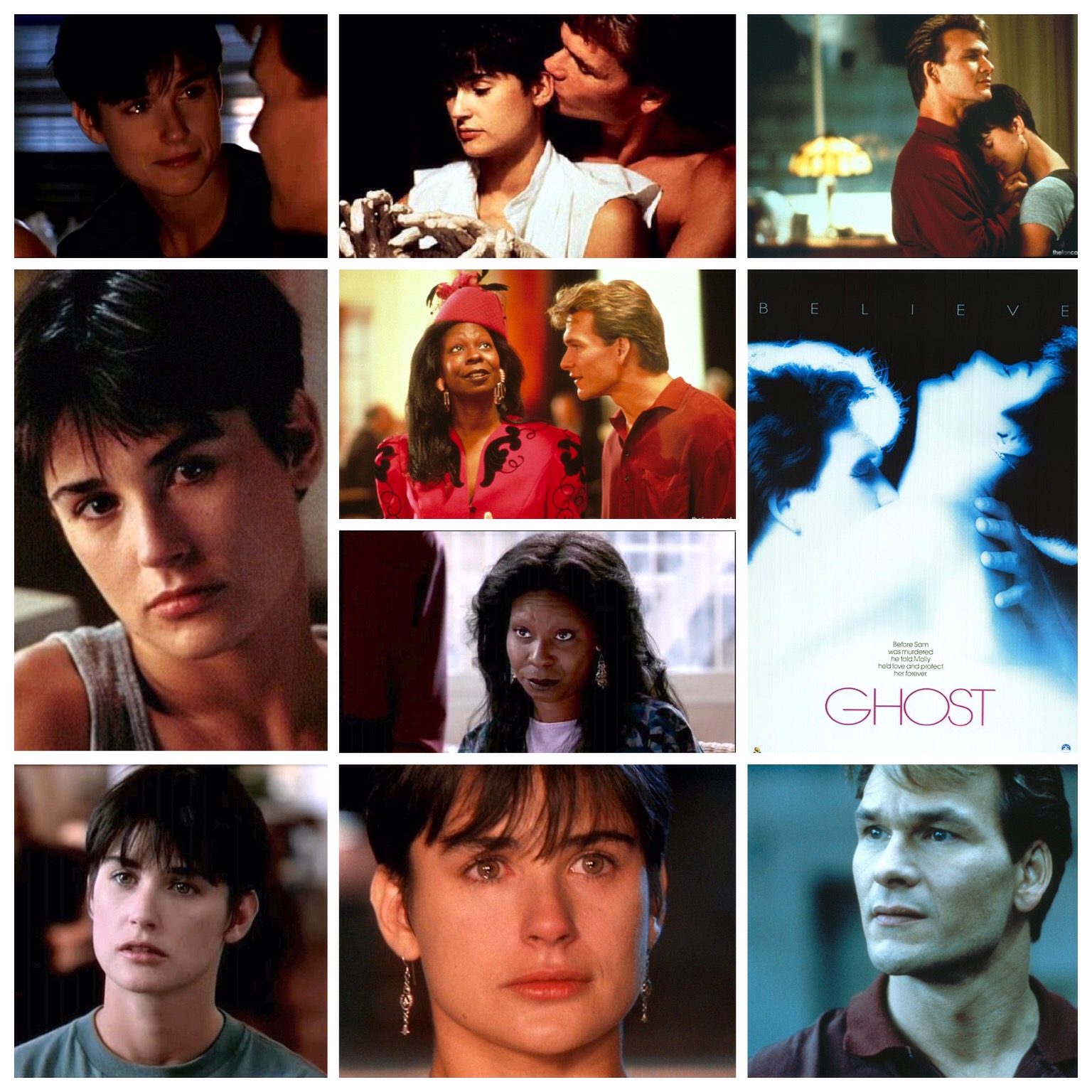
Ahh, Ghost. What an authentic romance classic, a film that puts a big old grin on your face whether you want it to or not, a sloppy, smile that’s just wide enough to catch the tears that fall as a result of the sadness which accompanies the sweet, too essential ingredients in any love story that hopes to affect us in either direction. Balance is key, and Ghost employs both the giddy, heart-skipping joy of romance and the looming possibility of threat and tragedy in equal measures, never getting too dark or to soppy, at least for me. Demi has never been more adorable, in one of her career highlights. Her and Patrick ‘Roadhouse’ Swayze play star-crossed young lovers, in the beginning stages of building their lives together, a time that should be unconditionally happy for both, and is, until one fateful event rips them apart and plunges the narrative into effect. They encounter a thief in an alley one night, and Swayze is killed. Only, his spirit remains behind, for more reasons than he at first realizes. He keeps a protective, loving eye on Moore, and is driven to the notion that his death was no accident, his lingering presence meant for the purpose of both truth, love and retribution. He is aided and assisted by a sassy psychic (Whoopi Goldberg) who acts as his conduit between both realms. There’s supernatural intrigue and conspiracy afoot, but as exciting as that stuff is, it’s the love story between Patrick and Demi that has kept generations rooted to the story. A romance film is nothing without two leads who share both chemistry and a great script, which this one supplies generously. They are a show stopping pair in their scenes together, and if their predicament doesn’t draw forth both smiles and cries from you as a viewer, well, you’re wading through the wrong genre, my friend. The two of them make this one an honest to goodness winner with their performances, supported by narrative elements that only raise the stakes of their relationship. A film which will never not be a classic, and everyone should have in their collection. Ditto.
Cool World: A Review by Nate Hill
Cool World is known, by those few who may be aware of its existence, as the ‘other’ film in which live action characters inhabit the same realm as cartoons. The more famous one of course is Who Framed Roger Rabbit, a glorious gem of a film that gets the acclaim, notoriety and long lasting attention, as it well should. (We won’t speak of a third one involving a certain moose and squirrel that really does earn it’s bad rap). Cool World is somewhat maligned as the black sheep of the two, and in some people’s eyes (Ebert laid a stern smackdown on it) downright hated on. It’s no doubt very different from Roger Rabbit, which is admittedly the better film and the easier one to like and relate to. But this one is brilliant in its own right, at least for me. I love the way it uses a sombre tone with its human creations to throw a unique light on them as soon as the Toons show up. It’s quaint and wonderfully inaccessible, with some scenes existing purely of a need to showcase a stream of consciousness type style that doesn’t so much halt the proceedings, as give them their own surreal flavor. Brad Pitt is Frank Harris, victim of a jarring post war tragedy and thrown headlong into the cartoon world, eventually finding himself a Detective in their realm. Outside in our world, lonely cartoonist Jack Deebs (Gabriel Byrne is a sly choice for the role) falls in love with one of his creations, a blonde bombshell named Holli Would (voiced and later played in the flesh by Kim Basinger). Holli is as devious as she is gorgeous, and works to use Jack’s attraction to her as a conduit to escape into our world. Pretty soon a deafening cacophany of cartoon creatures in all shapes, sizes and colours floods out of their dimension and into ours, creating quite the cosmic mess for Pitt to clean up. It’s fun without being too zany, the overblown fuss of the Toons contrasted by a glum human world, reeling from the war and unexpecting of such an event to unfold. Granted, the meshing of the two dimensions isn’t given the precise, big budget fanfare and cutting edge methods of Roger Rabbit, but the world building and special effects here are still pure enchantment and offer a dazzling level of entertainment. Pitt is stoic with flinty sparks of boyish charm, Byrne hilariously plays it dead straight, and Basinger is dead friggin sexy. She steals the show especially as Holli in human form, having a ball with the bubbly bimbo trying to keep a straight face in the real world. The Toons in general really are a diverse bunch, ranging from animals to inanimate objects to tiny little formless cutesy blobs and everything in between, filling their frames with a chaotic, detailed miasma worthy of Studio Ghibli. Lot of hate floating around for this one. You won’t find any from me, I love the film, and accept it for the adult friendly, experimental oddity it is. Great stuff.