B Movie Glory with Nate: Mutant Chronicles

image

Mutant Chronicles is a solid gem, as both a b movie and a legit exercise in bloody high concept fantasy. It’s got a sci fi vibe meshed nicely together with a grinding steam punk sensibility, and it’s pure visceral gold. The vague plot, as I best remember it: Some form of extraterrestrial intellegience takes up residence deep within the earth’s core, using a gigantic machine to turn humans into mindless, rabid killing machine with nasty, pokey, king crab looking things for limbs. The warring corporations who control the remaining resources on the planet commission a crew of dirty dozen style bad asses to venture deep into the earth, stopping the mutants and their makers, and silencing the evil contraption forever. Thomas Jane is Major Mitch Hunter, the stoic tough guy leading the group with grit and guts. He’s also searching for his missing superior officer Nathan Rooker (Sean Pertwee). Along with him is strong, silent monk Brother Samuel (Ron Perlman), his mute daughter (Anna Walton), and other assorted warriors including Benno Furmann and Devon Aoki. That’s pretty much all you get for a plot. The rest is screaming zombie esque hordes that ambush them at every turn and provide especially grisly action set pieces. There’s a really impressive journey in a rickety spaceship that looks like a cross between a hot air balloon and a toaster, and a cameo from an extremely bored looking John Malkovich. Jane and Perlman use their tough guy charisma to bring the story to life, and the special effects are pretty damn cool. This one has bite, imagination and buckets of gore, particularly in a frenetic finale deep within the earth’s interior. Great stuff.

In The Bedroom: A Review by Nate Hill

image

In The Bedroom is tough cinema, packed with the kind of substance and human drama that often drives casual viewers away, their psyches scorched by the lack of generic plotting and warm, fuzzy story arcs. To those who actively seek out realism, heartbreaking emotion and films which probe the complex corners of the human soul for answers that weigh heavier in your thoughts than the questions, this one is a treat. It lulls you in with an opening montage of summer romance, giving you no context of the challenging character arcs to come. We begin with Frank (Nick Stahl) a man barely out of his teens, in the midst of a passionate fling with Natalie (a fantastic Marisa Tomei), a woman far older than him who has two kids and a troublesome ex husband (William Mapother). Frank’s parents differ on their opinions as far as his relationship goes. His no nonsense mother (Sissy Spacek), calmly disapproves, while his loving father (Tom Wilkinson) encourages simply by sitting back and going along with it. Then, out of nowhere, the plot takes a sharp turn into tragedy. Frank is killed in a struggle involving the volatile ex husband, leaving everyone behind to grieve. This film isn’t content with a simple, standard grieving process. It insists on holding a steady, nonjudgmental gaze upon the parents, and the agonizing state they are left in. The killer is released on extended bail. The mother is torn apart knowing he is out there. The father actively downplays the devastation simply because he isn’t capable of letting out what’s inside him, twisting him in silent despair every moment of every day. Wilkinson is emotional dynamite, like a bleak cloud with flashes of sorrowful lightning beneath, a time bomb of implosive sadness. Spacek carries herself magnificently, especially in a third act verbal showdown with Tom that leaves you gutted and stunned. These two play their roles with uncanny precision, every movement and mannerism a roadmap leading straight to the core emotion, and shellshock of the tragedy, still being absorbed by their characters with every  frame we see. It’s a brave script for any group to undertake, and one which you must go into utterly prepared or you will either fall short of telling the story to its potential, or be consumed and disarmed by it, and arrive with a finished product with a tone deaf mentality. Not this one. Every aspect is treated with care, attention and focus by all involved, miraculously pulling this hefty piece off without a hitch. It’s often a struggle to sit through films that don’t make you feel all that great, films that tear off the superficial cloth that much of cinema is cut from, delving beneath for an unwavering look at what really goes on in this world of ours, be it large scale or intimate. It’s important to experience this occasionally though, as it can often teach you valuble truths and awaken parts of your perception that lie dormant during a lot of other movies. This one won’t hold your hand and provide an emotional blueprint for you to follow, but in being let off the leash, the experience may just be more rewarding. 

THE GOOD, THE BAD & THE UGLY – A REVIEW BY J.D. LAFRANCE

1aab7290a0f04dc1b8cef150794d358c

I’m not a huge fan of westerns. I could count my favorites on one hand but at the top of the list is Sergio Leone’s The Good, The Bad and The Ugly (1966), an epic story about three men’s pursuit of a chest of gold during the American Civil War. In fact, this film is one of my favorites of all-time. Instead of doing my usual in-depth examination of the film’s production, which has been covered in definitive detail in Christopher Frayling’s excellent Leone biography Something to Do with Death, I’ve decided to take a look at some of my favorite scenes.

The way Sergio Leone introduces the film’s three main characters says so much about them. Tuco a.k.a. The Ugly (Eli Wallach) is the film’s wild, uncontrollable id and the humanistic character of the three in the sense that he has all of the foibles and weaknesses that we all do. He is one of the most lethal, yet ungraceful characters in the western genre. His introduction sets up what a formidable opponent he is as he quickly dispatches three men come to kill him. Tuco crashes through a storefront window with a gun in one hand and a huge chunk of meat and bottle of wine clenched in the other, which perfectly captures the wild, untamable essence of his character. Not even a freeze frame that Leone employs at one point during this sequence slows Tuco down. He is a character of extremes.

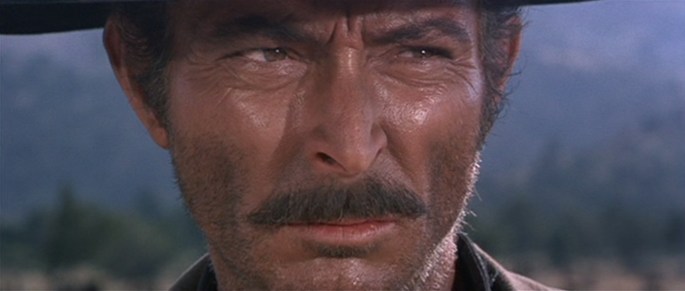
Angel Eyes a.k.a. The Bad (Lee Van Cleef) is a cold-blooded killer and Leone captures the menace in the man’s eyes in his first close-up. With this shot Leone establishes that Angel Eyes is pure evil. He visits a man that knows the identity of someone who helped steal a box of gold. He spends a few minutes staring the poor man down, never taking his eyes off him, even while eating, which has to be pretty damn unnerving. The film’s first bit of dialogue is finally spoken in this scene, ten-and-a-half minutes in (including opening credits), which demonstrates Leone’s mastery of visual storytelling. For me, the key bit of dialogue in this scene is when Angel Eyes tells the man, “But when I’m paid, I always see the job through.” He then proceeds to kill the man and his youngest son without hesitation. If that wasn’t bad enough, Angel Eyes goes back to the man who hired him and kills him too because the other man paid him to and, of course, he always sees the job through. There’s a fantastic last shot of Angel Eyes blowing out the room’s lamp and in doing so, disappears into the darkness with a bit of ominous scoring by Ennio Morricone.

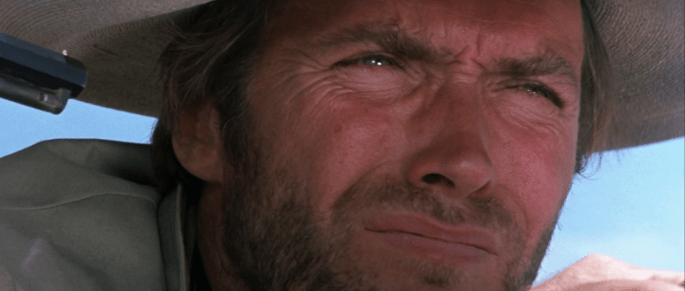
Blondie a.k.a. The Good’s (Clint Eastwood) introduction has to be one of the coolest in cinematic history. Three men capture Tuco, who is a wanted fugitive, and one of them says, “You know you got a face beautiful enough to be worth $2,000?” And then a voice off-camera says, “Yeah. But you don’t look like the one who’ll collect it.” Blondie then steps in view, coolly lights a cigar and guns down the men with brutal efficiency. Leone prolongs a shot of Blondie’s face as long as possible until we find out that he and Tuco have a deal. Blondie captures Tuco and brings him in for the reward money. He then rescues Tuco before he’s hanged to death and they repeat the process as the reward money increases. When Blondie brings Tuco in to the authorities, the fugitive lets loose a hilarious string of insults and curses directed at his captors. No one can quite say the word, “bastard” with the same kind of passion and venom as Eli Wallach does in this scene.

Later, as Blondie and Tuco split up the reward, the two men talk about the risks each takes in their endeavors. Tuco gives Blondie a warning that says a lot about his character: “Whoever double-crosses me and leaves me alive, he understands nothing about Tuco.” He laughs and in a nice bit, chews on one of Blondie’s cigar. I always wondered if that last bit was improvised by Wallach as it has a spontaneous feel to it. However, when Blondie decides to end his partnership with Tuco, he foolishly does not heed the outlaw’s warning and leaves him alive, even if it is the middle of nowhere. Blondie is a fool if he thinks that will kill Tuco, or maybe he just doesn’t care and figures that they will never meet again.

Angel Eyes witnesses Blondie and Tuco’s routine and responds to a woman who expresses relief that Tuco is being hanged by telling her, “People with ropes around their necks don’t always hang.” She asks him to explain and he replies, “Even a filthy beggar like that has got a protective angel.” Blondie is only heroic in an ironic sense. Leone underlines this notion at one point when he uses a faux angelical musical cue by Morricone to play over a shot of Blondie about to “rescue” Tuco from a hangman’s noose. Angel Eyes tells the woman, “A golden-haired angel watches over him.” Blondie is a mercenary but he does have his moments of compassion. He may be an efficient killer but unlike Angel Eyes he only kills when it is absolutely necessary or for profit.

Leone plays with our notions of good and evil with these three characters. Blondie isn’t truly good in the traditional sense but he is within the context of The Good, The Bad and The Ugly. Angel Eyes is truly bad, a pure killing machine in it only for the gold and not above repeatedly and viciously slapping a woman around in order to get information out of her. There is a glint in Van Cleef’s eye that suggests Angel Eyes enjoys making others afraid through physical intimidation. He is also very cunning and smart. He knows it would be pointless to torture Blondie when he is held captive at the Union Army Prisoner of War camp because he would never talk, as opposed to Tuco who will do or say anything to save his own skin.

Tuco is actually the film’s only sympathetic character. Sure, he is a liar and he’s crude but he also straddles the line between good and evil — at times he is one or the other — much like most people in real life. He is also quite smart as evident in the scene where he expertly assembles his own custom revolver. The others underestimate him and think that he’s stupid, but he’s quite cunning. If anything, he’s a survivor that repeatedly escapes death during the course of the film. While Angel Eyes is pure evil, Tuco is just out for himself and therein lies the crucial difference between the two characters.
tuco1
The Good, The Bad and The Ugly
is a marvel of editing. For example, the scene where Tuco and his three henchmen ambush Blondie is edited in such a way that there is an incredible amount of tension created from cutting back and forth from Blondie cleaning his gun, Tuco’s men quietly approaching his room, and the army marching outside. We are left wondering if the sounds of the army will make it impossible for Blondie to hear the approaching ambush in time and if he will be able to re-assemble his gun in time. Almost no music is used during this scene, just ambient sounds and this helps ratchet up the tension even more.

A lot of people forget that The Good, The Bad and The Ugly is also a devastating critique of the American Civil War. For example, there’s a scene where Angel Eyes walks through bombed out ruins and finds all kinds of wounded Confederate soldiers. He talks to their Commanding Officer who accepts a bottle of alcohol in exchange for information. We see this again when Tuco takes Blondie to a mission to nurse him back to health after nearly killing him in the desert. They go through a room full of wounded Confederate soldiers – more casualties of this costly war. There’s also Blondie and Tuco’s time spent at a Union Army P.O.W. camp where Angel Eyes poses as an officer who tortures prisoners for information. Finally, the harshest commentary on the Civil War comes when Blondie and Tuco are captured by the Union Army and meet the Captain who is a jaded drunk. He tells them about the “stupid, useless bridge” that his men fight over with the Confederate Army two times a day because it is a strategic spot, but he dreams of seeing it destroyed. And that’s just what Blondie and Tuco do in a brilliantly choreographed sequence. At this point, the Captain has been mortally wounded but before he dies, he hears the bridge detonating and gives a smile before dying. It was Blondie’s idea to blow up the bridge for the Captain and this act is not only a nice thing to do for the man but also allows him and Tuco to cross the river as the two armies leave, no longer having anything to fight over.

Even though The Good, The Bad and The Ugly is operatic on an epic scale it is the relationships between the three main characters that makes the film so good. In particular, the relationship between Tuco and Blondie is one of the film’s strengths. They often double cross each other and have a real love-hate relationship but at the film’s end, Blondie shows mercy for Tuco’s fate. It goes without saying that it is the talent of the three lead actors that makes these characters so interesting to watch. Clint Eastwood comes from the less is more school of acting and suggests a lot from doing or saying very little. In sharp contrast is Eli Wallach’s flamboyant, over-the-top performance as Tuco. If Eastwood is all about minimalism, then Wallach lets it all hang out. Finally, Lee Van Cleef is a confident, malevolent force of nature — the pure essence of evil.

One of Eli Wallach’s finest moments in the film is when he tries to get Eastwood’s character, who is near-death, to tell him the name on the grave that contains the chest of gold. Wallach goes through a whole range of emotions as Tuco tries every trick that he knows to get the name (including using a friendly approach, begging and even crying) but no dice. It’s a wonderful scene and one that shows Wallach’s range and skill as an actor. Even more revealing is the next scene between Tuco and his brother, which provides all kinds of insight into his character. Tuco’s brother condemns his sibling’s wicked ways and past, but Tuco replies passionately, “Where we came from, if one did not want to die of poverty, one became a priest or a bandit. You chose your way, I chose mine. Mine was harder!” For all of his bravado, this is a moment where Tuco shows a vulnerable side and it adds another layer to this fascinating character.

What I’ve always found interesting is that we never find out if Tuco could beat Blondie in a gunfight. At the film’s climactic showdown, Blondie beats Angel Eyes but he tricks Tuco by not having any bullets in the outlaw’s gun. Is it because he knows that Tuco is faster on the draw? Or is he simply hedging his bets knowing that he could outdraw Angel Eyes but that would leave him little time to shoot Tuco before he shoots him. Alas, we will never know. Living up to his moniker, Blondie doesn’t kill him even though he could. He messes with him a little bit by putting him in a hangman’s noose just like Tuco did to him earlier in the film. However, he gives Tuco enough slack so that he doesn’t die and leaves him some of the gold. Blondie can’t kill Tuco because, despite everything he does in the film, he is easy to like. Again, Blondie only kills when necessary. Of course this doesn’t stop Tuco from shouting out one more curse as a parting shot and a great way to end the film.

The three men system that Leone applies to The Good, The Bad and The Ugly is one of the best plot devices ever. While it’s true that Blondie is no saint he is as close to the traditional definition of “good” as you’re going to get out of a bounty hunter. Angel Eyes is pure evil and Tuco has worked with both of them so what does that make him aside from the “ugly” moniker? He has aspects of both Angel Eyes and Blondie. It’s true that Tuco robs a store for his gun but it is done from a perspective that makes is somewhat sympathetic. Tuco is like most of us, forever unable to decide if he’s all good or all evil. He allies himself to both so that he can call on either depending on the situation. Hence, his shifting alliances with Blondie and Angel Eyes. He knows that Blondie and Angel Eyes will never become a team because Angel Eyes is only using Blondie for the name on the tombstone and Blondie is just looking for a way out.
TGTBATU 04
I think that one of the things I love most about this film is how Leone takes his time and lets scenes play out, using editing only when necessary, when it fits the tone and mood of a given scene, like the aforementioned climactic duel where we get all of these insane close-ups of each man’s hands, eyes, guns and so on. The tension builds and builds for what seems like forever until you’re ready to go insane and yell at the screen, “shoot already!” And then, of course, it all plays out in a few seconds. How brilliant is that? The Good, The Bad and The Ugly is one of those rare films that works on several levels, some that only reveal themselves upon subsequent viewings. While many champion Once Upon a Time in the West (1968) as Leone’s greatest achievement, I have always felt that The Good, The Bad and The Ugly was the best thing he ever made – a perfect marriage of epic scale and an intimate, character-driven story.

The Boondock Saints: A Retrospective Review by Nate Hill

image

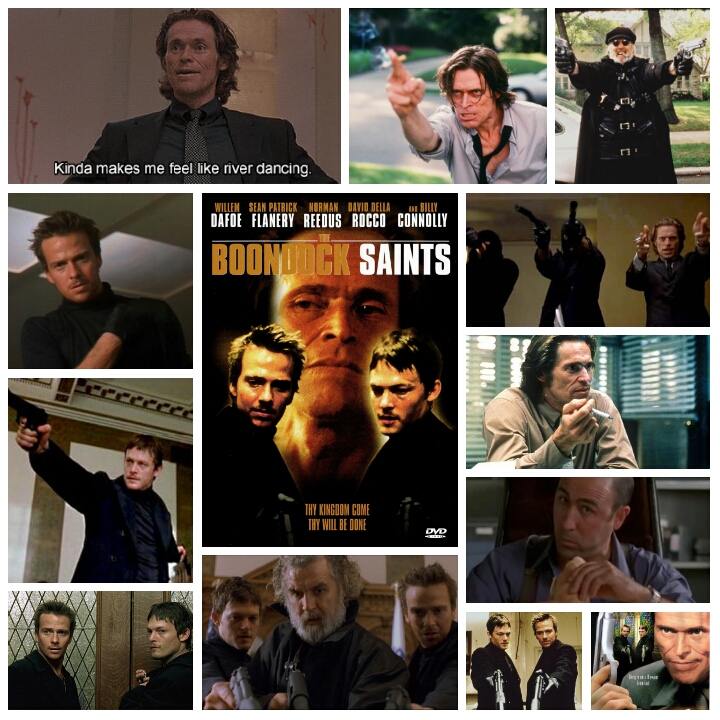
The Boondock Saints is an interesting movie for me, as it’s kind of evolved along with my consciousness as I’ve gotten older. Some films you initially dislike, yet they grow on you gradually until you see them in a new light. Some films you are crazy about right off the bat, yet over time the attraction dims and you realize you don’t really care for them anymore. And then there’s this one. While I can’t say I’ve grown to dislike it, because that’s just not the case, I will concede that as I’ve gotten older and new information on it has crossed my path, I’ve come to regard it in a new light. Also, the parts of my personality which went ape shit for anything pulpy and crime ridden back then have receded a bit as my tastes matured. But try as I might, I can’t bring myself to completely see it in a negative light, despite recognizing certain negative aspects of it which were once not so obvious to me. Saints is a tricky film because on the one hand you have the rabid fans who make up the cult following and have brought it the infamy it has today, as well as it’s sequel, which is really not that great. On the other hand you have the lofty monarchy of high film criticism, bashing it six ways to Sunday, the bad taste of it’s conception and production still on their tongues. Recently I watched the documentary Overnight (a biased film with its own glaring issues, but that’s another story), which chronicles the meteoric rise and fall of director Troy Duffy, who foolishly squandered a gift horse with immature and selfish behaviour, or at least that’s what the film shows. The film had the potential to be a big budget flick with huge stars involved and the backing of Weinstein. That never happened. Duffy’s ego swiftly sent the script into oblivion, until it finally got made years later for less than half the original offered budget, and landed in film purgatory before being squeaked into a meager distribution. A tragedy, say some. But.. is it though? Fate is a strange beast, and if everything went according to plan, we’d have a slick studio monster that might have been good, and no choppy, unique cult favourite to gain unprecedented momentum decades after its chaotic birth. Some food for thought. Anywho, on to the film. It’s low budget for sure and one can tell it’s made by a guy who’s never directed before, but it’s got a silly, cartoonish charm and cinematic flair for style that will keep you watching. Two rowdy Irish brothers named Connor (Sean Patrick Flanery) and Murphy (Norman Reedus) accidentally kill some scary russian mob soldiers in one of the most inventive scenes ever staged, and they discover they have a spiritual affinity for knocking off evil men. So, with no tactical experience whatsoever, they set out on a mission from God to end the lives of the Boston criminal underworld. Dragging their hapless, loveable buddy Rocco (David Della Rocco) along, its only a matter of time before the law tags them, and soon they have loony FBI honcho Paul Smecker after them. Willem Dafoe has to be seen to be believed in what is a career weirdest for him. He plays it like the Joker crossed with Bugs Bunny, never allowing an ounce of restraint or subtlety into the performance. I’d be interested to see the actor/director relationship which led to getting something this zany in the can. Smecker struggles morally, part of him believing the Saints to be a necessary force. They are faced with Italian mafia bosses including a scuzzy Ron Jeremy and Carlo Rota as Giuseppe ‘Pappa Joe’ Yakavetta, a ham fisted Don who wants the Saints gone. Rota is the only one who comes close to matching Dafoe’s maniacal energy, playing Yakavetta to unhinged, mustache twirling delight. Reedus and Flanery hold up their end with physicality and quite a lot of energy, making the McManus brothers two fun protagonists to hang around with. Billy Connolly shows up as Il Duce, an almost invincible assassin from hell who proves to be quite the obstacle for our boys. The concept for the film is relentlessly juvenile, and the action set pieces veer into silliness quite a bit and there’s a slapdash, haphazard feel to the whole thing, an unfinished varnish, or lack thereof to the whole process. It’s just such lurid, reckless fun though, filled with excessive profanity, comic book violence, laughable religious symbolism and deeply questionable morals that seem to have been penned by an eighth grader who’s just completed a John Woo and Charles Bronson marathon back to back. This is a movie that loves the fact that it’s a movie and acts accordingly, throwing everything it can get its hands on at you and yelling ” Look! Look how cool I am”. Is it cool? Up to you. It’s certainly one you won’t forget about. It almost ducks the ‘good film’ litmus test in the sense that you’d be wasting breath in claiming it’s a bad movie. It couldn’t care less about that, and the fans, of which I have to say I still am, seem not to either. It’s not really good, bad, terrible or anything. It’s just The Boondock Saints.

Ridley Scott’s American Gangster: A Review by Nate Hill


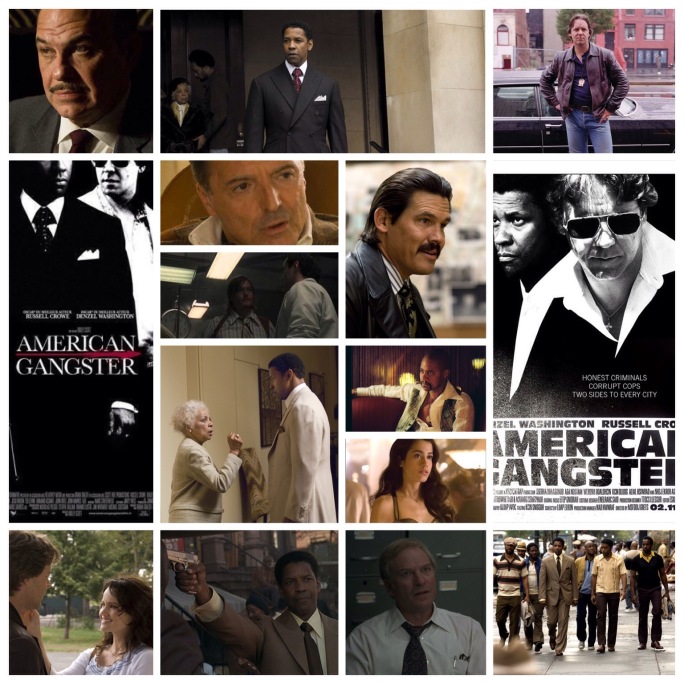
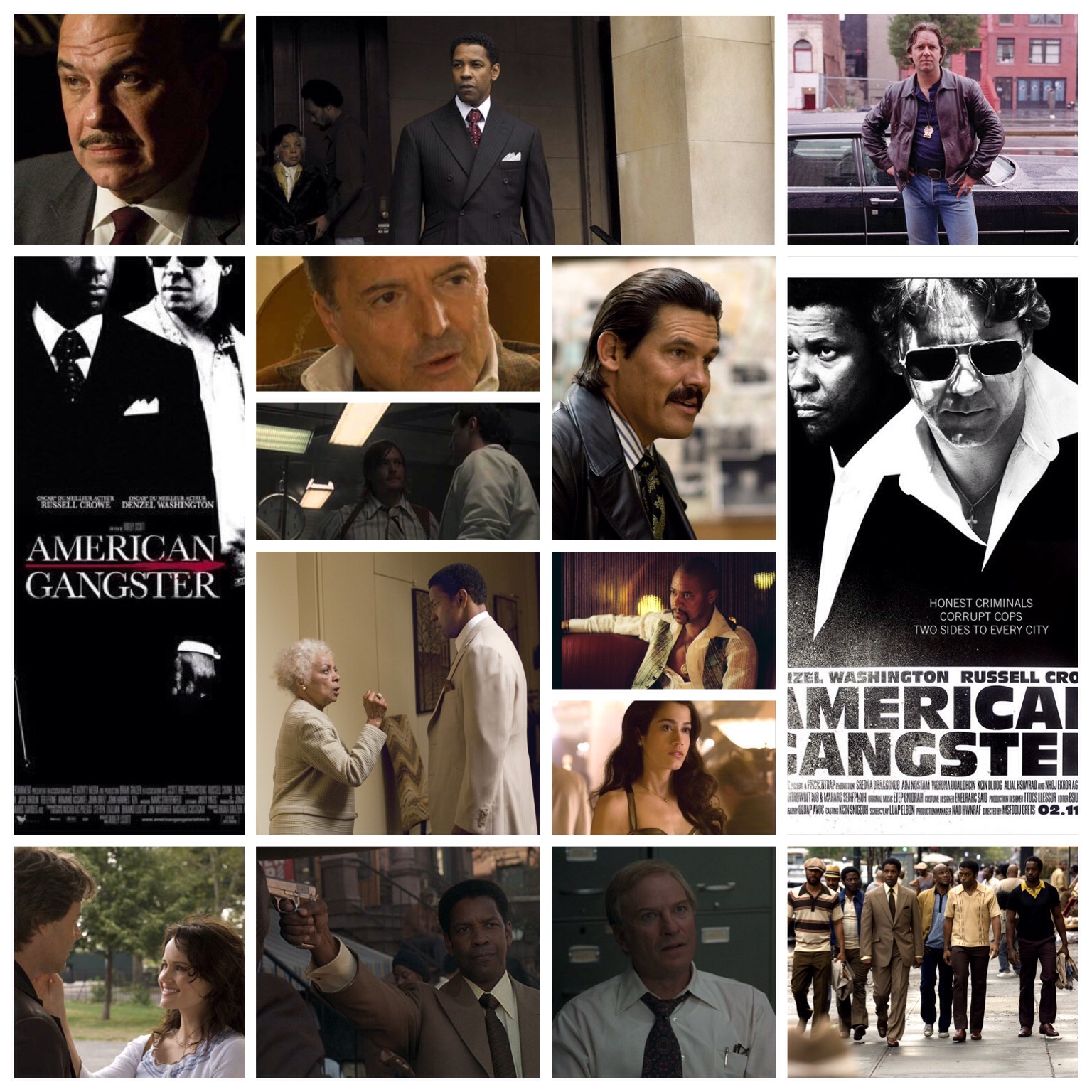
Ridley Scott’s vast, intricate crime epic American Gangster is one of the director’s finest achievement in film to this day. It’s sprawling in nature, expansive in scope but never chaotic or muddled. It always maintains a laser focus on its characters and story, thumping along at a rhythmic pace which swells and falls to the time of one of the most iconic stories in true crime. It’s Scott’s Heat, a titanic tale of cop vs. criminal in which neither are the villain or hero, but simply men adhering to rigid, ruthless principles moulded by the environments they have grown up in. Both men have an intense set of morals completely different from the other, yet equally as captivating. Russell Crowe is a troubled bruiser as Detective Richie Roberts, a cop so determined to convince himself of his own upstanding nature that he won’t take any illicit payoff in any amount or context. In contrast, every other aspect of his life is a shambling mess. Denzel Washington is quiet fury as Frank Lucas, an enterprising gangster and drug smuggler who rides the tidal wave of capitalism like there’s no tomorrow, flooding the streets of Harlem with pure heroin directly from the southeast Asian source, and rising swiftly to the peak of underworld infamy. The two are on an inevitable collision course, two juggernauts with different empires backing them who will stop at nothing. Lucas believes himself to be untouchable, shirking the flashy, preening nature of his peers and remaining out of the limelight, until cunning Roberts catches onto him. The rough and tumble world of New York in the 60’s and 70’s is lovingly brought to life by Scott, his cast and crew who go to impressive lengths in order to bring us that grit, realism and specific anthropological aura of another time, another setting. Speaking of cast, this has to be one of the most rip roaring collection of actors ever assembled, even to rival that of Heat itself. In Richie’s corner there is senior Detective Lou Toback (a sly Ted Levine, perpetuating the vague Michael Mann vibe even further), a scummy colleague (Yul Vasquez), and an off the books team of gangbusters including John Ortiz, John Hawkes and a mumbling RZA. He also clashes with his bitter ex wife (Carla Gugino) in an ugly custody battle for their young son. Over on Frank’s side of the hill are his huge extended family including Common, TI, Chiwetel Ejfor and Ruby Dee in one of the film’s finest performances as his strong willed, passionate mother, one of the only people who could talk sense into him and keep the animal inside at bay. Lymari Nadal is great as his bombshell Puerto Rican wife as well. His rivals include superfly-esque Nicky Barnes (Cuba Gooding Jr.) and a brief, hostile turn from Idris Elba. He also deals with the Italian mafia, personified by a hammy Armand Assante, an earnest Jon Polito and a slimy Ritchie Coster. One of the best performances of the film comes from Josh Brolin as positively evil corrupt narcotics detective Trupo, threatening everything that moves with his grease slick hair, porno moustache and silky, dangerous tone. As if that army of talent wasn’t enough, there’s also work from Kevin Corrigan, Joe Morton, Clarence Williams III in a powerful turn as an ageing Bumpy Johnson, and a blink and you’ll miss it cameo from Norman Reedus as well. What. A. Cast. The whole thing rests on Crowe and Washington, though, and both are like Olympian titans of crime and conflict, sweeping up everyone around them in a whirlwind of explosive violence, shifting alliances and the booming arrival of capitalism giving the American people in every walk of life a defibrillator jolt of economic change, laying the foundation for the world we live in today, one brick, one bullet, one business deal at a time. Scott achieves legendary heights with this one, a crime film for the ages that one can always revisit to see not how one hero cop took down a villainous drug lord, but how the forces which inexorably bind humans to various fates in accordance with their decisions swept up two extraordinary yet mortal men into historic infamy. In a word: Epic.

B Movie Glory with Nate: For Which He Stands

  
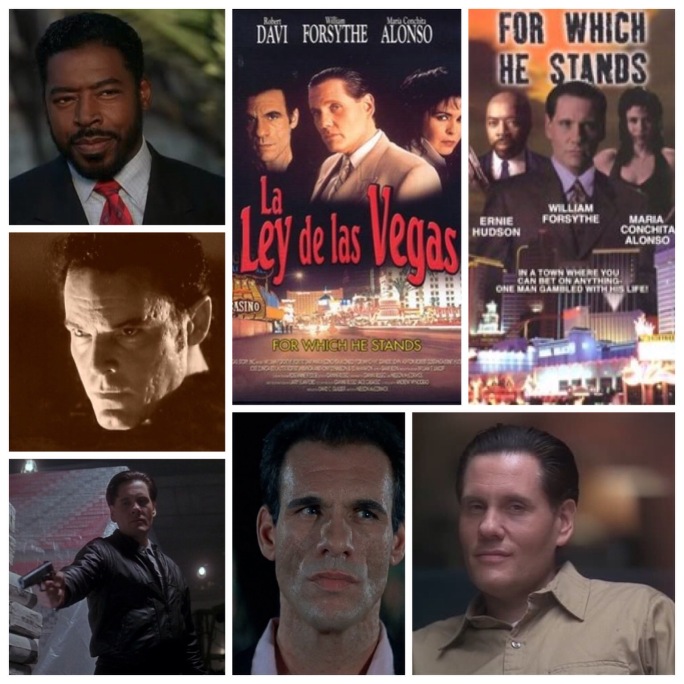
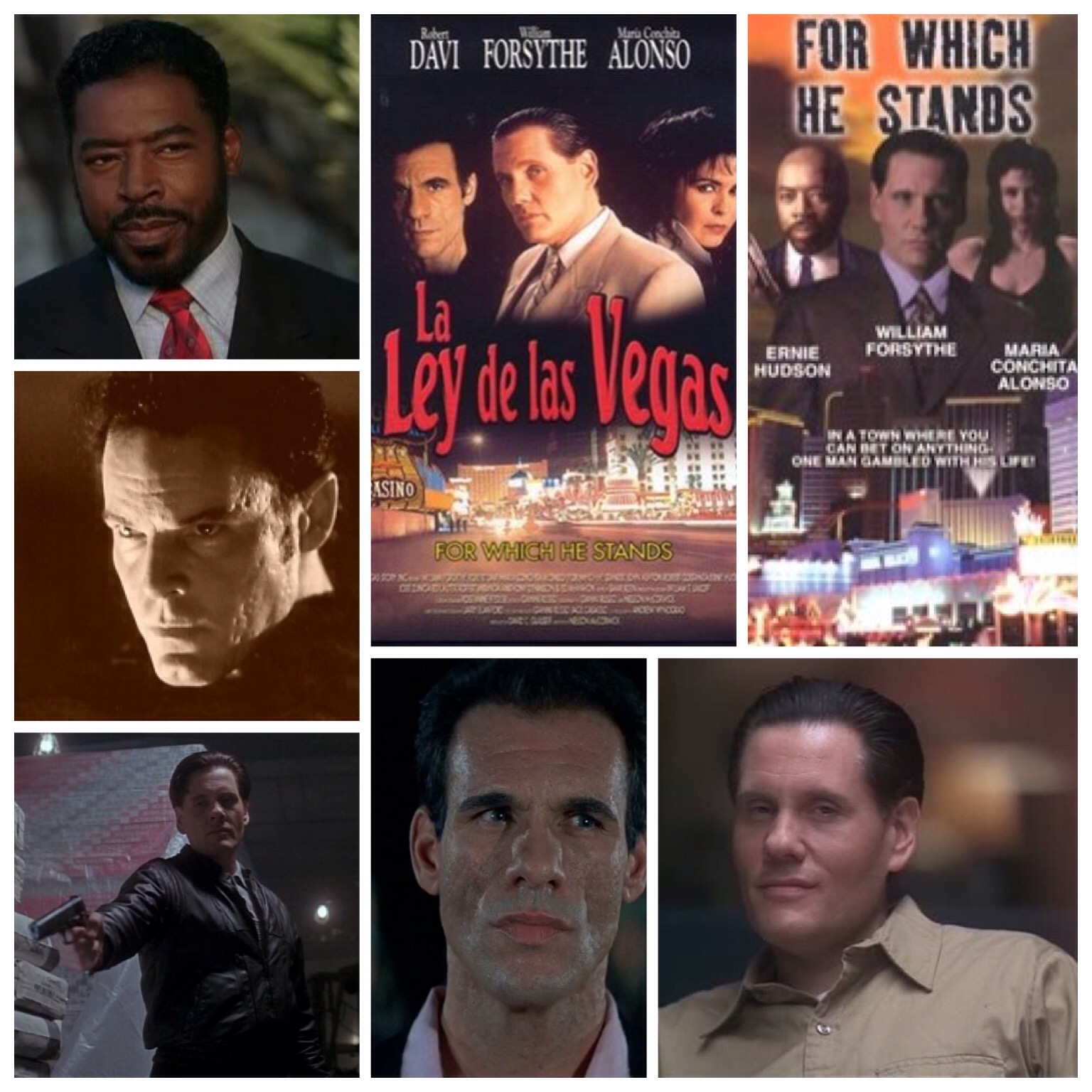
For Which He Stands is a lean, mean, nasty crime drama and cautionary fable about the dangers of pride and ego, and the spiralling disaster ones life can turn into when these qualities within the human nature go unchecked. It’s also a shamelessly slimy B movie treat featuring a tough as nails lead performance from William Forsythe as Johnny Rochetti, a small time Vegas casino mogul who runs afoul of some extremely dangerous South American criminals. He plays the role like Liotta from Goodfellas crossed with Bronson from Death Wish, an initial belligerent cockiness wiped promptly out of his personality by the very real danger stalking him, replaced by a reckless calm and willingness to get his hands dirty to defend his loved ones. One night, a Latin scumbag causes a raucous in his casino by violently threatening a girl. Johnny has a reflex reaction to defend her, and inadvertently kills the prick. This makes him a local hero, but also paints a huge target on his back for the Colombian cartel, who his deceased quarry had connections with. He’s forced to leave his wife (Maria Conchita Alonso) and contend with the dangerous criminal forces aiming to eliminate him. There’s some truly freaky cartel baddies here, including Andrew Divoff in a cameo as a gravel voiced psycho, and Robert Davi in a fire so,e turn as Carlito Escalara, a ruthless assassin hell bent on destroying Johnny. He’s got some legendary villain roles in over the years, and this one is among the nastiest, and best. Johnny’s only help comes from an intrepid federal agent (Ernie Hudson) and a D.A. (John Ashton’s). It’s Forsythe’s show though, and his transformation from untouchable big shot to caged animal on the run to eventual pistol packing hero is fun to watch. The atmosphere is pure crime cinema, told almost like a dark fairy tale that just happens to be set in Vegas. This one is positively buried in obscurity though, I had to seek out a screener VHS copy of a dusty corner of Amazon to get my hands on it. Good luck. 

MEAN STREETS – A REVIEW BY J.D. LAFRANCE

Mean Streetts 4

Martin Scorsese’s truly great films have all had a personal touch to them. One only has to look at films like Mean Streets (1973), Taxi Driver (1976) and Raging Bull (1980) to see a real vitality and energy to the action on-screen. It is these early films that convey a real sense of someone intensely in love with film — which may be due in part to the fact that Scorsese and his cast and crew were just starting out. Mean Streets, in particular, is a visceral, intimate experience that is just potent today as it was when it first came out.

Mean Streets
takes the notion of the American success story and reduces it to almost nothing. The characters that inhabit this film are small-time hustlers and punks with no real direction in life and no future. Set in the “Little Italy” neighborhood of New York City, we are introduced to most of the main characters in the opening moments of the film. Each one is given his own little scene in order to showcase his distinct character-defining obsession. We first meet Tony (David Proval), the order-obsessed owner of a local bar, as he throws out a junkie and then chastises his bouncer for his lack of initiative. Next, is Michael (Richard Romanus), a serious looking loan shark who ineptly tries to sell a man a shipment of German lenses only to be told by the customer that they are actually Japanese adapters. This is followed by the explosive Johnny Boy (Robert De Niro), a happy-go-lucky punk who gleefully blows up a mailbox and then runs off. Finally, we meet the film’s protagonist, Charlie (Harvey Keitel), an ambitious young man who is embroiled in conflict — both personal and external.

Charlie is torn between two worlds: the static isolation of his uncle’s environment and the constricting chaos of Johnny Boy’s lifestyle. He must make a choice between the two, while trying to exist in both. Conflict occurs when these two worlds inevitably collide and Charlie is left to pick up the pieces. This revisionist approach is in stark contrast to the traditional gangster film which almost always follows a curve that traces the criminal’s rise and eventual fall. However, Scorsese disrupts this notion by having no rise and leaving the fall unresolved. The only thing that is truly alive and vital in the film is Scorsese’s camera which dollies and tracks all over the place with incredible energy and enthusiasm which is truly infectious.

The source of this intensity stems from Scorsese’s personal identification with the material. At the time, the young filmmaker was writing the screenplay for Mean Streets (then known as Season of the Witch) and he had just finished wrapping up Boxcar Bertha (1972) for B-Movie guru, Roger Corman. Scorsese showed the rough cut of the latter to famous actor/director John Cassavetes who told him, “you just spent a year of your life making a piece of shit. You’re better than that stuff, you don’t do that again.” Cassavetes asked Scorsese if he was working on something that he really wanted to do. He showed him the Season of the Witch script and Cassavetes urged Scorsese to work on his own material and not on others.

So, the aspiring auteur began to seek financial backing for his script which initially began as a continuation of the characters in his first film, Who’s That Knocking At My Door? (1968). Scorsese changed the title to Mean Streets, a reference to famous pulp writer Raymond Chandler, and sent the script to Corman who agreed to back the film if all the characters were black. Scorsese was so anxious to make the film that he actually considered this option, but fortunately actress Verna Bloom arranged a meeting with potential financial backer, Jonathan Taplin, who was the road manager for the musical group, The Band. Taplin liked the script and was willing to raise the $300,000 budget that Scorsese wanted if Corman promised, in writing, to distribute the film.

According to Scorsese, the first draft of Mean Streets focused on the religious conflict within Charlie and how it affected his worldview. “See, the whole idea was to make a story of a modern saint, a saint in his own society, but his society happens to be gangsters.” Along with fellow writer Mardik Martin, Scorsese wrote the whole script while driving around “Little Italy” in Martin’s car. They would find a spot in the neighborhood to park and begin writing, all the while immersed in the sights, sounds, and smells of what would eventually appear on-screen. Mean Streets, for them, was a response to the epic grandeur of The Godfather novel. “To us, it was bullshit,” Martin remembers, “It didn’t seem to be about the gangsters we knew, the petty ones you see around. We wanted to tell the story about real gangsters.” It is this rejection of the often pretentious and operatic approach of The Godfather films that really makes Mean Streets distinctive. It was one of the few gangster films, at the time, to use a personal, almost home-movie view of its subjects. The settings and situations are so intimate and personal that you almost feel embarrassed, as if you are intruding on someone’s actual life.

Once the financing was in place, Scorsese began to recruit his cast. Robert De Niro had met the director in 1972 and liked what he had seen in Who’s That Knocking. De Niro was impressed with how the film had so accurately captured life in “Little Italy” where he had also grown up. Scorsese offered the actor four different roles, but he could not decide which one he wanted to portray — they all had interesting aspects to them. After another actor dropped out of the project, Scorsese cast Harvey Keitel in the pivotal role of Charlie. Keitel’s first film was also Scorsese’s debut with Who’s That Knocking and as a result, the two already had a rapport. This may explain why the director ignored the fact that the actor had little experience, and instead opted for a certain amount of rawness and a familiarity with the subject matter that Keitel possessed. Scorsese’s gamble paid off and Keitel’s strong performance is one of the many highlights of Mean Streets. He manages to convey the inner turmoil that threatens to consume Charlie’s character as he struggles to save everyone around him and ends up saving no one.

Keitel was also responsible for convincing De Niro to play Johnny Boy. “I didn’t see myself as Johnny Boy as written, but we improvised in rehearsal and the part evolved.” This improvisation also resulted in some of the most memorable scenes in the film, including the back room conversation between their two characters where Johnny Boy explains to Charlie, in a rather humorous fashion, why he has no money to pay off his debt to Michael. It is also incredible to see how much energy De Niro instills in Johnny Boy — the embodiment of the film’s frenetic force. He is the unpredictable element in Charlie’s otherwise, structured world. Whenever Johnny Boy is on-screen the camera mimics his furious pace that absolutely bristles with intensity. Scorsese reinforces this energy in an early scene where Johnny Boy enters Tony’s bar to the strains of “Jumpin’ Jack Flash” by the Rolling Stones. Even though the entrance is captured in a slow motion tracking shot, De Niro’s character is so energetic that not even this technique can slow him down.

The whole cast was prone to improvising dialogue and Scorsese only encouraged them more by creating a very collaborative atmosphere to the whole shoot. This provided actors like Keitel room to grow and learn their craft. “Mine was a gut, root, raw experience of trying to express myself, and express the character of Charlie in Mean Streets, and trying to discover what it meant to express yourself in a character. I was learning my technique, learning how to apply it. Marty and I always discussed a scene, and usually he trusted me to do what I had in my mind to do.” This trust resulted in a great performance from not only Keitel but the whole cast who transformed into their characters effortlessly.

Keitel was not the only actor who felt like he could make his character his own, the whole cast was encouraged to personalize their roles. Richard Romanus, who played Michael in the film, remembers that Scorsese “allowed you to flesh out the character. Even if you were in the middle of a scene and something came up that was organic, he wouldn’t dismiss it. He would respond to it, and he would probably include it. To me, that is his great gift. He’s an actor’s director.” This approach created a fun environment for the cast and crew to work in and allowed them more opportunity to be creative. As a result, Scorsese, as he put it, “kept pushing the limits of the budget and drove everybody crazy. But that was the only thing we could do because the more we got down there, the more fun we had and the more we realized the atmosphere we wanted to get.” To his credit, Scorsese and his crew achieve this effect with smoky, dimly-lit bars for his characters to inhabit and an amazing classic rock soundtrack to compliment the proceedings. There are several moments in the film where the actors are laughing at something and it seems like they are genuinely enjoying the moment and the experience of making this film which only enhances the enjoyment of watching it.

One of the real joys of Mean Streets is the way Scorsese’s camera captures the action. The camera is restless and frantic as it moves in tight, narrow spaces that lead to dead ends. This is done to convey the destiny of the characters. They are full of energy, but are going nowhere in life. In Mean Streets, Scorsese also used a hand-held camera to create a jerky, off-balance effect that conveys the sensation of disorientation. There is no center of power. No other scene demonstrates this effect more than the famous pool hall brawl where Johnny Boy, Charlie, and Tony go to collect some money from the owner. A fight breaks out when Johnny Boy’s bravado insults the owner. Scorsese uses a hand-held camera to convey the constant confusion of the fight. The camera darts and weaves all over the place, following one fight for a while before shifting to another brawl in an indiscriminate fashion. This effect raises the fight to a frightening level as the audience is drawn right into the middle of the pool hall melee.

We are in as much danger as the characters and this adds an element of realism not seen in traditional gangster films. The combatants in Mean Streets are not easily identified and separated, but instead everything is mixed up and obscured to duplicate the spontaneity of the ensuing chaos that constitutes a real brawl. The violence has no meaning or nobility and no one becomes a hero or succeeds as a result of using excessive force. After the pool hall fight is broken up, the conversation continues as if it never happened. The fight served no purpose and achieved no real end, except to enliven the characters’ mundane existence for a few minutes. Mean Streets excels in its realistic portrayal of violence that goes so far as to implicate the viewer in the spectacle, as the pool hall fight scene illustrates. The camera, and by extension, the viewer enters the fracas, which creates a sense of danger not only for the characters but for the audience as well.

Mean Streets
opened at the New York Film Festival to good reviews and good business. It did so well that Scorsese wanted to show it in Los Angeles where, despite favorable reviews, it promptly flopped. However, it began to gradually find an audience and has since become an influential and much imitated film amongst up-and-coming independent filmmakers who identify with the low-budget exuberance of Scorsese’s film. Even Scorsese himself returned to the same neighborhood, only with greater command of his craft and on a bigger scale with Goodfellas (1990). One only has to look at indie films like Laws of Gravity (1992), A Bronx Tale (1993), and Federal Hill (1995) to see that Mean Streets still continues to inspire filmmakers more than twenty years after its release.

Leaving Las Vegas: A Review by Nate Hill

image

Upon my first ever viewing (I know) of Mike Figgis’s Leaving Las Vegas last night, I discovered that it’s not the film I thought it was all these years. I had an image of a quirky, star crossed lovers tale with a modicum of sweetness. What I got wasn’t insanely far off the mark, but I have to say I was disarmed and deeply affected by the sense of decaying bitterness which prevails throughout the story and hangs over it like the sour, neon stained moon over a feverish, perpetually nocturnal Vegas. Every character besides the two leads sort of flits dimly in and out of the story, never having any impact further than they need to service the plot with. This leaves Nicolas Cage and Elizabeth Shue eerily alienated and gives the movie a hypnotic flair. Even though these two abide in a bustling setting, it oddly seems at times that they are the only two human beings in existence. That also most likely stems from the film’s willingness to take the time to get to know them, lingering on every glance, murmur and mannerism, be it mundane or essential, to try and get a feel for these two completely broken souls. Cage is Ben, a failing Hollywood screenwriter who is quite literally drowning in alcoholism, plagued by some tragic past of which we never learn about. He is fired and splits for Vegas to hole up in a motel and deliberatly drink himself to death. There he meets Sera (Shue) a hooker with a heart of gold (Shue torches the cliche bravely). They are immediately attracted, and begin a relationship.  She continues to see Johns, after being freed of her sadistic Latvian pimp (Julian Sands, terrifying). He makes her promise to not attempt to stop his drinking. Their romance is born out of the primal lonliness that each human being feels to a certain extent, that instinctual urge to reach out and grab for anything, anyone to put out the pain. Cage is everything in the role: pathetic, charming, sad, manic, desperate and deeply, scarily committed to his lethal quest of inebriation. The scenes of liquor consumption in this film go beyond excess and make Denzel in Flight look like a high schooler. It will make many uncomfortable, but looking away for our own peace of mind takes away from the urgency and dark poetry of Cage’s situation. Booze is a low burn, but it’s still suicide, and an agonizing method for anyone to behold in action: the person has an extended period of time to rethink, reevaluate, and if they don’t, then their resolve is extended and far more disturbing than a split second decision. Cage displays this in harrowing form in a career highlight. Elizabeth Shue is heartbreaking as the girl who loves him but can’t quite say why, a girl who has spent years in loveless copulation, confused and torn upon feeling it for the first time. Her character goes through some truly hellish things here. You will cry for her, fall in love with her alongside Cage and swell with admiration at her steely resilience in the face of some of the ugliest things life has to offer her. Each member of the supporting cast is like a star in the desert sky, a moment of flickering purpouse before fading into the background again to let Cage and Shue continue their dance of the damned. Graham Beckel as a shaken bartender, Xander Berkeley as a cynical cab driver, Valeria Golino as as a Barfly and R. Lee Ermey as a taken aback conventioneer are all perfect. Director Mike Figgis composed the score himself, a moody blues melody that clings to your perception after the film like a dream that won’t let go. Just to make the film more haunting, it’s based on a novel by a severely alcoholic writer who took his own life two weeks after production was underway, furthering the disconcerting vibe to a saturation point. This one is a tough watch, and you’ll be forced to see two human beings at the absolute end of the road, miles past rock bottom with seemingly no hope in sight. And yet, if you are patient and try to empathize, you will see the kind of flickering positivity and briefly life -affirming intimacy and light that humans cling to even in the darkest of times. Cage and Shue beautifully paint a bittersweet portrait of this through their work. It’s overbearing with the better, but that makes the sweet all the more precious and lasting. Just watch something happy after.

Michael Mann’s The Insider: A Review by Nate Hill

There are some films that are so perfectly made in every way possible that
I sit there thinking ‘Every persons effort and every element of creative energy that went into making this movie has been implemented flawlessly, arriving here and now to give me the viewing experience I’m getting. A perfect movie’. Michael Mann’s The Insider is such a movie. I held off on reviewing it for a couple days after seeing it, partly to let it sink in but mostly to see if I’d feel any different about it once my synapses had cooled down and the frames had dimmed from my consciousness. Perhaps the fiery reaction it drew from me in the moment was cheaply earned, or I was just in the right mood to love it at that time. Not a chance. If anything I’ve become more enraptured by it as time has passed, already aching for a second viewing. Every performance and aspect of is just so rich, deep and rewarding that for its two and a half hour runtime I found myself externally distracted not once. Occasionally Mann deviates from his comfort zone in the nocturnal crime zone. The occult themed period piece, the colonial adventure, the psychological horror, and this, the blistering drama based on a true story. One might not think the subject matter deserves a two and a half hour film, let alone would make a great one, but Mann has the cinematic Midas touch, and never half asses it. His films always contain traces of a true master at work, telling little details that engrave the film with a sense of immaculate skill and unwavering dedication to telling the story in its finest, and most honest form. The Insider tells the story of Jeffrey Wigand (Russell Crowe), a chemist who turns whistleblower on the tobacco corporation he was once employed by, finding shelter under the wing of CBS News’s 60 minutes, and particularly hard nosed reporter Lowell Bergman (Al Pacino). The network wants his take, in order to do an exposé on Big Tobacco, a plan with predictably disastrous and dangerous results, for both Wigand and CBS. The film shakes off any impending sensationalism or deliberately emotional stylistic cheats, instead keeping a microscope focus on the three lead performances and letting all the hurt, determination and emotion come forth naturally through their work, as opposed to smothering their story with an overbearing score and cheap cinematic manipulation. I’ve never been that won over by Russell Crowe until now. He always seems ‘halfway there’ in his work, like he’s missing something. This changed things for me. He’s like a raw nerve here, a family man pushed to the precipice of an impossible decision. One can almost see him wrestling with his conscience behind those haunted eyes, a storm with a lid barely kept on and anchored by Crowe in his finest hour. Pacino holds us captive with his work until we realize we’re not breathing. He’s the moral compass of the piece, and to see him explode at the injustices served up to him will give you goosebumps. The third leg of the table is Christopher Plummer as Mike Wallace, the 60 minutes anchor who also struggles morally with the situation they are in. Plummer is so good you forget you’re watching a film, giving Wallace buried gentleness and chiselled emotional intensity that you can scarce believe is even possible through the craft of acting. The supporting cast is peppered with bushels of talent. Colm Feore, Philip Baker Hall, Gina Gershon, Stephen Tobolowsky, Diane Venora, Nester Serrano, Rip Torn, Michael Gambon and an unusually sedated Debi Mazar are superb. It’s Bruce McGill, however, who almost steals the film in one blistering scene, playing a lawyer with enough righteous anger to shatter your tv screen. A career best for him. No one puts you into a story by forcing you to feel alongside the characters quite like Mann. Here he guides us through the trials that Crowe, Plummer and Pacino face with steady hand and heart until we are invested. Then he pulls the ripcord and let’s the sparks fly, making monumentally intense work of events that could seem pedestrian in lesser hands. We really feel for Crowe and clutch the seat with the same desperate intensity that he clings to his family, and sanity. We feel the same jilted fury alongside Pacino as he wades through sickening bureaucracy for a shot at retribution. We take pause with Plummer as he ponders his legacy and are incredulous with all three at the snowball effect the entire proceeding has had on them, devastating us as an audience the same as them, in turn making us feel closer to them. This is all laced with the incredibly heartfelt music from Lisa Gerrard, who sang alongside Crowe in Gladiator and was a favourite of Tony Scott as well. Mann is a ceaseless monster of storytelling, tone and pacing. The story has flair simply because he doesn’t wantonly throw it in the mix; the feeling and reaction come from story and character and not the razzle dazzle. Mann knows this, and let’s the fireworks naturally spring from the absence of deliberation, like music in the vacuum of space. This one will live on to stand the test of time far longer than the decade and a half its help for already. It’s a revelation. 

WILD AT HEART – A REVIEW BY J.D. LAFRANCE

12f6e7965cb2fbac31c874eb42335413By 1990, David Lynch was at the peak of his popularity and enjoying the most productive period of his career. His television show Twin Peaks had captivated American audiences and he was directing a number of commercials and performance art pieces (Industrial Symphony No. 1). This all culminated with Wild at Heart (1990), an adaptation of Barry Gifford’s novel, which went on to win the coveted Palme d’Or at that year’s Cannes Film Festival. It also helped establish Lynch as America’s premier cinematic surrealist. At its core, the film is a touching love story between two people whose love for each other remains constant despite all of the obstacles that life throws at them, including an overly-protective mother, a dentally-challenged psychopath, and a grizzled rocket scientist. This film is, oddly enough, Lynch at his most romantic, a rock ‘n’ roll opera with vibrant, fiery imagery.

Sailor Ripley (Nicolas Cage) and Lula Pace Fortune (Laura Dern) are young lovers on the run from her crazed and over-protective mother, Marietta (Diane Ladd). Sailor has jumped parole after serving time for manslaughter and takes off with Lula for sunny California. This doesn’t sit too well with Lula’s mom who sends her boyfriend and private investigator Johnny Farragut (Harry Dean Stanton), and, unbeknownst to him, her lover and ruthless gangster Marcellos Santos (J.E. Freeman) on the trail of the young lovers.

As he would do with the opening scene in Twin Peaks: Fire Walk With Me (1992), Lynch kicks things off with a shockingly brutal act of violence that establishes a confrontational tone – this is a violent world where Sailor is prepared to kill a man with his bare hands in order to protect the woman he loves. The first image is the striking of a match followed by images of flames announcing the color scheme that would be prevalent throughout the film. This is continued in the love scenes between Sailor and Lula that are bathed in red, yellow and orange – all representing their burning love for each other. During the course of the film there are countless shots of cigarettes being lit, matches being struck, an exploding car, and a house on fire. This film is vibrantly alive and energized more than anything Lynch had done before or has done since.

In the summer of 1989, Lynch had finished up the pilot for Twin Peaks and tried to rescue two of his projects – Ronnie Rocket and One Saliva Bubble – that were owned by Dino de Laurentiis when his company went bankrupt. Independent production company Propaganda Films commissioned Lynch to develop an updated noir screenplay based on a 1940s crime novel while a filmmaking friend of his by the name of Monty Montgomery optioned Barry Gifford’s book, Wild at Heart: The Story of Sailor and Lula in pre-published galley form. Montgomery gave him Gifford’s book and asked Lynch if he would executive produce a film adaptation that he would direct. Lynch remembers telling him, “That’s great Monty, but what if I read it and fall in love with it and want to do it myself?” And this is exactly what happened as Lynch recalls, “It was just exactly the right thing at the right time. The book and the violence in America merged in my mind and many different things happened.” Lynch was drawn to what he saw as “a really modern romance in a violent world – a picture about finding love in hell.” He was also attracted to “a certain amount of fear in the picture, as well as things to dream about. So it seems truthful in some way.”

Once Lynch got the okay from Propaganda to switch projects, he wrote a draft in a week. Within four months, he began filming with a budget of $10 million. Lynch did not like the ending in Gifford’s book where Sailor and Lula split up for good. For Lynch, “it honestly didn’t seem real, considering the way they felt about each other. It didn’t seem one bit real! It had a certain coolness, but I couldn’t see it.” Samuel Goldwyn, who ended up distributing the film, read an early draft of the screenplay and didn’t like Gifford’s ending either so Lynch changed it. However, the director was worried that this change made the film too commercial, “much more commercial to make a happy ending yet, if I had not changed it, so that people wouldn’t say I was trying to be commercial, I would have been untrue to what the material was saying.”

When Lynch read Gifford’s novel, he immediately wanted Nicolas Cage to play Sailor and Laura Dern to play Lula. The actor said that he was “always attracted to those passionate, almost unbridled romantic characters, and Sailor had that more than any other role I’d played.” In Dern’s case, this was the first opportunity she had “to play not only a very sexual person, but also someone who also was, in her own way, incredibly comfortable with herself.” During rehearsals, Lynch talked about Elvis Presley and Marilyn Monroe with Cage and Dern. Around this time, Lynch bought a copy of Elvis’ Golden Hits and, after listening to it, called Cage and told him that he had to sing two songs, “Love Me” and “Love Me Tender.” The actor, a big Elvis fan, agreed and recorded each song so that he could lip-sync to them on the set.

Before filming started, Lynch suggested that Dern and Cage go on a weekend road trip to Las Vegas in order to bond. Dern remembers, “We agreed that Sailor and Lula needed to be one person, one character, and we would each share it. I got the sexual, wild, Marilyn, gum-chewing fantasy, female side; Nick’s got the snakeskin, Elvis, raw, combustible, masculine side.”

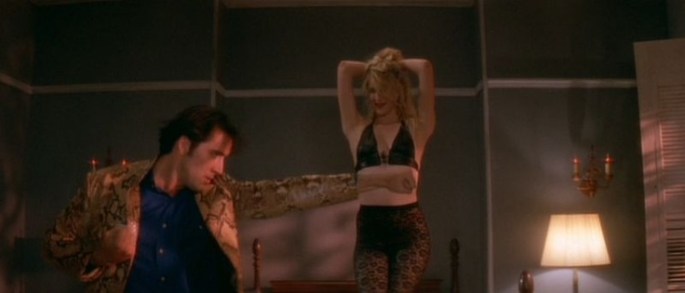
Lynch’s two leads are also on the same page in this respect, especially Cage who affects an Elvis Presley-like drawl and sings two songs made famous by the King. Sailor, like many of the characters in this film, is larger than life with his snakeskin jacket credo, his unorthodox style of dancing (involving martial arts kicks and punches) and his habit of singing Elvis songs to Lula in public. There is a show-stopping moment where he instructs Powermad, a speed metal band, to back him on a note perfect rendition of “Love Me” while the women in the audience scream in adoration in surreal slow motion like something out of a dream. Cage plays Sailor as an instantly iconic figure, where pointing an accusing finger at Marietta is akin to a declaration of war.

Dern plays Lula to gum-chewing perfection, delivering a completely uninhibited performance as Lula. She exudes a captivating sensuality in the way she carries herself and makes a line like, “You got me hotter’n Georgia asphalt,” sound like an enticing come-on. Lula is a young woman full of energy and vitality as is evident in the scene where she and Sailor dance to the music of Powermad. There is genuine chemistry and heat between her and Cage — rather appropriate for a film dominated by images of fire. However, as the film progresses and the tone becomes darker, Lula’s optimism is chipped away and this culminates in a terrifying scene where Bobby Peru (Willem Dafoe) verbally rapes her in a way that echoes a similar scene in Blue Velvet (1986).

Amidst all of this madness and brutality is a touching tenderness between Sailor and Lula, like the way he softly kisses her after a passionate bout of sex, or a moment where he places her hand over his heart without a word. Nothing needs to be said between them because they understand each other intimately. As she tells him at one point, “You mark me the deepest.” And Lynch takes the time to show a series of conversations between Sailor and Lula where they talk about their respective childhoods (“I didn’t have much parental guidance.” Sailor tells her, not surprisingly.), their dreams, random thoughts, and past relationships. This allows us to get to know and care about them while also taking the occasional breather from all of the weirdness that Lynch throws our way.

Diane Ladd is fantastic as the wicked witch cum mother-from-hell, gleefully chewing up the scenery as evident even in the way she vigorously drinks from her martini glass and the way she delivers threats to Sailor with venomous gusto. Also prevalent is Lynch’s trademark fascination with the dark underbelly of America as personified by the character of Bobby Peru, one of Lynch’s most disturbing psychopaths (right behind Blue Velvet’s Frank Booth). With his horrible teeth and all-black attire (to match his pitch black heart), Peru sets his sights on Sailor and Lula with the intention of killing the former and seducing the latter.

Lynch juxtaposes this darkness with his trademark absurdist humor in the guise of the various oddballs Sailor and Lula meet along the way, like the man at a bar (Freddie Jones) who talks about “pigeon-spread diseases” in a goofy, high-pitched, sped-up voice. Or, Lula’s wildly eccentric cousin, Jingle Dell (Crispin Glover in a memorably bizarre cameo), who believes aliens are after him, enjoys placing cockroaches in his underwear and exhibits odd, nocturnal behavior (“I’m making my lunch!”). There is also a memorable scene that introduces Bobby Peru and his friends, including Lynch regular, Jack Nance in a scene-stealing role as Boozy Spool, a dazed and confused rocket scientist who may have been sampling his own rocket fuel. He delivers a brilliantly surreal monologue that is amongst some of the best moments in any Lynch film and reminiscent of the joyride interlude at Ben’s in Blue Velvet.

Wild at Heart
also features stunning cinematography by Frederick Elmes (who also worked with Lynch on Eraserhead and Blue Velvet). In particular, there is a scene where Lula and Sailor pull over to the side of the road as she is upset and disgusted with all of the terrible news that she’s heard on the radio. He finds Powermad on a station and they get out of the car and dance before embracing passionately. Lynch cuts to a long shot and pans away to a gorgeous shot of a sunset that captures the poetic beauty of this moment perfectly.

Wild at Heart
is a film rich in emotion and feeling as everything is heightened to an operatic level. Surreal is an adjective always used to describe Lynch but he is also a very romantic filmmaker. There is the Douglas Sirkian melodrama of Blue Velvet, the emotional journey Alvin Straight takes in order to reconnect with his brother in The Straight Story (1999), and the town of Twin Peaks dealing with the grief over the death of Laura Palmer. Perhaps the most emotional scene in Wild at Heart is when Sailor and Lula drive along a deserted stretch of highway late and night and while an instrumental version of “Wicked Game” by Chris Isaak plays on the soundtrack, he tells her about how he knew her dead father. The reaction she gives is so heartbreaking, like a daughter who realizes that her father isn’t perfect.

Sailor, in some ways, is a father figure to her. He makes her feel protected and she even comments on how some of his physical features resemble her dad’s. This scene represents the first seed of doubt in their relationship. It is the first step off the yellow brick road and this is reinforced by Lula’s nightmarish vision of her mother as the Wicked Witch. And then they come across a horrible car accident and find one person still alive – a woman (Sherilyn Fenn) walking around in shock from a head wound. She eventually dies in Sailor and Lula’s arms. It is a tragic moment accentuated beautifully by Angelo Badalamenti’s moving score. This scene is a crucial turning point in the film as it descends into much darker territory as Sailor and Lula make a series of bad decisions, most notably getting involved with Bobby Peru.

Lynch loved The Wizard of Oz and put a lot of references to it in his own film. Boozy Spool talks about his dog, comparing it to Dorothy’s pooch Toto; Marietta’s picture disappears at the end of the film just like the Wicked Witch; there’s Lula’s vision of her mother as the Wicked Witch of the East; Sailor has a vision of the Good Witch (Sheryl Lee) at the end of the film, who convinces him not give up on love; and Lula clicking the heels of her shoes together after the terrifying encounter with Bobby Peru.

Early test screenings for the film did not go well with the intense violence in some scenes being too much. Lynch estimated that between 100-120 people walked out. The scene in question was the torture and killing of Johnny Farragut. “I didn’t think I’d pushed it to the point where people would turn on the picture. But, looking back, I think it was pretty close. But that was part of what Wild at Heart was about: really insane and sick and twisted stuff going on.” Lynch decided not to edit anything from the film and at the second screening another one hundred people walked out during the same scene. Lynch remembers, “By then, I knew the scene was killing the film. So I cut it to the degree that it was powerful but didn´t send people running from the theatre.”

The film was completed one day before its premiere at the 1990 Cannes Film Festival. Its first screening was in the 2,400-seat Grand Auditorium and afterwards it received “wild cheering” from the audience. Barry Gifford remembers that there was a prevailing mood among the media that hoped Lynch would fail. “All kinds of journalists were trying to cause controversy and have me say something like ‘This is nothing like the book’ or ‘He ruined my book.’ I think everybody from Time magazine to What’s On In London was disappointed when I said ‘This is fantastic. This is wonderful. It’s like a big, dark, musical comedy.’” When Jury President Bernardo Bertolucci announced Wild at Heart as the Palme d’Or winner at the awards ceremony, the boos almost drowned out the cheers with film critic Roger Ebert leading the vocal detractors.

Wild at Heart
perfectly illustrates Lynch’s love-hate relationship with America. The film is filled with beautifully shot iconography of Americana, like big convertible automobiles from the ‘50s and rock ‘n’ roll music from the period. Sailor and Lula are loving (albeit tweaked) homages to Elvis Presley and Marilyn Monroe. It is also something of an underrated film that is often ignored in favor of Lynch’s more well-known work, like Blue Velvet or Mulholland Drive (2001). One can see the film’s influence in a film like True Romance (1993), with its Elvis-obsessed protagonist and his gum-chewing white trash girlfriend as they are pursued by psychotic gangsters, or Natural Born Killers (1994) with its white trash lovers on the run, or even U-Turn (1997) with its town full of eccentric weirdoes. But no one can pull this stuff off quite like Lynch and his film is a true original that deserves to be re-discovered and re-evaluated.