Peter Hyams’ End Of Days

Arnold Schwarzenegger versus The Devil. Just let that sink in. It had to happen at some point in the guy’s career, and I’m thankful it turned out to be Peter Hyams’ End Of Days, a slam bang action horror party of a film that is lowkey one of the best things Arnie has ever done, both in terms of production and the character he gets to play. As Jericho Cane, he’s a far cry from the competent badasses he usually plays, an alcoholic ex secret service agent dealing with the trauma of a murdered family. The last thing he needs is Satan setting up shop in Manhattan on his watch, but that’s exactly what’s in store, for every millennium or so, the red guy gets to take a vacation earth-side in a human host, and if he’s able to get laid with a carefully chosen girl, he gets to take over the world. Some dodgy theology there, but this is an Arnie flick. The human host in question happens to be slick stockbroker Gabriel Byrne, who is soon causing havoc all over the Big Apple in his search for Robin Tunney, the girl marked by a satanist cult decades before and groomed to be his concubine. Arnie’s hangdog private security tough guy and sidekick Kevin Pollak are unlikely heroes to stop the prince of evil himself, but Theron lies the fun, and Cane is actually one of his best, most unique characters to date. Throw in Rod Steiger as a priest whose middle name is exposition, Miriam Margoyles as Tunney’s sinister Aunt (also the only 5 foot tall, chubby middle aged woman to whip Arnie’s ass in a fight), Udo Kier as the freaky cult priest, CCH Pounder as a no nonsense NYPD bigshot, Mark Margolis as the melodramatic Pope in Rome and others, you’ve got one solid cast. Byrne really steals the show and is up there with my favourite cinematic incarnations of Beezle, especially in his smooth, smug and smouldering delivery of some truly patronizing, vicious dialogue to try and dispel Jericho. Arnie’s retort? “You ah ah fucking choirboy compared to me!!” Priceless. The action is big, loud and utilizes NYC to its full scope, with subway scenes, a daring helicopter chase sequence and all kinds of explosive mayhem. The horror element is spooky as all hell too, especially in the first third of the film where atmosphere mounts and dread creeps in (that weird albino dude on the train will forever haunt me), plus the score from “ echoes around like a spectre as well. Not one of Arnie’s most celebrated critically, but will always be one of my favourites.

-Nate Hill

Platinum Dunes’ The Hitcher

I won’t pretend to be a fan of horror remakes other than Rob Zombie’s Halloween, but when they cast Sean Bean as iconic highway madman John Ryder in the inevitable second lap of Robert Harmon’s horror classic The Hitcher, I perked up. Bean, like Rutger Hauer in the original, is one of my favourite actors of all time and I had to to see what he did with the character (he pulled out of another contract and jumped a plane just to accept this gig). The good news is.. he lives up to Hauer’s original asphalt angel of death, and I’ll fight anyone who argues. The bad news? The film doesn’t. It’s one of those dodgy, hit or miss Platinum Dunes horror updates (avoid Jason and Freddy like the plague, but their first Leatherface incarnation is quite good) and really misses out on the atmospheric, haunting pace of the first, where nightmares and reality blend into the mirages appearing on the desert horizon for lone motorist Jim Halsey… the thing is, here Jim isn’t alone at all but travelling with his girlfriend and that takes some of the primal fear out of it. Zachary Knighton fills C. Thomas Howell’s shoes and a surprisingly adept Sofia Bush plays the gal, on a road trip for spring break when they’re suddenly tormented by Bean’s Ryder, an intense creation by the actor that carefully avoids any callbacks or mimicry of Hauer. How could he though? Rutger made that role his own and Bean wisely does the same with a sardonic, smouldering aura all his own, and wins a spot in horror pantheon as a worthy update on this boogeyman of the backroads (he’s also better than Gary Busey’s kid was in that god awful sequel that no one wants to admit was even made). Everything here gets a torqued update, from the infamous body tied between two trucks scene (yuck) to the car chases (that Trans Am tho) to the violence itself, to legendary highway super-cop Lt. Esteridge, trading in cucumber cool Jeffrey DeMunn for hilariously hammy Neal McDonough, who kills it as the only officer who isn’t a bumbling moron. But who needs all that sound and fury when you’re trying to throwback to an atmosphere classic? I guess go your own way, but it really doesn’t do the Hitcher legacy any justice. Aside from Bean who elevates his scenes to horror greatness, it’s a slapdash, needlessly gruesome slice of knockoff cash grab slasher fare that takes everything that was spooky, shadowy and mysterious about the first one, shines a big broad daylight aesthetic on it that shakes off the cobwebs we never wanted gone in the first place, like Bon Jovi trying to cover a song by The Cure. There is, however, one moment that gets it right and rises to a level of quality deserving of the Hitcher brand. It’s right at the end, everything has gone haywire, all the cops are dead, all the cars have been thoroughly blown up, and Ryder makes one last dash to escape. Sofia Bush takes up a dead cop’s shotgun and musters one final confrontation with him, as the score by Steve Jablonsky swells to adrenaline heights and we get an exchange of dialogue between the two, both beautifully delivered, that is the first shred of originality the film displays and almost, *almost* redeems itself. Where was that for the previous eighty five minutes? In any case, this holds a spot in my heart simply because I’ve watched it enough times and has crystallized into something nostalgic, which as we all know sometimes supersedes what we know is quality from that which we know is not. Worth it for Bean, the score and that supersonic final scene.

-Nate Hill

Joseph Rusnak’s The Thirteenth Floor

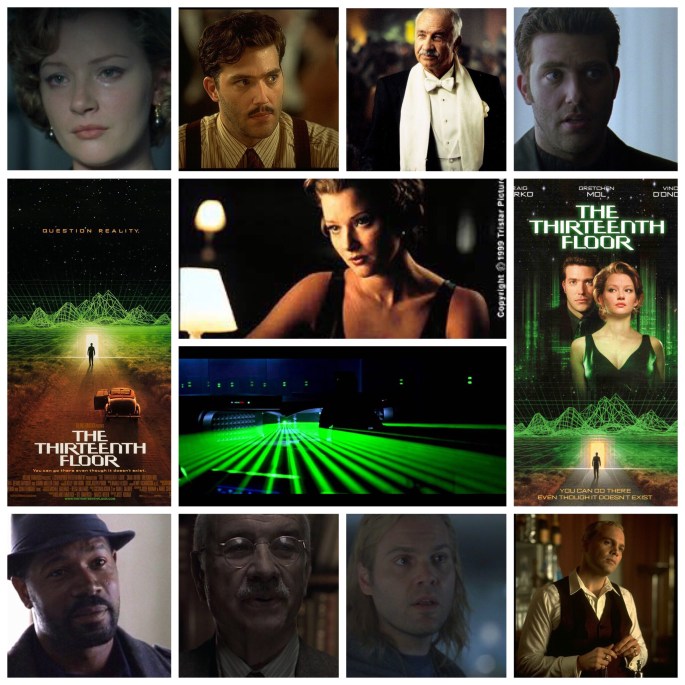
Are you into science fiction infused with film noir? Do you enjoy films like Blade Runner, The Matrix, Inception, Dark City and Source Code? Well, Joseph Rusnak’s The Thirteenth Floor isn’t quite as good as those, but it’s still a welcome addition into stylized 90’s high concept tech retro futurism, given the darkly lit flair of a noir mood-scape. Somewhere in the naughty 90’s, the head scientist (Armin Mueller Stahl) at a research firm has discovered that his advanced software project works a bit too well, and that he’s created a living, breathing virtual reality zone of 1937 Los Angeles where there are consequences to actions and the simulations living there have a rebellious nature. After his untimely murder by an unseen hand, his protege and fellow researcher (Craig Bierko, who does alright but always seems a bit miscast and aloof here) is drawn into a trippy web of intrigue, forced to make the journey into the simulation and search for clues in a hazy, sepia toned LA of the 30’s. Vincent D’Onofrio does double duties as another scientist and a dodgy bartender inside the simulation. Complete with the bumbling, Stetson sporting detective (Dennis Haysbert) and the mysterious, angelic femme fatale (Gretchen Mol), this strives hard to be noir and genuinely does invoke the right feeling, from the feverish, atmospheric lighting of 90’s LA to the production design of the 30’s. Sometimes the muddled elements of romance seem a bit misplaced and awkward, as do a few story elements here and there, but when it works it really works, weaving a thoughtful, twisty narrative that arrives at a reasonably mind blowing conclusion, asking questions about the nature of reality, blurring the lines between soul and software in the best ways. This has been eclipsed by other similar films from that decade, and fair enough as they are admittedly more competent, but I still feel like this is a forgotten gem of sorts and really deserves some love from fans of the several genres it’s composed of. Fun stuff.

-Nate Hill

Rob Schneider’s Big Stan

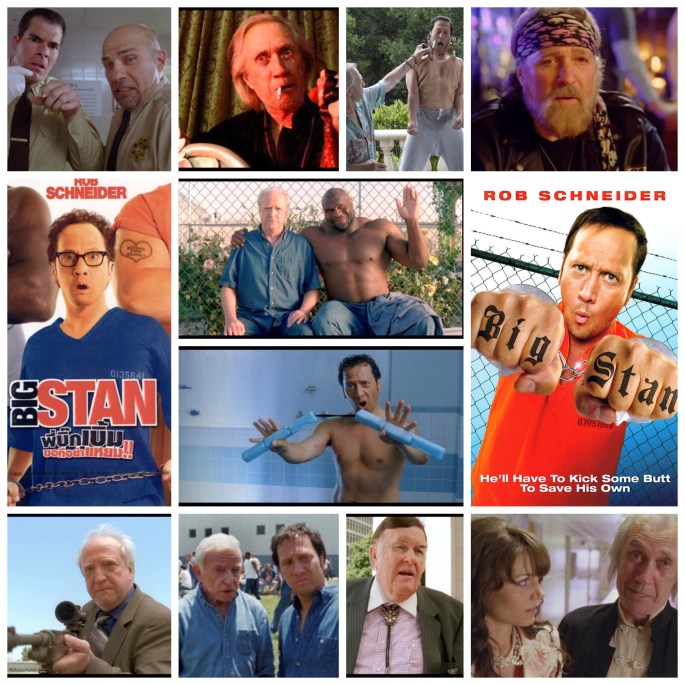
You’d hardly ever catch me giving praise to a Rob Schneider movie as he’s usually intolerable, but Big Stan deserves a shout out, both because it’s almost quality comedy and it has gotten less than half of the publicity given to other Rob flicks, which are all just terrible (remember The Hot Chick? Ew). Schneider is probably the least appealing, most irritating little mole rat out there, so you have to kind of grin and bear it here, but the comedy itself is kind of worth it. As Stan, Rob is a selfish, fraudulent little bastard real estate salesman who is busted selling faulty deals and given a three to five year in prison. When an ex-con bar patron (Dan ‘Grizzly Adams’ Haggarty looks like he can’t believe he agreed to say the dialogue in his script) scares him with tales of rampant rape in the joint, Stan sets out to become ‘un-rapeable’ before his sentence, with a little help from King fu guru The Master, played by a chain smoking, growly David Carradine in a parody of his former career. Armed with skills and sweet karate moves, Stan gets processed and pretty much almost incites a riot the first day, until the prisoners realize there’s no fighting him and he’s pretty much big boss. Abolishing prison rape, setting some new ground rules around violence and introducing salsa dancing are just a few of the changes brought on by him, and the prison sequences are the best of the film. Stan has a sidekick in Henry Gibson, locks horns with the obligatory evil Warden (the great Scott Wilson) and it all parades by with necessary silliness and some semblance of a life lesson that ultimately gets lost in aforementioned silliness. As you can probably surmise, it’s about the farthest thing from politically correct humour as well and very much milks its R rating, so put your thick skin on if you give it a go. Also starring the likes of Jennifer Morrison as Stan’s wife, M. Emmett Walsh as an enthusiastically crooked lawyer, Kevin ‘Waingro’ Gage as the head guard, Randy Couture and others, it’s surprisingly well casted for a such a small movie that almost feels like it was funded by Schneider himself, as he directed it too. Usually I’d be the first to just rip into this guy and his awful, near self destructive output (remember The Animal? Or the Deuce Bigelow sequel?? Fuck), but this one really isn’t all that pitiable, but you’ve been warned, it’s cheerfully in bad taste and if you’re easily offended by off colour humour, steer clear.

-Nate Hill

David Lynch’s Wild At Heart

David Lynch’s Wild At Heart can be given the nutshell description of ‘Lynch does Bonnie & Clyde’, but that doesn’t even begin to scratch the surface of this twisted, surreal, beautifully scarring piece of bizarro cinema cunningly disguised as a love story. It is a love story, first and foremost, but that’s also only a blueprint onto which all sorts of other dreams, visions and nightmares are painted. It’s very, *very* loosely on a book by Barry Gifford, but what Lynch whips up makes the source material seem grey and unrecognizable in comparison. Gifford’s book is the black and white prologue to The Wizard Of Oz and Lynch’s version is the dazzling yet unnerving technicolour dream world that follows, and indeed he uses imagery and gives shout outs to that film any chance he gets here. Nicolas Cage and Laura Dern are Sailor Ripley and Lula Pace Fortune, lovers on the run from the Deep South and Lula’s tyrannical monster of a mother Marietta, played by Diane Ladd in an Oscar nominated turn that doesn’t just chew scenery but devours it with the force of an imploding neutron star that eats galaxies. Marietta is intent on keeping the two of them apart for reasons slowly and subtly unveiled, and she sends everyone and their mother after them including mopey private detective Johnnie Farragut (Harry Dean Stanton) and dangerous mobster Marcellos Santos (the late great J.E. Freeman). Sailor and Lula’s journey is a deranged yellow brick road through 50’s infused Americana, perverse apparitions abound and literally almost everyone they meet ranges from deeply disturbed to outright psychotic to marginally quirky. Santos sends a cabal of weirdo assassins headed up by ghoulish sadist Perdita Durango (Grace Zabriskie in a pants shittingly scary performance) and her cronies (David Patrick Kelly and Calvin Lockhart). In Texas they run into reptilian scumbag Bobby Peru, brought to life by Willem Dafoe in a skin crawling portrait of sexual menace and warped glee that would scare off Frank Booth. Lula tells tales of her delusional cousin Dell (Crispin Glover) putting cockroaches on his anus and of being raped at age thirteen by her father’s business friend (actually shown in a brief but upsetting cutaway). Why all this unpleasantness, you ask? Well… I don’t know, but Lynch seems to and he isn’t sharing the coordinates of his moral compass with anyone, he’s simply storytelling and holding nothing back of the weird or wild variety. Amongst all the violence and monstrosity there’s an undercurrent of tenderness and love that pulses via Sailor and Lula’s relationship, cultivated in an ebb and flow tide of simple, candid pillow talk and unbridled passionate sex that mirrors their frequent and feverish visits to sweaty dance clubs. This is their story, and every ghost, goblin and witch they meet along the way is simply a dark passenger or otherworldly day player in their tale, plus they often make for hilariously off colour vignettes, like Jack Nance’s deranged 00 Spool or Freddie Jones’s gnomish pigeon expert. My favourite sequence is a sobering, haunted diversion off the side of a freeway where they discover a distraught girl (Sherilyn ‘Audrey Horne’ Fenn) rambling through a bout of brain trauma from a car accident. Angelo Badalamenti’s score sings through this to the point of chills, as it does throughout the film. Also traversing down this dark yellow brick road are William Morgan Sheppard, Frances Bay, musician John Lurie, Nicholas Love, Pruitt Taylor Vince, Frank Collison, Ed Wright, Isabella Rossellini and Sheryl ‘Laura Palmer’ Lee herself as Glenda the Good Witch. As proclaimed by Lula at one point, “this whole world is wild at heart and weird on top..” It is indeed, and we’re lucky to have a filmmaker like Lynch to do his part in keeping it that way by making unique, bizarre films like this to remind us just what is possible in cinema with a little invention, a whole lot of colour, splashes of horror and a love of storytelling. Maybe not Lynch’s most prolific or instantly recognizable work, but a full on classic for me and high up on his filmography list.

-Nate Hill

John Herzfeld’s 15 Minutes

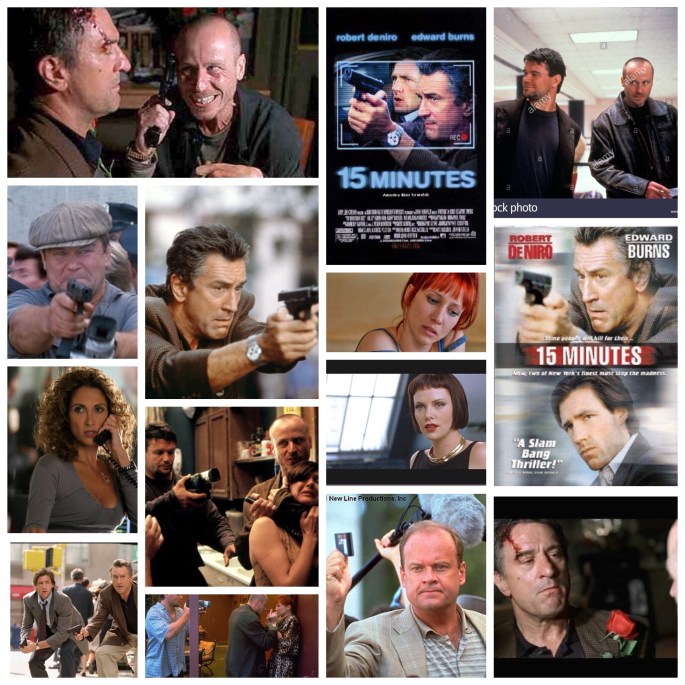
John Herzfeld’s 15 Minutes is a mean, fucked up movie and I love it’s sketched out, darkly satirical edge, its a ruthless sendup of the media that plays like Network by way of Natural Born Killers. America is the land of opportunity, especially for those with sinister intentions, as two nasty Eastern European criminals (Karel Roden and Oleg Taktarov) find out when they step off the boat in New York and almost immediately begin committing heinous acts of wanton violence and murder, filming it with a cheap camcorder and selling the footage to a tabloid news station run by sleazy anchorman Kelsey Grammar. Robert DeNiro angers it up as an alcoholic, loose cannon homicide cop on the trail of these two lunatics and chasing a bit of limelight for himself. It’s a hopped up, very stylized premise that gets the down n’ dirty, highly lurid treatment and doesn’t have much to put in a positive light, but as a farcical thriller it really works. DeNiro gets reasonable facetime and kills it but isn’t in the showcase arc you’d usually see, while Ed Burns plays an arson investigator (“you’re just a fireman with a badge”) who works alongside him. The real star here is Roden though as the chief baddie, a breakout performance as the worst kind of villain, one who isn’t necessarily after anything but just wants to fuck your shit up real bad for fun and then exploit the joke of a legal system and walk scott free. “I love America, nobody is responsible for what they do” he purrs at Burns, and there’s a stinging grain of truth to that. The cast is killer here with work from Vera Farmiga, Martha Plimpton, Melinda Kanakaredes, David Alan Grier, Anton Yelchin, Avery Brooks, Kim Cattrall, Paul Herman, Ritchie Coster and a cool cameo from Charlize Theron. Don’t expect much of an uplift or positive note anywhere here, it’s a thoroughly ill spirited, maladjusted story, but like the messed up crime scenes these two antagonists drum up simply for exposure, it’s kind of hard not to look away or enjoy yourself through pure morbid fascination alone.

-Nate Hill

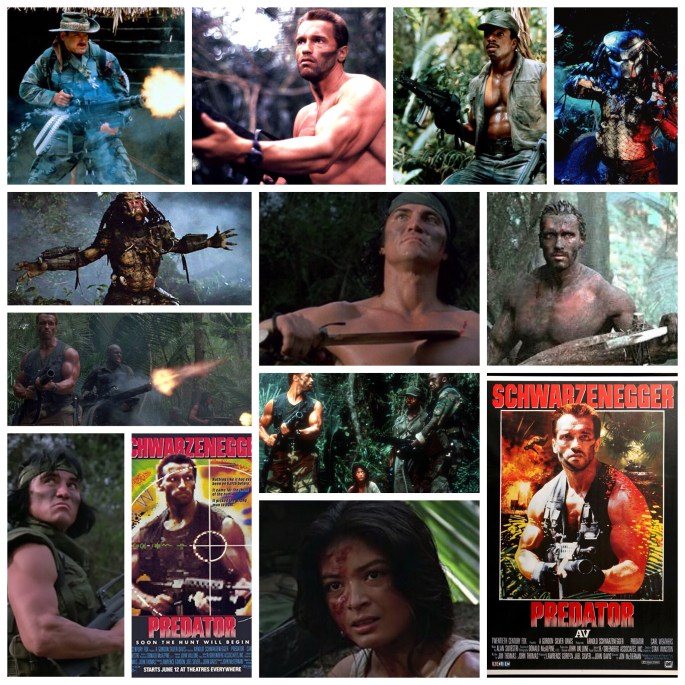
John McTiernan’s Predator

Action doesn’t get more rough, badass or straight up entertaining than John McTiernan’s Predator. The popcorn summer movie mantle was designed for stuff like this and throughout the 80’s and 90’s each one made its own influences and shaped the way the blockbuster has evolved. This is arguably Arnold Schwarzenegger’s best, just behind or right along side the Terminator films. Packed to the gills with the kind of gruesome, blood soaked action intrigue we don’t see much anymore or at least without glossy CGI. Here the violence is tactical, doused in gallons of blood and amped up for maximum impact, like when Arnie’s Dutch and his team of rough n’ ready mercs stumble upon bodies that have been skinned alive. Called in for a routine black ops mission in the jungles of Central America, they discover there’s something far worse out there than rebels, and that something happens to be an eight foot tall trophy hunter from another galaxy, with whiplash dreadlocks and a face that would give Freddy Krueger nightmares. He’s essentially an extraterrestrial big game hunter who picks off humanity’s toughest customers in the ultimate intergalactic safari, and Arnie happens to be right in his path. His team is made up of the most colourful badasses the 80’s has to offer including wiseass Jesse Ventura, jumpy Carl Weathers, spooked out Bill Duke and stoic tracker Sonny Landham, who’s my favourite by far (“there’s somethin in that jungle, and it ain’t no man”). Also on their team is Shane Black, of all people, which I didn’t realize until my most recent rewatch but it makes sense since he’s the mastermind behind this fall’s The Predator, which I’m very excited for. The highest praise doesn’t even do this film justice; it’s simply one of those ones that isn’t even up for debate in terms of quality, it practically spawned its own genre. Arnie & Co. light up the jungle with enough heavy artillery to launch a coup, the Predator uses cunning tactics and brutal tricks of its own to hunt them one by one, and the whole region erupts with the sound, fury, carnage and commotion of their fight for survival. This has gone on to produce a sequel (which is just as brilliant, fight me), a Robert Rodriguez helmed update (also great), a couple crossovers with the Alien franchise (which were just plain awful) and the aforementioned Shane Black rendition. This started it though, from Arnie chomping up cigar after cigar to Ventura levelling the trees with a giant mini gun to Landham feverishly taking on the Predator with just his 13 inch hunting knife, it’s an action palooza that’s very of it’s time and therefore refreshingly un-PC (I trust in black to keep that spirit alive for his version), and has stood the time as a gold standard of action sci-fi genre heaven. Don’t forget to get to that chopper.

-Nate Hill

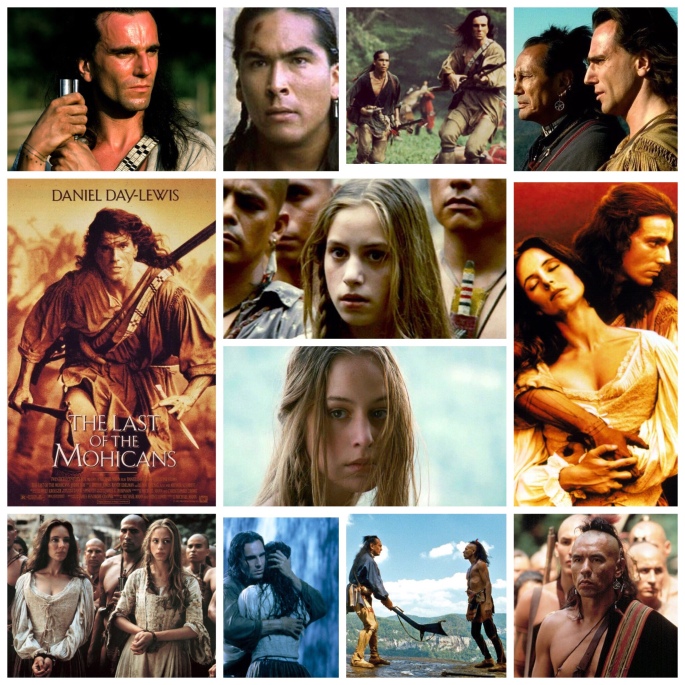
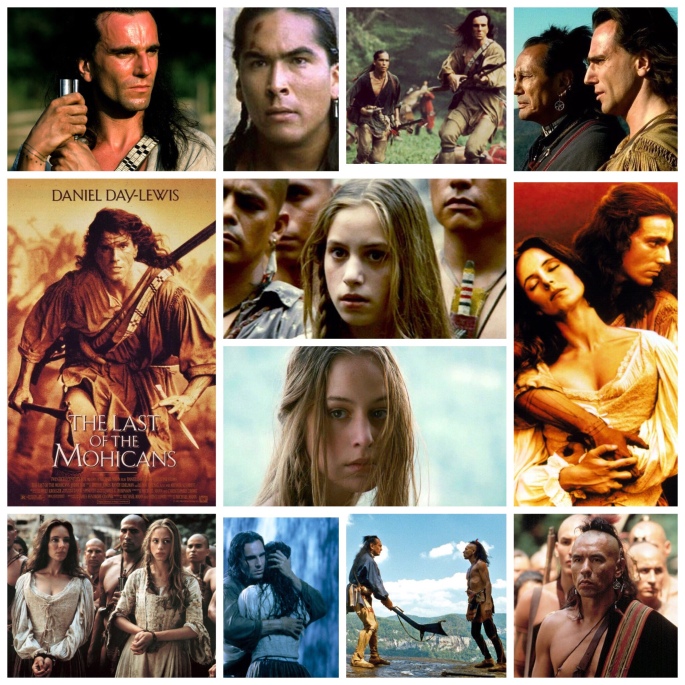
Michael Mann’s The Last Of The Mohicans

Before Terrence Malick lyrically explored the relationship between settlers, natives and nature in The New World, Michael Mann crafted the emotionally gripping, beautifully feral The Last Of The Mohicans. Take Mann out of his comfort groove of big city crime epics and whatever new avenue he explores is going to be incredibly fascinating (his much forgotten, sadly panned The Keep is further evidence). Trading in looming urban skyscrapers for equally imposing trees of the frontier, high powered weaponry for one badass long-shot rifle and the onslaught of rapid fire combat for incendiary cannon fire, the colonial times suit him splendidly and he rocks this period piece for all its worth. Daniel Day Lewis is a force of nature as Nathaniel Hawkeye, the white man raised by his adoptive father (Russell Means) and brother (Eric Schweig) in the wild. Madeleine Stowe is a dark haired candle of radiance and fiercely spirited as the lovely Cora Munro, brought from the prim, lacy traditions of Olde England out to the wild, uncompromising new land, with her impressionable young sister (Jodi May is low key brilliant). Wes Studi gives the bitter hearted warrior Magua a steady grace and brutal resolve. The film is lovingly made, sweeping from thundering battles to cascading waterfalls to meticulously constructed war forts to uneasy treaties to verbose politics to romance that stirs the heart and unlocks the tear ducts. But it’s all about those last twenty minutes, man. Holyyy fuck does this movie have an ending. When the final, white knuckle climax happens atop the scenic yet unforgiving Promentory Ridge, hearts, bones and dreams are broken as all the characters collide in a tragic, inevitable confrontation that leaves fire in your heart and tears in your eyes. James Newton Howard and Trevor Jones provide a legendary, soul stirring musical score that swells for the final act and carries it to transcendent heights. Mann directs with a compassionate, objective eye, never designating anyone as the good or bad guy, but simply showing us human beings fighting for survival, love and revenge in a land only just finding its cultural identity. A real classic and one of the best of the 90’s. Oh, and avoid the director’s cut at all costs. That’s not usually advice I’d give for any film but Mann somehow thought it necessary cut an incredibly important final scene of dialogue between Lewis, Means and Stowe that gives thematic weight to the story and caps off the characters arcs gorgeously. Rookie move, Michael, that’s a key scene and bookends the film beautifully.

-Nate Hill

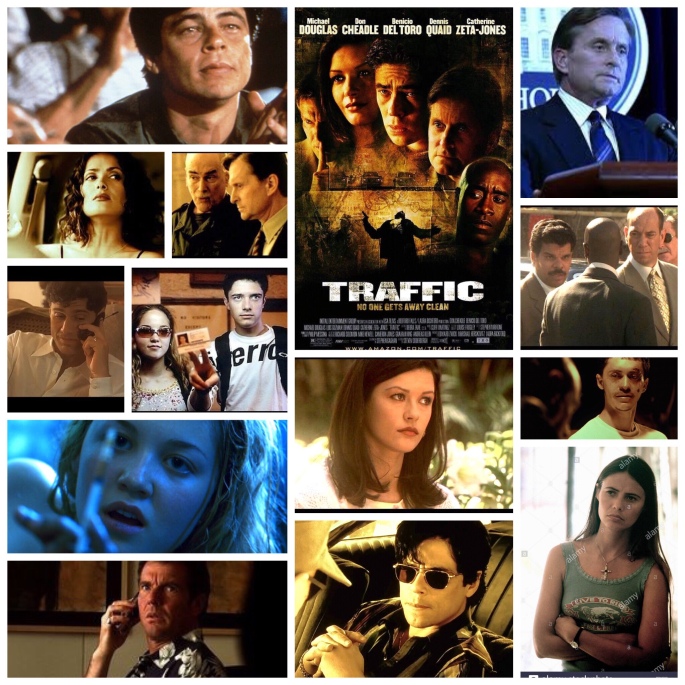
Steven Soderbergh’s Traffic

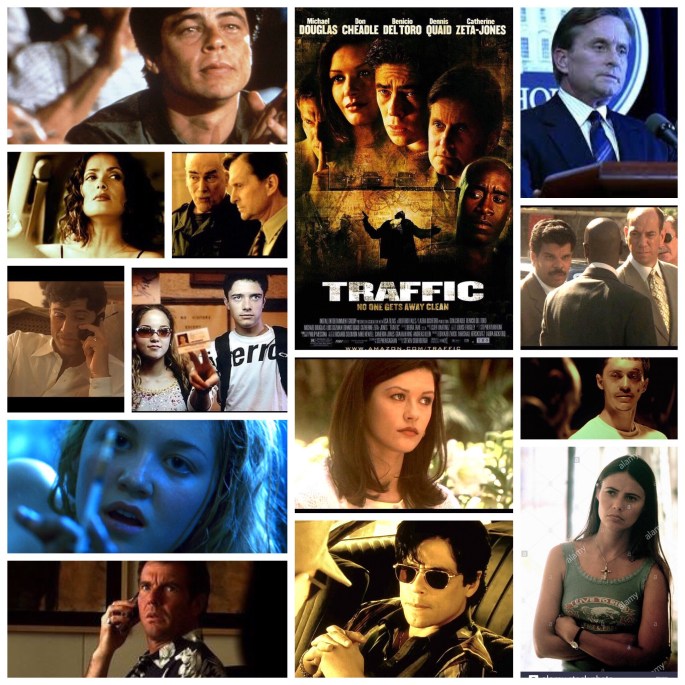
I feel like the one thing to take away from Steven Soderbergh’s Traffic is that the war on drugs isn’t working in any sense. That’s the short answer, but at nearly three hours runtime, Soderbergh isn’t interested in any kind of short answers, let alone clean cut, definitive or resolute ones that help anyone sleep at night. It’s a sprawling, complex international labyrinth of a film that scans every faction from the loftiest echelons of American politics to the poorest slums of Mexico, not necessarily looking for answers but digging up new questions and conundrums. In Washington, the president elects a straightforward family man (Michael Douglas) as the new drug czar and face of the crusade, except that his daughter (Erika Christensen) is knee-deep in hard drug addiction and heading down a dark path. Across the border, a Mexican cop (Benicio Del Toro, fantastic) tries to prevent corruption from eating away at his country and the soul of his partner. Back stateside, two undercover narcs (Luis Guzman and Don Cheadle) prep a captured mid level smuggler (Miguel Ferrer stealing scenes like nobody’s business) to testify against the higher ups. The wife (Catherine Zeta Jones) of an imprisoned kingpin (Steven Bauer, sadly only glimpsed briefly) deals with her husband’s enemies while his slick dick lawyer (Dennis Quaid) eyes her up for the taking. A scary Mexican military General (Tomas Milian) fights drug running for his own mystery goal, and many other stories play out both in the US and Mexico. Soderbergh gets together a treasure chest of cameos and supporting talent that includes the likes of Clifton Collins Jr., Emilio Riveria, Topher Grace, Peter Riegart, James Brolin, Albert Finney, Marisol Padilla Sanchez, Viola Davis, John Slattery, Yul Vasquez, Jack Conley, Benjamin Bratt, Salma Hayek and more. This isn’t a tunnel vision action flick or even your garden variety ensemble crime piece, there’s a distracted, fractured feel to the narrative that no doubt mirrors the very difficult nature of how this all works. Opinions and alliances shift, people die, others prosper and it all kind of seems for nought, except that almighty dollar. Del Toro and Douglas fare best in terms of bearing witness to it all; both are changed men by the time their final scenes roll around and the arcs come full circle. They anchor the vast network of people from respective sides of the border, showing the multilayered damage that such a problem, and the ‘war’ against it unleashes. Endlessly fascinating film.

-Nate Hill

Quentin Tarantino’s Django Unchained

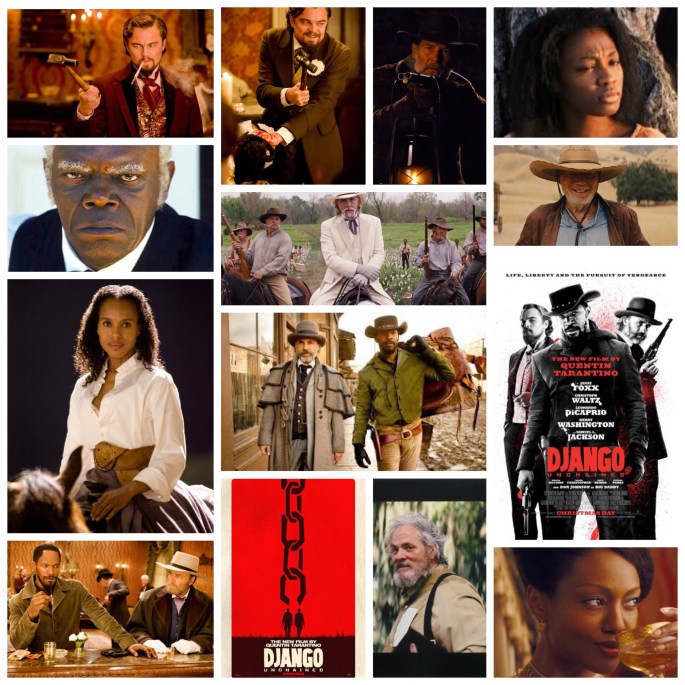
Quentin Tarantino’s Django Unchained really and truly feels like the old school exploitation epics that he was going for in everything from style, music, dialogue and especially pacing. Movies were longer back then in more ways than just length, which sounds odd so I’ll try and explain: Django has a great big laconic violent narrative that takes its time like a talkative houseguest and lingers for a while, until it seemingly ends. Then after that ending, there’s like another forty minutes of movie after, as if somehow with this one we discovered that staying past the credits magically extends the film into further, hidden acts. Seems crazy now but that’s the way some movies were back then. People have said that that feels lopsided and is a downfall for Django, but I disagree and think it gets a lot of it’s charm from that structural padding, no doubt purposeful on QT’s part. It’s also some of the most colourful, flat out ballistic and fun pieces he’s ever done. Post Kill Bill, he really delved into the past for some specific genre stabs at various key time periods, in some cases even rewriting history to meet his pulpy, shock ‘n awe oeuvre. Unchained tells the story of intense self freed slave Django (Jamie Foxx), jovially verbose bounty hunter Dr. King Schultz (Christoph Waltz, the soul of the picture), bratty, psychopathic plantation baron Calvin Candie (Leonardo DiCaprio refreshingly cast against type), and a whole sweaty myriad of other cowboys, slaves, businessman and opportunists in a very vivid Old West. Django and King aim to free his imprisoned wife Broomhilda (Kerry Washington) from Candieland, a hellish property ruled over by traitorous head house slave Steven (cantankerous Samuel L. Jackson) and hordes of vicious, tumbleweed thugs. To say violence ensues is a big old understatement; the blood flows like Niagara here, the heads get shot off in double digit count and bullets tear through people like they’ve got barbed wire on them. Hyper stylized, yes, but never a case of style over substance, as QT’s scripts always see to. The friendship between King and Django is allowed to percolate like their tin campfire coffee pot long before any serious chaos ensues, these two make a stalwart pair. DiCaprio is a grinning antagonist whose heinous personality is obvious in Waltz’s gradual revulsion, a setup ripe with gleeful, knee slapping suspense. Joining them is an all star supporting cast including James Remar in sly dual roles, James Russo, Zoe Bell, Miriam F. Glover, Russ Tamblyn, Amber Tamblyn, M.C. Gainey, Walton Goggins, Laura Cayouette, Dennis Christopher, Dana Gourrier, Franco Nero, Don Stroud, Bruce Dern, Michael Bowen, Robert Carradine, Jonah Hill, Lee Horsley, Tom Savini, James Parks, QT himself with a horrendous Aussie accent, a Michael Parks cameo and Don Johnson as a hilarious plantation pimp called Big Daddy. The soundtrack samples everything from Rick Ross to Morricone to Johnny Cash to amp up the proceedings, and cinematography traverses rough hewn deserts, snowy peaks and buzzing bayous to provide sharp, succinct atmosphere for this extreme yarn to play out in. QT’s career comes in two halves for me: The hard boiled, present day set gangster flicks that segued into Kill Bill, still set in our times. For the second half he’s gone historical and turned up the dial on violence, characterization, action and colour, and Django can arguably be called the showcase picture in latter day Tarantino. It’s big, bold, audacious,

unapologetic and I love every second of it.

-Nate Hill