It’s time to see The Last Jedi . . . again: A Review by Kent Hill

I am stunned. I am still. I am at a loss for words. I have just come from seeing The Last Jedi, and really all can muster is . . . it is a miracle.

I am going to try and avoid spoilers but I may fail, so, if you haven’t seen the movie stop reading now.
lastjedi17

A long time ago in a galaxy far, far away, I was young and Star Wars was new. I don’t think I came out of that dark room in which I saw the first film, and the person that did – he certainly wasn’t the same kid who walked in. A long time have I watched, looking away, to the future, to the horizon, watching, what we who were there from the beginning will come to remember as, the saga of the Skywalkers.

I had read other reviews, seen teasers and trailers. The clever thing is though . . . this movie doesn’t go the way you think. Throw all the theories out of the window, forget all you know – or think you know. Breathe, just breathe. Now, sit back and watch The Last Jedi.

last-jedi-luke-lightsaber

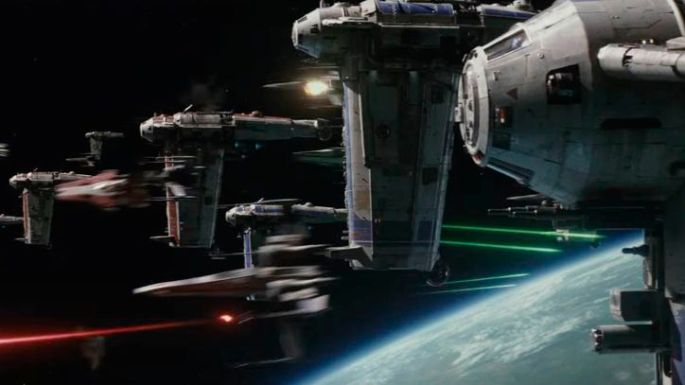
We begin in a fury, in the heat of battle. Good versus evil, a staple of the Star Wars movies. Then it goes wrong and the good guys will lose. Because, as you’ll discover, this time round, it isn’t about winning and losing. It’s about existing. It’s a beautiful sentiment at the heart of this picture. Saving, indeed savoring, the things we love the most.

After all, what have we all been doing since 1977. Savoring this thing we love right? Mr. Johnson captured that so well. In fact, when it was all over, Bill Pullman’s line from Independence Day popped into my head, “He did it – the sonofabitch did it.”

Star-Wars-The-Last-Jedi-000025

Abrams had the easy assignment if you think about it. He had to wake the force up. That’s not hard when you’ve got legions of fans awaiting to listen. The hard task is the difficult second album – trying like hell to be the one that strikes back. And, for my money, for this trilogy, for this time round – this is the new Empire Strikes Back. It can’t be the original – nothing will top that, but TLJ stands shoulder to shoulder with it.
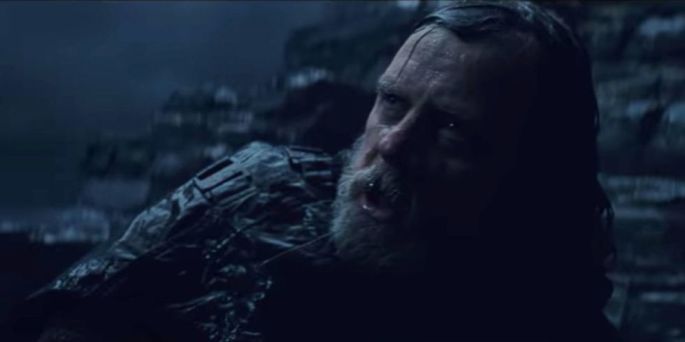
landscape-1509112223-luke-skywalker-this-is-not-going-to-go-the-way-you-think-star-wars-the-last-jedi-trailer

I think I have remarked a number of times to friends and family about what I thought the first words might have been out of Luke’s mouth back where Mr. Abrams left us in 2015. What he does retort with is better than a line or a speech, and it’s one of many moments of levity that the movie needed. I heard the voice of Irvin Kershner in my mind, talking about injecting humor into Empire. He was right then, as Mr. Johnson was right now. It is all about balance – the dark rises and the light to meet it.
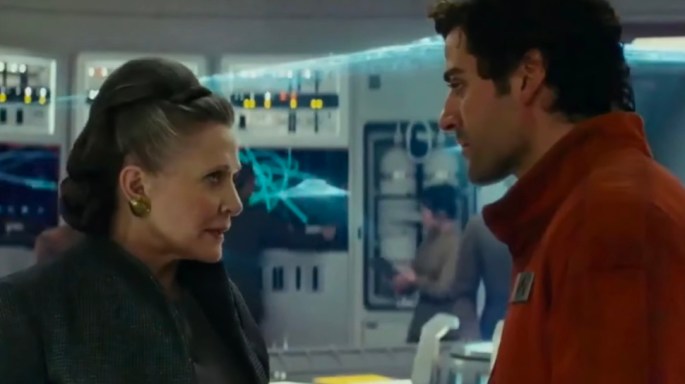
leia-poe

Two reviews I read prior to going in brought up two interesting points. One which I thought was kinda confirmed, whilst the other was dispelled. The first was that TLJ was almost like Empire in reverse. I found this to be, for me, delightfully true, and I’m surprised at how well that formula worked. Where Abrams was criticized for leaning to heavily on the crutch of A New Hope, Johnson seems to have avoided the problem by simply changing direction, which he does quite often. Be prepared.

Abrams surprisingly followed this theory to success with the first of the new Star Trek films, however grossly ignoring it for his own sequel. But it is well, not only if he stepped away from the director’s chair for fear of this, but that fresh eyes often make all the difference. I enjoyed Looper, but when they said that guy is going to not only write but direct Episode VIII, I was like half interested, half fearful.
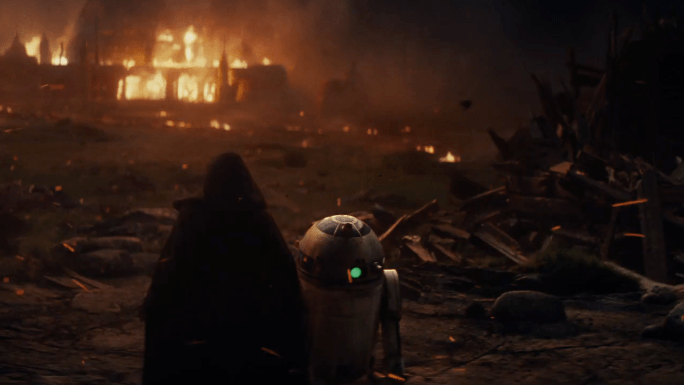
45e55b_e19b8e0d44e046c798091435487695d9~mv2

But we shouldn’t fear, should we. Fear leads to anger, anger leads to hate and hate leads to suffering.

Another element I like about TLJ is the fact that, more so than The Force Awakens, this felt like not only handing over the torch, but just throwing it away. I love how in the backgrounds of these movies we see the remnants of Star Wars past. From Rey’s junkyard home, to Luke’s X-Wing beneath the waters surrounding his fortress of solitude – even in Rogue One there is that giant fallen statue of a Jedi; the only true way to keep something going in this life is to keep it fresh and expose it to constant reinvention.

There’s lots of fun new creatures. LOVE THOSE PORGS! There’s some fun new locales. Mr. Williams musical voice sings a few new tunes and lovingly reminds us of a few old ones. The action is breathless, the reversals effective and plentiful. There are great revelations and many new questions.

Oh Look. You see what’s happened? I started off wanting to write a review and here I now find the need to be silent again. There is nothing I can tell you that you should ultimately listen to, except this: I have never seen a more beautiful journey that does as each new day does for us all; beginning and ending, staring off to the horizon, watching the rising and or setting of that bright sphere at the center of our galaxy.

When I was younger than I am now, I felt like Luke Skywalker, gazing off into those twin suns and longing for the next day, for the journey ahead. It is fitting then that TLJ comes now, and I am a much older man. You’ll know the moment when it comes. The twin suns will set and maybe, just maybe, your heart will swell as mine does even now, and I am at a loss for words. TLJ has touched me in a way I’ve not experienced in the cinema for a while now – and I am the better for it.

The-Last-Jedi-Landscape-Poster-

So if you have seen the movie, I hope you enjoyed it – were thrilled by it. For those of you for whom this is their first Star Wars experience, rejoice, there’s more out there to discover – more still to come. For those who haven’t seen it – man, get away from this screen and get down to your local theatre real quick – what’s the matter with you?

It is fitting that the last line belongs to a certain character, and speaking of said line, it echoes my sentiments exactly:

In The Last Jedi, “We have everything we need – right here.”

Star-Wars-The-Last-Jedi-Behind-The-Scenes-0975-2

Man On Fire (1987)

You’d have to dig a bit to discover that Man On Fire with Denzel Washington is actually a remake, or rather another version of a book that’s out there somewhere, but there is indeed film from 87’ bearing the same title and basic plot outline, albeit with a heavy dose of melodrama. Swap out Denzel and Chris Walken for Scott Glenn and Joe Pesci, Mexico City for Italy and Tony Scott’s neo-punk visual aesthetic for a more stone-faced, straightforward approach and you’ll have some idea. It’s a passable film, but instantly pales with any comparison to Scott’s outing, which is a masterpiece and one of the best films of the century. Glenn is Creasy, a mopey ex CIA soldier who gets a job from buddy Pesci protecting a wealthy businessman (Jonathan Pryce) and his family, mostly driving their precocious young daughter (Jade Malle) around. The two are rocky at first, begin to bond, she’s kidnaped and Creasy wages war on the criminals who took her with an arsenal of firepower provided by Pesci. At ninety minutes it’s a little too short for any of this to be developed properly, or proportionately so to other elements, but it works well enough. The strongest bits are the early scenes where they make friends, brought to life by Glenn’s warm smile and Malle’s emotional curiosity. The final act of revenge feels oddly rushed, awkward and too overblown to justify the lack of action we get, it should have been more hot blooded and sustained. It’s still a decent piece though, with the distinct cast doing fine work, especially Pesci who is volatile and unpredictable, almost stealing the film from Glenn. Nothing compared to Scott’s version, but worth a look.

-Nate Hill

Andreas Prochaska’s The Dark Valley

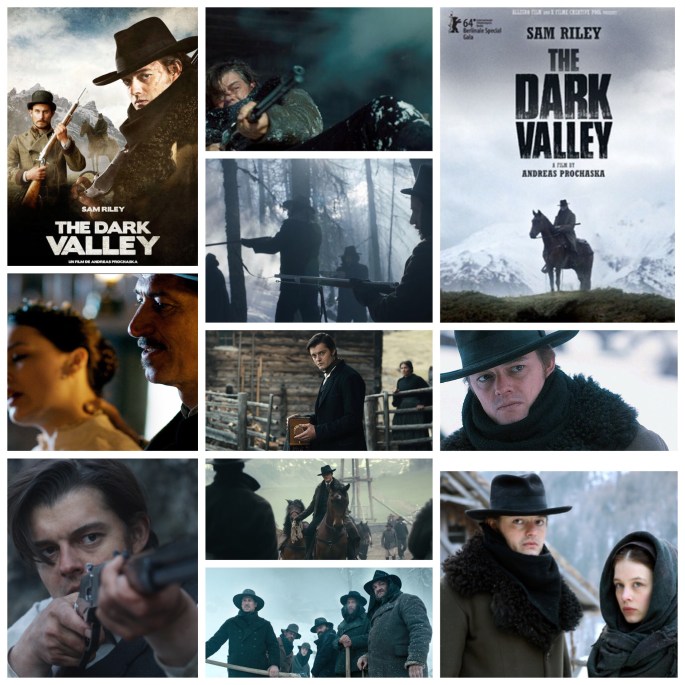
Andreas Prochaska’s The Dark Valley is a dark, grimly paced Euro-western that could have been a great one if only the script was as tight and polished as it’s musical and stylistic elements. Shot in the Italian mountains, it looks absolutely alluring in every single frame, blessed with a stoic tough-guy performance from Sam Riley as a mysterious stranger bent on revenge and a soundtrack full of odd, against-the-grain yet distinct choices. It looks, sounds and feels evocative, but the story that should go alongside and string it all together is just too loosely woven, and as such, interest is lost. Riley’s stranger is not really welcome in the alpine town, especially by the Brenners, a local crime family that rule the roost. It’s a harsh winter, and pretty soon bodies start piling up, victims of an unseen assailant the townspeople just assume is the Stranger. There’s a backstory to the whole thing, some great atrocity committed by these folk decades earlier, and while all the information was presented, in both exposition and flashback, it just didn’t have the emotional payoff or clear-cut grandiosity that a western like this should, especially one as dramatic in every other area. The dubbing over of the German actors doesn’t help one bit either, a choice which I will never, ever support. Subtitles all the way, man. Anyways, Riley is as awesome as ever, it’s really sad that he doesn’t make more films, he’s got a dark star quality that immediately classes up any film he shows up in. The cinematography is top shelf, with a stunning backdrop of mountains all round, detailed period-appropriate production design and costume work. Music is a strong point, with a neat opening credit rendition of Nina Simone’s Sinner Man, and there’s a climactic gunfight that leaps off the screen in bold strokes. It’s just a little less than it should be in areas where the stakes needed to be way higher and draw us into the story, so that when the operatic violence comes, it has heft beyond just looking cool and leaving us nothing to invest our care in. Good stuff, if incomplete.

-Nate Hill

Ted Demme’s Life

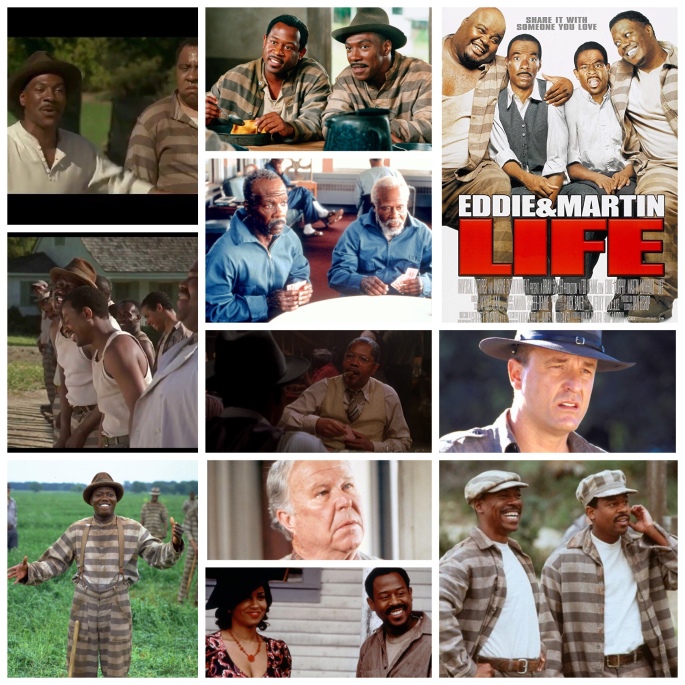
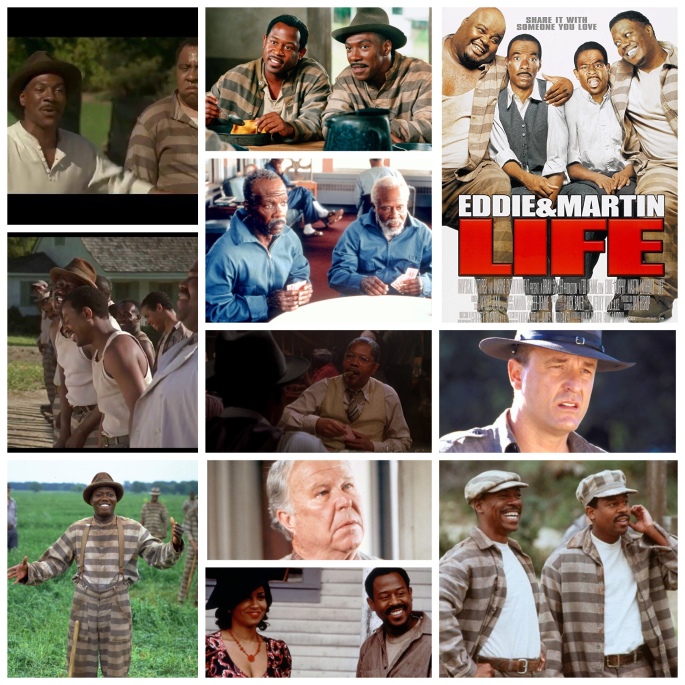
Ted Demme’s Life is a hard one to classify or box into genres, which may have been why it didn’t do all that great at the box office and subsequently slipped through the cracks, a result that often befalls ambitious, unique films that people aren’t ready to surrender to. Part comedy, part tragedy, all drama infused with just a bit of whimsy, it’s a brilliant piece and one of the most underrated outings from both of it’s high profile stars, Eddie Murphy and Martin Lawrence. It seems fitting that the two lively, cartoonish cowboys of comedy should share the screen, and it’s lucky they got such a wicked script. In the roaring twenties, Murphy is smooth talking petty thief Ray, Lawrence is hapless, hot blooded bank teller Claude, and the pair couldn’t be more suited or dysfunctional towards each other. Brought together for an ill fated moonshine run bankrolled by a nasty NYC Gangster (Rick James), things go wrong in the most auspicious of places a black man could find himself during that time: Mississippi. Framed for the murder of a local conman (Clarence Williams III) by a psychotic, corrupt Sheriff (Ned Vaughn), they’re given life in prison by the judge, and this is where their peculiar adventure really begins. Put under the supervision of a violent but oddly sympathetic corrections officer played awesomely by Nick Cassavetes, the two wrongfully convicted, hard-luck fellows spend their entire adult life and most of the twentieth century incarcerated… and that’s the film. Squabbling year by year, making a whole host of friends out of their fellow convicts and never losing their sense of humour, it’s the one of the strangest narratives I’ve seen, and somehow works wonders in keeping us glued to the screen. Supporting the two leads is a legendary ensemble including Ned Beatty as warm hearted superintendent, Anthony Anderson, Bernie Mac, Bokeem Woodbine, Barry Shabaka Henley, Heavy D, Don Harvey, Noah Emmerich, Obba Babatundé, Sanaa Latham, R. Lee Ermey and more. Murphy and Lawrence have never been better, shining through Rick Baker’s wicked old age makeup in the latter portion of the film, and letting the organic outrage and frustration towards their situation pepper the many instances of humour, accenting everything with their friendship, which is the core element really. The film’s title, simple as it, has a few meanings, at least for me. Life as in ‘life in prison’, in it’s most literal and outright sense. Life as in ‘well tough shit, that’s life and it ain’t always pretty,’ another reality shared with us by the story. But really it’s something more oblique, the closest form of explanation I can give being ‘life happens.’ There’s no real social issues explored here, no heavy handed agenda (had the film been released in this day and age, that would have almost certainly been a different story), no real message, we just see these events befall the two men. They roll with each new development, they adapt and adjust, they learn, they live. In a medium that’s always being plumbed and mined for deeper meanings, subtext and allegories, it’s nice to see a picture that serves up the human condition without all those lofty bells and whistles. Their story is random, awkward, unpredictable, never short on irony, seldom fair, often tragic, and ever forward moving. That’s Life.

-Nate Hill

Indie Gems: A Lonely Place To Die

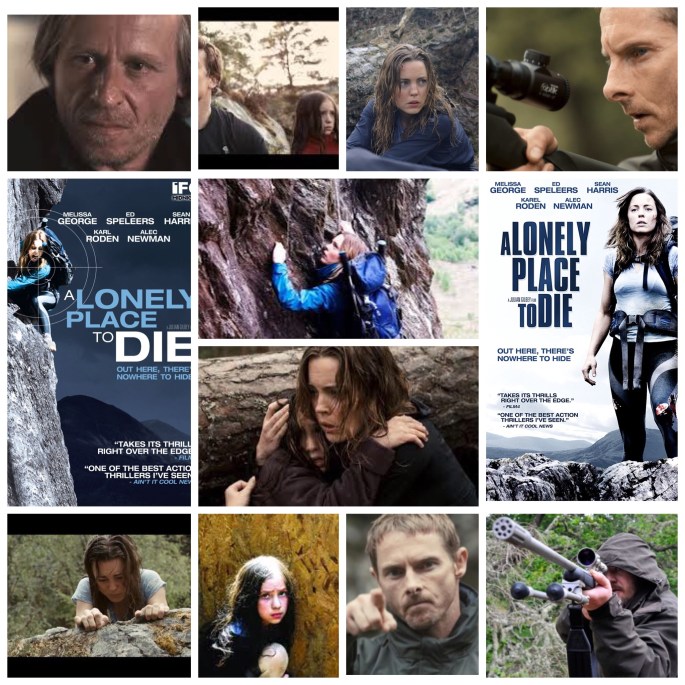
You know when you’re on some wilderness trip, out of your element, and all these crazy, far flung ‘what if’ scenarios enter your head, but they never happen? In A Lonely Place To Die, one of them does, to hapless hiker Melissa George and her friends. Traversing the Scottish highlands, the group hears an eerie crying coming from a random ventilation pipe in a remote area, and unwisely digs below ground to investigate. Imprisoned in a seriously creepy bunker is a young Eastern European girl, alone and afraid. So begins their waking nightmare trying to find out where she came from, pursued by all kinds of nasties and forced to kill or be killed to protect her. There’s a horde of British thugs including resident creeper Sean Harris, a faction of powerful Russian spooks led by intense Karel Roden, and all manner of psychos adding to the hubbub. As a breathless chase thriller it works wonders, with more than a few impeccably stages set pieces that orchestrate suspense well. There’s violence too, as Melissa is forced to dispatch the heinous baddies in terrifically gory ways, and fighting tooth and nail to protect the girl. The plot moves in a familiar direction as far as her backstory goes and loses momentum in resolution, but they had to wrap it up logically I suppose. The film is best when it goes full on crazy, and gets into borderline horror mode, it’s got a loopy sense of violence about it that is the strongest quality.

-Nate Hill

Phillip Noyce’s Dead Calm

Fear of isolation has been a staple element in film since the beginning. A quiet, shrouded forest. A damp, derelict back alley. The endless waters of earth’s oceans, which is where Philip Noyce’s nightmarish psychosexual shocker Dead Calm takes place. The key is not in projecting fear of being isolated, which is bad enough, but instilling the unnerving notion that you’re not actually alone after all, and be it human, supernatural or the forces of nature, something is out there with you. This is what vacationing couple Sam Neill and Nicole Kidman discover, only in this case it’s no creature or ghost, but Billy Zane instead. I know what you’re thinking, that perennial goofball Zane is the farthest thing from fearsome you could find, but he’s actually one of the most memorable and shit-scary movie villains out there. Neill and Kidman are a couple with enough issues to begin with, sailing their schooner somewhere way out there trying to forget past tragedy, until Zane brings new trouble onto their horizon. After they rescue him half dead floating on the waves, he tells them of a capsized ocean liner, and claims to be it’s only survivor. Neill isn’t quite bought and sold on his story and ventured off to see for himself, unwisely leaving his wife behind with this strange dude, which is loose thriller plotting 101, but oh well, inciting incidents have to come from somewhere, don’t they. Zane turns out to be an unstable maniac of the highest order, and steers the schooner off on his own course with Kidman in tow, and Neill left in the wake, trying to find them out there and save her. The scary thing about this villain is that he has no plan, no goals, no endgame or reason for doin this, he’s simply certifiably out of his fucking head, and there’s an unpredictability to that which I found immensely freaky. The scenes aboard the boat with him and Nicole on their own are charged with a tangible danger and crazed frenzy, a canary in a cage circled by a thoroughly crazy cat. The acting sells it there, with Kidman’s raw terror and Zane’s oddball sociopathy walking a narrow, rigid tightrope that could snap any second, and does. When the action comes it’s fierce, R rated mayhem as Neill vengefully charges back into the picture, and although not as intimately scary as the horror bits, still holds our gaze. Zane also gets one of the coolest villain deaths ever seen, shot in full gory detail as well. A chamber piece at sea, a glowing example of effective filmmaking in the thriller genre, and scary in spades.

-Nate Hill

Roland Emmerich’s The Day After Tomorrow

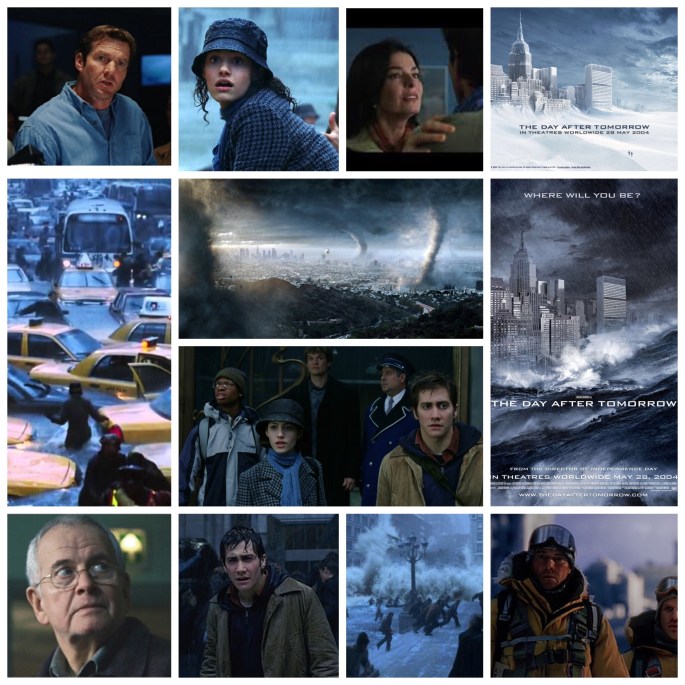
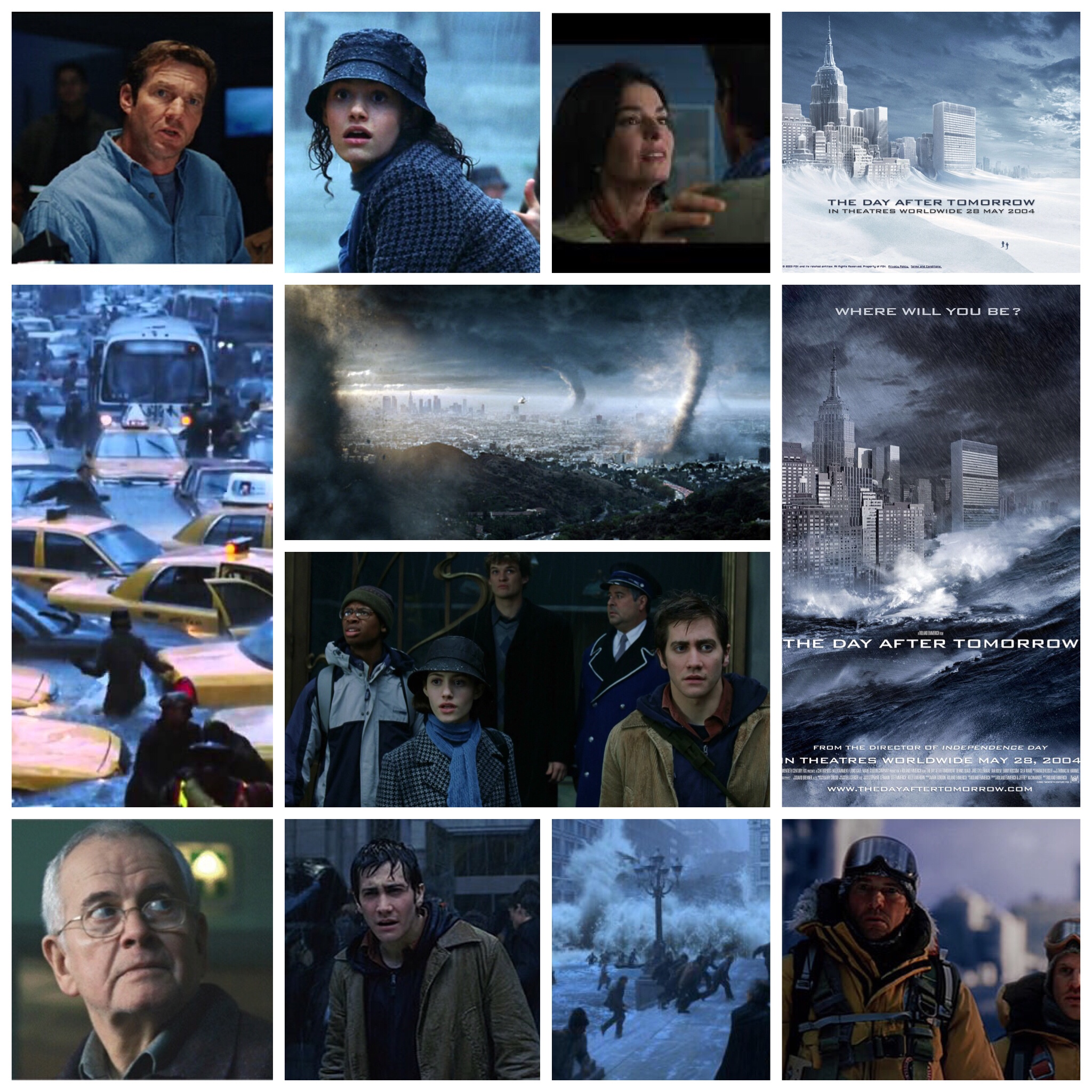
Roland Emmerich’s The Day After Tomorrow is one of those textbook disaster flicks where every recognizable element is in full swing: determined scientist, sure of his curveball theories that no one else buys, saddled with a dysfunctional family and a clock that’s quickly ticking down towards some looming cataclysm, in this case severely bat tempered weather. It’s cliche after cliche, but this is one of the ones that works, and I have a theory why. These days it seems like the formula for the disaster film is pretty dead, or at least doesn’t carry the same magic it did throughout the 90’s and early 00’s.

Stuff like San Andreas, 2012, Geostorm (shudder) just feel dead on arrival, and instead we go back and revisit things like Armageddon, Independence Day, and for me, ones like this. There’s a quality, a feel for time and place that got lost somewhere along the way as time passed in Hollywood, and this is one of the last few that serve as a milestone as to where that happened. The first half or so is cracking stuff, followed by a slightly underwhelming final act. Dennis Quaid is the scientist who gets all in a huff about an extreme weather front that’s apparently barrelling towards the east coast, threatening to give the whole region one wet day in the park. There’s an exaggerated halfwit Vice President (Kenneth Welsh) who scoffs at him, an excitable veteran professor (Bilbo Baggins) who eagerly supports him, and an estranged family right in the storm’s crosshairs who he must rescue. The special effects are neat when the maelstrom slams into New York like a battering ram, pushing over buildings with walls of water and chucking hurricanes all about the place. Quaid’s wife (Sela Ward) and wayward son (Jake Gyllenhaal) are of course stuck in this mess, as he races to find out what’s causing it, and how to escape. The initial scenes where it arrives are big screen magic, especially when Gyllenhaal’s girlfriend (Emmy Rossum) is chased down main street by a raging typhoon and barely scapes into a building, a breathless showcase moment for the film. The second half where the storm levels off isn’t as engaging, despite attempts to throw in extra excitement, such as wolves, which I still can’t quite figure out the origin of, despite watching the film a few times now. Holed up inside a library, it’s a long waiting game in the cold dark where the writing and character development is spread a bit thin for the time they have to kill, but what can you expect here. Should have thrown in a T Tex or some ice dragons to distract us from sparse scripting. Still, the film gets that initial buildup deliciously right, the nervous windup to all out chaos, the editing between different characters and where they are when the monsoon shows up, and enough panicky surviving to make us thankful for that cozy couch and home theatre system all the more. One of the last of the finest, in terms the genre.

-Nate Hill

Gregory Hoblit’s Primal Fear

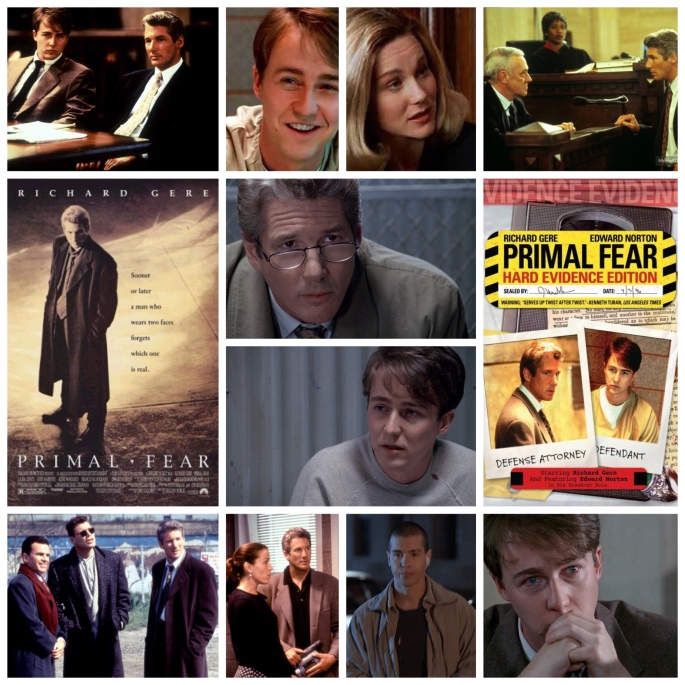
Gregory Hoblit’s Primal Fear does a fine job of using opaque marketing to conceal it’s delicious, devilish secrets, a tactic that many films recklessly abandon and ruin far too much in trailers or posters. This is a careful exercise in serpentine plotting. Is it courtroom drama? Supernatural shocker? Psychological thriller? Pot-boiling procedural intrigue? Check it out and be as floored as audiences were for the first time back then. Richard Gere holds his end well as a legendary hotshot defence attorney in Chicago, one with a tarnished reputation and a penchant for defending unscrupulous clients. A weird case comes his way in the form of mentally challenged alter boy Edward Norton, accused of murdering someone high up in the clergy and causing a political hailstorm throughout the city. This is one of those thrillers that does genuinely keep you guessing, until literally the final frame, using human interaction and intimate performances to instigate reactions, rather than a barrage of special effects or manufactured narrative gimmicks. I’m being deliberately vague because this is the one film you don’t want spoiled for you ahead of time, it’s that cool. This was, I believe, the role that put Norton on the map, and he’s a gale force of electric energy, giving everyone else onscreen a huge run for their money. It’s fun watching Gere, an assured and confident pillar of law and order, slowly unravel and find himself at the mercy of malicious curveballs he doesn’t even see coming until they’ve hit. The cast is dynamite, with rockin’ turns from fiery John Mahoney as the worst mayor in Chicago’s history, Laura Linney as Gere’s hot tempered rival, Terry O’ Quinn, Alfre Woodward, Andre Braugher, Jon Seda, Frances McDormand, Maura Tierney, Joe Spano, Tony Plana and a slick Steven Bauer as a mob don with ties to Gere. This has all the trappings of a big, overblown thriller drawn from broad strokes, but Hoblit wisely brings it in in places, giving us a nuthouse claustrophobic shivers to go along with the big league intrigue. One of the best thrillers of the 90’s, and one that should get mentioned more often. I’ll also say it has to have one of the coolest DVD special edition covers ever, it’s always nice to see extra effort put into that arena.

-Nate Hill

Charlton Heston’s Mother Lode

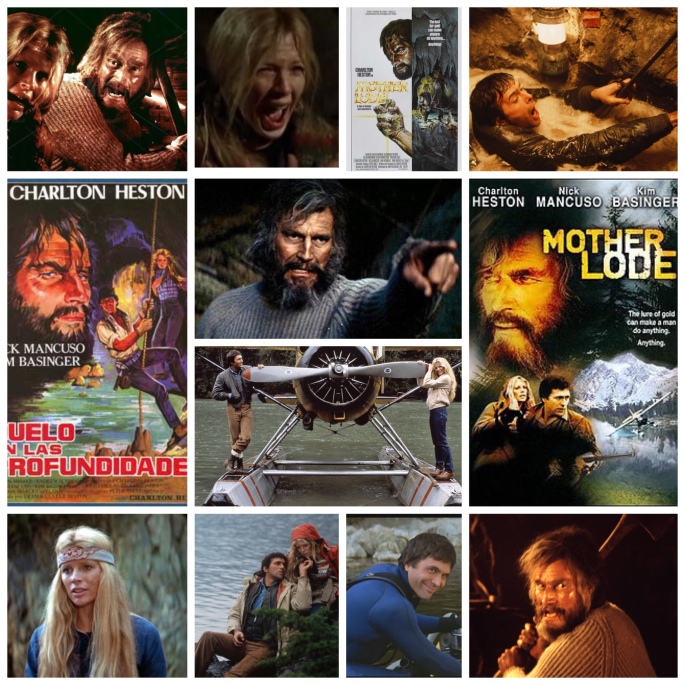
Charlton Heston’s Mother Lode is one of those neat flicks that not only is filmed in my hometown of Vancouver (like every movie ever) and the surrounding British Columbia region, but is also set there as well. It’s an entertaining, if slight little adventure story that’s perfect to put on for a rainy afternoon on the iPad. Heston, in addition to both writing and directing, plays two roles here, but it’s a bit of a sly trick saying that because he mostly appears as one, and only briefly as the other, but no matter, the old pro works his butt off to steal every scene. He plays loner mountain man Silas McGee, an eccentric prospector whose stairs don’t quite reach the attic, living alone in the wilderness looking for that perfect gold strike. The excellent Nick Mancuso, in a role originally meant for James Brolin, is Jean Dupre, a cocky bush pilot who heads McGee’s way with his high strung girlfriend (Kim Basinger), looking for a fellow pilot who got lost and a little of the gold stuff for himself while he’s at it. As soon as they run into McGee it’s clear the old dog is crazy as shit and not to be trusted, creating a nice atmosphere of isolated paranoia and mystery as the man’s true intentions come to dark light. Mancuso is always terrifically intense and so great at subtle comic moments, this is one of his great early roles and not to be missed for any fan. Poor Basinger suffered a miscarriage while production was underway and as such seems understandably distracted, but she’s a trooper and carries her end well. Heston either does a brilliant Scottish accent, a slipshod one or a bit of both, it’s hard to tell with his rapid fire banter and eloquent, robust verbosity. He’s electric though, and freaky as all hell as the type of dodgy fellow you better pray you don’t run into out there. The action is pretty run of the mill and the film loses the tautness a thriller like this should have in parts, but it’s solid enough to not change the channel. For B.C. residents it’s an absolute treat though, especially as Mancuso’s rickety float plane arcs up over the Vancouver harbour towards the Cassiar mountains and we get to see what our city looked like back in the 80’s. Cool stuff.

-Nate Hill

Forgotten Gems: Avery Crounse’s Eyes Of Fire

Avery Crounse’s Eyes Of Fire is so rare and forgotten that it’s only available on YouTube, as far as I could tell, which is saying a lot because my net of sources stretches pretty far these days. It’s truly something special and who knows how long that video will be up for. Belonging to one of my favourite sub genres, the horror western, I’m almost convinced it largely inspired 2014’s celebrated horror flick The VVitch, as well as a few others over the years. It’s a bit of a heartbreak that it isn’t more widely recognized or even available (a DVD release seems to be nonexistent). On the American frontier in the 1700’s, a creepy minister (Dennis Lipscomb) is banished from a settlement for suspected adultery and witchcraft. The man and his followers venture out into a mysterious, little traversed valley and find themselves preyed upon by… something. The region is haunted by nature spirits who have imprisoned deceased Natives, now phantom spectres who stalk through the trees consuming souls of the living, also controlled by what the clan’s children call a ‘devil witch’. There’s various plot threads involving women in the group, one of whom has a mountain man ex husband (Guy Boyd) who has been living in the wilderness and has intuitive knowledge about the forces there, imparted in a well written, spooky campfire monologue. There’s also a Celtic witch (Karlene Crockett) who acts as a force of good against the dark magic. Once the folk start encountering all this though, plot takes a backseat to a spectacular array of very surreal and thoroughly scary special effects, colour filters, hallucinatory nightmares, unnerving musical sound design and all mannered spook-house atmospherics. It’s hectic as all hell and the acting sometimes gets super melodramatic, but what wonders of practical effects they’ve used here, a showcase of prosthetics, eerie photo-negative filters, Wiccan lore, earth magic and terrifying phantasms. Trees have faces, weird charcoal demons plague everyone, all set to a wonderfully warped score that uses experimental white noise, Gaelic thrums, ethereal tones and elemental cues to chill the spine. A hopelessly forgotten gem, but one of incredible value to any fan of unconventional horror.

-Nate Hill