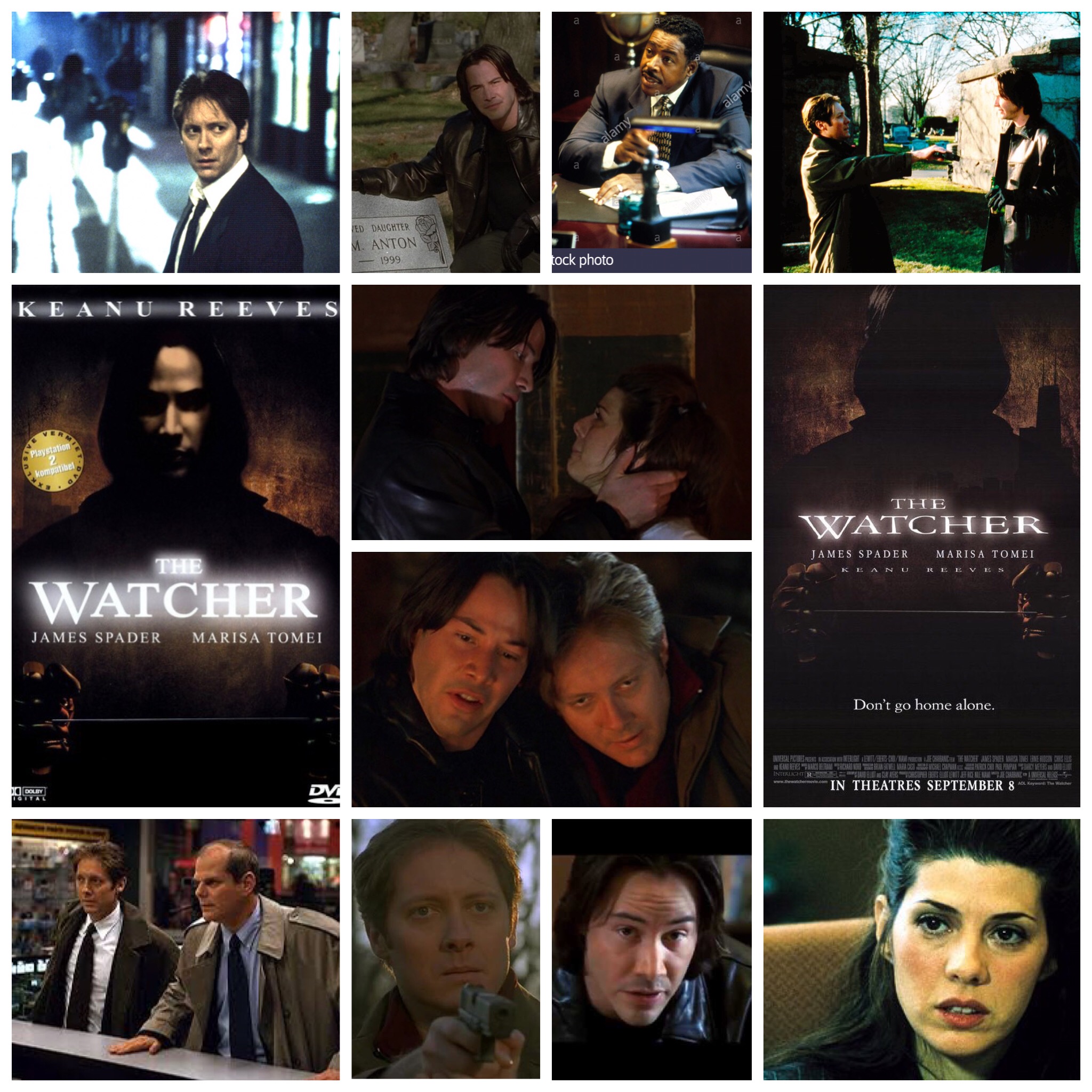
The Watcher


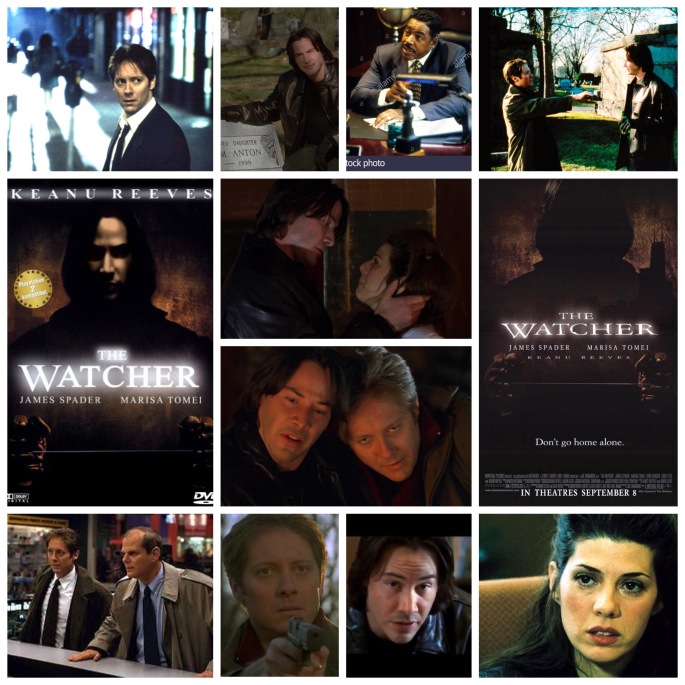
A prevailing thought while viewing The Watcher was that Keanu Reeves is an odd choice to play a lone wolf serial killer, but he actually suits it pretty well. The film itself is muddy and middle of the road, pitting haggard big city cop James Spader against Reeves’s beast who takes extreme pleasure in taunting him at every turn. This gets so bad that poor Spader has a breakdown, loses all hope and moves to a different city half across the country. Reeves just can’t seem to quit the game though, and follows him right over there for more murderous shenanigans. It’s your classic 90’s cop vs. killer tale, and for the most part it’s not bad. The bleak, nocturnal nightscapes help Reeves creep around and nab his victims as well as provide an oppressive urban atmosphere. It’s nice to see casting like this as far as the villain is concerned; so often these killers are played by eccentric, freaky looking character actors or go-to antagonist players, but by casting a golden boy leading man like Keanu they’ve upturned the trend and made the character more striking. Also, a chiselled babe like him is far more likely to believably lure off girls than some wild eyed, Gary Busey type you’d usually find here. Points for that too. The additional players add class, including Chris Ellis, Ernie Hudson and Marisa Tomei. This one won’t go down in history simply because it’s in dime-a-dozen territory. There’s just too too many cop/killer films from back then, and if one of them doesn’t have a key quality to make it stick and endure, it’ll fade into obscurity, like Reeves receding back into the inky night after a fresh kill. It’s not bad in itself though, if mostly just for him and the urban ambience he stalks through. 

-Nate Hill

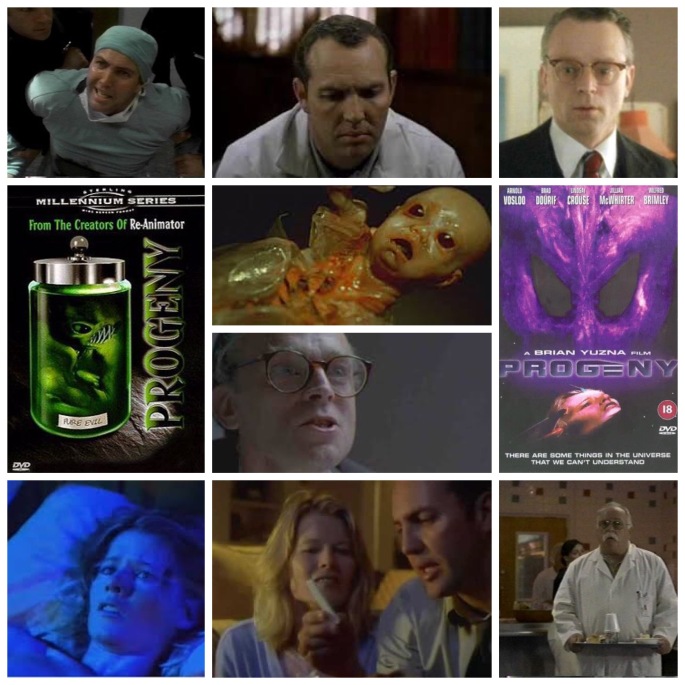
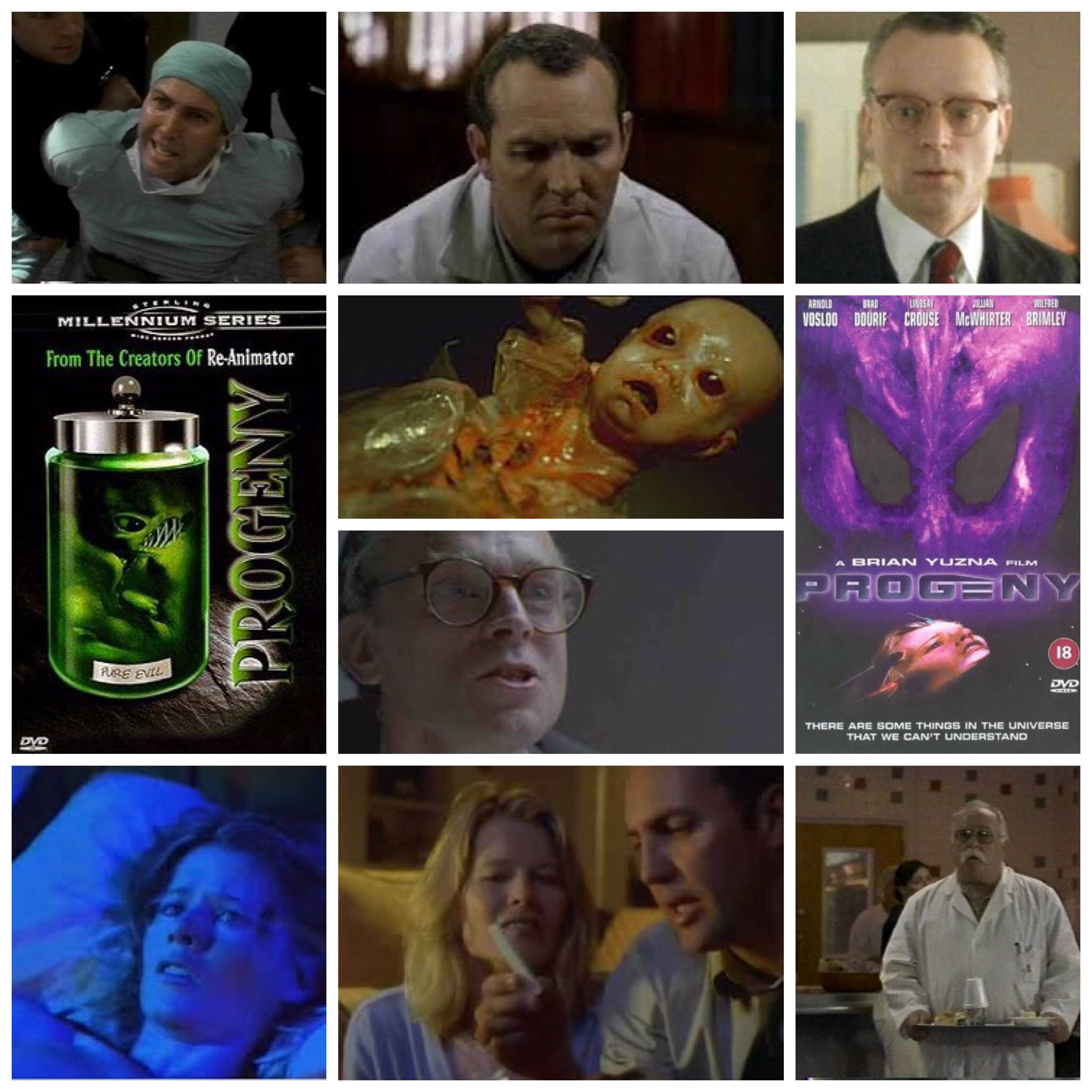
B Movie Glory: Progeny


What do you get if you cross Rosemary’s Baby with The X Files? 1998’s Progeny, or something like it anyway. Surprisingly thoughtful, restrained and adept for a B movie, it’s got a tightly wound little story about a human woman (Jillian McWhirter) who is impregnated by extraterrestrials that are tinkering around with our biology for who knows why. Her husband (Arnold ‘Imhotep’ Vosloo) is at a loss and doesn’t know where to turn as her condition gets progressively more… icky. Help comes in the form of two kindly doctors (Lindsay Crouse and Wilford ‘Diabeetus’ Brimley) and a UFO-ologist played by an unusually laid back Brad Dourif, but will their collective effort be enough to save her life, remove whatever being is in her womb and escape the attention of the aliens for good? Browsing the shelves this looks like a full on schlock-fest based on the cast and general vibe, but it’s something a bit more tasteful that takes itself just seriously enough to separate it from the mass of junk in this arena. Don’t get me wrong, there’s some slick scares and a few gooey wtf moments, but they’re used with a modicum of discretion and as such feel earned, always taking a backseat to the actors who give the human drama weight. Great little forgotten sci-if/horror. 

-Nate Hill

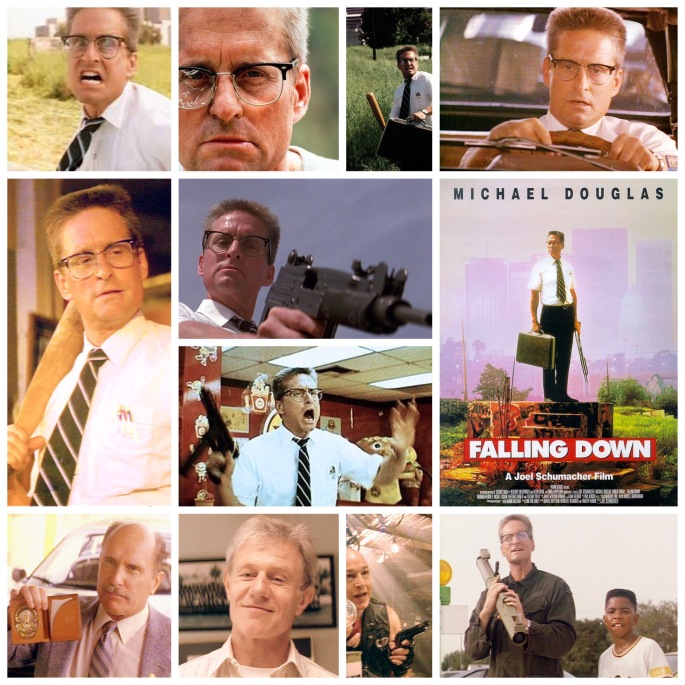
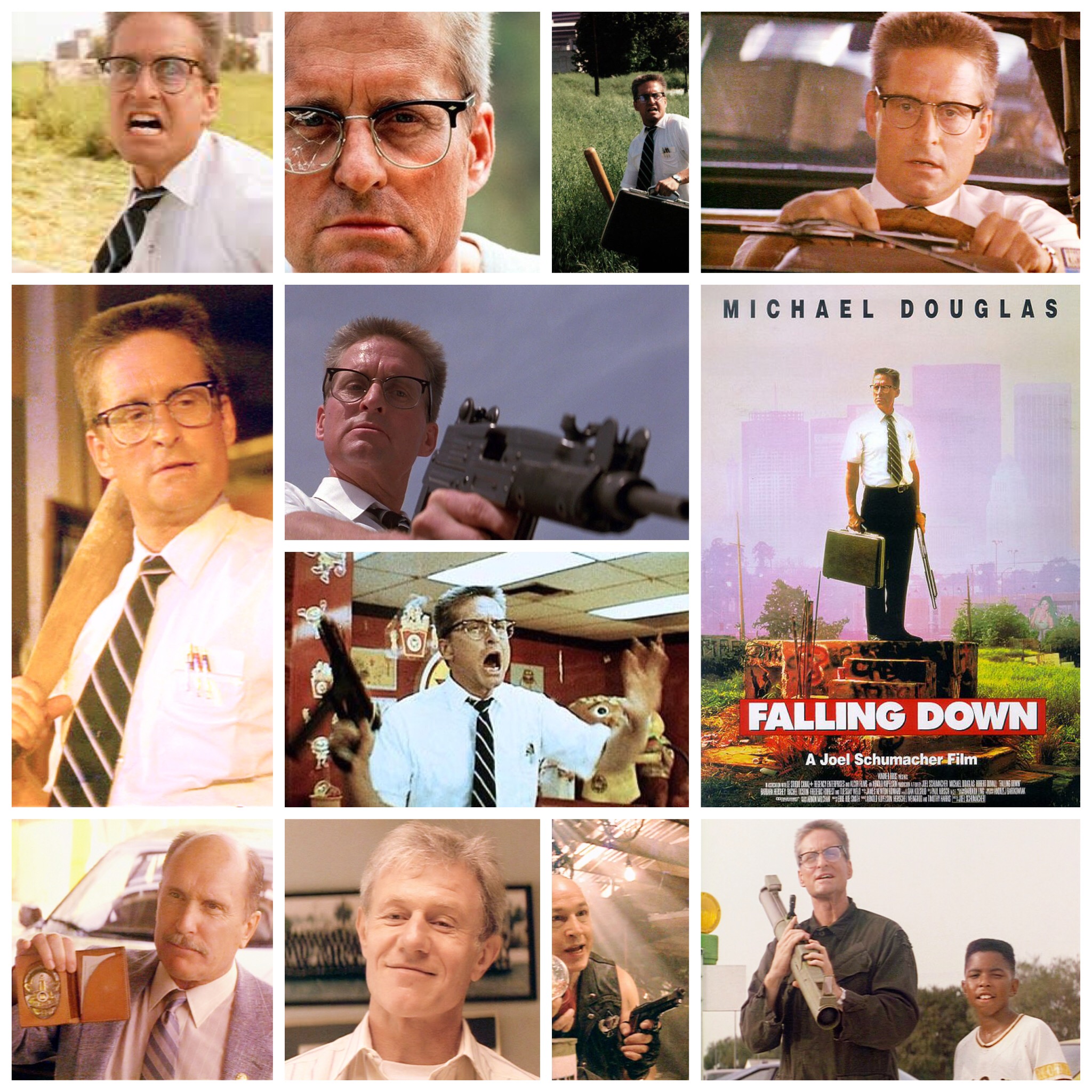
Joel Schumacher’s Falling Down


Everyone’s had the moment where they’re at the absolute end of their rope and feel like taking drastic or violent action against whatever is grinding your gears. Whether it’s a hot day in horrendous rush hour traffic, a particularly irritating lineup at Starbucks or an especially dense customer service worker, you just feel like saying ‘fuck it’, and decimating the place with anything you can lay your hands on. In Joel Schumacher’s Falling Down, Michael Douglas does just that on a sweltering LA summer day. His character, who remains nameless save for the moniker ‘D-Fens’, is a business man on his way home who just… snaps. Throwing a tantrum on the LA overpass, he quickly loses it, arms himself with a high velocity shotgun and proceeds to vet out every mundane annoyance, pet peeve and irksome scenario he can find. Whether it’s brutal catharsis he’s looking for, a cure for the doldrums of daily life or simply raging against that emptiness we all feel deep down, he keeps his reasons to himself, and let’s every other aspect of his character run wild. Holding up a fast food joint because they stopped serving breakfast five minutes too early, massacring homeless punks who foolishly harass him, his crusade sprawls across the valley and beyond, a righteous purge of monotonous, infuriating trivial concerns that soon has the attention of LA’s finest in the form of veteran Detective Robert Duvall and his crass, obnoxious lieutenant (Raymond J. Barry). It’s also revealed that Douglas’s personal life leading up to his break was rocky at best, with a job going downhill and hints of violence towards his wife and daughter. Quite drastic is the meltdown though, but it’s not quite a character study, he’s almost used more to pick away at the decays in society, a tool for exposing tears in the cloth we take for granted every day. His story is kind of like when you load up Grand Theft Auto on your console and completely ignore the missions in favour of a personalized war on anything that moves. His war happens to be against those little nagging inconveniences that seem like no biggie until they add up and you just go postal. It’s darkly funny stuff, but quite harrowing when you look at the big picture and the actual damage he’s doing to the city. Douglas is courageous here, it takes reckless abandon to go for a role like this, and he owns it in crew cut, well dressed fashion, a costume choice that absurdly clashes with the big metal cannon he totes. The film never takes sides either, recognizing both the bizarre consumerist nightmare we wade through everyday and it’s ability to dampen your spirit as well as the sickening extremes he goes to, challenging you to walk a line and look at both sides. Hard hitting stuff. 

-Nate Hill

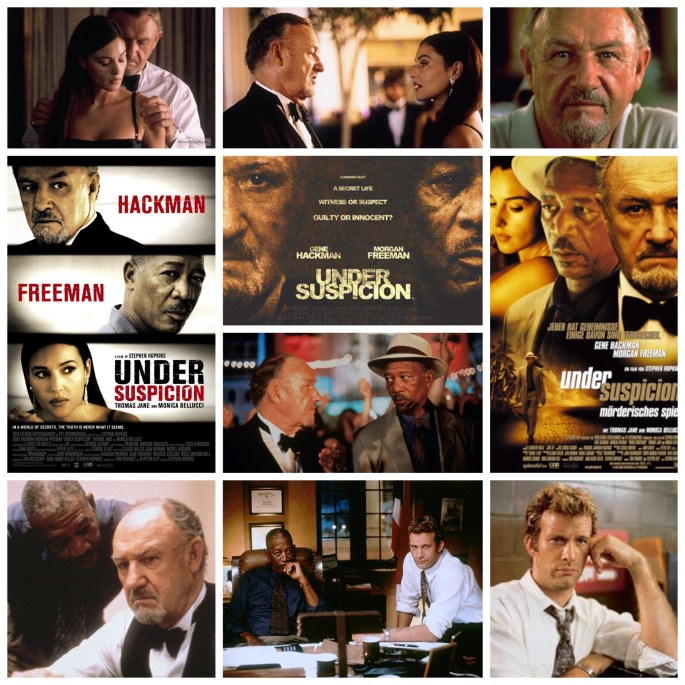
Stephen Hopkin’s Under Suspicion 


If Stephen Hopkin’s Under Suspicion were a meal I was served at a restaurant, I would throw it against the wall, flip the table, walk promptly back to the kitchen and knock the chef out cold. It’s a hollow, pointless piece, like digging into a pie that’s put before you only to find that under that layer of crust there’s no filling, only air. The premise is promising: wealthy businessman Gene Hackman who has political ties is grilled out of the blue by longtime friend and police detective Morgan Freeman and his partner Thomas Jane, regarding the murder of a thirteen year ago old girl in the slums of San Juan. Hackman is a successful, assured alpha socialite, and these type of men always have some type of close guarded secret which comes to light. Freeman is a dogged working man who probes him until it almost seems personal rather than routine. Sounds terrific, right? You would think. The acting is of course fine, as these guys couldn’t miss a beat if they tried, but the way the story is set up just rips the viewer off blind. These two thespians soar spectacularly, but their duel is structured around purposefully unreliable flashbacks, beating around the bush and oodles of red herrings that treat the audience like sixth graders watching a low rent magician at a birthday party. Hackman has a pretty trophy wife (Monica Belluci, underused) and a host of personal demons that he projects onto Freeman’s simple blue collar rhetoric like a defence mechanism. None of these narrative fireworks can save it though, especially when an ending rolls around that is the very definition of a letdown, through and through. In an attempt to explore the forces that drive a man to the edge of admitting guilt whether he is responsible or not, the filmmakers miss the boat on providing a focused treatise that takes itself seriously with these potentially fascinating themes, instead settling on an overcooked, ultimately vacant that could have been so much more.  

-Nate Hill

Matthew Bright’s Freeway


Matthew Bright’s Freeway is the most fucked up, disturbing take on the Little Red Riding Hood tale you’ll find, and the only time Reese Witherspoon totally cut loose, got down n’ dirty to truly give a performance straight from the gutter. You can’t spell gutter without gut, which is the primary place this film operates from, gag reflex and all, and the same goes for her wickedly funny firebrand of a performance. The filmmakers have taken every minuscule plot point from Riding Hood and deliberately thought up the most disgusting and deplorable ways to drag them through the mud, churning forth a film that is so sickeningly perverted that you can’t take your eyes or ears off it once, kind of like a fresh, glistening pile of roadkill on the interstate that induces retching, yet is compelling in a sense, even attractive in its ability to morbidly hold your attention by being something that’s outside the norm. Witherspoon is Vanessa Lutz, a trailer park baby who’s been dealt a rough hand in life on all fronts. Her kindly boyfriend (Bokeem Woodbine) is tied up in dat gang life, her mom (Amanda Plummer) is an unstable slut-bag and her stepdad (Michael T. Weiss) has a case of… wandering hands, shall we say. Vanessa picks up and leaves town to go visit her grandmother, but no sooner does she hit the road, she’s tossed from the frying pan right into the fire when she’s picked up by psychiatric counsellor Bob Wolverton (Kiefer Sutherland). Bob is your classic clean cut, mild mannered yuppie, save for the fact that he also happens to be a dangerous pedophiliac serial killer, and she’s now in his car. Vanessa is a force to be reckoned with though, as Bob soon finds out, and the two of them wage sleazy war all over the state, until one or both are either dead or incarcerated. It’s so much heinous mayhem and depravity that one reaches saturation point and just had to go with the grimy flow, either that or walk out of the theatre, but that’d make you a bitch. Witherspoon and Sutherland are having a howling good time, each sending up their hollywood image in the type of roles that John Waters or Wayne Kramer would think up some lonely night. Bob is the worst type of offender, and one has to laugh when he’s wheeled into court, facially deformed at the hands of Vanessa, and she proceeds to savagely berate him on his looks, dropping insults that you can hear whistling through the air, delivered like gunshots by Witherspoon, then only barely twenty years old, who has never been this good in any film since. Funnier still is Wolverton’s naive wife looking on in aghast horror as only Brooke Shields can do with that soap opera stare. Other talents include Dan Hedaya as a stoic Detective, Conchata Farrell, Tara Subkoff and Brittany Murphy as a creepy cell mate Vanessa meets while in holding. Anyone claiming to be a fan of Witherspoon who hasn’t seen this just needs to take the time and do so, she’s just the most foul mouthed, violent, adorably profane trashbag pixie you could ever imagine, especially when onscreen with Sutherland, who has never been more evil or intimidating. This is one fairy tale you wouldn’t show the kids, but it still stands as my favourite cinematic version of Riding Hood to this day. There’s a sequel out there somewhere too, but I can’t weigh in on it as I haven’t had the time so far to check it out. I doubt it reaches the heights of sordid delight achieved here though. 

-Nate Hill

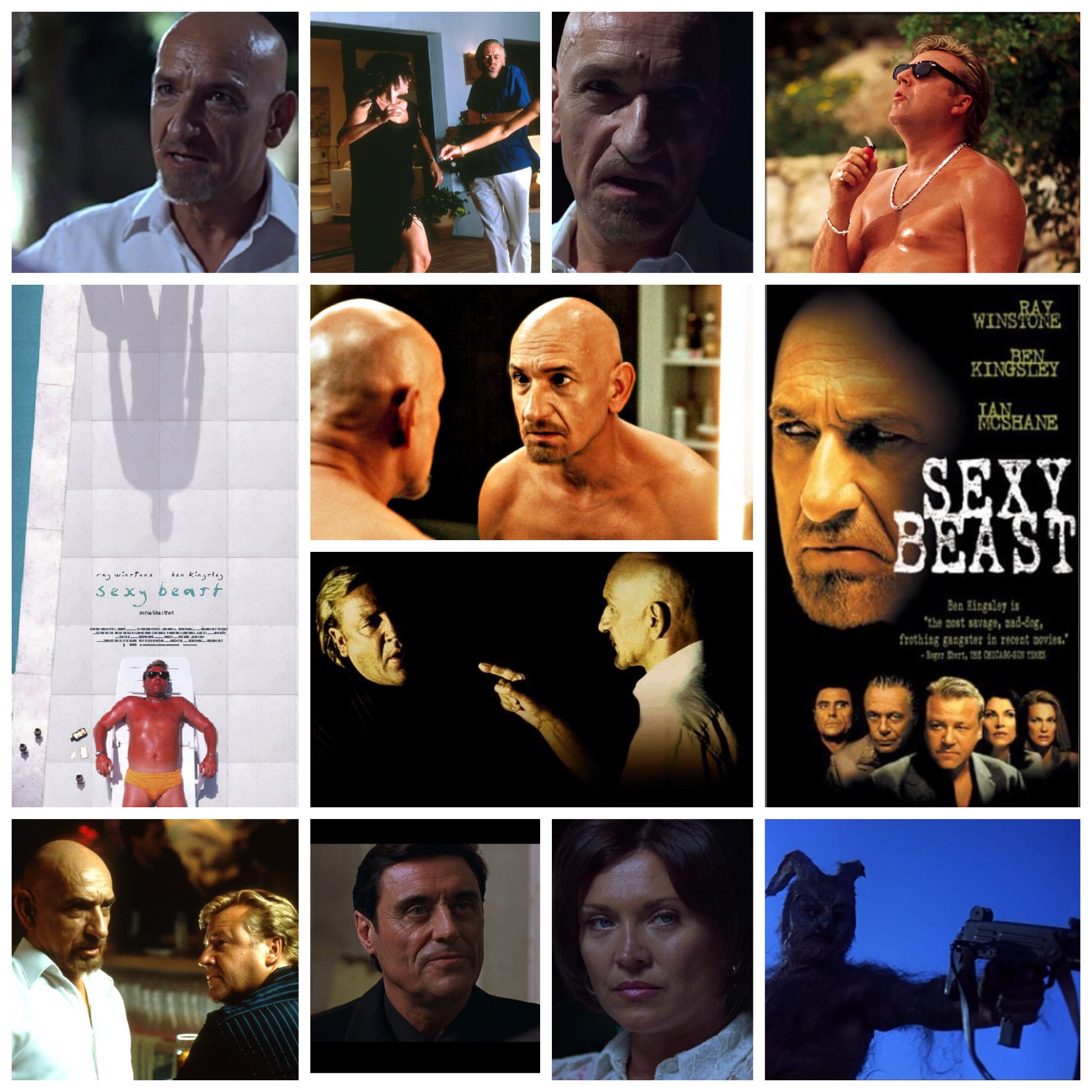
Jonathan Glazer’s Sexy Beast


Whenever someone asks me to provide the showcase example of the actor’s process done as close to perfection as one can get, I direct them towards one earthquake of a performance: Ben Kingsley in Sexy Beast. It takes a considerable amount of work to fully realize a character, bring them to life, make them seem genuine, lifelike and idiosyncratic so as to win over the viewer and elicit the modernized ‘putting down the iPhone to engage with full attention’ reaction’, but Kingsley’s rabid London hoodlum Don Logan is just that creation, and then some. He’s not even the lead character either, yet royally steals the film, which earned him an oscar nomination. The film itself couldn’t be more brilliant either, cooked up via a stinging, gorgeously verbose script by Louis Mellos and David Scinto, glossy wit from director Jonathan Glazer and actors who go the extra mile to give a fairly arch story some tangible depth. Ray Winstone, reliably superb, is Gal Dove, a boisterous ex criminal who has retired to sunniest Spain with his sexy wife (Amanda Redman) and best friend (Cavan Kendall). Retirement is tricky for someone with Gal’s past though, and soon his past barges through the front door in the form of Kingsley’s Logan, a terrifying bald beast of a man that would give any sensible person cause to immediately run and hide in the nearest cupboard. From the moment he shows up, heralded by bad dreams that plague Gal and a literal boulder that cascades down the hill into his villa pool uninvited (hello metaphor), things go from worse to hellish. Logan isn’t the type of man to take no for an answer, and is a complete and total nightmare to deal with even before Gal tries to shut him down. Logan wants him for a job in London, organized by shark of a mob boss Teddy Bass (Ian McShane, creepy as all hell), but Gal has no interest leaving the sunny shores and just wants the nutter out of his house. Any time Kingsley is on screen you can feel the tension crackle in the air. He’s the unvarnished hyena to Winstone’s aloof, relaxed teddy bear, a force to be reckoned with and feared. His use of profanity lands like a backhander from Dwayne Johnson, his body language is erratic enough to induce seizures and that cobra gaze could melt adamantium. He’s the penultimate antagonist and raises the stakes to the stratosphere, berating every person in sight and maintaining a cold, detached veneer that’s more than slightly disconcerting. Not to mention the fucker talks to himself in the mirror, which alone is cause for worry. While the story takes place in our world, there’s an off kilter, demonically surreal undertone that derails genre conventions. The artfully dirty, near poetic screenplay, stark visions of some sort of evil Chernobyl rabbit thing, lurid editing transitions, whatever it is it’s hard to pin down or describe, but you feel miles from your comfort zone and ever so slightly removed from our solar system while watching this odd, scary, compelling and uniquely peculiar piece of work. 

-Nate Hill

Robert Rodriguez’s Desperado 

Robert Rodriguez’s Desperado is the original south of the border shoot em up bloodbath, bar none. I’m aware it’s a sequel/remake of Robert’s breakout debut El Mariachi, but the now legendary style and brutality he cultivated started to blossom here in the Mexican desert with scowling Antonio Banderas and his guitar case packed with heavy artillery. The aesthetic coalesced into something measurable here, whilst in Mariachi we only saw fits and starts. Here the tone is solidified and paves the way for the magnum opus that is Once Upon A Time In Mexico, my favourite Rodriguez flick. It all starts with the image of Banderas sauntering into a scumbucket cantina, full of sweaty machismo and smouldering angst, laying waste to the place with more phallic firepower than the entire wild Bunch. It’s a time capsule worthy sequence that demonstrates the pure viscerally intoxicating effect that the action film has on a viewer, when done as well as it is here. Narrated by wisecracking sidekick Buscemi (Steve Buscemi, naturally), Banderas positively perforates the place, fuelled by the internal furnace of revenge, shrouded in the acrid scent of gunpowder and awash in tequila delirium. As soon as this sequence blows past, the credits roll up and we’re treated to a Mariachi ballad sung by Antonio himself, belted out with his band to ring in this hell-beast of a movie. Together, those two scenes are some of the very, very best opening sequences you can find out there, timelessly re-watchable. The rest of the film pulls no punches either, as we see El leave a wanton gash of carnage in his wake across Mexico, on a vision quest of violence as he works his way up the ranks of organized crime, starting with slimy dive bar owner Cheech Marin. Quentin Tarantino has a spitfire cameo, rattling off a ridiculous joke before El steps into yet another bar and the shit (as well as the blood) hits the fan. His endgame target is crime boss Bucho, played with terrifying ferocity by Joaquim De Almeida. It’s hard to picture an angrier performance than Banderas’s before Almeida shows up, but this guy is a violent livewire who’s not above capping off his own henchman like ducks in a row, puffing on a giant cigar and casually blowing the smoke in his concubine’s face mid coitus. El has a love interest of his own too, in the form of ravishing, full bodied Carolina (Salma Hayek). Hayek is a babe of the highest order, and their steamy candle lit sex scene is one of the most full on ‘jizz your pants’ rolls in the hay that 90’s cinema has to offer. This is an action film to the bone though, and they’ve scarcely mopped up and caught their breath before he’s forced to dispatch another horde of Bucho’s degenerates in high style. One has to laugh a bit when a guitar case becomes a full on rocket launcher during the earth shattering finale, but such are the stylistic dreams of Rodriguez, a filmmaker who is never anything short of extreme in his work. As if the guns weren’t enough, Danny Trejo shows up as a mute assassin who like to hurl throwing knives at anything that moves, and it’s this Baby Groot version of his Machete character years later that comes the closest to punching El’s ticket. The stunt work is jaw dropping as well, a tactile ballet of broad movements, squib armies that light up the screen, accompanied by gallons of blood that follows the thunder clap of each gunshot wound like crimson lightning. It’s a perfect package for any lover of action, romance, action, darkest of humour, action, oh and action too. When discussing films that have held up in years or decades since release, this one is not only a notable mention, it’s a glowing example and a classic that has just aged gorgeously.

-Nate Hill

The Island Of Dr. Moreau


I don’t think there’s a film out there with a more volcanically troubled production history than John Frankenheimer’s The Island Of Dr. Moreau. It wasn’t even supposed to be helmed by him, rather an upstart named Richard Stanley, who’s control on the creative reigns was violently yanked away by the studio and given to notoriously fiery Frankenheimer, who, lets face it, could never really get his genetically altered ducks in a line when he took over. Between Val Kilmer acting like a lunatic and very nearly being replaced, Marlon Brando being an even bigger lunatic because he knew no one would ever replace him (the big guy had an ego to match his girth) and raging budget problems as a result of the antics, the making of this film was, in short, a fucking disaster. So now I’ve said my piece on the most talked about aspect of this film, I want to shift gears into an area that just doesn’t get covered a lot in discussion: the final film itself. Because of the maelstrom of bad PR circling the film like the storm that maroons our heroes on Moreau’s isle, many people just assume it’s a shit movie, which is not the case. I happen to love it, and if anything the level of obvious behind the scene chaos seeping through just gives it an organic unpredictability free from shackles of a script that I imagine was fairly generic in the conception phase. This is a bonkers film, no denial from me there, but I’ll be damned if I didn’t love every certifiable, furry prosthetic adorned, opulent, disorganized minute of it. David Thewlis took over from Kilmer as the lead, when Val had behavioural issues, but they’re both present and accounted for as the wreckage of a ship meets Moreau’s isle, a twisted Eden where human animal hybrids live under the delirious monarchy of the good Doctor, played with reliably laconic mania by Brando. He’s been playing god, the old codger, and his island is now home to a host of varied zoological wonders, and no narrative would be complete without it all going tits up in a giant mutiny later on. The practical effects are delightfully excessive and elaborate, packed onto specifically chosen actors who already have an ethereal, animalistic aura on their own. Ron Perlman is the sagely Sayer Of The Law, Marc Dacoscas the leopardly Lo Mai, Temuerra Morrison the lion like Azazello and wild eyed Fairuza Balk is feline goddess Aissa, who happens to be Moreau’s daughter. ‘She’s a pussy’ Kilmer quips in one of many candid slips of the tongue on his part. The inmates eventually run the asylum, or whichever clever parable you want to apply, and it hurtles towards a third act full of flying fur and fangs that releases the floodgates on Frankenheimer’s lack of cohesion, the mad scientist workshop of Stan Winston’s special effects, Brando’s bug eyed dementia and Kilmer’s ADHD riddled performance, in one scene going so off far off the rails that Thewlis has to literally break character and tell him to ‘quit fuckin around’, an unintentional laugh riot. Brando has a midget Mini Me, too, which is never fully explained but always good for a nervous laugh, as the thing looks like a fetus that vaulted out of the womb a few month too early, although I suppose that’s the point. Look, it’s a mess, but it’s a beautiful one, a kaleidoscopic parade of grotesque costumes and cartoonish performances wrapped up in a story so overblown and off the map it almost takes on a pulse of it’s own. For insight on what went down behind the scenes you can read Ron Perlman’s autobiography, watch the recent documentary on the film or simply check out IMDb trivia, but whatever went down for real, it ended up branding one of the most bizarre and wonderful creature features of the 90’s, and I love every feral, freaky minute of it. 

-Nate Hill
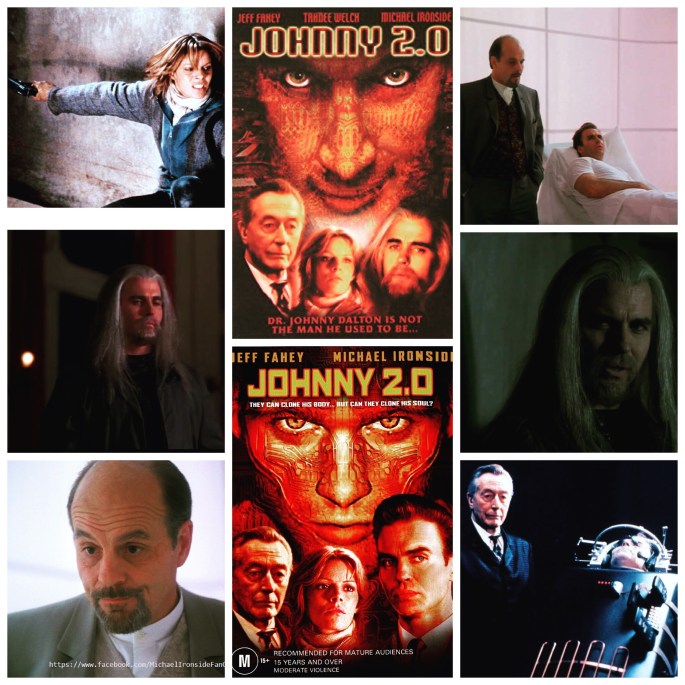
B Movie Glory: Johnny 2.0


It’s always fun to come across genuinely intelligent science fiction films, especially when you go into them expecting a half assed, clunky yawn, which happens frequently. Johnny 2.0 is an overlooked little cyber-punk gem in an unassuming release package, a thinking man’s sci-fi story that could have easily gone the other way, but contains enough inspired creativity to rise above the muck. Jeff Fahey plays Johnny Dalton, a genetic researcher whose facility is attacked by activists. Waking up from the disaster he is stunned to find that he’s not Johnny at all anymore, but a clone who has been in cryo for 25 years, awakened now for one purpose: set out across a post apocalyptic wasteland to retrieve the original Dalton and smoke out a web of conspiracies that have hatched over the years. There’s all sorts of really intriguing ideas at play here including MRI memory mapping, organic tracking suits, genetic reconfiguration and personalized holograms, a wealth of scientific world building that earns this film its stripes in the artistic departments. Fahey is excellent, as is a noble Michael Ironside, Tahnee Welch and John Neville. Super solid storytelling, ideas worth exploring, an impressive level of design and atmosphere achieved despite the limited funds, there’s not too much you can say about this one that is not the highest of praises. 

-Nate Hill

Gabe Ibáñez’s Automata 


Gabe Ibáñez’s Automata had the misfortune of being released in the shadow of another film concerning robotics and artificial intelligence, Ex Machina. It’s hard to compete with the kind of hype that film generated back in 2015, and as such it kind of slipped through the cracks. It’s a shame because there’s much about that’s striking, stylized and fascinating, despite being a bit too elaborate for it’s own good. Drenched in a rainy neon Blade Runner atmosphere, it follows a bleak story involving insurance investigator Jacq Vaucan (a bald, somber Antonio Banderas) as he navigates a broken world ravaged by solar storms that have whittled down the human populace to around twenty million. Robots have been employed to rebuild the dying infrastructure, and Jacq keeps tabs in case any of them violate their primary directive, under the stewardship of his boss (Robert Forster). When rogue police officer Wallace (Dylan McDermott is dynamite) shoots a robot he claims was trying to alter itself, Jacq surmises that there’s a ‘clocksmith’ out there trying to give them minds of their own. It’s all very vague and we never really have anything more than illusory whispers or half explained concepts to go on, but these matters find him and the company’s nasty head of security (Tim McInnerney) venturing far out into the desert where a faction of robots, led by Javier Bardem no less, have grossly deviated their protocol and are evolving into… something else. Banders’s once wife Melanie Griffith does double duties as a creepy liaison in their case and the voice of a sympathetic sex slave-bot who plays a key role. I’m not entirely sure what the story arc is supposed to be, as it’s often muddled and dense, but it seems confident that it has one, and isn’t just flying blind into Euro experimental abstract mode as some scenes suggest. It has a point to make, it’s just wrapped that up in enigmatic fashion and cloaked any sense of linear exposition in blankets of atmospheric ambient sound, deliberately indistinct story beats and strangeness. I’m okay with that to an extant, as there’s plenty to enjoy visually, especially with the robots and their design, but many won’t be and will want more than just machine dreams without a manual to guide them. I for one enjoyed the memorable image of bald, parka clad Banderas hunting primordial androids in a washed out, used up wasteland. All that’s missing is a score by Vangelis or Tangerine Dream.  

-Nate Hill