Phil Joanou’s State Of Grace


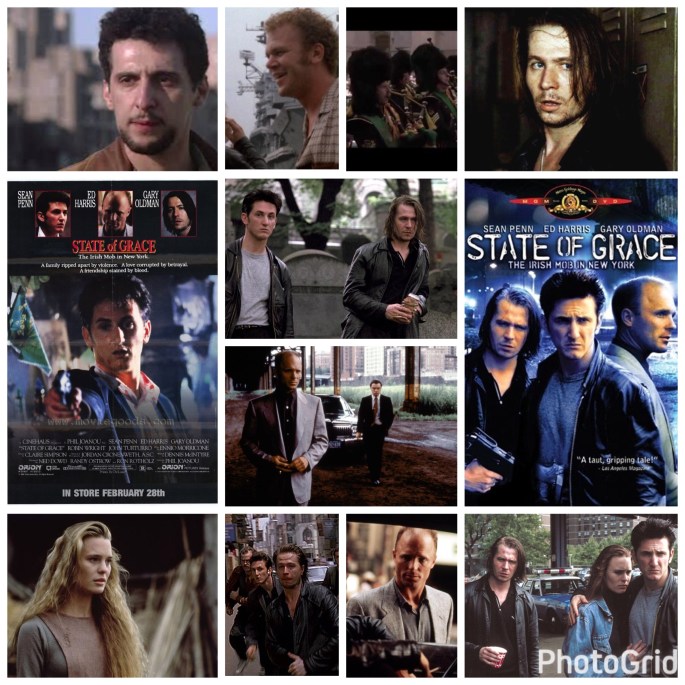
Phil Joanou’s State Of Grace had the unfortunate luck of being released in 1990, the same year that also saw Scorsese’s Goodfellas and the third Godfather film. It’s hard to gain your footing when that kind of momentum is surging about, but this film is as good as the others, and deserves recognition or at least some kind of re-release. Set in the blistering inferno of Hell’s Kitchen, NYC, it’s a violent tale of Irish Mobsters, undercover cops, betrayal and murder, set to a smoky, mournful Ennio Morricone score that lingers in the air like smog. Sean Penn is Terry Noonan, a deep cover operative who returns to his childhood neighbourhood to reconnect with old friends, and dig up buried grudges. Ed Harris is Frankie Flannery, ruthless gangster and former ally, while Gary Oldman plays his hotheaded brother Jackie with a tank full of nitrous and the kind of unpredictable, dynamite fuse

potency one expects to see from a David Lynch character. The three of them are on a collision course set in the grimy streets of New York, bound by old loyalties yet destined to clash and draw new blood. Penn shares the screen with his once wife Robin Wright here, looking lovely as ever. There’s also supporting turns from John Turturro, John C. Reilly, R.D. Call, a geriatric Burgess Meredith and an unbilled cameo from James Russo. Penn, Harris and especially Oldman are like flint sparks, a trio that won’t be stopped and light up the screen for a spellbinding, visceral two hours until their eventual confrontation, hauntingly shot by cinematographer ” in the midst of a bustling St. Patrick’s Day parade. This one has been somewhat lost to the ages, like a number of other stellar crime dramas I can think of from the nineties. The cast, score and Joanou’s thoughtful direction make it an unforgettable piece of work. 

-Nate Hill
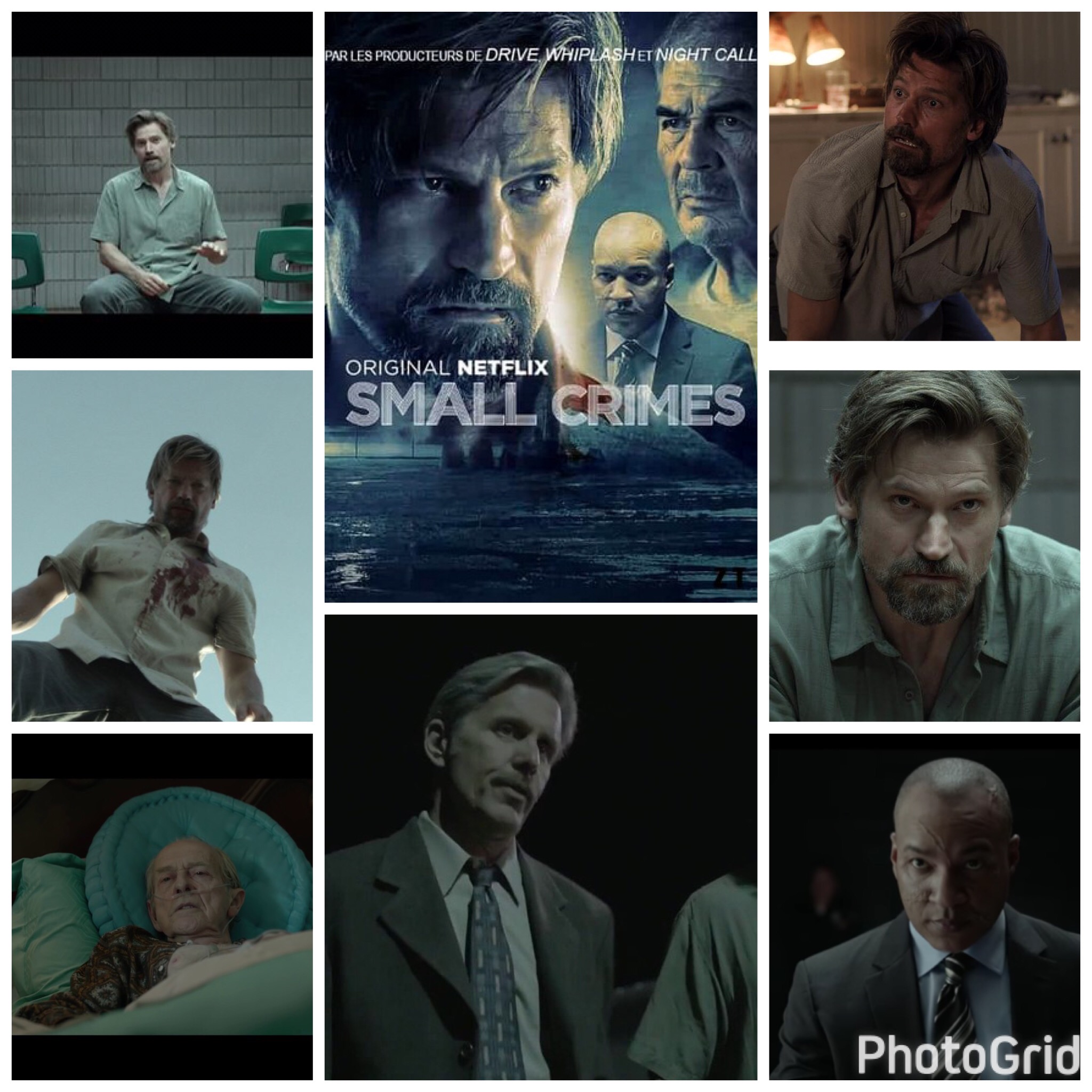
Netflix’s Small Crimes


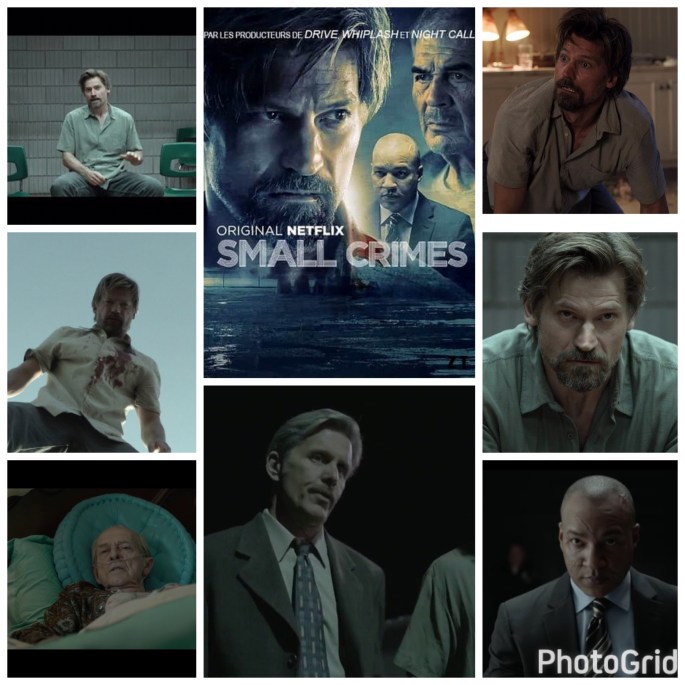
Netflix’s Small Crimes is a bitter, barren, gnarled piece of work that leaves an uneasy vacuum in the air as it passes. If you haven’t heard of it yet, that’s because the platform does almost zero promotion when new content comes off the assembly line, quietly slipping it onto the site without so much as a tv spot. Some are forgettable, and some are gems that could have done with a bit of buildup. This one is like David Mamet, Cormac McCarthy and Elmore Leonard sipping whiskey sours one cold, empty night and brainstorming ideas. I love the time honoured themes presented here, but what I love and admire more is the filmmaker’s courage in completely subverting, perverting and putrefying the formula. There’s countless films about disgraced cops, criminals or what-have-you who return home to a small town with designs on putting the wrong things right and finding a modicum of redemption. Thing is, in 99.999% of these films, we end up with a happy ending where all the kinks are ironed out and bygones are left as such, a trend which really cripples the stakes and grinds our expectations down with a blunt, predictable Hollywood ending. Not this one. Nikolai Koster-Waldau, aka Jamie Lannister, is a wiry, cracked out ex con who used to be a cop, before he viciously, and I do mean viciously, sliced up the town DA at the behest of a crime kingpin. Moping back into the county following a six year stretch in the pen, it’s inevitable that his very presence will stir up a few noxious vibes. Sure enough, he runs into trouble from all angles, including the vengeful DA (“, looking like he shaves with a wheat thresher), a scummy corrupt detective (Gary Cole eats up the dialogue like candy), the mobsters he used to be employed by, and even his parents (Robert Forster & Jacki Weaver), who are clearly broken by the past. There’s a feeling of inescapable doom, an inevitable choking quicksand that Waldau wades deeper into,

his seemingly noble intent on reconnecting with his wife and daughters gradually ground away to reveal the true nature of his path, and it ain’t pretty. Gary Cole has a way with words and mannerisms, and he runs away with his bent cop role, stealing scenes like nobody’s business. Forster has salt of the earth gravitas in spades, and nails a near career best scene with clear eyed conviction, nailing our attention to his presence. It’s not a perfect film though, there’s pacing issues, sometimes it gets a little vague or scattered and a romantic subplot involving a nurse (Molly Parker) seems glaringly out of place. Waldau anchors it though, a twitchy, unpredictable ne’er do well who seems cosmically incapable of getting his act together. The ending floored my expectations and remind that there is hope for fresh narratives and abstract thinking amongst writers. You’ll come out of this one bruised, but you’ll be glad you sat through the beating. 

-Nate Hill

Matt Dillon’s City Of Ghosts


Some films just go nowhere. They start in the middle of nowhere, continue down a road towards nowhere, and eventually end up.. guess where? Nowhere. There’s no structure, no beats, little to no stakes, it’s just people hanging about in a non-story. Now, this can either make for a boring film stuck in doldrums of its own making, or it can somehow oddly just.. work. Matt Dillon’s City Of Ghosts falls in the latter category, lucky him. This was Dillon’s writing and directing debut, with him front and centre as the lead, which is a lot of pressure, but he’s crafted a meandering little exercise in mood that, although providing nothing groundbreaking or all that memorable, is a great time to watch in the dreamy AM hours when you just need something vague and atmospheric to fill the space. Matt plays a professional con artist who is forced to voyage from the US to find his boss and mentor (James Caan), last seen in Cambodia. That sounds like a setup ripe for intrigue and double crosses, right? Not so much. Once he’s there, things congeal into a smoky, languishing chamber piece that sees Dillon just wandering from one exotic locale to the next with a troupe of fellow travellers, and eventually the James Caan character, a fairly eccentric and charismatic fellow. There’s a vague love interest (the ever beautiful Natasha McElhone, always terrific), a jovial innkeeper (Gerard Depardieu) and other wayward souls who flit in and out of the proceedings, all amidst this authentic South Pacific setting (Dillon filmed on location in Cambodia, which does wonders for atmosphere). Stellan Skarsgard is in it too, a hoot as some associate of Caan’s, a mopey, Eeyore-esque pessimist who sits about, smokes, mumbles despairing platitudes and does not much else. Beginning to see the picture? It goes nowhere, and by the end the characters seem to have gotten sidetracked fifty times over, never really achieving goals or making bank like they do in noir such as this. It’s neat though, if you’re in the right frame of mind, and have shelved both expectations and adrenal glands. This is a burnished, dreamy, laconic little piece that I rather enjoyed at the hypnotic hour of 2am on some random tv channel in the triple digits. 

-Nate Hill

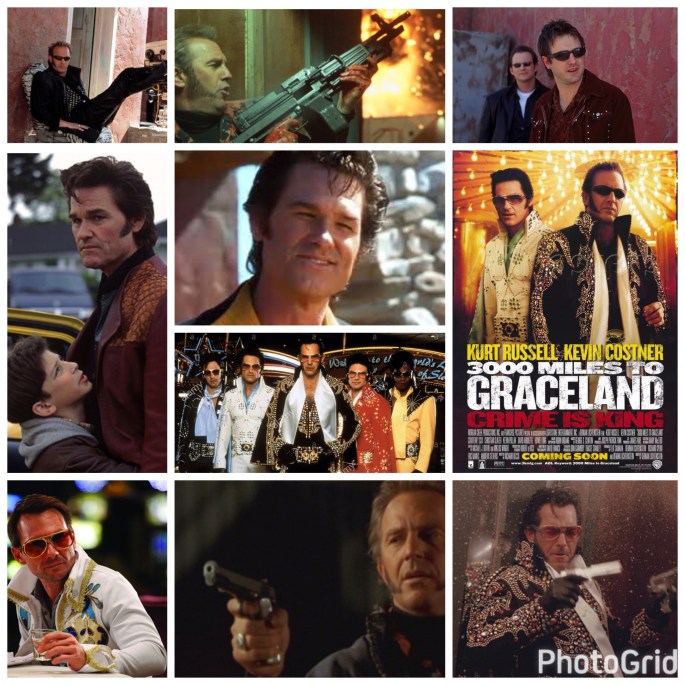
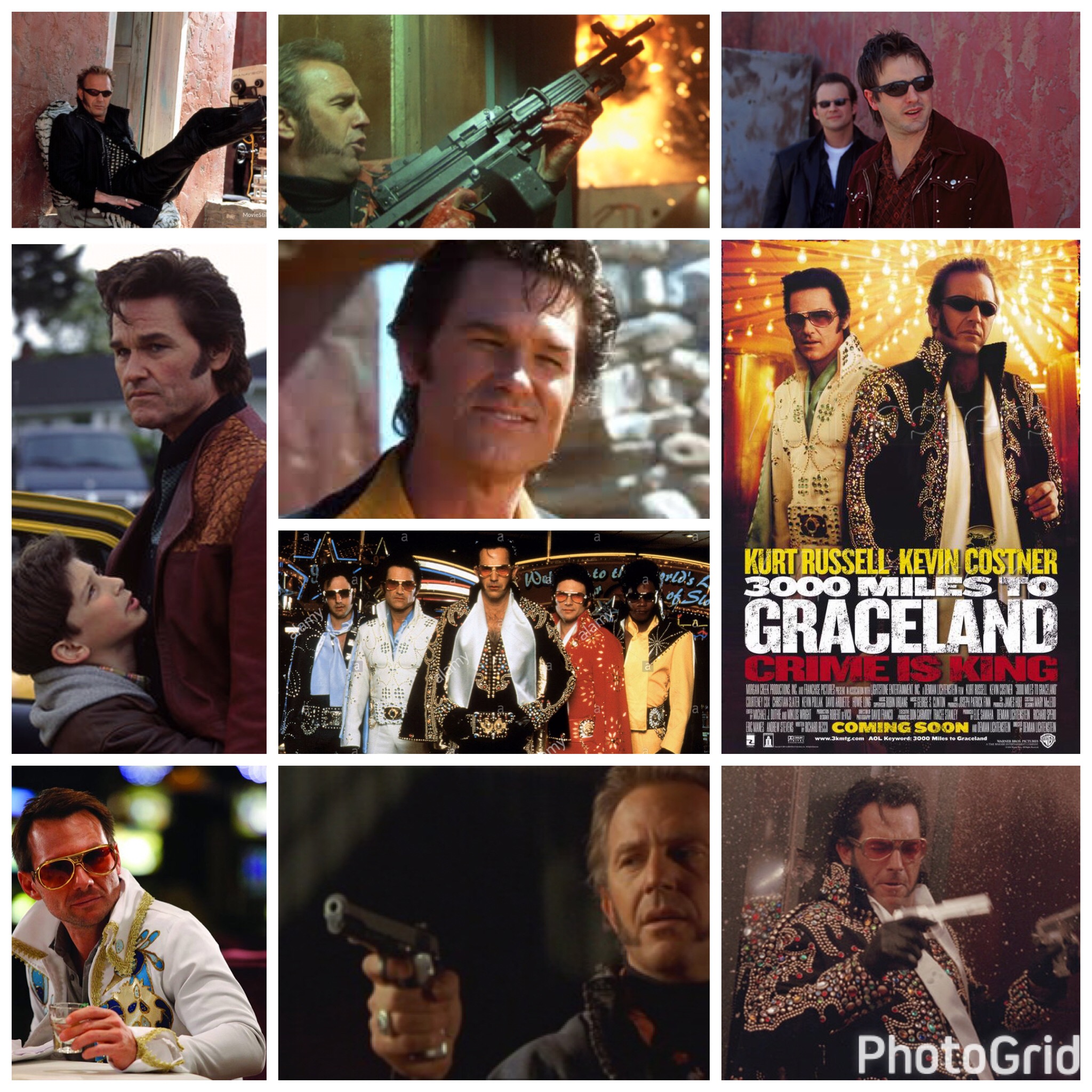
3000 Miles To Graceland


If I believed in guilty pleasures, which I don’t, 3000 Miles To Graceland would constitute as one, but I’m a pretty open book, avid fan of all sorts of films, and I either like something or I don’t, there’s no special category for things I’m too embarrassed to say I enjoy. This film is the very definition of unbridled fun, and greases up a pair Hollywood leading men stars for two of the meanest, sleaziest, down n’ dirtiest roles of their careers. Elvis is the name of the game here, pretty much every character spending the film in King costumes of varied colour and style, gathering in Vegas for one bloody shit show of a casino heist, then gloriously double crossing each other and running off into the desert with their ill gotten loot. Kevin Costner is demented brilliance as Murphy, a bad tempered, psychotic criminal who may literally be Presley’s long lost bastard child. Costner rarely gets to cut loose and grime it up like this and he milks every hair-gel soaked, chromed up second of it. He’s at odds with former partner in crime Zane, played with cold, sociopathic grace by Kurt Russell. It’s a hoot watching these two tough guys go to war on each other in high style, killing everything else that moves and seriously not giving one ounce of fucks the whole time. That’s pretty much all there is in terms of plot: a heist, and then one long, violent extended chase scene punctuated by character’s deaths every few miles. David Arquette, Ice T, Christian Slater and Bokeem Woodbine play their short lived cohorts, and they’re also pursued by a few wise-ass federal agents (Thomas Haden Church and Kevin Pollak) who are always one step behind. It’s the Kurt and Kevin show all the way though, and they both let it rip, two antagonists out to get each other in the worst ways, leaving a spectacular trail of wanton carnage and deliberate collateral damage in their sequin strewn wake. A total blast. 

-Nate Hill

Ray Lawrence’s Jindabyne


Ray Lawrence’s Jindabyne is as haunting as motion pictures get, and hasn’t left my thoughts since I saw it in a small independently run cinema some ten years ago. When a film is set in Australia, you know right of the bat it’s going to have an eerie, striking story to tell. It’s a vast, lonely place in areas, full of secrets and unexplored areas. Gabriel Byrne finds himself in a tricky situation of his own doing, playing an Irishman living in a small, isolated fishing village deep in the mountains. While on an expedition with his mates, he comes across something harrowing along a desolate stretch of river: the body of a murdered aboriginal girl. Here’s where he makes a fatal mistake.. instead of reporting it instantly, he continues over the weekend with his trip, waits until he’s back in town and then notifies the authorities, leaving her right there in the water. Once the details emerge, this causes a royal nightmare of controversy, racial tension and upset, including his wife (Laura Linney) who is horrified by the borderline inaction on his part. Was he wrong? Definitely. These snap decisions during times of great stress are common though, reactionary function not always falling into the place of logic, resulting in a mess such as this. Now as you can tell by my review, most of the film focuses on his actions and their repercussions, not so much on who killed the girl, or why. We see her in an unnerving prologue on some faraway highway, lured to a rest stop by a mysterious trucker, and then we see her alive no more. The trucker appears again throughout the film on the fringes of the main story, but never are we given clarification or catharsis to the murder side of the plot. That to me is an ultimate mood setter and thorn in the side of resolution. The cumulative result of her being found is simply an unrest hanging over the region like a blanket of uncertainty, matters only clouded further by Byrne and the storm he created by not acting right off the bat. Uncomfortable viewing, but beautifully made and not a film one soon forgets after viewing. 

-Nate Hill

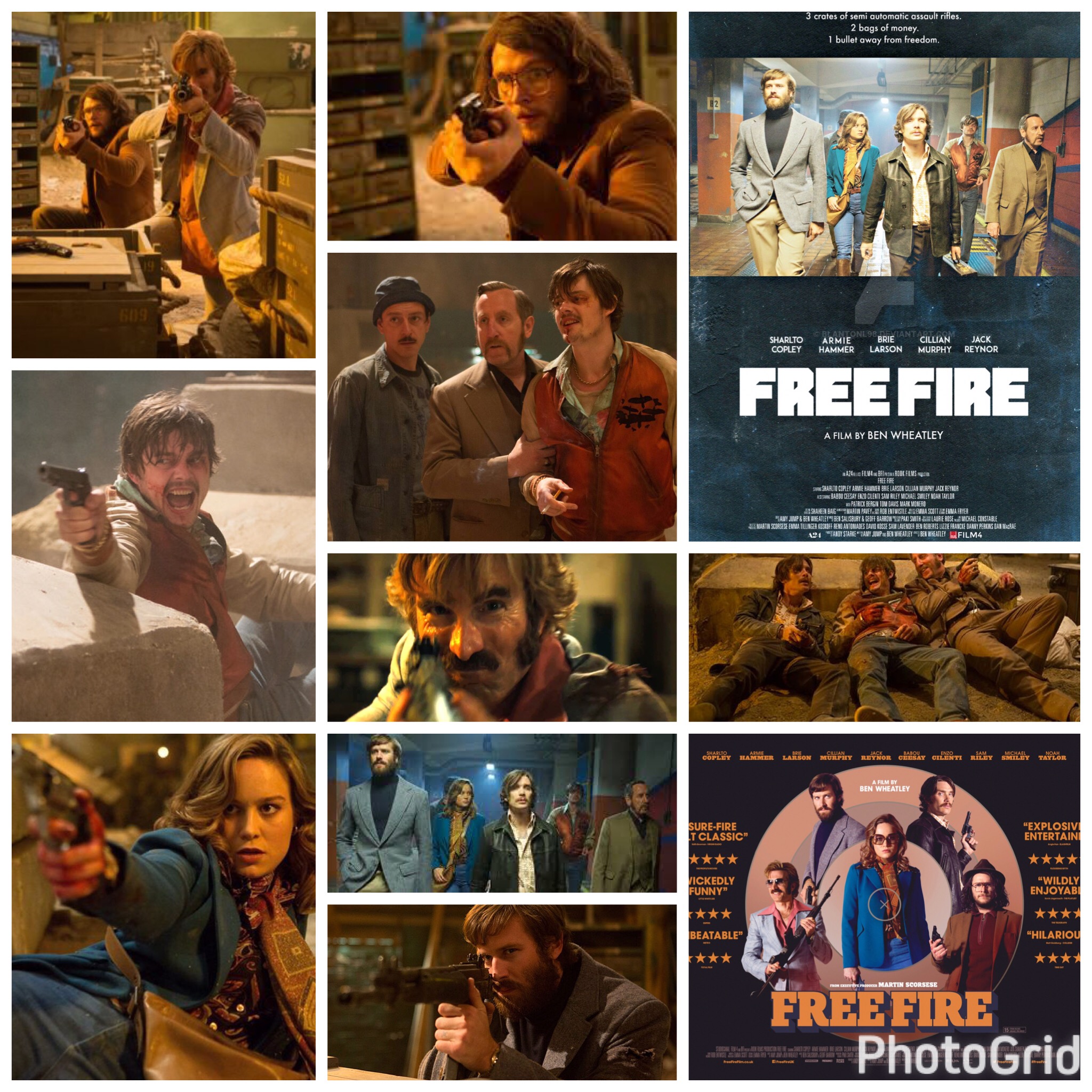
Ben Wheatley’s Free Fire


How many shady, degenerate 70’s era Boston lowlifes does it take to screw in a lightbulb? Doesn’t matter, they’re too busy shooting at each other, the lightbulbs and everything that moves in Ben Wheatley’s Free Fire, the best film of the year so far. After an arms deal gone royally wrong, we get to spend a joyous, breezy hour and a half watching these halfwit scumbags blast each other to kingdom come in a not so abandoned warehouse, unfolding in real time and at a pace that has our pulses racing faster than the magazine clips can defecate shell casings. Wheatley’s output hasn’t been my cup of tea so far, but he’s won me over with this lighthearted, ballistic mini-masterpiece. It’s what I call a ‘low concept high concept’ flick, which I’m sure someone has said before, but suck it. A bunch of childish idiots in a roomful of heavy artillery, the bullets are bound to soon be flying as fast as the dry insults. The deal is simple: meet, sell a bunch of rifles to help the IRA cause, and be on their way. That’s not to be the case though, for as soon as one of them recognizes another party’s member from a violent scuffle prior, tensions mount until that first shot rings out. From there on in it’s a ‘childish game of paintball’ (to quote a friend) that escalates into a deafening fire fight filled with acidic humour and John Denver music, a hilariously counterintuitive soundtrack choice. Armie Hammer is priceless as Ord, cool as a cucumber and constantly lighting up joints mid-gunplay. Sharlto Cooley chews scenery as Vern, the preening peacock of the group, Brie Larson kicks ass and takes names, Cillian Murphy underplays the IRA consort while Michael Smiley, the butt of the geriatric jokes, gets in everyone’s face even before things go south. Patrick Bergin, Babou Ceesay, Noah Taylor, Enzo Cilenti and Jack Reynor also get their licks, but the performance of the film goes to Sam Riley, a criminally overlooked talent who’s been laying somewhat low recently. His character Stevo is indirectly the reason for all this mayhem, and he’s a walking disaster, the sleaziest little reprobate you can imagine. Riley plays him balls out and doesn’t hold back, I really wish we saw more of him in films these days. All of these bozos positively ventilate each other with bullets, no one not sustaining at least two or three gunshot wounds somewhere on their body, and once the Reservoir Dogs esque conclusion rolls around, we know that few will be left standing. Clocking in at a rapid fire ninety minutes, this is surefire entertainment for not only action fans, but anyone who loves movies, it’s a perfect example of the reason I go to the theatre. Cheerfully violent, casually profane and hysterically unapologetic. Just the way I like em’.

-Nate Hill

Terry Gillian’s The Imaginarium Of Dr. Parnassus


Terry Gilliam films almost always feel a bit slapdash and chaotic, it’s just the guy’s calling card to have a modicum of organized mayhem filling the fringes of whatever project he delivers. With The Imaginarum Of Dr. Parnassus, that is probably the case more so than any other film he’s made, and despite letting the clutter run away with itself a bit too much, it’s still a dazzling piece. Of course, your movie will always have a disjointed undercurrent when your lead actor passes away halfway through production, but that’s just the way it goes, and Gilliam finds a fascinating solution to that issue here. Imaginarium is in many ways a companion piece, in spirit, to The Adventures Of Baron Munchausen, a film he made decades earlier, both containing a sort of baroque, Da Vinci-esque splendour and sense of fantastical wonder. Christopher Plummer hides behind a gigantic Dumbledore beard as Parnassus, a magician extraordinaire who travels the land with his daughter (Lily Cole, that bodacious Botticelli bimbo) and circus troupe, including Verne ‘Mini Me’ Troyer. Years earlier he made a pact with the devil (Tom Waits, an inspired choice) using his daughter as collateral, and now Old Nick has come to reap the debt, causing quite the situation. The story is a hot mess of phantasmagoria and kaleidoscope surrealism thanks to the Imaginarium itself, a multi layered dimension-in-a-box that accompanies them on their travels. Things get complicated when they rescue dying lad Tony (Heath Ledger) who somehow ties into the tale as well. Now, this was Ledger’s very last film, its future left uncertain after his passing, but help arrived in the form of Johnny Depp, Jude Law and Colin Farrell, swooping in to play doppelgänger versions of Tony as he bounced from one plane of the imaginarium to another with Cole in tow, always one step ahead of Waits, who is a rockin’ choice to play the devil, smarming and charming in equal doses. It’s kind of a huge melting pot of images and ideas hurled into creation, but it’s a lovable one, the fun you’ll have watching it reasonably eclipses lapses in logic, plotting and pacing. 

-Nate Hill

London Boulevard 


Pains me to say this, but London Boulevard is a whole lot of nothing. Like, a disgraceful amount of nothing when you step back and look at the talent involved. I read a review on IMDb saying that “every element of this film is so right, but how did it end up so wrong?”.. Sad to say, I couldn’t agree more. This is one unfocused, meandering, royal catastrophe. Where does the blame lay? Who can say, really.. I don’t want to lay it on the director, even though his only other feature, Mojave, was pretty dismal, but he’ll find his groove. The cast is capable and willing, none of them totally phoning it in. No, I feel like it’s the script, a botch job of a story consisting of scenes mired in a never-ending doldrum where nothing ever really goes anywhere and the characters get caught up in the purgatorial nonsense of it all. Colin Farrell is a tough guy who is hired to act as pseudo-bodyguard to a reclusive, neurotic film star (Keira Knightley), after which all sorts of freak occurrences and oddball Brit-bag characters get in the way. He’s got a wayward sister to protect (Anna Adriel), a volatile partner in petty crime (Ben Chaplin) a nosy DI on his trail (Eddie Marsan) and all these chess pieces converge upon the arrival of London’s most fearsome crime boss (Ray Winstone), who has a bag of bones to pick with Farrell for a number of different and equally muddled reasons. Winstone tries to pull him back into the game with vague homoerotic intimidation, Knightley wistfully wallows in depression with her druggie friend (David Thewlis, looking like he forgot to read the script) and hides from paparazzos, the story clumps along missing every beat and wasting a decent score as well as some stylish flourishes on events that no one seems to care about, least of all the audience. Perhaps that’s why Farrell scowls his way through the whole thing, and not in a smouldering, potent way either, more like a confused, begrudging participant in a pointless exercise. They really should have gotten their shit together a little more with a cast and budget like this, found a better script and given us something worth seeing. Instead we’re given the cinematic equivalent of a pocket of lint, promising on the outside before we look in, ripe with potential but filled with nothing remotely worthwhile once we look inside. Shame. 

-Nate Hill

John McTiernan’s Nomads


John McTiernan’s Nomads is one of the best, and most unconventional horror flicks that you’ve never seen. Nestled so far back into the 80’s that it stands as the mile marker for Pierce Brosnan’s first onscreen leading role, it’s a beautifully tense, atmospherically crafted fright flick that’s been lost to the hazy aeons of time. Unique in it’s ambiguity, this is a film bereft of bells, whistles, gore effects or even obviously spooky apparitions, relying solely on mood to impart illusory menace that’s never shoved in your face of spoon fed. Brosnan plays a French (hon hon) archeologist who begins to suspect he’s being followed by a group of unruly urban punks which, upon further introspection, could possibly be the malevolent spirits of a now extinct tribe he discovered years ago. It’s a vague, very weird concept, but it just somehow works, the presence of these grimy streetwalkers inciting palpable fear at the thought that they’re not what they seem at all. Opposites are at work here; by showing nothing, the filmmakers tell us and make us feel everything that is unseen, daring us to imagine what these mysterious beings might actually be, unsettling us further by having them appear in such benign (relatively speaking) form. It’ll frustrate many, but those tuned into the film’s eerie frequency will get the same chill down their spine that Brosnan perpetually walks around with, harassed no end by these meanies. The actors for these things are all especially chosen as well, each coached beautifully by McTiernan to act just normal enough to blend into the derelict fringes of an urban environment, while giving their demeanour an unnerving esoteric aspect, until they seem like a cross between mute versions of the Near Dark gypsy vampire clan and spectral coyotes. Brilliant concoction of subtle horror, clammy tension and gorgeously layered atmosphere.

-Nate Hill

Solace


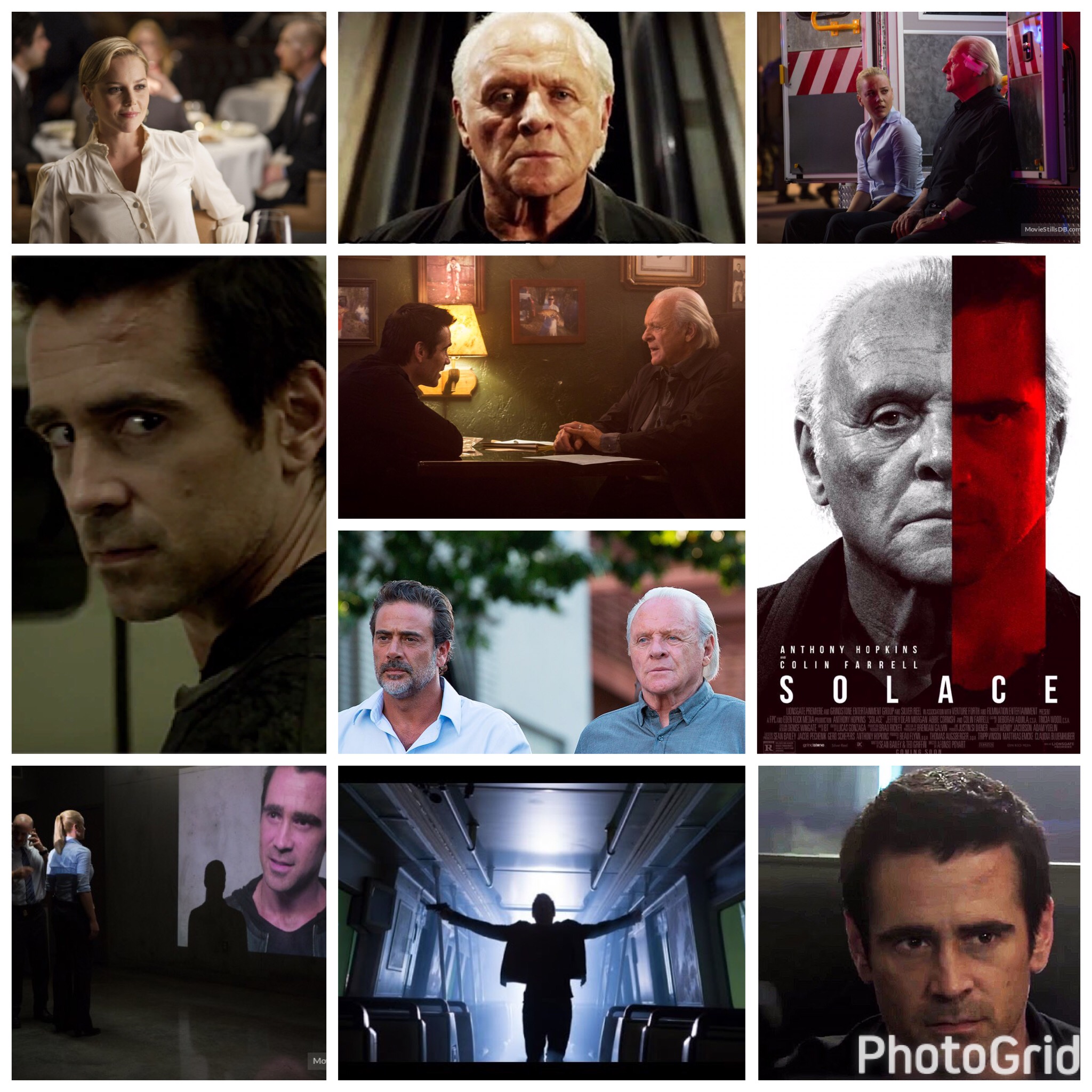
Serial killer films are a dime a dozen. Literally, you can’t browse ten titles in a thriller subcategory without running into at least, like, three. Within this ever popular area, there’s also the ‘psychic assisting law enforcement to catch a killer’ motif that pops up now and again, more so on television than film, but it’s there. Solace takes a crack at that, and speaking of that particular idea, the first thing I was reminded of was NBC’s Hannibal. This is one stylish flick, in the same way the series is abstract, using sharp, slow motion close ups paired with crisp audio to create a surreal image of something mundane, clues in a seemingly innocuous environment. Anthony Hopkins plays the clairvoyant here, a guy with demons in his past who sometimes consults on cases with his longtime FBI friend (a haggard looking Jeffrey Dean Morgan). There’s a new killer in town, town being Atlanta, one that causes Morgan to drag him out of consultation retirement and have a go at the case, along with his rookie partner (Abbie Cornish, turning in one damn fine performance). Not all is as it seems here, and when the murderer does finally show up it’s clear that he isn’t your garden variety serial slasher, and has an agenda that goes deep into some moral issues, the one place where the script strives for depth beyond the procedural template. He’s played by Colin Farrell of all people, which is a perfect example casting against type that works. Usually it’d be some sinister looking character actor or genre snake playing the role, but by giving it to a leading man of Farrell’s caliber, they’ve achieved some gravity, and he’s brilliant. Now, this isn’t what I’d call a great film, it has it’s inconsistencies, multiple snags in pacing and one convoluted plot for the first two acts. But it’s quite the fascinating effort, one with a dense, thought provoking story to tell, every performer pulling their weight impressively. And like I said, there’s style to go around.  

-Nate Hill