Scott Frank’s The Lookout


Scott Frank’s The Lookout is a film where every turn of plot, exchange of dialogue, set piece and stylistic choice just seems to mesh flawlessly, resulting in a package that’s nearly as perfect as you can get. Part psychological character study, part crime thriller, sewn together lovingly by threads of brilliantly written, intelligent interpersonal drama that seems lived in, the writer never uses the pen to pander nor patronize, but provides well drawn, realistic human beings who sound like actual people and not archetypes dwelling within the pages, never fully realized. Joseph Gordon Levitt plays Chris Pratt (not actual Chris Pratt lol) a young hotshot who becomes the victim of his own cocky, self destructive behaviour. After a horrific car accident that was entirely his fault, his girlfriend is left maimed and he a busted up shell of his former self, saddled with bushels of brain damage and the inability to cohesively live his day to day life the way he did before. It’s some sort of synapse frying neurological scarring that’s never fully explained, but the symptoms are clearly and fascinatingly outlined in a way that no other film has really tried before. He’s left somewhat adrift in life, naively attracted to his foxy psychiatrist (Carla Gugino), misunderstood by his parents (Bruce McGill & Alberta Watson), and cared for by his eccentric, blind and motor-mouthed roommate (Jeff Daniels, a standout as always). He happens to be from a small midwestern town though, and in movie land these burgs are almost always filled with schemes, heists, double crosses and feed store robberies. ‘Bro seduced’ by an equally suave and shady dude (Matthew Goode, whose work here lives up to that surname and then some), Chris is shanghaied into assisting in the hold up of the very bank he works at, and soon the kind of hell that would make the Coen brothers applaud breaks loose. Everything makes sense though, the jigsaw pieces of the narrative nestling flush against one another, not a beat feeling out of place or in danger of derailing the whole thing. That’s not the easiest thing to achieve, especially in a taught running time that clocks in under two hours and still manages to feel substantial. Levitt is terrific, a guy who used to be in control, used to be revered as the alpha who takes care of things, his condition worsened by the knowledge that people know full well how broken he is. The stakes are inherently high when someone that set back by life must navigate their way through the complex ins and outs of pulling off a bank heist. One hell of a film.  

-Nate Hill

Hector & The Search For Happiness


I’ve read a lot of reviews for Hector & The Search For Happiness, and there’s a common, and fairly petty gripe that seems to be a theme throughout them, pissing me off no end. In the film, Simon Pegg plays a wealthy psychiatrist with a solid career and a beautiful wife (Rosamund Pike). Deep down though, he feels empty, unfulfilled and as if something is missing, and embarks on a spontaneous, unplanned global voyage to essentially search for the meaning of happiness, or at his own on the smaller scale. Now, a few critics have this whiny sentiment that because he’s well off, stable and lucky in life (I won’t even use the dreaded ‘P’ word), that it’s somehow offensive to see him search for more, or find himself unhappy. He ventures forth to places like Tokyo, L.A. and Africa in his travels and it seems to be some consensus that because he runs into people from third world areas who haven’t been dealt as lucky a hand as he has, materially speaking at least, that he has no right to complain or contest his position or mindset in life. Absolute butthurt. Everyone on this planet, be they billionaires, orphans, middle class mothers, movie stars or refugees, everyone is going through their own private set of problems and inner turmoil, and no one has the right to so blindly insist that some people’s problems, mental and/or material, matter more than others just because they have more money or resources than. The richest, most capable individuals could be going through hell on the inside, and they deserve to be acknowledged and sympathized with just as much as anyone else. Grow up. Now that my rant is over, on to the film, which is somewhat of an oddball and not easy to define, genre-wise. The posters and trailers make it out to be one of those quirky ‘find yourself’ comedy dramas where some plucky misfit goes on a journey, meets various archetypal characters and discovers a bunch about themselves, until the inevitable revelation that caps their story. Well, it is that, and it kind of isn’t as well. It’s certainly structured like that from beginning to end, but at times it gets quite dark, more than merely momentarily, and has far more of a brain in it’s head, both in terms of script and technical execution, than you would see coming. Pegg feels adrift in his profession, smothered by his doting but high maintenance wife and needs that leap into the unknown, which he takes. His first encounter is with a cynical hotshot businessman (Stellen Skarsgard), a man who lives in planes, airports, hotels and nightclubs, filling his time with life’s pleasures and the power of commerce, yet fully aware of what else he’s missing out on, perhaps the reason he is drawn to Pegg’s character. Over to Africa next, where he spends time with relief workers, to see if fulfillment can indeed be found in selflessly aiding others, but things turn intense when he’s captured by scary rebels and somewhat befriends a volatile arms dealer (nice to see Jean Reno, who’s been laying low these days) with a sad secret of his own. His trip takes him to the states, where he reconnects with an old flame (Toni Colette), no doubt allured by the sweet promise of nostalgia, a powerful force that doesn’t always yield happiness when adhered to. A loopy self help guru (Christopher Plummer), Skype sessions with Pike back in England and other encounters beset him, and in the end we wonder what the point of it all was, but this is his journey, not ours. I like that it doesn’t necessarily follow a blueprint that we’re used to, moves forward in fits and starts, meanders a bit, even veering into thriller territory briefly, his path truly an unforeseeable one that could lead anywhere based on chance, timing and the decisions he makes. That’s the mark of a good script, one that surprises and confounds in the best possible of ways, and shirks all labels applied to the final product, arriving on our screens as something just weird enough to be memorable and just this side of accessible in order to not be too much of an off-putting black sheep. Interesting stuff. 

-Nate Hill

The Crow: Salvation 


Now let’s be real, there’s only one good Crow film. They were just never able to catch that midnight magic again, though they tried, with four more films and a dud of a tv series. Each of the sequels is nearly the exact same as the first, in terms of plot: a man is killed by feral urban thugs, only to be resurrected one year later by a mysterious crow, blessed with invincibility and begins to work his way through the merry band of scumbags in brutal acts of revenge, arriving at the crime lord sitting atop the food chain, usually a freak with vague ties to the supernatural or occult. All the films in the series are structured that way, but only one deviated and tried something slightly different with the formula. City of Angels, the second, is a boring, almost identical retread of the first, it’s only energy coming from a coked up Iggy Pop. Wicked Prayer, the fourth, had a premise with potential aplenty, and turned out so maddeningly awful I’m still dabbing the blood from my eye sockets. Salvation, however, is the third entry and almost finds new air to breathe by altering the premise slightly. Instead of lowlife criminals, it’s a posse of corrupt police detectives who frame an innocent dude (Resident Evil’s Eric Mabius) for crimes they themselves committed, fry him to a crisp in the electric chair and get off scott free. His girlfriend (Jodi Lyn O’Keefe) is also killed in the process. Now, not only is it cops instead of criminals, but the arch baddie at the top of the pile is the police commissioner, who has occult written all over him. *Not only* that, but he’s played by Fred Ward, who is brilliant in anything. While nowhere near an iota of the atmosphere or quality of the first film, this one works better than any of the other sequels, thanks to that spark of an idea that changes the game ever so much. The detectives are a nice and skeevy bunch too, played by the reptilian likes of William Atherton, Walton Goggins and others. Ward wears the starched, proper uniform of an authoritative figure, but his eyes gleam with the same secrets and dark magic we saw in the two other previous underworld kingpins, Top Dollar (Michael Wincott) and Judah Earl (Richard Brooks), but it’s that contrast that takes you off guard and makes things more intriguing. And as for Eric, does he hold his own with the others who’ve played the role? Mabius he does, Mabius he doesn’t, you’ll just have to watch and see. He definitely knocks Vincent Perez out of the park, that silly Frenchman. Real talk though, no one will ever dethrone Brandon Lee, not even whatever piss-ant they get for the remake that’s been hovering on the fringes of preproduction for the last half decade. On top of it all we also get Kirsten Dunst, of all people, as a sympathetic attorney who works alongside Mabius to clear his name, as he clears the streets of no-good crooked cops. So there you have it. If you ever find yourself meandering around the kiosks in blockbuster, and see the Crow films lined up on the shelves like emo ducks in a row, the first film will naturally already be rented out. Where then to turn? You can certainly do worse than this one. 

-Nate Hill

B Movie Glory: Minotaur 


If you ever find yourself in conversation with Tom Hardy at some cocktail party (one can dream), Minotaur is the film you bring up to both flabbergast and embarrass him, if only for your own amusement. It’s one of those low budget sword & sorcery schlock-fests that the SyFy channel used to broadcast at two in the morning on sleepy Saturday nights, to serve as background noise for whatever hedonistic shenanigans are going on in the living room. It’s Tom’s first ever starring role, and therefore should never be forgotten, like those old camcorder tapes of kids learning to ride sans training wheels for the first time. The story borrows from the legend, adding its own lurid, t&a soaked flair that only SyFy can get just right. Tom plays the son of a Viking chieftain (a brief Rutger Hauer), who goes looking for his true love, one among a few of the village’s youngsters who get kidnapped every year by a freaky pseudo African tribe of weirdos who sacrifice youths to the mythical Minotaur, residing in rocky catacombs beneath their city’s surface. Led by supreme weirdo Deucalion (Candyman’s Tony Todd, hamming up every scene), who fervently wants to impregnate his own hot sister (chill, dude), and oversees this theatrical occult ritual with obscene relish. This is one of those creature features where you barely see the beast for the first two thirds of the film, save for a quick snaggle of fur or fang rushing by in the shadows, and suspiciously looking like a bearskin rug cello taped to antlers and a hobby horse. Hardy does get an eventual confrontation with the Minotaur late in the game and deep in the maze, providing a few schlocky moments that are worth the ride, but it’s silly stuff most of the time, scraping the bottom of a barrel that does lower than the maze of the bull. Totally tagging Tom in thee blog post though in hopes that he sees this and it brightens his day just a bit. 

-Nate Hill

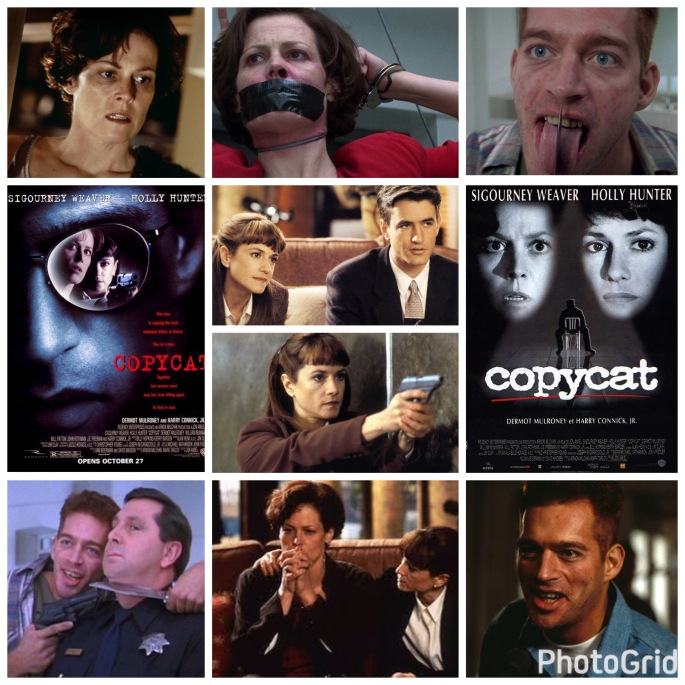
Jon Amiel’s Copycat


Jon Amiel’s Copycat is one intense piece of work, as tightly wound as razor wire and primed to stir up the adrenal glands. Sigourney Weaver contends with not one, but two extremely vicious serial killers a lá Silence Of The Lambs, with a bit of ass kicking help from spitfire Holly Hunter. Weaver is a clinical psychologist specializing in serial killers, and like most in her cinematic profession, just happens to be a serial killer magnet as well. After narrowly escaping a perverted maniac (Harry Connick Jr.), and assisting in his capture, she retreats to the sanctuary of her San Francisco penthouse apartment in a fit of agoraphobia following the trauma. But there’s another killer out there, one who meticulously recreates the crimes of others. Weaver is reluctantly coerced into helping to find him, and who better to help her than her old buddy Connick Jr.? He’s an odd choice to play this type of character, but he sells it with a sickly swagger and that off kilter grin, a much more lively performance than that of the actor playing the copycat killer. Holly Hunter provides the kick in the ass that timid Weaver needs to see the job done, but there’s danger around every corner, and the film earns it’s hard R rating with some truly uncomfortable bits. Along for the ride is veteran actor J.E. Freeman, Will Patton and good old Dermot Mulroney as fellow cops on the case. Not as instantly iconic or memorable as many in the genre, but takes what could have easily been generic trash and gives it life, style and a sense of real, sweaty danger. 

-Nate Hill

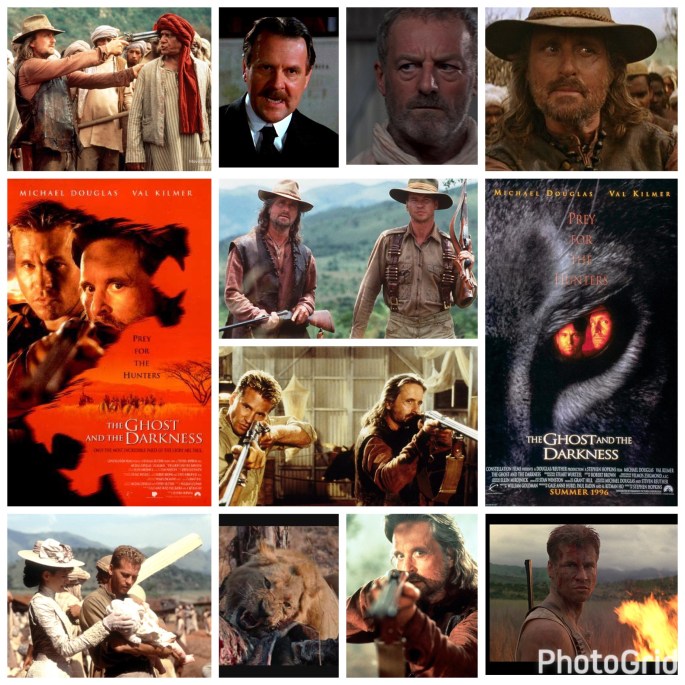
Stephen Hopkin’s The Ghost & The Darkness


Nothing beats the sheer adventurous spirit and eerie primal mythos that fuels Stephen Hopkin’s The Ghost And The Darkness. It’s a go-to comfort movie for me whenever I’m feeling down or stuck inside on a rainy night. It’s like a campfire tale told on a quite windless night on the Serengeti, and like all the best scary stories, this one has roots in fact. In 1898, production of the East Africa Railroad along the Tsavo River was stalled for weeks, the workers suffering repeated attacks from two savage, mysterious lions. Acting against instinct, killing for sport rather than food and disappearing back into the night as quickly as they came, they were so ferocious and relentless that locals gave the eerie nicknames “the ghost and the darkness.” The story has film written all over it, and Hopkins chooses the swashbuckling, Universal style horror route, and an irresistible tone. Val Kilmer, in his heyday, plays Patterson, an engineer sent by the boorish railroad tycoon Beaumont (Tom Wilkinson, chewing scenery like steak) to speed up production and pick up the slack in order to finish ahead of schedule. Not on the lions watch. He’s scarcely arrived when they begins their endless tirade of horrific attacks, forcing him to trust in the skills of leathery game hunter Remington (Michael Douglas), sort of like Van Helsing crossed with Indiana Jones. The film clocks in under two hours but it seems longer somehow, like we’re stuck with them in real time as the hopelessness of the situation sets into our bones, raising the stakes for our hunters and hammering home how terrifying an ordeal like this must be. Casting is on point here, watch for Bernard Hill as the sympathetic camp doctor, the late Om Puri and a brief early career cameo from Emily Mortimer as Patterson’s wife. Occasionally straying into the realm of melodrama is this one’s only fault, for the most part it’s a hair raising, nightmarish account of adventure and terror told with style, packed with atmospheres and primed to get pulses racing. 

-Nate Hill

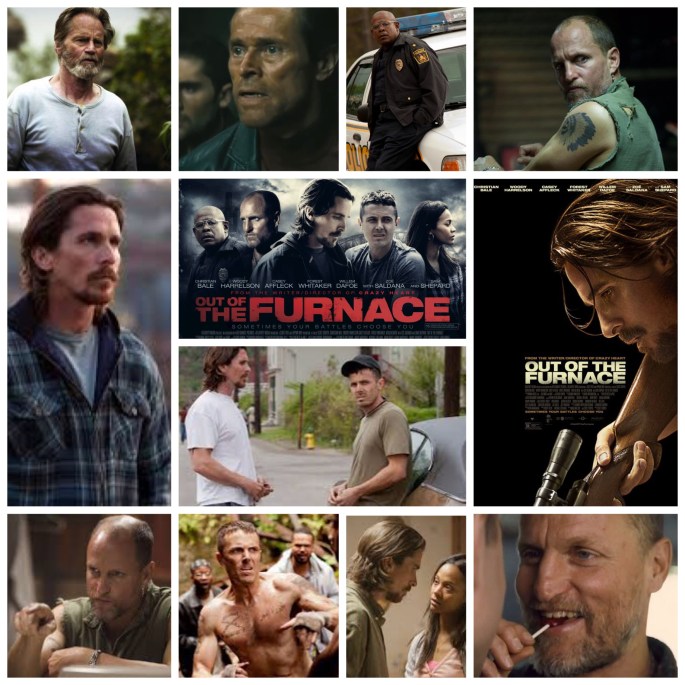
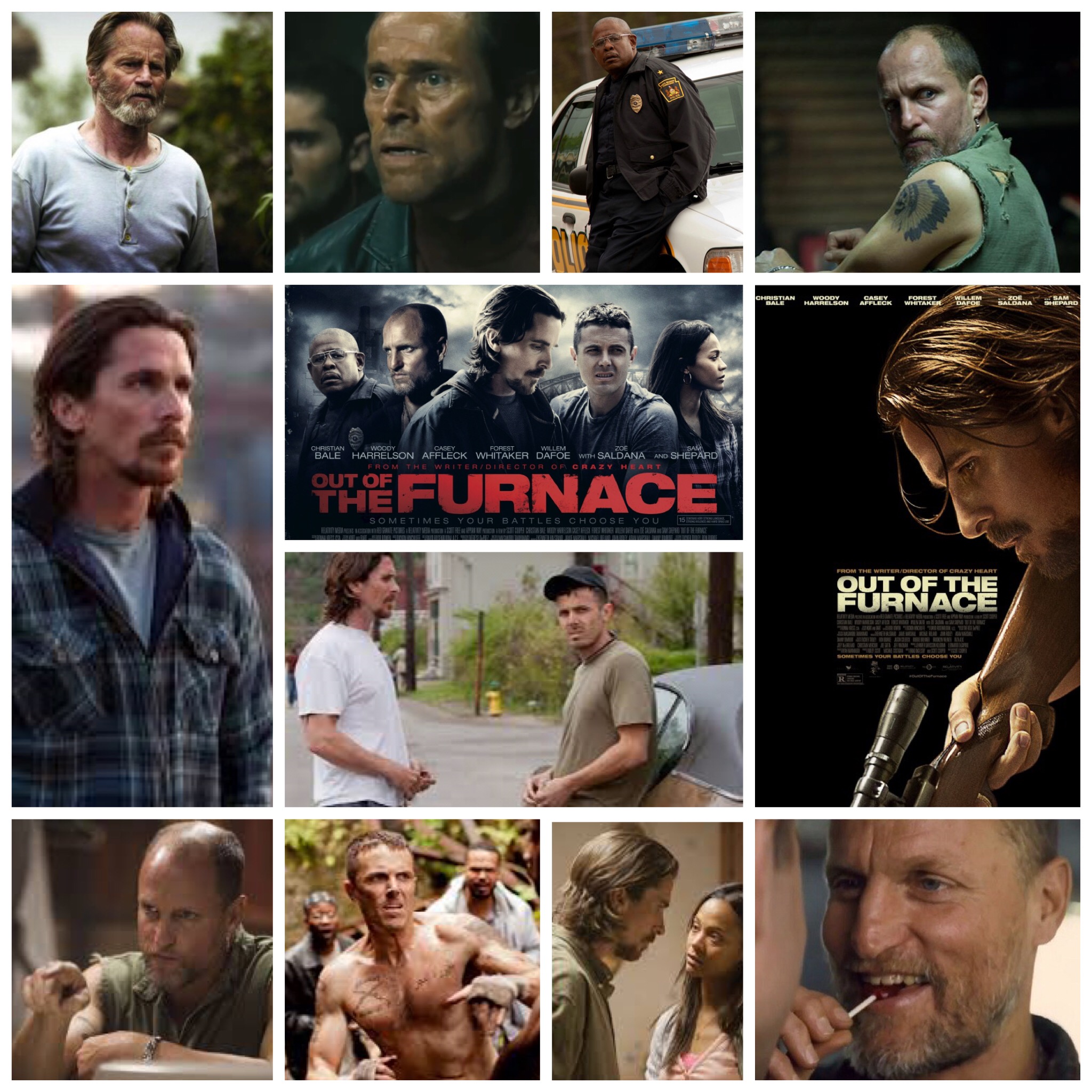
Scott Cooper’s Out Of The Furnace 


While not quite in the pantheon of powerhouse that the filmmakers intended it to be, Scott Cooper’s Out Of The Furnace is still a bleak, devastating picture. This is a film about endings, and not resolute, satisfactory ones either. Set in a borderline derelict mining town somewhere in the rust belt, industry has come to a grinding halt, giving way to the inevitable rise of rural crime, spreading like a cancer across land that once flourished and prospered. Every character in the film meets their bitter end somehow, and what’s fascinating is that earlier in life they all could have been more whole, and come from some other, brighter genre film, but the lives they’ve led set them on the same course as their county, and one by one we see them reach the last bend in the road, and the light in their life unceremoniously flicker out, leaving a cold shell. If I’m making this sound depressing, I’m doing my job well. This is a soul crushing film, with no light at either end of the tunnel and all glimmers of hope already extinguished before the opening titles even show up, so just make sure you have Finding Nemo or Wallace & Gromit queued up next in line if you give it a go. Opening with a prologue that leaves a bad taste in your mouth, you know right off the bat what you’re in for, as we’re introduced to Woody Harrelson’s Harlan Groat, an absolute monster who runs everything from underground fight clubs to an intricate web of meth trade in the region. Groat is at odds with steelworker Russell Baze (An implosive Christian Bale), a hard man with anger issues just looking for an excuse to get fired up. Russell’s brother Rodney (Casey Affleck in the film’s best work) is a broken Iraqi war vet who got on the wrong side of Groat’s gang, and has since disappeared. Since the law won’t venture into the near mythic backwood hills where Groat skulks, Baze goes vigilante, waging personal war and raging against a light that has long since gone dead. This is a big cast we’re looking at here, and some of the subplots either distract from the main show or just seem like overkill, like Zoe Zaldana as Russell’s ex who has since shacked up with the local Sheriff (Forest Whitaker), or an underused Sam Shepherd as his uncle Red. Willem Dafoe has a nice bit as a seedy but sympathetic local gangster though, it’s always nice to see him, as well as Tom Bower as the salt of the earth bartender. It’s all about Woody and the danger he brings, he’s terrifying in the most mundane of exchanges, and lethal when he gets worked up. The feeling of economic decay follows him like a noxious cloud, his brittle ruthlessness a mascot for the hard times that many a town in the US has fallen on in recent years. One need only look at the poster to see the obvious and intentional shades of Michael Cimino’s The Deer Hunter, and though the film wears its influences on its heavy flannel sleeve, it finds its own dark, despairing poetry, and leaves you gutted in the final, anticlimactic frame. 

-Nate Hill

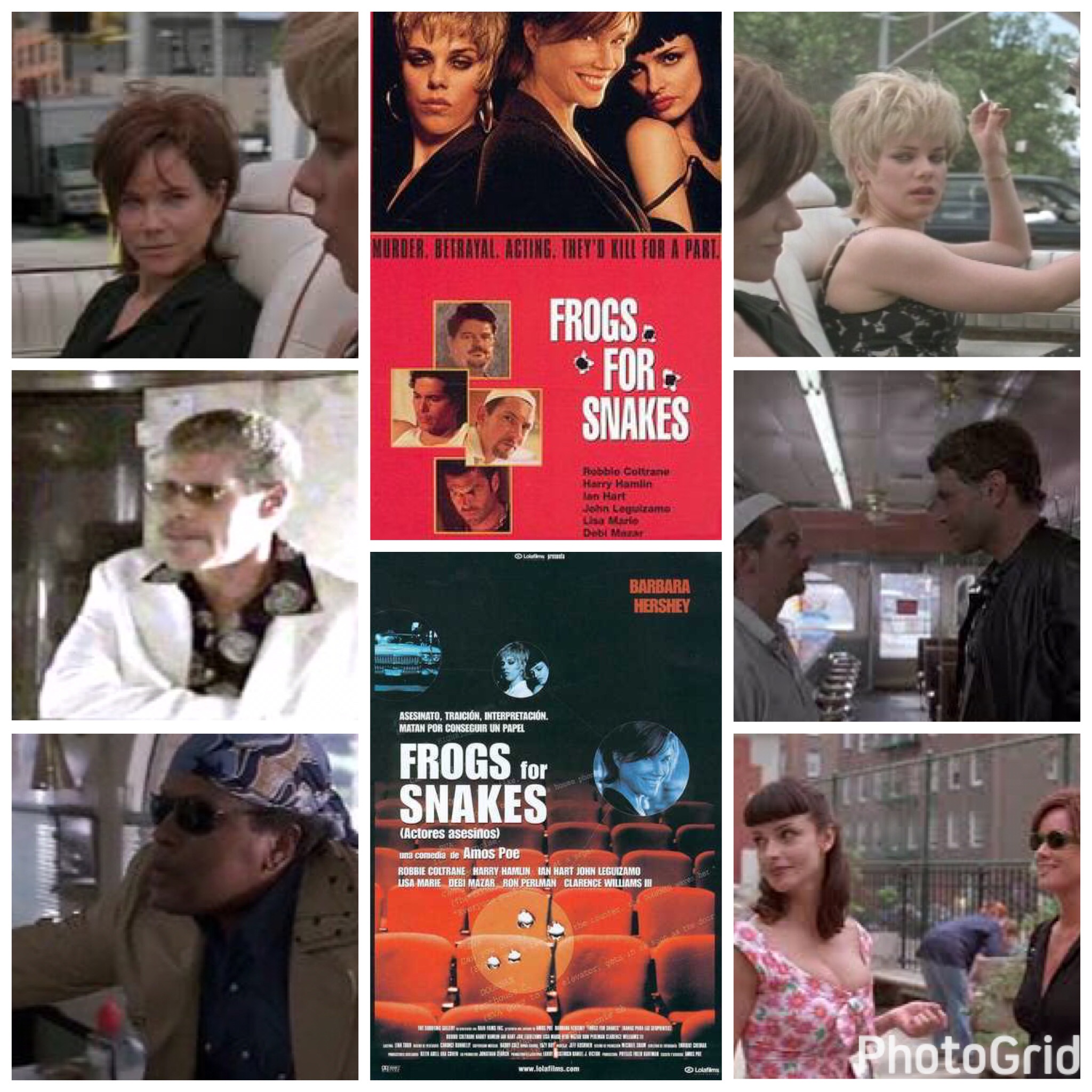
B Movie Glory: Frogs For Snakes


They say actors will literally ‘kill for a role’, and in the long forgotten, bizarre NYC set indie flick Frogs For Snakes, that’s the very concept. A handful of Bronx lowlifes all directly involved with criminal kingpin Al Santana (Robbie Coltrane, before he went all Hagrid on us), discover he is putting on a play, and promptly begin to literally murder each other for parts. Now, such a premise should provide a downright brilliant film, but sadly that’s not the case with this dreary gutterball. The possibilities are just endless, and all these miscreants do is just languish in alleyways, decrepit apartments and dive bars, monologuing about.. nothing much at all. It hurts when you have a cast this good in such fuckery as well. Al’s ex wife (Barbara Hershey) works as a debt collector for him, while she pines for her thespian boyfriend (John Leguizamo) who spends the majority of his scenes reciting overblown monologues that have nothing to do with the story, or lack thereof. There’s all manner of creeps and hoodlums running about like New York sewer rats, played by an impressive lineup including Harry Hamlin, Lisa Marie, Ian Hart, Clarence Williams III, Nick Chinlund and briefly Ron Perlman, but none of them have much to do and seem to aimlessly shamble through their scenes as if they were never given much of a script. Being the weirdo that I am though, I did get a sick thrill out of hearing potty mouthed Debi Mazar explicitly describe giving a blowjob to Coltrane’s character, a mental image I won’t soon erase from my head. It’s a whole lot of nothing for the most part though, and kinda makes you wonder how the thing ever got green-lit, let alone attracted such talent. If the film itself were a play, it would be run out of town on opening night. 

-Nate Hill

Zach Snyder’s Sucker Punch

I’m already giggling picturing the cries of protest that will rise up when I post this review, but the hell with it, I really like Zach Snyder’s Sucker Punch. I never deliberately play the contrarian, I just seem to often gravitate towards films that have been maligned by the masses, and I can’t really help it. Now, in this film’s case, a few of the many and varied negative criticisms are somewhat warranted, yet blown out of proportion when you really take a good look at the story. The film is pure style, and although Zachary might have let his imagination run a little wild and clutter the whole affair with fanboy fantasies and video game visuals, there is a clear and discernible story beneath if one cares to look. Now, the only way that story is entirely comprehended is by watching the extended director’s cut, which includes an absolutely crucial, pivotal scene that’s should have never, ever ended up on the editing room floor for the theatrical version. Seriously, they we’re straight up asking for hostility and confusion by not keeping it in every cut of the film, it’s just common sense. Speaking of story, here we go: the film opens in breathless style and classic patented Snyder slo mo, with young Baby Doll (Emily Browning) trying to save her little sister from their tyrannically abusive stepfather. Outsmarted and shipped off to an austere mental institution, her journey is a sad, surreal and somewhat befuddling one, but there’s a method to the madness that might not be clear with only one viewing of the film. The asylum she is sent to is plagued by a sinister orderly (Oscar Isaac) who is abusing the girls in his care, and as a result, Baby Doll channels such horrors into a grandiose set of fantasy worlds, the base of which rests on a burlesque style brothel where she and others work for volatile pimp Blue (also Isaac). Joined by Amber (Jamie Chung), Sweet Pea (Abbie Cornish), Rocket (Jena Malone) and Blondie (Vanessa Hudgens), she blocks out the reality of what is happening and replaces the details of an elaborate, systematic escape attempt with impossibly epic, highly stylized adventures, each of a different theme or set in a vaguely familiar period of history. Battling medieval dragons, giant samurai golems with mini-guns, WWI zombie hordes in a gaunt, bombed out European landscape, it’s all a detailed rush of sound and fury that hits you like a ton of bricks, and although is far too much for the film to handle and still get its point across, it’s completely dazzling stuff, especially on Blu ray. Guided by a mysterious Wise Man (a kickass, rootin tootin Scott Glenn) who shows up in a different get up each time and mentored by brothel Madam of sorts Vera Gorski (Carla Gugino), each setting holds the key to move along a certain cog in their plan, correlating back down the line of delusions straight to the asylum, if a little tenuously. Now it all hinges on the arrival of the High Roller (Jon Hamm), a rich playboy who has come to the brothel to see Baby Doll dance, and probably more. Here’s where they fucked up royally: The scene I mentioned earlier is a monologue from him that is pretty much one of the most important parts of the film, capping off both realities beautifully, and without it, not only is Hamm relegated to basically a walk on extra, the entire final punch of the climax is rendered lost and neutered, not too mention quite uncomfortable in a sense. Whoever was in charge of that particular piece of the editing should be tarred, feathered and run off the studio lot by teamsters. With the scene left in on the extended version, however, the story is given both point and purpose, feeling like a complete vision with a little weight to go along with it’s Hindenburg sized bag of visual tricks. Not Snyder’s best for sure, but it’s in no way close to the turkey some people will have you believe it is. Whiners. Style over substance? Yes, I’ll definitely concede there’s an imbalance, but don’t try and tell me the whole thing is bereft of substance at all, because that is a lazily researched argument. The soundtrack is a treasure chest, I might add, with beautiful covers of Sweet Dreams and Sing Me To Sleep sung by Browning herself. 

-Nate Hill

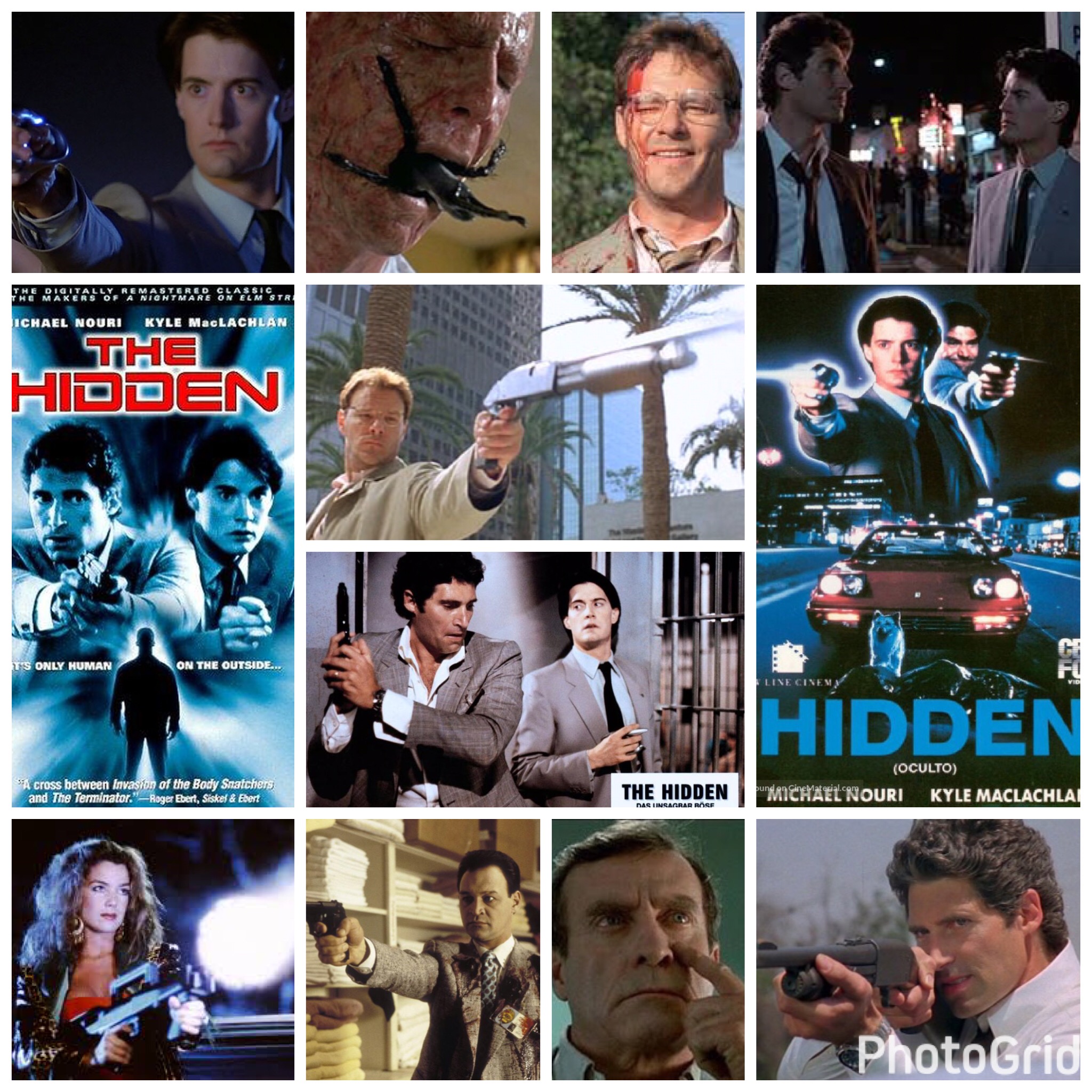
The Hidden


The Hidden is the kind of flick that makes you sit back, sink a little deeper into the couch, take a long swig of lager and nostalgically murmur “they don’t make ’em like they used to.” Maybe I was just born in the wrong era, but the 80’s and 90’s just seemed to hurl forth so many winners, unbridled genre bliss that only got better with age, worth the revisit every time. The effects were practical, the stories were told with love, care and inspiration and the action was real, hard hitting and built to last. This film one opens with what can literally only be described as a cinematic version of Rockstar’s Grand Theft Auto; we see a well dressed, determined man (Twin Peak’s Chris Mulkey in batshit mode) rob a bank, obliterate several police officers with a big honkin’ shotgun, steal a Ferrari, drive said Ferrari through a busy park, smoke a dude in a wheelchair at over a hundred clicks, lead the entire police force on an apocalyptic highway chase and cheerfully get ventilated in a hailstorm of bullets upon careening through their barricade. Case closed, right? Not for a mysterious FBI Agent (Kyle MacLachlan) who arrives out of nowhere and commandeers the case from the leading detectives (Ed O Ross and a wicked sharp Michael Nouri). MacLachlan knows something the force doesn’t, let alone would ever believe: there’s an alien running around inhabiting human bodies a là Body Snatchers, and going on hedonistic tirades of the worst possible behaviour, hence the shotgun tantrum in the opener. How does he know this, you ask? Because he himself is an alien in a Kyle suit, intrepidly pursuing the other one from a distant galaxy to halt it’s destructive shenanigans forever. It’s a premise that could have opened the door to all sorts of ooey gooey creature effects, but the film minimizes on those, choosing a few key moments to show the slime, and focuses mainly on glass shattering, guns blazing action, a neat recipe of three parts action with a tablespoon of yuck, if you will. MacLachlan, still very young at the time, anchors his performance with emotional heft, amusing aloofness and the necessary grit that can be found in his iconic portrayal of Agent Dale Cooper on Twin Peaks, and I was reminded more than a few times of that character while watching him in this. As the extraterrestrial nutjob moves from host to host, blowing everything up and leaving a trail of massacred people in it’s wake, the two of them race at every turn to catch up, and it’s Nouri who finds the seething anger one must get watching an outsider roll up and stamp all over someone else’s territory. The alien isn’t interested in world domination, resources or assimilation, it just wants to fuck shit up and have a good time, man. Blasting rock n’ roll music, gorging itself on steak dinners, stealing every Ferrari it can get it’s hands on and raiding the police evidence room for all kinds of heavy artillery, this thing doesn’t slow down for a second. This is the only film I know that paints off-earth visitors quite like this, just a gleeful, anarchic adrenaline junkie asshole, and I admire the brutal honesty, because I know of quite a few morons who would probably engage in the exact same behaviour, should they ever find themselves incognito and without consequences on an unassuming, far away planet. This one is pure screaming fun the whole way through, and should be every bit as iconic as other sci fi tales that are remembered more prolifically. Watch for the tiniest Danny Trejo cameo, playing (guess what) a prison inmate.  

-Nate Hill