Batman Forever: A Review by Nate Hill 

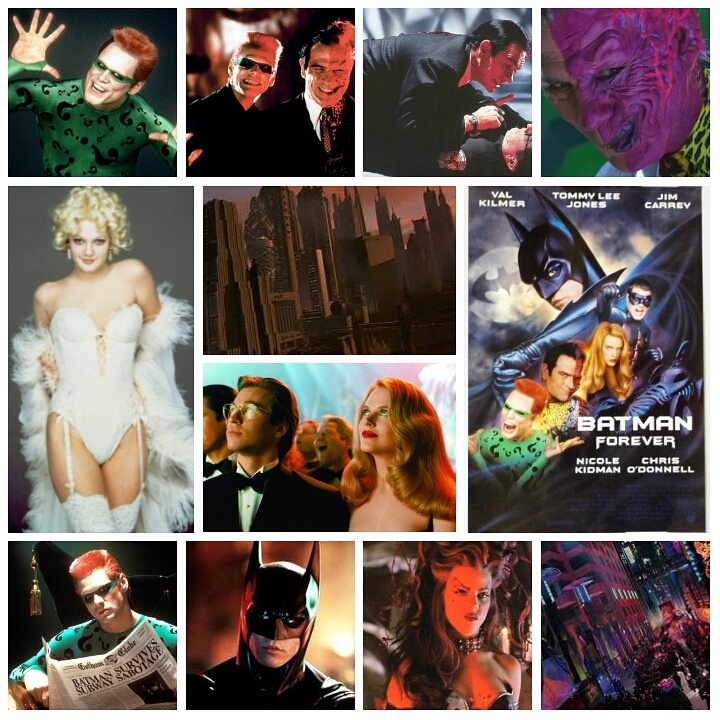
It’s true, Batman Forever is a silly, overblown, cartoonish riot of buffoonry.  But so what? It’s also awesome in it’s own way, and inhabits a certain corner of the Batman culture, the side of things that is rooted in camp and unhinged wonderment. Now, there’s an important and discernable difference between taking things far and taking things too far. That difference is delineated on one side by a willingness to be goofy, colorful and not take this superhero stuff too seriously. The other side of that of course is a disregard for limits, throwing every ridiculous line, costume and awkward scene into it you can imagine. I’m referring to Joel Schumacher’s followup to this, Batman & Robin. Everything that is weird, wonderful and extravagant about Forever just revved up to much in Robin, resulting in a piss poor typhoon of mania and over acting. Not to say that Forever doesn’t have over acting. Ohhhh boy is there over acting. Between Tommy Lee Jones and Jim Carrey, the thing is liable to give you epilipsy. But it somehow works despite its madness, a lucky stroke that Robin couldn’t have cared less about adhering to. Val Kilmer is the sedating antidote to Jones and Carrey, a remakably laid back Bats and a pretty solid casting choice, both as Brooding Bruce and Buttkicking Bats. Eternally broken up about the death of his patents, Bruce fights off Harvey Two Face Dent (Jones) in a garish, disarming Gotham City that resembles Mardi Gras in Dr. Seuss land. Jones’s Two Face is so far over the top, so rabid that it’s a wonder he didn’t give himself a bloody heart attack in the first take. Anyone who’s interested can read up on his performance, and how he pushed himself right to the heights of bombast in order to try and out-Carrey the Jim. Carrey, playing the Riddler, is a ball of twisted nerves himself, set loose on the wacky sets and basically given free reign to.. well.. go fucking nuts. It’s one of his most physical performances too, prancing around like a loon in green spandex that leaves nothing to the imagination. Aaron Eckhart’s Two Face may have had the edge for grit, but Jones has the rollicking clown version, and runs away to kookoo land with mannerisms that even call to mind The Joker in some scenes. The only thing I’ve seen him more hopped up in is Natural Born Killers, but shit man its hard to top his work in that. The story is all over the place, involving a nonsensical subplot with a mind control device, multiple elaborate set pieces, endless scenery chewing and the eventual arrival of Robin, played by Chris O’Donnell who is like the cinematic Buzz Killington. Michael Gough and Pat Hingle dutifully tag along as Alfred and Commissioner Gordon, both looking tired at this point. Debi Mazar and Drew Barrymore have amusing dual cameos as Two Face’s twin vixens, and Nicole Kidman does the slinky love interest shtick for Bruce as a sexy psychologist. Watch for an uncredited Ed Begley Jr. Too. There’s no denying the silliness, but one has to admit that the achievment in costume, production design and artistry are clear off the charts with this one, and visually it should be a legend in the franchise. Say what you will about it, I love the thing. 

Stephen King’s Firestarter: A Review by Nate Hill 

Film versions of Stephen King novels can be a tricky thing. Often they’re half assed,  clunky miniseries (ever tried to sit down and watch The Langoliers??), and when they’re given the lofty cinema treatment, he has famously turned his nose in the face of Kubrick’s might. I feel like Firestarter escaped unscathed, and still holds to this day, if a bit achingly retro now. It’s a thriller perceived in a childlike manner by its young protagonist, Charlie Mcgee (Drew Barrymore). Charlie can start fires with her mind, and certain shadowy agencies just can’t wait to get their hands on her. Her father (David Keith) once participated in some scary drug testing related to telekinesis back in the day, and some of whatever altered his DNA has been passed on to her. He will do anything to protect her, as the two frantically race across the country to safety, pursued by forces working for Hollister (Martin Sheen), a spook with too much power and nasty ideas about what to do with it. Also on their trail is pseudo spiritual whacko John Rainbird, who wants to absorb Charlie’s abilities, man what a freak. Rainbird is a native American in King’s novel, so white haired yankee boy Scott is an odd choice, but he does a fine job all the same. Two things are what makes this one really stand out in a special way. Tangerine Dream provides yet another ultrasonic, elemental synth score that has since become legendary. It accents the story in an almost fairy tale like way, gilding the danger with a fable style sound, but never stamping out the real menace. Barrymore is the other leg of the table, giving one hell of a fierce and vulnerable performance for such a young girl, her childlike honesty a prism for the audience to see the evil around her through innocent eyes. It’s great stuff, and one of the most solid King adaptations out there. Now there is a sequel (not sure if the man wrote a second book?) called Firestarter 2: Rekindled, which pales in comparison and runs about 45 minutes too long (!), but it’s worth a look for the casting of Marguerite Moreau as a grown up Charlie, Malcolm McDowell taking over from Scott as Rainbird, and Dennis Hopper as well. 

Best Men: A Review by Nate Hill 


Best Men is the most charming, dainty and innocuous movie about bank robbing that you’ll ever see. It’s premise revolves around a wedding party that unwittingly gets roped into a heist, but they’re all solid folks, including the perpetrator, and all just want the best for the happy couple they are celebrating for. Therein lies both the comedic and the touching moments, of which there are many, supplied by a diverse and very capable cast. A troupe of best men accompany a groom (Luke Wilson) on the way to his matrimonial bliss. One among them is a hotheaded adrenaline junkie named Billy (Sean Patrick Flanery, never more adorable). Billy has knack for robbing banks whilst reciting Shakespeare. Demands, commands, profanities. All in the Bard’s tongue. He brazenly holds up a rural branch and drags his friends in, including two others, an ex military stud (Dean Cain) and a squirrelly, pussy whipped Andy Dick. They soon find themselves trapped in the bank with law enforcement prepping a siege outside their front door and Wilson’s determined Bridezilla (a feisty Drew Barrymore) marching straight into the crime scene to furiously give her fiancé what for. Billy also has severe daddy issues, which probably led to him lashing out in such a theatrical fashion in the first place. Coincidentally, the local sheriff (Fred Ward) happens to be his Poppa, and the two face off in scenes which undermine the lighter tone and dig for pathos that’s worth pausing for. They’re threatened by a gung ho FBI agent (Raymond J. Barry) who wants to blow them to kingdom come so he can go to lunch. They also find themselves sequestered in the bank with a sketchy Viet nam vet played by a wicked funny Brad Dourif in quite the commanding little supporting turn. Amid the screwball roughhousing, him and Cain find a few aching moments of truth relating to Cain’s sexual orientation, and his shame regarding it. I love a light, harebrained comedy, but I love em even more when they take deep breaths between fits of lunacy to gift their characters with some gravity that makes you feel something besides your sides splitting. This ones sadly forgotten, and you should all give it a go, it’s a gem. 

Finding Dory: A Review by Nate Hill 

While Finding Dory is not the same magic that Nemo was back in 2004 (it’s hard to catch that kind of lightning in a bottle twice), it’s safe to say it’s it’s own awesome little movie, and as far as a sequel goes, passes with flying colors. It’s more or less structured the same way as the first in terms of plot, adding it’s own twists, new characters and a core message that relates to previous themes while intrepidly covering new ground. My only complaint is I wish it were longer. It seemed to be over in a flash, even for a reliably slim Pixar running time. It would have been nice to have an extra 15 or 20 minutes to flesh out a few scenes, and elaborate a bit more on one particular character. Even so, what we get is completely charming and inspired. It starts off pretty much where we left off, with Nemo, Marlin and Dory living happily on the reef, intercut with scenes featuring an infant Dory who is most likely the cutest little thing to ever be seen in a Pixar movie. It’s revealed that a long time ago she was separated from her parents (Eugene Levy and Diane Keaton), and has grown up lost, adrift and afflicted by her relentless memory disorder. When an interaction triggers memories of them, she sets off with Marlin and Nemo in tow, on a merry quest across the ocean to connect with her roots. A great deal of this one is spent in a Sea World like habitat, which is another change and leaves room for many more new jokes and creatures. An octopus named Hank (Ed O Neil) begrudgingly helps her out, as well as a nearsighted whale shark (Kaitlyn Olsen), and as beluga (Ty Burrell) whose echo location is busted, providing one of the best jokes. There’s also a couple of exuberant seals played by Idris Elba and Dominic West, a few returning familiar faces and an epic cameo by a huge star, dead panning the voice of the aquarium tourist announcer in classic Pixar good humour. The film stresses the importance of acceptance and resilience, putting forth the idea that someone with a debilitating condition can in fact find their own unique method of coping, and achieving their goals despite the symptoms of their ailment. Trust Pixar time and time again to take mature, lofty themes and mold them into totally relatable fables that never preach, and are distilled to a point where the little ones can absorb them right alongside their parents. Like I said before, the film needs a bit more padding in its narrative to feel complete, which may materialize in an extended dvd version. What we have here is brilliant enough though, and didn’t disappoint. 

Dark Blue: A Review by Nate Hill 


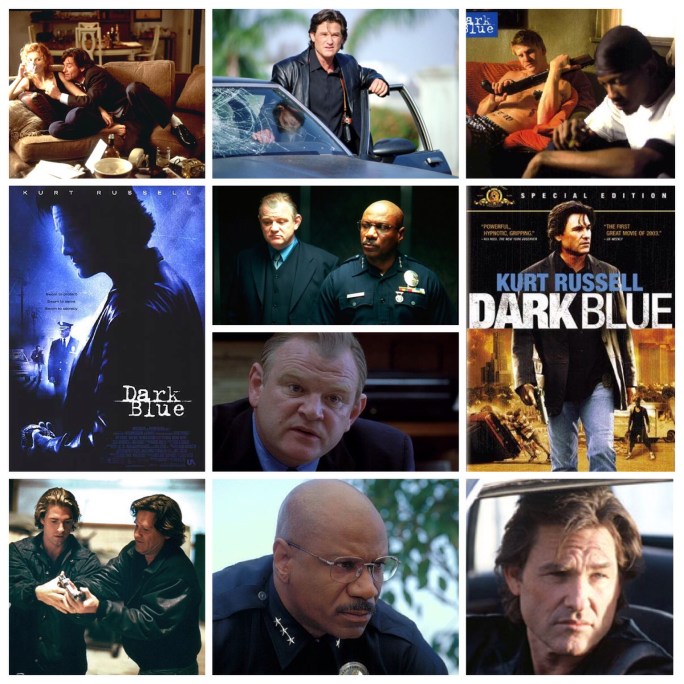
Dark Blue is the overlooked performance of Kurt Russsel’s career, and also the best. It’s also a film that brilliantly examines corruption, lies, brutality and abuse of power through a thoughtful narrative lens and via a powerfully moving story . So why then was it received with an unceremonious cold shoulder? Life is full of mysteries. I was too young to see it when it came out, or pay attention to the buzz surrounding it’s release, but I fell in love with it when I was older, and it remains one of my two favourite LA cop films, alongside Training Day. Kurt Russell throws himself headlong into one of the fiercest and most complex character arcs he has ever been in as Eldon Perry, an LAPD detective who comes from a long lineage of law enforcement. Eldon is a corrupt cop, but the important thing to realize about them is that they never consider themselves to be the bad guys which they are eventually labeled as. To him he’s on a righteous crusade, led by Captain Jack Van Meter (a purely evil Brendan Gleeson), a quest to clear the streets using any means necessary in his power. Eldon is blind to to the broken operative he has let himself become, questioned only by his wife (Lolita Davidvitch) and son, who are both thoroughly scared of him. The film takes place during the time of the Rodney King beating, with tensions on the rise following the acquittal of four LAPD officers. Ving Rhames is resilient as Holland, the one honcho in the department who isn’t rotten or on his way there, a knight for the force and a desperate loyalist trying to smoke out the corruption. Perry is assigned a rookie partner (Scott Speedman) and begins to show him the ropes, which include his patented brand of excessive force and intimidation. As crime ratchets up and a storm brews, Perry realizes that his blind trust in Van Meter and his agenda has been gravely misplaced, and could lead to his end. It’s a dream of an arc for any actor to take on, and Russell is seems is the perfect guy for the job. He fashions Perry into a reprehensible antihero whose actions have consequences, but not before a good long look in the mirror and the option to change the tides and find some redemption, before it’s far too late. It’s not so common anymore for crime films to cut through the fat of intrigue and action, reaching the gristle of human choices, morality and the grey areas that permeate every institution know to man, especially law enforcement. Working from a David Ayer screenplay based on a story by James Ellroy (hence the refreshing complexity), director Ron Shelton and everyone else onboard pull their weight heftily to bring this difficult, challenging, sure fire winner of a crime drama to life. Overlooked stuff.

John Singleton’s Rosewood: A Review by Nate Hill 

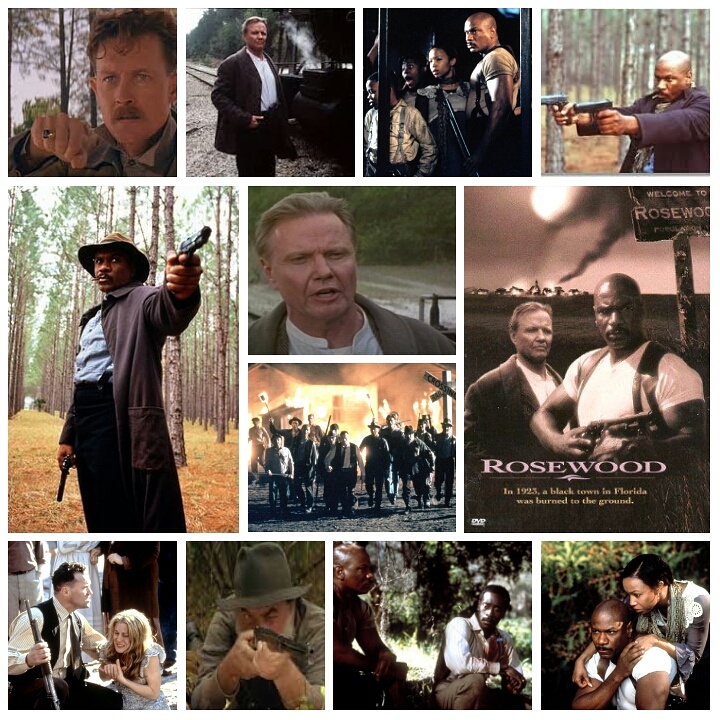
John Singleton’s Rosewood is a partly fictionalized, greatly dramatized retelling of one of the largest lynchings and subsequent conflicts in American history. The time is 1923, the place is Rosewood, a small southern town populated largely by African communities. When borderline insane local housewife Fanny (Catherine Kellner) is caught in the midst of a violent sexual fling, a young black man accidentally stumbles upon the scene. Being the crazy bitch she is, she melodramatically pins it on him, inciting the wrath of the town. The real culprit was of course a white dude, played briefly by Robert Patrick before fleeing the county for good. Because of this selfish misdirection, every white man and his mother now wants the boy hung, and it escalates with the speed of a prairie fire until a full scale race war rages through Rosewood. A lone mercenary called Mann (Ving Rhames) happens to be around and lends his quickdraw talents to the townsfolk who are being hunted. The sheriff (Michael Rooker) is somewhat of a pushover, and unable to quell the mob anyway, especially when it’s led by a rabid Bruce McGill, who is scary and then some. The only white boy who has anything but ropes or torches to offer these poor folks is a kindly store owner played by Jon Voight, who shelters a group of them on his property, much to the mob’s anger. Voight’s character is odd; when we meet him he is in heated coitus with one of his shopkeeps, a young African girl. It’s later revealed that she’s afraid of him. Despite this dark piece of his arc, Singleton treats him as a hero, begging the question, were there scenes cut that elaborated on his relationship with her? Such imbalances in tone can be found in the story as well: much of the film is treated with a combination of severe melodrama and true crime drama, speckled here and there with jarring little bits of pulp that feel like they’re from a Django type flick. Wouldn’t have been the narrative mix I would have used, but perhaps Singleton’s hand slipped and too much of an aspect fell in which he only ever meant as a subtle garnish. Nevertheless, it’s very solidly made, wherever it sits on the genre map, with all the actors, particularly the African townsfolk, shining nicely. It’s disturbing as well, with the black body count reaching sickening heights and the racist fever at a vicious spike in temperature. It’s a scary scenario when the hunters greatly outnumber the hunted, and mass deaths are imminent, especially when such anger is involved. Sympathy is earned in spades from the viewer, as well as the urge to look away at least a few different times. I haven’t done my research on the real story so I couldn’t tell you where it falls on the authenticity charts, but I suspect a great deal of it has been exaggerated for effect and impact. In that, it succeeds, if faltering in tone a few times to puzzle the viewer, before getting back on track. 

Green Room: A Review by Nate Hill 

Green Room has the same vicious, simplistic edge to it that director Jeremy Saulnier’s 2011 thriller Blue Ruin had, but sharpened and honed to near perfection this time around. This is one grim thriller, a claustrophobic little odyssey of desperate violence that’s thick with a sick, overwhelming atmosphere that isn’t for the faint of anything. A big part of what makes it work so well is the fact that it makes sense, in terms of scene to scene actions and character motivations. These aren’t cardboard horror protagonists darting through a predetermined rat maze of a narrative, these are real humans in a deadly situation who act accordingly, with both purpouse and realism. Atmosphere was a huge part of Blue Ruin, and now again Saulnier weaves a tense auditory cloak that puts the characters in the hot seat of danger and the audience in conniptions of suspense. It’s a situation straight out of a seething nightmare: a down and out punk band led by Anton Yelchin are on a dead end tour, severely strapped for cash and getting desperate. When a vague buddy hooks them up with a rural gig, they jump at the chance, until they find out they’re playing for a clubhouse full of angry neo nazi skinheads in a backwoods bar. Everything is going marginally well (as well as coexisting with nazis for a set could go, I suppose) until a member of their group accidentally witnesses one of these freaks brutally slaughter a girl, suddenly branding them all as witnesses. With nowhere to go, the band barricades themselves into the green room and descends into a collective panic as the reality of their situation sets in. Outside, an armada of furious Aryan psychopaths prepares to siege the bar and kill them, led by the clubhouse owner, Darcy (a wicked, malevolent Patrick Stewart, loving every second of a rare villain role). The film clocks in at a scalpel sliced 90 minutes, with not a second wasted on anything that doesn’t propel the story forward with the momentum of a machete ripping through bone. These dudes are out to get them at any cost, and the band in turn are whipped into an adrenaline overdrive of base survival instinct, using anything they can to dispatch their tormentors and escape. Yelchin does an excellent job of making their plight feel uncannily real, the terror emanating from every pore until there’s none left, and empty, deadly resolve sets in. Imogen Poots is great as one of the clubhouse girls, a no nonsense spitfire with revenge on the brain and the will to make it happen. Stewart chomps at the bit with an eerie calm and articulate, insidious presence, a genius casting decision and a joy to see in menacing action. I’m curious to see how much farther Saulnier can push the envelope with his next film, which I’ve heard will be the last entry in this episodic trilogy. This one shows us what a real thriller is, one that pumps your pulse to a boiling point and makes you glad there are filmmakers out there with the balls and creative know-how to make something like this happen. Just bring a thick skin, there’s a ton of graphic and very realistic looking violence. Unbelievably terrific stuff.

Paul Verhoeven’s Robocop: A Review by Nate Hill 

  
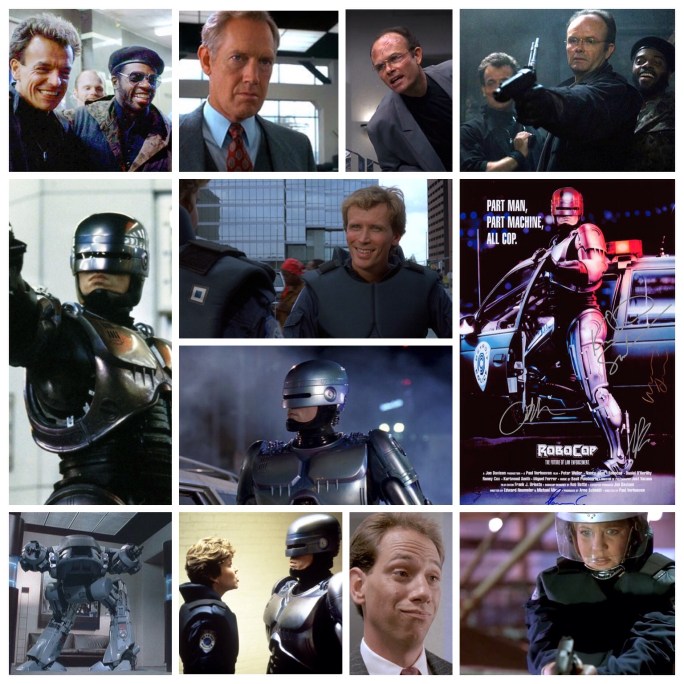
“Bitches, leave!!” I direct that sentiment towards anyone out there who thinks the remake of Robocop can hold a candle to Paul Verhoeven’s brilliant, incredibly graphic and bitingly satirical 1987 classic. Everything that was special and amazing about the original was absolutely pissed on with the remake, and it kills me that I run into people my age these days who aren’t even aware that the remake IS a remake, and think it’s the original Robocop. Ugh. Get out. No, this is the real, steel deal, accented by Verhoeven’s blunt approach to characterization and overly ultraviolent, near Cronenberg-esque flair for carnage. Peter Weller only gets to act as regular joe police officer Alex Murphy for a brief and chaotic prologue, but makes the most of it with his deadpan delivery and piercing gaze. Murphy is assigned to a precinct in the heart of Old Detroit, a district so corrupt, rotten and infested with crime it literally resembles a war zone, and cops wear heavy riot gear on their beat. Paired Nancy Allen, he beelines it for a suspicious truck leaving the scene of a heist. Only one problem: this particular truck happens to belong to evil arch criminal Clarence Boddicker (Kurtwood Smith) and his merry band of psychopaths, who are armed to the teeth with heavy artillery. Cornered in a warehouse, Murphy is brutally, and I mean fucking brutally dispatched by Boddicker and his gang, shredded by a hail of gunfire that turns him into raw hamburger meat. What’s left of him is quickly swooped up by corporate, and used in a high tech, absolutely silly program run by coked up suited opportunist Bob Morton (Miguel Ferrer). His idea has gotten in the way of nefarious plans put in motion by the top dog of the company, a maniac named Dick Jones played by Ronny Cox in a frighteningly funny turn that makes you terrified in between fits of giggles. Once Murphy has been through Morton’s wringer, Robocop emerges, an epic, unstoppable android enforcer who lays waste to criminal scum all over town, until traces of Murphy’s consciousness bubble up past the circuit boards and he gets his own agenda. Jones is determind to take him down, along with Morton, undermining The Old Man (Daniel O’Herlihy), the acting CEO. For a film called Robocop that came out in 1987 you’d think were in for a cut and dry action cheese fest. Not with Verhoeven at the helm. The Dutch madman is never one to play it safe (a refreshing trait among European directors) and pulls out all the stops here for a bloody good time that pauses ever so slightly to nudge you with its cynical side that just loves to bash social convention into oblivion. The effects are so 80’s you’ll swoon, especially when Jones’s own robo creation shows up in clanking, drunken stop motion that you can practically reach out and touch. Smith is a homicidal wonder as Boddicker, the smarmy fury and unrestrained behaviour hijacking every scene he’s in. Leland Palmer himself, Ray Wise plays Leon Nash, his equally dastardly second in command, and a host of gnarly character actors back them up, all of which have curiously guest starred on Fox’s 24 at various points in time, including Weller too. The level of fucks given with this film goes into the negative region of the thermometer, and to this day few studio films have been able to boast such disregard for discretion or lay claim to a sheer love of bombastic villains, a blatant lack of subtlety and a willingness to take things to cinematic infinity, beyond and back again just so they can throw a few more bullets into the mix. Accept no substitutes.

Indie Gems with Nate: A Broken Life 

A Broken Life stars Tom Sizemore as a hopelessly depressed dude who has the notion of killing himself, after he spends a whole day going around to visit the various people in his life, tie off loose ends, make amends and right some wrongs. It’s a concept that could get silly, theatrical and self indulgent, but it’s handled swimmingly enough here, mostly thanks to Sizemore’s honest work that doesn’t really mug for emotional payoff or squeeze pathos where there’s nothing to mine. This is probably because he’s usually the hoped up maniac who is putting other people in the morgue, and like I always say, casting actors against type brings out the best intuitive nature. He’s also the lead, which means he gets to bring more than just a supporting dose of his power here, assisting the film greatly. He’s joined by his assistant  (Corey Sevier), who records the whole thing on a video camera, adding to the already indie flavor. His adventures include a visit to his old boss (Saul Rubinek) who mistreated him years earlier. Sizemore and Rubinek have faced off before in Tony Scott’s True Romance, in kinetic fashion. Here they’re just as electric, but reign it in a bit as the material requires, crafting one of the film’s most effective scenes. Other ventures include a reunion with his estranged ex wife (Cynthia Dale), and frequent run ins with a sagely homeless man (Ving Rhames) who spouts a lot of benevolent wisdom that seems to be profound and nonsensical all at once. These type of films either work or they don’t, plain and simple. They’re either giant mopey ego balloons or terrific little eleventh hour character studies that come from a place of honesty. This one has a few off key notes of the former, but fpr the most part glides smoothly along the tracks of the latter category, thanks to Sizemore’s committed performance.  

Adrian Lyne’s Jacob’s Ladder: A Review by Nate Hill 


Few supernatural horror films tap into the abstract realm of the unconscious quite as effectively as Adrian Lyne’s Jacob’s Ladder. There’s a select group out there who have done it as well (Tarsem Singh with The Cell, Hellraiser and Silent Hill come to mind), but there’s just such an abundance of generic, or ‘vanilla’ horror out there. It’s not that that kind of stuff isn’t great, I just like to see something strive for a little more, stylistically speaking, go for something truly elemental and out of the box in its attempts to elicit fright. This one engraves nightmares of an inexplicable variety into your perception, images and sounds made all the more disturbing by the fact that we never really know what is going on with our protagonist, a Viet Nam vet named Jacob (Tim Robbins), a decent dude with a sketchy past who spends his days as a postal worker in NYC. Jacob is plagued by waking nightmares, visions of demons, confusing allusions to his past and a son (a pre Home Alone Macauley Culkin) who may have died, or never existed at all, all combined with a general sense of dread that almost seems to crawl out of the screen and choke the viewer. Jacob is dating a co worker (RIP Elizabeth Pena), who isn’t equipped to deal with whatever is going on with him, and his only friend seems to be his doting chiropractor Louis, played by an excellent Danny Aiello in a performance that is a ray of kindness and light in an otherwise ice cold atmospheric palette. Jacob begins to suspect that he and his platoon may have been victims of illegal weapons gas testing, and are now suffering the psychological fallout, or perhaps that his plight goes much deeper than that. It’s a disorienting state of mind for him, and in turn puts the viewer in a similar daze of eeriness and uncertainty, with not a concrete clue or answer in sight until the film reaches its devastating final moments. Ving Rhames, Pruitt Taylor Vince, Eriq La Salle and Matt Craven are just as haunted as his fellow Nam buddies, Jason Alexander has an energetic bit as a lawyer, and watch for Kyle Gass, Orson Bean and Lewis Black in early smaller roles. This film has put a hazy emotional and visual filter over my perception for years, and each time I give it another visit I get goosebumps from the horrors within, especially on a crisp recent blu Ray. There’s one sequence in particular which I won’t spoil with details, except to say it should be front and centre on the demo reel for the entire horror genre in cinema, a harrowing journey into a hellishly creative interzone of undefinable fear that still serves as the blueprint for some of my bad dreams to this day. A fright flick classic.