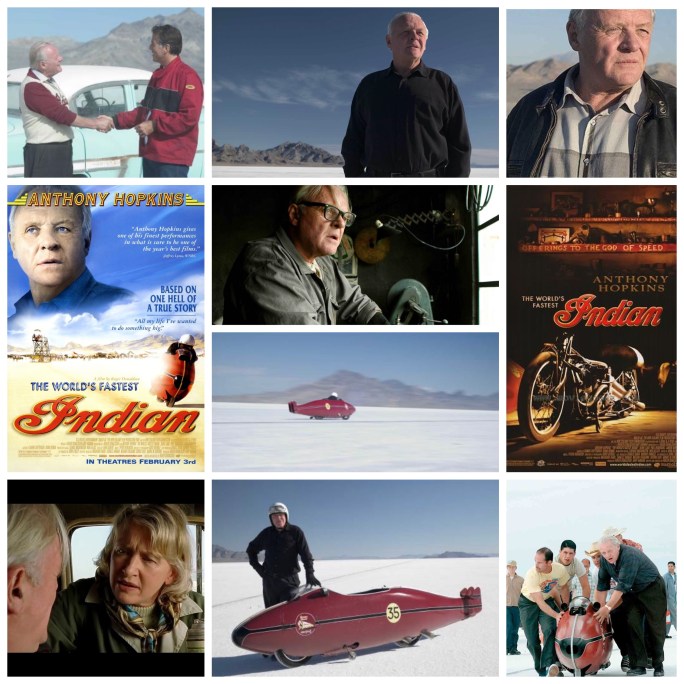
Roger Donaldson’s The World’s Fastest Indian

Anthony Hopkins has an acting style that I wouldn’t describe as speedy or that of an adrenaline junkie, in most roles anyways. He’s laconic and measured, which makes him an interesting choice to play Kiwi motorcycle enthusiast Burt Munro, a real life dude who made it his mission later in life to break the elusive land-speed record with his bike on Utah’s Bonneville Flats. He rocks the role in Roger Donaldson’s The World’s Fastest Indian though, a charming dramedy that follows him as he faces every obstacle getting there and is then told his bike isn’t up to safety standards to compete. This is one dude who will not be deterred though in the face of any odds, and Hopkins finds the quiet passion and resilience in him on his journey. He meets others along the way including lonely widow Diane Ladd, but this is ultimately his story, a tale of persistence that winds from New Zealand to the flatlands of the States with breezy optimism and faith in the general decency of human beings. Director Donaldson is no stranger to shooting in distinct desert locations of the US, having helmed the early 90’s thriller White Sands. He once again finds himself in a rugged, unconventionally picturesque landscape and makes the most out of it with well staged photography and editing. Hopkins is the spirit of the piece here, a trailblazer who makes history and the lives of those he meets a bit brighter on the way there. This is a sunny film, no one is villainous or deviant and it serves to show the good natured behaviour we’d all like to find in ourselves and each other, as well as the kind of determination and strength of spirit it takes to achieve a goal this impressive, especially in one’s golden years. Great film.

-Nate Hill
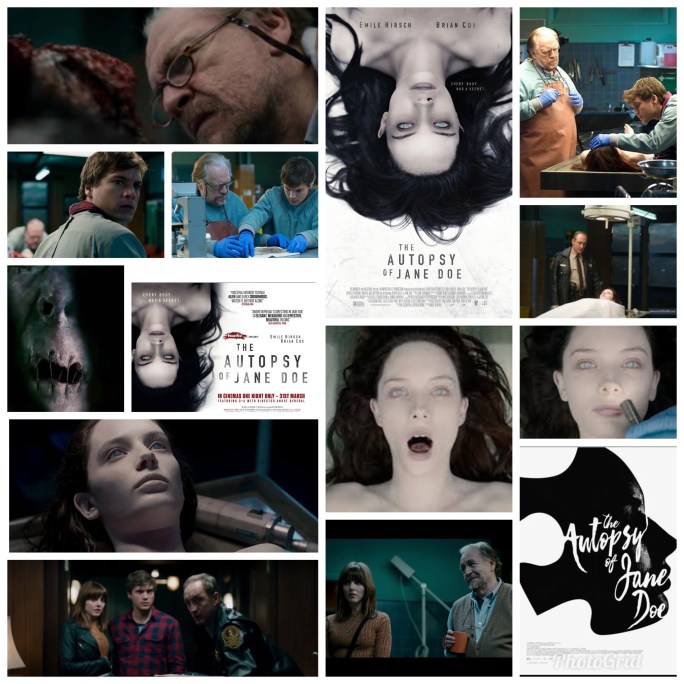
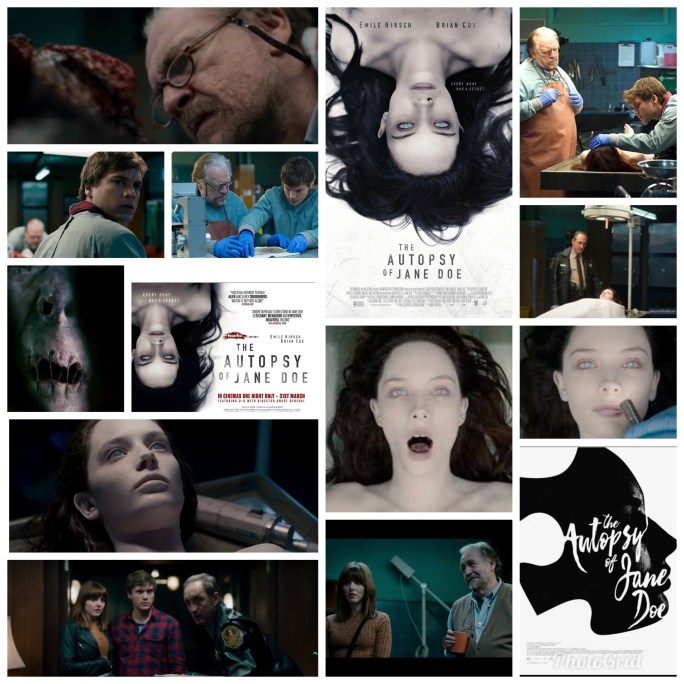
André Øvredal’s The Autopsy Of Jane Doe

It’s always a good barometer to use Stephen King’s praise when it comes to horror films, and he had nothing but great things to say about André Øvredal’s The Autopsy Of Jane Doe, a gruesome and very scary little chamber piece with quite the unnerving story to tell. Set in a spooky underground morgue, a father son duo of coroners (Brian Cox and Emile Hirsch) get one last corpse sent their way by the county sheriff (Roose Bolton from Game Of Thrones) just as they’re about to shut down for the night. Labelled a Jane Doe due to lack of any identification, she’s one in a series of bodies found at a boarded up house, but cause of death is eerily unclear. These two toil away looking for clues as the night wears on and her corpse gets steadily weirder with every layer of skin, bone and tendon peeled back, but something isn’t right with her and soon our heroes hear creepy sounds, see bizarre things in the hallways and realize that the last place they want to be is stuck down there with her, especially while a raging storm prevents them from leaving. It’s a terrific setup for a nightmarish horror story, and all the elements make it work quite well. Cox and Hirsch are two great actors who sell both the father son drama and the burgeoning fear as each moment gets scarier than the last. Jane Doe isn’t a dummy or CGI but played by real actress Olwen Catherine Kelly mostly the whole time, adding an uncomfortable depth and realism to their predicament as we search her body for signs of movement or remaining sentience and squirm in our seats. The photography here is crisp and concise, the scenes lit to effect and the score drives them neatly too. There’s plenty of gore and look-away moments involving the autopsy (unless that’s your thing, ya sick fuck) but the real fear lies in story and suspense as we gradually learn who Jane Doe was and what is now happening around her, while poor Brian and Emile are stalked by all kinds of freaky shit and their apparently haunted radio starts to spaz out on them. I can see why King liked this so much as it greatly reminded me of his work, it’s smart and not too predictable with perverse attention to detail in the body horror and a slick, immersive premise. Highly recommended.

-Nate Hill

Jordan Peele’s Us

The idea of doppelgängers has been explored before in film, but never in a fashion quite as twisted as Jordan Peele’s Us, a furiously entertaining horror show that gets weird, wild and so refreshingly unpredictable in a genre where the climate tends to flatline with endless Conjuring universe carbon copies and what have you. There’s a ton of ideas at play here and it makes the film hard to pin down as one thing or the other, but it works beautifully as a breathless, streamlined home invasion shocker with deeply unsettling undercurrents and implications that can be read many different ways. When Adelaide Wilson (Lupita Nyong’o) was a young girl, she had a terrifying encounter within a shadowy hall of mirrors on Santa Cruz beach, an encounter which will herald the arrival of feral versions of her, her husband (Winston Duke) and two children (Shahadi Wright Joseph and Evan Alex) as they vacation at their summer house a stone’s throw away from that very same beach. The prologue with her as a kid is set in the late 80’s and has a retro horror feel as Peele uses his favourite scary movies as both fuel and inspiration for the style on display here. The home invasion of these shadow selves is a brilliantly staged piece of white knuckle suspense and impressive physical acting, especially by Lupita as both shellshocked Adelaide and her other self Red, a growling fiend who is the only one of them that can talk. She rasps enigmatically about stuff that seems like both straightforward exposition and cryptic allegory, hinting at the secrets in store for the third act. Elizabeth Moss and Tim Heidecker are flat out hilarious as the Wilson’s bickering neighbours, bringing uproarious comic relief before confronting their own set of homicidal visitors. Lupita gives the strongest performance here in both her characters, a frantic dual role knockout that holds the film in panicky distress with her wide eyes and instills deep terror with what she does to her voice, she’s a consistently brilliant actress and I love her work in this. This is clearly a passion project for Peele, the imagination on display is something else and fresh new scripts like this are always welcome for me. Some may have issues with certain things in the third act like explanation and climactic resolution, but he deliberately leaves a lot of it for us to ruminate on instead of telling us every detail about what we just saw. There is a scene where Lupita’s Red imparts some of it but it’s still somehow told in a roundabout way and not laid open bare in spark-notes fashion. Some may find this frustrating, but I loved it. This is probably the best horror film I’ve seen since 2014’s It Follows, and definitely one of the most original. A shock inducing siege thriller, an acidic jab at personal identity and a quietly discomforting look at the rifts you can see beginning to form in the world today. Great stuff.

-Nate Hill

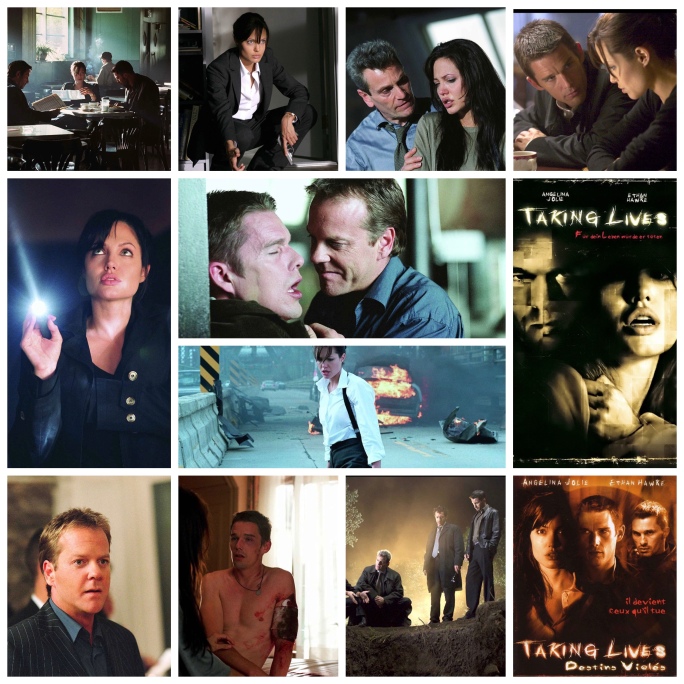
DJ Caruso’s Taking Lives

Angelina Jolie as a cop hunting down a ruthless serial killer who uses especially grisly methods is a great premise for a film, but you may as well skip DJ Caruso’s Taking Lives and just go revisit Phillip Noyce’s The Bone Collector, a great film that did the concept way better. Lives is a poor excuse for thriller material, a drab, dank and musty slog through a narrative that doesn’t seem to give two shits about its characters and frequently makes little to no sense, not to mention fails heavily at holding interest. Jolie plays a hotshot FBI profiler who is consulted by French Canadian police when their efforts to nab an elusive murderer fail. This is a guy you never really see because every time he kills, he takes on the identity of the victim, blending in and leaving few clues. Jolie searches back through records from decades ago and tried to piece together this guy’s past to find him, but he himself has noticed her and taken an interest. This all sounds terrific on paper but the film they’ve made is a messy, overwrought lump, like a particularly bloody episode of criminal minds without the ‘mind’ part to give the criminal activity any weight. Jolie is joined by Ethan Hawke as a colleague as well as Olivier Martinez, Gena Rowlands, Tcheky Karyo, Paul Dano, Justin Chatwin and more, but none make a huge impression. Kiefer Sutherland shows up as a nasty piece of work who is so obviously a red herring it hurts to see his painfully limited arc come and go like a breeze. Don’t even get me started on the final twist either because it’s too ridiculous. This has the grungy, incisive visual aesthetic of David Fincher’s Sev7n but with none of the pace, doom laden atmosphere or brains to back it up. The only cool thing is the title, which of course refers to the killer’s penchant for both murdering and assuming the lives of those he targets. Neat premise, wicked title, dope cast… shit awful film.

-Nate Hill

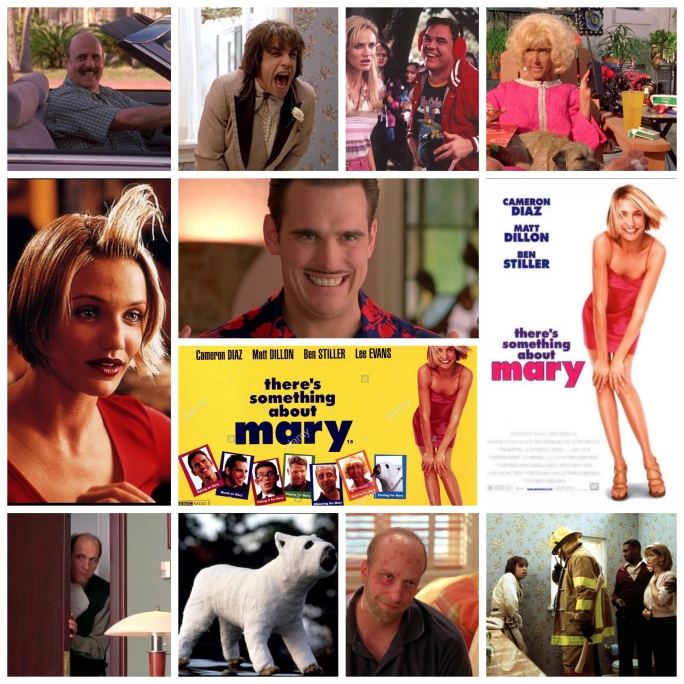
The Farrelly’s There’s Something About Mary

There’s Something About Mary, and there’s also just something about The Farrelly Brothers, something about the way they make bad taste seem passable and almost classy, something about how they make incredibly silly shit come across as utterly hilarious. This is a film that would never get made these days, it would get hounded out of the office halfway through the pitch, which is deliciously ironic when you consider that one of these two screwball directors nabbed an Oscar this past year for a film that couldn’t be a farther cry from stuff like this. There’s so much to laugh at here you barely get breaks in between, and while any hope of actual pathos crumbles in the face of relentless comic rumpus time, it never lags or slows down either. Ben Stiller is Ted, hapless sap who tracks down his old high school sweetheart Mary (Cameron Diaz) because he just can’t let her go. Only problem is, half the rest of the state falls for her too including ultra sleazy private eye Healy (Matt Dillon is a force of nature here) and others that I dare not spoil here. The plot is essentially really creepy and peppered with all kinds of questionable shit, but the visual gags, situational humour and just plain slapstick madness somehow work so well. Not to mention the cameos, including Jeffrey Tambor as Healy’s cokehead pal, Richard Jenkins as a therapist who’s bored out of his mind, Keith David as Mary’s gregarious stepfather and standup comic Harland Williams as the man with the seven minute abs idea. You couldn’t make this shit up, but the Farrellys somehow did and it’s one of the funniest fucking things I’ve ever seen. Stiller is an inherently pesky actor you’re never sure if you should like or just be mad at simply for existing, but it works for the role here. Dillon uses that pithy, laconic drawl to maximum effect and I don’t think you could dream up a sleazier character if you tried. Diaz is a ray of pure sunshine in anything and she reaches the closest thing you could call to actual ‘acting’ that anyone gets to here, bringing a good natured sweetness that goes a long way. Scrotums caught in zippers, a dog on fire, a horde of disabled folks played for laughs, semen used as hair gel, a hacked up corpse in a gym bag, these are the down n’ dirty things the Farrellys peddle in, and when it comes to them, it’s only the finest from this duo. Between this, Dumb & Dumber and Me, Myself & Irene you kind of get a holy trinity of there distilled comedic aesthetic, one that remains hilarious to this day.

-Nate Hill

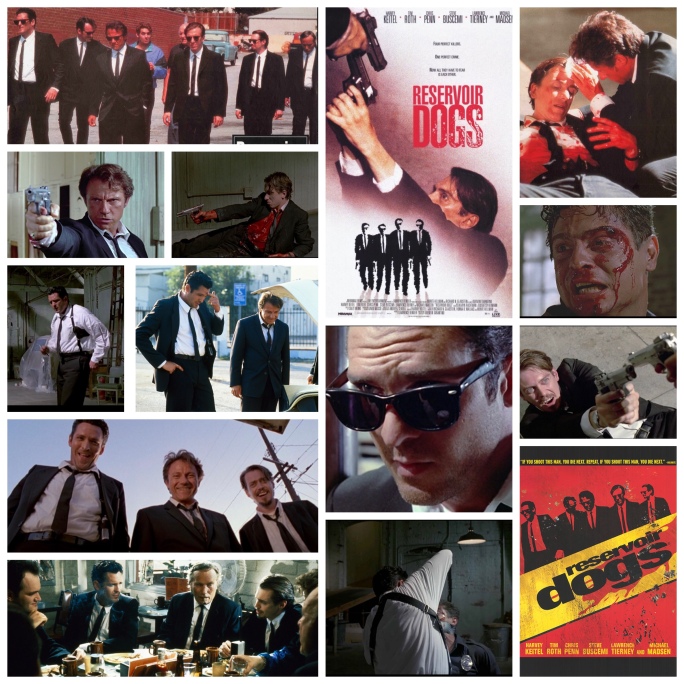
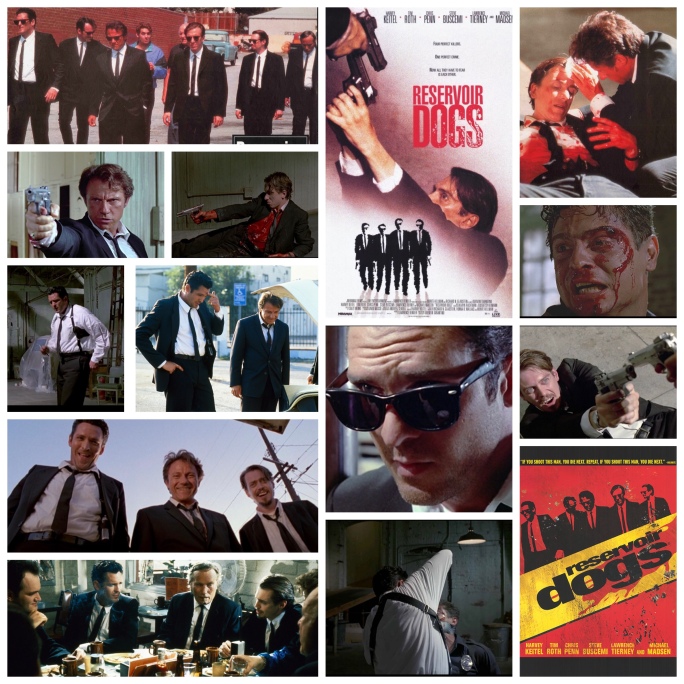
Quentin Tarantino’s Reservoir Dogs

What kind of heist flick is it where we don’t even see the heist? The best kind. The Quentin Tarantino kind. Reservoir Dogs has aged incredibly well, it’s his leanest and meanest film to date and stands as the blood soaked crash course leading to the sustained, verbose historical epics we have come to know him for these days. Many consider Pulp Fiction to be his official breakout but the magic first took flight here on the outskirts of LA as a band of marauding jewel thieves in identical suits tries to smoke out a rat from their very midst. Like a bizarro world version of the Rat Pack, this profane, volatile murder of ex-con crows discuss Madonna, tipping waitresses, The Lost Boys and more before erupting together in a cascade of yelling and bloodshed that remains as exciting now as it no doubt was in the initial theatrical run. Dialogue runs the show here, whether between Harvey Keitel’s Mr. White and Tim Roth’s Mr. Orange, Chris Penn’s Nice Guy Eddie and his gangster father Joe (Lawrence Tierney) or Michael Madsen’s Mr. Blonde and whoever he’s decided to intimidate on a whim. Madsen gives the performance of his career early on and Blonde is a character for the ages, a self appointed psychopath who tortures an LAPD hostage (Kirk Baltz) more out of vague amusement than outright malice in a scene that has since been inducted into time capsules everywhere. When we meet these guys, they’re casually having breakfast in a greasy spoon diner, chattering on about everything under the sun except the jewel robbery they’re about to commit. It’s only after the stylized opening credits and the hectic aftermath of said robbery that Tarantino flashes back to scattered exposition and backstory for these guys, and it’s that kind of deliberate editing that has not only become a hallmark for the filmmaker, but keeps his stories so fresh and enthralling. The audience knows almost right off the bat who the rat is, but the fun is in observing paranoia levels rise in their ranks as they each begin to suspect the man next to them and turn on each other like a pack of hyenas in the Serengeti of industrial Los Angeles. From the iconic torture scene set to Stuck In The Middle With You to the tense Mexican standoff to the frantic escape and firefight with LA’s finest, this is one gritty slice of life crime piece that the years have been most kind to. Tarantino has evolved and adapted as his career has moved forth, but its always nice to come back to the scrappy little picture that started it all, see how it’s influenced countless other filmmakers over the decades and bask in the bloody, expletive filled, dialogue heavy bliss again every once in a while. An all timer.

-Nate Hill

Steven Soderbergh’s Side Effects

I’m usually a nut for anything that Steven Soderbergh has made, but Side Effects was a big ol’ dud. I think it had something to do with expectations, really; I was sold on a smart, scary psychological thriller that explored the unnerving fallout behaviour of trial drugs and shady products snuck into consumerism by Big Pharma. What I got turned out to be a lurid, trashy exercise in deception and Basic Instinct shenanigans, the kind of back end to a film you’d find Eric Roberts or Mark Harmon starring in on HBO back in the day. Not that that’s a bad thing per se, it was just definitely not what I expected from a filmmaker as thoughtful as Soderbergh, but I guess this was his playful side taking over the wheel in the third act. Rooney Mara plays a young woman whose husband (Channing Tatum) has just been released from prison, an event which seems to coincide with her recent depression and suicidal behaviour. Her psychiatrist (Jude Law) prescribes her an experimental new drug, likely not yet even approved by the FDA, and things go from bad to worse when she kills hubby in a freaky sleepwalking episode. The drug is shelved, Law is disgraced, the trial stops right there. End of story, right? I wish. The good doctor just has an inkling that something else is going on, something involving both Mara and another shady practitioner played by Catherine Zeta Jones. If I had some idea going in that this was inevitably going to ditch the ideas it claimed to be making a film about and get cheap and sleazy I might have been more receptive, but as is the plot gets so steamy and ridiculous I couldn’t believe I was watching the same film that I started out with. There’s a few twists too many, a lack of believable character action and and a kinky subplot that had me laughing, and not in the good way either. Hard to say much more without spoiling it, but it’s one outlandish turn of events, like a car on the way to a college conference that suddenly veers off an exit to the strip club without warning. I expected more from everyone involved.

-Nate Hill

Peter Weir’s Fearless

A plane falls out of the sky and crashes in a cornfield. Some of the passengers survive. Others do not. No one involved is ever the same after. Such is the premise of Peter Weir’s Fearless, a complicated, challenging, unconventional and altogether brilliant piece that goes a lot deeper than most Hollywood produced films are allowed to. Jeff Bridges is Max Klein, a man who emerges serenely from the wreck having saved multiple lives and undergone a personal change that can’t be made clear in a scene or two, but rather takes the film it’s whole runtime to explore. While the entire plane is in full panic, Max reaches a sort of tranquility in the face of death, and instead of freaking out he very lucidly gets up and joins a young boy who’s alone on the flight and comforts him. When they land and he survives, his relationship to those around him is affected including his wife (Isabella Rossellini), young son, a trauma counsellor (John Turturro hired by the airline) and others. Most fascinating is the time spent with Carla (Rosie Perez) a fellow crash survivor whose newborn baby wasn’t so lucky, leaving her in a pit of grief. They share something together that no one, audience included, can fully understand because they weren’t there. The beauty of it is that Bridges and Perez can’t really know either, but the magic of both their performances is that they make you believe they’re in this extraordinary situation for real. Bridges never plays it with a messianic or mystical aura like some would, he’s always straight up and kindly which works wonders for this character. Perez is a revelation, soulful and heartbroken but never cloying or panhandling for our tears, she earns them fair and square. I’m not one too get too heated about Oscar snubs but it’s a crime she got beat out by Marisa Tomei that year for fluff like My Cousin Vinny. Peter Weir is a thoughtful director whose films are always high concept stories, but are also always character driven to provide that balance. He’s interested not in spectacle or sensationalism here but the difficult questions that others might gloss over or be too afraid to think about. There’s two scenes revolving around the crash, one of the aftermath and an extended one of the incident itself playing out that reach a level that sticks with you long after the credits roll. Not an easy film to classify or describe in a review, but the rare Hollywood picture that tackles concepts well above what we’re used to seeing. Great film.

-Nate Hill

Wolfgang Petersen’s Shattered

Wolfgang Petersen is known for directing some of the biggest Hollywood blockbusters over the years including Air Force One, The Neverending Story, The Perfect Storm and Troy. One thing he hasn’t done much of is writing, other than the melodramatic, Hitchockian 1991 thriller Shattered, which is kind of a mess. Whether it’s the source novel by Richard Neely that’s dodgy or Petersen’s screenplay that dropped the ball, this film doesn’t quite clearly delineate it’s plot points, many of which are so far beyond plausible it’s hard to really get a grip on the story or keep a straight face. Tom Berenger plays a powerful businessman who accidentally launches his car off a highway outcrop into a spectacular swan dive that leaves his face looking like a dirt bike track and his memory more absent than of Jason Bourne’s. After some facial reconstruction he’s back on his feet and in the arms of his wife (Greta Scacchi), but something just doesn’t quite seem right. The memories she tells him of before the accident don’t seem real to him, he starts gathering clues relating to some kind of infidelity or cover up and his intuition just tells him he’s being thrown for a loop. This is where the film’s narrative sort of imitates that car and drives right over the edge of comprehension; The serpentine twists and turns employed are sort of fun but have absolutely no place in the real world, let alone even a hard boiled thriller like this. Bob Hoskins is fun as a snarky veterinarian who moonlights as a PI, trying to help Berenger fit the pieces together. Corbin Bernsen listlessly plays yet another smarmy role as his ex business partner, I sometimes wonder if they’ve ever given that guy a role worth his salt or if his career is cursed with playing the annoyingly extroverted debonair who has zero depth. Joanne Whalley Kilmer shows up as some psychic who throws around vague threats and acts like she knows something but isn’t even sure herself what it is, which is the feeling the script gives you. By the time the final revelations make themselves known and we see what really happened after the accident it’s kind of fun but also just riddled with inconsistencies and eye roll moments. It isn’t a bad film though, and has a few moments. There’s great cinematography of Oregon and San Francisco as well as a foggy shipwreck that holds a few secrets and gives off spooky ambience. The score by Alan Silvestri is steamy in places, rousing in others and gets the job done. It’s just the story that sort of treats us like we’re idiots, and as if we not only haven’t seen this story done before, but seen it done better.

-Nate Hill

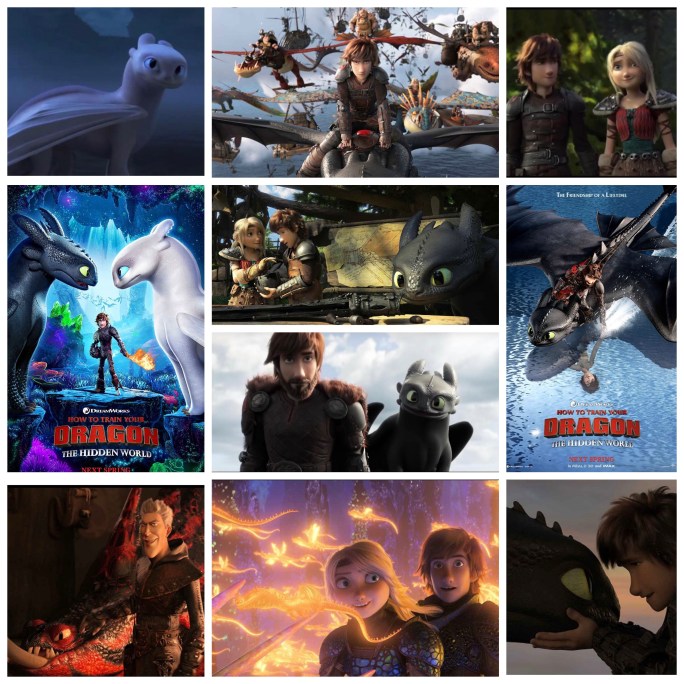
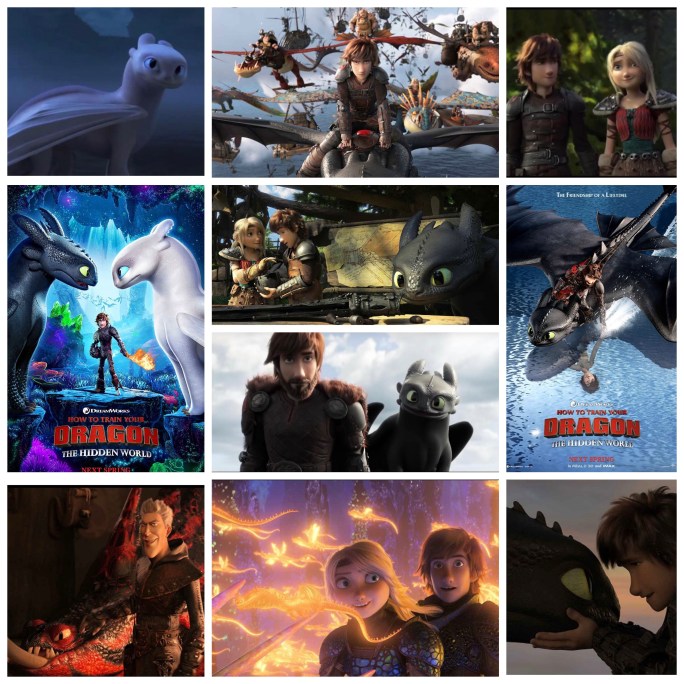
Dreamworks’s How To Train Your Dragon: The Hidden World

The How To Train Your Dragon series has been quite a ride, filled with quality storytelling, humour and heart, breathtaking animation and gorgeous music. It caps off the trilogy with The Hidden World, a rollicking third chapter and conclusion to this legend that sees Hiccup (Jay Baruchel) and his beloved companion Toothless searching for a new home to migrate to, a kingdom beyond the end of the world where dragons originally came from and a place he heard in tales from his father (Gerard Butler in brief flashbacks). Out to stop them is dragon hunting guru Grimmel, played by a sassy F. Murray Abraham who has just about as much fun with his voiceover role as he could without actually physically being there. Grimmel wants to eradicate all Night Furys from the world, and it’s a race against time, the elements and the reliable stupidity of Hiccup’s endearing childhood buddies to seek out this new home. Hiccup is a fantastic hero because he started out as anything but that, a sensitive, bullied youngster who grew into the strong leader he is today but is still full of self doubt and has never lost his softer side, people like him always make the best leaders. Cate Blanchett is around again as his mom, but sort of takes a spectator’s seat to her son and his rapscallions, including wife to be Astrid (America Ferrera). The real magic here is the relationship between Toothless and a newfound love, a beautiful white female Night Fury who flirts, plays heard to get and frolics with him all across the oceans and skies in a display of animation that’s hard to believe, especially when they reach the fabled Hidden World that looks like something out of Avatar. These films share a wonderful message of love towards the animal kingdom, teaching that if you show trust, admiration and kindness to these creatures, the lives of both species can be enriched. I love the symbiosis between humans and dragons in this series, the variety and personality of each different breed and the pure imagination employed in bringing such designs to life. Highly recommended.

-Nate Hill