Bill Paxton’s Frailty

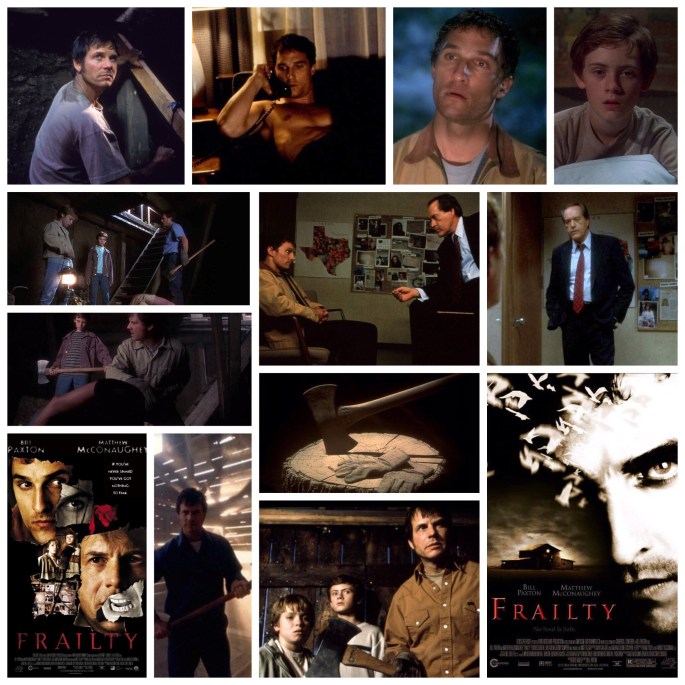
Bill Paxton’s Frailty, man what a film. It’s like a particularly warped Twilight Zone episode with heaps of southern gothic, a few plot twists that will blindside you, enough subtle hints to keep you coming back for revisits and plenty of chilling horror elements. It’s nice that the late Paxton produced a now iconic cult classic as his director’s debut because it shows that he’s a cinematic renaissance man and had talent in multiple areas, he was something special. On a rainy Texas night, a mysterious man (Matthew

McConaughey) shows up at the FBI headquarters and informs a senior agent (Powers Boothe) he knows who the God’s Hand Killer was, a case that has long gone cold. This sparks an intense, eerie tale of his growing up in midland Texas, how his father (Paxton) seemingly lost his mind and dragged his two sons (Jeremy Sumpter and Matt O’ Leary as young McConaughey) into a delusional practice of kidnapping and murdering people that god has told him are demons. It’s harrowing, blood curdling stuff because the horror is treated so bluntly, without much melodrama or shtick. Paxton was indeed a loving father and he approaches the killing with such an earnest rationality it makes one’s skin crawl. That’s just the start of it though, and watching how the past ties in with the story McConaughey weaves is a deliciously dark pathway of unexpected secrets and uncomfortable revelation. People who rag on about McConaughey’s career pre circa 2012 obviously haven’t explored deep enough. Between stuff like A Time To Kill, Lone Star, Contact, Reign Of Fire, this one and others he had one legend of a career before he even arrived at milestones like Mud or True Detective, and rocks it here. Boothe, who sadly passed the same year as Paxton, was an actor with more than a few tricks up his sleeve and he’s wicked good as the shady agent who gets visibly shook up by the gruesome campfire yarn he has to sit through. Paxton is haunting in front of the camera, turning a loving father into a conflicted killer with burrowing complexity, and in the director’s chair he proves more than competent, making this a horror thriller for the ages with its constant surprises, sickening scares and uneasy atmosphere.

-Nate Hill
Clive Barker’s Candyman

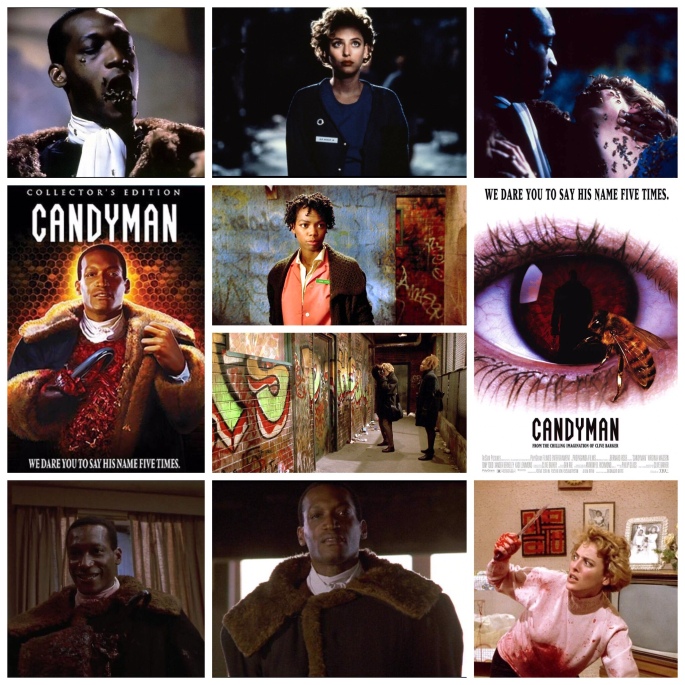
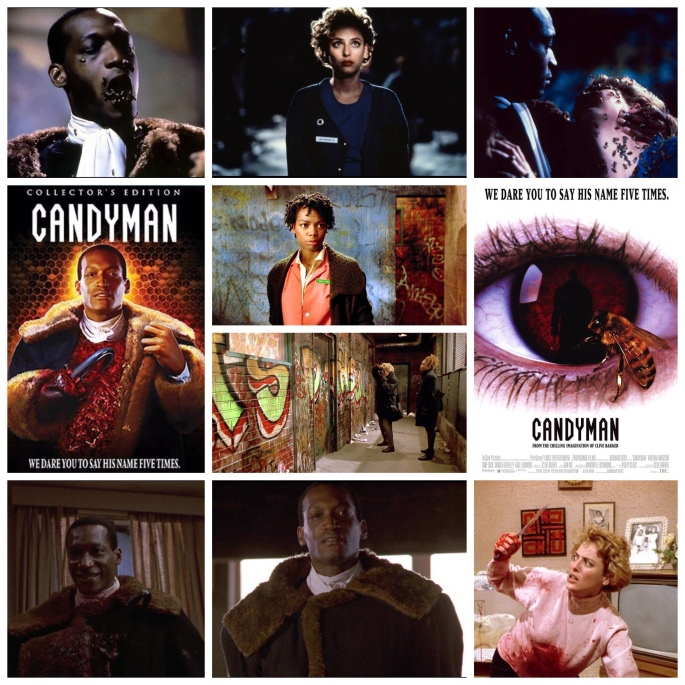
Clive Barker’s Candyman is bar none one of the best horror films ever made. Many factors can take credit for that, but the two chief among them are Tony Todd’s performance as Daniel Robitaille, the hook handed, honey voiced spectre that haunts even the frames he doesn’t appear in, and Philip Glass’s beautiful yet terrifying electronic score that rips through the story like a rogue orchestral piece with a life of its own. Production design and locations are also key here, as they filmed in Chicago’s infamous Cabrini Green Project for real, and it makes all the difference. Candyman is one of those urban legends, the angry ghost of an ex slave who was murdered, and now gets resurrected to raise hell whenever someone says his name in a mirror five times. That someone here happens to be college professor Virginia Madsen, who has heard whispered rumours among the locals and decides to research it a little too closely. Before she knows it she’s seeing Robitaille everywhere, dead bodies are starting to pile up and she begins to look an awful lot like the culprit. With the help of her boyfriend (Xander Berkeley) and colleague (Kasi Lemmons, always fantastic) she tries to get to the bottom of the mystery but Candyman is a tough curse to shake, and the killing doesn’t stop. Many of the actors here are genuine residents of the Green, providing both authenticity and a very human quality to the film. Todd is now something of a household name and has achieved cult status for this role, it pretty much set him up for good in the horror genre and it’s no wonder, he’s a hypnotic dark angel as Robitaille, with both seething menace and a crazy calm lurking behind those eyes. There’s moments of real fright that hold up to this day as truly chilling shockers, such as a kid getting ambushed off camera by Candyman in a park restroom and the horrific aftermath of a dog’s murder coupled with a missing baby, brought to life by Vanessa Williams’s vivid, heartbreaking performance as the mother. This is how you create an effective horror film, by balancing gore with story and character, creating an atmosphere in which we feel both lulled by the sights and sounds but always unsafe as to what could be lurking through that bathroom medicine cabinet or dark, graffiti scrawled hallway. A classic. There’s two sequels that aren’t too awful thanks solely to Todd’s presence, but they come nowhere close to this one.

-Nate Hill

Sicario 2: Day Of The Soldado

I have to be brutally honest about this, but Sicario 2: Day Of The Soldado is nowhere close to a worthy sequel, let alone a good film. After mulling it over a bit since I saw it a few weeks ago, it just feels hollow, superficial and weak in all the places the first one was provocative, mythic and haunting. My main gripe is that it has nothing really to say; the first was deep, dark and dense, with a thoughtful screenplay by Taylor Sheridan brought to life by Denis Villeneuve’s concise, nerve wracking direction, it challenged today’s political climate and casted dark shadows on the anthropological coordinates of present day North and Central America. This one feels like a lurid death trap of violence without weight, thin characterization and a weirdly conceived narrative that misses all the beats and ends up nowhere. Benicio Del Toro and Josh Brolin return as antihero assassin Alejandro and cavalier special ops spook Matt, this time trying to start a big ol’ cartel war by kidnapping the daughter (Isabela Moner) of one boss to frame the another, thereby letting the animals wipe each other out and stop the new trend of these cartels smuggling in Muslim terrorists onto American soil so they can blow up innocent families in shopping malls, which we see here in unnecessarily sickening, gratuitous fashion. This is all sanctioned in clandestine by the stony US secretary of defence (Matthew Modine) and overseen by Brolin’s icy handler (Catherine Keener has fun with the dialogue), and naturally it all goes tits up before too long. When Alejandro and the cartel’s kid find themselves on their own following an ambush, there’s an opportunity for developing his character farther and seeing some kind of redemption, which at first seems like it may happen until Sheridan shuts it down hard and veers the story off into some other stuff that drags and just puts Del Toro’s arc in the doldrums. Brolin finally has a crisis of conscience, but it’s too little too late when we get there. Also, the whole terrorist angle just does not work, and feels totally shoehorned in. The first film, although ultimately fictional, felt like it could indeed be playing out for real somewhere out there, everything was drawn from things we’ve known to be authentic. But cartels moving jihadists across the border for attacks on American cities? Come on now, I could practically feel the influence over Sheridan’s shoulder to work that in somehow. I did enjoy the cinematography by Dariusz Wolski and score by Hildur Guonodóttir, taking over from the late Johann Johansson, but since she’s worked with him on projects in the past, the feeling in the music remains just as austere and menacing. This is just all over the place though, completely lacking the darkly pristine focus and portentous drive of the first. At the end it feels like a big blast of nothing, and if anything it just made me appreciate the first one more.

-Nate Hill

The Crazies

Imagine if zombies weren’t just outright observable walking vegetables and it were a little harder to tell when the change happens? There’s countless variations on the theme, but The Crazies manages to be really unnerving by adding a dose of mental unrest in with the formula. After a strange toxin infects the water supply of a small town, people begin showing symptoms of instability, psychosis and then full on murdering each other at random. The town Sheriff (Timothy Olyphant), his Doctor wife (Radha Mitchell) his deputy (Joe Anderson) and a survivalist girl from town (Danielle Panabaker) band together to escape not only hordes of townsfolk infected by this mania, but also the military brought in to ‘contain’ the situation. It’s a hectic, ultra-violent affair with a doom laden apocalyptic vibe and plenty of explosions, but the real scares lie in the disconcerting way that otherwise simple townsfolk just start to slowly lose it and act mentally disassociated, before getting downright homicidal. Especially effective is a scene where a woman is helplessly strapped to a hospital gurney and one of the crazies slowly enters the room, the dread is palpable and it’s a true scene of horror. Scary stuff.

-Nate Hill

Joyce Chopra’s The Last Cowboy

I’m a huge fan of the Hallmark style drama films, and anyone who scoffs at the inherent melodrama or perceived schmaltz is missing the point completely and deliberately robbing themselves of the therapeutic, diversional catharsis one can find in them. When you’re feeling shitty about the world, your problems or any other negativity, they can be a life affirming escape because they almost always are just small stories about kind people, families overcoming trouble or getting together for various holidays, just pleasant, earnest entertainment for entertainment’s sake, simplicity itself. Joyce Chopra’s The Last Cowboy is a fine example, and especially a treasure for the way it casts usually edgy, frequently villainous character actors in sympathetic, against type lead roles. The great Lance Henriksen is Will Cooper, a stubborn, salt of the earth old school rancher whose land is in danger of being seized by the bank. After his estranged daughter Jake (Jennie Garth) returns home with her young son after many years absence, it becomes clear that it’s up to her and Will to reconcile their differences, put the pain of the past behind them and work together to save the ranch before it’s too late. Henriksen is always a dynamic actor and imbues Jake with grit and grace, while Garth, who I haven’t seen in a single other thing, does a great job too. The real scene stealer is character actor M.C. Gainey as Amos, Will’s lovable farmhand, friend and confidante. This is a special role for him because he’s almost always found playing roughneck bikers, evil criminals or redneck truckers, but here he’s an honest to goodness decent human being and he just nails it. Bradley Cooper shows up as well in a more subdued role as a horse owner who brings business to Will and stirs Jake’s heart. This is a small, very low budget TV movie and has barely ever seen the light of day in terms of exposure (it took me like five years to track down a DVD), but it’s heartfelt, really well acted and if you’re a fan of anyone in this cast it’s a rare gem.

-Nate Hill

David Gordon Green’s Halloween

David Gordon Green’s update on John Carpenter’s Halloween is currently slashing its way through theatres, and aside from a few nit-picky asides, it’s a winner, both in terms of a genuinely scary horror and as the long awaited sequel to a film that practically reinvented the printing press of the horror landscape.

The new Halloween is sleek, vicious, aesthetically pleasing and brings back Michael Myers to do far more killing than he ever did the first time around, as this takes place in a universe bereft of any other sequels, an interesting choice which gives the it a fresh, immediate vibe. Also back is Jamie Lee Curtis’s Laurie Strode, who has calcified into a paranoid, blunt realist who doesn’t so much worry if Michael will come home, but just somehow knows it in her bones. Judy Greer is fantastic as her estranged daughter Karen, Toby Huss provides great comic relief as her husband and Andi Matichak is a sensational find as Laurie’s granddaughter Alyson, who echoes both the resilience and vulnerability we remember in Laurie when she was her age. Will Patton also kicks ass as the Haddonfield Sheriff’s deputy, always great to see him.

It’s nice to see references that aren’t overt or forced, but woven into the narrative almost seamlessly and with purpose. Many instances feel serendipitous, and as the infamous classroom scene always intones and reiterates here, fate is an inexorable bitch from which there is no escape. Green and his team have lovingly made Michael the relentless stalking Shape we fondly remember, using fluid tracking shots, lingering suspense, mounting dread and those classical music cues to herald his arrival on the fringes of nocturnal suburbia like a monster in a bad dream. There are impeccably orchestrated scares involving a closet and a motion sensor light that are impressively effective and nerve shredding. There were a few things that felt dumb, like the extended involvement of a Dr. Loomis proxy called Sartain (Haluk Bilginer) who at first is welcome until his arc gets inexplicably loopy, as well as some ham fisted writing for Alyson’s male friends, one of whom is so irritating I wish they’d casted an actor who looked and sounded like less of a ripe cheese, but oh well, at least he’s short lived.

Now, my favourite thing about the film: that beautiful score, and I’m not just referring to the original jangly tune. Carpenter himself, his son Cody and Daniel A. Davies worked together to not only rework the iconic theme a bit but compose swaths of new stuff, atmospheric passages and nightmarish synths that are instantly worthy of the main theme. This is definitely the best sequel since the original Halloween 2, which can be considered a companion piece to Carpenter’s first anyways as he reportedly directed chunks of it. This feels like a slasher should, but it’s also smart, deliriously stylish and scary in that elemental way where it’s not the violence itself that haunts the experience, but the spaces in between where Michael is lurking with intent and the suspense builds. That’s what Halloween is about.

-Nate Hill

B Movie Glory: The 4th Floor

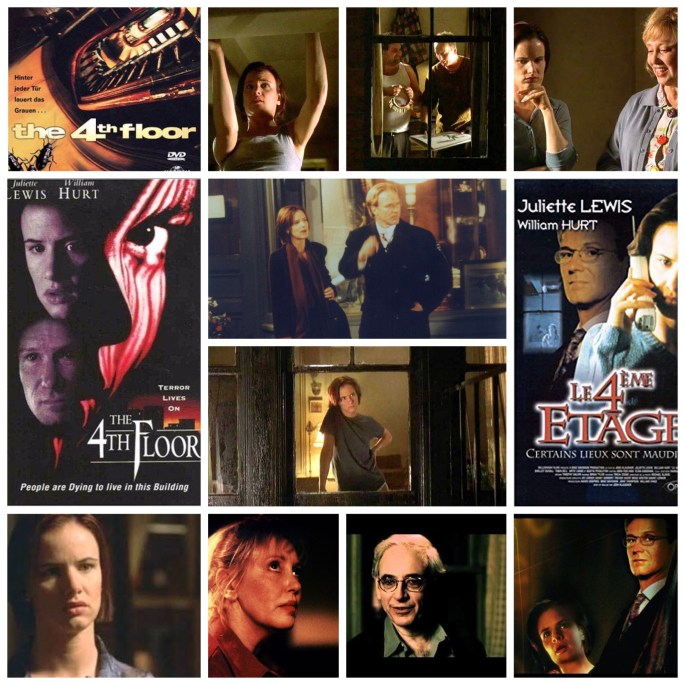
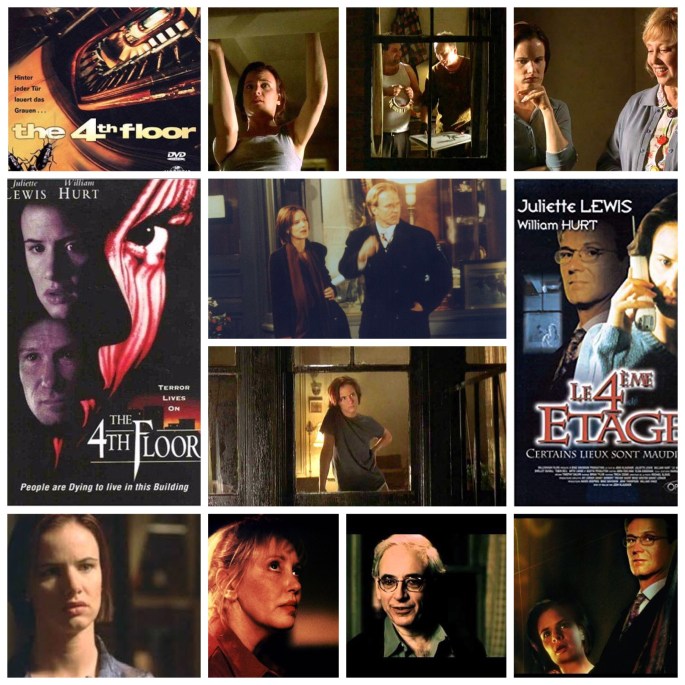
The 4th Floor is an odd little horror vehicle starring Juliette Lewis and William Hurt, two big names who you wouldn’t usually find in low budget, bizarre stuff like this. Lewis plays a young woman who moves into an ancient New York apartment building only to find that something malevolent is going on inside. Hurt is her big-shot TV weatherman boyfriend who is resentful about it as he’d hoped she would make the step and move in with him. Anywho, the building is home to a host of creepy types including an awkward caretaker (Austin Pendleton), a woman for some reason named Martha Stewart (Shelley Duvall), a weirdo lock smith (Tobin ‘Jigsaw’ Bell) who doubles as an artist and others. They’re all kind of set up like dominoes and you’re supposed to choose which one is behind the evil what-have-you, but it isn’t all that scary or enthralling. Still, it’s atmospheric enough, has a great cast who do pretty well, and anything with Lewis in the lead role is already sold for me. The film’s strongest point is the twist ending, but it’s such a fleetingly subtle revelation that many probably missed, a last minute thing you’ll either see or you won’t, but changes the dynamic of the entire film jarringly and ends on a nice, tense cliffhanger. Passable stuff.

-Nate Hill

Jack Sholder’s Wishmaster 2: Evil Never Dies

Everyone knows the expression ‘go fuck yourself.’ But can anyone think of a film where that actually, physically… happens? Well it happens in Jack Sholder’s Wishmaster 2: Evil Never Dies, and let me tell you, it ain’t pretty. I’ll get to that in a minute. Robert Kurtzman’s original supernatural splatter-fest is a supremely underrated horror flick with a concept that pretty much begs for sequels, and while there’s a bunch, only this one is really worth checking out. The success of these really hinges on Andrew Divoff’s deliciously sinister performance as the ancient evil Djinn, a being who tricks people into making wishes which he grants on his own terms, before harvesting the unwitting soul of the wisher to fuel his powerful dark magic. Raspy voiced, narrow eyed and dripping with dangerous charisma, Divoff is a scene stealer and whoever decided to recast him for Wishmasters 3 and 4 should be fired, but in any case those two aren’t worth checking out. This one sees the Djinn get inadvertently woken up by a cat burglar (Holly Fields) during a botched robbery. In sneaky human form he calmly takes credit for the crime and deliberately goes to prison where he can reap all those juicy repeat offender souls and take advantage of how dumb they all are. It’s a cool setting and gives actors like Paul Johansson and legendary Tiny Lister (who is in every movie ever, apparently) a chance to play assholes who get in the Djinn’s way, but it’s Divoff’s show all the way. Now, the part you’ll want to hear about. During a meeting with his lawyer, an uncooperative felon (Robert Lasardo) makes the ill conceived wish that the attorney should ‘go fuck himself.’ The Djinn, never one to not put on a good show, works his magic and moments later… well. The lawyer gruesomely bends backwards in a way no human is meant to and quite literally does in fact fuck himself. It’s quite a thing to have suddenly show up in your otherwise run of the mill horror sequel, simultaneously surreal, awkward, outrageous and, if you have a sense of humour as demented as I do, pretty goddam hilarious. The film overall does the trick, I mean it doesn’t have the charm, chutzpah or awesome genre cameos of Kurtzman’s balls out original, but it’s still pretty sweet.

-Nate Hill

Irvin Kershner’s Eyes Of Laura Mars

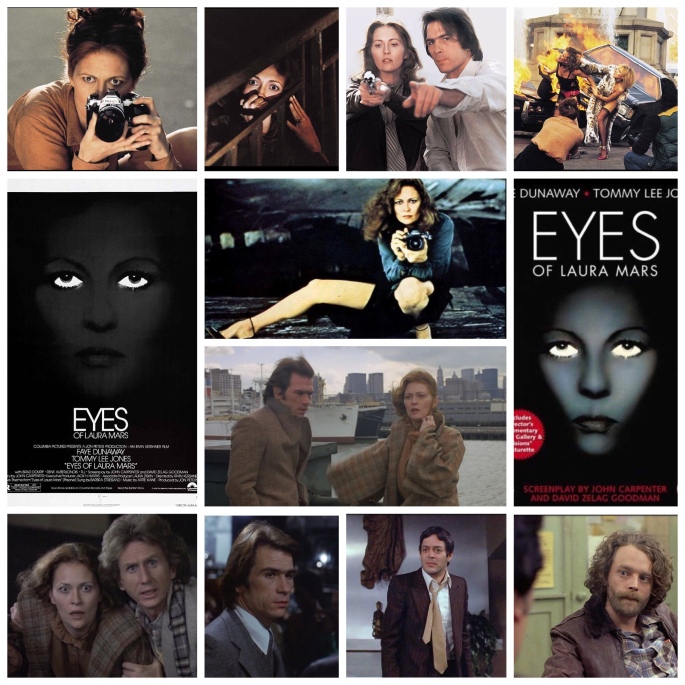
Irvin Kershner’s Eyes Of Laura Mars is one bizarre film. Overall it really does not work, like it stands obstinately in WTF territory with its arms crossed, refusing to let either it’s a talented cast, lavish production design or unusual premise spur it on to greatness, despite the fact that parts of it work in fits and starts. From a screenplay by none other than John Carpenter, Faye Dunaway stars as Laura Mars, a controversial fashion photographer whose work has attracted the attention of a serial killer that starts staging their crimes after the photos she takes. Stranger still, every time our murderer goes for a move, she is suddenly tuned in to what he’s doing via his eyes, as if a clairvoyant. What a concept, right? Well I bet Carpenter had a few things to say about how they butchered his idea, they should have just given him creative control over the thing. Dunaway is a fantastic actress, she has a stately Sigourney Weaver vibe and her eyes are soulful fissures that do lend themselves to a story this intense, but she can’t do much with her role, as Laura’s ultimate culminated worth is a glorified scream queen. Anywho, the murders get the attention of police detective Tommy Lee Jones, and let me tell you I didn’t think he was ever this young. I’m aware that this was 1978, but to me Jones is one of those sagely actors like Morgan Freeman or Sam Elliott who seems to have always been old and just sprung out of the ground already wise, weathered n’ weary. The horror elements clash with a ridiculously hokey romance subplot between him and Dunaway that barrels in from farthest left field, feels artificially paced and undeveloped, an insult to both the intelligence of the audience and the integrity of Dunaway’s character, but I spied notoriously loopy producer Jon Peter’s name in the credits so maybe he had something to do with that. They would have been better off spending more time developing the pleasant camaraderie between Laura and her lovable entourage, which is one aspect that really works. The supporting cast/list of suspects also includes an awkward Raul Julia as Laura’s ex husband, her flamboyant agent (Rene Auberjonois) and a fantastic, scene stealing Brad Dourif in an early career role as her scrappy limo driver assistant. It sucks because the film has beautiful production design; Laura’s photography has an elaborate, provocative edge, the New York fashion scene and street-side elements are captured neatly and her ornate bedroom looks like a spaceship that Kubrick designed, but all that verdant personality is wasted on a story that’s so silly it hurts. Nothing is satisfactorily wrapped up, and the final twist is so lame that I couldn’t figure out if it was because that outcome hadn’t really been done before 1978 all that much and I’m just too young or simply because it was laaaaaame in itself. There’s a jittery score by Artie Kane that works and echoes stuff like Bernard Hermann, so there’s that I guess, plus game performances by Dunaway, Auberjonois and Dourif, but their effort really deserved better. This goes nowhere, and what’s worse, takes its sweet time getting there.

-Nate Hill

Spawn 1997

With the impending release of a new Spawn film next year that will be written and directed by original comic book artist Todd McFarlane (!), it’s time to take a look back at the eclectic 1997 version. It’s a mixed bag that’s mostly filled with stuff I love, in particular a real nasty comedic edge brought to the table by John Leguizamo’s profane, obese, horrific hell clown The Violator, who lets face it, kind of steals the show. I read that every actor under the sun was considered for the lead role, from Denzel to Samuel L. Jackson to Tony Todd, but I feel like they really lucked out with martial arts legend Michael Jai White, whose sinewy presence lends itself to the dark character and practically radiates pent up rage. Spawn was once Al Simmons, a government assassin who was royally fucked over by the evil mercenary Wynn (Martin Sheen, trying his darnedest to shake the good ol’ Hollywood boy image) and sent to the fiery pit of hell, only to be resurrected as a half demon antihero with more whacked out powers than Beetlejuice and a serious hankering for revenge. That’s this movie anyways, I’m not sure how faithful it is to the comics. Guided by a pseudo Van Helsing looking mentor dude (Nicol Williamson in his final screen role) and pining for the wife (Teresa Randle) he widowed, he embarks on a bloody odyssey to… well to kill Martin Sheen and anyone who gets in his way doing it. Oh yeah, and Leguizamo’s demon clown follows him around making horrifically dark jokes (“I’ve been around since before you were soup in your momma’s crotch) and chewing more scenery than the actor has in the rest of his collective career, which is some fucking achievement. It’s funny because this film simultaneously contains some of the best and worst special effects of the 90’s; Spawn looks, feels and sounds terrific, with tactility and tangibility that should be admired, swooshing reptilian cape, glowing eyes and all manner of slice n’ dice weaponry. However, when we see him visit the devil in hell, the CGI used to bring old Satan to life look absolutely abysmal, like a Starfox final boss they forgot to completely render. I suppose they didn’t have enough budget to make everything slick, but honestly they should have just cut those scenes completely rather than have that embarrassment parade across the screen. Still, it’s hardly a blight on the movie and if anything is part of its scrappy charm, I’ve just been accused of being too much of a critical Pollyanna lately, so I have to throw in the occasional jab at a film I love just for credibilities sake in this snooty community of cinema we live in. Overall this version of Spawn is a blast of beautiful special effects, horrific imagery, vivid performances and Leguizamo mugging the camera like an aggressive dog. I’ve read that he was in that fat suit for so many takes one time that he actually had to deliberately piss himself, which I’m sure only added to the manic energy he has, like how’s that for method acting. I’m not sure what McFarlane has planned for his new one (Jamie Foxx has landed the lead), but I’d advise him to retain the bite and ferocity this one has, as well as its dark humour, weird dream logic and practical effects vs CGI. I’m sure he knows what he’s doing though, it’s not like he’s the original creator of the whole comics series or anything.

-Nate Hill